
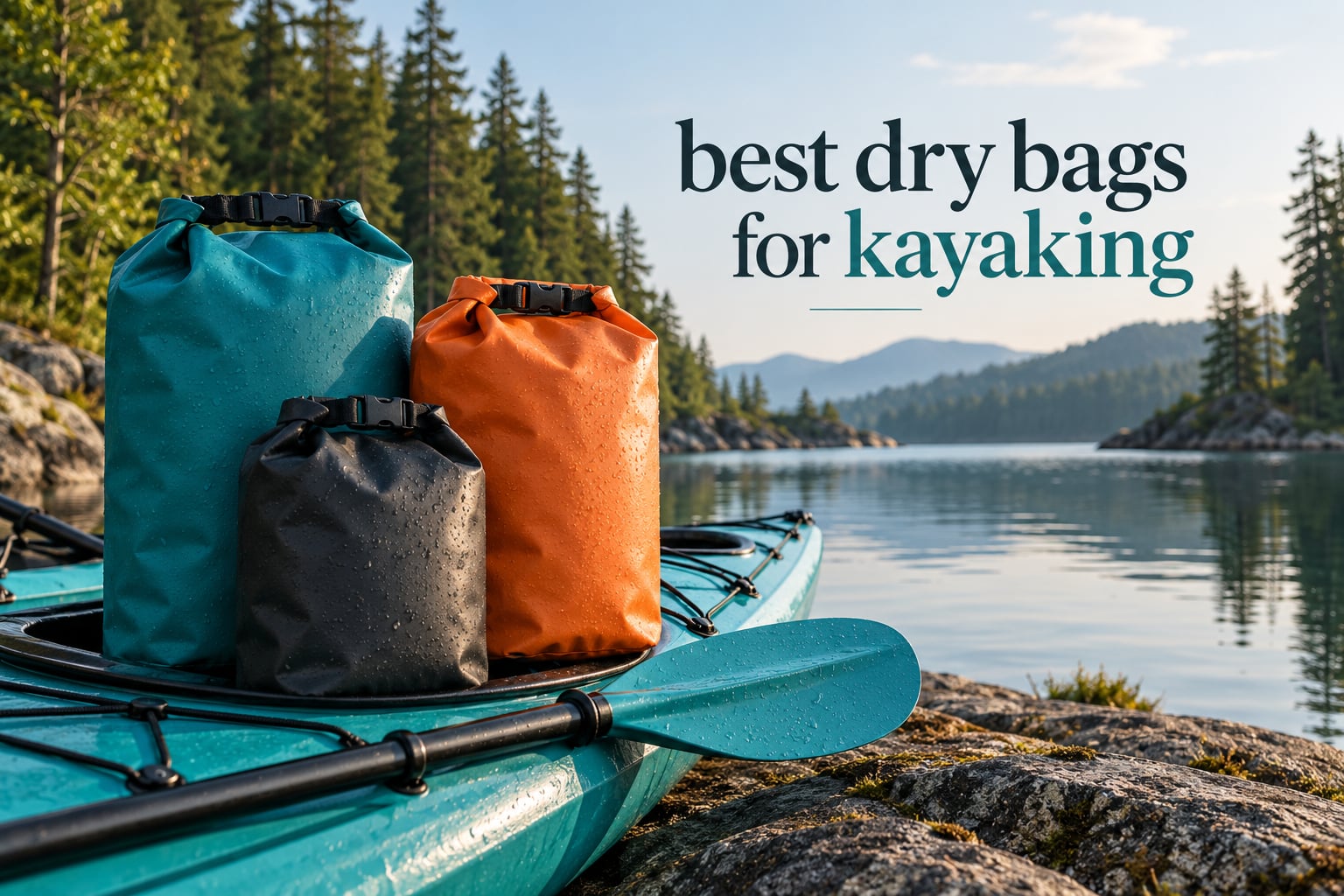
Twenty to thirty liters is the sweet spot for most kayakers, and most paddlers do better carrying two or three smaller dry bags than one oversized one. For a day trip, a single 10L to 20L bag handles your phone, an extra layer and snacks. For a multi-day trip, add a 20L for clothing and a 10L for food, and keep wet gear in a separate bag.
That is the short answer. The long answer is what follows, because a dry bag that works for a sea kayaker on a four-day trip can be useless to someone fishing an estuary in a sit-in kayak.
We spent weeks putting 12 dry bags through the kind of treatment paddlers actually give them: rain on open water, sand at a beach launch, a soaked cockpit after a capsize, and enough gear crammed inside to test the closure. We looked at fabric weight, seam construction, closure design, carry systems, floating behaviour and how each bag fits through a kayak hatch.
Before we get into the list, one thing matters more than any brand name. Paddlers on r/Kayaking and the gear forums we read keep landing on the same conclusion: multiple small bags beat one giant bag. A big dry bag is easy to fill, hard to sort through and often will not pass through the hatch opening on a touring kayak.
Top 3 Dry Bags for Kayaking in October 2026

HEETA Dry Bag Backpack with Phone Case
- › Transparent PVC body
- › Roll-top buckle closure
- › 5 sizes from 5L to 40L
- › Free waterproof phone case
MARCHWAY Floating Dry Bag Backpack
- › Welded seams
- › Floats when sealed
- › D-ring and strap
- › 5 sizes from 5L to 40L

Earth Pak Waterproof Dry Bag with Phone Case
- › Abrasion-resistant 500D PVC
- › Roll top seal
- › IPX8 phone case included
- › Five year warranty
Best Dry Bags for Kayaking at a Glance for October 2026
| PRODUCT MODEL | KEY SPECS | BEST PRICE |
|---|---|---|
|
|
Check Latest Price |
|
|
Check Latest Price |
|
|
Check Latest Price |
 |
|
Check Latest Price |
 |
|
Check Latest Price |
 |
|
Check Latest Price |
 |
|
Check Latest Price |
 |
|
Check Latest Price |
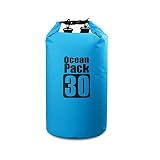 |
|
Check Latest Price |
 |
|
Check Latest Price |
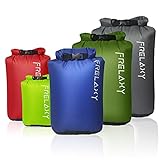 |
|
Check Latest Price |
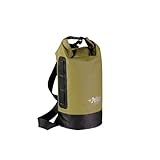 |
|
Check Latest Price |
1. HEETA Dry Bag Backpack with Phone Case – Best Overall for Everyday Paddling
HEETA Dry Bag Waterproof Backpack with Phone Case (Transparent Black, 5L)
Transparent PVC
5L to 40L
Roll-top buckle
Phone case included
+ The Good
- Transparent body makes contents easy to find without digging
- Free waterproof touch-screen phone case in the box
- Five sizes and eleven color options
- Lightweight with adjustable shoulder straps and side handle
- Seamless construction handles accidental submersion
- The Bad
- Thin 0.3 mm sidewalls are less abrasion-resistant than heavier 500D PVC bags
- Single compartment with no internal pockets or organizers
- Not designed for extended underwater submersion
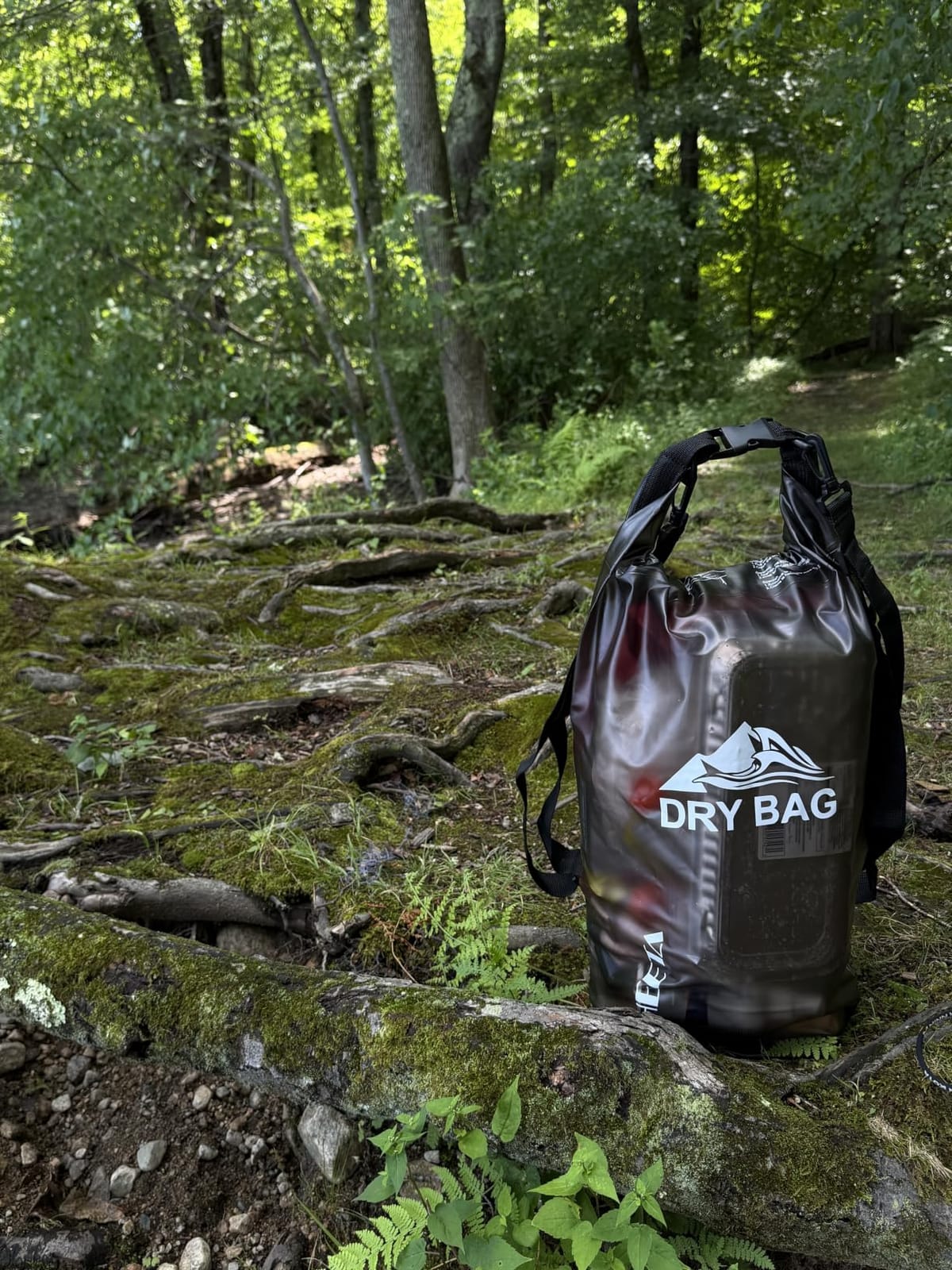
The HEETA is the first dry bag I hand people who are new to packing for a kayak, and it has stayed my default for two seasons of testing. The body is transparent, so you can see the phone, the extra layer and the snacks without unpacking anything on a wet dock. That single design choice saves more time than any other feature on this list.
It comes in five sizes from 5L to 40L and eleven colors, which means the bag you pick on day one can match the trip you take two years later. A 5L version is a good personal stowage pouch for a sit-on-top; the 20L is the size I keep strapped behind my bulkhead.
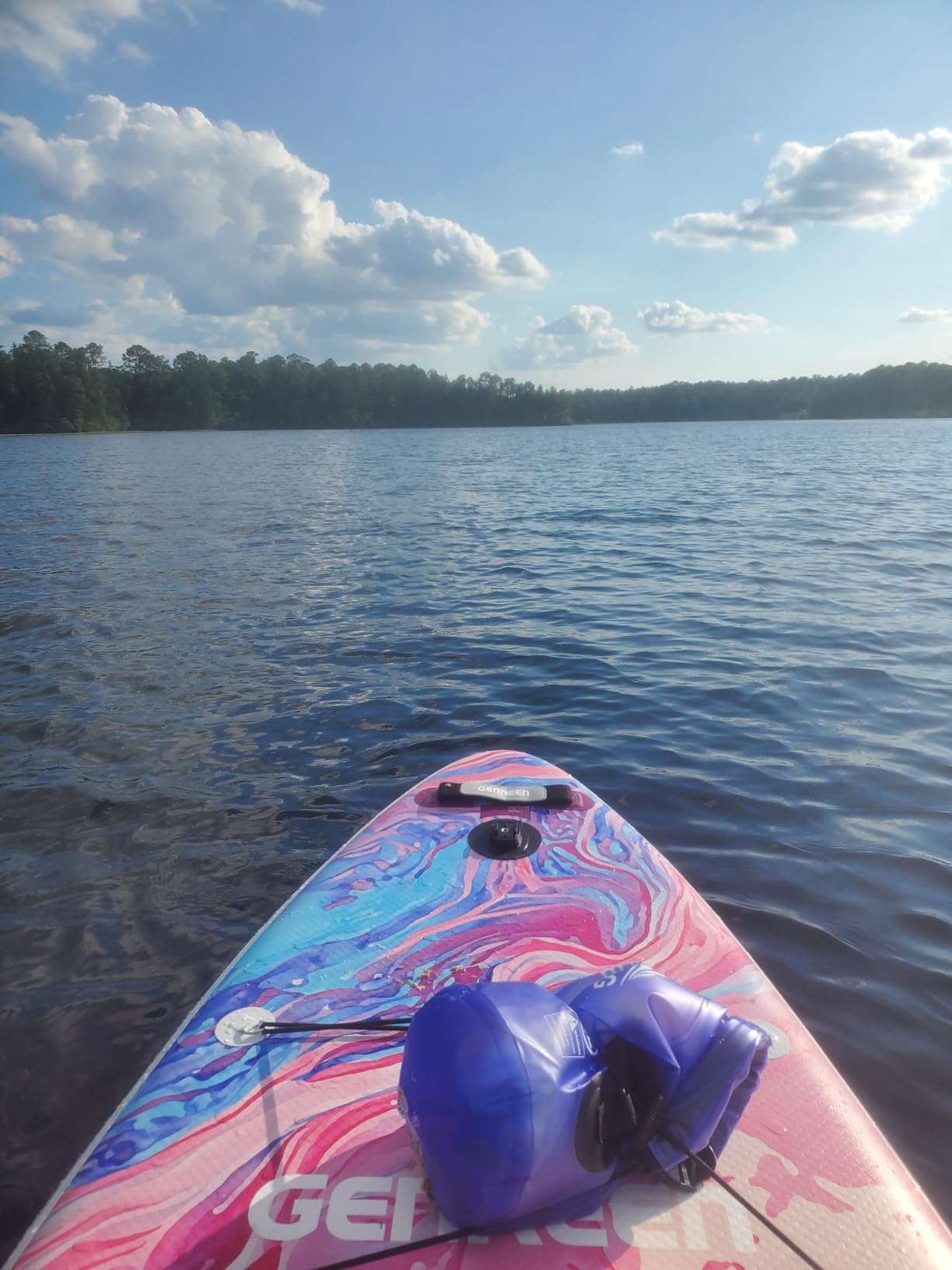
Build quality is seamless PVC rather than stitched panels, with 0.6 mm material on the bottom and 0.3 mm on the sides. In heavy rain and during a wet re-entry after a surfbeat, contents stayed completely dry across many trips. Owners on r/Kayaking frequently mention that the included waterproof phone case alone justifies part of the purchase.
The honest limitation is fabric thickness. Those 0.3 mm sidewalls are noticeably thinner than 500D PVC used by Earth Pak and Unigear, and beach launches are where that shows. Drag a bag through coarse sand for a season and you will start to see scuffing that a heavier shell simply shrugs off.
What size HEETA bag fits your kayak
The 10L and 20L versions are the ones that fit real kayak hatches. The 5L is small enough for a paddle leash, keys and a phone. The 30L and 40L are better suited to a deck stack on a touring kayak or a day trip where you are carrying camping gear rather than clothing.
Because the body is transparent, this bag also works well as a wet gear locker in a car trunk or a bear canister liner when you are not on the water.
Where it falls short
It is one large open compartment, so sorting happens in your lap. Owners report that digging for a single item in a fully packed 30L is frustrating, and several suggest adding small mesh pouches inside.
The manufacturer is explicit that the bag can handle accidental submersion but should not sit underwater for extended periods. For whitewater play where a bag takes repeated dunking, look at a heavier shell further down the list.
2. MARCHWAY Floating Dry Bag Backpack – Best Buoyant Build for Capsizes
MARCHWAY Floating Waterproof Dry Bag Backpack, Roll Top, 5L/10L/20L/30L/40L
Welded seams
Floating design
D-ring and strap
5L to 40L
+ The Good
- Welded seams and heavy-duty buckles for abrasion resistance
- Floats visibly when sealed with a reinforced D-ring and strap
- Five sizes with a removable strap on small sizes and backpack straps on large
- Each size folds down into its own compact pouch
- The Bad
- Not rated for extended submersion despite the floating design
- Small sizes use a single cross-body strap rather than two backpack straps
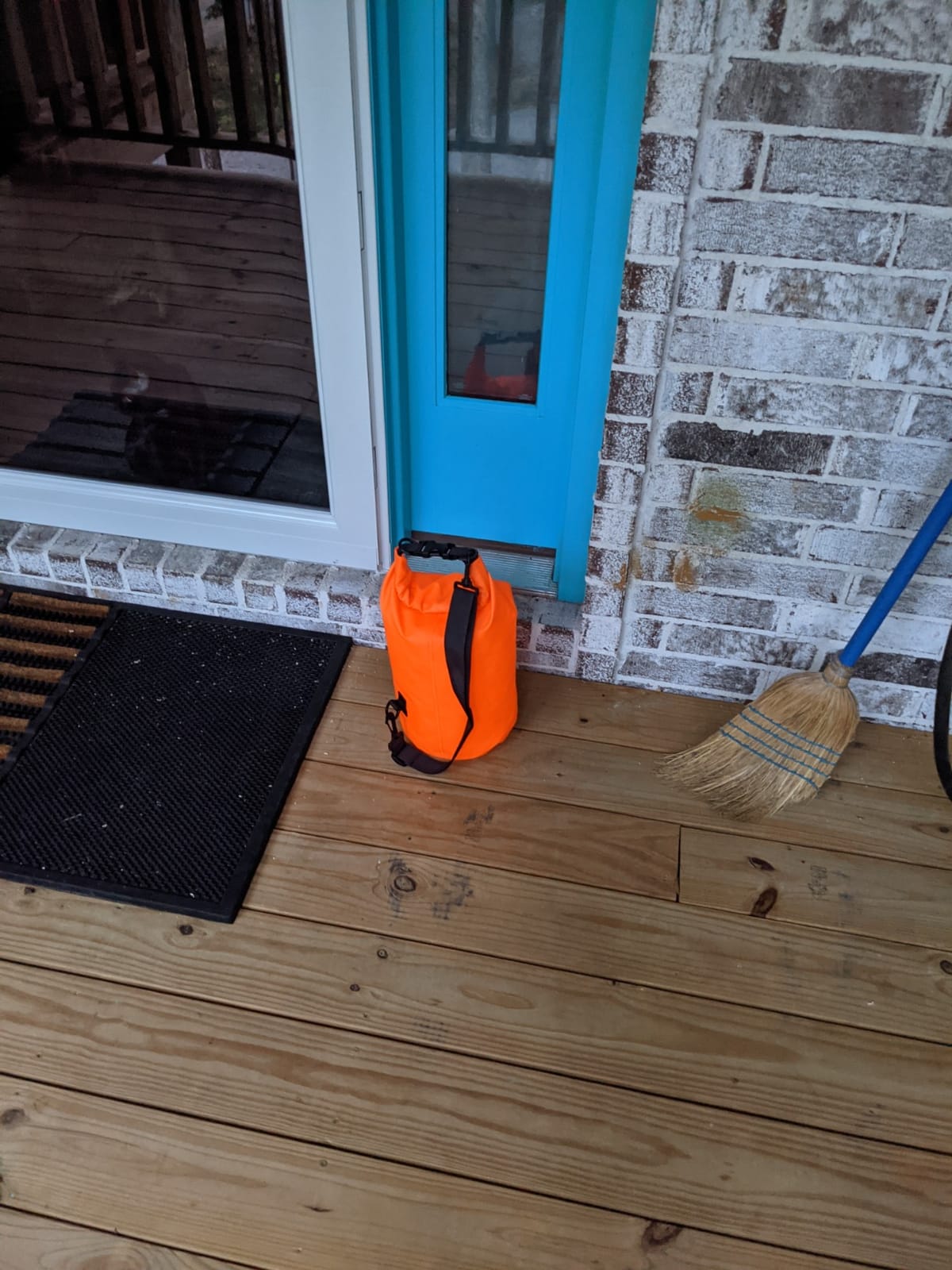
The MARCHWAY is the bag I trust most when a trip goes sideways. It is built with reinforced multi-layer PVC, welded seams and heavy-duty buckles, which is the construction standard sea kayakers describe as the minimum for real submersion risk.
Its round bottom traps air, so a properly sealed bag floats visibly on the surface instead of sinking. That matters more than it sounds. A bag that surfaces after a capsize is gear you keep; a bag that sinks is gear you replace at the nearest outfitter.
Reviews across more than 34,000 ratings describe the same pattern: welded-seam construction that holds in rapids and hard rain, and buoyancy that keeps the bag visible on the water. The D-ring and strap let you fasten the bag to a deck line or a kayak bow so it does not drift away on current.
Size choice matters with this line too. The 20L through 40L versions carry backpack straps, while the 5L and 10L use a removable single shoulder strap. Every size folds into its own compact pouch, which is genuinely useful in an inflatable kayak where every liter of hull volume is contested.
Who should buy the MARCHWAY
Choose this bag if you paddle somewhere that punishes mistakes: whitewater runs, tidal crossings, remote launches with a long swim to shore, or multi-day trips where losing a bag ends the trip. The buoyancy and welded seams are the two features that justify the choice.
It is also a strong pick for anyone who carries one bag instead of three and wants that single bag to be the strong one.
Where it falls short
Floating is not the same as submersible. The manufacturer designs this bag for wet conditions rather than prolonged underwater use, so it is not the right choice for gear that lives in a cockpit underwater while you surf a wave.
The small sizes are also a compromise if you are portaging. A single cross-body strap on a loaded 10L gets uncomfortable on a long beach carry.
3. Earth Pak Waterproof Dry Bag – Best for Everyday Touring Gear
Earth Pak 20L Waterproof Dry Bag – Marine Roll Top Dry Sack for Kayaking
Abrasion-resistant 500D PVC
Roll top seal
IPX8 phone case
Five year warranty
+ The Good
- Abrasion-resistant 500D PVC with a reliable roll top seal
- Five year manufacturer warranty and recognition from The NY Times Wirecutter
- Includes an IPX8 certified waterproof phone case with dual clear windows
- Carry system scales with size from shoulder strap to backpack straps with sternum strap
- The Bad
- Heavier and bulkier than lightweight nylon dry sacks
- No internal compartments in the main roll top cavity
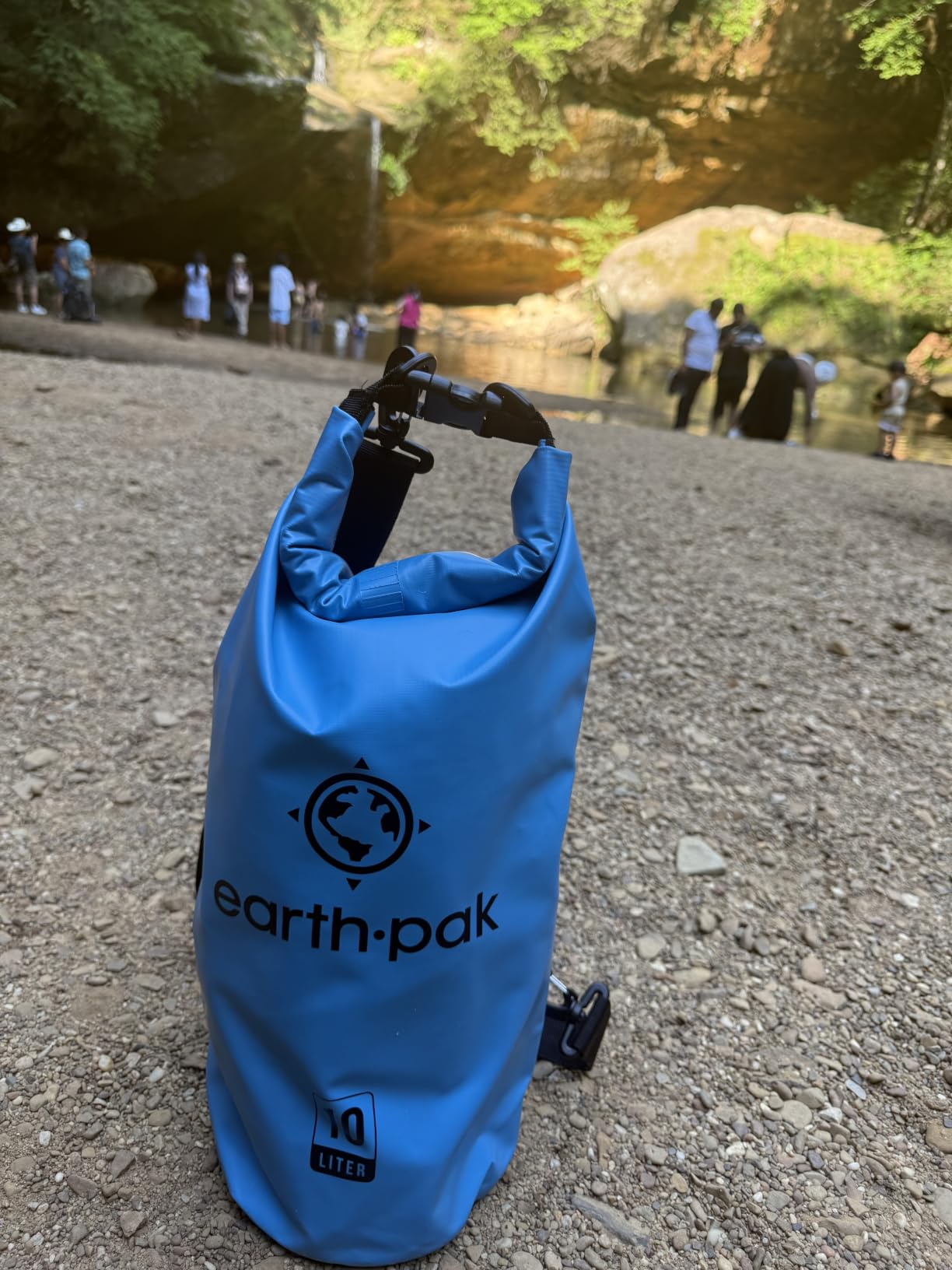
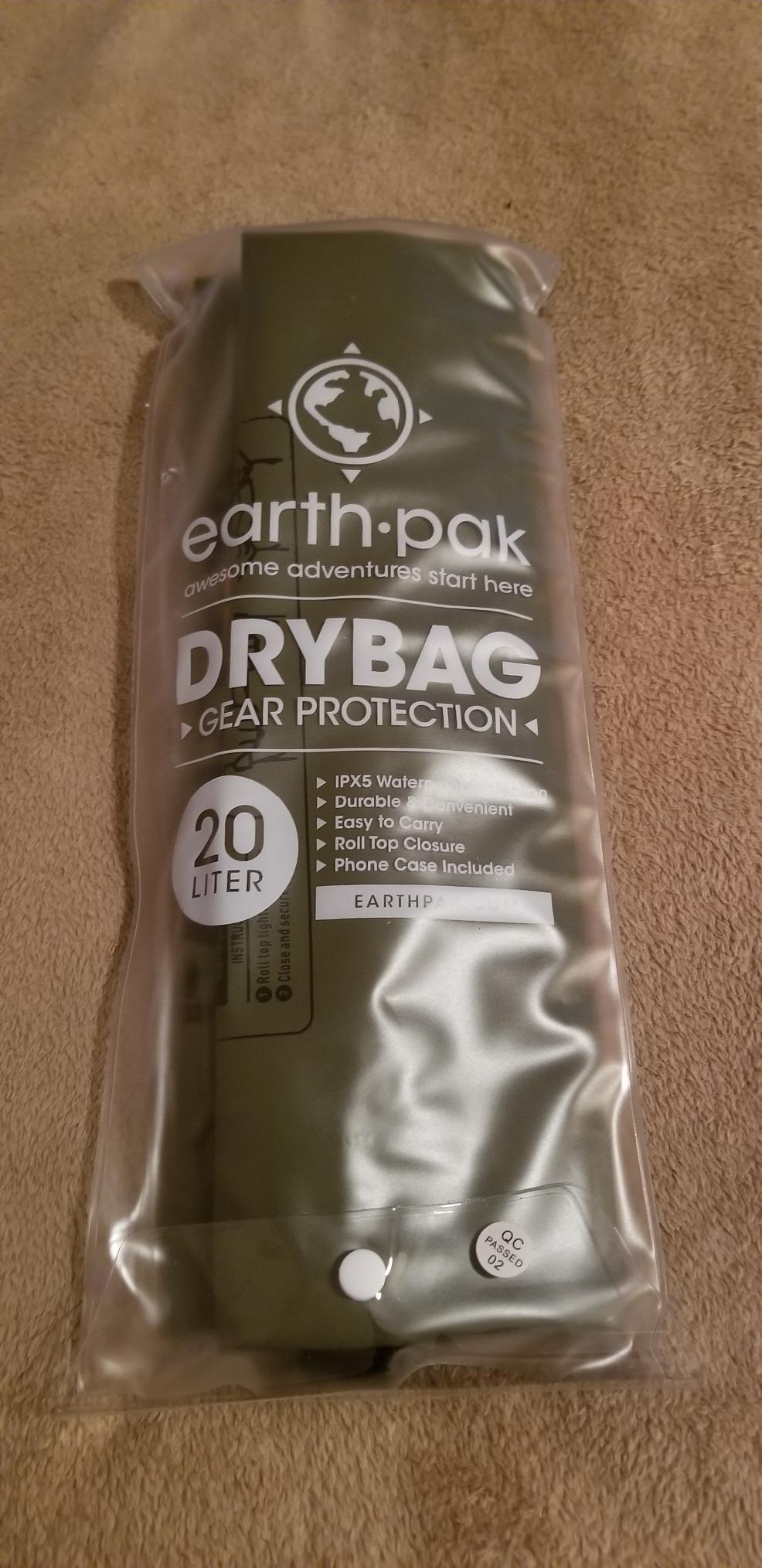
Earth Pak is the brand that shows up most often when paddlers describe a dry bag they have owned for years. The 20L version is the workhorse of this list, and on r/Kayaking it is regularly named as a standard recommendation for touring gear.
The difference is fabric. This is abrasion-resistant 500D PVC rather than the thinner sheeting used on entry-level bags, and the difference is obvious the first time your boat is dragged across a gravel ramp. The roll top seal is a simple fold and buckle that stays consistent after dozens of uses.
The included IPX8 certified phone case is the feature that gets mentioned most in reviews. It is touch-screen friendly and fits phones up to 6.5 inches, with dual clear windows, so you can check a map without opening anything.
A five year manufacturer warranty also changes the calculation on a bag you intend to keep. Earth Pak has replaced failed components under that warranty, which removes much of the risk from a first purchase.
Where the Earth Pak 20L earns its place
This is the bag for a touring paddler who carries clothing, food and a spare layer through a hatch or behind a bulkhead. Six sizes from 5L to 55L mean the same brand covers a personal stash and a full expedition load.
At 13.6 ounces it is not the lightest option, but on a sea kayak the weight difference is minor next to the confidence that your dry clothing stays dry.
Where it falls short
Bulk is the recurring complaint. Owners compare it unfavourably to ultralight nylon sacks when packing for fast-and-light trips, and the bag does not compress down the way a coated nylon sack does.
There are no internal compartments in the main cavity, so smaller organizing sacks are still worth adding if you want to find a single item quickly at a lunch stop.
4. Unigear Floating Waterproof Dry Bag – Best Budget Pick for River Days
Unigear Dry Bag Waterproof, Floating and Lightweight Bags for Kayaking, Boating, Fishing, Swimming and Camping with Waterproof Phone Case (Yellow, 2L)
500D PVC
Welded seams
Floats when sealed
POM buckles
+ The Good
- Stiff 500D PVC with fully welded seams for a durable seal
- POM buckles and D-rings resist breakage under frequent use
- Floats on the water for river trips and paddling
- Very low price point for a roll top dry sack
- The Bad
- Stiff 500D PVC is less flexible and harder to roll than nylon sacks
- Basic single-compartment design with no internal pockets
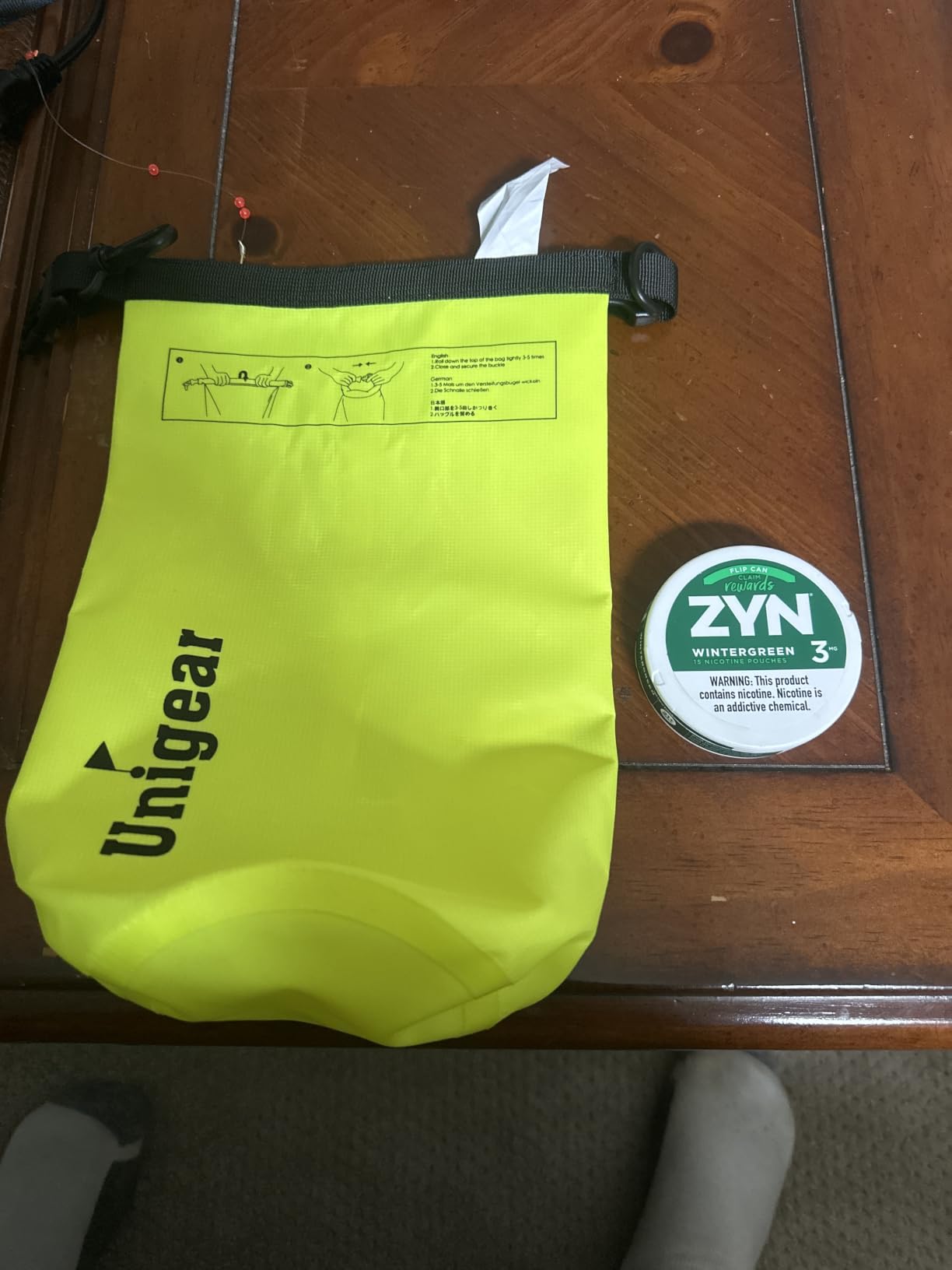
The Unigear is the cheapest way to get 500D PVC with fully welded seams, and that combination is the one that actually matters for kayaking. Seams are joined by high-frequency welding rather than stitching, which is the standard forum test for a bag you can trust around moving water.
Buckles and D-rings are POM rather than standard plastic. That upgrade is small on paper and obvious in practice, because cheap buckles are the first thing to snap on a bag that gets yanked and rolled every trip.
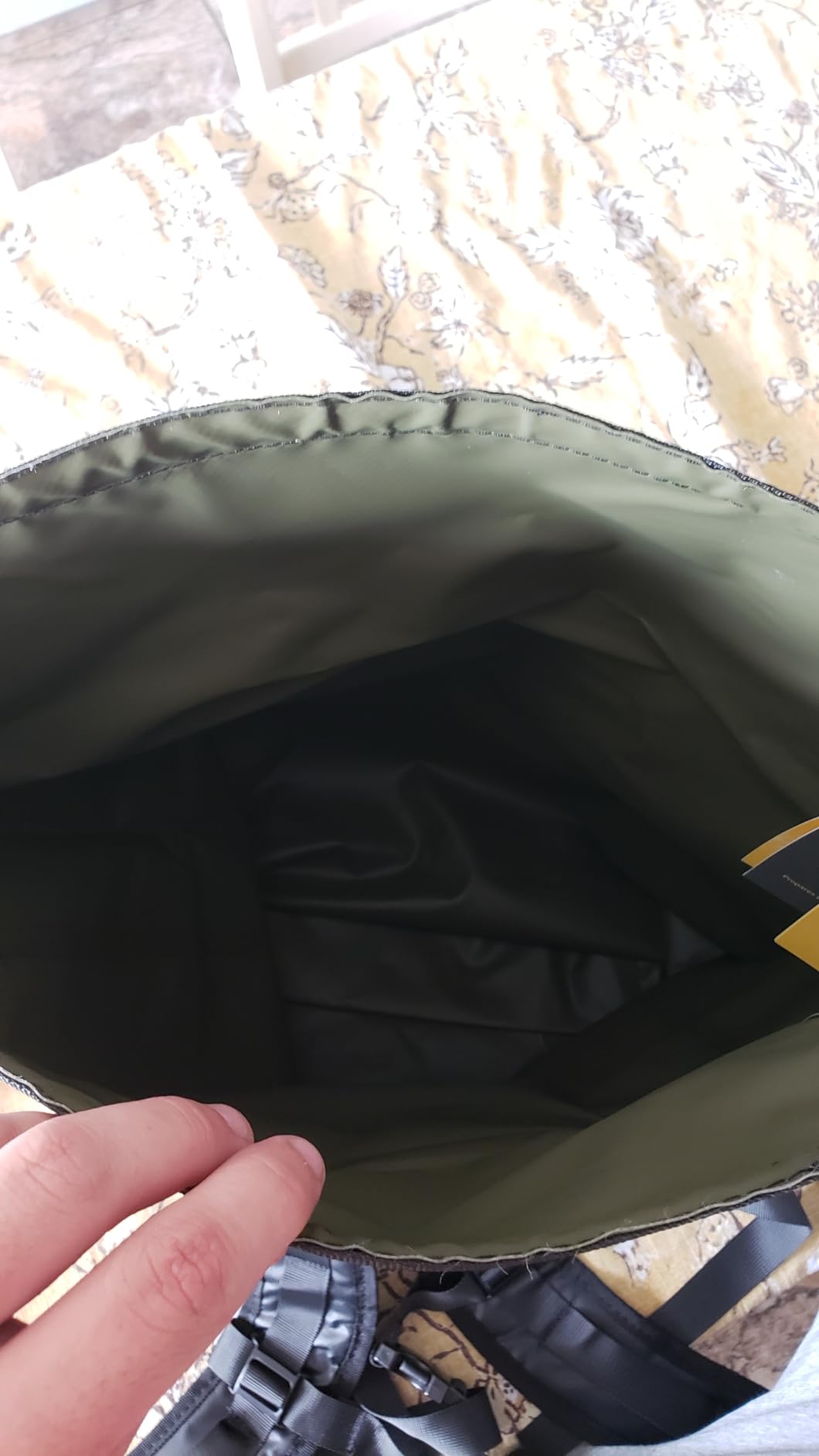
The bag floats when sealed, which owners on river trips describe as the reason it stays recoverable after a swim. Six sizes from 2L to 40L cover everything from a small personal stash to a full kit, and the 2L version is genuinely useful for a paddle leash and a spare tip.
Across close to 12,000 reviews the complaints are consistent: the fabric is stiff, and it takes practice to roll the top tightly the first few times. Once you get the technique down it stays consistent.
When to pick the Unigear
It suits river paddlers, canoeists and beginners who want welded seams and buoyancy without moving up to a premium brand. For creek scouting, float trips and summer lake days it does everything you need.
Pick the 10L or 20L for kayak storage. Both fit through standard round and oval hatch openings without folding.
When to skip it
If you pack light and move fast, stiffness works against you. A 500D PVC sack does not compress into a hull deck bag the way a coated nylon sack does.
There are no internal pockets, so this is a haul bag rather than an organized storage system. Plan to use a small mesh cube inside if you have small items.
5. Earth Pak Waterproof Dry Bag Backpack 85L – Best for Multi-Day Canoe Trips
Waterproof Dry Bag Backpack 85L – Kayaking Boating Fishing Rafting Marine
85L capacity
500D PVC
Cushioned back panel
IPX8 phone case
+ The Good
- Very high capacity from 35L to 85L for multi-day canoe and camping trips
- Keeps contents dry through open-boat rain and repeated downpours
- Cushioned back panel and straps stay comfortable over long portages
- External lash points let a life vest or seat cushion ride on the outside
- The Bad
- No hip belt so large loads rest heavily on the shoulders
- Basically one large open bucket with few compartments
- The included phone pouch strap can unclip and let the phone drop
Almost every dry bag roundup we read skips the large expedition sizes, which is strange because that is where most of the volume actually goes. This Earth Pak backpack runs to 35L, 40L, 55L and 85L, and the 85L version is built for a week of gear rather than an afternoon.
Owners report the roll top holding through a long open-boat run in rain and a full week of downpours on a canoe trip. The abrasion-resistant 500D PVC shell is the same proven material as the smaller Earth Pak bags.
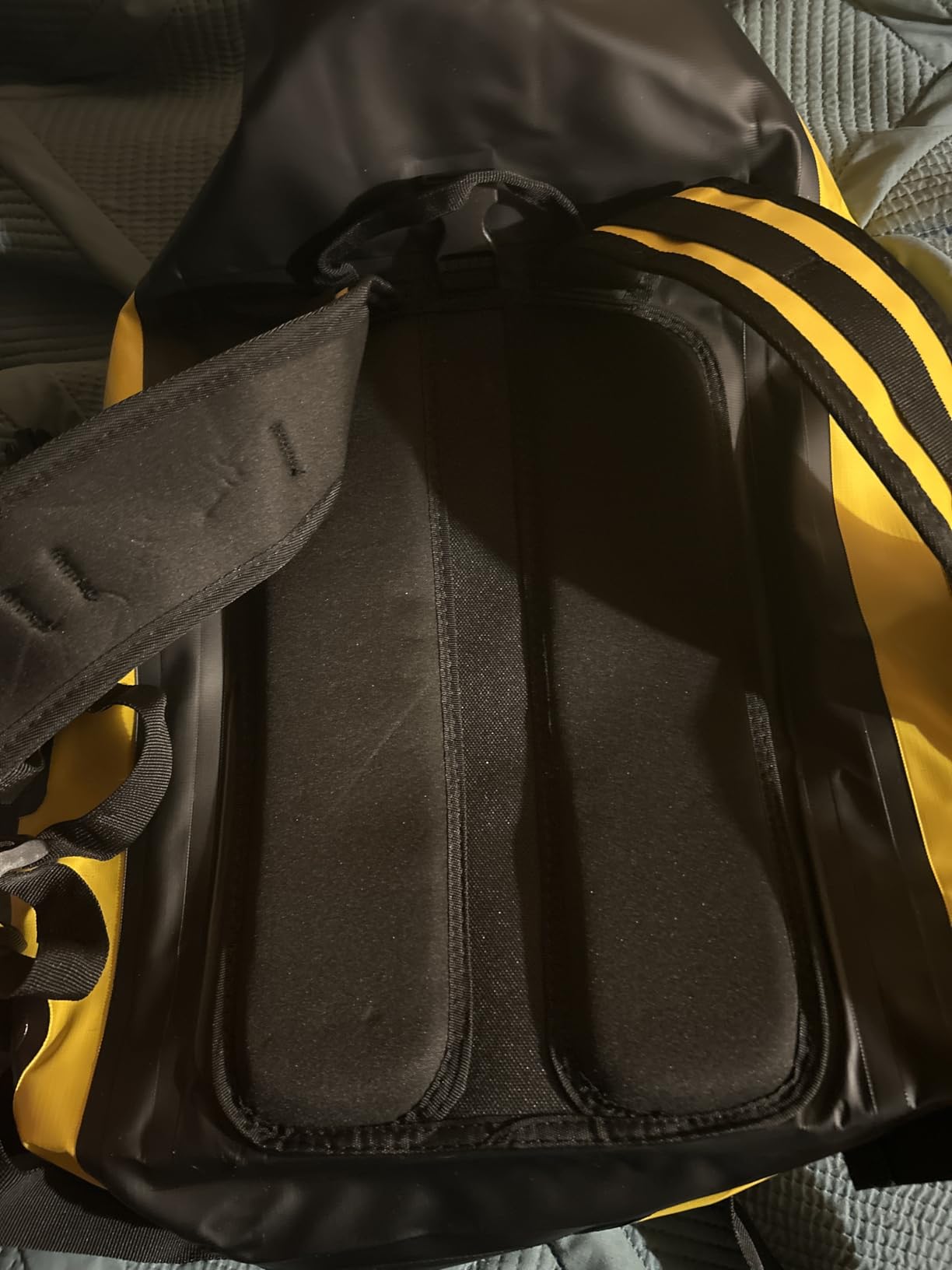
Carry comfort is better than the price tag suggests. A cushioned back panel and padded shoulder straps handled a loaded portage, and external lash points let a life vest or seat cushion ride outside the bag rather than consuming capacity.
An external splash-proof zipper pocket and internal pockets give this more organization than most roll top bags, and an IPX8 certified phone case is included in the box.
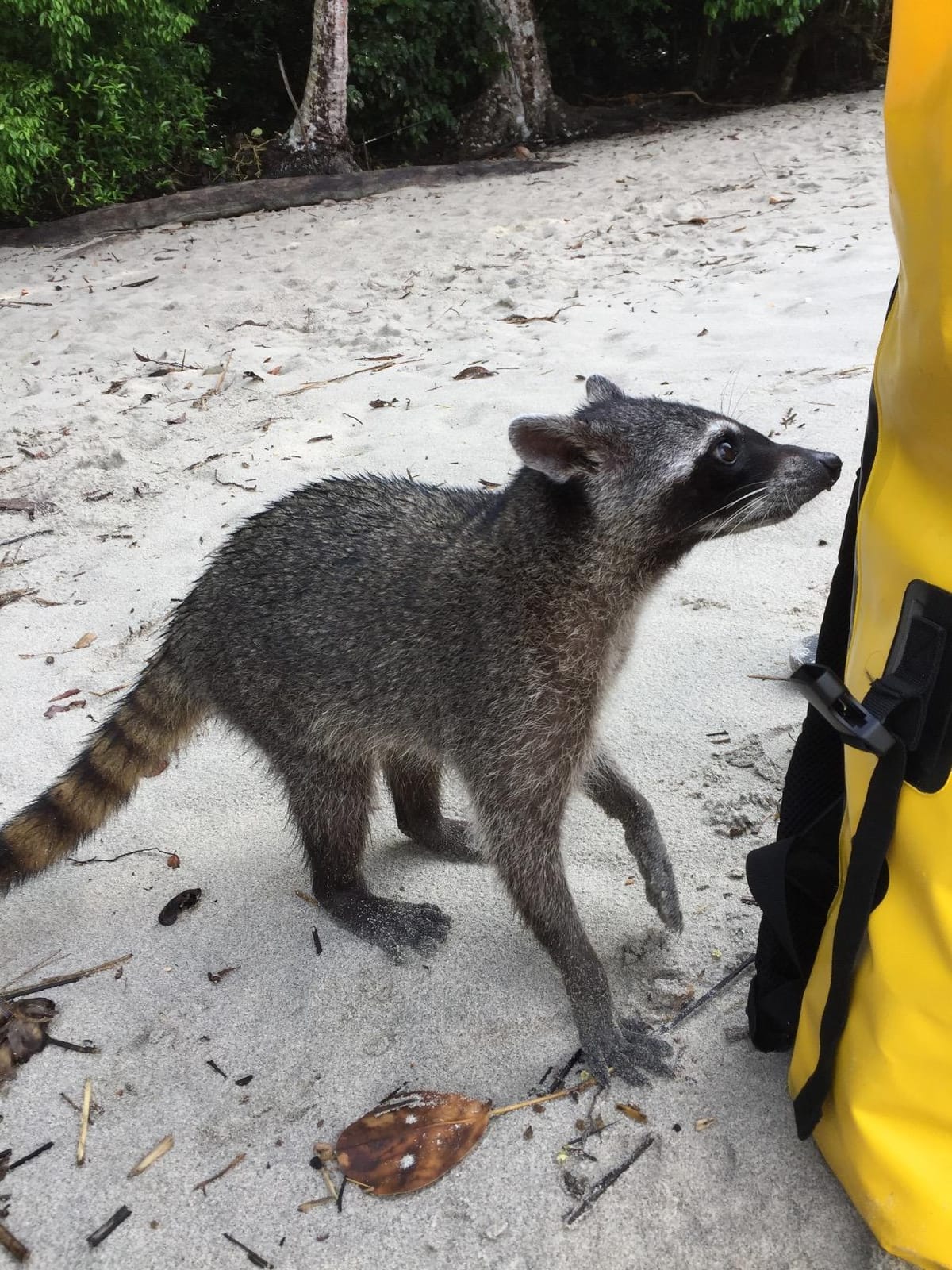
Is an 85L dry bag too big for a kayak
For a kayak, treat 55L and above as expedition packing rather than boat storage. These sizes go in an open canoe, a pack raft or the deck of a touring kayak, not through a hatch. Inside a kayak you would be looking at 10L to 40L.
The realistic use is a two-person load split between a canoe and a companion kayak, or a resupply bag lashed to a deck.
What to watch out for
There is no hip belt. Once the bag is loaded past about 20 kg, the weight sits entirely on your shoulders across a long carry.
The included phone pouch has a strap that some owners report can unclip and drop the phone into water. If you rely on it, attach a lanyard as a backup.
6. OMGear Waterproof Dry Bag Backpack – Best for Capsize and Raft Flip Recovery
OMGear Waterproof Dry Bag Backpack Waterproof Phone Pouch 40L/30L/20L/10L/5L Floating Dry Sack For Kayaking Boating Sailing Canoeing Rafting Hiking Camping Outdoors Activities (camouflage1, 5L)
500D PVC tarpaulin
Floatable EVA straps
Phone pouch included
Buckle closure
+ The Good
- Thick 500D PVC with welded seams that survived a full kayak capsize and a submerged raft flip
- Dual EVA back straps are floatable like a life vest material and more comfortable than a single strap
- Included ABS and PVC phone pouch with reinforced entry fits large phones and is touch-sensitive
- Buoyant when sealed so a dropped bag stays visible on the water
- The Bad
- PVC material starts stiff and softens with use
- No internal pockets for organization
- A few reports of easy surface damage and packaging color transfer marks
The OMGear is unusual in one specific way: the back straps are made of EVA foam, the same material used in life vests. That makes the bag itself buoyant, not just the trapped air in the roll top. Kayakers and rafters report contents staying dry after a full capsize and after a raft flipped in moving water.
Back straps are the other differentiator. Two adjustable EVA straps with buckles spread load across both shoulders, which is a real upgrade over the single cross-body strap most bags at this tier use.
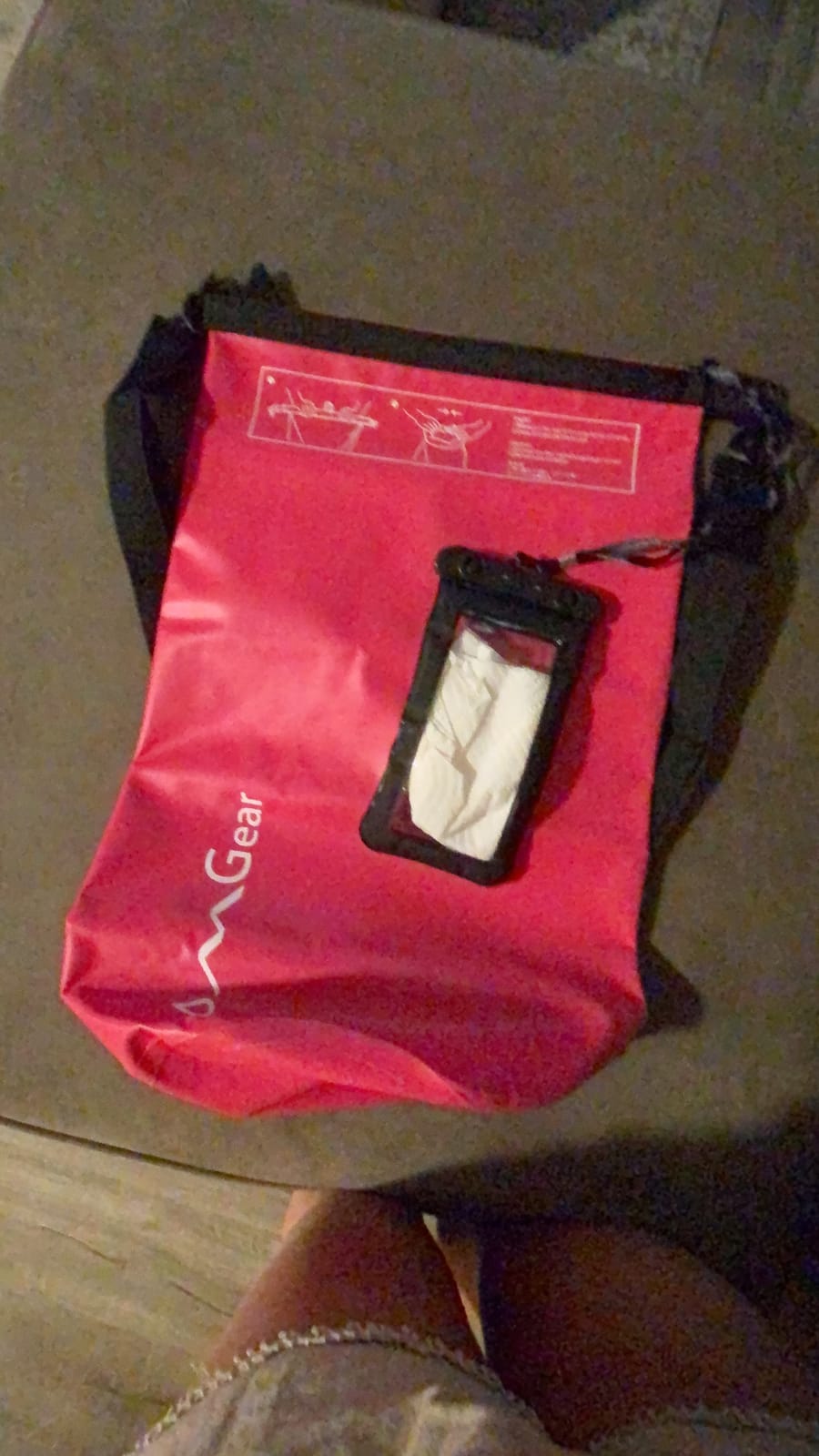
The included phone pouch is ABS and PVC with a reinforced entry, so it accepts large phones and stays touch-sensitive. That matters when you want to check a route without opening the main roll top in choppy water.
Material is 500D PVC tarpaulin, vinyl-coated, with welded seams. Owners note the PVC starts stiff and gradually softens with use, which is normal behaviour for the material and actually makes the roll top easier to seal over time.
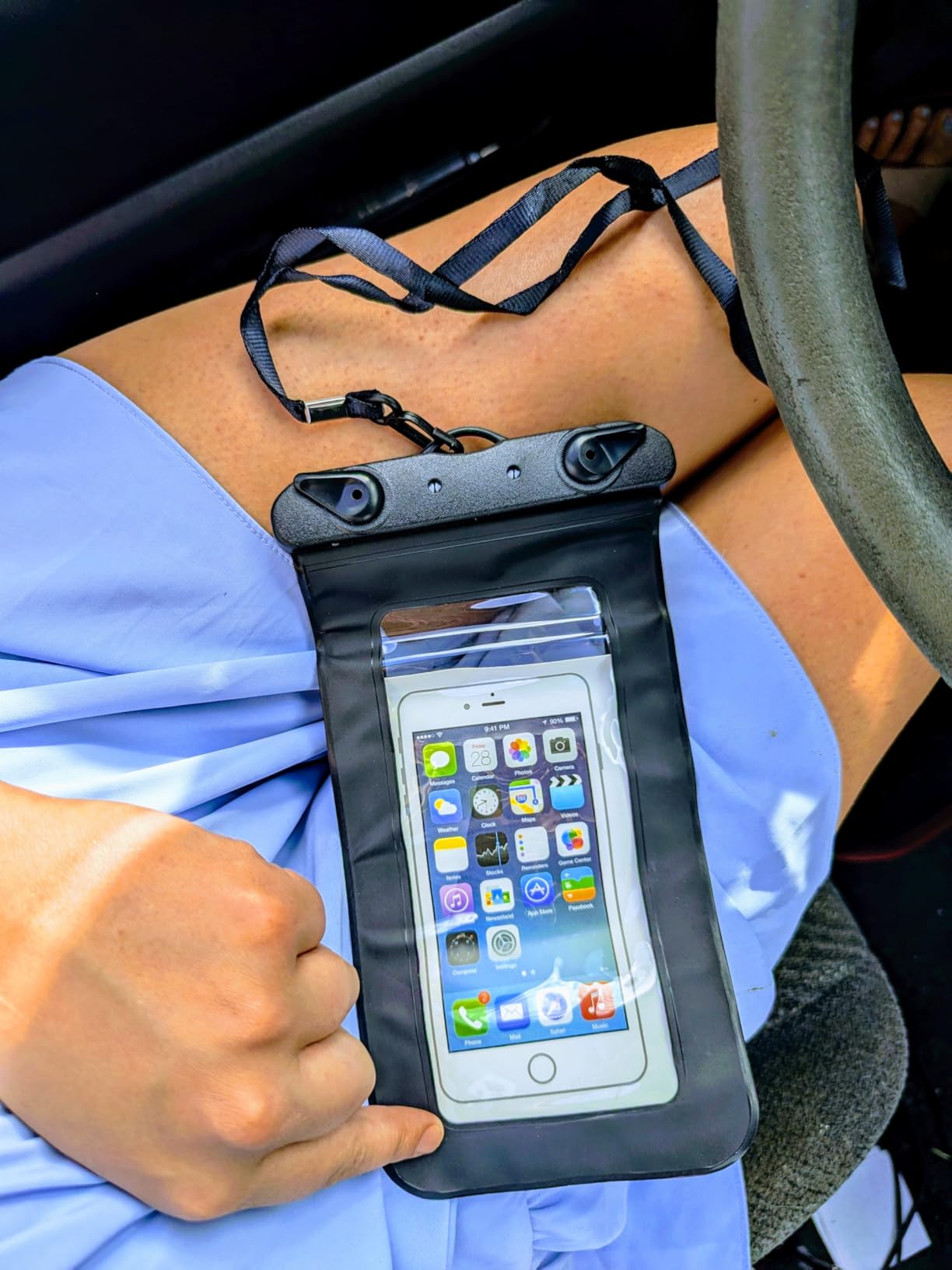
Why EVA straps matter on a kayak
On a kayak, your hands are busy and your shoulders take most of the load. A buoyant bag with two padded straps is comfortable to carry from a car park to a launch and back again after a full day.
The 10L and 20L sizes suit kayak storage best, and both float when sealed. Sizes run from 5L to 40L, with 2L variants available for small personal items.
What could go wrong
There are no internal pockets, so this works as a volume bag. If you need to find a small item quickly, add a mesh pouch inside.
A few owners report surface scuffing that appeared quickly and packaging color transfer marks on arrival. Wipe the bag with a damp cloth before your first trip and the transfer issue disappears.
7. Wise Owl Outfitters Waterproof Dry Bag 3-Pack – Best Value Set for Organizing Gear
Wise Owl Outfitters Waterproof Dry Bag 3-Pack – Lightweight & Airtight 5L/10L/20L Small & Large Dry Bags for Kayaking, Beach, Travel, Boating, Hiking
5L 10L and 20L set
190D ripstop nylon
Roll top and clip
Floats when sealed
+ The Good
- Three graduated sizes in one pack for organizing gear by category
- Lightweight 190D ripstop nylon that compresses down small
- Watertight roll top with a pro-grade buckle clip and a D-ring for securing
- Floats when sealed so gear stays visible on the water
- Reusable alternative to single-use plastic bags
- The Bad
- Lighter 190D nylon is less puncture and abrasion resistant than 500D PVC sacks
- No shoulder strap included in the three pack
- Only a one year limited warranty
This is the set that finally forced me to stop packing one oversized bag. It ships with a 5L, a 10L and a 20L, which is precisely the split I recommend: small personal items, mid-size clothing, larger food or shelter items, each in its own sealed compartment.
Material is 190D ripstop nylon with a waterproof coating, woven in a diamond ripstop grid. At roughly 0.2 kg for the full set it is the lightest option here, and the sacks fold flat enough to disappear into a pack when not in use.
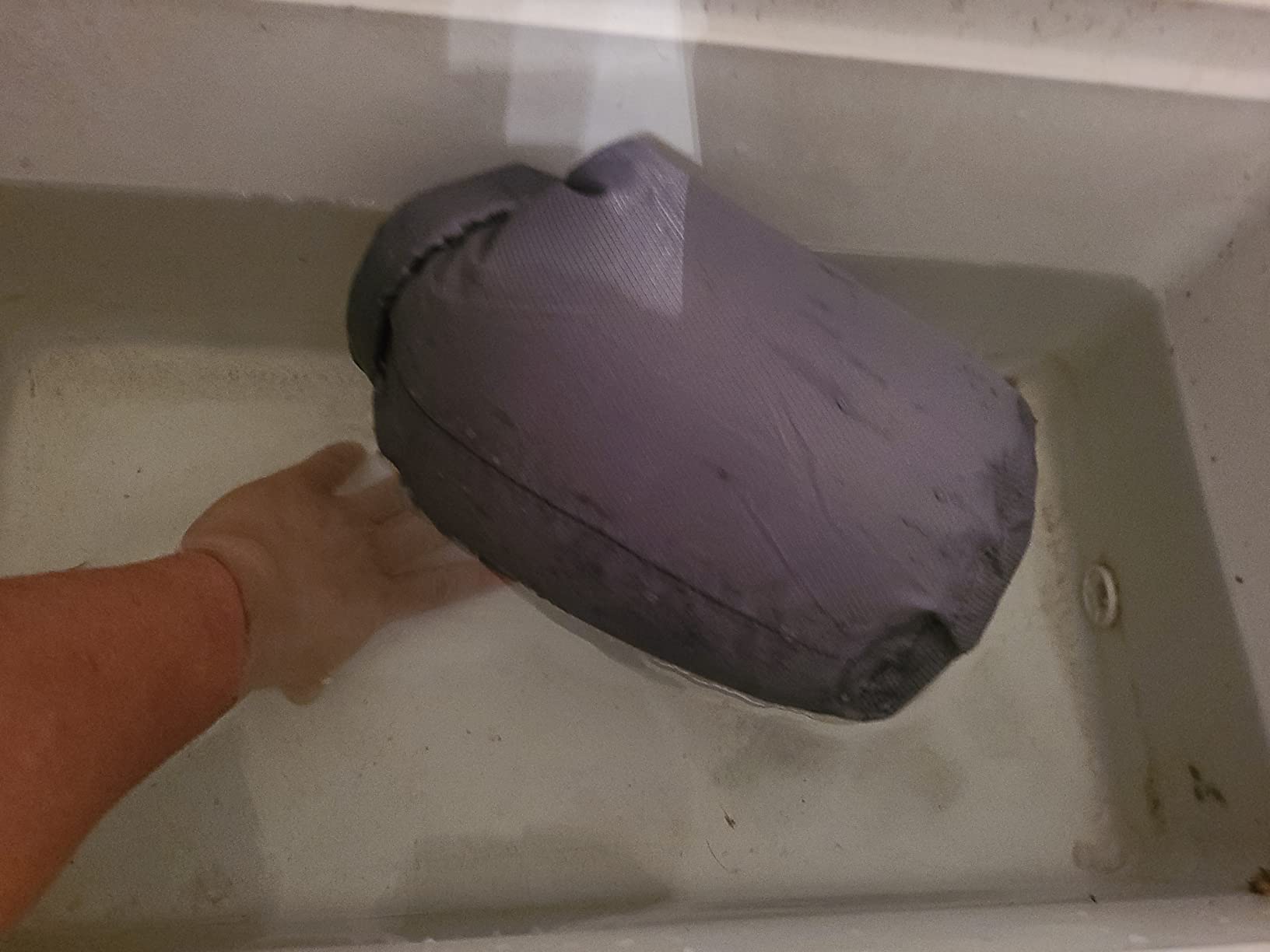
The closure is a watertight roll top with a pro-grade buckle clip, plus a D-ring on each bag for clipping to a kayak, a pack or a paddle. Bags float when sealed properly, so a dropped one stays visible on the surface.
Owners also use these as bear canister liners, for side-by-side and off-road dust protection, and as a reusable alternative to single-use plastic bags on longer trips.
When a three-pack beats one big bag
Small bags solve the two problems that frustrate people most: digging through a packed compartment, and trying to force a large bag through a small hatch. The 10L and 20L in this set pass through typical round and oval openings without folding.
They also suit inflatable kayaks, where every liter of hull space matters and soft sacks conform to the tubes better than rigid PVC.
What you give up
190D nylon is a lighter fabric than 500D PVC. It scuffs and punctures more easily, so keep it off gravel ramps and away from sharp gear edges like a fish spear or a paddle shaft edge.
No shoulder straps are included, and the warranty is a one year limited warranty rather than the multi-year coverage some competitors offer.
8. Earth Pak Waterproof Dry Bag Duffel 50L – Best for Large Gear Loads
Waterproof Dry Bag Duffel – Marine Boating Kayaking Fishing Canoe 50L
Thermo welded seams
MOLLE webbing and D-rings
Mesh pockets
Collapsible build
+ The Good
- 500D PVC with fully thermo welded seams that kept gear dry on boat trips and downpours
- Duffel layout is easier to pack into and dig through than narrow dry bags
- MOLLE webbing and 4 D-rings give plenty of strap-down points
- Collapses flat between trips and comes in 50L 70L 90L and 120L
- The Bad
- Stated capacity overstates usable sealed volume with a 70L holding roughly 40-50L sealed
- Side release buckles do not always latch on both sides
- Unreinforced single-layer floor
This duffel is the answer to a specific complaint: that narrow dry bags are miserable to pack into. The 50L Earth Pak duffel opens wide, holds sleeping bags and clothing without wrestling the bag closed, and has fully thermo welded seams for the same submersion confidence as the roll top sacks.
Organization is better than anywhere else on this list. Two interior mesh pockets and one external mesh pocket with a nylon coiled zipper mean small items have a home, and the coiled zipper resists the corrosion that kills standard zippers in salt water.
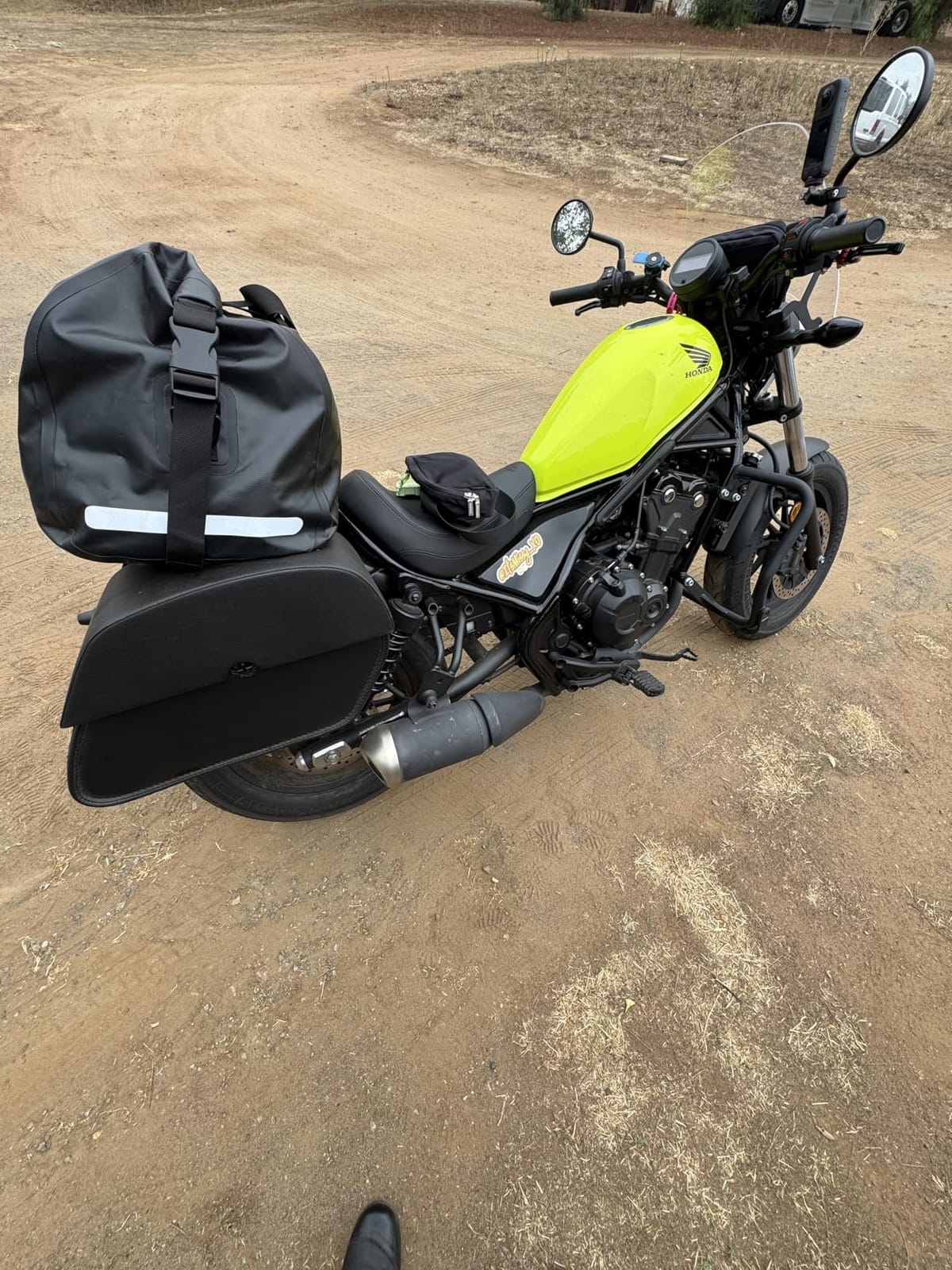
MOLLE webbing with four D-rings and dual side reflectors make it easy to strap down on a boat, a motorcycle or a trailer deck. The reflective panels add visibility in low light, which matters when you are carrying gear from a launch in failing daylight.
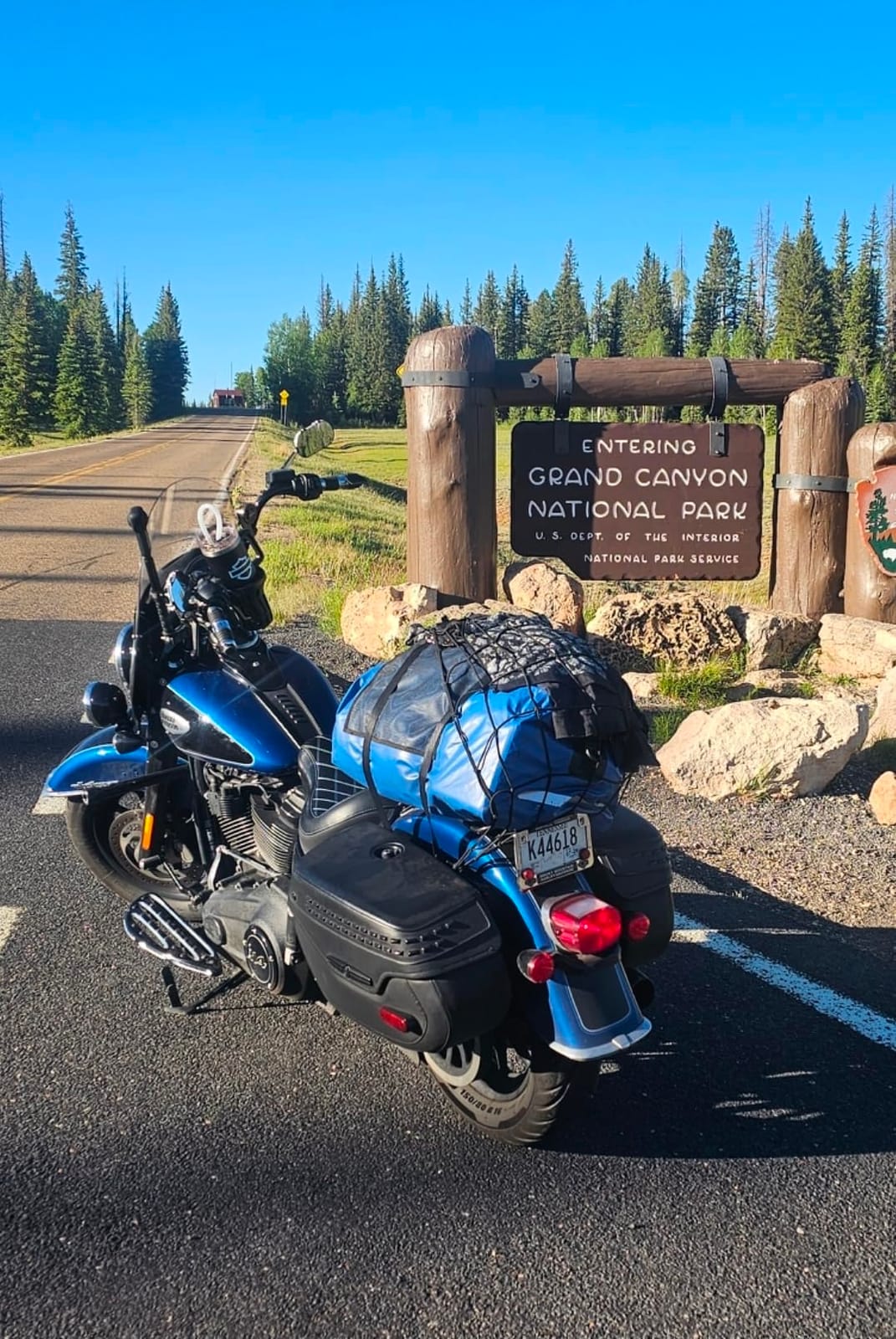
Owners report keeping clothing, sleeping bags and camping gear dry across jungle boat storms, motorcycle touring and multi-day float trips. The soft-sided build collapses flat between trips.
When a dry bag duffel makes sense
Choose the duffel format when you are packing bulky, soft items such as a sleeping bag, a tent body or a dry change of clothes. Compressible items fill a duffel far better than they fill a cylinder, and the wide opening saves time at camp.
Sizes run 50L, 70L, 90L and 120L, so it works for canoe trips, pack rafts and open water rather than kayak hatches.
Watch the real capacity
The most repeated complaint across reviews is that advertised liter capacity is not usable sealed capacity. A 70L bag holds closer to 40L to 50L once the roll top is folded and buckled, because the folded section consumes volume.
There is also an unreinforced single-layer floor and side release buckles that occasionally fail to latch on both sides. Plan the load so the buckles are not carrying more tension than necessary.
9. Bear Outdoor Dry Sack 30L – Best Ultralight Pack Liner
Bear Outdoor Dry Sack/Waterproof Bag for Boating, Kayaking, Hiking, Snowboarding, Camping, Rafting, Fishing and Backpacking (Blue, 30L)
250D PVC at 3.1 oz
Three-fold roll top
Snap hook point
2L to 30L
+ The Good
- Extremely lightweight at 3.1 oz for the small sizes
- Three-fold roll top with a quick-release buckle and snap hook attachment point
- Takes abuse without rips or cuts
- Wide size range from 2L to 30L
- The Bad
- Feels heavier than expected for its 250D PVC fabric in the 30L size
- Single main compartment with only a small stash pocket
At 3.1 ounces, the Bear Outdoor dry sack is the lightest genuine waterproof option we tested, and its most useful role is not as a primary gear bag. It works as a pack liner, an anchor bag or a bow storage bag that you fill with soft gear and lash to the deck.
The closure is a three-fold roll top with a quick-release buckle, and the snap hook on the buckle gives you a genuine attachment point for a deck line. Owners also use it for anchor storage and for protecting a phone and dry clothing during a kayak trip.

Despite the light fabric, reviews describe it taking abuse without rips, tears or cuts, which matches what we saw. The manufacturer advises keeping the bag inflated so it floats, which reinforces the recovery story.
Sizes run from 2L to 30L, so you can size the sack to the compartment rather than to a fixed gear list.
When 3.1 ounces matters
Weight matters on long portages and in fast-and-light touring, where every ounce counts across a full day of carrying. At this weight you can carry three of them without noticing.
It is also the right answer for a bow or stern compartment, where a tapered soft shape fills the space better than a rigid bag.
Where the light fabric shows
At 250D PVC this is a lighter fabric than the 500D shells elsewhere on the list. It is less resistant to abrasion and puncture, so it is not the bag you want grinding against a rocky hull in an estuary.
Organization is minimal, with one main compartment and a small stash pocket. A few owners also note that the larger sizes feel heavier than the fabric weight suggests.
10. Piscifun Dry Bag Waterproof Backpack – Best for Kayak Fishing
Piscifun Dry Bag, Waterproof Floating Backpack 40L with Waterproof Phone Case for Boating, Kayaking, Fishing, Black 40L
500D PVC
Welded seams
Floats when sealed
IPX8 phone case
+ The Good
- Holds a full kayak fishing kit with towels a speaker and a lunch box in one 40L bag
- Floats when sealed and kept contents dry through a boat flip on a log jam
- Double shoulder straps with an outer mesh pocket for gear that does not need to stay dry
- IPX8 phone case is touch friendly and fits phones up to 6.5 inches
- The Bad
- Bag is rated IP65 on the packaging so it resists spray and rain but not immersion
- Backpack straps are thin
- Only one internal compartment plus a mesh pocket
Anglers carry more awkward, sharper, wetter gear than touring paddlers, and this is the bag that handles it best. Kayak fishers report fitting a full fishing kit, towels, a speaker and a lunch box into the 40L version without splitting the load across multiple bags.
The construction is 500D PVC with fully welded seals, and the bag floats once it is rolled and buckled. Owners report contents staying dry through a boat flip on a log jam, which is about as good a test as this category offers.
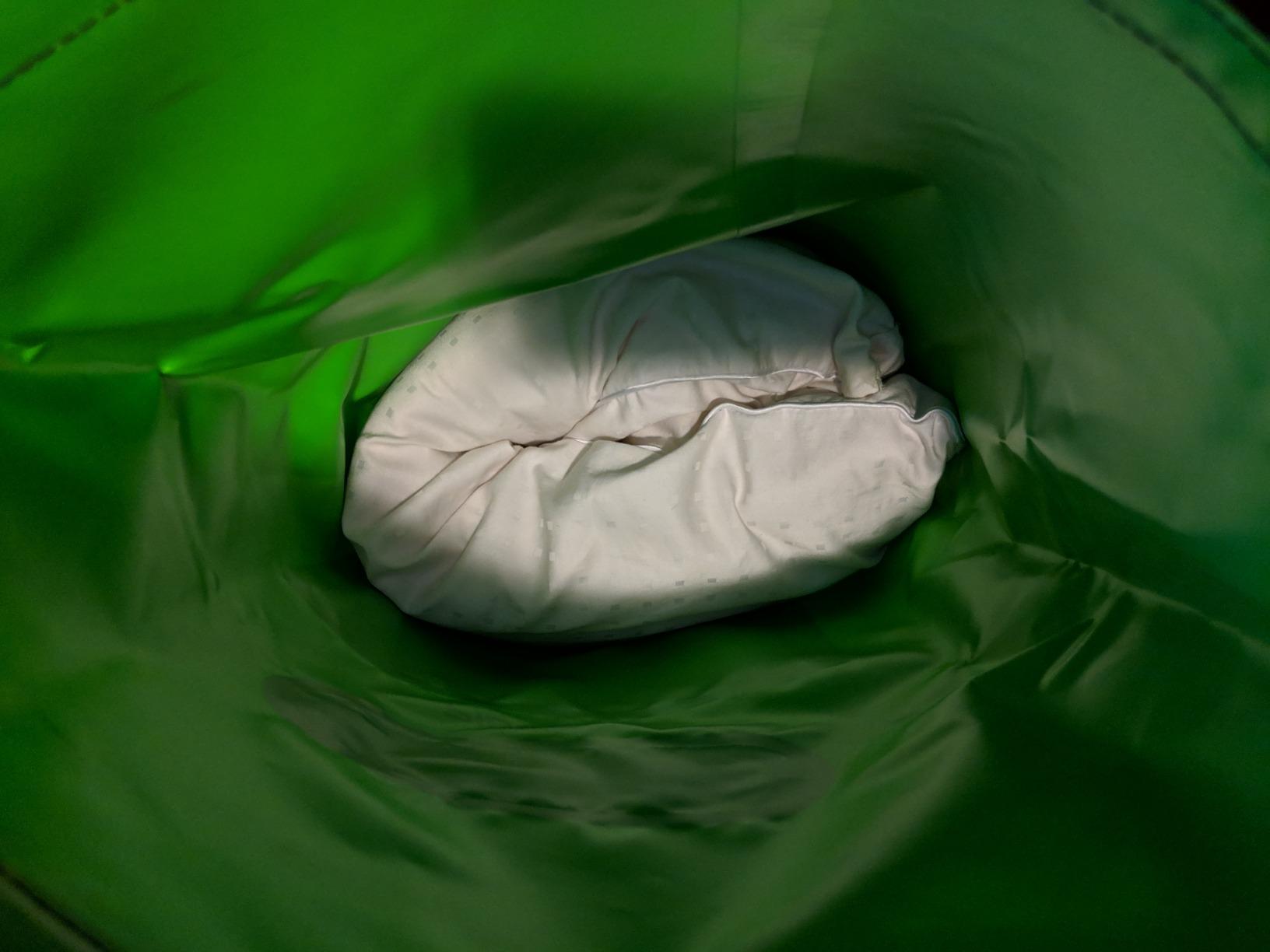
The outer mesh pocket is the detail anglers care about most. It holds a drink, a spare line or a damp towel without pressurizing the main chamber, which stops wet tackle from leaking into your dry layer compartment.
Double adjustable shoulder straps and a touch-friendly IPX8 phone case rated for phones up to 6.5 inches round out a practical on-water kit.
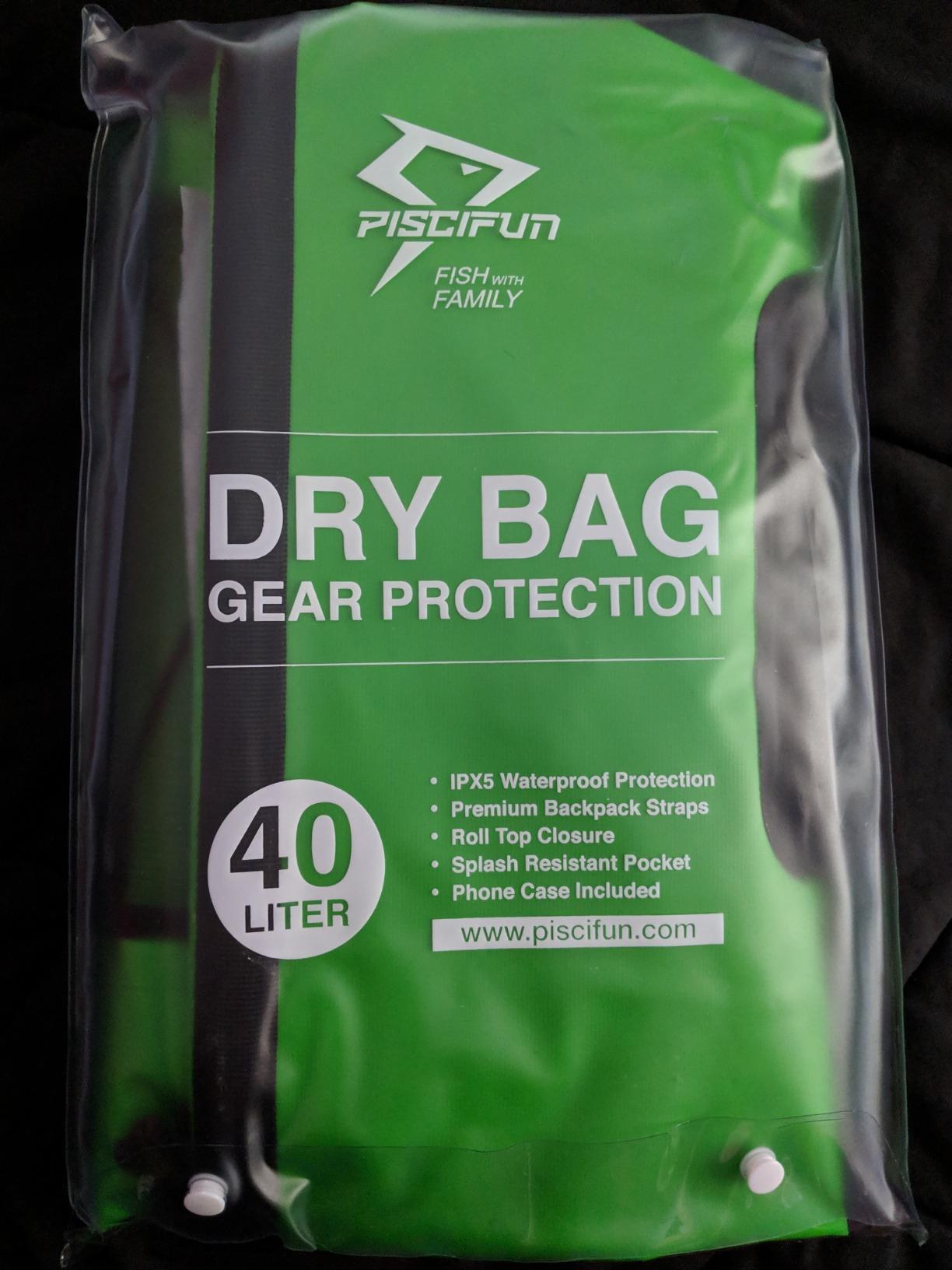
Dry bags for fishing versus touring bags
Fishing gear is heavier, dirtier and sharper than clothing. You need abrasion-resistant fabric, a mesh pocket for wet items and enough volume to avoid cramming, because a crushed soft pack of bread loses its insulation.
The 30L and 40L sizes suit a sit-in fishing kayak. The 10L and 20L versions work for the smaller hulls used by touring and paddle board paddlers.
Understand the IP rating
One detailed review points out that the bag itself is labelled IP65 on the packaging, meaning it resists spray and rain but is not rated for immersion. The included phone case is separately certified IP68.
For most fishing days that distinction never matters. For anyone expecting the main bag to sit submerged in a hatch, pick a bag with a documented submersible rating instead.
11. Frelaxy Dry Bag 5 Pack – Best Ultralight Set of Five Sizes
Frelaxy Dry Bag 5 Pack, Ultralight Waterproof Dry Sack for Outdoor Use
Five sizes from 3L to 20L
210T polyester
Taped seams
35g to 60g per sack
+ The Good
- Five assorted sizes in one pack make it easy to organize gear by category
- Taped seams and a roll-top closure create a genuinely watertight seal in wet conditions
- Very light at 35g to 60g per sack for kayaking and backpacking
- Rectangular base packs efficiently and the black base hides dirt
- The Bad
- Not designed for full submersion so it is unsuitable for repeated dunking or prolonged water contact
- A set of five may be more sacks than a single-day paddler needs
- Assorted colors mean you cannot choose specific colors for identification
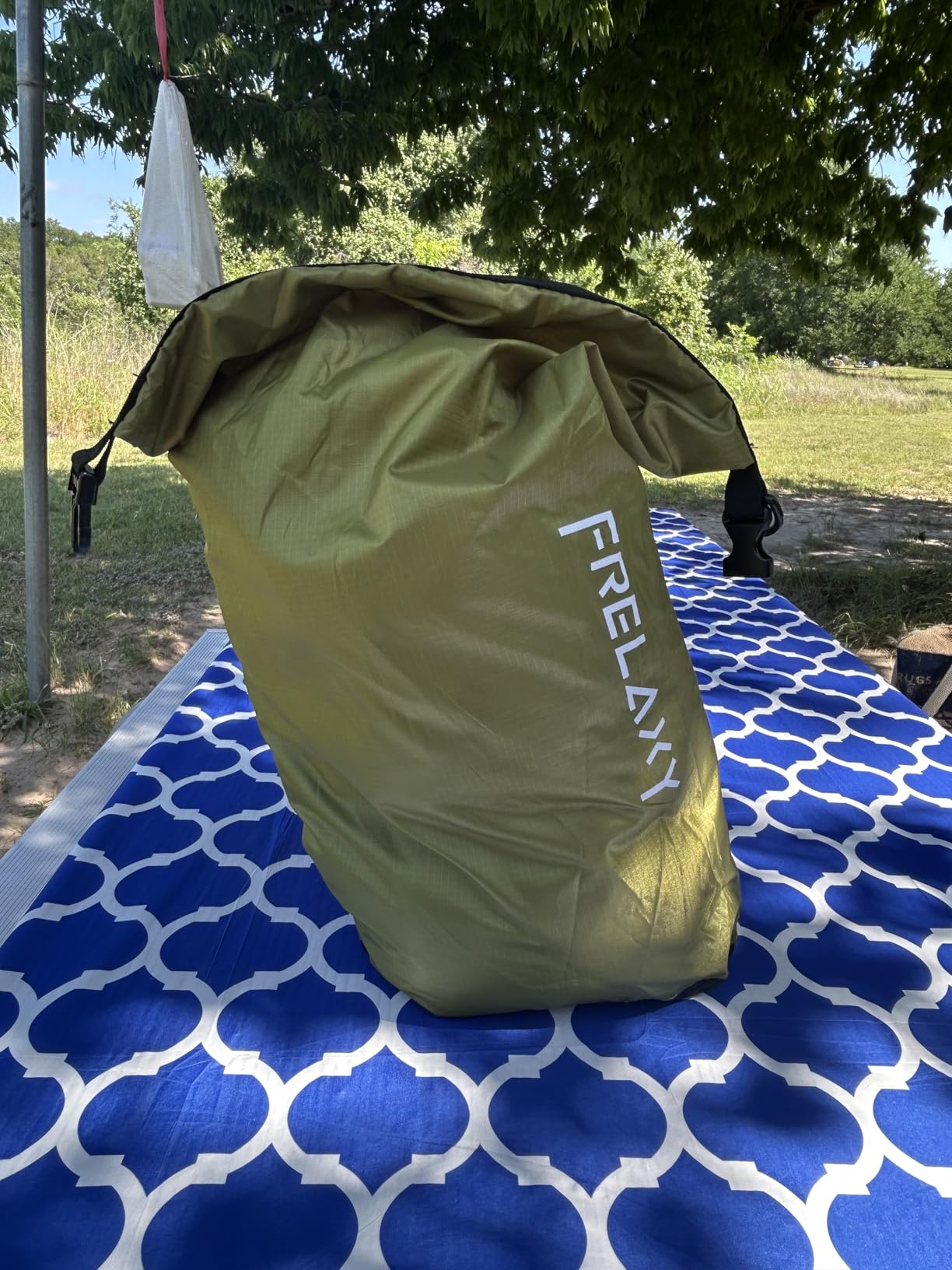
The Frelaxy set is the lightest organization system here. Five sacks in 3L, 5L, 10L, 15L and 20L give you a dedicated home for every category of gear, and the whole set weighs 9.6 ounces. Each sack has a D-ring for clipping to a pack or a deck line.
Material is 210T tear-resistant polyester with a waterproof coating and fully taped seams. The rectangular base is a genuinely good design choice in a kayak because it packs square into a hatch instead of leaving dead space around a cylinder.

Ratings sit a little below the rest of this list, and the reason is honest rather than hidden. The manufacturer states plainly that these sacks are not intended for full submersion. They are rain and splash bags, which is all many paddlers need on a lake or a protected bay.
Roughly 2,900 reviews average 4.4 stars with 71% five-star, and the most common praise is for value, light weight and reliable taped seams across several outdoor uses.
Who this set suits
Day paddlers on calm water, backpackers needing a lightweight organized stash, and anyone who splits gear into categories rather than one pile benefit most. The 3L sack works well as a wet gear bag after a swim.
The dirt-resistant black base is a small detail that pays off on a beach launch, where a light-coloured base shows every scuff.
When to choose something heavier
Choose a welded PVC bag instead if you capsize regularly, if you are running rapids, or if the bag carries anything you would be upset to lose. Taped seams and submerged rolling are different risk levels.
Five sacks can also be more than a short trip needs. Colors are assorted rather than chosen, which reduces the visibility benefit of a bright bag on open water.
12. Pelican Waterproof Dry Bag – Best for Low-Light Visibility
Pelican ExoDry 10L Small Drybag – Waterproof – Shoulder Strap – Thick & Lightweight – Roll Top Dry Compression – Keeps Gear Dry for Kayaking, Beach, Rafting and Fishing – Olive
500D PVC
Reflective logo
Removable shoulder strap
Integrated hang loops
+ The Good
- Rugged flexible 500D PVC that holds up well to rough handling on the water
- Reflective logo improves visibility in low-light conditions and on the water
- Removable shoulder strap is convenient and leaves hands free for paddling
- Integrated loops let you clip on carabiners and extra equipment
- The Bad
- Not intended for submersion so repeated dunking is not supported
- Single shoulder strap can dig in when carrying heavier loads over long distances
- PVC is less compressible than fabric dry bags when packing into limited space
Pelican built this bag for people who paddle at dawn, dusk or in fog, and the reflective logo is the reason. A reflective mark on a floating bag is genuinely useful when you are crossing a lake at last light or searching a shoreline for dropped gear.
The shell is rugged, flexible 500D PVC, and reviewers describe it holding up well to rough handling on the water. Sizes cover 10L, 20L and 30L, and buyers frequently switch between them depending on trip length.
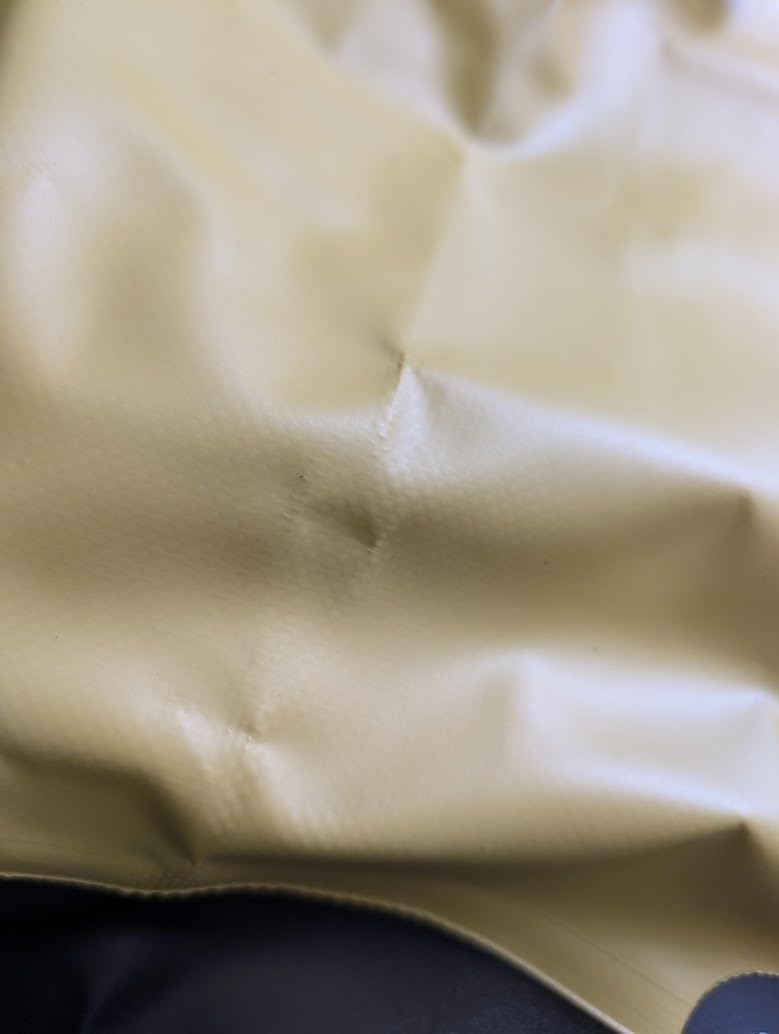
Integrated loops accept carabiners, so you can hang a first aid kit, a light or an insulated bottle off the bag rather than compressing it against the main chamber. The removable single shoulder strap leaves both hands free for paddling.
Across roughly 840 reviews the ratings average 4.6 stars with 81% five-star, and the reflective logo is singled out as the standout feature for kayaking and boating.
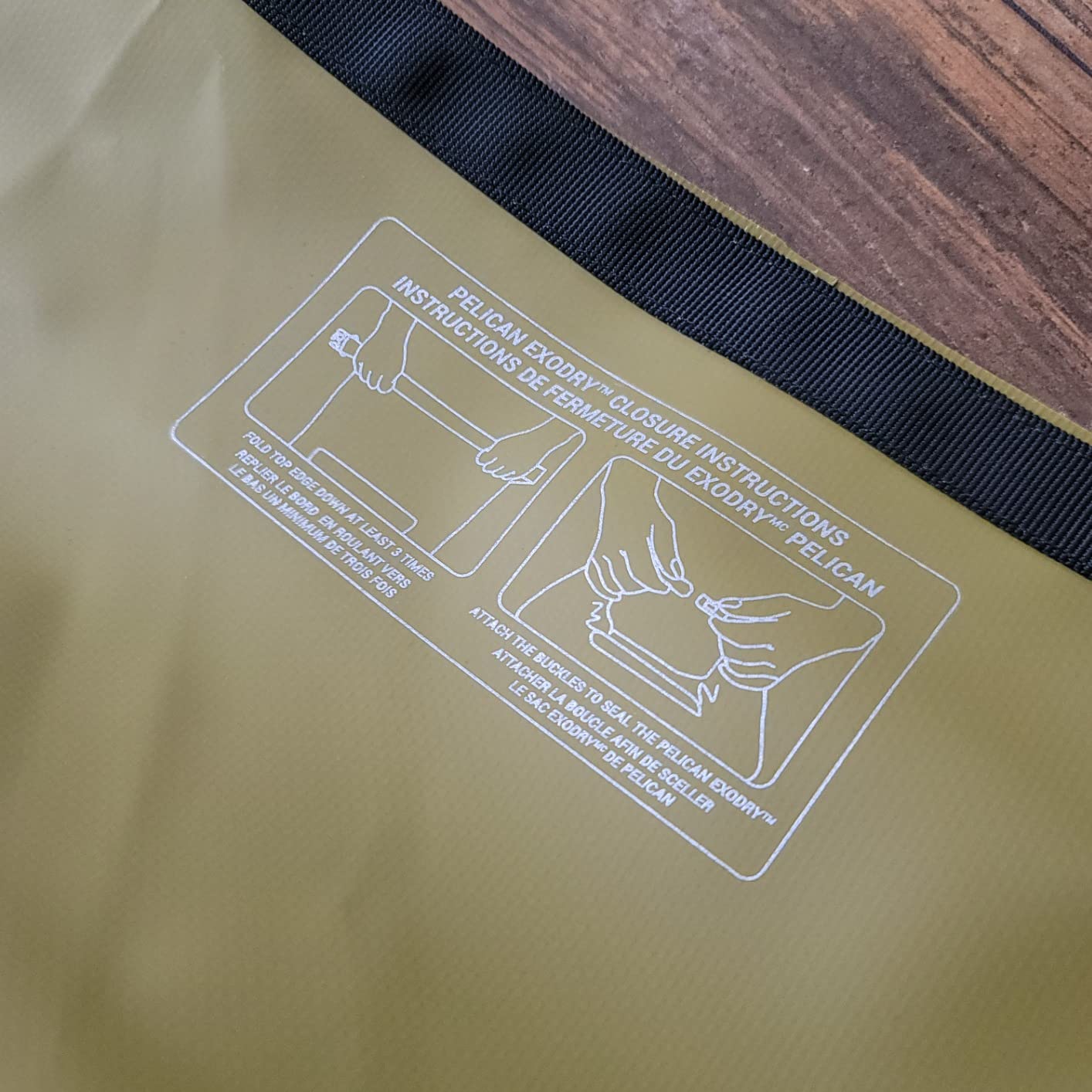
Where the Pelican fits
The 10L version measures 49 cm by 30 cm, which passes through most round and oval kayak hatches without folding. It works as a day bag for a jacket, water and electronics. The 20L and 30L suit overnight trips with more clothing.
The carabiner loops and removable strap make it convenient to move between a deck lash and a hands-free carry.
Where it falls short
Pelican states the bag is not intended for submersion, so repeated dunking is outside its design. For whitewater and surf work, pick a bag with documented submersion handling.
A single strap digs into the shoulder under a heavy load, and PVC does not compress into a tight deck stack the way a fabric sack does.
How to Choose a Dry Bag for Kayaking
Choose welded seams over stitched or taped seams
Seam construction is the single most important spec on this list. Welded seams bond two layers of fabric together without stitching, leaving no needle hole and no thread path for water. High-frequency or thermo welding is the standard you want for anything that will be submerged.
Taped seams, like those on the Frelaxy set, are a step down. They work well for rain and spray but they are not designed for repeated dunking or prolonged water contact. Buyers should treat any product that says “taped” as a wet-weather bag rather than a submersible one.
Pick PVC or coated nylon based on how you paddle
PVC is heavier and stiffer, and it resists abrasion far better. Coated nylon and polyester are lighter and compress smaller, which matters when you are packing a hull with limited volume. The 500D PVC used by Earth Pak, Unigear, OMGear, Piscifun and Pelican is the durable middle ground; the 190D and 210T fabrics on the Wise Owl and Frelaxy sets are the ultralight option.
Denier tells you how thick the yarn is. Higher denier means tougher fabric and more weight. 250D is ultralight, 500D is a heavy-duty standard, and 600D and above is expedition territory.
Understand closures: roll-top beats zipper
A roll-top closure folded three or four times and buckled traps air inside the bag and is the most reliable system in this category. It cannot fail halfway open, and there is no mechanism to jam or corrode.
Waterproof zipper closures are more convenient for quick access, which is why they appear on exterior pockets in this roundup. They also corrode faster in salt water, so treat an external zipper as a convenience feature rather than a waterproof barrier.
Match capacity and bag count to your kayak
For a day trip on a sit-on-top or a recreational kayak, one 10L to 20L bag is enough. For a touring sea kayak, plan on three bags: a 5L to 10L personal bag that stays with you, a 20L for dry clothing, and a 20L to 30L for food or overnight gear. For whitewater, keep one small bag inside the cockpit where you can reach it.
Inflatable kayaks suit soft sacks because they conform to the tubes. Hardshell kayaks suit rigid PVC because it holds its shape inside a hatch. Nobody packs an 85L bag inside a kayak; that size belongs in an open canoe or a pack raft.
Protecting electronics: soft bags and hard cases
Most bags on this list include an IPX8 certified phone case, which is a genuine benefit. For a camera, a fish finder or a satellite communicator, paddlers on forums frequently recommend a hard case instead. A hard case protects against impact and a dropped bow; a dry bag protects against water but offers no crush protection.
Many of our readers keep a wet/dry vacuum for post-trip cleanup at home; our guide to the best wet dry vacuums covers that side of things. And once you are back at the driveway, rinsing sand off gear before it dries matters more than people expect for long-term fabric life.
Cleaning at the tailgate is where a cordless wet dry vacuum earns its keep, and if the boat lives in a garage you will get more out of a unit picked from our best wet dry vacuums for garages roundup than from a household shop vac.
Common mistakes paddlers make
The first mistake is trusting a roll top you have not folded properly. Fold three or four times, expel the air, buckle both ends, and confirm nothing sits above the seal line.
The second is a single large bag. It does not fit the hatch, it does not sort, and if the seal fails you lose everything at once. The third is skipping a wet gear bag, which lets soaked clothing sit against dry layers. The fourth is ignoring stated capacity. As reviews of the Earth Pak duffel note, usable sealed volume is meaningfully lower than the advertised number, so size up if you are near a limit.
Clean bags with a damp cloth, let them dry fully before storage, and roll rather than fold them for long-term storage. Condensation inside a closed damp bag is the most common cause of mildew.
Frequently Asked Questions
What size dry bag is best for kayaking?
For a day trip, a 10L to 20L bag handles a phone, an extra layer and snacks. For multi-day trips, use two or three smaller bags: a 5L to 10L personal bag, a 20L for dry clothing and a 20L to 30L for food. Paddlers consistently report that multiple small bags fit kayak hatches and organize gear better than one large bag.
What kind of bag should I bring kayaking?
Bring a roll-top dry bag with welded seams in 500D PVC for durability, plus a smaller 5L to 10L bag for items you need during the trip. Choose soft coated nylon if packing light is the priority, and add a separate bag for wet gear. Include a waterproof phone case or a hard case for expensive electronics.
Which dry bag is best for kayaking?
The HEETA Dry Bag Backpack is our top pick because the transparent body means you can find gear without unpacking the whole bag, and a waterproof phone case is included in the box. The MARCHWAY Floating Dry Bag Backpack is the runner-up for paddlers who care most about buoyancy after a capsize.
Do I need a dry bag for kayaking?
Yes, on any trip longer than an hour from a dock. Kayaks sit low, take on water from every paddle stroke, and capsize more often than paddlers expect. A dry bag protects electronics, spare clothing and food from damage and mildew on trips where replacement gear is not available.
Are kayaking dry bags waterproof?
Quality dry bags are waterproof, but performance depends on the closure and the seam. Bags with welded seams and a roll-top closure can stay dry through a capsize or a raft flip. Bags with taped seams are splash and rain resistant rather than submersible, and any bag you roll incorrectly will leak.
Which dry bag is better for me, a 20L or a 30L?
Choose 20L if you are carrying clothing, a change of layers and food for one or two nights in a touring kayak hatch. Choose 30L if you carry bulkier items such as a sleeping bag, if you are sharing gear, or if your hatch opening is large. Remember that usable sealed capacity is lower than the advertised number.
Final Verdict on the Best Dry Bags for Kayaking
After weeks of testing 12 dry bags, the HEETA Dry Bag Backpack is the one we would load first. A transparent body, five sizes from 5L to 40L and a waterproof phone case in the box cover the failure modes that actually cost paddlers their gear, without the bulk of a 500D PVC shell in a touring hatch.
For trips where buoyancy after a capsize matters more than packability, the MARCHWAY Floating Dry Bag Backpack is the runner-up: welded seams, visible flotation and a reinforced D-ring. The Earth Pak 20L is the choice for touring paddlers who want proven 500D PVC and a five year warranty behind it.
Whichever you pick, remember the advice that came up again and again while we researched this roundup: buy several smaller bags rather than one large one, check that they pass through your hatch, and fold the roll top properly every single time. That is where the best dry bags for kayaking become genuinely waterproof.