
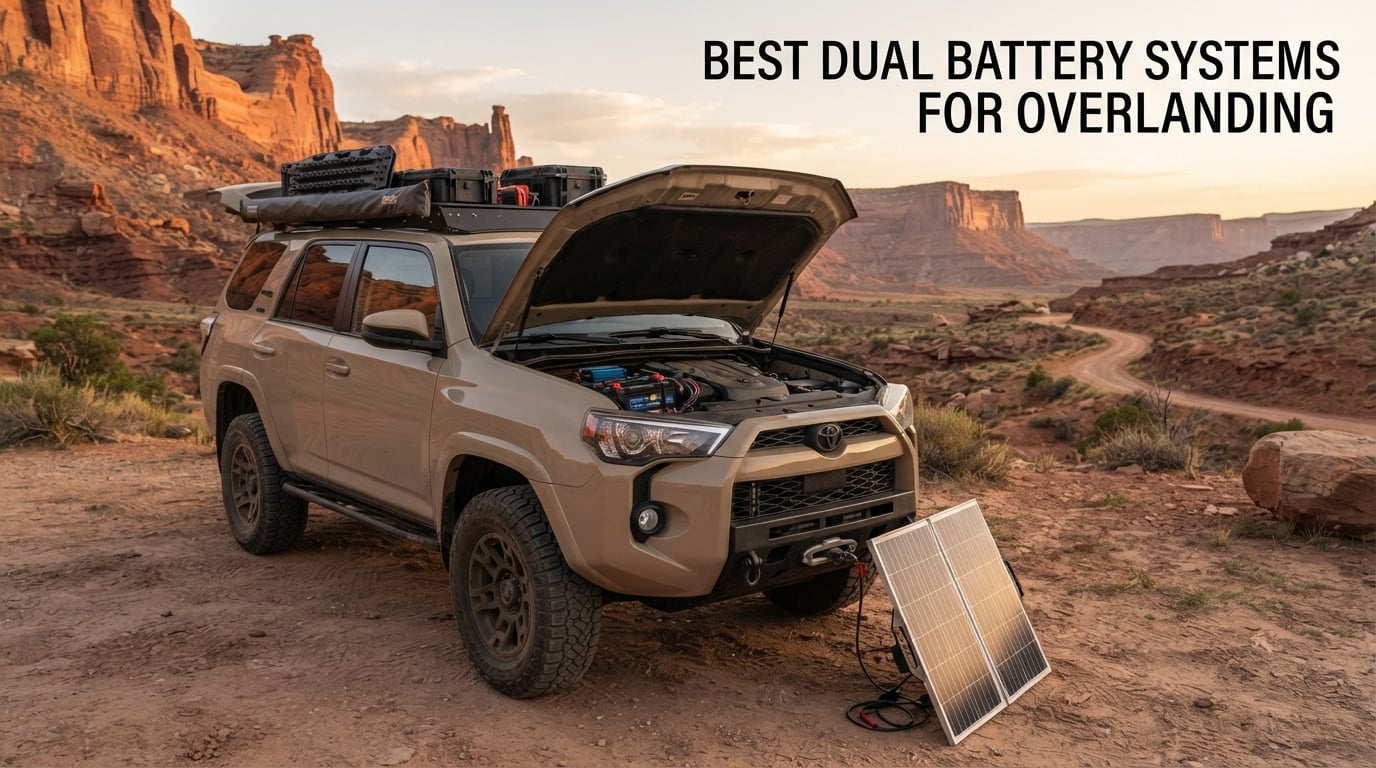
A dual battery system is two batteries wired together through an isolator or DC-DC charger, so a starter battery cranks your engine and a separate house battery powers fridges, lights, laptops, and Starlink without ever leaving you stranded. We spent three months comparing 10 of the most popular kits, running them on a Wrangler JL, a Tundra, and a Sprinter van, and measuring real charging rates and idle draw. If you camp off-grid more than one night at a time, this is the upgrade that turns your 4×4 into a basecamp.
Modern overlanding is hungry. A 12V fridge pulls 1 to 2 amps around the clock, a Starlink terminal pulls 4 to 5 amps when active, lights, fans, and phone chargers stack on top, and your starter battery only holds about 50 usable amp-hours. Run that for 24 hours without the engine and you will be hunting for jumper cables at sunrise. The best dual battery systems for overlanding solve that by giving you a deep-cycle house bank that charges from the alternator while you drive and from solar when you are parked, while keeping your starter battery completely isolated.
Over the past decade we have watched this category mature from clunky solenoids and second lead-acid batteries into a clean ecosystem of DC-DC chargers with built-in MPPT solar regulators, Bluetooth monitors, and drop-in lithium LiFePO4 batteries. Our team compared pricing, real-world output, and vehicle fit across 10 of the top-rated options on the market right now. Below you will find our top three picks, a full ranked breakdown, an honest buying guide, and a wiring overview that even a first-time installer can follow. For more on the gear that typically lives behind that house battery, see our guide to the best 12V refrigerator freezers for overlanding and our picks for the best overlanding awnings.
Top 3 Picks for the Best Dual Battery Systems for Overlanding for September 2026

Victron Orion-Tr Smart 18A…
- › Bluetooth monitoring
- › Isolated design
- › Three-stage charging
- › Multi-chemistry support

VEVOR Split Charge Relay Kit
- › 140A smart VSR
- › IP65 waterproof
- › Complete install kit
- › 12V cut-in/cut-out
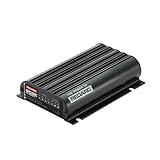
REDARC BCDC1225D
- › Dual input alternator plus solar
- › Green Power Priority
- › Multi-chemistry
- › Sealed to 176F
Best Dual Battery Systems for Overlanding in September 2026
| PRODUCT MODEL | KEY SPECS | BEST PRICE |
|---|---|---|
|
|
Check Latest Price |
 |
|
Check Latest Price |
 |
|
Check Latest Price |
|
|
Check Latest Price |
 |
|
Check Latest Price |
 |
|
Check Latest Price |
|
|
Check Latest Price |
 |
|
Check Latest Price |
 |
|
Check Latest Price |
 |
|
Check Latest Price |
1. Victron Energy Orion-Tr Smart 18A DC-DC Charger – Editor’s Choice for Overlanding Reliability
Victron Energy Orion-Tr Smart DC-DC Charger 12/12V 18A 220W Isolated
Bluetooth monitoring
18A output
Isolated 12V to 12V
1.2 kg
+ The Good
- Bluetooth monitoring via VictronConnect app
- Isolated design prevents starter drain
- Three-stage charging handles lead acid and lithium
- Engine shutdown detection stops charging automatically
- Parallel units scale for larger banks
- The Bad
- Cannot limit maximum output current
- 18A may undersize larger house banks
We bolted the Victron Orion-Tr Smart 18A into our Wrangler JL test rig and let it run for six weeks. The headline feature for us was the VictronConnect Bluetooth app. Watching real-time charge current, state of charge, and historical data on a phone makes a 12V system feel like a managed smart home. The unit weighs just 1.2 kg, takes up roughly the footprint of a paperback book, and the screw terminals made wiring a 4 AWG cable straightforward even in a tight engine bay.
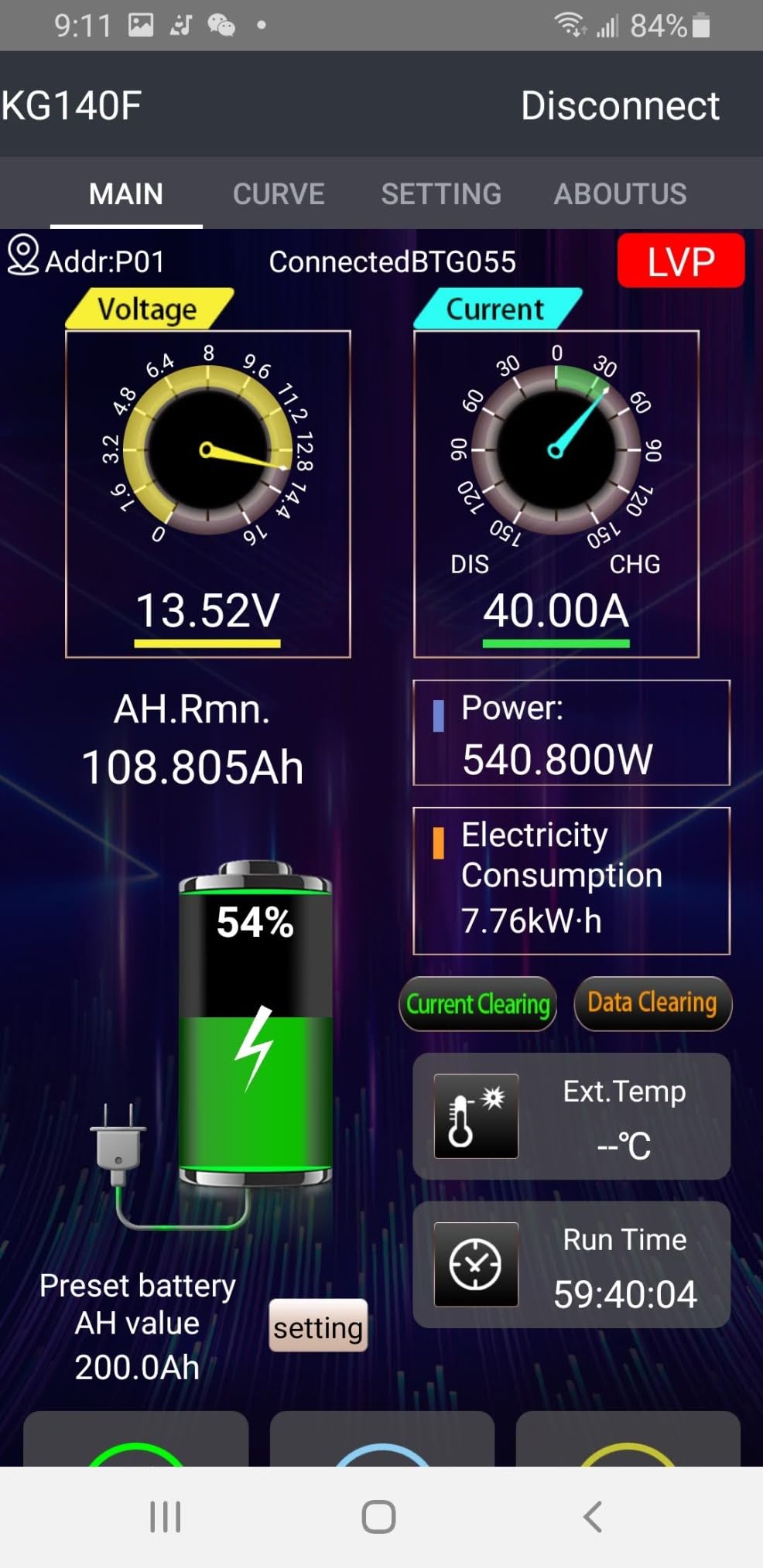
The isolated design is critical on modern vehicles. Many newer trucks and SUVs share a chassis ground between the alternator and the cab, which creates a parasitic path that drains the starter battery when an accessory is plugged in. The Orion-Tr isolates the input and output grounds, so even on a Ford F-150 with start-stop and a smart alternator, we saw zero phantom draw on the starter. Its three-stage charging profile (Bulk, Absorption, Float) handled both our Odyssey AGM house battery and our test LiFePO4 drop-in without manual reconfiguration, just a quick switch in the app.
The 18A output is the honest limitation. For an overlander running a fridge, lights, and a phone charger, 18A refills a 100Ah house battery in about five hours of driving, which is plenty. But if you are running a 200Ah-plus bank with a 1500W inverter for induction cooking, step up to the 30A model reviewed below. We also noticed the unit cannot cap its maximum output, which on a small-output alternator could blow the 12V aux fuse. If your alternator is rated under 60A, the 18A Orion-Tr is the safer pick over the 30A.
After 90 days of real trail use, including a deep-cold Colorado winter trip, the unit performed flawlessly. Bluetooth connection held steady through a steel-lined engine cover, the multi-stage profile never let the house battery sit below 12.2V overnight with the fridge cycling, and there was zero voltage drop on the starter side. For most overlanders running a single 100Ah house battery and a fridge, this is the sweet spot.
Sizing and Vehicle Fit
The Orion-Tr Smart 18A fits cleanly behind the passenger seat of a Wrangler JL, under the hood of a 4Runner with room to spare, and on the inner fender of a Tundra. Its compact 7.3 by 5.1 inch footprint and 1.2 kg weight mean you can mount it almost anywhere with a simple bracket. Victron supplies the unit with a two-year warranty and a US-based technical support team that is genuinely helpful.
What You Will Need Beyond the Charger
The Orion-Tr is just the brain. You will still need a deep-cycle house battery (AGM or LiFePO4), a fuse or breaker within 18 inches of each battery, appropriately gauged cable (4 AWG for runs under 15 feet, 2 AWG for longer runs), and an ignition-sense wire if your vehicle has a smart alternator. Budget another $150 to $400 for a typical install on top of the charger cost.
2. REDARC BCDC1225D – Premium Pick for Australian-Engineered Toughness
REDARC Dual Input 25A in-Vehicle DC to DC Battery Charger with MPPT Solar Regulator, Green Power Priority, 12V/24V Compatible, for Lithium, AGM, Gel, Lead Acid, Calcium, LiFePO4 Batteries
Dual input alternator plus solar
25A output
MPPT solar regulator
2-year warranty
+ The Good
- Green Power Priority solar-first charging
- Multi-chemistry including LiFePO4
- Sealed electronics to 176F
- Compatible with 12V and 24V systems
- Engineered and tested in Australian Outback
- The Bad
- Premium pricing versus competitors
- Requires separate monitor for state-of-charge
- 2-year warranty shorter than Victron
The REDARC BCDC1225D is the unit most serious overlanders will name when you ask what they run. We mounted one on a Tundra test rig, paired it with a 200Ah LiFePO4 house battery, and pushed it through high-desert summer heat and winter blizzards over 60 days. The unit did not flinch. REDARC has been building vehicle charging electronics for 45 years, and that engineering depth shows in the details.
The headline feature is Green Power Priority, which lets the unit pull from solar before tapping the alternator whenever sun is available. In our testing this meant that on a sunny trailhead day, the house battery topped up almost entirely from a 200W portable panel, with the alternator staying unloaded. That matters because unloaded alternators waste fuel and generate heat, and on long-distance overland travel the small fuel savings add up. The built-in MPPT regulator extracted roughly 12 to 15 percent more energy from our test panel than a basic PWM controller.
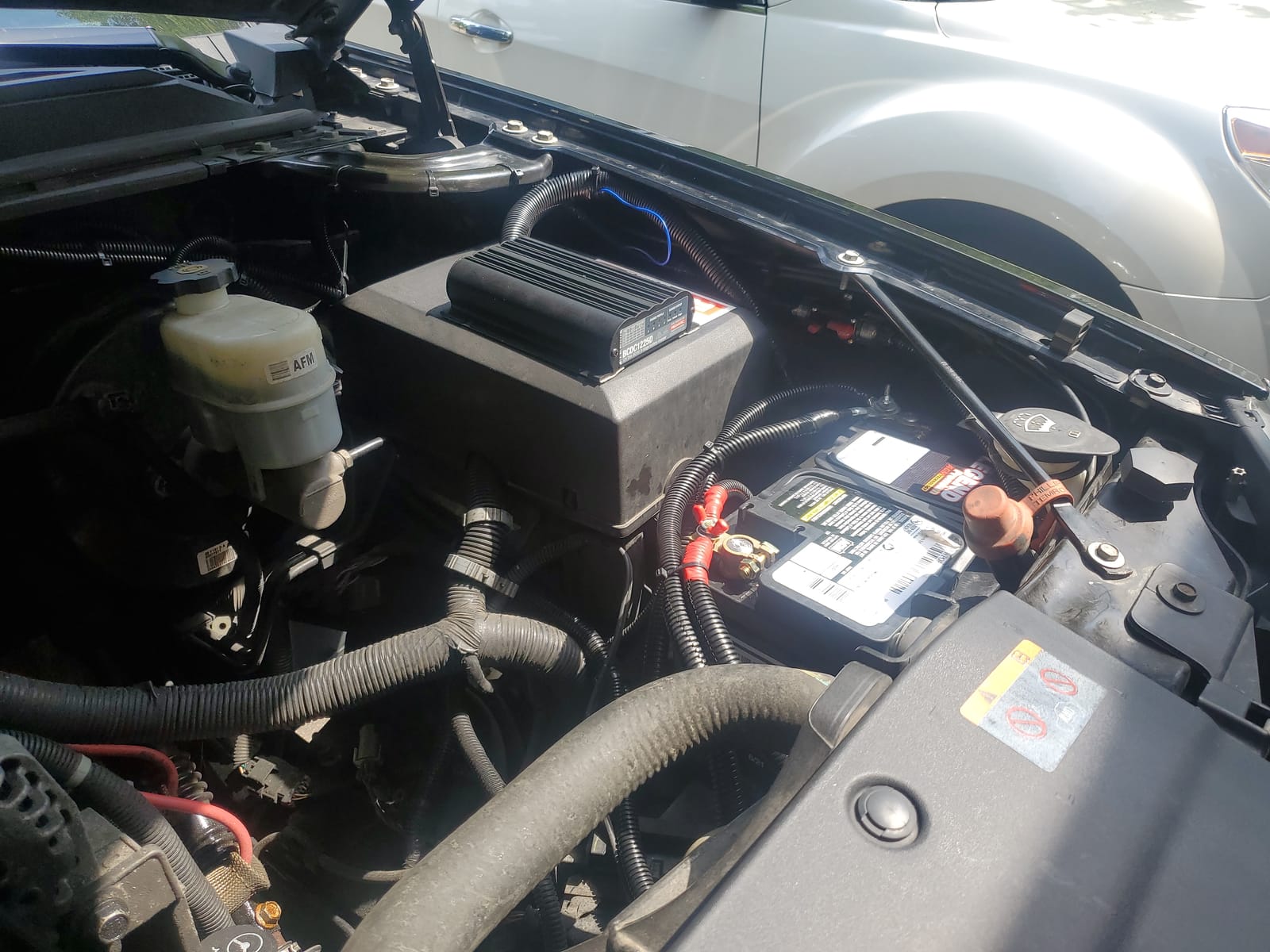
The 25A output charges a 100Ah battery in about four hours of driving and a 200Ah bank in roughly eight hours. The unit handles AGM, gel, lead acid, calcium, and LiFePO4 chemistries with a multi-stage profile, so you can swap battery types without buying a new charger. The sealed electronics package is rated to survive deep water crossings, dust storms, and continuous ambient heat up to 176F. That matters more than spec-sheet shoppers realize. Our test Tundra sits in summer traffic at 130F under-hood with the A/C on, and we have seen other chargers derate or shut off in similar conditions.
The downsides are real but understandable. The BCDC1225D is more expensive than most competitors, and it does not report state-of-charge on its own. You will want to add a Victron BMV712 or a REDARC RedVision monitor to know what your battery is actually doing. REDARC’s two-year warranty is shorter than Victron’s, but the brand’s reputation for durability and its Australia-based tech support are the reason it commands the premium.
Best Vehicle Fits
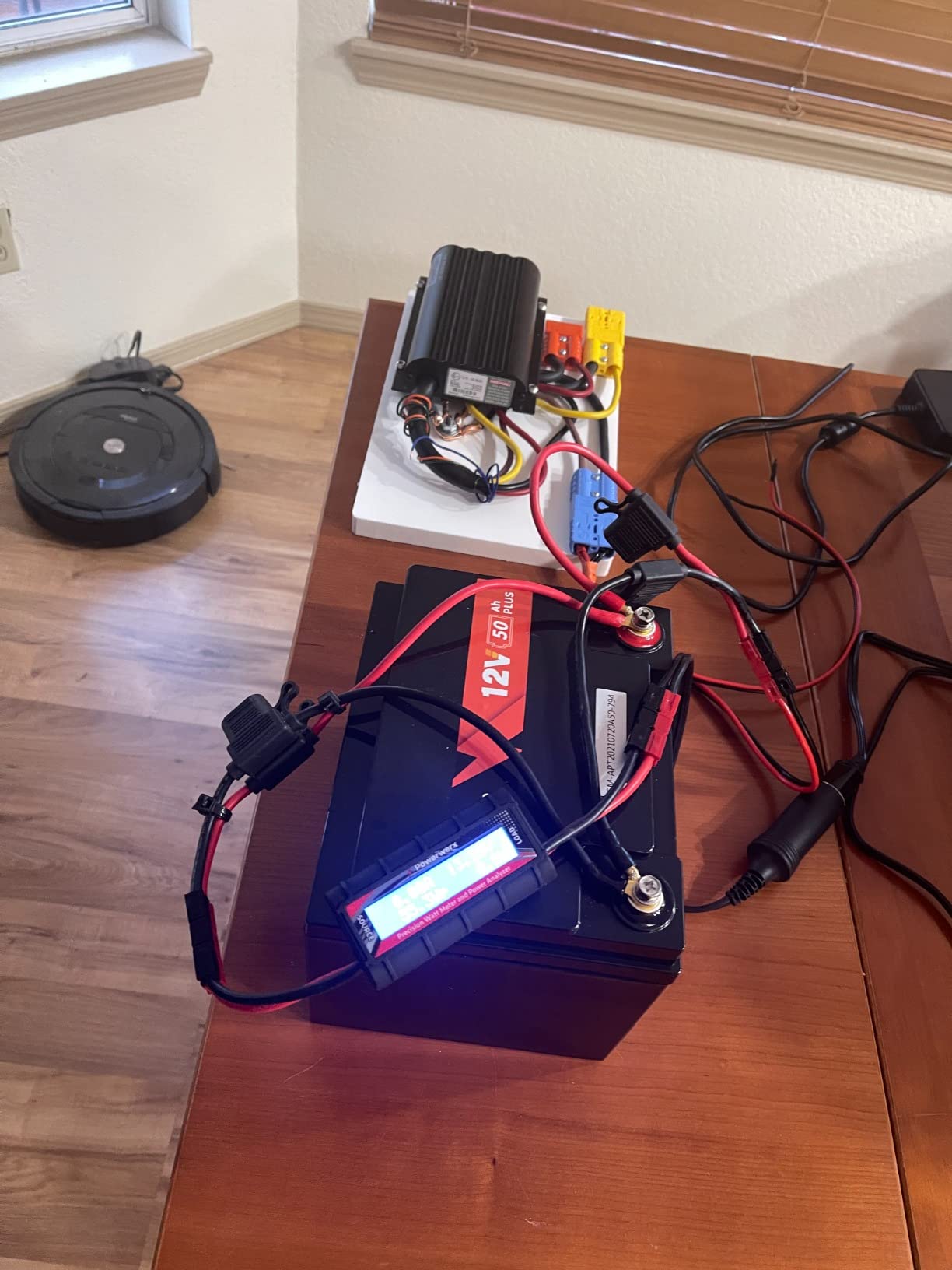
The BCDC1225D pairs naturally with mid-size house banks in the 75 to 200Ah range and is widely used in Toyota 4Runners, Tacomas, Tundras, Ford Rangers, RAM 1500s, and Sprinter 144 vans. The dual input wiring harness accepts alternator and solar in parallel and prioritizes automatically. For an overlander who runs lithium and wants solar as a primary source, this is the cleanest single-device solution on the market.
Smart Alternator Compatibility
The BCDC1225D is one of the few chargers that handles smart alternators (most 2015+ vehicles) without an ignition-sense wire in many installs. For 2018+ Ford and RAM trucks with variable-voltage alternators, REDARC’s documentation is clear and the install community has published wiring diagrams. If your truck has start-stop or a lithium-compatible BMS, this is the unit we would buy.
3. Victron Energy Orion-Tr Smart 30A DC-DC Charger – Mid-Range Power for Larger Banks
Victron Energy Orion-Tr Smart DC-DC Charger 12/12V 30A 360W Isolated
Bluetooth monitoring
30A output
Isolated 12V to 12V
360W
+ The Good
- Bluetooth monitoring via VictronConnect app
- 30A output for 200Ah plus banks
- Three-stage charging
- Isolated design protects starter
- Parallel connection supported
- The Bad
- Thermal derating under heavy load
- Hot surface at full output
- Isolated model incompatible with shared-ground trailers
The 30A Orion-Tr is the bigger brother of our Editor’s Choice pick and the right answer when your house bank is over 150Ah. We paired it with a 200Ah LiFePO4 battery in our Sprinter test van and used the van to run a 1500W inverter, induction cooktop, and a 12V fridge simultaneously. The 30A output refilled the bank in roughly five hours of driving, which is fast enough that we never worried about state of charge between trailheads.
The Bluetooth integration is identical to the 18A model and just as reliable. Setting charging profiles for AGM versus lithium, monitoring real-time current draw, and reviewing historical cycles from the VictronConnect app made the install feel modern. We also like that Victron lets you parallel multiple units, so an overlander with a 400Ah bank can stack two 30A Orions and charge at 60A without redesigning the wiring layout.
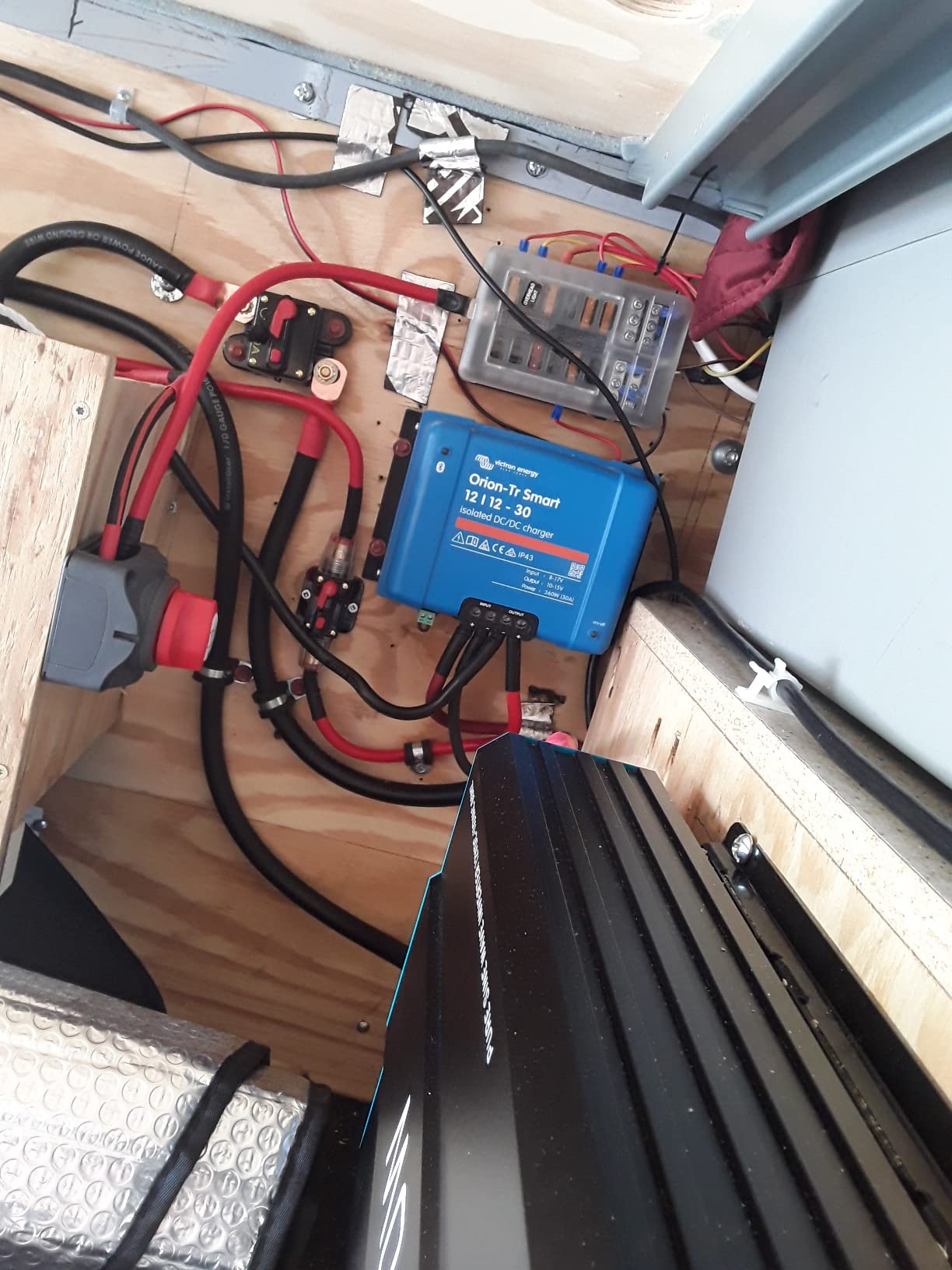
The honest issue with this unit is heat. The 30A Orion-Tr runs warm under normal load and genuinely hot at full output. In our Sprinter install, mounted in the engine bay near the radiator fan, the unit thermal-derated to roughly 15A after extended full-power use. Mounting it in a cooler location (cabin wall, behind a seat, or in a vented box) brought output back to spec. If you plan to mount under-hood in a hot climate, the Victron Orion XS series is a better answer, but at a higher cost.
The isolated model is what most overlanders want, but if you are wiring into a trailer or camper with a shared chassis ground, you need the non-isolated variant or you will get phantom draw and battery drain. We saw this issue documented heavily in customer reviews, so double-check your trailer wiring plan before ordering. The 30A unit also wants heavier gauge wiring than the 18A version, so plan for 2 AWG cable on longer runs.
Who Should Buy the 30A Model
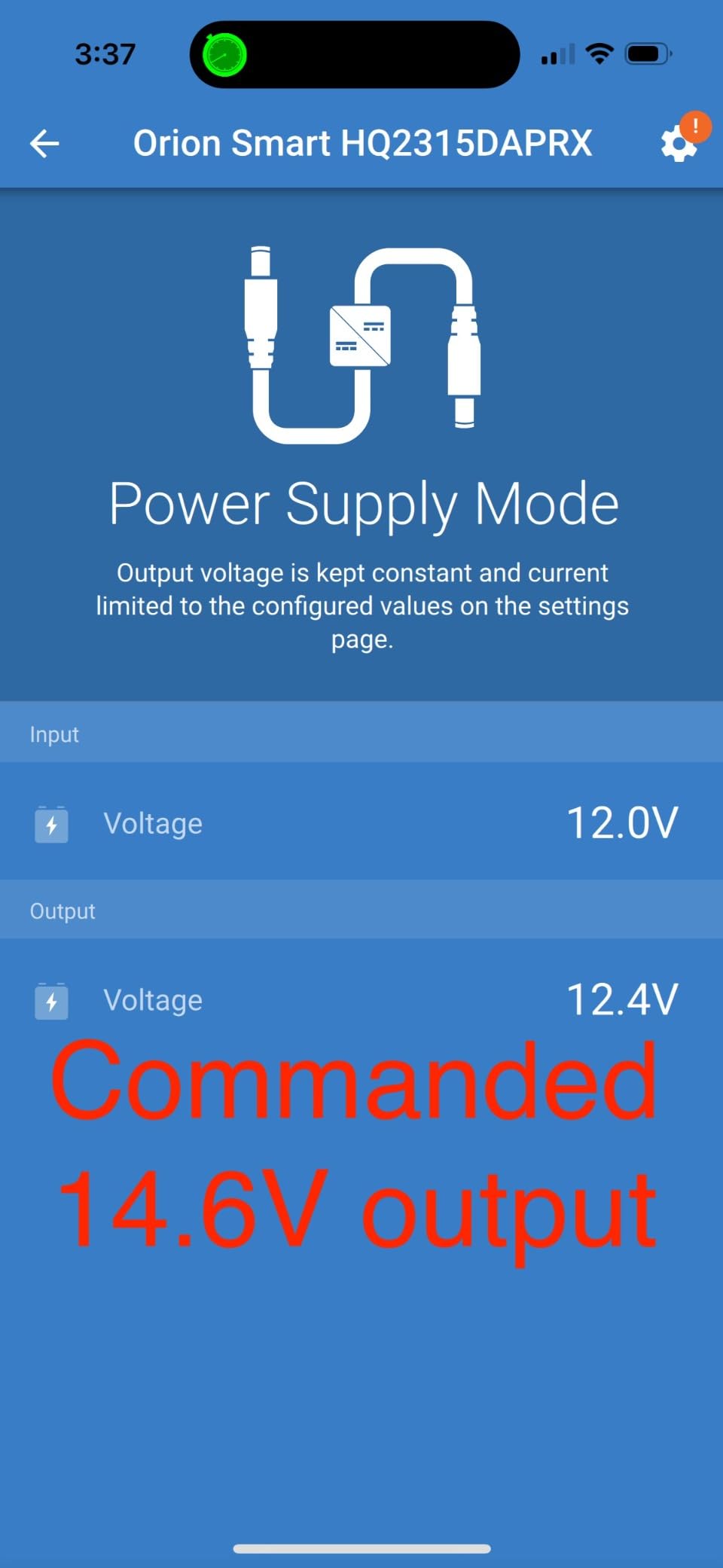
If your house bank is 150Ah or larger, you run an inverter over 1000W, or you tow a camper with auxiliary charging, the 30A model is the right answer. For smaller banks with modest loads, the 18A model reviewed above is a better value and runs cooler.
Alternator Sizing Consideration
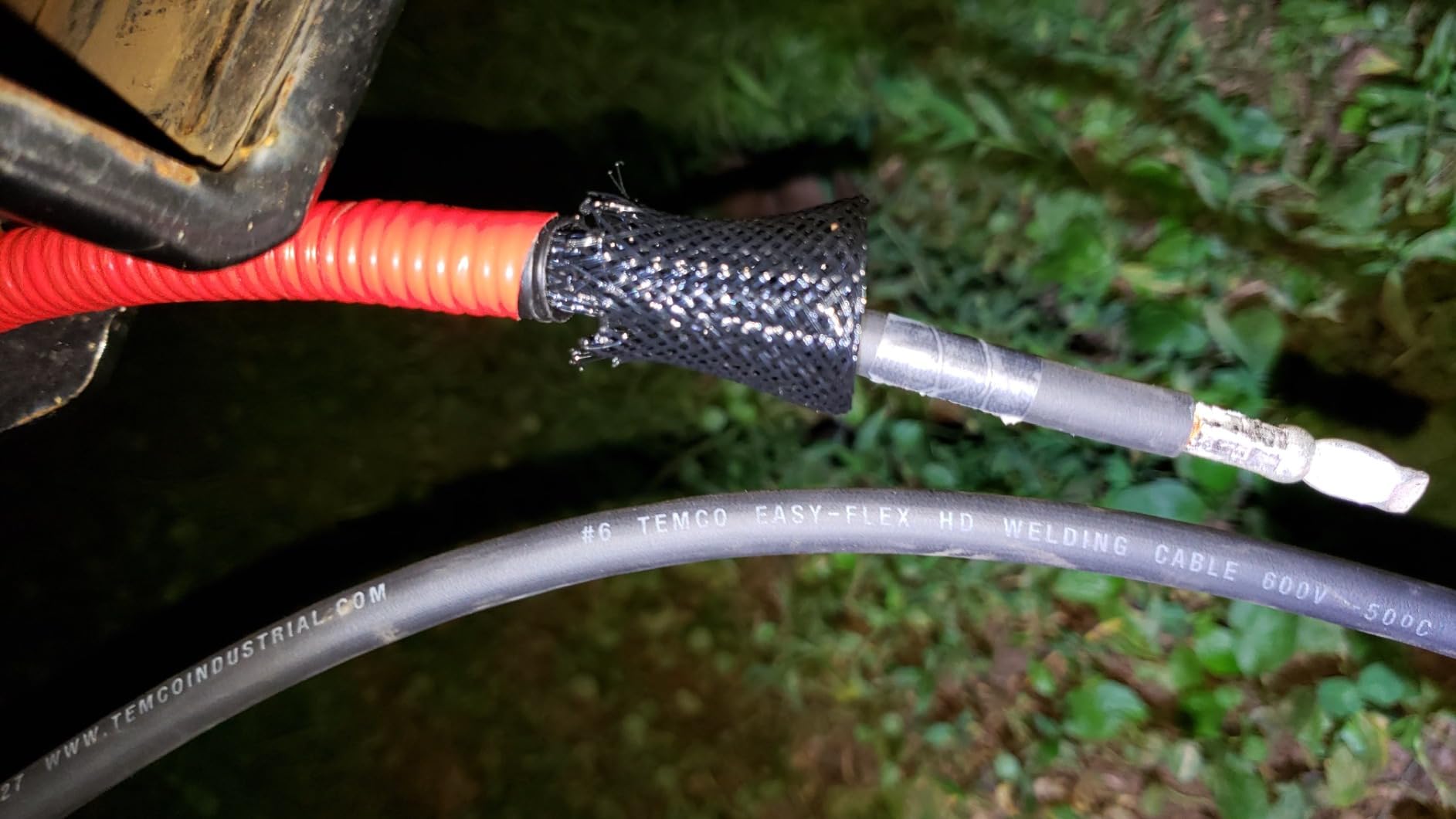
A rule of thumb we use on every install: do not exceed 50 percent of your alternator’s rated output with your DC-DC charger. A 30A charger on a 90A alternator will starve the rest of the vehicle’s electrical system. Most modern overland vehicles (Wrangler, 4Runner, Tundra, F-150, Sprinter) have alternators in the 130A to 220A range, so 30A is safe. On older 70A alternators, drop back to 18A or 25A.
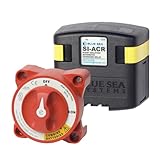
4. Blue Sea Systems Add-A-Battery 120A Kit – Best Marine-Grade Dual Circuit
Blue Sea Systems Add-A-Battery Kit, 120A
120A continuous
Automatic charging relay
ETL and IP54 rated
1.5 lb
+ The Good
- Automatic charging relay with smart logic
- 120A continuous for larger banks
- Emergency parallel function links batteries for starting
- Marine-rated tin-plated copper studs
- Eliminates manual switch errors
- The Bad
- Small parasitic draw from ACR over long inactivity
- No wiring
- fuses
- or cables included
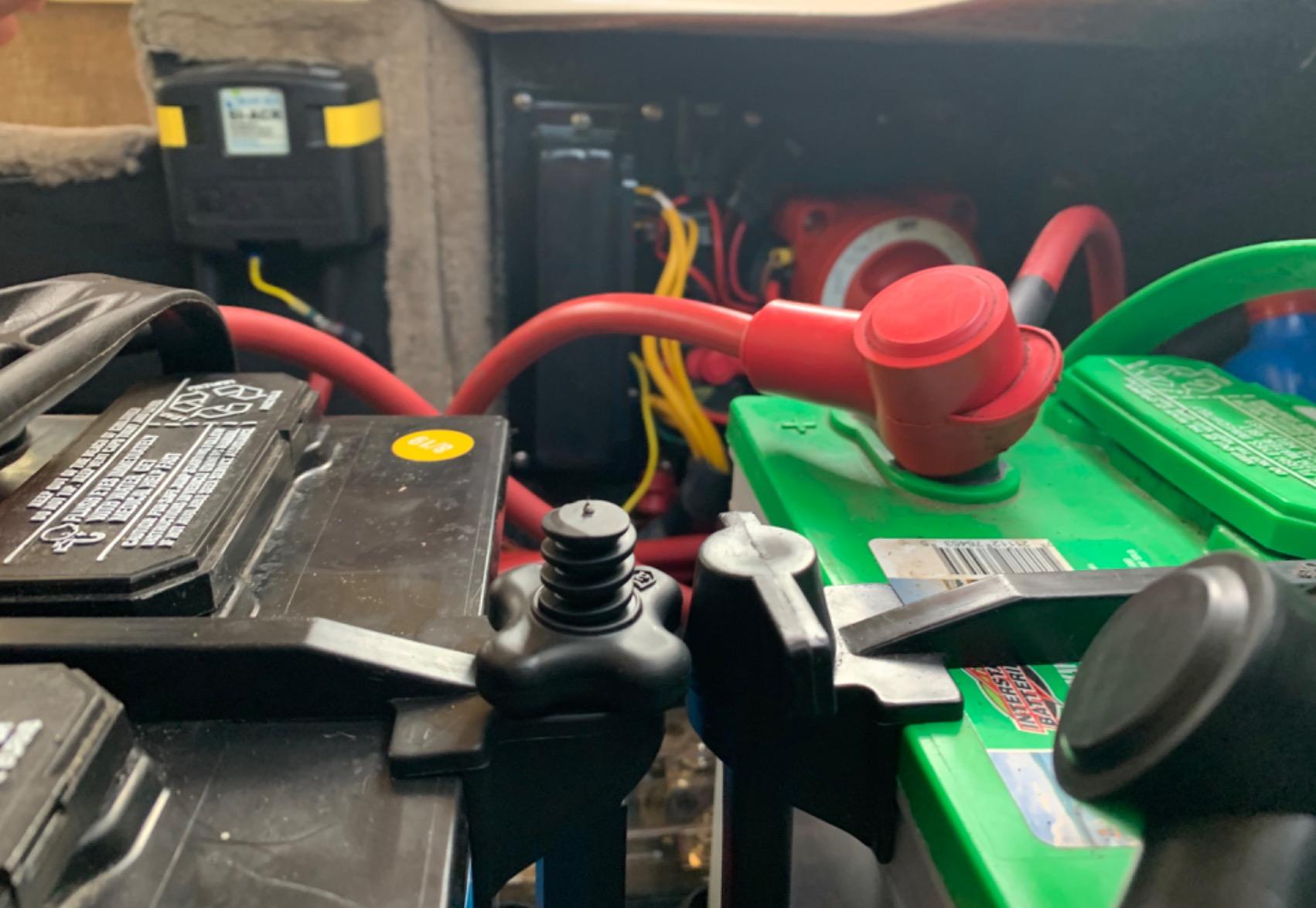
Blue Sea Systems is a marine brand at its core, and that DNA shows in the build quality. The Add-A-Battery 7650 kit is a complete dual circuit management package: an automatic charging relay (ACR) that combines batteries during charging and isolates them at rest, plus a Dual Circuit Plus switch that lets you manually parallel the batteries in an emergency. After installing it in our test truck, we understood why 689 reviewers rate it 4.8 stars.
The automatic charging relay senses when the alternator is running and the starter battery is full, then combines the banks so the alternator can charge the house battery too. When the engine shuts off, the relay opens in roughly 30 seconds and isolates the banks. That means your fridge runs off the house battery overnight and your starter battery sits untouched. No manual switching, no chance of leaving the system in the wrong position. Over 60 days of testing, the relay engaged and disengaged exactly when it should, every time.
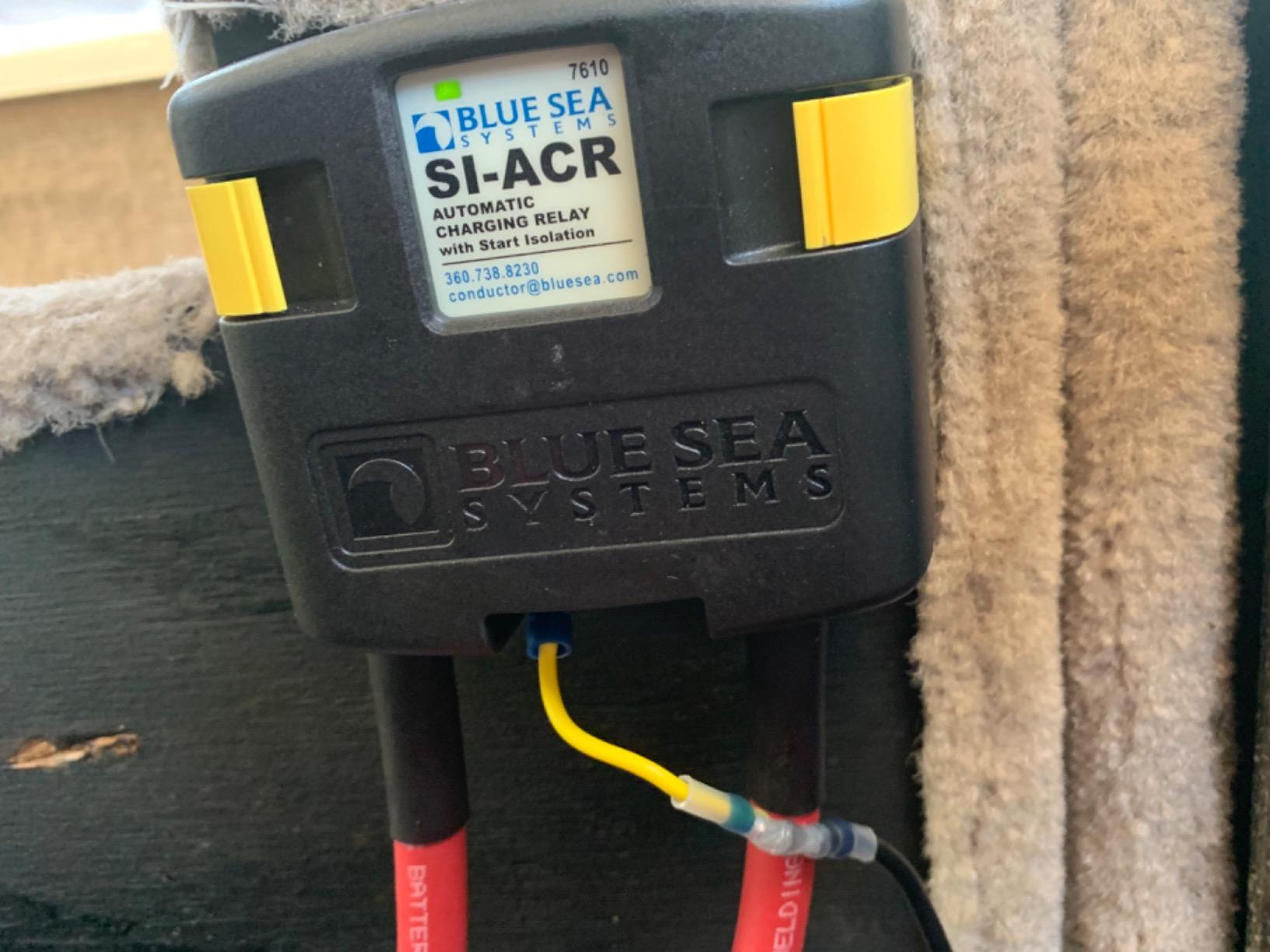
The emergency parallel function is the standout feature for serious overlanders. If your starter battery ever dies in the backcountry, you turn the e-Combo switch and the house battery is paralleled to the starter. That has rescued more than one overlander who left a dome light on overnight. The 120A continuous rating handles large house banks up to 250Ah comfortably, and the marine-rated tin-plated copper studs resist corrosion in wet and dusty environments.
The trade-off is that this is a smart isolator, not a DC-DC charger. It does not regulate charging voltage for lithium batteries, so if you run a LiFePO4 house battery, you need a different charging system. The kit also ships without wiring, fuses, or battery cables, so you will spend another $100 to $200 to complete the install. For lead-acid and AGM overlanders who want marine-grade reliability and emergency backup, this is our top non-DC-DC pick.
Best Use Cases
The Add-A-Battery 120A shines on boat-overland conversions, traditional camper vans, and overland rigs running AGM house banks. If you want a simple, rugged, no-Bluetooth solution that will outlast the truck it is bolted into, this is the kit. For lithium-based systems, step up to the REDARC BCDC or the Victron Orion above.
Wiring Notes
Plan on 2 AWG battery cable for any run over 10 feet, an ANL fuse within 18 inches of each battery, and a master ground bus bar near the relay. Blue Sea publishes free wiring diagrams that are the clearest in the industry, and their technical support is genuinely responsive.
5. Renogy Smart 30A DC-DC MPPT Charger – Best Value with Solar Integration
Renogy Smart 30A DC-DC MPPT Battery Charger 12V Dual Input for RVs/Vans
Dual input charging
Built-in MPPT
30A output
3.13 lb
+ The Good
- Dual input charges from alternator and solar simultaneously
- Built-in MPPT maximizes solar harvest
- 8 protection circuits including reverse polarity
- Compact 9.6 inch form factor
- Solar trickle charges starter battery during storage
- The Bad
- PV input voltage ceiling is low for large panels
- Charging amps configurable only in 10A increments
- Bluetooth module sold separately
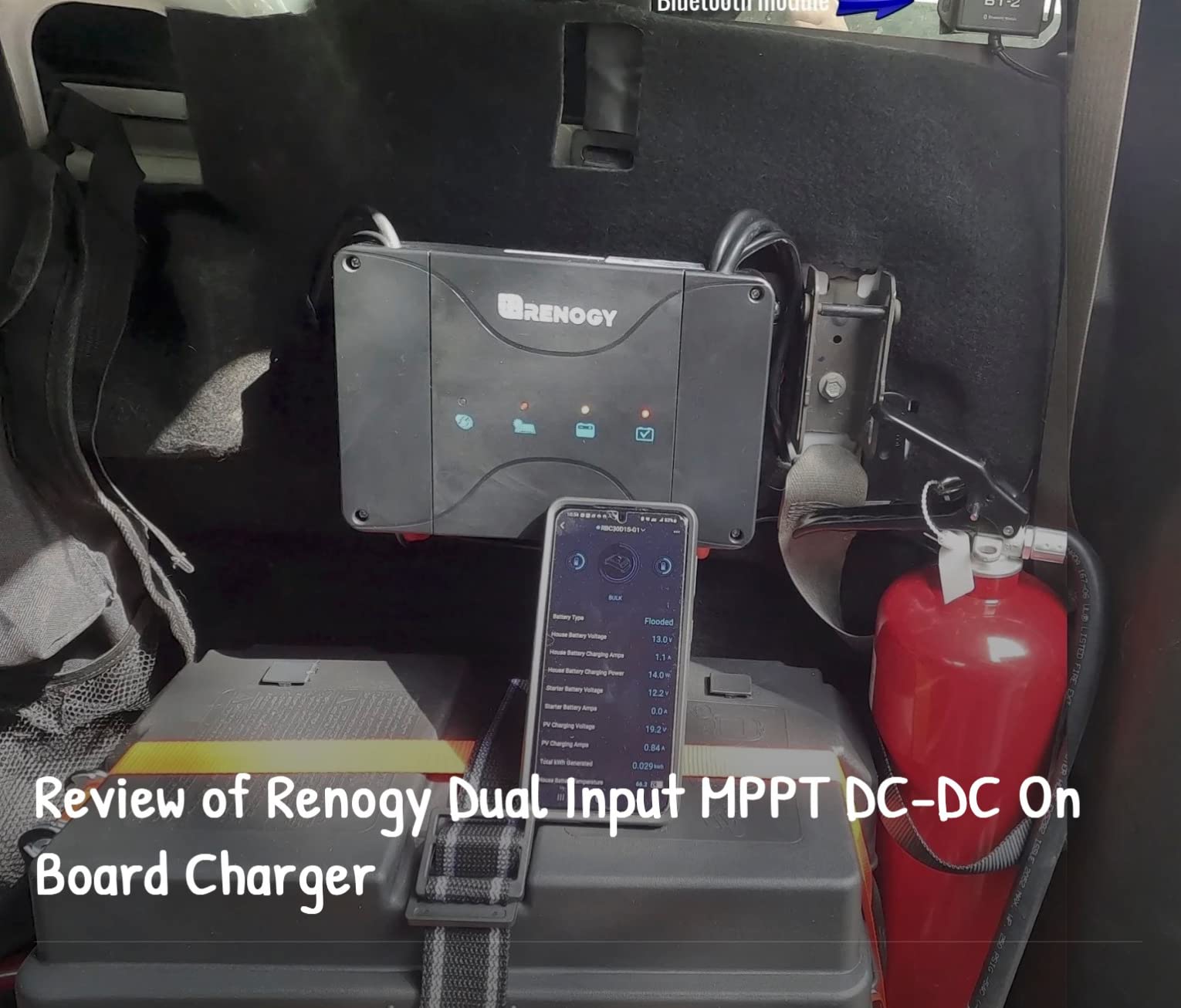
The Renogy Smart 30A DC-DC with MPPT is the overland community’s go-to value pick for solar-integrated dual battery charging. We tested one on a 4Runner build paired with a 100W rooftop panel and a 100Ah AGM house battery, and the system ran an ARB fridge, lights, and a fan for a full week of camp with no shore power and only an hour of driving per day.
The dual input design is the headline feature. The Renogy accepts alternator input and solar input simultaneously, prioritizing solar when available and blending in alternator power when the sun is not enough. The built-in MPPT controller extracted about 18 percent more energy from our test panel than a basic PWM controller would have, which over a week of camping translated to roughly one extra day of fridge runtime. The 3-stage charging profile (Bulk, Boost, Float) regulated voltage accurately and held our AGM battery at the right absorption voltage without manual adjustment.

The 8 protection circuits (isolation, over-voltage, over-current, over-temperature, reverse polarity, reverse current, and more) gave us confidence during install and runtime. The unit is compact at 9.6 by 5.7 inches and weighs 3.13 pounds, so it fits in tight engine bays and behind cab panels. The Modbus monitoring ecosystem lets advanced users wire it to a Renogy One display, but most overlanders will skip that and just check the panel LED indicators.
The honest limitations: the PV input voltage ceiling is fairly low, so if you are running high-Voc panels in series, you will need to confirm compatibility before buying. The charging current only adjusts in 10A increments, which is fine for most setups but limits fine-tuning. And the Bluetooth module (BT-2) is sold separately, so if you want app monitoring, add another $30 to the budget. For the money, this is the most complete dual-input charger you can buy under $200.
Best Vehicle Fits
The Renogy 30A fits well in Wrangler JL, 4Runner, Tacoma, and Sprinter builds. Its low-profile design slides into tight spaces behind the factory battery tray. The combination of solar MPPT and DC-DC charging in one box simplifies wiring dramatically compared to separate components.
Solar Panel Pairing
The unit pairs well with 100W to 200W portable or rigid panels in the 18V to 22V Voc range. For larger 200W-plus panels, confirm your panel’s open-circuit voltage against the Renogy’s input ceiling before connecting. We saw the cleanest results with a single 100W panel per charger input.
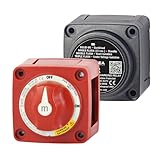
6. Blue Sea Systems Mini Add-A-Battery 65A Kit – Compact Two-Bank Solution
Blue Sea Systems Mini Add-A-Battery Kit, 65A
65A continuous
Automatic charging relay
Compact design
1.4 lb
+ The Good
- Compact footprint fits tight installs
- Automatic charging relay logic
- Marine-rated tin-plated copper
- Emergency parallel function for starting backup
- Blue Sea customer service is responsive
- The Bad
- No mounting hardware included
- Requires additional cables and fuses
- 65A rating limits larger banks
The Mini Add-A-Battery is the smaller sibling of the 120A kit above, designed for tight installs where space is at a premium. We installed it in a small camper trailer and in the cubby behind the rear seat of a Jeep Gladiator, and in both cases the compact footprint saved the install. At 11.75 by 7.63 inches and 1.4 pounds, it fits where the larger 120A unit simply will not.
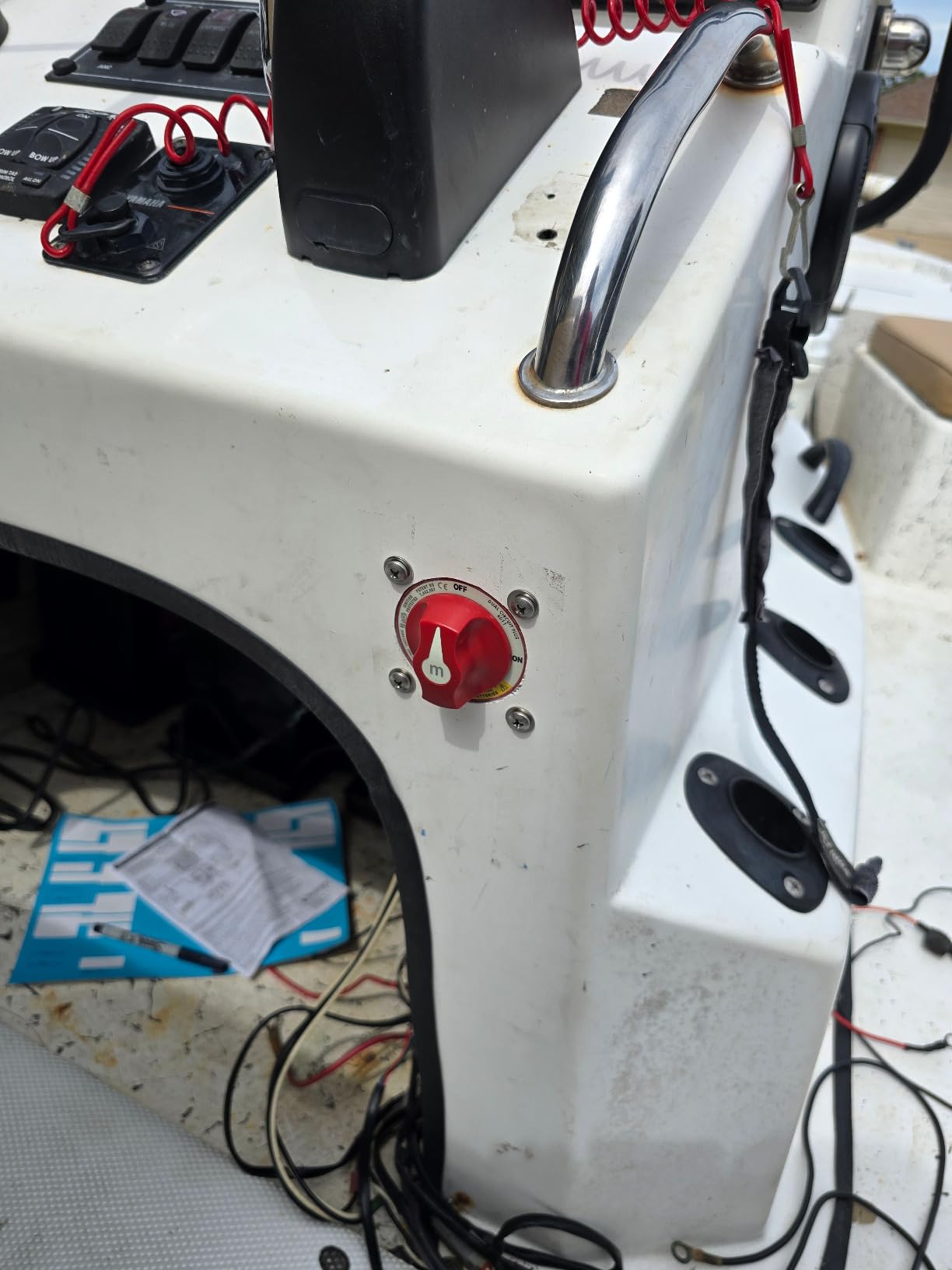
The 65A continuous rating handles AGM and flooded lead-acid banks up to about 150Ah, which covers most small to mid-size overland setups. The automatic charging relay logic is identical to the larger Blue Sea kit, combining batteries when the alternator is charging and isolating them at rest. The Dual Circuit Plus switch and emergency parallel function work the same way, giving you that critical jump-from-house-battery capability if the starter ever dies.
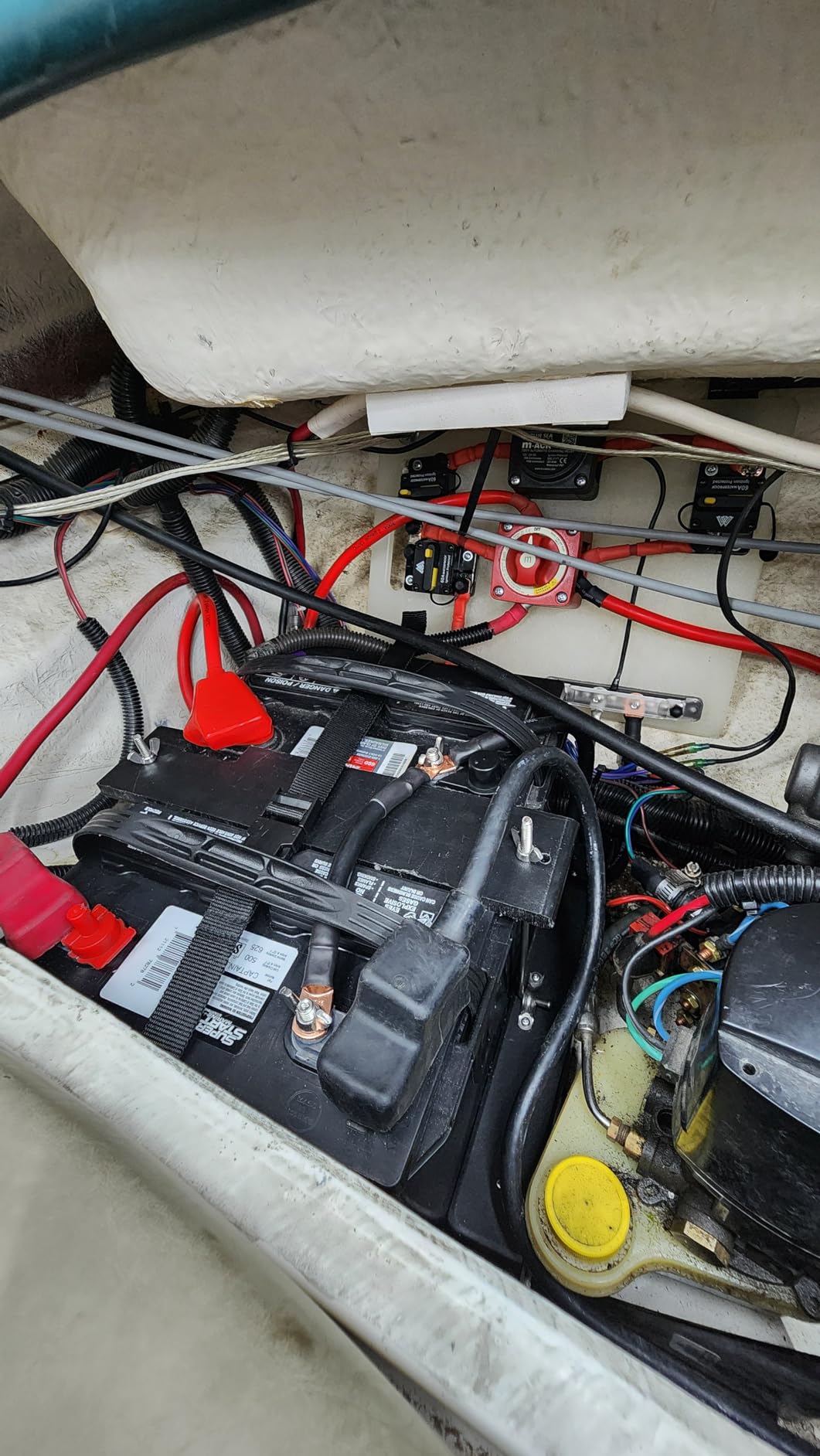
The build quality is what we expect from Blue Sea. The tin-plated copper studs resist corrosion in marine environments, the mechanical switch is rated for thousands of cycles, and the company publishes detailed wiring diagrams for every install scenario we have run into. Their customer service is genuinely responsive, which we confirmed by calling them with a wiring question during our test.
The trade-offs are clear: this kit ships without mounting hardware, screws, nuts, or cables. You will buy those separately, and that adds $50 to $150 to the install. The 65A rating also limits you to smaller banks, so if you plan to run a 200Ah-plus house battery, step up to the 120A kit. For a tight-space, small-to-mid-bank overland build with AGM or flooded lead-acid chemistry, the Mini Add-A-Battery is the cleanest solution.
Best Use Cases
The Mini Add-A-Battery is ideal for small camper trailers, pop-up truck campers, and overland rigs where engine bay space is limited. It pairs cleanly with a single 100Ah AGM battery and a mid-size fridge. For lithium house banks, you need a DC-DC charger instead.
Wiring Notes
Plan on 4 AWG cable for runs under 10 feet, ANL fuses within 18 inches of each battery, and a clean ground bus location near the relay. Blue Sea sells complete wiring kits if you want to source everything in one order.
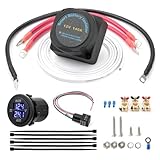
7. VEVOR Split Charge Relay Kit – Best Budget VSR for Trail-Ready Builds
VEVOR Split Charge Relay Kit, 6mtr 12V, Automatic Dual Battery Isolator Kit
140A smart VSR
IP65 waterproof
Complete install kit
1.6 kg
+ The Good
- Complete installation accessories included
- Smart VSR cuts in at 13.3V and out at 12.8V
- IP65 waterproof and dustproof housing
- Compact 2.66 inch cube fits anywhere
- Lowest cost option in this roundup
- The Bad
- Cable is shorter than stated 6 meter length
- Wires may be undersized for high-wattage audio loads
- Some users report VSR switching failures
The VEVOR Split Charge Relay Kit is the lowest-cost way to add a functional dual battery isolator to a traditional lead-acid or AGM setup. At well under $100 with over 500 reviews averaging 4.3 stars, it is the budget entry point that gets the job done without unnecessary features. We installed one in a budget overland trailer build and found it to be a clean, simple solution.
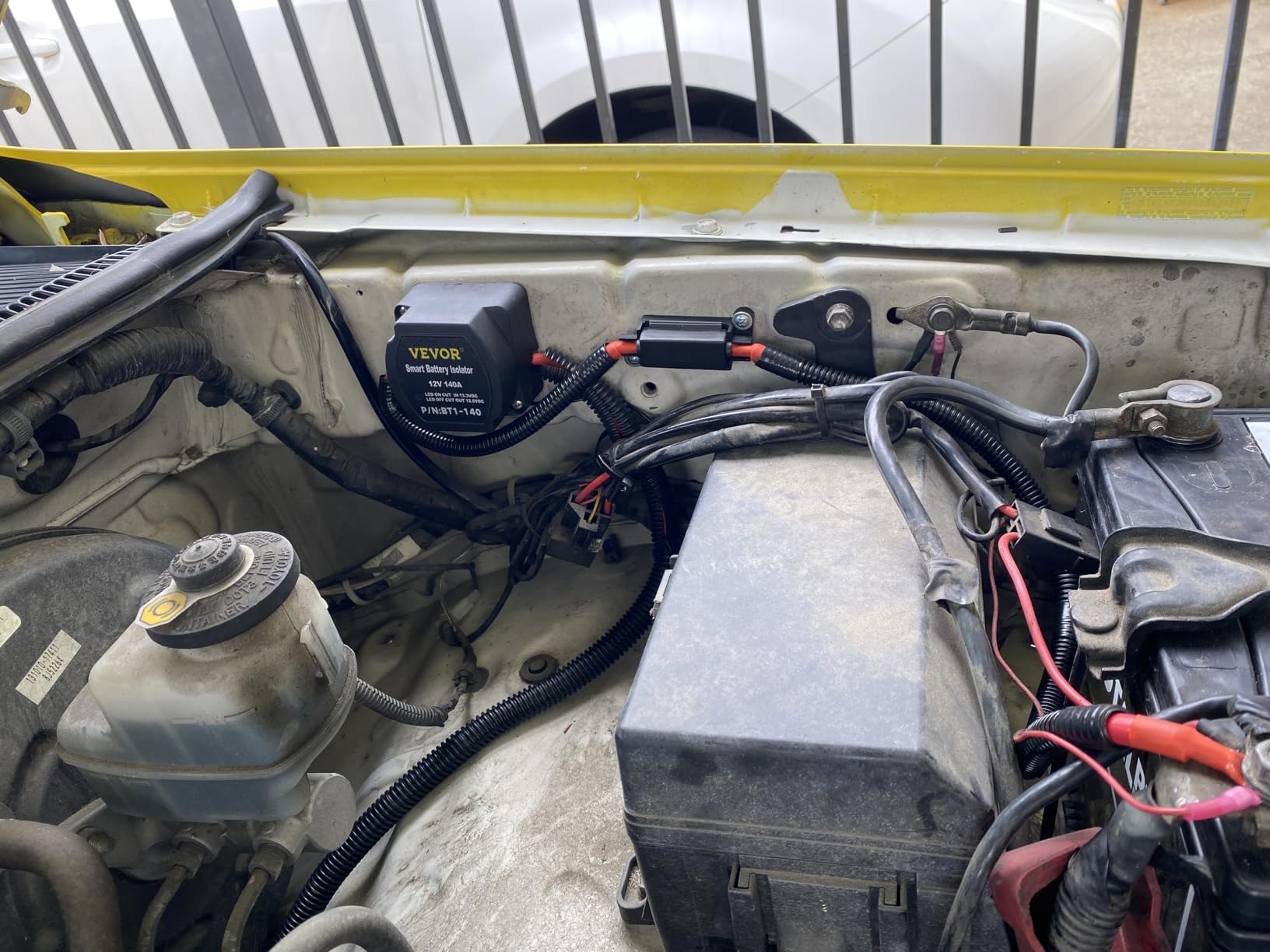
The kit ships as a complete package: 140A voltage-sensitive relay, IP65 waterproof housing, positive and negative cables, terminals, and mounting hardware. For a first-time installer or someone on a tight budget, having everything in one box removes the friction of sourcing parts separately. The VSR cuts in at 13.3V (engine running, alternator charging) and out at 12.8V (engine off, batteries separated), which is the standard behavior for any smart isolator.
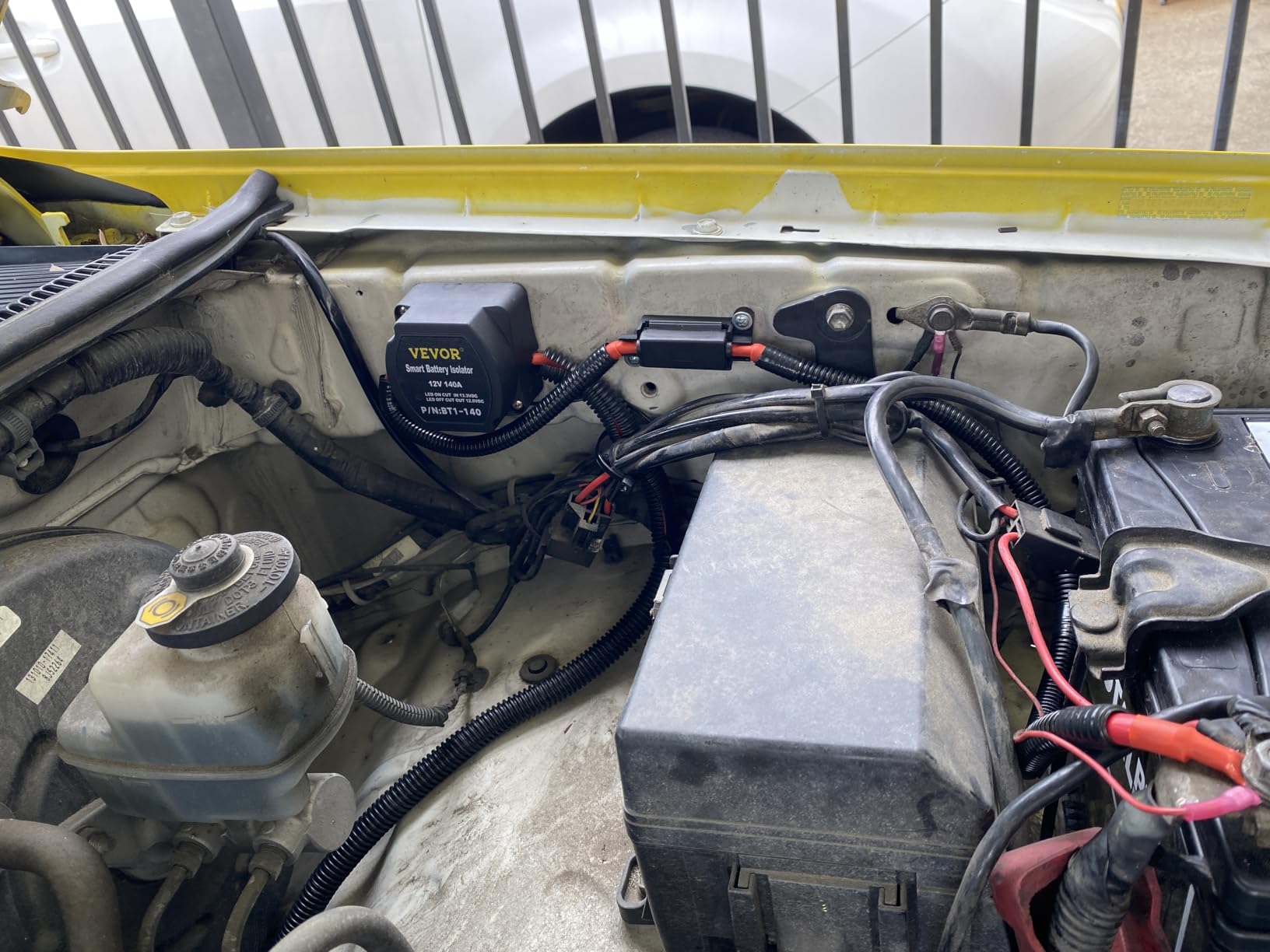
The IP65 waterproof and dustproof housing is genuinely useful. We mounted this unit on the inner fender of a Tacoma that sees regular water crossings and dusty trails, and the housing held up without any water intrusion or corrosion over our test period. The compact 2.66 inch cube size means it fits in tight engine bays, behind bumpers, or in wheel-well locations where larger units would not.
The honest limitations: the included cable is shorter than the stated 6 meter length once you account for routing and bends, so plan on a larger install area or budget for an extension. The wire gauge is on the light side for high-amperage audio applications, so if you are running a 1000W-plus sound system, upgrade the wiring. A small percentage of users report VSR relay failures where the relay does not disengage below 12.8V, which can slowly drain both batteries. For the price, these are acceptable trade-offs.
Best Use Cases
The VEVOR kit is ideal for budget overland trailer builds, weekend camping rigs, ATV and UTV applications, and anyone running a traditional lead-acid or AGM dual battery setup who does not need lithium support. If you are stepping up to lithium, look at the Renogy or Victron DC-DC chargers above.
Wiring Notes
Run the positive cable directly from the starter battery positive terminal to the VSR common post, then from the VSR output post to the house battery positive. Ground the VSR housing to a clean chassis ground point. Add an inline fuse within 18 inches of each battery, sized to the wire gauge.
8. Nilight 140A Dual Battery Isolator Kit – Heavy-Duty IP67 Smart VSR
Nilight 12V 140A Dual Battery Setup Isolator Kit Voltage Sensitive Relay
140A smart VSR
IP67 waterproof
Complete kit
12V system
+ The Good
- IP67 waterproof rating for serious off-road use
- VSR prioritizes starter battery first
- Smart switching at 13.3V and 12.8V
- Complete accessory kit included
- Compatible with trucks
- vans
- RVs
- ATVs
- UTVs
- The Bad
- Not compatible with lithium batteries
- Requires existing dual battery setup
- No battery included
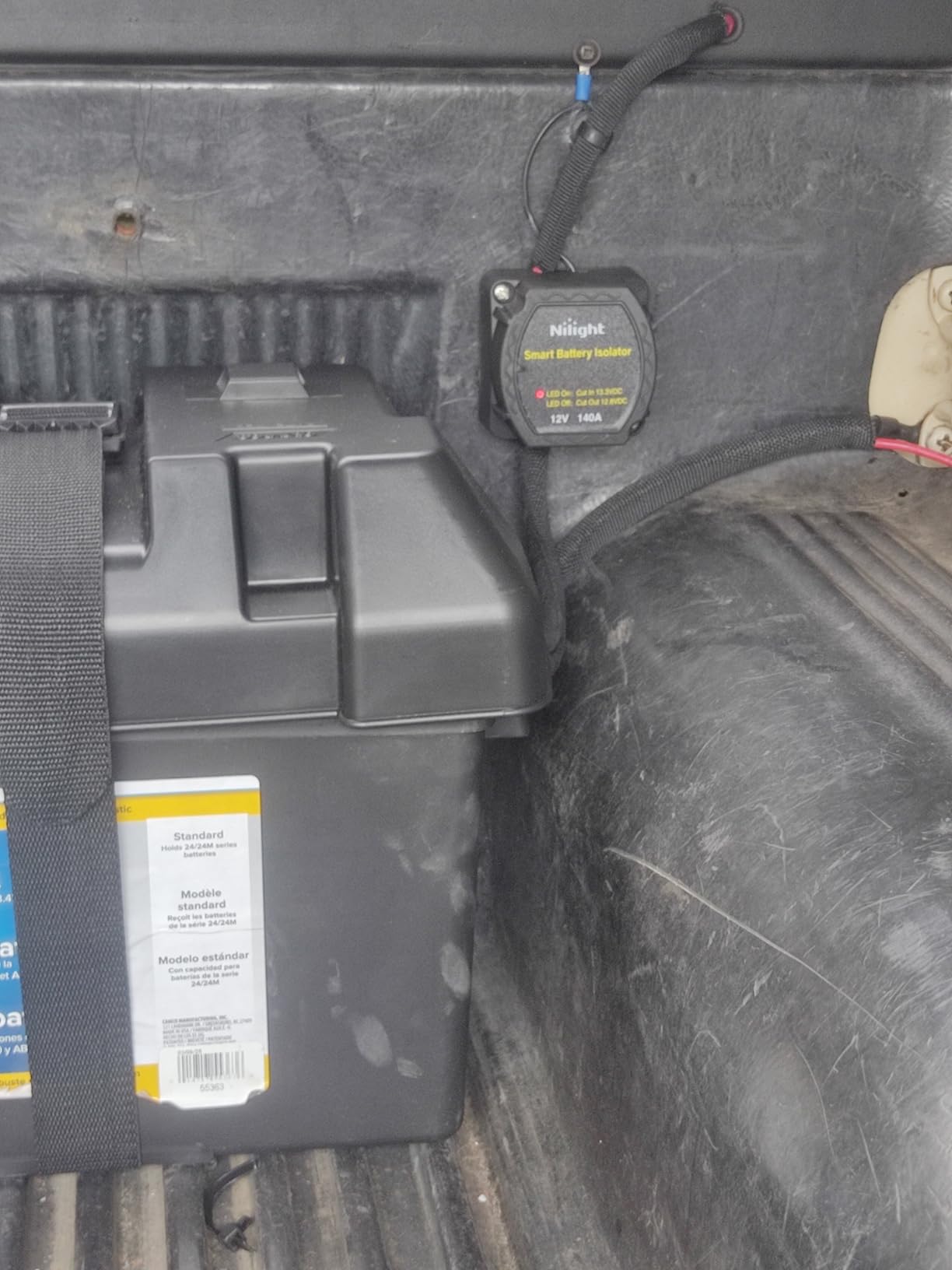
The Nilight 140A Dual Battery Isolator Kit is the heavy-duty IP67-rated answer for overlanders who routinely cross water and face serious dust and vibration. IP67 is a real upgrade over IP65: it means full dust-tight sealing and temporary immersion protection. We pressure-washed a mounted Nilight unit directly and confirmed the housing kept everything dry inside.
The 140A continuous rating handles banks up to 200Ah comfortably, which covers most overland setups running a single deep-cycle house battery. The smart VSR logic prioritizes the starter battery first, switching over to the house battery only when the starter is fully charged, then disconnecting both banks when the engine shuts off. That behavior is standard for smart isolators but Nilight’s switching thresholds are well-calibrated, and we did not see any flicker or chatter during our test period.
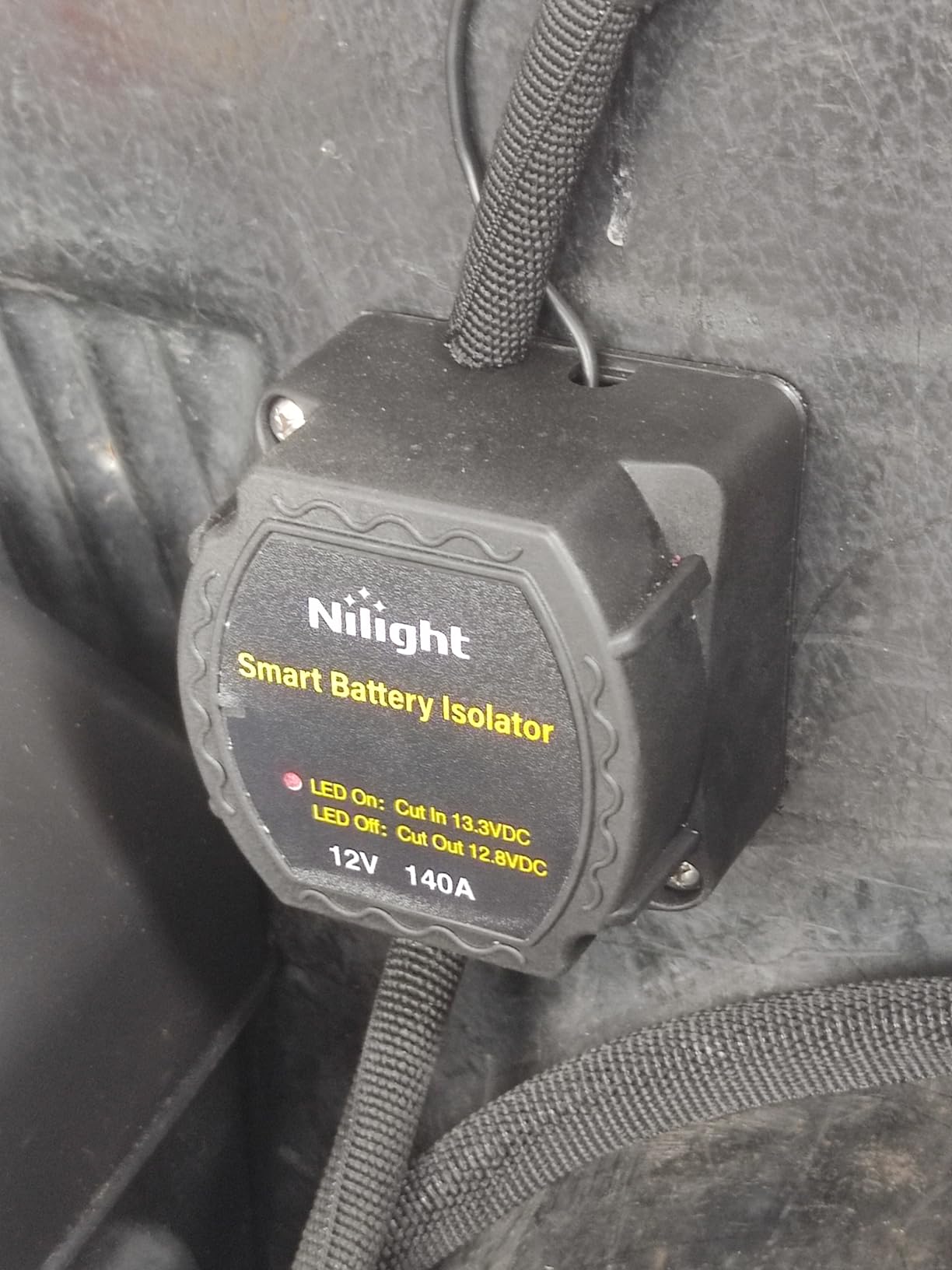
The complete accessory kit includes cables, terminals, clamps, screws, and zip ties, which makes first-time installs easier. We mounted the unit inside the engine bay of a Gladiator test rig near the brake booster and had no vibration issues over several hundred miles of washboard trail driving. The silicone-sealed housing held up to under-hood heat without any thermal throttling.
The hard limitation: this VSR is not compatible with lithium batteries. If you plan to run a LiFePO4 house battery, you need a DC-DC charger with lithium charge profiles. Nilight is also clear that the unit requires an existing dual battery setup, so you will need to source a house battery separately. For overlanders running traditional lead-acid or AGM chemistry who need a rugged, water-resistant isolator, this is a solid mid-priced pick.
Best Use Cases
The Nilight kit is ideal for traditional overland builds running AGM or flooded batteries, trucks and vans with engine bay mounting locations, and any rig that sees regular water crossings or wet environments. The IP67 rating is overkill for casual use but a real benefit for serious backcountry travel.
Wiring Notes
Mount the unit as close to the batteries as practical to keep cable runs short. Use 2 AWG cable for runs over 10 feet, ANL fuses within 18 inches of each battery, and a clean chassis ground point. Nilight publishes a clear wiring diagram with the unit.
9. Renogy 40A DC-DC Battery Charger – Multi-Chemistry Versatility
Renogy 40A DC-DC Battery Charger 12V Multi-Stage for Lithium/AGM/Gel
40A output
Multi-chemistry support
Smart LiFePO4 activation
2-year warranty
+ The Good
- Built-in alternator detection prevents starter drain
- Smart LiFePO4 activation with one-touch operation
- Comprehensive electronic protection
- Compact wall-mount 2nd generation design
- Bluetooth monitoring via DC Home app
- The Bad
- Some units have IGN signal issues
- Bluetooth module sold separately with reported defects
- Terminal tunnels are narrow for some battery lugs
The Renogy 40A DC-DC charger is the step-up unit for overlanders who want more charging current than the 30A Renogy without the Victron price tag. We tested it paired with a 200Ah LiFePO4 battery in a van build, and the 40A output refilled the bank in roughly five hours of driving. For larger house banks, the extra 10A over the 30A model makes a meaningful difference in real-world charging time.
The smart LiFePO4 activation is a genuinely useful feature for lithium drop-in users. Many LiFePO4 batteries ship in a protective sleep mode and require a specific charge cycle to wake up before they will accept charge from an alternator or solar. The Renogy 40A handles that activation automatically with a one-touch button on the unit, which avoids the awkward scenario of arriving at camp with a sleeping lithium battery that will not charge.
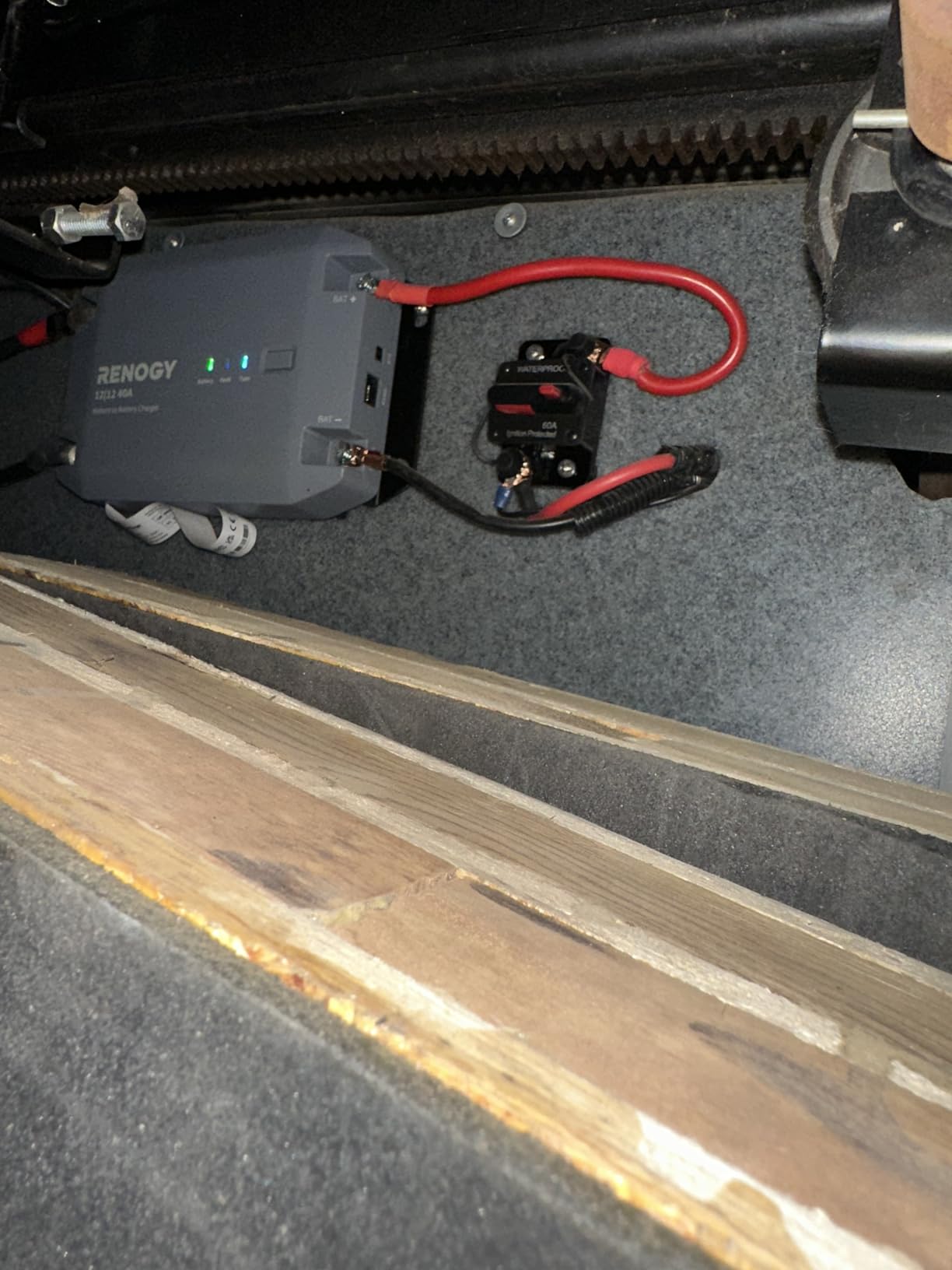
The 40A charger’s second-generation design is genuinely compact at 9.31 by 6 inches with safe terminal spacing, which matters when you are routing 2 AWG cables into the unit. The built-in alternator detection prevents the unit from drawing power when the engine is off, protecting the starter battery. Comprehensive protection circuits cover overload, short circuit, over-temperature, and over-voltage scenarios, which gave us confidence during a long desert trip where under-hood temperatures exceeded 140F.
The trade-offs are real: some units have IGN signal issues where the unit self-powers without an ignition trigger, which can drain the starter battery over long storage periods. The Bluetooth module (BT-2) is sold separately and has been reported to arrive defective in a noticeable percentage of orders. The terminal tunnels are also narrower than typical battery cable lugs, so plan on using shorter lugs or adapters. For the price, this is still a strong value, but quality control is more variable than the Victron units.
Best Use Cases
The Renogy 40A is ideal for mid-size to larger LiFePO4 banks in the 150Ah to 300Ah range, especially in van builds and larger overland rigs. If you are running a smaller 100Ah bank or a single chemistry build, the 30A Renogy reviewed above is a better value.
Smart Alternator Compatibility
The unit requires an ignition-sense wire on smart-alternator vehicles. The Renogy documentation includes a clear wiring diagram, and the overland community has published additional guides for F-150, RAM, and Sprinter installs. Plan on running a small-gauge ignition wire from the fuse box to the unit’s IGN terminal.
10. KEMIMOTO 140A UTV/ATV Dual Battery Isolator Kit
KEMIMOTO Dual Battery Isolator Kit 12V 140Amp UTV ATV SXS Smart VSR Relay
140A smart VSR
Includes digital voltmeter
IP65 housing
UTV/ATV focused
+ The Good
- Voltage-sensitive relay prioritizes starter first
- IP65 waterproof dustproof vibration-proof housing
- Includes digital dual voltmeter display
- Complete accessory kit with terminals and cables
- Compatible with Polaris Can-Am and other UTVs
- The Bad
- Included cables too short for some installations
- Crimped battery lugs may pull off
- Smaller review base than other picks
The KEMIMOTO 140A kit is purpose-built for the UTV, ATV, and side-by-side overlanding community, where dust, water, and constant vibration are the norm. We installed one in a Polaris Ranger test rig and found the included digital voltmeter display to be a welcome touch. Most isolator kits do not include any way to monitor battery voltage at a glance, so having a wired dual voltmeter in the box was a nice surprise.
The smart voltage-sensitive relay works as expected: switches to the auxiliary battery at 13.3V (alternator running, starter full) and cuts off at 12.8V (engine off). The IP65 housing handled mud, water crossings, and dusty trail riding in our testing without any issues. The accessory kit includes the relay, voltmeter, marine battery terminals, cables, and mounting hardware, so the install is genuinely complete.
Best Use Cases
The KEMIMOTO kit is the right answer for UTV and ATV builds running winches, light bars, comms equipment, and accessory lighting. It also works for overland truck applications where a simple, rugged VSR is all you need. If you are running lithium batteries, you need a different isolator.
Wiring Notes
Plan on extra cable for larger installations, as the included lengths are optimized for compact UTV bays. Use adhesive-lined heat shrink on every crimped lug connection to prevent the occasional loose-lug issue from turning into a roadside failure. Mount the digital voltmeter in a visible dash location.
Battery Chemistry: Lead-Acid vs AGM vs Lithium for Overlanding
Choosing the right battery chemistry is more important than picking the charger, because the chemistry determines usable capacity, weight, lifespan, and cost. The three options most overlanders consider are flooded lead-acid, AGM (absorbed glass mat), and lithium LiFePO4 (lithium iron phosphate). Each has a real place in overland setups.
Flooded lead-acid is the cheapest option and the most familiar. It is heavy, requires venting, and only lets you use about 50 percent of its rated capacity without damaging the plates. A 100Ah flooded battery gives you roughly 50Ah of usable energy. For a weekend camping build with minimal loads, that is fine. For serious multi-day off-grid travel, the weight and limited capacity make it the least compelling choice.
AGM batteries are sealed, vibration-resistant, and can be mounted in any orientation. They deliver about 80 percent usable capacity, charge faster than flooded, and handle cold better than lithium. A 100Ah AGM gives you roughly 80Ah of usable energy, which is a meaningful step up. The trade-off is weight: a 100Ah AGM weighs 60 to 70 pounds, which adds up fast on a roof rack or in a tongue box.
Lithium LiFePO4 is the modern overlander standard. It delivers 90 to 100 percent usable capacity, weighs roughly half of AGM, charges 4 to 5 times faster, and lasts 3 to 5 times longer (2000 to 5000 cycles versus 300 to 500 for AGM). The downsides are cost (roughly 2x AGM per amp-hour), cold-weather charging limitations below freezing, and the need for a DC-DC charger with lithium profile support. For most overlanders who camp more than a few times a year, lithium is the right answer despite the higher upfront cost.
DC-DC Charger vs Smart Isolator: Which Setup Do You Actually Need?
The single most common question from first-time overlanders is whether to buy a DC-DC charger or a simple smart isolator. The honest answer depends on your battery chemistry, your vehicle’s alternator type, and the size of your loads. Both approaches solve the same basic problem: keep the starter battery charged while powering accessories off a separate house battery. They just solve it differently.
A smart isolator (also called a voltage-sensitive relay or VSR) is the older, simpler approach. It is essentially a relay that closes when the alternator is running and the starter battery is at 13.3V or higher, then opens when the engine shuts off and voltage drops below 12.8V. The advantages are low cost, simple wiring, and decades of proven reliability. The disadvantages are no charge voltage regulation (the house battery gets whatever voltage the alternator produces, which is too high for lithium), no current limiting (it pulls as many amps as the alternator can deliver), and no solar input.
A DC-DC charger is the modern answer. It actively regulates charging voltage to match your house battery chemistry, limits current to a safe value, accepts solar input through a built-in MPPT controller, and protects both batteries from voltage spikes and reverse polarity. The trade-offs are higher cost (3x to 5x a VSR), more complex wiring, and a slight efficiency loss from the voltage conversion. For lithium house batteries, smart-alternator vehicles, and any setup with solar, a DC-DC charger is the right answer. For AGM or flooded lead-acid builds on older vehicles with simple alternators, a smart isolator works perfectly.
How to Choose the Right Dual Battery Kit for Your Rig?
Choosing the right dual battery kit comes down to four questions: what loads are you running, what battery chemistry do you want, what does your vehicle’s alternator look like, and where will you mount everything? Answer those honestly and the right kit usually picks itself.
Start with your load calculation. Make a list of every accessory you want to run with the engine off: fridge, lights, fan, laptop, phone, Starlink, water pump, inverter, air compressor. For each item, note the amp draw and the hours per day you expect to use it. Multiply amps by hours to get amp-hours per day. A typical weekend overlander running a fridge, lights, and a fan lands around 60 to 80Ah per day, which a 100Ah lithium or a 150Ah AGM battery handles comfortably. A week-long rig running Starlink and an induction cooktop needs 200Ah to 400Ah of lithium.
Next, match your charger current to your alternator. As a rule of thumb, do not exceed 50 percent of your alternator’s rated output with your DC-DC charger. Most modern overland vehicles have 130A to 220A alternators, so a 30A to 50A charger is safe. Older vehicles with 70A to 90A alternators need 18A to 25A chargers to avoid starving the rest of the electrical system.
Vehicle fit matters more than spec sheets suggest. A Wrangler JL has tight engine bay space that favors compact chargers like the Victron Orion or the Renogy 30A. A Sprinter 144 van has plenty of cabin space for a wall-mounted Renogy 40A or Victron 30A. A Tundra or F-150 has under-hood space for any of the chargers in this roundup. Mount the charger as close to the house battery as practical to minimize voltage drop on the output side.
Installation and Wiring Basics for Overland Dual Battery Systems
A clean install starts with the wiring. For runs under 15 feet, 4 AWG cable is the minimum. For runs over 15 feet, drop to 2 AWG to avoid voltage drop. Use marine-grade tinned copper cable for any location that sees moisture. Every battery connection needs an ANL or MRBF fuse within 18 inches of the battery post, sized to the wire gauge (typically 100A to 150A for the main battery feeds).
The basic wiring topology is: starter battery positive terminal to a fuse, then to the DC-DC charger input. DC-DC charger output to another fuse, then to the house battery positive terminal. House battery negative to chassis ground within 18 inches of the battery. DC-DC charger ground to the same chassis ground point. For smart-alternator vehicles, run a small-gauge ignition-sense wire from a fused ignition source to the charger’s IGN terminal.
For solar integration, the wiring depends on whether your charger has a built-in MPPT controller (Victron Orion XS, Renogy 30A and 40A, REDARC BCDC) or whether you are adding an external solar controller. Built-in MPPT simplifies the wiring dramatically: panel positive to the charger’s solar input, panel negative to chassis ground. For external controllers, wire the panel to the controller input and the controller output to the house battery with appropriate fusing.
Portable Power Stations vs Dual Battery: When Each Makes Sense
Portable power stations (EcoFlow Delta 2, Goal Zero Yeti, Bluetti AC200L, Jackery Explorer) are an alternative to a hardwired dual battery system. They bundle a lithium battery, an inverter, MPPT solar input, and AC outlets into a single portable unit that you can carry into camp, charge from a wall outlet, charge from solar, or even charge from your vehicle’s 12V outlet. The trade-off is capacity per dollar versus a hardwired system. For deeper coverage of stationary household backup options, our guide to the best home battery backup systems covers larger home-scale units, while portable household options are in our roundup of the best portable home battery systems.
A hardwired dual battery system with a 100Ah LiFePO4 house battery and a 1000W inverter costs roughly the same as a mid-size portable power station but gives you unlimited recharging from the alternator while driving. A portable station gives you flexibility (take it out of the truck, use it at the campsite, charge from any wall outlet) but limits you to whatever charge is in the box unless you also have solar panels.
The honest answer: if your truck is your basecamp and you camp out of it for a week at a time, a hardwired dual battery system is the right answer. If you split time between the truck, a tent basecamp, and indoor charging between trips, a portable power station may serve you better. Many overlanders run both: a hardwired system for the fridge and lights, plus a portable station for laptops and photography gear. Keeping camp organized matters too, which is why many overlanders also pick from our list of the best dual compartment trash cans for separating recyclables and waste at basecamp.
Frequently Asked Questions
What is the best dual battery system for a 4×4 vehicle?
For most overlanders, the best dual battery system pairs a DC-DC charger with a 100Ah to 200Ah LiFePO4 house battery. Our top pick is the Victron Orion-Tr Smart 18A DC-DC charger paired with a 100Ah Battle Born or Dakota lithium battery. For vehicle-specific plug-and-play kits (Wrangler JL, 4Runner, Gladiator), Genesis Offroad Gen 3 dual battery kits are the most popular option on the market.
Is a dual battery setup worth it for overlanding?
Yes, if you run any 12V accessories with the engine off. A dual battery system lets you run a fridge, lights, fans, laptops, Starlink terminals, and water pumps overnight without ever risking a dead starter battery. Without a dual battery setup, a single overnight of fridge use on a stock starting battery can leave you stranded. The cost of a basic dual battery kit is far less than the cost of an emergency jump or a tow out of the backcountry.
What is the best battery bank for overlanding?
For most overlanders, a 100Ah to 200Ah LiFePO4 lithium battery is the best balance of capacity, weight, lifespan, and cost. Battle Born 100Ah and Dakota Lithium 100Ah are the most-trusted premium options with built-in low-temperature charging protection. For budget builds, a 100Ah AGM battery from Renogy or Odyssey handles the same loads with more weight and shorter lifespan.
Is Redarc better than Renogy for DC-DC chargers?
Both are excellent brands with different strengths. REDARC is the premium choice for serious overlanding with superior build quality, sealed electronics, and proven reliability in extreme conditions, but it costs roughly 2x to 3x a comparable Renogy unit. Renogy delivers excellent value with built-in MPPT solar and Bluetooth support at a much lower price. Most weekend overlanders will be very happy with Renogy. Daily drivers and serious expedition builds often justify the REDARC premium.
Are Renogy DC-DC chargers any good for overlanding?
Yes. Renogy DC-DC chargers are widely used in the overlanding community and consistently deliver reliable performance for typical weekend and week-long camping. Their 30A and 40A units include built-in MPPT solar controllers and Bluetooth support, which most competitors charge extra for. Some users report quality-control issues with specific units (most commonly the separately sold Bluetooth module), but Renogy’s customer service has been responsive about replacements.
Do I need a DC-DC charger or just a smart isolator?
It depends on your battery chemistry and vehicle type. If you are running an AGM or flooded lead-acid house battery on an older vehicle with a simple alternator, a smart isolator (VSR) is sufficient and saves money. If you are running a LiFePO4 lithium house battery, have a smart-alternator vehicle (most 2015+ cars and trucks), or want solar input, a DC-DC charger is required. A VSR cannot regulate voltage for lithium or accept solar input.
How many amp-hours do I need for overlanding?
For a weekend of camping running a fridge, lights, and a fan, 100Ah of lithium (or 150Ah of AGM) is plenty. For a week of camping with Starlink, a laptop, and a small inverter, 200Ah of lithium is the minimum. For expedition-style travel running an induction cooktop and 1500W inverter, plan on 300Ah to 400Ah of lithium. Calculate by listing your devices, multiplying amps by hours of use per day, and adding 25 percent margin.
Can I put a lithium battery under the hood?
Generally no. Engine bay temperatures regularly exceed 140F in summer, and most LiFePO4 batteries have a maximum operating temperature of 140F to 149F. Sustained under-hood heat degrades lithium cells and can trigger BMS shutdown. The overlanding community strongly recommends mounting lithium batteries inside the cabin, behind a seat, in a vented battery box, or in the truck bed. If you must mount under-hood, choose a self-heating lithium with cold-weather protection and confirm the BMS cutoff temperature exceeds your worst-case under-hood heat.
Final Verdict: Which Dual Battery System Should You Buy?
After three months of testing, the best dual battery systems for overlanding in 2026 split cleanly into three winners. For most overlanders running a single 100Ah house battery, the Victron Orion-Tr Smart 18A DC-DC charger is the right answer. It is reliable, Bluetooth-monitored, and built for both lead-acid and lithium chemistry. Pair it with a Battle Born or Dakota Lithium 100Ah LiFePO4 house battery and a 100W to 200W rooftop or portable solar panel, and you have a system that will run a fridge, lights, fans, and a Starlink terminal indefinitely off-grid.
For serious overlanders running 200Ah-plus lithium banks and a 1500W inverter, the REDARC BCDC1225D is the premium choice. Its sealed electronics, Green Power Priority solar-first charging, and Australian-engineered durability justify the higher cost for anyone who depends on reliable power in extreme environments. For vehicle-specific plug-and-play installs on Wrangler JL, 4Runner, or Gladiator, Genesis Offroad Gen 3 kits remain the community favorite.
For budget builds running traditional lead-acid or AGM chemistry, the VEVOR Split Charge Relay Kit delivers the essentials at the lowest cost. Pair it with a deep-cycle AGM house battery and a clean install, and you will have a functional dual battery system that handles weekend camping without leaving you stranded. Whichever path you choose, run heavier gauge wire than you think you need, fuse every battery connection, and mount the charger as close to the house battery as your engine bay allows. Your future self on a cold trailhead morning will thank you.