
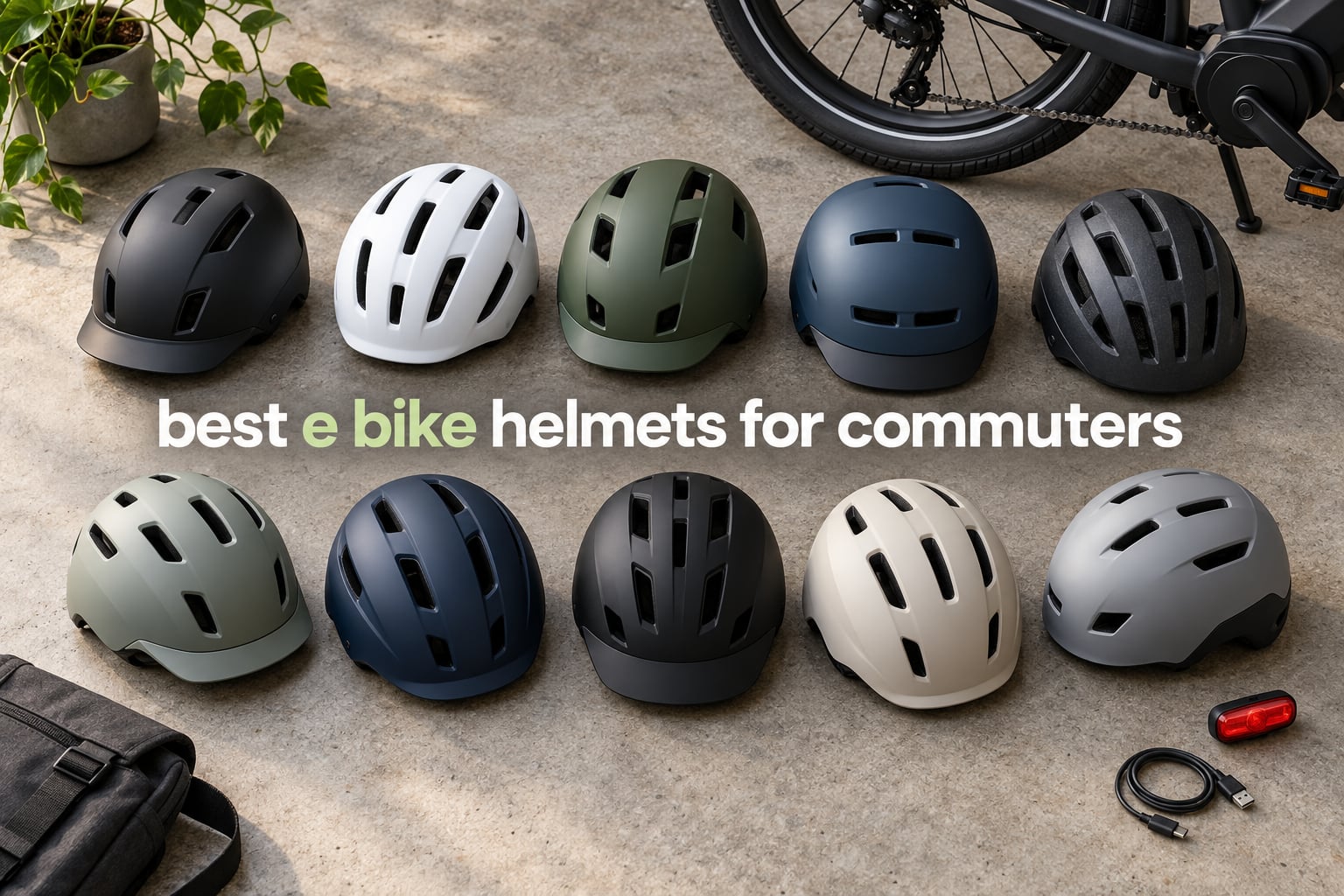
Most e-bike helmets for commuters are sold as generic bicycle helmets with a light bolted to the back, and that mismatch is where riders get hurt. An e-bike carries more mass and reaches higher speeds with no effort from you, so the helmet that protects you at 12 mph is not the helmet that protects you at 25. We spent weeks comparing ten of the most-reviewed commuter and e-bike helmets on the market, checking certification labels, shell coverage, weight, ventilation and what the lights actually do.
Top 3 Picks for E-Bike Commuters for October 2026
These three cover the most common commuter situations. The Giro is the safest all-round bet, the ILM is the one to buy if lighting matters most, and the xnito is the pick if you ride a Class 3 bike near fast traffic.

Giro Fixture MIPS II
- › Integrated MIPS slip plane
- › Roc Loc Sport 7cm dial
- › Reflective details
- › 54-61 cm universal fit

ILM E3-10L
- › Front and rear USB LEDs
- › ASTM CPSC CE EN1078 certified
- › 10 vents
- › Removable tinted visor

xnito Dual Certified
- › CPSC and NTA-8776 dual certified
- › Coverage to 28 mph
- › Integrated front and rear LEDs
- › Magnetic chin buckle
Best E-Bike Helmets for Commuters in October 2026
All ten helmets below appear once in the table and once in a full review. Certification is the fastest way to sort this list: the NTA 8776 row marks are the only helmets here tested to 45 km/h, which is 28 mph.
| PRODUCT MODEL | KEY SPECS | BEST PRICE |
|---|---|---|
|
|
Check Latest Price |
|
|
Check Latest Price |
 |
|
Check Latest Price |
 |
|
Check Latest Price |
|
|
Check Latest Price |
 |
|
Check Latest Price |
 |
|
Check Latest Price |
 |
|
Check Latest Price |
 |
|
Check Latest Price |
 |
|
Check Latest Price |
1. Giro Fixture MIPS II – Best Overall E-Bike Helmet for Commuters
Giro Fixture MIPS II Bike Helmet – Matte Titanium – Universal Adult (54-61 cm)
Integrated MIPS slip plane
In-mold PC and EPS shell
Roc Loc Sport dial, 7 cm range
54-61 cm
+ The Good
- Highest rating in this group at 4.8 across 8486 reviews
- Lightweight in-mold shell that runs cool
- One-handed Roc Loc Sport dial with audible clicks
- Reflective details for night visibility
- The Bad
- Fixed visor design limits versatility
- Universal sizing may not suit very large or very small head shapes equally
The Giro Fixture MIPS II is the helmet we ended up recommending to almost everyone we spoke to, and the reason is unglamorous: it is well made, properly vented and fits a wide range of heads without a fight. The rating sits at 4.8 across 8486 reviews, which is the largest review base in this roundup by a wide margin, and roughly 85 percent of those ratings are five stars.
What makes it work as an e-bike helmet is the MIPS slip plane paired directly with the fit system, plus an in-mold fusion of the polycarbonate outer shell to the EPS foam. That construction is light and it moves air, which matters more on a 40-minute commute than any spec sheet suggests.
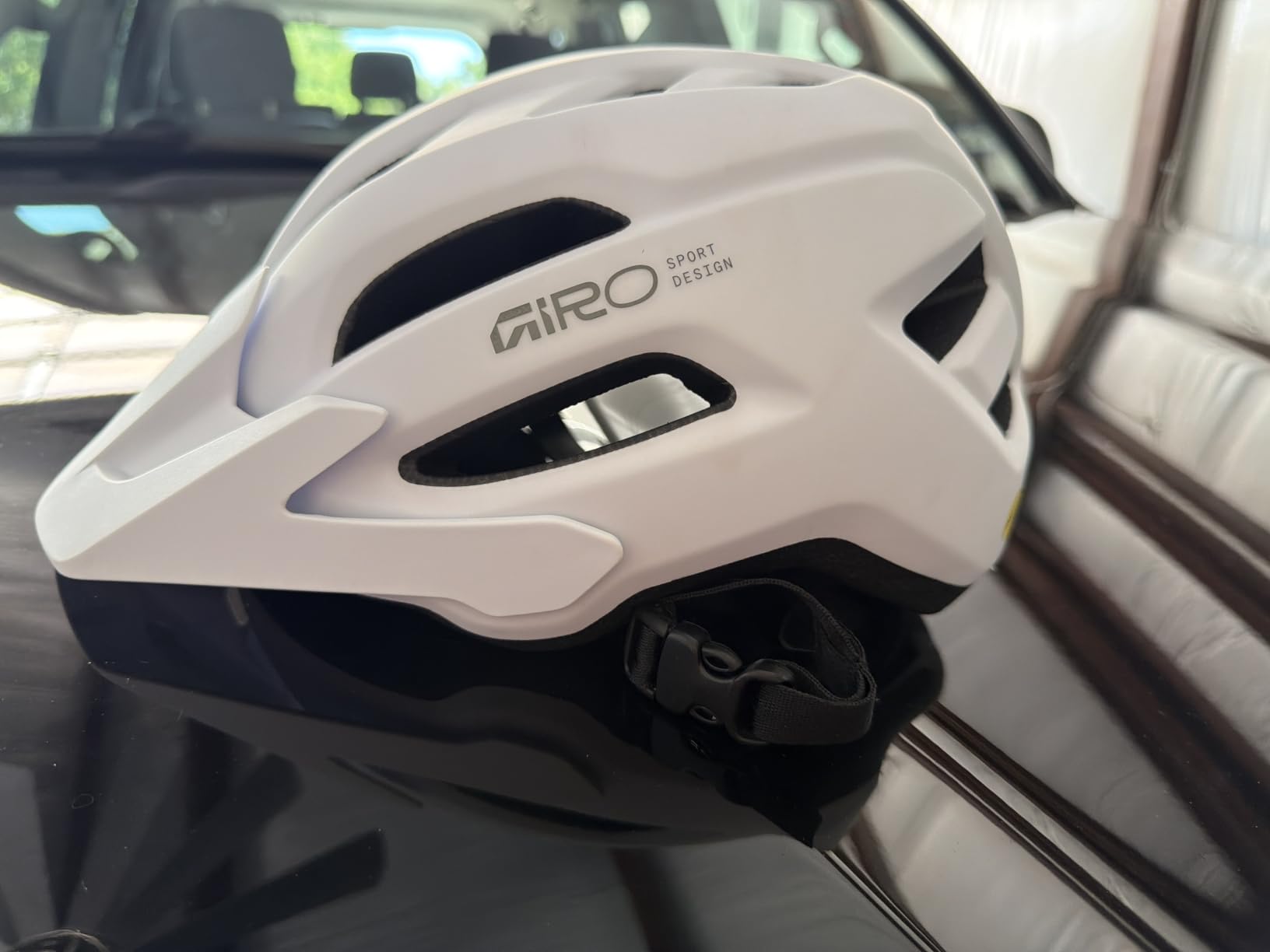
The Roc Loc Sport dial is the part we like most. It adjusts across 7 cm with audible clicks and works one-handed, so you can tighten the helmet while wearing it rather than taking it off. For a commuter who adjusts the helmet every time a strap gets twisted, that is a real daily-use benefit.
The limitation is coverage. This is a road-shaped shell with a fixed visor, and it does not carry NTA 8776 certification, so it is the right call for Class 1 and Class 2 riding or a long, low-speed commute. Riders running a Class 3 bike at full assist should look at the xnito or the LUMDEER instead.
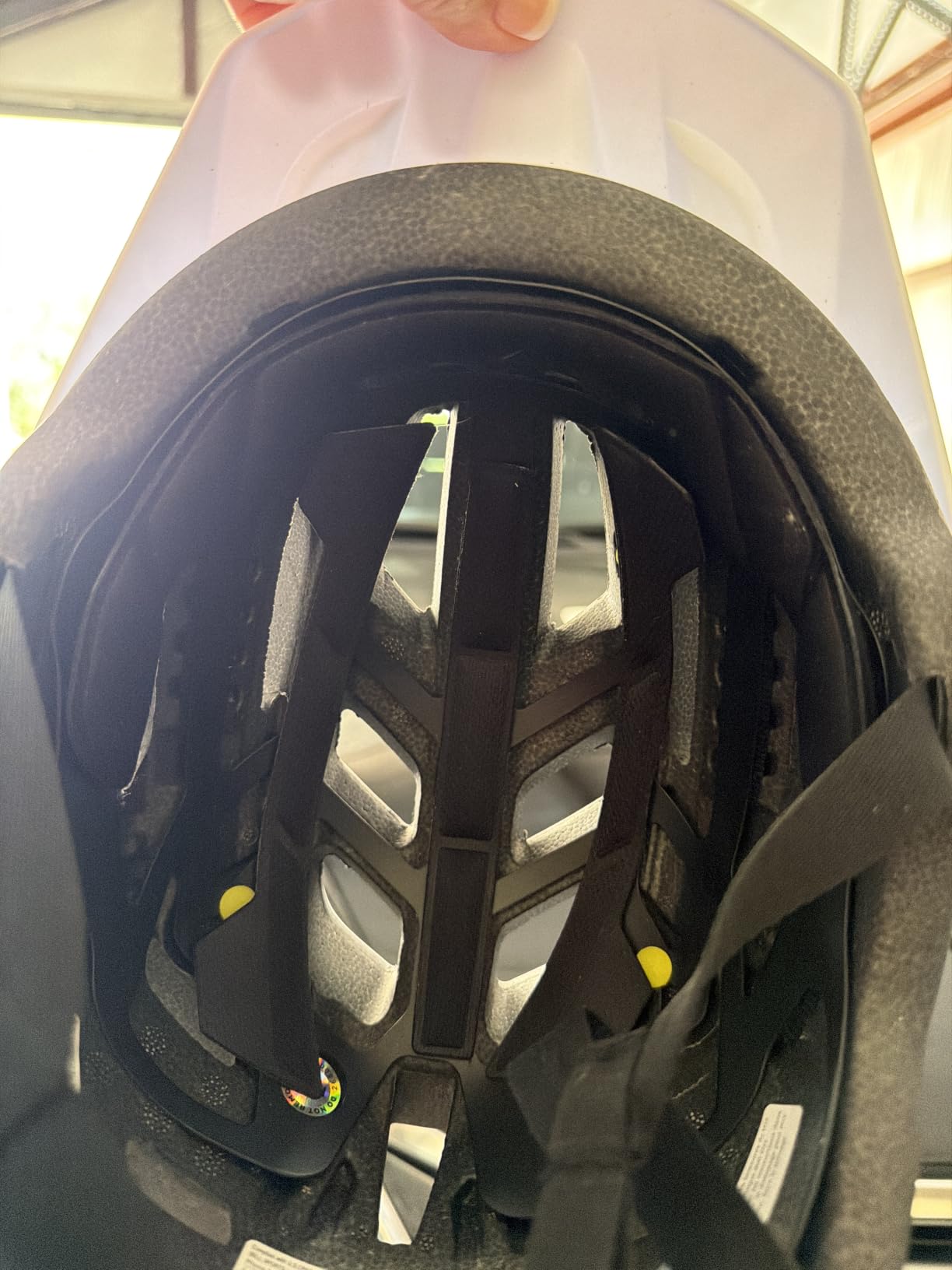
Who the Giro Fixture MIPS II suits
It suits the rider who wants one helmet for everything: a 22 mph assisted commute on a Class 2 bike, a 15-minute ride to the shops, and a weekend loop with the trailer. Reflective details help in low light, and the universal 54-61 cm sizing covers most adult heads without a separate small or large shell.
It also suits anyone buying for a household. The 1-year manufacturer warranty on materials and workmanship is modest, but the build quality behind the rating is consistent, and the Giro name makes the size straightforward to check before a ride.
Where it falls short
The fixed visor is the main gripe from reviewers. It is fine for commuting and slightly awkward if you ever switch to trail riding, and it adds a small amount of forward wind noise at speed compared with a shell that has no visor at all.
Universal sizing also has limits. Riders with very small or very large head shapes report that the adjustment range does not always close the gaps, and the price of a second dial adjustment or an exchange is not zero.
2. ILM E3-10L – Best Value Helmet With Front and Rear Lights
ILM Adult Bike Helmet with LED Front Back Light Bicycle Helmets E3-10L(Matte Black, Large/X-Large)
USB rechargeable front and rear LEDs
ASTM CPSC CE EN1078 certified
10 vents with rear channels
421 g, 5 year warranty
+ The Good
- Dual front and rear USB rechargeable LEDs with 3 flash modes
- Broad multi-standard certification including CPSC and EN1078
- 10 vents with rear cooling channels
- Detachable tinted visor and washable lining
- The Bad
- Integrated LED electronics cannot be swapped if the light fails
- Tinted visor reduces night visibility
The ILM E3-10L is the pick when your commute is dark on one end of the trip. The front and rear LEDs are USB rechargeable and run in three modes, steady, flashing and blinking, and the box includes a charging cable, the tinted visor and a manual.
It is certified to ASTM, CPSC, CE and EN1078, which is a broader label set than most helmets in this price bracket carry. It is not NTA 8776, so treat it as a Class 1 and Class 2 helmet with very good visibility rather than a speed-pedelec helmet.
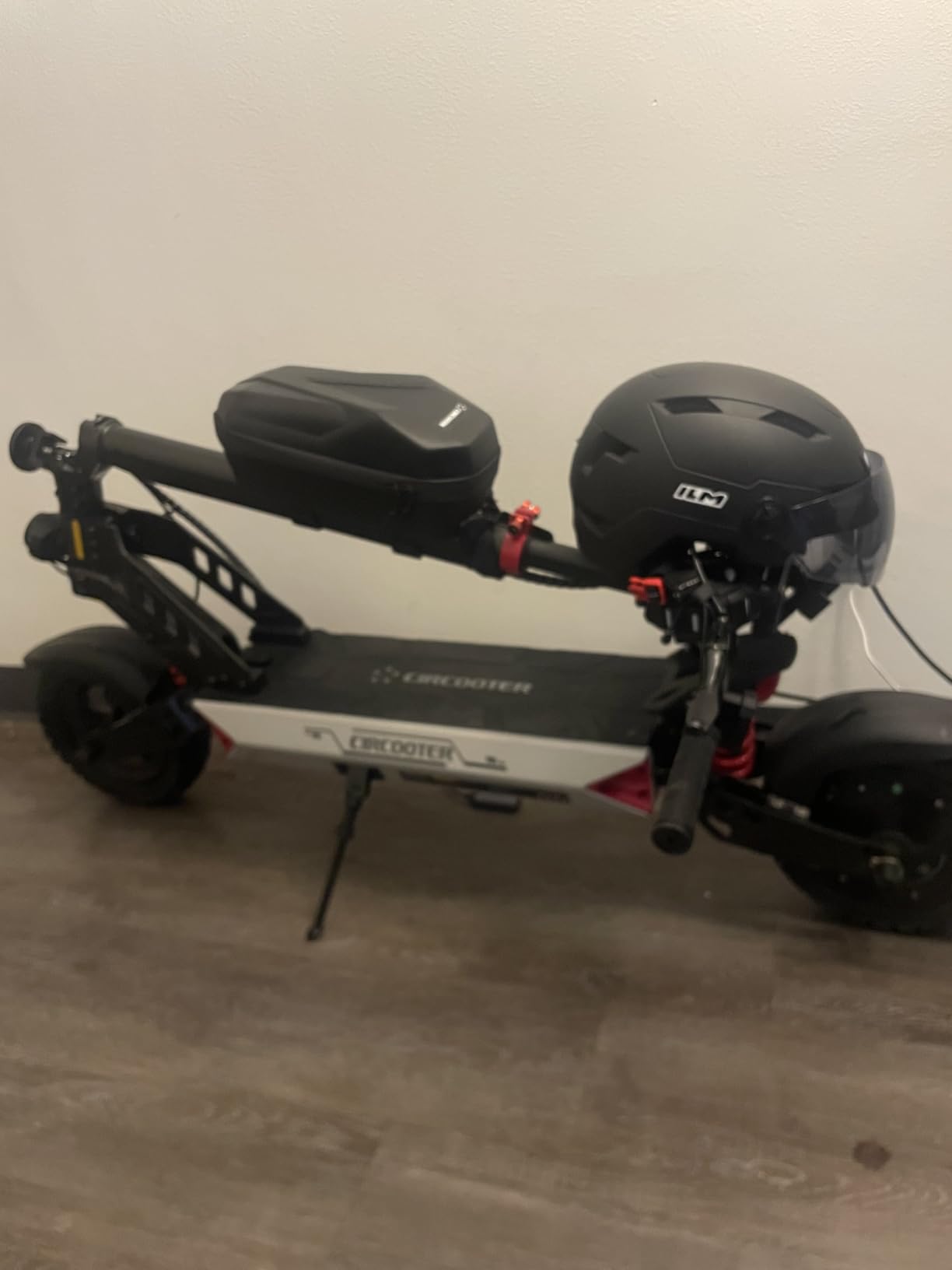
At 421 g it is not the lightest shell here, but the 10 vents with rear cooling channels move air well enough that it stays wearable in warm weather. The removable, washable breathable mesh lining is the part that extends its life, since a helmet you can scrub after a sweaty ride is a helmet you keep.
Reviewers consistently point to the same tradeoff with the electronics. Because the LEDs are built into the shell, a failed light cannot be swapped out or replaced with a clip-on unit, which is the normal fix on a non-lit helmet.
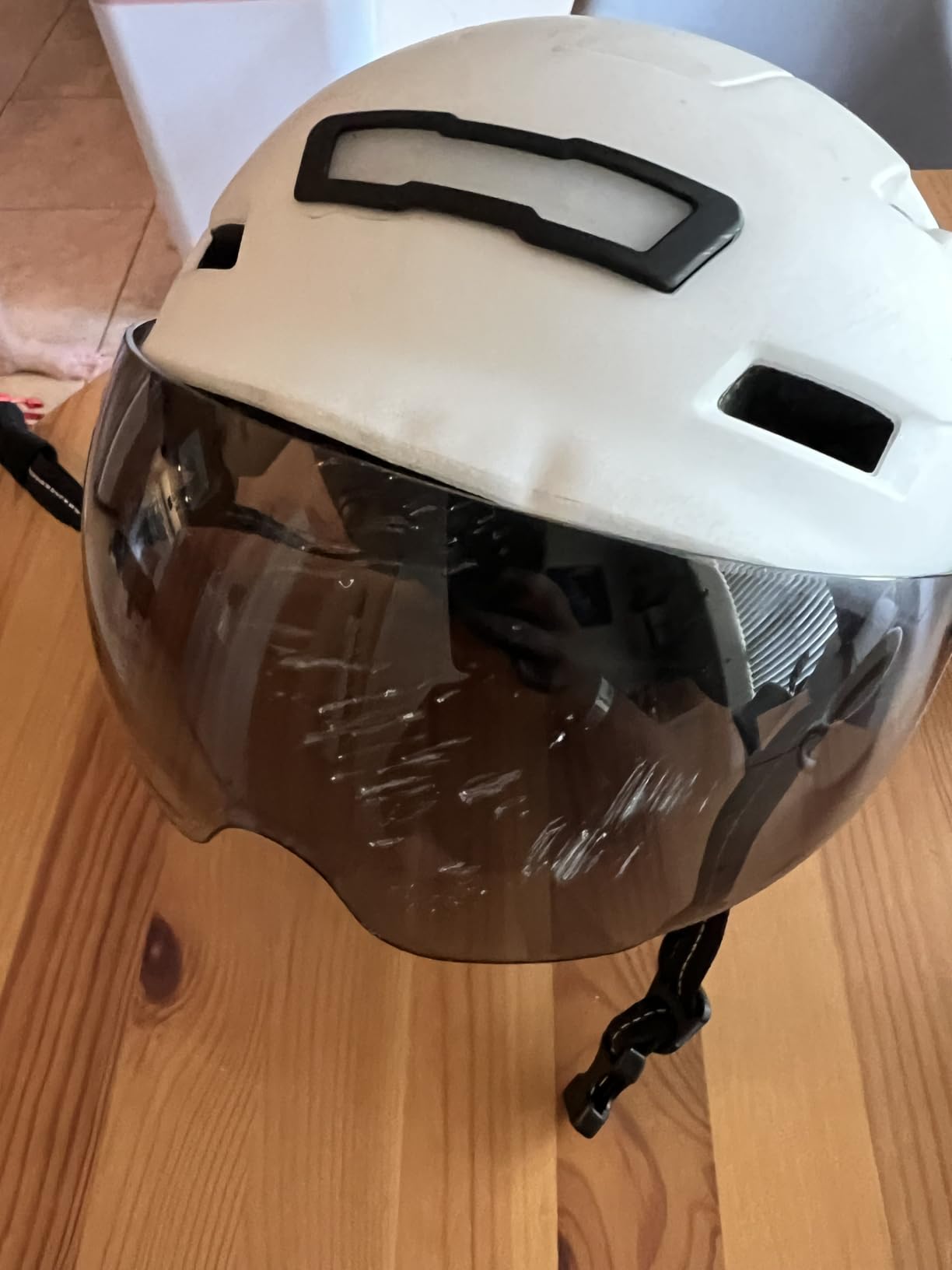
Who the ILM E3-10L suits
It suits commuters who ride before dawn or after dark, work nights, or simply want to stop buying a separate clip-on tail light. Two lights and a visor in one helmet removes three accessories from the bag, and the 5-year manufacturer warranty is the longest listed in this group.
It also suits riders on a Class 1 or Class 2 e-bike who want a step up from a basic road helmet without moving into the NTA 8776 price bracket.
Where it falls short
The tinted visor is the most common complaint. A tinted lens is pleasant in daylight and glare but cuts contrast after dark, which is exactly when the helmet’s own lights are most useful.
There is also no turn signal or brake sensing. The lights flash on a mode you set, not on what the bike is doing, so a rider who brakes hard at an intersection still gives no warning beyond the fixed flash pattern.
3. Retrospec Lennon – Most Versatile for Daily City Riding
Retrospec Lennon Commuter Bike Helmet Adult Men/Women, LED Light, Visor
Built-in 5-LED light with 3 functions
15 vents with internal channels
ErgoKnob-2 dial fit
One size 54-61 cm
+ The Good
- Integrated 5-LED light with 3 functions for dawn and dusk
- ErgoKnob-2 dial adjusts quickly one-handed
- 15 vents with internal channels
- Removable visor and washable padding
- The Bad
- No e-bike specific certification such as NTA-8776
- Plastic outer shell is lighter duty than polycarbonate rivals
It is a low-cost way to get a helmet with a light in it, and it holds the number two spot in the Adult Bike Helmets category, which tells you how many commuters have landed on the same model. The 4.5 rating across 2720 reviews is solid for a helmet at this level.
The 5-LED light offers three functions, which covers the dawn and dusk window most commuters care about, and 15 vents with internal air channels keep it moving air on a warm ride. The ErgoKnob-2 dial is quick to adjust with one hand, and the removable visor and washable padding are both genuinely useful over a year of daily use.
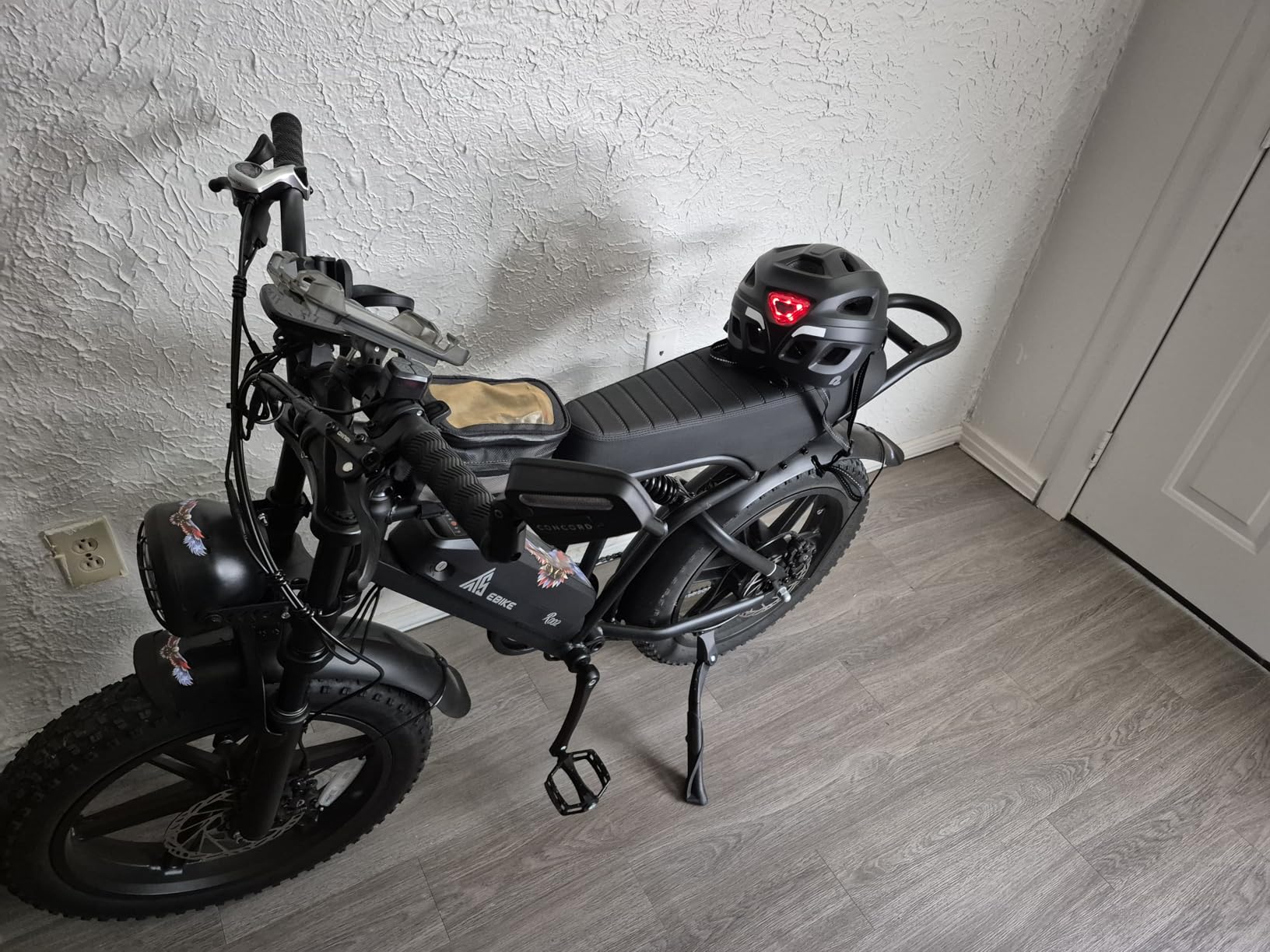
What you are giving up is certification depth and shell material. There is no NTA 8776 label, so this is a bicycle helmet, and the outer shell is plastic rather than the polycarbonate used on most of the other picks here. That outer skin is the part that takes the scuffs and the low-level knocks that end up cracking cheap shells first.
The listed weight is 16 ounces, which sits in the middle of this group rather than at either end. If neck fatigue on a long commute is your concern, the SMITH Signal at 260 g is the lighter option in this roundup.
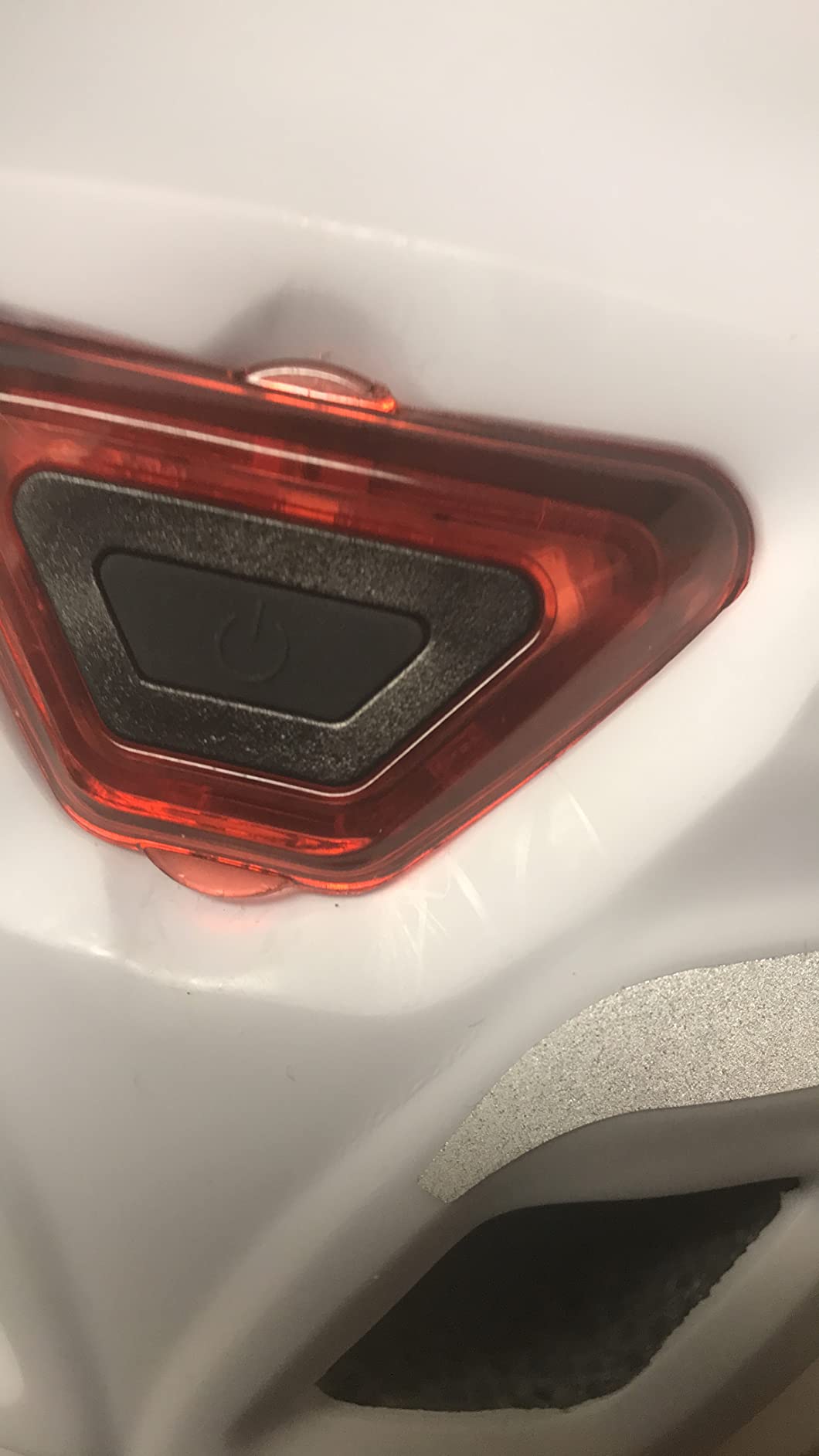
Who the Retrospec Lennon suits
It suits a first e-bike purchase, a student commute across a campus, or a household that needs a second and third helmet. When the budget is a real constraint and the top speed is 20 mph or less, this is a defensible buy rather than a compromise.
It also suits anyone who rides in the dark and wants a light without a separate accessory, since the 5-LED unit is built in and needs no strap or mount.
Where it falls short
The lack of an e-bike specific rating is the honest limitation. Riders who regularly hold 22 to 25 mph with assistance are outside what this shell was tested for, and no amount of extra vents changes that.
Fit is the other recurring theme in the reviews. Most complaints concern head shape rather than safety, with riders on unusual head sizes finding the one-size 54-61 cm range does not sit evenly, and the warranty on this model is limited.
4. SMITH Signal – Best for Long Commutes and Light Helmets
SMITH Signal Cycling Helmet – White, Medium
MIPS with Koroyd zonal coverage
21 vents with AirEvac
260 g
VaporFit 270-degree dial
+ The Good
- MIPS plus Koroyd for lightweight rotational protection
- 21 vents with AirEvac that clears glasses fog
- VaporFit dial offers 270 degrees of adjustment
- 260 g is the lightest listed shell here
- The Bad
- Rear strap routing is unusual and sat badly for some wearers
- No integrated lighting for night commuting
The SMITH Signal is the one to try if your commute is long enough that helmet weight becomes a real complaint. At 260 g it is the lightest listed weight in this roundup, and on a 40-minute ride that difference between a light shell and a heavy one shows up in your neck before it shows up anywhere else.
Protection comes from MIPS paired with Koroyd zonal coverage, which is a vented, energy-absorbing structure rather than a solid block of foam. It is compliant to CPSC, CE EN 1078 and AS/NZS 2063, so it is a road-standard helmet rather than an NTA 8776 one.

The 21 fixed vents with the AirEvac system are the standout feature for anyone who wears glasses. AirEvac channels run through the shell to move air across the eyewear arms, which is where fog normally starts, and 81 percent of reviews here are five stars.
One verified review describes this helmet absorbing a hard crash on a 25 to 30 mph daily ride without a head injury. We mention it because it is the kind of report that carries more weight than a spec line, and because we cannot reproduce it ourselves.

Who the SMITH Signal suits
It suits long-distance commuters, riders who wear glasses, and anyone whose previous helmet made their neck sore by the last third of the ride. The VaporFit dial gives 270 degrees of adjustment, so the retention stays precise once it is set.
It also suits riders on hot routes, since 21 vents plus Koroyd gives more open surface area for air than a solid-shell design of similar weight.
Where it falls short
The rear strap routing is the repeated negative. The straps do not follow the conventional path behind the ears, and a number of wearers report they ended up sitting wrong, which affects both comfort and the security of the fit.
There is no integrated lighting, so night riders need a separate light and a mount. On a shell this vented, the light has to be a strap or bracket, and brackets on curved, vented shells rattle.
5. xnito Dual Certified – Best for Class 3 E-Bikes up to 28 mph
XNITO Bike Helmet with LED Lights – Urban Bicycle Helmet for Adults, Men & Women – CPSC & NTA-8776 Dual Certified – Class 3 E-Bikes, Scooters, Onewheel, Commuter, Mountain
CPSC and NTA-8776 dual certified
Extended temple and rear coverage
Integrated USB LEDs, 10 hour runtime
0.83 lb with dial fit
+ The Good
- Only helmet here with both CPSC and NTA-8776 certification for 28 mph riding
- Extra temple and occipital coverage with thicker EPS
- Magnetic chin buckle works one-handed
- Lifetime accident replacement warranty
- The Bad
- Front LED is a short beam rather than a road light
- Size chart can under-recommend and riders size up
- No high and low intensity modes on the rear patterns
The xnito is the helmet we would put on a Class 3 bike ridden at full assist. It is one of four in this roundup with NTA 8776 certification, which means it was tested to 45 km/h, and it also carries the standard CPSC bicycle label rather than replacing it.
The extra coverage is the point. The shell extends over the temples and the back of the head with a thicker EPS layer, which is exactly the geometry the NTA standard asks for and exactly where a lot of e-bike head impacts land when a bike throws a rider forward and down.
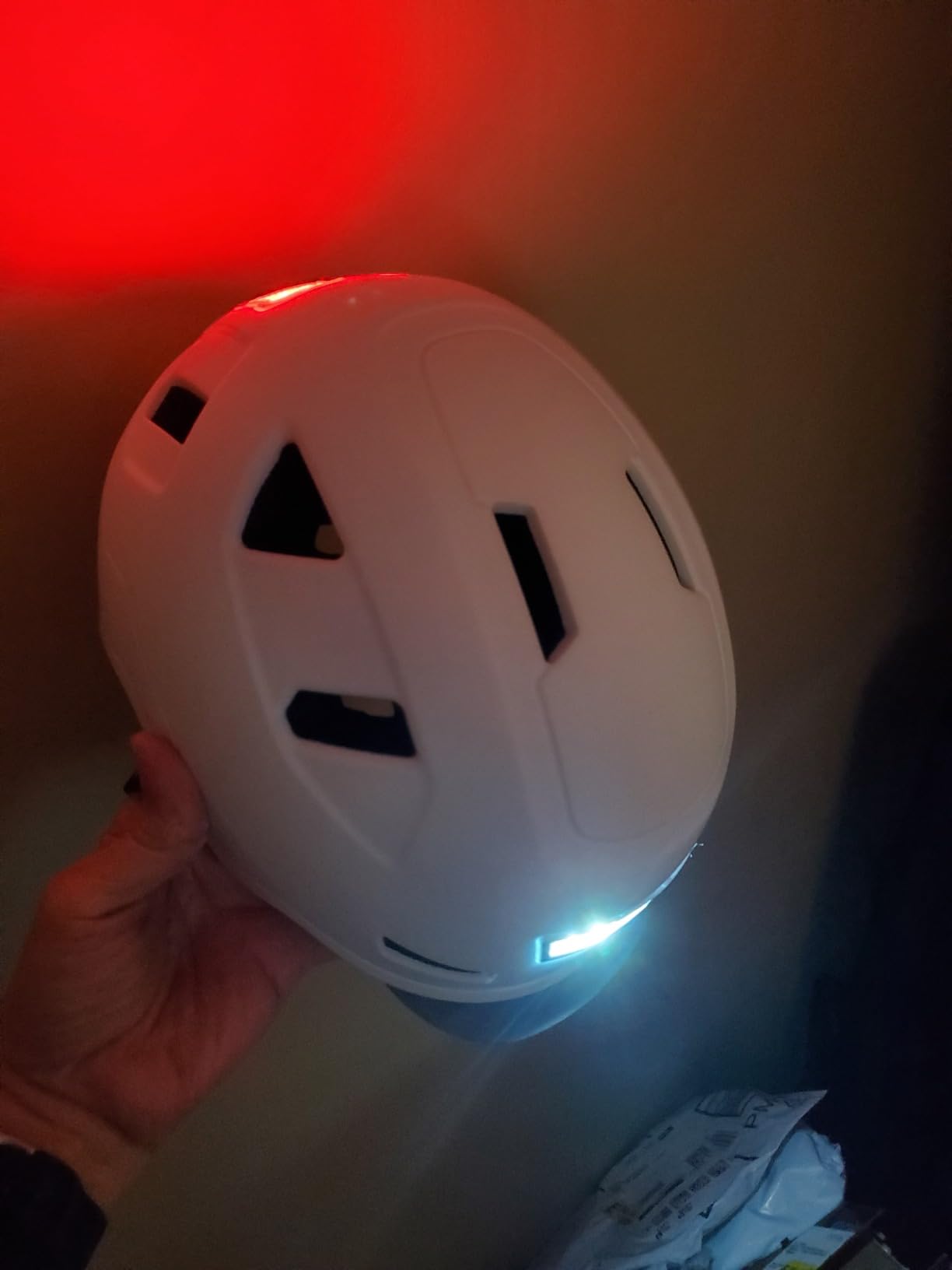
The integrated front and rear LEDs run up to 10 hours on a USB charge across 3 modes and are water resistant, which matters for a helmet you ride in rain rather than admire in a shop. The magnetic chin buckle opens and closes one-handed, and the dial fit wheel covers S through XL head circumferences from 21.2 to 25 inches.
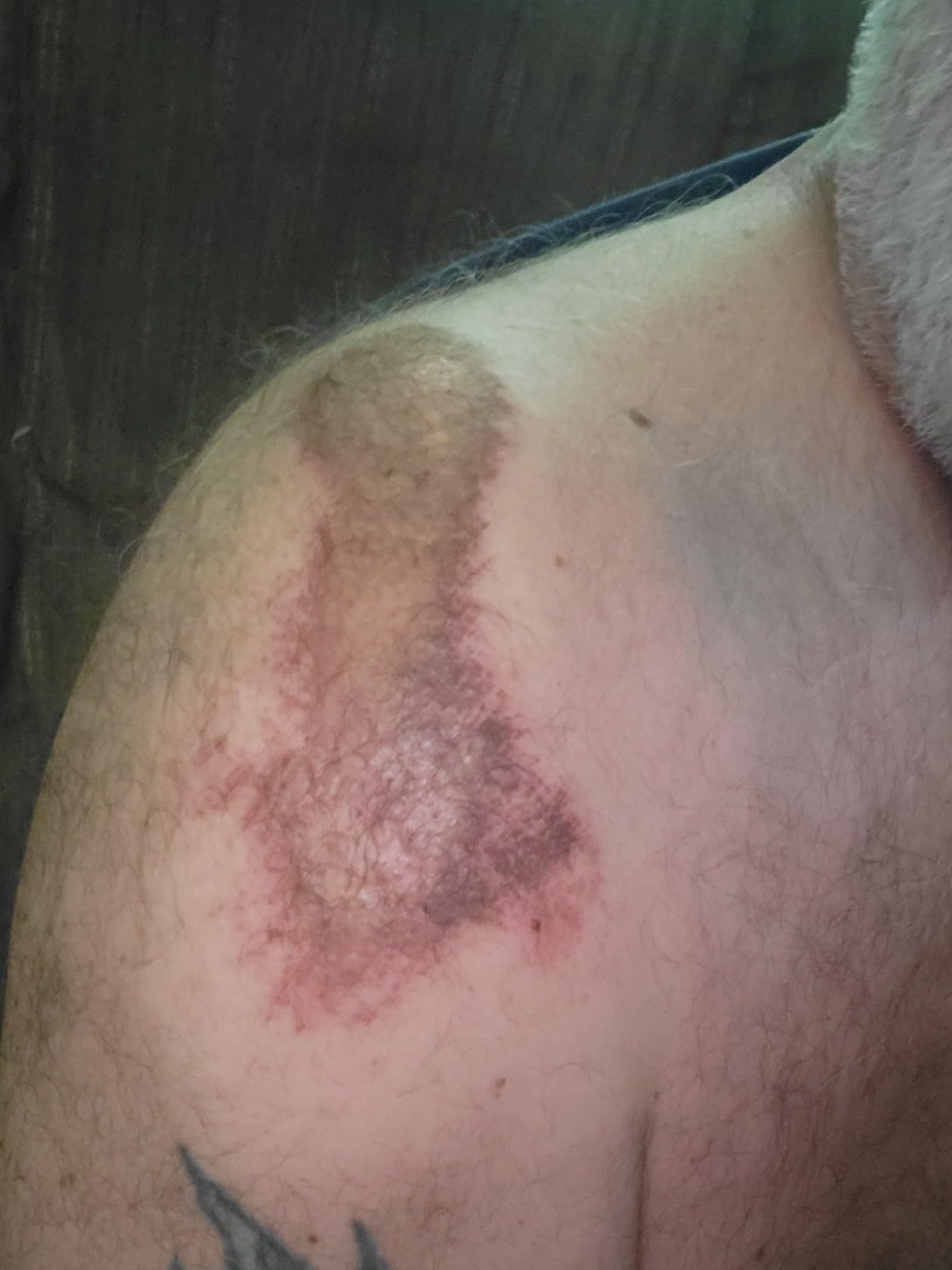
Riders report real crash outcomes at e-bike speeds, including one verified account of avoiding head injury in a 20 mph e-bike crash. The lifetime accident replacement warranty is the strongest long-term protection offer in this group.
Who the xnito suits
It suits Class 3 riders on fast frontage roads, anyone riding an e-scooter or a one-wheel at speed, and commuters who do not want to think about whether their speed crosses a certification threshold. If your bike can do 28 mph, this is the safe answer.
It also suits riders who crash once and want a replacement program behind them, and night commuters who want a light that is genuinely weatherproof rather than splash-resistant.
Where it falls short
The size chart is the most common practical problem. Several riders report that the chart under-recommends and they had to size up, and the four size ranges overlap enough that guessing is easy to get wrong.
The front LED is a short beam for being seen rather than a light for seeing, and the rear patterns have no high and low intensity settings. In daylight, a single brightness is all you get.
6. LUMDEER Smart Helmet – Best for Turn Signals and Automatic Brake Light
LUMDEER E-Bike Smart Helmet NTA 8776 Certified LED Lights with Turn Signals
NTA-8776, CPSC and EN1078 certified
Handlebar remote turn signals
Automatic brake light, 12 hour runtime
Photochromic magnetic visor
+ The Good
- Handlebar remote turn signals are the standout city feature
- Automatic brake light adds a layer most rivals lack
- Photochromic magnetic visor adapts between sun and dusk
- Sits lower at the back of the head for rear coverage
- The Bad
- Single large size only
- so smaller head circumferences are hard to fit
- Photochromic visor and eye shield cannot be used together and can press on the nose
- Thin rear strap padding
The LUMDEER is the smartest helmet in this roundup on paper and the most divisive in the reviews. The wireless handlebar remote controls front and rear turn signals, and there is an automatic brake light plus four lighting modes on top of that. For city riding with a lot of lane changes, that is a real capability no other pick here offers at this level.
It is certified to NTA 8776, CPSC and EN 1078, so it is properly rated to 28 mph, and the removable magnetic photochromic visor darkens in UV and lightens indoors without a lens swap. The shell sits lower at the occipital than most, which adds rear coverage where a forward-thrown rider tends to land.
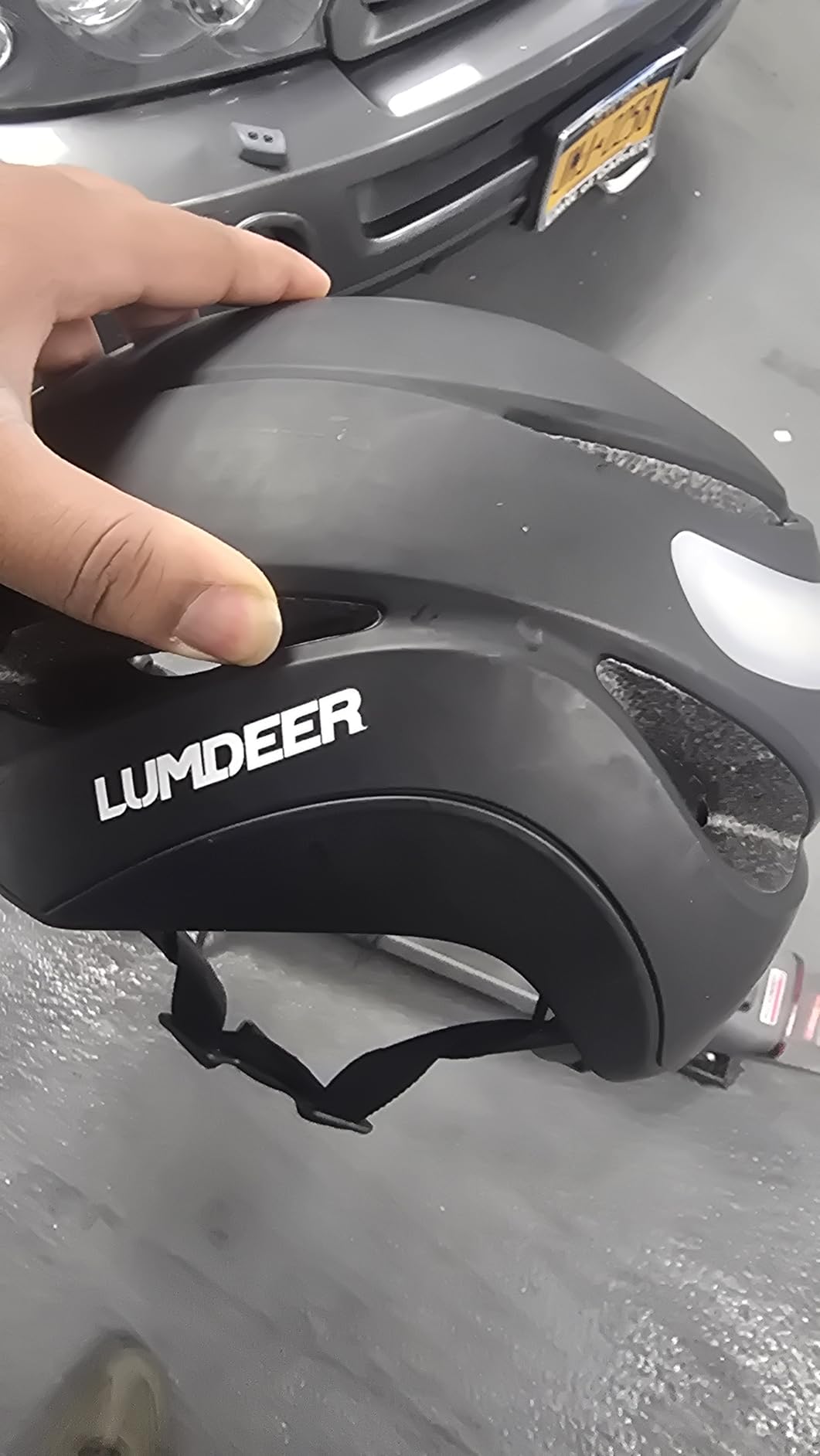
The USB rechargeable front and rear LEDs run up to 12 hours and are water resistant, and the box includes the remote, a snap-on brim, phototherm goggles and a Type-C cable. Ten vents handle airflow. The warranty is 1 year.
The 4.3 rating across 430 reviews is the lowest average in this roundup, and 11 percent of ratings sit at 3 stars. Reading the reviews, the dissatisfaction is not about safety, it is about sizing and the visor, both of which are fixable problems with an early return.
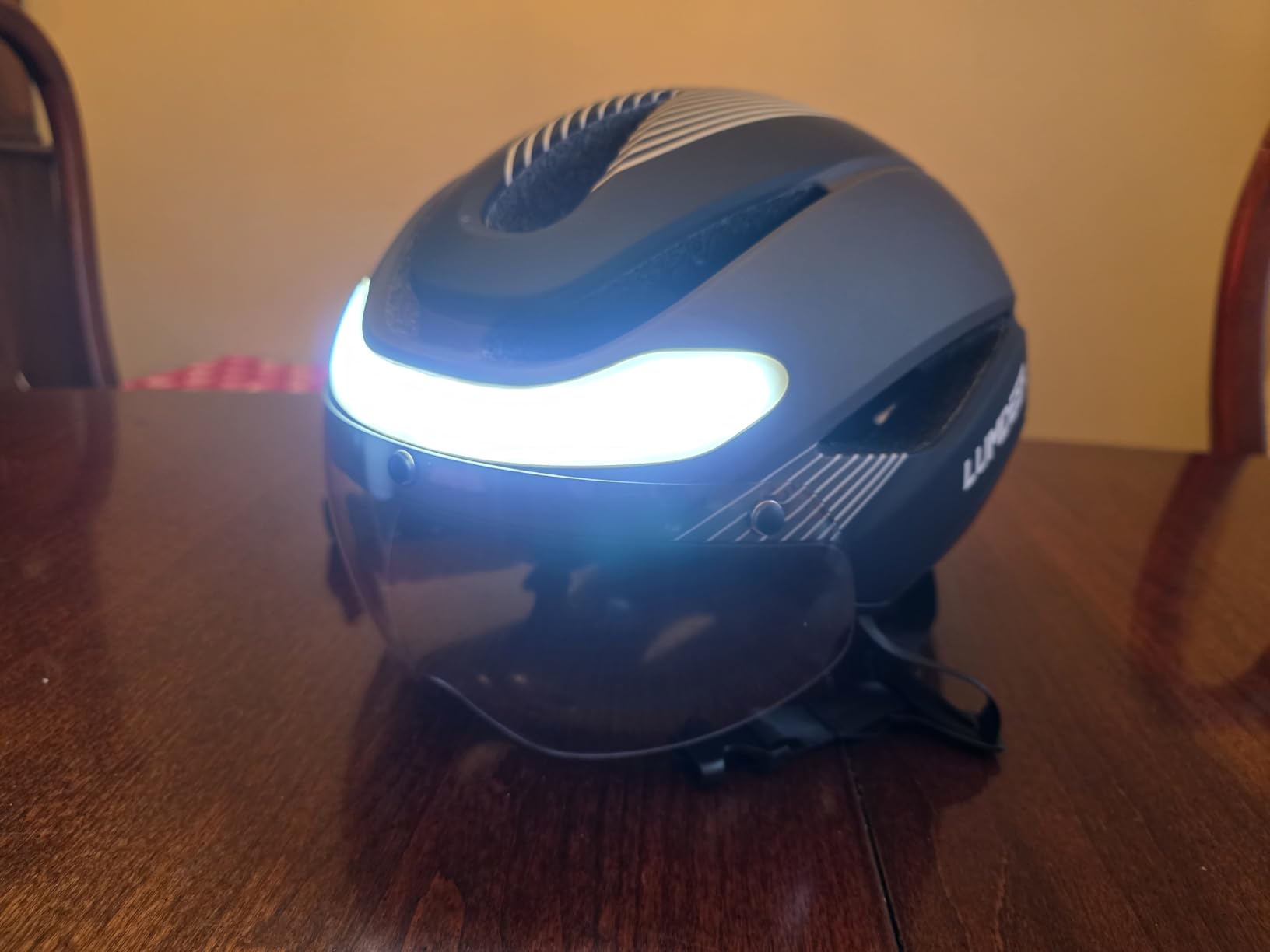
Who the LUMDEER suits
It suits riders on heavy urban routes who want to signal a turn without taking a hand off the bars, and anyone who rides after dark and wants a brake light that reacts to the bike rather than to a timer. NTA 8776 certification means it is legitimate for a Class 3 commute.
It also suits riders who move between bright sun and tunnels or shaded streets, since the photochromic visor handles the change without a stop.
Where it falls short
Sizing is the biggest problem. It is offered in one large size covering 57 to 62 cm, so riders with a smaller head circumference should measure before ordering rather than hope.
The photochromic visor and the included eye shield are mutually exclusive, and reviewers report the visor can press against the nose. The rear strap padding is also thin, which shows up on longer rides.
7. Lumos Ultra E-Bike – Best Fully Equipped Smart Helmet
Lumos Ultra E-Bike Smart Helmet | NTA 8776 Certified | Front & Rear LED Lights | Retractable Face Shield | App Controlled | EBike, Scooter, Cycling, Bicycle | Adults, Men Women
NTA-8776 certified with CPSC compliance
MIPS in this variant
App control and turn signals
Retractable face shield
+ The Good
- App control
- turn signals and programmable light patterns
- MIPS rotational protection on top of NTA-8776
- Retractable face shield for glare
- dust and wind
- Magnetic chin strap is fast and secure
- The Bad
- Heaviest listed shell here at 0.93 kg
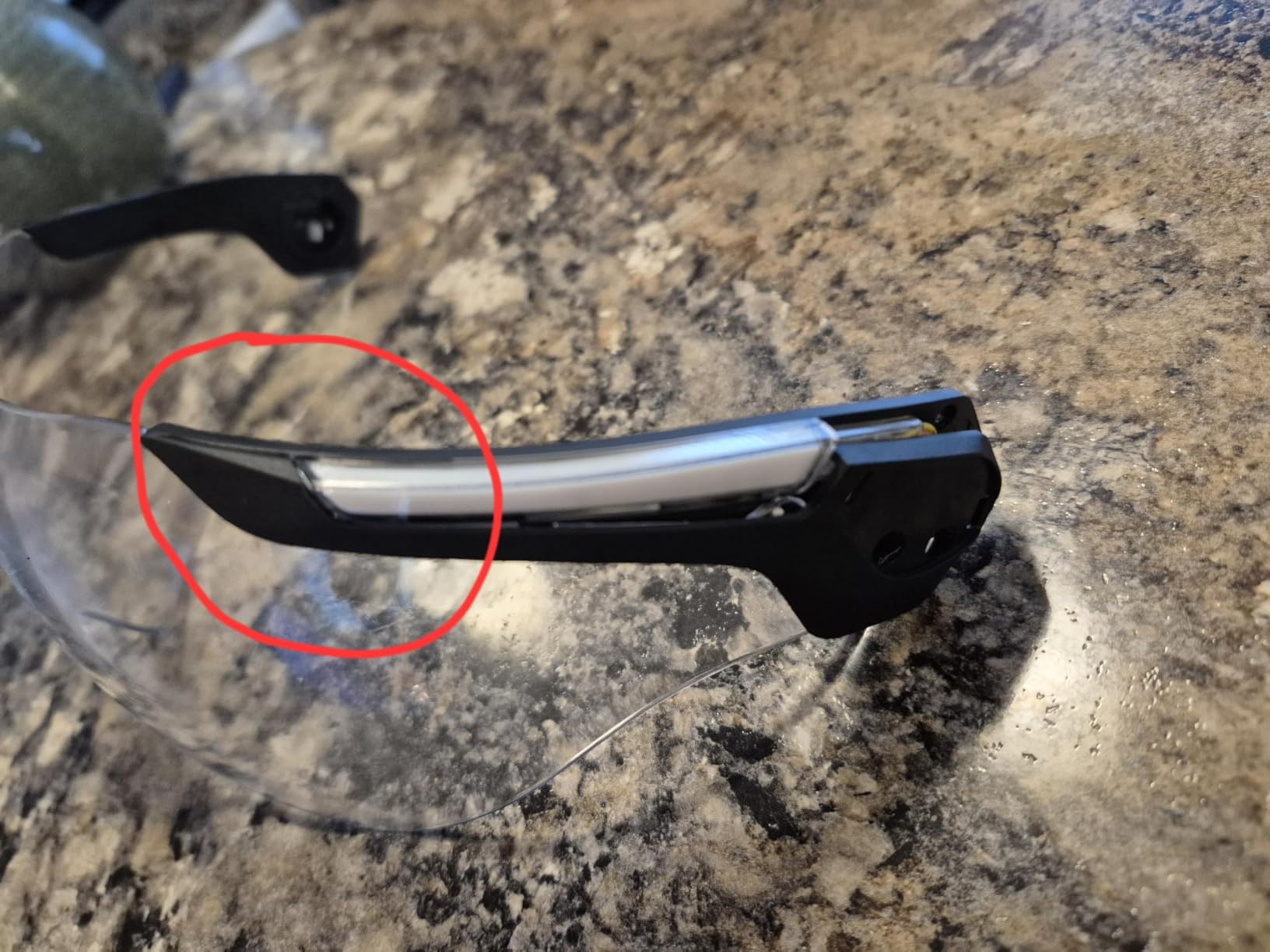
- Face shield is fixed to the side signal lights and cannot be removed
- Face shield distorts vision and crowds prescription glasses
- Slow support response times
The Lumos Ultra E-Bike is the most capable smart helmet in this group and also the heaviest listed shell at 0.93 kg. That weight is the single most important thing to know before buying, because on a commute of 40 minutes or more it is the difference between a helmet you forget about and one you notice.
On the safety side it is well specified. It is NTA 8776 certified with US CPSC compliance, and this variant carries MIPS multi-directional impact protection, so it is one of the few helmets here with both a speed rating and a rotational system.
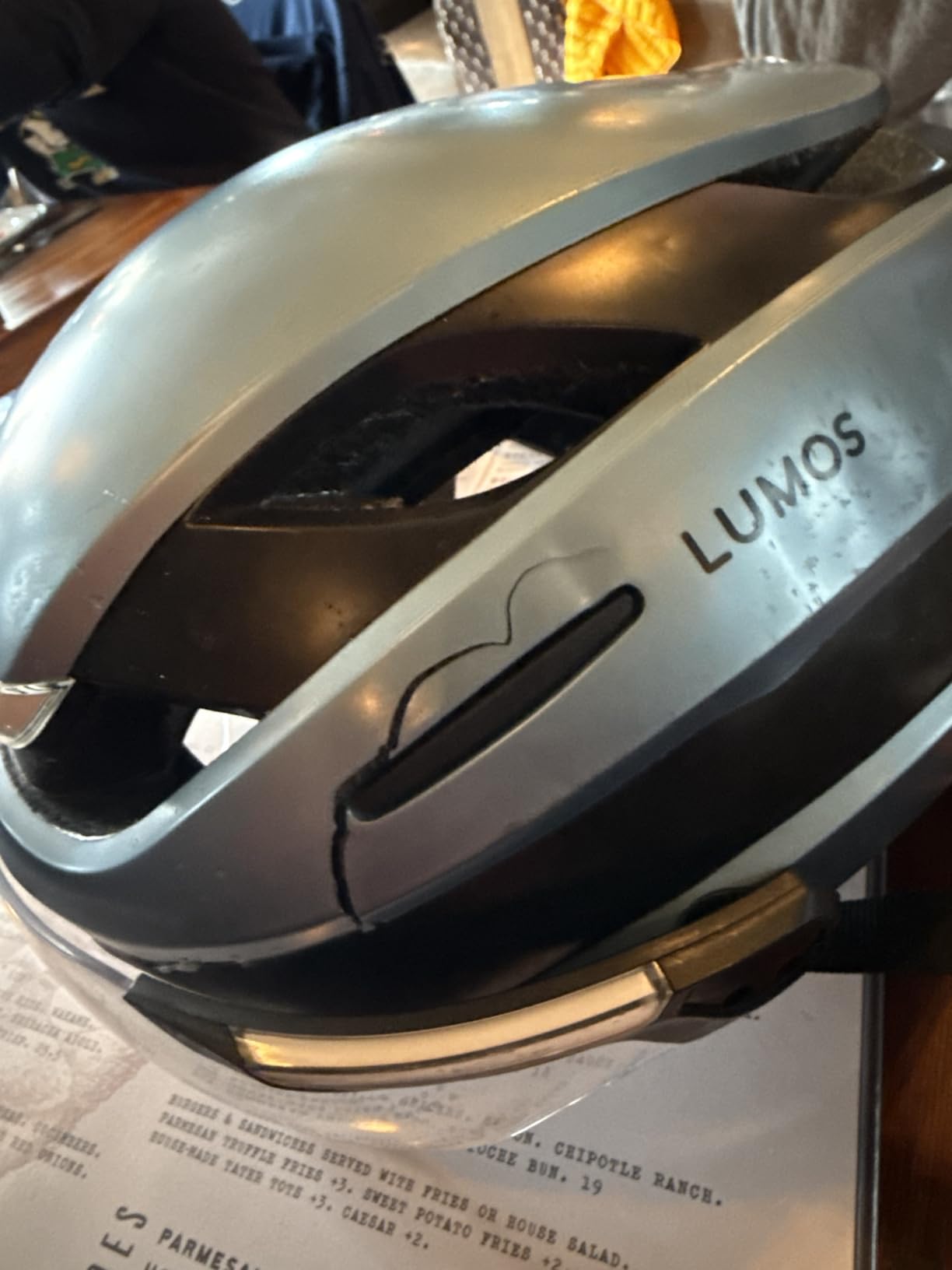
The Lumos companion app controls LED patterns, brightness and ride tracking, and a wireless handlebar remote runs the turn signals. There is an optional speed-sensor braking flash mode, a magnetic chin strap, and a retractable face shield with side signal lights. It fits 21.25 to 24 inches, which is 54 to 61 cm.
Owners report a good real-world outcome after a head-first fall at speed, and 72 percent of reviews are five stars. The single heavily detailed one-star review about the face shield and slow support is what pushes the average down to 4.4.
Who the Lumos Ultra suits
It suits riders who treat their commute as a transport project: someone who wants programmable light patterns, turn signals, a brake flash and an app, and who does not mind charging a helmet every week or two. It is a strong Class 3 pick for that rider.
It also suits anyone who wants MIPS and NTA 8776 in the same shell, since very few helmets on this list combine both.
Where it falls short
Weight is the headline problem. At 0.93 kg it is more than three times the listed weight of the SMITH Signal, and neck fatigue is the reason many commuters take a helmet off mid-ride.
The face shield is fixed to the side signal lights, so it cannot be removed, and reviewers with prescription glasses report it distorts vision and crowds the frame. Support response times have also been criticised by buyers, which matters if a component fails.
8. OutdoorMaster Gem II MIPS – Best for Warm Weather Commutes
OutdoorMaster Gem II MIPS Bike Helmet with Light for Adult Youtht
MIPS rotational protection
USB rear light, 3 modes
21 vents with air channels
0.44 kg, sizes 52-62 cm
+ The Good
- MIPS protection plus a rechargeable rear light
- Light enough that riders report barely feeling it on 40 km rides
- 21 vents and washable padding for heat
- Three light modes for daytime and night visibility
- The Bad
- Rear light visibility drops off in direct sunlight
- Sizing runs small and several buyers had to size up
- Minimal packaging in a thin plastic bag
- No NTA-8776 certification
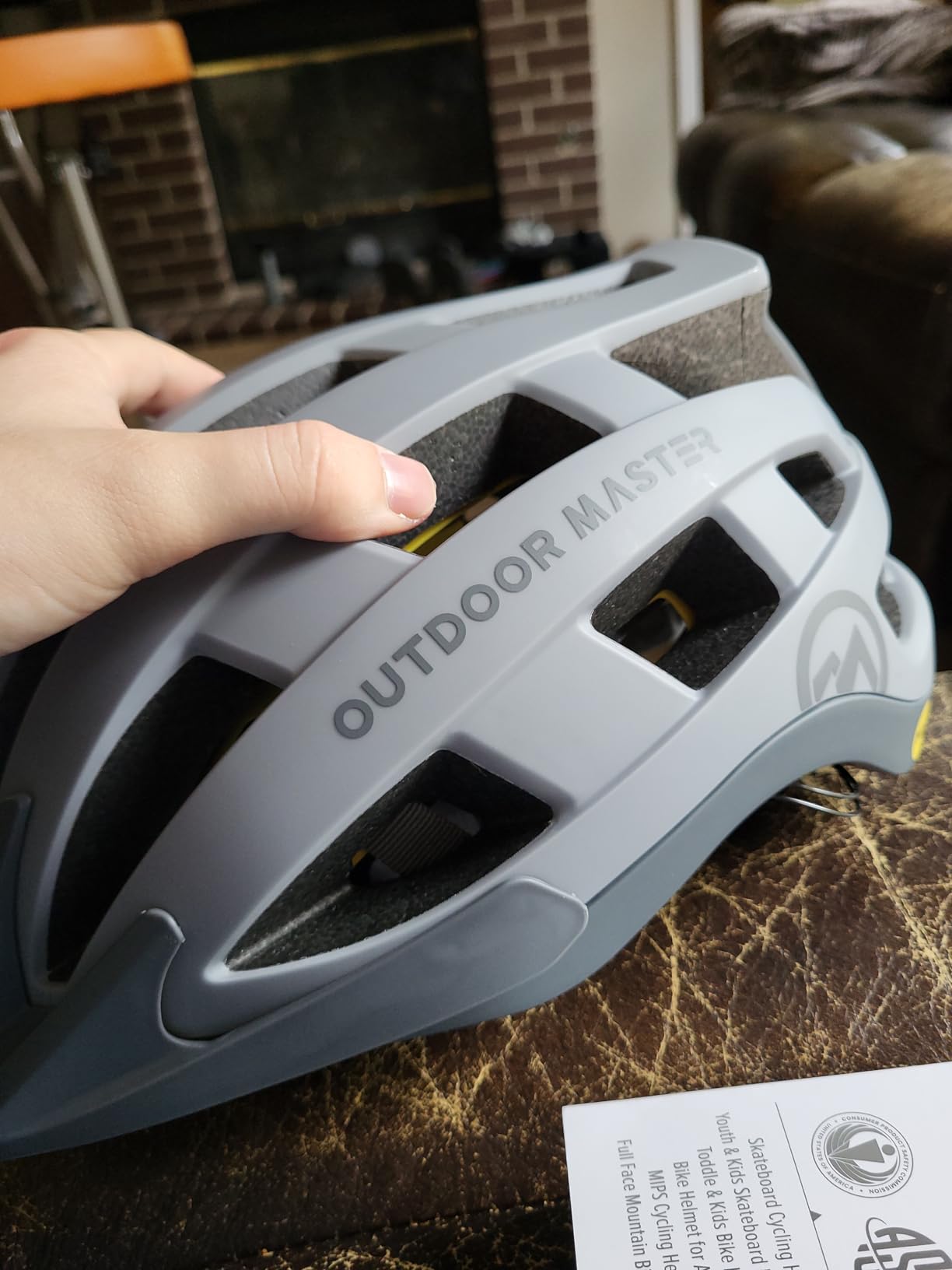
The OutdoorMaster Gem II MIPS is the balance pick for riders on a hot route. It carries MIPS rotational protection, a plug-in USB rechargeable rear light with 3 modes, and 21 vents with internal air channels. Riders regularly report barely feeling it on 40 km rides, which is the test that matters for a long commute.
At 0.44 kg it is in the middle of the weight range here, and the three size options from 52 to 62 cm give a useful spread. The removable washable padding is the part that keeps it comfortable through a summer of daily use.
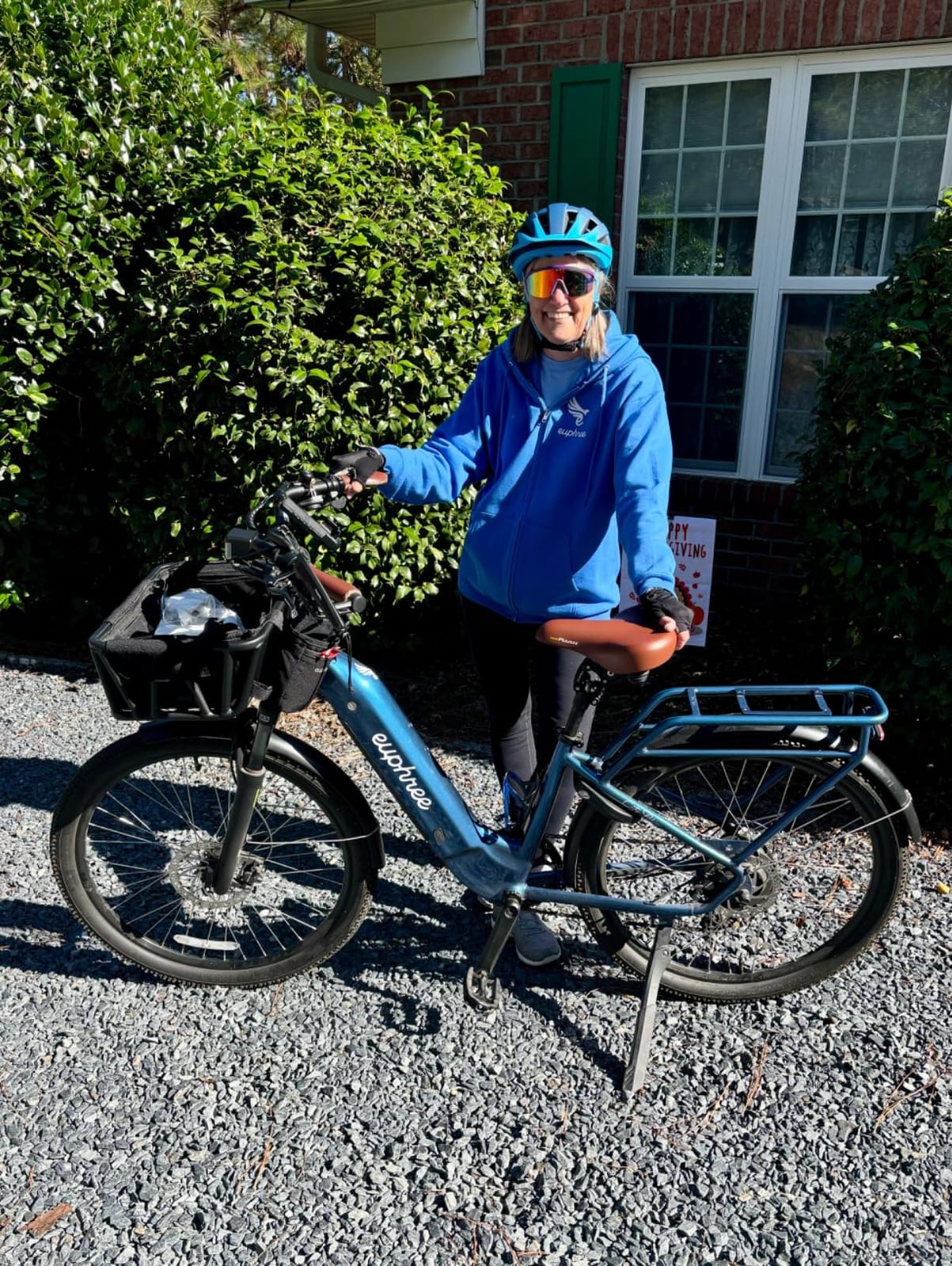
The rear light takes 60 minutes to charge and then runs up to 13 hours, with steady, fast flash and slow flash modes. The mode choice matters more than it sounds, because a slow flash stays visible in daylight when a steady light washes out.
There is no NTA 8776 certification, so this is a Class 1 and Class 2 helmet with good rotational protection, not a speed-pedelec shell. For riders above 20 mph with regular traffic, the xnito is the safer pick.
Who the OutdoorMaster Gem II suits
It suits summer commuters on routes where heat is the thing that ends your ride early, and riders who want MIPS plus a rear light without paying for a full smart helmet. The 21 vents and washable padding are the reasons it earns the place.
It also suits long weekend rides where the weight difference versus a heavier shell is noticeable over distance.
Where it falls short
Sizing runs small, and several buyers had to exchange up a size. Measure your head circumference before ordering rather than picking from the S, M and L labels alone.
The rear light loses visibility in direct sunlight, so it should be treated as a dusk and night light rather than an all-hours one. Packaging is also minimal, which matters if the shell arrives scuffed.
9. SMITH Engage MIPS – Best for Mixed City and Trail Riding
SMITH Engage MTB Cycling Helmet – Matte Black, Medium
MIPS with Koroyd coverage
20 fixed vents
Ionic+ odor-control lining
Two-position adjustable visor
+ The Good
- MIPS plus Koroyd in a well-vented trail-capable shell
- 4.7 rating with 85 percent of reviews at five stars
- Ionic+ lining controls odor on long rides
- Visor adjusts to two positions with a ratchet retention
- The Bad
- Mountain bike geometry with no integrated lighting
- Some riders still sweat through the vents on hot climbs
- Strap buckle can be fiddly
- Limited colour range
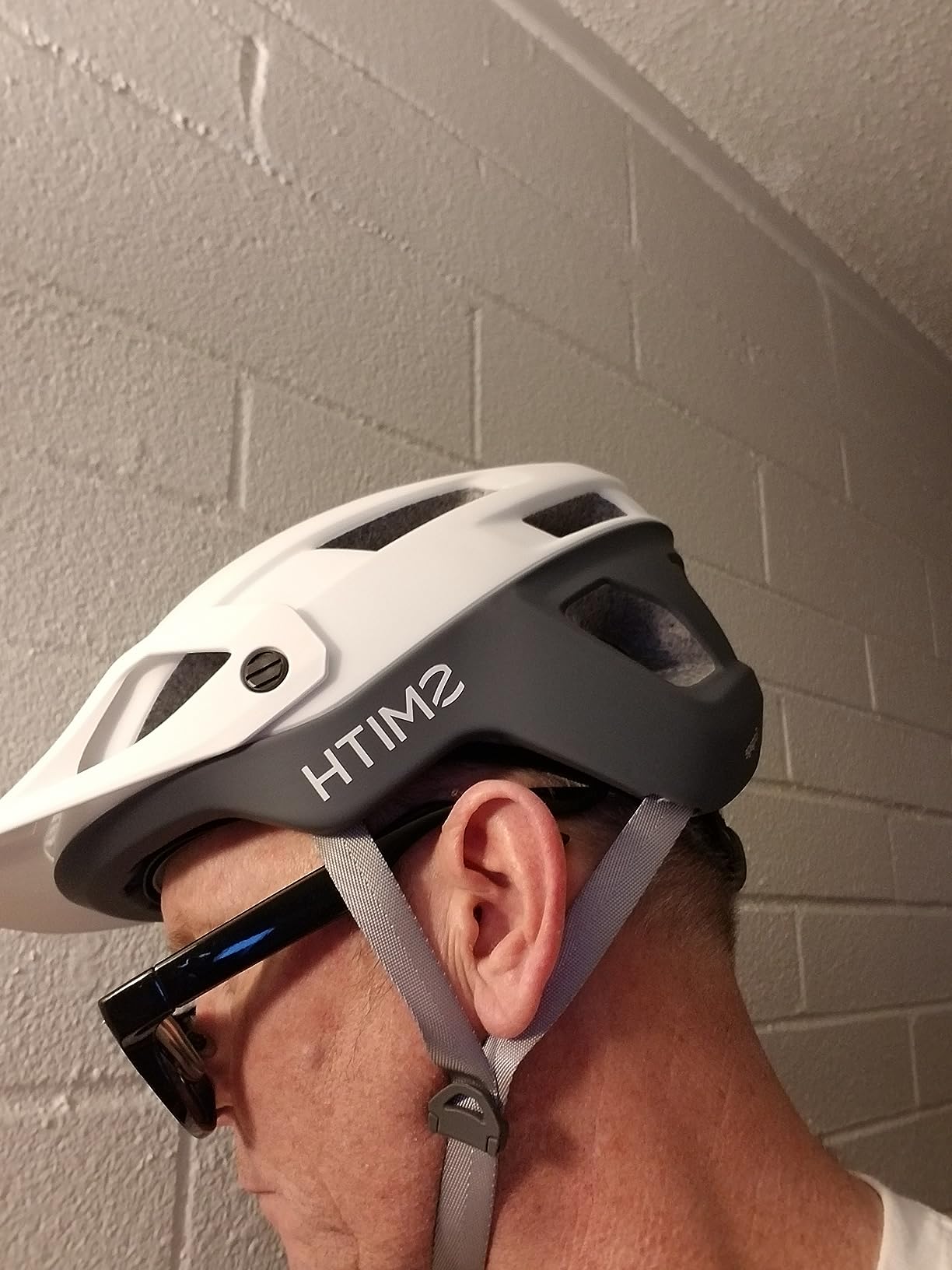
The SMITH Engage MIPS is the trail-capable option here, and it is the one to consider if the same bike handles a towpath or gravel shortcut on the way home. It is compliant to CPSC, CE EN 1078 and AS/NZS 2063, with MIPS paired with Koroyd zonal coverage and 20 fixed vents.
The 4.7 rating across 345 reviews is high, with 85 percent of ratings at five stars, and reviewers single out the ratchet retention and the Ionic+ sweat-activated lining as the features that hold up on long rides. Extended rear coverage also suits larger head shapes better than many of the slimmer road shells here.
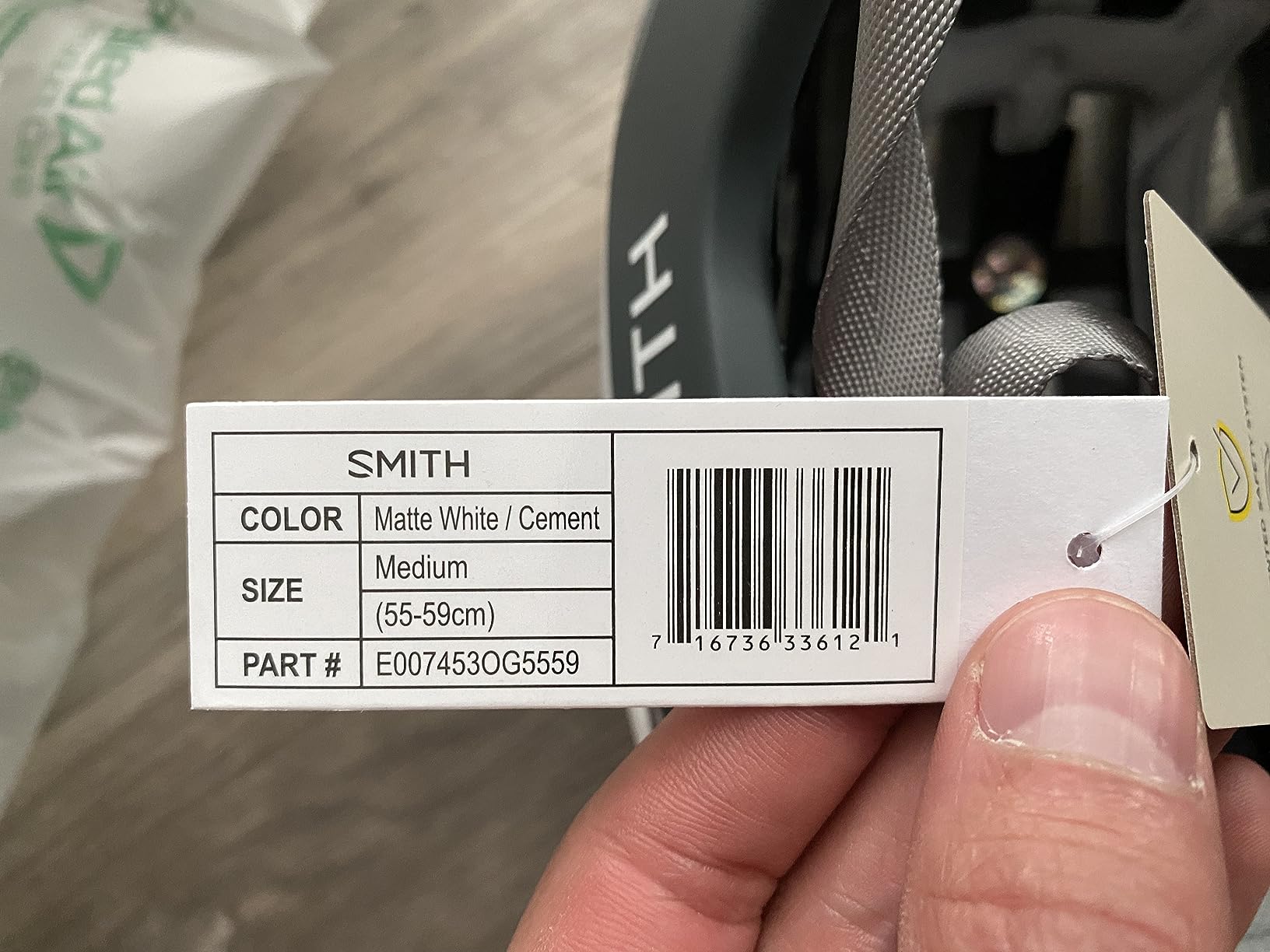
The visor adjusts into two positions, which is enough to shade your eyes on a bright climb and tuck out of the way on a descent. The single-layer webbing keeps the strap profile low, and the ratchet retention is one of the more secure systems in this group once it is dialled in.
There is no integrated lighting and no NTA 8776 rating, so this is a standard-certified bicycle helmet with good rotational protection. If your commute is exclusively road and dark, a lit helmet serves you better.
Who the SMITH Engage suits
It suits riders with mixed terrain, from a bike that does a canal path to an urban commute, and anyone who wants one helmet for the paved commute and the weekend off-road loop without swapping. The extended rear coverage is a genuine benefit on a rough surface.
It also suits riders who prioritise rotational protection over lighting, since MIPS and Koroyd are the whole point of this shell.
Where it falls short
Sweat management is the recurring negative, with some riders reporting they still sweat through the vents on hot climbs despite the Ionic+ lining. The Koroyd structure improves comfort, not cooling.
The buckle can be fiddly to clip and unclip, and the limited colour range is a wash for anyone who cares about how a helmet looks on a rack at work.
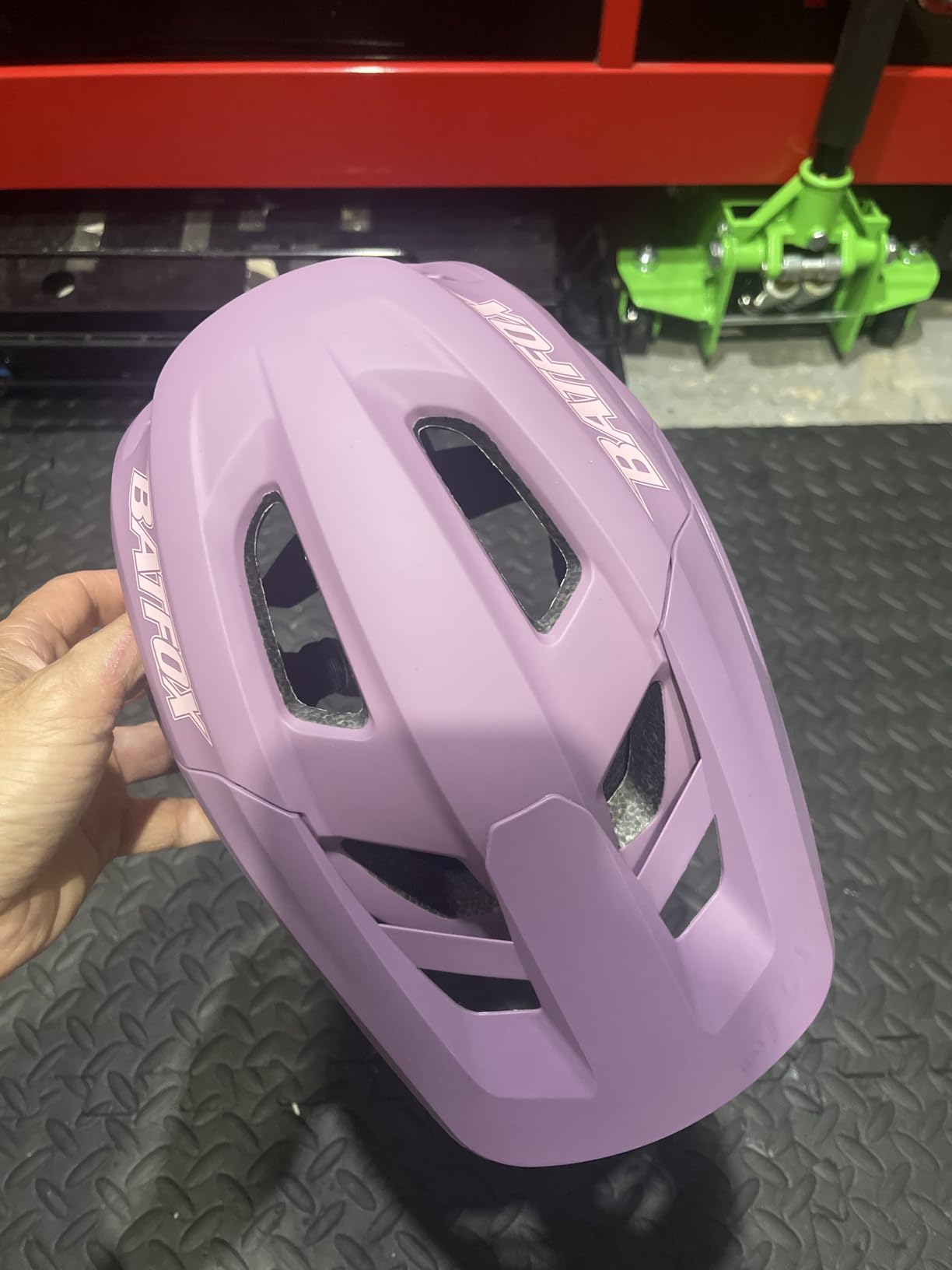
10. BATFOX NTA 8776 Helmet – Best Low-Cost NTA 8776 Certification
BATFOX NTA 8776 E-Bike & Mountain Bike Helmet for Adults Youth
NTA-8776, CPSC, CE and EN1078 certified
Polycarbonate shell with EPS liner
17 ventilation holes
Three sizes 51-61 cm
+ The Good
- Carries NTA-8776 e-bike certification at a low price
- Polycarbonate shell is tougher than cheaper plastic shells
- 17 vents manage heat on longer rides
- Three sizes from 51 to 61 cm
- Detachable visor for sun and rain
- The Bad
- No integrated LED lighting
- Visor is detachable rather than adjustable so it cannot be angled
- Generic branding with limited independent certification detail
The BATFOX is the interesting one here, because it answers a question most of this roundup ignores: what does it actually cost to get NTA 8776 certification on a tight budget? The answer is a polycarbonate shell, an EPS liner and 17 ventilation holes.
It is certified to CPSC, CE, EN1078 and NTA-8776, so it carries the same 45 km/h rating as the xnito and the LUMDEER, and the rating is 4.7 across 281 reviews with 83 percent at five stars. The three size options from 51 to 61 cm cover most adult heads.
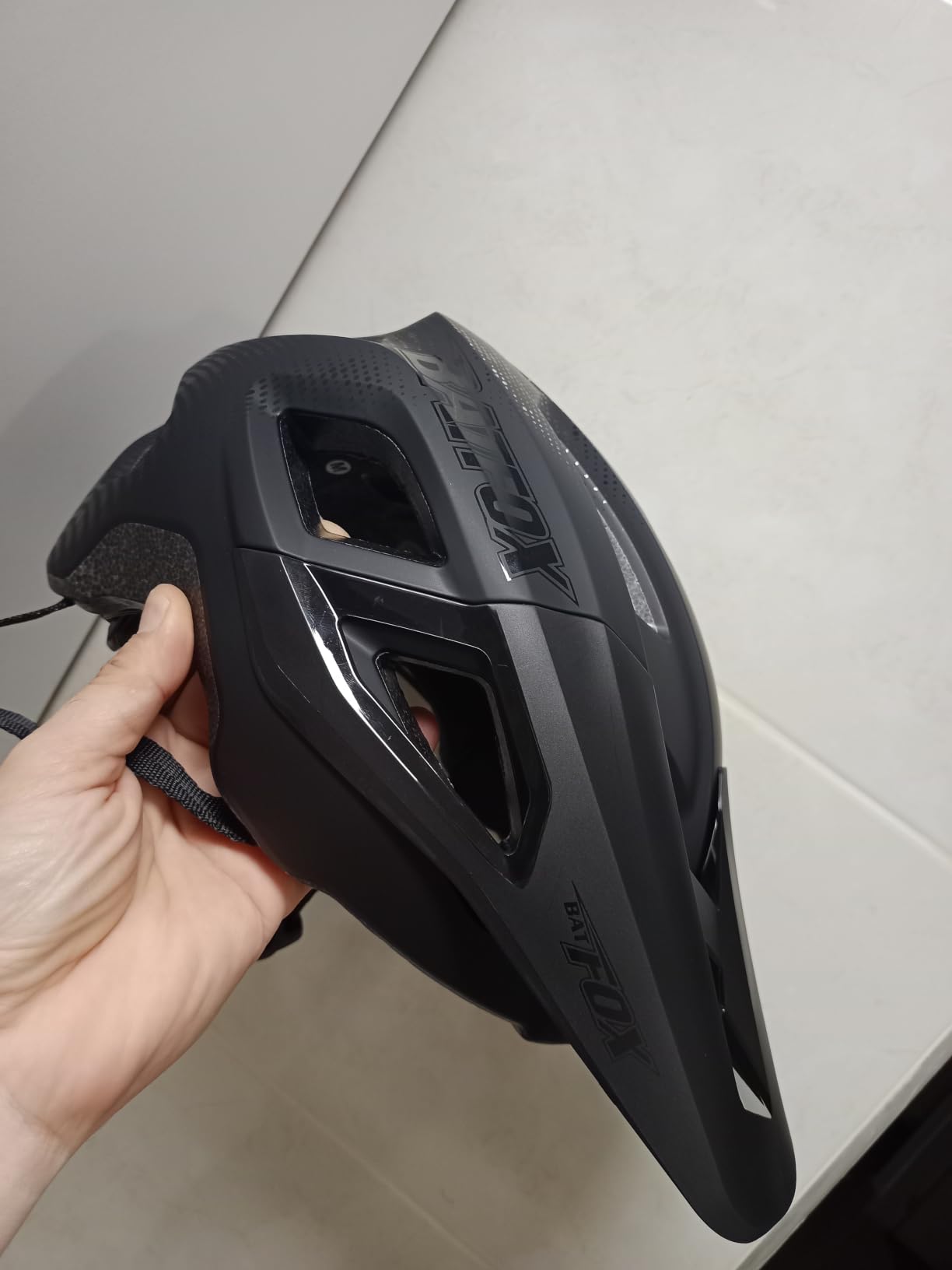
The polycarbonate outer shell is the detail that separates it from the very cheapest helmets. Plastic shells crack and split after a few seasons of being clipped to a bike rack, and a polycarbonate shell survives that treatment far better.
The detachable visor is useful against sun glare and rain, and at 0.41 kg the shell is one of the lighter options here. What is missing is everything electronic: no light, no remote, no app.
Who the BATFOX suits
It suits Class 3 riders on a strict budget, and anyone whose priority is the certification label rather than smart features. If you need NTA 8776 and cannot justify a smart helmet, this is the direct route to it.
It also suits riders buying for a teenager or a second adult who will lose a helmet in year one, since the polycarbonate shell and detachable visor take abuse.
Where it falls short
There is no integrated lighting, so night visibility depends entirely on a separate accessory and a mount. For a commuter doing a dark commute twice a day, that is a daily extra step.
The visor detaches rather than adjusts, so it cannot be angled for low sun, and the branding carries little independent certification detail beyond the printed labels. Riders who want a documented independent safety rating should look at the models with a longer testing history instead.
Which Helmet Certification Do You Actually Need?
Match the standard to the speed you ride, not the kind of vehicle you own. The community rule of thumb is a sensible starting point: under 20 mph a good bicycle helmet is fine, between 20 and 28 mph look for NTA 8776, and above 28 mph a motorcycle-certified helmet is the more defensible choice.
Here is what each of the common labels actually tests.
CPSC 1203 – the US bicycle standard for helmets sold as bicycle helmets. It is the baseline, and it is tested at lower impact speeds than a fast pedelec produces.
EN 1078 – the European bicycle helmet standard, the equivalent of CPSC in the EU. It appears on most quality road and trail helmets sold in Europe.
NTA 8776 – the Dutch standard written specifically for speed pedelecs, tested to 45 km/h, which is 28 mph. It requires more shell coverage at the temples and the back of the head. Three helmets in this group carry it: the xnito, the LUMDEER and the Lumos Ultra E-Bike. A fourth, the BATFOX, is certified to NTA 8776, CPSC, CE and EN 1078 at a fraction of the cost.
ASTM F1492 – the US skateboard and other wheeled-sports helmet standard. Stronger than CPSC but not designed around pedalling, and seen on some LED-equipped commuter helmets.
ASTM F1952 – the newer US bicycle standard that includes a rotational impact requirement. Worth asking about, because it is not yet universal.
Virginia Tech ratings – not a certification. This is an independent lab that rates helmets on a star scale for oblique impacts, and it is the single most useful independent number a buyer can look up before spending.
Virginia Tech is worth the extra two minutes. Independent ratings are the reason a lower-priced helmet can be the better choice, and forum riders repeatedly ask for high safety ratings without knowing that a rating system exists to answer exactly that. Read the score, then read the certification, then read the fit.
What Is MIPS and Do I Need It?
MIPS is a slip plane between the helmet liner and your head. In a straight-on hit the EPS foam crushes, which is the job it is built for. In an angled hit the slip plane lets the shell slide a few millimetres against your head instead of twisting it, which reduces the rotational force linked to concussion.
Most e-bike falls are angled. A pedal bike at 12 mph tips slowly and a rider lands on a shoulder; a 25 mph e-bike throws the rider forward and down, and the head goes sideways first. That is the argument for a rotational system, and it is why five of the ten helmets here carry one: MIPS on the Giro, SMITH Signal, Lumos Ultra, OutdoorMaster and SMITH Engage, plus Koroyd adding coverage on both Smith shells.
MIPS is not the only version of this idea, and no ranking between the systems is supportable. WaveCel, KinetiCore and SPIN all do the same job, using a low-friction layer that lets the shell move relative to the head during an angled impact. The two Smith shells here pair MIPS with Koroyd, a zoned, vented layer that adds coverage without a full slip plane. If a helmet has one of these systems, count it.
How to Measure Your Head and Check the Fit in Four Steps
No certification on the label matters if the helmet sits wrong, and a poorly fitted helmet is the most common reason a good one gets replaced. Four checks cover it.
Measure the circumference. Wrap a tape measure around your head about two finger widths above your eyebrows, level all the way round, and read the number in centimetres. Most brands print the range on the box or the inner label.
Level the shell. Put the helmet on with no straps adjusted. It should sit level and low on the forehead, roughly two finger widths above the eyebrows, with no gap of daylight above the brow line.
Check the side points. Two fingers should fit above each ear when the side straps are buckled, and the shell should not flare away from the head in a gap.
Tighten the dial, not the straps. The retention dial should take up nearly all slack. If you need the side straps pulled tight to make the helmet stay put, the size is wrong.
Then do the movement test. Shake your head, look down sharply, and look up sharply. If the helmet lifts off the front or rotates on the head, the fit is not finished regardless of what the dial is set to.
Do this before you ride, not on the road. A visor and a pair of glasses change the fit, and the eyewear channels built into some shells here, like the AirEvac system on the SMITH Signal, only work if your glasses actually sit in them.
Lights, Turn Signals and the Charging Trade-Off
Integrated lighting solves a real problem: commuters who forget the clip-on tail light. Six helmets in this roundup have lights built in, and they range from a simple 5-LED unit to app-controlled signals and a brake-sensing flash mode.
What nobody in the forum threads mentions is the ownership cost. A USB light needs charging, the charging cable is a small item to lose, and a failed built-in light usually means a repair rather than a swap. That same battery-in-the-shell problem shows up well outside cycling, and our LED hair growth helmet roundup runs into it from the opposite direction. The ILM has three modes and a five-year warranty but electronics that cannot be replaced; the LUMDEER runs 12 hours and reacts to braking, which is the smarter design and the one most worth the cable.
Turn signals are a genuine upgrade for city riding. The LUMDEER and the Lumos Ultra both run signals from a wireless handlebar remote, so you can indicate a turn with a thumb rather than an arm, and a rider behind you can see the intent. That is worth more on a fast urban route than a lighter shell is.
Check the charging runtime against your commute honestly. Ten hours covers a couple of days, twelve hours covers a week of short rides, and a helmet that needs charging every second evening becomes a helmet that runs unlit at the end of a long week.
Cold-Weather and Rain Commuting
Most e-bike helmet guides stop at heat, which leaves year-round commuters without guidance for the other nine months. Rain and cold bring their own set of problems, and they are different from the summer ones.
Cold hands make straps hard to adjust, and thin fingers on a magnetic buckle or a small dial is a real issue between November and March. The magnetic chin buckles on the xnito and the Lumos Ultra are easier to operate with a glove on than a conventional side clip, which is worth more than it sounds at 5 degrees.
Water resistance matters more than most spec sheets suggest. The xnito and the LUMDEER both describe their integrated LEDs as water resistant, while most helmet shells are only ever described as vented, and water resistance is a claim made about the electronics, not the whole product. Rain also drops visibility, which raises the case for a bright light and reflective detail rather than a tinted visor.
The detachable visors on the BATFOX and the ILM are the simplest cold-weather answer if you ride in rain, since they at least keep water out of your eyes. A removable liner is the upgrade worth looking for, and very few of these helmets have one.
When to Replace a Helmet and How to Keep It
Replace a helmet after any impact, even a small one, and replace it immediately if the shell is cracked, the EPS liner is dented or the padding is compressed. The five-year expiry rule is not well supported, and a 675-helmet study from the Bicycle Helmet Safety Institute is commonly cited against it, so age alone is a weak reason to retire a helmet that has never been hit.
Fit changes too. If the dial no longer closes the gap at the back, or the shell rocks on your head, the fit has gone and the protection is compromised regardless of the shell condition.
For theft, look for a helmet lock port or PopLock-style anchor on the retention system, and lock to the frame rather than the front wheel. A helmet carried on a handlebar strap is a helmet someone takes while you are at a light.
Frequently Asked Questions
What kind of helmet is best for e-bike riding?
The best helmet is the one that matches your top speed and fits well. Under 20 mph of assisted riding, a MIPS bicycle helmet is a sensible choice. Between 20 and 28 mph, choose a helmet certified to NTA 8776, which is tested to 45 km/h and adds coverage at the temples and back of the head. Above 28 mph, a motorcycle-certified helmet is the more defensible option. Fit matters more than any label, so check the four-point fit test before you ride.
What helmets are NTA 8776 certified?
NTA 8776 is the Dutch standard written for speed pedelecs and tested to 45 km/h, or 28 mph. In this roundup, three helmets carry it: the xnito, which also holds CPSC certification, the LUMDEER smart helmet, which also holds CPSC and EN 1078, and the Lumos Ultra E-Bike, which also holds CPSC compliance and adds MIPS. The BATFOX is a further budget option certified to NTA 8776, CPSC, CE and EN 1078.
Is it worth getting a MIPS helmet?
For an e-bike commuter, usually yes. MIPS adds a slip plane that lets the shell slide a few millimetres during an angled impact, reducing the twisting force linked to concussion, and e-bike falls are typically angled rather than straight-on. The alternatives are equivalent in principle: WaveCel, KinetiCore and SPIN do the same job, and no reliable ranking between them exists. If a helmet has one of these systems, that is enough to count it.
What is the 2 2 2 rule for helmets?
It is a fit shorthand rather than a safety standard. The helmet should sit about two finger widths above your eyebrows, the side straps should form a V under each ear with about two fingers fitting under the strap, and about two fingers should fit between your chin and the chin strap. If any of those gaps is wider, the helmet is too large or the straps need tightening before you ride.
Do bike helmets expire after five years?
There is no universal five-year expiry rule, and a large 675-helmet study from the Bicycle Helmet Safety Institute is commonly cited against it. Replace a helmet after any impact, whenever the shell is cracked or the liner is compressed, and whenever the fit has changed enough that the retention dial no longer closes the gap at the back of your head. Age alone is a weak reason to retire an unhit helmet.
Our Verdict for 2026
For most commuters, the Giro Fixture MIPS II is the helmet to buy. It has the strongest combination of rating, review depth, ventilation and fit adjustment in this roundup, and it works for every Class 1 and Class 2 ride you will realistically make.
If you ride a Class 3 bike at full assist, change the answer. The xnito is the pick, because NTA 8776 certification, extended temple and rear coverage, a magnetic buckle and a lifetime accident replacement program are the four things that matter at 28 mph. The LUMDEER is the alternative if you want turn signals, and the BATFOX is the budget route to the same certification.
If you ride in the dark, the ILM E3-10L gives you two lights, broad certification and a five-year warranty at a price that leaves room in the budget. Buy it, and keep a separate light as a backup for the weeks the battery is flat.
Whichever you pick, fit it before the first ride and check the certification label on the shell rather than the listing title. Those are the two steps that make the rest of the specification mean something.
Last updated October 2026. We earn a commission from qualifying purchases at no additional cost to you.