
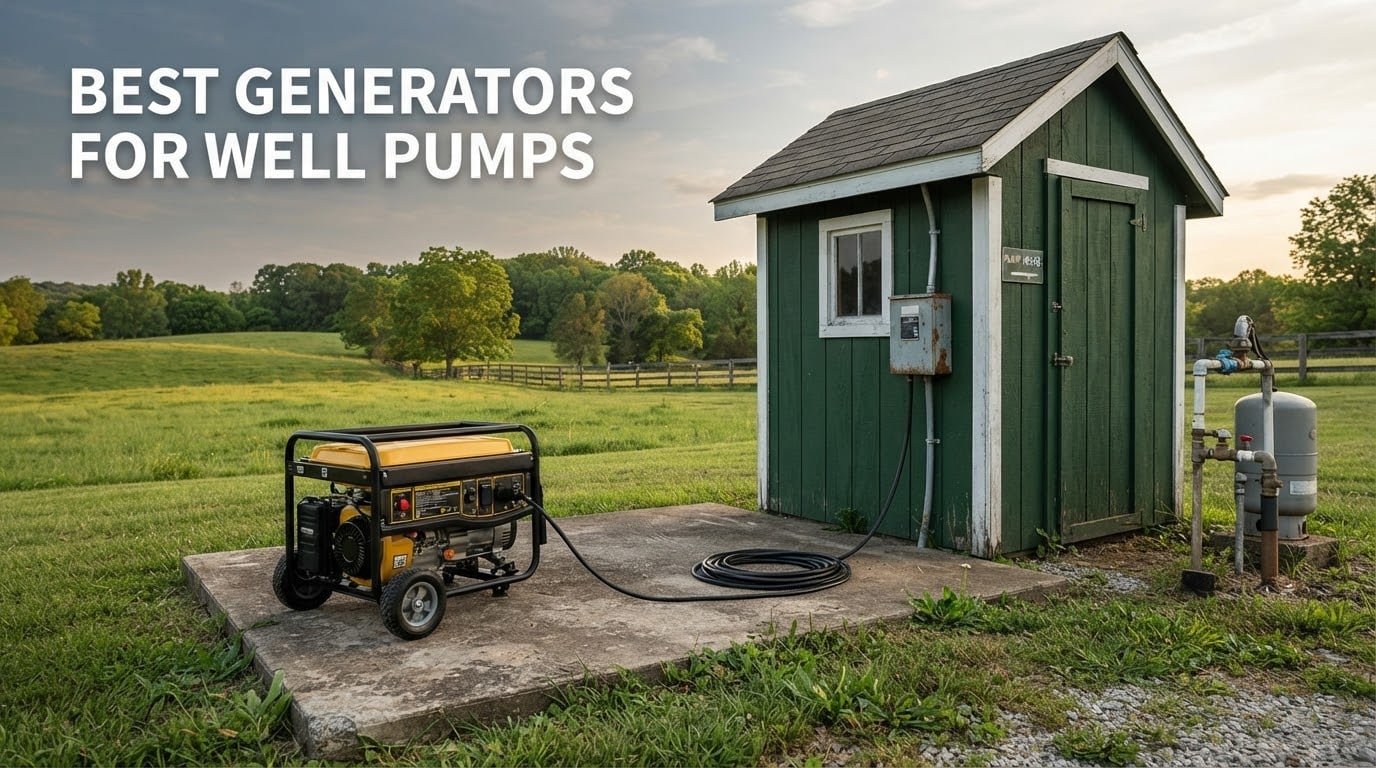
A 1/2 HP to 1 HP well pump typically draws 700W to 2,000W while running, but it needs 3,000W to 10,000W of starting surge. That makes a 7,500W to 10,000W generator the safe minimum for most homes, and a 120V-only unit cannot power a 240V pump at all.
That single rule is where most generator shopping goes wrong. People read the headline wattage on a spec sticker, compare it to what the internet says their pump uses, and buy a unit that starts fine for two weeks and then bogs down in the middle of a storm. A well pump is an inductive motor load: when the pressure switch closes, the rotor is stationary and the motor asks for three to five times its normal current until it breaks free and spins up. The generator has to absorb that spike without its voltage collapsing.
Get it wrong and you get a generator that sags, a pressure switch that chatters, and in the bad cases a pump motor that cooks itself. On a well household, that is not a minor inconvenience. As one Wisconsin homeowner put it in a long-running generator forum thread, when the power goes out on a well you lose water and toilets, and that is the whole household stopping.
This roundup covers ten portable generators matched to specific pump scenarios, from a half-horsepower shallow well pump to a 2 HP deep well unit running alongside a refrigerator and a sump pump. Every pick was checked against real review data for surge capacity, voltage, receptacles, runtime and noise, and every one of them is matched to a row in the sizing table below.
If you are still choosing the pump itself, start with our deep well pump buyer’s guide, because pump depth and type drive the generator requirement more than anything else. And if you want a wider view of the machines before the pump-specific picks, our portable generator roundup covers non-pump use cases in more depth.
Top 3 Picks for Well Pumps in September 2026
These three cover the widest range of pump situations. The DuroMax XP13000EH is the one to buy if your pump is 1 HP or larger, or if you want room for other household loads. The Genkins 8000W is the cleanest power in the group for a mid-size pump. The WEN DF475T is the practical pick when the pump is small and you want the most runtime per gallon.

DuroMax XP13000EH
- › 13000W starting / 10500W running
- › Gas plus propane dual fuel
- › 50A transfer switch-ready outlet
- › CO sensor and hour meter

Genkins 8000W Inverter
- › 8000W peak / 6500W rated
- › THD of 2 percent or less
- › 120V and 240V output
- › 62 dBA at 23 feet
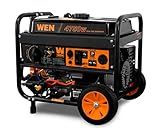
WEN DF475T
- › 4750W surge on gasoline
- › 120V and 240V twist lock outlet
- › Up to 11 hours on a 4 gallon tank
- › Key electric start
All 10 Generators at a Glance in September 2026
Every generator in this list, with the running and surge numbers that actually matter for pump starting.
| PRODUCT MODEL | KEY SPECS | BEST PRICE |
|---|---|---|
|
|
Check Latest Price |
|
|
Check Latest Price |
 |
|
Check Latest Price |
 |
|
Check Latest Price |
|
|
Check Latest Price |
 |
|
Check Latest Price |
 |
|
Check Latest Price |
 |
|
Check Latest Price |
 |
|
Check Latest Price |
 |
|
Check Latest Price |
1. DuroMax XP13000EH – Best All-Round Generator for a 1 HP Pump
DuroMax XP13000EH 13,000-Watt Dual Fuel Portable Generator – Gas & Propane, Electric Start, Whole Home Backup Power, Transfer Switch Ready, RV & Emergency Ready
13,000W starting, 10,500W running
240V, 50A transfer outlet
Gasoline or propane
CO sensor, hour meter
+ The Good
- Huge surge headroom covers 1 HP and 2 HP deep well pumps
- Gas and propane flexibility
- All-metal frame with copper windings
- 50A outlet ready for a transfer switch
- Electric start with front fuel selector
- The Bad
- Muffler is loud for its size
- Ships without engine oil
- Choke sticker and manual are reversed
- Higher harmonic distortion than premium brands
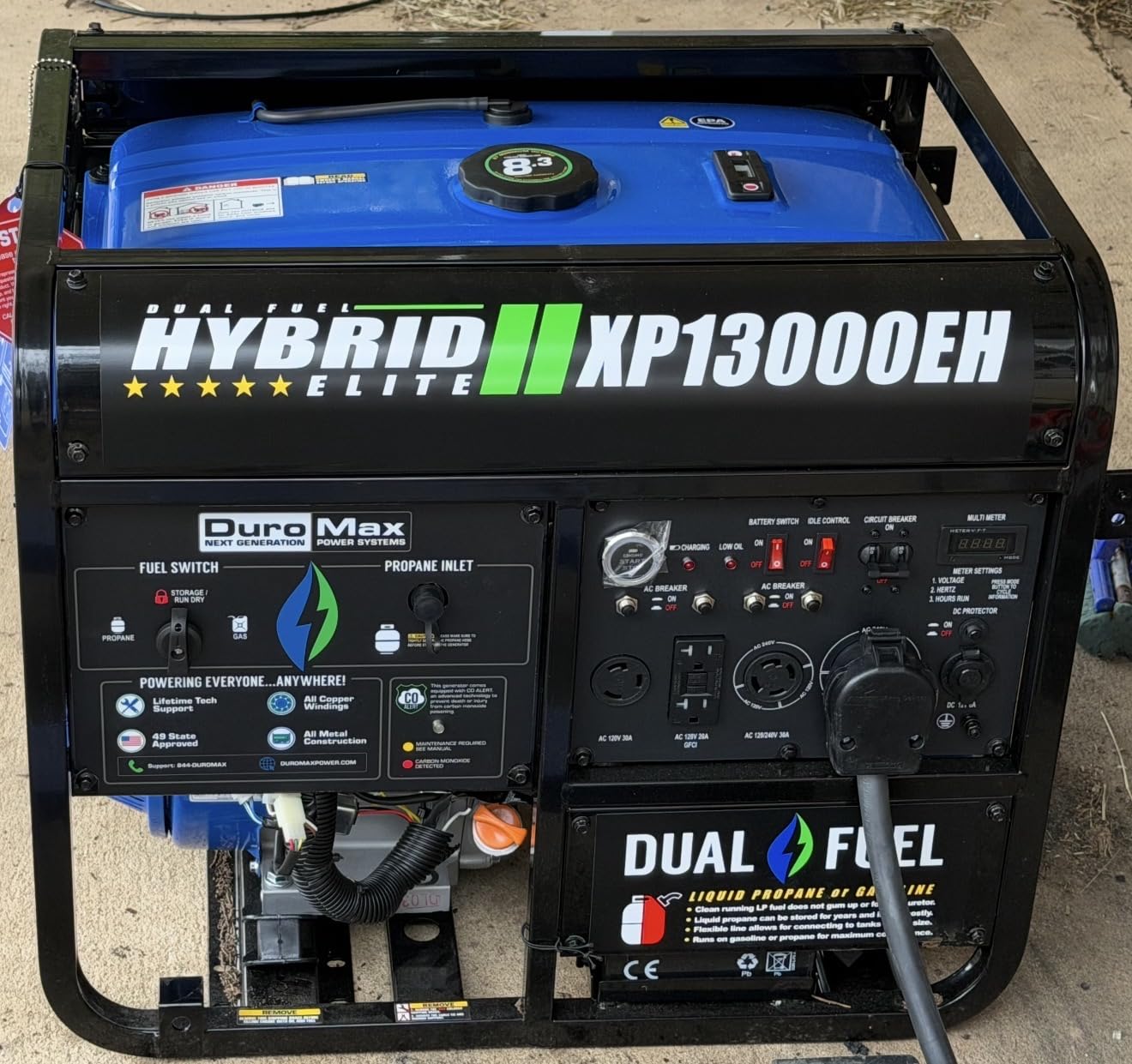
I keep coming back to this unit for one reason: it is the only machine in this group where the surge number is not the limiting factor. With 13,000W of starting power and 10,500W running on gasoline, a 1 HP or even a 2 HP deep well pump starts without the generator breathing hard, and there is still headroom for a refrigerator and a furnace blower at the same time.
At 4.5 stars across 3,991 reviews, it is also the most proven design here. Owners report running two 2-ton HVAC units, freezers, a microwave and computers through a 60A transfer switch without trouble, which tells you something about the depth of the surge reserve. The dual fuel switch on the front is a real convenience when you want to run on propane through a long outage.
The build is heavier than it looks. The all-metal frame and power panel have no plastic parts, the windings are 100% copper, and at 234 pounds it is a two-person lift with the wheel and handle kit. That weight is the honest trade-off for a machine built to be bolted to a transfer switch and forgotten.
The complaints cluster in three places. The muffler is loud enough that neighbors notice during a multi-day event, engine oil is not in the box, and the choke sticker and manual are reversed, which reliably confuses first-time owners. A minority of owners also report units that burned oil or lost compression and needed warranty service, and some note that the harmonic distortion bothers very sensitive electronics.
When this DuroMax is the right call
Choose it when your pump is 1 HP or larger, when it is a deep well pump, or when you want to run water plus a refrigerator plus a furnace blower without planning around wattage. The 50A transfer switch-ready outlet means a licensed electrician can wire it into a manual transfer switch or interlock without modifications.
It is also the pick if you want one fuel decision to be optional. Gasoline gives you the runtime; propane gives you storage stability through a season. Owners report 80 hours and more of cumulative use with no degradation, and the hour meter makes it easy to keep up on the service schedule that keeps those hours coming.
When it is the wrong call
It is the wrong choice for a small shallow well pump on a tight noise ordinance, and it is heavy to move alone. If your pump is a 1/2 HP shallow well and you live close to neighbors who complain, the 13,000W class is more machine than you need and more noise than you want.
It is also overkill for a cabin where the pump is genuinely the only load. In that case a 5,000W to 8,000W unit with a quieter engine does the same job for less money and less headache, and leaves you room to carry it to the pump house yourself.
2. WEN DF475T – Best Value Dual-Fuel Unit for a 1/2 HP Shallow Well Pump
WEN 4,750-Watt 120V/240V Dual Fuel Portable Generator with Wheel Kit and Electric Start (DF475T)
4,750W surge on gasoline, 3,800W running
120V and 240V output, L14-30R twist lock
Key electric start, 224cc engine
+ The Good
- True 120V and 240V output with an L14-30R receptacle
- Up to 11 hours at half load on a 4 gallon tank
- Simple fuel selection dial
- Easy first-turn key electric start
- The Bad
- At 105.8 pounds it is heavy for its class
- Open frame is louder than inverter units of similar size
- Two-year warranty is shorter than most rivals
This is the unit I recommend to anyone with a 1/2 HP shallow well pump who wants a 240V-capable machine without carrying a 234 pound frame. It puts out 3,800W running and 4,750W surge on gasoline, drops to 3,500W and 4,350W on propane, and ships with an L14-30R twist lock that a transfer switch can use directly.
The 4 gallon tank and the 224cc four-stroke engine are what make it interesting for water duty. Owners report up to 11 hours at half load, which for a pump that runs in short cycles when faucets open means you are not refilling mid-outage. The key electric start also removes the one thing people most regret about a portable unit in the dark.
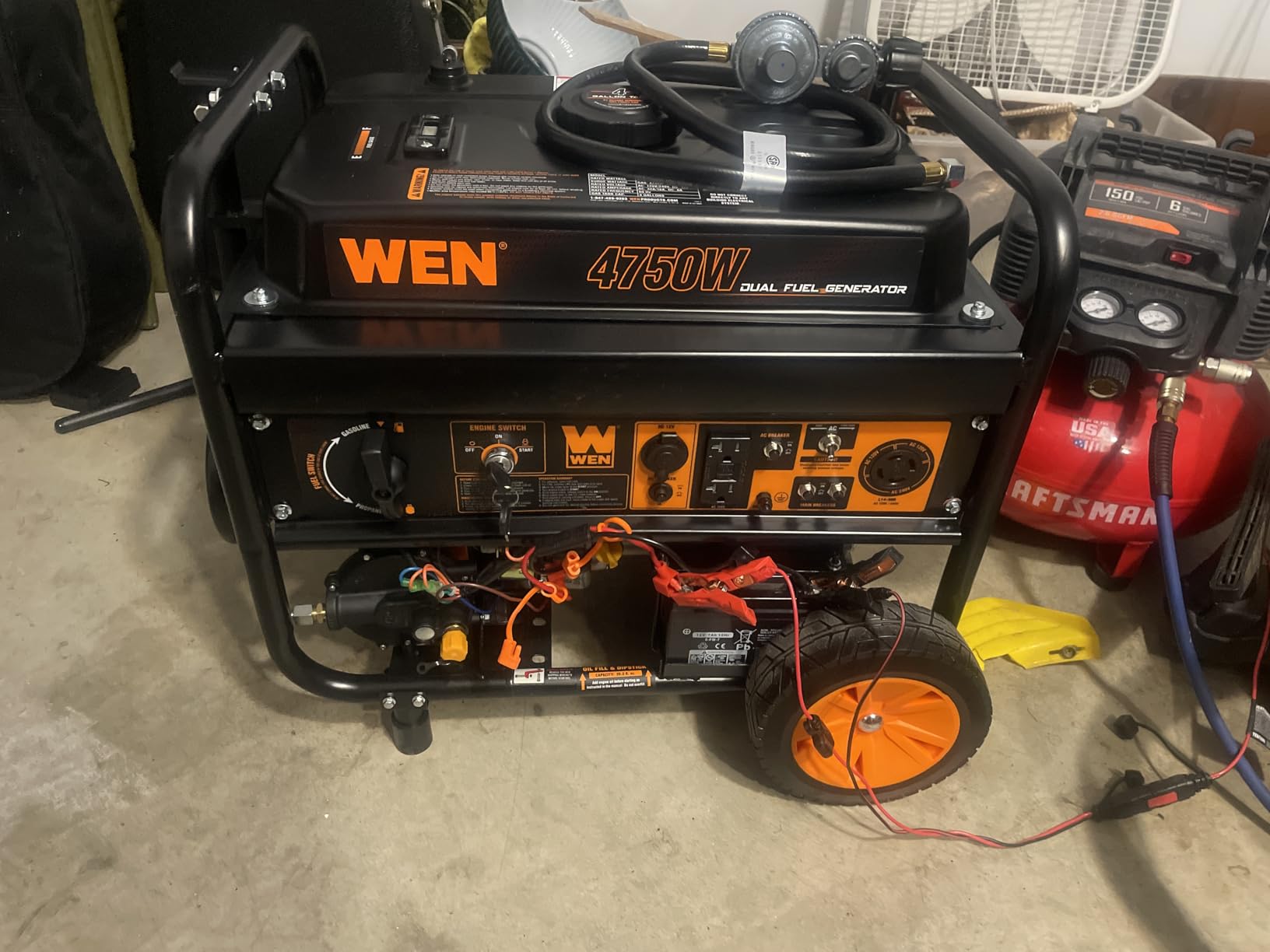
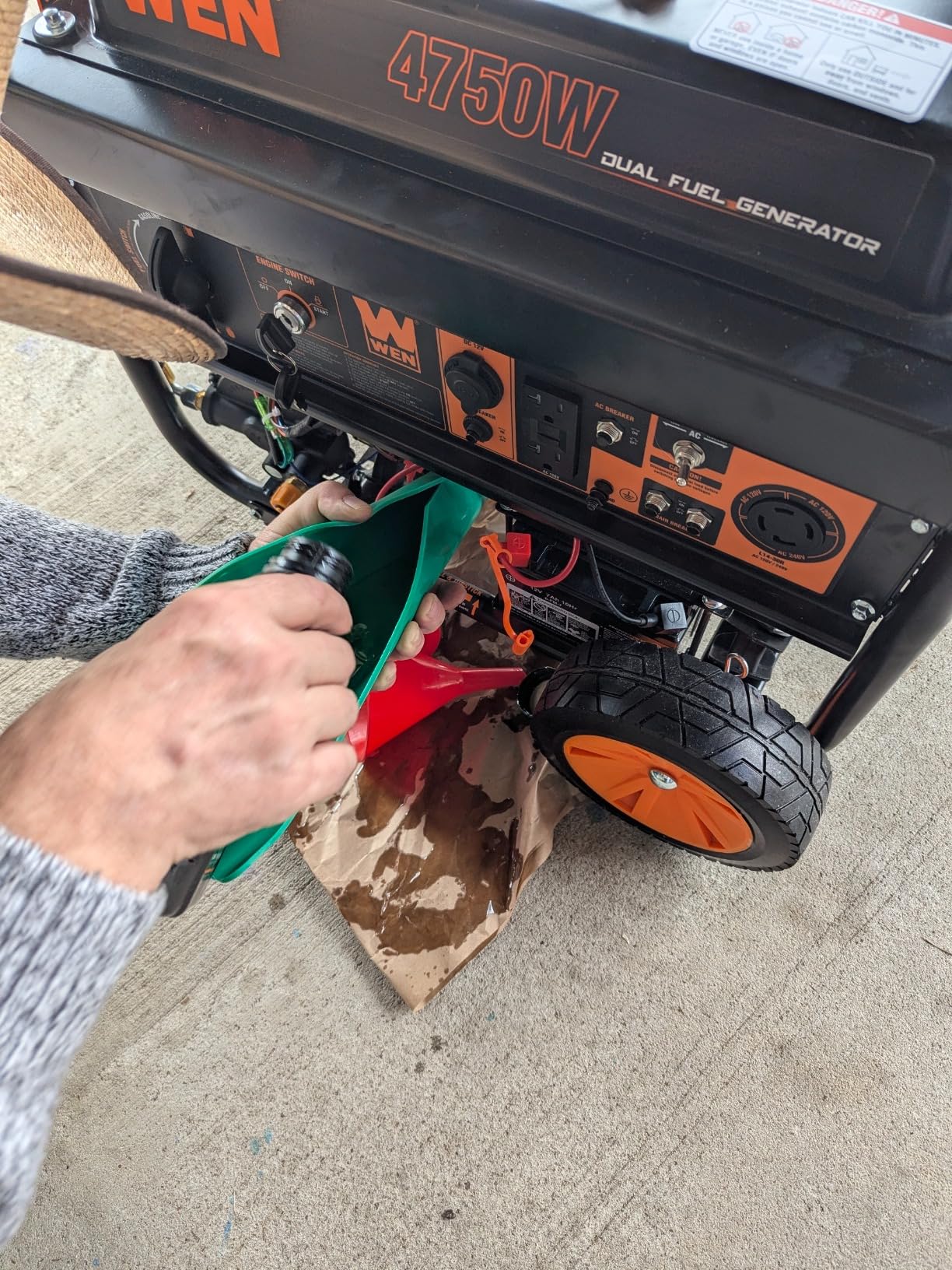
Two things limit it. At 105.8 pounds it is heavier than the compact 4,000W class it competes with, and the open frame is noticeably louder than an inverter unit of similar output. If noise matters more than fuel flexibility, this is the wrong shape of machine.
There is also a surge ceiling to be honest about. A 1 HP pump needing 5,000W to 8,000W of starting power will stretch this unit, and one owner who paired a central air conditioner with a 2 HP deep well pump found a different unit that handled the combination more comfortably. Match this one to pumps at or below 1/2 HP.
When this WEN is the right call
It is the value pick for a 1/2 HP shallow well, a 1/3 HP deep well, or a small cabin where water is the main load. The 240V output with a proper twist lock means you can use a transfer switch instead of running extension cords, which is the single biggest safety upgrade a well owner can make.
Dual fuel is useful in a different way than people expect. Gasoline is easy to find early in an outage, but propane keeps indefinitely, so having both options means your fuel problem is never the reason you lose water on day four.
When it is the wrong call
It will not comfortably start a 1 HP pump, and it will not run a 2 HP deep well unit at all. Anyone in that category should look at the 8,000W class or higher rather than pushing this one.
It is also the wrong pick for a residential neighborhood with a strict noise ordinance, and the two-year warranty is shorter than the three years most competitors in this price band carry. If you are buying for a pump house that will run it in all weather, check local service availability before you commit.
3. AIVOLT 8000W – Best Quiet Inverter for a 3/4 HP Pump
AIVOLT 8000W Dual Fuel Inverter Generator 50A RV Generator
8,000W surge, 6,100W running
322cc engine, automatic fuel switching
62 dBA at 23 feet
5-in-1 LCD control hub
+ The Good
- Queter than a dishwasher at 23 feet
- Automatic gasoline and propane switching
- Clean sine wave output for electronics
- Cold rated lithium battery for winter use
- The Bad
- Measured noise often higher than the quoted figure
- No engine oil included
- A few reports of output below the rated wattage
- Fuel system defects reported by some owners
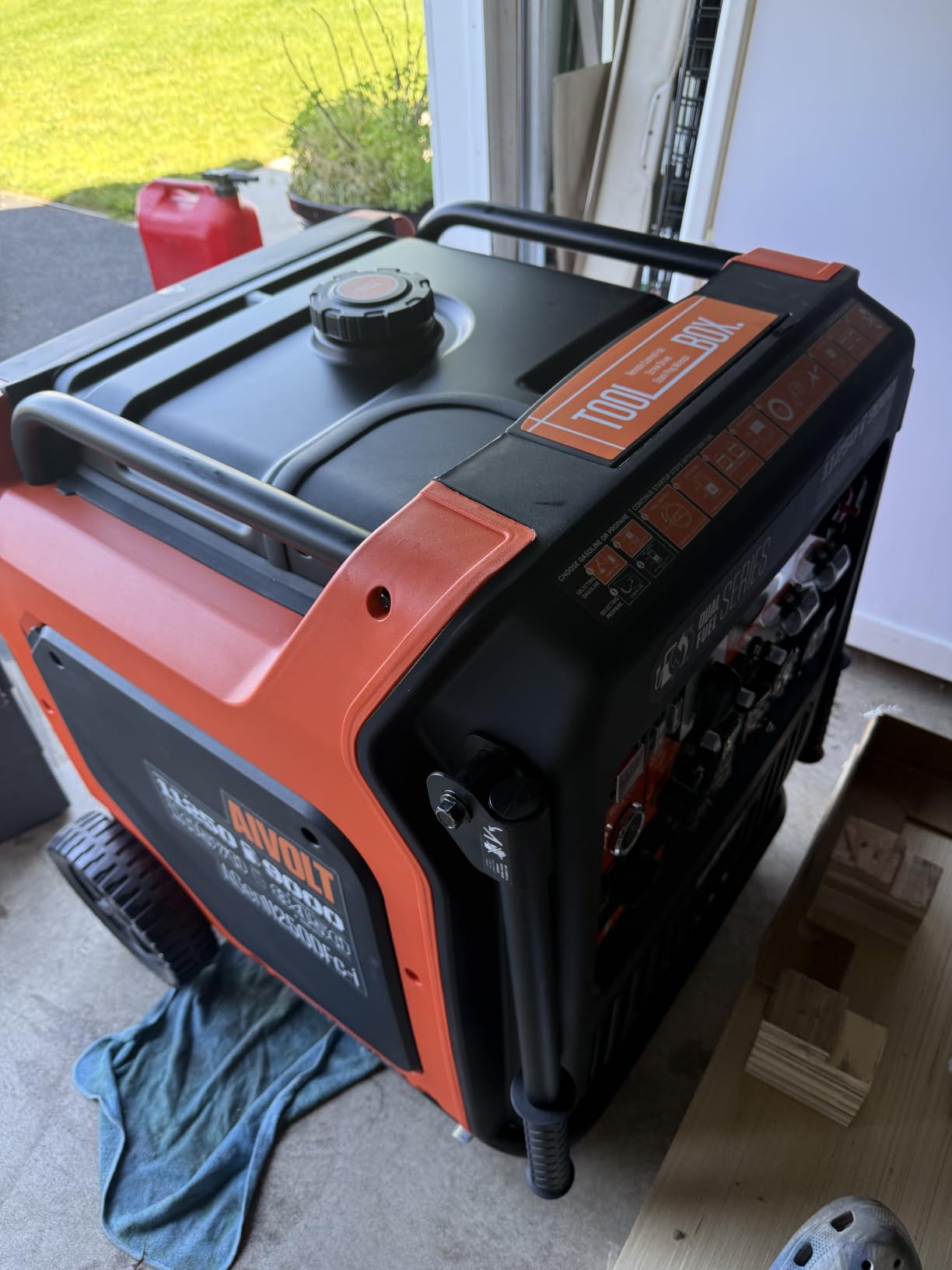
The AIVOLT is the one I would put closest to a bedroom wall. Its 8,000W surge and 6,100W running output puts it squarely in the band a 3/4 HP shallow pump needs, and at a quoted 62 dBA at 23 feet it is the quietest large-capacity unit here alongside the Genkins.
It is also a dual fuel machine that switches automatically, which removes the front-dial guesswork. The 322cc four-stroke engine with copper windings, the 5-in-1 LCD hub showing fuel use, voltage and runtime, and a low-temperature lithium battery rated from -4F to 140F add up to a package built for a pump house in a climate that sees both.
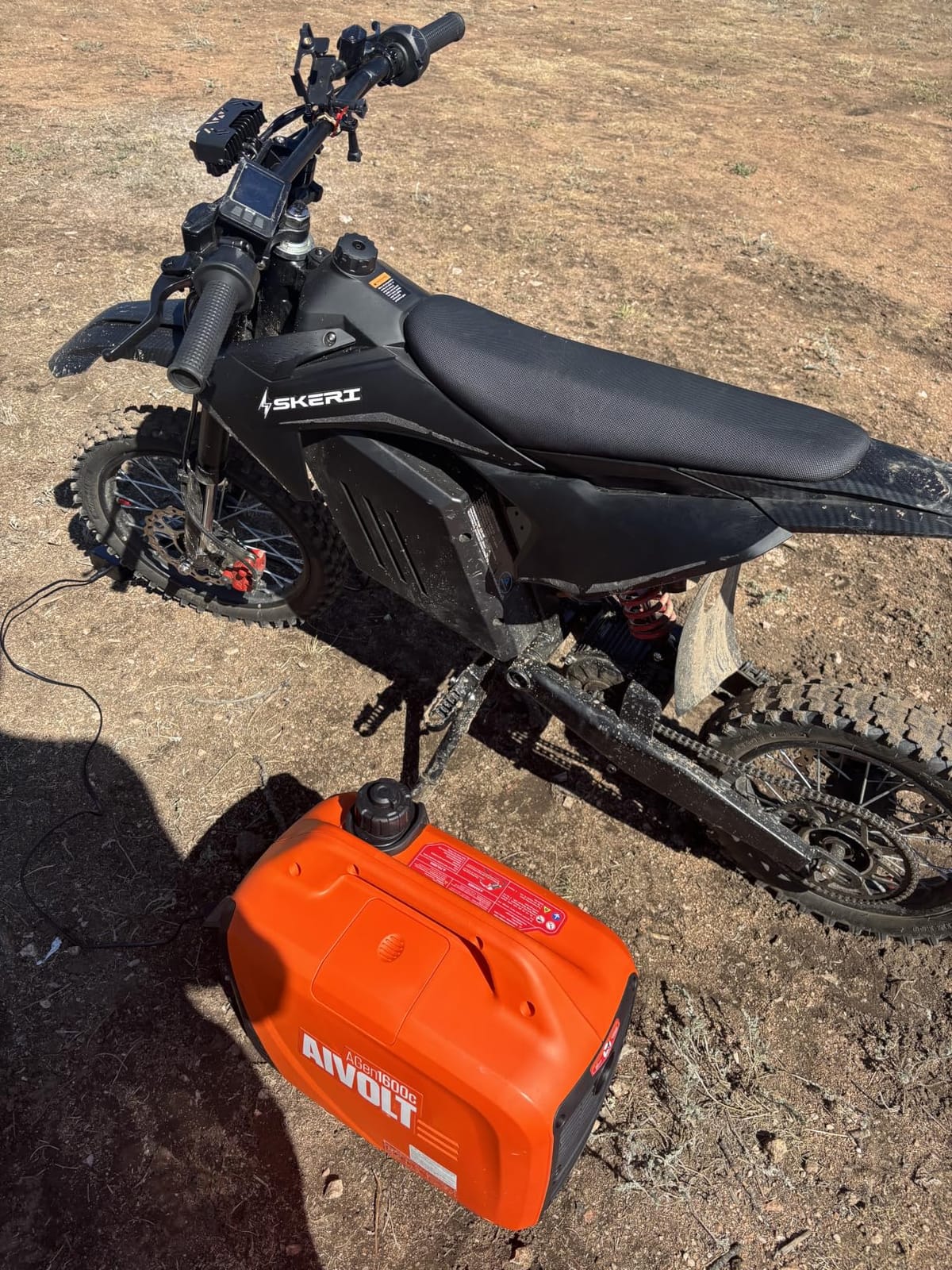
Owners rate it at 4.0 across 1,332 reviews, and the reviews are unusually specific about the gaps. Several people who measured the noise themselves found it clearly louder than the 57 to 62 dBA range in the listing. Others report a unit that would not restart after a fuel line issue or a carburetor overflow, and some say the output fell short of the stated rating.
There is no engine oil in the box, which stops first-time owners cold until they add it. Customer service, though, gets repeated credit for replacing units outright rather than arguing with claims.
When this AIVOLT is the right call
It fits a 3/4 HP shallow well or a small deep well pump in a residential setting where noise decides the purchase. Clean sine wave output also means it can carry a refrigerator, a router and a laptop alongside the pump without any of the flicker or heat that a conventional open frame unit causes.
The cold-rated battery is the detail that matters for rural and off-grid homes. Cold mornings are exactly when a pump house unit fails to start, and a battery that is rated well below freezing removes one of the most common reasons for a dark pump house at dawn.
When it is the wrong call
It is too small for a 1 HP pump that wants 8,000W of starting power, because 8,000W is the total surge and there is nothing spare behind it. It is also the wrong pick if measured quiet is your hard requirement, since the reported real-world noise is higher than the sticker says.
If your pump is the only load and you do not care about noise, the money is better spent on surge capacity. Quietness is only worth paying for when the machine has to sit near the house.
4. maXpeedingrods 6900W – Best Feature Set for a 3/4 HP Pump
maXpeedingrods 6900 Watt Dual Fuel Inverter Generator w/CO Sensor,RV Charge
6,900W surge and 6,100W rated on gasoline
5,200W surge and 4,500W rated on propane
120V and 240V inverter output
Remote and electric start
+ The Good
- Inverter output clean enough for welders and battery chargers
- 6 to 8 hours reported on a 20 pound propane tank
- Internal regulator accepts a standard propane hose
- Remote and app control for starting from inside
- The Bad
- Some early failures of the starter battery and Bluetooth module
- Difficult to restart after running dry
- Economy mode uses more fuel than Japanese inverter units
- Spare parts are hard to source
This is the pick when you want to start the pump without walking out to the shed in a storm. Remote start plus Bluetooth app control means you can bring the generator up from inside, which is a real quality-of-life difference when it is dark and raining and the pump is your only water source.
The power side is legitimate. Gasoline gives 6,900W surge and 6,100W rated, propane drops to 5,200W and 4,500W, and the inverter output is clean enough that owners run welders and battery chargers off it without complaint. The internal propane regulator taking a standard hose is a small detail that saves a trip to the parts store.
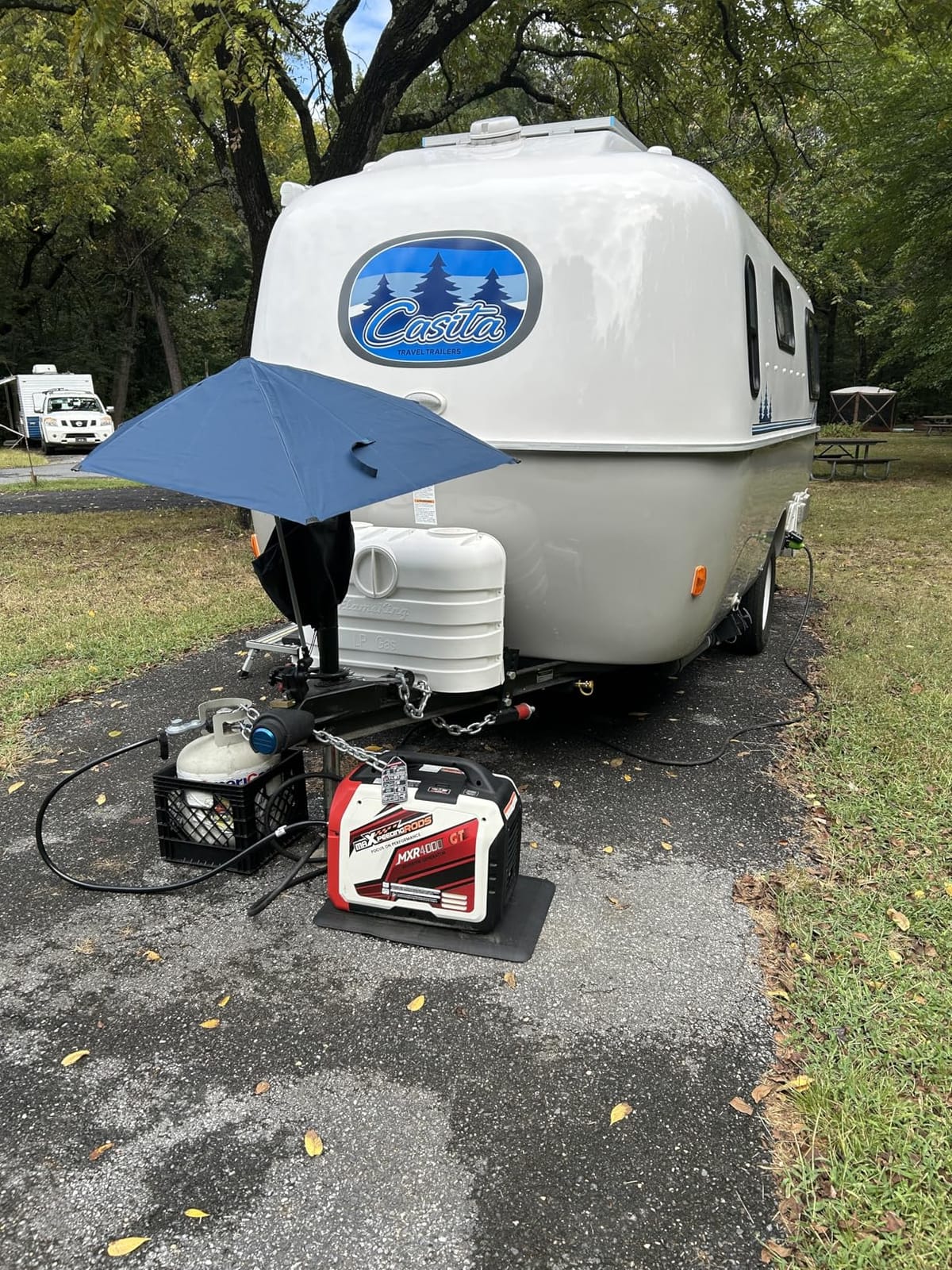
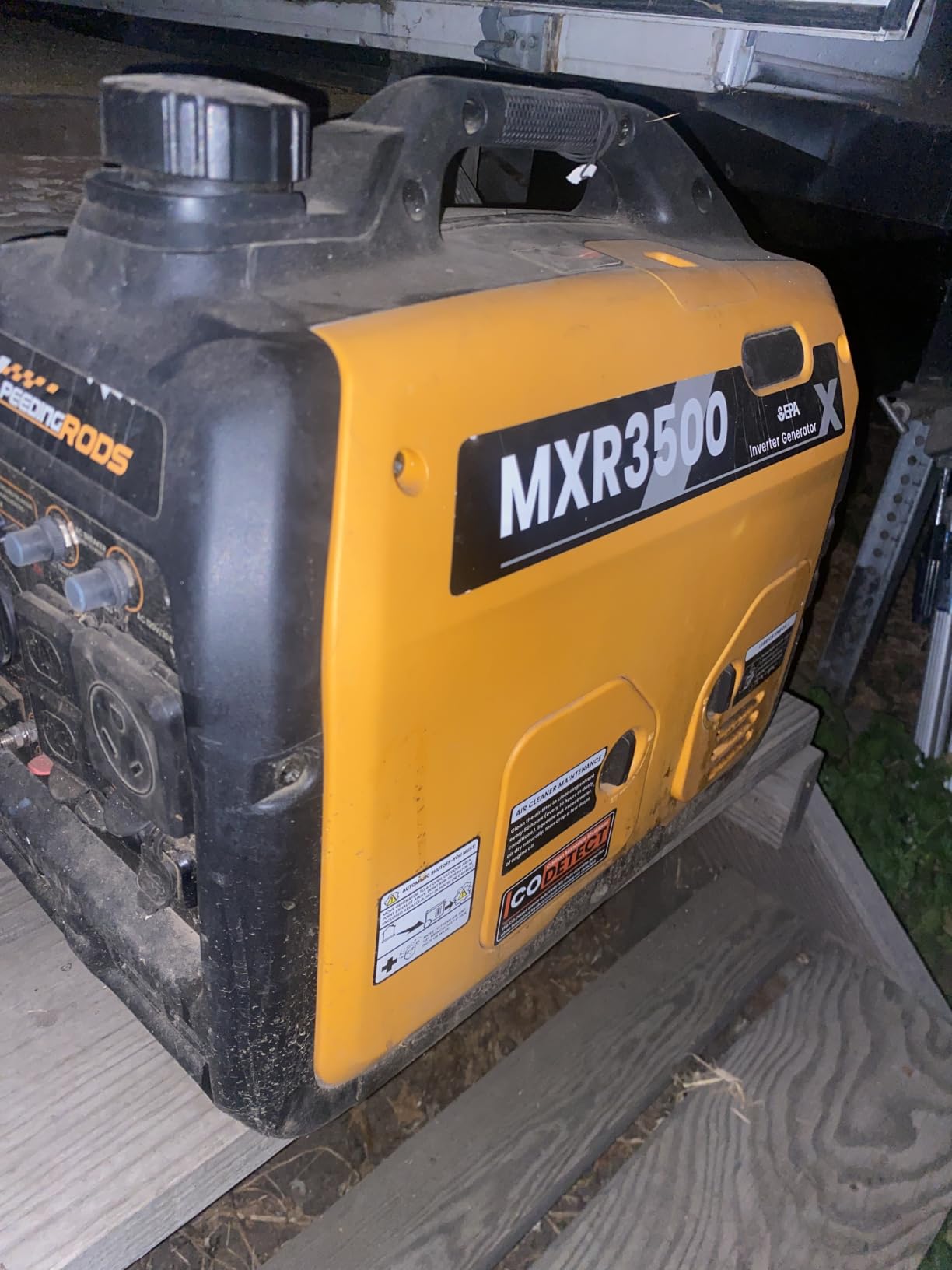
The weakness is component longevity, and owners are consistent about it. Multiple reviews report the starter battery, Bluetooth module or USB ports failing within the first year, and several note it is hard to restart after running dry. Spare parts, particularly the Bluetooth display meter, are described as very difficult to source, which is a problem on a machine meant to live in a pump house for years.
The economy mode also uses more fuel than the Japanese-built inverter units at the same output, and the CO sensor can trip in open, breezy conditions where the airflow is actually good. At 4.0 stars across 1,397 reviews, the feature set is strong and the reliability record is thin.
When this maXpeedingrods is the right call
It suits a 3/4 HP pump on a property where you cannot easily reach the unit once it is running, and for users who want propane economy. Six to eight hours on a 20 pound propane tank at moderate use is a strong number, and propane stores indefinitely, which matters for anyone who has experienced a gas shortage after a storm.
It is also a good second unit to parallel with a companion machine, since the 120V and 240V inverter output pairs cleanly with other inverter generators.
When it is the wrong call
It is too small for a 1 HP pump and well short of what a deep well unit needs. It is also a poor choice for a pump house where reliability over years is the priority, because the electronic accessories are the first things to fail and the hardest to replace.
If you will not use the app or the remote, the money spent on those features is better spent on surge capacity. Remote start is a convenience, not a sizing solution.
5. Genkins 8000W – Best Clean Power for a 3/4 HP Pump
Genkins 8000‑Watt Portable Inverter Generator, Gas Powered Electric‑Start 120V/240V for Home Emergency Power
8,000W peak, 6,500W rated
THD of 2 percent or less
62 dBA at 23 feet
4 gallon tank, 8+ hours at half load
+ The Good
- Lowest distortion figure in this group at 2 percent or less
- 6500W rated gives real pump headroom
- 4 gallon tank runs 8+ hours at half load
- CO protection shuts the unit down
- The Bad
- Gasoline only with no propane option
- At 112 pounds it is a two-person lift
- Only a two-year manufacturer warranty
The Genkins has the cleanest power specification in this roundup, and that is not a marketing line. Total harmonic distortion of 2 percent or less is measured with a meter, not estimated, and it means the voltage and frequency hold steady through a motor start in a way that most open frame units in this class do not.
For a pump specifically, that stability is what keeps the pressure switch from chattering. When output holds through the locked rotor spike, the motor breaks free cleanly, reaches speed, and settles into its running draw without the sag that trips short cycling. At 8,000W peak and 6,500W rated, it covers a 3/4 HP pump with room to spare.
When this Genkins is the right call
Choose it when you are running anything with electronics alongside the pump, or when a household member runs a medical device on the same circuit. Owners specifically praise it for refrigerators and sensitive electronics running cleanly, and the ESC fuel-saving mode stretches the 4 gallon tank past 8 hours at half load.
It is a good match for a cabin or a small home where the pump plus a refrigerator is the whole load, and where 62 dBA at 23 feet keeps neighbors happy through a multi-day outage.
When it is the wrong call
It runs on gasoline only, so it is the wrong choice for anyone who wants propane for storage stability. If your fuel plan depends on propane because gasoline stations are the first thing to lose power in an outage, this does not solve that.
At 112 pounds it needs two people to lift without the wheel kit, and the 6,500W rated figure leaves little room for a furnace blower and a sump pump on top of a 1 HP pump. For a pump plus a full household load, step up a class.
6. Champion 4500W – Best for a 1/3 HP Pump and RV Use
Champion 4500-Watt Electric Start Dual Fuel Portable Inverter Generator
4,500W starting, 3,500W running on gasoline
3,150W running and 21 hours on propane
61 dBA at 23 feet
Parallel ready with Intelligauge meter
+ The Good
- Quietest quoted figure here at 61 dBA
- Up to 14 hours on gasoline and 21 on propane
- Parallel ready for double the output
- Three-year warranty with lifetime technical support
- The Bad
- 3500W running is modest for the money
- At 99.2 pounds it is a heavy lift for a camper
- Some reports of oil leaks and hard starting
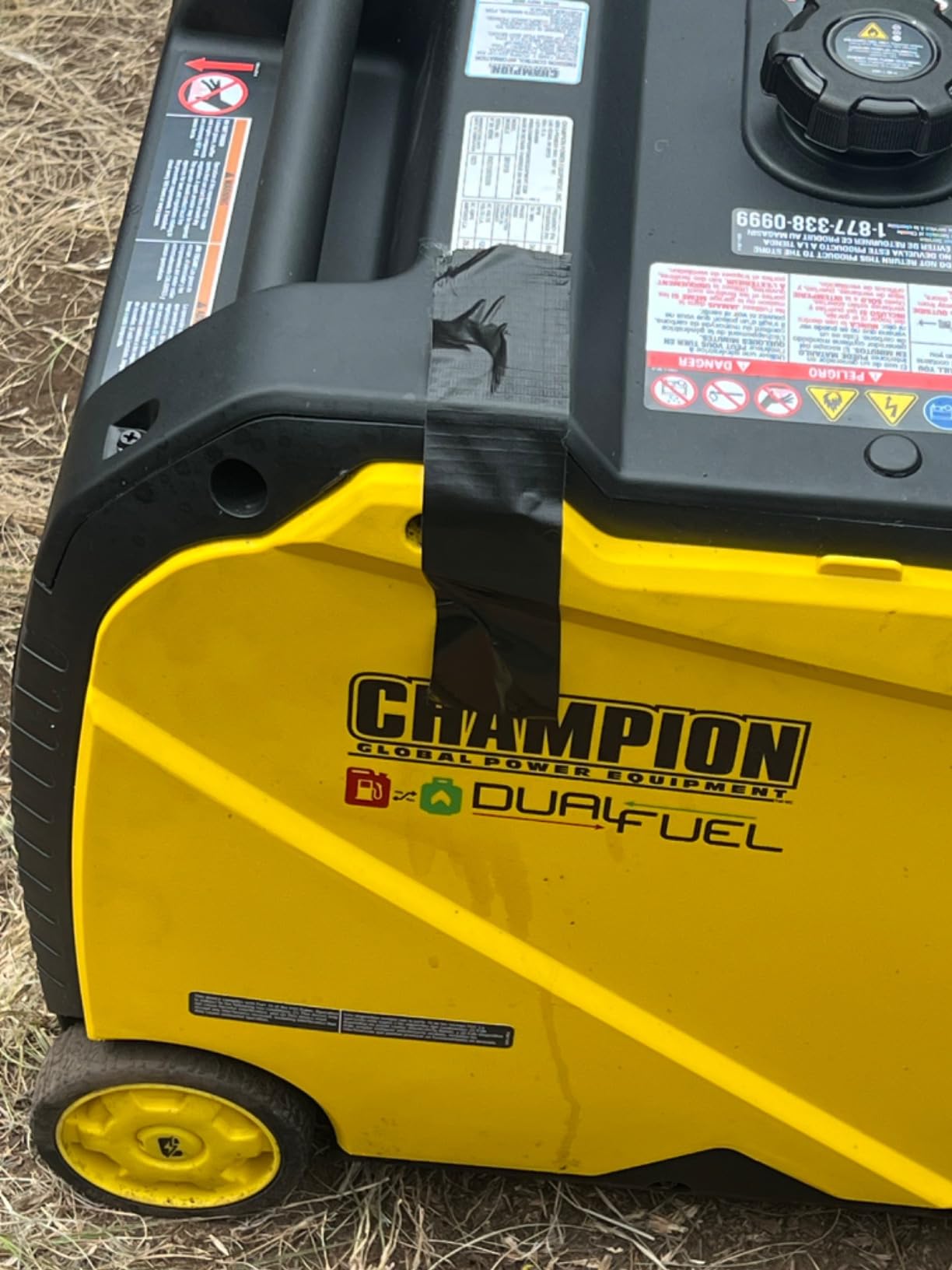
The Champion is a small-pump machine, and pairing it with anything above a 1/2 HP shallow well pump is a mistake. At 3,500W running on gasoline and 3,150W on propane, it is built for a 1/3 HP pump, a travel trailer, or a food truck, and it does those jobs with a warranty behind them.
What makes it interesting is fuel endurance. Owners report up to 14 hours on gasoline and 21 hours on propane, which is the best runtime figure in this roundup by a wide margin, and the 61 dBA rating at 23 feet is the lowest quoted number among the units here. Several multi-year reliability reports come from owners running them commercially.
The CO Shield shutdown and the cold start technology are both worth having in a pump house. The Intelligauge power meter shows voltage, frequency and operating hours, so you can tell at a glance whether a low reading is the generator or the pump.
The drawbacks are honest ones. At roughly 99 pounds it is a heavy lift for a travel trailer or camper, one international reviewer reports oil leaks, hard starting and noise louder than described, and the CO sensor has been known to trip in confined spaces such as a truck bed.
When this Champion is the right call
It is right for a 1/3 HP shallow well pump in a small home, and right for anyone who needs to move a generator between a truck, a shed and a campsite without a second person. The parallel ready feature lets you pair two units for double output, which can turn two 4,500W machines into a 9,000W setup for a bigger pump.
The three-year warranty with free lifetime technical support is the strongest support package in this group, and that matters for a machine expected to start reliably after months of sitting.
When it is the wrong call
It is the wrong choice for a 1 HP pump, a deep well pump, or any household that also wants to run a refrigerator, a furnace and a sump pump. Trying to squeeze that onto 3,500W of running capacity is how generators get damaged.
It is also the wrong pick for a confined or enclosed space, because owners have reported the CO sensor tripping in a truck bed. A unit that shuts itself down when the wind is helping you is not what anyone wants during an outage.
7. A-iPower 5000W – Best Budget Unit for a 1/2 HP Shallow Well Pump
A-iPower 5000-Watt Portable Generator Gas Powered, CO Sensor Shutdown, Heavy Duty Generators with 223cc OHV Engine for Jobsite, RV, Home Backup, Emergency (GXS5000)
5,000W starting, 4,000W running
223cc OHV with cast iron sleeve
20 hours on a 6.3 gallon tank
L5-30R and TT-30R outlets
+ The Good
- 20 hour runtime from the large tank
- Cast iron sleeve engine built for longevity
- Covers 30A RV and transfer switch outlets
- Verified to run a 2 HP deep well pump with a central air unit
- The Bad
- Loud open frame design at 68 dB
- No load metering on the control panel
- Frequency regulation can upset small UPS units
The A-iPower is the cheapest way I have found to get enough surge for a real well pump, and the reason is the 5,000W starting figure paired with a cast iron sleeve engine. The sleeve is a durability choice, and it is the reason this unit tends to keep running when cheaper open frame machines do not.
One verified owner review describes powering a 36,000 BTU central air conditioner and a 2 HP deep well pump together, handling the combined starting surge. That is a demanding pairing, and owners clearly trust the machine with more than the spec sheet suggests.
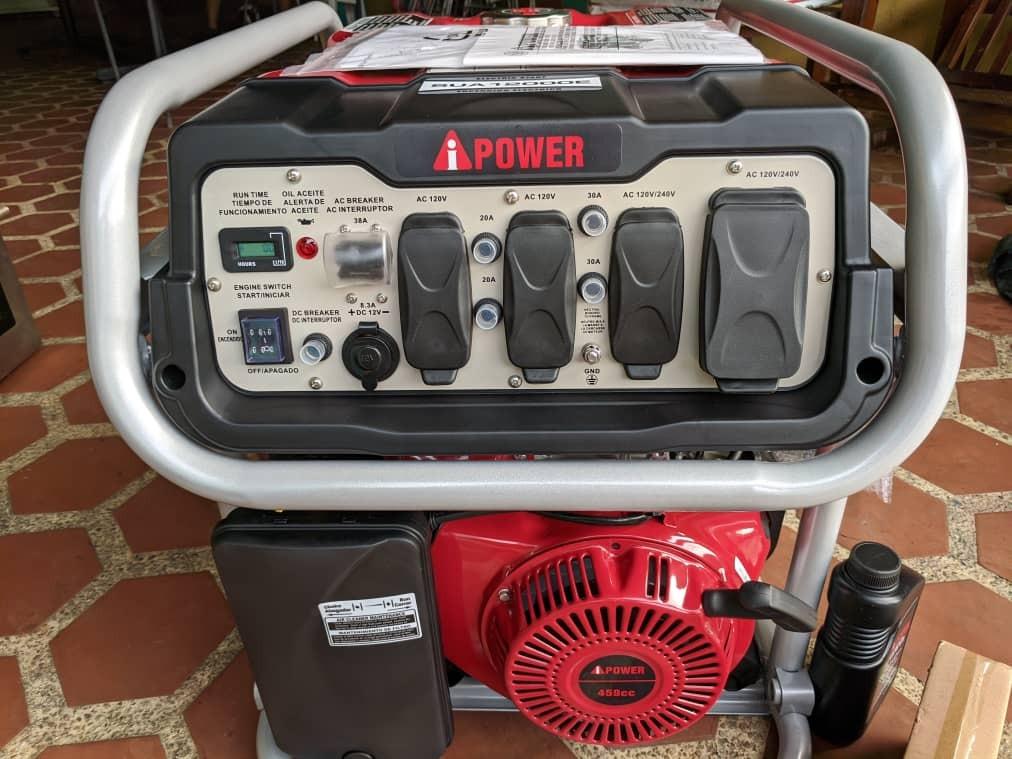
The 6.3 gallon tank gives up to 20 hours at 25 percent load, which is the longest gasoline runtime figure in this group. For pump duty, where the motor cycles on and off rather than running flat out, that is the tank size that lets you leave it alone for a full day without a refill.
What you give up is refinement. The open frame runs at 68 dB, there is no load metering on the panel, and frequency regulation of roughly 4 percent can upset small UPS devices. The manual also does not clearly document the GFCI reset step, which sends people looking for a fault that is not there.
When this A-iPower is the right call
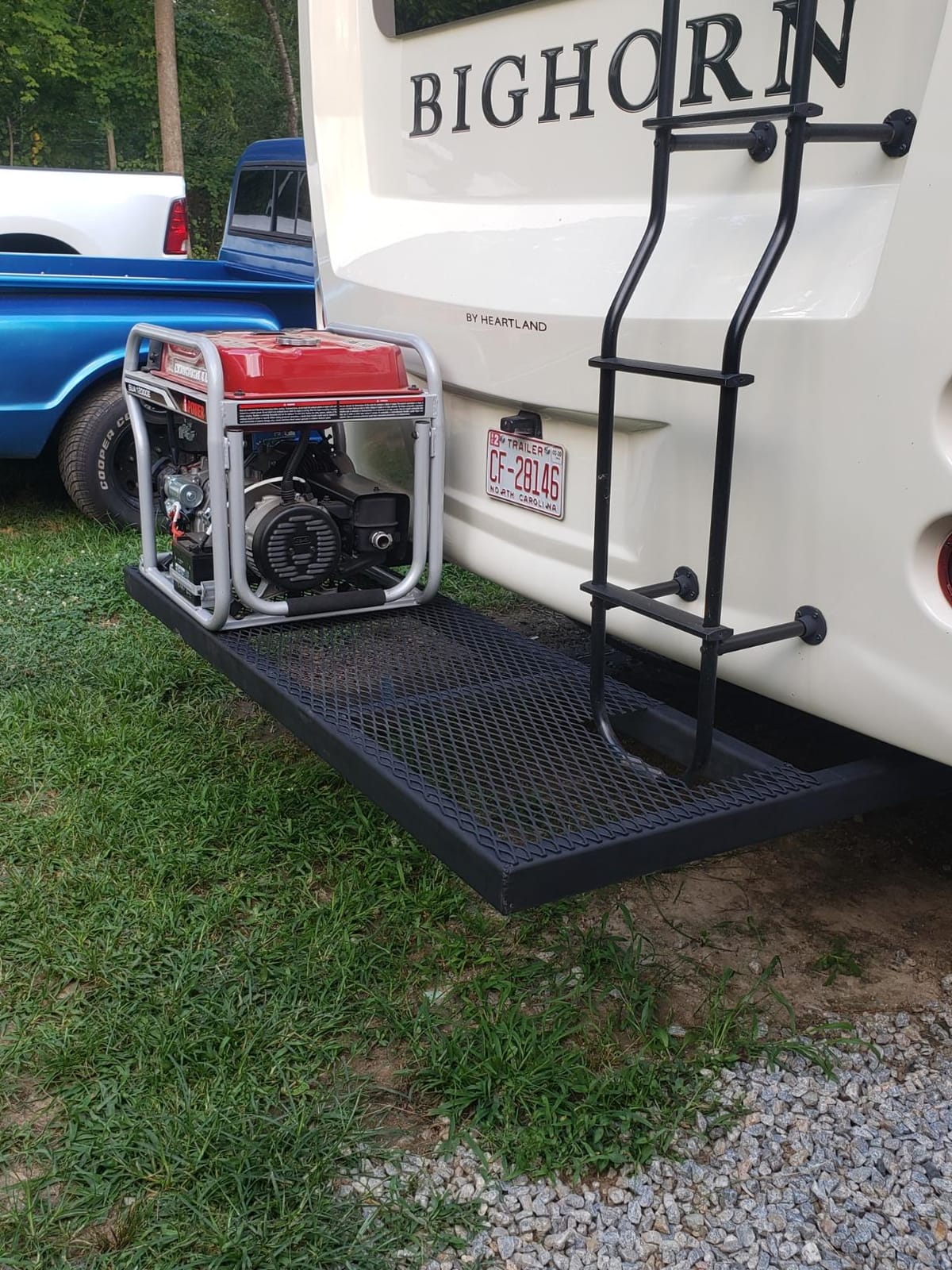
It is the budget pick for a 1/2 HP shallow well pump where water matters more than noise. The L5-30R and TT-30R outlets cover 30A RV and transfer switch hookups, and a customer service team that actually answers the phone is worth more than most spec sheet features.
It also makes sense as a second unit. If you own a quiet inverter for the electronics and a large open frame for nothing, this is the inexpensive always-ready machine you start when the water stops.
When it is the wrong call
At 68 dB it is the loudest unit here, so it is a poor fit for a residential lot with neighbors close by or any local noise ordinance. If the generator will sit near a bedroom, this is not it.
The missing load metering is a real inconvenience when you are diagnosing whether a pump problem is actually a generator problem, and the frequency drift will bother anyone with a UPS or precision electronics on the same setup.
8. DuroStar DS13000MX – Best 50A Whole Home Unit for a 2 HP Deep Well Pump
DuroStar DS13000MX 13,000-Watt 500cc Dual Fuel Portable Generator – Gas and Propane, Remote Electric Start, Whole Home Power Backup, Transfer Switch Ready, RV & Emergency Ready
13,000W starting, 10,500W running
500cc four-stroke engine
Gasoline and propane
8.3 gallon tank, up to 17 hours
+ The Good
- Same surge class as the top pick at a lower tier
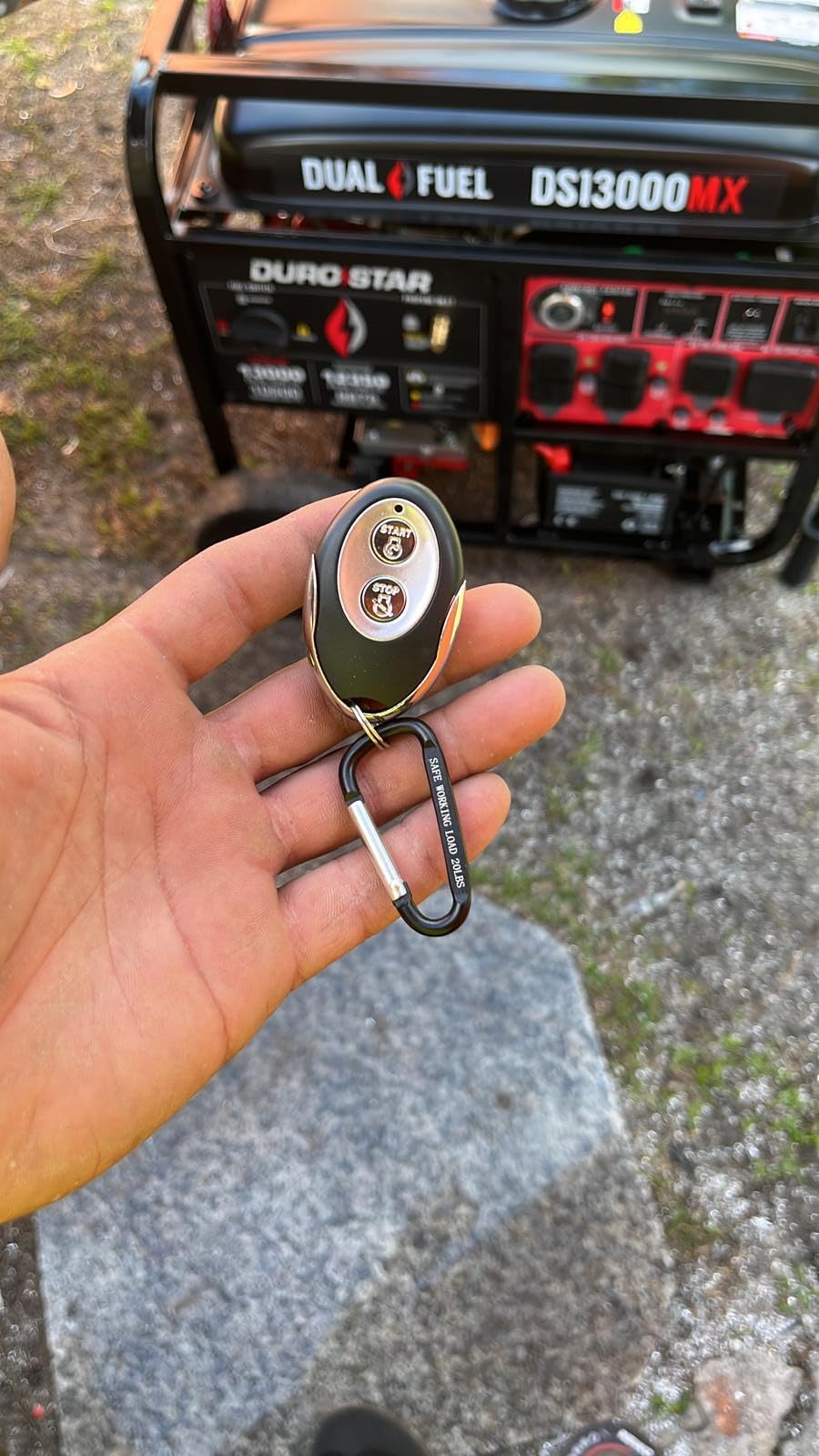
- Remote electric start with included remote
- 50A transfer switch-ready outlet
- 8.3 gallon tank gives up to 17 hours
- The Bad
- At 220 pounds it needs the wheel kit to move
- Open frame construction is not suited to quiet use
The DuroStar occupies the same surge class as our top pick, with 13,000W starting and 10,500W running, and it adds remote electric start so you can bring it up without walking to the machine. For a 2 HP deep well pump, that is the second unit in this roundup that genuinely covers the load.
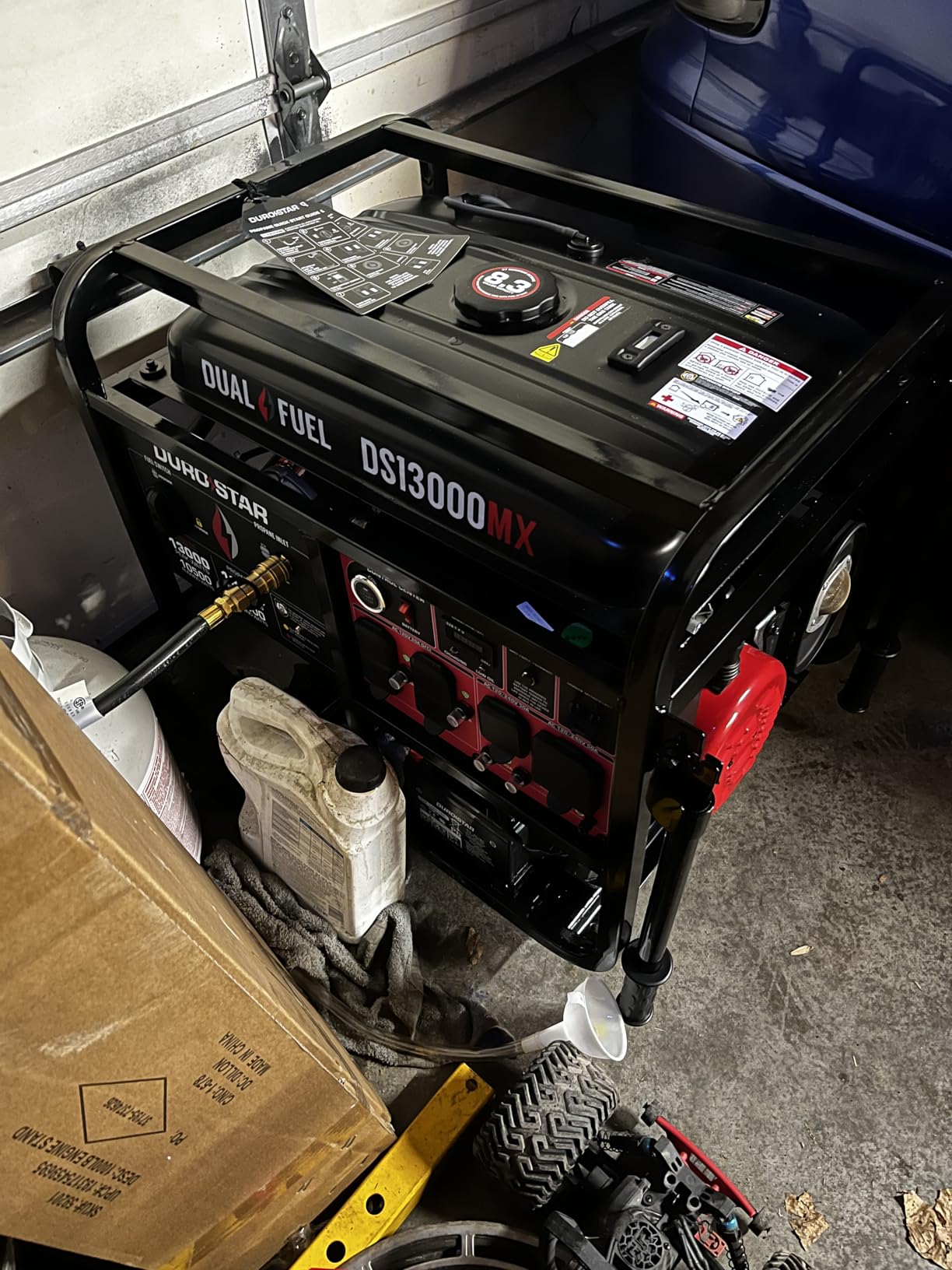
The 8.3 gallon tank is the differentiator. Owners cite up to 17 hours of runtime, which on a pump that cycles rather than runs flat out is several full days of water without a fuel stop. That matters more than most spec sheet numbers when the outage is a week long.
At 4.4 stars across 312 reviews, it sits in the same range as the DuroMax but with a smaller body of owner feedback, so you are relying more on the design than on a long track record. Buyers consistently point to the 50A outlet, the tank and the remote start as the reasons they bought it.
The weight is the practical limit. At 220 pounds the wheel and handle kit is not optional, and the open frame is loud enough that we would not place it near a house you sleep in.
When this DuroStar is the right call
It is for deep wells and big pumps: 1.5 HP and 2 HP units, or any pump where you are not certain of the starting draw. The 50A transfer switch-ready outlet means a licensed electrician can wire it straight into a manual transfer switch for a proper installation.
It is also the better pick if you plan to run water plus a refrigerator plus a furnace plus a sump pump, because the 10,500W running figure leaves real headroom above the combined load. The three-year limited factory warranty is a reasonable support commitment for that role.
When it is the wrong call
It is wrong for a 1/2 HP or 3/4 HP pump, where you would be paying for capacity and noise you do not need. A 5,000W to 8,000W unit handles those pumps with a fraction of the weight and a fraction of the sound.
It is also the wrong pick near a bedroom or a neighbor, since open frame construction at this output is not a quiet machine by any measure. And with 312 reviews, there is less owner history here than with the DuroMax, which matters if you value proven longevity.
9. Pulsar PGD40ISCO – Best Lightweight Pick for a 1/3 HP Pump
Pulsar PGD40ISCO Ultra Light Quiet 4000W Portable Gas Inverter Generator, white
4,000W peak, 3,200W rated
145cc four-stroke engine, 47.3 pounds
1 gallon tank, 4 hours at half load
Parallel ready inverter
+ The Good
- Weighs 47.3 pounds and carries one-handed
- Clean inverter output for sensitive electronics
- Parallel ready to double the output
- Reliable first-pull starting reported by owners
- The Bad
- One gallon tank gives only about 4 hours
- Louder than premium inverter units of similar size
- Fuel cap can vapor lock in hot conditions
At 47.3 pounds, the Pulsar is the only unit in this roundup most people can carry with one hand, and that changes who it is for. If you are older, have a back injury, or need to move the generator between a truck bed and a pump house without help, this is the only machine here that makes that routine possible.
Electrically it is a 1/3 HP pump machine: 4,000W peak and 3,200W rated from a 145cc engine. Owners report running it 36 hours straight on a 13,500 BTU air conditioner, and one reached 410 hours of cumulative use, so the small engine is not as fragile as the size suggests. Clean inverter output also runs a pellet stove motherboard without trouble.
The 1 gallon tank is the significant limitation, giving roughly 4 hours at half load. For a pump that runs in short bursts, four hours of continuous capacity is more than a day of ordinary household use, but it does mean a refill every time you settle in for the evening.
Owners also report it is louder than premium 3,500W inverter units under load, the fuel cap does not vent well and can vapor lock in hot conditions, and a small number of people have had gasoline leaks that required a tank replacement.
When this Pulsar is the right call
It is right for a 1/3 HP shallow well pump in a small home, and for anyone for whom portability outranks runtime. Parallel ready means two units can be paired for 6,400W rated, which is enough to cover a 1/2 HP pump if you are willing to own and move two machines.
It is also a good companion to a larger open frame unit. Keep the big machine for the pump and put this one on the refrigerator and the electronics where the clean inverter output is worth more than the wattage.
When it is the wrong call
It is the wrong choice for anything above a 1/2 HP pump, for a deep well, or for an outage lasting several days where four-hour refills become a chore you will resent.
The fuel cap vapor locking in heat is a real problem in a hot pump house, and the small tank is a poor match for a household that also wants to run a furnace blower. Choose a bigger tank when the machine is going to sit unattended.
10. ERAYAK 4500W – Best Fuel Efficiency for a 1/2 HP Pump
ERAYAK 4500W Portable Inverter Generator for Home Use, Super Quiet Small Generator for Camping Outdoor Emergency Power Backup, Gas Powered Engine, ECO Mode, EPA Compliant
4,500W peak, 3,500W running
THD of 0.2 to 1.2 percent
0.21 gallons per hour at 25 percent load
Weighs 54 pounds
+ The Good
- Lowest fuel consumption figure in this group
- Lowest distortion range for medical devices and laptops
- Light enough at 54 pounds for one person to move
- Parallel ready for 7000W rated combined
- The Bad
- Does not come with engine oil
- Turbo mode is louder than the 60.5 dBA claim
- No fuel gauge on the tank
The ERAYAK is the pick when fuel cost and fuel logistics decide the purchase. It draws 0.21 gallons per hour at 25 percent load, which is the lowest consumption figure anywhere in this roundup, and the 2.25 gallon tank stretches to up to 16 hours of run time from that.
For a well pump that cycles rather than runs continuously, that combination is exactly what you want. Owners running laptops, CPAP machines and other medical devices praise the 0.2 to 1.2 percent total harmonic distortion, and several report first-pull starting straight out of the box with no break-in.
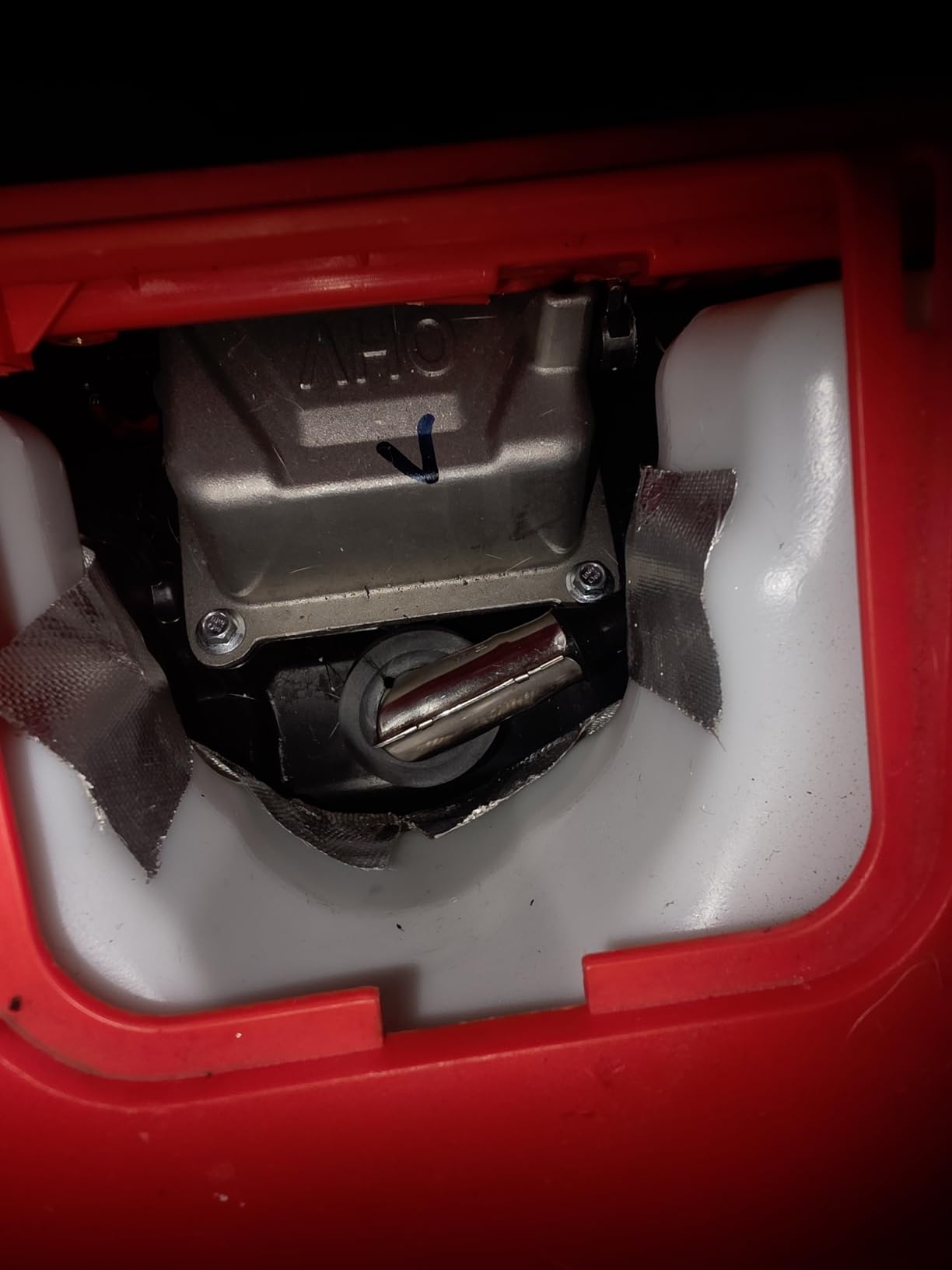
One owner ran it for six consecutive days at or near capacity without a hiccup, which is a genuinely useful reliability signal for an outage scenario. At 54 pounds it moves easily for one person, including owners with back problems who cannot handle a 200 pound open frame unit.
The recurring complaint is that no engine oil is included, so it will not start until you add it. There is also no fuel gauge, turbo mode is louder than the 60.5 dBA figure implies, and a few reviewers report the breaker tripping when running air conditioning loads.
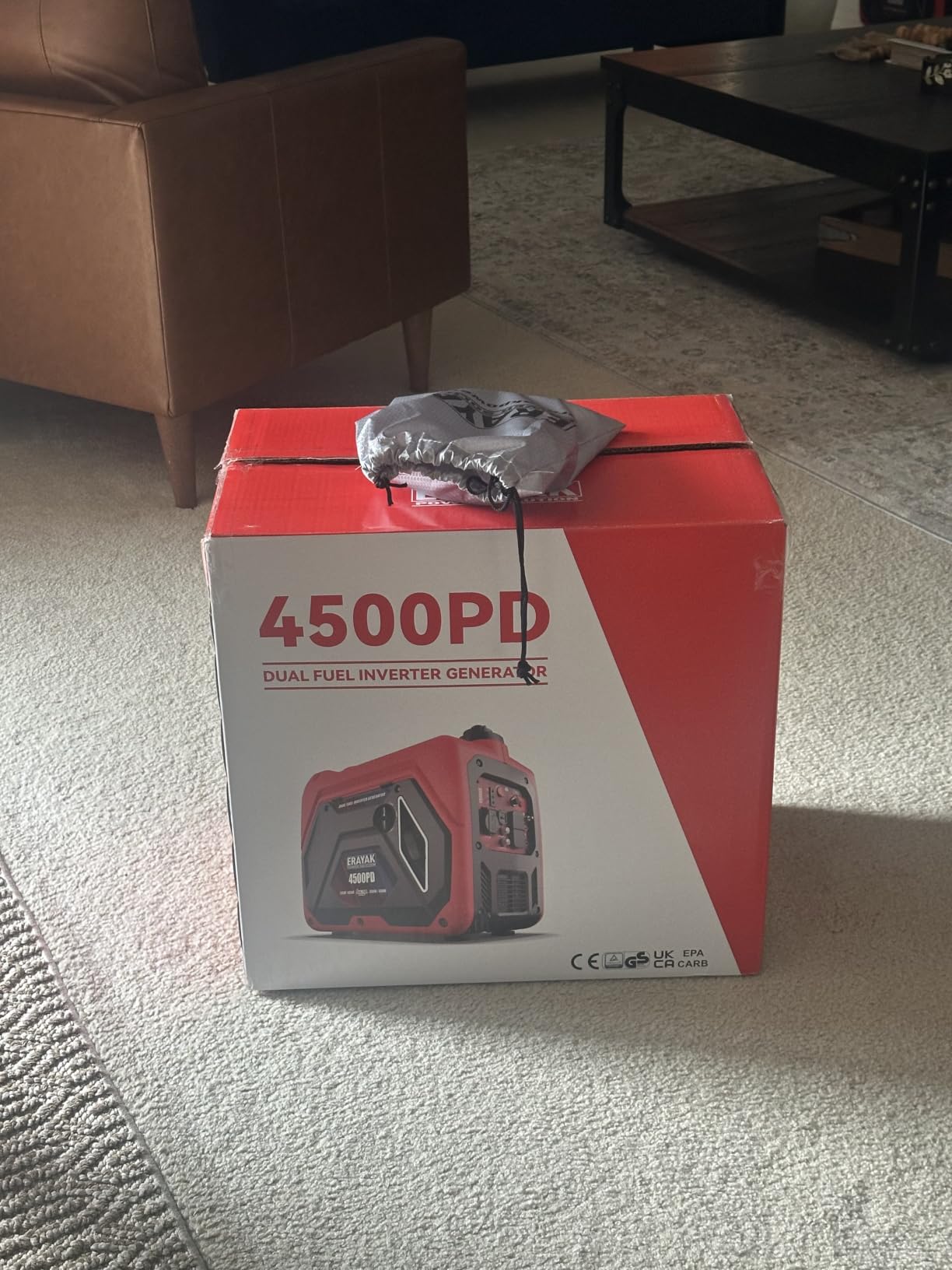
When this ERAYAK is the right call
It is a strong match for a 1/2 HP shallow well pump in a home where the generator also carries medical equipment or computers. Low fuel burn means you can leave it running through a long outage without a fuel logistics problem, and the three-year warranty includes free lifetime technical support.
It is also right where weight matters. At 54 pounds with a compact footprint it fits in a small pump house where a full size unit will not, and the parallel ready capability means two can deliver 7,000W rated and 9,000W peak with 50A output if your pump is bigger than one machine handles.
When it is the wrong call
It is too small for a 1 HP pump or a deep well, and 3,500W running leaves no room for a furnace blower and a sump pump alongside the water load. The missing fuel gauge is a real annoyance during a multi-day outage when you are managing fuel between refills.
It is also the wrong pick if you plan to run air conditioning with it, since some owners have had breakers trip on that load. Check what else you want to power before this one.
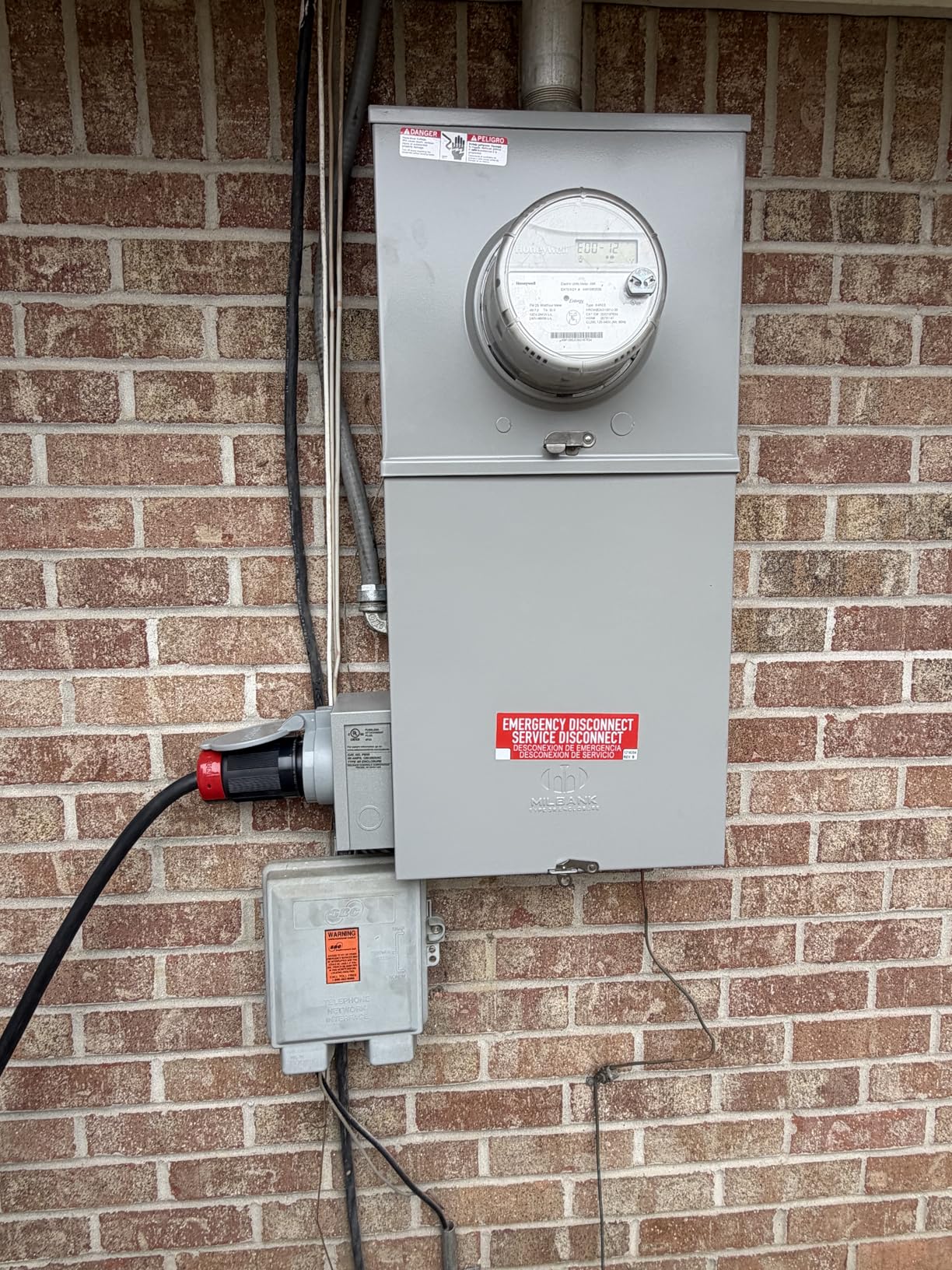
How to Connect a Generator to a Well Pump Safely?
A generator is only as useful as the connection to the pump, and this is where well owners do lasting damage. Extension cords across a yard work for an hour and fail spectacularly otherwise. The correct answer is a manual transfer switch or an interlock kit installed by a licensed electrician.
A transfer switch is a box that isolates the pump circuit from the utility feed. An interlock kit is a mechanically interlocked disconnect that prevents the generator and the utility from ever being connected at the same time. Both exist to stop backfeeding, which is how lineworkers die.
Never plug a generator into a wall outlet or a dryer or range receptacle. It is illegal, it will destroy the generator, and it can energize utility lines that crews assume are dead.
The connection steps
First, confirm voltage. A 120V-only generator cannot run a 240V pump at all, and many shallow well pumps are 230V or 240V. The nameplate voltage is the first thing to read and the first thing people skip.
Second, confirm the receptacle. A transfer switch with a 30A twist lock needs an L14-30R on the generator. A 50A panel needs a 50A outlet. Mismatched NEMA configurations do not physically connect, which is the system working correctly.
Third, check the neutral. Many portable generators ship with a floating neutral, which is what interlock kits require. Some ship with a bonded neutral, which is what a transfer switch needs. Using the wrong configuration causes immediate breaker trips and is a genuine hazard with a bonded neutral on a transfer switch.
Fourth, have the installation done before the outage. Nothing is worse than discovering you need an electrician at 2am with a pump dry and a storm overhead.
Fifth, run the generator outdoors, at least 20 feet from the house, with the exhaust pointed away from doors, windows and the pump house vent. Carbon monoxide is odorless and kills quietly, and CO sensor shutdown is a backup, not a substitute for distance.
Sixth, test the pump first before adding other loads. Start the generator with no load, let it stabilize, then start the pump, then bring on the refrigerator and anything else. Starting a large motor while a compressor is already pulling is how you trip a breaker on a unit that is actually large enough.
Inverter vs Conventional for Well Pumps
You will read on many forums that you should avoid an inverter generator for a well pump. That advice is common and mostly wrong. The real constraints for a pump are surge capacity and 240V availability, not the inverter label.
Here is the mechanism. A submersible pump motor is an inductive load that is unusually tolerant of imperfect power, because its only job is to spin a shaft. A furnace control board or a laptop is not, and that is where total harmonic distortion actually matters. If your generator is also carrying electronics, lower distortion is the feature that protects them, not a liability.
The specifications in this roundup make the point. The Genkins states 2 percent or less, the ERAYAK states 0.2 to 1.2 percent, and the AIVOLT and maXpeedingrods units are inverter designs with sine wave output. A conventional open frame unit like the DuroMax carries higher distortion, which some owners of very sensitive electronics notice, but that has nothing to do with the pump.
The genuine inverter disadvantage is surge duration, not surge size. Inverter generators are electronically limited, and some of them refuse or reset on a large motor start. The response is to check the stated surge figure against the pump requirement and buy a class above it, not to abandon inverter designs. Six of the ten units here are inverter machines sized to handle 3/4 HP and 1 HP pumps.
Where a conventional open frame unit still wins is fuel endurance and price per watt. A 13,000W conventional unit with a large tank will run longer and cost less than a comparable inverter, and for a pump house well away from the house, noise matters less.
Fuel Type, Runtime and Running Cost
Gasoline, propane and natural gas behave very differently when a pump house is your only source of power, and the difference is about storage rather than performance.
Gasoline gives the longest runtime per gallon on the units in this roundup. The DuroStar runs up to 17 hours on 8.3 gallons, the A-iPower reports up to 20 hours at 25 percent load on 6.3 gallons, and the WEN reaches 11 hours at half load on 4 gallons. Gasoline also degrades, so fuel stored for a season is a liability.
Propane stores indefinitely and is the better choice for multi-day planning. The Champion reports up to 21 hours on propane, and the maXpeedingrods owners report 6 to 8 hours on a 20 pound tank at moderate use. The catch is that propane draws fewer watts, so check the propane column of the spec sheet rather than the headline number.
Natural gas units were not part of this lineup, but the principle points the same direction: piped gas removes the fuel logistics problem entirely, because the supply does not sit in a shed degrading. As one commenter described it, a generator that did nothing during a freeze was useless, while homes with a natural gas supply kept running.
Whichever fuel you choose, exercise the machine every month or so with a fuel stabilizer. Commenters in generator forums report units that sat through a season and then failed on corroded rotor and brush assemblies, and one unit that ran six days into a hurricane with a healthy engine and no output.
Five Sizing Mistakes to Avoid
The most common mistake is comparing headline wattage instead of surge. A generator rated 5,000W and a pump rated 1,000W is not a match unless the 5,000W figure is the starting capacity, not the running capacity. Read the label for the word starting, peak, or surge.
The second is ignoring the neutral configuration. A generator with the wrong neutral for your transfer switch or interlock will trip immediately, and a bonded neutral on an interlock is a serious hazard. Ask the electrician this question before they start.
The third is buying gas-only in a region where gas stations lose power early in a storm. A commenter described a generator sitting useless through a freeze precisely because the stations could not pump without electricity.
The fourth is skipping the test run. Every unit in this roundup arrives without engine oil in at least three cases, and several have a specific break-in or choke procedure. A ten-minute run with fresh gas and oil before the storm reveals problems while they are still free to return.
The fifth is planning for the pump alone. Pump plus refrigerator plus furnace blower plus sump pump is a 2,000W to 2,800W running load with a much higher combined surge. Size for the house, not for the faucet.
One more worth naming: the soft-start alternative. A soft-start kit on a pump reduces the starting current draw and can let a smaller generator work. It is a genuine option when a 1 HP pump is the only obstacle to a smaller machine, and it is far cheaper than moving up a generator class.
How to Choose the Right Generator for Your Well Pump
Start by finding the pump nameplate. The horsepower and the amps figure give you the running watts, and the voltage tells you whether you need 240V output at all. That one photograph of the nameplate answers most of the sizing question.
Then decide what else runs. A pump-only household can live with a 5,000W to 8,000W unit. A household that also wants the refrigerator, the furnace and a sump pump during an outage needs 10,500W running capacity, which puts you in the 13,000W class.
Then decide where it lives. A unit next to the house needs low noise, which means an inverter design in the 60 to 62 dBA range. A unit in a pump house can be as loud as you like, which means you can buy capacity per dollar instead.
Then decide fuel. Gasoline for maximum runtime, propane for storage stability, dual fuel if you want the option and the front-panel switch to change between them. No unit in this roundup offers natural gas.
Then decide connection. Manual transfer switch for the cleanest, most flexible install, interlock kit for lower cost and a smaller footprint. Either way, budget for a licensed electrician before the outage, and check whether the unit ships with the neutral configuration your chosen method requires.
Finally, test it. Add oil, run it under load for fifteen minutes, and start the pump. An untested generator is an assumption, and an assumption discovered at 2am in a storm is the expensive kind.
Frequently Asked Questions
Will a 5000 watt generator run a well pump?
Sometimes. A 5,000W starting wattage unit can comfortably run a 1/3 HP or 1/2 HP shallow well pump, which is typically 350W to 800W running with roughly 2,500W of starting surge. It is not enough for a 3/4 HP or larger pump, and it is not enough for most deep well pumps. The rule is three to five times the pump running watts in starting capacity, and a 5,000W unit hits that limit right around a 1/2 HP shallow pump.
Will a 8000 watt generator run a well pump?
Yes for most shallow well pumps. An 8,000W starting capacity covers a 3/4 HP shallow pump with room to spare and can handle a small deep well pump. It is the workhorse size in this roundup and matches the Genkins and AIVOLT units we picked. It is not enough for a 1 HP pump, which wants 5,000W to 8,000W of starting power, or for a 2 HP deep well unit.
Can I run my well pump with a generator?
Yes, with one condition: the generator must output the voltage your pump needs. A 240V pump cannot run on a 120V-only generator at all. It also needs starting capacity of at least three to five times the pump running watts, and it should be connected through a manual transfer switch or an interlock kit rather than extension cords, and never through a wall outlet.
How many watts does a typical well pump use?
A 1/2 HP pump uses roughly 600W to 800W running, a 3/4 HP pump about 900W to 1,100W, and a 1 HP pump about 1,200W to 1,600W. Deep well pumps draw more at the top of each range because of static head. The number on the pump nameplate is the only one that matters for your own pump, and it is worth photographing before you shop.
Do I need a transfer switch for a well pump generator?
If your pump is hardwired, yes. A manual transfer switch or an interlock kit is the only safe way to connect a generator to a well pump circuit. It prevents the generator and the utility from ever being connected at the same time, which is what makes backfeeding lethal for lineworkers. Extension cords are a temporary measure for a single pump, not an installation, and a wall outlet connection should never be attempted.
Can a deep well pump run on an inverter generator?
Yes, if the surge capacity is large enough. A deep well pump needs more starting torque because of static head, and some inverter generators electronically limit how long they can deliver a large motor start. The check is simple: compare the inverter unit stated peak or surge watts against five times the pump running watts. If the number clears, the inverter is the better machine because its lower distortion protects your electronics.
Is a standby generator worth it for a well pump?
For most households, a portable unit covers the actual need, which is water during a storm. A standby system makes sense when the outage risk is high, the pump is a deep well unit, and you want the pump, the furnace and the refrigerator running without any manual step. It also requires a transfer switch, an installation and a pad, so it is a larger commitment than a portable generator with a transfer switch.
Conclusion: Which Generator Matches Your Pump
If your pump is a 1 HP or larger, or it is a deep well pump, buy the DuroMax XP13000EH. It has the deepest surge reserve we tested, the most owner history at 4.5 stars across 3,991 reviews, and a 50A outlet that a transfer switch can use without modification.
For a 3/4 HP shallow well, the Genkins 8000W is the pick if you also run electronics, and the AIVOLT 8000W if noise decides it. For a 1/2 HP shallow well, the WEN DF475T gives you 240V output and the longest runtime per gallon, and the A-iPower 5000W does the job on a smaller budget if the machine is far from the house.
For a 1/3 HP pump or a mobile setup, the ERAYAK 4500W burns the least fuel and the Pulsar PGD40ISCO is the only unit light enough for one person to carry. In every case, match the starting watts to five times your pump running watts, confirm the voltage, and have the transfer switch installed before you need it.
That is the short version of the best generators for well pumps: the pump decides the size, the surge decides the safety, and the connection decides whether it is a setup or an emergency. Our full portable generator roundup covers the rest of the market if you want to see how these compare to units built for other jobs.