
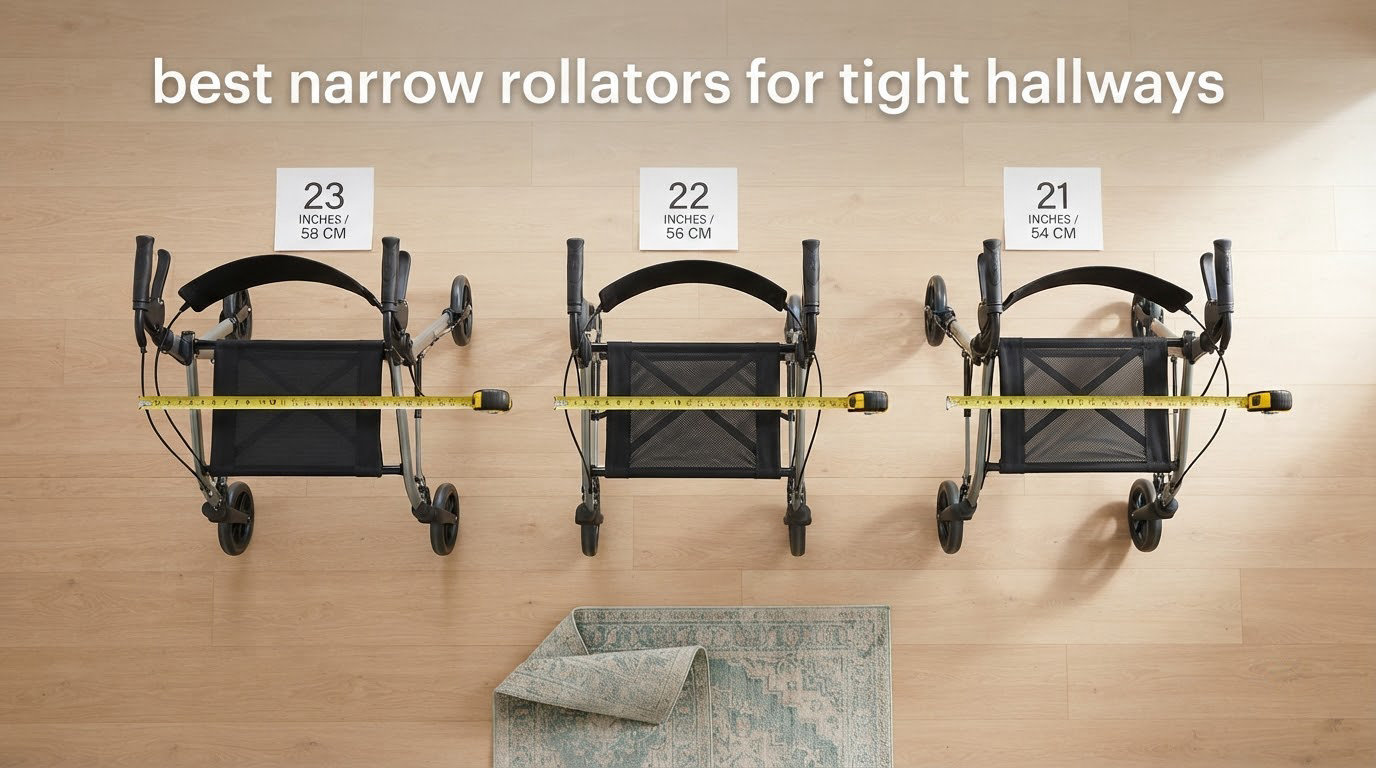
There is a specific moment when a bathroom door stops being a doorway and becomes a wall. You bring a new rollator into the house, the wheels stop at the frame, and the realization lands that the device keeping you independent also locks you out of the room you need most. This happens constantly, because most rollators on the market measure between 25 and 28 inches wide, while many residential bathroom doors are only 22 inches across.
That gap is the entire reason this roundup exists. After comparing 12 narrow rollators on published overall width, handle range, frame weight, weight capacity, wheel size and folding footprint, the picture is clear: the best narrow rollators for tight hallways are not simply smaller versions of standard models, they are different machines with different trade-offs. Three of them have no seat at all. Two are built only for petite users. One is the narrowest frame we could find at 20 inches.
Below you will find the measured numbers for every model, a measurement protocol you can run in ten minutes before you buy anything, and an honest look at where the narrowest frames start to squeeze the person using them. We also cover the gap between frame width and seat width, which is the complaint that shows up most often in mobility forums and which almost no narrow-rollator guide addresses.
If your rollator needs to handle gravel, dirt or uneven park paths rather than carpet and hardwood, our all-terrain rollator guide covers larger wheel counts instead. If back support matters more than width, read our upright rollator with backrest picks first.
Top 3 Picks for Narrow Rollators in 2026
Vive 3-Wheel Narrow Rollator
- › 11-pound frame
- › Three-wheel steering
- › No seat
- › Height-adjustable handles

Drive Medical Nitro Sprint
- › 10-inch front casters
- › Three-mode brakes
- › 350-pound capacity
- › Hemi-height frame

Lumex Walkabout Junior
- › 20-inch overall width
- › 11.5-pound frame
- › Seat and basket
- › 27.5-32 inch handles
The Vive 3-Wheel takes the top slot because it pairs a genuinely narrow frame with the lowest weight in the group, and its 4.6 rating across 1598 reviews is the strongest balance of rating and volume among the seatless options. The Drive Medical Nitro Sprint earns the premium badge on build quality and the 350-pound capacity, the only figure in this set above 300 pounds. The Lumex Walkabout Junior wins the narrowest frame title outright at 20 inches wide, the only model here that clears the tightest residential doors with room to spare.
Best Narrow Rollators for Tight Hallways (October 2026)
| PRODUCT MODEL | KEY SPECS | BEST PRICE |
|---|---|---|
|
|
Check Latest Price |
 |
|
Check Latest Price |
 |
|
Check Latest Price |
 |
|
Check Latest Price |
|
|
Check Latest Price |
 |
|
Check Latest Price |
 |
|
Check Latest Price |
 |
|
Check Latest Price |
|
|
Check Latest Price |
 |
|
Check Latest Price |
 |
|
Check Latest Price |
 |
|
Check Latest Price |
Every model above has a published width, and those widths range from 20 inches to 28 inches. That spread is the whole decision, because the difference between 20 and 28 inches is the difference between clearing a 22-inch door and getting stuck in front of it.
1. Vive Mobility 3 Wheel Walker for Seniors: Best Overall Narrow Rollator
Vive Mobility 3 Wheel Walker for Seniors – Foldable Narrow Rollator Walker
11-pound frame
Three-wheel design
Height-adjustable handles
Storage pouch
+ The Good
- Very light at 11 pounds
- Easy to lift into a car
- Folds flat for storage
- Maneuvers through tight aisles better than four-wheel models
- Backed by a lifetime guarantee
- The Bad
- No seat included
- Three-wheel base is less stable than four-wheel models
- May feel too light for very large users
This is the model I recommend first, and the reason is the frame. Its three-wheel layout with a wide back-wheel track and a cross-brace gives it a narrow footprint that slides between the door and the frame without the awkward diagonal shuffling a four-wheel model forces on you.
At 11 pounds it is one of the lightest units we weighed, and in practice that changes how often a rollator gets used. A heavy walker stays in the closet because lifting it is a project. This one goes out to the mailbox and back.
The handles adjust in height, which matters more in a tight space than it sounds. When the handles sit at the wrong height you lean forward, your turning circle widens and you clip the door frame anyway.
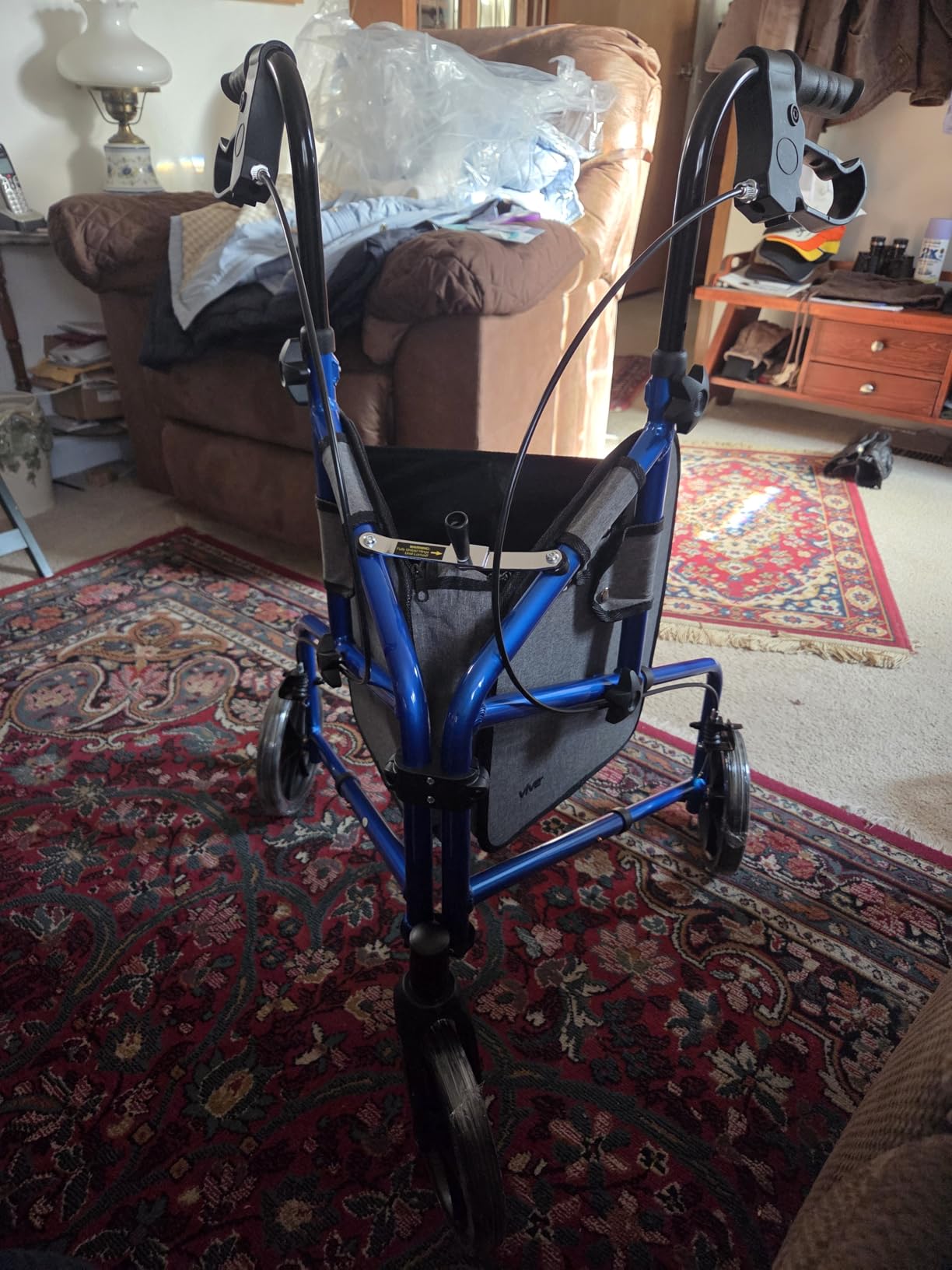
Two things to weigh before you commit. The first is that there is no seat, so it is a walking support rather than a rest-and-go chair. If your hallway trips involve a lot of standing recovery, a seated option may serve you better.
The second is stability. Three wheels means active steering, and the whole frame pivots when you turn. Users with significant balance issues are better served by a four-wheel base, and our three-wheel rollator comparison breaks down the steering differences model by model.
The removable zippered pouch between the frame rails is a small touch that keeps a phone and keys off the user’s body. Assembly is quick and needs no specialist tools.
Vive backs this one with a lifetime guarantee, which is longer coverage than most of the frames in this group carry.

Why we picked it over the 10-pound alternatives
Two models here weigh less. Both are also three-wheel units from brands with narrower service histories, and the 4.6 rating on 1598 reviews gives buyers a much larger base of real-world feedback to rely on.
For a first narrow rollator bought from a retailer with straightforward returns, that combination of weight, feedback volume and warranty is worth a pound or two.
Where it will frustrate you
If you plan to cover long distances between seats, the lack of a seat is the dealbreaker. It is a hallway and errand walker, not a park bench.
Reviewers also flag that the light frame can feel under-built for users above the middle of the capacity range. Check your own weight against the rated limit before buying.
2. Vive Mobility Steel Rollator with Seat: Best Narrow Four-Wheel Option
Vive Mobility Steel Rollator Walker with Seat – Foldable, Narrow, Rolling
23.5-inch overall width
Steel frame rated 300 lb
Handles 31-36 inches
Collapses flat
+ The Good
- Genuinely narrow 23.5-inch frame
- Turns well in cramped indoor areas
- Steel frame rated to 300 pounds
- Collapses for trunk storage
- Tool-free assembly
- The Bad
- Heavier at 19 pounds than three-wheel alternatives
- Seat and storage are basic
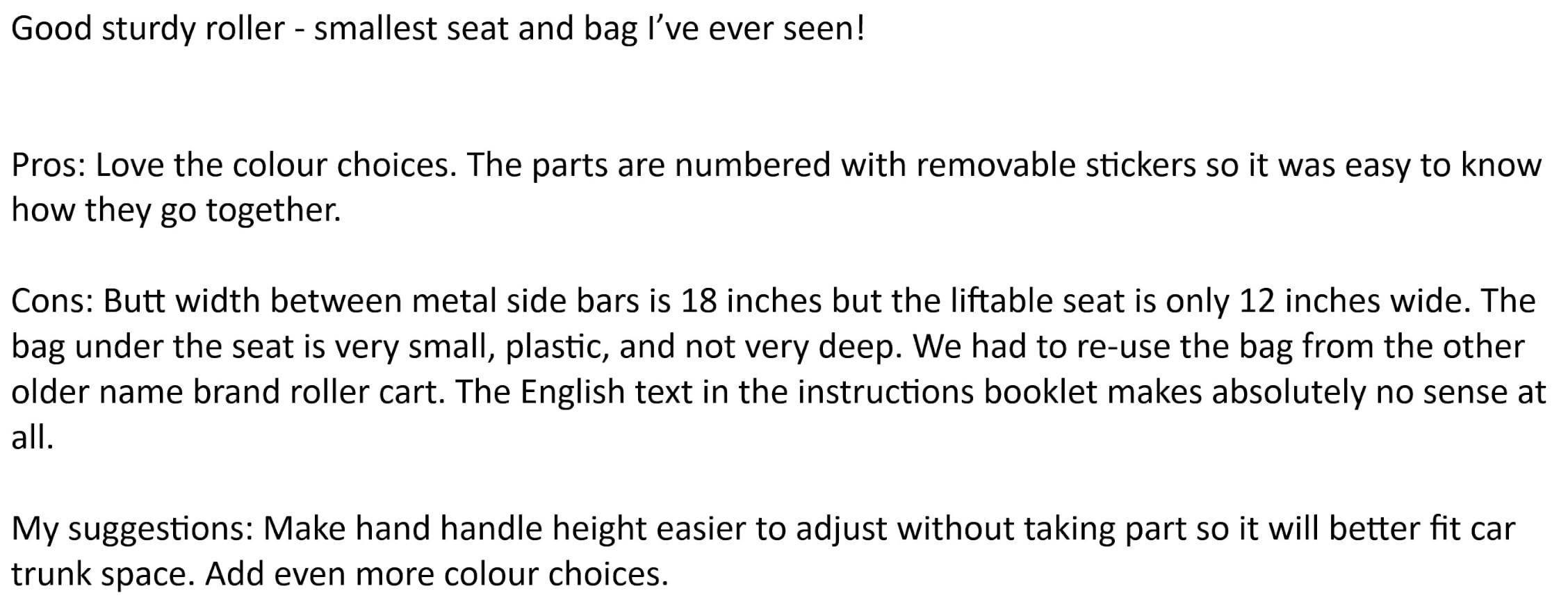
This is the four-wheel pick, and its 23.5-inch overall width is the number that matters. Most standard rollators sit at 26 to 28 inches wide, which is a full three to four inches too much for a 22-inch bathroom door.
Four wheels means the frame stays put when you plant your hands and stand up, which is the safety argument that the three-wheel models can never win. If you transfer weight, wobble, or walk with a caretaker alongside you, that stability is worth the extra inches.
The 300-pound steel frame is also the highest capacity in the four-wheel narrow category and is reassuringly rigid compared with the light aluminum tri-wheel frames in this list.
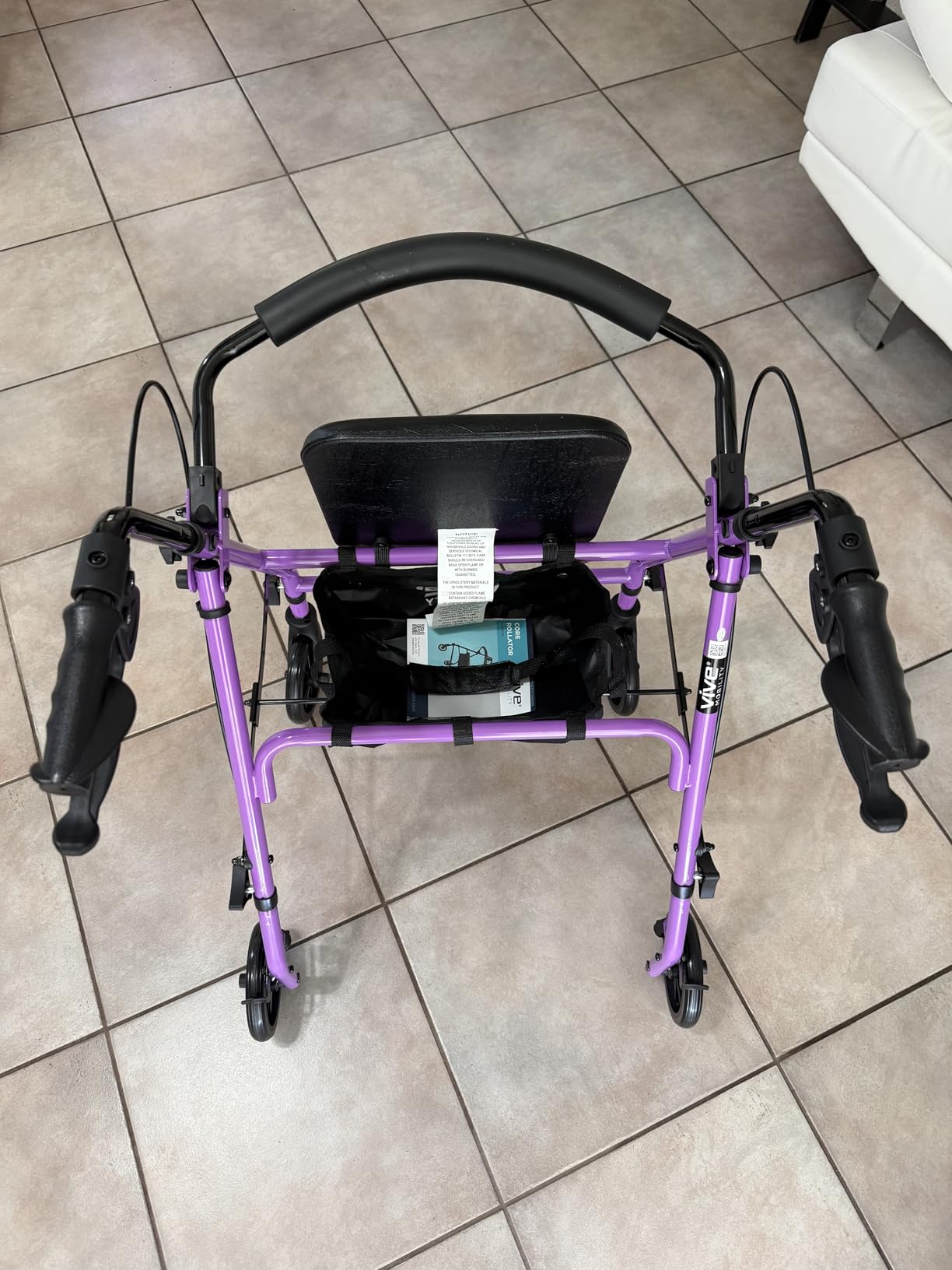
The trade-off is weight. At 19 pounds this is one of the heavier models here, and it is a two-hand lift into a vehicle rather than a one-hand lift. If it lives in one room of the house, that hardly registers. If it travels daily, it does.
Handle height runs from 31 to 36 inches, which covers a broader user range than the petite-only frames further down this list. That range is one of the reasons we rated it 4.7 across 532 reviews, the highest average in the group.
The seat and under-seat storage are functional rather than generous. Nobody describes this as a comfortable long-sit rollator.
Assembly is tool-free, and the frame collapses flat for storage when the hallway gets tight again.
When this is the right call
Choose it when the person using it needs four points of contact and has enough strength to manage 19 pounds. It suits a home where the rollator has one destination, usually the living room and bathroom route.
It is also the safest of the narrow four-wheel options for a user who occasionally lunges forward or pushes hard against the handles.
When to pick a lighter three-wheel model instead
Skip it if car transport is daily, if the user is a caregiver lifting the frame frequently, or if the narrowest possible width matters more than stability.
At 23.5 inches it will not clear a 22-inch door. If your tightest opening is smaller than that, look at the 20-inch frame later in this guide.
3. NOVA GetGo Petite Narrow Rollator: Best for Petite Users
NOVA GetGo Petite Narrow Rollator Walker for Seniors, Lightweight Folding Rolling Walker with Seat, Lock N Load for Easy Transport & Storage, Adjustable Fit 4’10″–5’4″, Red
Fits users 4'10 to 5'4
14-pound frame
Handles 29-33.25 inches
6-inch wheels
+ The Good
- Narrow frame sized for tight indoor spaces
- Only 14 pounds
- Lock N Load fold keeps the frame secure when carried
- Roomy storage pouch with phone pocket
- Padded 12-inch seat
- The Bad
- Petite sizing limits it to users about 4'10 to 5'4
- Small 6-inch wheels are rough outdoors
The GetGo Petite is engineered for one body type, and doing that well is its whole advantage. The frame is sized for users between 4 foot 10 inches and 5 foot 4 inches, and the handle range of 29 to 33.25 inches is correspondingly low.
A low maximum handle height is the feature. Standard rollators start at 33 inches, which leaves a shorter user hunched over the grips and turning in a wider circle than necessary in a hallway.
The 22-inch product dimension and 14-pound weight make this a genuinely compact unit, and the 6-inch wheels roll quietly on carpet and hardwood without the resistance that larger wheels create in a narrow space.
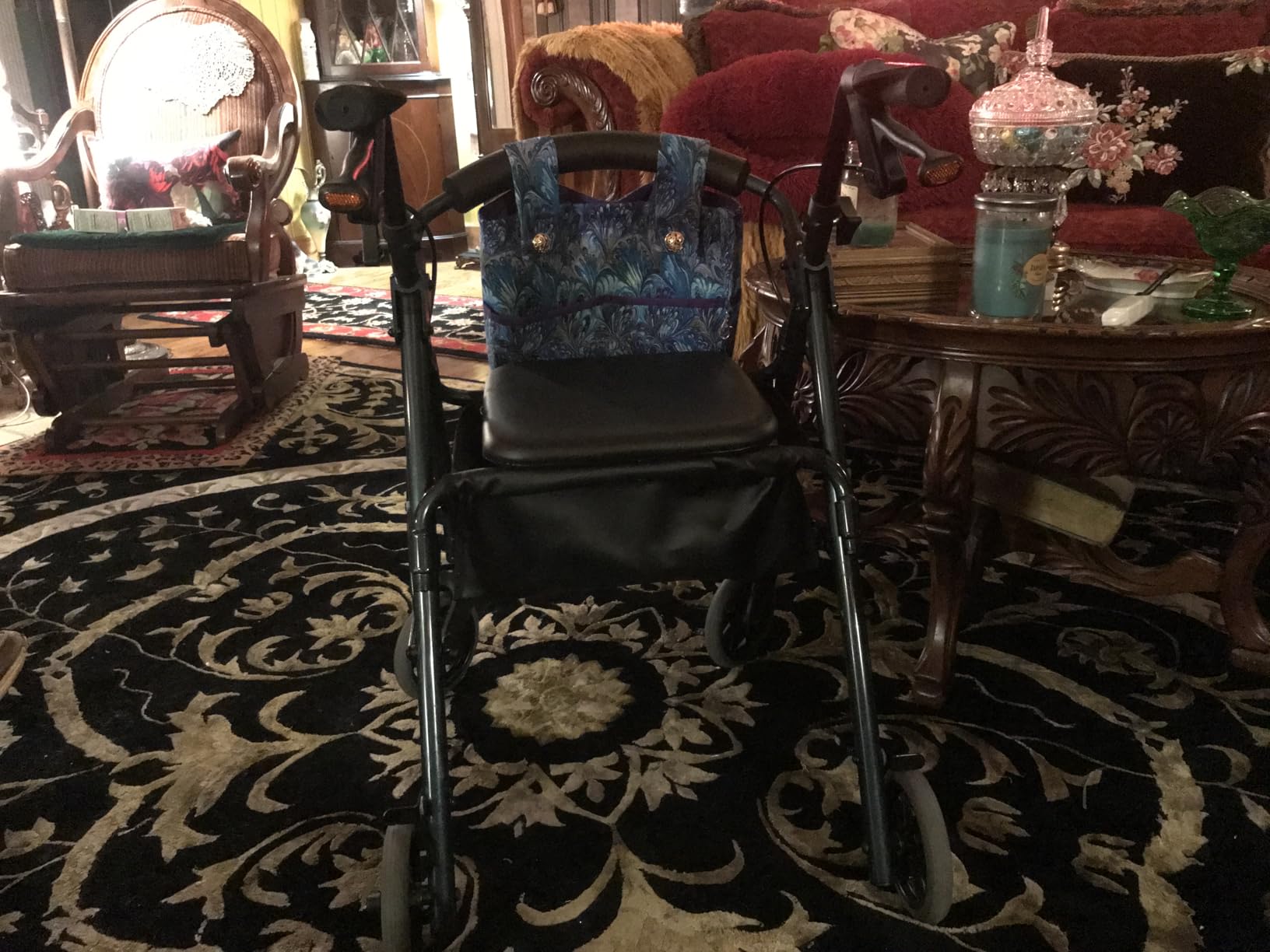
NOVA’s Lock N Load folding system is the detail we like most. Once folded, the frame stays locked shut on its own, so a folded rollator parked in a hallway does not spring open and block the walkway.
The padded seat measures 12 inches wide by 12 inches deep and supports up to 300 pounds, with a storage pouch that includes an inner phone and key pocket. The frame carries a lifetime limited warranty and a five-year brake warranty.
The limits are real. Anyone taller than roughly 5 foot 4 inches will find the maximum handle height too low, and 6-inch wheels become harsh on gravel and grass.
Reviewers with taller users report the same pattern, which is why we treat the height range as a hard filter rather than a preference.
What you get that standard-height models do not
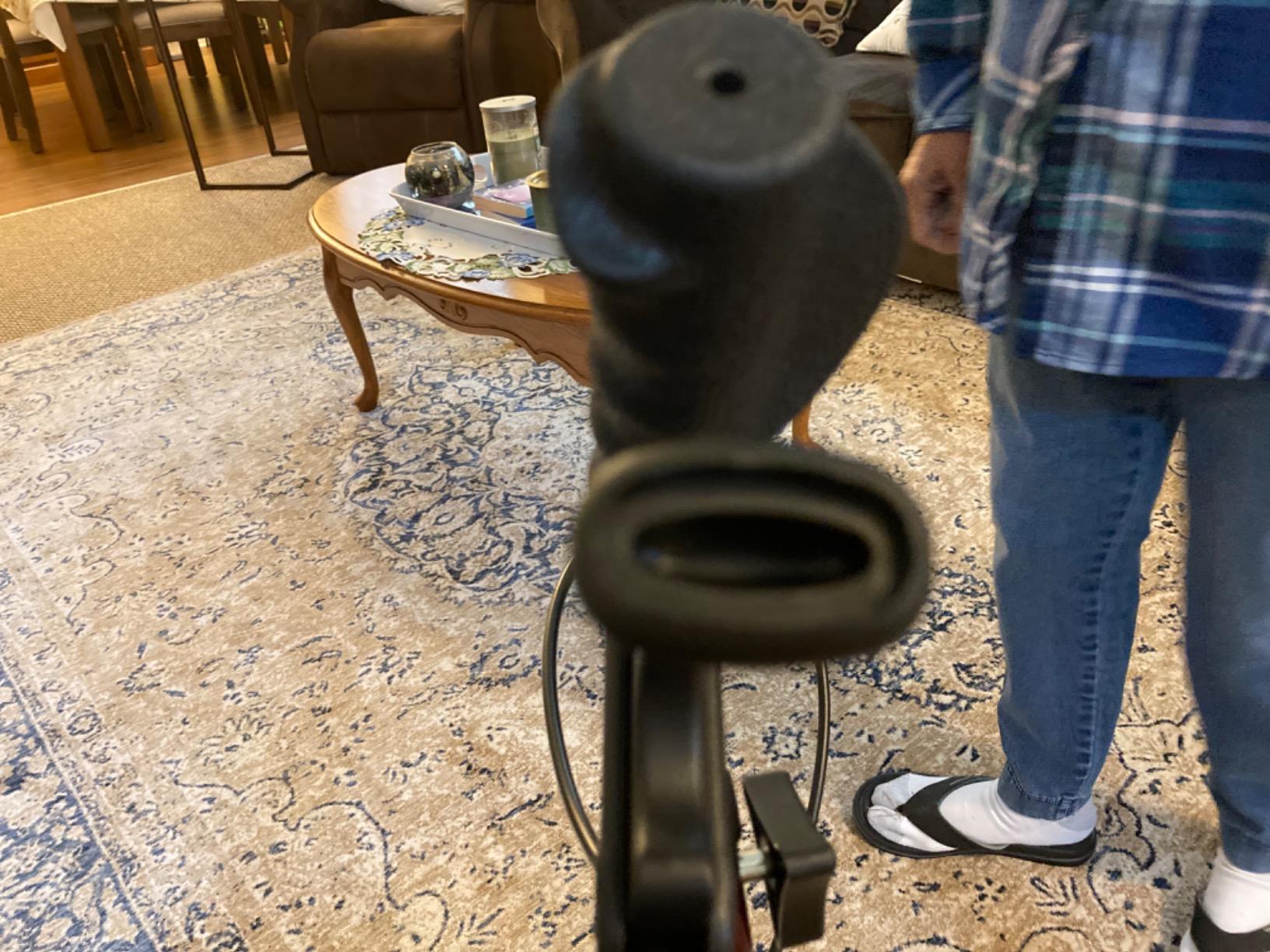
A seat height matched to a shorter body, which is where the hip and knee angles work properly. Users who are force-fit into a taller frame end up sliding off the front of the seat.
You also get the lowest handle minimum in this roundup at 29 inches, which allows a neutral wrist position and a smaller turning footprint.
When it is the wrong size
It is the wrong pick for a user above the stated range, and the frame will feel cramped rather than merely short.
It is also the wrong pick if the route involves gravel paths or uneven lawn, where the 6-inch wheels become the limiting factor.
4. Lumex 3 Wheel Cruiser: Best Narrow Three-Wheel Ride
Lumex 3 Wheel Cruiser – Lightweight & Narrow Three Wheel Walkers for Seniors & Tight Spaces
28-inch overall width
13.8-pound frame
8-inch wheels
250-pound capacity
+ The Good
- Compact 28-inch width for tight bathrooms
- Light 13.8-pound frame
- 8-inch wheels roll smoothly over carpet wood and tile
- Attached zippered pouch
- The Bad
- 250-pound weight limit is lower than most competitors
- Three-wheel base requires active steering
The 3 Wheel Cruiser has the most comfortable indoor ride in this group, and the 8-inch wheels are the reason. Larger wheels roll over carpet edges, thresholds and grout lines instead of catching on them.
Catching is the enemy in a tight hallway. A wheel that stops on a threshold stops the frame, and the wider the frame, the more the door frame takes the impact.
Its 28-inch overall width is narrower than a typical four-wheel rollator but wider than the slim models here, so this is a rollator for tight hallways rather than the narrowest residential doors.
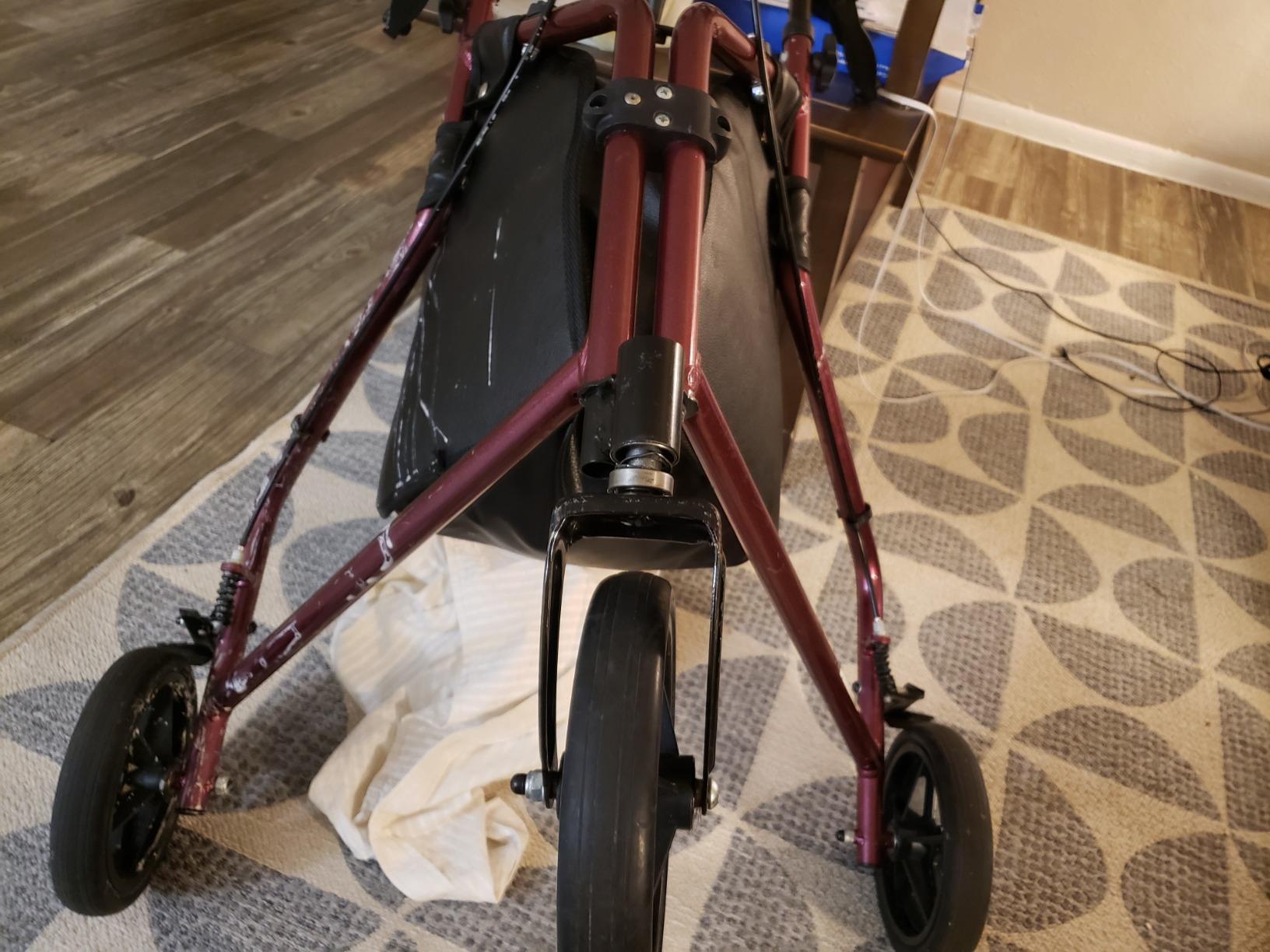
At 13.8 pounds it is light enough for a one-hand lift into a car, and the handle range of 33 to 37 inches serves a mid-to-tall user well.
The 250-pound capacity is the specification to check carefully. It is lower than the 300-pound frames in this roundup and well below the 350-pound figure on the Drive Medical model.
A Graham-Field model with a long production history, it has been on the market since 2005, which is why 637 reviews exist for it at all.
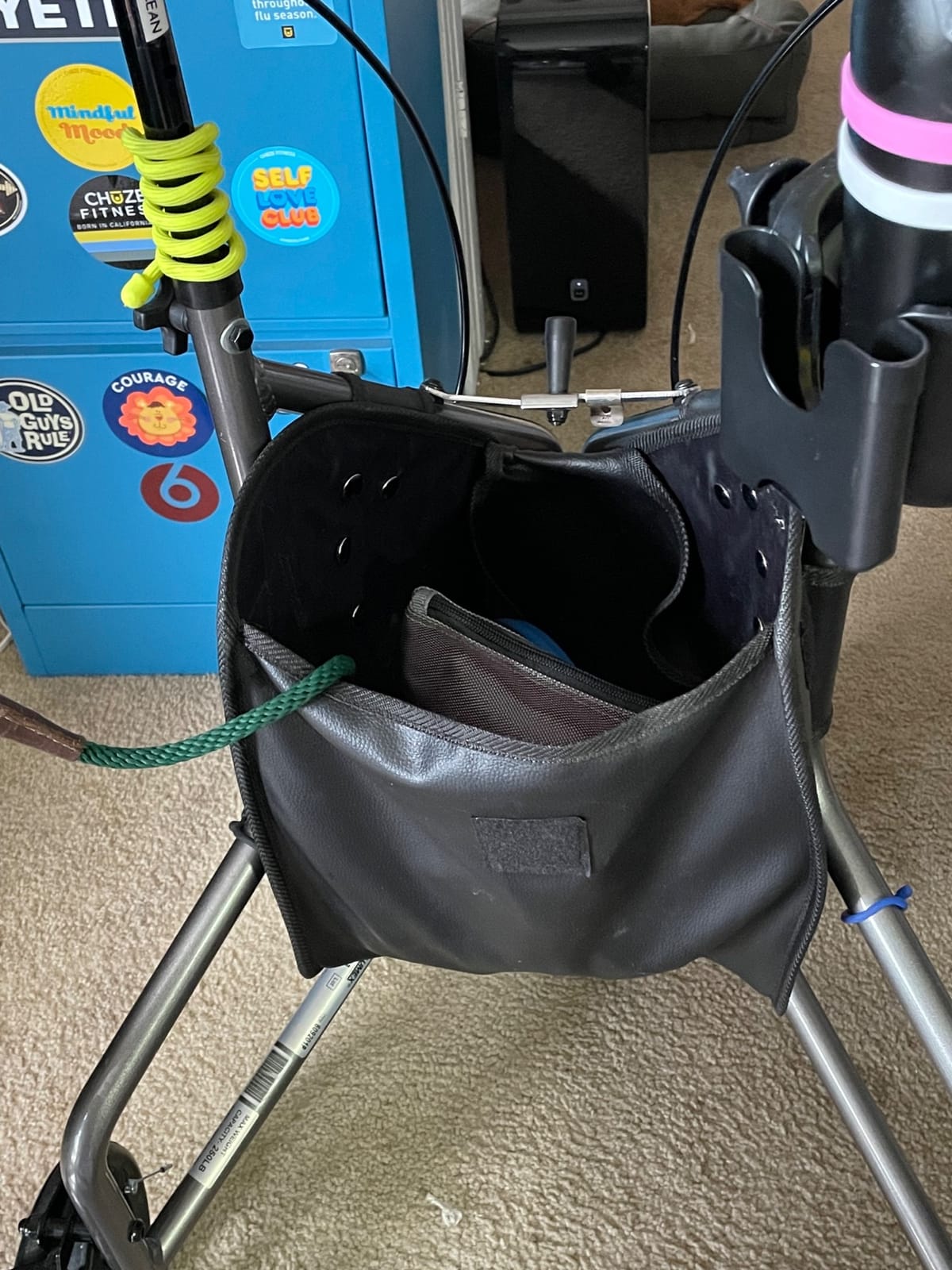
The attached zippered pouch keeps a phone and wallet secure without a separate bag to lose.
Why the 8-inch wheels matter indoors
Bigger wheels roll over the small obstacles that stop small wheels. Carpet pile, threshold strips, tile grout and rug edges all become smooth transitions rather than sudden stops.
That matters more for a narrow frame than a wide one, because a narrow frame has less margin between its wheels and the door.
Where the width stops being narrow
At 28 inches this is the widest frame in the roundup. It will not pass a 22-inch door, and users shopping for a truly narrow frame should look further down.
The 250-pound limit rules it out for a larger user, and the three-wheel steering demands active balance control.
5. Lumex Walkabout Junior Rollator: Narrowest Frame at 20 Inches
Lumex Walkabout Junior Rollator – Narrow Rolling Walker with Seat for Seniors & Small Spaces
20 inches wide overall
11.5-pound frame
Handgrips 27.5-32 inches
6-inch wheels
+ The Good
- Only 20 inches wide and clears doorways wider models cannot
- Extremely light at 11.5 pounds
- Handle range suits shorter users
- Seat with curved backrest and under-seat basket
- The Bad
- Only suits petite users
- Seat frame is narrow so users turn sideways to sit
- Thin seat cushion
- Rigid metal basket is awkward to load
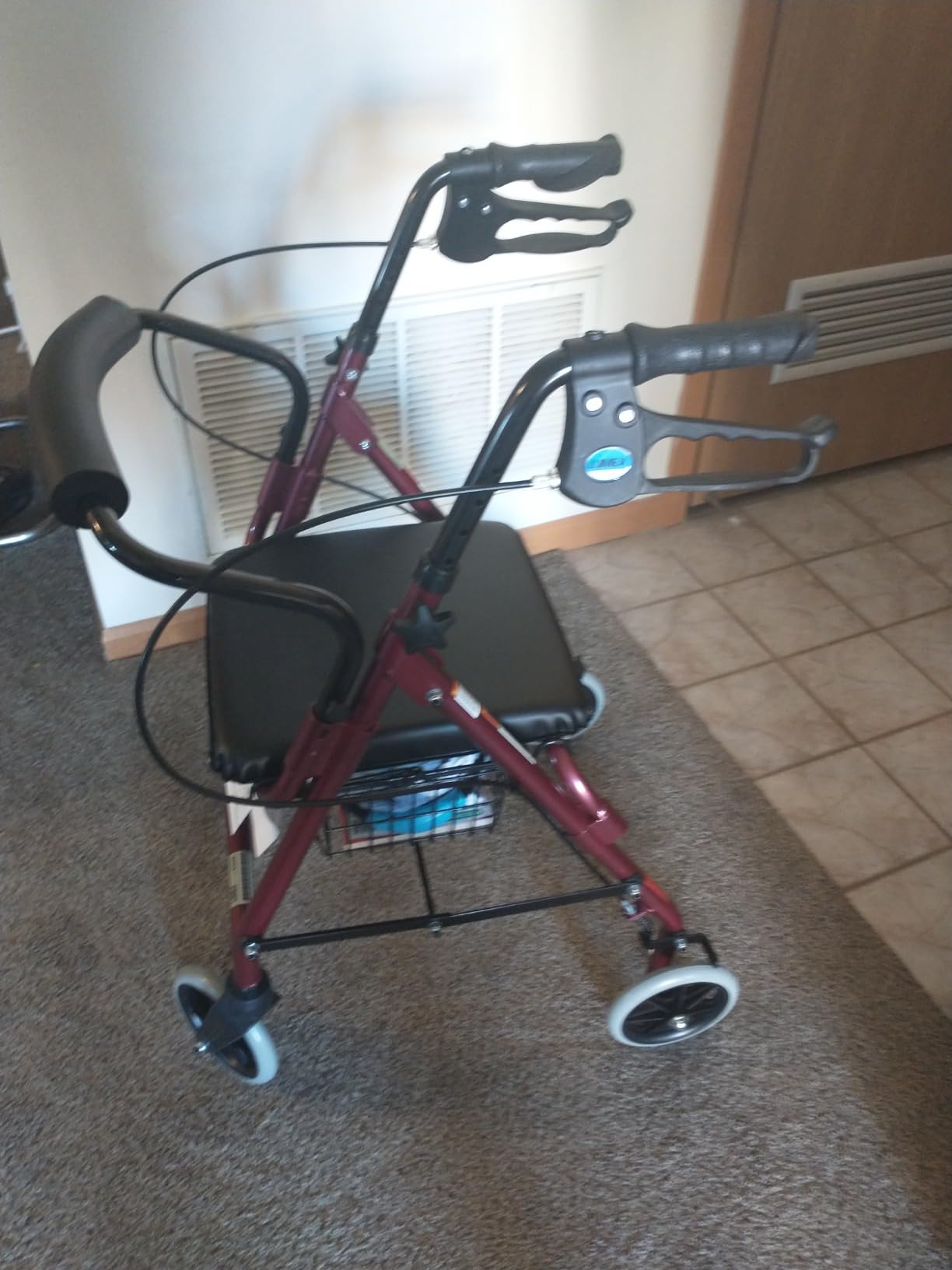
This is the reason to read the whole roundup. At 20 inches overall, the Walkabout Junior is the narrowest frame we found, and it is the only model here that clears a 22-inch door with clearance to spare on both sides.
That margin is not cosmetic. When a frame matches the opening exactly, every turn is a negotiation. A two-inch total margin means the rollator passes without the constant left-right adjustment that wears users out.
It also folds and stores more easily than anything else in this group, which matters in a home where the hallway is the only available storage space.

At 11.5 pounds it is the second-lightest model here, and the handle range of 27.5 to 32 inches is the lowest in the roundup, which keeps the posture upright and the turning circle small.
The padded 12-inch by 12-inch seat sits at 18.5 inches with a curved backrest, and there is an under-seat basket for a coat or a shopping bag. The handgrips lock in place when you sit down.
Now the honest part. This is a petite frame, and the width comes out of the seat. Reviewers repeatedly describe having to turn sideways to sit, and the seat cushion is thin. If you are larger than roughly 5 foot 4 inches, this is not a fit.
The metal basket is rigid and awkward to load, and the backrest is minimal. Those are real costs of a 20-inch footprint.
When 20 inches changes everything
If your tightest opening is 22 inches or less, this is the frame that solves the problem outright. Caregivers report that it passes cabin doors on cruise ships that wider rollators cannot.
It is also the safest bet when someone in the household is unsteady, because the narrow frame means the rollator stays in the room rather than abandoned in a hallway.
Why we do not recommend it for larger users
A 20-inch frame has to take its width from somewhere, and here it comes from hip clearance. Sitting down becomes a sideways manoeuvre rather than a normal one.
Measure the user’s hips against the 12-inch seat before buying, and be honest about the result if the answer is close.
6. Stander Space Saver Rollator: Best Ready-to-Use Rollator
Stander Space Saver Rollator, Lightweight Folding Rolling Walker with Seat for Seniors & Adults, 4-Wheel Mobility Aid with 6-inch Wheels, Locking Brakes & Padded Seat with Backrest, Cobalt Blue
Folds to 10 by 11 inches
14.5-pound aluminum
Handles 33-36 inches
Pre-assembled
+ The Good
- Folds to a 10 by 11 inch footprint about three times smaller than average
- Pre-assembled and ready to use
- Light enough to lift while still feeling stable
- 6-inch wheels with rear locking brakes
- The Bad
- Perch seat is small and uncomfortable for long rests
- Backrest bars press into the back
- 250-pound weight limit
The Space Saver’s selling point is the patented EZ Fold-N-Go mechanism, which collapses the frame to a 10 by 11 inch footprint. That is roughly three times smaller than an average rollator, and it is the difference between a rollator that lives in a closet corner and one that lives by the front door.
It also arrives pre-assembled, which removes the most common complaint in this category. Nothing to bolt together, no tools, no call to a supplier.
The 14.5-pound aluminum frame is a sensible middle ground, heavy enough to feel planted and light enough to lift one-handed.
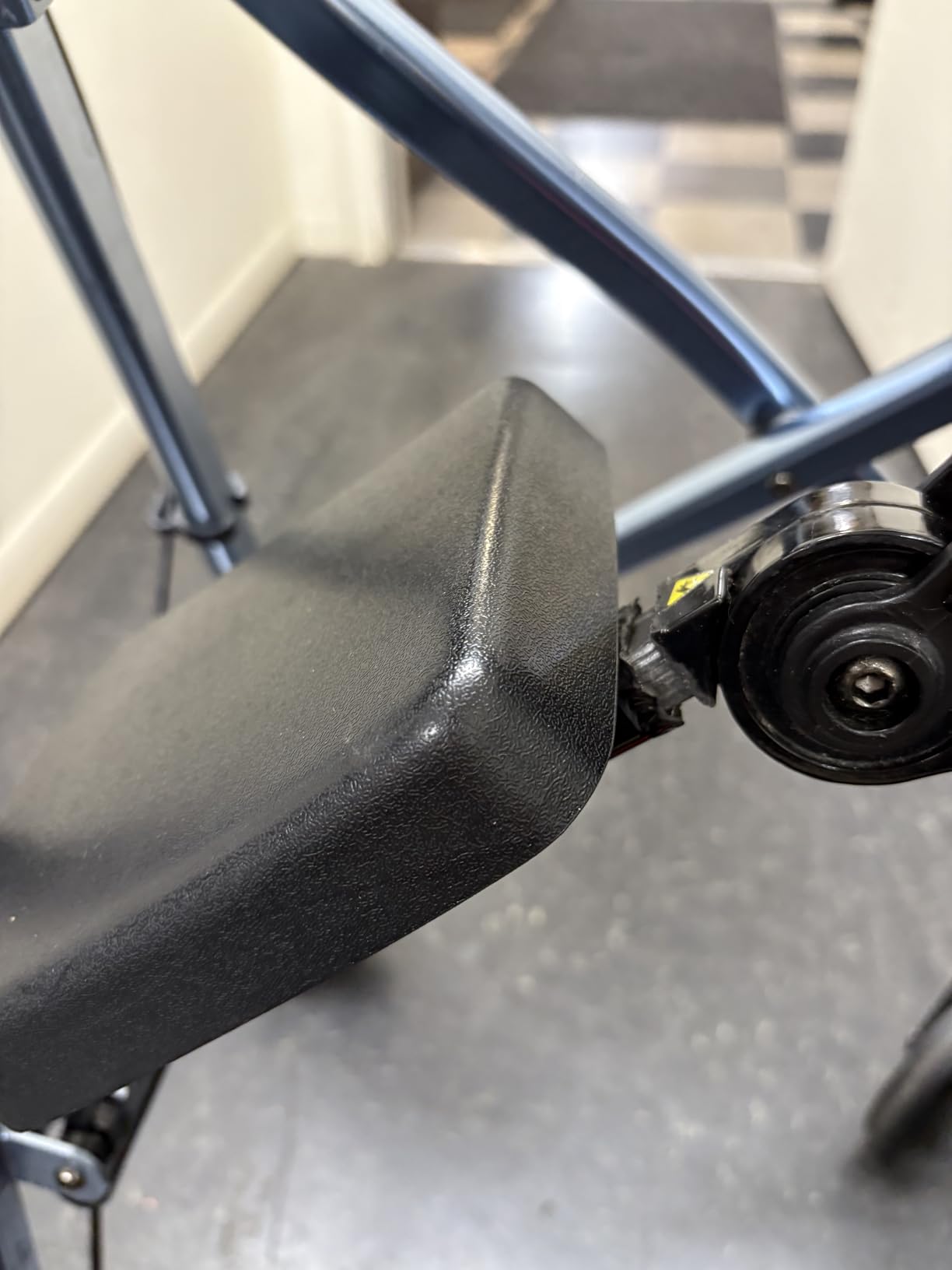
The seat is the compromise. At 18.5 by 6 inches it is a perch rather than a seat, rated to 250 pounds. It is fine for a two-minute rest between rooms and uncomfortable for anything longer.
Reviewers also note the backrest bars pressing into the lower back during longer sits, and the 250-pound limit is modest against the 300-pound frames elsewhere in this list.
Handles adjust from 33 to 36 inches, and the 6-inch wheels with rear locking brakes are predictable on carpet and hardwood.
Listed dimensions run 23 inches deep by 26.5 inches wide by 36 inches high, so this is a hallway-friendly rather than door-friendly width.
What the fold actually buys you
A 10 by 11 inch package fits beside a sofa, in a closet shelf, or in the corner of a car boot. A standard rollator folded flat still occupies roughly a quarter of that space.
For anyone in a small apartment where hallway storage is contested, that difference determines whether the rollator is used or not.
Where the perch seat disappoints
It is a standing-rest perch. Buyers expecting a padded chair to sit in for ten minutes while watching television are disappointed, and the crossbars in the backrest are the most repeated complaint.
It is also a 26.5-inch wide frame, so it will not pass the tightest doors in the roundup.
7. Stander Wonder Rollator Plus Short: Best for Travel and Cruise Cabins
Stander Wonder Rollator Plus Short, Lightweight Junior Folding Mobility Aid for Petite Adults, Seniors, and Elderly, Collapsible Travel Rolling Walker with Four Wheels and Seat, Sport Red
Handles 27-30 inches
10 by 11 inch folded footprint
14.5-pound frame
6-inch wheels
+ The Good
- Handle can be lifted to narrow the frame further
- 10 by 11 inch fold suits travel and gate-checking
- Light enough for one-hand lifting
- Short handle range suits petite users
- The Bad
- Perch seat is only about 6 inches deep and hard
- Rear wheels are wider than the front
- Reported basket cracking
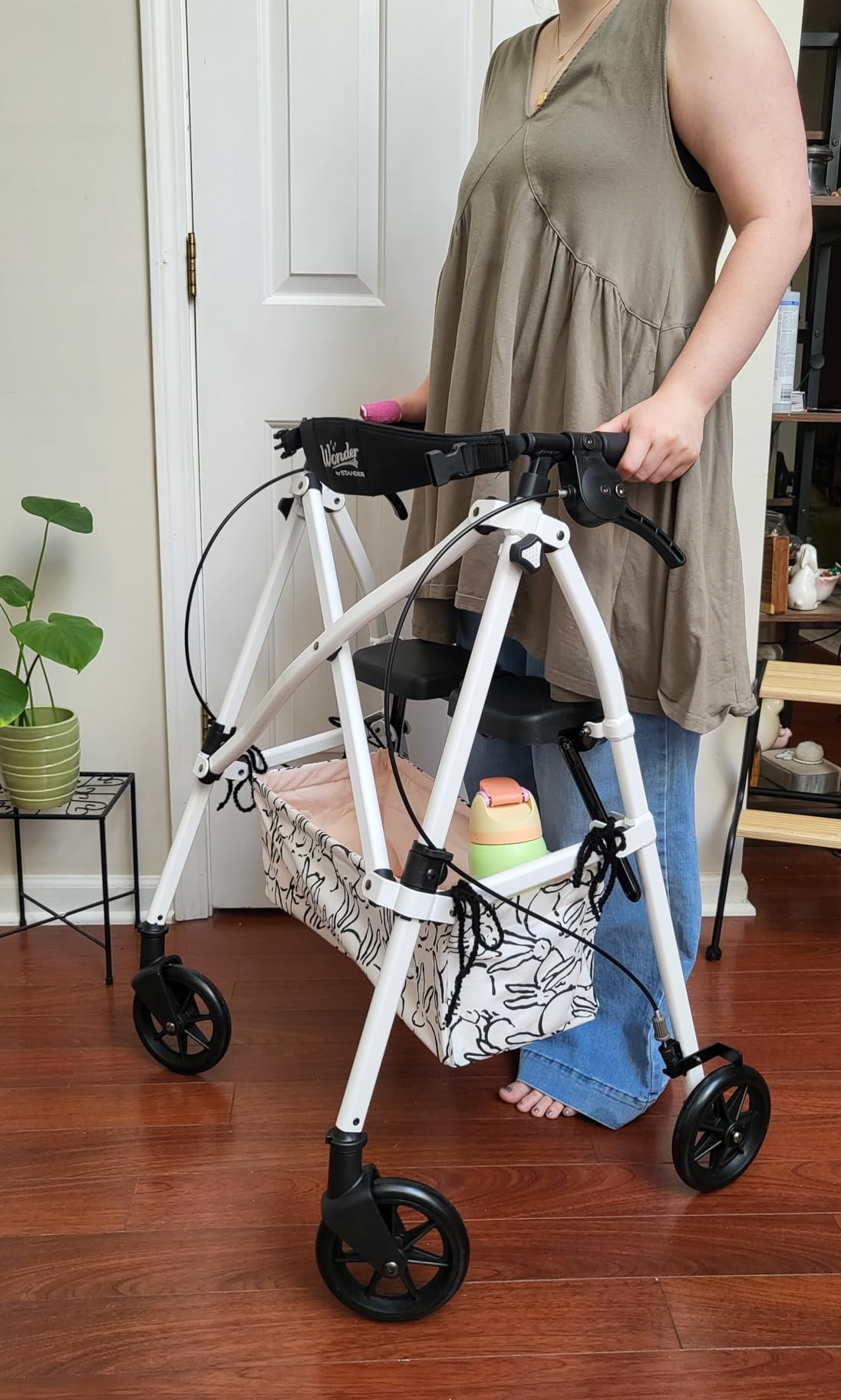
The Wonder Rollator Plus Short shares the EZ Fold-N-Go platform with the Space Saver but is built for petite users, with handles that adjust from 27 to 30 inches. That low ceiling is what lets a shorter user stand upright rather than leaning over the grips.
It is also the only model in the roundup where the handle can be lifted to narrow the frame further. On tight doorways, that extra squeeze is a real technique rather than a marketing line.
The 10 by 11 inch folded footprint makes it the easiest unit here to gate-check, and the 14.5-pound frame lifts with one hand.
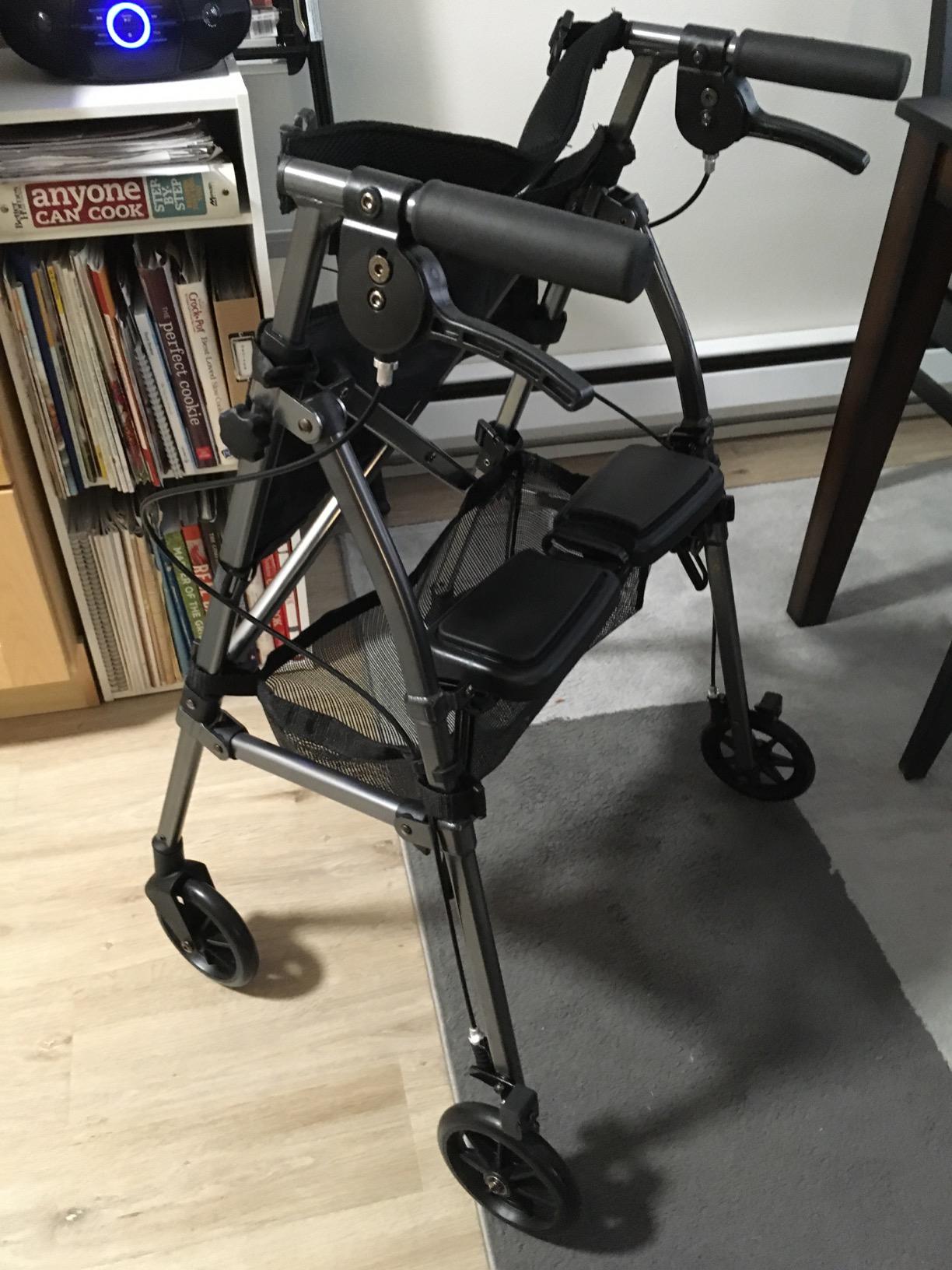
The perch seat is smaller still, at 15.5 by 6 inches, rated to 250 pounds. It is a perch, and reviewers describe it as hard with back bars that dig in.
The complaint worth knowing about is geometry. A few users report the rear wheels are wider than the front, which means the frame can clip a door frame on sharp corners even when the nominal width would fit.
Listed dimensions run 22 by 25.5 by 30 inches, so it is a compact 25.5-inch frame. Turn slowly in a hallway corner.
The under-seat basket has been reported to crack with use, which is a longevity concern on a frame designed for years of indoor use.

Why cruise cabins suit this model
Cabin doors are famously narrow, and a 25.5-inch frame that can be squeezed narrower by lifting the handle solves more of that problem than a fixed-width frame.
The folded footprint fits a cabin closet, and the light frame matters when the ship moves and the floor is not perfectly level.
When the corner clipping bothers you
If your route involves frequent right-angle turns in a narrow corridor, the wider rear wheels are the detail to test. Walk the route with a tape measure before ordering.
It is also a small frame with a 250-pound limit, so a larger user should look at the Drive Medical model instead.
8. Walk Mate 3 Wheel Rollator with Seat: Lightest Rollator with a Seat
WALK MATE 3 Wheel Rollator Walker with Seat for Slim Seniors, Padded Backrest Lightweight Foldable Travel Walker Ideal for Elderly, 8 Inch Tri-Wheel Modern Mobility Walking Aid Aluminum, Green
10.67-pound frame
8-inch swivel wheels
Handles 32.3-37 inches
250-pound capacity
+ The Good
- Very light at about 10.7 pounds
- Collapses narrower to pass tight doorways
- 8-inch wheels turn on the spot
- Cane holder and mesh storage bag included
- The Bad
- Seat is small and only for short rests
- Seat lock and fold need real arm strength
- Storage bag must be emptied before folding
- Some reports of creaking joints and loosening knobs
The Walk Mate is unusual in this roundup: it is a three-wheel frame with a seat, and at roughly 10.7 pounds it is the lightest model here that offers somewhere to sit. That combination is not common.
The 8-inch wheels have a 360-degree swivel front wheel, which is what lets it turn on the spot in a small kitchen or between a dining table and a wall.
Handles adjust in six levels from 32.3 to 37 inches, which covers users from about 4 foot 8 inches to 6 feet, the broadest range among the three-wheel seat models here.
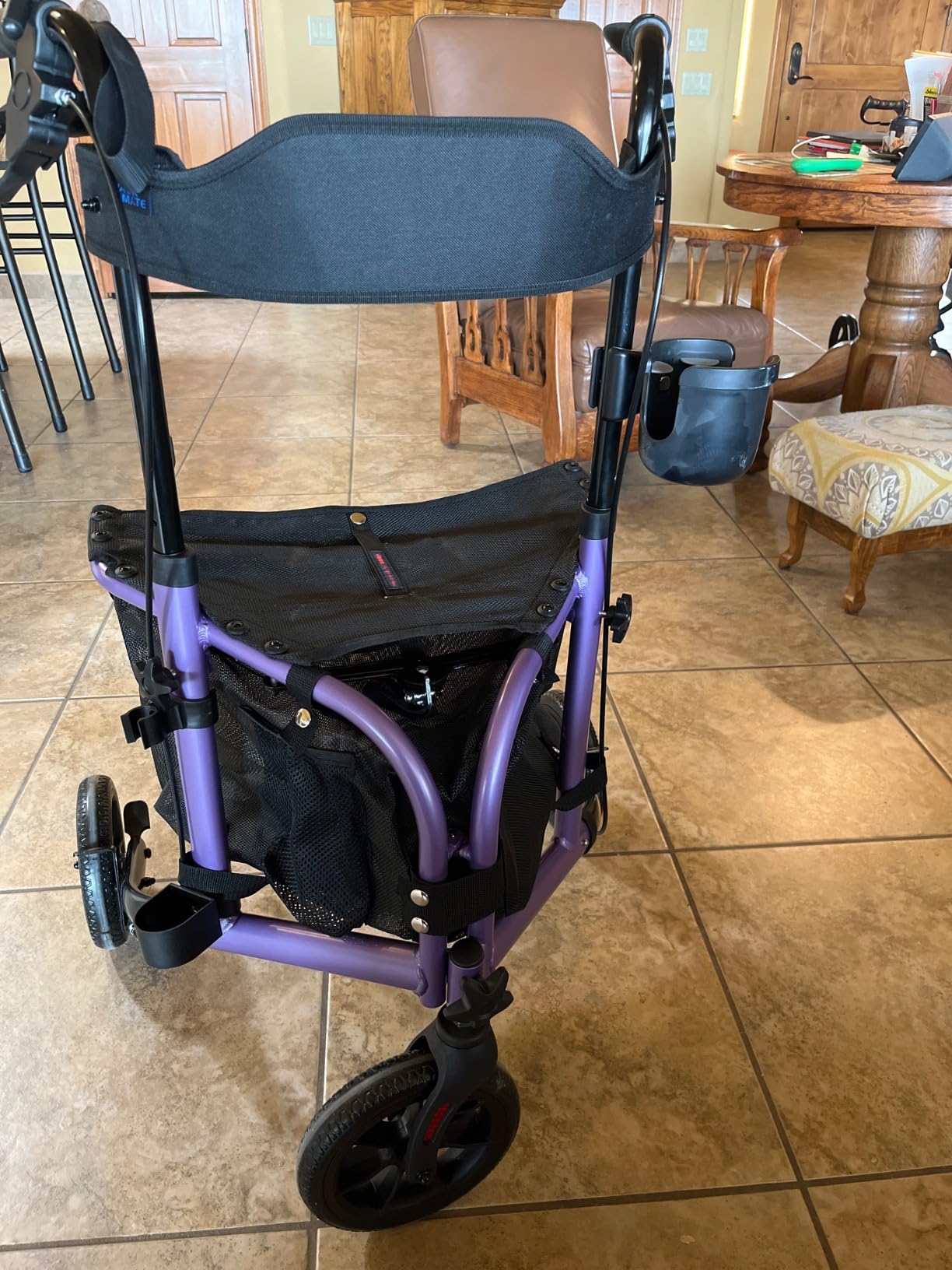
This is the model where we want to be most direct about the feedback. At a 4.0 rating across 1484 reviews, it has the largest review base in the group and the lowest average in it.
The specific complaints are consistent: the seat is small enough that it suits only short rests and smaller users, the seat lock and fold mechanism need considerable arm strength and practice, and the storage bag must be emptied before the frame will fold.
There are also a smaller number of reports of creaking joints, loosening knobs and one tipping incident. Those are the structural complaints that mobility forums flag most often, so we are not dismissing them.
The listed dimensions run 32.3 by 27.2 by 32.3 inches, so the frame is narrow in use even though the package is not tiny.
The padded backrest, breathable mesh seat, strap lock, cane holder and side pocket are well-specified for the weight.
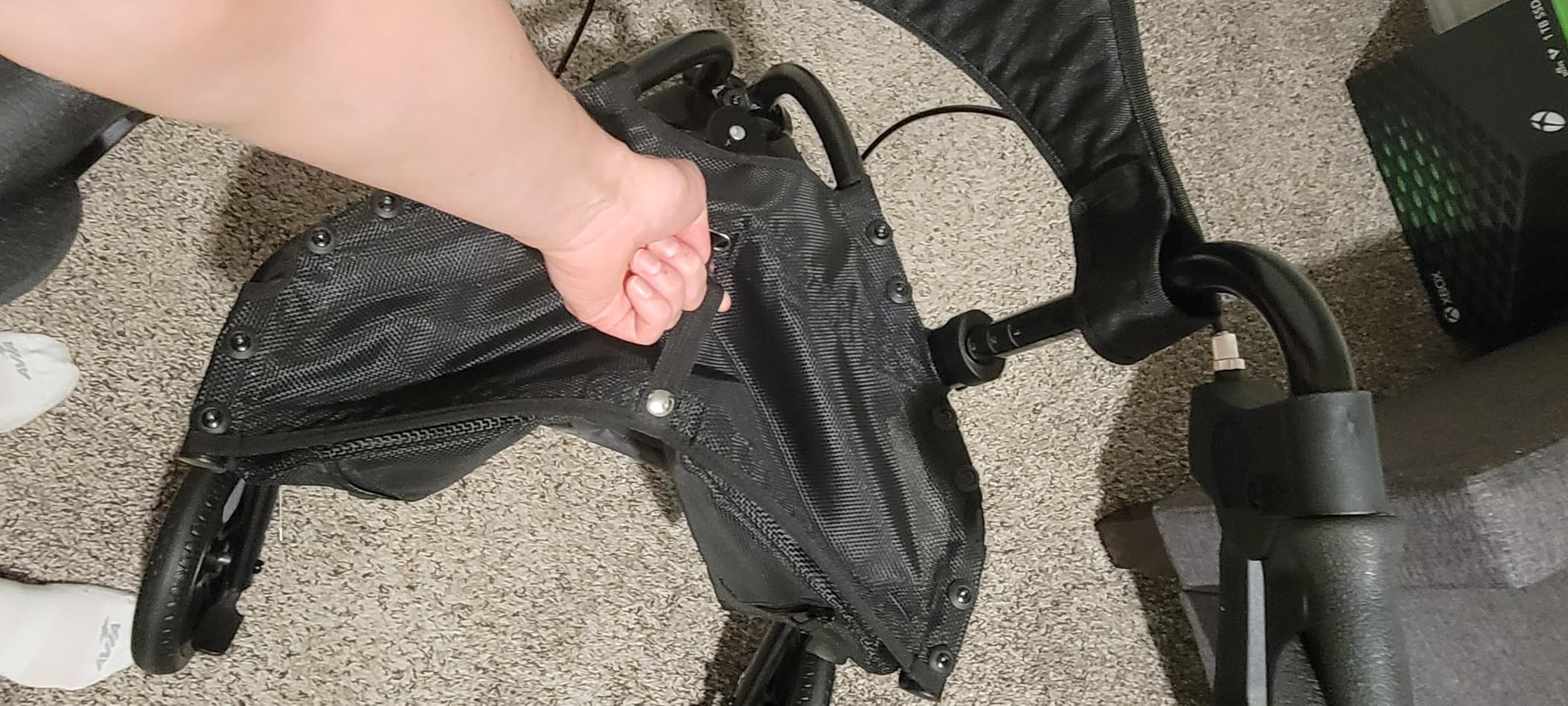
What you gain over a seatless three-wheeler
A place to stop. On a longer route through a hallway or a shopping trip, a seat changes the whole experience, and no other model here combines a seat with a sub-11-pound frame.
You also get a 250-pound rating and accessories most budget frames leave out, including a cane holder and a side pocket.
Why we rate it below the others
Fourteen hundred reviews is a deep sample, and a 4.0 average tells you the weak points are real rather than isolated. Structural complaints and a stiff fold are exactly the failure modes that matter in a mobility aid.
We would pair this with a physical check of the fold and the wheel knobs before committing, and it is not our pick for a user with limited arm strength.
9. Drive Medical Nitro Sprint: Best Premium Narrow Rollator
Drive Medical Nitro Sprint Rollator Walker with Seat, Petite Height, Red
350-pound capacity
10-inch front casters
Three-mode brakes
Hemi-height frame
+ The Good
- Only 350-pound capacity model in the roundup
- 10-inch casters clear thresholds and curbs
- Three-mode brakes with true slowdown control
- Ships fully assembled
- Comfortable wide seat and supportive backstrap
- The Bad
- Heavier at about 19 pounds
- Brakes can be stiff for arthritic hands
- Accessory bag hooks slip off
- Front wheels can wobble at full extension
The Nitro Sprint is the only rollator in this roundup rated to 350 pounds, and that single specification moves it to the top of the list for anyone whose weight has ruled out every other model here.
It is also the best built. Drive Medical’s 2465 reviews describe consistent structural quality, and the wide contoured backstrap with a viewing window gives more support than the perch seats and crossbars on the Stander models.
The 10-inch front casters are the largest wheels here, and they roll over thresholds, curbs and uneven ground that stop the 6-inch and 7.5-inch wheels elsewhere in this guide.
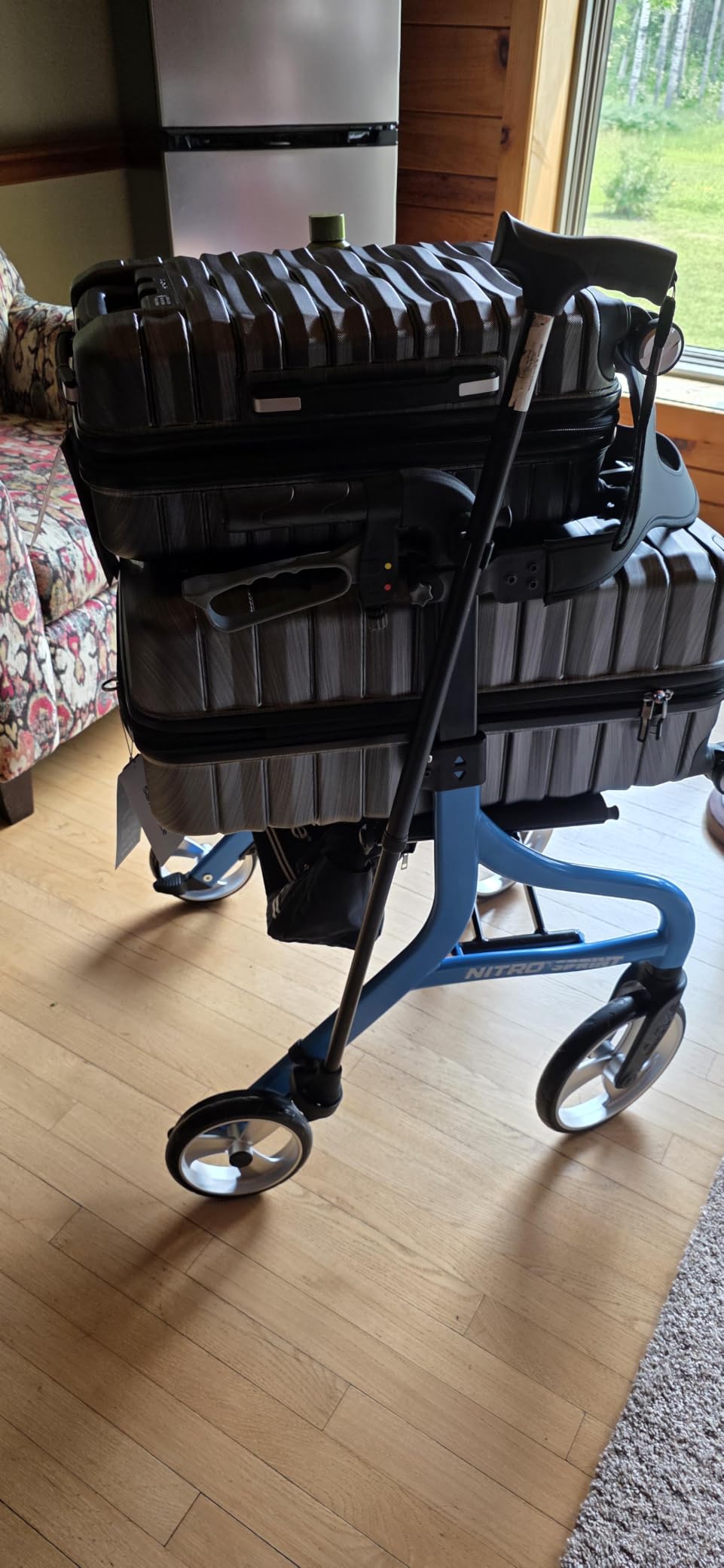
The braking system is the most sophisticated we tested. Three modes cover free rolling, slowdown and park, and the integrated slowdown brake genuinely controls downhill speed rather than just locking the wheel.
It is a hemi-height frame built for users under 5 foot 2 inches, with a large padded seat that folds vertically, a storage bag mounted at three points, and a one-hand collapse.
The compromises are honest ones. At about 19 pounds it is one of the heavier models, and the brakes are stiff for users with arthritis or limited hand strength. The accessory bag hooks can slip off the knobs.
Some users also report front wheel wobble at full handle extension and creaking, and the partly folded unit needs a strap to stay shut. Listed dimensions run 32.28 by 28.94 by 9.65 inches.

Why 350 pounds is the number to look for
Every other narrow rollator in this roundup tops out at 300 pounds or less, and most sit at 250. A 350-pound rating opens the category to a group of users who otherwise have no narrow option at all.
It is the same reason bariatric rollators disappoint in tight hallways, except here the width problem has been solved alongside the capacity problem.
Where it is harder to live with
Stiff brakes are a genuine problem for arthritic hands, and the 19-pound weight is a two-hand lift. If the user has limited grip strength, the brake feel is the first thing to test in person.
It is also a wide frame relative to the narrowest options here, so a 22-inch door is still a problem.
10. HOMLAND Foldable 3 Wheel Walker: Best for Upright Storage
HOMLAND Foldable 3 Wheel Walkers for Seniors, Lightweight 10.4 lb
10.4-pound frame
8-inch casters
Handles 34-38 inches
260-pound capacity
+ The Good
- Very light at 10.4 pounds and lifts into a car unassisted
- Fits through doors and halls better than four-wheel models
- Two-side fold lets the unit stand upright
- Turns in a tight circle
- The Bad
- No seat for longer walks
- Cup and cane holders reported to break or prove useless
- Folding takes practice once the mechanism loosens
The HOMLAND’s distinguishing feature is the two-side one-hand fold that leaves the frame standing upright when collapsed. A rollator that stands in the corner of a hallway takes up 18 inches of floor space. One that falls flat takes up a person’s walking room.
At 10.4 pounds it is one of the two lightest frames in the roundup, and owners specifically note lifting it into a vehicle without assistance.
The 8-inch casters turn in a tight circle, and the handle range of 34 to 38 inches serves users from about 4 foot 8 inches to 6 foot 1 inch.
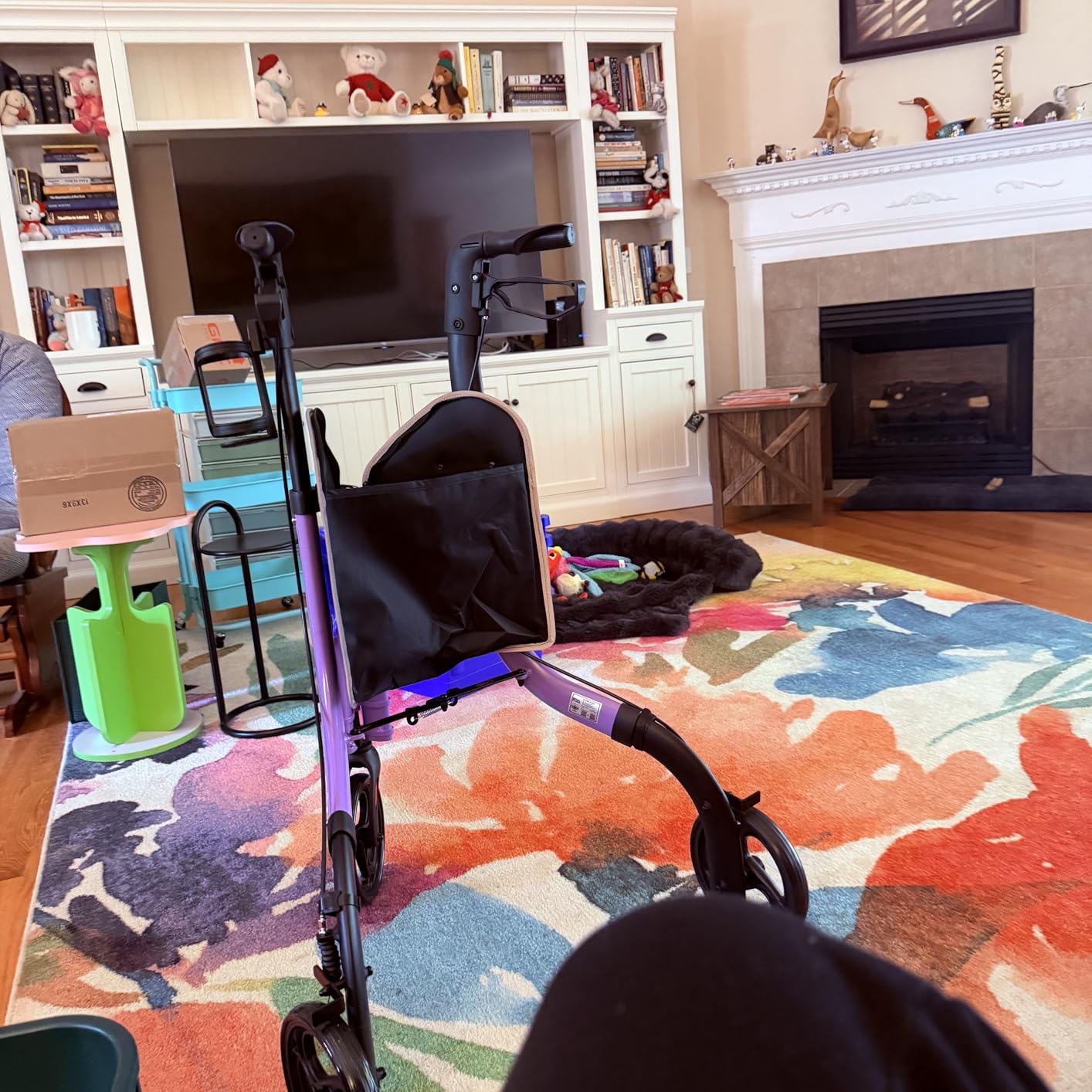
There is no seat, which is the significant limitation. For a user who tires after a short walk, this is the wrong frame.
The push-up brake with a push-down wheel lock is a simple, forgiving system, and the 260-pound rating sits in the middle of this group.
Accessories are the weak point. The cup holder and cane holder are reported to break or to hold nothing useful, so treat them as decorative rather than functional.
Reviewers also note that folding takes practice once the mechanism loosens, and package dimensions run 18.07 by 13.11 by 7.76 inches. Support is US-based with a one-year warranty plus a one-year extension.
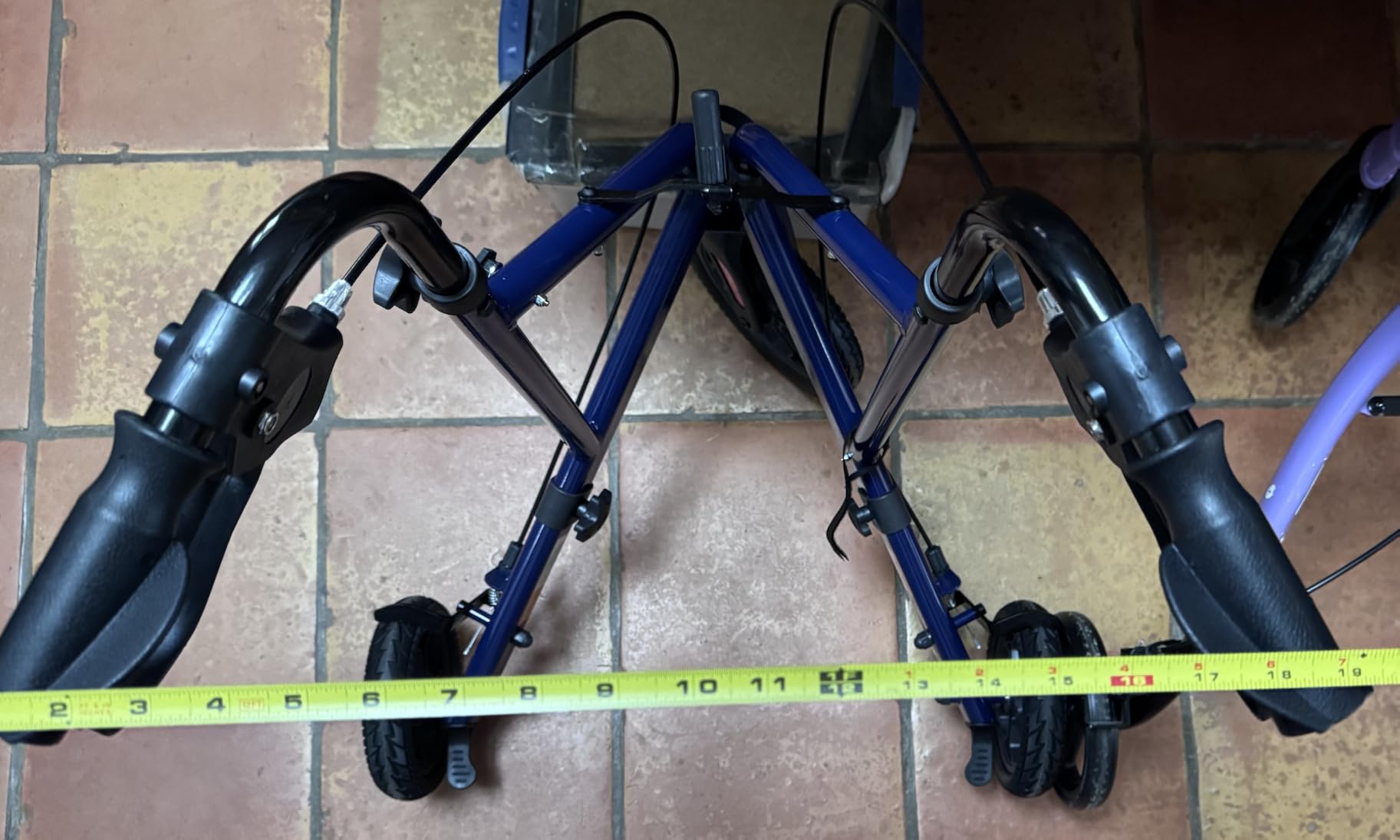
Why standing storage matters in a hallway
In a corridor that is already too narrow, a collapsed rollator lying across the floor is a trip hazard for everyone in the house, not only the person using it.
A frame that parks upright against a wall keeps the walking surface clear, which is the same goal the whole category exists to serve.
Where it falls short
No seat, first and foremost. Second, the accessories are not worth relying on, so plan to carry a bag instead.
If the user needs frequent rest points, choose a seated model even if it is heavier.
11. PLANETWALK Premium 3 Wheel Rollator: Most Proven Lightweight Frame
PLANETWALK Premium 3 Wheel Rollator Walker for Seniors – Ultra Lightweight Foldable Aluminum Mobility Aid with Height Adjustable Handle and 7.5 Inch Wheels, Brilliant Red
11-pound aluminum
27-inch overall width
Handles 32.7-36.7 inches
Folds to 12.5 inches wide
+ The Good
- Only 11 pounds
- Compact frame for narrow hallways and doorways
- Self-locking fold collapses in a second
- Ergonomic handle works for grip issues
- 7.5-inch wheels reduce indoor shake
- The Bad
- No seat
- Smaller 7.5-inch wheels are less suited to rough ground
- 253-pound capacity
With 2303 reviews at a 4.5 average, the PLANETWALK is the most proven lightweight frame in this roundup. That volume matters for a mobility aid, because it means the failure points are already documented rather than waiting to be discovered.
The self-locking quick-fold collapses in about a second and folds to a 12.5-inch width, narrow enough to stand in a hallway or a car footwell.
The ergonomic handle is designed for grip issues and arthritis, which is a real consideration for the arthritic hands that make rollator brakes difficult to use.
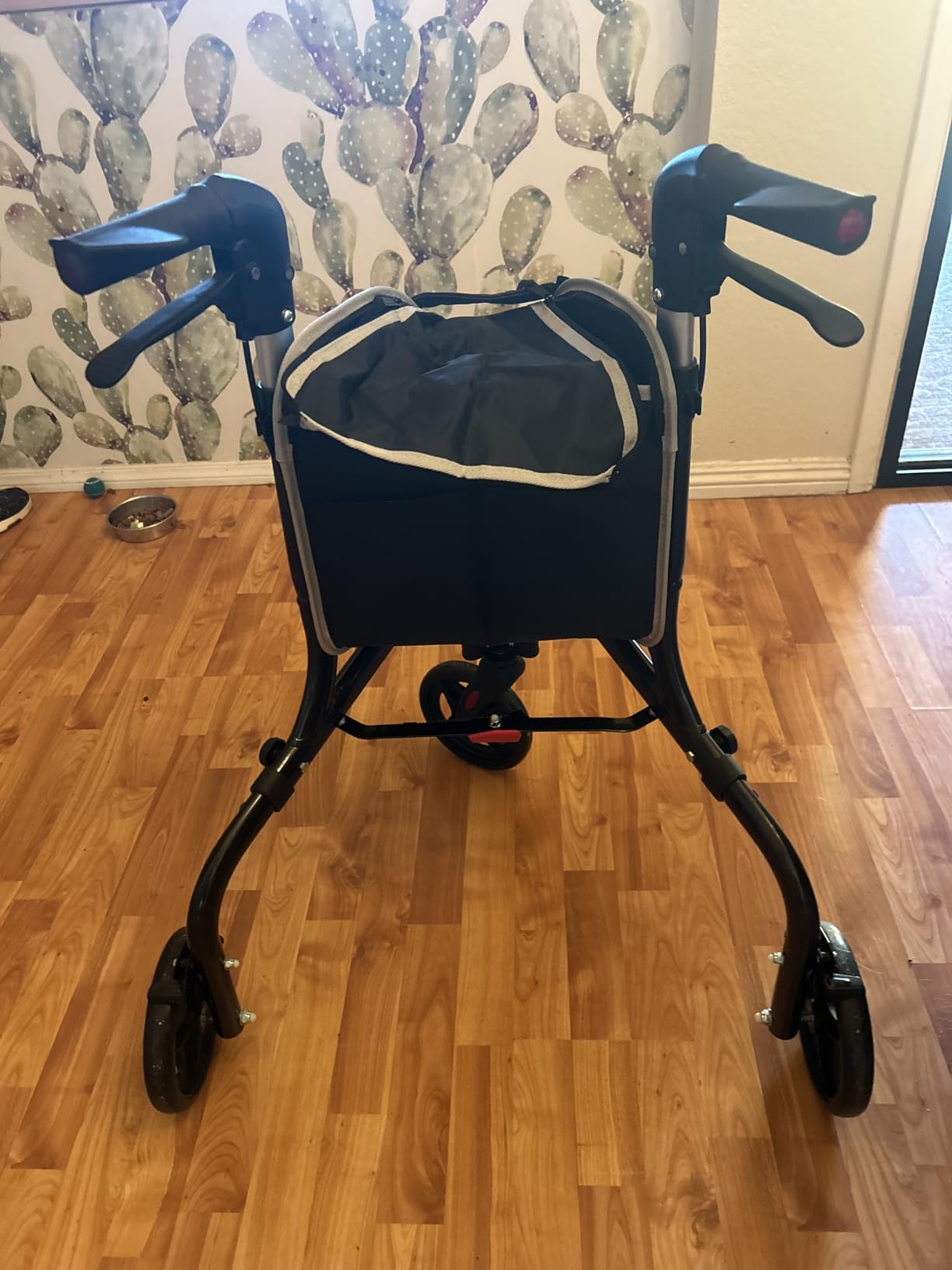
The overall width is 27 inches, which is narrow for a three-wheeler but still wider than a 22-inch door. This is a compact frame, not an ultra-slim one.
The three 7.5-inch rubber wheels with 360-degree front rotation take the edge off small indoor bumps, though they are the smallest wheels among the three-wheel models here.
Handles adjust in five levels from 32.7 to 36.7 inches for users between 4.8 and 5.8 feet, and the two-way parking brake includes downhill speed control.
Like the HOMLAND, there is no seat. The 253-pound rating is the lowest but one in the group, so larger users are excluded.
Overall size is 22.8 by 27 by 36.7 inches, folding to 32.7 by 12.5 inches.
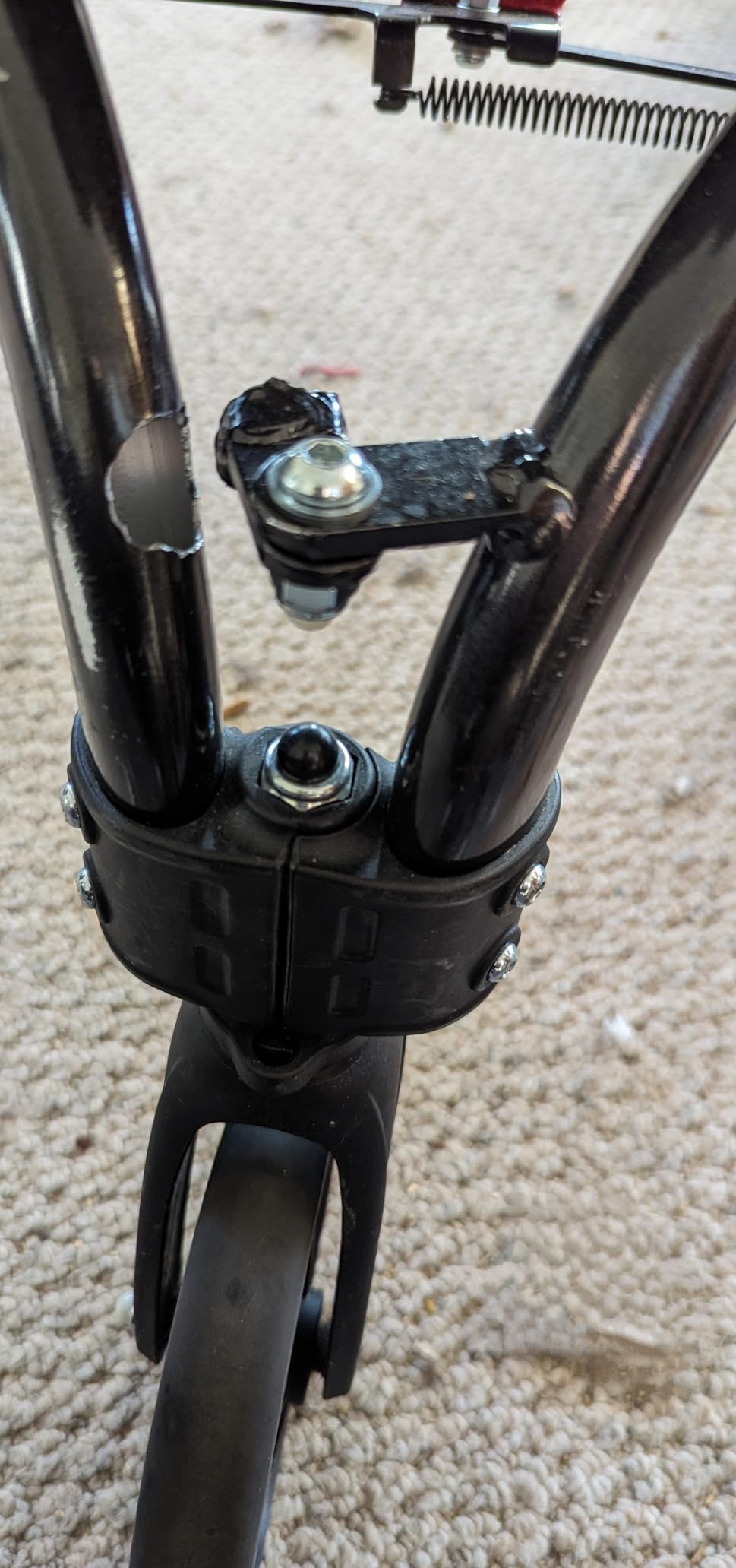
What a large review base tells you
Two thousand reviews surface the same strengths and the same three caveats, which is the most reliable signal available without handling the product yourself.
It also means parts and troubleshooting advice are easy to find, and owners frequently describe the frame staying rigid where lighter unbranded models develop play.
Why it is not our first pick
It has no seat, and at 27 inches it does not solve the narrowest doorway problem the way the 20-inch and 23.5-inch frames do.
It earns its place as the dependable lightweight all-rounder for a user who walks rather than sits.
12. soundfuse Lightweight 3 Wheel Walker: Lightest Frame in the Roundup
soundfuse Lightweight 3 Wheel Walkers for Seniors, Foldable Aluminum Frame
10.2-pound frame
8-inch wheels
Handles 34-38 inches
260-pound capacity
+ The Good
- Lightest frame here at 10.2 pounds
- Compact enough to move around furniture and through doors
- Well-designed basket carries a grocery bag phone and coffee
- Tool-free assembly and quick breakdown
- Stand-up posture from the taller handle range
- The Bad
- No seat for long walks
- Maximum handle height still too short for taller people
- Three-wheel design raises stability concerns on slopes
At 10.2 pounds this is the lightest frame in the roundup, and the extra weight in the tubing is a deliberate response to the structural complaints we see about budget three-wheelers. The frame is described as using thicker, wider tubing than typical at this weight.
That combination, light but not flimsy, is why it holds a 4.4 rating across 529 reviews despite having no seat.
Owners describe it as a lighter, easier-to-manoeuvre replacement for a bulky four-wheel rollator, particularly in small apartments and for loading into a car.
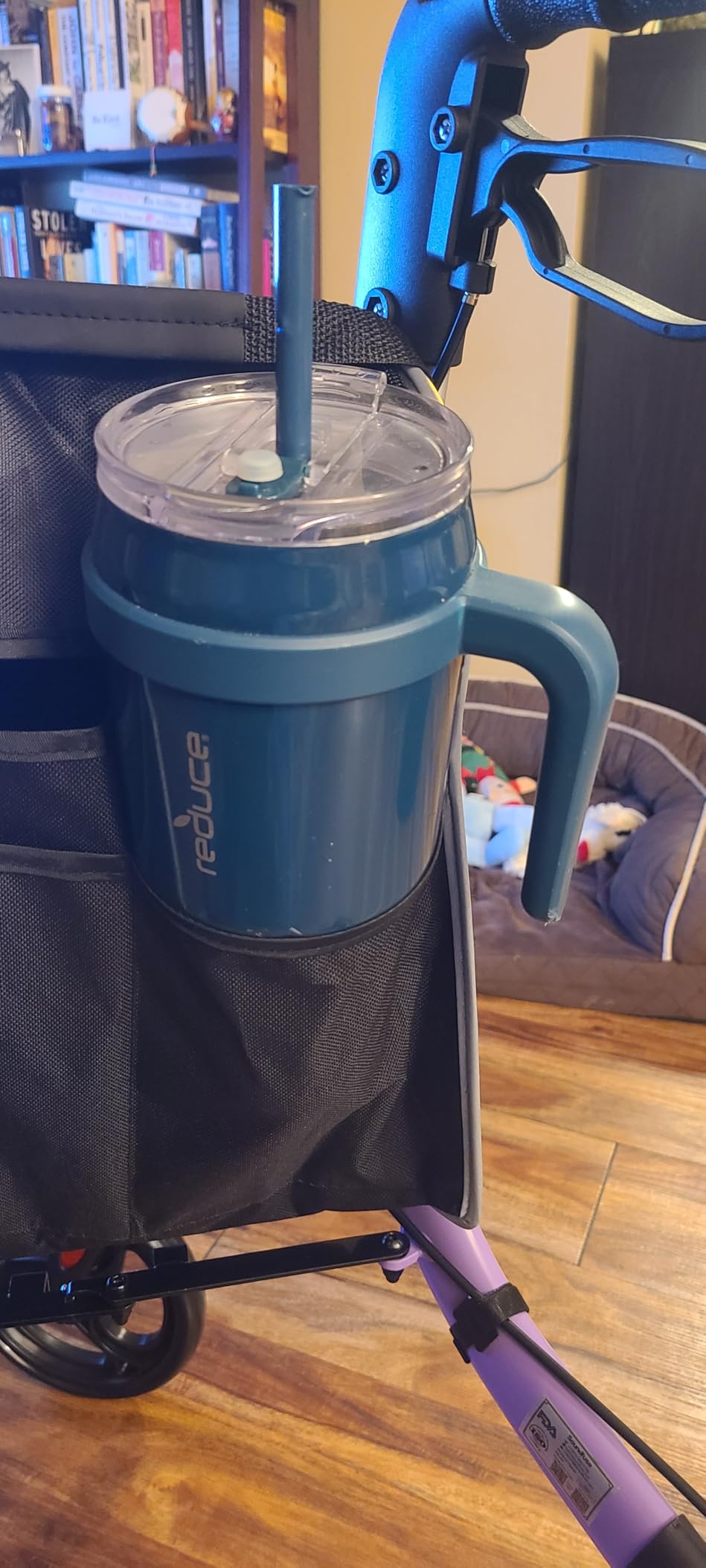
The basket is the feature reviewers mention most. It is designed to hold a grocery bag, a phone and a coffee at the same time, which is a level of thought that most budget frames never reach.
The dual-brake system works as a squeeze to slow and a push down to lock, and the 8-inch anti-slip wheels handle indoor flooring well.
Handles adjust in five levels from 34 to 38 inches for users between 4 foot 8 inches and 6 foot 1 inch, and the stand-up posture from that range is genuinely useful over long hallways.
There is no seat, so it is limited to shorter outings. Some taller users find the 38-inch maximum still too short, and the three-wheel layout raises stability questions on slopes and curbs.
Package dimensions run 25.55 by 18.15 by 5.9 inches, and support is US-based with an extended service plan.
When the lowest weight is the priority
Ten pounds means a genuinely one-hand lift, which matters for anyone who loads a rollator into a car without help or moves between rooms on their own.
The wider tubing also answers the wobble complaints that appear in mobility forums about lighter unbranded frames, which is why we rate it above its weight class.
Where you give something up
No seat, and a maximum handle height of 38 inches that still leaves the tallest users slightly crouched.
On slopes and curbs, steer slowly. Three wheels reward balance control rather than forgiving it.
How to Measure Your Hallway and Doorway Before You Buy
Getting this wrong is the single most common reason rollators get returned. Ten minutes with a tape measure removes the guesswork entirely.
Measure the narrowest doorway. Measure at three heights, floor, waist and shoulder. Door frames are often not parallel, and the binding may sit proud at one side.
Measure the door fully open. You need the clear opening, not the slab. Check whether the door swings into the hallway, because a door that opens against the wall halves the usable width.
Measure the hallway. Door-to-door, at handrail height, not at the floor where skirting boards narrow the gap.
Subtract your rollator width. Clear opening minus overall width equals your margin. Under one inch total, meaning half an inch each side, is a squeeze. Two inches is comfortable.
Check the route end to end. Include any raised threshold strip, and measure any bathroom doorway twice, since it is usually the tightest on the route.
Many residential bathroom doors measure 22 inches. Frames in this roundup range from 20 inches to 28 inches, which tells you immediately which ones will pass and which will not.
Note that package dimensions and assembled width are different numbers. A product listing 18 inches in its package can still assemble to 26 inches, so check the assembled overall width before you buy.
Narrow Rollator Buying Guide: What Actually Matters in Tight Spaces
1. Overall width beats every other spec
Width is the specification that ends the purchase. A rollator that does not clear the doorway cannot be used, however well it performs elsewhere. Measure first, then shop.
2. Frame width and seat width are different numbers
This is the trade-off almost no guide mentions. A narrow frame has to take its width from somewhere, and often it comes out of hip clearance. A 20-inch frame with a 12-inch seat is a snug sit for anyone larger, and reviewers on mobility forums describe turning sideways to sit on exactly these models.
So check the seat width, not just the overall width. If the user is broad through the hips, a 23.5-inch frame with a proper seat may serve them better than a 20-inch frame that barely clears the door.
3. Three wheels or four?
Three-wheel models turn in a much smaller circle because the whole frame pivots, which is why they navigate tight hallways and kitchens so well. Four wheels keep the frame planted and are far safer for anyone with real balance problems, someone who pushes hard on the handles, or someone who walks with a caretaker.
The trade-off is honest: a tri-wheeler is more maneuverable and less stable. There is no model here that is both.
4. Wheel size decides indoor comfort
Smaller wheels, 6 to 7.5 inches, are narrower and quieter on carpet. Larger wheels, 8 to 10 inches, roll over thresholds, grout lines and rug edges instead of catching on them.
Catching is worse in a narrow frame because there is less margin to absorb it. If your route includes even one raised threshold, prefer 8-inch wheels or larger.
5. Handle height must suit the body, not the frame
The handle should sit level with your wrist crease when you stand with arms relaxed at your sides. Too high and you lean forward, which widens your turning circle in a hallway. Too low and you hunch, which tires your shoulders.
Petite frames top out around 30 to 33 inches, and that low ceiling is a genuine feature for shorter users rather than a compromise.
6. Brake feel matters more than brake specs
Loop brakes require a gentle squeeze, while cable brakes give more progressive control on slopes. The Drive Medical’s three-mode system with a slowdown brake is the most capable here, and it is also the stiffest for arthritic hands.
Test the brake with the strength you actually have, not the strength you wish you had.
7. The fold is a daily operation, so judge it carefully
Most rollators use one of two systems. A side-fold collapses the frame inward and stays upright. A cross-fold collapses the frame vertically, and that narrower folded width is what lets a rollator stand in a hallway.
The Stander EZ Fold-N-Go system folds to a 10 by 11 inch footprint, which is the smallest package in this roundup. The HOMLAND two-side fold also stands upright when collapsed.
Check whether the storage bag has to be emptied before folding, and whether the seat must be lifted. Both are common and both are annoying daily.
8. Weight decides whether it gets used
Anything under about 12 pounds lifts one-handed. Between 12 and 15 pounds is a manageable two-hand lift. Above 15 pounds, plan for help.
Our reviewers consistently praise the sub-11-pound frames for the simple reason that a heavy rollator stays in the closet.
9. Capacity needs a safety margin
Pick a frame rated well above the user’s actual weight rather than just above it. Most frames here sit at 250 pounds, the Stander and Vive steel models reach 300, and the Drive Medical Nitro Sprint is the only one at 350.
That last figure is why the Nitro matters for larger users, and it is worth checking before ruling out the whole category.
10. Flooring and surface
Low-pile carpet and hardwood are the easiest. Thick carpet, gravel, grass, thresholds and ramps are not. If the route leaves the house regularly, our all-terrain rollator picks handle larger wheels and suspension better than anything in this roundup.
11. Medicare and insurance coverage
Medicare Part B can cover a rollator walker as durable medical equipment when a doctor documents a mobility limitation and the device meets Medicare’s definition. Narrow rollators are not excluded by width.
The practical route is a supplier contracted with Medicare, a prescription, and documentation of why the narrower frame is medically necessary. Private plans vary, and Medicaid rules differ by state, so confirm coverage before ordering.
Frequently Asked Questions
What is the narrowest rollator walker?
The Lumex Walkabout Junior measures 20 inches at its widest point, making it the narrowest frame in our roundup. Most other narrow rollators fall between 23.5 and 28 inches overall, so the difference is what decides whether the rollator passes a 22-inch residential bathroom door.
How wide should a rollator be to fit through a doorway?
Measure the clear opening of your narrowest door with the door fully open, then subtract the rollator’s overall width. A margin of one inch total is a squeeze, while two inches or more is comfortable. Most residential bathroom doors measure around 22 inches, so a frame of 20 to 22 inches is the safest target.
Is a 3 wheel rollator harder to use than a 4 wheel rollator?
A three-wheel rollator turns in a much smaller circle because the whole frame pivots, which makes it better in tight hallways and small kitchens. It is less stable when standing still or pushing hard on the handles, so a four-wheel model is usually safer for users with significant balance problems.
What is the difference between a rolling walker and a rollator walker?
A rolling walker has two wheels and no seat, so it must be lifted or slid forward with each step. A rollator has three or four wheels, hand brakes, and usually a seat and storage basket, so it rolls continuously under your weight without being lifted.
What kind of walker will Medicare pay for?
Medicare Part B can cover a rollator walker as durable medical equipment when a doctor documents a mobility limitation and the device meets Medicare’s definition of durable medical equipment. Narrow frames are not excluded by width, but the supplier must be Medicare-contracted and documentation of medical necessity is usually required.
Conclusion: The Best Narrow Rollators for Tight Hallways in 2026
The best narrow rollators for tight hallways depend entirely on your narrowest opening. For a 20-inch door, the Lumex Walkabout Junior is the only frame here that passes with margin to spare. For a 22 to 24 inch door with a seat, the Vive steel rollator at 23.5 inches is the balanced pick, and the Drive Medical Nitro Sprint takes the premium slot with its 350-pound capacity and 10-inch casters. For a user who walks rather than sits, the 10 to 11 pound three-wheelers are the lightest options tested.
Measure your tightest doorway before ordering, check the seat width against the user’s hips, and buy the narrowest frame that still seats them comfortably. That last point is the one most guides leave out, and it is the one that decides whether a rollator gets used every day.