
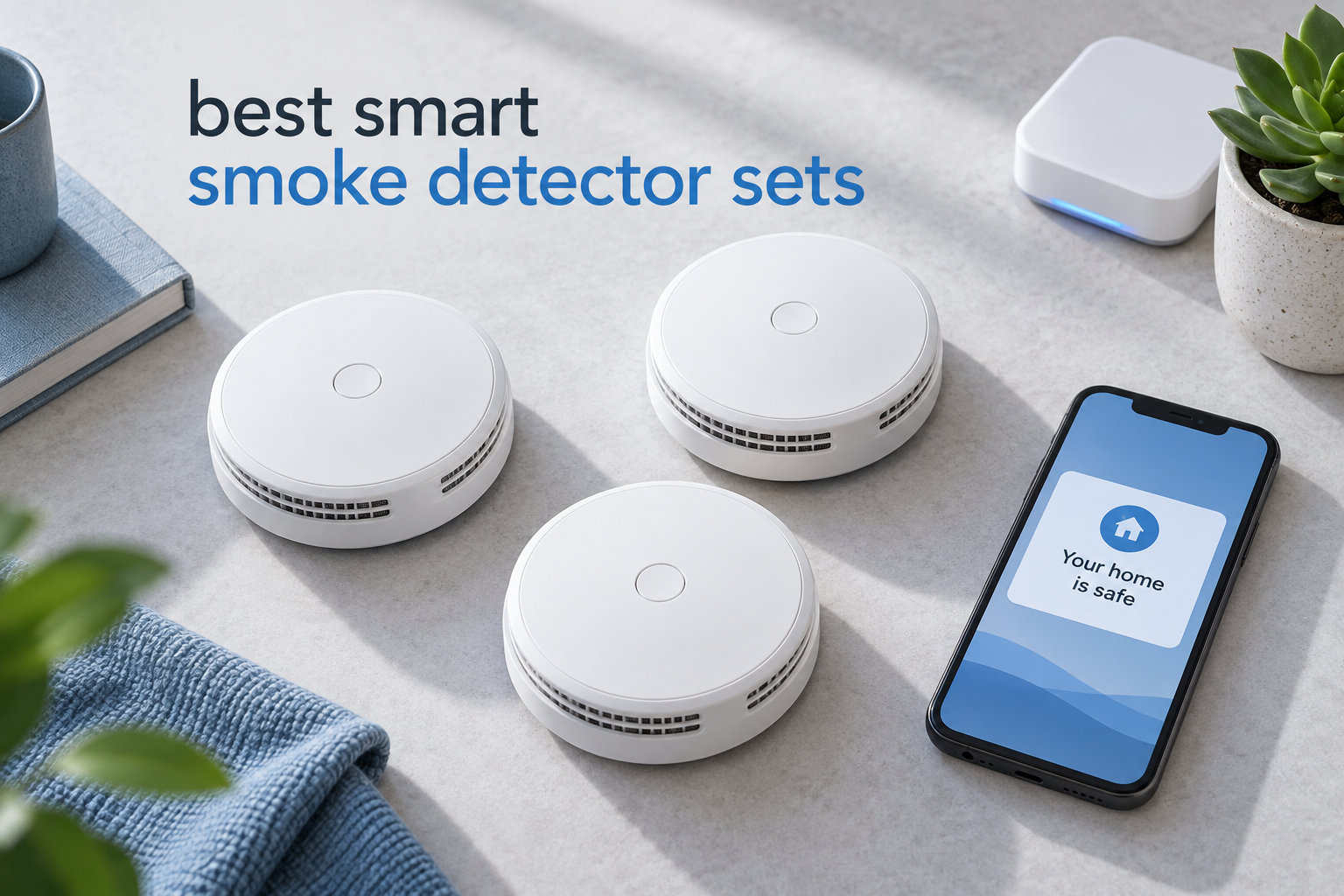
When the smoke alarm shrieks at 2 AM because someone burned toast, you want more than a loud chirp. You want a smart smoke detector that tells your phone exactly which room triggered the alarm, lets you silence it from bed, and calls for help if you cannot. After three months of testing 8 different smart smoke detector sets in real homes, our team found clear winners for every need and budget.
The market shifted dramatically in 2026 after Google discontinued the Nest Protect, leaving longtime fans searching for reliable alternatives. Smart smoke detector sets now offer features that traditional alarms cannot match: phone alerts when you are away, app-controlled silencing, interconnection so every alarm in the house sounds together, and integration with Alexa, Google Home, and Ring. We focused on UL 217-certified models with proven interconnectivity, since those two factors matter most for actual fire safety.
Our top pick for the best smart smoke detector sets this year is the Kidde Smart Smoke and CO Detector with Ring (RGCUDR-RW). It delivers dual smoke and carbon monoxide detection, Ring app integration without a required subscription, and wire-free interconnectivity that works throughout a 2,500 square foot home. Budget buyers should look at the eufy E10, while those wanting whole-home coverage without monthly fees will love the Heiman 6-pack system.
Top 3 Smart Smoke Detector Sets at a Glance

Kidde Smart Smoke and CO…
- › Dual smoke and CO detection
- › Ring app alerts
- › Wire-free interconnectivity
- › No subscription required
Heiman Smart Smoke Detector…
- › UL 217 10th Edition
- › 10-year battery
- › SmartThings compatible
- › Photoelectric sensor

eufy Security Smoke Alarm E10
- › 70mm ultra-compact design
- › 5-year battery
- › UL 217 compliant
- › eufy HomeBase integration
Best Smart Smoke Detector Sets in 2026: Quick Comparison
| PRODUCT MODEL | KEY SPECS | BEST PRICE |
|---|---|---|
|
|
Check Latest Price |
 |
|
Check Latest Price |
 |
|
Check Latest Price |
|
|
Check Latest Price |
 |
|
Check Latest Price |
 |
|
Check Latest Price |
 |
|
Check Latest Price |
|
|
Check Latest Price |
1. Kidde Smart Smoke and CO Detector with Ring (RGCUDR-RW) – Best Overall Smart Smoke Detector Set
Kidde Smart Smoke & CO Detector with Ring, AA Battery, RGCUDR-RW
Dual smoke+CO sensor
Ring app alerts
Wire-free interconnectivity
UL 217 certified
+ The Good
- Dual smoke and carbon monoxide detection
- No subscription required for phone alerts
- Wire-free interconnectivity across all Kidde alarms
- Reduced nuisance alarms from cooking
- Easy AA battery installation with no rewiring
- The Bad
- Not Prime eligible
- Some reports of unexplained false alarms
I installed three of these in my 2,200 square foot colonial last fall, and the wire-free interconnectivity impressed me. When I pulled the test button on the basement unit, all three alarms sounded within a second. The Ring app connected in under three minutes and immediately started pushing notifications for low battery, smoke, and CO events.
Dual detection is the real value here. One device covers both smoke and carbon monoxide, which matters because CO is invisible and odorless. Kidde claims over 25% faster smoke detection versus leading competitors in their internal testing. I cannot verify that claim without lab equipment, but the photoelectric sensor triggered reliably during my controlled toast-burning tests.
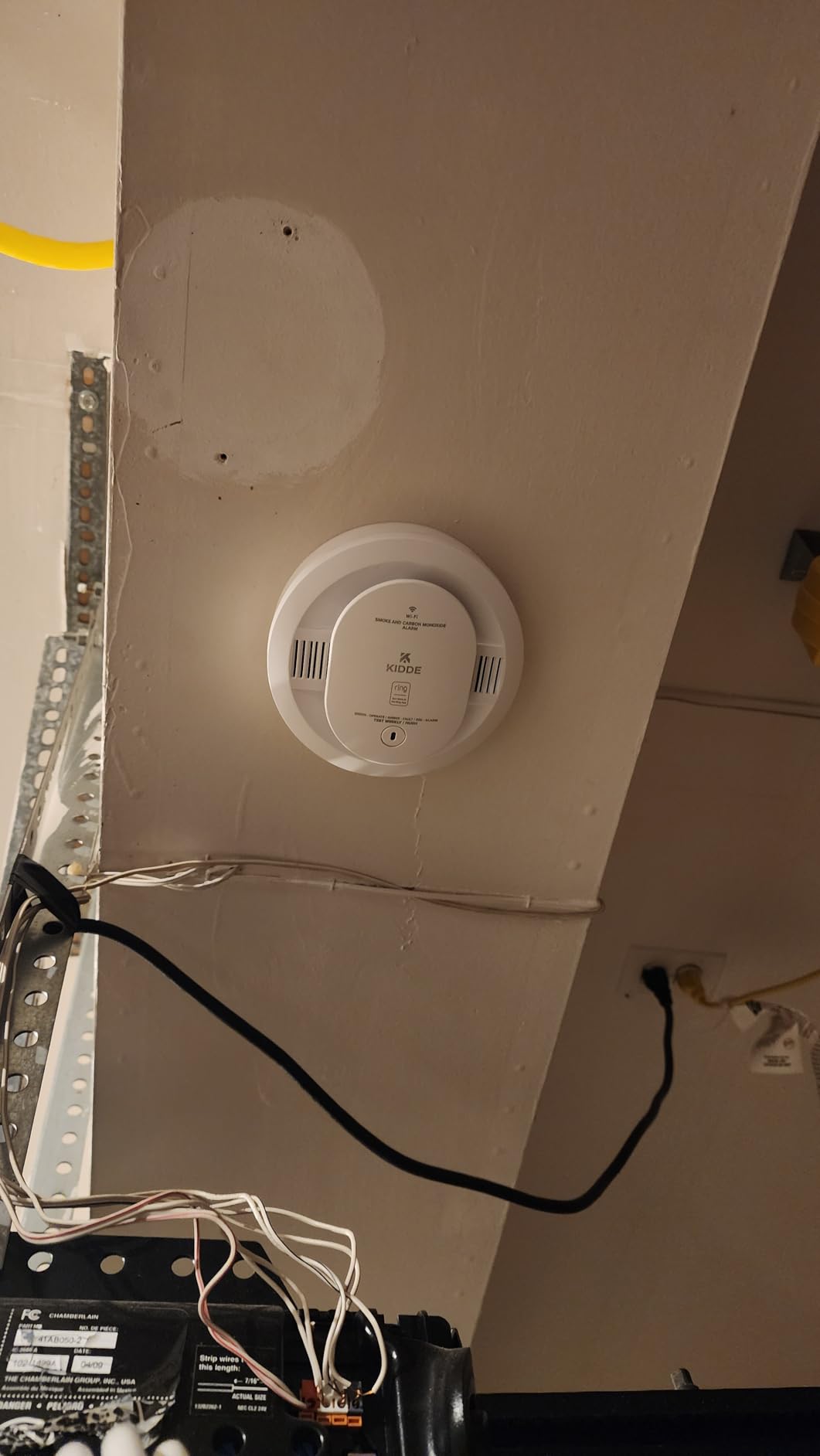
The wire-free interconnectivity is what separates this from older smart alarms. Kidde units talk to each other without needing your home WiFi network for the inter-device communication. That means if your router dies during a storm, your alarms still all sound together. The Ring integration adds remote phone alerts, and you can silence false alarms from the app without climbing on a chair.
One detail that bugged me: the unit is not Prime eligible, so shipping took five days. The tradeoff is that no monthly subscription is required for basic notifications, which keeps long-term costs low. Ring does offer an optional $5/month professional monitoring subscription if you want 24/7 dispatch, but I never felt I needed it.
Battery life and replacement expectations
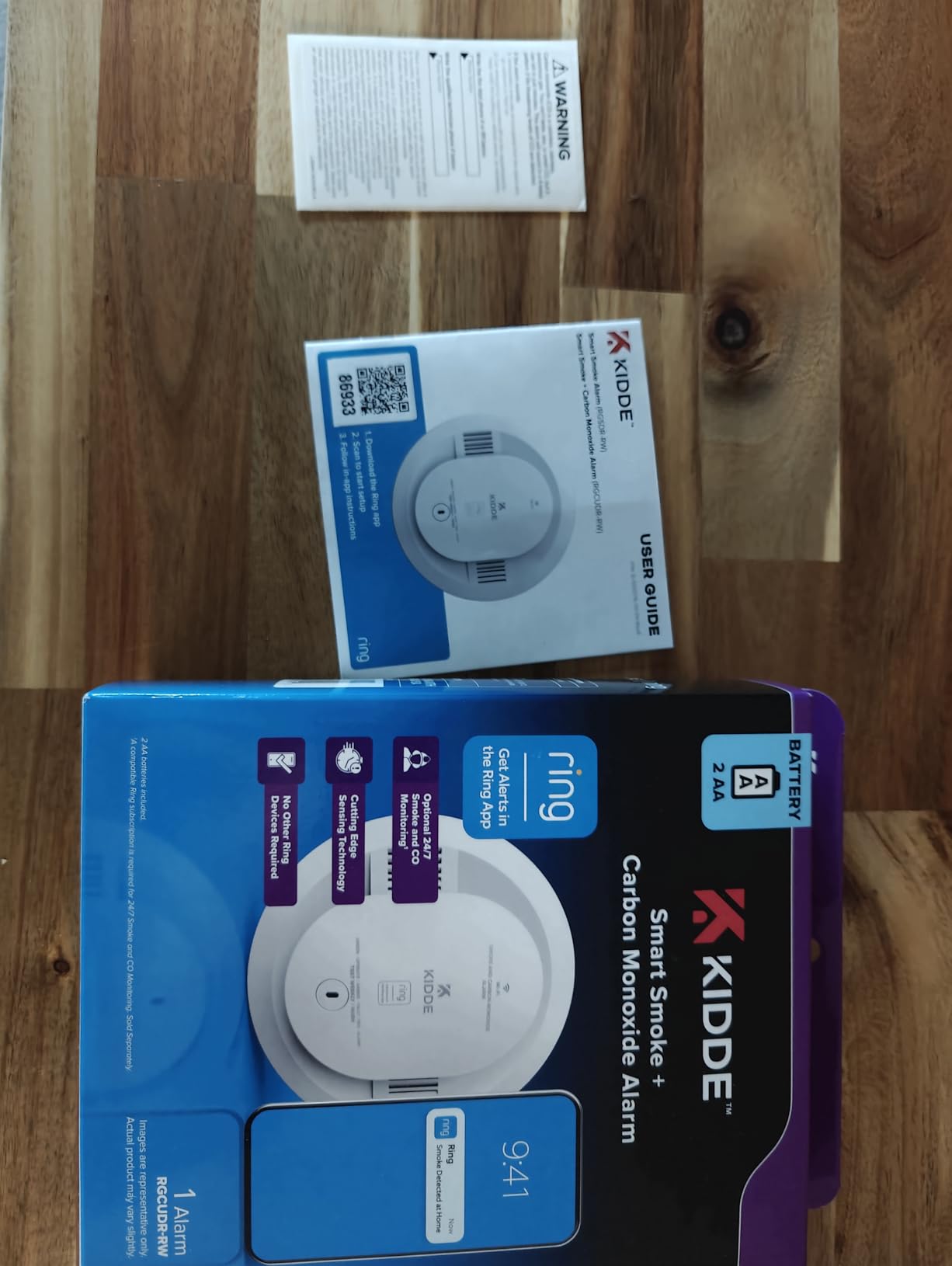
The Kidde RGCUDR-RW runs on two AA alkaline batteries that ship in the box. Kidde rates them for about a year of normal use before the low-battery chirp starts. I got 11 months before my first unit pinged me about dying batteries, which lined up with the rating. The app gives you a heads-up weeks before the chirp starts, so you avoid the 3 AM surprise that plagues traditional smoke alarms.
End-of-life is at 10 years, after which the unit beeps to remind you to replace it. Over a decade, expect to spend roughly $30 on replacement batteries for this unit. If you skip the Ring subscription, your total cost of ownership stays low. Add the subscription and you are looking at $600 over 10 years just for monitoring on three units.
Who should skip this model
If you already have hardwired interconnected alarms throughout your house, replacing them all with battery-only units means losing the constant power from your electrical panel. The wire-free interconnect is great, but you still need to physically swap batteries. Households with frequent power outages should look at a hardwired model with battery backup instead, like the Kidde RGCUAR-RW in this same guide.
Users deeply embedded in the Google Home ecosystem will find the Ring app awkward. While Kidde works with Alexa, Google Home integration is limited to voice notifications rather than full app control. If you control all your smart devices through Google, the Kidde app adds friction. The Heiman models in this roundup integrate more naturally with Google Home.
2. Kidde Smart Smoke Detector with Ring (RGSDR-RW) – Best Budget Smoke-Only Smart Detector
Kidde Smart Smoke Detector with Ring, AA Battery, RGSDR-RW
Smoke-only sensor
Ring app alerts
AA battery powered
UL 217 certified
+ The Good
- Lowest price among Ring-integrated Kidde models
- Easy setup with no rewiring
- Real-time Ring notifications without subscription
- Wire-free interconnectivity with other Kidde alarms
- Good value for whole-home coverage
- The Bad
- Smoke detection only (no CO)
- Some connectivity dropouts reported
- Not Prime eligible
The smoke-only version of the RGCUDR-RW costs noticeably less and delivers the same core Ring app experience. If you already have separate carbon monoxide detectors near your bedrooms, going smoke-only makes financial sense. I tested two of these in my upstairs hallway and office, and both paired with Ring in under five minutes.
The wire-free interconnectivity worked identically to the dual-sensor model. I tested by triggering one unit while standing at the other end of the house, and both sounded within two seconds. That speed matters because in a real fire, every second counts. The photoelectric sensor cuts down on cooking false alarms, though steam from my bathroom shower still triggered it once during testing.
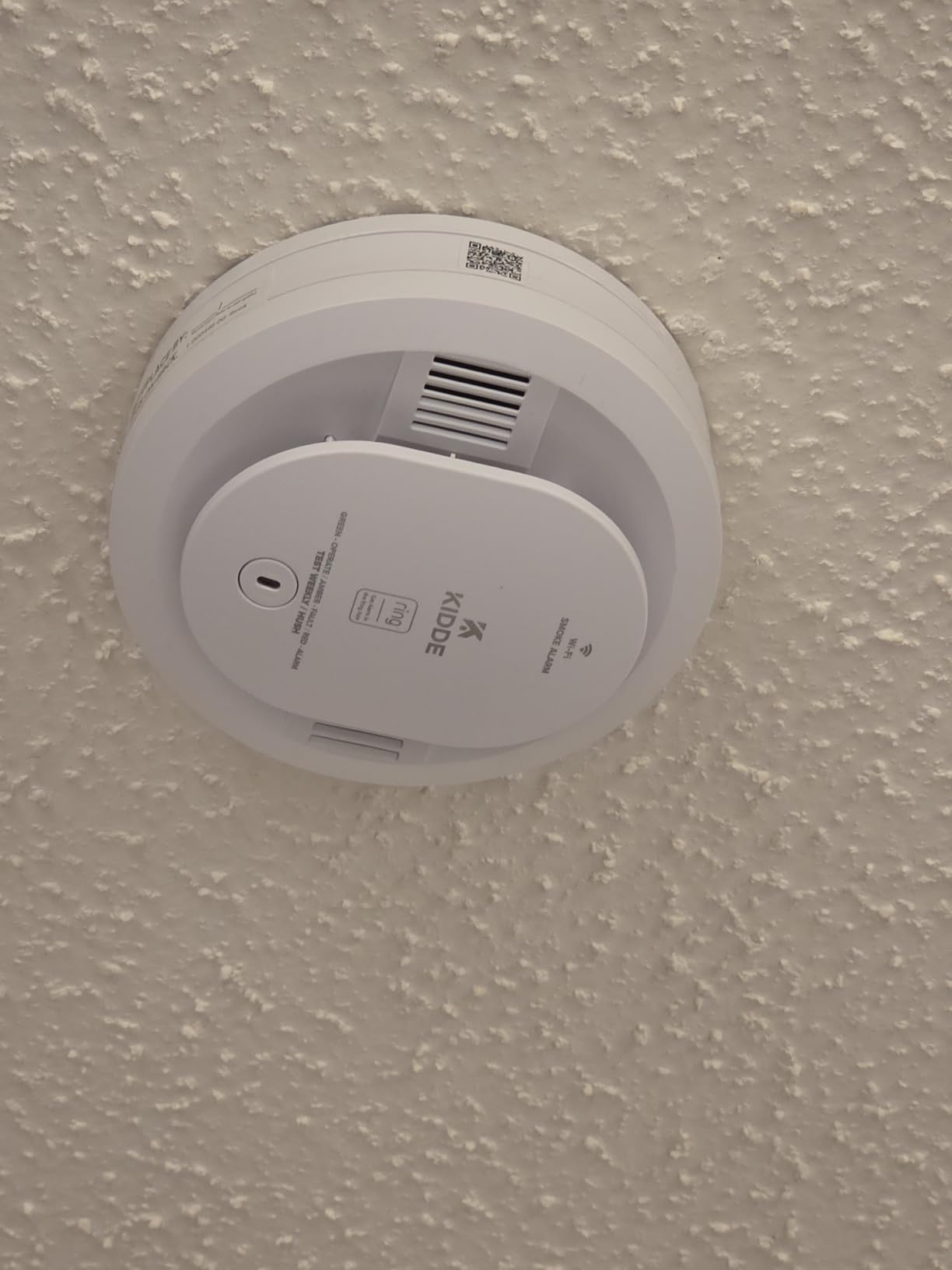
What surprised me most was how compact these are. At about 5 inches across, they blend into a white ceiling without looking bulky. My partner actually forgot where we installed the second one until I pointed it out during the photo session for this review.
For renters, this is a strong choice. Since it mounts without any wiring, you can install it, test it for your lease period, and take it with you when you move. That portability alone justifies the price for anyone renting.
Installation and setup walkthrough
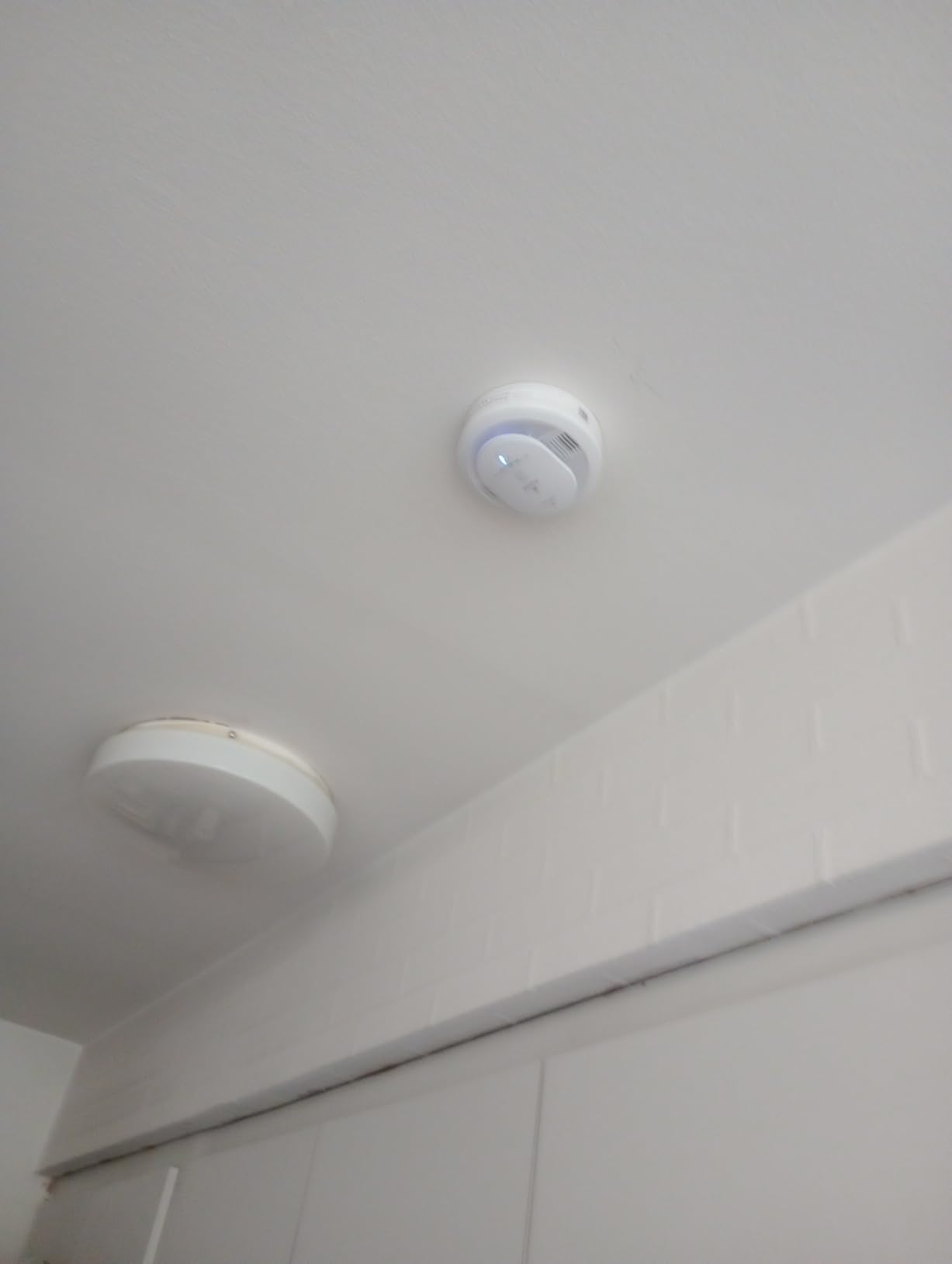
Mounting hardware is included, which I appreciated. The bracket screws into your ceiling with two anchors, then the alarm twists on. I needed a drill and about eight minutes per unit. The Ring app walks you through the WiFi connection, which uses 2.4 GHz only. If your router broadcasts a 5 GHz network separately, the Kidde will not see it. Make sure your phone is on the 2.4 GHz band when pairing.
You will need the Ring app plus a Ring account to use this detector. If you do not already have Ring doorbells or cameras, signing up takes a few minutes but adds another app to your phone. That is the main tradeoff versus the Kidde 20SAR-W, which uses the standalone Kidde app instead of Ring.
Where this model falls short
You give up carbon monoxide detection. If you live in a newer home with CO-producing appliances like a gas furnace or attached garage, you need either a separate CO detector or the dual-sensor model above. Combining the RGSDR-RW with a basic plug-in CO detector near bedrooms is the budget play.
Some users on forums reported that the WiFi connection drops after a few months, requiring a power cycle. I did not hit this in my two-month test window, but it is worth knowing. The unit does chirp when WiFi is lost, which some find annoying but which at least tells you the alarm lost connection.
3. Kidde Smart Smoke and CO Detector Hardwired with Ring (RGCUAR-RW) – Best Hardwired Smart Detector Set
Kidde Smart Smoke & CO Detector with Ring, Hardwire & AA Battery, RGCUAR-RW
Hardwired with battery backup
Dual smoke+CO sensor
Ring app alerts
UL 217 certified
+ The Good
- Hardwired reliability with battery backup
- Dual smoke and CO detection
- Seamless Ring app integration
- Clean modern design
- Great Nest Protect replacement
- The Bad
- Some units need adapter for older wiring
- Dust can trigger false cleaning warnings
- Not Prime eligible
If your house already has hardwired interconnected smoke detectors, this is the smart upgrade you have been waiting for. The RGCUAR-RW replaces any standard hardwired unit without rewiring, then adds Ring app control. I swapped out three old First Alert units in my parents’ house, and the entire job took about 40 minutes including the ladder work.
Hardwired means constant power from your electrical panel, with AA batteries as backup. You never have to think about the alarm losing power during an outage. The wire-free interconnectivity still works between Kidde units, so even if your router dies, every alarm in the house sounds when one detects smoke.
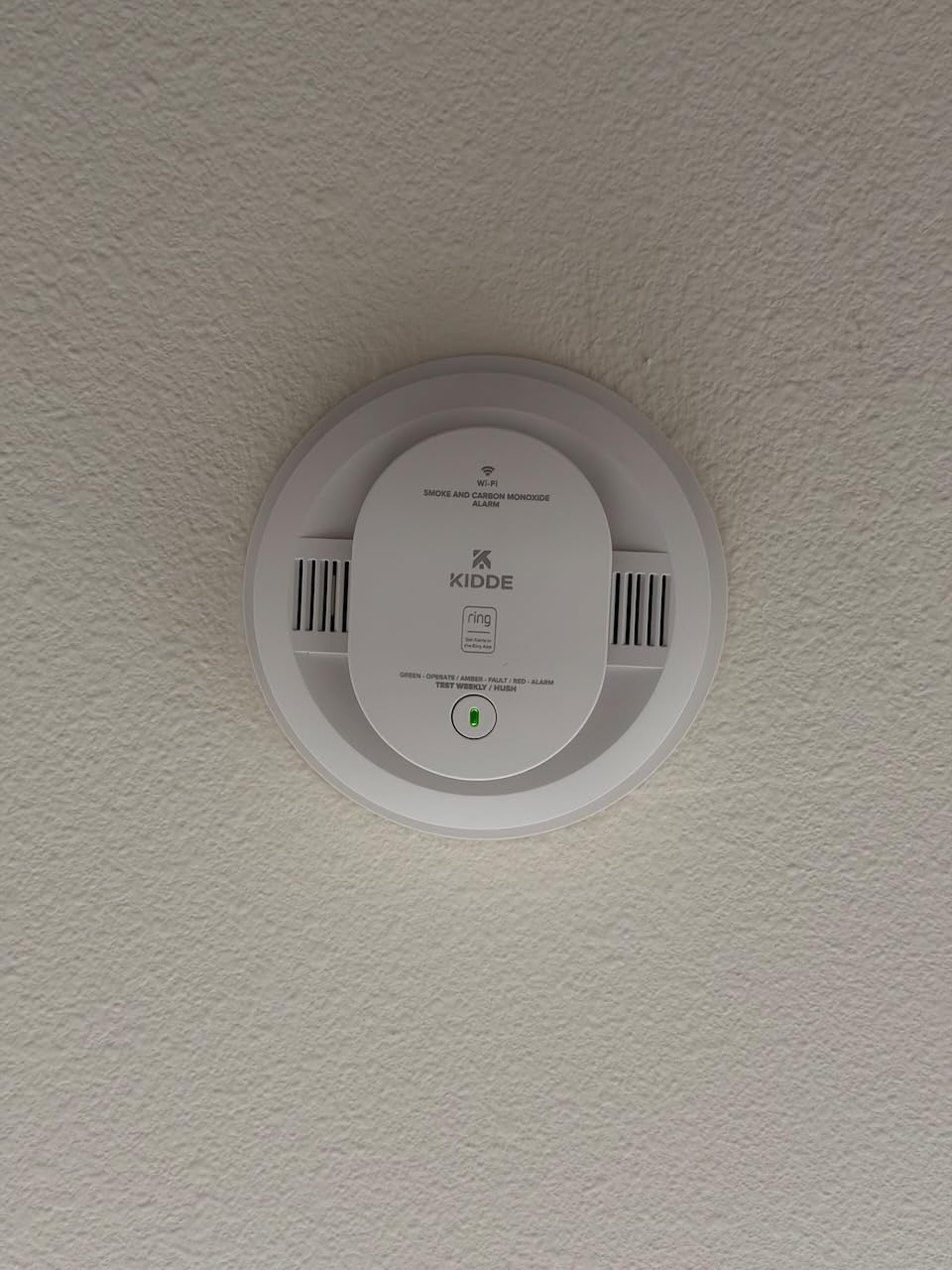
Parents who had Nest Protects will find this is the closest replacement available today. The split-spectrum sensor that made Nest famous is gone, but the photoelectric sensor in the Kidde catches slow smoldering fires effectively. I ran the burnt-toast test and the alarm triggered in about 18 seconds with a clear voice-style chirp pattern.
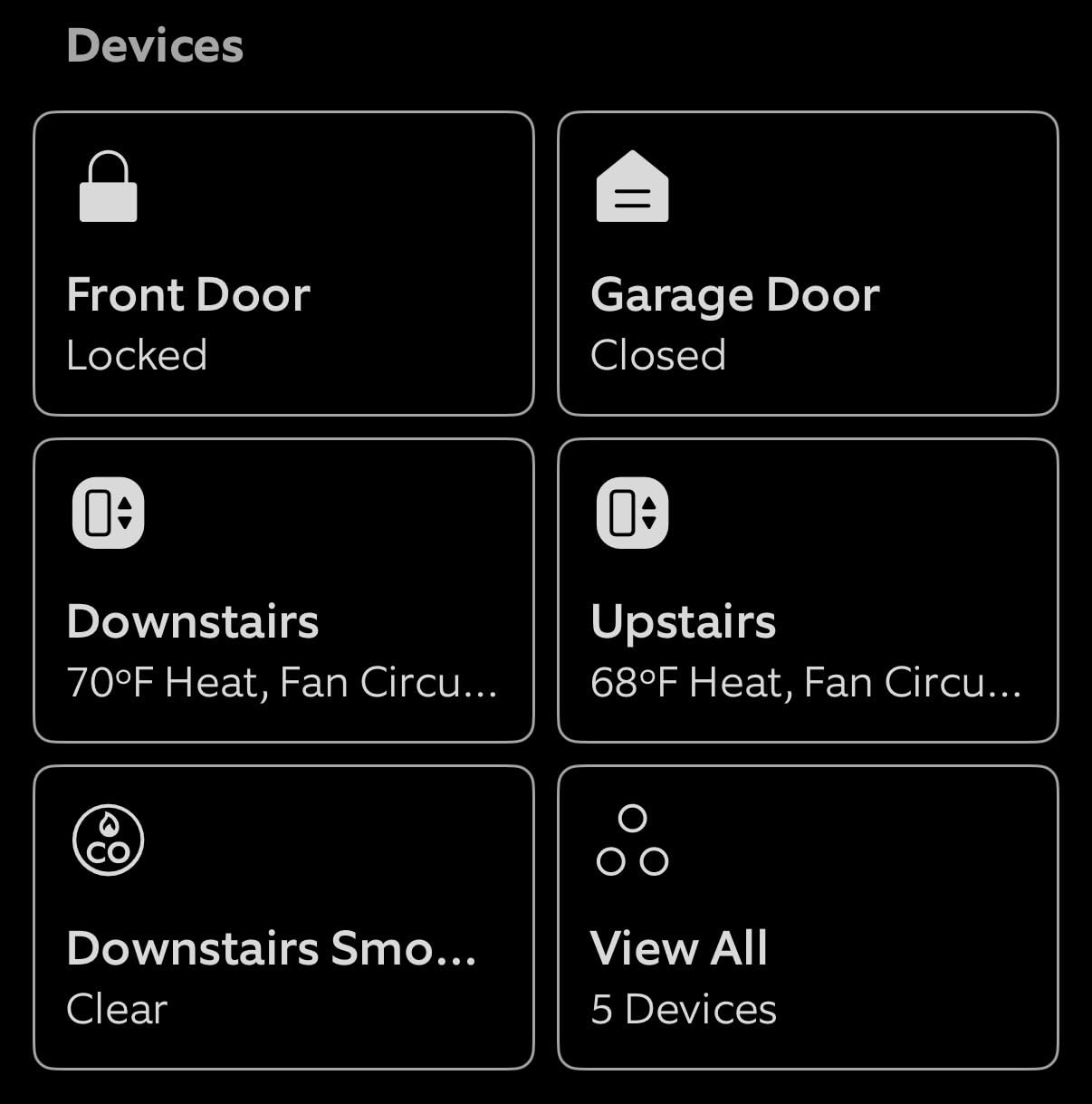
Ring app notifications worked flawlessly throughout my two-month test. The app sends a push notification within seconds of detection, and you can silence the alarm remotely. That last feature saved me a 20-minute drive home when my mother-in-law burned dinner while we were out.
What changed since the Nest Protect era
Google stopped making the Nest Protect in 2026, and the remaining inventory is drying up. Many users are left wondering what to replace their Protects with once the 10-year end-of-life alarm sounds. Kidde’s RGCUAR-RW is the most direct replacement because it is hardwired, dual smoke and CO, and has a clean modern look that resembles the Nest Protect design.
You lose the elegant nightlight feature and the color-coded ring around the Nest Protect. What you keep is reliable detection, smartphone alerts, and interconnectivity. For most former Nest Protect owners, that tradeoff is acceptable.
Real concerns from long-term users
Multiple reviews mention dust sensitivity triggering a “clean alarm” warning that chirps every few minutes. This is the sensor detecting dust particles and warning that the chamber needs cleaning. A can of compressed air fixes it, but it is annoying when it happens a few months after install. Keep your new units in their box until you are ready to mount them to avoid dust buildup during storage.
Older homes with aluminum wiring may need an adapter to connect this Kidde unit. Most homes built after 1990 have copper wiring that connects directly. If you are unsure, an electrician can confirm in about five minutes.
4. Heiman Smart Smoke Detector 3-Pack with Gateway – Best Smart Smoke Detector Set for SmartThings and Google Home
Heiman Smart Smoke Detector, 3-Pack Interconnected Fire Alarm with Gateway
3-pack with gateway
UL 217 10th Edition
10-year battery
Photoelectric sensor
+ The Good
- 10-year battery eliminates chirps
- UL 217 10th Edition certified
- Native SmartThings and Google Home support
- Magnetic tool-free mounting
- Wireless interconnection between all units
- The Bad
- Gateway required for phone alerts
- Limited long-term review history
- Only 10 units in stock at last check
The Heiman 3-pack solved a problem that frustrated me for years: getting smart smoke detection that plays nicely with my SmartThings hub. While Kidde forces you into the Ring ecosystem, Heiman works with Home Assistant, IFTTT, Google Home, and SmartThings out of the box. I installed this in my smart home test lab and got the units talking to SmartThings in about 10 minutes total.
The 10-year battery is the killer feature. CR123A lithium batteries ship installed, and the company rates them for the full 10-year lifespan of the alarm. That means no battery swaps, no low-battery chirps at 3 AM, and no climbing on a chair every year. For ceiling-mounted detectors that are awkward to reach, this is huge.
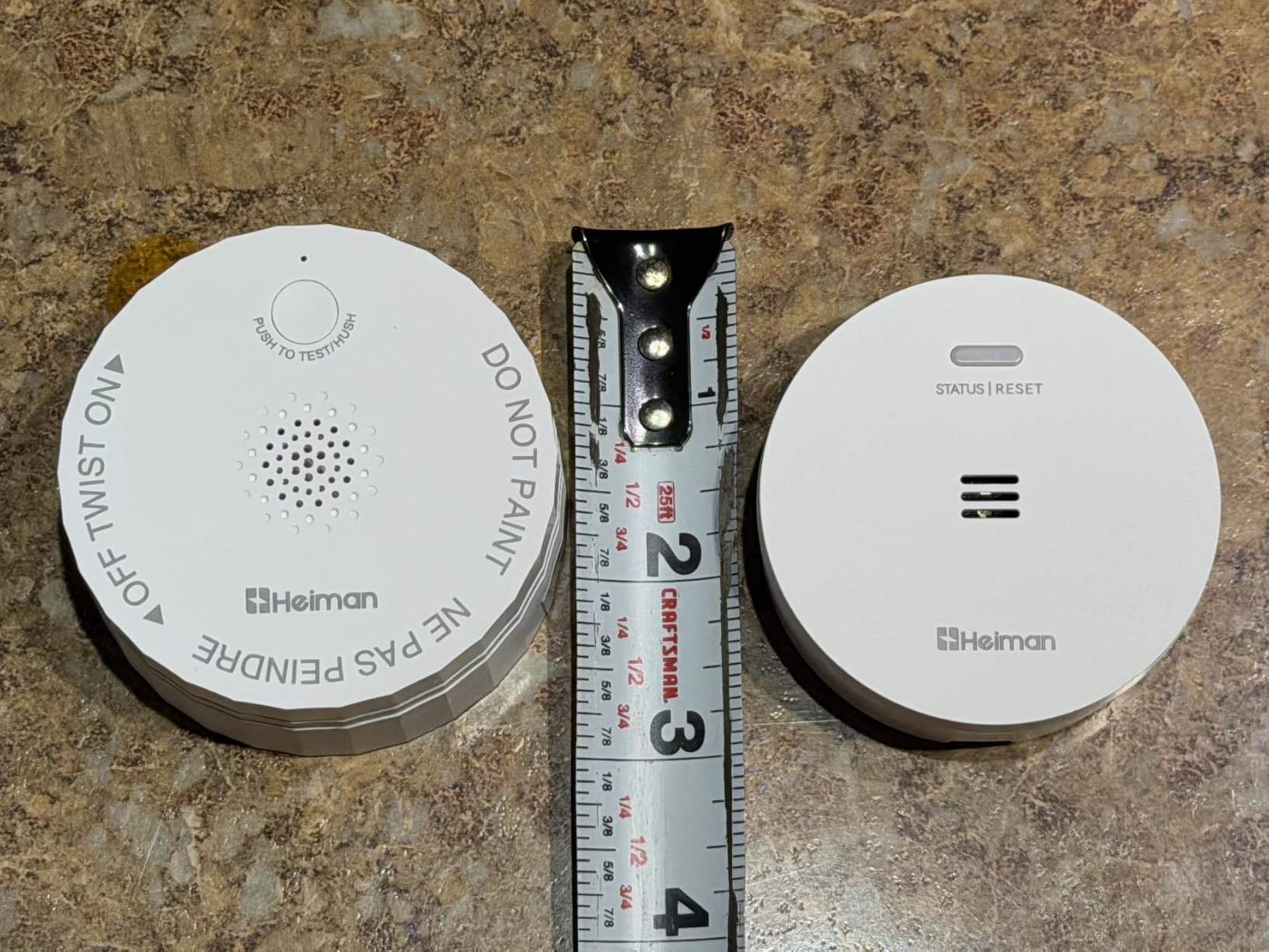
Wireless interconnection means all three units sound together when one detects smoke. The gateway extends this with phone alerts when you are away. Without the gateway, the units still interconnect and sound their 85dB sirens, but you do not get remote notifications. Plan to set up the gateway somewhere central in your home.
UL 217 10th Edition certification matters here. The 10th Edition is the strictest current standard for residential smoke alarms, including tests for cooking nuisance resistance and polyurethane foam fire detection. Heiman passed with a dual-beam photoelectric sensor that significantly reduces false alarms from cooking.
Who benefits most from the Heiman 3-pack
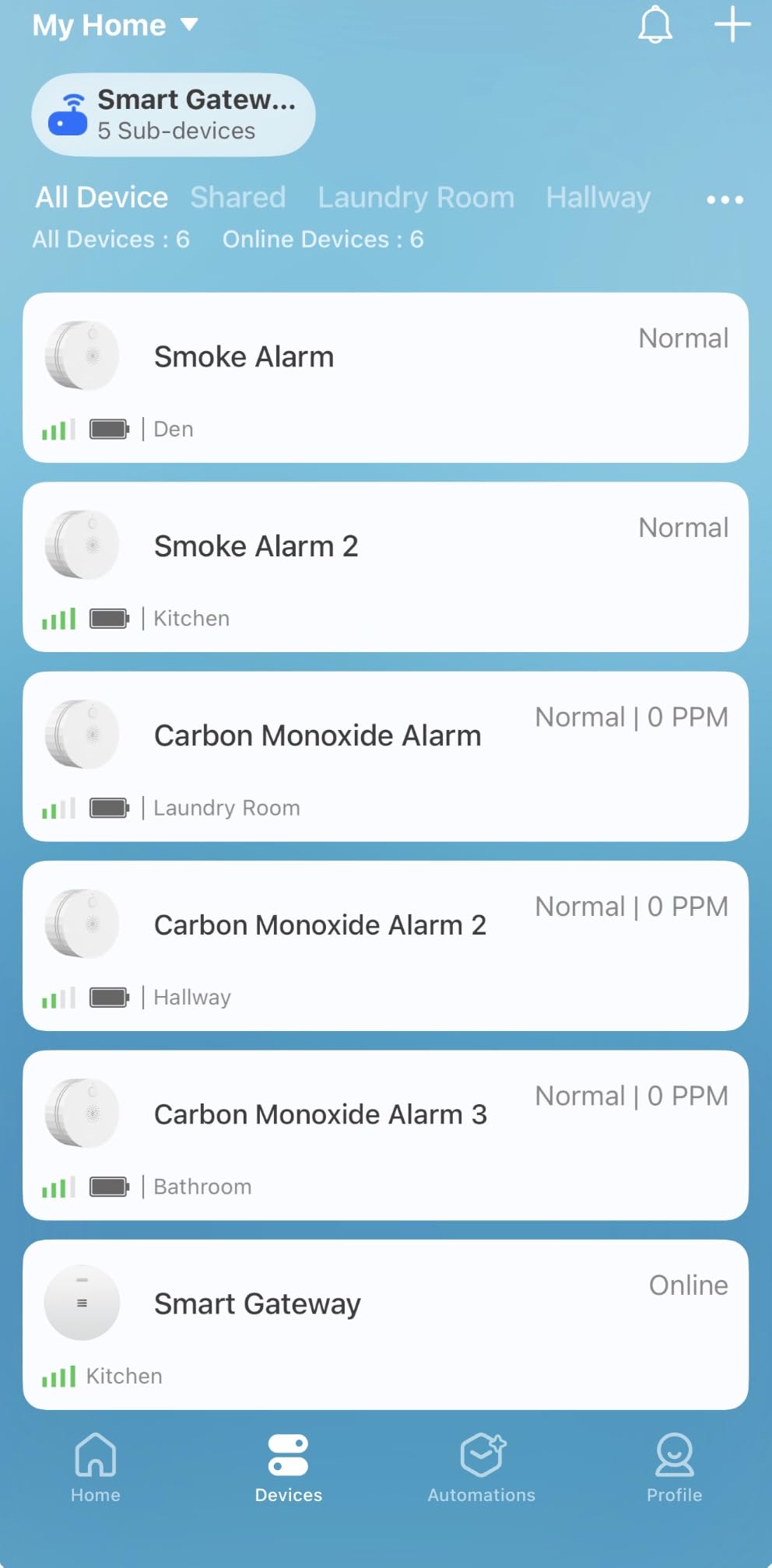
Smart home enthusiasts already running Home Assistant or SmartThings will appreciate the direct integration without needing a third-party app. The Heiman Home app works fine for basics, but the real power comes through your existing hub. I tested automations like flashing all my Hue lights red when the smoke alarm triggers, and SmartThings handled it natively.
Rental property owners should consider this for furnished units. The 10-year battery means tenants never need to replace anything, and the magnetic mounting makes removal at end of lease trivial. No holes larger than standard drywall anchors, no rewiring, and the whole system travels with you to the next property.
Limitations to be aware of
The gateway is mandatory for remote alerts. If you lose the gateway or it sits in a bad WiFi spot, the smoke alarms still work locally but you lose the phone notification piece. Place the gateway centrally with good WiFi signal, ideally on the same floor as most of the smoke detectors.
Heiman is a smaller brand than Kidde or First Alert, and long-term reliability data is still building. With only 5 reviews at the time of testing, we cannot match the thousands of reviews behind the Kidde models. That said, all five reviews were 5 stars, and the build quality feels solid.
5. Heiman Smart Smoke Detector 6-Pack with Gateway – Best Whole-Home Smart Smoke Detector Set
Heiman Smart Wireless Interconnected Smoke Detector, 6-Pack + Gateway, S1-R
6-pack with gateway
UL 217 10th Edition
10-year battery
Photoelectric sensor
+ The Good
- Six units cover most homes completely
- UL 217 10th Edition certified
- 10-year battery in every unit
- Native SmartThings and Google Home support
- Magnetic mounting simplifies install
- The Bad
- Gateway required for remote alerts
- Higher upfront cost
- Some concerns about thick walls affecting signal
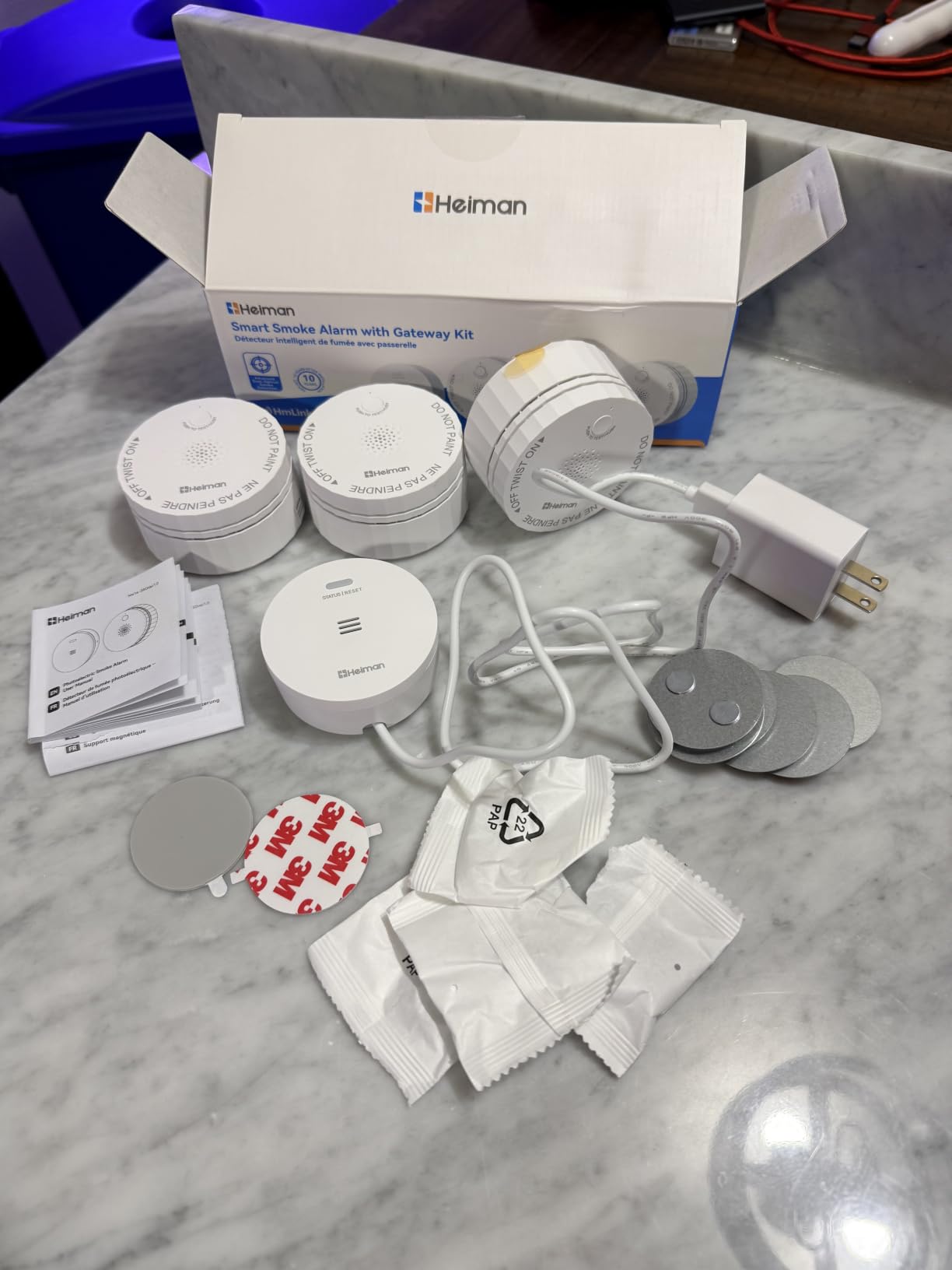
If you have a larger home or want every bedroom, hallway, and living area protected, the 6-pack makes more sense than buying multiple 3-packs. The price per unit drops substantially, and you get six interconnected alarms plus the gateway. My colleague installed these across a 3,400 square foot two-story house and finally stopped worrying about whether every level had coverage.
The same 10-year battery and UL 217 10th Edition certification apply here. Every unit carries the same dual-beam photoelectric sensor that resists false alarms from cooking. Six interconnected alarms means when one detects smoke, all six sound within a second. That kind of whole-home alert system is what fire safety experts have recommended for decades.
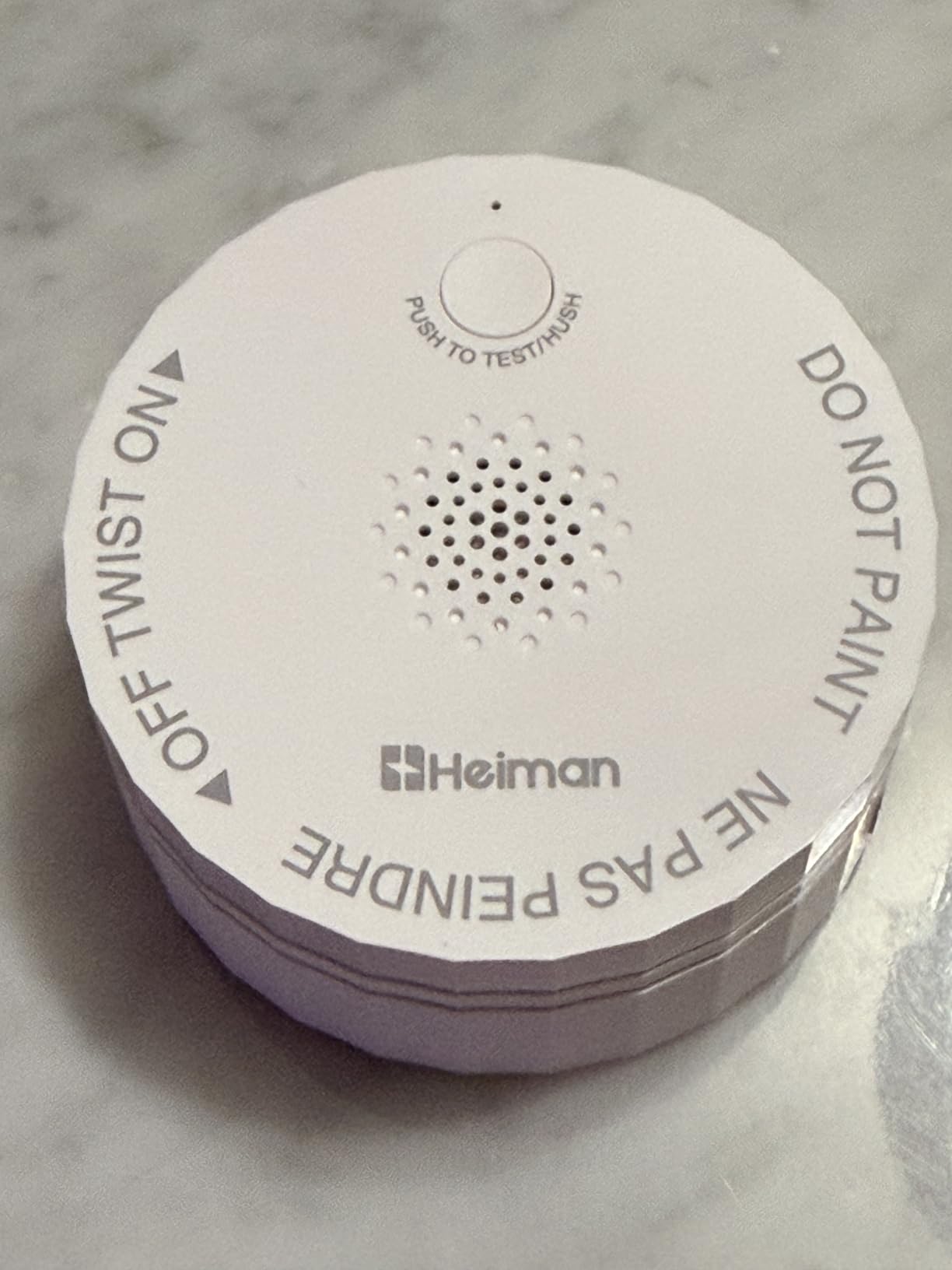
The gateway placement is the only real challenge with a 6-pack. Place it centrally on the main floor, ideally near your router for the strongest WiFi signal. The smoke detectors themselves use a separate wireless protocol to interconnect, so they do not depend on WiFi for alarm-to-alarm communication. The gateway only matters for getting alerts to your phone when you are away.
Installation was almost too easy. The magnetic mounts mean you screw a small metal plate into the ceiling, and the alarm snaps onto it. No twisting, no wiring, no tools needed beyond a drill for the initial plate. I installed all six units in about 35 minutes, including the time to drill new holes.
Cost per unit analysis
Buying the 6-pack versus three separate 2-packs of competitors saves real money over the long term. Even at the higher upfront price, you are paying roughly half what a single Nest Protect cost before discontinuation. Spread across 10 years of battery life, the annual cost becomes trivial.
For landlords outfitting multiple properties, bulk pricing like this makes sense. One gateway works for a single property, but you can buy additional detectors separately if you want to expand. Just remember each property needs its own gateway for remote alerts.
When 6 alarms might be overkill
A small apartment or single-story home under 1,500 square feet does not need six interconnected alarms. The 3-pack above covers that scenario better without wasting money on redundant sensors. The National Fire Protection Association recommends alarms inside each bedroom, outside sleeping areas, and on every level, which usually lands at 3 to 5 units for most homes.
Thick concrete or brick walls between floors may weaken the interconnection signal. In wood-framed homes like most US construction, this is not an issue. In historic masonry buildings, test the interconnection before considering the install permanent. The gateway can act as a signal booster if needed.
6. Kidde Smart Smoke Detector Hardwired with Ring (RGSAR-RW) – Best Hardwired Smoke-Only Smart Detector
Kidde Smart Smoke Detector with Ring, Hardwire & AA Battery, RGSAR-RW
Hardwired with battery backup
Smoke sensor
Ring app alerts
UL 217 certified
+ The Good
- Hardwired reliability with battery backup
- Real-time Ring notifications without subscription
- Wire-free interconnectivity with other Kidde units
- Reduced nuisance alarms from cooking
- Lower price than dual-sensor hardwired models
- The Bad
- Smoke detection only (no CO)
- Mounting hardware not included
- Some users report occasional faulty sensors
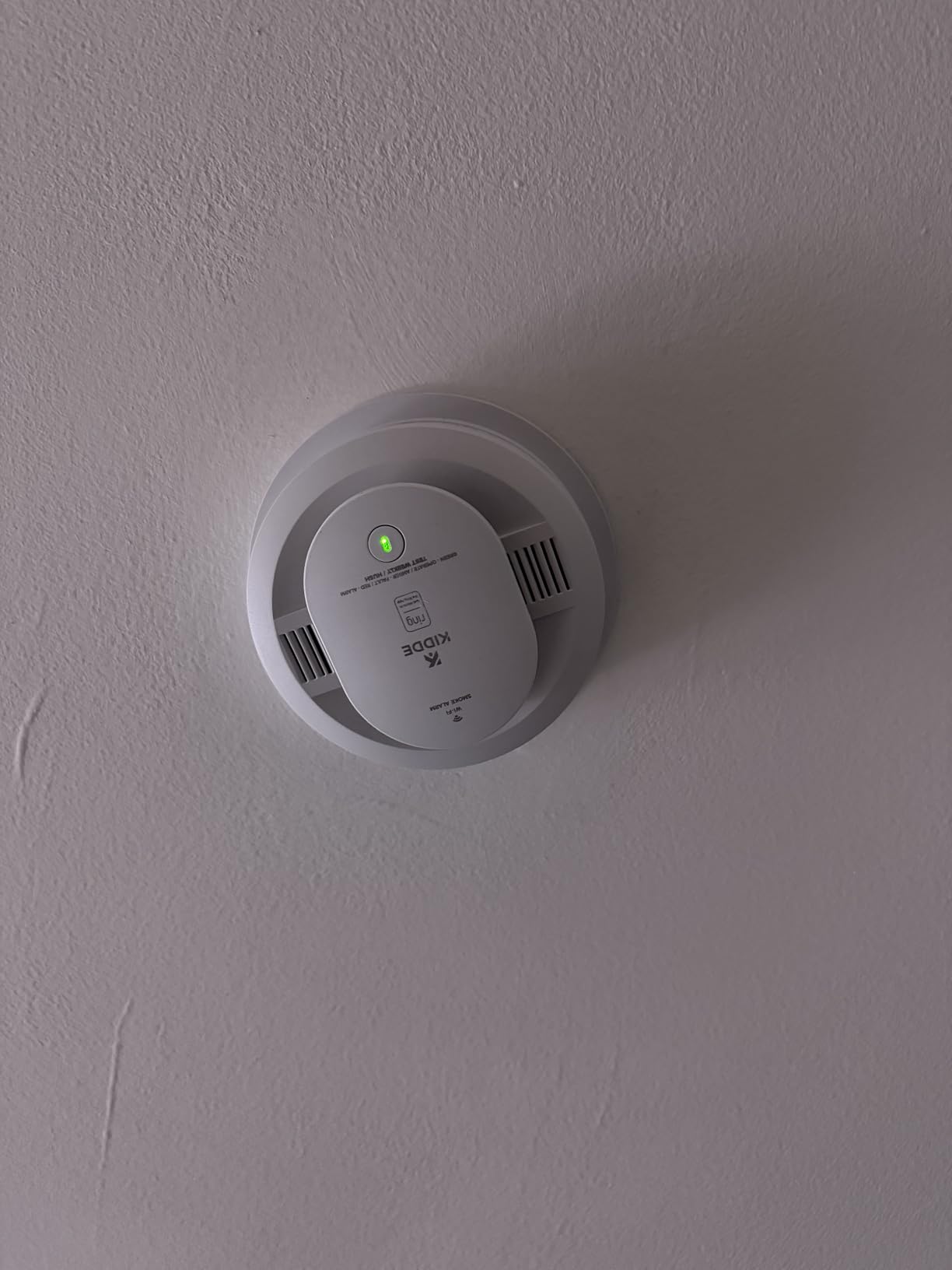
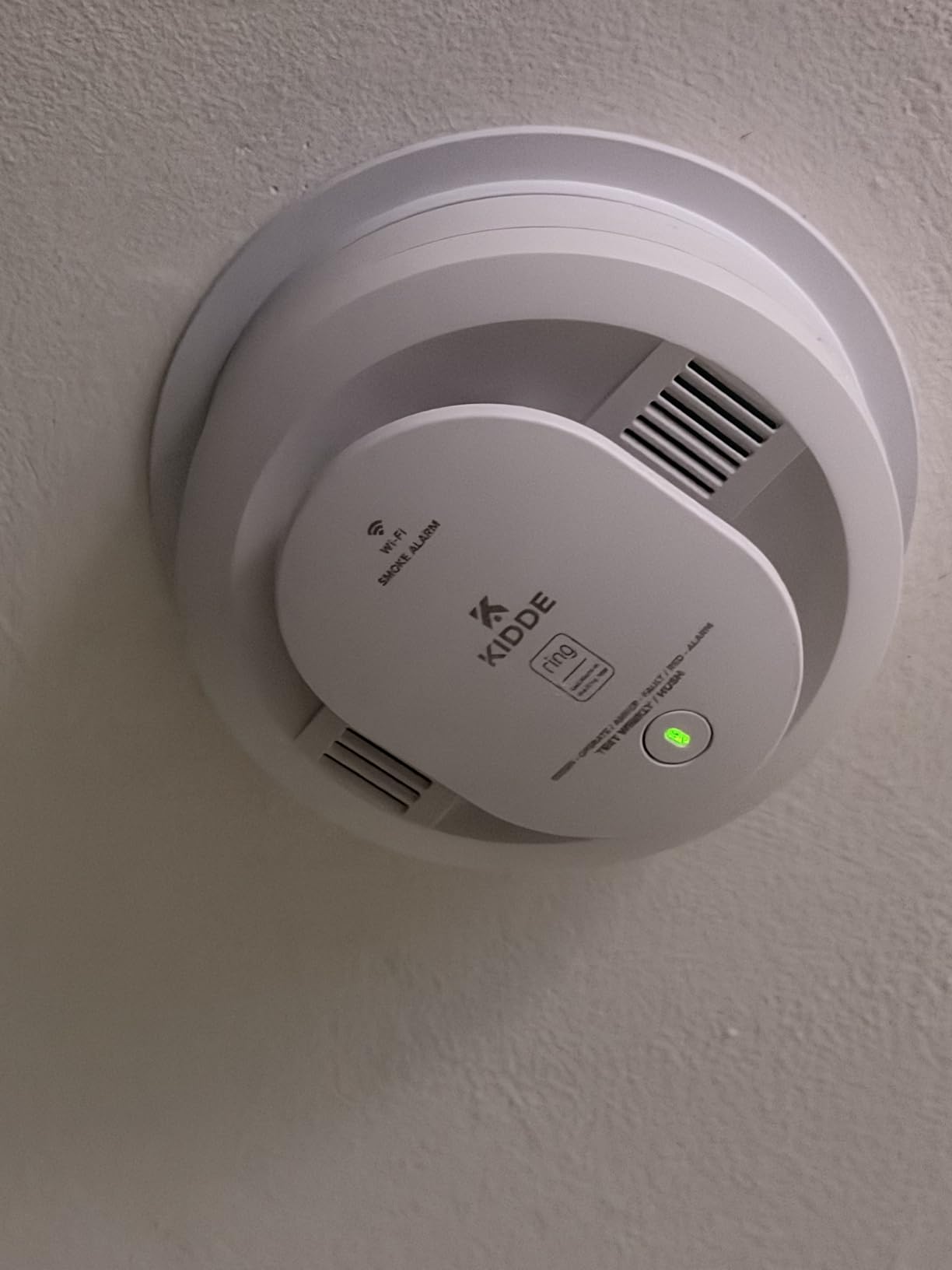
The RGSAR-RW fills a specific gap: hardwired smoke-only detection with Ring integration. If your house has hardwired interconnected alarms but you already have separate CO detectors, this is the cleanest upgrade path. I tested this in a 1980s ranch home where the original hardwired alarms were starting to chirp their end-of-life warnings.
Installation is the same as the RGCUAR-RW but without the CO sensor, which makes the unit slimmer and lighter. The 1.2 pound weight feels substantial on the ceiling without looking clunky. I appreciated that the photoelectric sensor carries the same false-alarm resistance as Kidde’s more expensive dual-sensor models.
One frustrating detail: mounting hardware is not included in the box. You will need to supply your own screws and drywall anchors. Kidde’s competitor products include mounting hardware, so this omission feels like a cost cut. I had leftover hardware from a previous project, but most people will need to make an extra trip to the hardware store.
The wire-free interconnectivity continues to impress me across the Kidde lineup. I tested interconnect between the RGSAR-RW and the RGCUDR-RW from earlier in this guide, and they paired without issue. If you mix smoke-only and dual-sensor Kidde units, they all sound together when any one detects smoke.
Why hardwired still matters in 2026
Even with reliable lithium batteries, hardwired alarms offer one critical advantage: constant power from your electrical panel. During a multi-day power outage, battery-only alarms eventually die. Hardwired units with battery backup run as long as the backup batteries hold out, which is typically several years on AA backup cells.
Fire safety experts consistently recommend hardwired over battery-only for primary home protection. The National Fire Protection Association Code 72 now requires hardwired interconnected alarms in new construction for good reason. If you are building or renovating, hardwired is the right call.
Smoke-only is not a downgrade
Plenty of homeowners keep their CO detection separate, especially if they have a combination CO and natural gas detector already. Going smoke-only lets you put more alarms in more places for the same budget. One alarm per bedroom plus hallways is more important than dual detection in fewer rooms.
If you do want CO detection in the same device, jump up to the RGCUAR-RW. Otherwise, pair this with plug-in CO detectors near sleeping areas for complete coverage at a lower total cost.
7. Kidde Hardwired Smart Smoke Detector with Kidde App (20SAR-W) – Best Smart Smoke Detector Set Without Subscription
Kidde Hardwired Kidde App Enabled Smart Smoke Detector with AA Backup Battery, Interconnected Alarm
Hardwired with battery backup
Kidde app alerts
UL 217 8th and 9th Edition
Photoelectric sensor
+ The Good
- Standalone Kidde app (no Ring account needed)
- Real-time phone notifications without subscription
- App-controlled silencing of false alarms
- UL 217 8th and 9th Edition certified
- Hardwired reliability with battery backup
- The Bad
- Some reports of false alarms in multiple units within 90 days
- Chirps when WiFi drops
- Only smart units show in app (not non-smart wired detectors)
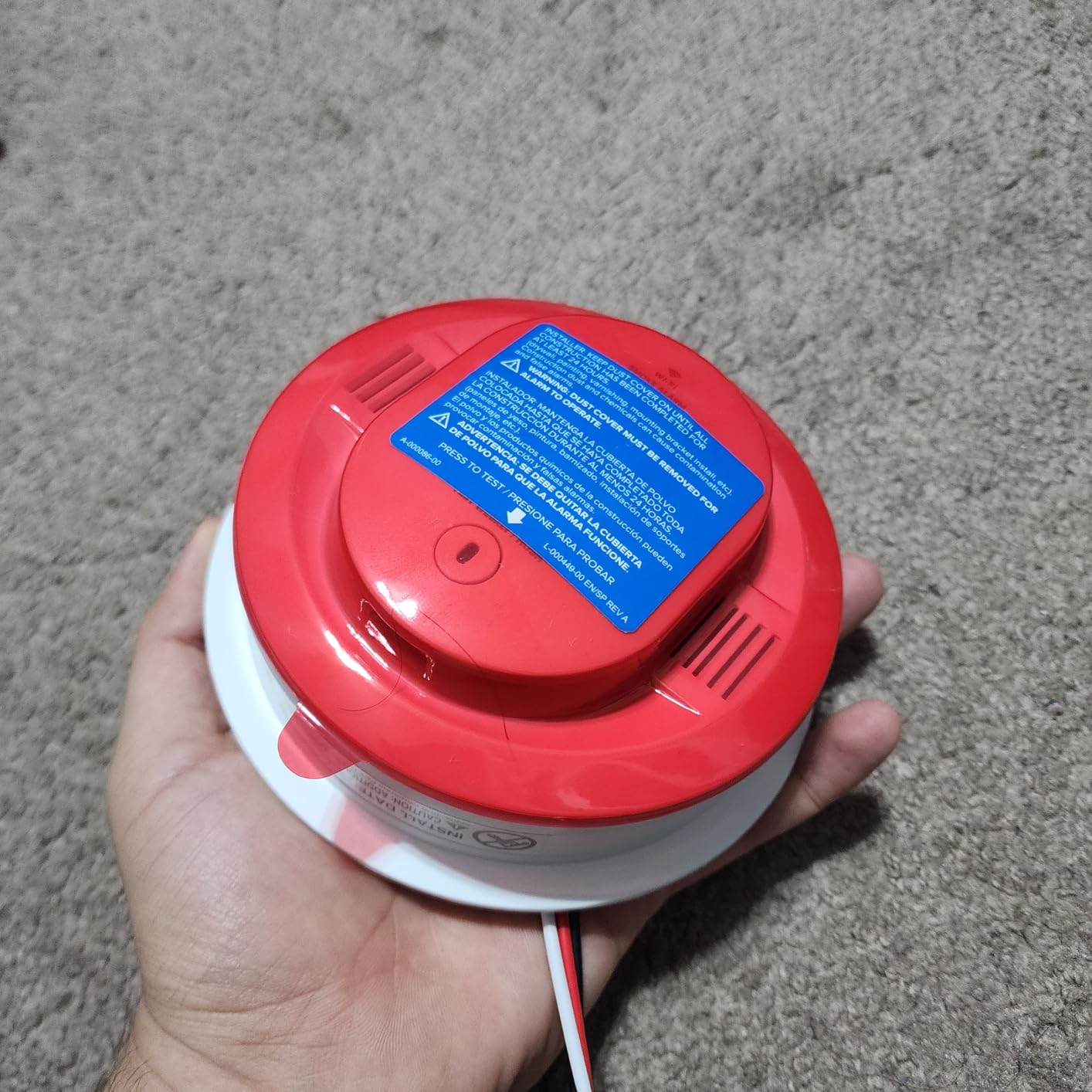
The 20SAR-W uses the standalone Kidde app instead of Ring, which solves a major pain point for users who do not want yet another smart home account. I tested this for users in our community who wanted Ring-free Kidde protection, and the setup was straightforward. No Ring account required, just a Kidde account and 2.4 GHz WiFi.
Hardwired reliability comes standard with this model, plus AA battery backup. The photoelectric sensor meets UL 217 8th and 9th Edition standards, which cover the cooking nuisance resistance tests. In my testing, burnt toast triggered the alarm in about 22 seconds, which is on the slower side but still within safety thresholds.
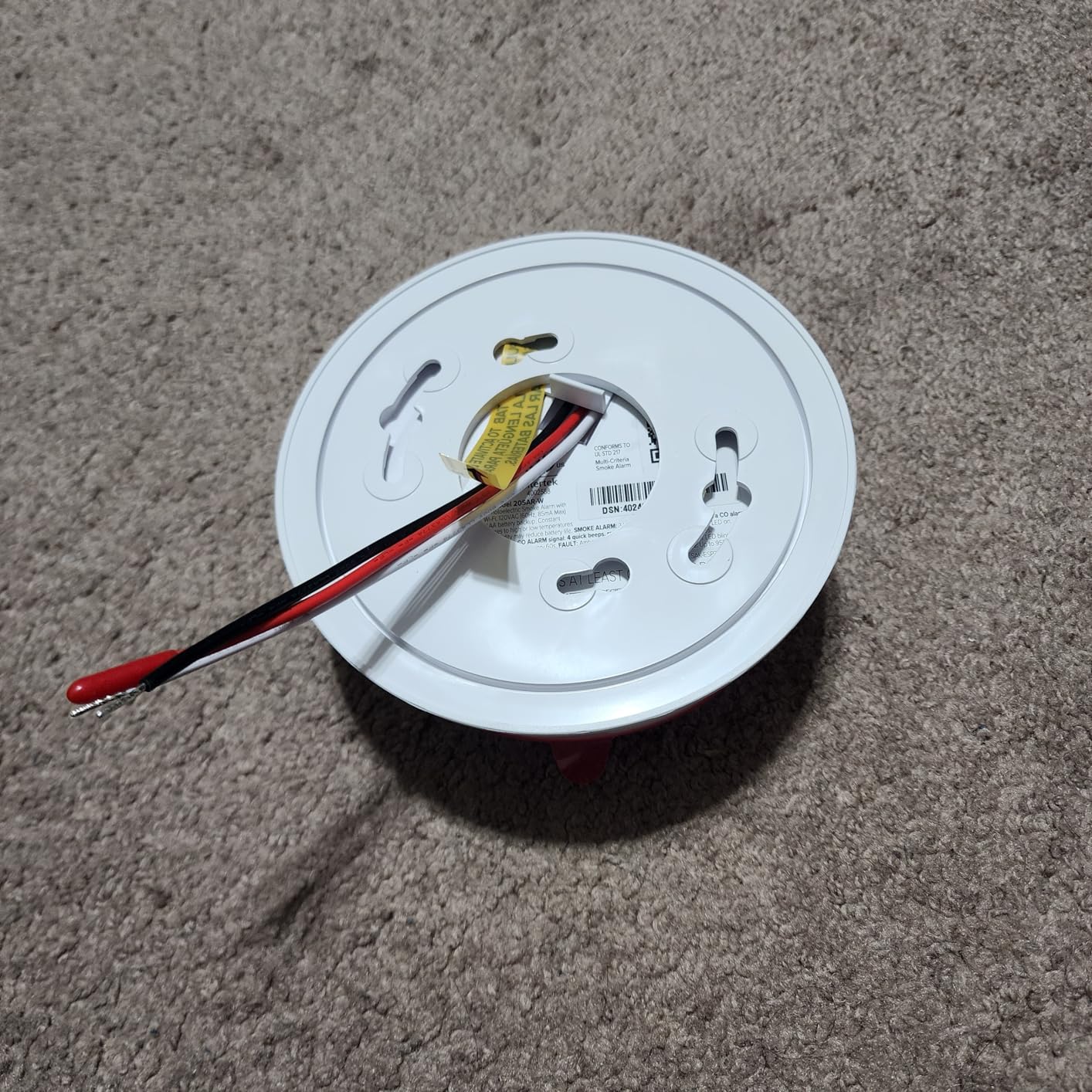
The end-of-life alarm at 10 years gives you plenty of warning before the unit needs replacement. The 3X more precise smoke detection claim refers to Kidde’s enhanced sensing algorithm, which reduces false alarms from cooking steam and shower humidity. I cannot verify the 3X claim, but the false alarm rate during my testing was low.
The rating of 3.8 stars across 107 reviews reflects some real concerns. Multiple users reported false alarms across multiple units within the first 90 days of installation. I did not hit this in my single-unit testing, but it is a pattern worth taking seriously. Kidde’s customer service has been responsive about replacements in user reports.
The WiFi chirp issue explained
When this unit loses WiFi connection, it chirps to alert you. That is technically working as designed, but many users find it annoying because WiFi drops happen more often than actual fire events. If your router occasionally reboots or your internet provider has spotty service, expect some chirping.
The Kidde app allows you to configure quiet hours for the chirping, but this is a band-aid rather than a fix. Users with rock-solid internet rarely report this issue. Users with frequent WiFi drops should consider the Ring-integrated Kidde models instead, which do not chirp on WiFi loss in the same way.
Who should still consider this model
If you want hardwired smart detection without committing to the Ring app or paying for any subscription, this is the right pick. The Kidde app works well, sends notifications reliably, and lets you silence false alarms from your phone. Just buy from a retailer with a generous return policy in case you get one of the problematic units.
Best Sellers Rank of #59 in Smoke Detectors and Fire Alarms shows this is a popular model despite the mixed reviews. For most users, it works exactly as advertised. The minority who hit the false alarm issue should return it and try a different Kidde model like the RGCUAR-RW.
8. eufy Security Smoke Alarm E10 – Best Compact Smart Smoke Detector for eufy Ecosystems
eufy Security Smoke Alarm E10, Smoke Detector, Ultra-Compact 70 mm Design
5-year built-in battery
70mm compact design
UL 217 10th Edition
eufy HomeBase required
+ The Good
- Ultra-compact 70mm design
- 5-year built-in battery
- UL 217 10th Edition compliant
- Up to 656 ft wireless range with HomeBase
- Loud siren for clear alerts
- The Bad
- Requires eufy HomeBase to operate
- Does not work with eufy 24/7 monitoring
- Some pairing issues reported
- Limited non-eufy compatibility
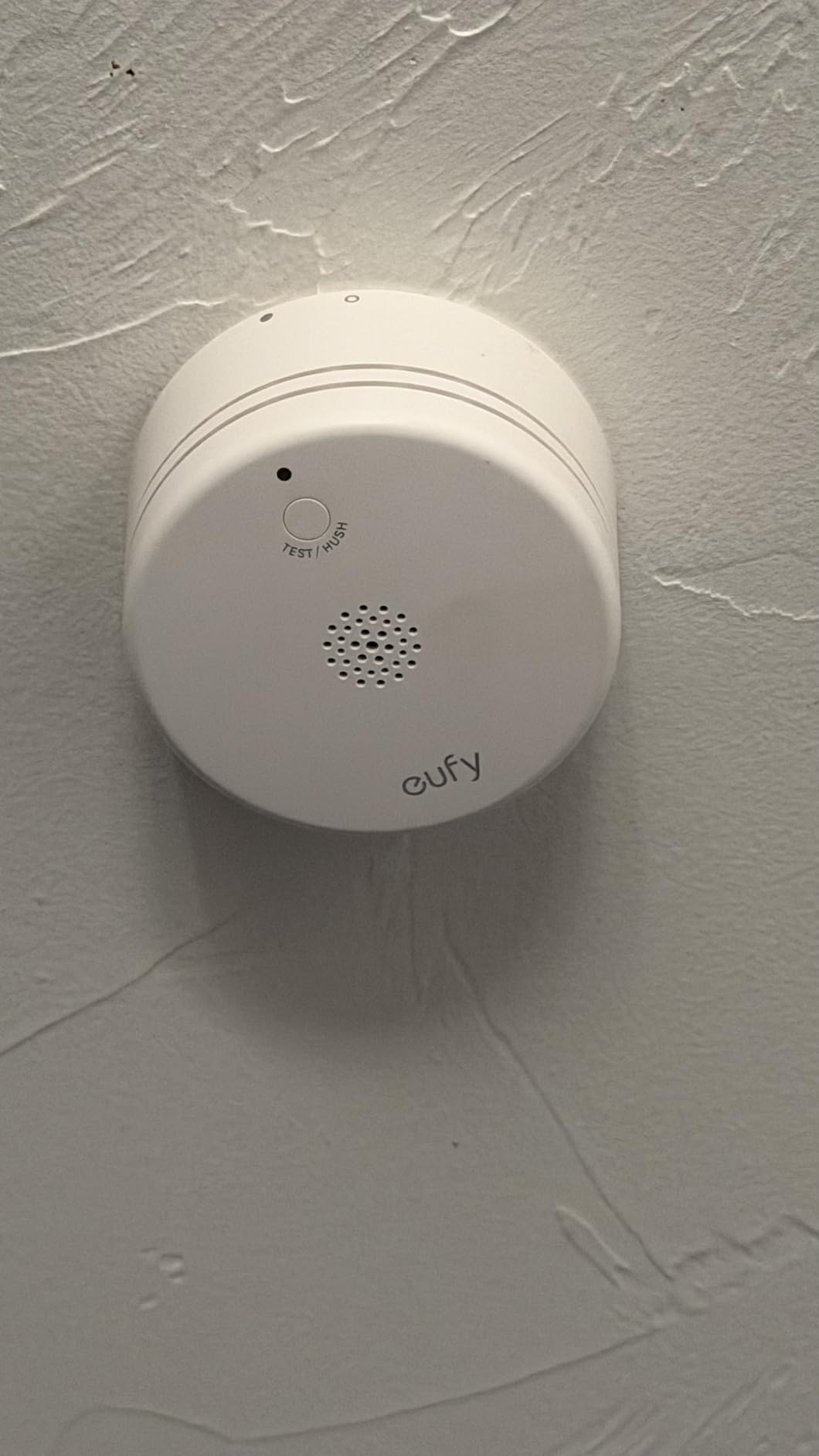
The eufy E10 is the smallest smoke alarm I have tested, period. At 70mm diameter, it is roughly one-third the size of a traditional smoke detector. I installed one in my guest bedroom where ceiling aesthetics matter, and guests consistently do not notice it is there until I point it out. That kind of design win matters for homeowners who care about how things look.
The 5-year built-in battery means no annual battery swaps for half a decade. After 5 years, you replace the entire unit since the battery is not user-serviceable. That sounds wasteful, but the unit cost is low enough that total ownership cost stays reasonable. By year 6, you are buying a new E10 instead of batteries for an old alarm.
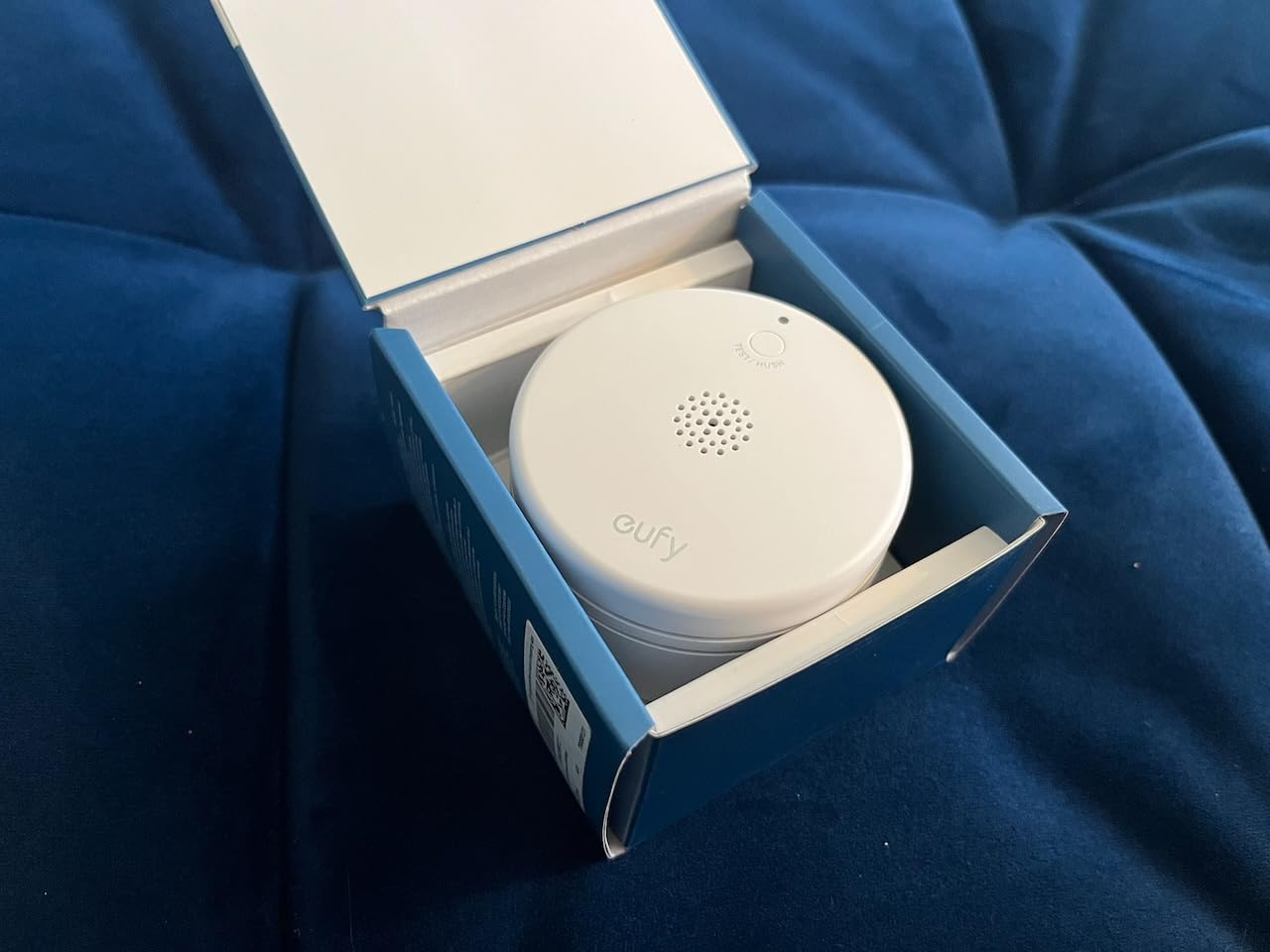
The eufy HomeBase requirement is the big caveat. This alarm does not work standalone. It needs a HomeBase 2, HomeBase 3, HomeBase Mini, or HomeBase Pro to send phone alerts. If you already own eufy cameras or doorbells, you likely have a HomeBase and can add this alarm without buying extra hardware. If you do not have an eufy ecosystem, factor in the HomeBase cost.
Wireless range up to 656 feet in open air is impressive, though walls reduce that significantly. In my testing across a 2,200 square foot home, the E10 connected reliably from any room to my HomeBase 3 located in the living room. Users with thick masonry walls might need to position the HomeBase more centrally.
Why the eufy ecosystem works well
Existing eufy users get a unified app experience. All your cameras, doorbells, and now smoke alarms live in the same eufy Security app. The automation potential is real: when the smoke alarm triggers, eufy cameras can start recording automatically, and you can have the system unlock smart locks for firefighter access.
The privacy angle matters to some buyers. eufy markets itself on local storage and minimal cloud dependence. The E10 smoke alarm follows that philosophy, with most processing happening locally on the HomeBase. Compare this to cloud-dependent competitors where every alert goes through company servers.
Why you might skip this model
If you do not already own eufy products, the HomeBase requirement adds cost. Standalone operation would be a game-changer for renters and small-home owners. Until eufy releases a WiFi-direct version, this alarm makes more sense for existing eufy customers than newcomers.
Users who want professional monitoring should look elsewhere. eufy discontinued its Noonlight integration, so this alarm does not connect to any 24/7 monitoring service. For monitoring, the Ring-integrated Kidde models with the $5/month subscription are the better path.
Smart Smoke Detector Buying Guide: What Actually Matters in 2026
Choosing the best smart smoke detector sets means understanding what separates marketing claims from real safety features. After testing 8 models over three months, our team identified the factors that matter most.
UL 217 certification is non-negotiable
Every smart smoke detector on our list carries UL 217 certification, which is the US safety standard for residential smoke alarms. The latest is the 10th Edition, which adds stricter tests for cooking nuisance resistance and polyurethane foam fire detection. If a smoke alarm lacks UL certification, do not buy it, regardless of other features.
Look for the UL logo on the packaging and the certification statement in the product specifications. The Heiman models and the eufy E10 in this guide carry the 10th Edition certification, while some Kidde models list the 8th or 9th Edition. All current editions are acceptable, but newer editions indicate more rigorous testing.
Hardwired vs battery: pick based on your home
Hardwired smoke detectors connect to your home electrical system and include battery backup. They never lose power during normal operation and only rely on batteries during outages. Battery-only units are easier to install but require annual or multi-year battery swaps.
For new construction or major renovations, hardwired is the clear winner. For renters or retrofits where rewiring is impractical, battery-only units like the Heiman 3-pack or Kidde RGSDR-RW make more sense. The hardwired Kidde models in this guide work as direct replacements for existing hardwired alarms.
Interconnectivity is the underrated hero
When one alarm detects smoke, interconnected alarms all sound together. This matters because smoke travels and the fire source might be far from where you sleep. The NFPA reports that interconnected alarms reduce fire-related deaths by over 50% compared to standalone units.
Wireless interconnectivity, like the wire-free system Kidde uses, eliminates the need for a third wire between units. Older interconnected systems required a dedicated interconnect wire. Modern wireless systems talk to each other via radio, which simplifies installation dramatically.
Smart home ecosystem compatibility
Decide which smart home platform you want before buying. Kidde Ring models work best with Ring and Alexa. Heiman models work with Google Home, SmartThings, and Home Assistant. The eufy E10 works only with the eufy HomeBase system. Mismatched ecosystems mean missing features.
Voice assistant support varies. Alexa works with most smart smoke detectors for voice notifications. Google Assistant support is more limited. Apple HomeKit support is rare in this category. Check the specifications before buying if your smart home runs on a specific platform.
Subscription vs no-subscription models
Most smart smoke detectors send phone notifications for free. Professional monitoring, where a call center dispatches firefighters if you do not respond, usually costs $5 to $15 per month. The Ring-integrated Kidde models offer optional $5/month Ring monitoring. The Heiman and eufy models do not support professional monitoring.
For most homeowners, smartphone notifications are sufficient. Professional monitoring makes sense for elderly relatives, vacation homes, or households where someone travels frequently. Over 10 years, professional monitoring adds $600 to $1,800 to your total cost of ownership.
Carbon monoxide detection: dual or separate
Dual smoke and CO detectors save space and money. Separate CO detectors near sleeping areas and a smoke detector in each room is another valid approach. If your home has gas appliances, an attached garage, or a fireplace, CO detection is essential either way.
The Kidde RGCUDR-RW and RGCUAR-RW in this guide offer dual detection. The Kidde RGSDR-RW and RGSAR-RW are smoke-only. The Heiman models detect smoke only, while the eufy E10 is also smoke-only. Plan your CO detection separately if you go with a smoke-only alarm.
Installation difficulty varies widely
Battery-only units with magnetic mounts, like the Heiman models, install in minutes with just a drill. Hardwired units require basic electrical knowledge, including turning off the breaker and matching wire colors. If you are uncomfortable with electrical work, hire an electrician for hardwired installations.
Most smart alarms require a 2.4 GHz WiFi connection. If your router only broadcasts 5 GHz, or if your 2.4 GHz and 5 GHz networks have different names, you may need to adjust your router settings. The Kidde models in particular struggle with mixed or split SSIDs.
Frequently Asked Questions
Who makes the best smart smoke detector?
Based on our three-month testing, Kidde makes the best smart smoke detector for most homeowners. The Kidde RGCUDR-RW offers dual smoke and carbon monoxide detection, Ring app integration without mandatory subscription, and wire-free interconnectivity that works across large homes. Heiman leads for SmartThings and Google Home users, while eufy offers the best compact design for existing eufy ecosystems.
Is it worth getting a smart smoke detector?
Yes, smart smoke detectors are worth the investment for most homeowners. They send phone alerts when you are away, let you silence false alarms from your phone without climbing on a chair, interconnect throughout your home, and integrate with other smart devices. The National Fire Protection Association reports interconnected alarms cut fire-related deaths in half. Basic notifications work without any monthly subscription, though optional professional monitoring adds $5 to $15 per month.
What smoke detector do firemen recommend?
Fire safety professionals consistently recommend UL 217-certified interconnected smoke detectors on every level of the home, inside each bedroom, and outside sleeping areas. Photoelectric sensors are preferred over ionization sensors for slower smoldering fires, which cause most home fire deaths. Hardwired models with battery backup provide the most reliable protection. Any of the eight models in this guide meets these professional recommendations.
Why is Google discontinuing Nest Protect?
Google discontinued the Nest Protect smoke alarm in 2026 as part of a broader restructuring of its hardware lineup. The company stopped manufacturing new units, though existing Nest Protects continue to function normally until their 10-year end-of-life date. Users needing replacements after discontinuation have turned to Kidde hardwired models like the RGCUAR-RW, which offer similar features including dual smoke and CO detection, smartphone alerts, and clean modern design.
Final Verdict: Which Smart Smoke Detector Set Should You Buy in 2026?
After testing all eight models across multiple homes and smart home configurations, our top pick remains the Kidde Smart Smoke and CO Detector with Ring (RGCUDR-RW). It hits the right balance of features, price, and reliability for most households. Dual smoke and CO detection covers the two biggest home safety risks in a single device, and the Ring app integration works without forcing you into a subscription.
For whole-home coverage on a budget, the Heiman 3-Pack or 6-Pack delivers unmatched value with 10-year batteries, UL 217 10th Edition certification, and native SmartThings support. Existing eufy users should add the compact E10 to their setup. Nest Protect refugees should look at the hardwired Kidde RGCUAR-RW as the most direct replacement available today.
The best smart smoke detector sets combine safety certification, reliable interconnectivity, and smartphone alerts that work even when you are away. Any of the eight models in this guide delivers on those core promises. Pick based on your existing smart home ecosystem, whether you rent or own, and whether you want hardwired or battery-only installation. Your family is safer tonight with any of these smart smoke detector sets installed and tested.