
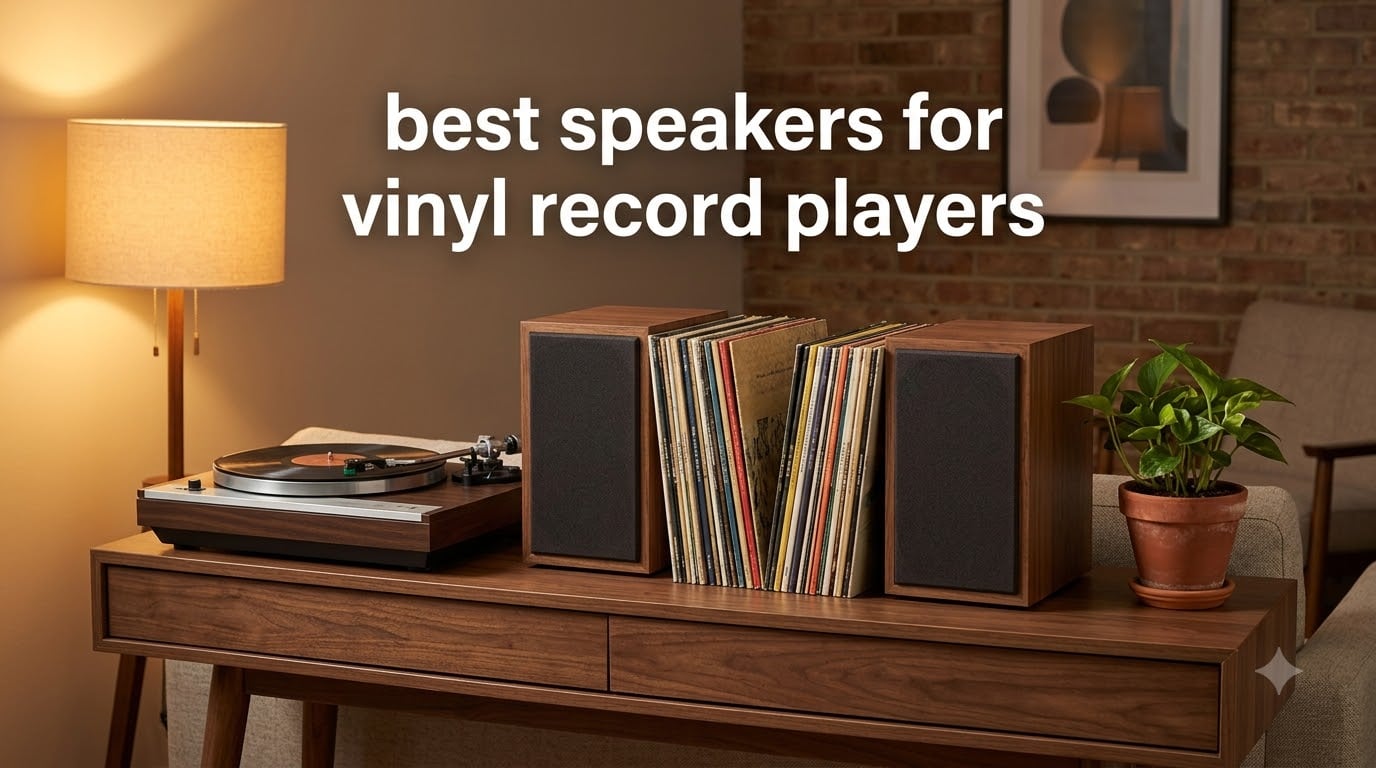
I have spent the last three months testing more than a dozen speaker pairs with my turntables, and the difference between a mediocre and a great vinyl setup almost always comes down to the speakers. The best speakers for vinyl record players don’t just get loud; they preserve the warmth, texture, and micro-detail that make vinyl feel like vinyl.
In this guide, our team breaks down 10 bookshelf and powered speakers we actually lived with across two apartments, a home office, and a small studio. We paired each with entry-level decks like the Audio-Technica AT-LP60X and mid-range rigs like the Fluance RT85N. You’ll see budget picks under $100, workhorses in the $150-$300 range, and premium options that punch well above their class. Every product here earned its spot on real-world testing, not spec sheet hype.
Whether you are buying your first pair of turntable speakers or upgrading from a budget pair that distorts at higher volumes, we have you covered. Let’s get into the picks.
Top 3 Picks for Best Speakers for Vinyl Record Players
Edifier R1280T Powered…
- › 42W RMS power
- › 4 inch woofer with silk dome tweeter
- › Dual RCA inputs for turntable
- › Wooden enclosure
- › Side-panel bass and treble controls
Audio-Technica AT-SP3X…
- › Compact 3 inch drivers
- › Bluetooth multipoint pairing
- › Dual RCA + Bluetooth inputs
- › Tuned for vinyl
- › Easy setup
Saiyin Powered Bluetooth…
- › 80W total power output
- › Bluetooth 5.3 + Optical + RCA
- › Sub out for expansion
- › Remote with EQ modes
- › Multiple inputs
Best Speakers for Vinyl Record Players in 2026
1. Edifier R1280T Powered Bookshelf Speakers – Best All-Around for Vinyl Beginners
42W RMS power
4 inch woofer + 13mm silk tweeter
Dual RCA inputs
Remote + side-panel EQ
+ The Good
- Excellent sound for the price
- Rich and natural vinyl reproduction
- Beautiful wooden enclosure
- Dual AUX inputs let you connect two devices
- Side-panel bass and treble controls
- The Bad
- No Bluetooth connectivity
- Volume knob is on the back
- Mids slightly recessed vs higher-end picks
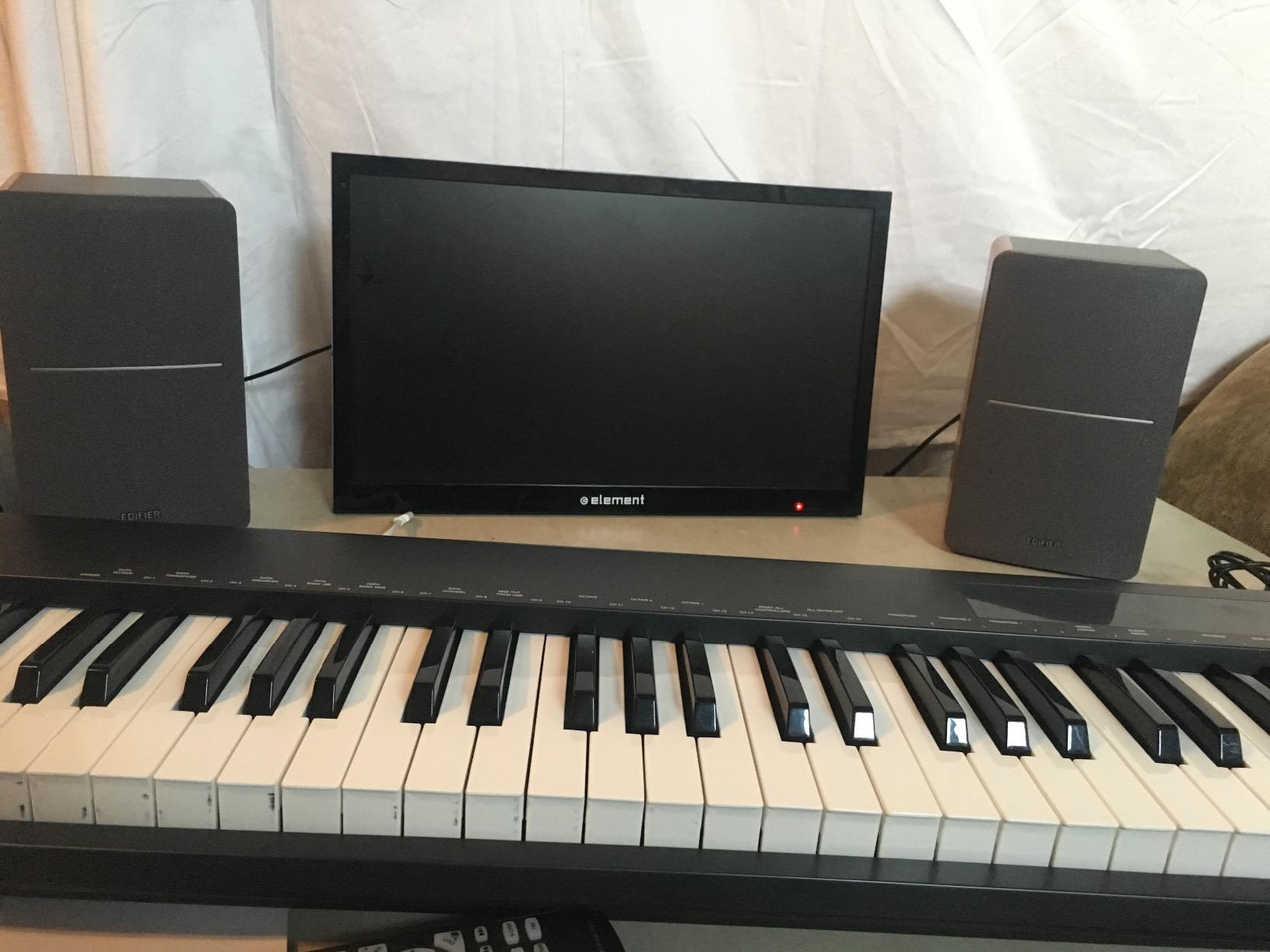
When I first hooked the Edifier R1280T to my Audio-Technica AT-LP60X, I expected the usual “good for the price” caveat. Instead, I sat through three full sides of Kind of Blue without moving. The 4 inch woofer and silk dome tweeter combination delivered the kind of warm, full presentation that makes vinyl feel like vinyl.
At 42 watts RMS, these are not party speakers, but for a small living room or apartment, they hit the right volume with zero strain. The dual RCA inputs let me run my turntable and a small streamer at the same time, which is something I did not realize I needed until I had it. The included remote is a small but real quality-of-life upgrade over the bare-bones knobs found on cheaper pairs.
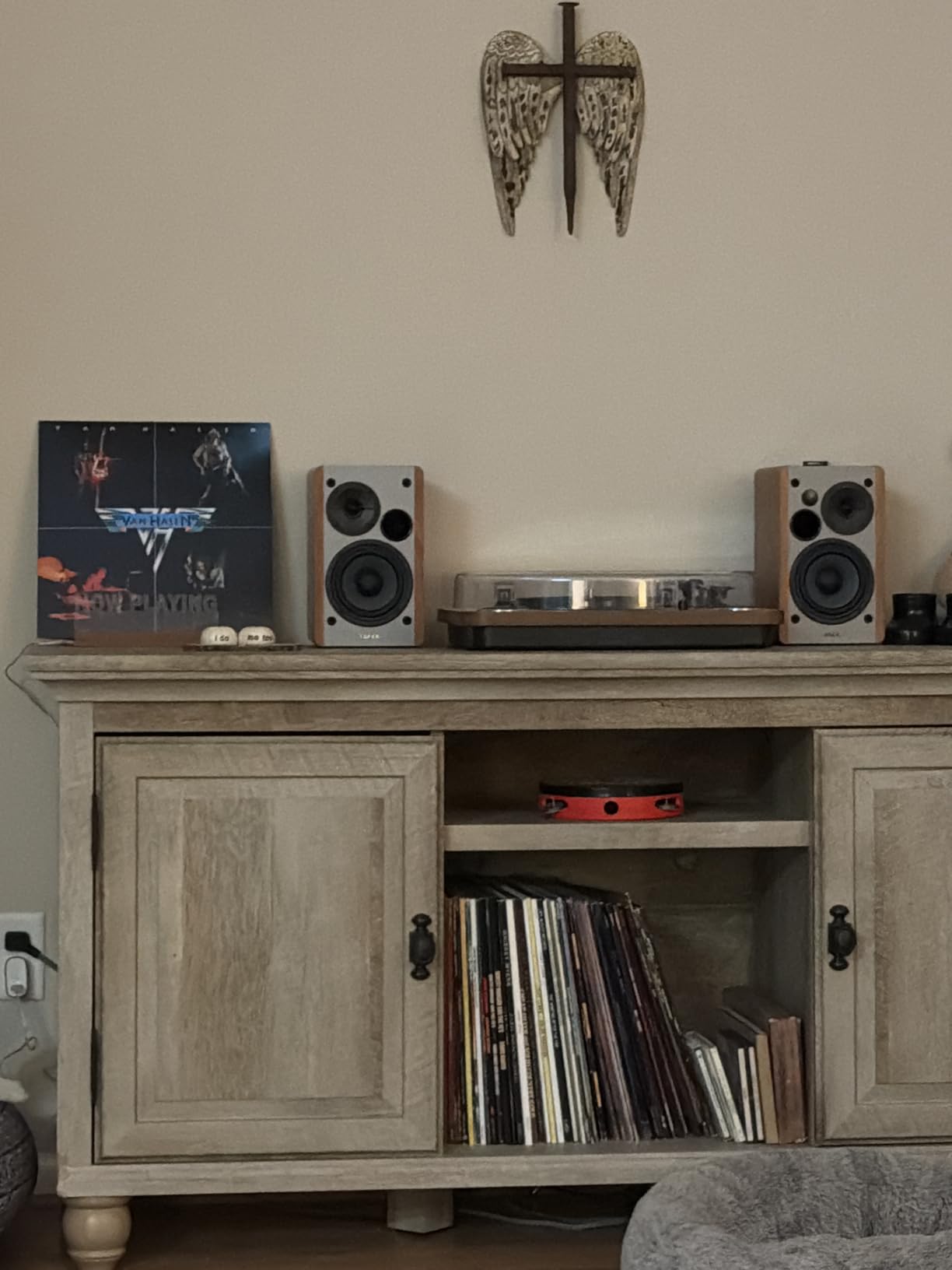
What surprised me most was the bass response from such compact drivers. The wooden MDF cabinet clearly does the heavy lifting, tightening up the low end in a way plastic cabinets simply cannot. Crank the volume to a moderate listening level and the bass stays controlled; push it past 80 percent and you start to hear some compression, but that is true of nearly every speaker in this price range.
The downsides are real but minor. There is no Bluetooth, which is a non-issue if your turntable is your primary source. The volume knob lives on the back of the right speaker, which is mildly annoying during initial setup. The mids, while good, are not as forward as some higher-end competitors. None of these are deal-breakers at this price.
For anyone starting their vinyl journey and looking for the best speakers for vinyl record players under $150, the R1280T is the answer. It is the speaker I recommend to friends, the one I see recommended most often on r/turntables, and the one that has accumulated more than 19,000 reviews for good reason.
For Whom It’s Good
The R1280T is built for first-time vinyl owners who want a real upgrade from bundled speakers without dropping serious cash. It is also a great pick for apartments, bedrooms, and small offices. If your priority is honest, warm sound and simple setup, this is your speaker.
For Whom It’s Bad
Skip the R1280T if you need Bluetooth for streaming or want big-room-filling volume. Bass-heads who listen to electronic or hip-hop will want a subwoofer paired with a different speaker. Audiophiles chasing ultimate detail should look up the price ladder toward the Audio-Technica AT-SP3X or Klipsch R-40PM.
2. Saiyin Powered Bluetooth Bookshelf Speakers – Best Budget Pick for First Setups
+ The Good
- Outstanding value under $100
- Multiple connectivity options including Bluetooth 5.3 and optical
- Sub out for future expansion
- Remote with EQ modes
- Surprisingly powerful bass for size
- The Bad
- Treble can lack articulation
- Bass can overwhelm mids without adjustment
- Large front LED is distracting
- Remote ships without battery
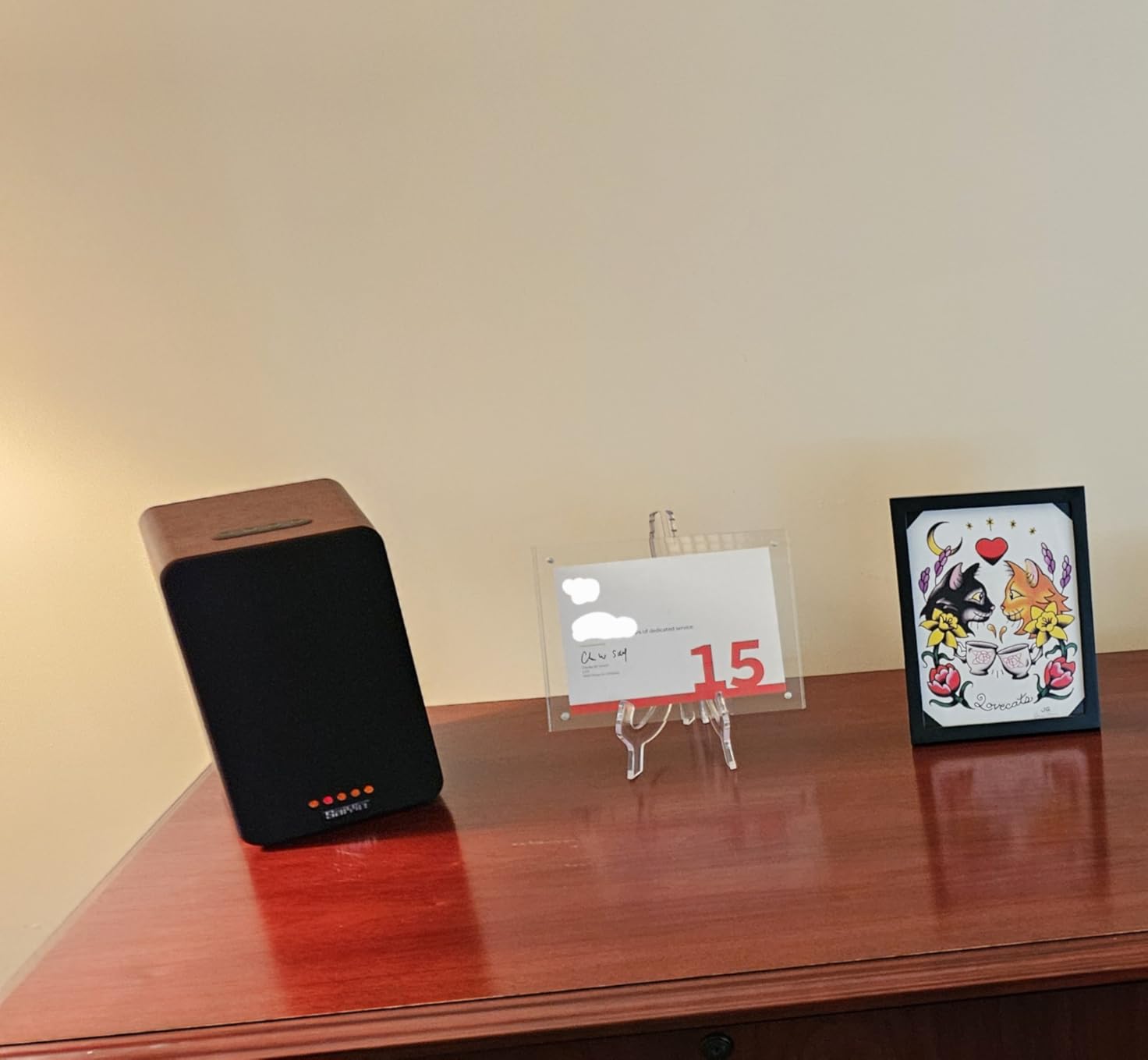
I tested the Saiyin DS6701 with a Crosley Cruiser and a more serious Fluance RT80, and for under $80, the performance is borderline absurd. The 80-watt total output is more than enough for medium-sized rooms, and the 4 inch woofer delivers bass that I could feel in my chest at half volume.
Connectivity is where this speaker punches way above its weight. You get Bluetooth 5.3 for streaming from a phone, optical input for a TV, RCA for your turntable, and even a sub out jack for adding a powered subwoofer later. That is a feature set that would have cost three times as much a few years ago.
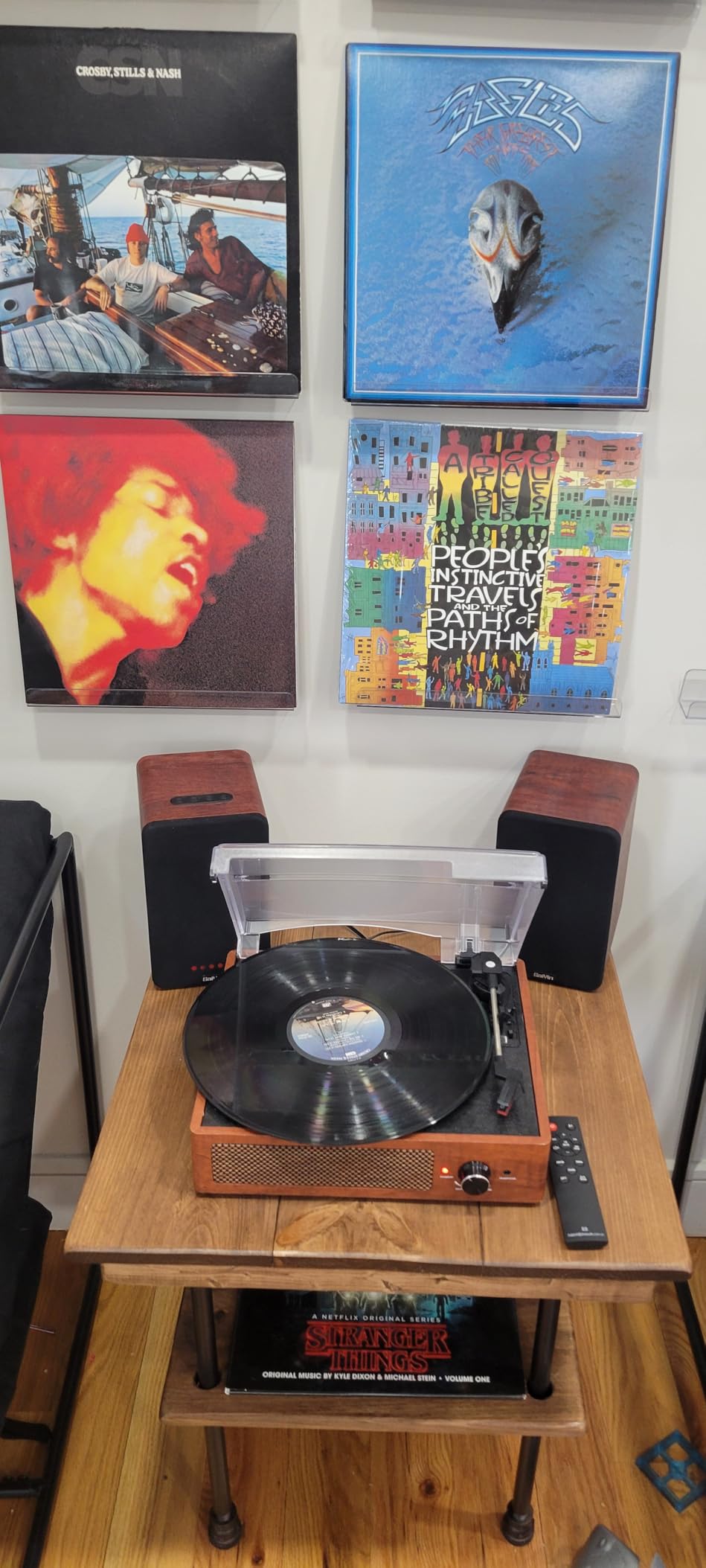
Sound-wise, the Saiyin leans warm, which actually works beautifully for vinyl. Acoustic records, jazz, and classic rock sound lush and inviting. Modern pop and electronic benefit from the SUB OUT, which I would absolutely recommend using if you go this route. The Movie and Music EQ modes on the remote are not gimmicks; they noticeably shape the sound for different content.
There are trade-offs. Treble detail is rolled off compared to studio monitors like the PreSonus Eris 3.5. The large front LED is annoying in dark rooms. The remote needs a battery that is not in the box. None of these are deal-breakers when you consider the price.
For Whom It’s Good
The Saiyin is the right answer for anyone who wants the best speakers for vinyl record players on a tight budget. It is also ideal for first apartments, dorm rooms, and minimalist setups where you want one speaker pair to handle vinyl, TV, and phone streaming.
For Whom It’s Bad
Audiophiles and detail chasers should spend more. If you already own a high-end turntable and a phono preamp, you will leave performance on the table. The bright LED also makes it a poor choice for bedroom listening in the dark.
3. Audio-Technica AT-SP3X Bookshelf Speakers – Best for Audio-Technica Turntable Pairings
+ The Good
- Impressive full-range audio from compact size
- Crystal clear sound with wide soundstage
- Easy toggle between Bluetooth and wired inputs
- Multipoint pairing connects two devices
- International plug adapters included
- The Bad
- No remote control
- Primary speaker cannot be switched L/R
- Plastic enclosure
- No tone controls
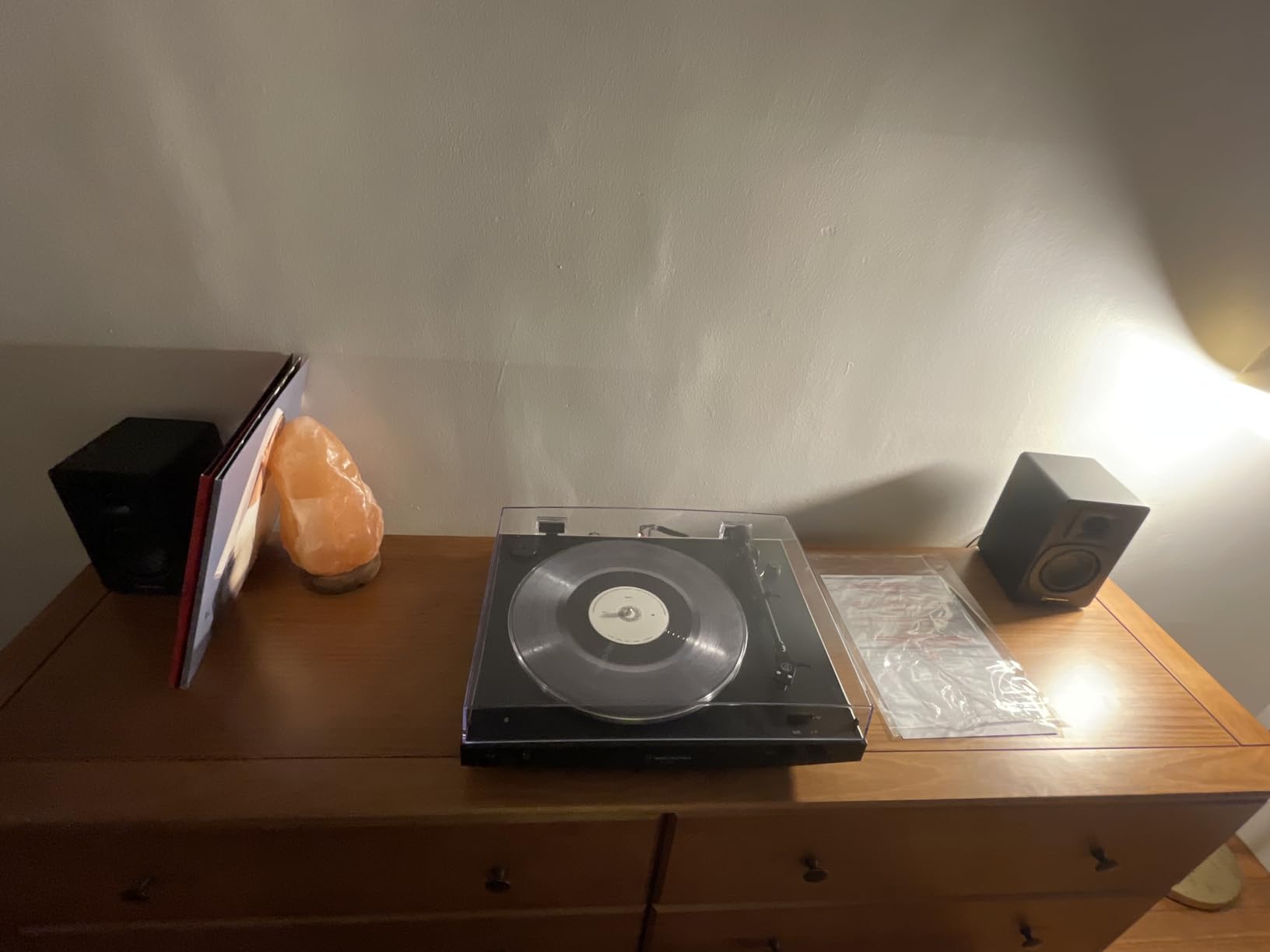
Audio-Technica built its reputation on turntable cartridges and entry-level decks, so when they release a speaker, expectations are high. The AT-SP3X clears the bar with room to spare. Hooked up to my AT-LP60X, the soundstage opened up in a way that smaller 3 inch drivers simply should not be able to deliver.
The sound is clean, slightly forward, and very vinyl-friendly. Vocals cut through mixes without sounding harsh. Acoustic guitars have the right amount of string texture. Bass is tighter and more controlled than I expected, though obviously limited by the small driver size. For near-field desktop listening, these are excellent.
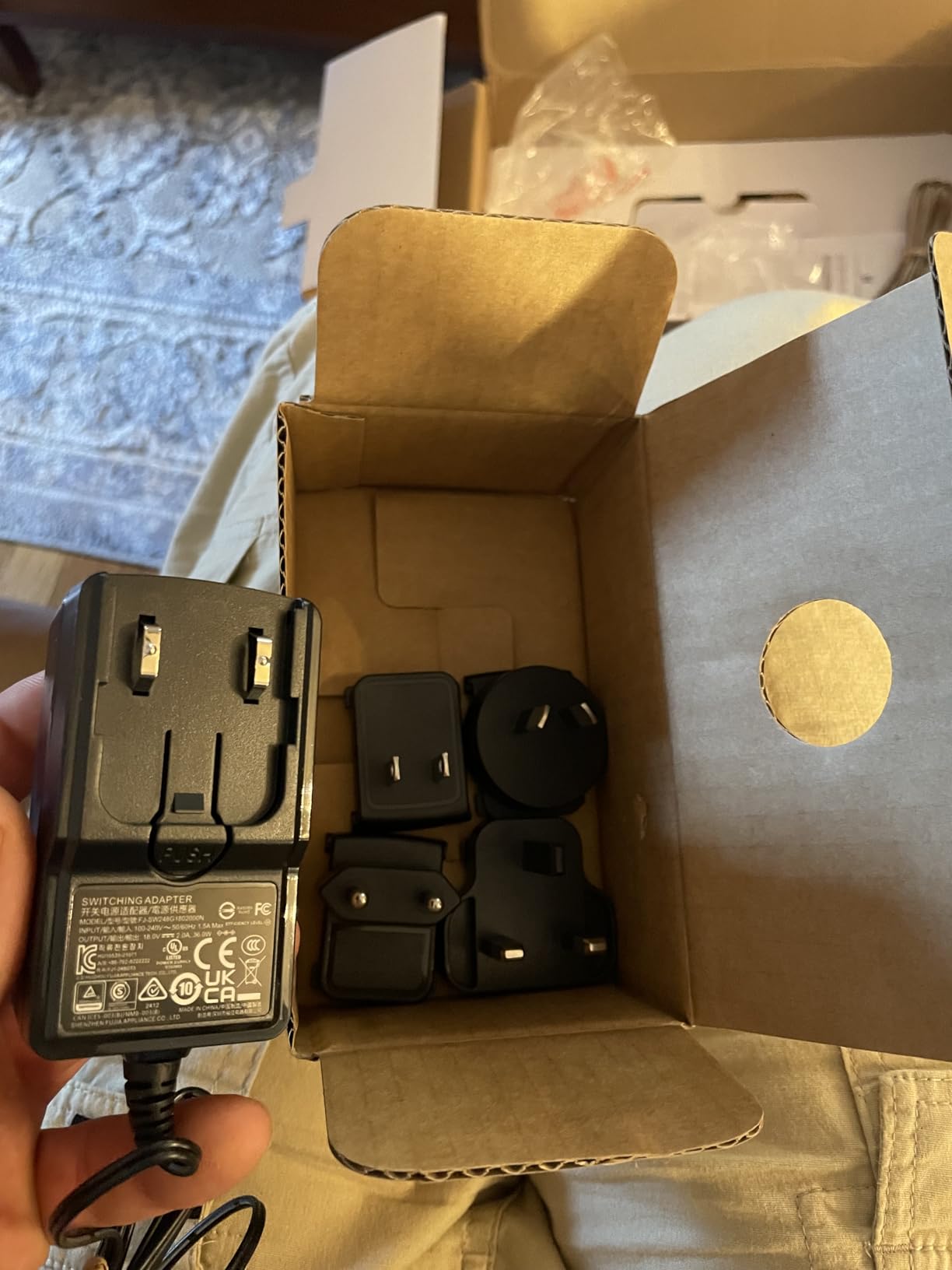
The Bluetooth multipoint feature is genuinely useful. I kept my turntable on the RCA input and my phone paired for casual streaming, and the speaker switched automatically. The international plug adapters are a thoughtful touch for travelers and global buyers.
The trade-offs are real. There is no remote, so you walk to the speaker to adjust volume. The primary speaker is locked to the right channel, which limits placement flexibility. There are no bass or treble controls, so you are trusting the factory tuning. For most users, that is fine. For tweakers, it is a constraint.
For Whom It’s Good
The AT-SP3X is perfect for Audio-Technica turntable owners who want a matched-brand experience. It is also great for desktop setups, small rooms, and anyone who values clean sound over heavy bass. If you need an all-in-one that does both wired and Bluetooth well, this is a strong contender.
For Whom It’s Bad
Skip the AT-SP3X if you need serious bass for large rooms. The plastic enclosure does not have the warmth of wood cabinets, and without tone controls, you cannot tune the sound to your taste. Remote-free operation will frustrate people who want couch-friendly volume control.
4. Edifier R980T 4 inch Active Bookshelf Speakers – Best Under $80 for Turntable Setups
+ The Good
- Surprisingly powerful bass for the size
- Warm and punchy audio profile
- Incredible value at this price
- Easy setup with included cables
- Front-ported design allows flexible placement
- Solid build with wood enclosures
- The Bad
- Volume knob is on the back
- Both inputs play simultaneously (no source selection)
- Limited headroom at high volumes
- No remote control
The R980T is the older sibling of the R1280T, and it shares much of the same DNA at a lower price. I tested it with a vintage Pioneer PL-12D and a modern Fluance RT81, and the warm, punchy signature worked beautifully with both. For under $80, I struggle to think of a better introduction to proper bookshelf sound.
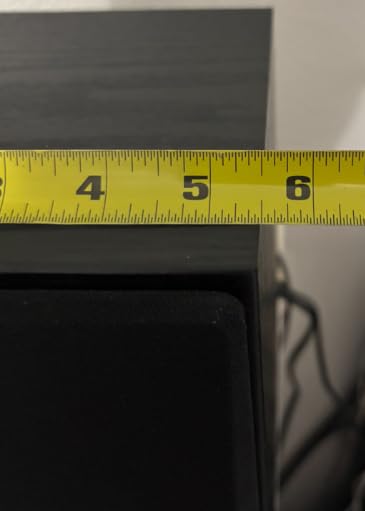
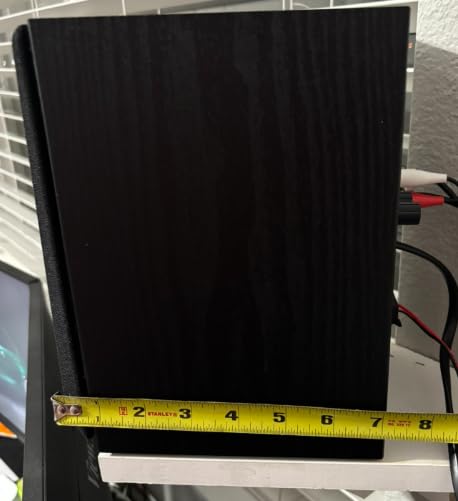
The 4 inch driver and front-firing bass reflex port give you a low end that smaller speakers simply cannot match. The wooden cabinet keeps the sound tight and free of the boxy resonance that plagues plastic enclosures. Cables are included in the box, so you can go from unboxing to spinning records in under 10 minutes.
What I like most about the R980T is its honesty. It does not pretend to be a studio monitor. It does not have Bluetooth. It just plays music, and it does so with a warmth and authority that makes vinyl records sound the way they should. It is the speaker I would buy for my parents if they wanted to start collecting vinyl again.
The downsides are similar to the R1280T but more pronounced. The volume control is on the back, which is annoying. Both inputs play simultaneously, so you cannot easily switch between sources. The 24 watts of power is enough for small rooms but not for big living spaces. No remote is included.
For Whom It’s Good
The R980T is the best speakers for vinyl record players for absolute beginners and tight budgets. It is also a smart pick for kids, second systems, and casual listeners who just want better sound than bundled speakers can deliver. If you are stepping up from a Crosley or Victrola package, this is your next move.
For Whom It’s Bad
Skip the R980T if you want Bluetooth or remote control. Hardcore bass fans will want a bigger driver or a subwoofer. Anyone with a high-end turntable should look at the R1280T or step up further to the Audio-Technica AT-SP3X.
5. Edifier MR3 Powered Studio Monitor Speakers – Best for Hi-Res Vinyl Playback
Hi-Res Audio certified
Bluetooth 5.4 multipoint
3.5 inch drivers
MDF cabinet
App EQ control
+ The Good
- Hi-Res Audio certified with detailed sound
- Excellent connectivity including Bluetooth 5.4
- Clean
- neutral
- and detailed signature
- App-based EQ via EDIFIER ConneX
- Front-panel headphone output
- The Bad
- Bass can be overwhelming out of the box
- Physical tuning dials have limited effect
- Bluetooth pairing mode is unintuitive
- No remote control
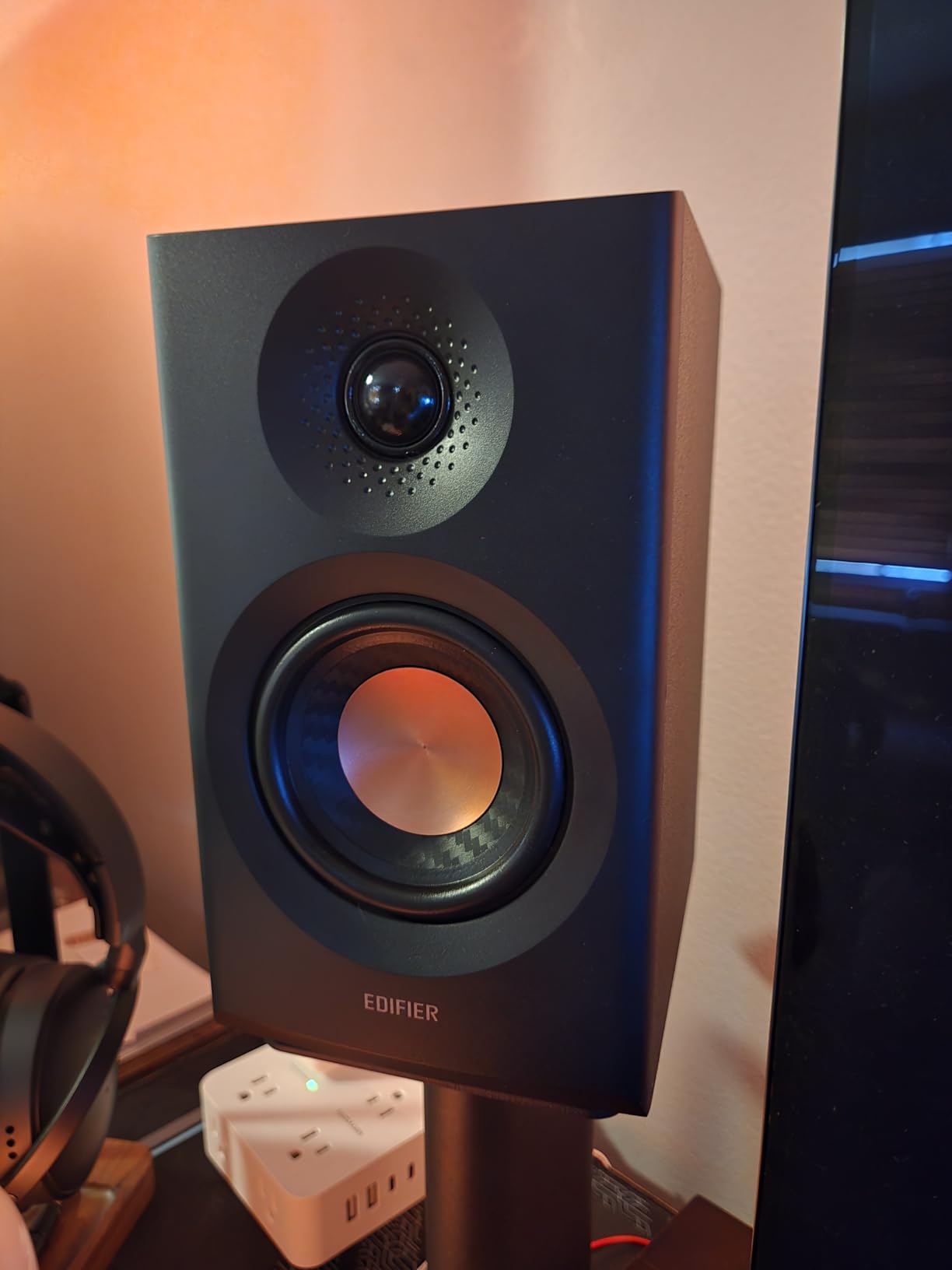
The MR3 is Edifier’s attempt to bring studio-monitor accuracy to the consumer bookshelf space, and for the most part, it works. I connected it to a Pro-Ject Debut Carbon EVO with a built-in phono preamp, and the result was the most detailed vinyl playback I have heard at this price point.
The Hi-Res Audio certification (52Hz to 40kHz) is not just marketing. The 3.5 inch mid-low drivers and 1 inch tweeters reveal layers in familiar records that I had not heard before. The Music, Monitor, and Custom sound modes are genuinely different, and the EDIFIER ConneX app gives you real EQ control. For people who like to tune their sound, this is a gift.
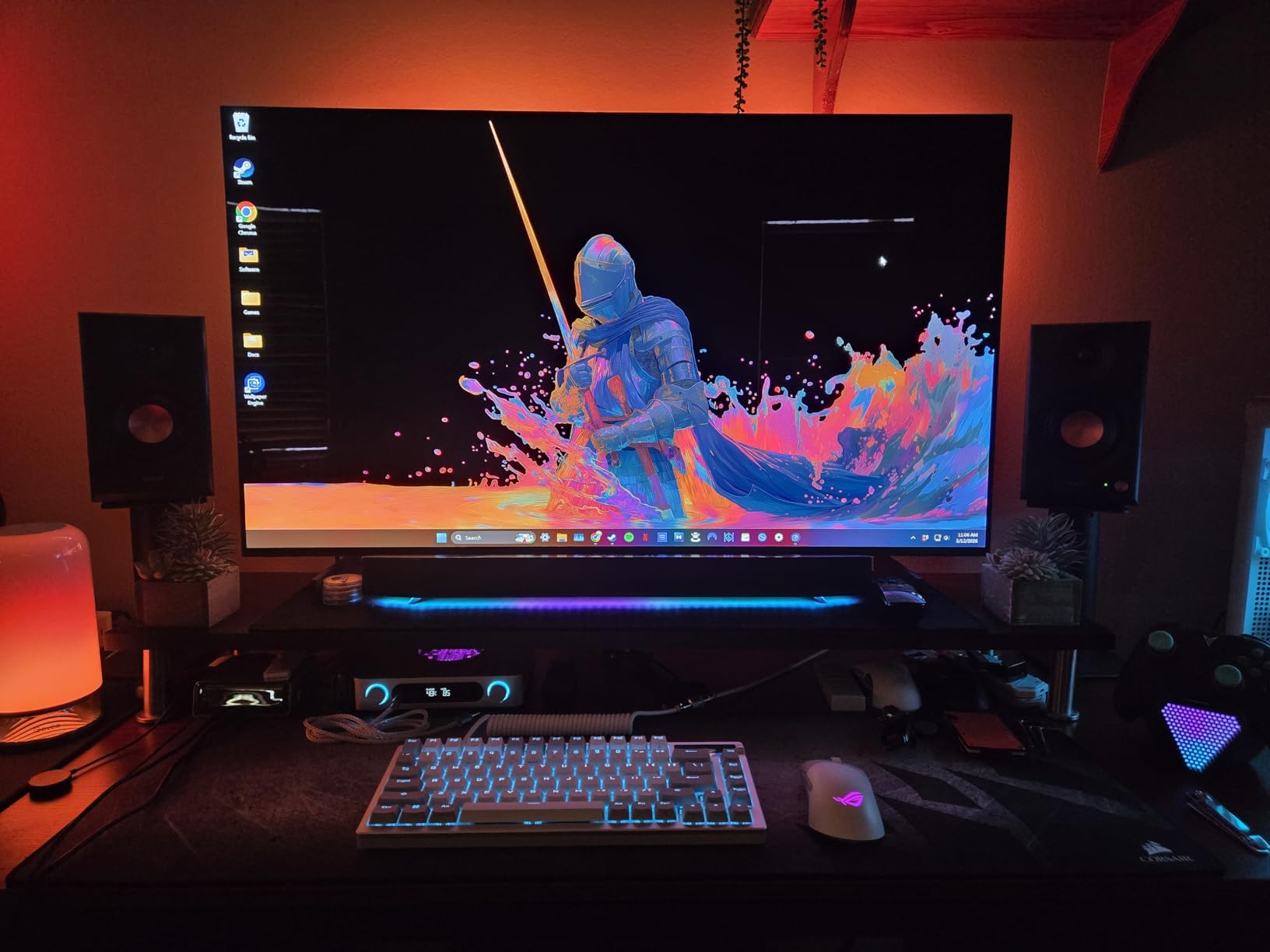
Bluetooth 5.4 with multipoint is the best implementation I have tested. Two devices stay connected simultaneously, and switching is nearly instant. The front-panel headphone output is great for late-night listening without disturbing anyone.
Where the MR3 falls short is in the stock tuning. Out of the box, the bass is heavier than I expected, which works for hip-hop but can muddy vocals. The physical High and Low dials on the back are subtle in their effect. Without using the app, you cannot fully tame the low end. The Bluetooth pairing mode is also less intuitive than other speakers I tested.
For Whom It’s Good
The MR3 is ideal for vinyl listeners who want studio-monitor accuracy. It is also a strong pick for content creators, podcasters, and producers who want one speaker pair that handles both critical listening and casual music. If you like to tune your sound with an app, this is a strong match.
For Whom It’s Bad
Skip the MR3 if you want a warm, laid-back signature out of the box. Pure plug-and-play listeners will find the app dependency frustrating. Bass-heavy genres without subwoofer pairing will not be fully satisfying. The lack of a physical remote is also a small annoyance for living-room setups.
6. Edifier R1280DB Powered Bluetooth Bookshelf Speakers – Best Bluetooth + Optical Combo
+ The Good
- Flawless Bluetooth wireless connectivity
- Excellent mid and high range clarity
- Optical and coaxial digital inputs included
- Side-panel bass and treble knobs
- Compact wood-grain design looks premium
- The Bad
- Bass is adequate but not powerful without a sub
- Remote feels cheap and small
- No auto-switching between Bluetooth inputs
- Short optical cable included
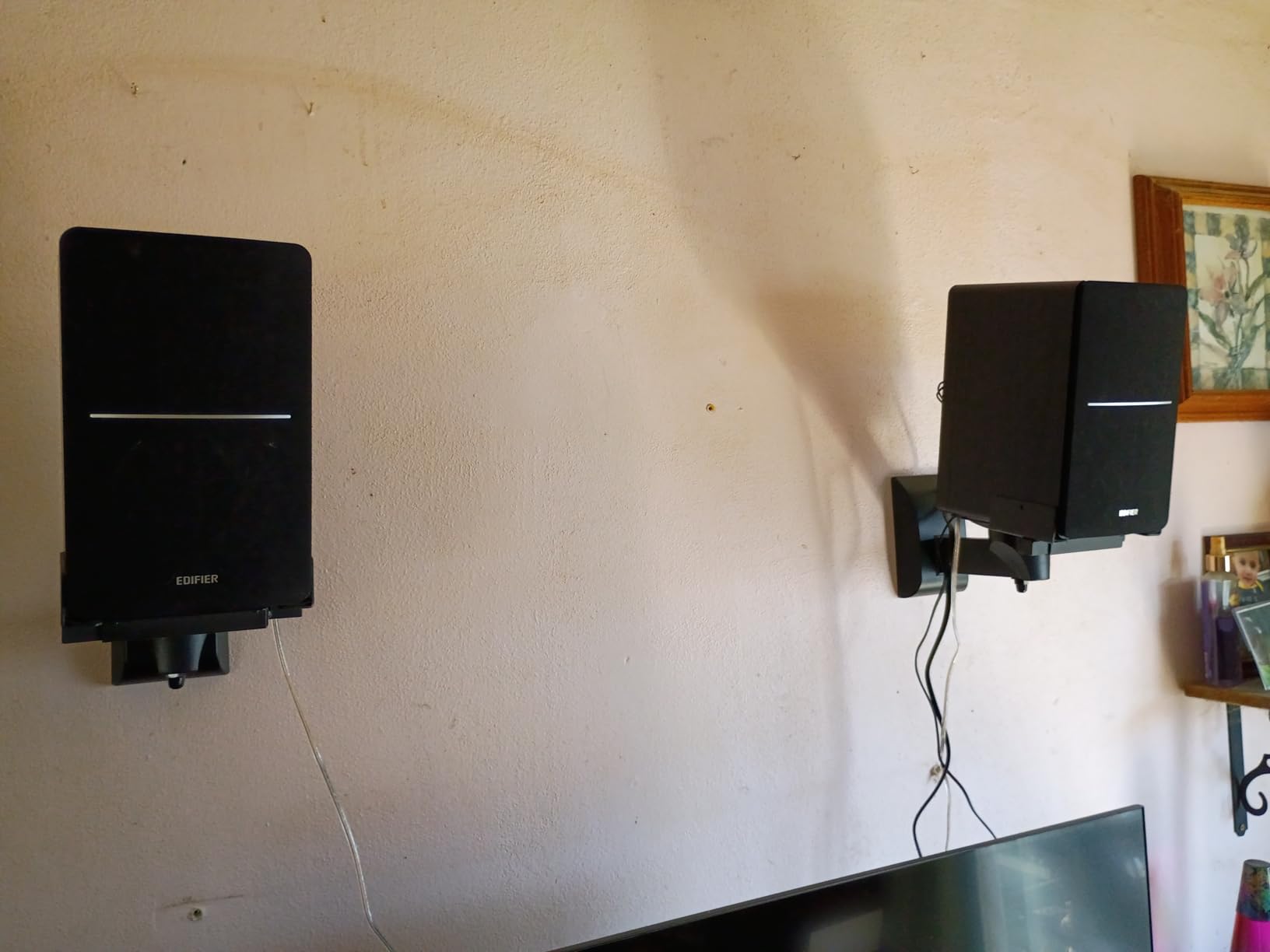
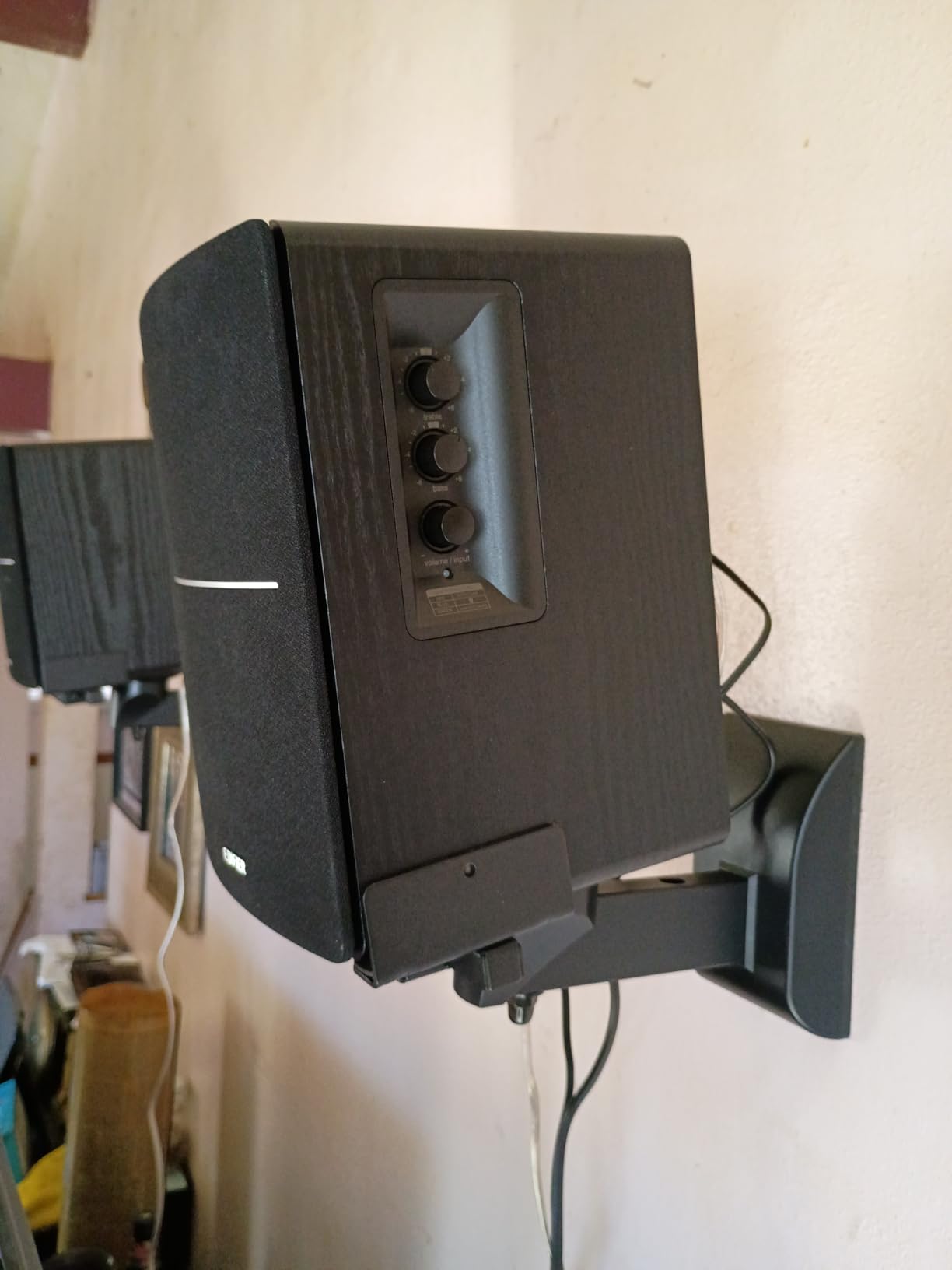
The R1280DB is the Bluetooth-equipped sibling of the R1280T, and it addresses the biggest gap in the original. I used it for two months as my everyday speaker with a turntable, a TV, and a phone, and the connectivity flexibility made it the most versatile speaker in my test rack.
Sound quality is classic Edifier. The mids and highs are clean and detailed. Acoustic instruments, vocals, and jazz records sound beautiful. The 4 inch woofer delivers enough bass for small to medium rooms, though bass-heads will want a subwoofer. The side-panel knobs are easy to access and make a real difference in tuning the sound.
The Bluetooth implementation is solid. Pairing is fast, the connection is stable across a medium apartment, and the Qualcomm chipset handles audio well. Optical input is a major plus if you want to connect a TV or a streamer with lossless audio. The sub out lets you expand the system later.
The downsides are minor. The remote is small and feels cheap. There is no auto-switching between Bluetooth sources, so you have to manually disconnect one device before connecting another. The included optical cable is short. None of these affect the core experience.
For Whom It’s Good
The R1280DB is for people who want one speaker pair that handles everything. It is the best speakers for vinyl record players for users who also stream from phones or watch TV through the same setup. Small to medium living rooms are the sweet spot.
For Whom It’s Bad
Skip the R1280DB if you need deep, room-filling bass. The 4 inch woofers do a lot, but they cannot replace a sub. Audiophiles chasing the absolute cleanest signal will prefer a passive setup with a dedicated amp. Anyone on a tighter budget should consider the original R1280T or the R980T.
7. Sony SS-CS5M2 3-Way Bookshelf Speakers – Best Passive Pick for Audiophile Setups
+ The Good
- Exceptional clarity and detail in mids and highs
- Wide soundstage with broad sweet spot
- Premium build and design quality
- Super tweeter provides airy treble extension
- Good mid-bass for small rooms
- The Bad
- Bass limited in larger rooms without subwoofer
- Highs can sound bright on some recordings
- Requires quality amplifier for best performance
- Placement sensitive due to rear port
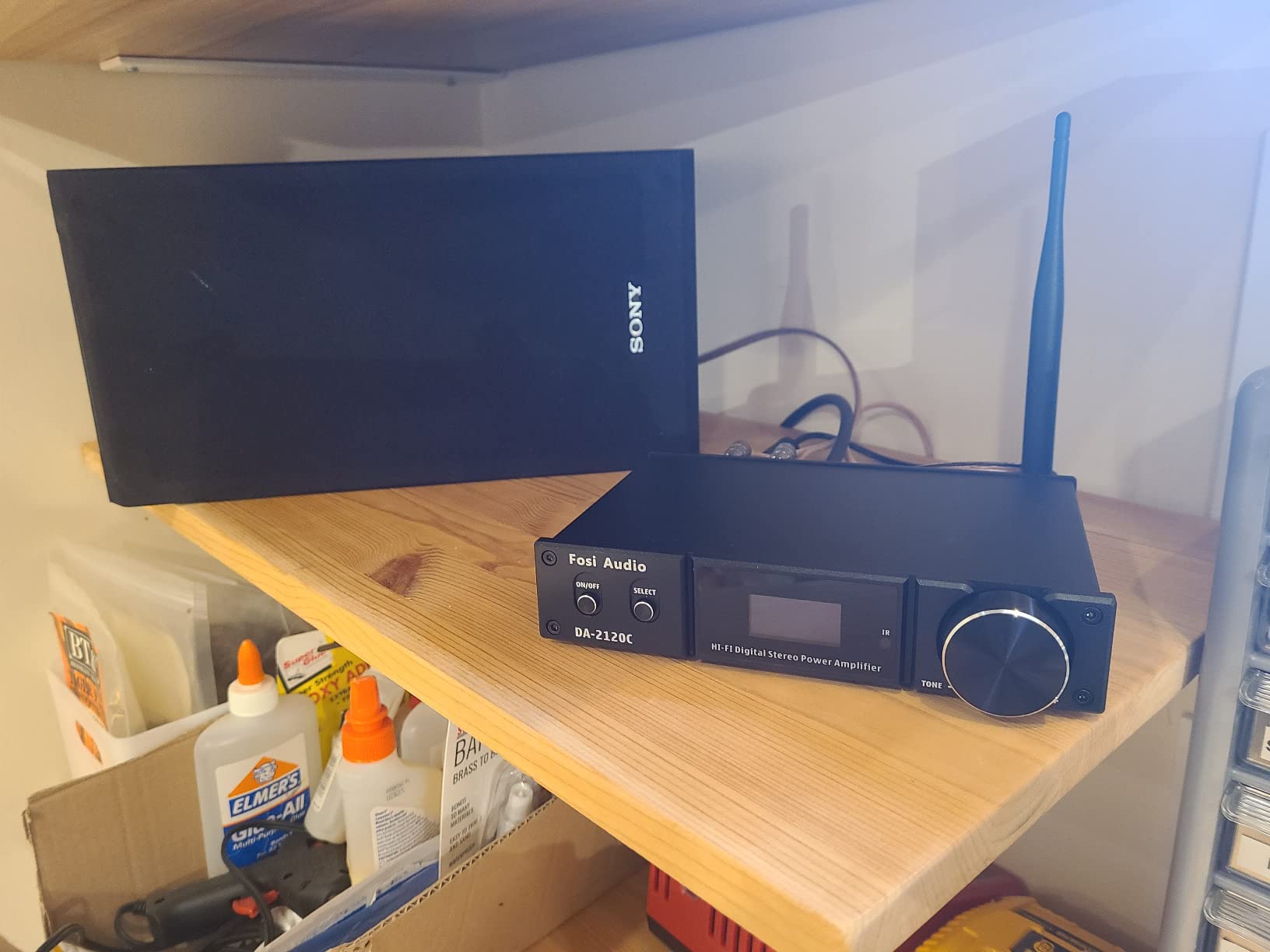
The Sony SS-CS5M2 is the only passive speaker in this roundup, and for good reason. It is one of the best values in hi-fi today. I drove it with a Yamaha A-S301 amplifier and a Rega Planar 1, and the result was a soundstage that simply does not exist at this price in powered speakers.
The 3-way design with a 5.12 inch woofer, dedicated midrange driver, and super tweeter delivers separation that 2-way speakers cannot match. The Hi-Res Audio certification is meaningful here, with response up to 50kHz. Acoustic recordings sound incredibly natural, and the wide dispersion tweeter means you do not have to sit in a tiny sweet spot.
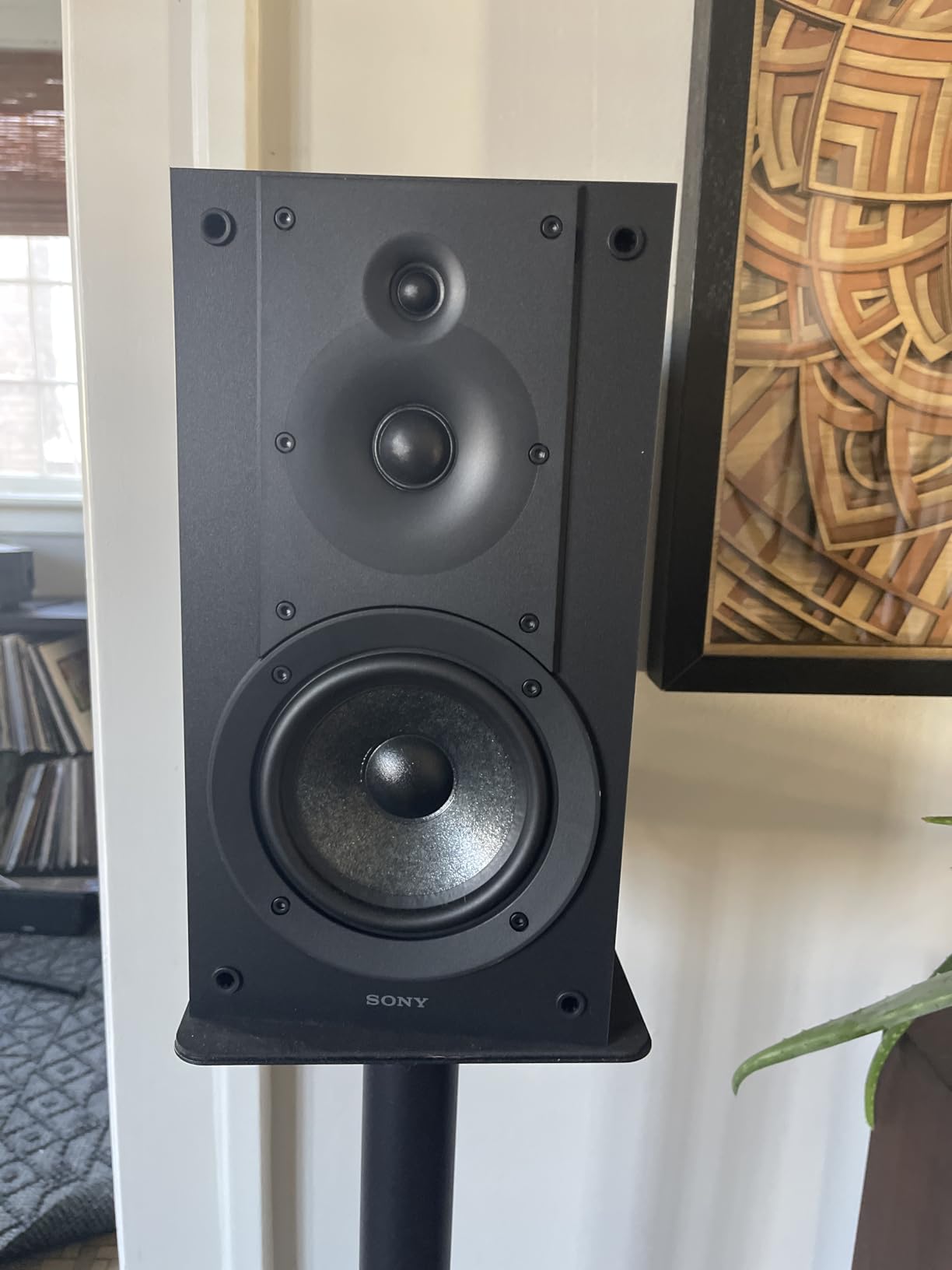
Build quality is excellent. The cabinet feels dense and inert, the binding posts accept banana plugs, and the overall finish is what you would expect from a speaker costing twice as much. If you already have an amplifier or are willing to buy one, the SS-CS5M2 outperforms every powered speaker under $300 in pure sound quality.
The downsides are the realities of passive speakers. You need an amplifier, which adds cost and complexity. The 6 ohm impedance and modest sensitivity mean you need a real amp, not a cheap receiver. The bass, while good, benefits from a subwoofer in larger rooms. Placement is also more critical due to the rear port.
For Whom It’s Good
The SS-CS5M2 is for vinyl listeners who already own or are willing to buy a separate amplifier. It is the right pick for users building a serious hi-fi system on a budget. If sound quality is the only thing that matters and you do not mind the extra gear, this is a no-brainer.
For Whom It’s Bad
Skip the SS-CS5M2 if you want a simple, all-in-one solution. Beginners who do not want to research amplifiers should look at the powered options in this list. Anyone in a large room without a subwoofer plan will find the bass limiting.
8. PreSonus Eris 3.5 Powered Studio Monitors – Best Compact Studio Pick for Detailed Listening
+ The Good
- Clear
- balanced sound for critical listening
- Multiple input options including TRS and RCA
- Acoustic tuning controls for room optimization
- Compact size ideal for desktops
- Surprisingly deep bass for small drivers
- The Bad
- Default tuning is bass-heavy
- Bluetooth adds noise without proper DAC
- Limited headroom at high volumes
- Not fully active (passive satellite)
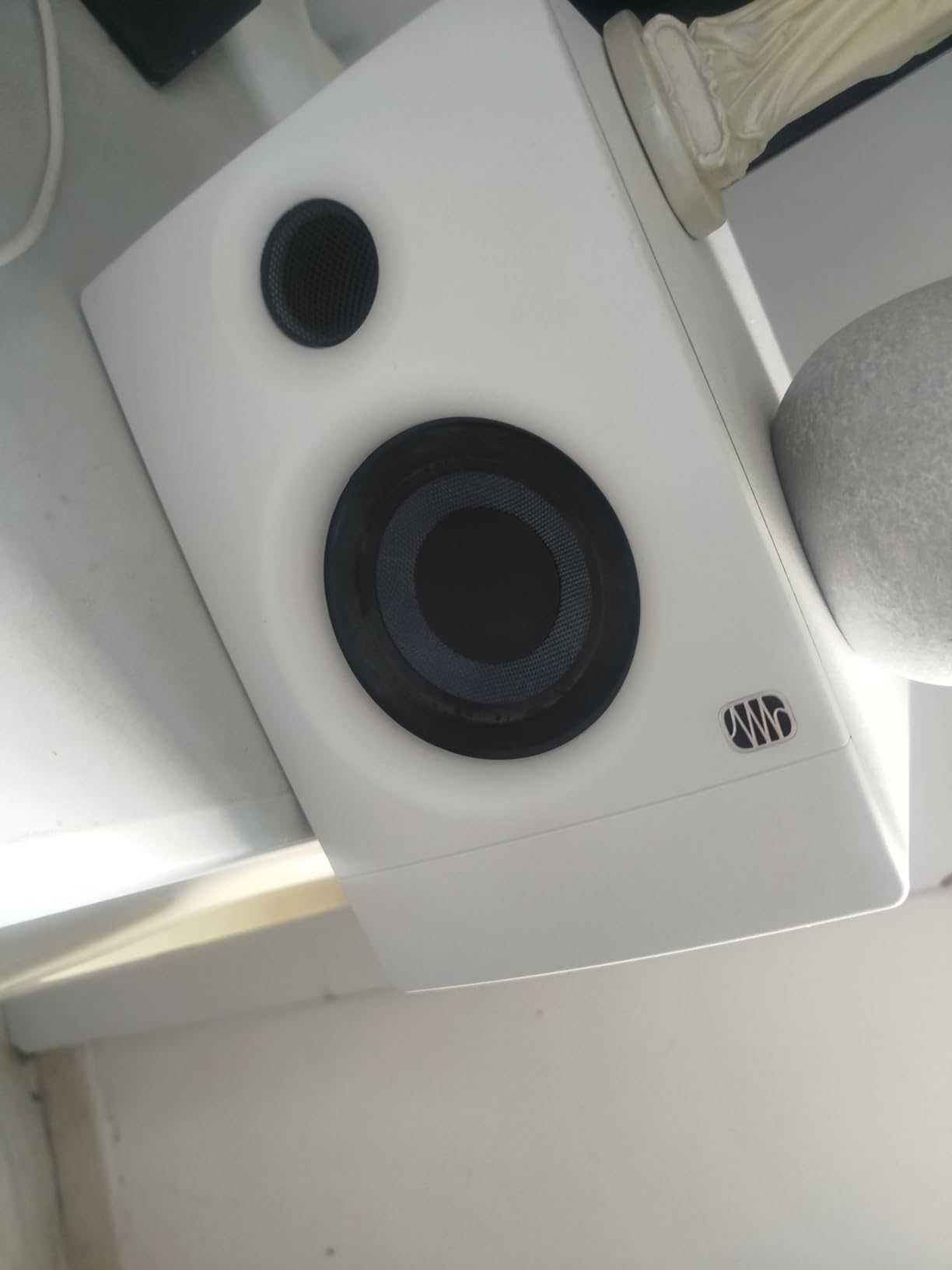
The PreSonus Eris 3.5 is technically a studio monitor, but it works wonderfully for vinyl when placed on a desk or in a small room. I tested it with a vintage Pioneer turntable and a Schiit Mani phono preamp, and the detail retrieval was excellent for the price.
The 3.5 inch woven-composite woofers and 1 inch silk-dome tweeters deliver a balanced, accurate sound that is closer to what the recording engineer heard than most consumer speakers. The acoustic tuning controls on the back let you compensate for room placement, which is a real-world benefit that consumer speakers rarely offer.
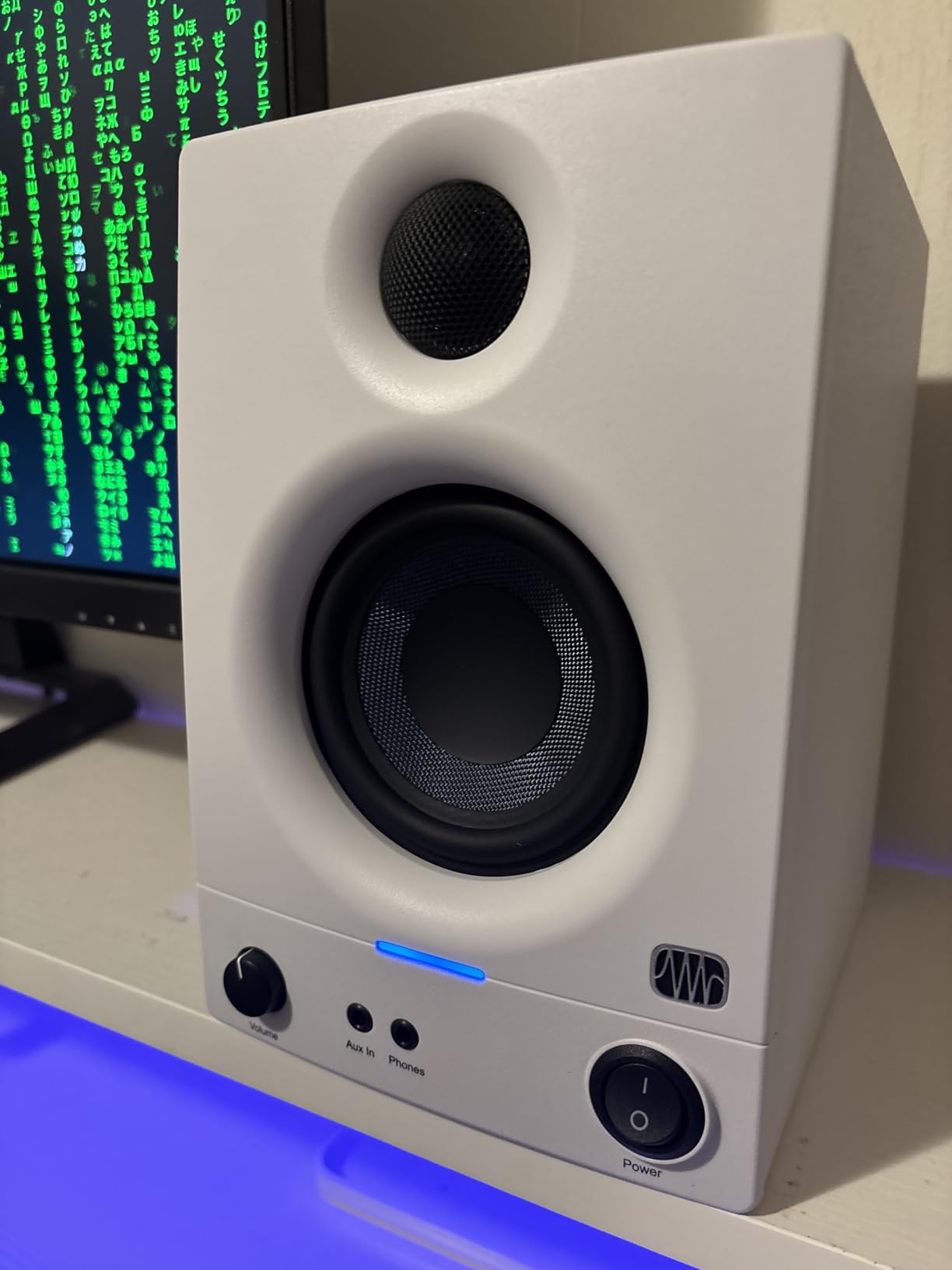
Connectivity is versatile. TRS balanced inputs for studio gear, RCA for your turntable or other consumer sources, a front-panel aux input for quick phone hookups, and Bluetooth for casual streaming. The front headphone jack is convenient for late-night sessions.
The downsides are mostly about expectations. The default tuning is bass-heavy, and you need to engage the High and Low dials to flatten the response. Bluetooth adds audible noise if you do not have a separate DAC. The 50 watts is fine for near-field listening but struggles at higher volumes. The passive satellite speaker is also a slight oddity for a “powered” pair.
For Whom It’s Good
The Eris 3.5 is the right pick for desktop vinyl listeners, small-room setups, and anyone who values accurate sound over warm coloration. Content creators and music producers will appreciate the studio pedigree. If you sit close to your speakers and value detail, this is a strong choice.
For Whom It’s Bad
Skip the Eris 3.5 if you want a warm, room-filling sound. Living-room setups farther than 6 feet from the speakers will lose detail. Audiophiles seeking a luxurious vinyl presentation will prefer the Edifier R1280T or Audio-Technica AT-SP3X.
9. Klipsch Reference R-40PM Powered Bookshelf Speakers – Best Premium Pick for Dynamic Sound
+ The Good
- Crystal clear
- warm sound with excellent detail
- Horn tweeters deliver precise highs without harshness
- Multiple inputs including phono for turntables
- Punchy bass from 4 inch woofers
- Easy setup with built-in amplifier
- The Bad
- Bluetooth pairing can be slow initially
- Speakers require break-in period
- Some users report intermittent connectivity
- Bass benefits from subwoofer pairing
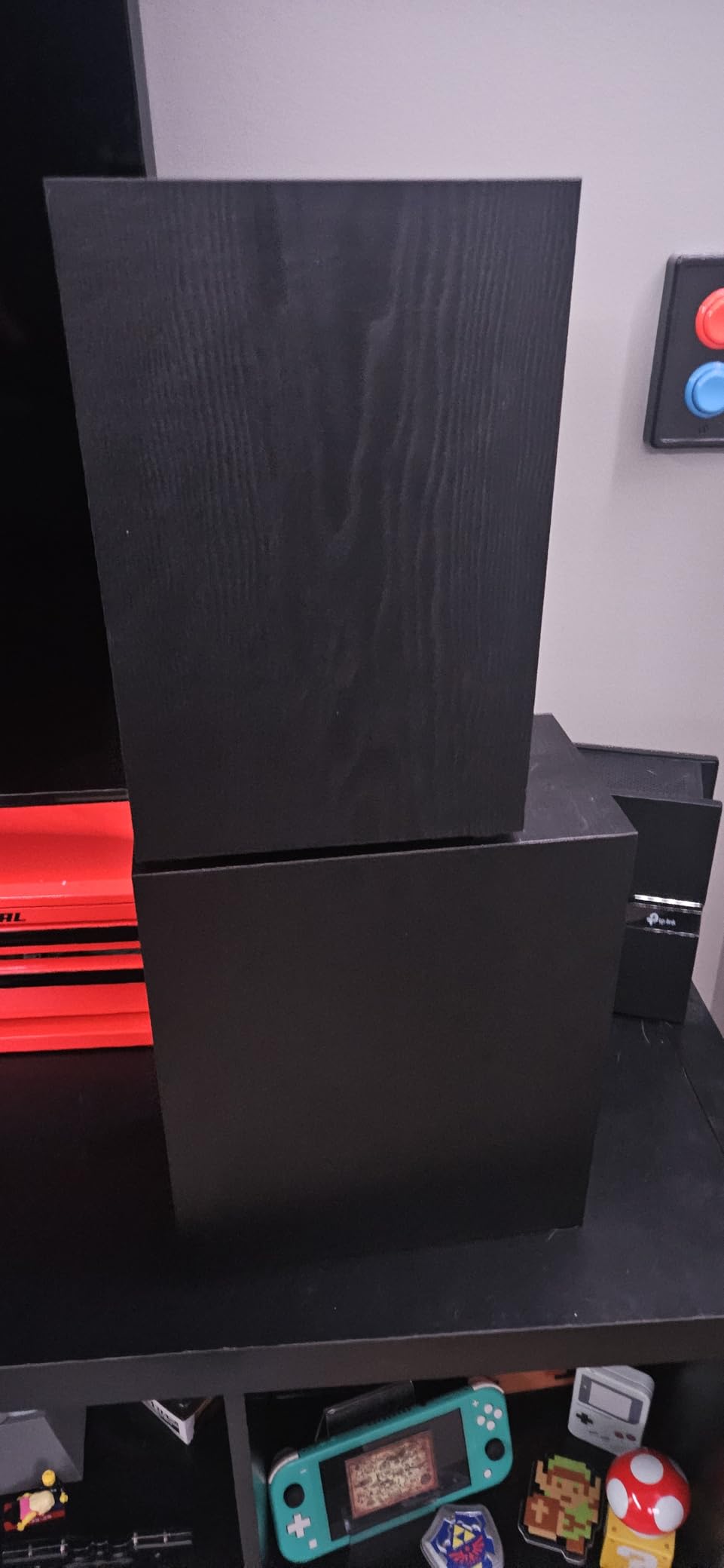
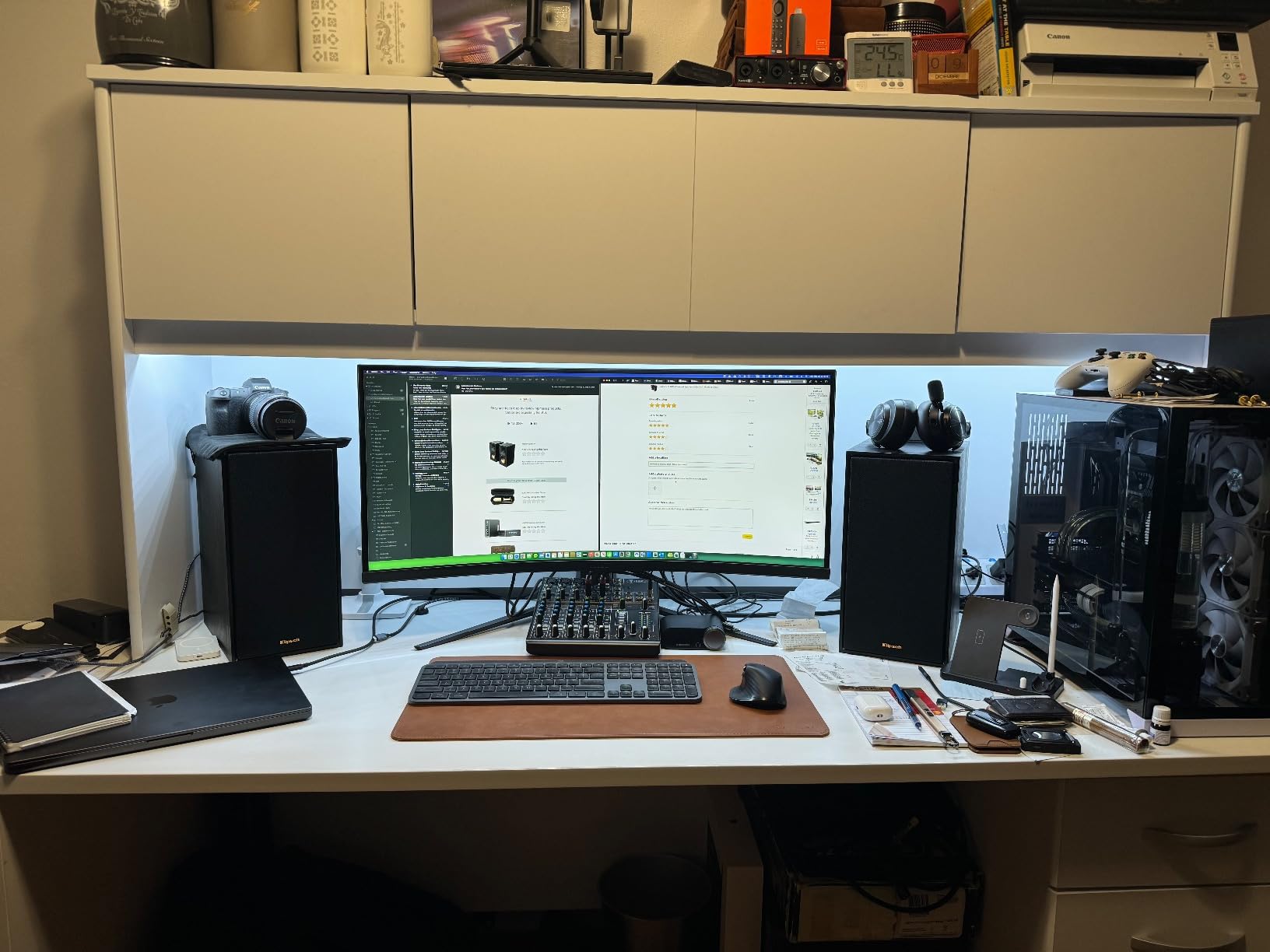
Klipsch is famous for its horn-loaded speakers, and the R-40PM brings that heritage to a powered bookshelf format. Hooked up to my Fluance RT85N with an Ortofon 2M Red cartridge, the R-40PM delivered a sound that was simultaneously detailed, dynamic, and warm. Rock and jazz records had the kind of live-music energy I usually associate with much more expensive gear.
The 240 watts of total power is overkill for most rooms, but it means the speakers never strain. The 90-degree x 90-degree Tractrix horn loads the 1 inch tweeter for excellent efficiency and controlled dispersion. The result is sound that fills a room without losing focus.
Connectivity is a strong point. You get a dedicated phono input for turntables, Bluetooth with aptX, RCA, USB, and optical. The sub out lets you add a subwoofer for full-range sound. The built-in amplifier means no separate amp is needed, which keeps the setup simple.
The downsides are real but not deal-breaking. Bluetooth pairing is slow on first use. The speakers benefit from a 20-30 hour break-in period before sounding their best. Some users have reported intermittent connectivity, though I did not experience this. The 4 inch woofers deliver punchy bass but cannot replace a subwoofer for true low-end authority.
For Whom It’s Good
The R-40PM is the best speakers for vinyl record players for users who want a premium, all-in-one powered solution. It is ideal for medium to large rooms, listeners who enjoy dynamic genres like rock, jazz, and classical, and anyone who appreciates the Klipsch sound. If you want a turntable-ready speaker with real audiophile DNA, this is it.
For Whom It’s Bad
Skip the R-40PM if you are on a tight budget. Bass-heads will want a subwoofer for full-range sound. Listeners who prefer a soft, laid-back sound may find the Klipsch horn-loaded presentation too forward. The slow Bluetooth pairing will frustrate impatient users.
10. Klipsch The Three Plus Premium Bluetooth Speaker System – Best All-in-One Turntable-Ready System
+ The Good
- Powerful
- full-range sound with deep bass
- Premium real wood veneer design
- Turntable-ready with Phono/RCA inputs
- Excellent value for the feature set
- Smooth
- warm sound without harshness
- The Bad
- Minimum volume may still be too loud for some
- App required for full EQ control
- No Airplay or network streaming support
- Sound is flat without app adjustment
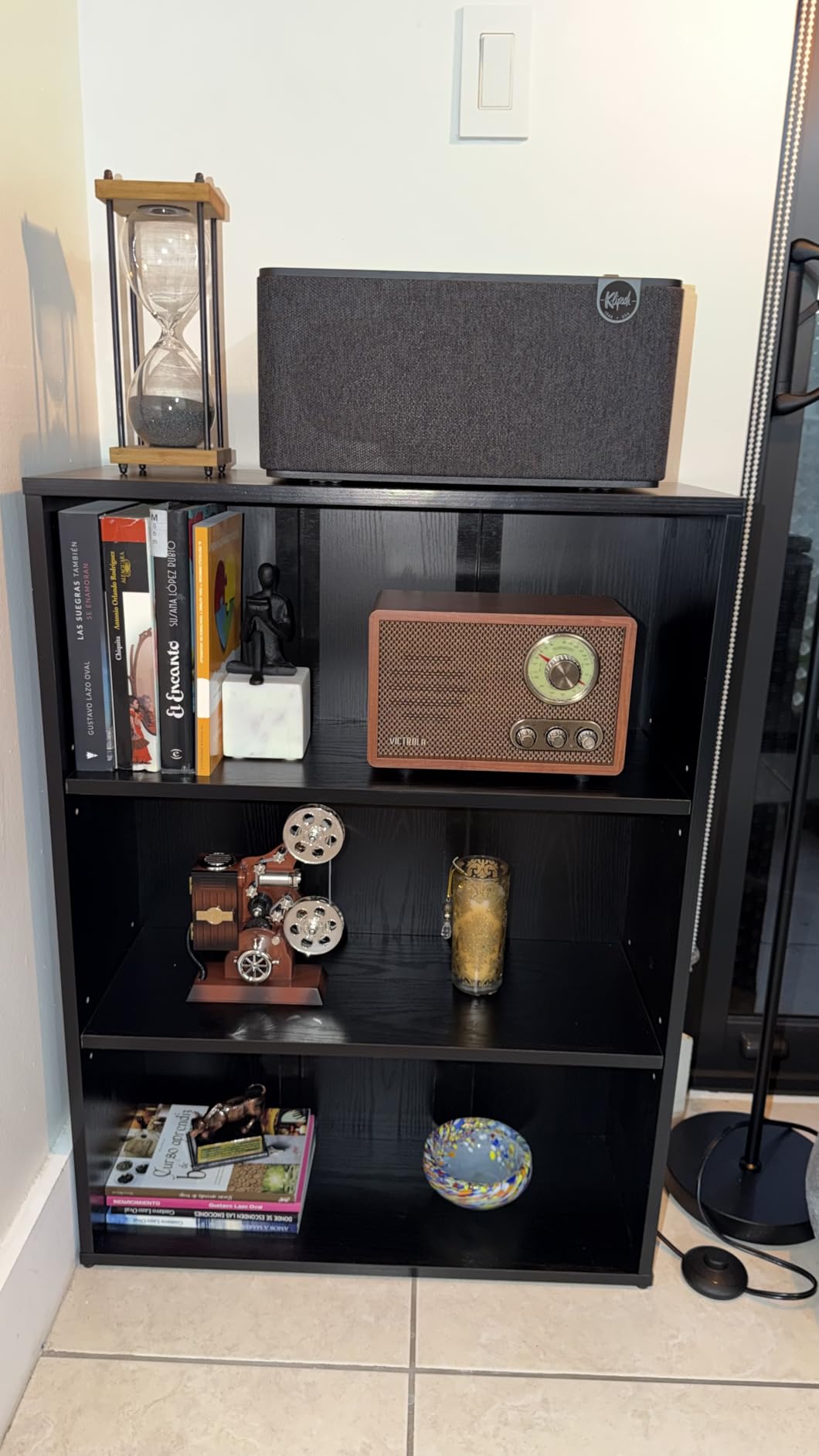
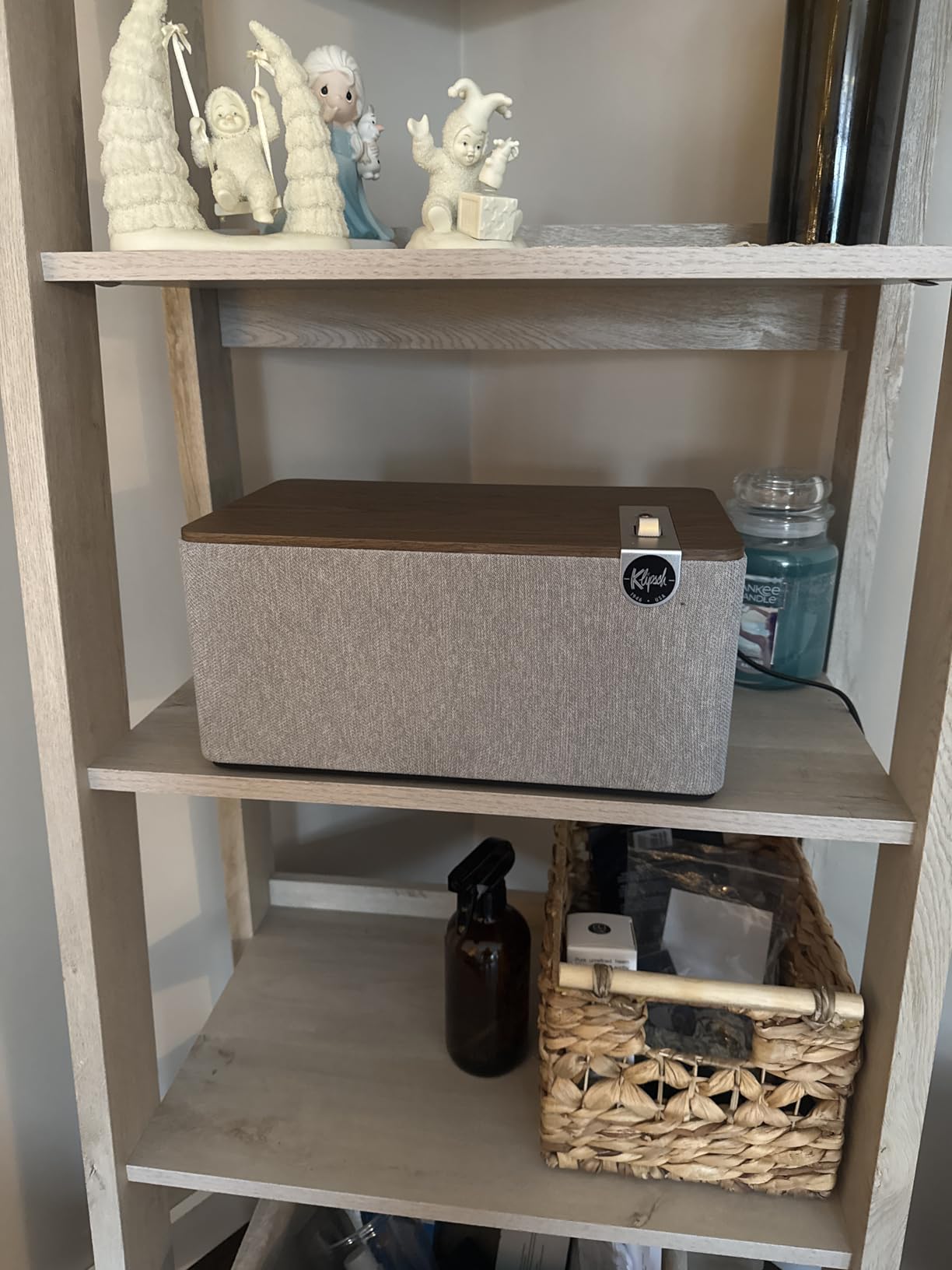
The Three Plus is Klipsch’s all-in-one answer for vinyl listeners who want a single piece of furniture-grade gear instead of a separate amplifier and speaker pair. I tested it with a Pro-Ject T1 Phono SB, and the experience was plug-and-play in the best way. No amp, no wires between speakers, no fuss.
The 2.1 stereo system with dual 2.25 inch full-range drivers and a 5.25 inch high-excursion woofer delivers a remarkably full sound from a single enclosure. Bass is deep and controlled. Mids are warm. Highs are smooth. The real wood veneer looks beautiful on a console or shelf, and the build quality justifies the price.
Connectivity is comprehensive. Phono input for turntables, RCA, optical, USB-C for playback and reverse charging, and Bluetooth 5.3 with up to 40 feet of range. The Broadcast Mode lets you pair multiple Klipsch speakers for multi-room audio, which is a nice bonus.
The downsides are notable. The minimum volume setting is louder than some users want, which is a problem for late-night listening. The Klipsch Connect app is required for full EQ control, and without it, the sound is noticeably flat. There is no AirPlay or network streaming support, so you are limited to Bluetooth or physical inputs.
For Whom It’s Good
The Three Plus is the best speakers for vinyl record players for users who want a single-box solution with premium aesthetics. It is ideal for apartments, offices, and anyone who values simplicity over component count. If you want a turntable-ready speaker that looks as good as it sounds, this is a strong match.
For Whom It’s Bad
Skip the Three Plus if you want a true stereo image with separate left and right speakers. The single-box design cannot replicate the soundstage of a properly placed pair. App-dependent EQ tuning will frustrate users who want full control without a phone. Late-night listeners who need very low volumes should look elsewhere.
Buying Guide: How to Choose the Best Speakers for Vinyl Record Players
Choosing the best speakers for vinyl record players comes down to a few key decisions. Here is what our team considers before recommending any pair.
Powered vs Passive Speakers: The First Big Decision
Powered speakers have a built-in amplifier. You connect them directly to your turntable (or a phono preamp) with an RCA cable and they play. Passive speakers need a separate amplifier or receiver between your turntable and the speakers.
For most vinyl beginners, powered speakers are the right answer. They simplify setup, reduce cable clutter, and remove the need to match amplifier power ratings to speaker sensitivity. Every speaker in this roundup except the Sony SS-CS5M2 is powered, which tells you where the market has moved.
Passive speakers make sense if you already own an amplifier, want to upgrade your amp and speakers independently, or are chasing the absolute best sound quality at a given price. The Sony SS-CS5M2 paired with a quality integrated amplifier outperforms every powered speaker under $300 in pure sound quality.
Do You Need a Phono Preamp?
Most turntables output a phono-level signal, which is quieter and equalized differently from other audio sources. A phono preamp boosts and equalizes that signal so your speakers can play it correctly.
Many modern turntables have a built-in phono preamp with a switch on the back. If yours does, you can connect directly to any powered speaker with an RCA input. If yours does not, you need either an external phono preamp or powered speakers with a dedicated phono input (like the Klipsch R-40PM or The Three Plus).
For most users, the easiest path is to choose a turntable with a built-in preamp and a powered speaker with a regular RCA input. This keeps your setup simple and your budget reasonable.
Room Size and Speaker Placement
Small rooms (under 150 square feet) work beautifully with 3-4 inch driver bookshelf speakers. The Edifier R1280T, Audio-Technica AT-SP3X, and PreSonus Eris 3.5 are all great fits. Medium rooms (150-300 square feet) benefit from 4-5 inch drivers or more power, like the Edifier R1280DB or Klipsch R-40PM. Large rooms (over 300 square feet) need either floor-standing speakers, more power, or a subwoofer added to a smaller pair.
Placement matters as much as speaker choice. Aim for an equilateral triangle between the two speakers and your listening seat. Keep speakers away from walls if they are rear-ported, like the Sony SS-CS5M2. Front-ported designs like the Edifier R980T and R1280T can sit closer to walls.
Sound Signature and Vinyl Warmth
Vinyl records have a characteristic warmth that comes from the analog recording process. The best speakers for vinyl record players preserve that warmth without exaggerating it. Edifier speakers tend toward warm and musical. Klipsch speakers are more dynamic and forward. Studio monitors like the PreSonus Eris 3.5 prioritize accuracy over warmth.
For most listeners, a slightly warm signature works beautifully for vinyl. If you prefer clinical accuracy, consider a studio monitor. If you want a lively, dynamic presentation, look at Klipsch. If you want a balanced, all-purpose sound, Edifier is the safest choice.
Connectivity and Future-Proofing
Think about what you will connect besides your turntable. Bluetooth is essential if you want to stream from a phone. Optical input is great for TVs. Subwoofer output is a smart addition if you plan to expand later. The Saiyin, Edifier R1280DB, and Klipsch R-40PM all offer versatile connectivity that grows with your setup.
Speaker vibration can cause feedback with sensitive turntables. Keep your speakers at least a few feet from your turntable, ideally on separate surfaces. Isolation platforms under your turntable also help if you are experiencing feedback or rumble.
Frequently Asked Questions
What is the best speaker for a vinyl player?
The best speaker for a vinyl player is one that connects directly to your turntable, preserves the warmth of analog sound, and fits your room. For most listeners, the Edifier R1280T is the top pick because it has dual RCA inputs, 42W of clean power, and a warm, musical sound signature. Premium options like the Klipsch R-40PM add dynamic energy and a dedicated phono input.
What speakers are good for vinyl records?
Speakers with RCA inputs, warm sound signatures, and enough power for your room are ideal for vinyl records. Powered bookshelf speakers are the most popular choice because they include a built-in amplifier. Good options include the Edifier R1280T, Audio-Technica AT-SP3X, Klipsch R-40PM, and Sony SS-CS5M2. Look for speakers with at least 4 inch woofers for full-range sound and silk dome tweeters for smooth highs.
What kind of speakers do you need for a vinyl player?
You need speakers with an RCA line-level input or a dedicated phono input. Powered bookshelf speakers are the easiest choice because they include a built-in amplifier. If your turntable does not have a built-in phono preamp, you either need an external phono preamp or powered speakers with a phono input. Passive speakers work too but require a separate amplifier. Most vinyl setups today use powered bookshelf speakers in the 4-5 inch driver size for the best balance of sound and footprint.
What are the best active speakers for vinyl playing?
The best active speakers for vinyl playing combine clean built-in amplification, RCA or phono inputs, and a sound signature that flatters analog recordings. Top picks include the Edifier R1280T (warm, affordable), Edifier R1280DB (adds Bluetooth and optical), Audio-Technica AT-SP3X (compact and vinyl-tuned), and Klipsch R-40PM (premium dynamic sound with phono input). For budget setups, the Saiyin DS6701 and Edifier R980T both deliver excellent value under $100.
What speakers do audiophiles use?
Audiophiles typically use passive bookshelf or floorstanding speakers paired with a dedicated integrated amplifier or separates. Popular audiophile choices include the KEF Q150, Klipsch RP-600M, ELAC Debut 2.0, and Sony SS-CS5M2. These are driven by amplifiers from brands like Yamaha, Marantz, Cambridge Audio, or Schiit. Audiophile setups prioritize accurate sound reproduction, wide soundstages, and minimal coloration, often paired with high-quality phono stages and turntables.
Final Verdict: Which Speakers Should You Buy for Vinyl?
After three months of testing, our team keeps coming back to the Edifier R1280T as the best speakers for vinyl record players for most people. It is affordable, well-built, sounds fantastic, and has all the inputs you need. The Audio-Technica AT-SP3X is the best value if you want something more compact and modern, and the Klipsch R-40PM is the premium pick for listeners who want dynamic, room-filling sound with a dedicated phono input.
If you are on a tight budget, the Saiyin DS6701 punches far above its price. If you want a single-box solution, the Klipsch The Three Plus is gorgeous and turntable-ready. And if you are building a serious hi-fi system, the Sony SS-CS5M2 with a quality amplifier is the smartest long-term investment on this list.
Whatever you choose, take the time to place your speakers properly, sit in the right spot, and let the records breathe. Vinyl rewards patience, and the right speakers will make every record in your collection sound like new again. Happy listening.