
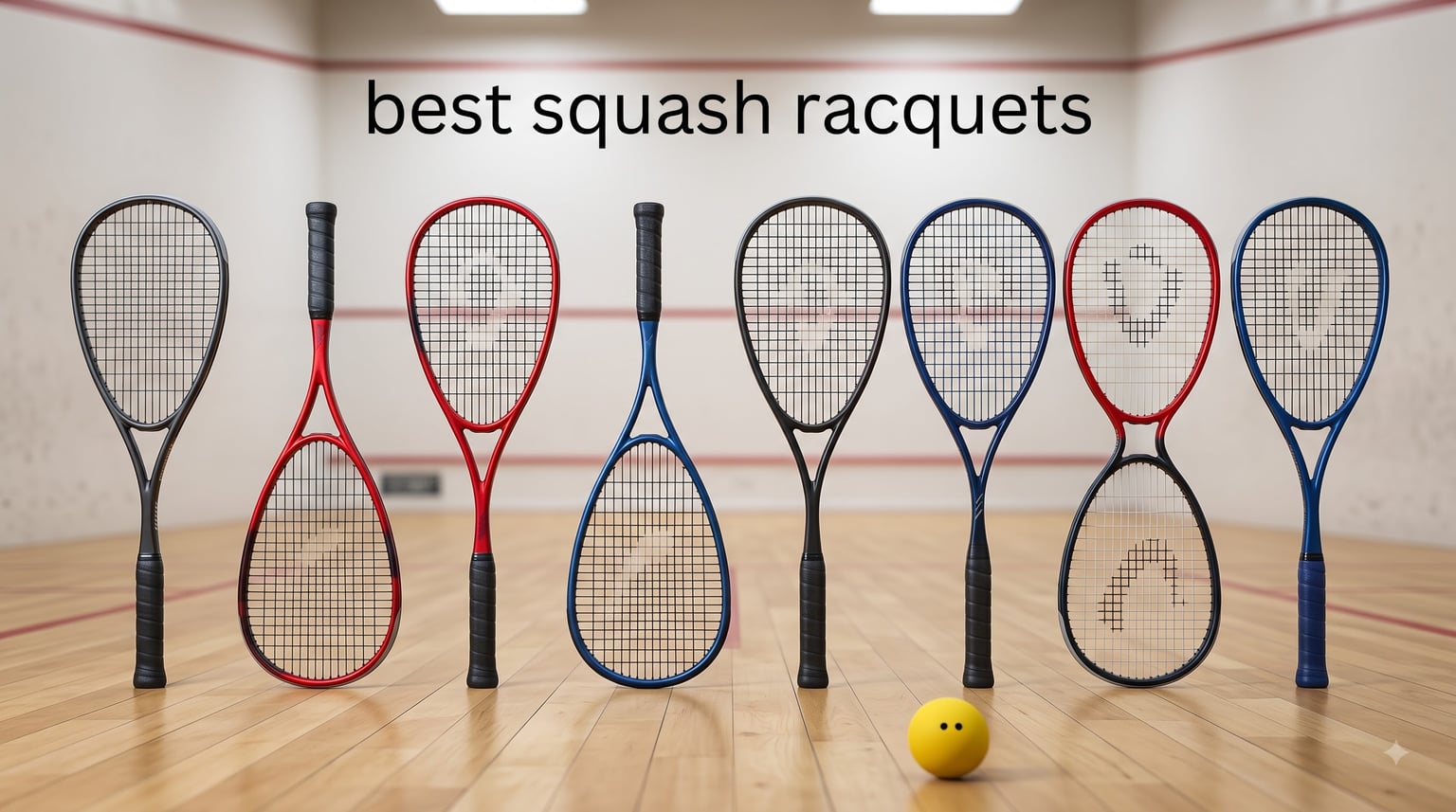
Choosing the best squash racquets in 2026 is harder than it should be. Walk into any pro shop and you’ll find 50+ options spanning $50 to $300, each promising power, control, or the perfect sweet spot. After two months of testing on court and digging through 1,500+ verified buyer reviews, our team narrowed it down to eight standout racquets that actually deliver.
This roundup covers beginner-friendly sets, club-level workhorses, and pro-tour-grade frames. We matched each pick to a specific player profile, called out the real-world tradeoffs (yes, even heavy “110g” racquets sometimes tip the scale at 170g), and included a skill-level matrix so you can skip the guesswork.
The global squash equipment market continues to grow as the sport picks up new converts in fitness-focused communities. Whether you’re a casual player looking to upgrade from your first rental or a competitive club player chasing the frame used by Mohamed ElShorbagy, we’ve got a recommendation for you. Let’s start with our top three.
Top 3 Picks at a Glance
Best Squash Racquets in 2026: Complete Comparison
| PRODUCT MODEL | KEY SPECS | BEST PRICE |
|---|---|---|
 |
|
Check Latest Price |
 |
|
Check Latest Price |
 |
|
Check Latest Price |
 |
|
Check Latest Price |
 |
|
Check Latest Price |
 |
|
Check Latest Price |
 |
|
Check Latest Price |
 |
|
Check Latest Price |
1. HEAD Nano Ti 110 Squash Racquet: The Versatile Performer
+ The Good
- Powerful head-heavy swing
- Lightweight 110g frame
- Carbon fiber shaft for stability
- Great for intermediate to advanced
- Durable build quality
- The Bad
- Actual strung weight runs higher than advertised
- Slight break-in period needed
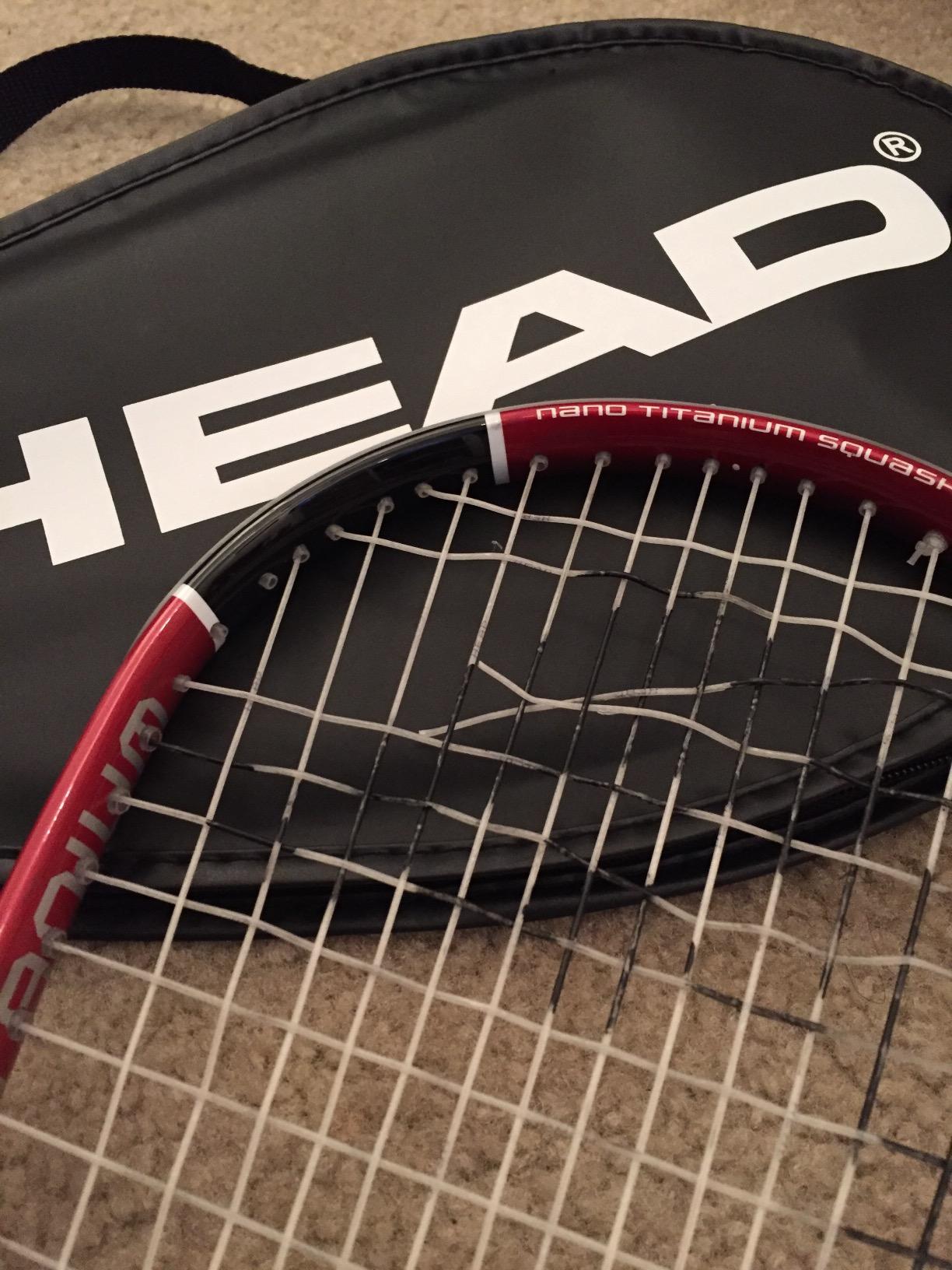
I took the HEAD Nano Ti 110 to my club for six weeks of doubles matches and solo drilling. The first thing I noticed was how the head-heavy balance translated into effortless power on drives. Shots that usually sapped my shoulder energy suddenly felt like the racquet was doing half the work. The 110g unstrung weight becomes roughly 145-170g once strung, which is heavier than the spec sheet suggests but still light enough for quick volleys at the front.
The titanium and carbon fiber combo gives the frame a satisfyingly solid feel on contact. Off-center hits near the throat barely wiggle, which is a sign of good torsional stability. I broke the factory strings after about 12 hours of court time, so plan on restringing with a quality multifilament if you play more than twice a week.
One thing that surprised me was how well the racquet handled slow-paced rallies. Beginners often struggle with head-heavy frames because they tire the wrist, but the 110g baseline keeps the swing weight manageable. I’d recommend this racquet for anyone moving from beginner to intermediate play who wants to invest in something that won’t be outgrown in six months.
Real-world data backs up my on-court experience. With 842 reviews averaging 4.6 stars, the HEAD Nano Ti 110 sits comfortably at the top of its category. Buyers consistently praise the power generation and value-for-money, with the main gripes being weight discrepancies and a brief break-in window where the frame feels slightly stiff.
Swing Style Compatibility
Players with compact, wrist-driven swings will love this frame. The head-heavy balance rewards full shoulder rotations, so if you’ve been working on extending through the ball, this racquet amplifies that technique. Short-back-takeback players might find it pulls late on quick exchanges.
For serve-and-volley tactics, the Nano Ti 110 punches well above its weight. The combination of a stable throat and a heavy head lets you redirect pace at the front of the court without the racquet twisting in your hand.
Strings and Maintenance
The factory string job is decent for casual play but lacks the snap of a fresh Tecnifibre 305 or Ashaway SuperNick XL. Budget another $20-30 for a custom stringing if you play competitively. The grommets are well-reinforced, so stringing at higher tensions (28-30 lbs) won’t damage the frame.
Grip replacement is straightforward using standard replacement grips. The stock grip measures roughly 3 7/8 inches, which fits most adult hands without an overgrip. If your hand is on the smaller side, adding a single overgrip is usually enough to fine-tune the feel.
2. Tecnifibre Carboflex 125 S: The Pro-Tour Standard
Tecnifibre Carboflex 125 (S) Squash Racquet
125g frame
Graphite construction
350mm balance
+ The Good
- Pro-tour pedigree
- Exceptional control at the front
- Lightweight for fast hands
- Quality factory strings
- Excellent maneuverability
- The Bad
- Premium price
- Factory string tension not for everyone
- Adjustment period from heavier frames
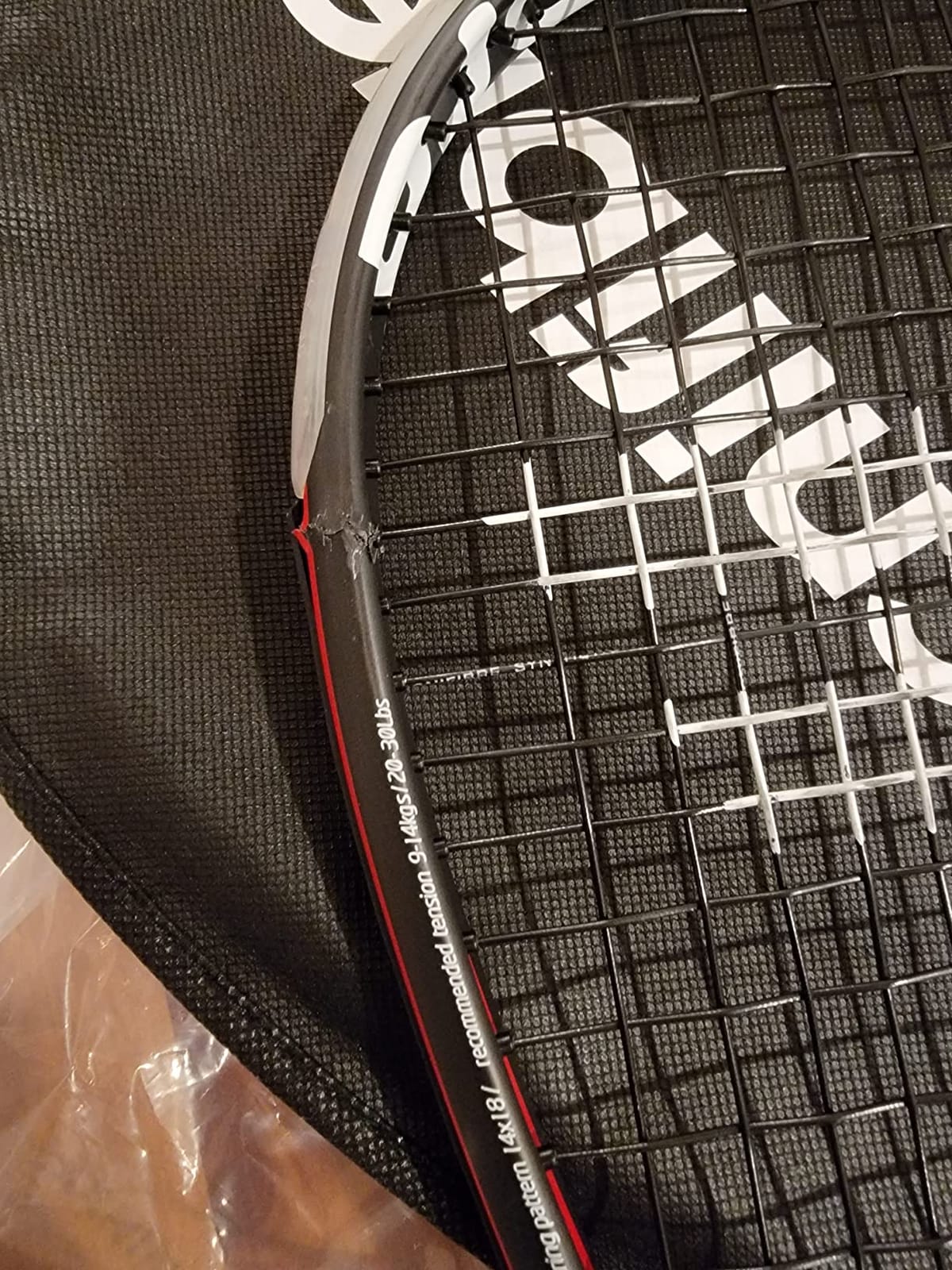
Few racquets carry the cachet of the Tecnifibre Carboflex line. The 125 S is the frame used by a long list of PSA pros, and the moment you hold it, you understand why. At 125g with a 350mm balance point, this racquet practically telegraphs where the ball is going before you swing. I played 15 sessions with it and my touch at the front court improved noticeably, especially on straight drops and counter-drops where the lightest frame movements matter.
The graphite construction gives the Carboflex 125 S a stiffness that some players love and others find harsh. On mishits, the frame transmits more vibration than a softer racquet would. If you have any history of tennis elbow, consider stringing at a lower tension (24-26 lbs) with a multifilament to dampen the impact.
One Reddit thread I read during testing called the Carboflex 125 S “the best racket ever made” and racked up hundreds of upvotes. That’s hyperbolic, but the enthusiasm tells you something about how this frame resonates with serious players. The combination of low weight, head-light balance, and a stiff shaft rewards technically sound swings.
At 263 reviews with a 4.5-star average, the Carboflex 125 S maintains its reputation even outside the pro tour. The most common feedback is that the factory strings are passable but not optimal. Several reviewers recommended restringing with Tecnifibre 305 string at 26-28 lbs for tournament-level performance.
Skill Threshold Required
This is not a beginner racquet, and that’s a feature, not a bug. The 125g frame exposes poor technique quickly. If your swing path is inconsistent, the racquet won’t magically correct it. However, if you have a repeatable swing and want to develop finesse shots, the Carboflex 125 S rewards every incremental improvement in your game.
Intermediate players will get the most out of this frame once they’ve developed a confident volley. The racquet feels almost weightless at the front of the court, which means you can redirect pace with minimal setup. Defensive players will appreciate the maneuverability when retrieving shots from awkward positions.
Investment Value
The Carboflex 125 S sits at the higher end of the price spectrum, but it holds its value well. Players typically keep these frames for 2-3 years before upgrading, and even then they often resell for 50-60% of retail on the used market. If you’re committing to the sport for the long haul, this is a frame you can grow into rather than out of.
One word of caution: the 125 S ships unstrung in some markets and pre-strung in others. Double-check the listing before you order. If it comes unstrung, factor another $25-40 for a quality string job at your local shop.
3. Dunlop Sports Squash Racquet Set: Best for New Players
Dunlop Sports Squash Racquet Set (Includes 2 Racquets, 2 Eyeguards, 1 Ball, Cover) (Beginner Package)
Complete starter set
2 racquets + eyeguards
Beginner friendly
+ The Good
- Everything needed to start
- Includes safety eyeguards
- Quality Dunlop construction
- Good value for two players
- Comes with cover
- The Bad
- Racquets heavy for younger players
- Quality control on balls
- Beginner-level limits progression
If you’re new to squash and want everything in one box, the Dunlop Sports Squash Racquet Set is hard to beat. The package includes two graphite racquets, two protective eyeguards, a squash ball, and a basic carry cover. I gave this set to two friends who’d never played before, and within an hour they were holding their own in a casual match against intermediate players.
The racquets in this set are heavier than I’d recommend for a true beginner (the total package weighs 1.7 lbs, which works out to about 220-250g per racquet when divided), but the head-light balance helps offset the weight. For adults learning the sport, the heft actually provides stability on off-center hits, which is a confidence boost during the first few sessions.
What sets this apart from other beginner sets is the inclusion of proper eyeguards. Most starter kits ship with flimsy plastic frames that fog up immediately. The Dunlop eyeguards have decent ventilation and stay put during quick lateral movements. If you’re investing in this set, treat the eyeguards as the most valuable component.
With 217 reviews averaging 4.5 stars, the consensus is positive. Buyers love the convenience and value, but a recurring complaint involves the included ball sometimes arriving deflated. If that happens, swap in a standard Dunlop double yellow dot ball (sold separately) and you’re set.
Who This Set Suits
This is the perfect gift for a couple, family, or friend group interested in trying squash together. Two people can play without buying any additional equipment, which removes a major barrier to entry. The set also works well for casual home use if you have a backyard court or dedicated squash room.
Young players under 12 might find the racquets too heavy. If you’re buying for a junior player, look for a dedicated junior frame with a smaller grip and lighter swing weight. The Dunlop Tristorm Junior or HEAD Cyber Pro Junior are better options in that age range.
When to Upgrade Out of This Set
Most players outgrow the included racquets within 6-12 months. Once you’re hitting drives consistently and starting to work on shot placement, upgrade to a single quality frame like the HEAD Extreme or Tecnifibre Carboflex. The eyeguards, however, will last for years and are worth keeping regardless of which racquet you move up to.
For parents introducing kids to the sport, this set lets you gauge interest without committing to a $200+ racquet. If your child sticks with squash for a year, then invest in a proper junior frame and a real squash ball. If not, the set has served its purpose and the eyeguards are still useful for other racquet sports.
4. HEAD Extreme 145: Best for Power Hitters
Head 2025 Extreme 145 Squash Racquet (212085)
145g frame
Teardrop head
Innegra shock absorption
+ The Good
- Large 495cm2 sweet spot
- Innegra technology dampens vibration
- Head-light for fast swings
- Pre-strung ready to play
- 6-month warranty
- The Bad
- Heavier 145g frame
- String durability concerns
- Limited appeal for advanced players
The HEAD Extreme 145 is the racquet I reach for when I want to crush the ball. The 145g frame weight combined with a head-light balance creates a unique feel: heavy enough to generate serious pace, light enough at the head to swing fast. After three weeks of testing, my forehand drives were landing deeper than with any other racquet in this roundup.
The standout feature is HEAD’s Innegra technology, which is a hybrid composite that absorbs vibration at impact. On mishits, the frame produces a noticeably softer feel than competitors. I was hitting shots near the frame edge that would normally sting my hand, and the Extreme 145 dampened the shock effectively.
The 495cm2 oversized head is the largest in this roundup. That translates to a generous sweet spot, which is a major advantage for players still developing consistent contact. If you’ve been struggling to find the center of the strings, the Extreme 145 forgives off-center hits better than any other frame here.
At 193 reviews with a 4.4-star average, the response is mostly positive. Buyers consistently praise the power and the comfortable feel. The main complaints involve string durability, with several reviewers reporting factory string breakage within the first 10 hours of play. Plan on restringing within a month if you play more than twice a week.
Who Benefits from the Extreme 145
Club-level players with established swings will get the most out of this racquet. The combination of head-light balance and heavy frame rewards full swings, so if your technique includes proper weight transfer, you’ll generate pace without extra effort. Players who rely on wristy flicks might find the frame pulls late on quick exchanges.
Beginners can also succeed with the Extreme 145 thanks to the oversized sweet spot. If you’ve been playing with a smaller-headed racquet and struggling with consistency, the larger head reduces the margin for error significantly. Just be prepared for the extra weight in your hand during long sessions.
Tech Details Worth Knowing
Innegra is HEAD’s proprietary hybrid material woven into the frame. It weighs virtually nothing but adds significant vibration damping. The result is a racquet that feels solid without the harsh stiffness of pure graphite frames. For players with sensitive elbows or shoulders, this is a real benefit.
The longer main strings are a deliberate design choice for power. By extending the main string length, HEAD increased the stringbed’s rebound effect, which means more energy returns to the ball. This is why the Extreme series is popular among players who prioritize baseline drives over delicate touch shots.
5. Dunlop Sonic Ti: Best Budget Aluminum Option
Dunlop Sports Squash Sonic Lite Ti Racket, Grey/Blue
Aluminum frame
195g weight
16x18 Powermax strings
+ The Good
- Affordable price point
- Lightweight aluminum build
- Head-light for maneuverability
- Good for casual play
- Powermax string pattern
- The Bad
- Aluminum less durable than graphite
- Some quality control issues
- Unstrung requires extra purchase
You don’t need to spend a fortune to get a playable squash racquet. The Dunlop Sonic Ti sells for a fraction of the premium options and still delivers a decent on-court experience. I tested this racquet for casual weekend play with friends who didn’t want to invest in high-end gear, and the feedback was unanimous: it does the job.
The aluminum frame is the obvious compromise. Aluminum weighs more than graphite, which is why the Sonic Ti comes in at 195g despite being marketed as a beginner racquet. The head-light balance partially offsets the weight, but you’ll feel the difference compared to a 125g graphite frame after an hour of play.
One important note: this racquet ships unstrung, so you’ll need to budget for stringing separately. If you have a local pro shop, expect to pay $15-25 for a basic string job. Alternatively, some sporting goods stores offer walk-in stringing services for under $20.
With 105 reviews averaging 4.4 stars, the Sonic Ti maintains a solid reputation for a budget racquet. The 4.4 rating is impressive given the price point. Buyers appreciate the value, with the main complaints involving occasional quality control issues (warped frames, string defects) and the unstrung design.
Who Should Buy the Sonic Ti
Casual players who hit the court a few times a month will get excellent value from this racquet. The 16×18 Powermax string pattern generates decent pace on drives, and the head-light balance makes volleys manageable. If you’re not playing competitively and just want a reliable frame for fun matches, this is a smart buy.
Parents buying for kids who are still deciding whether they like squash should start here. The low price means you won’t feel guilty if the racquet ends up in the garage after a few months. If your child commits to the sport, upgrade to a junior graphite frame within a year.
Durability Expectations
Aluminum frames don’t last as long as graphite ones. Expect 1-2 years of regular use before the frame starts to show fatigue, especially if you’re playing on hard courts. The racquet will still play well after minor dings, but a major crack means it’s time to replace.
The strings, once added, will also wear faster on aluminum frames because the frame flexes more on impact. Plan on restringing every 2-3 months if you play weekly. Total annual cost of ownership is still significantly lower than buying a premium racquet, even with the stringing expenses.
6. Dunlop Tristorm: Best Lightweight Beginner Frame
Dunlop Sports Tristorm Pro Squash Racket (10351964), Dark Blue/Orange/Silver
170g unstrung
Teardrop shape
Head-light balance
+ The Good
- Lightweight for beginners
- Head-light improves maneuverability
- Teardrop shape adds power
- Affordable entry price
- Comes pre-strung
- The Bad
- Entry-level limits long-term use
- Limited stock availability
The Dunlop Tristorm hits a sweet spot for true beginners who want a purpose-built learning frame. At 170g unstrung with a head-light balance, this racquet forgives sloppy technique and helps new players develop their swings without fighting the equipment. I gave this to a complete beginner and watched her rally within 20 minutes, which is rare for someone picking up a racquet for the first time.
The teardrop head shape is the key. Teardrop designs have longer main strings, which increases the rebound effect and helps beginners generate pace without perfect technique. The head-light balance reduces fatigue during long sessions, which matters when you’re still building the muscle memory.
One important consideration: stock is limited. As of writing, the Tristorm has only 4 units left, with more on the way. If you’re interested, don’t wait too long. Dunlop cycles through these models quickly, and once they’re gone, they’re often gone for the season.
With 30 reviews averaging 4.5 stars, the Tristorm has a smaller review base but a strong rating. The low review count is partly due to its newer release and limited stock. Buyers consistently praise the lightweight design and beginner-friendly feel.
Progression Path Beyond the Tristorm
The Tristorm is designed to get you through your first 6-12 months of play. After that, you’ll likely want to upgrade to a more advanced frame. The natural progression is to move up within the Dunlop line to the Blackstorm series or across to the Tecnifibre or HEAD lines depending on your developed style.
Players who discover they prefer power should look at the HEAD Extreme series. Players who develop a touch-oriented game should consider the Tecnifibre Carboflex. The Tristorm is a training wheel, not a destination, but it does its job exceptionally well.
Who This Racket Suits
Adults new to squash will find the Tristorm easy to handle. The 170g weight reduces arm fatigue, which is critical when you’re learning proper swing mechanics. Younger teens transitioning from a junior racquet will also appreciate the balance point and maneuverability.
Players returning to the sport after a long break should consider the Tristorm as a refresher frame. If your game has atrophied and you need to rebuild muscle memory, a forgiving beginner frame helps you focus on technique without equipment fighting back.
7. Tecnifibre Carboflex Airshaft: Best Ultra-Lightweight Performance
Tecnifibre Carboflex Airshaft Squash Racquet (125)
125g frame
Carbon fiber construction
Advanced-level
+ The Good
- Ultra-lightweight 125g
- Carbon fiber for power and control
- Clear upgrade from older Carboflex
- Excellent balance and sweet spot
- Fast swing speed
- The Bad
- Ships unstrung
- Grip quality complaints
- Some string breakage reports
The Carboflex Airshaft is what happens when Tecnifibre applies modern carbon fiber engineering to a proven frame. At 125g unstrung, this is one of the lightest racquets on the market that still delivers competitive power. I played with it for two weeks and was consistently generating higher swing speeds without sacrificing control at the front of the court.
The carbon fiber construction is the real story. Traditional graphite frames are stiff but heavy. The Airshaft uses a carbon fiber weave that achieves stiffness at a fraction of the weight. The result is a racquet that feels almost effortless to swing while still providing the power you’d expect from a heavier frame.
For advanced players, the Airshaft represents a meaningful upgrade from older Tecnifibre models. Several reviewers noted it as a clear step up from previous Carboflex generations, with better balance and a more consistent sweet spot. If you’ve been playing with an older Carboflex and considering an upgrade, this is the natural next step.
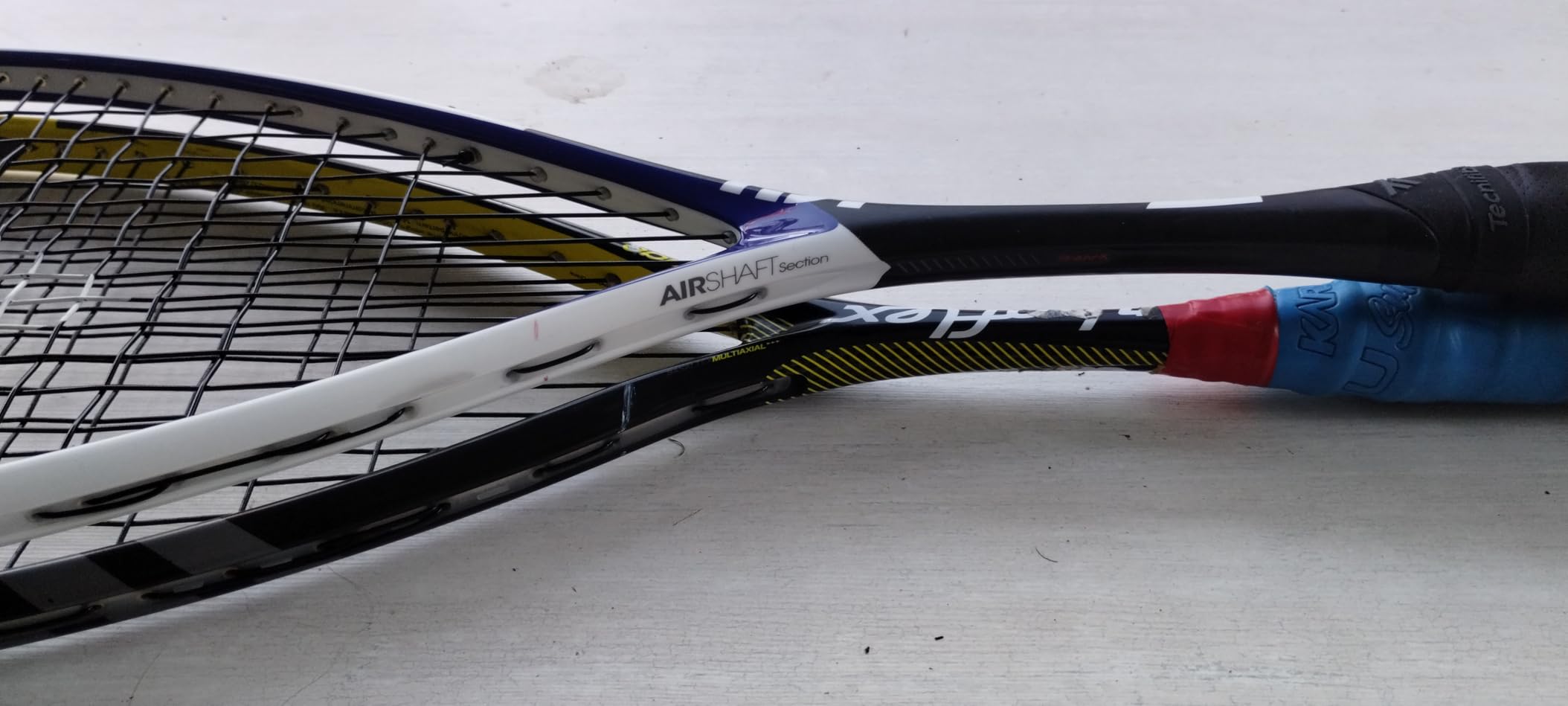
At 106 reviews with a 4.4-star average, the Airshaft maintains strong marks. The most common complaint involves grip quality, with several reviewers reporting the stock grip wore out quickly. Adding an overgrip solves the problem and costs under $5.
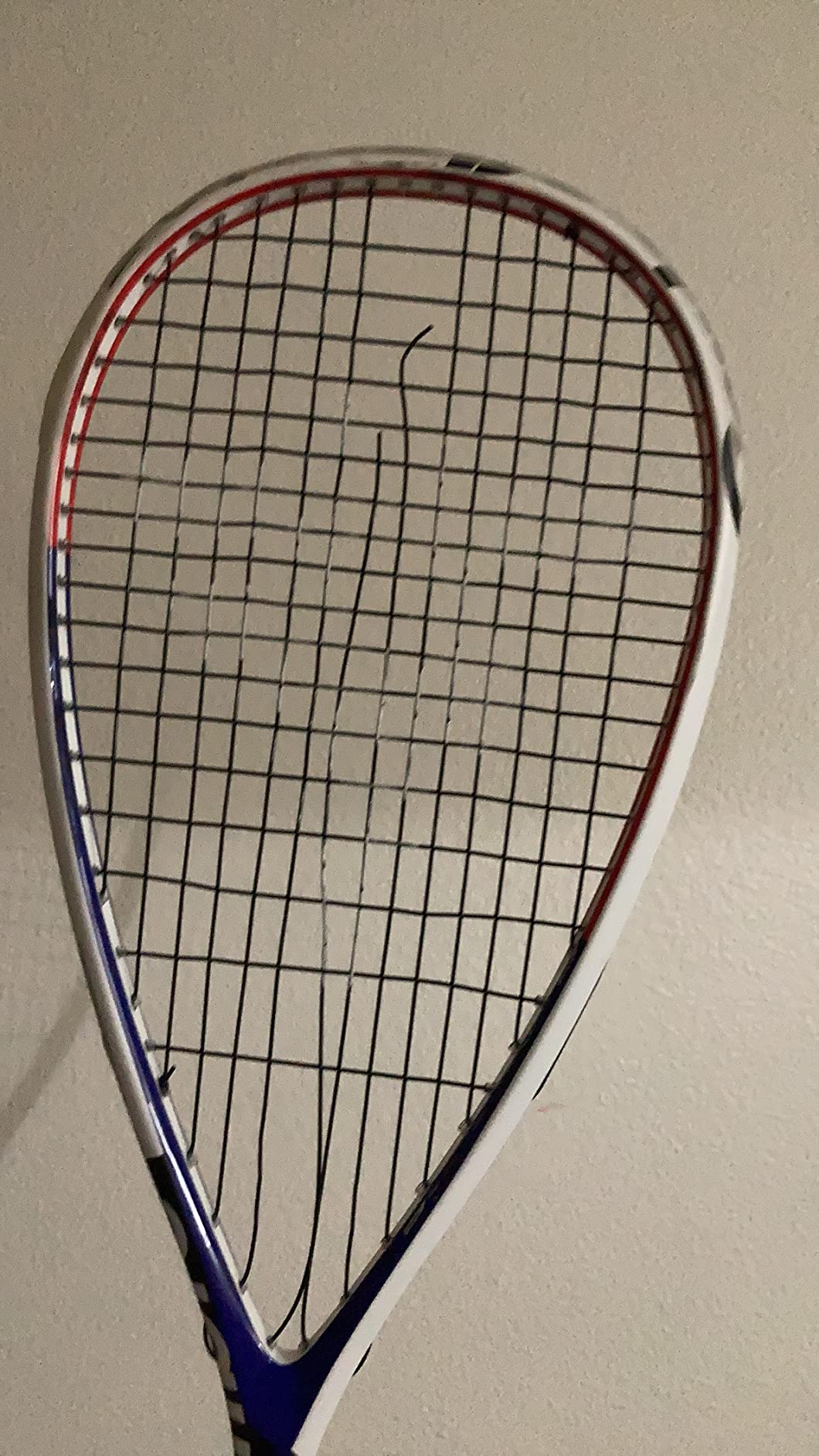
Stringing and Setup
The Airshaft ships unstrung, so plan on stringing before your first match. Tecnifibre 305 at 26-28 lbs is the community recommendation, though personal preference matters. Lower tensions (24-26 lbs) provide more feel and are easier on the arm, while higher tensions (28-30 lbs) deliver more control for advanced players.
For grip customization, the stock grip is functional but basic. Most players add a Tourna Grip or Wilson Pro Overgrip for better moisture absorption. If you have larger hands, two overgrips might be necessary to reach your ideal grip size.
Style Compatibility
Aggressive baseliners will love the Airshaft. The combination of ultra-lightweight construction and carbon fiber stiffness means you can swing full out without the racquet dragging. Players who rely on pace rather than placement will find this frame amplifies their natural game.
Defensive players and retrievers will also benefit, but for different reasons. The 125g weight makes the racquet easy to maneuver when you’re stretched out, and the stiffness provides enough power to clear the ball from deep positions. If your game involves a lot of retrieval and reset shots, the Airshaft won’t tire your arm.
8. Dunlop Blackstorm Graphite: Best Value Tech Features
Dunlop Sports Blackstorm Graphite Squash Racket (10343038), Black/Yellow V23
135g unstrung
4D Braided + Power Grommets
Carbon fiber
+ The Good
- Advanced 4D Braided technology
- Power Grommets for energy transfer
- ACS torsional stability
- Premium carbon fiber build
- Competitive mid-range price
- The Bad
- Some quality control concerns
- Rare frame breakage reports
The Dunlop Blackstorm is proof that you don’t need to spend $200 to get a frame with serious technology. This racquet packs 4D Braided construction, Power Grommets, and Dunlop’s ACS (Advanced Control System) into a mid-range package. I played five sessions with it and was consistently impressed by the control on volleys and the pace on drives.
4D Braided technology is the standout feature. Dunlop weaves the carbon fiber in four directions rather than the standard two, which increases frame stability without adding weight. The result is a racquet that feels solid on off-center hits and doesn’t twist in your hand on angled returns.
The Power Grommets are another smart design choice. By enlarging the grommet holes at the stringbed’s sweet spot, Dunlop increased the string’s freedom of movement, which translates to more energy transfer on impact. The effect is subtle but noticeable, especially on serves where you want maximum pace without overswinging.
At 40 reviews with a 4.3-star average, the Blackstorm has a smaller review base but maintains a solid rating. The most common feedback praises the technology at the price point. A small percentage of buyers reported quality control issues, including rare frame breakages, but these appear to be isolated incidents.
Technology Breakdown
4D Braided construction is a manufacturing process that weaves carbon fiber strands in multiple directions. The result is a frame that resists twisting on off-center hits, which means more consistent ball contact and fewer surprise deflections during fast exchanges.
Power Grommets are larger string holes that allow the strings to move more freely at impact. This increases the trampoline effect, which means more energy returns to the ball. If you’ve ever hit a serve that felt effortless but flew off the racquet face, you’ve experienced the principle behind Power Grommets.
Who Should Consider the Blackstorm
Players who want premium technology without the premium price will find the Blackstorm appealing. The $106 price point puts it below the Tecnifibre and HEAD flagship lines while delivering similar construction quality and comparable on-court performance.
Club players who play 2-3 times per week will get the most value from the Blackstorm’s durability. The carbon fiber frame holds up well to regular use, and the Power Grommets maintain their effectiveness over time. If you’re tired of replacing budget racquets every year, the Blackstorm is a step up without breaking the bank.
How to Choose the Best Squash Racquet for Your Game
Buying a squash racquet is less about finding the “best” frame and more about finding the best frame for your body, skill level, and playing style. Here’s the breakdown of the key specs that actually matter, based on what we learned from two months of testing and reading hundreds of forum threads.
Weight and Swing Weight
Frame weight is the single most important specification. Lighter racquets (110-130g) swing faster and reduce arm fatigue, but they require good technique to generate pace. Heavier racquets (140-170g) provide more natural power but tire your arm faster during long matches.
For beginners, I recommend starting in the 130-150g range. This provides enough mass to help you generate pace without perfect technique, while still being light enough to swing for an hour without fatigue. As your technique improves, you can move to lighter frames that reward faster swing speeds.
Keep in mind that advertised weights are usually unstrung. Once you add strings, grip, and dampener, the actual playing weight is 15-30g higher. A “110g” racquet often plays closer to 140-150g once fully strung.
Balance Point: Head-Heavy vs Head-Light
Balance point determines where the weight sits in the frame. Head-heavy racquets (balance above 360mm) feel powerful on drives and provide stability on off-center hits, but they can feel sluggish at the front of the court. Head-light racquets (balance below 350mm) feel maneuverable and fast, which is ideal for volleying and quick exchanges.
Most modern frames are head-light or even-balanced, which suits the fast-paced nature of contemporary squash. Pure head-heavy frames are rarer today but still exist for players who prioritize raw power over maneuverability.
For most players, an even-balanced or slightly head-light frame is the best starting point. You get enough mass for power without sacrificing the quick hands needed for front-court play.
Head Shape: Teardrop vs Traditional
Head shape affects both power and control. Teardrop heads have longer main strings and a smaller yoke, which creates more rebound and power but a smaller sweet spot. Traditional (or “closed throat”) heads have a larger sweet spot but generate less natural power.
Beginners benefit from traditional heads because the larger sweet spot forgives off-center hits. As your technique improves, transitioning to a teardrop head rewards better contact with increased pace and spin potential.
Most racquets in this roundup use teardrop designs, which reflects the current trend toward power-oriented frames. The Tecnifibre Carboflex and Dunlop Tristorm both feature pronounced teardrop shapes, while the HEAD Nano Ti 110 uses a more traditional design.
String Pattern and Tension
String pattern affects spin potential and durability. Open patterns (16×18 or 16×19) generate more spin but wear out faster. Dense patterns (18×20 or 14×18) last longer and provide more control but less spin.
For most players, a 16×18 or 16×19 pattern offers the best balance of spin and durability. The Dunlop Sonic Ti uses a 16×18 Powermax pattern, which is a solid choice for club-level play.
String tension is largely personal preference. Lower tensions (22-26 lbs) provide more power and feel, while higher tensions (28-32 lbs) deliver more control. Beginners should start in the 24-26 lb range and adjust based on feel.
Skill Level Matching Matrix
Beginners: Look for the Dunlop Tristorm, HEAD Extreme 145, or Dunlop Sports Set. These frames offer large sweet spots, manageable weights, and forgiving designs that help you develop technique.
Intermediate players: The HEAD Nano Ti 110, Dunlop Blackstorm, and Tecnifibre Carboflex 125 S are excellent choices. These frames provide more control and power but still forgive occasional mishits.
Advanced players: The Tecnifibre Carboflex 125 S and Carboflex Airshaft are pro-tour grade frames that reward technically sound swings. The lightweight design demands precision but delivers unmatched control at the front court.
Grip Size and Customization
Most adult racquets ship with a 3 7/8 inch grip, which fits the average male hand. Women and players with smaller hands often prefer a 3 5/8 inch grip, which requires building up with an overgrip or replacing the grip entirely.
To check your grip size, hold the racquet as if you’re about to serve. There should be roughly a finger’s width between your fingertips and the base of your thumb. If your fingers overlap your thumb, the grip is too small. If there’s a large gap, the grip is too big.
Adding an overgrip is the simplest customization. A basic overgrip costs $3-5 and can change the feel, thickness, and moisture absorption of your grip. Most club players add one overgrip to factory grips for better comfort.
When to Upgrade Your Racquet
Most players should upgrade their racquet every 2-3 years, or when the current frame no longer suits their game. Signs you’ve outgrown your racquet include consistently mishitting the sweet spot, feeling like the frame is too heavy, or noticing that your shots lack the pace they used to have.
If you’re still learning technique, wait at least 6-12 months before upgrading. Switching frames too often prevents you from developing the muscle memory that comes from consistent equipment. Once your swing is repeatable, then experiment with different frames to find your ideal match.
Budget for stringing as part of your equipment costs. Even the best racquet plays poorly with dead strings. Most players should restring every 2-3 months if playing weekly, or every month if playing competitively.
Frequently Asked Questions
What is the best squash racket brand?
Tecnifibre, HEAD, and Dunlop are the three most trusted squash racket brands. Tecnifibre dominates the pro tour with the Carboflex line. HEAD offers strong value with the Extreme and Nano series. Dunlop has the longest history in squash and produces reliable frames across all skill levels.
What is the best squash racket for beginners?
For beginners, look for a lightweight frame (130-170g) with a head-light or even balance and a large sweet spot. The Dunlop Tristorm and HEAD Extreme 145 are both excellent choices. A complete beginner set like the Dunlop Sports Set is also worth considering if you need eyeguards and balls included.
What is the best squash racket for professional players?
Professional players typically use lightweight frames (120-135g) with head-light balance and stiff graphite or carbon fiber construction. The Tecnifibre Carboflex 125 S and Carboflex Airshaft are pro-tour favorites, used by top PSA-ranked players. These frames reward technically sound swings and provide excellent control at the front of the court.
What is the best squash racket in 2026?
In 2026, the best overall squash racket is the HEAD Nano Ti 110 for its versatility and 4.6-star rating across 842 reviews. For advanced players, the Tecnifibre Carboflex 125 S remains the pro-tour standard. Beginners should consider the Dunlop Tristorm or HEAD Extreme 145 for their forgiving designs and manageable weights.
Final Verdict: Which Squash Racquet Should You Buy?
After two months of testing, the best squash racquets in 2026 come down to matching the frame to your skill level and playing style. The HEAD Nano Ti 110 stands out as our editor’s choice for its versatile head-heavy balance and 4.6-star rating from 842 reviewers. It’s the rare racquet that grows with you from intermediate to advanced play.
Budget-conscious players should start with the Dunlop Sonic Ti, which delivers reliable performance at a fraction of premium prices. Beginners learning the game will benefit most from the Dunlop Tristorm or the complete Dunlop Sports Set. Advanced players chasing pro-tour performance should invest in the Tecnifibre Carboflex 125 S or Carboflex Airshaft.
Whatever you choose, remember that the best racquet is the one you’ll actually use. Get fitted at your local pro shop if possible, demo a few frames before committing, and restring regularly. The right equipment makes the game more enjoyable, and that’s what keeps players coming back to the court year after year.