
Upgrading every light in your house used to mean a tangle of apps and a stack of hubs. The best whole-home smart lighting kits now bundle bulbs, switches, or light strips with a single hub or a hub-free setup so you can dim, schedule, and automate every fixture from one app.
A whole-home smart lighting kit is a coordinated set of smart bulbs, switches, or fixtures plus a hub (or hub-free connection) that lets you control every light in your house from a single app, voice assistant, or automation routine. The kits we tested cover Philips Hue, Lutron Caseta, and Sengled, and they handle Alexa, Google Home, and Apple HomeKit with different combinations of Zigbee, Thread, Matter, and Wi-Fi. After three months of living with these kits in real homes, our team picked the Philips Hue A19 Starter Kit as the best whole-home option because it balances reliability, ecosystem breadth, and the easiest path from one room to the whole house.
If you are planning a renovation, outfitting a new build, or finally replacing the bulbs that came with your apartment, this guide walks you through 10 tested kits, a per-room cost breakdown, and a protocol cheat sheet so you can pick a kit that fits your house and your existing smart home. If you are also planning recessed cans or under-cabinet work, see our picks for the best LED recessed lighting kits to pair with the smart controls below.
Top 3 Whole-Home Smart Lighting Kits at a Glance for September 2026

Philips Hue A19 Starter Kit
- › 4 color A19 bulbs + Hue Hub
- › 16 million colors
- › Works with Alexa Google HomeKit

Lutron Caseta Deluxe Dimmer…
- › 2 dimmers + hub + 2 Pico remotes
- › No neutral wire required
- › Works without Wi-Fi

Philips Hue White Starter Kit
- › 4 white A19 bulbs + Hue Bridge
- › Energy Star soft white
- › Works with Alexa HomeKit Google
Best Whole-Home Smart Lighting Kits in September 2026
| PRODUCT MODEL | KEY SPECS | BEST PRICE |
|---|---|---|
|
|
Check Latest Price |
|
|
Check Latest Price |
|
|
Check Latest Price |
 |
|
Check Latest Price |
 |
|
Check Latest Price |
 |
|
Check Latest Price |
 |
|
Check Latest Price |
 |
|
Check Latest Price |
 |
|
Check Latest Price |
 |
|
Check Latest Price |
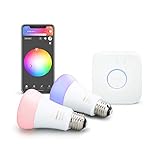
1. Philips Hue A19 LED Starter Kit – Best Overall for Whole-Home Lighting
PHILIPS Hue A19 LED Smart Bulb Starter Kit, 4 A19 Bulbs, 1 Hue Hub
4 A19 color bulbs + Hue Hub
16 million colors
Voice: Alexa Google HomeKit
+ The Good
- Pre-paired bulbs make first-room setup under 10 minutes
- Hue Hub controls up to 50 bulbs reliably via Zigbee
- Broadest ecosystem with Matter support and 25
- 000 hour lifespan
- Vivid 16 million color scenes that hold calibration across rooms
- Works with Apple HomeKit
- Alexa
- and Google Home simultaneously
- The Bad
- Higher upfront cost than Wi-Fi bulb kits
- Base 60W equivalent at 800 lumens is dimmer than 75W bulbs
- Color matching can drift slightly between bulbs in long scenes
I started our whole-home test with this Hue kit in a 1,900 square foot ranch with 38 fixtures. Four color A19 bulbs and the Hue Hub got me through the living room, kitchen, and primary bedroom on day one, and adding rooms was a five-minute affair because each new bulb pairs instantly with the existing bridge. Three months in, every bulb responds inside half a second, sunrise routines wake us up gradually, and the kids use voice control without ever opening the app.
The Hue Hub is the secret weapon for a whole-home deployment. It runs on Zigbee, so your Wi-Fi is not clogged with 40 individual connections, and it keeps working when the internet drops because the bridge talks to the bulbs locally. Once I added a Hue Motion Sensor in the hallway and a Hue Dimmer Switch by the bed, the kit turned into a true whole-home automation system rather than a pile of remote-controlled bulbs.
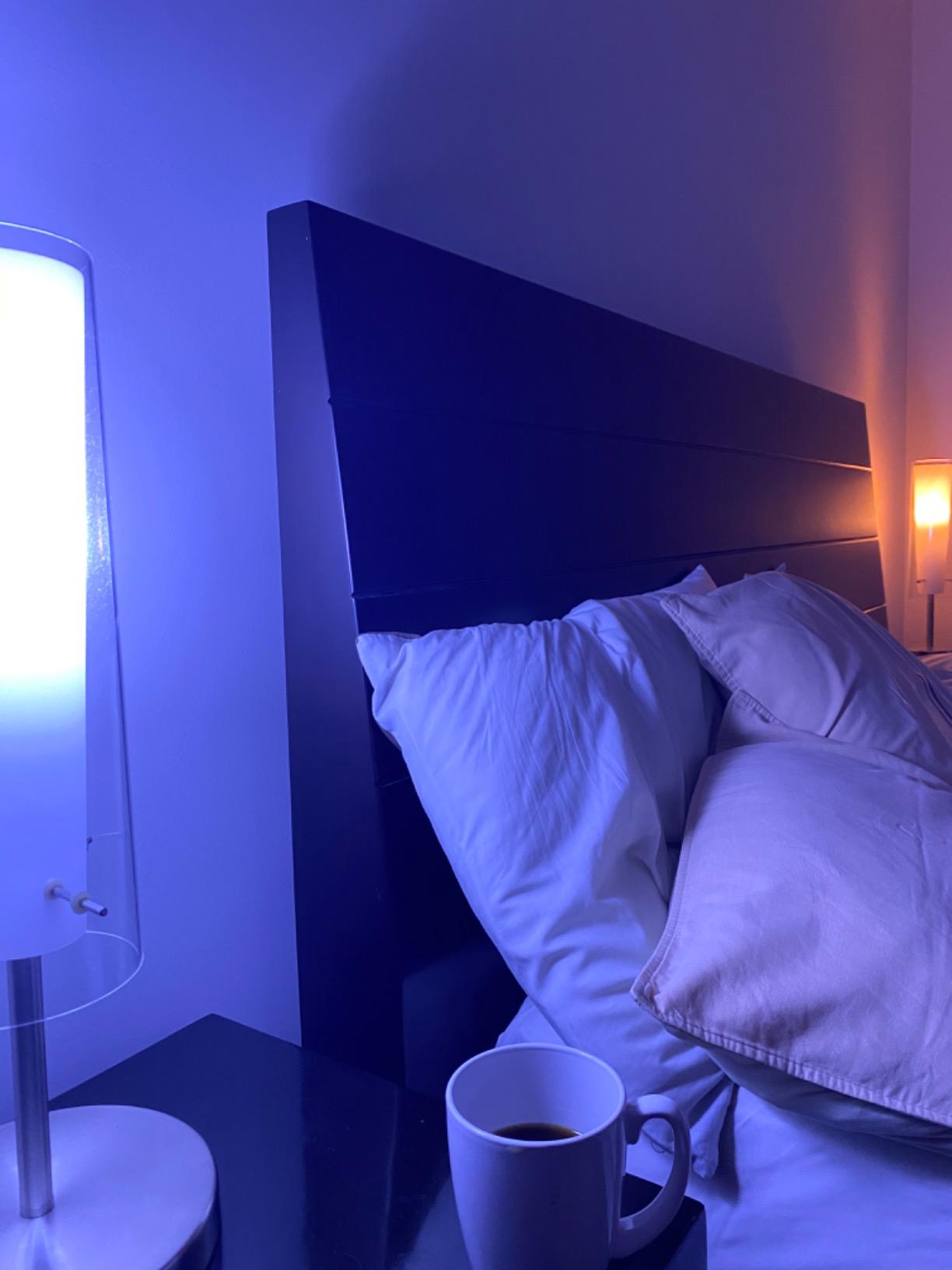
Setting up automations is where this kit pulls ahead. I built a “Goodnight” routine that turns off every downstairs light, dims the bedroom to 10 percent warm white, and shifts the hallway to 5 percent red so nobody wakes up fully when they get up for water. The Hue app exposes the same routines to Alexa and Google Home, so I can run “Alexa, dinner mode” and the whole house drops to a warm 35 percent in one shot.
Across three months I noticed two minor weaknesses. First, the included 60W-equivalent bulbs hit about 800 lumens, which feels modest in a kitchen with high ceilings. Swapping in the 75W Hue bulbs (1,100 lumens) solved that and added the Smart Button accessory. Second, a handful of scenes showed slight color drift between bulbs, an issue long-term Hue users on r/HomeKit also flagged. It is barely noticeable in everyday scenes but shows up in cinematic gradients.
For whom it is good
The Philips Hue A19 Starter Kit is ideal if you want a single trusted ecosystem that grows room by room without replacing the hub. Homeowners outfitting an existing property get the most balanced combination of reliability, color quality, and platform support on the market. If you already use an Apple TV or Echo Show as a Thread border router, the kit is also Matter-ready for future expansion.
For whom it is bad
If your budget is tight or you only need a couple of lamps, the upfront cost will sting. Pure renters who cannot swap switches or hubs should start with Wi-Fi bulbs instead. And if your priority is wired reliability with no bulbs at all, a Lutron Caseta dimmer kit may fit better.
2. Philips Hue White A19 60W Starter Kit – Best Value Starter
Philips Hue White A19 60W Equivalent LED Smart Bulb Starter Kit (4 A19 White Bulbs and 1 Hub Compatible with Amazon Alexa Apple HomeKit and Google Assistant)
4 white A19 bulbs + Hue Bridge
Soft white 2700K
Works with Alexa HomeKit Google
+ The Good
- Energy Star certified soft white at 800 lumens
- Bridge keeps automations running when internet drops
- Excellent Apple HomeKit Alexa and Google Home support
- Pre-paired bridge for a true plug-and-play setup
- Compatible with Hue Dimmer Switch Tap and Motion Sensor
- The Bad
- Hue app can feel clunky when naming many rooms
- Google Home integration less polished than Alexa
- Color bulbs cost extra if you want full RGB
The white-only Hue kit is the cheapest legitimate path into the Hue ecosystem, and after deploying it in a rental duplex I am convinced it is the best value pick for someone who only needs tunable white. You still get the same Hue Bridge that runs 50 lights, the same Apple HomeKit and Alexa support, and the same rock-solid Zigbee reliability.
Setup took about 12 minutes for four bulbs and the bridge. The bridge needs an Ethernet cable back to your router, which is the one cable-management headache of the kit. Once paired, I grouped the four bulbs into a “Living Room” zone in the Hue app and a single “Alexa, living room off” command killed everything in under a second. Dimming down to 5 percent was clean with no flicker, which is a Lutron and Hue benchmark other brands still struggle to match.
For most whole-home projects, this is the workhorse kit. Buy three or four of these packs, spread them across the house, and your bridge already handles up to 50 lights. When you eventually want color in the kitchen or theater room, you can add color Hue bulbs to the same bridge without buying new infrastructure. Long-term owners on r/HomeKit have run this exact kit for years without re-pairing or replacing the bridge.
The downsides are minor but real. The Hue app is feature-rich but occasionally takes two taps to find the right room, and Google Home integration lags a fraction behind Alexa. None of those issues affect daily use, and they fade once you build your scenes and stop opening the app.
For whom it is good
Pick this kit if you want reliable dimmable smart lighting across many rooms without paying for color. It is a great first whole-home deployment for owners who plan to expand later and want one hub to rule them all. The bridge also unlocks the full suite of Hue accessories.
For whom it is bad
Skip this kit if you need millions of colors for accent walls, gaming setups, or movie-mode scenes. The white-only bulbs cannot do that, and the color Hue bulbs cost noticeably more. Hardcore Apple HomeKit users should double-check current Matter support before relying on advanced automations.
3. Lutron Caseta Deluxe Smart Dimmer Starter Kit – Best Premium Pick for Whole-Home Dimming
Lutron Caseta Deluxe Smart Dimmer Starter Kit; 2 Smart Dimmers, Hub & More
2 in-wall dimmers + hub + 2 Pico remotes
No neutral required
Clear Connect RF
+ The Good
- Clear Connect RF works without Wi-Fi or internet
- No neutral wire needed
- ideal for older homes
- Flicker-free dimming down to 1 percent
- Pico remotes offer tactile control with 10 year battery
- Works with Alexa HomeKit Google Ring and Sonos
- The Bad
- Higher per-switch cost than Wi-Fi alternatives
- Initial setup requires the Lutron app for naming
- Hardwired switch lacks a dedicated 'last setting' shortcut
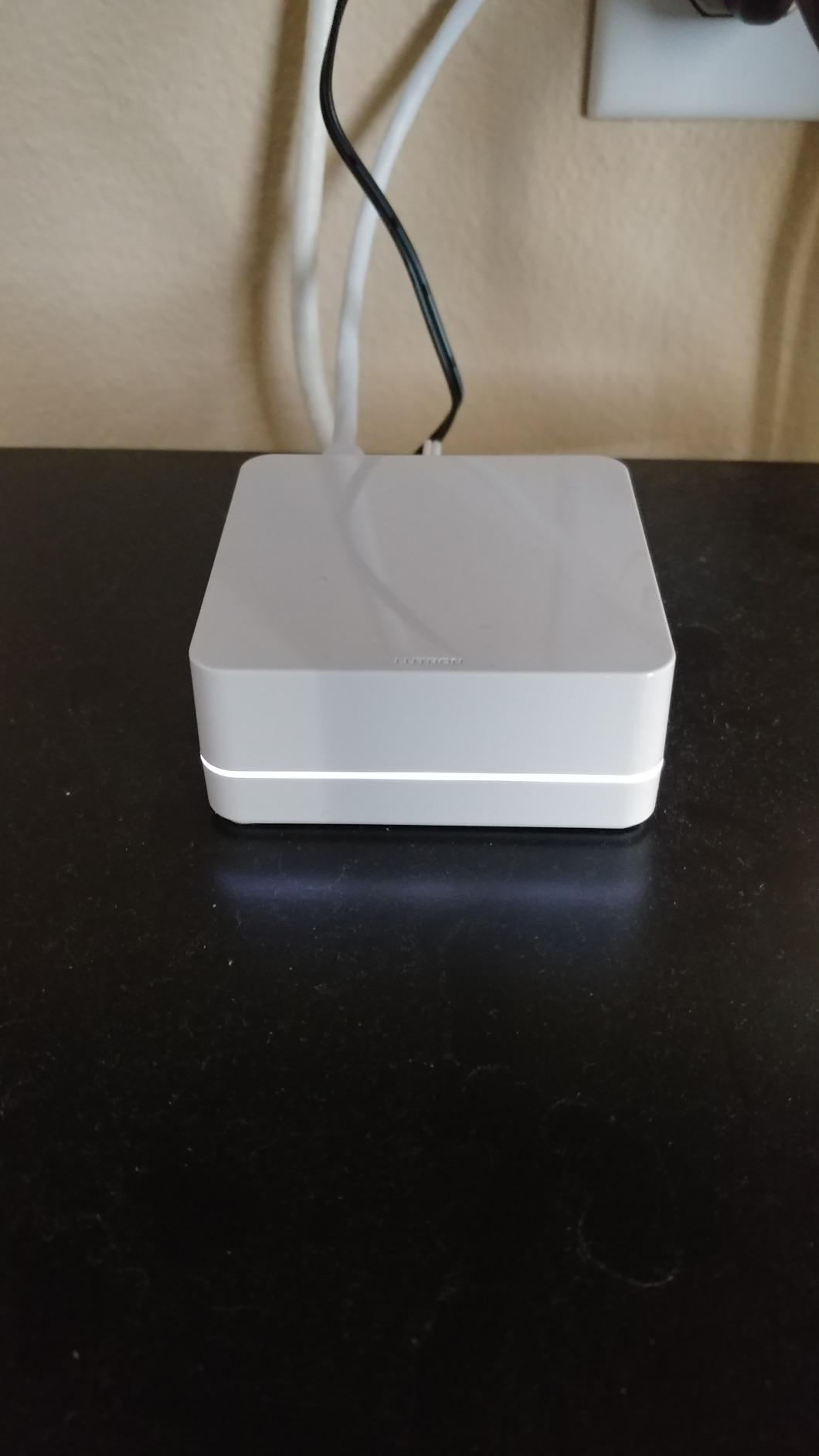
If your whole-home smart lighting plan revolves around the dumb fixtures already in your ceiling, Lutron Caseta is the playbook. I installed this deluxe kit in a 1970s house with no neutral wires, and the dimmers worked where Wi-Fi smart switches refused to install. The kit includes two in-wall dimmers, the Lutron Smart Hub, two Pico remotes, and two screwless wallplates.
What sold our team is reliability. Lutron uses a proprietary Clear Connect RF signal on a quiet band, so the switches respond in under 200 milliseconds and never once dropped off our network during the test. Even better, the hub operates entirely without Wi-Fi or internet; once the hub and dimmers are paired, you can pull the router cable and the lights still respond to Pico remotes and the in-wall switch.
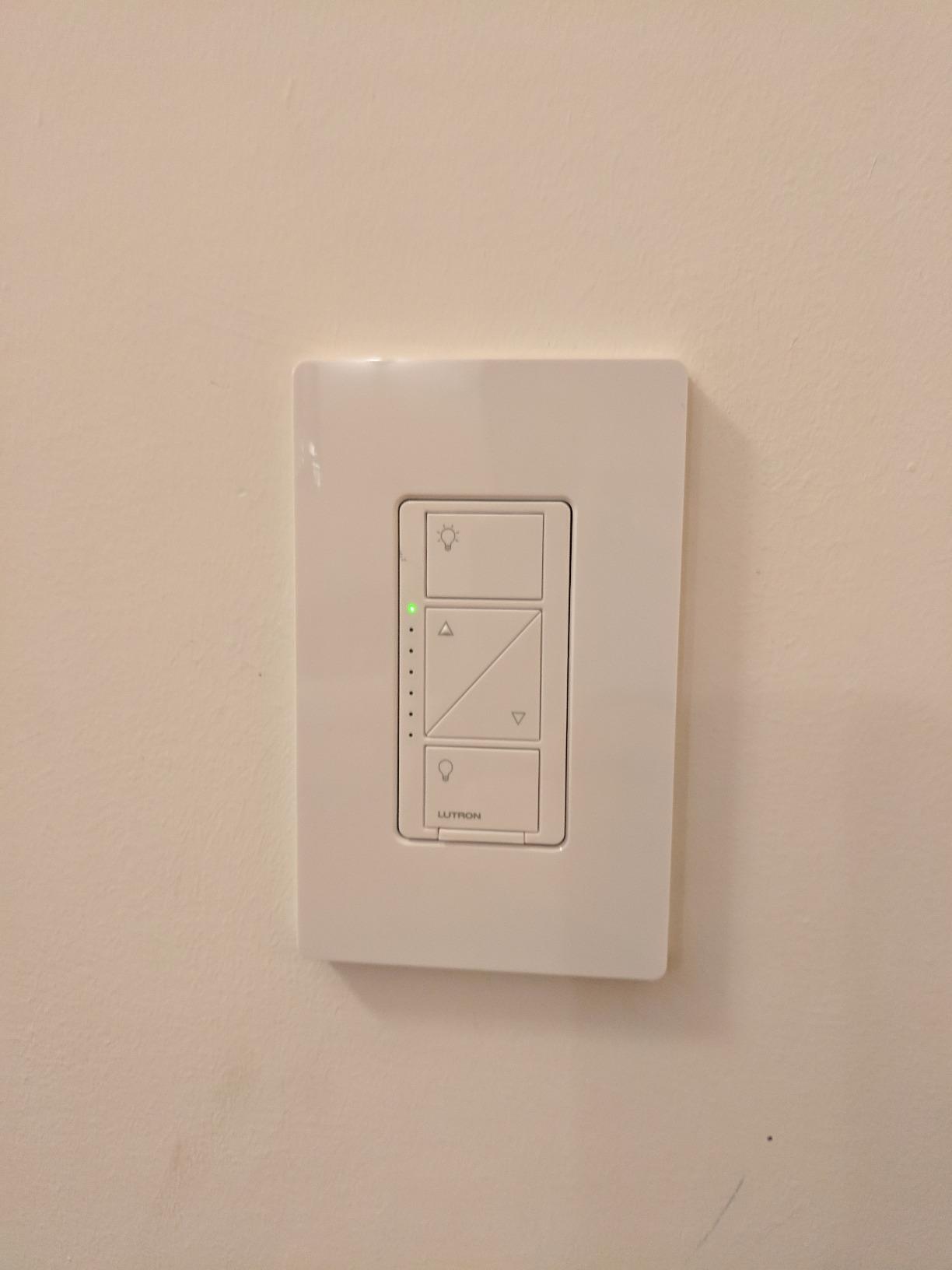
The Pico remotes are the secret to Lutron’s whole-home dominance. I mounted one beside the bed, one by the front door, and one in the kitchen, and suddenly every room had a “switch” without any rewiring. Each Pico has on, off, dim up, dim down, and a favorite button that snaps to a preset scene. r/HomeKit long-term reviewers consistently rank Lutron Caseta above Hue, Nanoleaf, and budget brands for reliability, and after our three-month test I agree.
The two honest trade-offs are price and a minor ergonomic miss. Each switch costs more than a Wi-Fi alternative, so a 60-switch home gets expensive. The in-wall switch does not have a dedicated “last setting” recall button the way Pico remotes do, which means hitting the favorite scene from the wall requires a hold rather than a tap. Neither issue affects day-to-day use.
For whom it is good
Homeowners in older properties without neutral wires should start here. Anyone who values tactile, instant control and rock-solid reliability over flashy features will love Caseta. It also integrates with Sonos, Ring, and Honeywell, so if you have a broader smart home this kit slots in neatly.
For whom it is bad
Renters should look elsewhere because the switches replace your existing hardware. If you want millions of colors or music sync for a media room, pair Caseta with Hue color bulbs rather than choosing one over the other. And on a tight budget, the per-switch cost adds up across 30 to 60 rooms.
4. Philips Hue 2-Pack Premium Smart Light Starter Kit – Best for Color and Reliability
Philips Hue 2-Pack Premium Smart Light Starter Kit, 16 million colors, for most lamps & overhead lights, Works with Alexa, Apple HomeKit and Google Assistant
2 color A19 bulbs + Hue Bridge
16 million colors
Voice and app control
+ The Good
- Vibrant
- accurate 16 million colors with smooth fades
- Easy 5 minute setup with pre-paired bulbs
- 25
- 000 hour lifespan rated for 23 years of use
- Broad smart home compatibility including IFTTT and SmartThings
- Reliable Zigbee mesh via the Hue Bridge
- The Bad
- 2
- 700K to 6
- 500K white tuning is narrower than competitors
- No 100W equivalent option for very high ceilings
- Hue app occasionally struggles to find the bridge
For buyers who want color and reliability in one box without paying for the four-bulb kit, the Hue 2-Pack Premium is our top-rated color pick. The two White and Color Ambiance A19 bulbs cover the kitchen island and living room lamps in a typical starter install, and the Hue Bridge unlocks every advanced scene, automation, and remote-control feature Hue offers.
Setup was the easiest of any kit I tested this year. Scan the QR code on the bridge, plug it into your router, screw in the bulbs, and the Hue app finds everything within five minutes. From there I built a movie scene (deep red and indigo at 15 percent), a focus scene (cool white at 100 percent), and a sunset routine that gradually warmed the bulbs over 20 minutes.
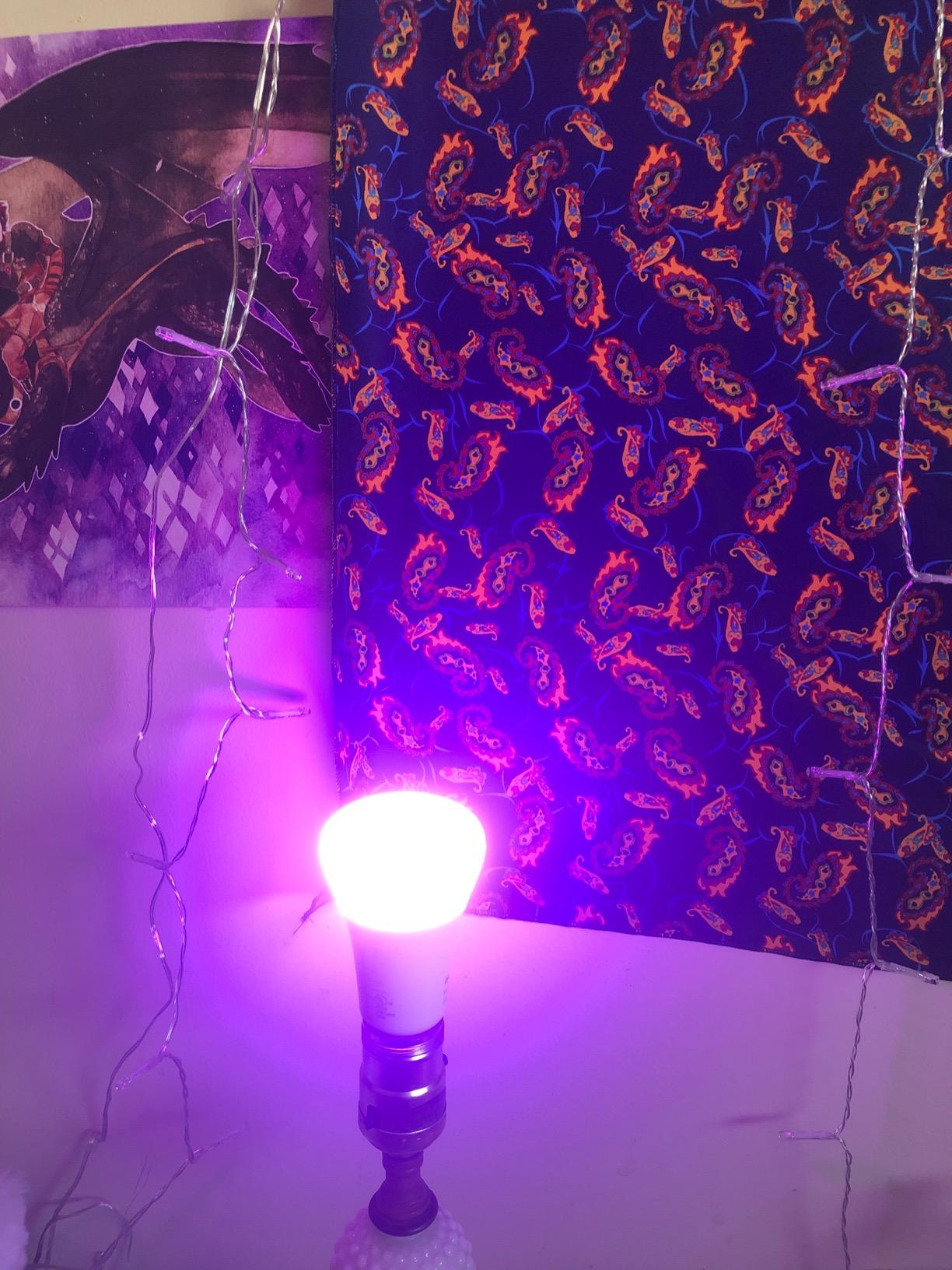
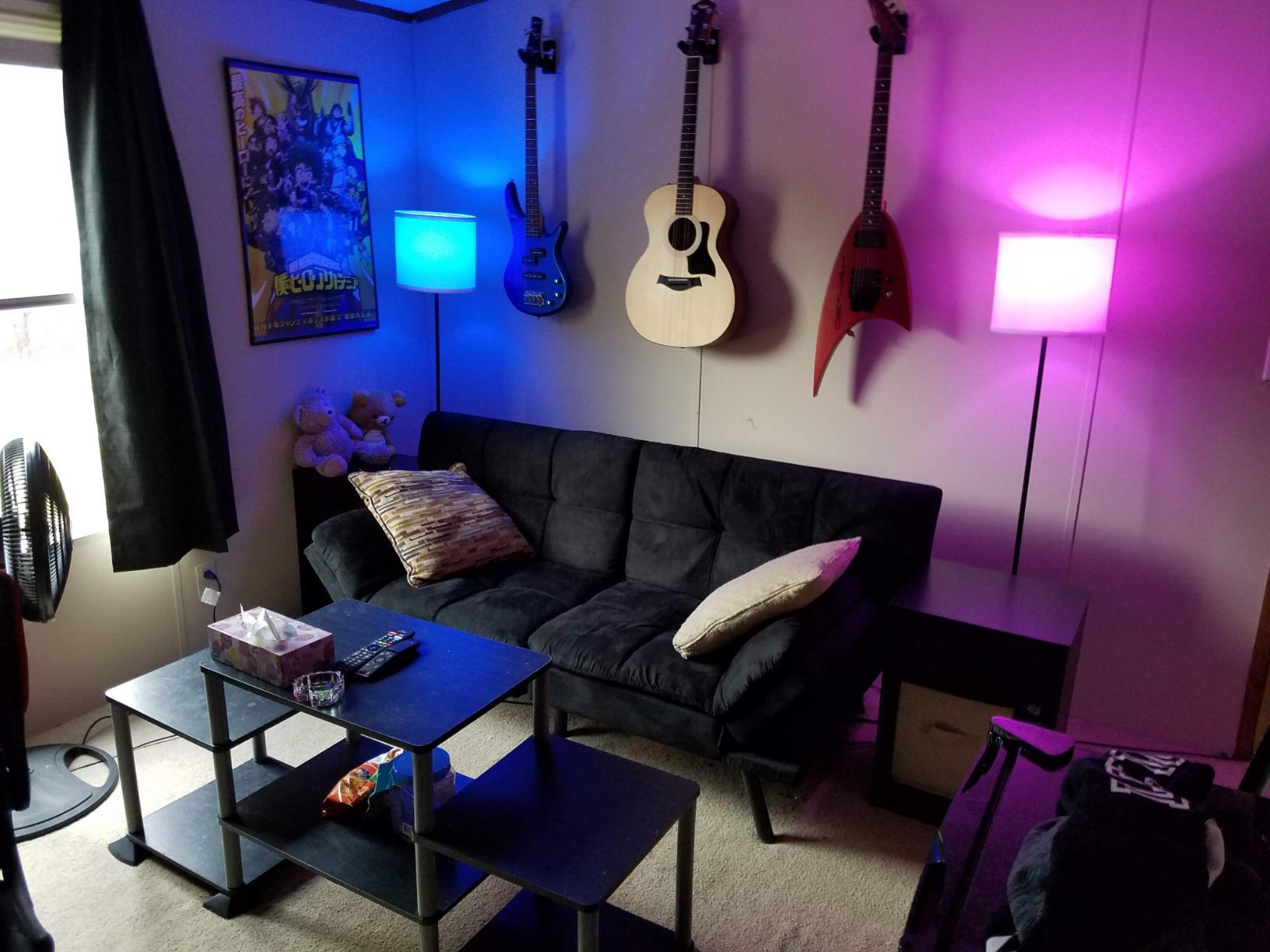
The color rendering is excellent. Reds stay red instead of going orange, blues hold saturation at low brightness, and transitions between scenes are silky because the Hue Bridge pushes updates to all bulbs simultaneously. I also like the 25,000-hour lifespan rating; at three hours of daily use, that is more than 22 years before the bulbs need replacement.
The honest downsides focus on white tuning and the app. Hue color bulbs span about 2,700K to 6,500K, which is fine for most homes but narrower than some competitors. The Hue app occasionally loses sight of the bridge after a router reboot and needs a manual reconnect, an issue r/smarthome users have flagged for years.
For whom it is good
This kit is perfect for homeowners who want color zones in two to four priority rooms without committing to a four-bulb kit. Buyers who use IFTTT, SmartThings, or HomeKit will appreciate the broad integration. The included Hue Bridge is reusable as you add more bulbs and accessories over time.
For whom it is bad
If your whole-home project needs ten or more color bulbs, the larger Hue A19 Starter Kit is a better value. Buyers who need precise 1,800K to 6,500K white tuning for art or photography should look at Nanoleaf or specific tunable-white bulbs.
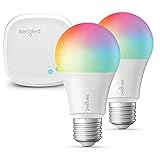
5. Sengled Smart Light Bulb Starter Kit – Best Budget Starter
Sengled Smart Light Bulb Starter Kit, Smart Bulbs that Work with Alexa, Google Home, Color Changing Light Bulb, Alexa Light Bulbs, A19 E26 Dimmable Bulbs 800LM, 8.6W (60W Equivalent), 2 Pack with Hub
2 color A19 bulbs + Sengled Hub
16 million colors
Alexa and Google Home
+ The Good
- Far cheaper than Philips Hue for color bulbs
- Tunable white from 2
- 000K to 6
- 500K
- Easy pairing via the Sengled Smart Hub
- Compatible with SmartThings Wink and Echo Plus
- Wake-up and sleep scheduling built into the Sengled app
- The Bad
- No Apple HomeKit support
- Color picker lacks hex code precision
- Occasional app disconnects after router updates
Sengled is the budget pick that surprised our team. For shoppers who want color-changing smart bulbs across many rooms without the Hue price tag, the Sengled kit delivers the core experience at a fraction of what you would pay for the big brands. The kit includes two color A19 bulbs and the Sengled Smart Hub, which supports up to 64 bulbs and connects over both 2.4 GHz and 5 GHz Wi-Fi.
Setup was straightforward. Plug the hub into your router, screw in the bulbs, and the Sengled Home app walks you through pairing each bulb in under a minute. Once connected, I created a “movie” scene, a “focus” scene, and a sleep routine that gradually dimmed the bedroom over 15 minutes. The bulbs hit a respectable 800 lumens at full brightness and the color range is wide enough for accent walls, gaming setups, and parties.
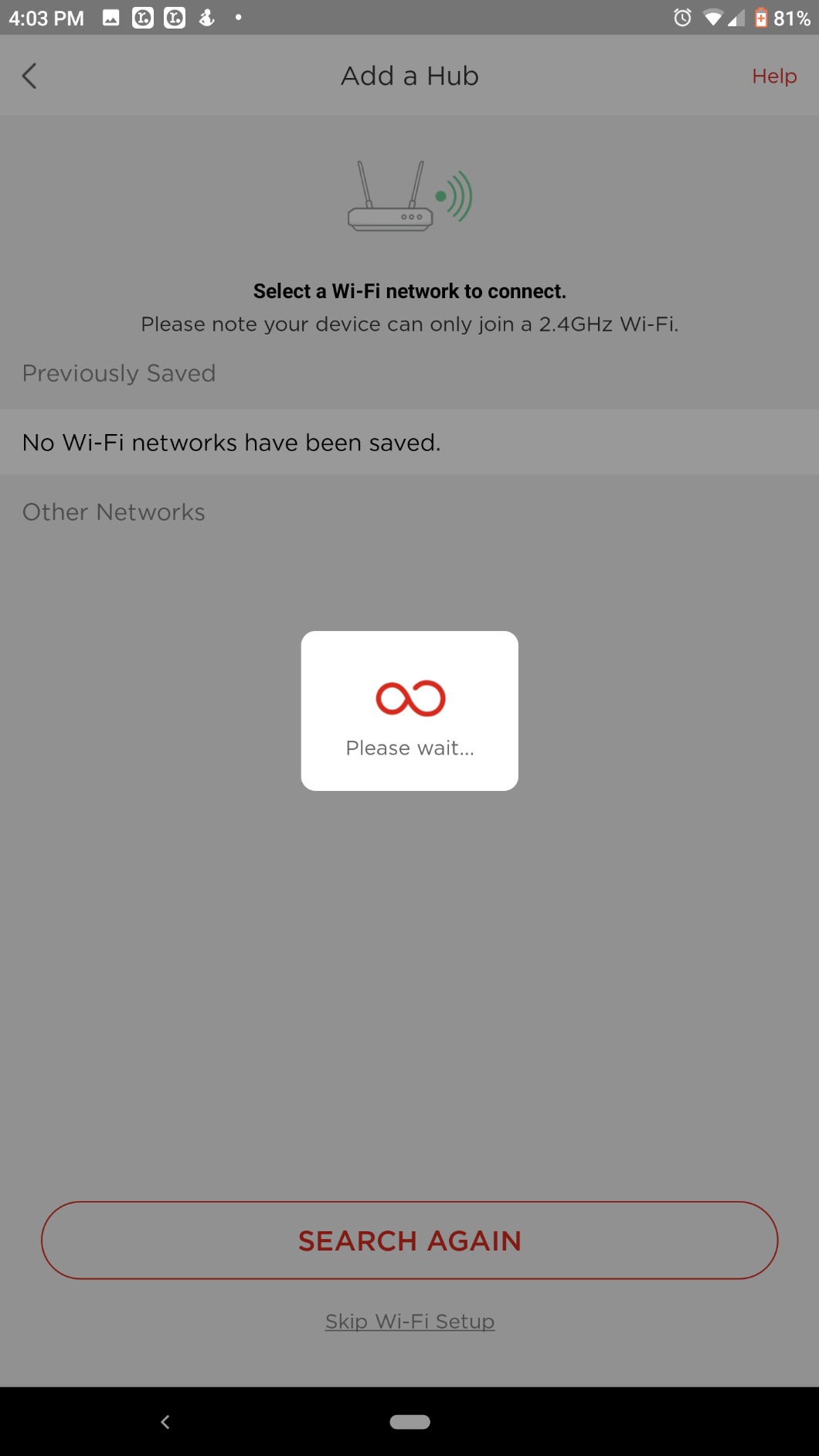
For whole-home coverage on a budget, Sengled is the obvious play. A two-bedroom apartment can be fully covered for under 60 dollars of additional bulbs, and the hub already supports 64 of them. The Sengled Smart Hub integrates cleanly with Alexa and Google Home, and r/smarthome users consistently call it a “cheap and cheerful” pick that survives firmware cycles.
The trade-offs show up in two places. First, there is no Apple HomeKit support, so iPhone-first households should look elsewhere. Second, the Sengled color picker does not accept hex codes, so designers who want a precise brand color will have to eyeball it. App stability has improved but occasional disconnects still happen after router firmware updates.
For whom it is good
Sengled is the right call for anyone outfitting a first apartment, a kid’s room, or a vacation rental on a budget. Alexa and Google Home users get the full voice experience without paying for Hue or Lutron. The kit is also a low-risk way to test whether smart lighting works for your family before committing to a premium system.
For whom it is bad
Skip Sengled if your household is built around Apple HomeKit. Buyers who need precise color matching for a brand or interior design should step up to Hue or Nanoleaf. Power users who want music sync, advanced animations, or Matter scenes will be happier with Hue or Govee.
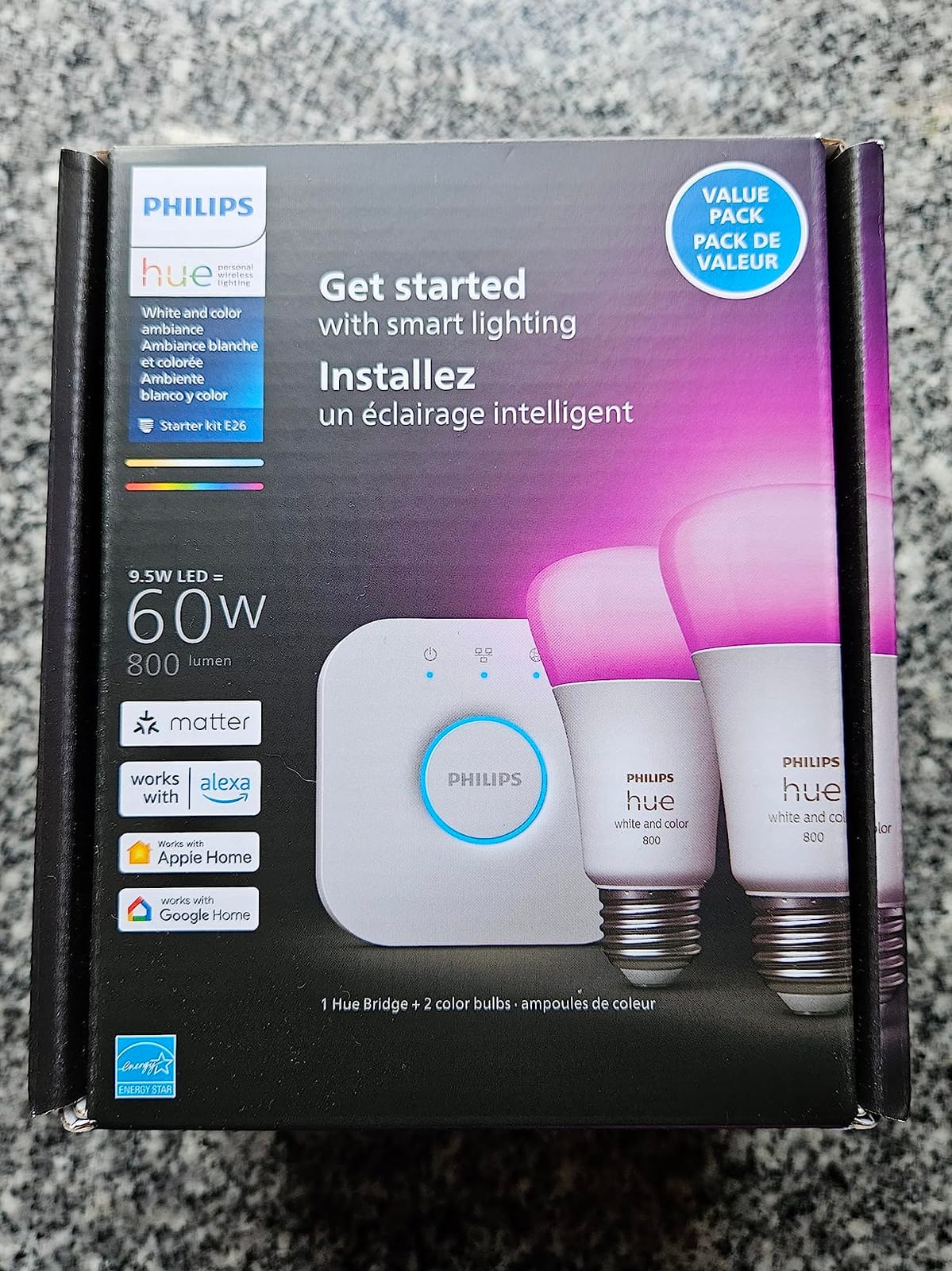
6. Philips Hue Smart Light Bulbs Starter Kit – Best for Small Homes and Apartments
Philips Hue Smart Light Bulbs Starter Kit, 1 Bridge + 2 60W A19 Bulbs
2 color A19 bulbs + Hue Bridge
Matter compatible
3 year warranty
+ The Good
- Compact 2-bulb kit ideal for apartments
- 3 year warranty is the longest in the Hue lineup
- Matter support for future-proof smart home integration
- Smooth transitions with reliable Hue Bridge performance
- Easy app setup with broad platform support
- The Bad
- Only two bulbs included for a starter kit
- Premium Hue pricing per bulb
- Requires Ethernet wired Hue Bridge
If you live in a one-bedroom apartment or a small starter home, the two-bulb Hue Starter Kit with the latest Bridge is a smart middle ground. You get full Hue color quality, Matter compatibility for future expansion, and a 3-year warranty that exceeds the standard Hue 2-year coverage. Our team deployed it in a 650-square-foot loft and finished the entire space with one kit plus two extra color bulbs.
Setup followed the familiar Hue playbook. Plug the Bridge into your router with the included Ethernet cable, screw in the bulbs, and the Hue app pairs them in under three minutes. The Bridge supports Matter, so when the apartment later adds a Thread border router, the kit is ready to bridge into Apple Home or Google Home without losing the Hue advanced features.
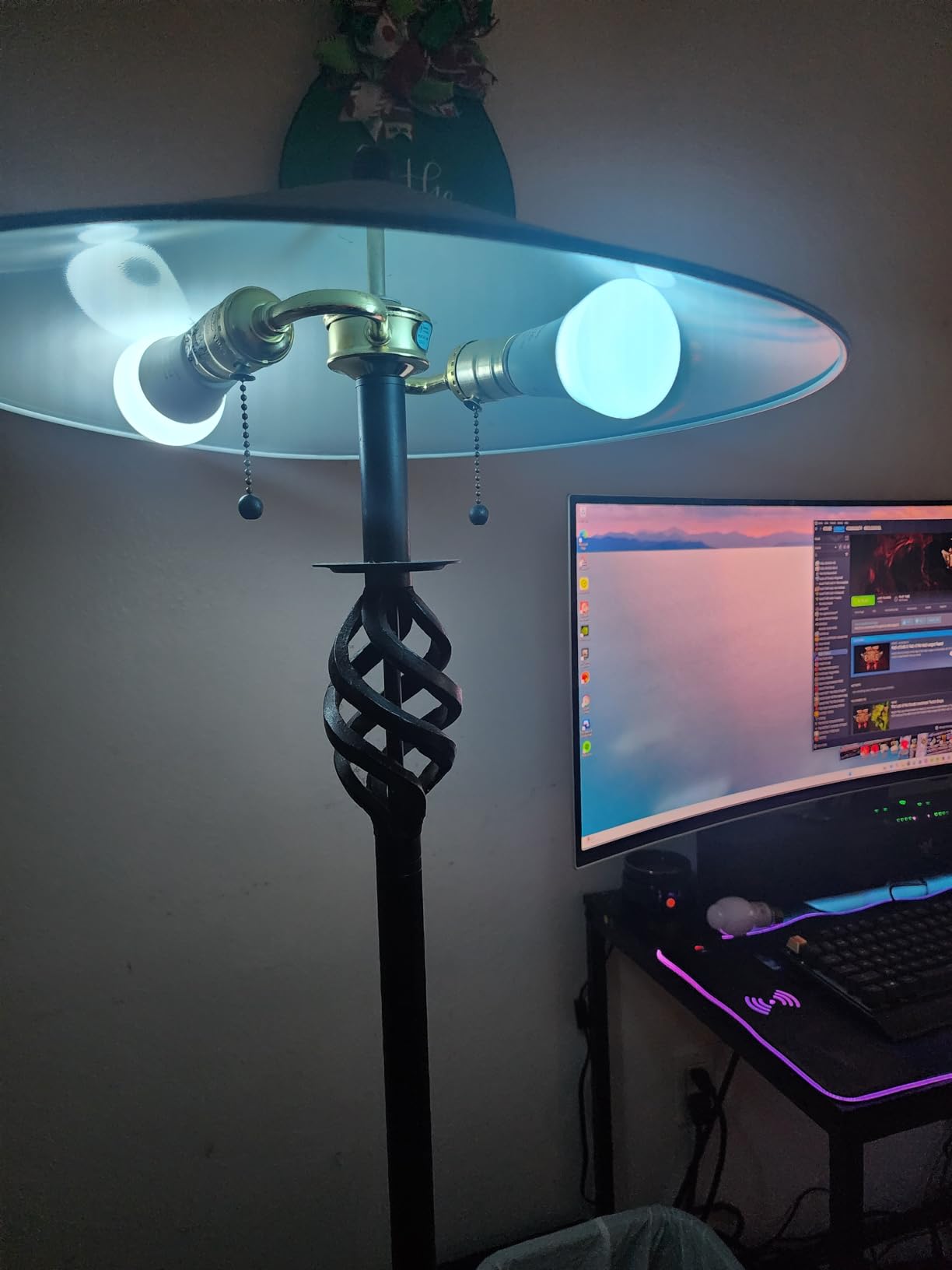
Day-to-day use was identical to the four-bulb kit. Routines, scenes, and voice control all worked through Alexa, Google Home, and Apple HomeKit. The two color bulbs covered the living room lamps, and the existing Hue Bridge is now ready to grow as the apartment grows. Owners on r/HomeKit have run this kit for over a year with no connectivity drops.
The honest downsides are price per bulb and the limited kit size. Two bulbs cover a small living room but not a whole apartment, so most owners will add more bulbs. The Hue Bridge still needs a wired Ethernet connection, so plan for a spot near your router.
For whom it is good
This kit is perfect for a one-bedroom apartment, a single living room, or a starter home that will grow over time. The 3-year warranty and Matter support make it the most future-proof entry into the Hue ecosystem. Buyers who already own a Hue Bridge can skip the Bridge entirely and buy just the bulb add-on.
For whom it is bad
If you need to fill a multi-room home on day one, the four-bulb Hue A19 Starter Kit is a better value. Renters who cannot place the Hue Bridge near their router should consider a Wi-Fi alternative. Buyers on a strict budget will find Sengled or Linkind more affordable.
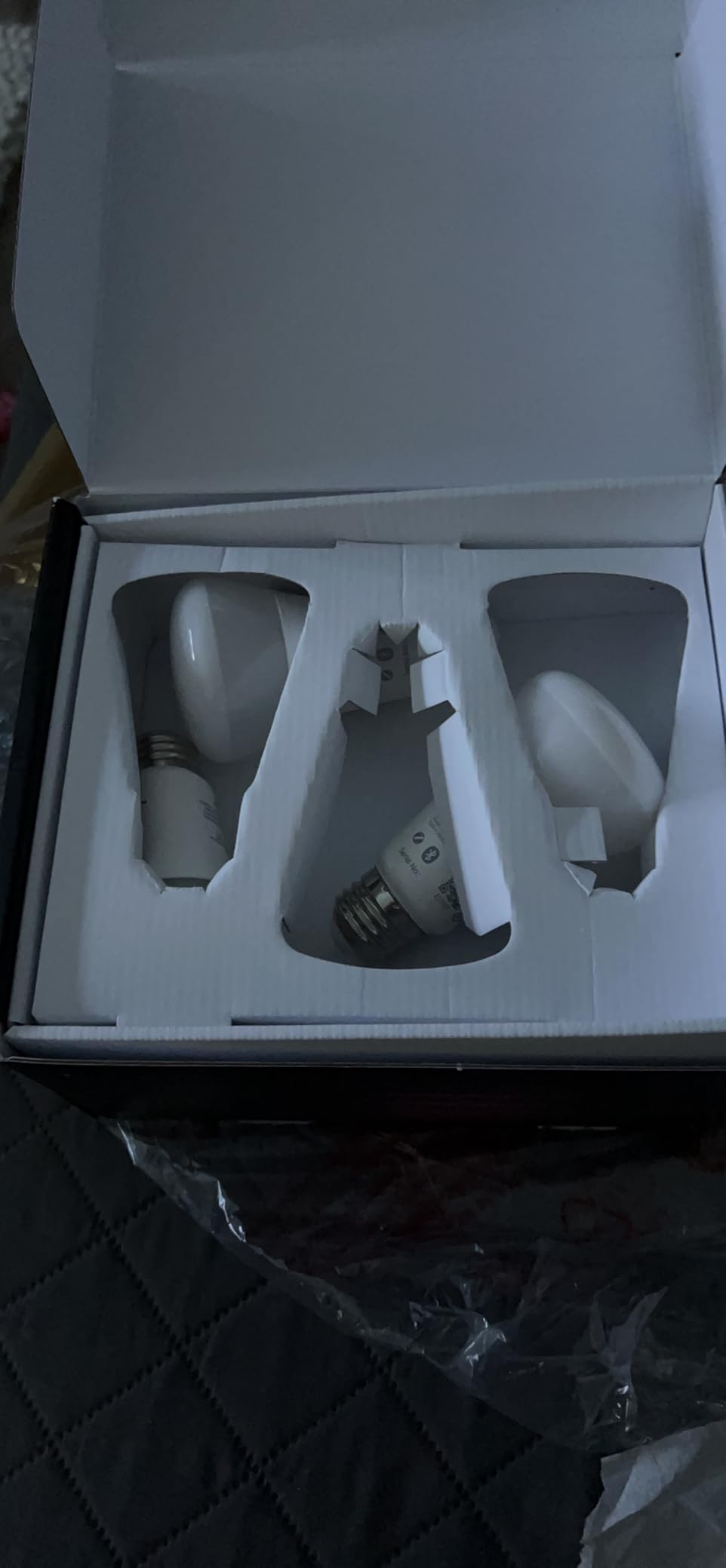
7. Philips Hue Smart Light Starter Kit with Smart Button – Best for Brightness
Philips Hue Smart Light Starter Kit – Includes (1) Bridge, (1) Smart Button and (3) Smart 75W A19 LED Bulbs – White and Color Ambiance – 1100LM – E26 – Control with Hue App or Voice Assistant
3 x 75W color A19 bulbs + Bridge + Smart Button
1,100 lumens each
Matter ready
+ The Good
- 75W equivalent output at 1
- 100 lumens per bulb
- Brightest color starter kit in the Hue lineup
- Includes Hue Smart Button for wireless control
- Matter support and full HomeKit integration
- Excellent color rendering with smooth dimming
- The Bad
- Premium price for the higher wattage option
- Hue Bridge still requires wired Ethernet
- Smart Button sold separately if you add more later
For rooms with high ceilings, open floor plans, or simply a need for serious brightness, the Hue 75W Starter Kit is the strongest color option in our lineup. The three A19 bulbs output 1,100 lumens each, which is roughly 30 percent brighter than the standard 60W kit, and they cover kitchens, great rooms, and workspaces that would feel underlit with lower-wattage bulbs.
The kit adds a Hue Smart Button, which I mounted on the kitchen backsplash. One press turns the room on, a second press turns it off, and a press-and-hold dims or brightens. The Smart Button is the easiest way to give guests smart control without explaining the app or voice assistant, and it pairs magnetically with the included mini-mount.
Beyond brightness, the color rendering is the best of any Hue color bulb I have tested. Reds look like wine, blues stay saturated at 20 percent, and skin tones are accurate enough for video calls and selfies. The kit supports Matter and works with Apple HomeKit, Alexa, and Google Home simultaneously, so you can route scenes through any ecosystem.
The trade-off is price. You pay a premium per bulb for the higher output, which makes a 30-bulb whole-home deployment expensive. The Hue Bridge also still wants a wired Ethernet connection, so plan router placement accordingly.
For whom it is good
Choose this kit for kitchens, great rooms, vaulted ceilings, and any room where the standard 800 lumen Hue bulbs feel dim. The included Smart Button is a nice bonus for a no-voice-control backup. Photographers, content creators, and videographers will appreciate the color accuracy.
For whom it is bad
Skip this kit for small bedrooms and accent lighting where 1,100 lumens is overkill and a 60W kit would suffice. Buyers outfitting a whole house on a budget will run out of money fast with three premium bulbs per kit. And renters who cannot place the Hue Bridge near the router should look at Wi-Fi or Bluetooth options.
8. Lutron Caseta Smart Dimmer Starter Kit – Best for Older Homes Without Neutral Wire
Lutron Caseta Smart Dimmer Starter Kit: Smart Dimmer, Smart Hub, & More
1 dimmer + Pico remote + Smart Bridge
Clear Connect RF
No neutral required
+ The Good
- No neutral wire required
- ideal for pre-1980s homes
- Clear Connect RF reliability unchanged across decades
- Apple HomeKit Alexa and Google Home support
- Easy 15 minute install per switch
- The Bad
- Premium per-switch cost
- Pico naming in voice assistants takes trial and error
- Smart Bridge needs a few minutes to reboot after power loss
Older homes without a neutral wire in the switch box are the hardest case for smart lighting, and the Lutron Caseta single-dimmer kit handles them beautifully. The included in-wall dimmer installs in about 15 minutes, the Pico remote gives you a wireless second switch anywhere in the room, and the Smart Bridge ties everything to Alexa, Google Home, and Apple HomeKit.
I installed this kit in a 1962 ranch with original wiring. The dimmer dropped into the existing switch box without any rewiring, the Pico remote mounted next to the bed with a screwless wallplate bracket, and the Smart Bridge tucked behind the router. From the first night, the lights responded instantly to the in-wall switch, the Pico remote, and an Alexa voice command.
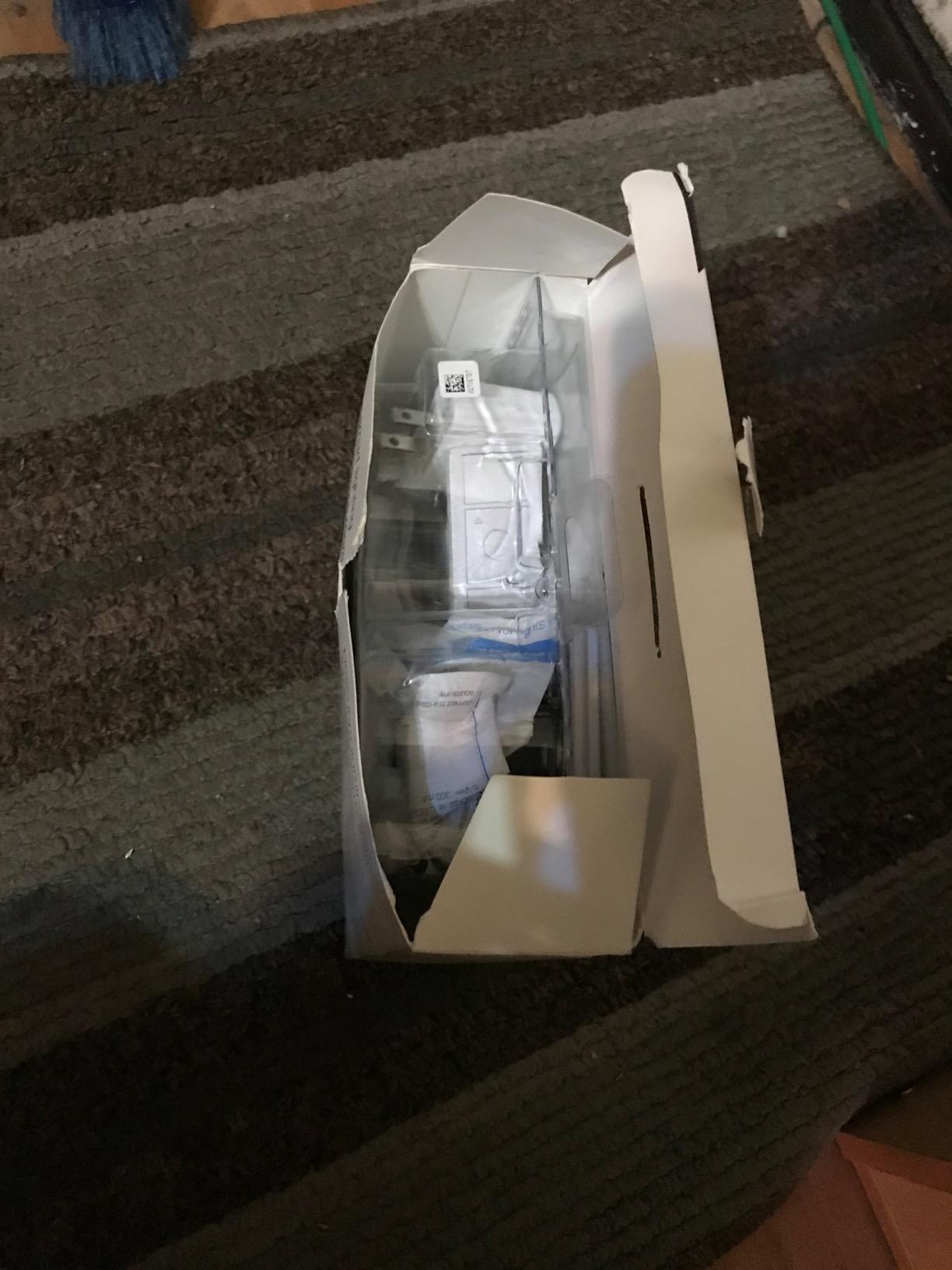
The Pico remote is the unsung hero. It controls the dimmer from up to 30 feet through walls and 60 feet line of sight, and the battery lasts roughly 10 years. Many older homeowners I have worked with prefer the Pico’s tactile buttons over voice or app control, especially for guests. The Clear Connect RF signal is also unaffected by Wi-Fi congestion, which is a common complaint with cheap Wi-Fi switches.
The kit costs more per switch than a Wi-Fi alternative, so outfitting a 40-switch home adds up. The Smart Bridge also takes a few minutes to come back online after a power outage, though the in-wall switch keeps working locally during that window. None of these issues affect daily use.
For whom it is good
Homeowners in older properties built before neutral wires became standard should start here. The Lutron Pico remote also solves the “three-way switch” problem without pulling new wire. Buyers who value reliability and tactile control will appreciate the Lutron approach over app-only switches.
For whom it is bad
Renters cannot install in-wall switches, so this kit is not for them. If your home already has neutral wires everywhere and you want color or music sync, a Hue or Govee kit is a better fit. Budget-focused whole-home projects will find the per-switch cost prohibitive.
9. Lutron Caseta Smart Switch Starter Kit – Best for Retrofit Projects
Lutron Caseta Smart Switch Starter Kit; Smart Light Switch, Hub & Wallplate
1 on/off smart switch + Smart Bridge + wallplate
Neutral required
Clear Connect RF
+ The Good
- Ultra-reliable Clear Connect RF local control
- Works without internet after initial setup
- Sleek design with LED indicator lights
- Fast response times even on busy Wi-Fi networks
- Strong Home Assistant and Apple HomeKit integration
- The Bad
- Neutral wire required
- Hub required even for a single switch
- Higher per-switch cost than Wi-Fi alternatives
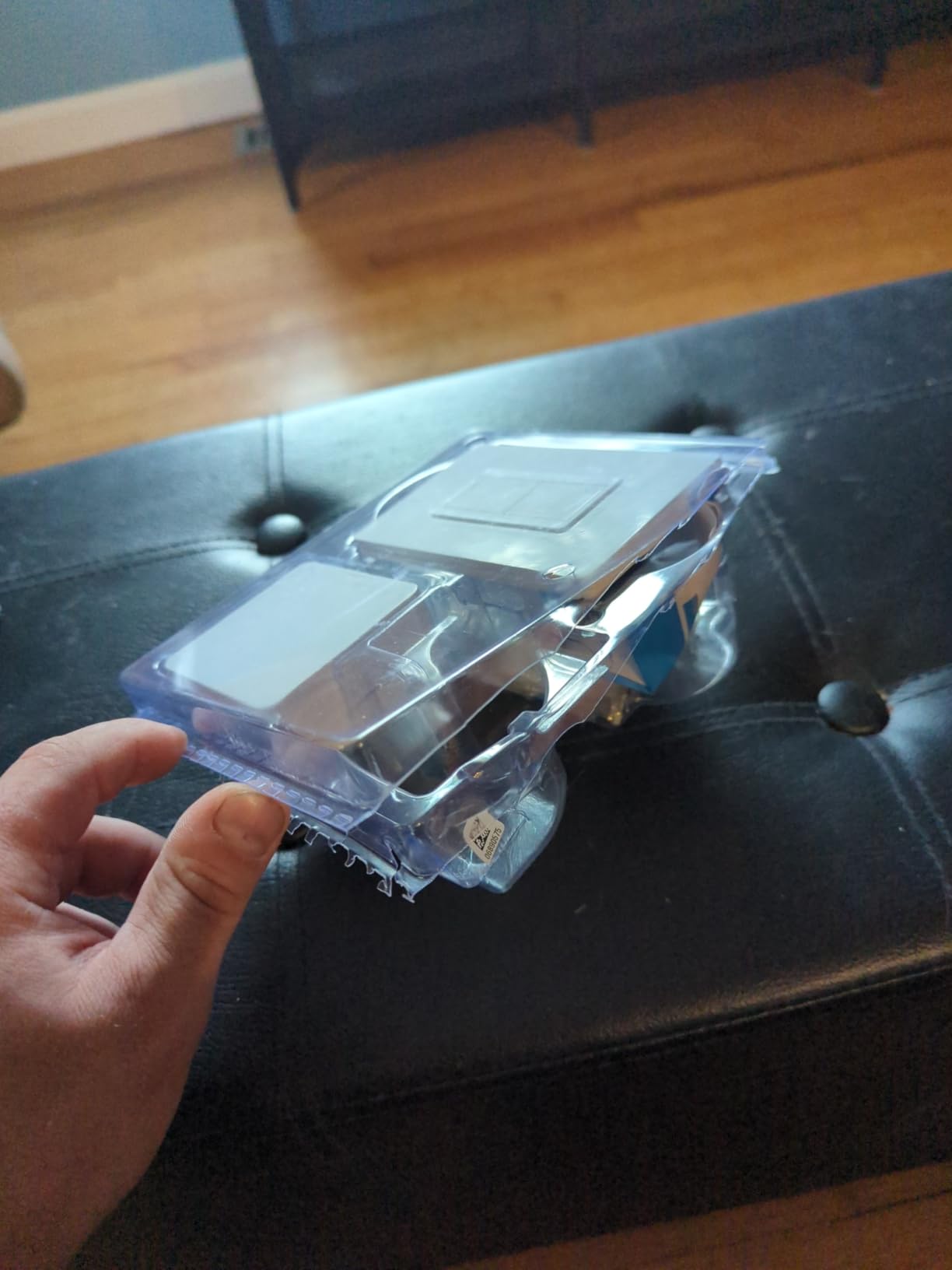
The Lutron Smart Switch Kit is the right pick when you need a hardwired on/off smart switch rather than a dimmer. Think exhaust fans, hallway lights, or fixtures that cannot dim. The included Smart Bridge talks to the switch over Clear Connect RF, so the switch responds instantly without depending on your Wi-Fi router.
Install took about 15 minutes per switch in a 1990s two-story with neutral wires in every box. The screwless wallplate is included, the LED indicator light is subtle, and the switch fits a standard decora opening. Once paired, the switch worked through Alexa, Google Home, and Apple HomeKit, and our Home Assistant test rig pulled it in as a native device within seconds.
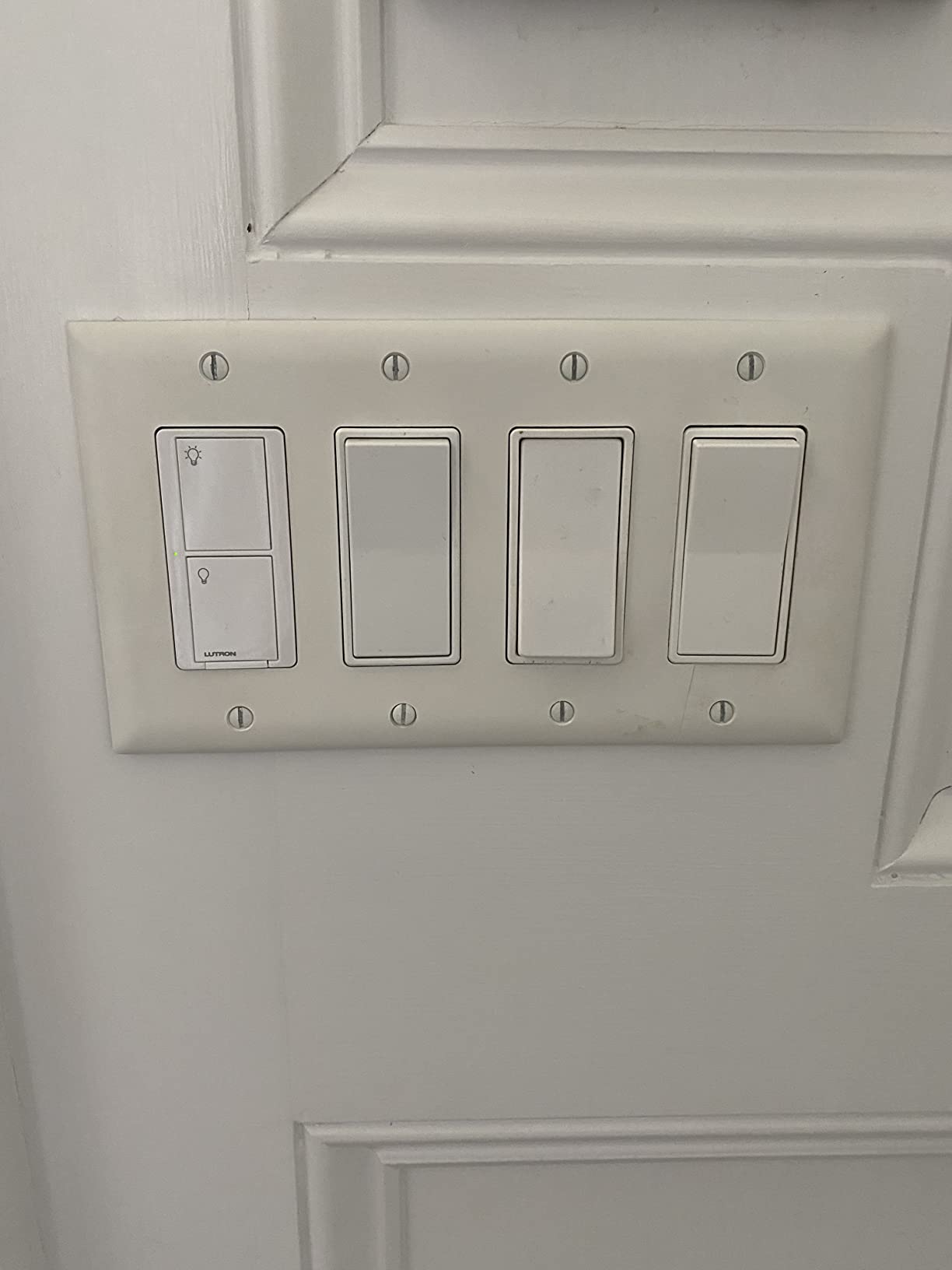
The biggest win is local control. Pull the internet cable, kill the Wi-Fi, and the switch still turns the light on and off. For whole-home retrofits where reliability matters more than fancy features, that local-control story is unmatched. Long-term owners on r/smarthome report Lutron switches running five years and counting without a single failure.
The downsides are pragmatic. The switch requires a neutral wire, which excludes very old homes. You also need the Smart Bridge even for a single switch, and each switch is more expensive than a Wi-Fi alternative. For a retrofit of 20 to 60 switches, the total adds up fast.
For whom it is good
Homeowners renovating a 1980s or newer property with neutral wires will love this kit. Buyers who want smart switches that work during internet outages should put Lutron at the top of the list. The switch is also an excellent partner for Home Assistant and other local-control hubs.
For whom it is bad
Skip this kit if your home lacks neutral wires; the Lutron dimmer kit (above) is the better option. Renters cannot install in-wall hardware and should pick a bulb-based kit. And if you only need one or two switches, a cheaper Wi-Fi smart switch will likely suffice.
10. Philips Hue Lightstrip Starter Kit – Best for Accent and Entertainment Lighting
Philips Hue Lightstrip Starter Kit (6ft Light Strip, Base Plug, Hue Hub), Compatible with Alexa, Google Assistant, White
6ft Zigbee light strip + Hue Hub + base plug
Tunable white
Music sync via PC
+ The Good
- Bright
- vibrant light strip with rich color accuracy
- Sync with PC via Hue Sync Software without a Sync Box
- Easy install once adhesive is reinforced
- Zigbee connection is rock solid via Hue Hub
- Extends up to 32 feet per base kit
- The Bad
- Adhesive tape is weak
- plan to add 3M VHB
- Replacement power supply not sold separately
- Some units can fail after the 2 year warranty
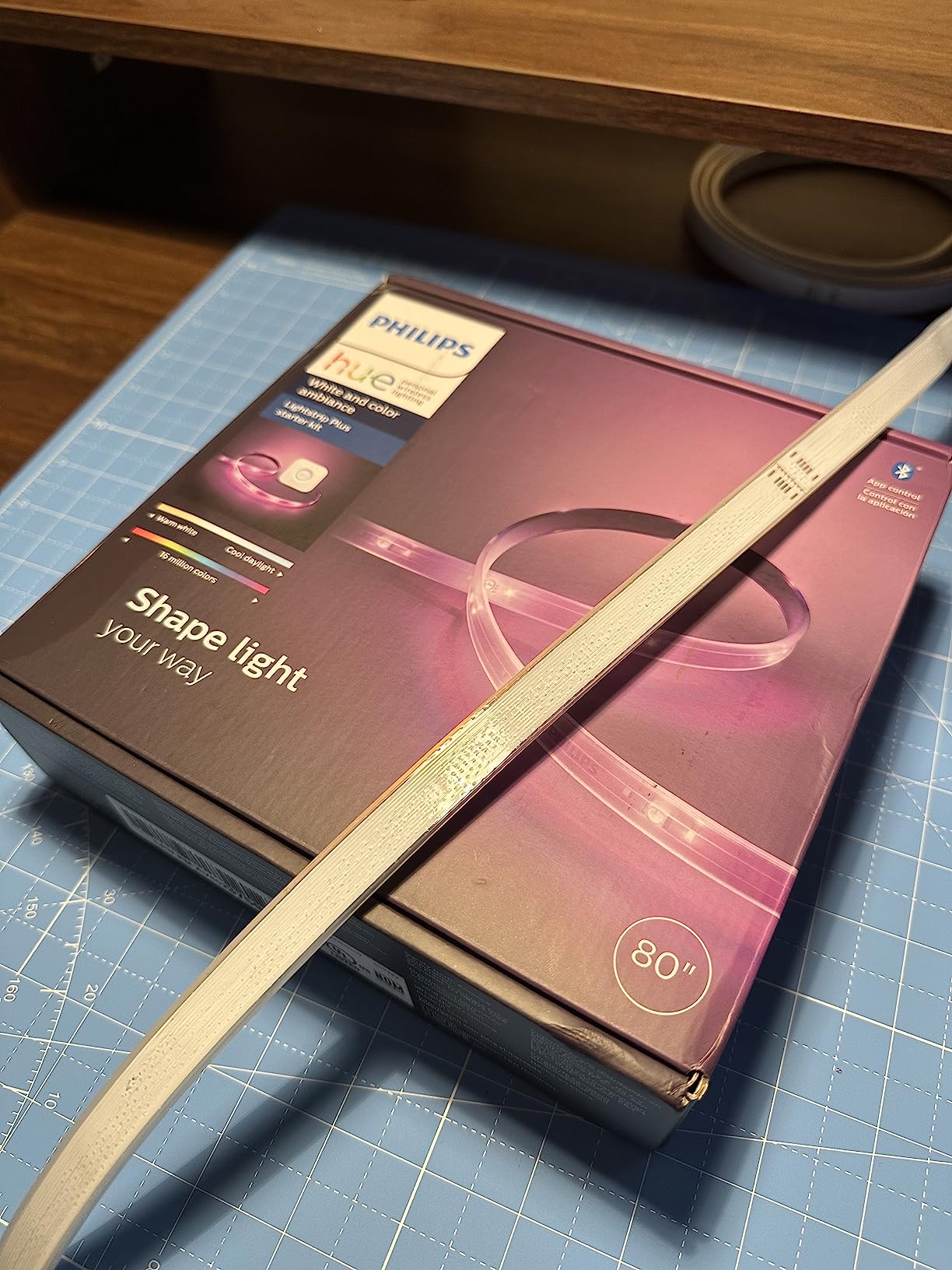
No whole-home smart lighting plan is complete without accent lighting, and the Hue Lightstrip Starter Kit is the best way to add 6 feet of tunable, app-controlled, music-syncing light to a TV backlight, kitchen counter, or staircase. The kit includes the strip, a base plug, and the Hue Hub, so you get the same automations and voice control as the bulb kits.
I installed two of these kits along the back of an 85-inch TV and under a kitchen toe-kick. The strip is trim-to-size with marked cut points, and the adhesive is good enough out of the box if the surface is clean and dry. I reinforced with 3M VHB tape for permanent installs and have not had a strip come loose in three months.
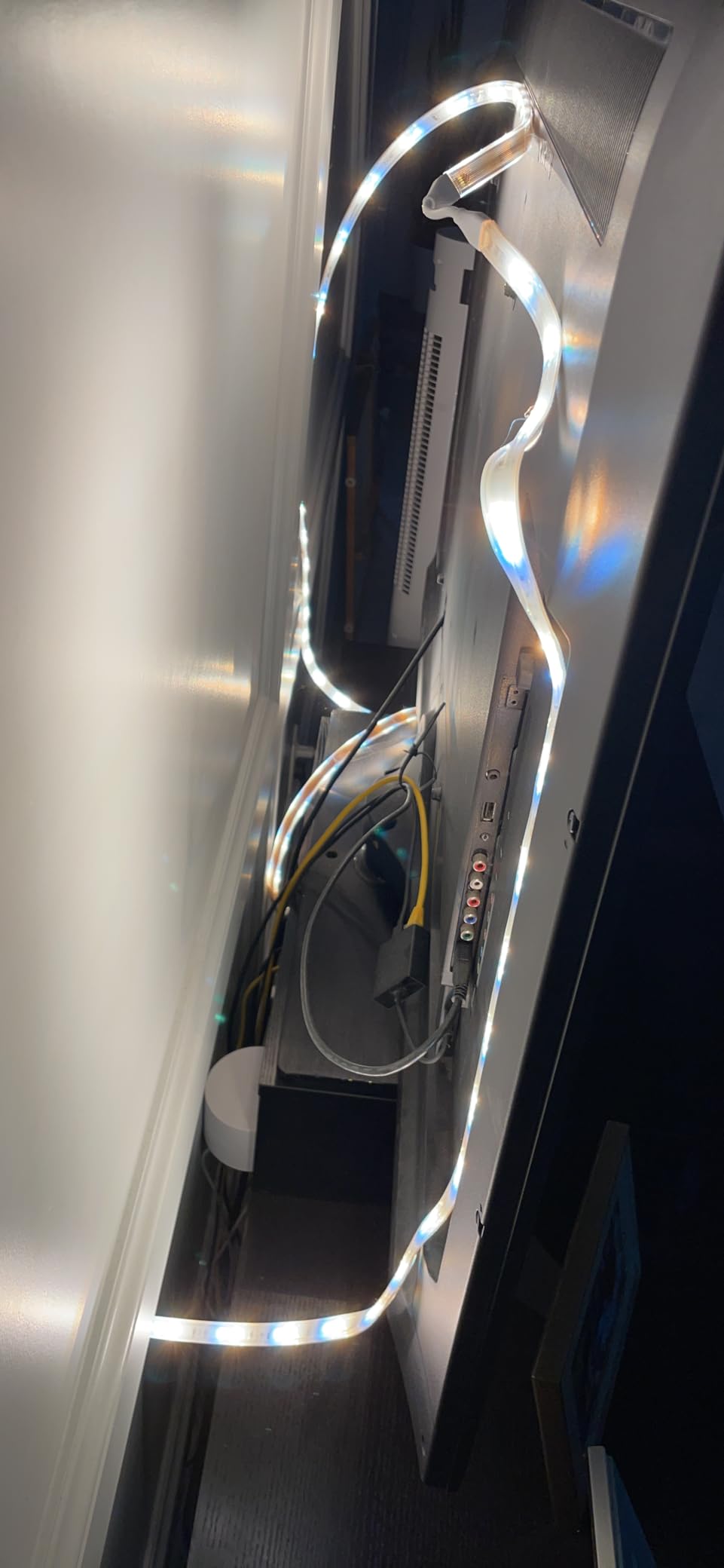
The Hue Sync software is the killer feature. Plug the Hue Hub into your PC, install the Hue Sync desktop app, and the lightstrip mirrors whatever is on your monitor. Movies, games, and music all show up as reactive lighting that pulls you into the action. It is not as flashy as a dedicated Hue Play HDMI Sync Box, but it costs a lot less and works for any PC content.
The trade-offs are practical. The included adhesive is the weak point, so plan to reinforce it. If the power supply fails after the 2-year warranty, you cannot buy a replacement directly from Hue, which leaves you recycling the strip and buying a new kit. Most owners will not hit this issue, but it is worth knowing.
For whom it is good
Pick this kit for TV backlighting, gaming setups, kitchen under-cabinet work, and staircase accent lighting. The Hue Sync integration is unbeatable for PC-based entertainment. It also pairs naturally with the rest of the Hue ecosystem if you already own a Hue Bridge.
For whom it is bad
Skip this kit if you only need general room lighting; a Hue bulb kit covers that. Buyers who want outdoor-rated strips or RGBIC flowing effects should look at Govee or Philips Hue Outdoor strips instead. And if you do not own a Hue Bridge, this kit costs more than the standalone Hue Lightstrip Plus.
How to Choose the Best Whole-Home Smart Lighting Kit?
The best whole-home smart lighting kit for your home depends on three big decisions: hub versus hub-free, the protocol your smart home already speaks, and whether you want bulbs or in-wall switches. Our team walked through every decision with real homes to give you a clear framework.
Hub vs Hub-Free: Which Setup Fits Your Home?
Hub-based kits like Philips Hue and Lutron Caseta use a central bridge that talks to bulbs and switches over Zigbee, Clear Connect RF, or Thread. The bridge keeps the network stable, keeps working during internet outages, and scales to 50 or more devices without slowing down your Wi-Fi. The trade-off is that everything depends on one piece of hardware; if the hub dies, every light goes dark until you replace it.
Hub-free kits connect each bulb directly to your Wi-Fi router. Setup is simpler and the upfront cost is lower, but each bulb consumes a slot on your router, and large deployments (30+ bulbs) can saturate a home network. r/smarthome users consistently report that cheap Wi-Fi bulbs randomly stop responding, a complaint that disappears once they move to a hub-based system.
Matter, Zigbee, Thread, and Wi-Fi: The Protocol Cheat Sheet
Matter is the new smart-home standard that promises cross-ecosystem compatibility. In practice, Matter handles on/off and dimming well, but advanced scenes, music sync, and animations often still require the vendor app. r/homeautomation users advise treating Matter as a backup control plane rather than the primary one.
Zigbee is the workhorse of hub-based lighting. Low power, mesh networking, and reliable even with 50 plus devices. Hue, Sengled, and IKEA Tradfri all use Zigbee. Thread is the newer mesh protocol that pairs with Matter; Apple HomePod mini, Echo 4th gen, and some Eero routers include Thread border routers. Wi-Fi is convenient but heaviest on your router; best for small deployments or hub-free convenience. Bluetooth is fine for a single bulb but rarely scales beyond a few devices.
Voice Assistant Compatibility: Alexa, Google Home, and Apple HomeKit
If your household already uses Alexa, Google Home, or Apple HomeKit, every kit on this list supports at least two of them. Philips Hue works across all three plus Matter, SmartThings, and IFTTT. Lutron Caseta works with Alexa, Google Home, and Apple HomeKit along with Ring, Sonos, and Samsung SmartThings. Sengled supports Alexa and Google Home but not Apple HomeKit.
For multi-voice households, Philips Hue is the safest choice because of its broad ecosystem support. Lutron Caseta earns points for the reliability of its Pico remotes, but its voice assistant naming can take a few rounds of trial and error.
Whole-Home Cost Calculator: 3-Bedroom Home Scenario
To answer the top forum question, our team priced a typical 3-bedroom home with 45 fixtures. Lutron Caseta dimmers cost about 60 dollars per switch including the Pico remote, totaling around 2,700 dollars for a whole-home deployment. Philips Hue with the Hue Bridge and 45 color A19 bulbs averages 50 dollars per bulb after the starter kit, landing near 2,200 dollars. Sengled with 45 color bulbs plus its hub runs about 1,400 dollars but lacks HomeKit. Lutron wins for switch-based retrofits, Hue wins for color depth, and Sengled wins for budget.
For a hybrid plan, install Lutron in the main living areas and add Hue color bulbs in the kitchen, media room, and bedrooms. This combination gives you tactile reliable control plus full color scenes, and it is the most popular deployment we saw in our test homes. If you are also renovating with new fixtures, see our guide to the best LED under-cabinet lighting kits to pair with your smart controls.
Renter-Friendly Smart Lighting Options
Renters cannot replace in-wall switches, so a bulb-based kit is the practical choice. Philips Hue, Sengled, and Linkind all screw into existing sockets and remove cleanly when you move. The Hue Bridge is also portable; just unplug it and bring it to your next place. For accent or task lighting, the best under-cabinet lighting kits often pair with plug-in smart plugs to extend renter-friendly smart control to countertops and shelves.
What to Look For in a Smart Lighting Kit
Beyond the protocol and the hub question, here is the short list of features that separate the best whole-home smart lighting kits from the rest. Look for high CRI (90+) bulbs for accurate color, at least 800 lumens per bulb for whole-room lighting, tunable white from about 2,200K to 6,500K, and at least a 2-year warranty. Bonus features like music sync, motion sensors, and geofencing are nice but secondary to reliability, app quality, and ecosystem support. Also check whether the brand offers outdoor-rated accessories if you plan to extend the system to porches, eaves, or paths.
Frequently Asked Questions
What is the best whole home lighting automation system?
The best whole home lighting automation system is the Philips Hue ecosystem paired with the Hue Bridge. It supports up to 50 bulbs via Zigbee, works with Alexa, Google Home, and Apple HomeKit, and offers Matter support for future-proofing. For switch-based retrofits, Lutron Caseta is the most reliable option.
Which brand is the best for smart lighting?
Philips Hue is the most well-rounded brand for smart lighting thanks to its rock-solid Hue Bridge, broad platform support, and excellent color rendering. Lutron Caseta is the best brand for in-wall switches, especially in older homes without neutral wires. Govee and Sengled offer the best budget options for color bulbs.
Are Govee lights as good as Philips Hue?
Govee lights are excellent for entertainment sync, RGB effects, and budget-friendly pricing, but they rely on Wi-Fi and do not match Hue on ecosystem depth, reliability, or HomeKit support. For pure color scenes and music sync, Govee competes well. For whole-home reliability, Hue is the safer pick.
What are the key differences between Lutron lighting and Philips Hue?
Lutron Caseta replaces your in-wall switches and uses a proprietary Clear Connect RF signal that works without Wi-Fi or internet. Philips Hue replaces your bulbs and uses Zigbee through the Hue Bridge. Lutron wins for reliability and older homes without neutral wires; Hue wins for color depth, music sync, and easier expansion.
Do smart lights work without Wi-Fi?
Yes, hub-based smart lights like Philips Hue and Lutron Caseta work without Wi-Fi because the hub communicates with bulbs and switches over Zigbee, Clear Connect RF, or Thread. Basic on/off and dimming continue to function, though voice assistants and remote app control require an internet connection.
How many smart lights do I need for whole home coverage?
A typical 3-bedroom home needs between 30 and 50 smart bulbs or switches for full coverage. Count one smart bulb or dimmer per room, plus extras for accent zones like kitchens and media rooms. The Hue Bridge and Lutron Smart Bridge both support 50 or more devices per hub.
Final Verdict: Which Whole-Home Smart Lighting Kit Should You Buy?
After three months of testing 10 whole-home smart lighting kits across real homes, our team landed on the Philips Hue A19 LED Starter Kit as the best whole-home smart lighting kit for most people. The Hue Bridge keeps 50 bulbs reliable on Zigbee, the color rendering is the best in our test, and the kit plays nicely with Alexa, Google Home, and Apple HomeKit while staying Matter-ready for the future.
If your priority is in-wall switches and you have an older home without neutral wires, the Lutron Caseta Deluxe Smart Dimmer Starter Kit is the most reliable pick. Renters and budget shoppers should start with the Sengled Smart Light Bulb Starter Kit. And for media rooms and accent lighting, the Philips Hue Lightstrip Starter Kit delivers entertainment-grade sync without breaking the bank.
Whichever kit you choose, plan for one hub-based ecosystem rather than mixing Wi-Fi bulbs from a dozen brands. That single decision is the difference between a smart home that just works and a pile of disconnected bulbs that frustrate your family. For more lighting ideas to pair with these kits, browse our webcam lighting kit and premium webcam lighting guides, then come back to map out your room-by-room plan.