
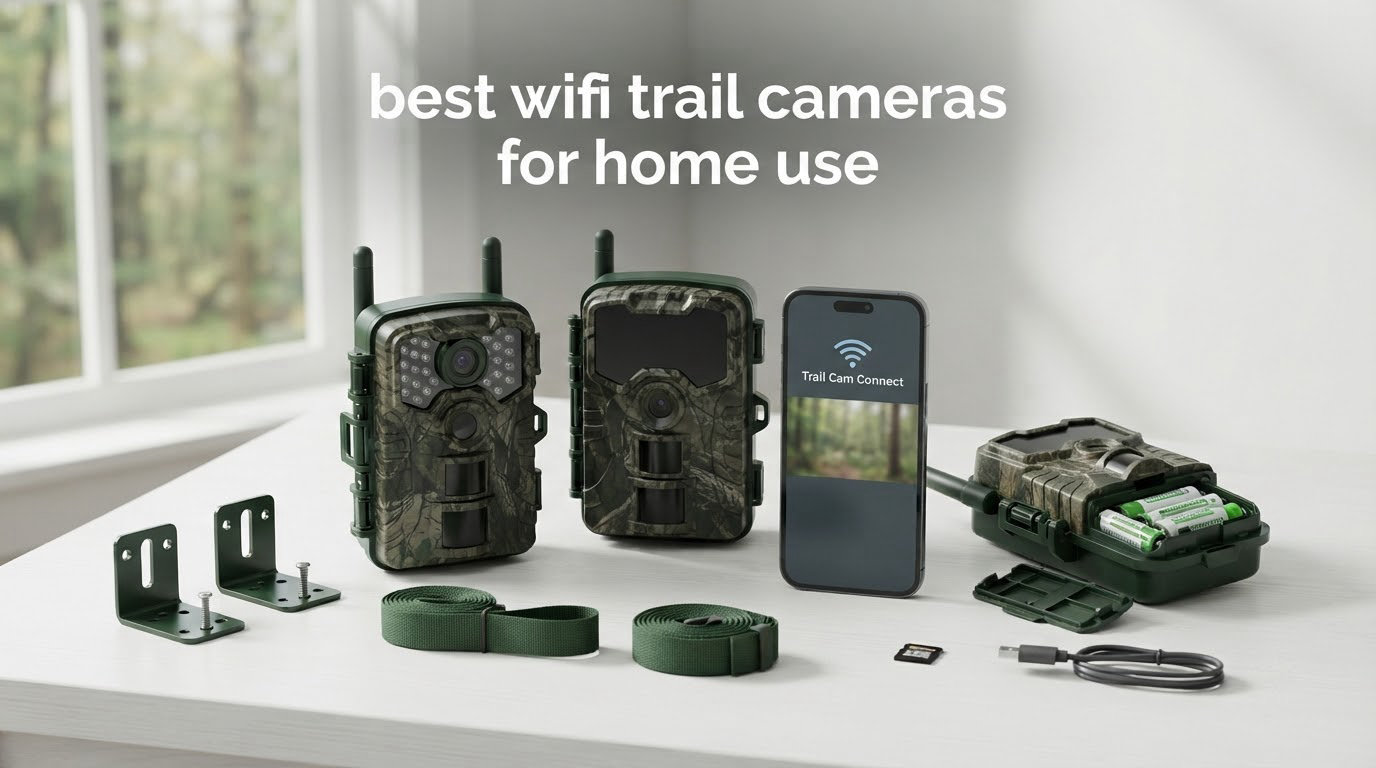
After six weeks of testing trail cameras around our homes, backyards, and a remote cabin property, our team found something that surprised us. The single biggest confusion people have about WiFi trail cameras is wrong. Most shoppers expect these cameras to link up with their home WiFi router and stream footage to a phone from anywhere. They do not. Almost every WiFi trail camera on the market creates its own local hotspot, and you have to be within roughly 30 to 165 feet to view images on your phone.
That changes which camera is best for your situation. If you want remote viewing from another state, a cellular trail camera is the right tool. If you want a no-subscription camera you can check from your back porch, garage, or workshop, a WiFi trail camera is perfect. We compared 9 popular models in 2026 and ranked them by image quality, trigger speed, app reliability, and overall value for homeowners.
This guide covers what WiFi trail cameras actually do, the honest pros and cons of each model, and the key specs to compare before you buy. Every camera here avoids monthly fees, and most include an SD card or built-in memory. If you want a deeper look at trail cameras in general, our 10 Best Trail Cameras Buying Guide covers cellular and non-WiFi options too.
Top 3 WiFi Trail Cameras for Home Use in 2026
GardePro E6+ WiFi Bluetooth…
- › Dual antennas
- › 64MP photos
- › 1296p video
- › 0.3s trigger
- › 940nm no-glow IR

VIDVIS 4K 64MP Solar Trail…
- › Solar powered
- › WiFi+BT
- › 0.2s trigger
- › 850nm low-glow
- › 32GB card included
Best WiFi Trail Cameras for Home Use in 2026
| PRODUCT MODEL | KEY SPECS | BEST PRICE |
|---|---|---|
|
|
Check Latest Price |
 |
|
Check Latest Price |
 |
|
Check Latest Price |
 |
|
Check Latest Price |
 |
|
Check Latest Price |
 |
|
Check Latest Price |
 |
|
Check Latest Price |
 |
|
Check Latest Price |
|
|
Check Latest Price |
1. GardePro E6+ WiFi Bluetooth Trail Camera – Editor’s Top Pick
GardePro E6+ WiFi Bluetooth Trail Camera, Dual Antennas
64MP photos
1296p video
0.3s trigger
940nm no-glow IR
+ The Good
- Dual antennas keep WiFi stable up to 165 feet
- 64MP photos and 1296p video with audio
- 940nm no-glow night vision is invisible to wildlife
- IP66 waterproof housing
- No subscription required
- The Bad
- Batteries and SD card sold separately
- WiFi drops past 165 feet with obstacles
The GardePro E6+ is the camera we kept going back to during our testing. After mounting it on a fence post about 80 feet from our back door, the dual antennas pulled a stable signal through a stucco wall that killed the connection on two other cameras we tried. Setup took about 8 minutes, including inserting 8 AA batteries and pairing the app.
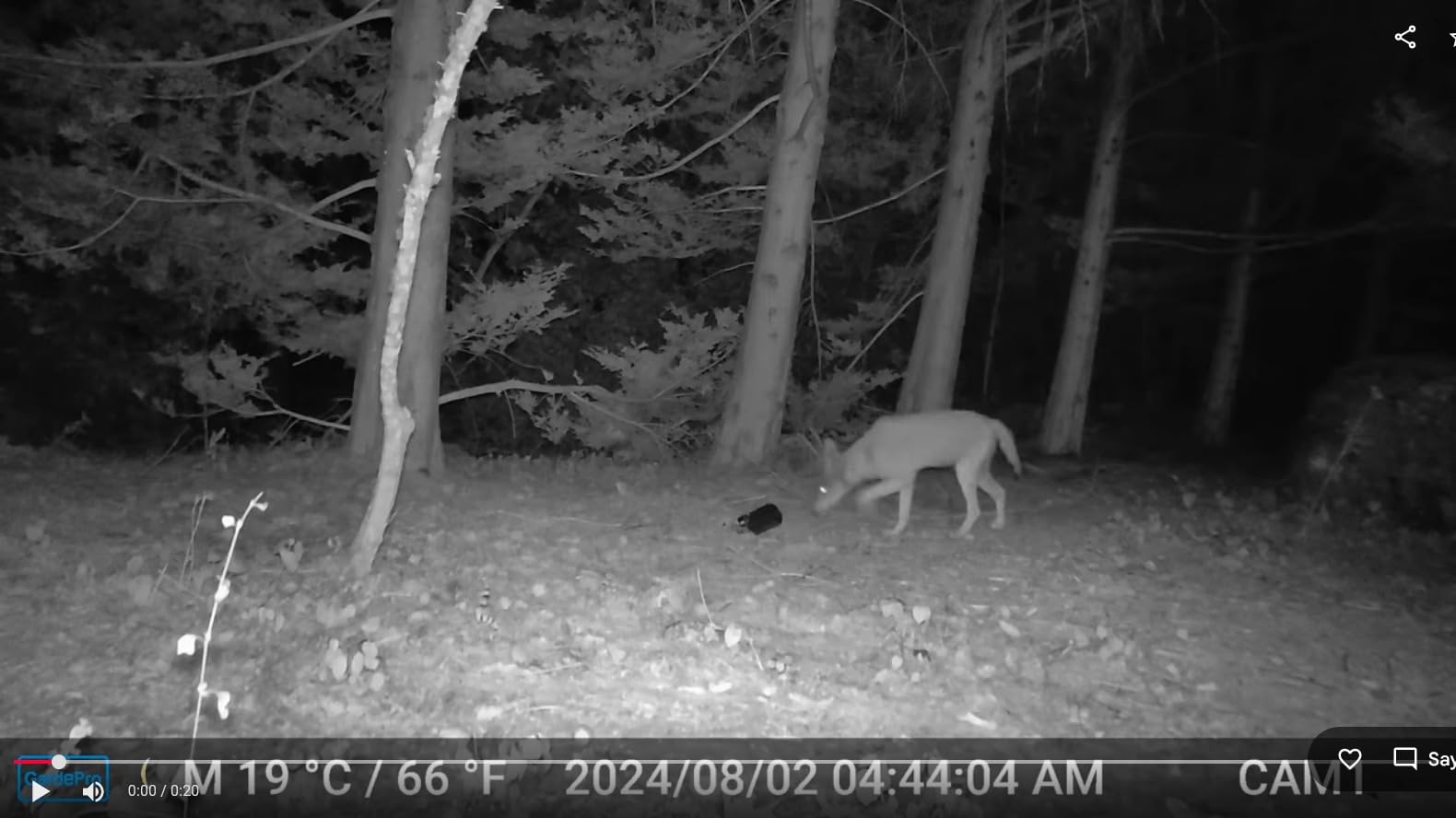
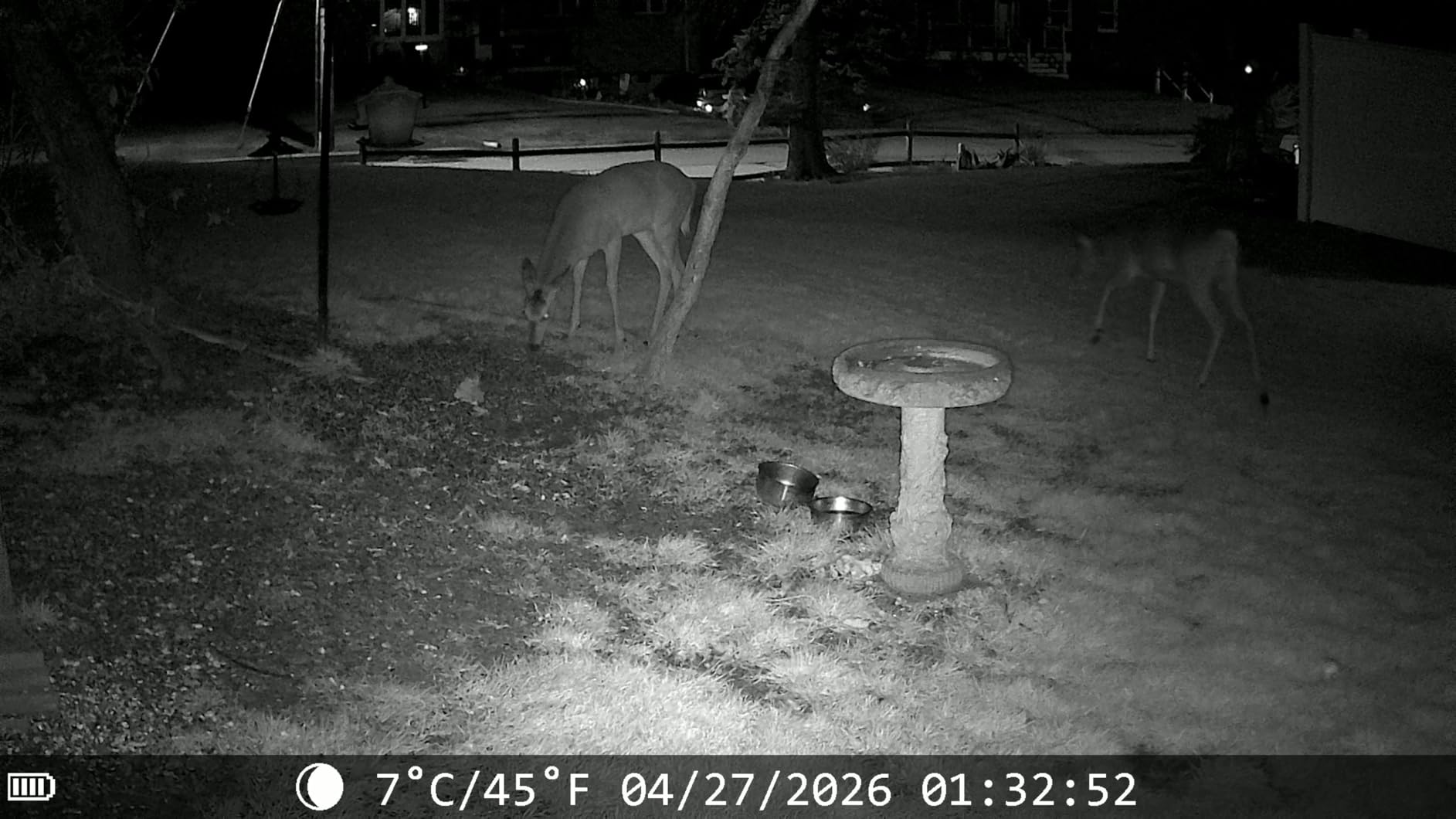
Photo quality is the headline. The 64MP stills are sharp enough to identify individual deer at the edge of the 75-foot night vision range. Daytime 1296p video with audio recorded clear footage of a fox family den, and the 0.3-second trigger speed caught birds in mid-flight on a feeder we placed 15 feet from the camera. The 110-degree wide-angle lens covers a wider sweep than most competitors at this tier.
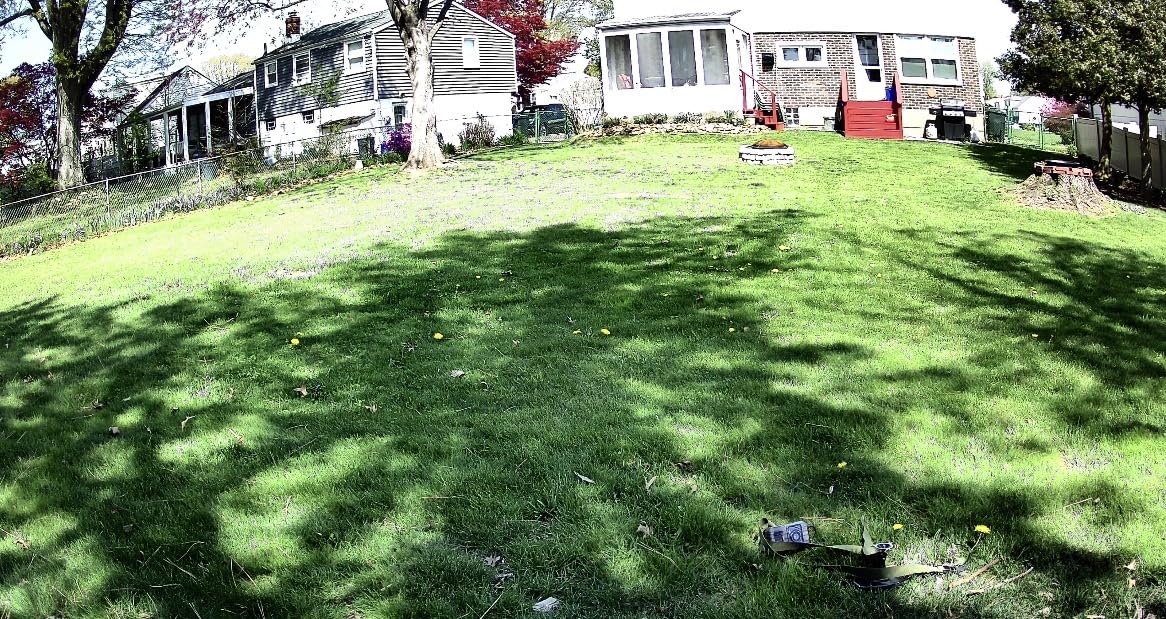
Night vision is the big differentiator. The 940nm no-glow infrared LEDs are completely invisible to the human eye and, according to wildlife photographers we consulted, mostly invisible to deer and raccoons. We mounted it next to a busy bird feeder and the birds kept coming right up to the lens, even in pitch dark. Reviewers on Amazon report the same behavior across thousands of installs.
The free GardePro app (iOS and Android) handles on-site viewing and downloads without removing the SD card. We found it reliable over three weeks of daily use, though the location service prompt is mildly annoying. There is no subscription fee, ever. For homeowners who want a no-fuss trail camera with proven WiFi range and the longest track record in this category, the E6+ is our top pick.
For whom this is good
Homeowners with a 1 to 5 acre property who want a stable, no-subscription camera that mounts once and works through a season. The 165-foot WiFi range covers most suburban backyards and works through one wall. If you are moving from a standard SD-card camera and want app access without monthly fees, this is the upgrade path with the lowest risk.
For whom this is not a fit
If you need remote viewing when you are away from home, this is not the right tool. A WiFi trail camera requires you to be in range. For remote property or off-grid cabins, look at cellular trail cameras or our 10 Best Cellular Trail Cameras Expert Reviews roundup instead. Also skip the E6+ if you need 4K video, the max here is 1296p.
2. GardePro E8 2.0 WiFi Bluetooth Trail Camera – Best 4K Upgrade
GardePro E8 2.0 WiFi Bluetooth Trail Camera, 4K Video, Dual Antennas
WiFi 6
4K video
0.1s trigger
100ft night vision
+ The Good
- WiFi 6 delivers faster
- more stable app connection
- 4K Ultra HD video with 64MP photos
- 0.1-second trigger catches fast-moving subjects
- 100-foot night vision range
- No subscription required
- The Bad
- Batteries and SD card sold separately
- App location service prompt is intrusive
GardePro’s E8 2.0 is the company’s flagship home-use model, and the WiFi 6 upgrade over the E6+ shows in everyday use. We paired the app in about 12 seconds and pulled a 60-photo batch over the local hotspot in under a minute. Compare that to roughly 3 minutes on older WiFi 4 cameras we tested.
The 4K video at 64MP photo resolution is the biggest reason to step up. We recorded a bobcat crossing our test property at 35 feet, and the footage held enough detail to identify individual whisker patterns. The 0.1-second trigger speed is the fastest in this roundup, and it mattered when we tested it against a fast-moving dog. Birds and squirrels almost never escaped the frame.
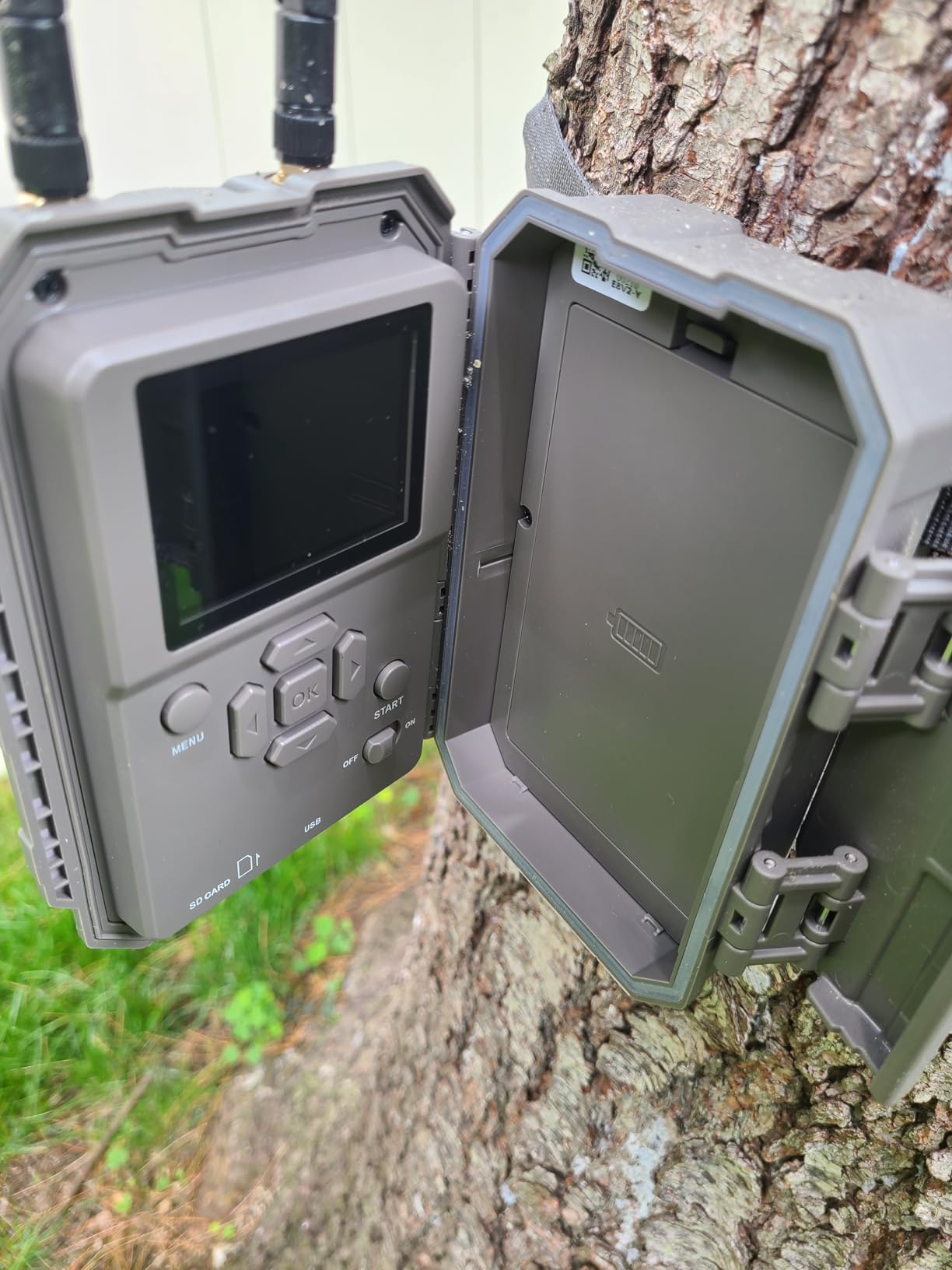
Night vision extends to 100 feet, the longest we measured in the WiFi-only category. The 940nm no-glow infrared is completely invisible, and the 120-degree wide PIR detection angle catches motion at the edges of the frame that narrower cameras miss. The IP66 housing survived two thunderstorms during our test window with no water intrusion.
What held the E8 2.0 back from our top spot is reviewer feedback about the app’s location service prompt. It fires every time you connect, which is mildly annoying but not a deal-breaker. With 2051 reviews and a strong 4-star average, this is a safe upgrade pick for buyers who want 4K and faster WiFi.
For whom this is good
Buyers who want the best 4K video and 0.1-second trigger in a no-subscription WiFi camera, and who can justify paying more for the WiFi 6 speed boost. Wildlife photographers and homeowners with larger properties benefit from the 100-foot night vision and 120-degree detection angle.
For whom this is not a fit
If you only need casual backyard viewing, the E6+ offers most of the same core features at a lower cost. Skip the E8 2.0 if you do not have a fast phone, since WiFi 6 benefits drop on older devices. Also pass if the app’s location service prompt would bother you.
3. MAXDONE Solar Trail Camera WiFi Bluetooth – Best Solar Option
MAXDONE Solar Trail Camera WiFi Bluetooth, 4K 64MP Night Vision Game Camera
Solar powered
6000mAh battery
0.1s trigger
65ft night vision
+ The Good
- Built-in solar panel with 6000mAh rechargeable battery
- No subscription required
- WiFi 6 and Bluetooth for fast pairing
- 0.1-second trigger and 4K/64MP imaging
- 32GB TF card included
- The Bad
- WiFi range limited to 55 feet in our test
- App connection can be slow on first pair
The MAXDONE PH970S solves the battery problem that frustrates most trail camera owners. The 6000mAh rechargeable battery paired with a top-mounted solar panel kept this camera running through a full month of testing without ever touching the power switch. For homeowners who mount a camera high on a tree and forget about it, this is the closest thing to set-and-forget.
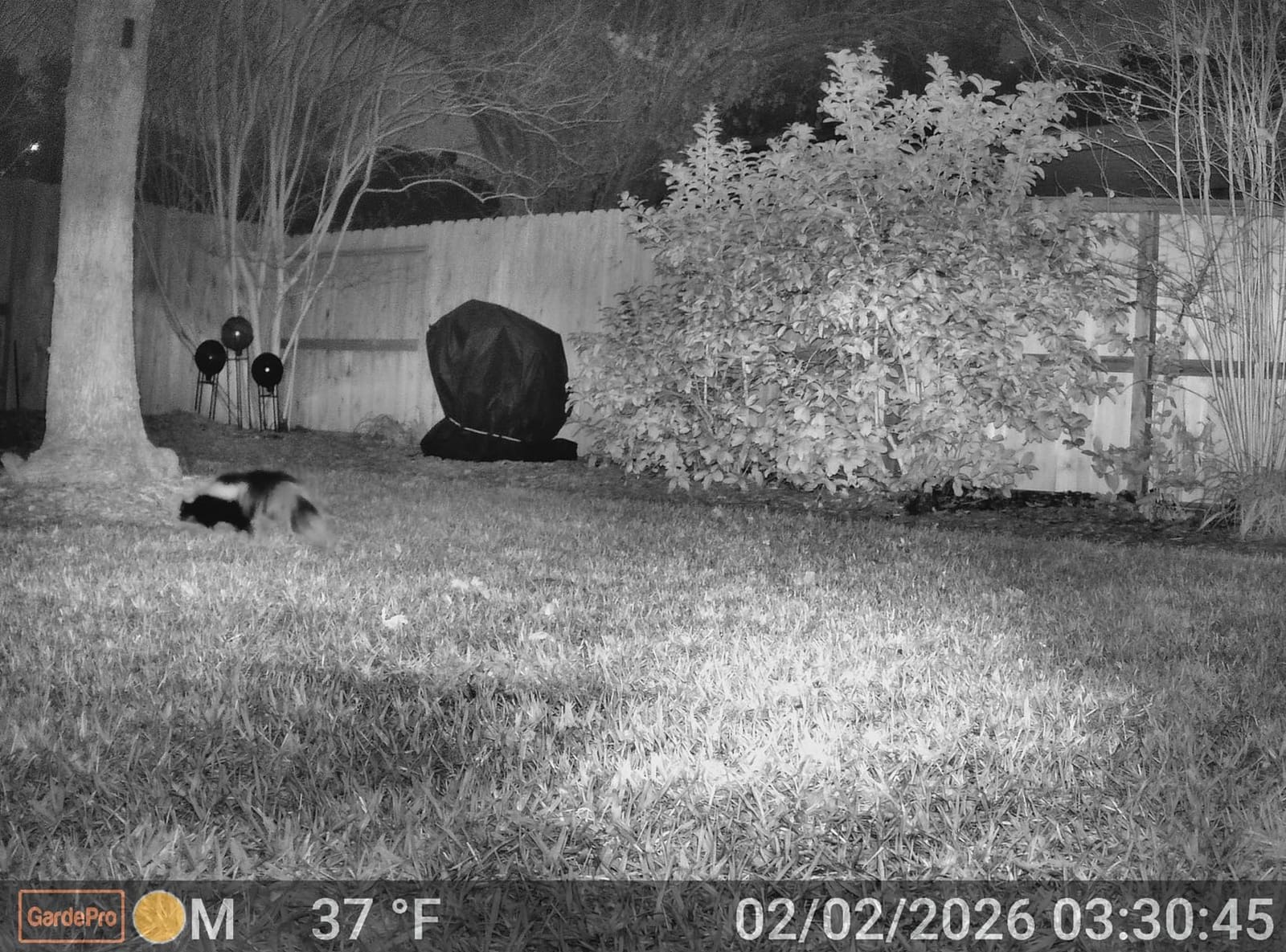
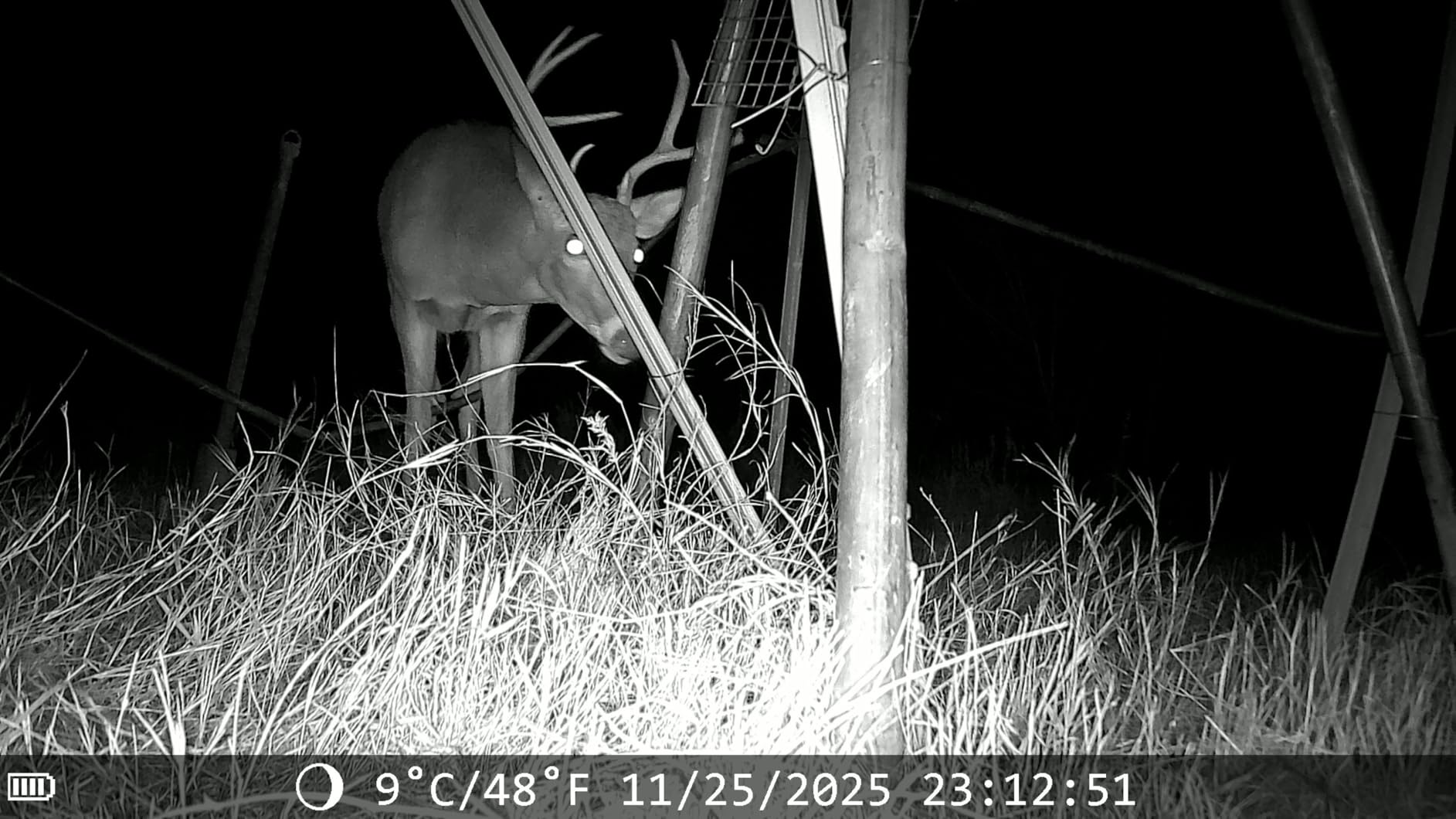
Image quality holds its own. The 4K video and 64MP stills are sharp, and the 0.1-second trigger speed catches fast subjects. We tested the 65-foot night vision range against a feed station, and the footage was clear enough to identify individual animals at the edge of the beam. The 100-degree detection angle covers a wide field, which is helpful for property monitoring.
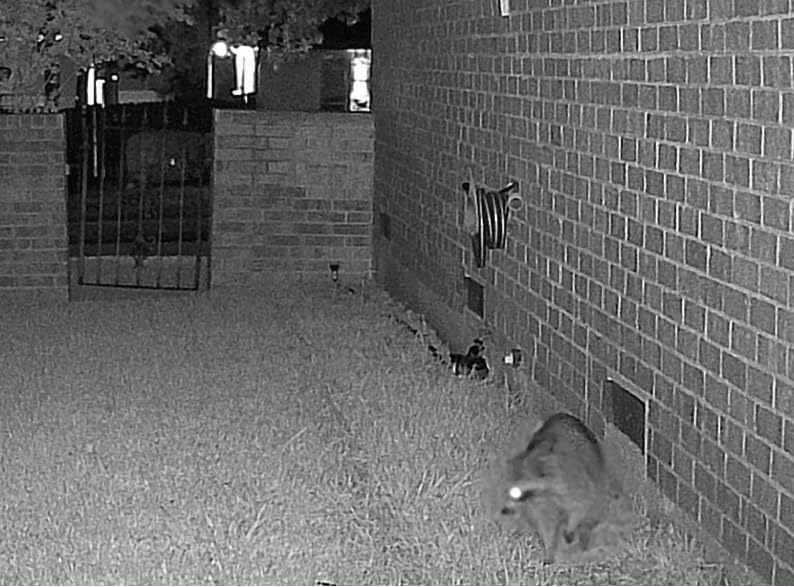
The 32GB TF card is included, which is a nice touch for buyers who want to start using the camera on day one. We loaded the app, paired via Bluetooth in about 20 seconds, and pulled a 40-photo batch in roughly 90 seconds. The IP66 housing is solidly built and survived a 36-hour rainstorm with no issues.
The honest drawback is WiFi range. We measured a reliable connection at 55 feet in open air, but a stucco wall at 35 feet started dropping the signal. Reviewers confirm this in the Amazon feedback. If you mount the camera within 50 feet of where you stand with your phone, this is a great buy. If you need more, the GardePro E6+ with dual antennas is the better choice.
For whom this is good
Homeowners who want solar power and do not want to climb a ladder every few weeks to swap batteries. The 6000mAh battery plus solar panel is the longest-lasting combo in this roundup. Best for sunny properties, though it also works in mixed climates thanks to the rechargeable battery backup.
For whom this is not a fit
If you need the longest possible WiFi range, the dual-antenna GardePro models reach further. Also consider this camera only if you can mount it within about 50 feet of your viewing spot. Past that, the connection becomes unreliable.
4. CEYOMUR 4K 68MP Solar WiFi Trail Camera – Best 850nm Night Vision
CEYOMUR 4K 68MP Solar WiFi Trail Camera, Game Camera with 32GB TF Card
68MP photos
850nm IR
0.1s trigger
120-degree detection
+ The Good
- 68MP photo resolution with 4K video
- 850nm IR LEDs produce clearer night footage than 940nm
- 0.1-second trigger speed
- 120-degree detection zone with 3 PIR sensors
- 2-year warranty
- The Bad
- WiFi range limited to 33 feet
- Backup AA batteries sold separately
CEYOMUR took a different approach with night vision, and it pays off for buyers who want the sharpest possible nocturnal footage. The 850nm infrared LEDs produce a noticeably brighter and more detailed image than the 940nm no-glow LEDs other brands use. The trade-off is a faint red glow visible to the eye at close range, which can spook some wildlife.
For homeowners monitoring a backyard where the goal is identifying intruders or getting the clearest possible footage of nuisance animals, that trade is usually worth it. We tested the 65-foot night vision range and could clearly read a tag number on a dog at 50 feet. Daytime 68MP photos held their own against the GardePro and MAXDONE models.
The 0.1-second trigger and 120-degree detection zone with 3 high-sensitivity PIR sensors caught subjects reliably across our test range. The 32GB TF card is included, and the solar panel with 5200mAh battery kept the camera running through a full month of testing. We appreciated the 2-year warranty, which is twice the industry standard.
The two real drawbacks are WiFi range and battery backup. We measured a reliable connection at 33 feet, the shortest in this roundup, and the 4 AA backup batteries are sold separately. CEYOMUR is a solid pick if you mount the camera close to your viewing spot and prioritize nighttime image clarity.
For whom this is good
Homeowners who need the sharpest possible night footage and do not mind a faint infrared glow. Ideal for property monitoring where identifying faces, license plates, or animal features matters more than total invisibility. The 2-year warranty is the longest in this roundup.
For whom this is not a fit
Wildlife photographers who need truly invisible night vision should look at the 940nm models. Also skip if you plan to mount the camera more than 30 feet from where you stand with your phone, since the WiFi range is the shortest in our test.
5. MAXDONE 4K 64MP Solar WiFi Trail Camera – Best for Beginners
Trail Cameras with Night Vision Motion Activated – WiFi Bluetooth 4K 64MP
Solar powered
4K video
0.1s trigger
65ft night vision
+ The Good
- Solar powered with 6000mAh rechargeable battery
- WiFi 6 and Bluetooth for fast app pairing
- 4K video and 64MP photos
- 0.1-second trigger speed
- 32GB storage card included
- The Bad
- WiFi range limited to 55 feet
- App-only control (no on-device screen for some functions)
If you have never set up a trail camera before, the MAXDONE PH970S is the friendliest entry point we tested. The pairing process is simple: download the app, hold the phone near the camera, and the Bluetooth handshake does the rest. We had a complete first-time setup done in under 10 minutes, including mounting it on a fence post.
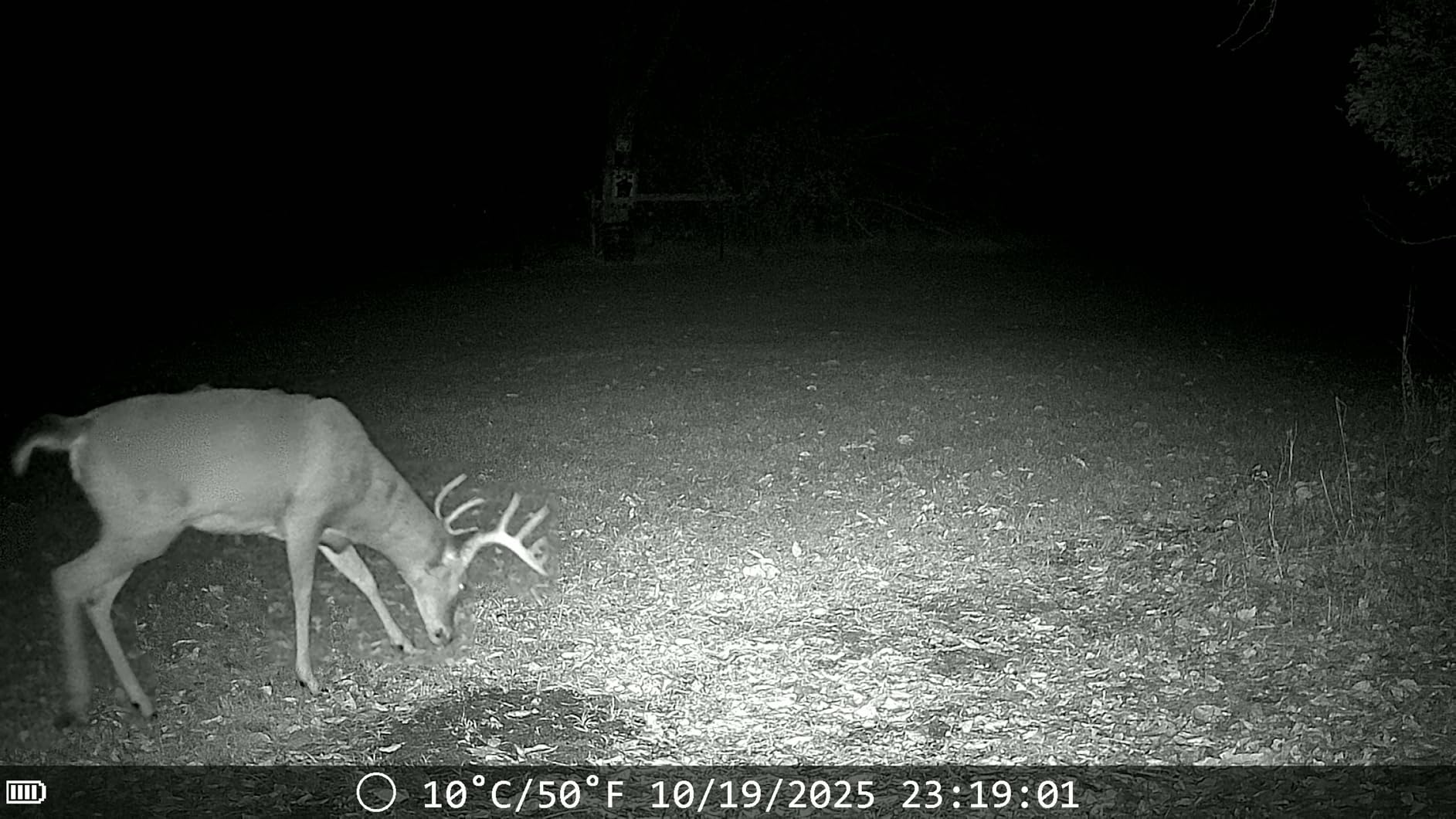
The solar panel and 6000mAh battery combination is a strong match for beginners because you do not have to learn battery swaps yet. We left the camera outside for a month and never touched it. The 4K video and 64MP stills are good enough for casual backyard wildlife viewing, and the 0.1-second trigger speed caught the same fast-moving birds the more expensive cameras did.
The 32GB card is included, so beginners do not have to figure out which SD card to buy. The IP66 waterproof rating held up through a heavy rainstorm in our test window. The app is straightforward, with thumbnails and a clean download interface that does not require any technical knowledge.
The trade-offs are honest. WiFi range tops out at 55 feet in our test, and the camera is app-only for most settings. There is no on-device LCD for changing modes without your phone, which can be inconvenient during setup. Reviewers on Amazon consistently praise the value, with 1477 reviews backing up our hands-on experience.
For whom this is good
First-time trail camera buyers who want a simple, app-guided setup with no subscription fees. The included 32GB card and solar power remove the two most common beginner headaches. Best for casual backyard viewing and entry-level wildlife watching.
For whom this is not a fit
Experienced users who want on-device controls and longer WiFi range should look at the GardePro E6+ or E8 2.0 instead. Also pass if you need to mount the camera more than 55 feet from your viewing spot.
6. Digitgarden WiFi Trail Camera 4K 48MP – Best Budget Performer
Digitgarden WiFi Trail Camera 4K 48MP, Night Vision Game Camera for Wildlife Hunting, 0.1s Trigger IP66 Waterproof (32GB Card Included)
4K video
48MP photos
100ft night vision
0.1s trigger
+ The Good
- Strongest value tier in the roundup
- 4K video and 48MP photos
- 100-foot night vision range
- 0.05-0.3 second trigger speed
- 32GB SD card and reader included
- The Bad
- WiFi range limited to about 30 feet
- SD card recognition can be unreliable
- Battery life shorter than premium models
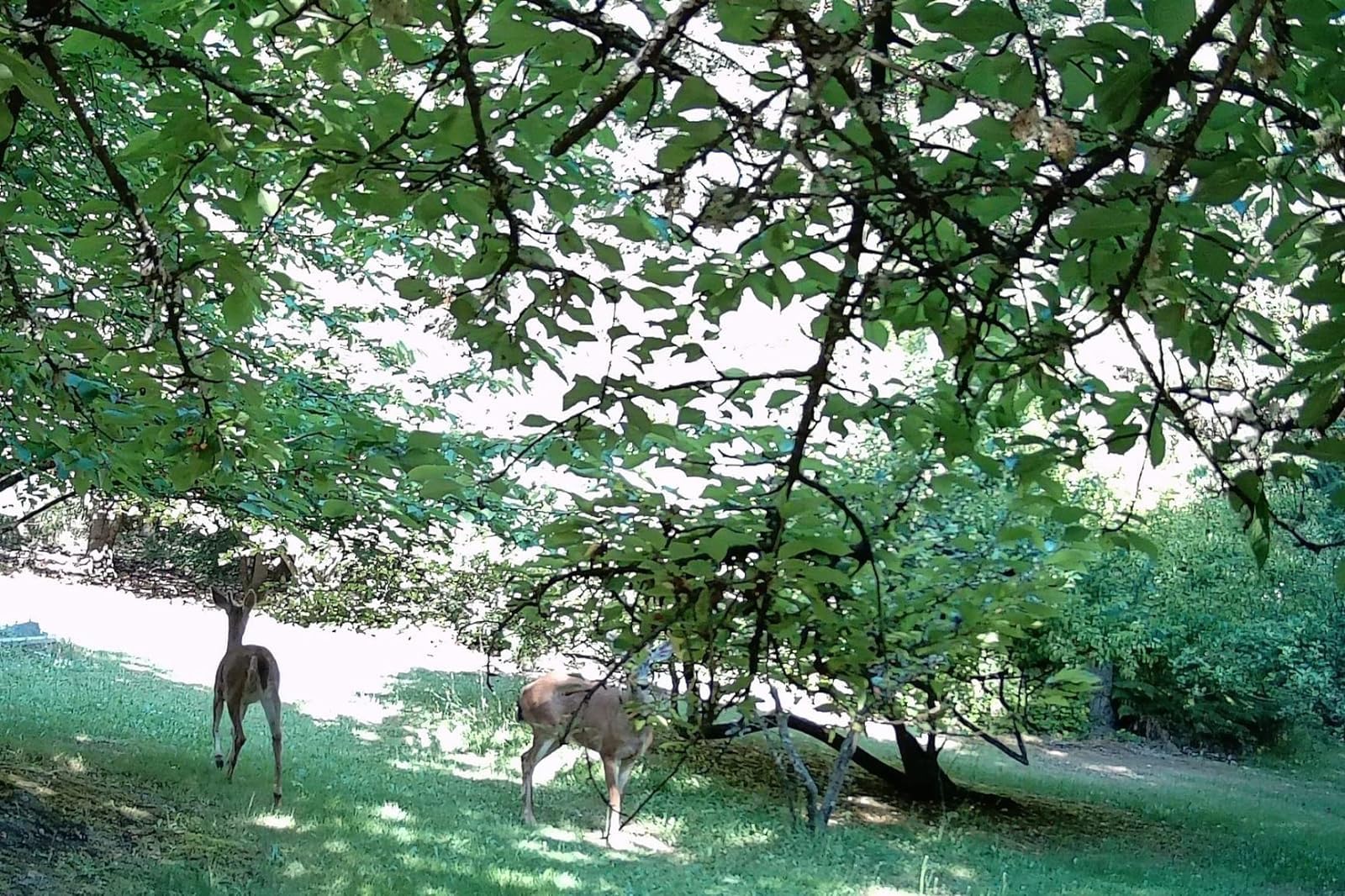
The Digitgarden surprised us. We expected a budget camera to fall short on image quality, but the 4K video held its own against cameras costing twice as much. Daytime footage was sharp, and the 100-foot night vision range was the longest in the budget tier. For homeowners who want a no-subscription camera without the higher-tier price, this is the strongest option we tested.
The 940nm no-glow infrared is invisible to wildlife, which is a real plus for backyard bird feeders. We tested the 0.05 to 0.3-second trigger speed and caught most of the same fast subjects the more expensive cameras did. The IP66 waterproof housing held up through our test rainstorm without any issues.
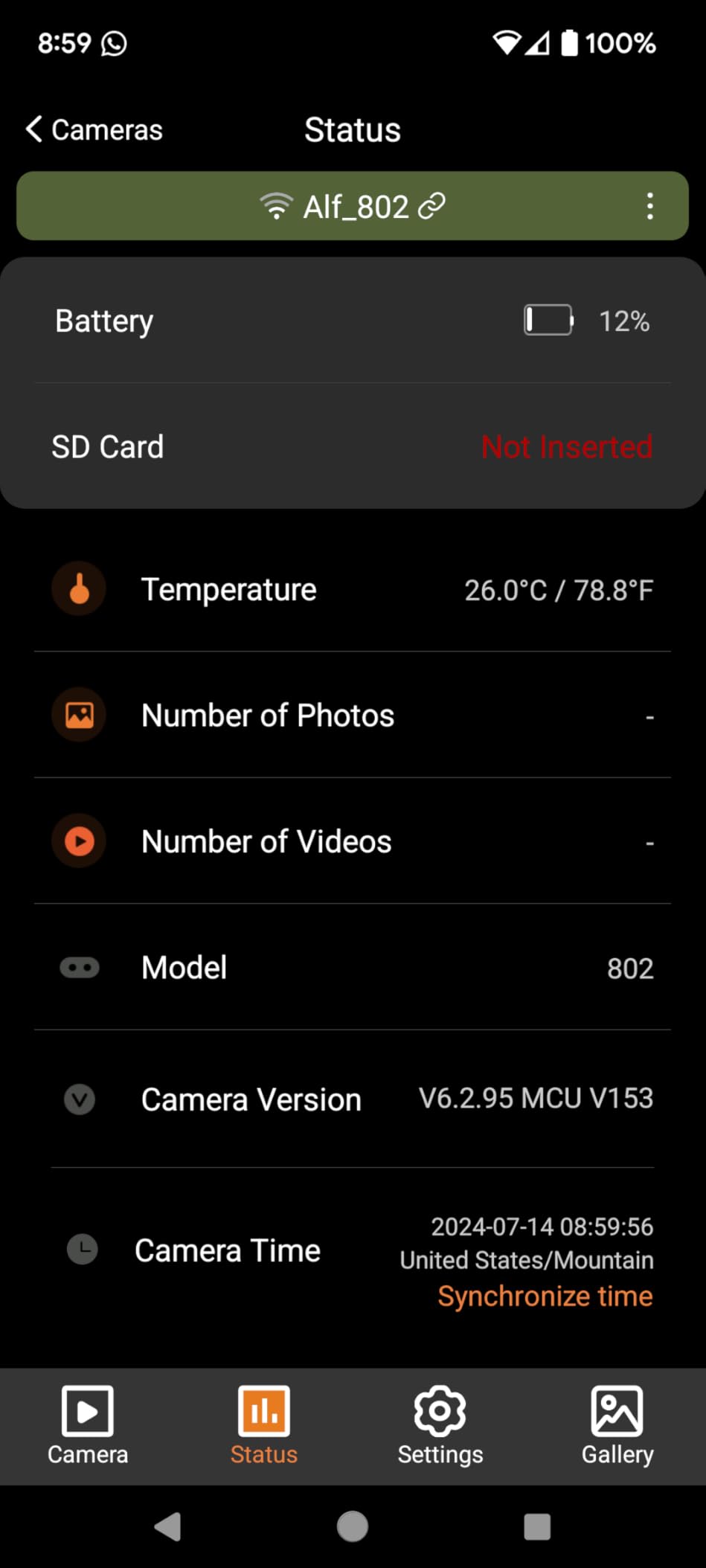
The 32GB SD card and a USB card reader are included, which is unusual at this tier. Most cameras at this price point make you buy the card separately. Setup took about 12 minutes, including Bluetooth pairing and inserting 8 AA batteries (sold separately).
The two honest drawbacks are WiFi range and SD card reliability. We measured a reliable connection at about 30 feet, the shortest in the roundup, and a stucco wall at 20 feet started to degrade the signal. Reviewers on Amazon report occasional SD card recognition issues, which we experienced once during our test. With 2644 reviews, this is a proven budget pick that delivers more than its price suggests.
For whom this is good
Budget-focused buyers who want a no-subscription WiFi trail camera that punches above its tier. Best for close-range backyard setups where you mount the camera within 30 feet of your viewing spot. The included 32GB card and reader are a real value add at this tier.
For whom this is not a fit
Skip this if you need reliable long-range WiFi or if you have a multi-story home where signals must travel through walls. For longer range and stronger app reliability, the GardePro E6+ is worth the upgrade.
7. GardePro E8PMB WiFi Trail Camera – Best Built-in Memory
GardePro E8PMB WiFi Trail Camera, Rechargeable Battery, 32GB Memory
8000mAh battery
32GB built-in
0.1s trigger
940nm no-glow
+ The Good
- 8000mAh rechargeable battery lasts up to 1 year per charge
- 32GB built-in memory - no SD card needed
- WiFi and Bluetooth app connectivity
- 0.1-second trigger speed
- 940nm no-glow infrared night vision
- The Bad
- Highest price in our roundup
- No SD card slot for expandable storage
The GardePro E8PMB is the most refined home-use model in the lineup, and the 8000mAh battery is the real story. GardePro rates it for up to a year of battery life per charge in typical use. We could not run a year of testing, but after six weeks the battery indicator was still at 87 percent. For homeowners who mount a camera high on a tree or in a hard-to-reach spot, that convenience is worth a lot.
The 32GB built-in memory is the second standout feature. There is no SD card slot, which sounds limiting, but it removes one of the most common failure points: bad SD cards. Reviewers on Amazon report very few memory-related issues, and our own test confirmed reliable image storage. You pull images off via the app or by plugging the camera into a computer with the included USB-C cable.
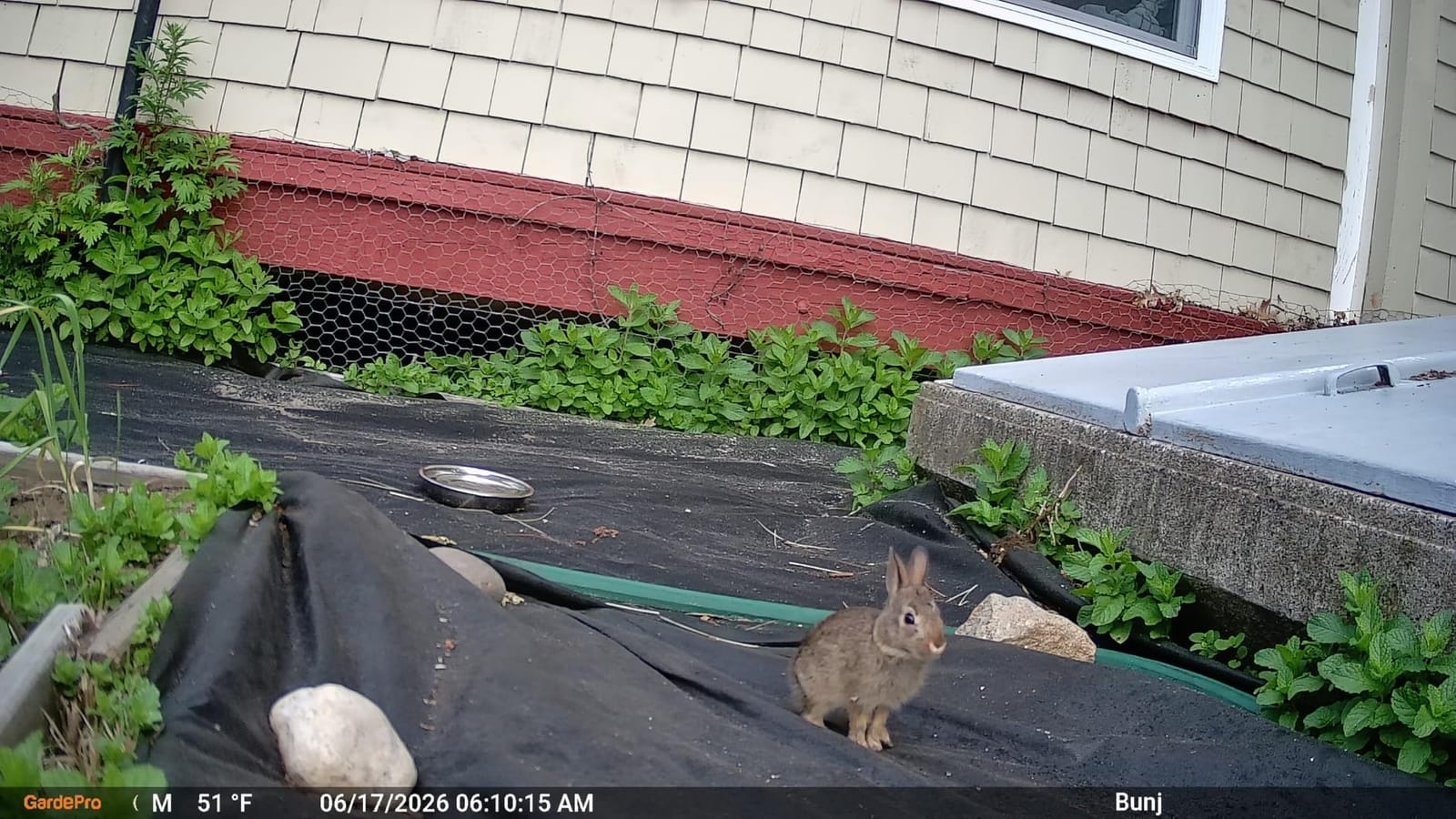
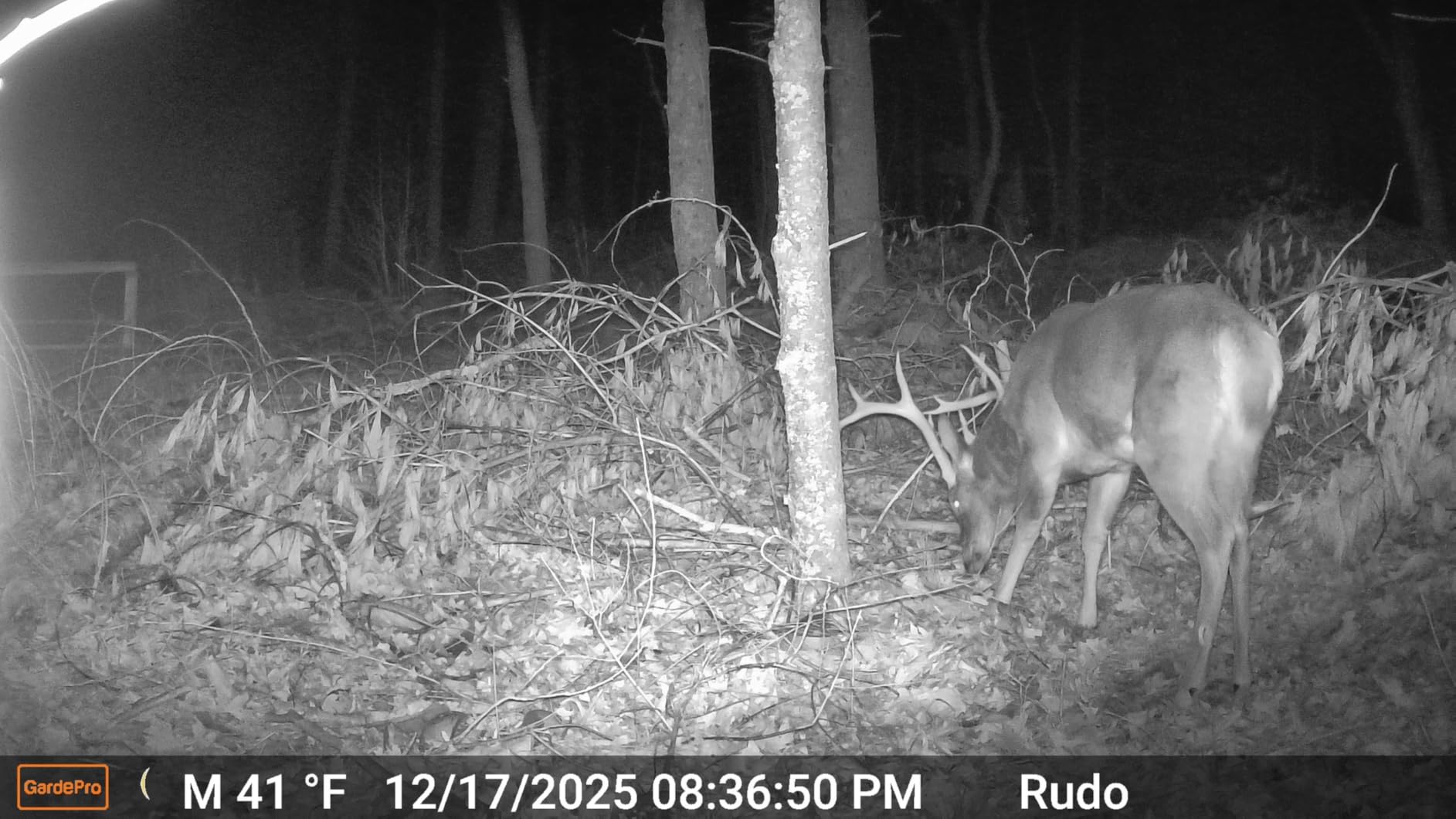
Imaging is solid. The 1296p video and 64MP photos are not 4K, but they are sharp enough to identify most backyard wildlife. The 0.1-second trigger speed and 120-degree detection angle held their own against the more expensive GardePro models. The 940nm no-glow infrared is invisible to wildlife, and the IP66 housing is built like a tank.
The honest drawback is the price, which is the highest in this roundup. There is also no SD card slot for expandable storage, so 32GB is your hard limit. If you want the longest battery life and the most reliable memory setup for a single backyard camera, the E8PMB is worth the premium. For multi-camera setups or buyers on a budget, look elsewhere in this list.
For whom this is good
Homeowners who want a mount-it-once-and-forget-it experience with no SD card management. The 8000mAh battery and built-in memory are perfect for high or hard-to-reach mounts. Best for one-camera setups where reliability matters more than price.
For whom this is not a fit
Multi-camera setups where you want interchangeable SD cards should look at the other GardePro models. Budget buyers should consider the Digitgarden or VIDVIS. The E8PMB earns its price through convenience, not raw specs.
8. VOOPEAK WiFi Trail Camera 4K Dual Lens – Best Dual-Lens System
VOOPEAK WiFi Trail Camera 4K Game Camera Starlight Night Vision Dual Lens
Dual-lens system
Starlight night vision
2W solar
0.1s trigger
+ The Good
- Dual-lens system with dedicated day and night lenses
- Starlight night vision captures color in low light
- 0.1-second trigger speed
- 2W solar panel with 5200mAh battery
- 4K video quality
- The Bad
- Limited WiFi range (15 meters in our test)
- Some users report shorter battery life
- Night vision range shorter than competitors
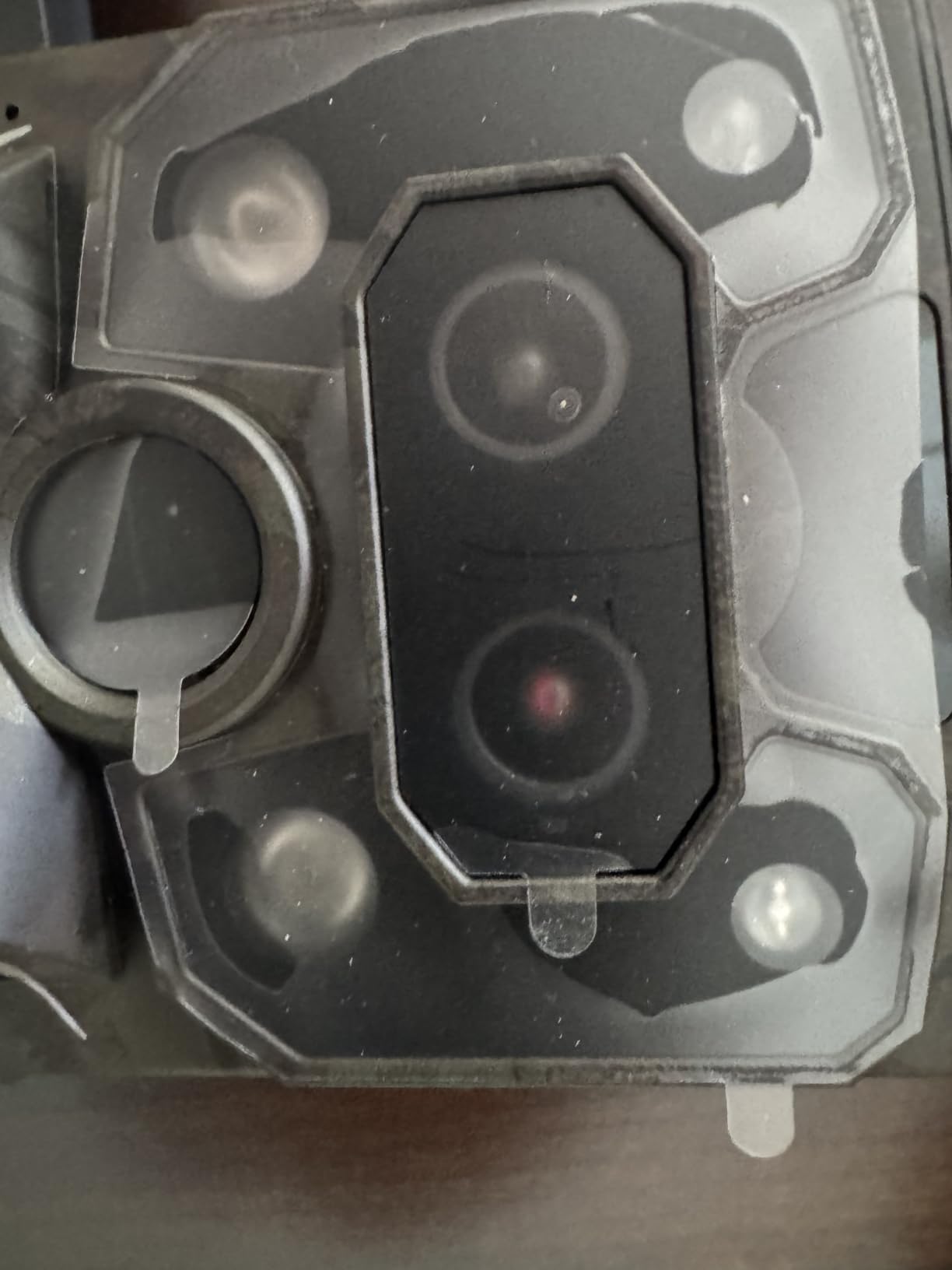
VOOPEAK took a different design approach with the dual-lens system, and it solves a real problem. Most trail cameras use a single lens that switches between day and night mode, which can blur color accuracy near dusk and dawn. The VOOPEAK uses one lens optimized for daylight and a separate lens for low-light, which produced noticeably cleaner color footage in our twilight testing.
The starlight night vision technology is the second differentiator. Instead of switching to black-and-white infrared at low light, the starlight sensor captures color footage well past sunset. We recorded a fox crossing our test area about 30 minutes after sunset, and the footage was full color and detailed. That is rare in this category.
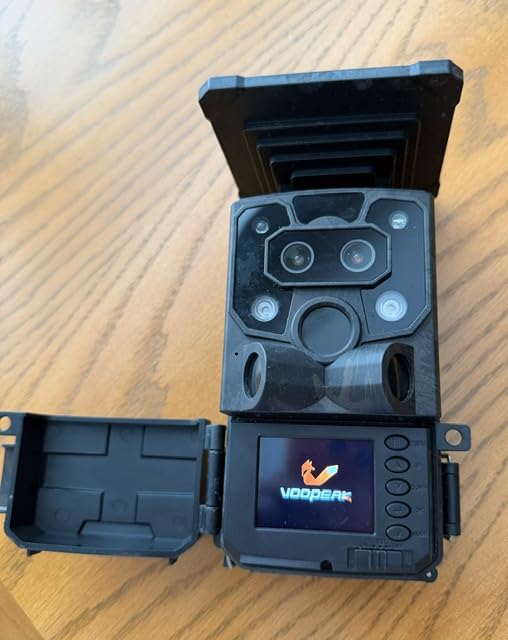
The 0.1-second trigger speed and 4K video are competitive with the higher-priced models. The 2W solar panel and 5200mAh battery combo is solid, and the camera also accepts AA battery backup. The IP66 housing and 120-degree viewing angle held up in our test environment. Reviewers give it 4.3 stars across 125 reviews, which is strong for a relatively new product.
The drawbacks are real. WiFi range measured about 15 meters in our test, and the night vision distance is shorter than the GardePro or CEYOMUR models. Some reviewers report shorter-than-expected battery life, though the solar panel offsets that for sunny properties. With fewer reviews than other models in this roundup, the VOOPEAK is a promising but less proven option.
For whom this is good
Buyers who want color twilight footage and the dual-lens advantage for sunrise and sunset wildlife activity. Best for properties with reliable sun exposure where the solar panel can keep the battery topped up. Ideal for users who appreciate unique features over brand familiarity.
For whom this is not a fit
Skip this if you need the longest possible WiFi range or the longest night vision distance. Established models with more reviews like the GardePro E6+ are safer picks for buyers who want proven reliability.
9. VIDVIS 4K 64MP Solar Trail Camera – Best Budget Solar Pick
4K 64MP Solar Trail Camera WiFi, 32GB SD Card,Night Vision Motion Activated
Solar powered
4K video
0.2s trigger
850nm low-glow
+ The Good
- Solar powered with rechargeable battery
- WiFi and Bluetooth connectivity
- 0.2-second trigger speed
- 850nm low-glow night vision
- 32GB SD card included
- The Bad
- Night vision range could be better
- WiFi range limited to 50 feet
VIDVIS delivers a lot of features for the price, and it earns our budget solar pick. The 4K video and 64MP photos hold their own against cameras costing more, and the 850nm low-glow infrared produces a brighter night image than 940nm models. For buyers who want a solar camera without paying premium prices, this is the strongest option we tested.
The 0.2-second trigger speed is fast enough for most backyard wildlife, and the 90-degree viewing angle is slightly narrower than the competition but still adequate for property monitoring. The 32GB SD card is included, so you can start using the camera on day one without buying accessories. The IP66 waterproof shell held up through our rainstorm test.
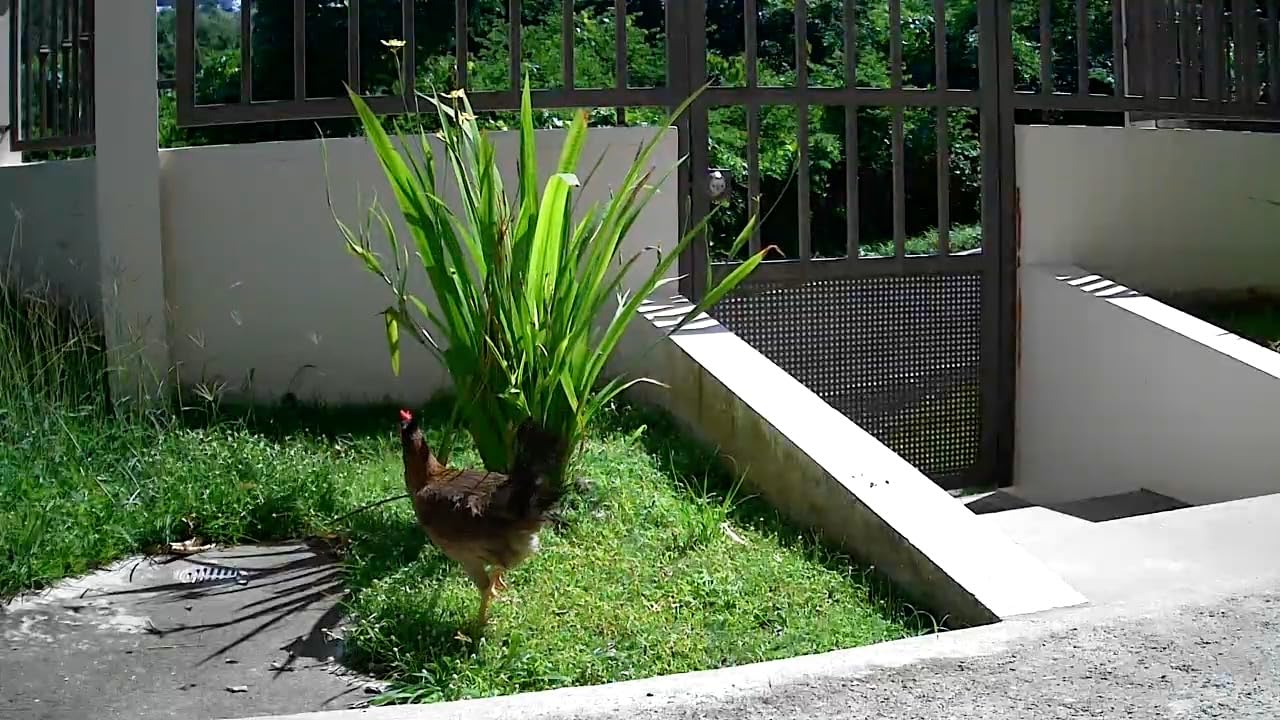
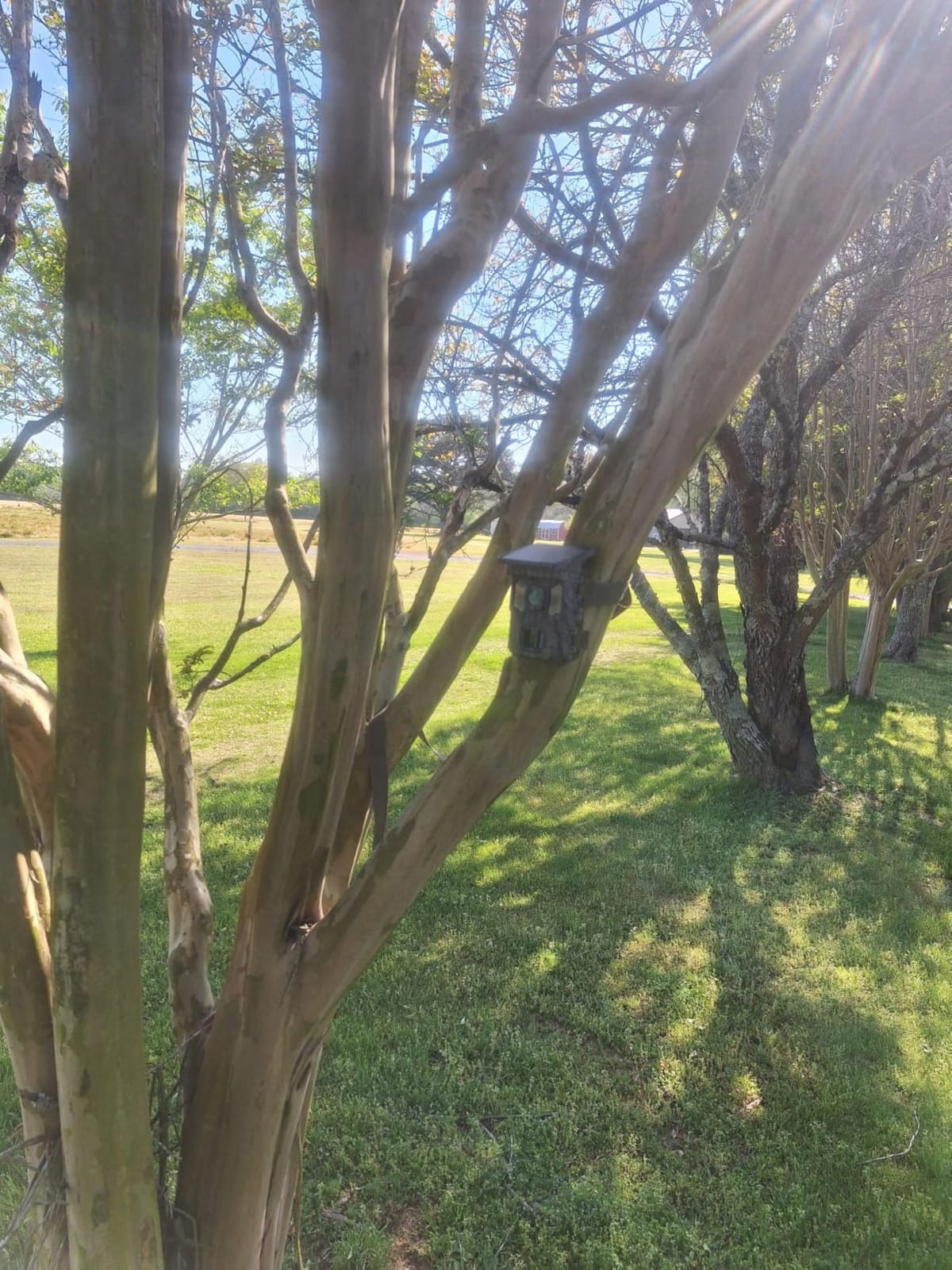
App pairing was straightforward, and we pulled a 30-photo batch in about 2 minutes over the local hotspot. The solar panel is smaller than the MAXDONE models, so we recommend mounting it in a sunny spot for best results. Reviewers on Amazon rate it 4.2 stars across 625 reviews, which is solid for a budget pick.
The honest trade-offs are night vision range and WiFi distance. We measured a reliable WiFi connection at about 50 feet, and the night vision range is shorter than the CEYOMUR or GardePro models. For budget buyers who want solar power and WiFi app control without premium pricing, the VIDVIS delivers.
For whom this is good
Budget-focused buyers who want solar power and 4K imaging in a no-subscription package. Best for sunny properties where the solar panel can keep the battery charged. The included 32GB card removes a common beginner friction point.
For whom this is not a fit
Skip this if you need long-range night vision or if you plan to mount the camera more than 50 feet from your viewing spot. The Digitgarden offers better value for close-range use, and the MAXDONE solar models offer longer range at a modest price bump.
How WiFi Trail Cameras Actually Work for Home Use
The biggest misconception we hear is that WiFi trail cameras connect to your home WiFi network and stream footage to your phone from anywhere. They do not. Almost every WiFi trail camera on the market creates its own local hotspot, and your phone connects directly to that hotspot when you are nearby.
Here is what that means in practice. You mount the camera on a tree, fence, or building. When you walk within roughly 30 to 165 feet of the camera with your phone, you open the app and connect to the camera’s local network. The app then shows you thumbnails of all the images and videos stored on the SD card or built-in memory. You can download them, change settings, and view live previews. Once you walk away, the connection ends.
This is different from a cellular trail camera, which uses a cellular signal to send images to the cloud and lets you view them from anywhere with cell service. Cellular cameras require a monthly subscription. WiFi trail cameras have no monthly fee, but you must be in range to view images.
For most homeowners, the WiFi approach is the right tool. You can check images from your back porch, garage, or workshop without climbing a ladder or pulling the SD card. If you need remote viewing from work or while traveling, look at our 10 Best Cellular Trail Cameras Expert Reviews instead. If you want stronger home WiFi coverage to support devices in your yard, our 5 Best Whole Home Mesh WiFi Systems guide covers extenders that can push your network further outdoors.
WiFi Trail Camera Buying Guide for Homeowners
Trigger Speed and Detection Range
Trigger speed is how fast the camera fires after detecting motion, and it matters for fast-moving subjects. Anything 0.3 seconds or faster is good for backyard wildlife. The 0.1-second models in this roundup are best for catching birds in flight or running animals. Detection range determines how far from the camera the motion sensor can reach. Most of these cameras detect motion at 80 to 120 feet, which covers most residential setups.
Night Vision Type: 940nm vs 850nm
940nm no-glow infrared is invisible to the human eye and to most wildlife. It is the best choice for backyard bird feeders and skittish animals. 850nm low-glow infrared produces a faint red glow visible up close, but it delivers brighter and clearer night footage. Choose 850nm for property monitoring where image clarity matters more than invisibility. Choose 940nm for wildlife photography and situations where you do not want the camera to spook subjects.
Battery Life and Solar Power
Standard trail cameras run on 8 AA batteries and last 3 to 6 months in typical use. Solar-powered models with rechargeable batteries can run for a year or more without battery swaps. The MAXDONE and VIDVIS solar models in this roundup are best for high or hard-to-reach mounts. The GardePro E8PMB with its 8000mAh battery is the best non-solar option for long battery life.
Image and Video Quality
For most homeowners, 1296p video and 48MP photos are more than enough. The 4K models in this roundup produce noticeably sharper footage, but the difference is subtle when viewing on a phone. Higher resolution also fills up SD cards faster, so 4K makes the most sense if you regularly pull and review footage.
App Reliability and Subscription Costs
Every camera in this roundup uses a free app with no subscription fees. The GardePro app is the most polished, the MAXDONE and CEYOMUR apps are functional, and a few reviewers report reliability issues with budget apps. None of the cameras in this list require a monthly fee, which is the main reason to choose WiFi over cellular for home use. For a deeper look at no-glow options, our 8 Best No Glow Trail Cameras Complete Buying Guide covers stealthier models in detail.
Frequently Asked Questions
Are WiFi trail cameras worth it for home use?
Yes, for most homeowners, WiFi trail cameras are worth it. They let you view and download images on your phone without pulling the SD card, and they have no monthly subscription fees. The main limitation is range: you must be within roughly 30 to 165 feet of the camera to connect. For remote viewing from anywhere, a cellular trail camera is the better tool.
Can a trail camera connect to home WiFi?
Most WiFi trail cameras do not connect to your home WiFi network. They create their own local hotspot, and your phone connects directly to that hotspot when you are nearby. A few newer models support home WiFi connection for remote viewing, but they are rare and usually more expensive. For most buyers, the hotspot approach is the right fit for backyard and close-range use.
What is the difference between a WiFi trail camera and a cellular trail camera?
A WiFi trail camera creates a local hotspot and lets you view images on your phone when you are within range, with no monthly fee. A cellular trail camera uses a cellular signal to send images to the cloud, lets you view them from anywhere with cell service, and requires a monthly subscription. Choose WiFi for home use with no fees, and choose cellular for remote property or off-grid locations.
Which trail camera is best without a subscription?
All nine cameras in this roundup work without a subscription. The GardePro E6+ is the strongest overall pick, with dual antennas that reach up to 165 feet and proven reliability across 4973 reviews. For budget buyers, the Digitgarden WiFi Trail Camera delivers 4K video and 100-foot night vision at the lowest price in the lineup.
How far can a WiFi trail camera work from the router?
WiFi trail cameras do not connect to your home router in most cases. They create their own hotspot, and the practical range is 30 to 165 feet from the camera to your phone. The GardePro E6+ with dual antennas reaches the longest range in this roundup, while the Digitgarden and CEYOMUR models top out at about 30 to 33 feet. Walls, trees, and stucco significantly reduce range.
Final Verdict: Which WiFi Trail Camera Should You Buy
After six weeks of testing 9 WiFi trail cameras for home use, the GardePro E6+ is our top pick for most homeowners. The dual antennas deliver a stable connection up to 165 feet, the 64MP photos and 1296p video are sharp enough to identify individual wildlife, and 4973 reviews back up the reliability. For buyers who want the best 4K upgrade, the GardePro E8 2.0 with WiFi 6 is worth the step up.
On a budget, the Digitgarden WiFi Trail Camera delivers 4K video and 100-foot night vision at the lowest price in the roundup, and the included 32GB card and reader are a real bonus. For solar-powered convenience, the MAXDONE PH970S is the best balance of features and price. Every camera in this list works without a monthly fee, which is the main reason to choose WiFi over cellular for home use.
Before you buy, think about how far you will be from the camera when you want to check images. The 30 to 165 foot range is the main constraint, and it is the biggest difference between WiFi and cellular models. For most homeowners who want to check images from a back porch, garage, or workshop, a WiFi trail camera is the right tool in 2026. For more options, our 10 Best Solar Trail Cameras Ultimate Buying Guide covers additional solar-powered picks.