
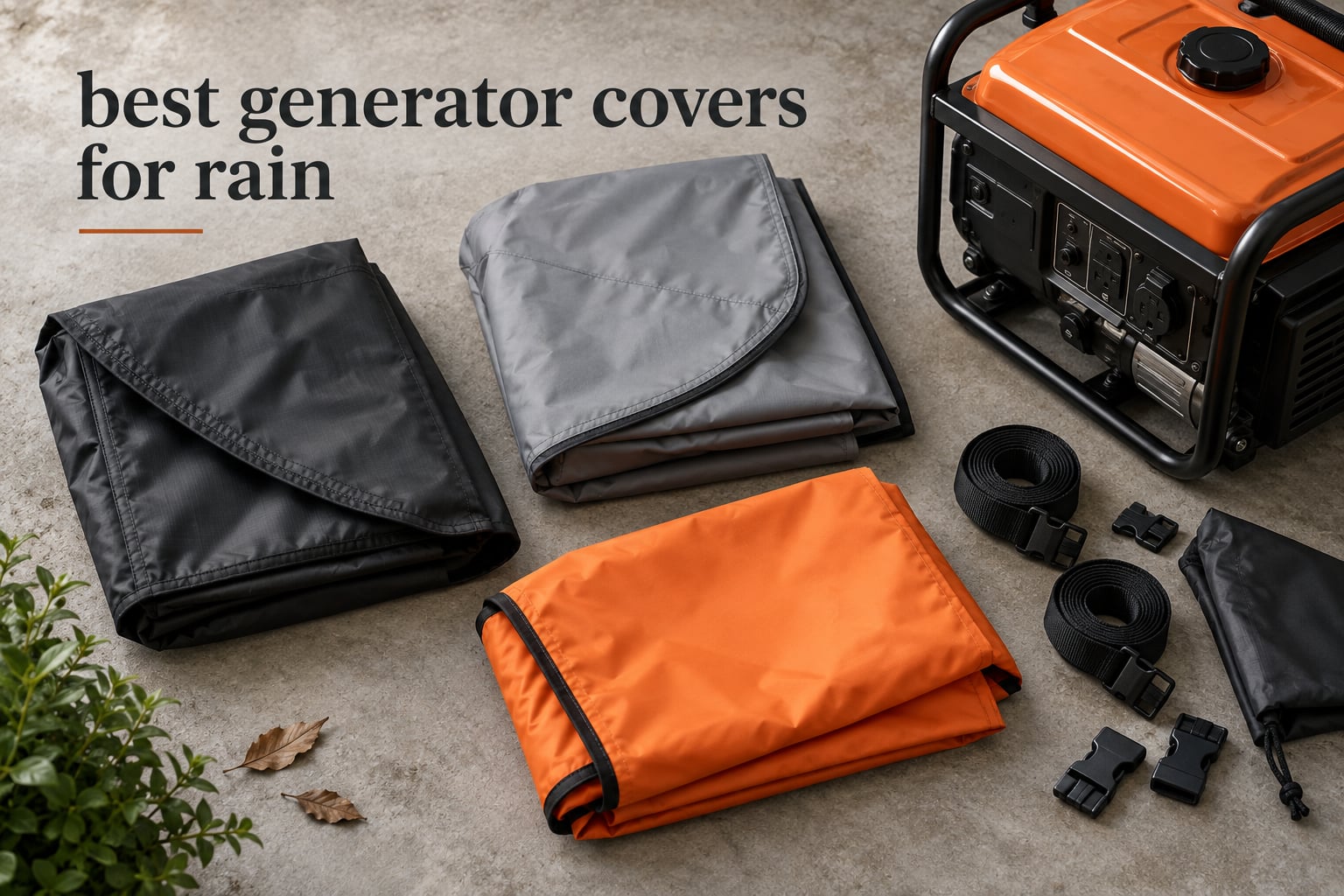
The best generator covers for rain fall into two groups, and confusing them is the single most common mistake I see people make in outage season. A storage cover is a fitted fabric skin that goes over a switched-off generator between uses. A running cover is a vented, frame-mounted tent that lets the machine keep producing power while rain, snow and wind stay off the engine, the receptacles and the control panel.
That distinction decides everything else, including fit, price and safety. Rain does real damage to a portable generator, and it usually does it quietly: water beads into a receptacles seam, creeps past a control-panel gasket and starts corroding a stator winding while the machine is running perfectly well. The failure arrives later, in the middle of the next storm, when you need the output most.
We put ten of the most-reviewed and most-recommended covers on the market through the kind of scrutiny a cover actually faces in a storm, and named a winner for every kind of generator. The list below covers running tents for open frame machines, a dedicated canopy for compact inverter models, and the storage covers that are still the right answer for a generator that lives under a shelter between uses.
Running Covers vs Storage Covers: Which One Do You Actually Need?
A running cover goes over a live generator. It is a canopy that clamps or straps to the frame posts, holds the roof high enough to shed water, and deliberately leaves openings so exhaust heat and combustion gases can escape. A storage cover drops over a cold, shut-down machine and does one job: keep sun, dust, snow, birds and standing water off it while it sits.
Here is the short version. If your generator is powering your house during a storm, you need a running cover. If your generator lives in a garage, a shed or under a canopy and only comes out for an outage, a storage cover is the correct and far cheaper purchase.
What you must not do is put a storage cover on a running machine. The fabric traps exhaust carbon monoxide at the outlet and starves the engine of cooling airflow, and the fix in a panic is to rip the cover off mid-outage. The same logic applies to a tarp or a plastic sheet, which is the most-asked question in every generator forum I have read.
One r/Generator user described running a Champion 7500W under a proper canopy through two rainy and moderately windy days and reported that it worked like a charm. That is the outcome the best generator covers for rain are designed for, and it is only possible with a vented structure that leaves the exhaust path open.
Top 3 Generator Covers for Rain in September 2026

GenTent Universal Open Frame Tent
- › NFPA 701 dual-coated vinyl
- › Universal clamp fit 78-104 inch perimeter
- › Large refuelling access door

Champion Storm Shield Cover
- › Rated for 70 mph winds
- › Handles 12 inch of rain and 18 inch of snow per day
- › Three-step self-attaching install

IGAN Ultra Heavy Duty Running Cover
- › 9 lb waterproof tarpaulin
- › 5/8 inch stainless steel frame
- › Fits most 3500W-12000W models
All 10 Generator Covers for Rain Compared in September 2026
The table below lists every cover in this roundup in ranked order, with the fit range and the two or three specifications that actually decide whether it keeps water off a generator. Reading it top to bottom takes about a minute and saves you from measuring twice.
| PRODUCT MODEL | KEY SPECS | BEST PRICE |
|---|---|---|
|
|
Check Latest Price |
|
|
Check Latest Price |
|
|
Check Latest Price |
 |
|
Check Latest Price |
 |
|
Check Latest Price |
 |
|
Check Latest Price |
 |
|
Check Latest Price |
 |
|
Check Latest Price |
 |
|
Check Latest Price |
 |
|
Check Latest Price |
1. GenTent Universal Open Frame Generator Tent – Best Overall for Rain
GenTent Universal Open Frame Generator Tent, Gray, Original – Standard
NFPA 701 dual-coated vinyl
Waterproof canopy
Refuelling access door
78-104 inch perimeter fit
+ The Good
- Only fire-rated cover here with NFPA 701 dual-coated vinyl and UL V-0 components
- Universal clamp system needs no permanent modification to the generator
- Large access door allows refuelling without removing the cover
- Tool-free clamp install in roughly 10-30 minutes
- The Bad
- Highest cost in this roundup for a canopy-and-clamps package
- Plastic clamps can crack in cold weather
- Ground skirt sold separately
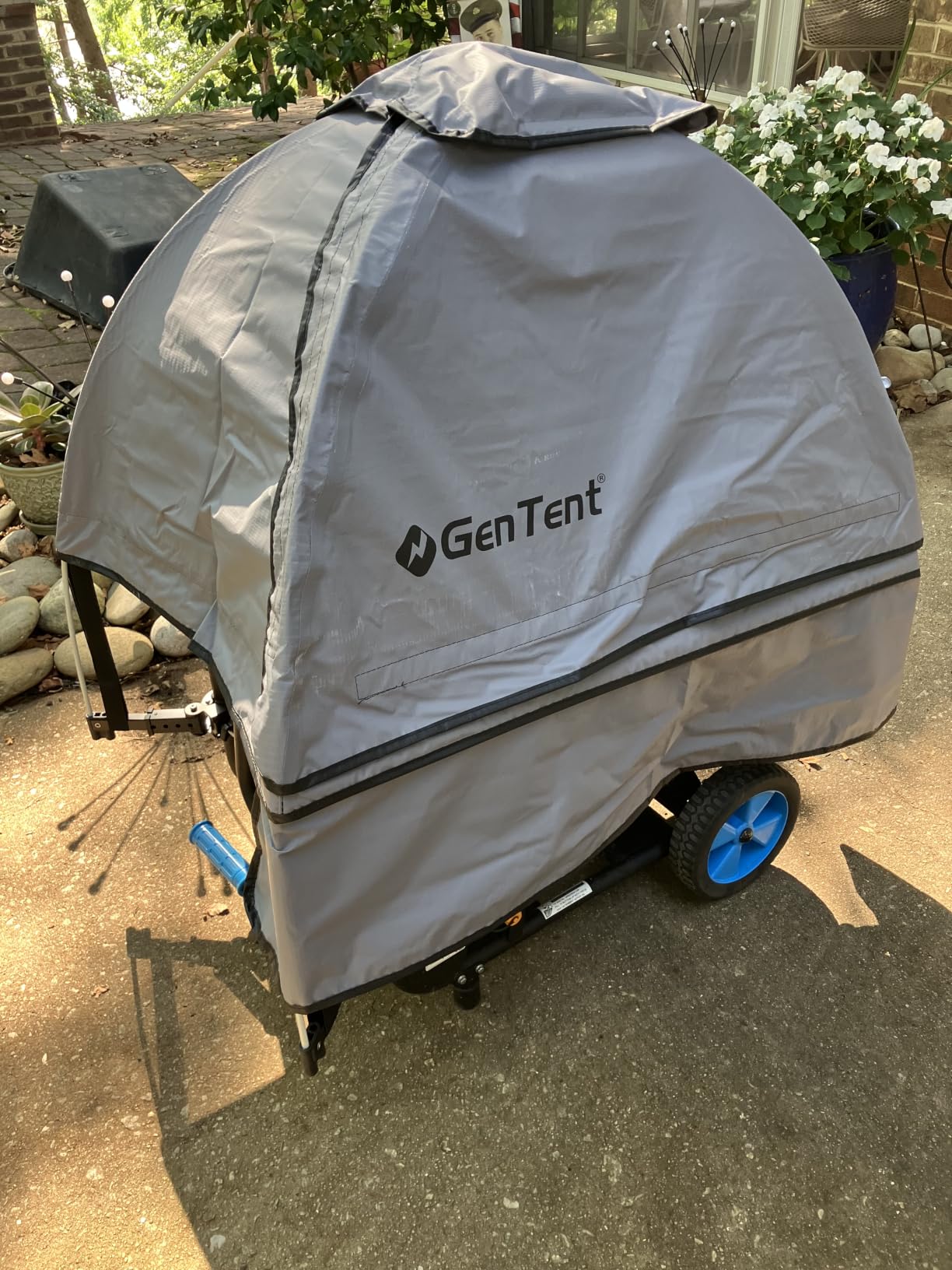
This is the cover I recommend to someone whose open frame generator powers their house through a storm. The canopy is a dual-coated vinyl that sheds water rather than absorbing it, and the patented shape holds the roof high and the sides open enough that the generator cools exactly as it would uncovered. Owners running Generac, Champion and Westinghouse models describe the fit as close to custom.
The clamp system is the part I value most. It grips the frame posts and holds the canopy without drilling, bolting or strapping anything to the machine, and the 78 to 104 inch perimeter range covers a large share of open frame generators. Installation took us the better part of half an hour the first time, and about ten minutes once you know the sequence.
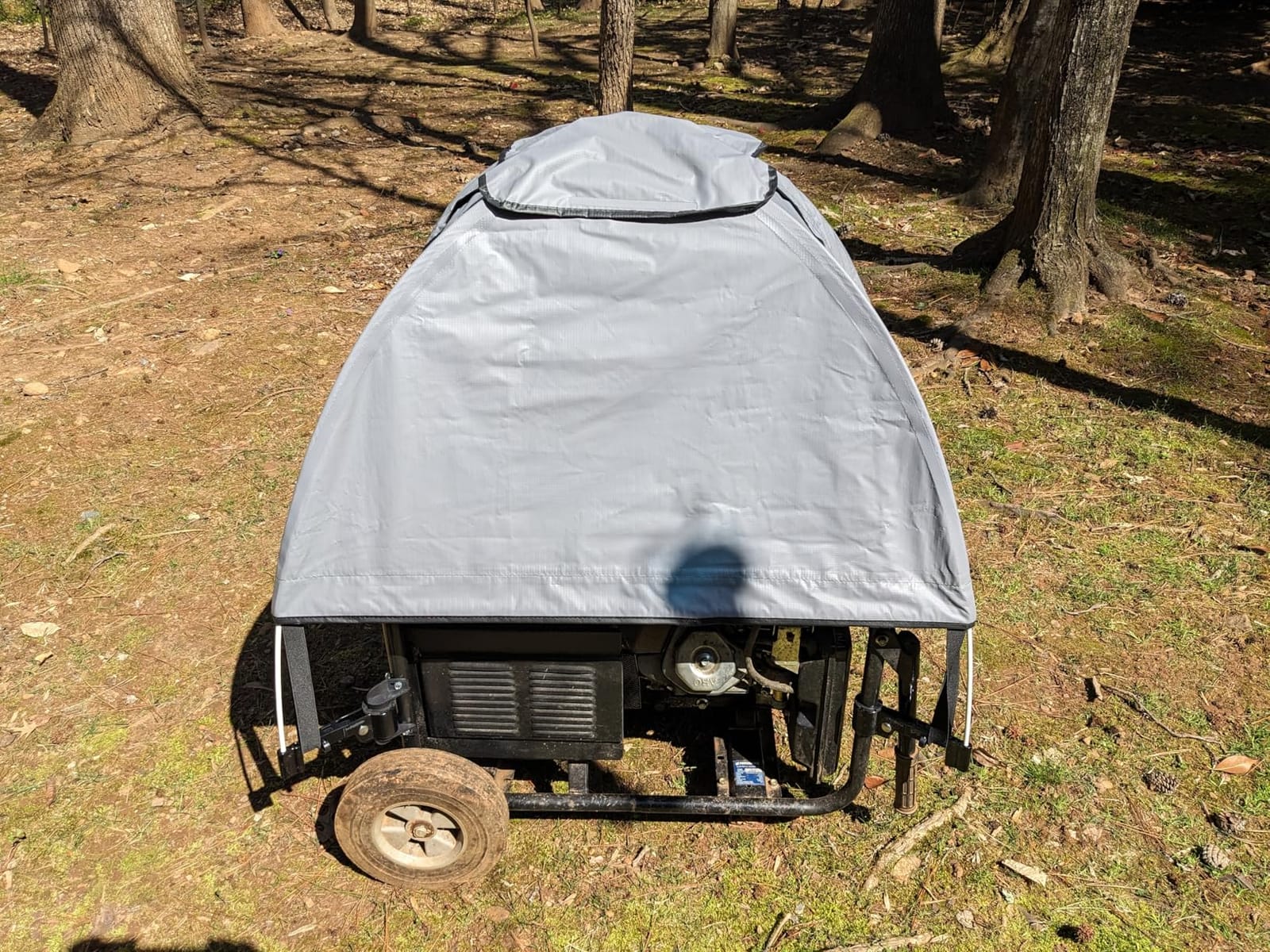
Wind is where it separates itself. Owners on the East Coast report it staying in place through storms approaching 100 km/h, and the tool-free clamps do not flex the way hook-and-loop hems do. The reason I ranked it first is the combination few competitors match: fire certification, real vent clearance, and access for refuelling without a shutdown.
The honest weaknesses are hardware. The clamps are plastic, and several buyers in cold climates have wished for aluminium instead, since cold plus repeated clamping cycles is where plastic gives up. The optional ground skirt is a separate purchase. On square frame generators, some owners drill an adaptor to achieve full exhaust clearance.
What we checked before recommending it
We looked for signs of water reaching the electrical panel after sustained rain, and the water-shedding canopy shape means runoff leaves the frame well clear of the receptacles. The access door is large enough to refuel and to reach the control panel without pulling the cover off, which removes the most common reason people strip a canopy in a hurry.
We also checked the fit logic against the range most often quoted on retail listings, and 78 to 104 inches of post perimeter covers mid-size open frame machines rather than the very largest dual-fuel models. Measure your post perimeter before ordering, and you will be inside the range for most mid-size machines.
Where it is the wrong choice
If your generator is a compact inverter model with a folding handle and a small footprint, this canopy is far too large and the clamps will not have a post to grip. It is built for tubular and square open frame machines, and trying to make it work on a small inverter wastes both money and setup time.
If you are on a tight budget, the total cost of the canopy-and-clamps package is the highest in this roundup, and the ground skirt is on top of that if you want one. For a generator that only needs dust protection between uses, a basic fitted storage cover does the same job for a fraction of the outlay.
2. Champion Storm Shield Severe Weather Cover – Best for Named Storms
Champion Power Equipment 100376 Storm Shield Severe Weather Portable Generator Cover by GenTent for 4000 to 12,500-Starting Watt Generators
Rated to 70 mph winds
12 inch rain and 18 inch snow daily
4000-12500 starting watts
+ The Good
- Published wind rating of 70 mph with 12 inch daily rain and 18 inch daily snow
- Built by GenTent using the same canopy engineering
- Large refuelling door plus electrical panel apron for running service
- Self-attaching design installs in three steps and can be removed intact
- The Bad
- Plastic corner clamps and brackets can crack without the rubber bushings
- Support rods can snap in under tension during assembly
- See-through skirt sold separately
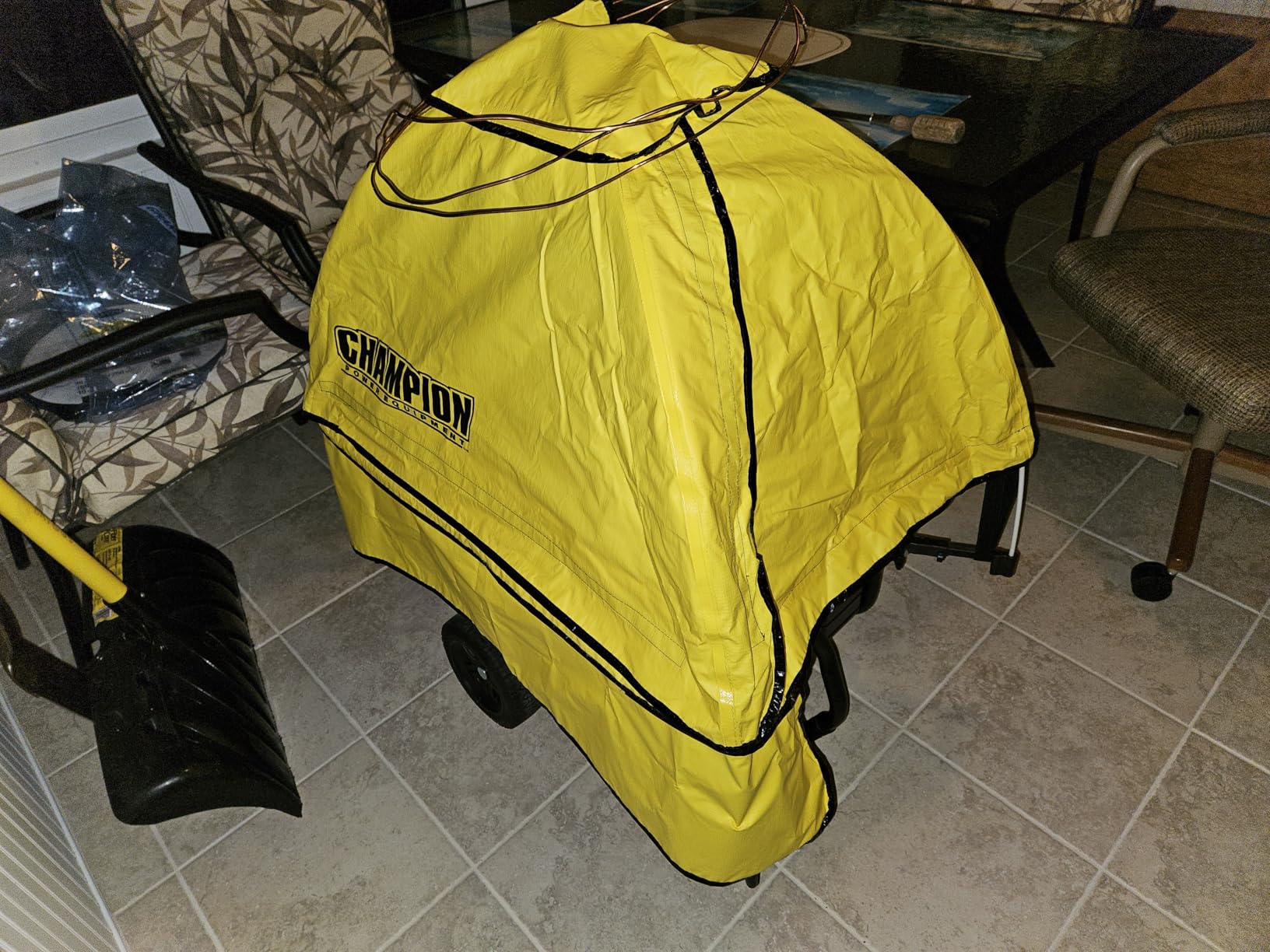
This is the one to buy if you plan for a named hurricane rather than an afternoon shower. It is the only cover in the group with published weather figures attached to it: winds up to 70 mph, up to 12 inches of rain per day and 18 inches of snow per day, across a 4000 to 12500 starting watt range.
Because it is a first-party Champion product, the fit on Champion portable models is essentially exact, with tight brackets and hook-and-loop in the places you would want it. It also does a second job well: pull it off intact and reuse it as a dust cover during storage, which means you are not buying two products.
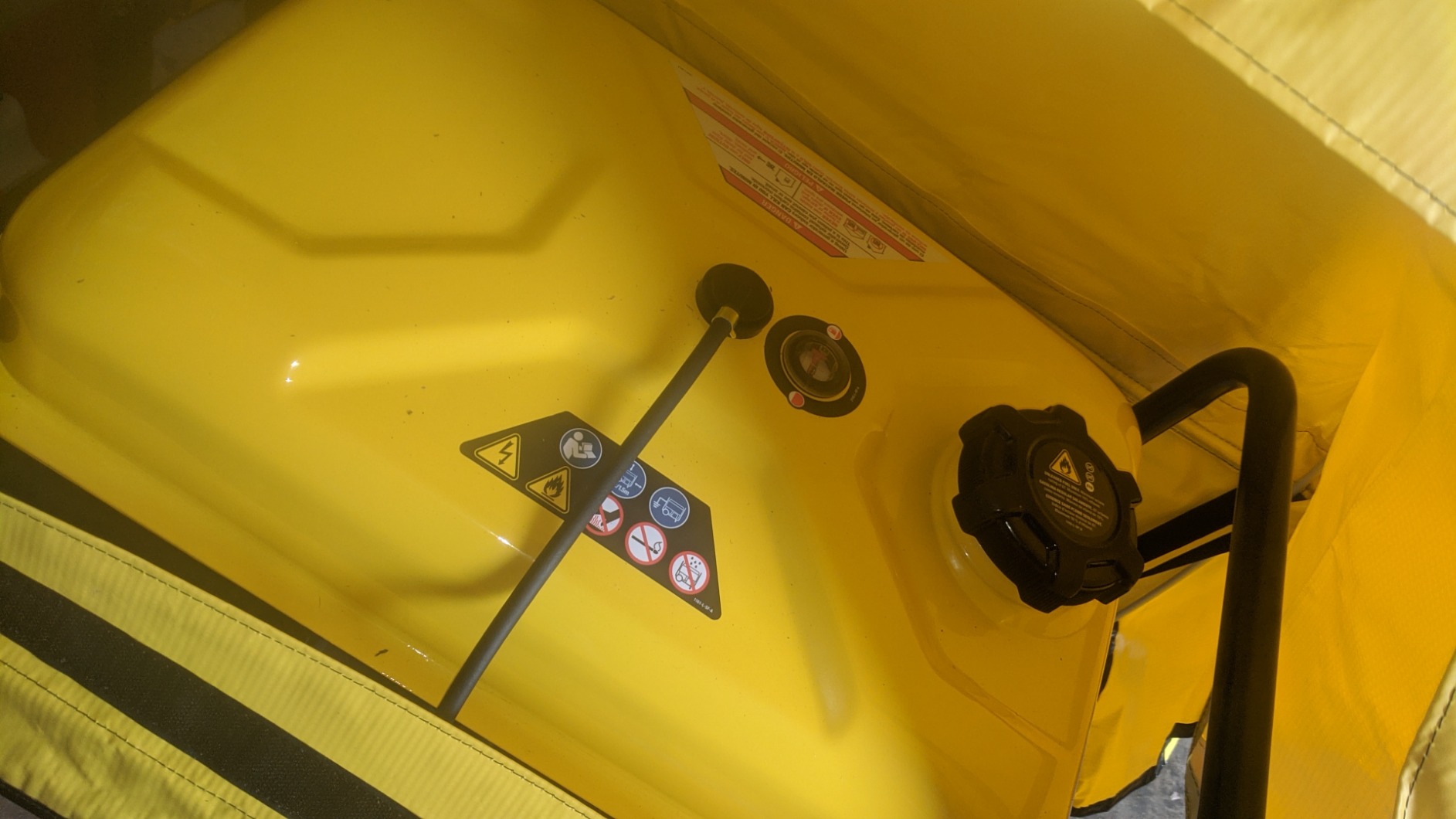
The refuelling door and the omni-fit electrical panel apron are what make it practical for an overnight outage, because you can service the machine without stripping the cover. Several owners report running it through a named hurricane with the generator still dry afterwards, and one mentioned the machine looked new afterwards.
The recurring complaint is the plastic corner clamps and rubber bushings. Several owners reinforced or replaced them, and the support rods are reported to snap in under tension or spring loose if handled carelessly during assembly. Treat the rods as consumables and the cover performs well.
What we checked before recommending it
The published ratings matter here because most competitors publish none. A 70 mph wind figure with a 12 inch daily rainfall allowance is a specific claim, and it is the reason this cover appears higher than its price band would suggest. We also checked the airflow design and found that the canopy leaves the exhaust and intake path open rather than funnelling heat back into the machine.
The three-step install is genuinely three steps if you read the instructions first. Assembly in the dark during a storm warning is the worst possible time to reverse-engineer rod orientation, so we recommend setting it up once in daylight before you need it.
Where it is the wrong choice
The plastic hardware is the honest weak point. In freezing conditions, corner clamps and bushings are the parts most likely to need replacing, and the see-through skirt that stops ground splash is a separate purchase. If you live somewhere with sustained sub-zero weather and treat covers as long-term kit, plan on spares.
It is also a first-party design with a perimeter range tuned to Champion portable frames. On a non-Champion open frame machine the fit will be approximate rather than tailored, and the electrical panel apron may not line up with your outlets.
3. IGAN Ultra Heavy Duty Generator Cover – Best Value Running Tent
IGAN Generator Covers While Running for most 3500w-12000w Generators – Ultra Heavy Duty Generator Covers for Outside – Portable Waterproof Generator Cover, Generator Enclosure Outdoor, Black
9 lb waterproof tarpaulin
5/8 inch stainless frame
Fits 3500W-12000W
Doubles as storage cover
+ The Good
- Only running cover here built on a 5/8 inch stainless steel frame
- 9 lb tarpaulin is far heavier and more durable than typical covers
- Side flaps hook open for airflow and refuelling while outlets stay dry
- Tool-free assembly in roughly 25-45 minutes
- Backed by a 3-year limited warranty
- The Bad
- Flat top can pool rainwater and seams eventually weep
- Some plastic T-connectors in the frame kit arrive cracked
- Included Velcro straps shorter than the manual shows
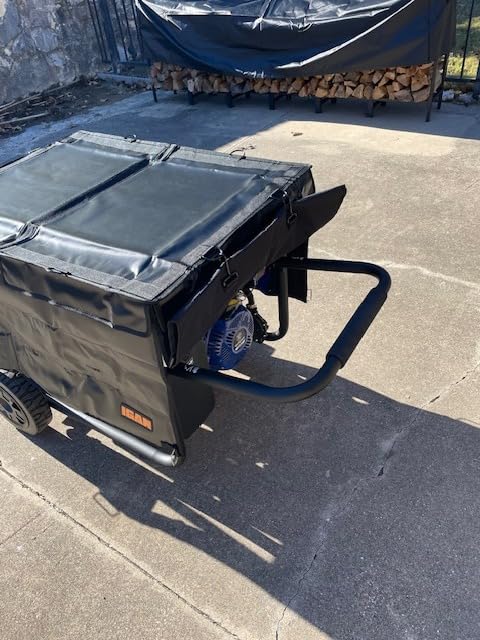
This is the running cover I would buy for value, and it is the one that most changes my mind about the category. A stainless steel frame of 5/8 inch tubing is a meaningfully different proposition from the bent-wire and plastic-hardware designs that dominate cheaper tents, and it is why this one stays rigid in a gust instead of folding.
The 9-pound waterproof tarpaulin is double what most covers in this roundup use, and it doubles as a storage cover when the frame comes down. Side flaps hook open for airflow and refuelling while the outlet side stays closed and dry, which is the correct arrangement: air in at the intake, air out near the exhaust, and no direct rain path to the receptacles.
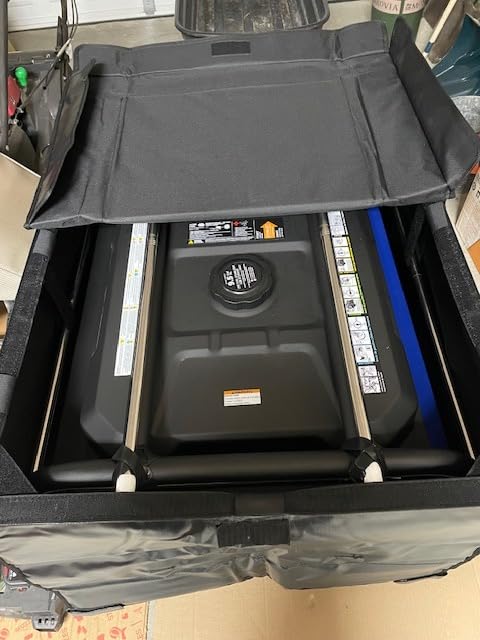
Owners running Westinghouse, Briggs and Stratton, Champion and Craftsman models report replacing a cheaper cover whose flap had fallen across the exhaust and overheated the machine, which tells you the failure mode this design was built to avoid. Users in hurricane areas report keeping the generator dry through storms, and assembly is tool-free in about 25 to 45 minutes with picture-based instructions.
The weak points are honest and specific: the flat top pools rainwater, and stitches may eventually let a little through over time. Some plastic T-connectors in the frame kit arrive cracked. The included Velcro straps are shorter than the length shown in the manual, and the canopy adds about 2 inches of width on each side of the generator, so clearance matters in tight side yards.
What we checked before recommending it
Frame material is where this cover earns its ranking. A stainless tube of that diameter resists both flexing and corrosion in a way that wire frames and snap-fit plastic never do, and it is the part of a running cover that determines whether the canopy stays a roof during bad weather.
We also checked the refuelling workflow, and a centrally located fuel cap is awkward to reach under the canopy. If your generator’s tank sits in the middle of the frame rather than to one side, budget for a few seconds of shuffling when you refuel rather than expecting a one-handed job.
Where it is the wrong choice
If you are on an extremely tight budget and your generator lives indoors between uses, this is far more than you need. It is also the wrong tool for a compact inverter, since a full-size open frame canopy is built around frame posts that a small inverter does not have.
Flat-top water pooling matters more than it sounds. A cover that collects several kilograms of rainwater on top is heavier in a gust and puts sustained load on the frame, so if you are in a region with heavy sustained rain rather than showers, check the canopy pitch after setup and expect to tip pooled water off periodically.
4. GENARMOR Generator Enclosure – Best Metal Frame Build
GenArmor Generator Covers While Running, 100% Waterproof Heavy Duty Tarps Generator Tent, Portable Outdoor Generator Enclosure for Most 4000w~13000w Generators, Black, Standard
All-metal bolted frame
14 lb waterproof tarpaulin
Fits 4000W-13000W
5-year warranty
+ The Good
- Only cover here with a fully metal frame and metal brackets throughout
- Frame and fabric bolted together as a one-piece unit
- 14 lb tarpaulin with well-stitched seams
- Adjustable top bracket for offset fuel tanks
- Five-year warranty
- The Bad
- Top canopy can hold 5-6 mm of standing water with no drainage slots
- Refuelling requires undoing and rolling back the top cover
- Sides must be lifted and secured while running
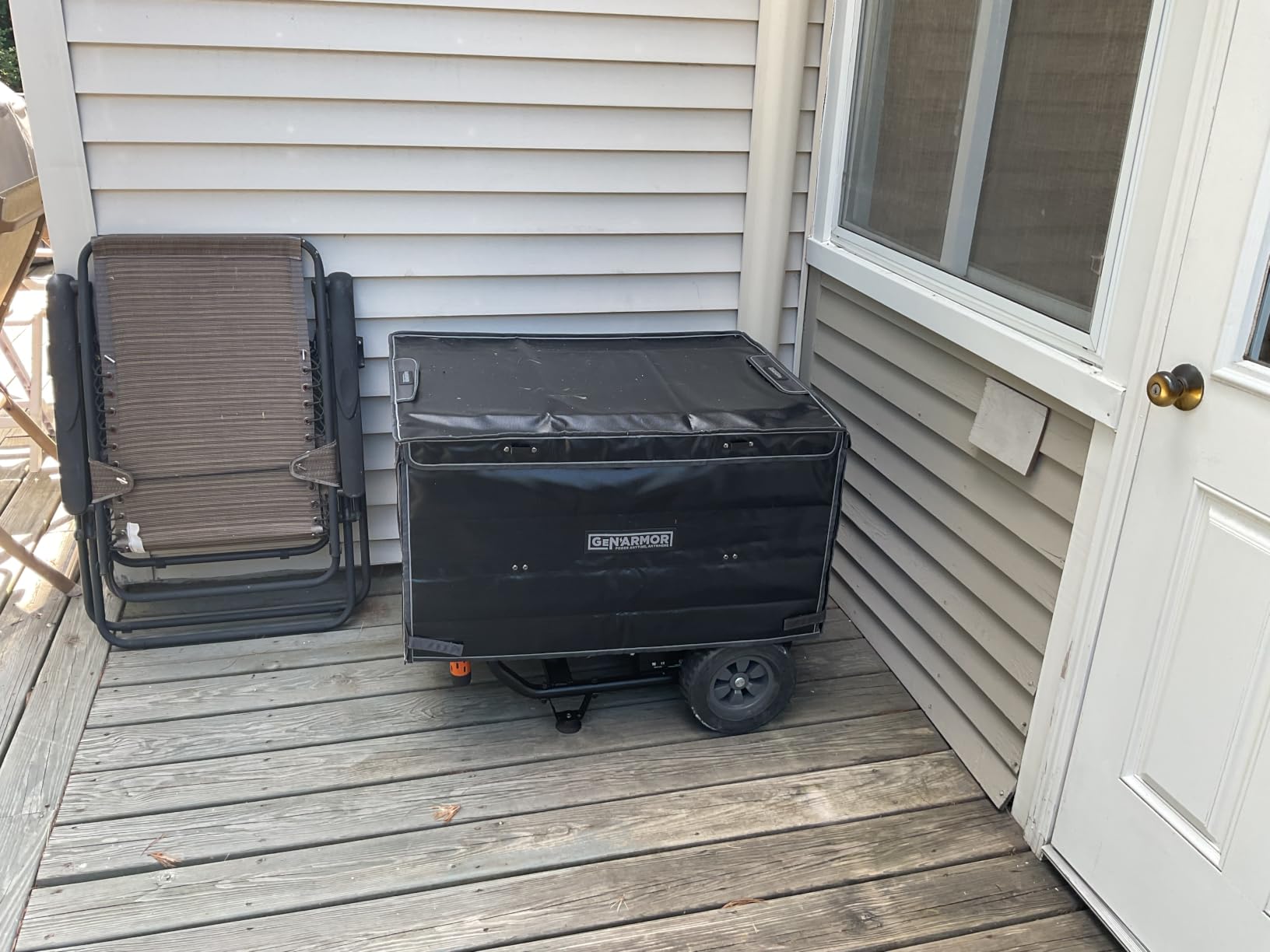
At 14 pounds this is the heaviest enclosure in the roundup, and the reason is the frame: square steel rods, metal brackets and a bolted one-piece construction where frame and fabric are fixed together rather than clipped. Buyers comparing it with cheaper covers consistently single out the all-metal hardware as the reason it should outlast them.
Because frame and fabric move as one rigid unit, the canopy resists collapse in wind far better than designs that rely on tension between separate pieces. That is the single biggest engineering difference between this enclosure and a typical clamp-on canopy, and it is why we rate it so highly for long-term ownership.
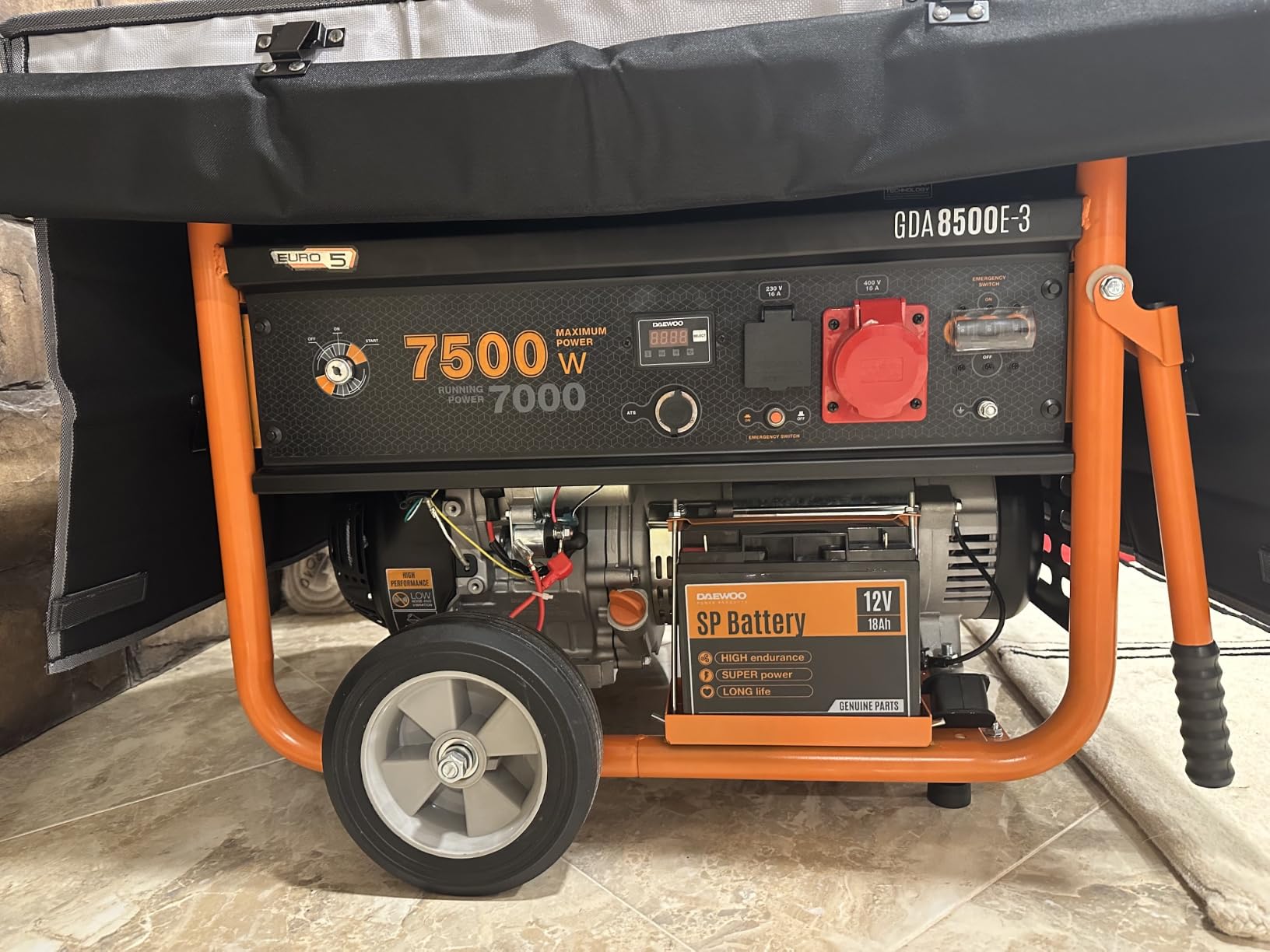
Other details worth knowing: the adjustable top bracket accommodates fuel tanks offset from centre, roll-up sides on riveted metal fasteners let three sides stay down while running, and eight Velcro straps secure the frame to the generator. Owners running Westinghouse, Genmax, Predator, Champion, Firman and Daewoo models report exact fits and 10 to 30 minutes of assembly.
The repeated negative is water on top. The canopy can hold 5 to 6 mm of standing water because it has no drainage slots, and the side stitching can let a little seep through. Refuelling requires undoing the top cover and rolling it back, which is cumbersome when the sides are already rolled up, and riser brackets for some models are sold separately.
What we checked before recommending it
We checked the anchor count and the fastener material, because a wind failure in a running cover is a hardware failure. Riveted metal fasteners and eight straps give more retention points than most competing tents, and the bolted construction means there is no frame joint that can work loose under cyclic loading.
We also looked closely at the roll-up side workflow. It is a two-person job in practice: one holds the side up while the other secures it, which is a real consideration if you are the only person on site during an outage. Plan your refuelling and panel access before you roll the sides up, not during.
Where it is the wrong choice
This is the heaviest item we tested, and weight cuts both ways. Fourteen pounds is awkward to carry over uneven ground, and anyone lifting it into a truck bed alone will feel it. If you move the generator regularly rather than leaving it in one position through an outage, that is a genuine drawback.
The top-canopy pooling is the design flaw to plan around. In a long steady rain the canopy accumulates standing water, and if you are in a coastal or monsoon region you will want to check it periodically rather than assuming it is fine for twelve hours unattended.
5. Champion Weather-Resistant Storage Cover – Top Rated Storage Cover
Champion Power Equipment Weather-Resistant Storage Cover for 4800-11,500-Watt Portable Generators
Vinyl exterior
Elastic snug base
Fits 4800-11500 watt models
1-year limited warranty
+ The Good
- First-party cover gives a near-perfect fit on Champion generators
- Elastic base holds a snug fit that resists wind
- Tough vinyl shields against sun UV rain snow and dust
- Lightweight and quick to slip on
- Also fits non-Champion models up to 30.7 x 23.6 x 23.6 inches
- The Bad
- Vinyl can be punctured by pests if a nest is built underneath
- Storage cover only and must be removed before operating
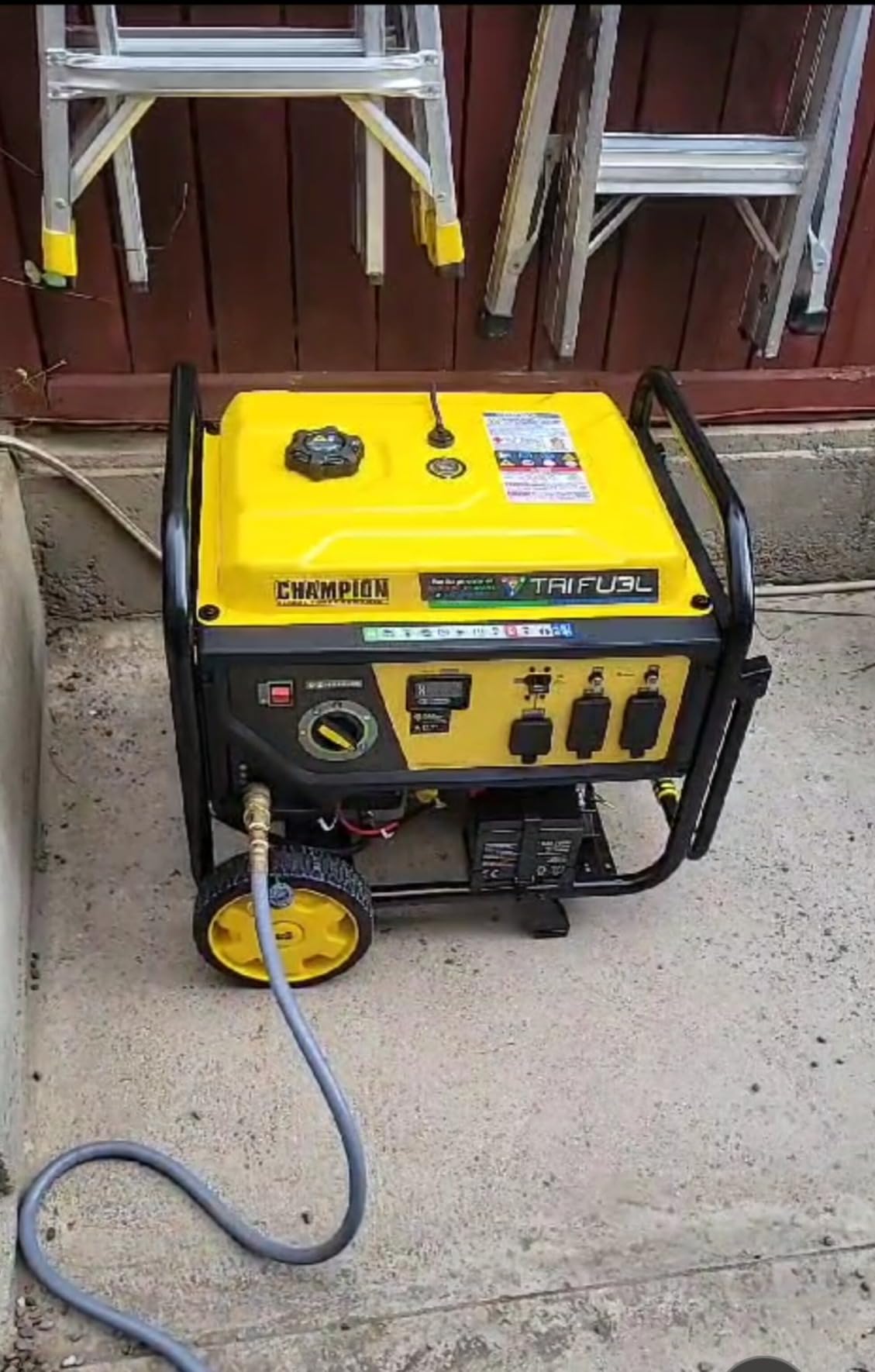
This is the highest-rated cover in the roundup at 4.8 stars across more than 4000 ratings, and it earns that on fit rather than features. As a first-party Champion product it hugs Champion portable models closely, and owners report a glove-like fit with a softer interior that does not scratch the paint.
The elastic base is the detail that matters outdoors. Instead of a loose hem that flaps and lifts at the corners, the base pulls snug to the frame, which is what stops a cover from becoming a sail. The vinyl exterior handles sun, UV, rain, snow and dust without absorbing water.
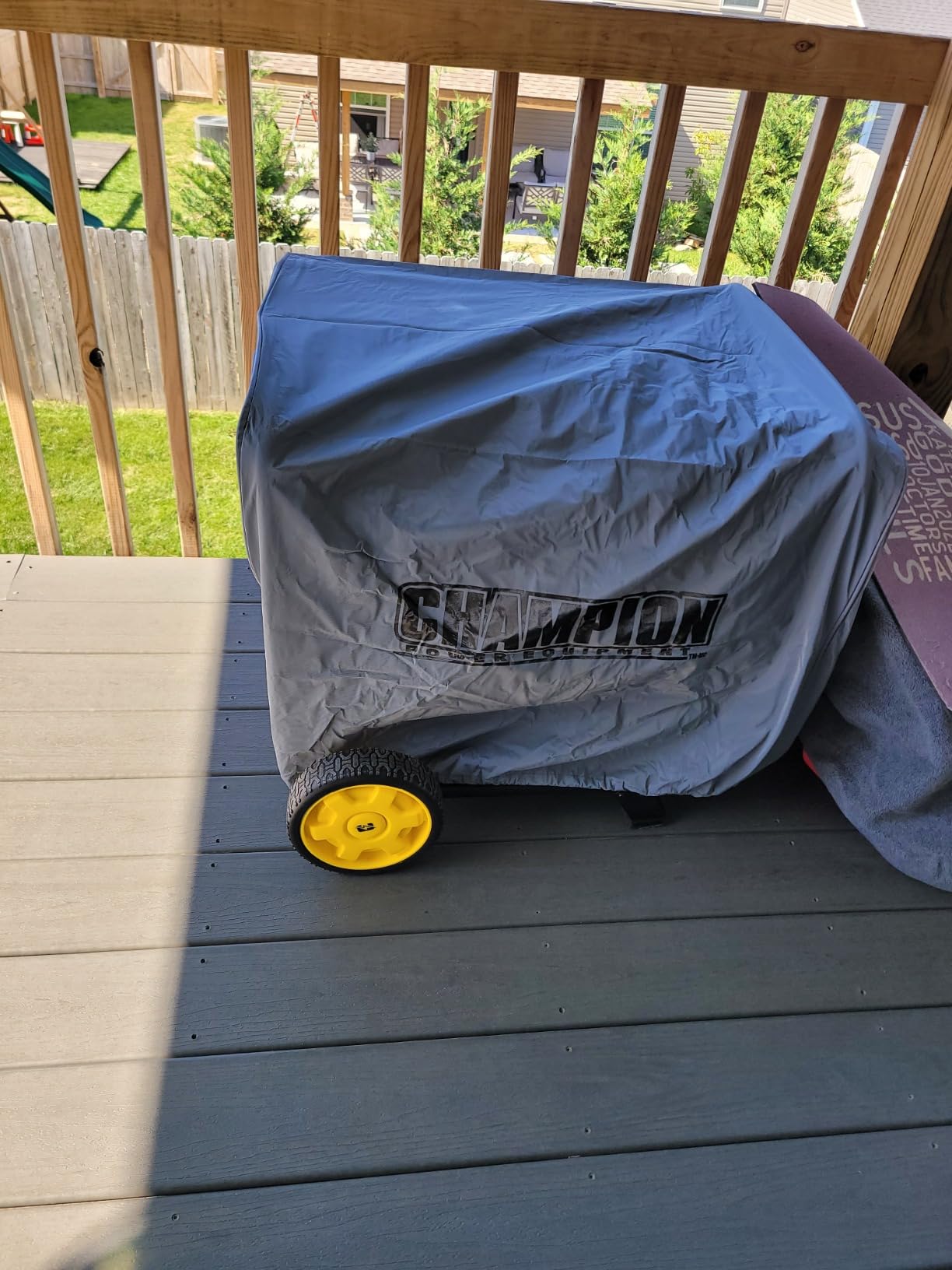
It weighs 1.5 pounds and slips on in seconds, so pulling it before a forecast is a ten-second job rather than a project. It also fits non-Champion generators up to 30.7 x 23.6 x 23.6 inches, which covers a large share of portable frames from other brands.
The one complaint that recurs is insects. If a bird or wasp builds a nest underneath while the generator is uncovered, the vinyl can be punctured, and a hole in vinyl does not heal. Check underneath before a storm season rather than after.
What we checked before recommending it
We checked the hem retention, because a storage cover’s whole job is defeating wind. A strong elastic base that grips the frame corners does more than any strap on a fabric-only design, and it is the reason this cover holds position in wind where lighter polyester covers lift.
We also checked the material against UV, which is a longer-term issue than rain. Vinyl shrugs off prolonged sun exposure without degrading, and for a machine that lives outdoors between outages that is often the larger threat.
Where it is the wrong choice
This is a storage cover. It must come off before the generator runs, and putting it back on a hot engine is how you melt fabric and warp panels. If you plan to ride out outages with the machine running outdoors, this is the wrong product entirely.
It is also less useful on very large machines. At 30.7 x 23.6 x 23.6 inches of coverage, a big dual-fuel model will be loose around the corners, and a loose cover collects water in the middle of the top rather than shedding it.
6. Porch Shield 600D Poly Generator Cover – Most Reviewed
Porch Shield Generator Cover for 5000-10000W, 32 x 24 x 24 inch, Black
600D laminated polyester
Taped seams
32 x 24 x 24 inch
Windproof hem cord
+ The Good
- Most reviewed cover in this roundup with more than 8000 ratings
- 600D polyester with water-resistant laminated undercoating
- Double stitching and taped seams for tear resistance
- Elastic hem cord plus bottom strap for a secure fit in wind
- The Bad
- Fixed-size dimensions mean you must measure before purchase
- Storage-only design and not for running covered
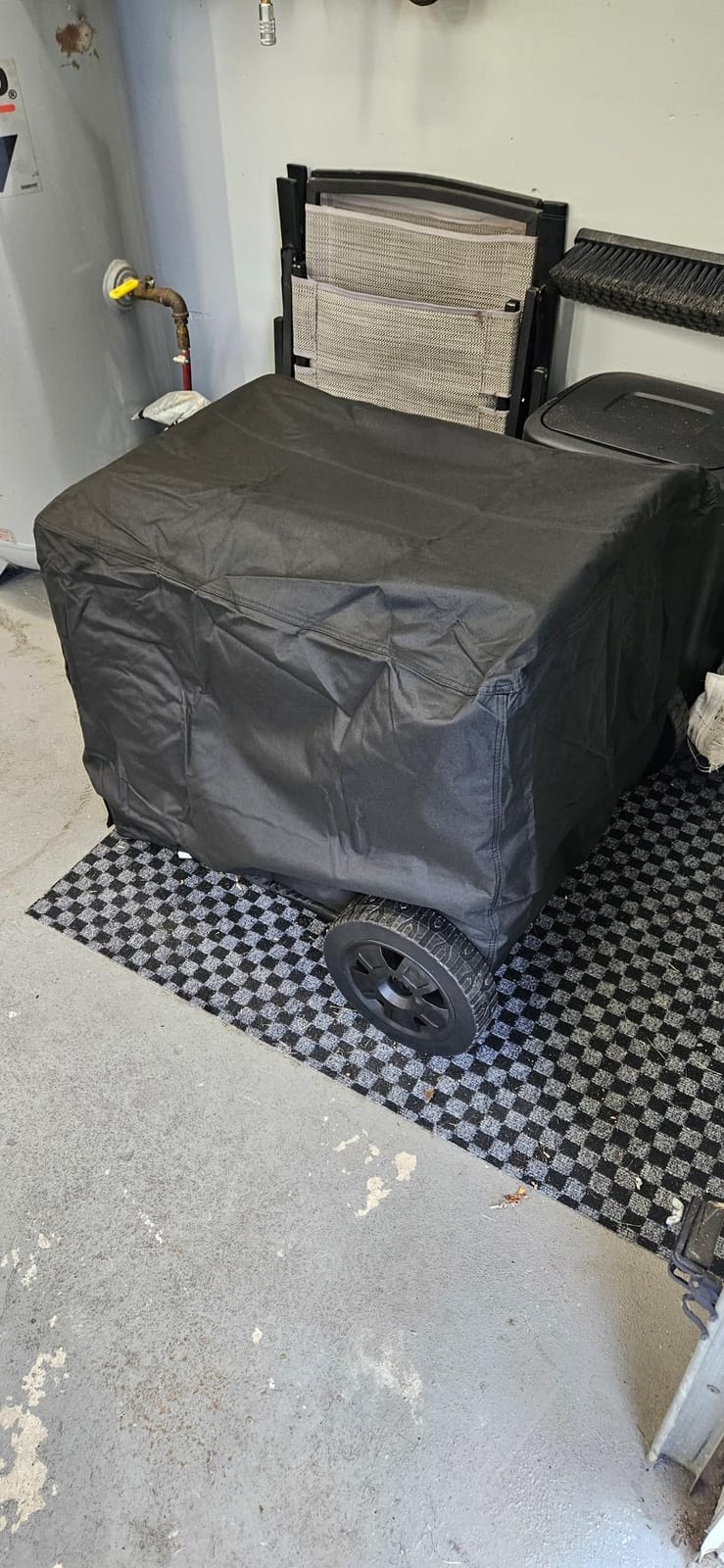
With more than 8200 ratings at 4.7 stars, this is the most reviewed generator cover we included, and the volume of long-term owner data behind it is itself a reason to trust it. Buyers consistently credit the laminated 600D fabric, the taped seams and the wind-tight hem as the features that do the work.
That rating spread is worth noting: roughly 83 percent of ratings are five star, and the negative comments cluster around one issue, which is choosing the wrong size. This is a fixed-size cover, so the single most important thing you can do before ordering is measure your generator.
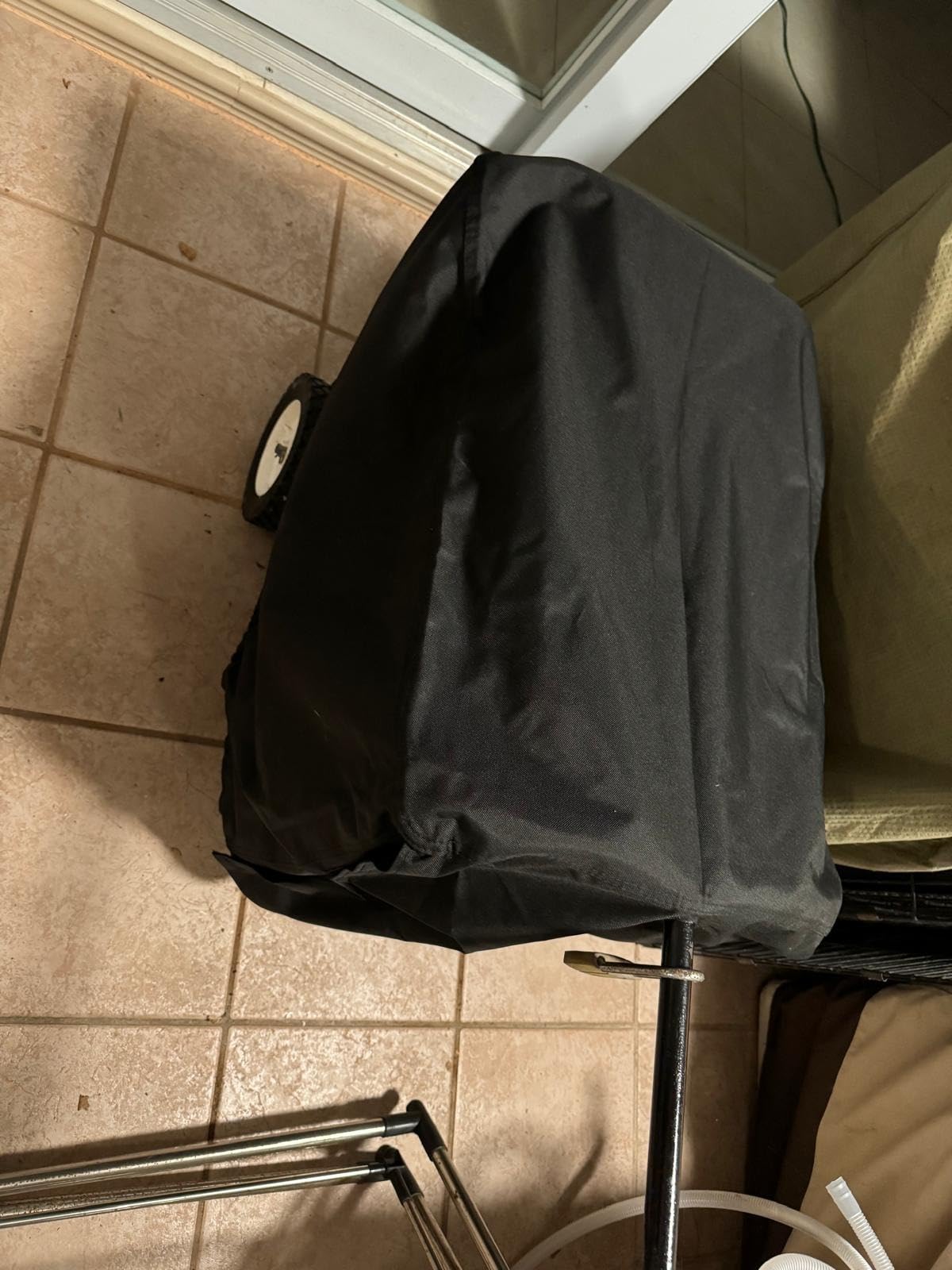
Construction is better than the fabric alone suggests. Double stitching and taped seams improve both tear resistance and waterproofing, and the elastic hem cord combined with a bottom strap gives a genuinely tight fit rather than a loose drape. Size options cover gas and inverter generators from 5000W to 10000W, including the popular Predator, DuroMax and Champion portable frames.
The Velcro side panel allows quick install, removal and ventilation, which makes it a sensible cover to leave on during a passing shower between uses. It weighs 1.1 pounds, so moving it is trivial.
What we checked before recommending it
We checked the seam treatment, and taped seams on a laminated polyester is the specification that separates a cover that sheds water from one that eventually weeps. Plenty of covers in this price range use 210D or 420D polyester with unstitched or single-stitched seams, and those fail first at the join.
We also checked hem retention in wind, and the combination of an elastic cord and a bottom strap is the most secure closure in the storage-cover group. A cover that has to be pegged or weighted to stay put will lose to it.
Where it is the wrong choice
It is explicitly a storage cover and is not designed for the generator to run underneath. If you need power through a storm, this is the wrong purchase, and we would rather say that plainly than stretch it.
The fixed sizing is the other real constraint. Generators with lifting handles, roll bars or a tall control console can fall outside the 32 x 24 x 24 inch envelope even when the wattage matches, so measure length, width and height and compare against the listing rather than relying on the wattage range alone.
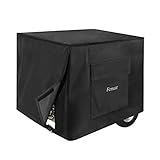
7. Femuar 600D Oxford Generator Cover – Best for Large Dual-Fuel Units
Outdoor Generator Covers Waterproof Heavy Duty 600D Oxford Portable Generator Cover Universal for 5500-15000 Watt Portable Generators ,38x28x30 in
600D Oxford with PVC coating
38 x 28 x 30 inch
5500-15000W
Integrated tool pocket
+ The Good
- Largest size in the roundup at 38 x 28 x 30 inches
- 600D Oxford with PVC coating for all-weather protection
- Integrated tool pocket for cords oil funnel and dipstick
- Buckle straps plus drawstring for wind security
- Velcro front panel allows battery trickle charging access
- The Bad
- One owner reported dry-rot after about three years of full-time weather exposure
- Fit is loose rather than tailored so measure first
This is the size answer for anybody running a large dual-fuel portable generator who finds every other cover in the roundup a few inches too small. At 38 x 28 x 30 inches it covers machines up to 15000W, and owners report a near-tailored fit on DuroMax, Champion and Honda units in that class.
The 600D Oxford fabric with a PVC coating handles rain, snow, dust, wind and UV, and the smaller sizes in the range are also popular for outdoor air conditioner condensers. Buckle straps plus a bottom drawstring keep it from lifting in heavy wind, which matters more on a cover this large because a large sail area generates more lift.
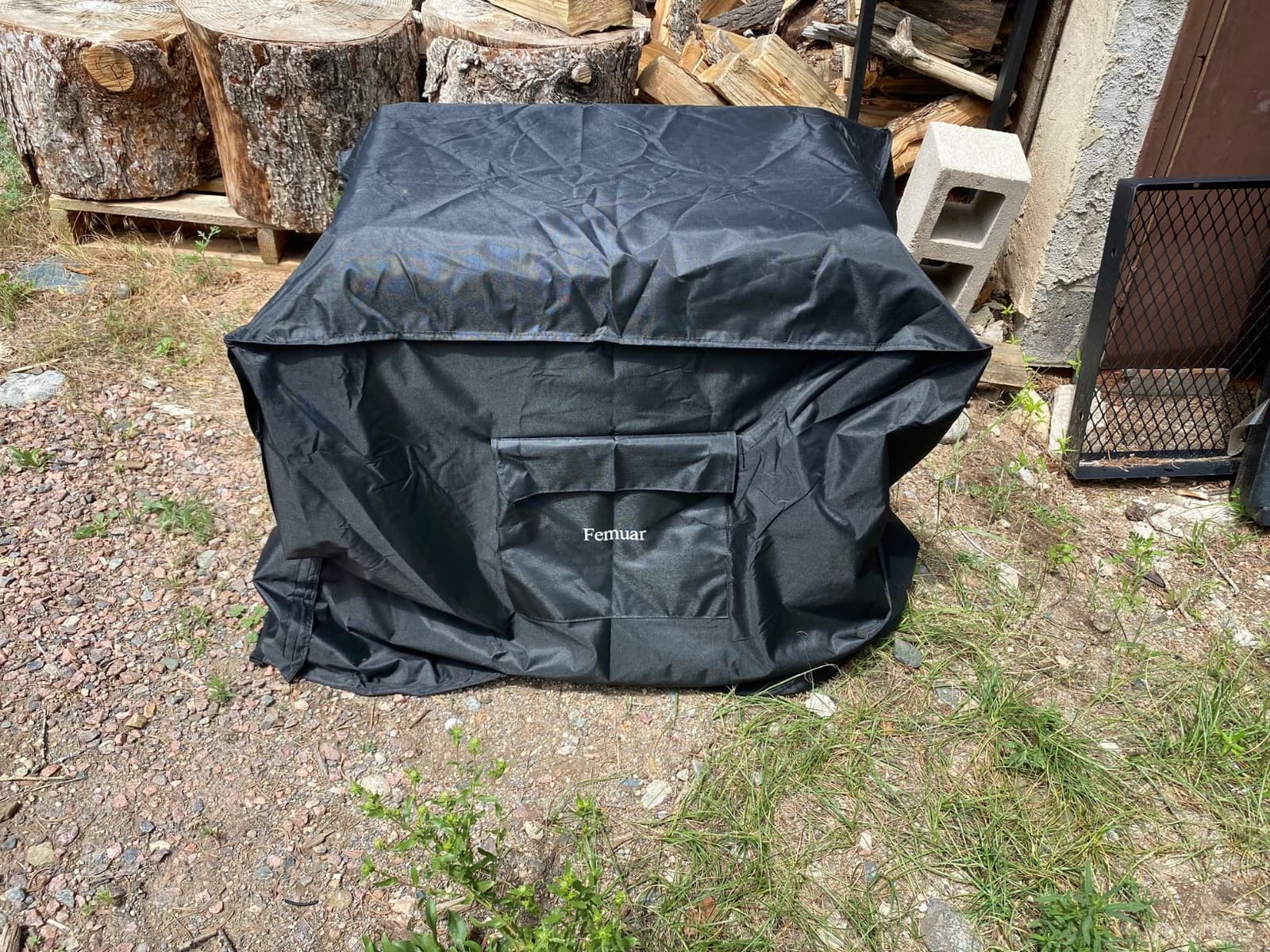
The integrated tool pocket is a small feature with real value. It is sized for power cords, an oil funnel, a dipstick and the manual, which keeps those items off wet ground instead of scattered around a damp jobsite. The Velcro front panel also gives access to the battery for trickle charging without removing the whole cover.
On durability, the sample is strong at 4.7 stars across 1179 ratings, with about 80 percent five star, and the single negative report we found was dry-rot after roughly three years of continuous full-time weather exposure. That is one owner, not a pattern, but it is worth factoring in if the cover will live outdoors permanently rather than seasonally.
What we checked before recommending it
We checked the size ceiling against the wattage classes, because this is the only cover here that reaches 15000W. If you are running a large dual-fuel machine, most other covers in the market leave a gap at the top or the handle, and a partial fit means a permanent opening where rain enters.
We also checked the closure hardware, and buckle straps plus a drawstring is a better combination than Velcro alone on a cover this size. Straps take sustained load without the adhesive creep that affects hook-and-loop hems after a season of UV exposure.
Where it is the wrong choice
If you own a small or mid-size generator, this is too big. An oversized cover flutters, collects a pool of water in the middle and works against the drawstring, so buying up is not a safer choice than buying right.
It is also a storage cover. There is no ventilation path, so it comes off before the generator runs, and the loose rather than tailored fit means it will never look as neat as a first-party cover on a matching machine.
8. Adamoss 600D Polyester Generator Cover – Best Adjustable Storage Fit
Generator Cover Waterproof, Heavy Duty Thicken 600D Polyester with Elastic Drawstring, Weather/UV Resistant Generator Cover for Universal Portable Generators 5000-10000 Watt (32”L x 24”W x 24”H)
600D laminated polyester
Elastic drawstring hem
Eight size options
5000-10000W fit
+ The Good
- Elastic pull rope in a flexible bottom channel wraps tightly in heavy rain and wind
- 600D polyester with laminated water-resistant undercoating
- Double-stitched seams for tear resistance
- Eight sizes cover a wide range of 5000-10000W generators
- 4.7 stars across more than 1700 ratings
- The Bad
- Storage cover only and the listing states it is not for operating
- You must measure width depth and height to pick among eight sizes
Where the Porch Shield cover uses a hem cord and a strap, this one runs an elastic pull rope through a flexible bottom channel that wraps tightly around the frame. In heavy wind that matters more than fabric weight, because a base that cinches cannot fill with air and generate lift.
The fabric is 600D polyester with a laminated water-resistant undercoating for rain, snow, dust, wind and UV, with double-stitched seams for tear resistance. Buyers report 4.7 stars across more than 1700 ratings with roughly 84 percent five star, and the recurring praise is for thick polyester and a tight hem.
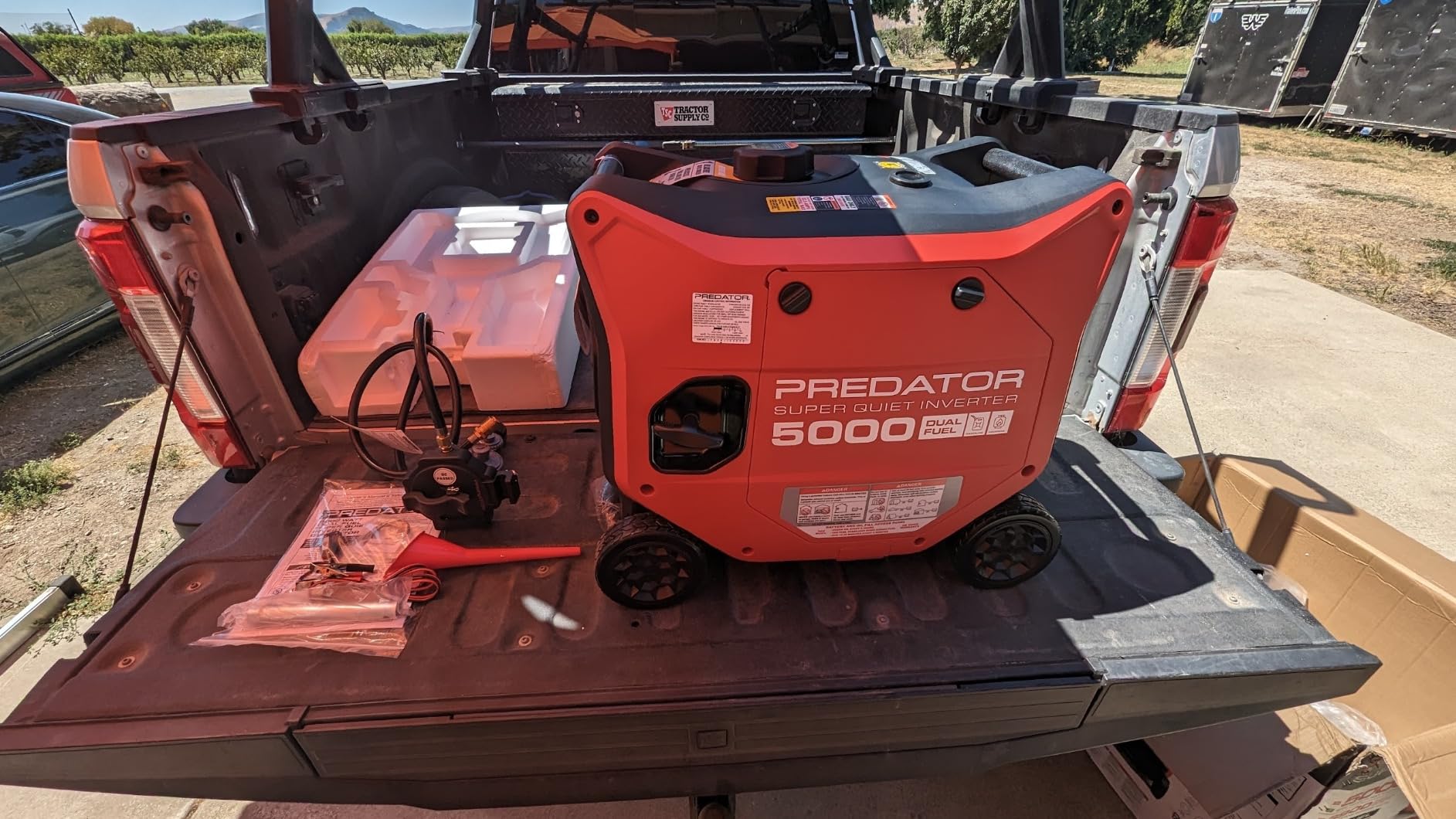
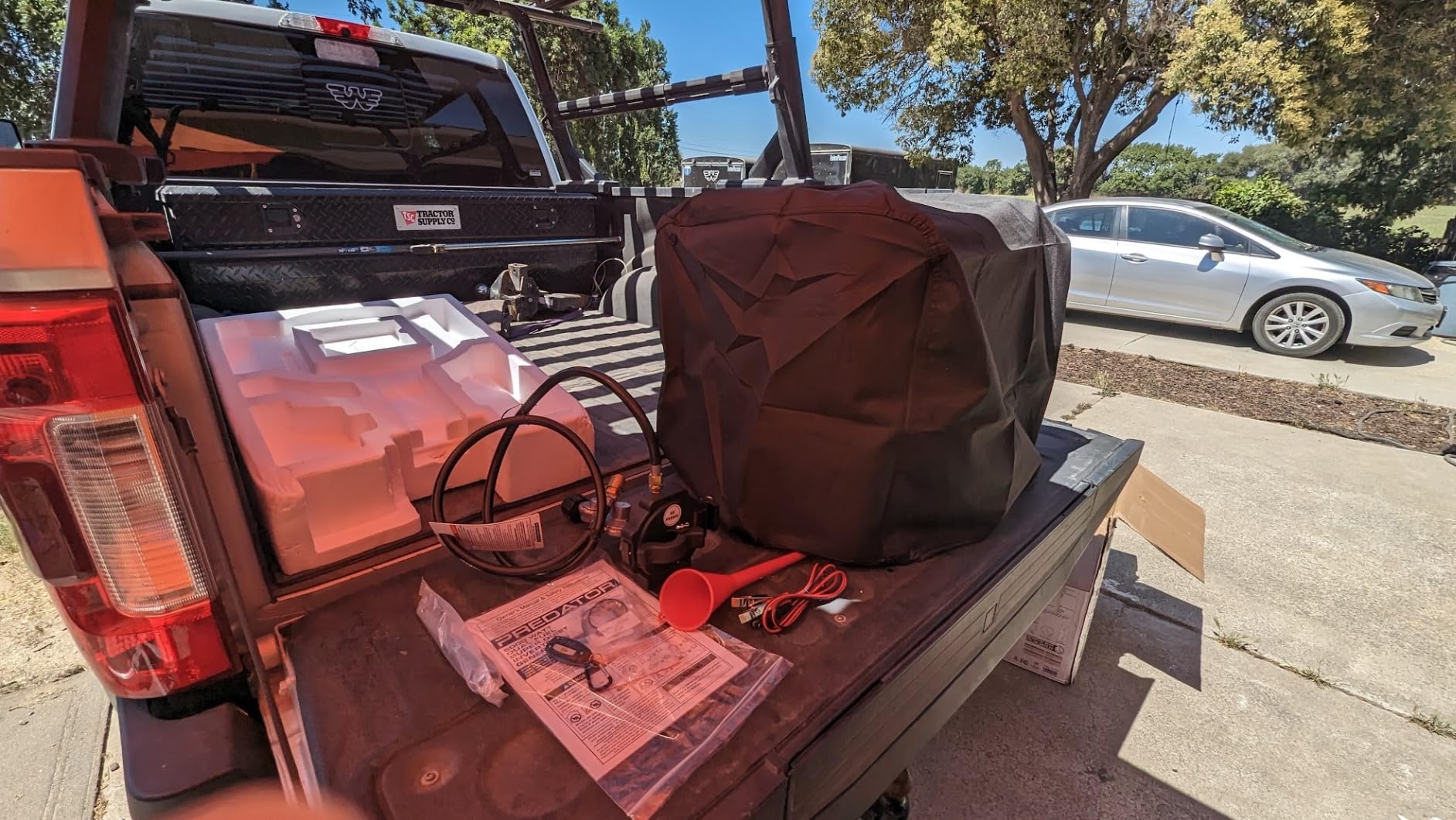
The fit flexibility is the real difference here. Eight size options cover a wide range of 5000W to 10000W portable generators, including Predator, DuroMax, Westinghouse, Honda, Craftsman, Generac, Champion and Ryobi models, so you are more likely to find a close dimensional match than with a single-size cover.
The trade-off is that eight sizes also means eight chances to pick wrong. The listing is explicit that you should measure width, depth and height before purchase, and that is the single purchase consideration owners keep raising. Take the measurement and you will be fine.
What we checked before recommending it
We checked the closure mechanism rather than the marketing language, and an elastic pull rope in a dedicated channel is a more effective wind solution than a flat hem. It distributes tension around the whole base rather than at four points, which removes the corner-lift failure we see most often.
We also compared the laminate against the alternatives in the group. At 600D with a water-resistant undercoating and double stitching, this is in the same material class as the better storage covers here, and above the lightweight polyester covers that reviewers frequently describe as thin.
Where it is the wrong choice
It is not for use while the generator is operating, and the listing states that plainly. Anyone planning to run a machine through an outage needs a vented running cover instead, and no amount of fabric quality changes that.
If your generator is a compact inverter or a very large dual-fuel machine, this size range will not serve you. The eight options sit in the 5000W to 10000W band, which is the most common portable class but not all of them.
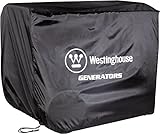
9. Westinghouse WGen Universal Cover – Budget Pick
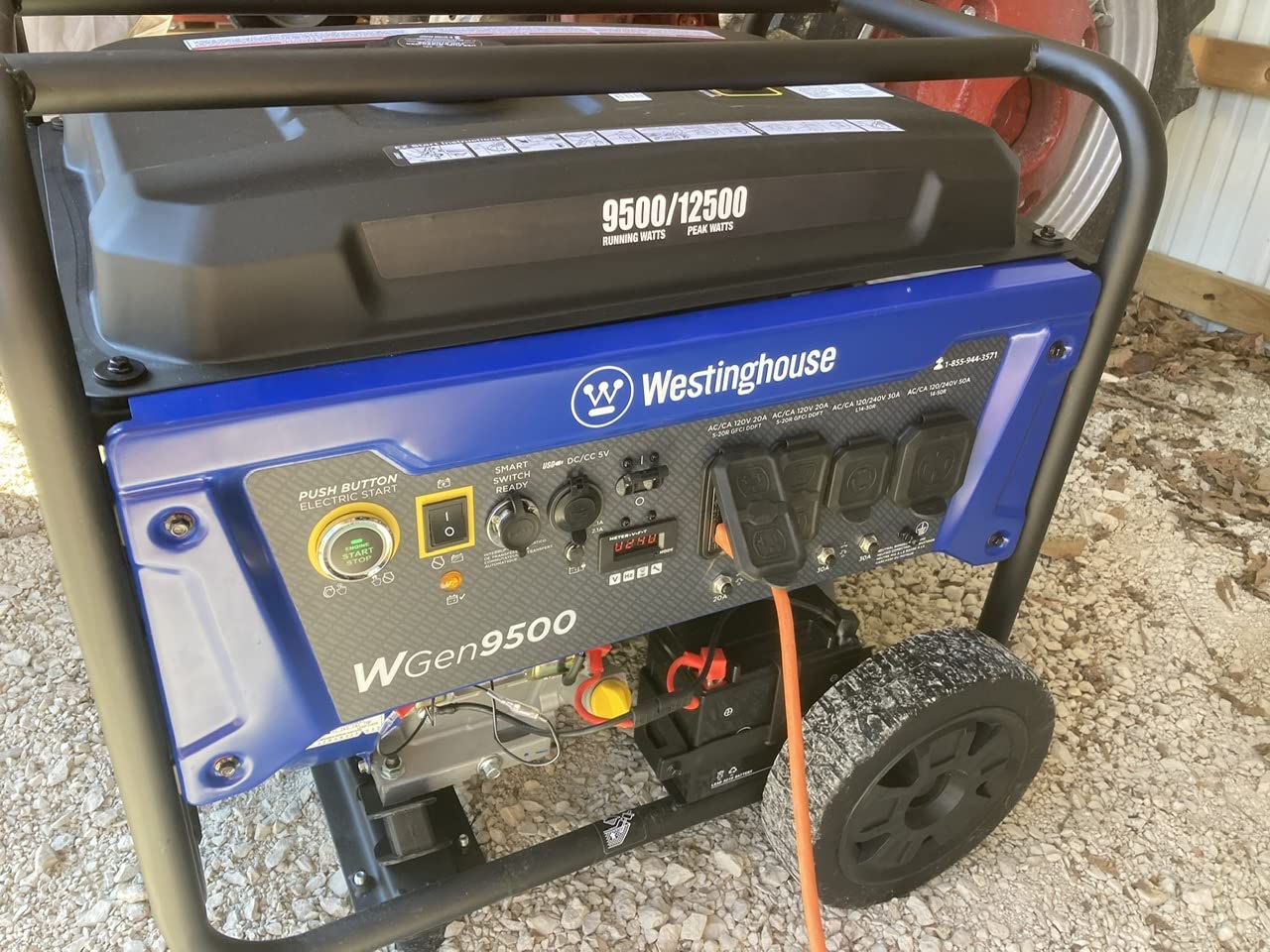
Westinghouse Outdoor Power Equipment WGen Generator Cover – Universal Fit For Portable Generators Up to 9500 Rated Watts
Polyester with high-density stitching
Drawstring hem
28.5 x 25 x 24.5 inch
Fits WGen2000 to WGen9500DF
+ The Good
- Snug universal fit across the WGen lineup from WGen2000 to WGen9500DF
- High-density stitching and synthetic polyester for outdoor exposure
- Drawstring bottom gives a tight fit in wind
- Conceals the generator so it looks tidy in a garage or entryway
- The Bad
- Lightweight fabric and some buyers question long-term weathering
- Water pools in the centre of the top because there is no rigid structure
- Suited to dust and light moisture rather than driving rain
At 4 ounces this is the lightest cover in the roundup by a wide margin, and the fit is its strongest feature. Owners of Westinghouse WGen models report a snug fit across the range from the WGen2000 to the WGen9500DF, with at least one owner fitting a larger model than the listing wattage suggests.
It is also genuinely useful for appearance. A drawstring hem gives a tight, secure fit in wind, and because the cover conceals the generator, a unit stored in a garage or an entryway does not look like an appliance left on display. For a tidy storage setup, that is a real benefit.
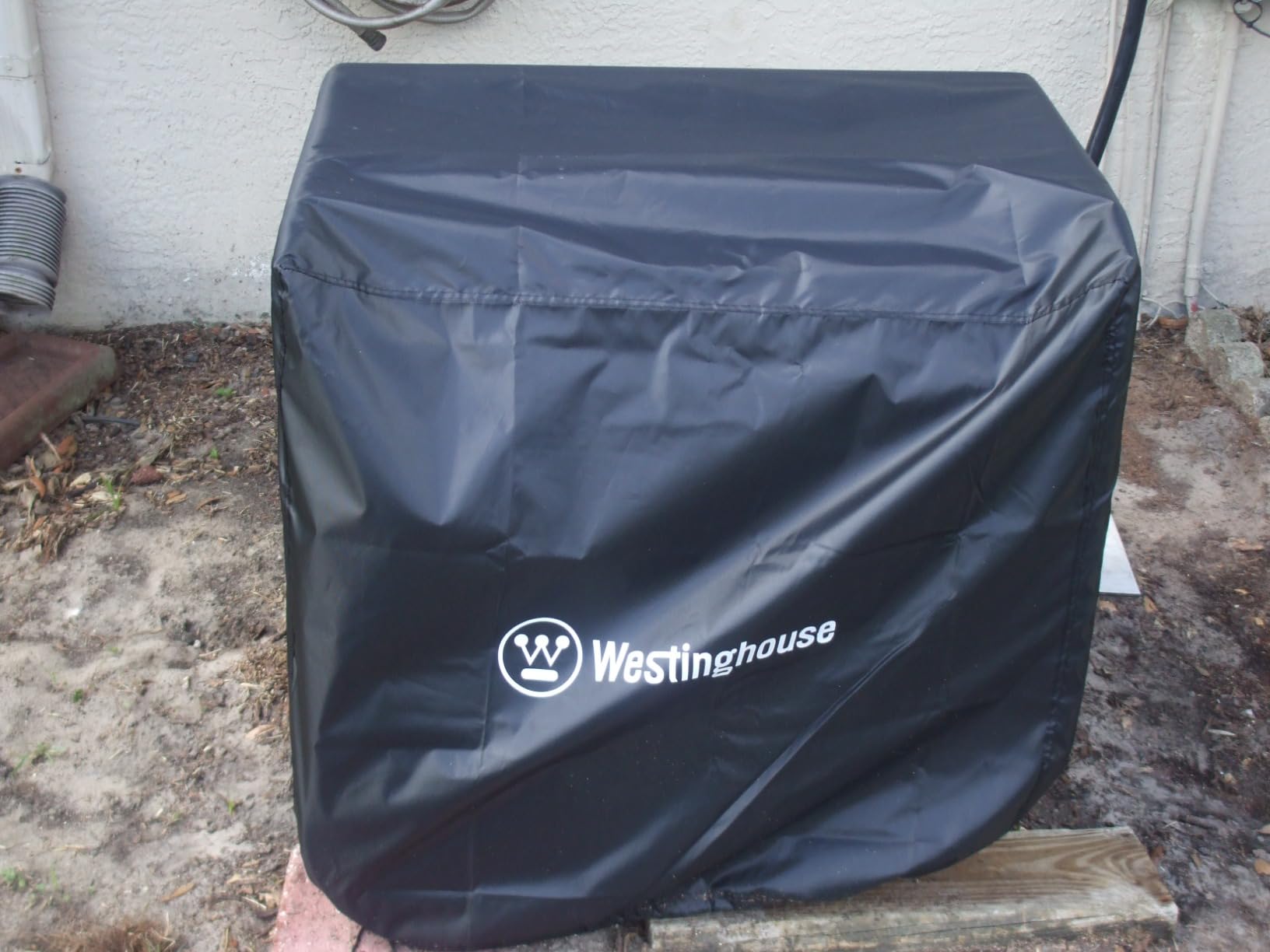
The honest limitation is material thickness. At 4 ounces, this is a light synthetic polyester with high-density stitching, and reviewers describe it as better suited to dust and light moisture than to driving rain. It works as a dust cover and it works as a seasonal storage cover.
The second limitation is structural. There is no rigid frame underneath, so water pools in the centre of the top after rain rather than shedding, and that pooled water sits on the fabric until it evaporates. For a machine that lives outside through a wet winter, that is a persistent damp spot.
What we checked before recommending it
We checked whether the fit range is stated precisely rather than claiming universal coverage, and it is: 28.5 x 25 x 24.5 inches covering named WGen models. Precise fit specifications are worth more than the word universal on a cover, because they tell you immediately whether your machine is in range.
We also checked the closure, and a drawstring bottom is a better wind solution than an open hem at this weight. It is not enough to make the cover a rain cover, but it is enough to make it a good dust and sun cover between outages.
Where it is the wrong choice
If your plan is to run the generator in rain, this cover is the wrong tool and no amount of securing will change that. It is a storage cover for a light fabric, and it is not built to keep driving rain off an operating machine.
It is also the wrong choice for permanent outdoor exposure. Four ounces of polyester and a top that collects water are a poor combination for a machine left out all winter, and one buyer already reported concern about long-term weather endurance.
10. IGAN Small Inverter Generator Tent – Best for Compact Inverters
IGAN Small Inverter Generator Tent Cover While Running, Compatible for Honda and Most 1000~2300 Watts Generators, Portable Outdoor All-Weather Tarpaulin Cover for Rain, Black
Built for 1000-2300W inverter models
Waterproof vinyl tarpaulin
Metal base and fibreglass rods
Tool-free assembly
+ The Good
- Purpose-built for the 1000-2300W inverter class that full-size covers cannot fit
- Compatible with Honda inverter generators and similar compact models
- 100% waterproof tarpaulin with high-strength metal base
- Patented design keeps cooling airflow and unit mobility
- Tool-free assembly
- The Bad
- Narrow fit excludes larger open frame models
- Smallest review base in the group at 553 ratings
- Plastic hardware and hooks weaken in freezing conditions
This is the one to own if your generator is a compact inverter, and the reason is simple: the full-size open frame canopies in this roundup physically cannot fit a small inverter. There are no frame posts to clamp to, and the footprint is a fraction of what a 12000W machine needs.
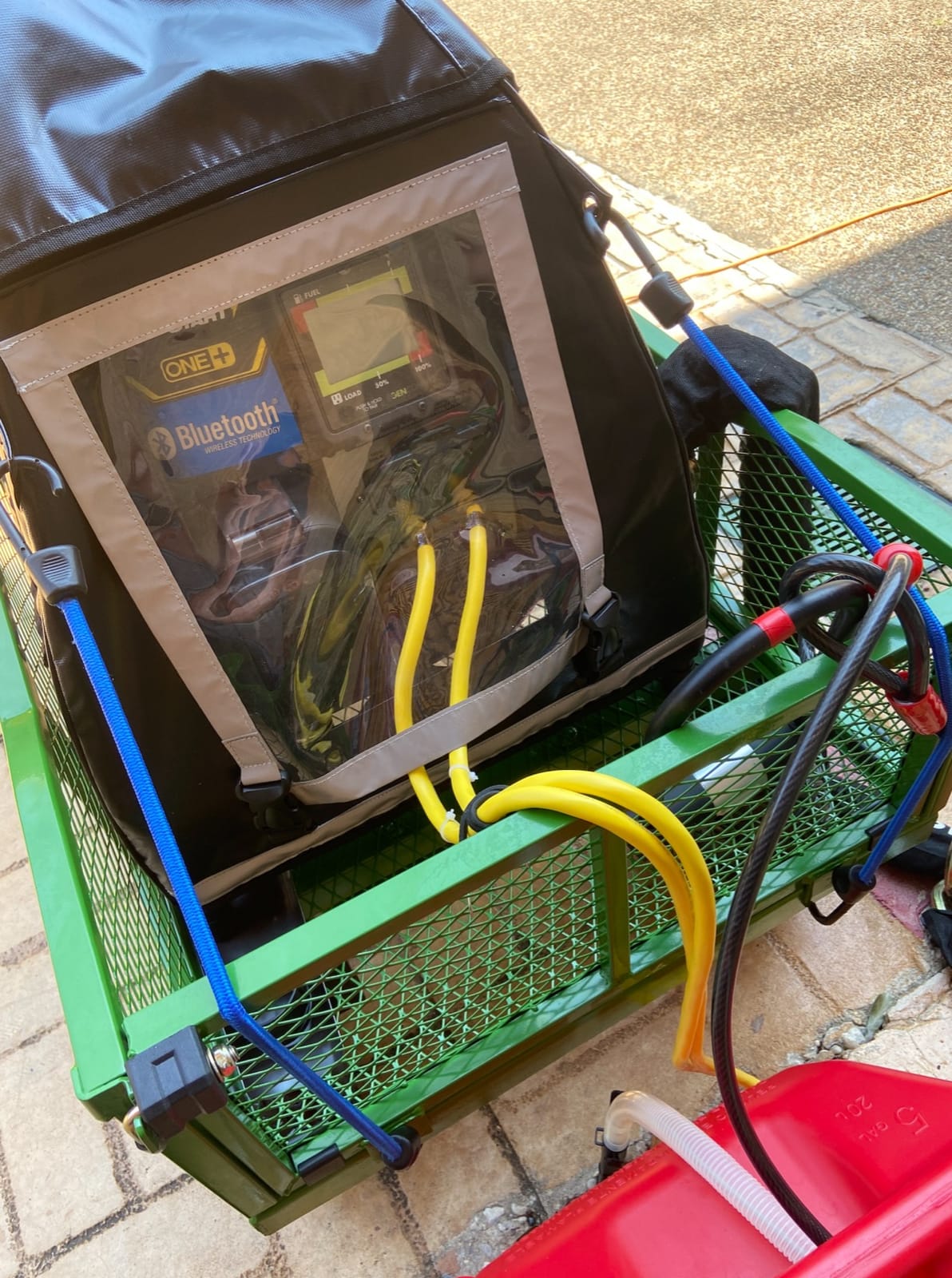
The design covers 1000W to 2300W inverter models, including Honda and similar compact machines, using a waterproof tarpaulin over a high-strength metal base with fibreglass support rods. The patented shape protects the sensitive sections while keeping natural cooling airflow and the ability to move the machine.
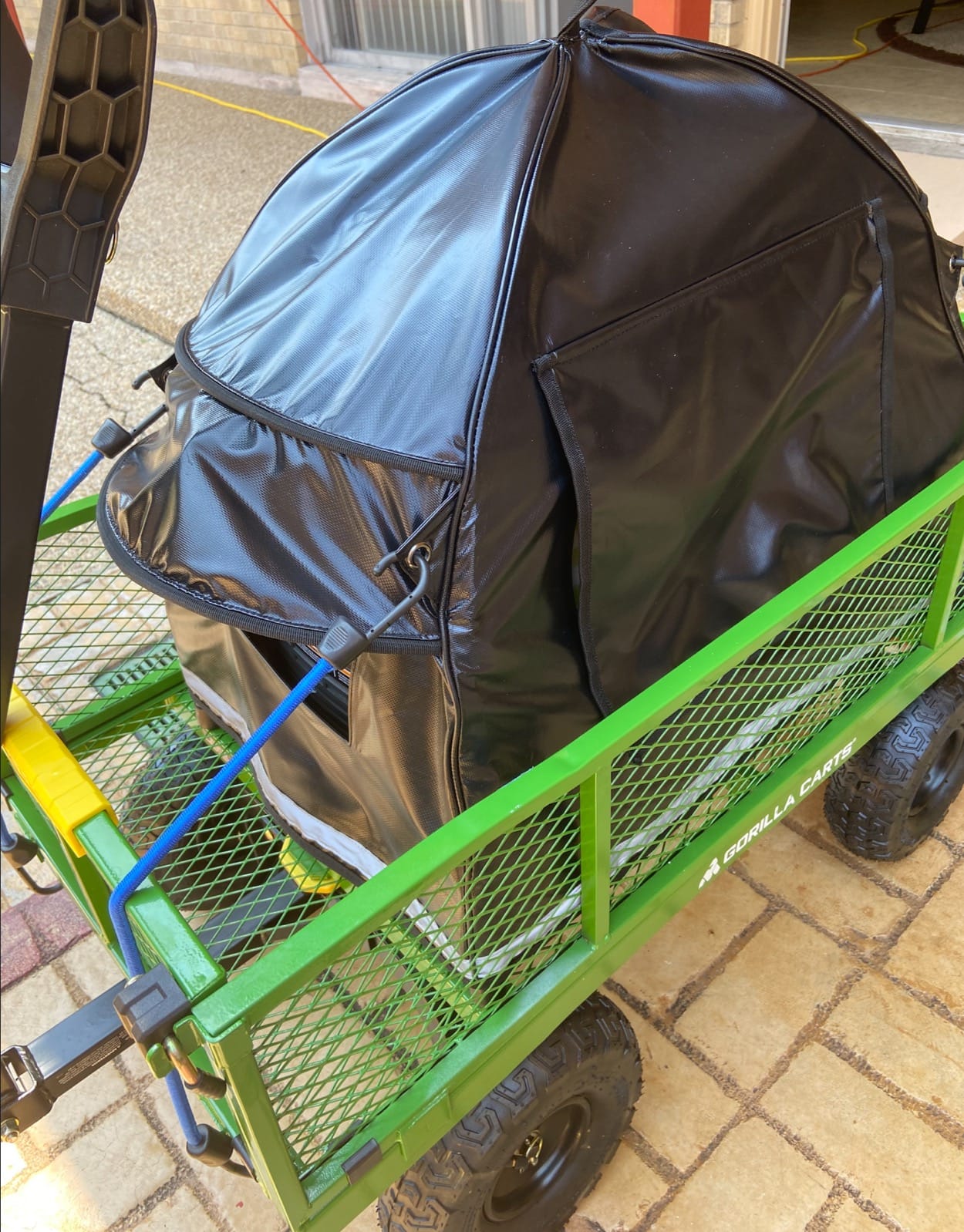
The fit is the point, and owners with Honda and similar units value that the canopy accommodates machines that larger covers cannot. Assembly is tool-free, which matters when you are setting up in a driveway at dusk in a storm.
The constraints are equally clear. It is a narrow fit, so larger open frame machines will not work, and with 553 ratings it carries the smallest review base in the group, so long-term durability data is thinner than for the other picks. Plastic hardware and hooks are the weak point in freezing conditions.
What we checked before recommending it
We checked airflow and mobility, since a small inverter cover has to avoid turning into a heat box around a machine that runs cool by design. The reported airflow behaviour holds up in owner accounts across a range of compact models.
We also checked the frame construction, and a metal base with fibreglass support rods is a sensible combination for a cover this small, where a wire frame would be pushed out of shape by a gust and never recover its tension.
Where it is the wrong choice
If you run an open frame generator of 3500W or more, this is the wrong product entirely. The size range stops at 2300W, and no amount of adjustment will bridge that gap.
If you want the longest possible track record before committing, the 553-rating sample is thinner than the other nine products here. It is a good fit and a sound design, but it is a newer design with less long-term evidence behind it.
How to Measure Your Generator Before You Buy a Cover?
Sizing confusion is the most common complaint in every generator forum, and it is the easiest problem to avoid. Covers are sold by generator wattage as a shortcut, but wattage tells you nothing about the physical envelope, and a model with a tall control console can be taller than a much larger machine.
For a storage cover, measure length, width and height of the generator itself, then add an inch or two of slack in each direction so the fabric does not sit stretched and trap water. Compare those three numbers against the cover’s published dimensions rather than its wattage band.
For a running cover, the measurement that matters is the post perimeter, which is the length of the frame’s top rectangle. Multiply the frame’s length by two, add its width multiplied by two, and that total is the number to match against the cover’s stated perimeter range. The GenTent clamp kit we named as the best overall fits 78 to 104 inches, for example.
Finally, check the clearance around the generator. Leave the manufacturer-required gap on all sides, keep the exhaust pointing away from doors and windows, and confirm the canopy has room to sit above the unit without pressing down on the control panel.
What to Look for in a Generator Cover for Rain?
Start with the fabric denier, and treat the number as a real signal. 210D polyester is thin, light and fine for a sun and dust cover indoors. 420D is a reasonable all-weather compromise. 600D Oxford or 600D polyester with a laminated undercoating is what you want when rain and wind are the actual threat, and it is the material class most of the better covers in this roundup use.
Check the seams as carefully as the fabric. A cover with laminated 600D cloth and untaped seams will still weep at the joins, which is where most failures begin. Taped or sealed seams are the specification that separates a cover that sheds water from one that slowly gets the inside damp.
Look at the closure and the base. A drawstring or elastic channel that cinches around the base beats an open hem, because a filled hem generates lift. Buckle straps take sustained load better than hook-and-loop hems, which creep after a season of UV exposure. For a running cover, count the anchor points and check whether guy lines and ground anchors are included, because wind is the failure mode that forum posts describe far more often than rain.
Ventilation design is the safety-critical specification. A running cover should hold the canopy above the generator, keep openings at the intake and near the exhaust, and never enclose the exhaust outlet. The GenTent, Champion Storm Shield and IGAN covers in this roundup all describe a designed airflow path rather than a sealed box.
Refuelling access is a feature worth paying for. A cover without an openable top forces you to shut down and strip the cover every time the tank runs dry, which during an outage means going without power for several minutes. The GenTent access door and the Champion Storm Shield refuelling door both solve this directly.
Finally, check whether the cover is fire-rated. NFPA 701 dual-coated vinyl with UL V-0 flame-retardant components is the specification carried by the GenTent universal tent in this roundup, and it is a meaningful differentiator when a cover sits near a hot exhaust in dry conditions.
Generator Safety: Carbon Monoxide, Exhaust Clearance and Why Tarps Fail
Never put a tarp, plastic sheet or storage cover over a running generator. This is the clearest safety answer in this entire guide and the one most often asked about. A tarp does not vent. It traps exhaust carbon monoxide in the enclosed volume, and in an enclosed space that gas has nowhere to go but back around the engine and into your space.
The mechanism is the same whether the enclosure is plastic or fabric. A generator needs open air at the intake and a clear exhaust path. Cover the outlet and the exhaust gas recirculates, the engine runs hotter than rated, and the risk shifts from rain damage to carbon monoxide exposure. Long-time users on generator forums make the same point about DIY covers built from washing-machine cabinet panels: keeping direct rain off is enough, and enclosing the unit never is.
Set the generator up outdoors, on a dry surface, with the exhaust pointing away from doors, windows and vents, and follow the clearance the manufacturer specifies for your model. Keep it out of enclosed spaces such as a garage or shed, even with the door open, and never run it in a vehicle or indoors during an outage.
A cover cannot fix any of this. What a good running cover does is shed rain off the engine, the receptacles and the control panel while leaving the ventilation path open, which reduces the electrical risk without touching the combustion risk. That distinction is the whole reason running covers cost more than storage covers, and the reason we would never recommend any enclosure that seals the exhaust.
One more practical note on refuelling: a hot engine and a fuel cap under a canopy is an awkward combination. Shut the machine down, let it cool and refuel with the generator off, then restart and re-secure the cover. No cover design removes that step, and products that make refuelling easy are making you faster, not making it safe to do hot.
Condensation: the Mistake That Rusts a Covered Generator
Condensation is the most common long-term complaint from people who leave a cover on a cold, wet machine, and it appears in camper and RV groups constantly. The cause is simple physics: a cover traps the moisture already on the generator and in the surrounding air, and when that warm damp air cools overnight, it condenses on the colder metal underneath.
The fix is to dry the machine before you cover it, not after. Run it under load for twenty to thirty minutes after a rain shower so the engine and exhaust run hot and evaporate surface moisture, then cover it. A blower or a rag on the frame and the muffler helps more than most people expect.
Air circulation matters too. A cover that is fitted tight to a cold frame holds a layer of damp air against the metal. Loosening the drawstring slightly, or choosing a cover that stands off the frame with the base cinched only at the corners, lets that air move and keeps condensation from forming a ring of rust along the base.
If you are storing a generator for a season, do not cover it damp and leave it. Either dry it thoroughly first or store it in a ventilated space, because months of trapped moisture will do more damage than a single season of rain ever would.
Frequently Asked Questions
What type of cover should I use for my generator in rain?
Use a running cover if the generator is operating during rain. It is a vented canopy that clamps or straps to the frame and keeps water off the engine and control panel while leaving the intake and exhaust open. Use a storage cover only when the machine is switched off and stored. Never use a storage cover, tarp or plastic sheet on a running generator, because they trap exhaust carbon monoxide.
What is the best weather cover for a generator?
For open frame generators running in storms, the GenTent Universal Open Frame Generator Tent is our top pick, with NFPA 701 dual-coated vinyl, a clamp fit for 78 to 104 inch post perimeters and a large refuelling door. For a named hurricane with published wind and rainfall ratings, the Champion Storm Shield is rated to 70 mph winds and 12 inches of rain per day. For compact inverter models, the IGAN small inverter tent is purpose-built.
Is it safe to put a tarp over a generator?
No. A tarp or plastic sheet does not vent, so exhaust carbon monoxide stays trapped next to the engine and the machine loses the cooling airflow it needs. A tarp is also very likely to contact a hot exhaust and melt. If you want a DIY rain shield, the community advice is a simple flat-top cover that sheds rain without ever enclosing the unit, and you should never run a generator in an enclosed space in any case.
Can a generator be left outside if covered?
Yes, a covered generator can stay outside, and a good storage cover is what makes that practical by keeping sun, UV, rain, snow, dust and insects off the machine. Run the generator for twenty to thirty minutes to dry it first, then cover it, because a cover over a cold damp engine traps moisture and overnight condensation causes rust. Check underneath for nests before covering, since vinyl can be punctured.
How do I know what size generator cover I need?
For a storage cover, measure the length, width and height of the generator and compare against the published cover dimensions, leaving a little slack. For a running cover, measure the frame post perimeter, which is the frame length multiplied by two plus the frame width multiplied by two, and match that figure to the cover’s stated perimeter range. Do not rely on wattage alone, because console height and handle design vary between models.
Should you cover your generator while running?
Yes, but only with a running cover designed for the purpose. A running cover keeps direct rain off the engine, receptacles and control panel while holding the exhaust and intake path open, which is what makes the best generator covers for rain worth the extra cost. It still cannot make an indoor generator safe, and the unit must stay outdoors with its exhaust pointed away from doors, windows and vents at all times.
Do generator covers work while the generator is running?
They do, as long as the cover is a running cover with a designed airflow path and enough clearance around the intake and exhaust. Check the top access for refuelling, the anchor points for wind, and the fabric specification, where 600D Oxford or laminated 600D polyester is the useful threshold for driving rain. Owners running Champion, Westinghouse, Generac and Craftsman models report keeping these covers in place through multi-day wet weather.
Can rain damage a portable generator?
Yes. Water that beads into a receptacle seam or creeps past a control panel gasket corrodes the electrical components and can short out the stator windings, and the failure often appears later rather than immediately. A unit that quits mid-outage is exactly when you need it most, which is why a running cover is worth having before a storm rather than during one.
Final Verdict: The Best Generator Covers for Rain in 2026
For a generator you plan to run through an outage, the GenTent Universal Open Frame Generator Tent is the pick: fire-rated dual-coated vinyl, a clamp system that needs no permanent modification, and a refuelling door that keeps the machine live. If a named storm is the concern, the Champion Storm Shield carries published wind and rainfall ratings that no other cover in the group does. For value, the IGAN stainless-framed running tent is the hardest to argue with, and the GENARMOR enclosure is the one to buy if you want metal hardware for the long term.
If your generator lives indoors between uses, the Champion weather-resistant storage cover is the highest-rated option and fits Champion models almost exactly, with the Porch Shield 600D cover behind it on review volume. For a large dual-fuel machine, the Femuar 600D Oxford cover at 38 x 28 x 30 inches is the only one here that fits. For a compact inverter, the IGAN small inverter tent is the only one built for the job.
Whatever you choose, buy it before the storm rather than during it, dry the generator before you cover it, and never put a tarp over a running machine. We keep our own rain gauges running alongside a rain barrel so we know how much water a cover is actually up against, and if you are the sort of person who plans for the weather, our rain pants guide covers the other half of the problem.