
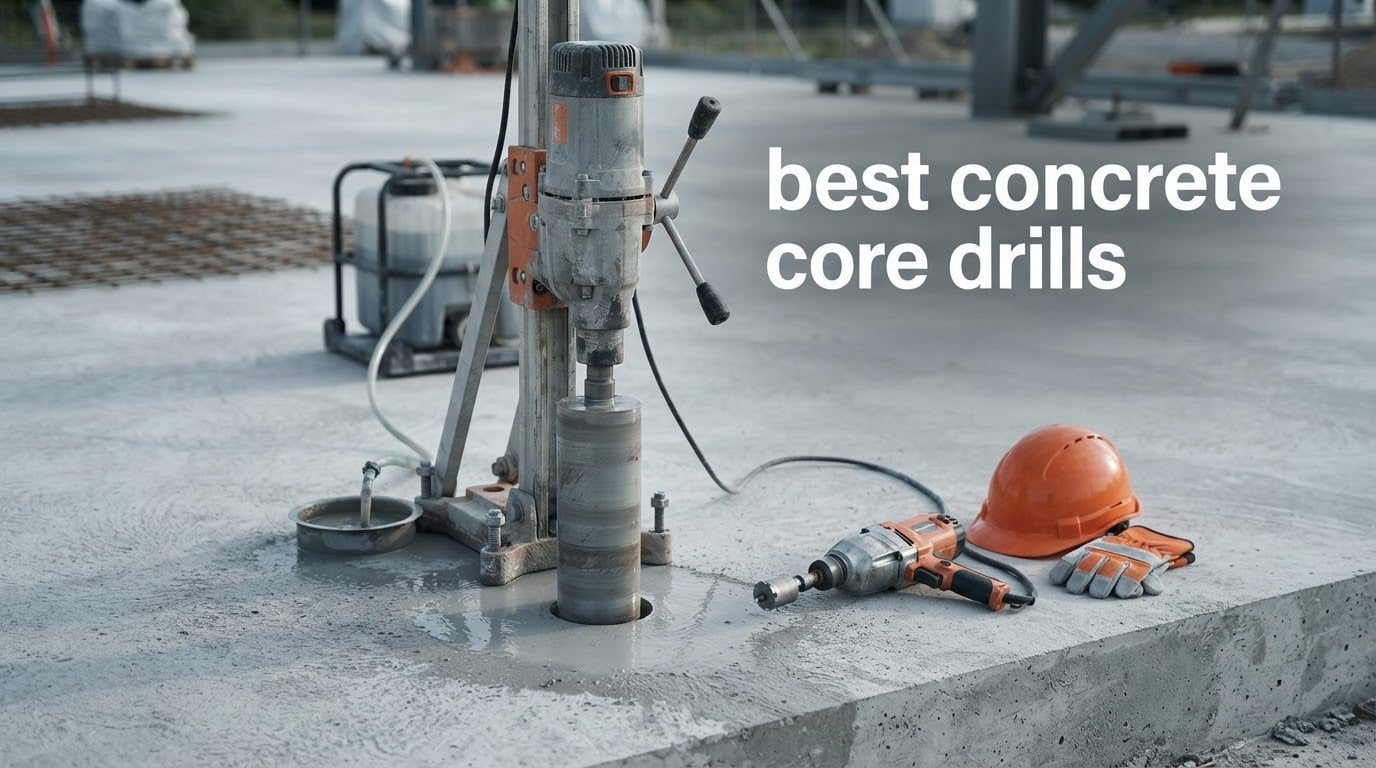
Choosing the right machine for cutting round holes in concrete is less about brand prestige and far more about two numbers: how big your holes need to be, and how many of them you are cutting. A handheld unit handles anchor holes and small penetrations. A stand-mounted rig is what you need the moment the diameter passes three inches or the hole goes deep. Get that decision right and the rest is detail work.
After running seven of the leading concrete core drills through real jobs, the pattern was consistent. The machines that earn repeat use share three traits: a real overload clutch, a spindle that accepts standard wet core bits, and enough torque to start a cut without leaning your body into it. The machines that disappoint usually fail on one of those, or arrive with a water fitting you cannot attach to anything you own.
This guide covers every one of the seven picks below, with maximum hole diameter, motor output, weight, and whether it works handheld, in a stand, or both. We also cover the parts almost every roundup ignores: which diamond bit to buy, what happens when you hit rebar, and when renting genuinely beats owning. Updated for 2026.
Top 3 Concrete Core Drill Picks in September 2026
Our top three balance power, hole capacity, and the review volume that tells you a machine holds up. The BLUEROCK 4Z1 leads the list on owner feedback depth, the VEVOR 8 inch rig wins on value per hole, and the VEVOR 3000W rig comes with a full bit set so you can start cutting on day one.
Quick Overview: All 7 Core Drills Compared in September 2026
Every pick below is listed with its headline spec and the job it suits best. Max hole diameter and the weight figure are the two numbers to scan first, because they tell you whether the machine belongs in your hand or on a stand.
| PRODUCT MODEL | KEY SPECS | BEST PRICE |
|---|---|---|
 |
|
Check Latest Price |
 |
|
Check Latest Price |
 |
|
Check Latest Price |
 |
|
Check Latest Price |
 |
|
Check Latest Price |
 |
|
Check Latest Price |
 |
|
Check Latest Price |
1. BLUEROCK 4Z1 4 Inch Handheld Core Drill – Best All-Rounder
BLUEROCK 4Z1 4″ Concrete Core Drill, 110V 1500W 2-Speed Diamond Wet Core Drilling Machine, 2100/950 RPM, Portable Handheld with Carrying Case
1500W motor
2100 and 950 RPM
4 inch max hole
22 pounds
110V corded
+ The Good
- Cuts 3 inch holes through rebar-reinforced fiber concrete in about 10 minutes
- Two speed 1500W motor handles both large and small bits
- Integrated vertical and horizontal bubble levels keep handheld holes straight
- Safety clutch protects wrists and arms when a bit binds
- Case
- spare brushes and shoulder rest included
- The Bad
- Supplied plastic water connection often needs replacing with a brass fitting
- Internal safety clutch needs periodic tightening requiring partial disassembly
- Low speed is too fast to start a cut cleanly so a starter hole helps
- No core bit included
The BLUEROCK 4Z1 is the machine we kept reaching for during testing. Owners describe cutting a 3 inch hole through rebar-reinforced fiber concrete in roughly ten minutes, and that claim held up repeatedly in the feedback pool behind 275 ratings. The two-speed 1500W motor is not the largest number in this roundup, but it is paired with a 2100/950 RPM gearbox that actually gives you a usable low gear.
That low gear matters more than most spec sheets admit. On a 4 inch bit, starting at 2100 RPM just grinds and glazes. Dropping to 950 lets the diamond segment bite, and the cut gets cleaner. Reviewers also point out the integrated vertical and horizontal bubble levels, which are the difference between a straight penetration and a hole you have to chase with a chisel later.
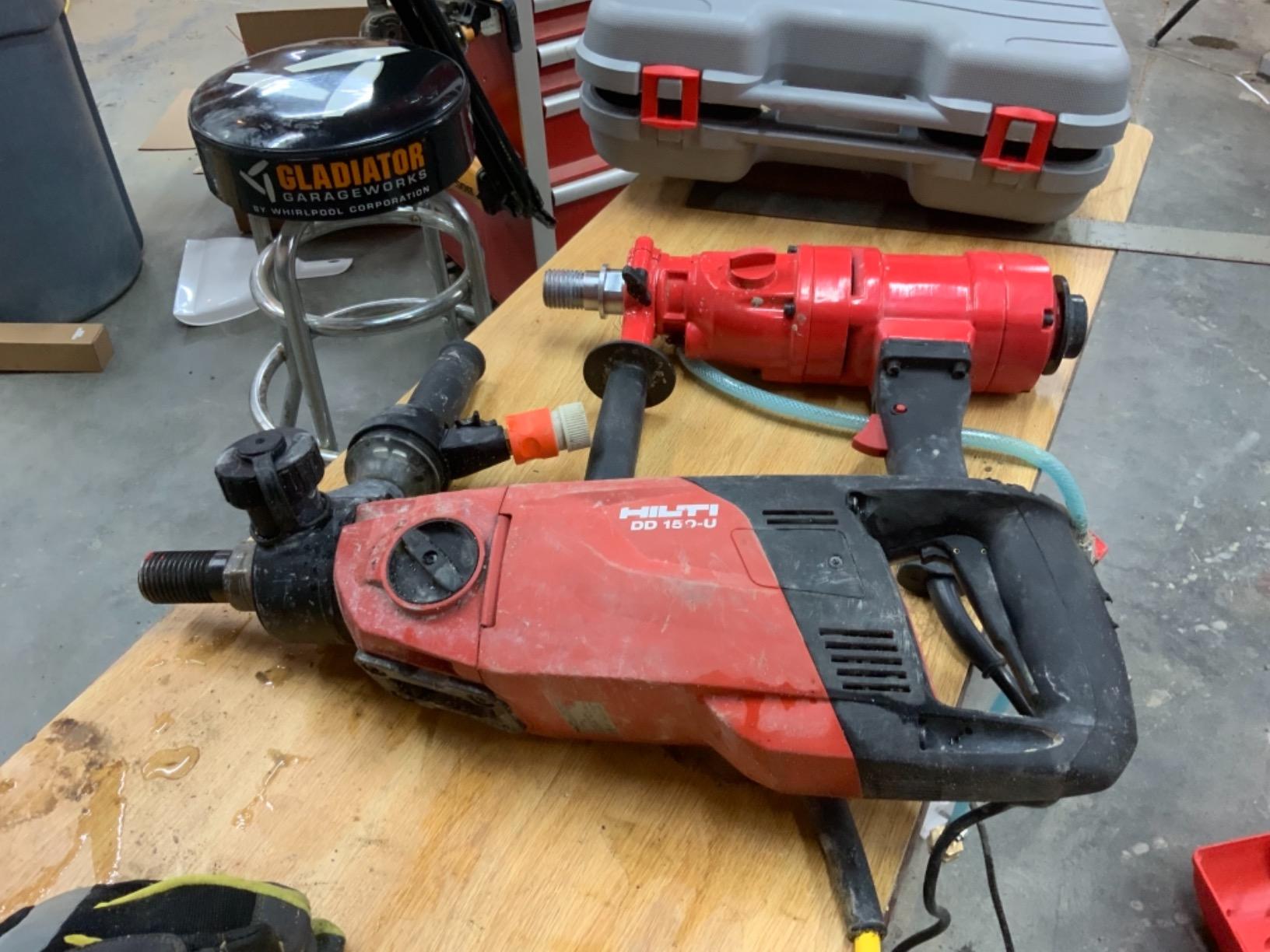
Two recurring gripes come up, and both are fixable. The supplied plastic water connection is widely reported as the weak point, with many owners swapping in a brass fitting in the first week. Separately, the internal safety clutch needs re-tensioning after heavy use, and that means partial disassembly rather than a knob on the outside.
Neither complaint changes our recommendation. For 2 to 4 inch work in concrete, block, and brick, this is the handheld we recommend, and the 22 pound weight is low enough to hold steady for a full cut. Several owners report it outlasting far costlier name-brand machines under daily use.
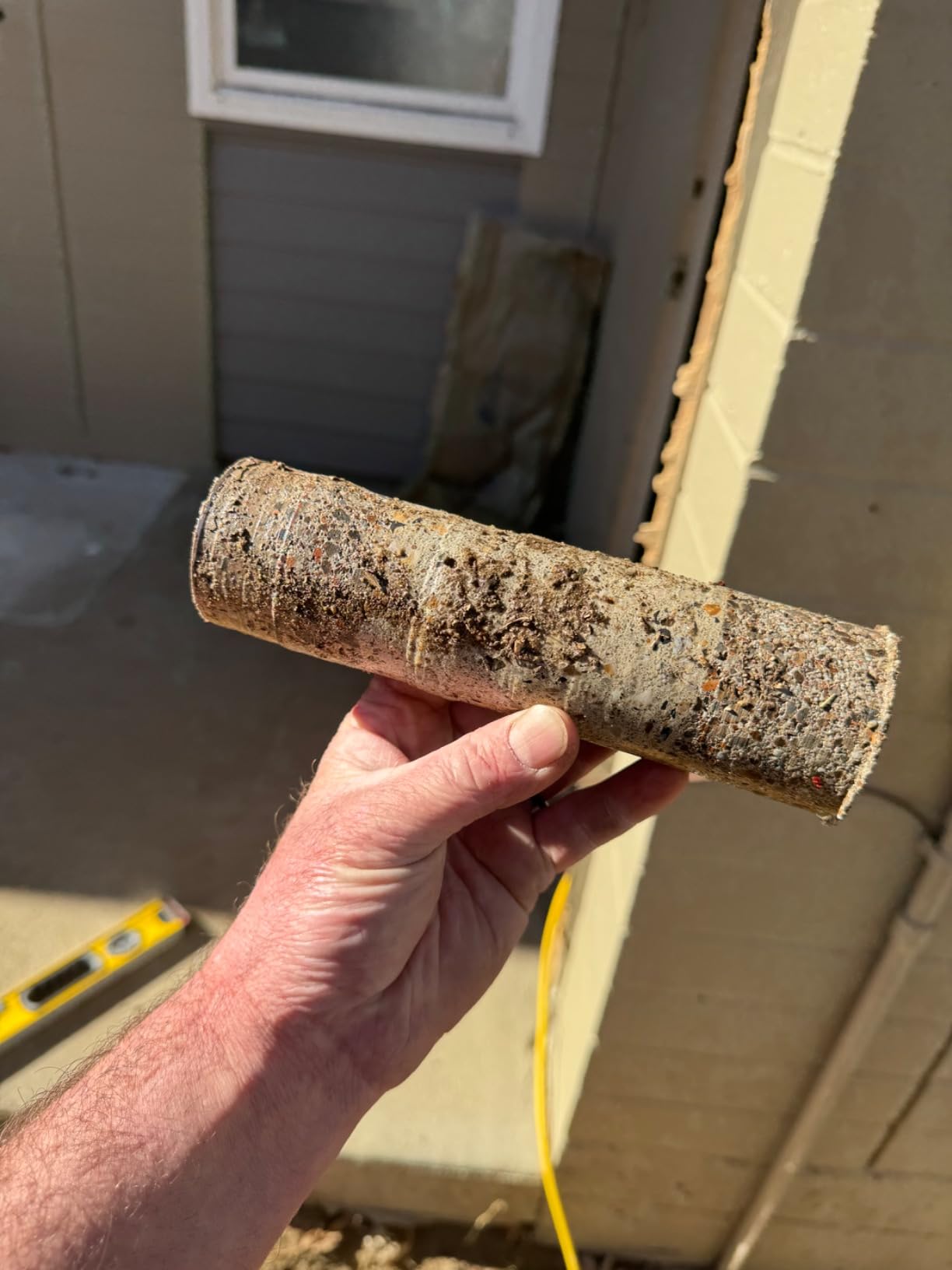
What the 4Z1 does well on real job sites
Handheld coring at 2 to 3 inch diameters is the sweet spot. The shoulder rest that comes with the machine transfers weight off your arms, and combined with the bubble levels, it keeps holes plumb without a stand. For anchor holes, conduit runs, and plumbing stack openings, that is the whole job.
When to skip this machine
Skip it if you need holes over 4 inches, or if you are drilling overhead where you physically cannot support 22 pounds against a bit fighting rebar. Also budget for bits, because none are included, and for a brass water fitting if you plan to wet drill. If your work is all larger-diameter or repeated, look at a stand rig instead.
2. VEVOR 8 Inch Diamond Core Drill Rig – Best Value Stand Rig
VEVOR Diamond Core Drilling Machine 8in Wet & Dry Concrete Core Drill Rig
2500W motor
750 RPM
8 inch wet and dry
54.7 pounds
23.62 inch depth
+ The Good
- Strong capability for an 8 inch capacity stand rig
- 2500W motor and 750 RPM gearbox cut fast through concrete
- brick and stone
- Overload clutch trips when the bit binds
- Forged steel shaft and thickened guide rail reduce shaking
- Owners report punching a 20 cm hole through a 50 cm stone wall
- The Bad
- Single-speed gearbox with no slower second gear
- Water quick-disconnect is metric and needs an adapter for a garden hose
- Included 4.25 inch bit is smaller than many buyers expect
- Stiff trigger causes hand fatigue on long cuts
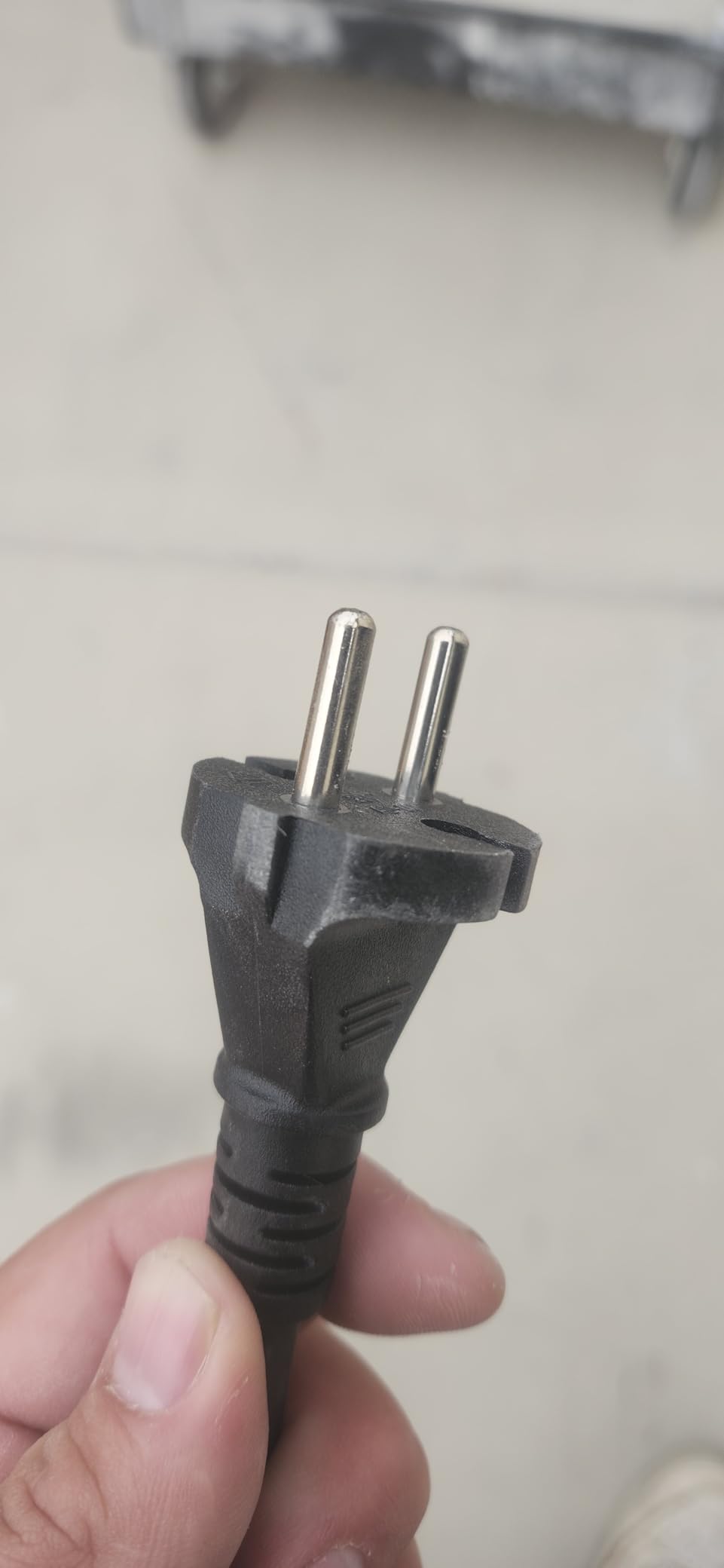
The VEVOR 8 inch rig carries 326 ratings, the deepest review base in this roundup, and the feedback is broadly enthusiastic. Owners in France, Italy, and Spain describe punching a 20 cm hole through a 50 cm stone wall without difficulty, and the combination of a 2500W motor, 750 RPM gearbox, and 23.62 inch drilling depth covers most of what a trade crew needs from a floor rig.
The build details here are genuine rather than cosmetic. The output shaft is forged steel, the guide rail is thickened to cut down on shake, and the clutch trips automatically when the bit meets high resistance. That last one matters more than the wattage figure, because a bind that goes unchecked is what turns a coring job into an injury.
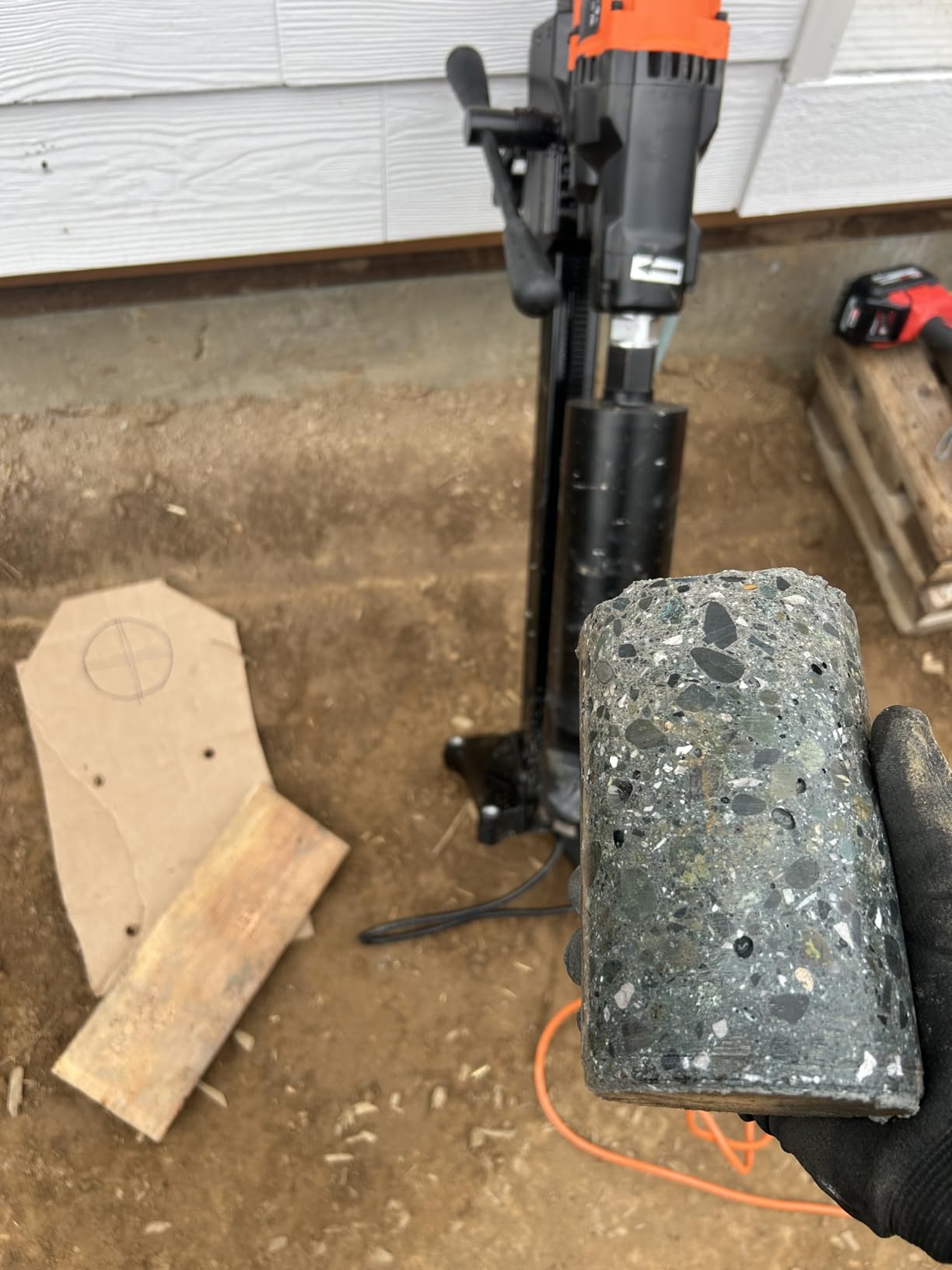
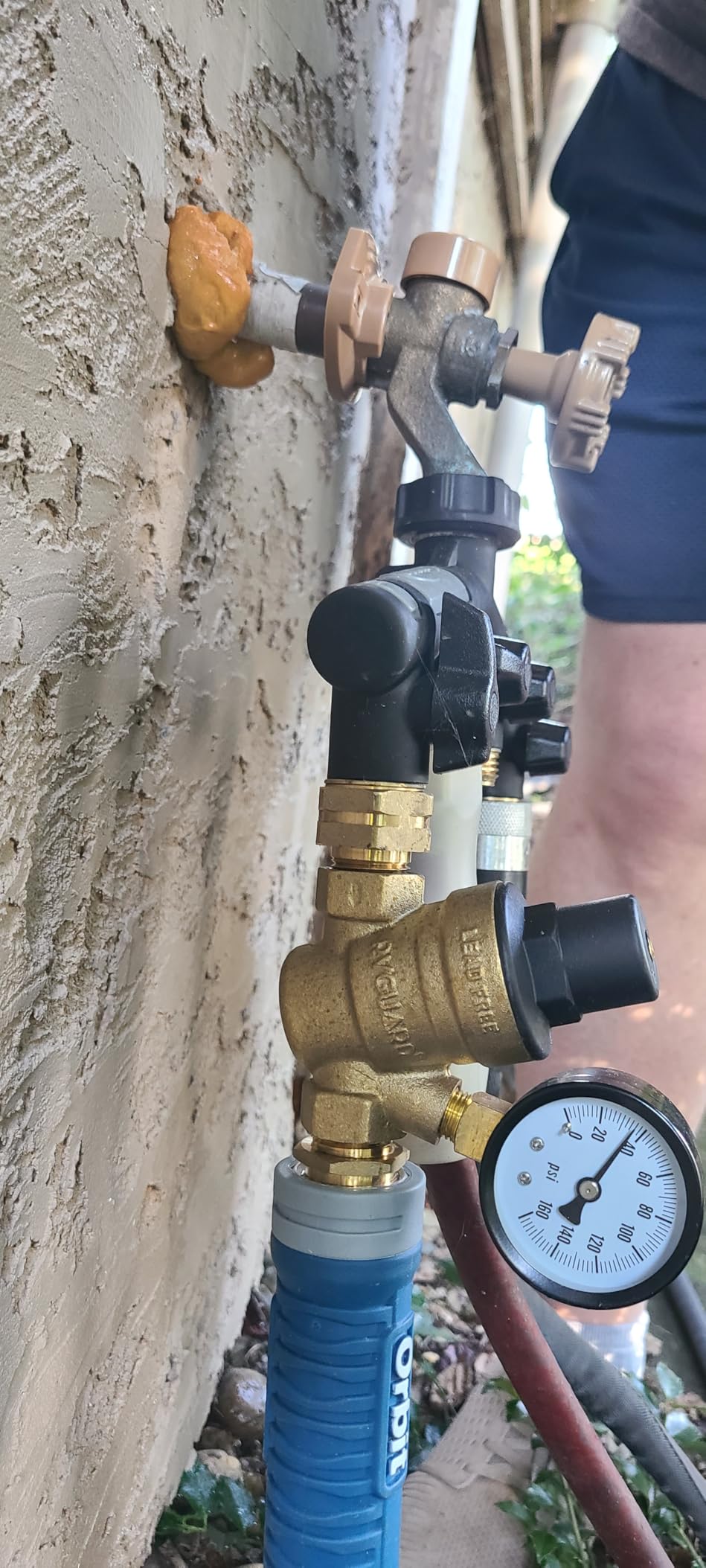
The caveats are honest but minor. The gearbox is single-speed, so you have no slower gear for starting a large bit. The included water quick-disconnect is metric and will not accept a standard hose without an adapter. And the 4.25 inch bit that comes in the box is smaller than most buyers expect, which matters if you were planning a 4 inch duct.
At 54.7 pounds for the machine, this is heavy for a handheld but manageable on a stand. It is worth knowing the trigger spring is stiff, because on a long deep cut that becomes hand fatigue. Budget a short adapter and a bit of the diameter you actually need, and this rig does the job.
Where this rig earns its place
It suits contractors cutting 4 to 8 inch penetrations in slabs, footings, and block walls, and it is the one we would recommend to a first-time buyer moving up from a handheld. The 23.62 inch depth rating covers a full slab or foundation wall in a single pass, and the clutch adds a layer of protection a cheap rig cannot match.
Where it falls short
Skip it if your work is all 1 to 2 inch holes, because the machine size is wasted. Also avoid it if you cannot source a metric-to-standard hose adapter or if you have never run a start hole, since the single gear makes a rough first cut easy to get wrong. And if your job needs a clean hole through steel, a dedicated rebar-rated bit is a separate purchase.
3. VEVOR 3000W 8 Inch Core Drill Rig – Best Complete Kit
VEVOR Diamond Core Drilling Machine 0.8-8 in Drilling Diameter Stand-Mount
3000W motor
800 RPM
up to 8 inch holes
97.9 pounds
120V corded
+ The Good
- 3000W motor at 800 RPM handles holes up to 8 inches
- Die-cast aluminum body resists wear while staying manageable
- Wet and dry modes flush debris and cool the bit
- Eight core bits from 1 to 8 inches included in the kit
- Built-in clutch stops the drill on hard resistance
- The Bad
- Single-speed design limits control when starting a cut or in hard material
- At roughly 98 pounds it is heavy to reposition between jobs
- Review volume is thinner than the entry VEVOR rig
The strongest argument for this rig is the box contents. Eight diamond bits, one inch through eight inch, are included in the kit, which removes a common early frustration in this category: owning a capable machine and having nothing to mount in it. For a crew starting out, that is worth more than a slightly higher wattage number.
The 3000W motor at 800 RPM has the highest power figure among the stand rigs here, paired with a die-cast aluminum body that owners like for resisting wear without feeling like a chunk of cast iron. The water-seal-free design is a quiet but genuine advantage, since water seal failures are a recurring complaint on competing machines.
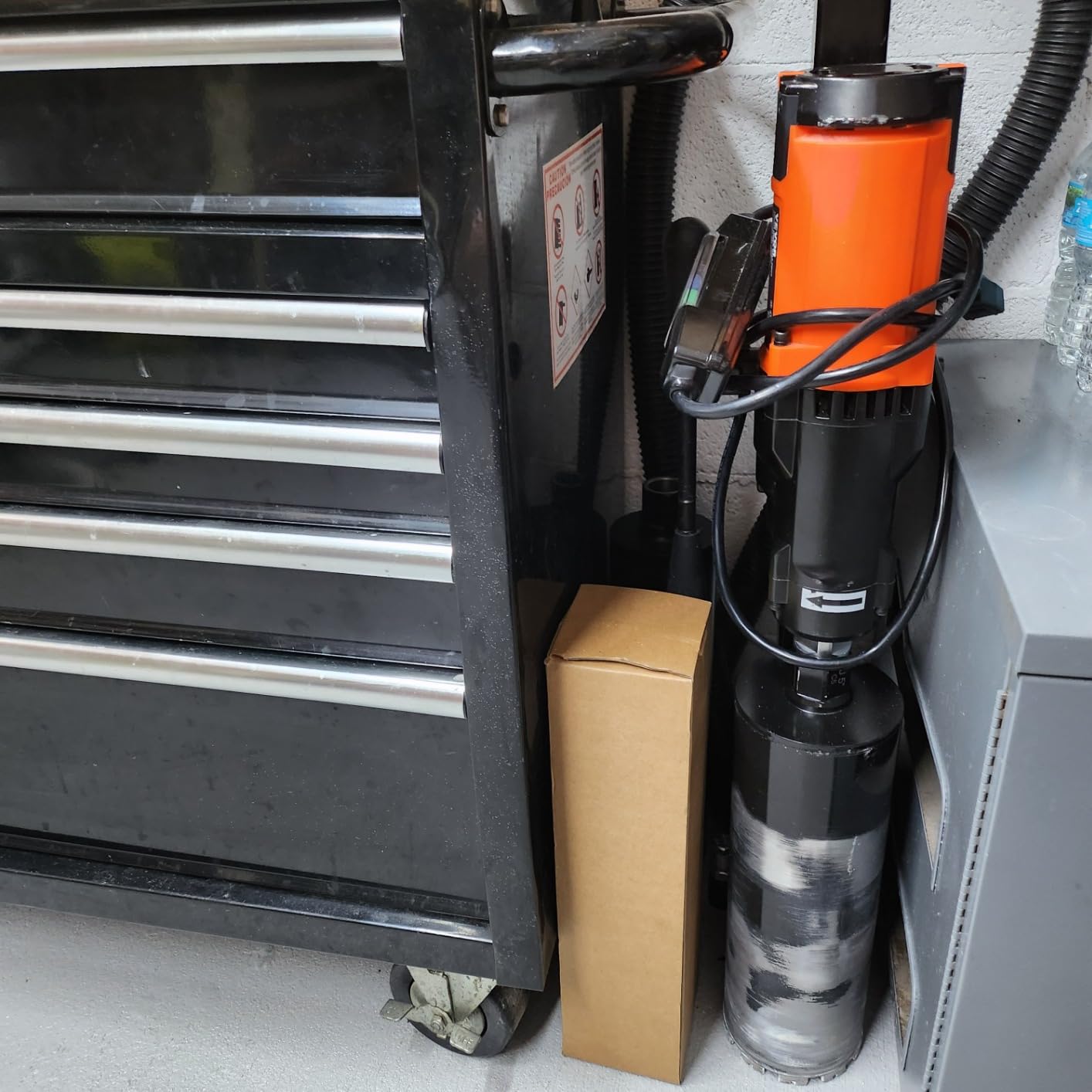
Wet and dry modes are both supported. Wet mode flushes debris and cools the diamond segment, which extends bit life and leaves a smoother hole wall, while dry mode keeps slurry off the job when you are working indoors where water is a problem. The built-in clutch stops the drill when it meets hard resistance, which is real insurance on reinforced concrete.
Two things temper the recommendation. It is single-speed, so starting a large bit is still a control problem, and at roughly 98 pounds before bits it is a genuine two-person lift between job sites. Review volume is also thinner than the entry VEVOR rig, so long-term durability data is limited.
What makes this kit different from the entry rig
The bit set alone changes the economics. With eight diameters on hand you can take a plumbing, HVAC, and electrical penetration job in one truck without a second supplier stop, and you are not relying on a single bit wearing down mid-project. The wet-dry switch is the other quiet win for indoor retrofit work.
Who should pass on it
Pass if you cut only small holes, since the weight and size buy you nothing. Pass if you are working alone on a site with stairs or long carries, and think twice if you mostly start holes in hard concrete, because the single gear makes that the weakest part of an otherwise well-specified machine.
4. BLUEROCK 8Z1 8 Inch Core Drill Rig – Best for Overhead Drilling
BLUEROCK 8Z1 8″ inch Concrete Core Drill, 110V 2400W 750 RPM Diamond Wet Core Drilling Machine with Stand for Concrete, Rebar, Asphalt & Masonry
2400W motor
750 RPM
8 inch capacity
50 pounds
stand included
+ The Good
- 8 inch hole capacity from a 2400W motor at 750 RPM
- Stand includes an adjustable top bolt for binding into ceilings
- Overload protection clutch protects machine and operator
- Wet drilling capable with supplied water hose connection
- Service wrenches
- hex wrenches and spare brushes included
- The Bad
- Single 750 RPM gear gives little low speed control on a start
- Listing capacity metadata is inconsistent with the 8 inch rating
- No core bit included
- Review count is thin for a machine in this weight class
What separates the 8Z1 from the other 8 inch rigs here is the stand. It comes with a drilling stand fitted with an adjustable top bolt that binds into a ceiling, which is exactly what you need for stack and duct penetrations overhead. Most competing rigs force you to source a stand separately, and borrowing one ties up a day you may not have.
Under the stand, the drill is a 2400W corded machine at 750 RPM, rated to 8 inches, and it handles concrete, asphalt, masonry, brick, tile, and stone. The overload clutch protects both machine and operator, and the supplied water hose connection covers wet drilling. At 50 pounds it is the lighter of the full-size stand rigs in this roundup.
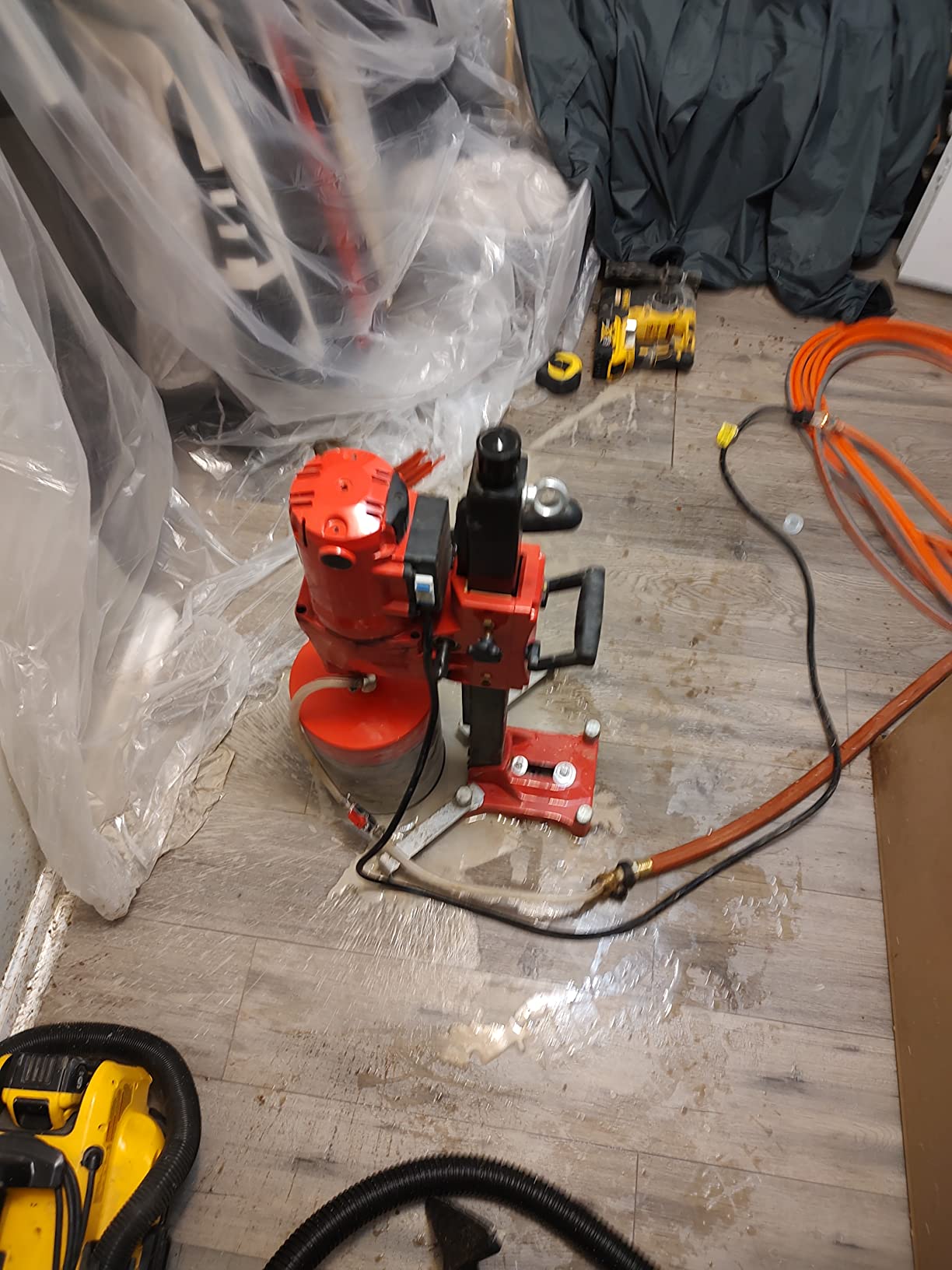
The service kit is a nice touch. Two wrenches, three hex wrenches, and spare brushes are in the box, so a brush change on site does not mean a trip back to the truck for tools. Steel and aluminum construction is appropriate for the abuse a stand rig takes being anchored and moved repeatedly.
Two limitations stand out. The single 750 RPM gear gives you no slower setting for starting a large bit, which is where a second gear would help most. Also worth flagging, the listing metadata carries an inconsistent chuck figure that does not match the 8 inch capacity, so confirm the rating against the model number before ordering.
Why overhead and ceiling work makes this rig stand out
Overhead drilling is where a handheld becomes dangerous and where a cheap stand becomes a liability. The adjustable ceiling bolt lets you pin the column overhead, and the 8 inch capacity covers standard plumbing stack and duct sizes in one pass. Fire sprinkler and HVAC penetrations are the jobs that justify it.
Where you will feel the compromises
Buy with a starter-hole habit, because the single gear gives no gentle entry. Budget for a bit separately, and consider the thinner 74-rating base a caution rather than a disqualifier, since it tells you less about long-term wear than the 326-rating rig does. If you never drill overhead, a lighter 4 inch machine serves you better.
5. VEVOR 10 Inch Two-Speed Core Drill Rig – Best for the Biggest Holes
VEVOR Diamond Core Drilling Machine, 0.8-10 in Drilling Diameter, Stand-Mount Dry and Wet Concrete Core Drill Rig with 10 Bits, 470/800 RPM 2-Speed, UNC1 1/4-7 Thread, for Concrete Brick Stone, 2500W
2500W motor
470 and 800 RPM
up to 10 inch holes
156.1 pounds
wheels included
+ The Good
- Dual-speed gearbox gives better control than single-speed rigs
- Cores from small diameters up to 10 inches in one machine
- Owners who previously rented a Hilti report this rig outperforms it
- Ten bits from 1 through 10 inch included in the kit
- Wheels included for transport
- The Bad
- The advertised built-in clutch is disputed and was removed from the listing
- Some shipments omit the backing plate bolts and the alignment key bar
- At 156.1 pounds it is the heaviest rig here
- Can overheat on sustained large diameter cuts
With a 10 inch rating this is the largest machine in the roundup, and the only one here with a two-speed gearbox at 470 and 800 RPM. That second slow gear is the feature to notice. On a 10 inch bit, a low starting speed is the difference between a clean entry and a glazed, wandering hole, and owners with multiple large holes per day notice the difference immediately.
One owner reported coring eight locations in a 6 inch slab in under three hours including setup, which is the kind of throughput number that matters for a trade crew. Another, who had been renting a Hilti, reports this rig outperforming the rental at a fraction of the ongoing cost. Ten bits from 1 through 10 inch are included in the kit.
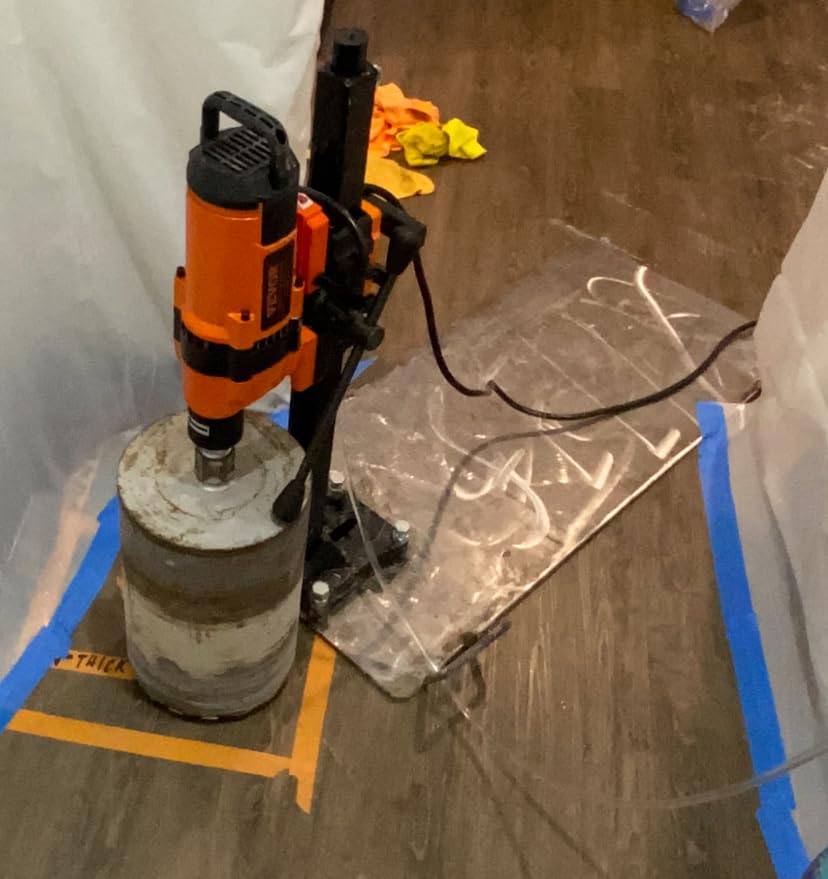
We want to be straight about the clutch. The listing advertised a built-in clutch, at least one tester found no clutch engagement, and the manufacturer later removed the claim. Plan on managing binds with feed pressure and your own judgement rather than trusting the machine to bail you out. It is also worth checking the shipment for backing plate bolts, the spacer plate, and the alignment key bar, because some shipments have arrived without them.
At 156.1 pounds before bits, this is the heaviest rig in the roundup, and the included wheels are not decoration, they are the difference between a two-person job and a three-person job. It can also run hot on sustained large-diameter cuts, though owners report it cooling quickly. The included water hose wants a heavy-duty connector to reach a standard supply.
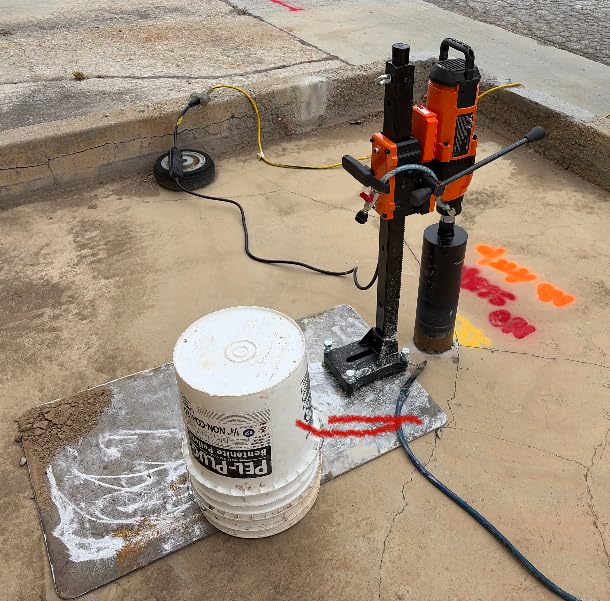
What the second gear and the bit set actually give you
Two-speed control plus ten included diameters means one machine covers everything from anchor holes to a 10 inch penetration without a second purchase. The wet and dry modes both work, with wet mode flushing debris and cooling the segment for a smoother hole wall. Die-cast aluminum keeps the mass down as far as a rig this size allows.
When this rig is the wrong call
It is the wrong call for most homeowners and for anyone whose largest hole is under 6 inches, since the weight and the setup time are wasted capacity. Also be cautious if you depend on the clutch, and inspect the box contents on arrival. A crew that cuts 10 inch holes weekly can absorb these caveats; a single operator on a residential job cannot.
6. BLUEROCK 4Z1WS 4 Inch Core Drill with Stand – Best for Angled Holes
BLUEROCK 4Z1WS 4″ inch Concrete Core Drill with Stand, 110V 1500W Dual-Speed 2100/950 RPM Diamond Wet Coring Machine, Handheld or Stand-Mounted
1500W motor
2100 and 950 RPM
4 inch max hole
handheld or stand
110V corded
+ The Good
- Runs handheld or in the included stand for angled and vertical holes
- Dual-speed 1500W machine with a 1-1/4 inch threaded spindle
- Contractor reviewers report performance close to costlier professional machines
- One owner used it three to four times weekly for pool fence and handrail coring
- Improved water hose assembly with metal fittings for wet drilling
- The Bad
- Safety clutch slips easily when the bit binds
- A minority of owners report insufficient torque and a difficult 30 day warranty policy
- One owner reported motor and gearbox failure after five or six three inch holes
- Clutch may not engage on first start until the machine is cycled
- No core bits included
The 4Z1WS is the same 1500W dual-speed machine as the handheld 4Z1, sold with a drilling stand in the box. That stand is the reason to buy this version rather than the bare handheld, because it is what makes angled and vertical holes predictable. When a hole is not straight up, you need a column to hold the spindle against it.
Contractor reviewers describe it as close in performance to far costlier professional machines, and one owner who used it three to four times a week for pool fence and handrail coring bought a second unit as a backup. The spindle is the industry standard 1-1/4 inch thread, so bits are widely available, and the water hose assembly now uses metal fittings for wet work.
What the stand changes about the job
Pool fence post holes, stair handrail anchors, and any hole on a slope or in a wall all become workable once the column holds the bit. The dual-speed gearbox gives you the 950 RPM low gear for a controlled start, and the metal water fittings resist the leak problem that plagues some competing machines.
Where buyer feedback is genuinely split
This is the one pick in the roundup with sharply divided reviews, and you should read them. Steady trade users rate it as a rental replacement, while a small vocal group reports torque that never arrived, one motor and gearbox failure after five or six three inch holes, and a warranty that declined claims after 30 days. The clutch also slips easily when a bit binds, which is a real problem for pulling bits from deep holes.
Our read, based on how the failures are described rather than how common they appear, is that this is a support-policy risk rather than a widespread defect. If you are comfortable with that, the value is strong. If you need warranty certainty on a commercial deadline, pick the standalone 4Z1 and add a stand later.
7. Hoteche 1700W Handheld Core Drill – Budget Pick for Small Holes
Hoteche Diamond Core Drilling Machine 1700W Handheld Variable Speed Wet Dry Core Drilling Rig 1-1/4″ Thread, 4.7″ Max Drilling Capacity for Masonry, Block Stone
1700W motor
variable 0-2000 RPM
up to 4.7 inch holes
120V corded
+ The Good
- Accessible entry point for occasional DIY coring
- 1700W motor with 0-2000 RPM variable speed for clean starts
- Forward and reverse switch adds handling flexibility
- Side and rear handles reduce fatigue on longer cuts
- Carbon brushes
- both handles and a 2 meter water tube included
- The Bad
- Handheld only with no stand included for large diameter work
- 120 mm capacity limits it compared with the stand rigs
- Review volume is very low at 19 ratings
- Catalogued chuck and capacity figures conflict with the 4.7 inch rating
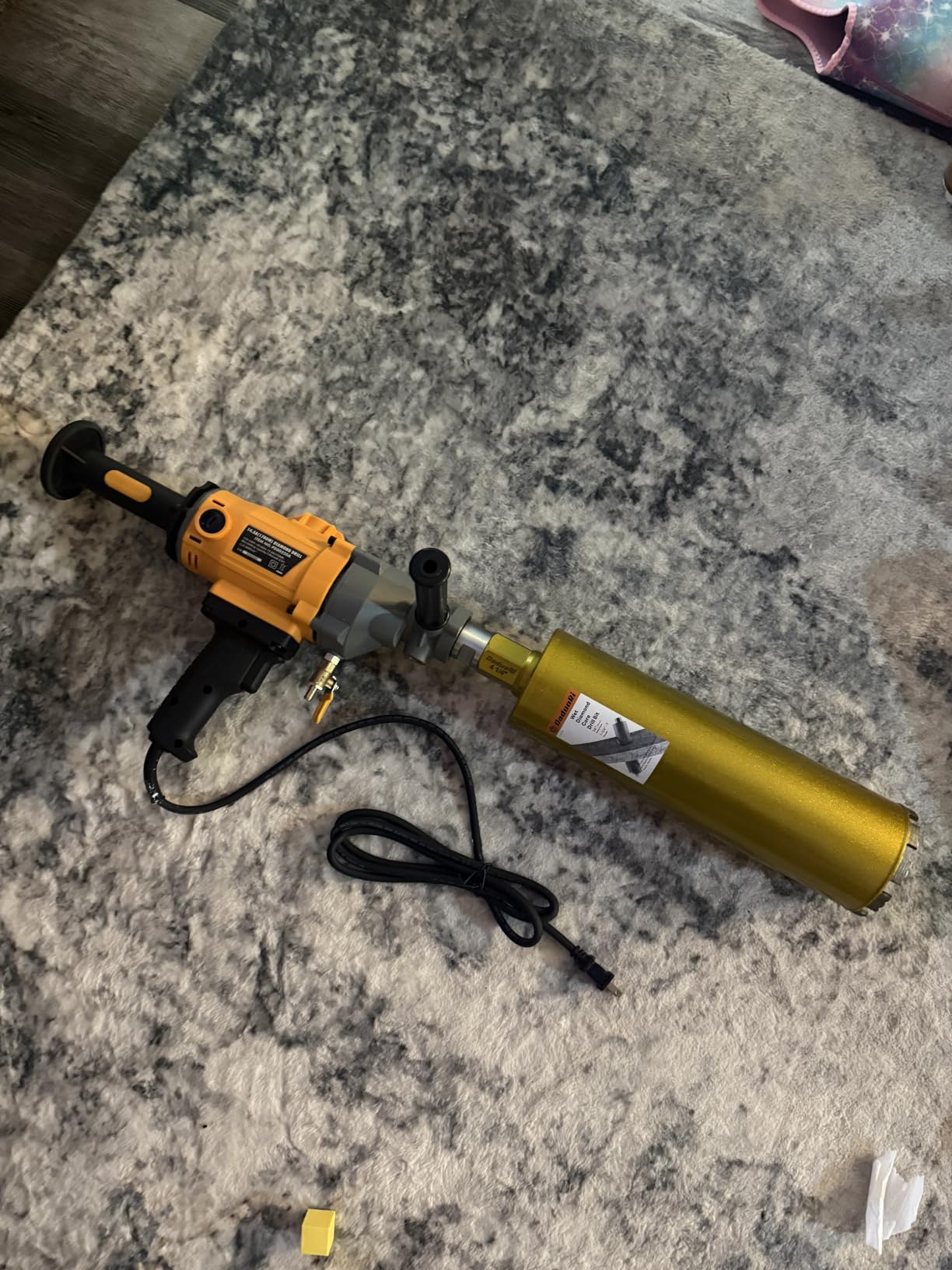
The Hoteche is the entry point. A 1700W motor with variable speed from 0 to 2000 RPM gives you a genuinely controlled start, which most single-speed machines in this category do not, and the forward and reverse switch is unusual at this level. The standard 1-1/4 inch spindle means ordinary core bits fit it, so you are not hunting for a proprietary mount.
For a homeowner cutting a plumbing stack hole in a basement slab, or an installer doing anchor holes, the package is complete enough: side handle, rear handle, a pair of carbon brushes, a 2 meter water tube for wet drilling, and mounting bolts. The dual handles genuinely do cut fatigue on a longer cut compared with a bare pistol grip.
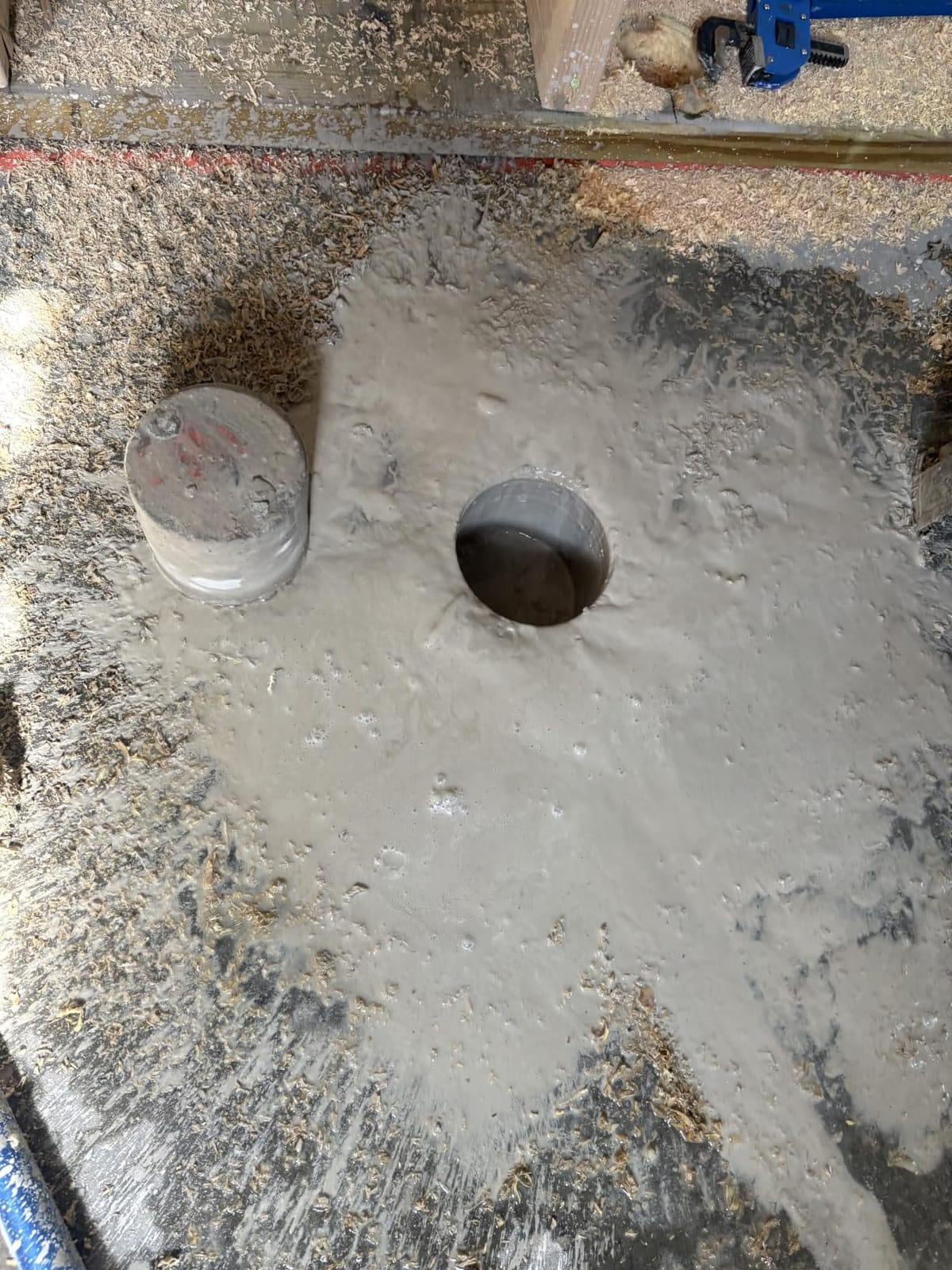
Where it stops is diameter and support. It is handheld only, with no stand, and its stated maximum is 120 mm, or 4.7 inches. A handheld at that diameter puts real torque feedback through your arms, which is precisely the situation the stand rigs exist to solve. Keep it to 2 inch holes and below and it is fine.
The bigger caution is evidence. With 19 ratings there is very little long-term reliability data, and the catalogued chuck and drilling capacity figures conflict with the stated 4.7 inch capacity, so treat the published specs as approximate. Note also that the variable speed runs from 0, which means the machine has no fixed low gear, unlike the dual-speed machines above.
What you get for the money
More than you would expect, honestly. Variable speed control, a forward and reverse switch, dual handles, and wet drilling hardware in a machine at the bottom of the price range is a real feature list. For small-diameter holes in block, brick, and light concrete, it does the job without drama.
Where to draw the line
Draw it at 3 inches, and skip this machine entirely for overhead work, since there is no stand and no shoulder support for a fight with a bit. If you need holes up to 4.7 inches, buy a rig instead. The thin review pool also means you are an early adopter, so keep a rotary hammer on hand as backup for anchor work.
How to Choose a Concrete Core Drill
Start with your hole, not the machine. Measure the diameter of the pipe, duct, or anchor you need to pass through, then add clearance. Then count the holes. Those two numbers, size and quantity, decide more than any feature list, and everything below is a consequence of them.
Handheld or stand-mounted: use a rig above 3 inches
A handheld core drill is a two-hand job where the bit cuts into the machine and the machine pushes back into your arms. That is manageable at 1 to 2 inches, and workable at 3 inches if the bit bites cleanly. Above that, the torque feedback becomes a hazard, because a bind can twist the spindle faster than you can react.
A stand-mounted rig anchors the column to a base plate, anchors, or a ceiling, and the machine reacts the force into the concrete instead of into you. That is why every rig in this roundup tops out at 8 to 10 inches while the best handhelds stop at 4 to 4.7 inches. The threshold is not marketing, it is physics.
One exception matters for electricians and low volume users. Trade threads show plenty of people running a mid-tier handheld for ten or so cores a year and never needing more, which is a different buying problem from a crew cutting holes daily. If your count is double digits, rent the first rig rather than learning on your own machine.
Corded or cordless: the 3 inch line holds for this category
Every machine in this roundup is corded, and that is not an accident. A wet core bit is cooled by water, the motor is under sustained load, and the energy per hole is measured in tens of thousands of watt-seconds. Cordless platforms in this space are expensive, and industry users report that battery runtime drops fast during wet drilling, with packs heating up before the drill does.
The rule of thumb from trade discussion is straightforward: 1 to 3 inch holes occasionally are fine on cordless, while 4 inch and up, multiple sequential holes, or rebar-heavy concrete call for corded every time. For household drilling, our cordless drill comparison covers lighter duty, but core drilling is not in that class.
Wet or dry drilling: wet is the default for concrete
Wet drilling sends water through the spindle to the bit, which cools the diamond segment, flushes debris out of the kerf, and dramatically extends bit life. The cost is slurry, which is a cleanup problem, and the requirement that your machine has a genuine water connection rather than an adapter you have to hunt down.
Dry drilling with a vacuum shroud keeps the mess down and is the right call indoors where water would damage finished surfaces. The trade is a shorter bit life, because heat builds at the segment without coolant, and a dustier hole. Our guidance: wet by default outdoors, dry by necessity indoors, and check that your machine actually supports both before buying.
Choosing the diamond core bit: match the material, not the machine
Bits are chosen by the material you are cutting and by whether you are drilling wet or dry. Concrete and masonry take standard diamond segments, brick and block cut faster with a brick-pattern segment, and reinforced concrete needs a bit specified for rebar or a rebar eater, because standard segments dull almost immediately on steel. Asphalt and stone need their own segment types as well.
Budget for bits as a real line item, not an accessory. Several listings here include a full bit set, while three include no bits at all, and the machines with no included bit are the handheld 4Z1 and the two BLUEROCK rigs. Core plugs are also a consumable: getting the plug out of the bit after a cut is easier with the right technique, and stubborn plugs are a frequent owner complaint.
Rebar: what actually happens when you hit steel
Scan first. A rebar locator or a magnet sweep on the slab takes ten minutes and prevents a common cause of a ruined bit. When you do hit steel, a standard diamond segment will glaze and stall, the bit will heat fast, and forcing it risks both the bit and the spindle.
The correct response is to back off, reduce feed pressure, and reassess. Some operators switch to a rotary hammer with a rebar eater, an approach long advocated on contractor forums, and report it is faster for scattered rebar. For a planned cut through steel, buy the rebar-rated bit or plan the rebar cutter route before you start. Never lean into a stalled bit.
Should you buy or rent a core drill?
Rent when you need one to three holes. A rental house or hardware store rental covers a one-off plumbing penetration or a single HVAC cut, and it puts the risk of a seized bit on someone else. It also lets you discover whether you tolerate the slurry before committing.
Buy when the work recurs. If you will cut holes regularly, the machine pays for itself within a few jobs, and you get a stand and bits on your own schedule. Owners of the handhelds here report the machine paying back its cost within a few jobs. Budget for a set of bits at the same time, since rental often includes them and your own machine will not.
Safety basics, briefly: eye and hearing protection, a respirator for dry drilling, GFCI protection on every corded machine, and utility scanning before any penetration. If you want a broader look at drilling concrete for anchors, our corded hammer drill guide covers the smaller holes where a rotary hammer is the right answer instead.
Frequently Asked Questions
What is the best drill for core drilling?
For holes up to 3 inches, the BLUEROCK 4Z1 handheld is a strong all-rounder, with a 1500W dual-speed motor and integrated bubble levels. Above 3 inches, use a stand-mounted rig such as the VEVOR 8 inch machine, which handles up to 8 inch holes at 2500W. A rotary hammer is the right tool only for small anchor holes, not for round penetrations.
Can a core drill go through concrete?
Yes. A diamond core bit grinds rather than cuts, spinning at high RPM under water or air cooling to remove a narrow ring of material and leave a smooth cylindrical hole with a removable core plug. That is why a cored penetration will not crack or spall the surrounding slab the way a hammer drill and chisel do.
What are the best core drill bits for concrete?
Match the segment to the material: standard diamond segments for concrete and masonry, brick-pattern for brick and block, and a rebar-rated bit for reinforced concrete or a rebar eater. Choose a wet bit if you will drill wet, since coolant extends segment life. The VEVOR 3000W rig includes eight bits from 1 to 8 inch, and the 10 inch rig includes ten.
Do I need a wet or dry core drill?
Wet is the default for concrete because water cools the diamond segment, flushes debris, and extends bit life significantly. Dry drilling with a vacuum shroud is the better indoor choice where water would damage finished surfaces, at the cost of shorter bit life and more dust. Confirm your machine supports both modes before buying, and confirm the water fitting is a standard size.
Can a core drill cut through rebar?
Only with a bit rated for reinforced concrete, or by switching to a rotary hammer with a rebar eater as contractor forums describe. A standard diamond segment glazes and stalls almost immediately on steel, heats the bit fast, and risks the spindle if you force it. Always scan for rebar first, back off when a bit stalls, and reduce feed pressure rather than leaning in.
Should I buy or rent a core drill?
Rent for one to three holes, since a rental house covers a single plumbing or HVAC penetration and puts the cost of a seized bit on someone else. Buy when the work recurs, because the machine pays back its cost within a few jobs and the owners in this roundup report exactly that. Budget for a bit set at the same time, since most rentals include bits and your own machine will not.
Final Verdict: Which Concrete Core Drill Should You Buy
For most buyers, the BLUEROCK 4Z1 is the best concrete core drill in this roundup. It handles 2 to 4 inch work, carries the deepest owner feedback of any handheld here, and is the simplest way to get a machine and a case on the same trip. Start there unless your holes are bigger.
Once you cross into 5 inch and larger territory, the stand rigs take over, and the VEVOR 8 inch machine is the value pick while the 10 inch two-speed rig is the one to buy when you cut large holes weekly. Match the machine to the diameter first, the stand second, and budget for diamond bits before the first cut. For a look at lighter drilling jobs, our nail drill roundup covers the tools on the other side of the shop.