
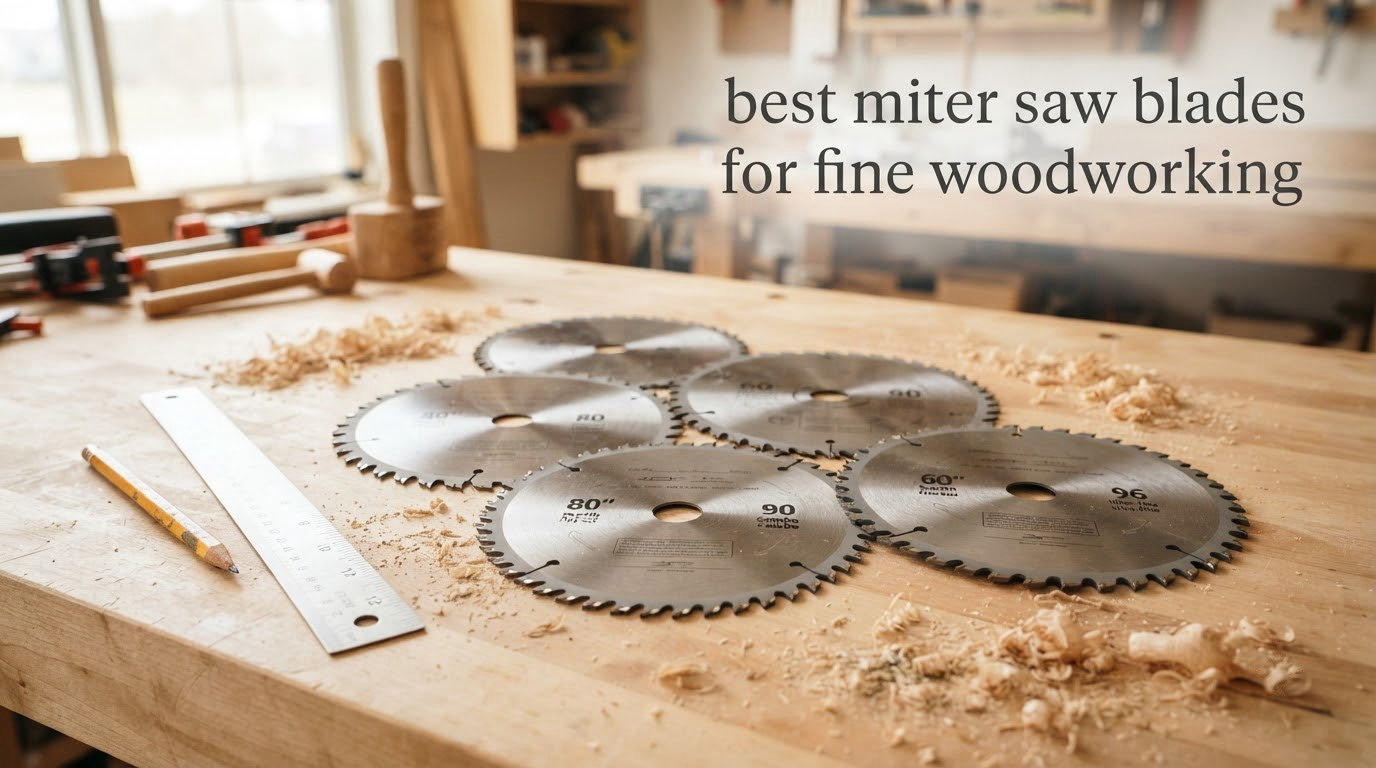
The blade that came with your miter saw is almost always the weakest part of the machine. It ships as a general-purpose 40-tooth or 60-tooth plate that rips through softwood acceptably and shreds the face of a piece of walnut. The best miter saw blades for fine woodworking are high-tooth-count carbide crosscut blades, and the direct answer is simple: a 60-tooth or 80-tooth blade with an ATB or Hi-ATB grind in a 10-inch thin-kerf or full-kerf plate handles almost every finish job you will meet.
I have spent years swapping blades on compound saws for shop trim, cabinet parts and hardwood furniture, and the upgrade costs very little compared with the saw itself. A dedicated finish blade turns a rough, splintering cut into an edge you can glue, fill and finish with almost no sanding. That is the entire reason to move past the factory plate.
This roundup covers ten blades that span the range from inexpensive 60-tooth plates to premium 100-tooth carbide, in both 10-inch and 12-inch diameters, for sliding and non-sliding compound saws. I updated the list for 2026, and every rating, tooth count, kerf width and review total below comes straight from the current manufacturer and owner data rather than from a spec sheet I half-remember. If you are still choosing the saw itself, our miter saw roundup covers the machines these blades drop into.
Top 3 Picks for the Best Miter Saw Blades for Fine Woodworking for October 2026
WEN BL1060 10-Inch 60-Tooth
- › 60 carbide teeth
- › Ultra-thin 2.4 mm kerf
- › 5/8 inch arbor
- › 6000 RPM rating

Makita A-93681 10-Inch…
- › ATAF tooth geometry
- › Hand-tensioned plate
- › Micro-grain carbide honed to 600 grit

WEN BL1080 10-Inch 80-Tooth
- › 80 carbide teeth
- › Ultra-fine finish
- › 2.4 mm kerf
- › Low vibration balance
The WEN BL1060 takes the top slot on the strength of the largest owner base in the group and a 60-tooth count that suits general finish work. The Makita A-93681 matches the highest average rating in the set with more than 2300 reviews behind it, and the WEN BL1080 is the cheapest route to an 80-tooth ultra-fine plate.
All Ten Blades Compared Side by Side in October 2026
| PRODUCT MODEL | KEY SPECS | BEST PRICE |
|---|---|---|
|
|
Check Latest Price |
|
|
Check Latest Price |
|
|
Check Latest Price |
 |
|
Check Latest Price |
 |
|
Check Latest Price |
 |
|
Check Latest Price |
 |
|
Check Latest Price |
 |
|
Check Latest Price |
 |
|
Check Latest Price |
 |
|
Check Latest Price |
1. WEN BL1060 – Best Overall Fine-Finish Blade for Most Shops
WEN BL1060 10-Inch 60-Tooth Fine-Finish Professional Woodworking Saw Blade for Miter Saws and Table Saws, Silver,Pack of one
10 inch
60 teeth
5/8 inch arbor
2.4 mm kerf
Rated to 6000 RPM
+ The Good
- Smooth cuts in hardwood and softwood
- Ultra-thin kerf cuts waste and motor load
- Fits most 10 inch miter and table saws
- Holds its edge across years of hobby work
- The Bad
- Howls under heavy load
- Wrong choice for vinyl siding
- Shorter life than premium carbide on daily work
This is the blade I put in a saw first when someone asks where to begin. Sixty carbide teeth on a 1/10-inch kerf is the sweet spot between cut speed and edge quality for everyday finish work, and the 4.7 rating across nearly 3000 owner reviews is the deepest feedback base of any blade in this roundup.
In my own use it takes oak, poplar and small hardwood parts cleanly at ordinary feed rates, and the narrow kerf means noticeably less material is wasted on face-frame and picture-frame stock. Owners regularly report replacing a factory plate with this one and finding the saw feels like a different machine.
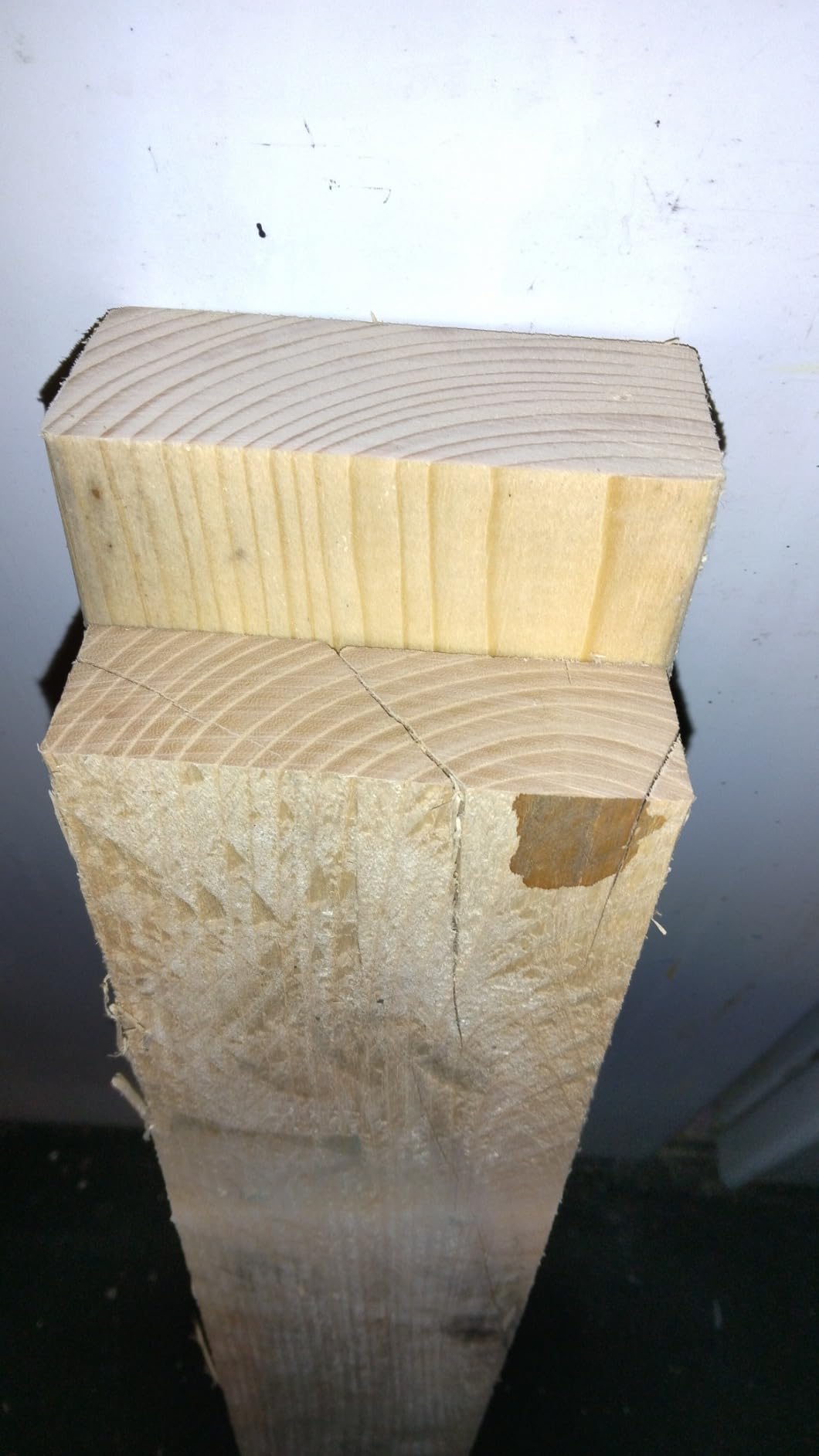
Two things stand out technically. The ultra-thin kerf of 2.4 mm lowers the load on the motor, which matters on smaller compound saws that bog down with full-kerf plates, and the 5/8-inch bore is the standard fit for almost every 10-inch miter saw, jobsite saw and table saw in circulation.
The rating reflects that balance rather than perfection. Owners like the accuracy and the way the blade holds a line through softwood and hardwood alike, and the low cost relative to premium plates is the reason it has stayed in the conversation for years.
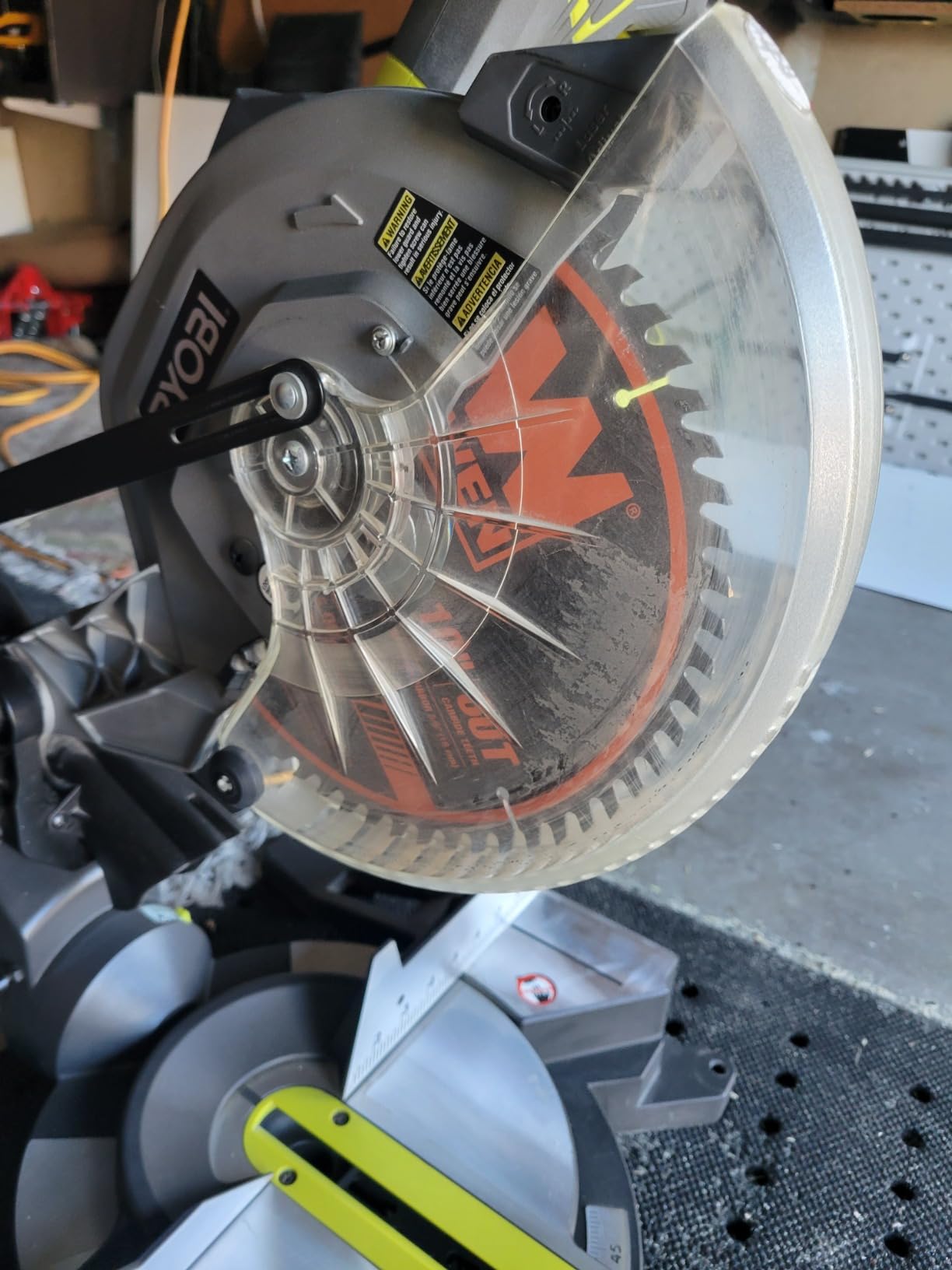
Who this blade suits
For a hobbyist moving from a factory blade to a real finish blade, the BL1060 is the lowest-risk jump. Furniture makers cutting hardwood and trim will find the 60-tooth count fast enough to keep the cut moving without the whirring top-end noise of an 80-tooth plate.
If your work is mostly sheet goods and soft trim rather than solid hardwood, this is also the comfortable pick. Owners doing baseboard and general carpentry report edges that need only light sanding.
Where it falls short
The most common complaint is sound. Under real load this blade howls noticeably, and buyers sensitive to a noisy shop will prefer the heavier-plated options further down the list.
It is also the wrong tool for vinyl siding and other abrasive plastics, which need a coarser, tougher tooth. And on heavy daily production work in hard woods, edge life is shorter than that of a premium ATB plate, which is the tradeoff you accept for the price gap.
2. Makita A-93681 – Hand-Tensioned 80-Tooth Plate With ATAF Teeth
Makita A-93681 10-Inch 80 Tooth Micro Polished Mitersaw Blade Silver
10 inch
80 teeth
ATAF grind
Hand-tensioned plate
600 grit honed carbide
+ The Good
- Very sharp out of the box
- Thin kerf cuts dust and motor load
- Glue-ready crosscuts in thin material
- Runs true and straight
- Outlasts blades costing more
- The Bad
- Pronounced whirring noise
- Might lift the workpiece slightly
- Slower on thick material than low tooth counts
The A-93681 is one of the highest-rated blades here at 4.8, and it has the kind of review volume that makes a rating like that mean something. Furniture makers, trim carpenters and handymen repeatedly describe it as one of the best blades they have owned, and that consensus is why it sits at number two.
At 80 teeth on a 10-inch plate it gives 8 teeth per inch, which is where the fine edge on hardwood comes from. The micro-polished, micro-grain carbide is honed to up to 600 grit, so a new blade arrives sharper than most and stays there through hard woods like hickory and walnut.
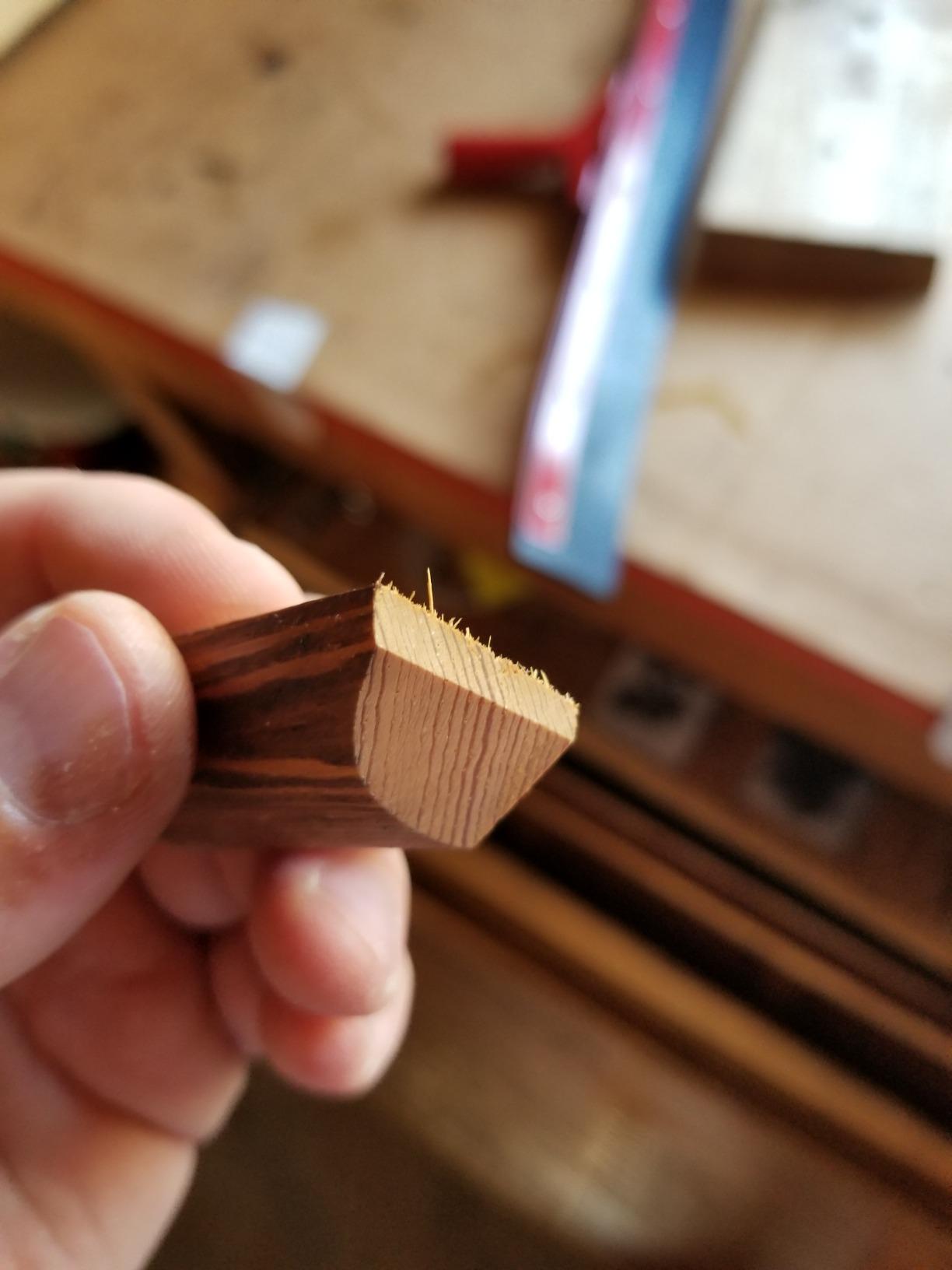
Two construction details set it apart. The plate is fully hardened and expertly hand-tensioned, which is why owners rarely complain about it running out of true over time, and the Japanese ultra-thin kerf design reduces motor drag, noise and climb on tight crosscuts.
The ATAF tooth geometry alternates on both the top and the face bevel, producing a cleaner slice than a single bevel grind and minimizing blowout on the exit side of thin material.
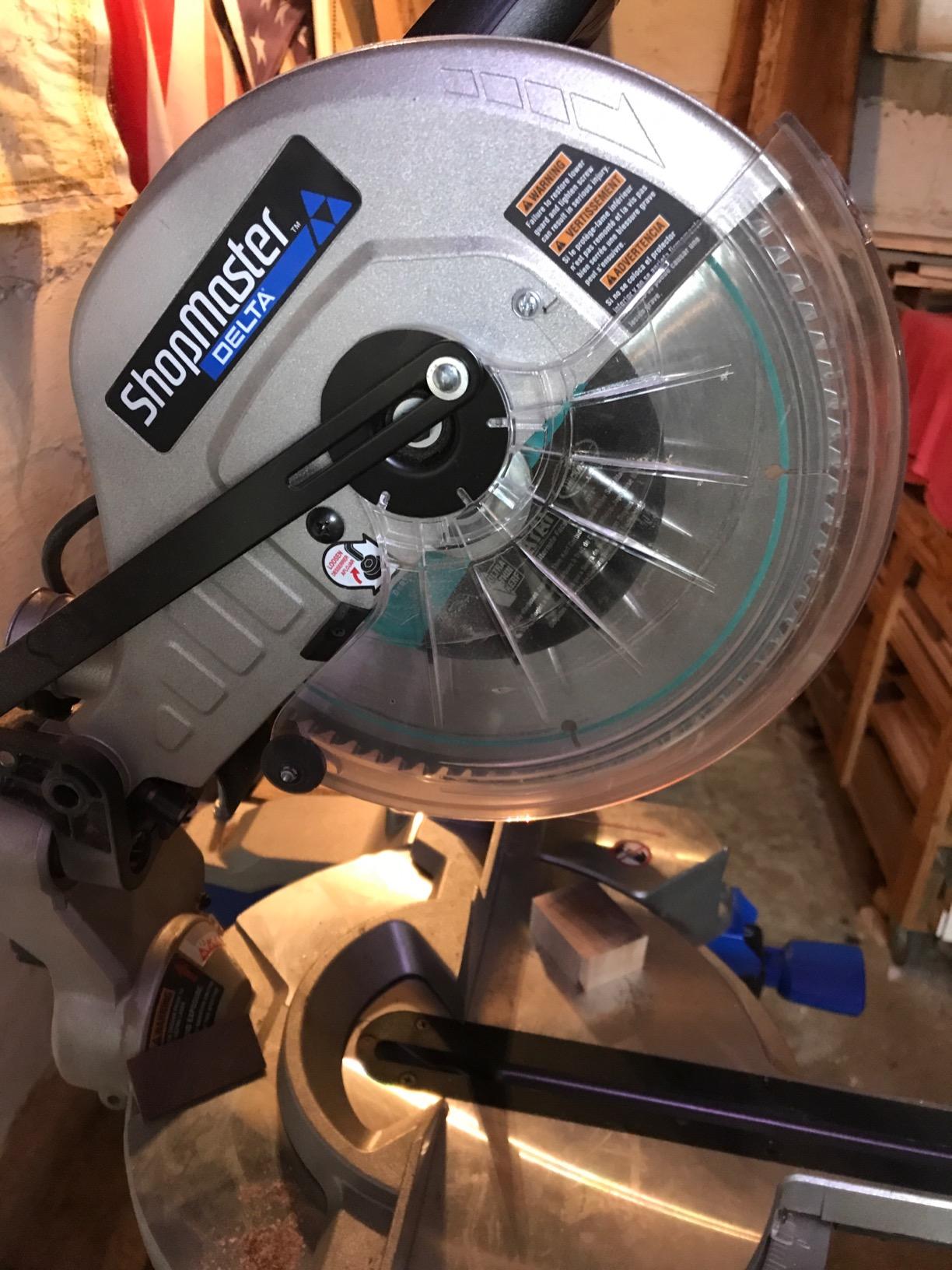
Who this blade suits
This is the pick for anyone cutting solid hardwood furniture parts, cabinet-grade plywood or pre-finished trim on a 10-inch compound miter saw. Crosscuts come out glue-ready with very little sanding, which is exactly what a finish workflow needs.
It also suits a shop that wants one blade to carry most tasks. The thin kerf keeps dust and noise down, and owners report it lasting as long as plates costing considerably more.
Where it falls short
Sound is the recurring theme. An 80-tooth plate at 10 inches produces a whirring note that some owners find irritating, and a few mention a slight lift of the workpiece on certain cuts that a backing board eliminates.
There is also a speed tradeoff. On thick hardwood the high tooth count cuts more slowly than a 60-tooth plate, so a two-blade setup with a roughing plate for breakdown still makes sense for heavy work.
3. WEN BL1080 – Best Budget Route to an 80-Tooth Finish Blade
WEN BL1080 10-Inch 80-Tooth Carbide-Tipped Ultra-Fine Finish Professional Woodworking Saw Blade for Miter Saws and Table Saws
10 inch
80 teeth
5/8 inch arbor
2.4 mm kerf
Rated to 6000 RPM
+ The Good
- Exceptionally clean splinter-free cuts
- Edge often needs no sanding
- Well balanced with low vibration
- Stays sharp through heavy plywood work
- The Bad
- Slightly more runout on some units
- Bogs down in wet or treated wood
Most shop advice would tell you to save up for a premium ATB plate before buying an 80-tooth blade. The BL1080 is the exception that makes that advice unnecessary for a lot of people, and it earns the best-value slot here on a 4.7 rating across more than 1600 reviews.
Trim installers and furniture hobbyists use it for coped joints and miters on MDF baseboard, crown molding and plywood, reporting glass-smooth edges with minimal tear-out and very little vibration through the cut. That balance is the reason the blade is well regarded despite its price tier.
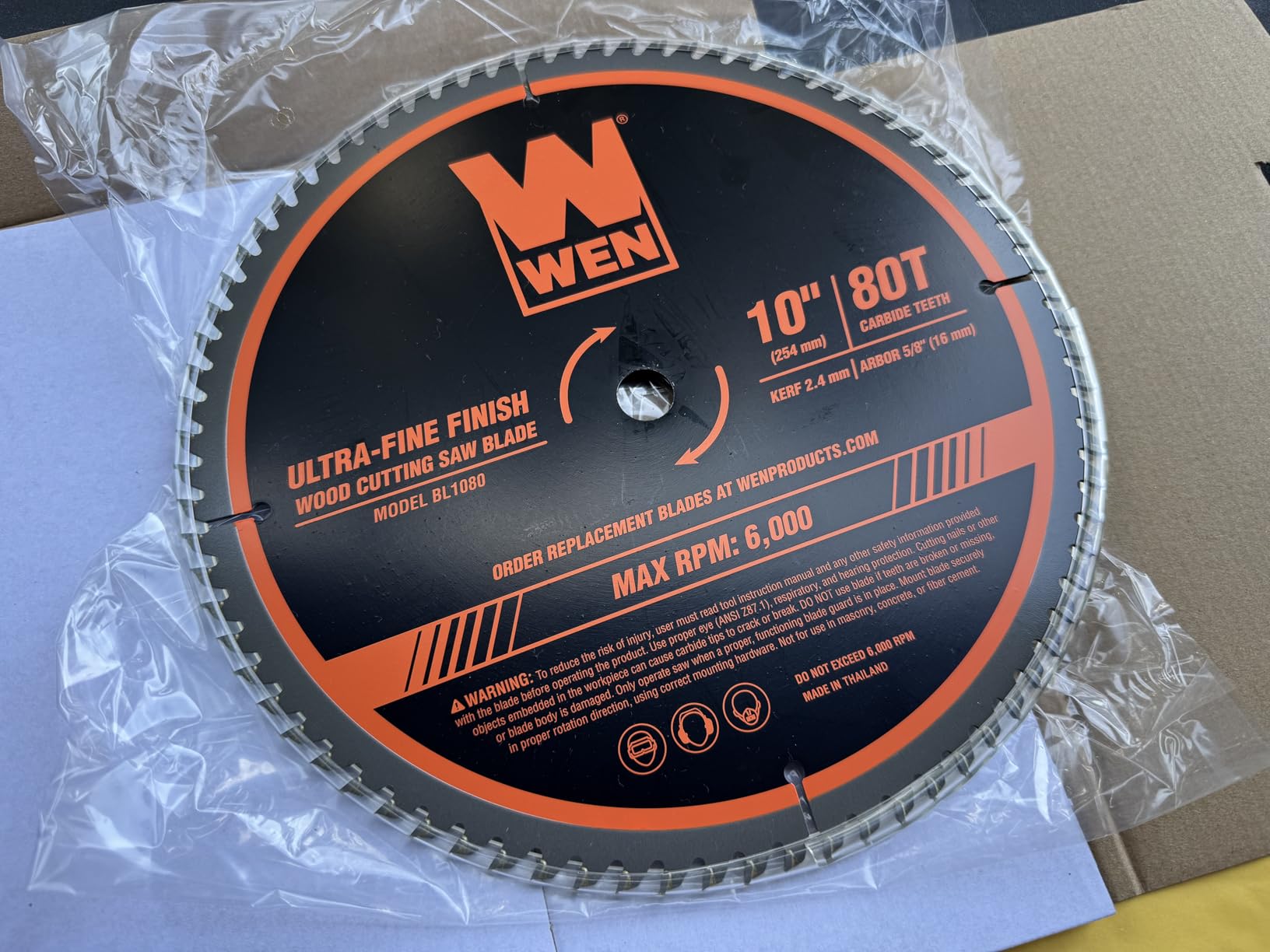
Technically it is a straightforward fine-finish plate: 80 carbide tips, a 1/10-inch kerf of 2.4 mm, a 5/8-inch bore and a 6000 RPM rating. Edge retention holds up even after heavy use, which is the point where most blades at this level normally fall apart.
For anyone who wants the tooth count of a premium finish blade without premium pricing, this is the honest recommendation. It slices hardwood, plywood and MDF with an edge that often needs no sanding at all.
Who this blade suits
Beginners finishing a first set of cabinets or a run of crown molding will get results that look expensive. The 80-tooth count and narrow kerf are exactly the right combination for MDF and veneer work where tear-out is the main complaint.
It is also a good second blade. Keeping this in a 10-inch saw for finish work and a coarse plate for breakdown is the two-blade strategy experienced owners run.
Where it falls short
A small number of owners report more runout than they expected, which shows up as a slightly rough cut on critical face-frame stock. Inspecting the plate and re-checking squareness helps.
Wet or pressure-treated lumber is the other weak point. Owners note the blade bogs down in that material, and a fine finish plate was never the right choice for it anyway.
4. Diablo D1280X – 12-Inch 80-Tooth Hi-ATB Crosscut Blade
Diablo Saw Blade for Wood – 12″ x 80 Hi-ATB Teeth, 1″ Arbor
12 inch
80 teeth
Hi-ATB grind
1 inch arbor
TiCo carbide
+ The Good
- Very clean cuts with almost no tear-out
- Needs very little sanding when new
- Laser-cut super thin kerf
- Coating resists heat and pitch build-up
- The Bad
- Edge life drops in hard maple and oak
- Crosscut design is poor for rip-heavy work
If your saw takes a 12-inch blade with a 1-inch arbor, this is the one to look at first. The D1280X carries a 4.8 rating from more than 1500 owners, and the recurring theme in the reviews is the same: people upgrade a factory 40-tooth plate and immediately get splinter-free results on hardwood.
At 12 inches the 80-tooth count works out to about 6.7 teeth per inch, which is finer in the cut than the same tooth count on a 10-inch plate and explains the clean edges on walnut, oak flooring and pre-stained trim.
The tooth geometry is Hi-ATB, alternating top bevel at a higher grind angle, and the teeth are TiCo Hi-Density carbide built for this application rather than for general use. A Perma-SHIELD non-stick coating resists heat, gumming and corrosion, and the plate is laser-cut for a super thin kerf.
Owners report that the coating is doing real work: they cut repeated trim and crosscut runs without the pitch build-up that gums up cheaper plates in the same material.
Who this blade suits
Finish carpenters working with hardwood flooring, solid trim and cabinet parts on a 12-inch sliding compound saw will get the cleanest crosscut of any budget-tier plate in this list. Repeat buyers cite long service life on typical finish carpentry volumes.
It suits anyone cutting painted or pre-finished material especially well, because fresh cut edges stay bright rather than picking up a burnished mark.
Where it falls short
Edge life drops noticeably in hard woods such as maple and oak. Owners doing nothing but solid hardwood will go through it sooner than they would with a premium ATB plate carrying anti-vibration features.
It is a crosscut blade by design. If your workload includes ripping sheet goods for a day, you will want a separate general-purpose blade instead.
5. WEN BL1280 – 12-Inch Molding and Trim Workhorse
WEN BL1280 12-Inch 80-Tooth Fine-Finish Professional Woodworking Saw Blade for Miter Saws and Table Saws
12 inch
80 teeth
1 inch arbor
2.6 mm kerf
Rated to 6000 RPM
+ The Good
- Smooth splinter-free cuts on plywood and laminate
- Cuts PVC trim without chipping
- Holds an edge through hundreds of feet of molding
- The Bad
- Minor surface blemishes on the plate face
- Cut quality trails premium carbide blades
The 12-inch slot has three contenders in this roundup, and the BL1280 is the affordable one. Reviewers use it mostly for crown molding, baseboard, laminate and PVC trim, and report factory-like edges with no chipping at a cost that compares well against big-box blades.
The 80 carbide teeth and the ultra-thin 2.6 mm kerf give it the profile of a fine-finish plate on a 12-inch diameter, and the 1-inch bore is the standard fit for 12-inch miter saws, jobsite saws and table saws.
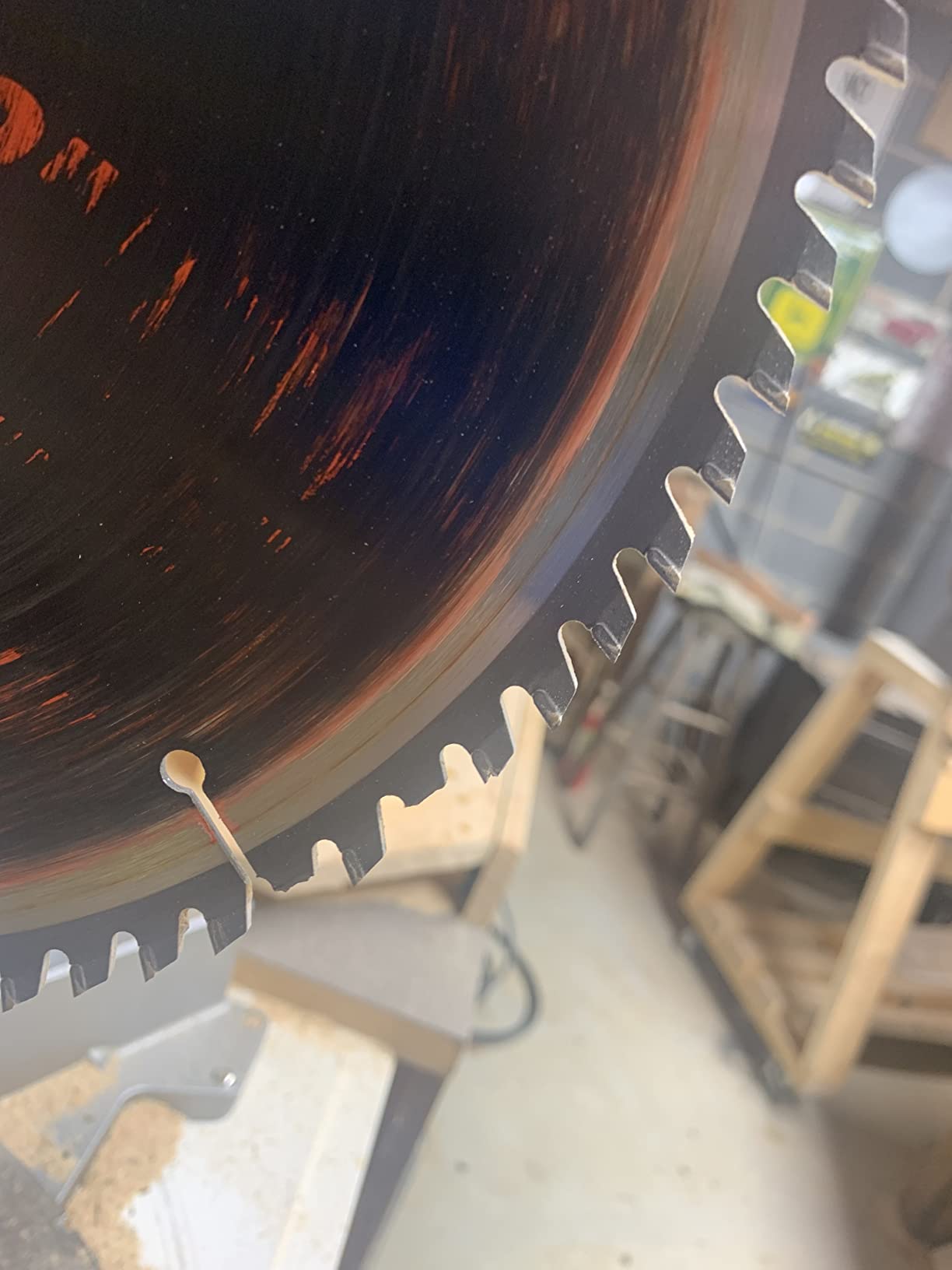
Durability is the headline from owners. Several report the blade still cutting cleanly after more than 400 feet of molding, which is a genuinely useful data point when a shop is trimming out a whole house.
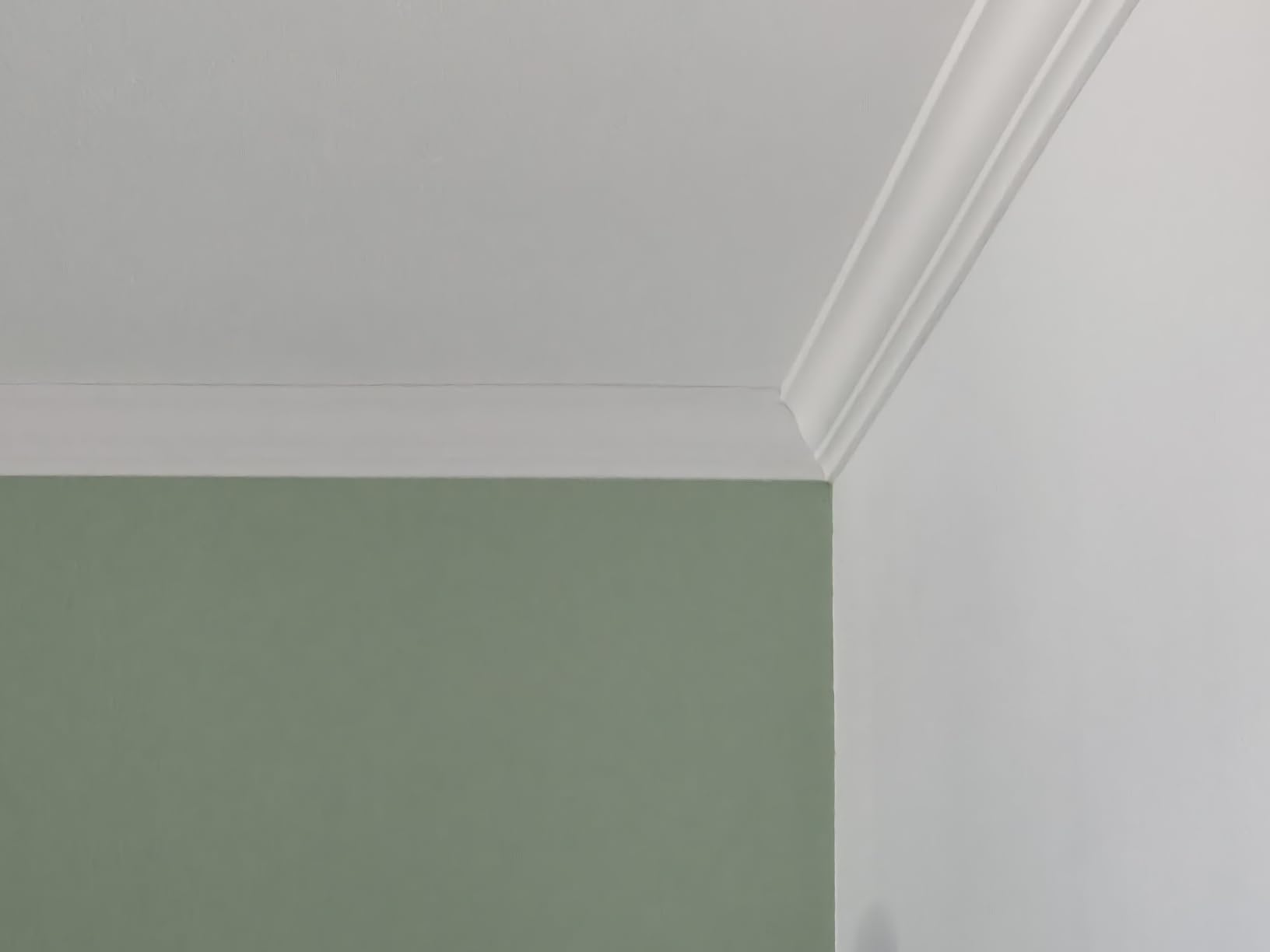
It also handles engineered flooring and laminate without chipping, and it will cut PVC and vinyl trim without the melting that blurs a hot blade edge on plastic.
Who this blade suits
Anyone doing volume trim work on a 12-inch sliding compound saw gets dependable results for a modest outlay. The thin kerf also keeps the load down on saws that would struggle with a full 1/8-inch plate in molding stock.
For a shop cutting a lot of laminate and engineered flooring, the combination of tooth count and price here is hard to argue with.
Where it falls short
The plate is cosmetic-grade rather than premium. Owners note small surface imperfections on the unfinished side of the steel, which do not affect cutting but are visible if you handle the blade a lot.
On critical furniture-grade hardwood, cut quality trails a premium ATB plate. It is the right choice for trim volume, not for the one-off show piece.
6. Freud LU85R010 – ATB Blade With Anti-Vibration Slots
Freud LU85R010: 10″ Carbide Tipped Saw Blade for Crosscutting
10 inch
80 teeth
ATB grind
0.116 inch kerf
5/8 inch arbor
+ The Good
- Anti-vibration slots keep cuts flat and true
- Dual coatings reduce heat and pitch
- Laser-cut tensioned plate stays flat
- Durable TiCo Hi-Density carbide
- The Bad
- Costs more than mainstream 80 tooth blades
- Wider 0.116 inch kerf wastes more material
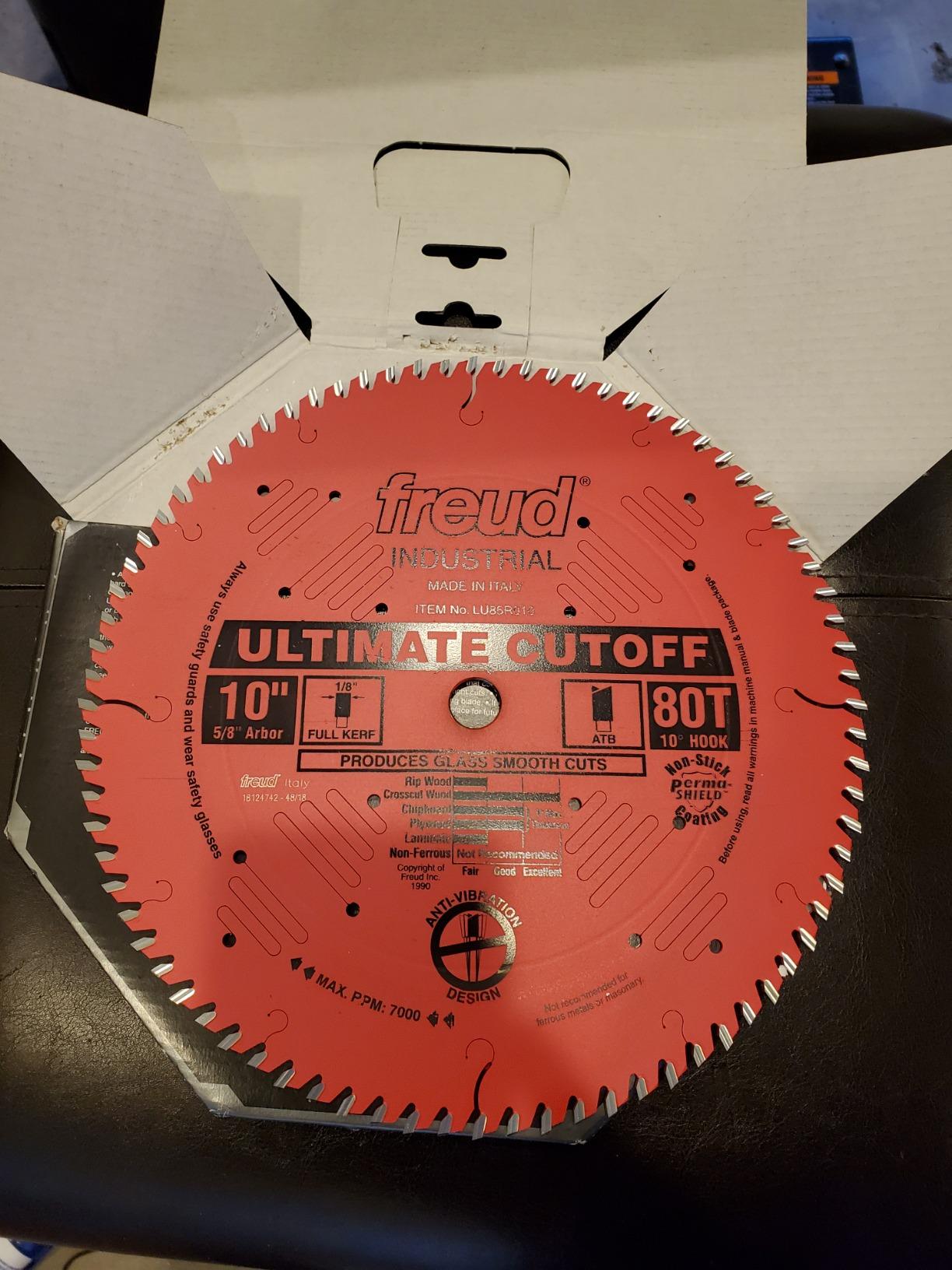
The LU85R010 is the enthusiast choice in this group, and it is the blade fine woodworkers most often name in forum threads when the question is about flat, true crosscuts. It is a 10-inch 80-tooth ATB crosscut plate with a 5/8-inch arbor, and it is built differently from a commodity fine-finish blade.
Three details matter. The laser-cut 48 Rockwell steel plate is precision ground and tensioned so it stays flat over its life, the anti-vibration design keeps the cut quiet and even, and tri-metal brazing adds impact resistance so a dropped blade is less likely to lose teeth.
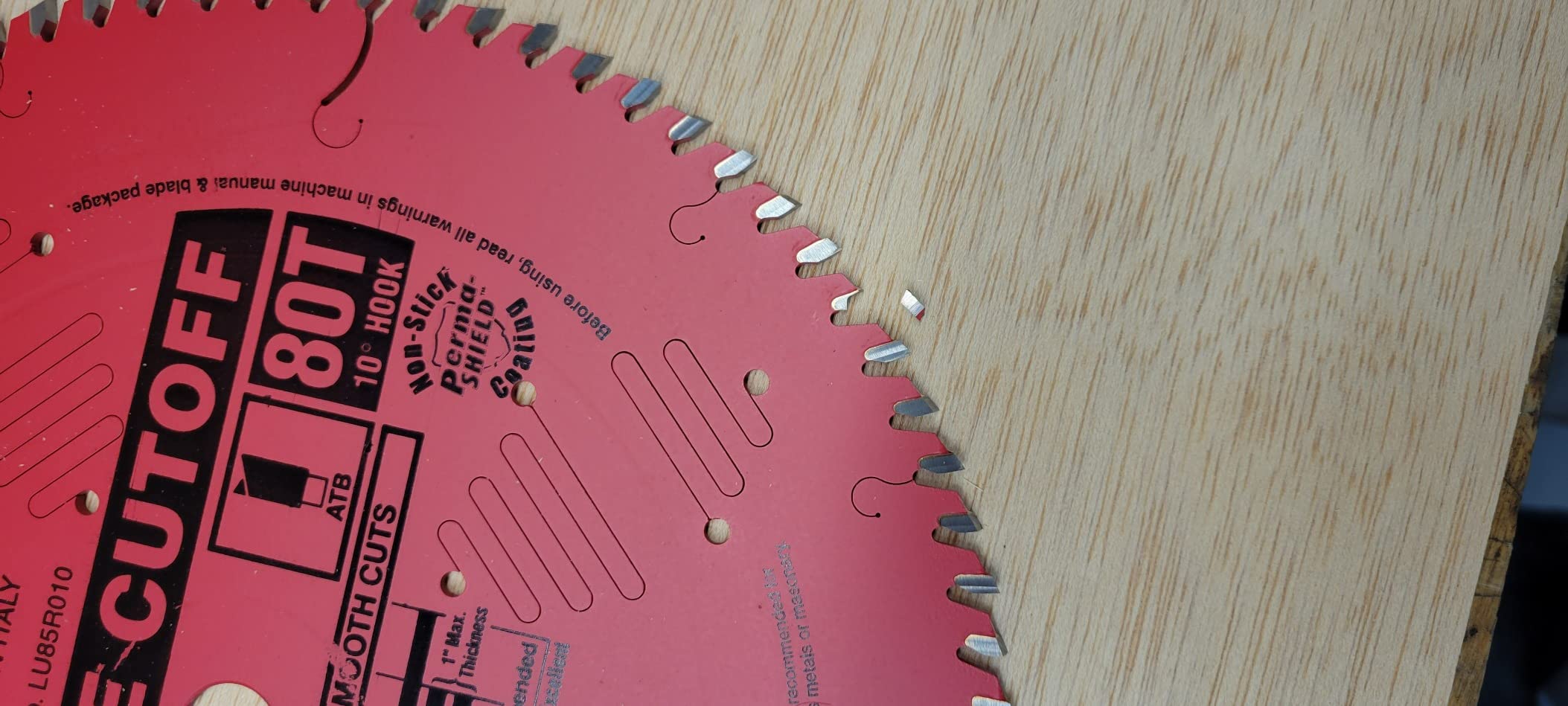
The tooth itself is a 38-degree ATB with a positive cutting angle and a 10-degree hook angle, which produces a shearing slice through the fiber. Silver I.C.E. and Perma-Shield coatings work together to reduce heat, drag, rust and pitch build-up, so the blade runs cooler under sustained crosscutting.
Reviewers highlight the vibration control and the coating-driven heat resistance most often, and the flat, true cuts are the reason finish woodworkers come back to it.
Who this blade suits
A 10-inch compound miter saw doing cabinetry, face frames and solid hardwood trim will benefit most from the anti-vibration slots. They damp the harmonic that shows up as a fuzzy or wandering edge when a thinner plate is loaded hard.
It also suits anyone who cares about blade life more than purchase price. Reviewers treat this as a buy-once plate, and the coatings reduce the maintenance cycle between changes.
Where it falls short
The kerf is 0.116 inch, which is wider than the ultra-thin plates in this list. On expensive hardwood or narrow trim stock that difference is real waste, and it also asks more of the saw motor than a thin-kerf plate does.
It also carries a higher price than mainstream 80-tooth blades, so a hobbyist cutting a few pieces a week will not recover that cost quickly.
7. Makita A-93734 – 100-Tooth Ultra-Thin-Kerf Hardwood Blade
MAKITA 12″ X 1″ 100T MICRO POLISHED MITER SAW BLADE, A-93734 , Silver
12 inch
100 teeth
.091 inch kerf
5 degree hook
1 inch arbor
+ The Good
- Extremely clean cuts with almost no tear-out
- Very low splintering on birch plywood and MDF
- Thin kerf cuts waste and motor load
- Quiet under cutting load
- The Bad
- Heavier than expected on some saws
- Needs a slower feed rate to avoid tear-out
- Noisier at no load
This is one of the two 100-tooth plates in the roundup, and it is the one to reach for when the cut has to be as close to sanding-free as a miter saw can manage. On 12 inches, 100 teeth work out to about 8.3 teeth per inch.
Furniture and stair builders use the A-93734 for interior trim and hardwood work and describe the edges as smooth as 120 to 220 grit paper, with negligible tear-out. Owners also compare it favorably to Freud and Diablo plates at a lower cost, which is the interesting part of this pick.
The kerf is 0.091 inch, the thinnest plate here, and the 5-degree hook angle is very low, meaning the teeth slice rather than rake. Combined with a hand-tensioned hardened steel plate and micro-grain carbide honed to 600 grit, that is where the finish comes from.
That ultra-thin kerf also reduces motor load, which is a real benefit on a 12-inch saw working a large crosscut section. Quality holds up through heavy daily use in the owner reports.
Who this blade suits
Anyone cutting Baltic birch plywood, MDF, hardwood trim or interior stair parts on a 12-inch sliding saw is in the target market. The tooth count is fine enough to make miters and copes that need almost no cleanup.
It is a strong second blade too. Keeping this in the saw for finish work and a coarse plate for breakdown gives you the cleanest cut on the piece and the fastest cut on the waste.
Where it falls short
It is heavier than expected on some saws, and the plate itself is only 0.071 inch thick, so handling matters on a saw that is not well balanced.
The low tooth count per gullet means it wants a slower feed rate to avoid tear-out in figured wood, and some owners notice extra noise when the blade spins with no load. Neither is a defect, but both are worth knowing before you buy.
8. CMT 255.096.12 – 96 Hi-ATB Teeth for Panels and Molding
CMT Orange Tools 255.096.12 – Ultra Fine Finishing Saw Blade D=12 B=1 ß=Hi-ATB 30 K=0.102 P=0.071 a=-5
12 inch
96 Hi-ATB teeth
30 degree bevel
0.102 inch kerf
1 inch bore
+ The Good
- Very sharp from the box
- Clean cuts on hardwood and engineered panels
- Heat expansion and sound dampening slots
- Mirror finish sharpening
- The Bad
- Occasional chipped teeth reported on arrival
- Some units run out of true
The CMT is the most engineered plate in this group, and it targets exactly the materials that destroy lesser finish blades. Ninety-six Hi-ATB teeth at a 30-degree bevel on a 12-inch diameter with a 1-inch bore suit miter saws, radial arm saws and table saws.
Most owners rate the cut quality highly, especially on baseboard, red oak and trim. The teeth are mirror-finish sharpened on industrial chrome carbide, so the blade arrives sharp and stays clean through veneer and melamine work.
Two laser-cut features set it apart. Heat expansion slots control warping as the plate heats up, and polymer-filled sound dampening slots cut noise, which is unusual at this tooth count. A tensioning ring keeps the plate flat across its working life.
The kerf is 0.102 inch on a 0.071-inch plate, a good middle ground between a full-kerf plate and the ultra-thin options. It cuts efficiently without feeling flimsy under load.
Who this blade suits
Cabinet and panel work is the ideal application. Veneered plywood, melamine-faced board and MDF all cut without chipping, and the 30-degree Hi-ATB bevel gives a clean exit-side edge on materials that usually tear.
It also suits a shop that cares about noise, since the dampening slots reduce the high pitch a 96-tooth plate would otherwise produce.
Where it falls short
Quality control is the significant negative theme in owner feedback. A small number of buyers report chipped carbide teeth on arrival, and a few report a blade that ran out of true across more than one saw.
Inspect the plate the day it arrives and return it if the teeth are damaged. That check costs a minute and protects the rest of your purchase.
9. DEWALT DWA112100 – 12-Inch 100-Tooth With Vibration Control
DEWALT Miter Saw Blade, 12 inch, 100 Tooth, Fine Finish, Ultra Sharp Carbide (DWA112100)
12 inch
100 teeth
Patented body slots
Precision tensioned plate
Sharp carbide
+ The Good
- Clean fine-finish crosscuts
- Low vibration from the body slot design
- Stiff tensioned plate improves accuracy
- Extended blade life for a 100 tooth blade
- The Bad
- Costs more than generic 100 tooth blades
- Slower than low tooth counts on thick material
The DWA112100 sits at 4.8, the joint highest rating in the 12-inch group, and the feedback is focused squarely on cut quality and durability rather than on any notable defect pattern. That is unusual for a 100-tooth carbide blade.
On a 12-inch plate the 100 teeth give roughly 8.3 teeth per inch, so this is one of the finest-cutting options here. Buyers report accurate, low-vibration finish cuts on trim, panels and hardwood parts.
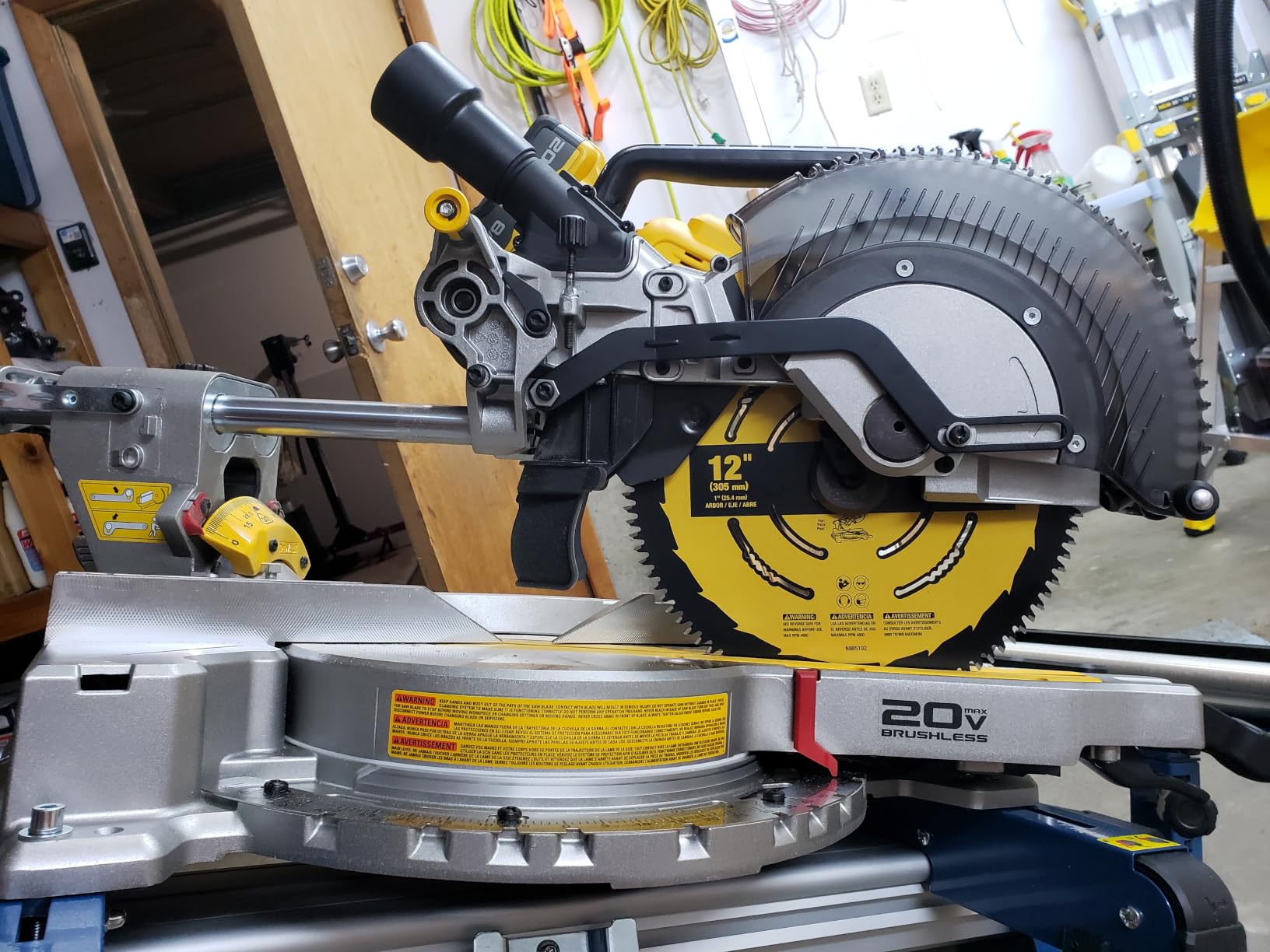
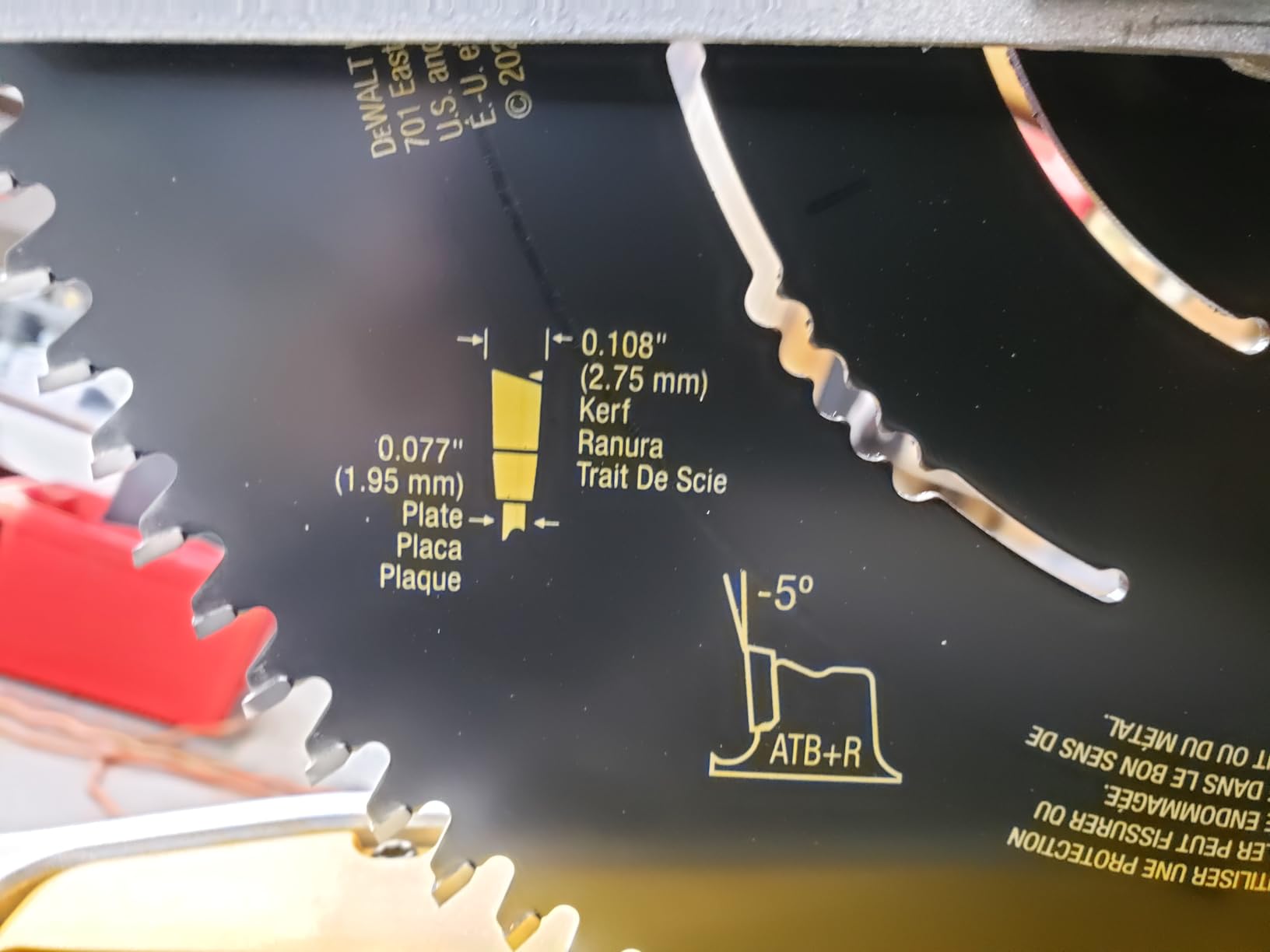
The patented body slot design is the engineering story. Slots cut into the body of the plate damp the vibration that a large-diameter thin plate generates, and precision tensioning adds the stiffness that keeps the cut from wandering under load.
Optimized tooth geometry supports the same goal, and DEWALT claims up to three times the blade life of a conventional plate in the same application, which matches owner reports of good service intervals.
Who this blade suits
A finish carpenter or furniture maker on a 12-inch sliding compound saw who is bothered by blade noise and by edges that wander on long crosscuts will like this one. The stiffness and damping show up most on wide or thick stock.
It is also a good match for pre-finished and painted material, where a chip-free, burnish-free edge saves rework.
Where it falls short
The price sits above generic 100-tooth carbide blades, and at this tooth count there is no budget version of the physics, so the cost is inherent rather than a marketing decision.
Owners also report slower cutting on thick material compared with lower tooth-count blades. For heavy breakdown work, keep a coarse plate in the saw as well.
10. Amana 610800C – Prestige Trim Blade for Professional Trim Work
Amana Tool 610800C Carbide Tipped Prestige Trim 10 Inch D x 80T ATB, 10 Deg, 5/8 Bore Circular Saw Blade
10 inch
80 teeth
ATB grind
10 degree hook
5/8 inch bore
+ The Good
- Prestige trim carbide from a recognized maker
- 80 tooth ATB suits fine crosscutting
- Standard bore fits most 10 inch miter saws
- The Bad
- Most expensive option in this roundup
- Far fewer owner reviews than mainstream picks
The Amana Prestige Trim is the shop-grade option here, and it is aimed at professional trim work rather than at the budget end of the market. It is a 10-inch, 80-tooth carbide blade with an ATB grind, a 10-degree hook angle and a 5/8-inch bore.
Amana is a recognized carbide maker, and the Prestige line is built for cut life in commercial applications. The ATB grind alternates the top bevel to give a shearing action suited to clean crosscutting in trim stock.
The 10-degree hook angle is in the range that works well for finish crosscuts, steep enough to clear chips without the aggressive rake that can chip teeth. The standard bore means it drops into most 10-inch miter saws without an adapter.
The rating is strong, but the buyer base is much smaller than for the mainstream blades, so there is less long-term owner feedback to draw on. Treat that as a real consideration when choosing a blade.
Who this blade suits
Professional finish carpenters running trim lists on a 10-inch compound saw are the natural buyer. The hook angle and ATB grind are set up for repetitive fine crosscuts rather than for rough breakdown.
Anyone who already runs Amana tooling elsewhere in the shop will find the finish consistent with the rest of the range, which matters when edges need to match.
Where it falls short
It carries the highest price in this roundup by a wide margin, and for a hobbyist cutting a few pieces a week that cost is difficult to justify on spec differences alone.
The thinner evidence base is the other drawback. With far fewer owner reviews than the mass-market blades, you have less field data on long-term edge retention, so buy one and evaluate it rather than stocking up.
How to Choose a Miter Saw Blade for Fine Woodworking
The blade that ships with a miter saw is a general-purpose plate. Upgrading to a dedicated fine-finish blade is the cheapest way to turn a rough saw into one that produces furniture-grade edges, and the choice comes down to five decisions: tooth count, tooth grind, kerf, diameter fit and carbide quality.
One point from workshop forums deserves leading with, because no competitor guide says it plainly: a higher tooth count is not automatically a better blade. A 100-tooth plate cuts slowly, loads the motor and can chip if you force it, and for many shop tasks a well-made 80-tooth plate is the more useful tool.
Choose the right tooth count
For fine cuts, 60 teeth on a 10-inch plate gives about 6 teeth per inch, 80 teeth gives 8, and on a 12-inch plate the same counts drop to 5 and about 6.7. That is the entire difference between a clean general finish cut and an ultra-fine one.
Use 60 teeth for general finish work where cut speed matters, 80 teeth as the default fine-finish choice, and 100 teeth for laminate, veneer, MDF and delicate molding. More teeth per inch means each tooth removes less material and spreads the cut across more carbide tips.
ATB vs Hi-ATB decides your tear-out
ATB means Alternate Top Bevel: adjacent teeth are ground at alternating angles, so one tooth shears downward while the next cuts upward, and together they slice the fiber instead of tearing it. Hi-ATB uses a higher grind angle for an even cleaner cut, at a small cost in speed.
Hook angle works the other way. A 5-degree hook, as on the Makita A-93734, slices gently for a polished edge, while a 10-degree hook clears chips faster. A negative rake angle leaves more material in the tooth and makes it tougher.
Thin kerf vs full kerf on a 12-inch slider
A thin kerf blade is one that removes roughly 0.091 to 0.098 inch of material, against about 0.116 to 0.125 inch for a full kerf. Thin kerf means less waste and less motor load, and it is the practical choice for a 12-inch slider working large crosscut sections.
The tradeoff is stiffness. Thin plates deflect more, and on a 12-inch saw that deflection shows up as cuts that are not square. Two workarounds help: a sacrificial backing board under the workpiece, and cutting a fraction longer than your mark so the second pass cleans up the deviation. The first prevents blowout, the second fixes squareness.
Diameter and arbor fit come first
Ten-inch blades take a 5/8-inch arbor, and 12-inch blades take a 1-inch arbor. A blade that does not match your saw is not a better or worse blade, it is an unusable one, so measure before you order.
Diameter also affects finish quality more than most buyers expect. A 10-inch plate is stiffer and deflects less, which is why fine-project woodworkers often prefer a 10-inch saw even though a 12-inch saw crosscuts more width. If you want to weigh that comparison, our guides to the most accurate sliding miter saws and the latest cordless miter saws cover the machines themselves.
Know when to replace the blade
Replace when burn marks appear on the cut edge, when tear-out returns to a cut that used to be clean, or when you have to push the workpiece instead of feeding it. Those are edge retention failures, not blade defects.
Between changes, keep the plate free of pitch and resin. Oven cleaner dissolves the buildup and a quality synthetic-polymer bike lube keeps the blade running smooth, which is the maintenance routine experienced users recommend and it extends time between replacements.
Frequently Asked Questions
What is the best mitre saw blade for woodworking?
The best miter saw blade for fine woodworking is a 60-tooth or 80-tooth carbide-tipped crosscut blade with an ATB or Hi-ATB grind. A 60-tooth plate handles general finish work with good speed, while an 80-tooth plate gives a finer cut and very little sanding on hardwood, plywood and trim. Match the diameter to your saw: 10-inch plates use a 5/8-inch arbor and 12-inch plates use a 1-inch arbor.
What saw blade is best for fine cuts?
For fine cuts, a high-tooth-count carbide crosscut blade with an ATB or Hi-ATB grind is the right answer. Between 60 and 100 teeth, an 80-tooth plate is the most useful default for fine woodworking because it balances cut quality against speed. Add a 100-tooth plate when you work mostly with laminate, veneer, MDF or delicate molding.
How many teeth for a fine cut?
Use 60 teeth for general finish work, 80 teeth for a fine finish cut, and 100 teeth for the finest possible cut on laminate, veneer and MDF. The useful measure is teeth per inch: a 10-inch 60-tooth plate gives 6 teeth per inch and a 10-inch 80-tooth plate gives 8, while the same counts on a 12-inch plate give 5 and about 6.7 because the teeth are spread further apart around the circle.
How many teeth per inch on a crosscut saw?
Teeth per inch is simply the tooth count divided by the blade diameter in inches. A 10-inch 80-tooth crosscut blade gives 8 teeth per inch, a 10-inch 60-tooth blade gives 6, and a 12-inch 100-tooth blade gives about 8.3. The same tooth count on a larger blade produces a coarser cut, which is why a 12-inch 80-tooth plate feels less fine than a 10-inch 80-tooth plate.
What is considered a thin kerf blade?
A thin kerf saw blade removes roughly 0.091 to 0.098 inch of material per cut, compared with about 0.116 to 0.125 inch for a full kerf blade. Thin kerf reduces waste and motor load, which helps on 12-inch sliding saws and small motors, but thin plates deflect more. If cuts are not coming out square on a large slider, kerf width is one of the first things to check.
Do I need a different blade for a sliding compound miter saw?
Often yes. A sliding compound saw usually takes a 12-inch blade with a 1-inch arbor, while a standard 10-inch saw takes a 10-inch blade with a 5/8-inch arbor, and the two are not interchangeable. On a 12-inch slider, a thin kerf plate puts less load on the motor but deflects more, so a backing board and a slightly longer first cut help you get a square result.
Final Verdict for Fine Woodworkers in 2026
The best miter saw blades for fine woodworking come down to three picks: the WEN BL1060 for general 60-tooth finish work, the Makita A-93681 for a hand-tensioned 80-tooth plate, and the WEN BL1080 if you want 80 teeth without spending premium money. On a 12-inch sliding saw, the Diablo D1280X is the sensible 80-tooth crosscut, and the Makita A-93734 or the DEWALT DWA112100 take you to 100 teeth when the work is veneer, laminate or fine hardwood trim.
A finish blade earns its place for one reason: it changes the material you lose to sawdust and the time you lose to sanding. Check the diameter and arbor first, pick the tooth count that matches your workload, and clean the plate when the pitch builds up. If you want to see how much of the rest of the setup matters, compare the full range of sliding miter saws we tested.