
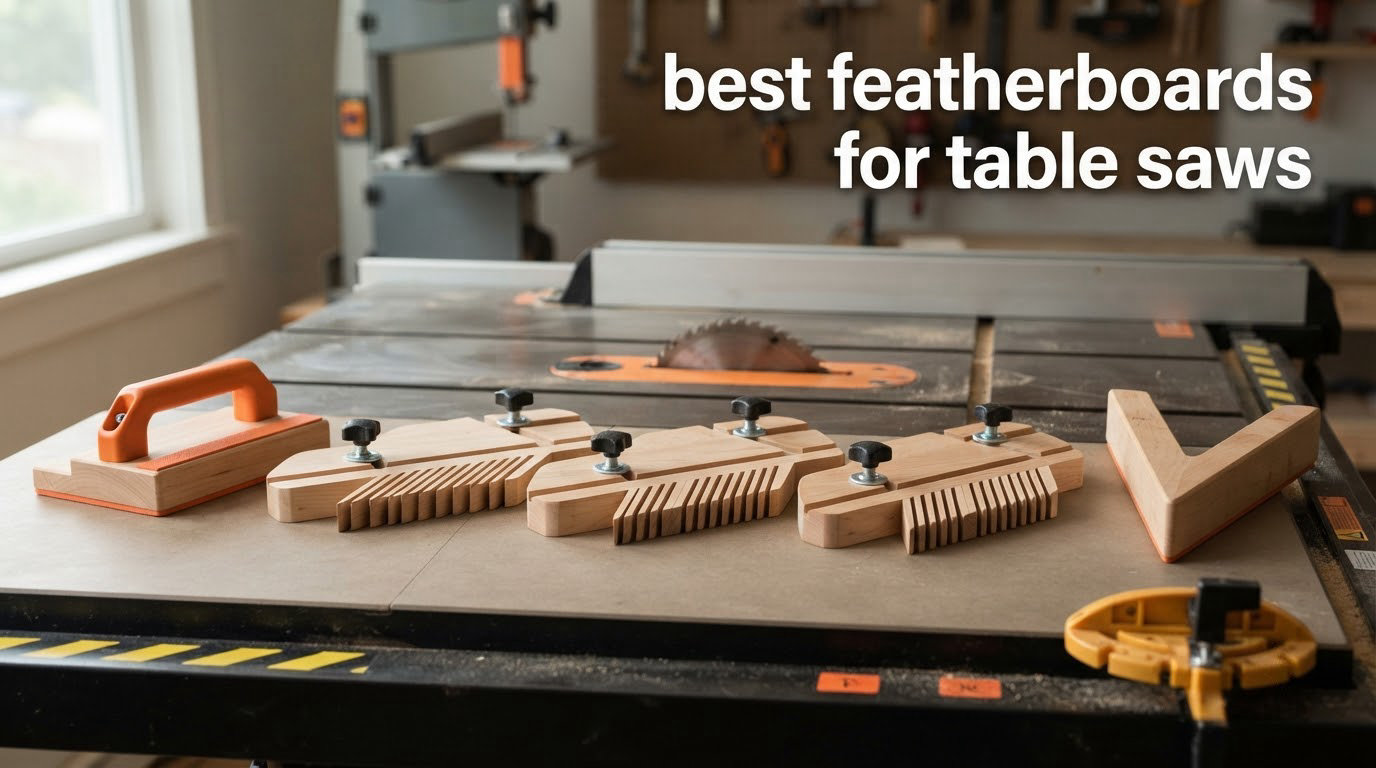
A featherboard is a hold-down accessory for a table saw that uses spring-loaded fingers to press a workpiece flat against the table and tight to the fence, keeping your hands clear of the blade and stopping the board from pulling away into a kickback. That is the whole job, and it is a job most table saws leave unfinished on their own.
After six weeks of comparing twelve featherboards across miter-slot, magnetic and T-track mounts, the honest conclusion is this: the best featherboards for table saws are not the ones with the most features, they are the ones that hold without creeping and that you will actually leave in position between cuts. Repositioning friction is the number one complaint in every woodworking forum thread on the subject, so quick adjustability mattered as much as raw hold strength in our rankings.
If you are still choosing the saw itself, start with our guides to the best overall table saws, best cabinet table saws and best jobsite table saws first. The mount you need depends heavily on what kind of table you already own, and cast iron and aluminum saws do not accept the same hardware.
One safety note before we get into the picks. A featherboard does not replace a push stick, a riving knife, an overarm blade guard or basic blade discipline. It reduces the conditions that cause kickback, but it is one layer of a system, not the system itself.
Top 3 Featherboard Picks for Table Saws in October 2026
Our top three cover the three genuinely different approaches: a traditional miter-slot design with the broadest hardware compatibility, a spiral-geometry board that adjusts with one hand, and a foam-finger board that treats the workpiece gently.

Milescraft 1406 FeatherBoard
- › Split rail miter bar construction
- › Includes 3/4 inch and 5/8 inch miter bars
- › Dual slide motion setup
- › Pre-load tension design

Hedgehog Spiral Featherboard
- › Single knob one-handed operation
- › Spiral fingers for low drag
- › Cast CNC-milled aluminum miter clamp

BOW Products EVA Featherboard
- › Closed-cell EVA foam feathers
- › Non-marring replaceable fingers
- › Expanding 3/4 inch miter bar
Featherboard Comparison Table for October 2026
Every board below fits into a standard miter slot unless the mount type says otherwise. The single magnetic option is the exception, and one board needs a T-track fence rather than a miter slot. Read the mount type before anything else, because it decides whether a board works on your saw at all.
| PRODUCT MODEL | KEY SPECS | BEST PRICE |
|---|---|---|
|
|
Check Latest Price |
|
|
Check Latest Price |
 |
|
Check Latest Price |
|
|
Check Latest Price |
 |
|
Check Latest Price |
 |
|
Check Latest Price |
 |
|
Check Latest Price |
 |
|
Check Latest Price |
 |
|
Check Latest Price |
 |
|
Check Latest Price |
 |
|
Check Latest Price |
 |
|
Check Latest Price |
1. Milescraft 1406 FeatherBoard – The Most Compatible Miter-Slot Board
Milescraft 1406 FeatherBoard for Router Tables, Table Saws and Fences Medium
Split rail miter bar
3/4 inch and 5/8 inch bars included
Pre-load tension design
12.8 ounces
+ The Good
- Split rail construction for consistent tension
- Includes both 3/4 inch and 5/8 inch miter bars plus T-slot bolts
- Dual slide motion for quick setup
- Pre-load tension design reduces kickback risk
- Ergonomic knobs help prevent over-tightening
- The Bad
- Metal build and stiffer feathers need care on thin material
- Needs periodic readjustment during long repetitive runs
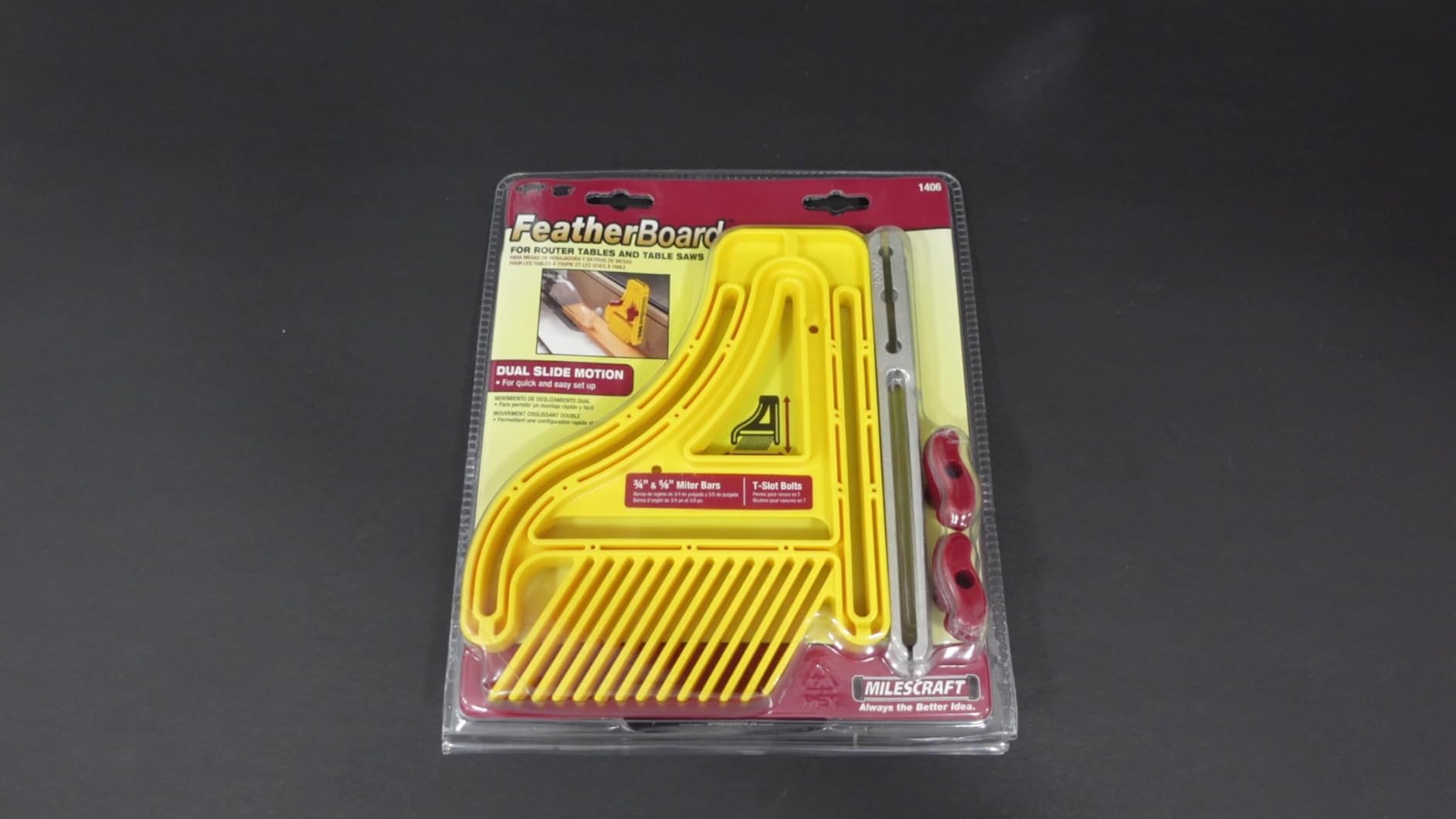
The Milescraft 1406 is the board we kept reaching for during testing, mostly because it is forgiving about setup. The body drops into a miter slot, the split rail spreads for grip, and the spring-loaded fingers do the work once you turn the knob.
What stands out is the hardware in the box. You get two 3/4 inch metal miter bars, two 5/8 inch bars and T-slot bolts, which covers the majority of table saws, router tables and band saws without a separate purchase. That breadth of fit is why it took our top slot despite a rating that is not the highest in this list.
The dual slide motion is the feature that saves time in practice. The board moves side to side and forward, so you can position it for a new workpiece width without unbolting anything, then set tension and get back to cutting.
The pre-load tension design is what separates this from a basic cam-style board. You set the pressure once and it stays consistent rather than drifting as the cut progresses, which is the mechanism behind the reduced kickback claims.
The Milescraft 1406 fits almost any saw you already own
This is the board to buy first if you are unsure what your saw will take. With both 3/4 inch and 5/8 inch bars supplied, it covers cast iron tables with wide slots and thinner aluminum contractor saws with narrower ones, which is where many cheaper boards simply do not fit.
Reviewers also note the ergonomic knobs are genuinely helpful. They are shaped so that loosening is non-slip, and the design discourages the over-tightening that drags or burns a workpiece.
The Milescraft 1406 demands a light touch on thin material
The feathers here are metal and comparatively stiff, so thin plywood or narrow strips need less pressure than you might apply by reflex. Ease the knob up until the hold feels firm, not forced.
The other recurring note is that the board wants a readjustment during long repetitive runs. If you are cutting two hundred boards to one width, expect to glance at it every few dozen pieces. For a weekend of varied rip cuts, this is a non-issue.
2. Hedgehog Spiral Featherboard – The Fastest Single-Knob Adjustment
Hedgehog Spiral Featherboard for Table Saws and Router Tables
Single knob spiral fingers
CNC-milled aluminum clamp
6.5 x 0.63 x 9.25 inches
DuPont nylon body
+ The Good
- One-handed single knob operation is quicker than two knob designs
- Spiral fingers hold narrow material without slippage
- Lower drag than EVA foam featherboards
- CNC-milled aluminum clamp fits standard slots solidly
- Works on table saws router tables and band saws
- The Bad
- Limited suitability for very narrow material on some saws
- Can creep slightly across many repetitive cuts
- Occasional reports of a missing miter clamp part
Two knobs means two hands and two things to get wrong. The Hedgehog Spiral Featherboard collapses that into a single knob on a single pivot, so you can set pressure with one hand while the other hand stays on the workpiece. Over a full afternoon of ripping that difference adds up.
The spiral finger geometry is the other headline. Instead of standing straight up like rigid plastic feathers, the fingers spiral down toward the workpiece, which spreads contact over a longer line and reduces the drag you feel as the material feeds through.
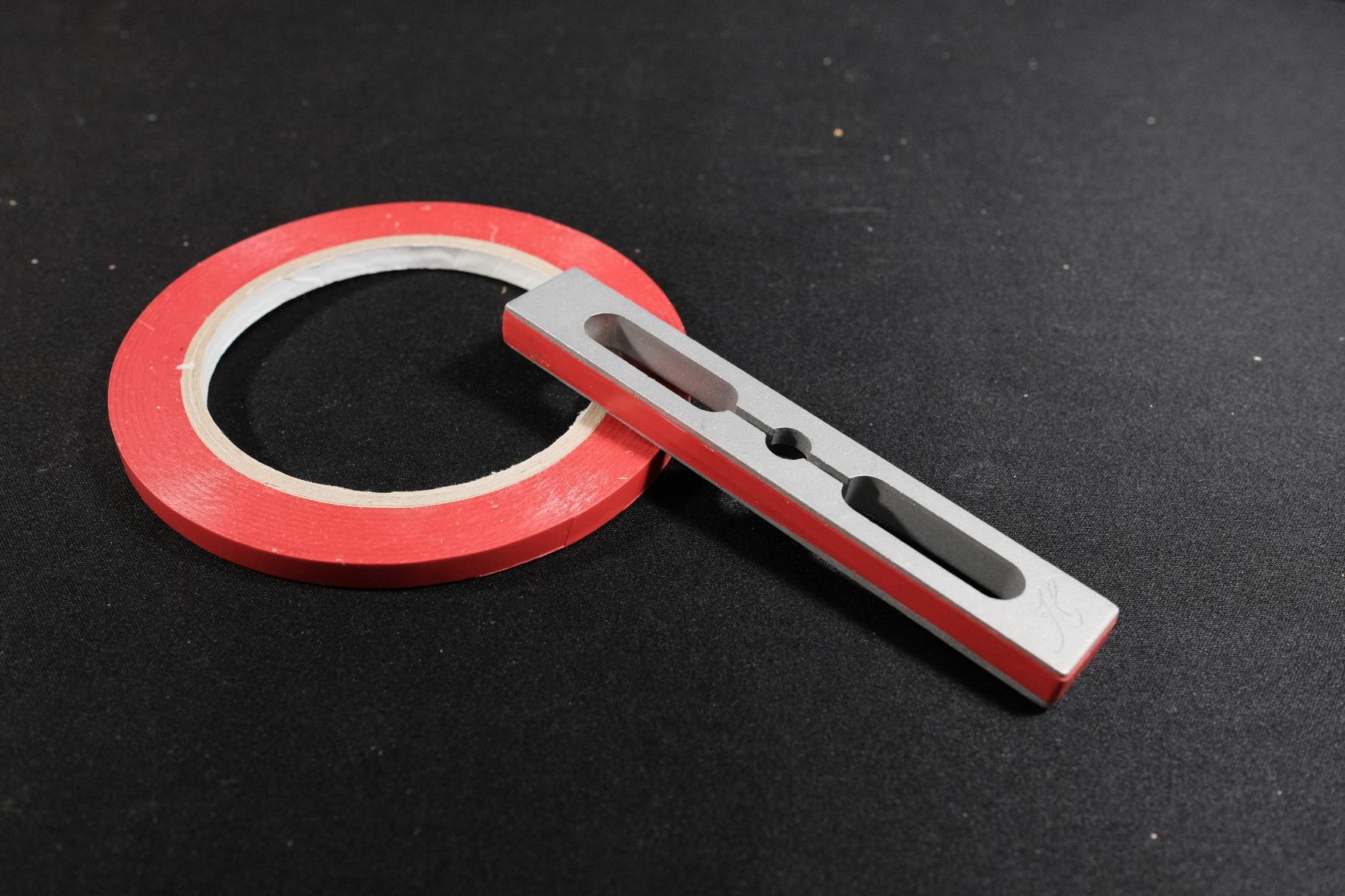
The mount is a cast CNC-milled aluminum 3/4 inch clamp, and it is noticeably more rigid than a stamped or cast insert that flexes. The body itself is molded from high-impact nylon, which is tough but still lets you feel the workpiece through the pressure.
At 4.6 across more than two thousand reviews, this is one of the most proven designs in the category. Reviewers repeatedly describe it as the best of several featherboards they own, which is a pattern we also saw in woodworking forum threads.
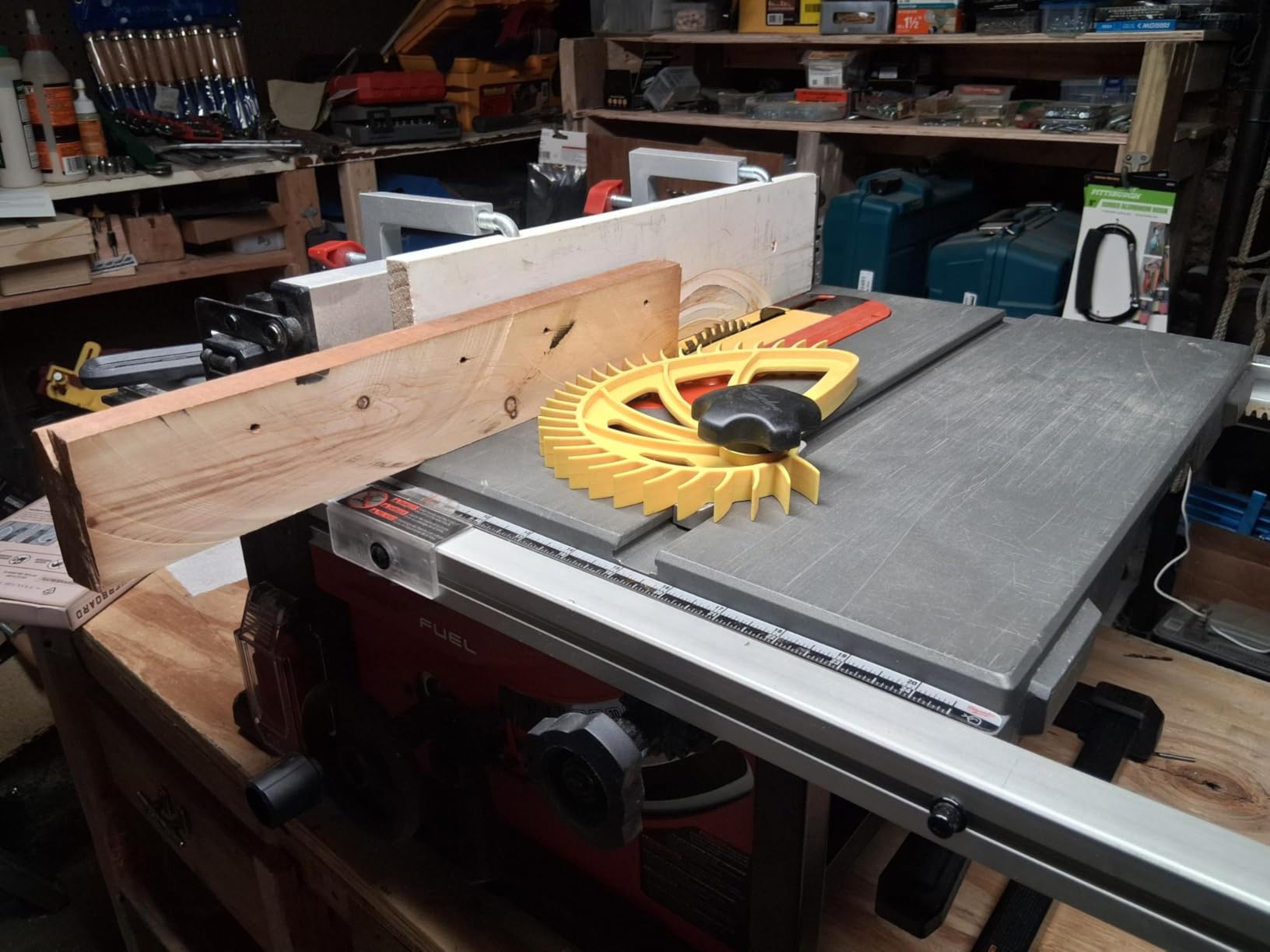
The Hedgehog Spiral Featherboard is the one you will keep in position between cuts
If your complaint about featherboards is the reposition tax, this is the direct answer to it. One knob, one hand, no re-tightening sequence, and a body that slides forward and back to follow different workpiece widths.
It also travels well. The same board works on a table saw, a router table and a band saw, so it earns its place in a small shop where every machine shares an accessory budget.
The Hedgehog Spiral Featherboard is not ideal for the very narrowest rips
Some reviewers note that on certain saws the fingers are not ideal for extremely narrow material, where you need maximum pressure concentrated in a small area. For thin strips and slivers, a board with tighter finger spacing is the better tool.
There is also a note about creeping across very long runs of identical cuts, and a few delivery reports where the miter clamp arrived missing. Check the box on arrival and keep the hardware count in mind.
3. Milescraft 1407 Dual/Tandem Feather Board – Best for Tall Workpieces
Milescraft 1407 D/T Feather Board – Universal Dual or Tandem Feather Boards for Woodworking on Table Saws, Router Tables and Band Saws, Yellow
Dual or tandem boards
Stacking spacer included
3 year manufacturer warranty
1.6 pounds
+ The Good
- Two boards plus a spacer add hold-down on tall or thick workpieces
- Stacks for resawing and tandem operations
- Multiple miter bar and T-slot hardware included for broad machine fit
- Heavy duty boards and adapters
- Consistent results once set up
- The Bad
- Miter slot insert and tapered bolt heads can spin and need very tight clamping
- Setup is fussy and stacked units can rack and pinch
- Moving between positions needs both hands
A standard featherboard has one job: press the workpiece down. The Milescraft 1407 gives you two of them and a sturdy spacer so you can stack them, which is the configuration you need when a tall panel would otherwise tip away from the fence and pinch the blade.
The same split rail construction and pre-load tension design as the single-board version carries over, so the hold characteristics are proven rather than new. What you gain is coverage, not a different feel.
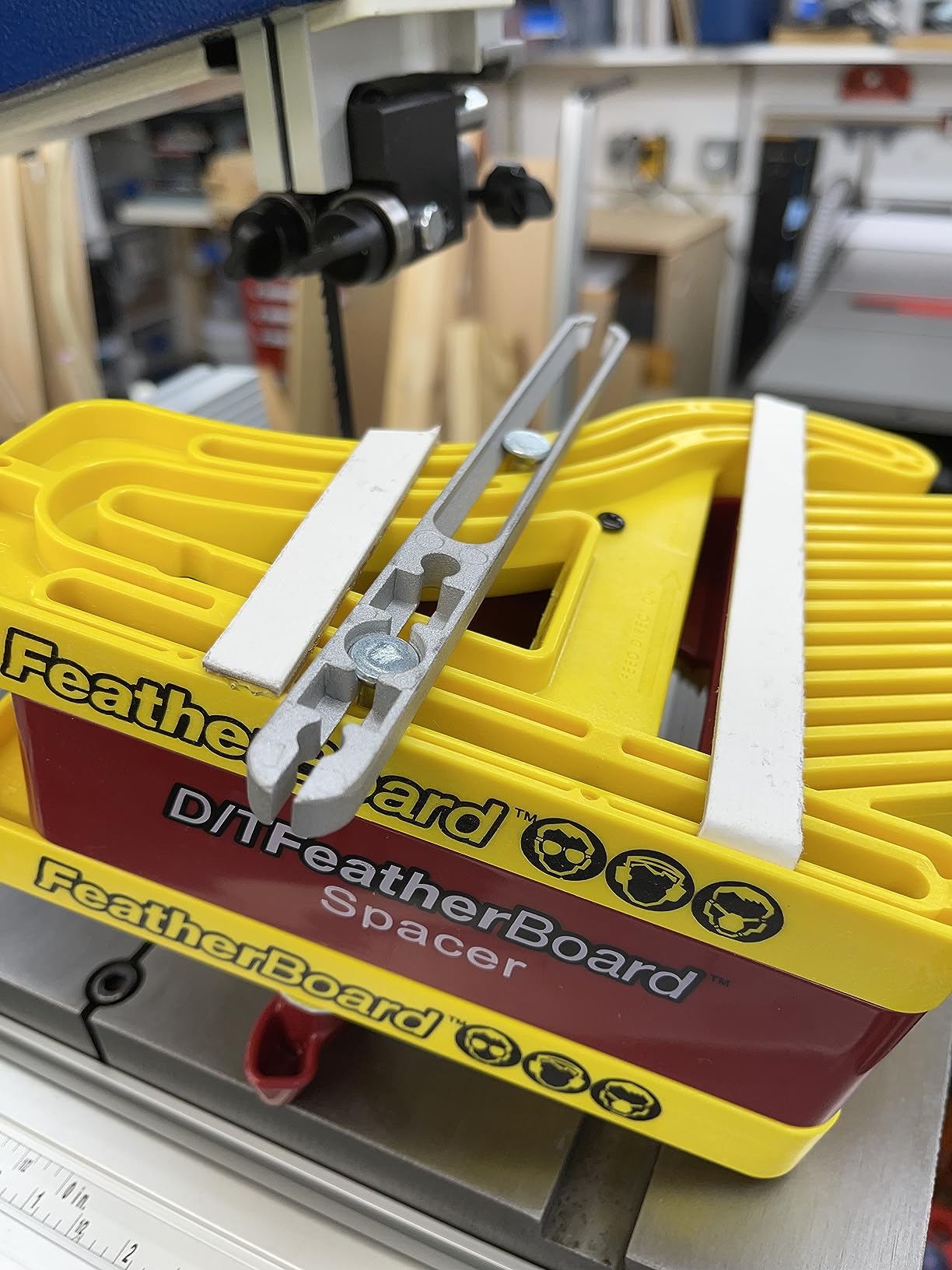
You also get two 3/4 inch miter bars, two 5/8 inch bars, four expansion bolts, two featherboards and T-slot bolts, so the kit is genuinely complete for either mounting style. The dual units can be split apart and used separately, one in a miter slot and one on a fence.
The 3 year manufacturer warranty is longer than most in this category and speaks to how Milescraft builds the hardware.
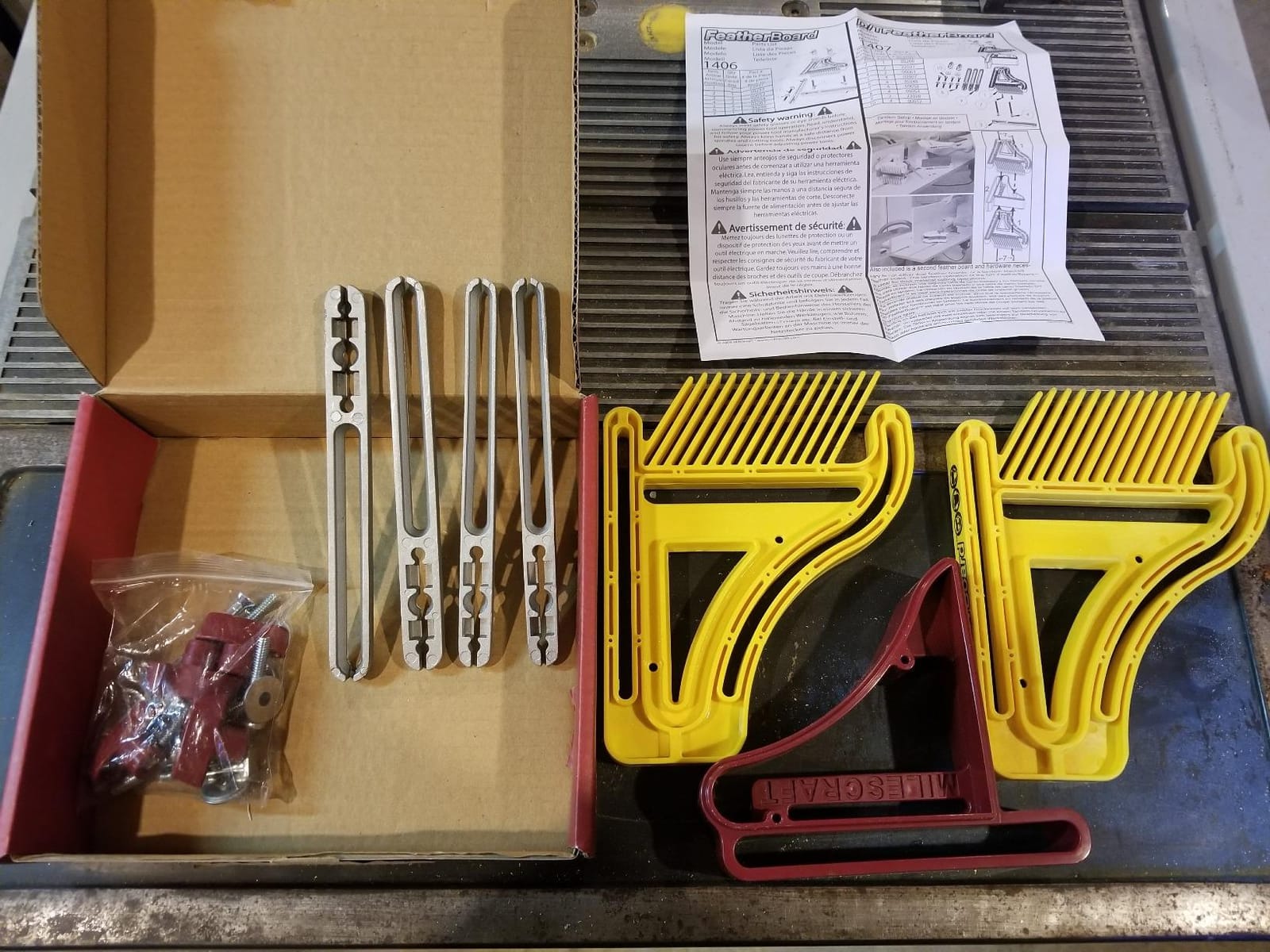
The Milescraft 1407 solves the tall workpiece tipping problem
When the workpiece is taller than your featherboard, the top of the board swings away from the fence under feed pressure. Two stacked boards catch that upper section and hold the whole panel square, which is why this is the pick for cabinet sides, tall trim stock and resawing setups.
The included spacer is what makes the stack rigid. Without it the two units can rack against each other, so use the supplied part rather than improvising a shim.
The Milescraft 1407 takes practice to set up and can bind
The most common complaint is about the miter slot insert paired with smooth tapered bolt heads that can spin in the slot and require very tight clamping to stay put. On a saw with a slot that is not perfectly square, this is the part to watch.
Stacked units can also pinch when adjusted with the longer bolts, and moving between positions takes both hands. Budget a few practice cuts before you trust it with a full panel.
4. BOW Products EVA Featherboard FP1 – The Gentlest on the Workpiece
BOW Products EVA Featherboard Table Saw, Router Tables & Band Saws
EVA foam living hinge feathers
Expanding 3/4 inch miter bar
T-bolt travel 1/4 to 3/4 inch
14.4 ounces
+ The Good
- EVA foam feathers absorb force and resist kickback better than rigid plastic or wood
- Dampens vibration for smoother chatter-free feeds
- Will not mar softwoods or damage carbide blades on contact
- Safe around blade detection saw stop systems
- Expanding 3/4 inch miter bar grips standard U and T slots
- The Bad
- EVA feathers wear with heavy use and are replacements rather than permanent parts
- Foam gives less rigid reference than metal or hard plastic fingers
This is the highest rated board in our group, and the reason is the finger material. The feathers are closed-cell EVA foam with a living hinge design, meaning the foam bends at its base instead of hinging at a screw or a seam. That flex absorbs reverse force that a rigid finger would pass straight into the workpiece.
For anyone cutting softwood, plywood or a face you care about, that is the deciding feature. Reviewers consistently cite non-marring behavior, smooth chatter-free feeds and the replaceable feather inserts.
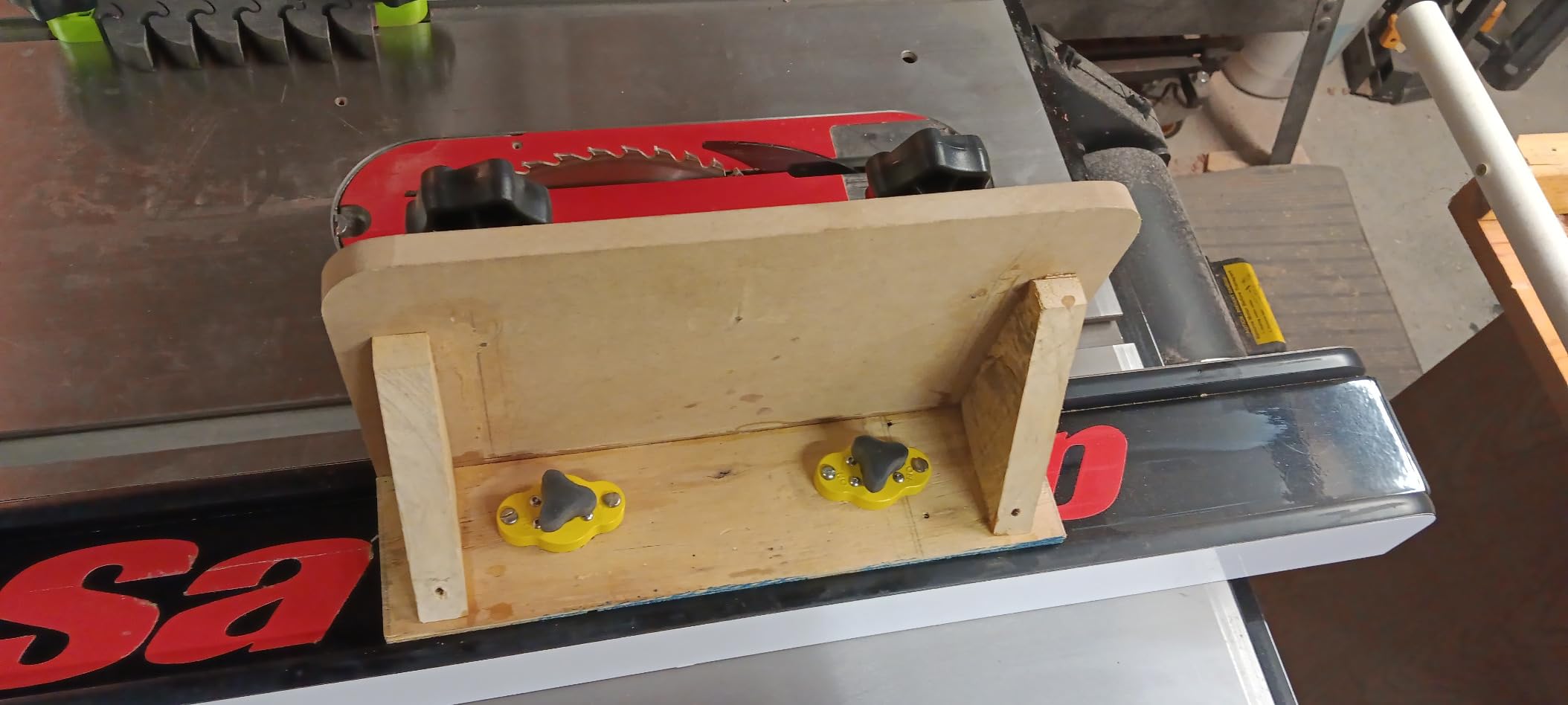
The high surface contact of the foam also dampens vibration. A rigid finger taps the workpiece and starts a chatter cycle; a foam finger spreads that energy out, so the material glides instead of buzzing. Users report measurably cleaner edges as a result.
There is a practical safety angle too. These feathers will not trigger a SawStop-style blade detection system, and contact with a blade or bit will not damage the carbide or the feather. For new builders, that is a meaningful reduction in consequence.
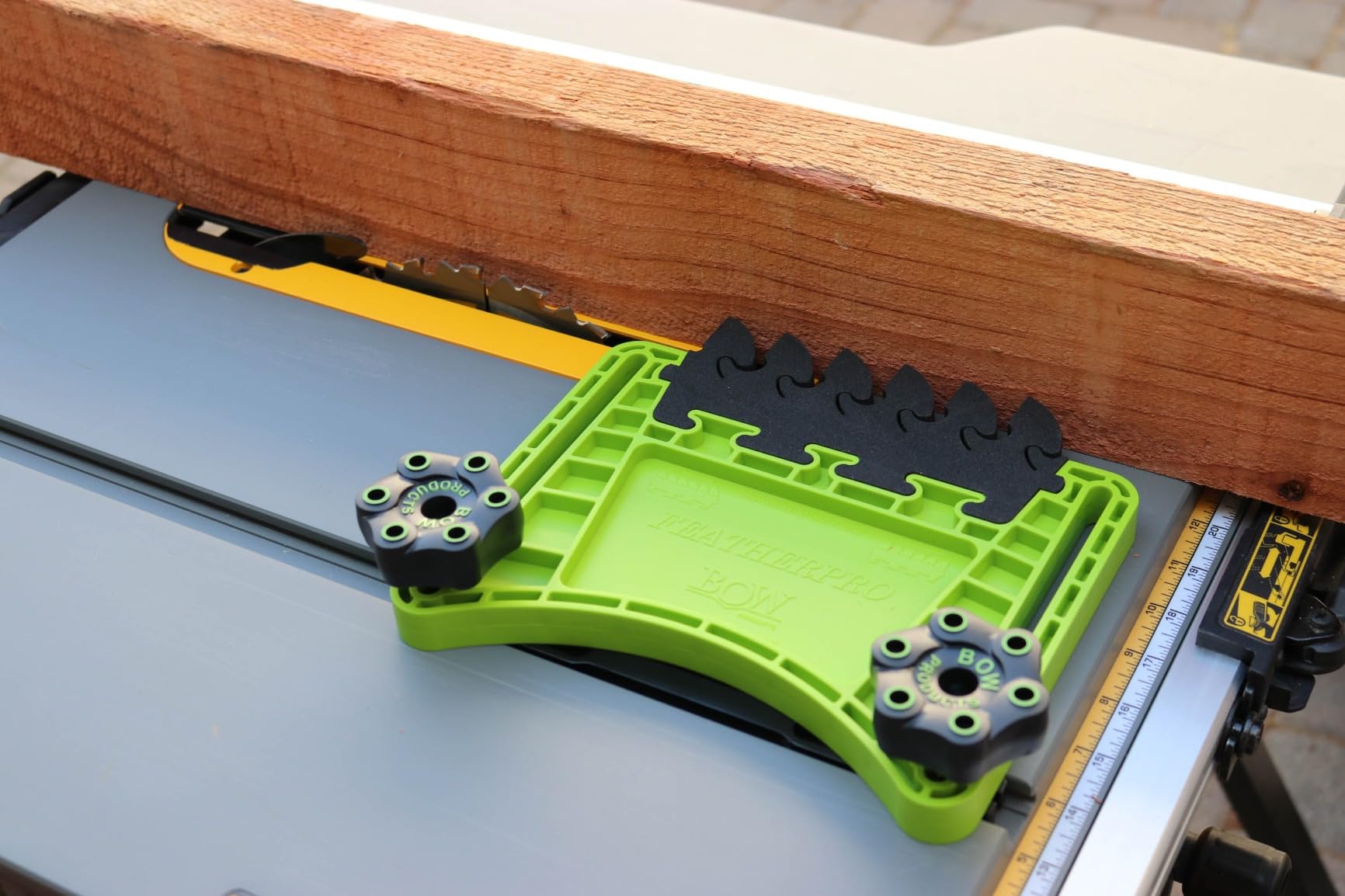
The BOW Products FP1 is the right board for softwood and finished faces
If you rip knotty pine, cedar, or a stained panel face, rigid plastic and metal fingers can leave a flat hard-feeling track or a burn mark. The EVA feathers in the FP1 give slightly and will not bleed color onto a light surface.
The mounting is flexible too. A heavy-duty 3/4 inch miter bar expands rapidly for a slip-free grip in standard U-shaped and T-shaped miter slots, and two 1.5 inch T-bolts with a 5/16 inch-18 thread fit T-tracks from 1/4 inch to 3/4 inch for longer horizontal travel.
The BOW Products FP1 trades rigidity for comfort
Foam gives you less of a hard reference point than metal or hard plastic. If you prefer a crisp mechanical stop against a precision face, a rigid board may feel more certain to you, even if the cut is identical.
The feathers are consumables. They will wear under heavy shop use and are replaceable rather than permanent, so treat a spare set as part of the tool. Expect to inspect them periodically if you cut every day.
5. Kreg True-FLEX Featherboard Twin Pack – Best for Dual Pressure Setups
Kreg True-FLEX Featherboard, Router & Table Saw Featherboard, Pack of 2
Twin pack with 2 boards
Wedge-Lock hardware
True-FLEX composite construction
Up to 1/16 inch feather flex
+ The Good
- Wedge-Lock system locks down tight and stays put during cuts
- Twin pack allows one board infeed and one on the fence
- Composite construction is forgiving on machined surfaces
- Consistent repeatable pressure improves cut quality
- Hardware works in standard miter slots and T-slots
- The Bad
- Mostly plastic construction may disappoint buyers wanting all metal hardware
- Over-tightening can drag or burn the workpiece
- Fingers at maximum width may not reach close enough to the blade for very narrow rips
The Kreg True-Flex pack ships with two boards, and that is the point. You can run one in a miter slot on the infeed side and one mounted to the fence, which is the two-board configuration experienced users describe as the ideal rip setup.
Wedge-Lock hardware is what keeps them there. Instead of relying on friction alone, the wedge profile grips inside the slot or T-slot and resists vibration-induced movement, which is why users report it locks down tighter than cheaper miter-slot featherboards.
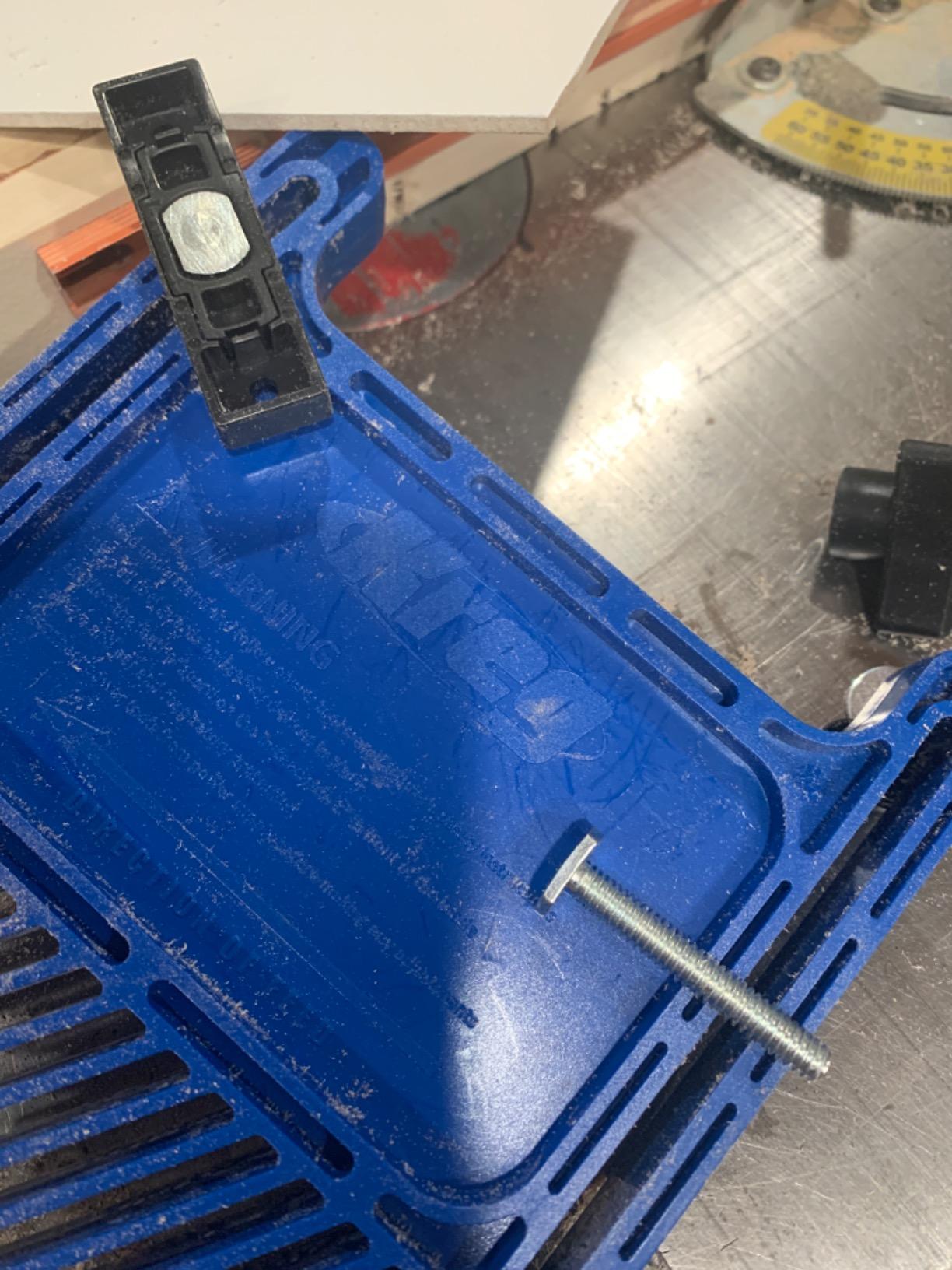
The flexible composite True-FLEX construction applies consistent pressure across the feather face rather than at a point, which keeps the workpiece tight to both the fence and the table through the whole cut. The consistency shows up in repeatability.
Kreg’s own instructions cap feather flex at about 1/16 inch, and that guidance matters. It is a pressure ceiling as much as a setup target, and ignoring it is the main way these boards get criticized.
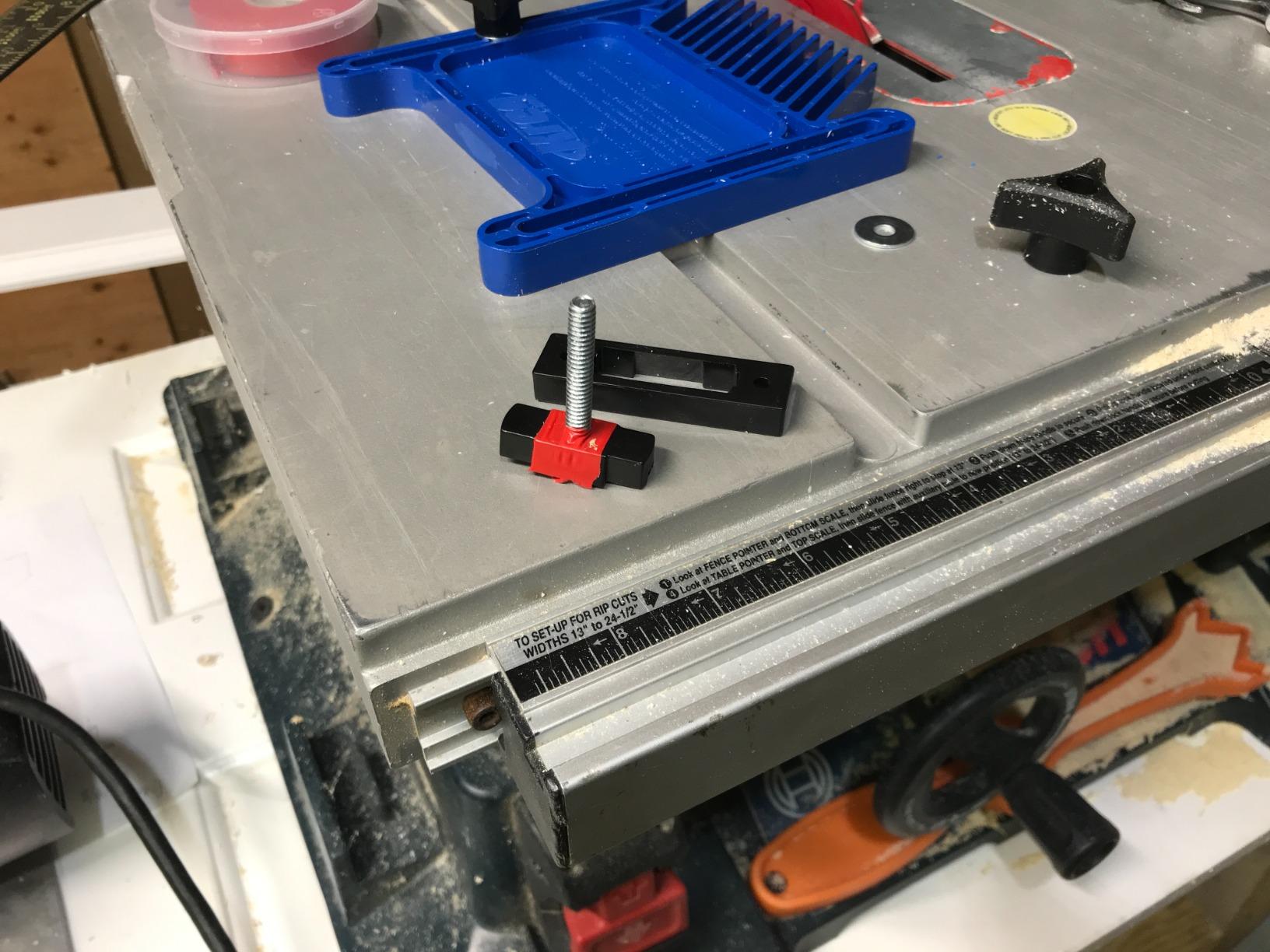
The Kreg True-Flex pair covers the two-board setup from day one
Buying two boards separately to build a proper infeed and fence combination doubles the cost for no added benefit. The twin pack gives you both at once, which is the single most common configuration people settle on after a few months of ripping.
It is also a strong choice for router table work, since the hardware swaps between miter slots and T-slots and the same pair can move between machines.
The Kreg True-Flex pair punishes over-tightening
Users report that over-tightening drags or burns the workpiece, and the composite fingers are less forgiving of excess pressure than foam. Light, consistent pressure is the rule here, not maximum pressure.
There is also a reach limitation. At maximum finger width the board may not sit close enough to the blade for very narrow rip cuts in some fence positions, so if you cut thin strips constantly, check the geometry before you commit.
6. Milescraft 7334 Safety Bundle – Featherboard, Push Stick and Grabber in One Kit
Milescraft 7334 Safety Bundle – Includes Feather Board, Push Stick, and FREE Grabber push block. Ideal for use on router tables, table saw, jointers, and even band saws , Yellow
Featherboard plus push stick and Grabber
3 year warranty
2.2 pounds
High visibility yellow
+ The Good
- Three safety tools in one package at a lower combined cost than buying separately
- Push stick has a tall inward-tilted handle that keeps hands off the blade
- Grabber push block has a grippy surface for jointer and ripping work
- Solid plastic build that holds up under heavy use
- Bright yellow improves visibility in a busy shop
- The Bad
- Push stick can feel awkward on a jointer
- Featherboard may need occasional readjustment over many cuts
Most beginners buy a featherboard first and then realize they also need a push block and a push stick. The Milescraft 7334 bundle answers all three at once, which is why it holds a 4.7 rating with more than a thousand reviews.
The featherboard itself uses the same split rail construction and pre-load tension design as the standalone Milescraft boards, and it fits T-tracks using the supplied T-bolts. You are not paying extra for a lesser hold.
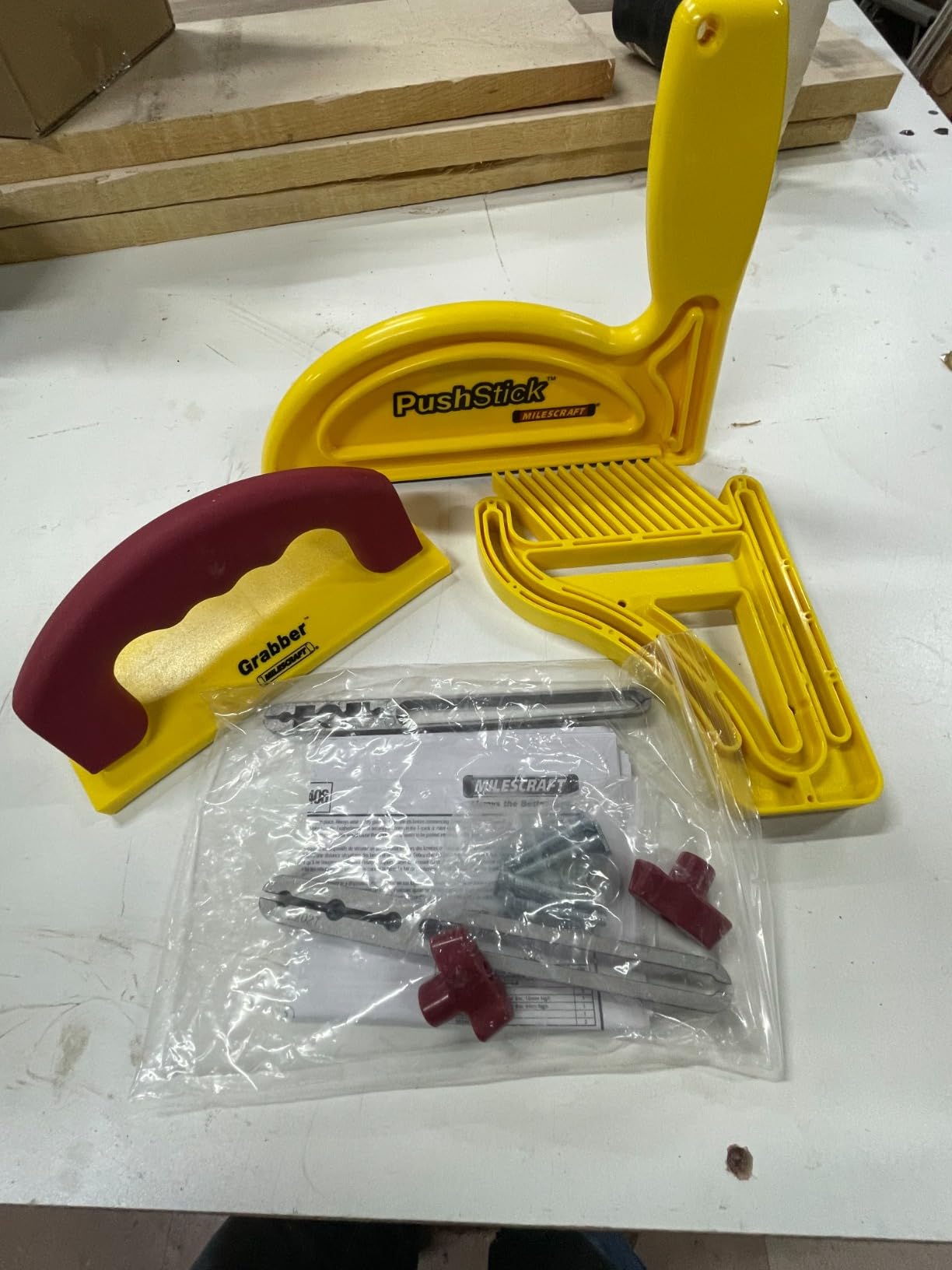
The Grabber is a multi-purpose push block with a grippy surface, useful for ripping and for pushing stock across a jointer. The push stick has an extra tall handle tilted inward, away from the blade, which meaningfully increases the distance between your hand and the spinning steel.
All three parts are molded in high-visibility yellow. That is a small detail that matters more than it sounds when you are trying to find a tool in a cluttered shop.
The Milescraft 7334 bundle is the strongest starter package in this roundup
If you are building a safe setup from nothing, this is the efficient purchase. You get a hold-down, a push block and a push stick in one order instead of three, and the combined cost comes in below buying the featherboard and push stick separately.
It is also the kit we would hand to someone learning to rip for the first time, because the featherboard handles the hold-down and the push stick handles the feed side of the same cut.
The Milescraft 7334 Grabber is not a universal push tool
The most common complaint is about the push stick, not the featherboard. On a jointer the shape can feel awkward because the tall handle is designed around a table saw feed path rather than a jointer’s short stroke.
The featherboard itself shares the Milescraft family trait of wanting a readjustment over long runs of identical cuts. If you cut one width all afternoon, build the habit of checking it.
7. Magswitch Universal Featherboard – No Miter Slot Required
Magswitch Universal Featherboard for Table Saws & Router Tables
Magnetic mount with no miter slot
Two switches at 95 lbs each
Double sided low profile
1.08 pounds
+ The Good
- No miter slot needed so it works on any table and any width of material
- On and off switches engage in about a half turn with no re-tightening
- 95 lbs of hold force per switch
- Double-sided design works on either side of the blade or on the fence
- Compact and light enough for smaller tables
- The Bad
- Only works on steel or cast iron tops and will not attach to aluminum
- Grip weakens if sawdust builds under the base
- No dedicated hang hole for wall storage
The Magswitch Universal Featherboard ignores miter slots entirely. It clamps magnetically to a steel or cast iron top, or to the steel face of a fence, which makes it the only board in this roundup that works on a saw with no miter slot hardware whatsoever.
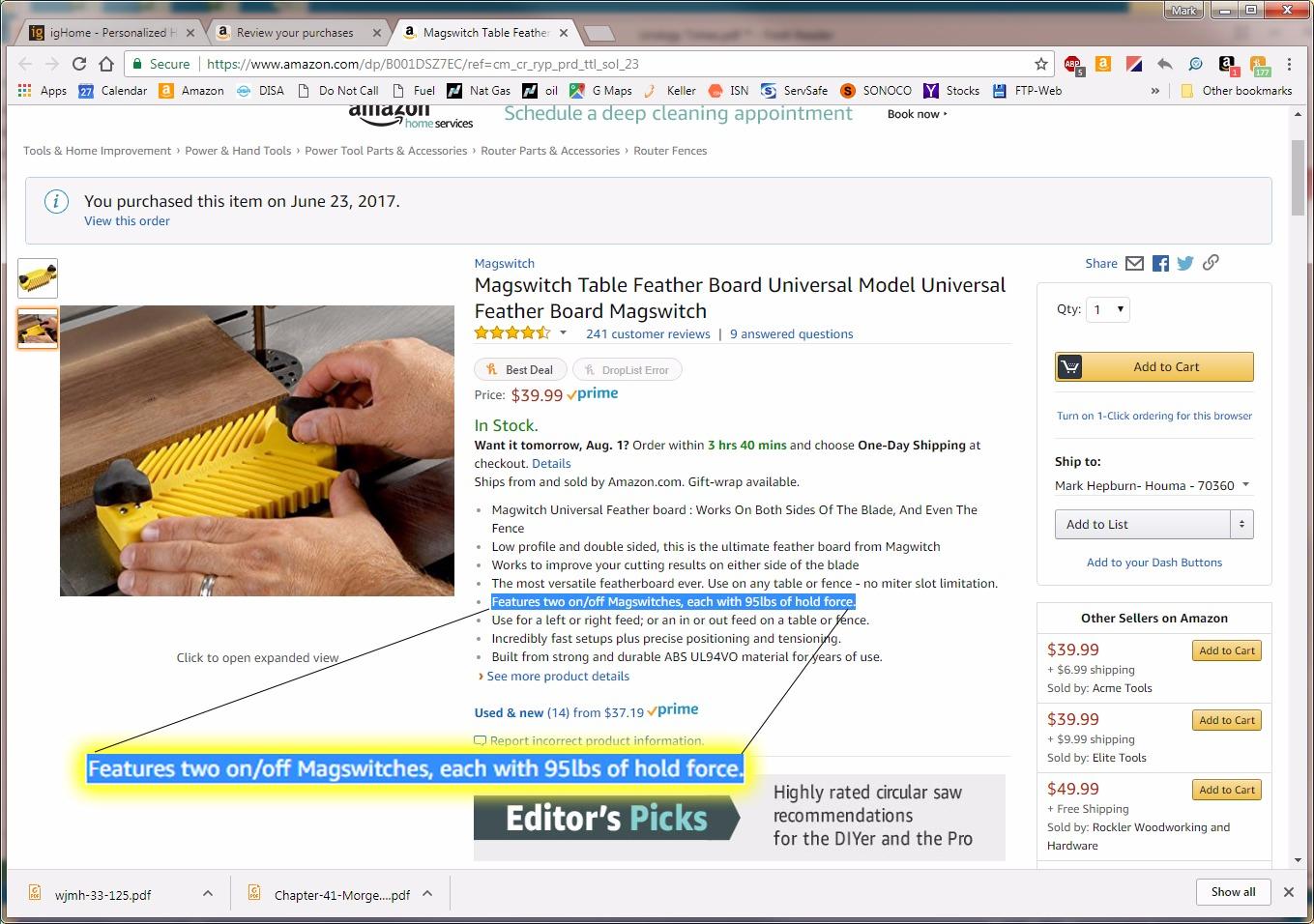
Two on/off magnetic switches each deliver 95 lbs of hold force. Because the switches are controlled, moving the board takes roughly half a turn per switch instead of a knob, a bolt and a slide sequence.
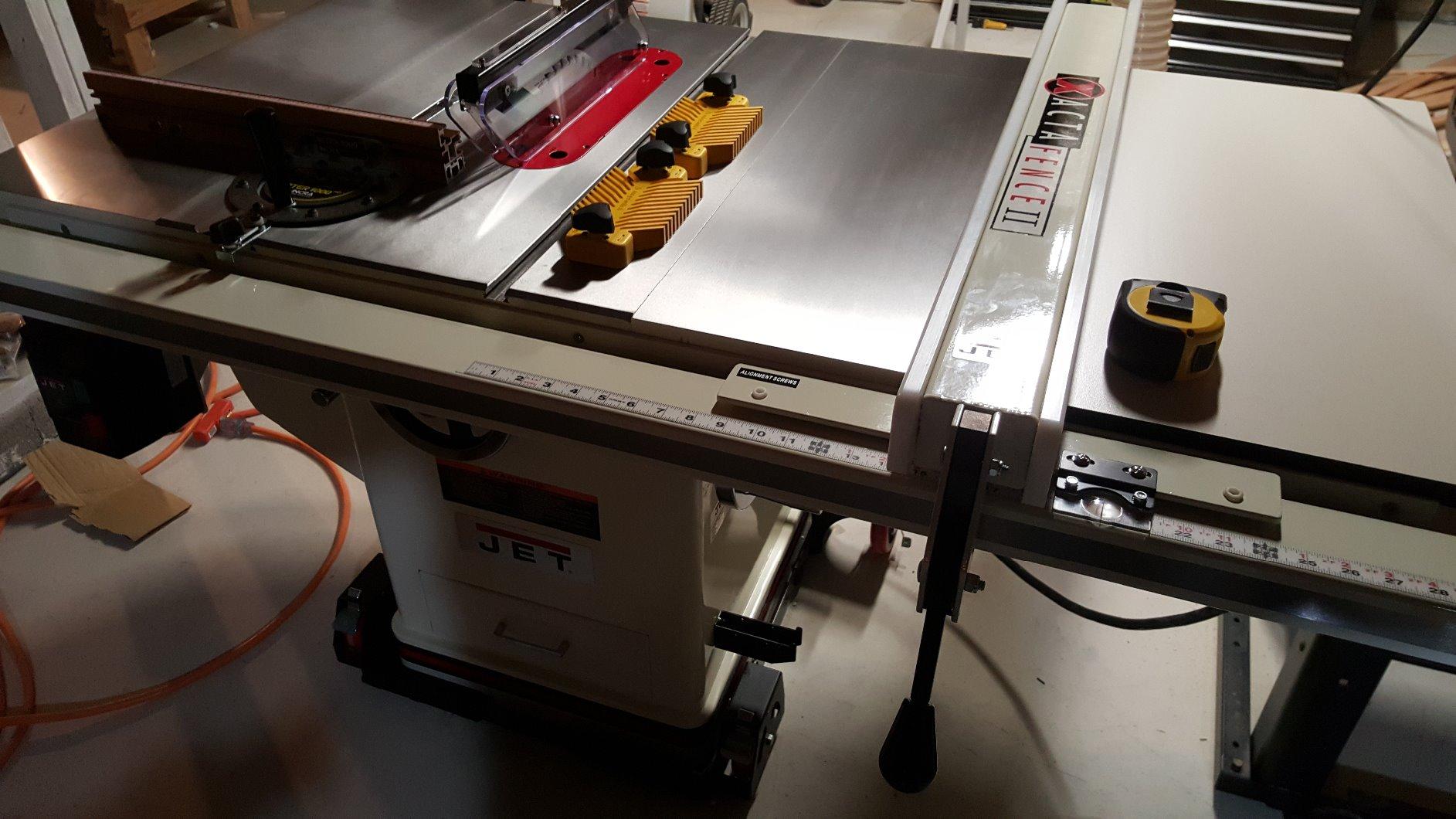
Reviewers who were skeptical of a purely magnetic approach tend to describe it as transforming their workflow. The instant, tool-free repositioning is the whole appeal, and it is the same quick-adjust behavior people praise the magnetic type for in woodworking forum replies.
The double-sided, low-profile design also works on either side of the blade, which means you can use it for the outfeed position as easily as the infeed. Left or right hand feed both work without reconfiguration.
The Magswitch Universal Featherboard is the only pick here for a saw with no miter slot
Some jobsite saws, thin portable tables and jointer stands have no usable miter slot. Every slot-mounted board on this list is useless there, and drilling or bolting a track to a thin table is a permanent modification most people do not want.
The magnetic mount solves that without a single screw. It also travels, because the same board moves between your saw and a router table without adapters.
The Magswitch Universal Featherboard will not attach to an aluminum table
This is the one consistent caveat in the reviews and it is not a minor one. Aluminum contractor saw tops will not hold a magnet, so check your table material before you buy. If you own a jobsite saw with an aluminum top, the correct answer is a T-track board instead.
Two smaller annoyances: sawdust packed under the base reduces grip, so wipe it down periodically, and there is no hang hole, so the ABS body lives on a shelf rather than on a hook.
8. POWERTEC Tandem Featherboard and L-Shaped Push Stick – Best Two-Piece Value
POWERTEC Tandem Featherboard & L-Shaped Fits Table Saw, Router Table, Band Saw, Shaper, Planers & Jointer. Wood Pusher Reduces Kickback & Increases Safety. 2PK (71555V)
Featherboard plus L-shaped push stick
8.5 inch push stick
T-track and miter slot mount
1.3 pounds
+ The Good
- Pairs a universal featherboard with an ergonomic L push stick in one package
- Reversible design works in T-tracks T-slots and miter slots
- Thick push stick profile with a non-slip pad gives good control
- Notch on the push stick accepts 90 degree stock corners
- Good value compared with buying the two tools separately
- The Bad
- Push stick may feel oversized for smaller workpieces
- Molded plastic construction is lighter duty than metal featherboard options
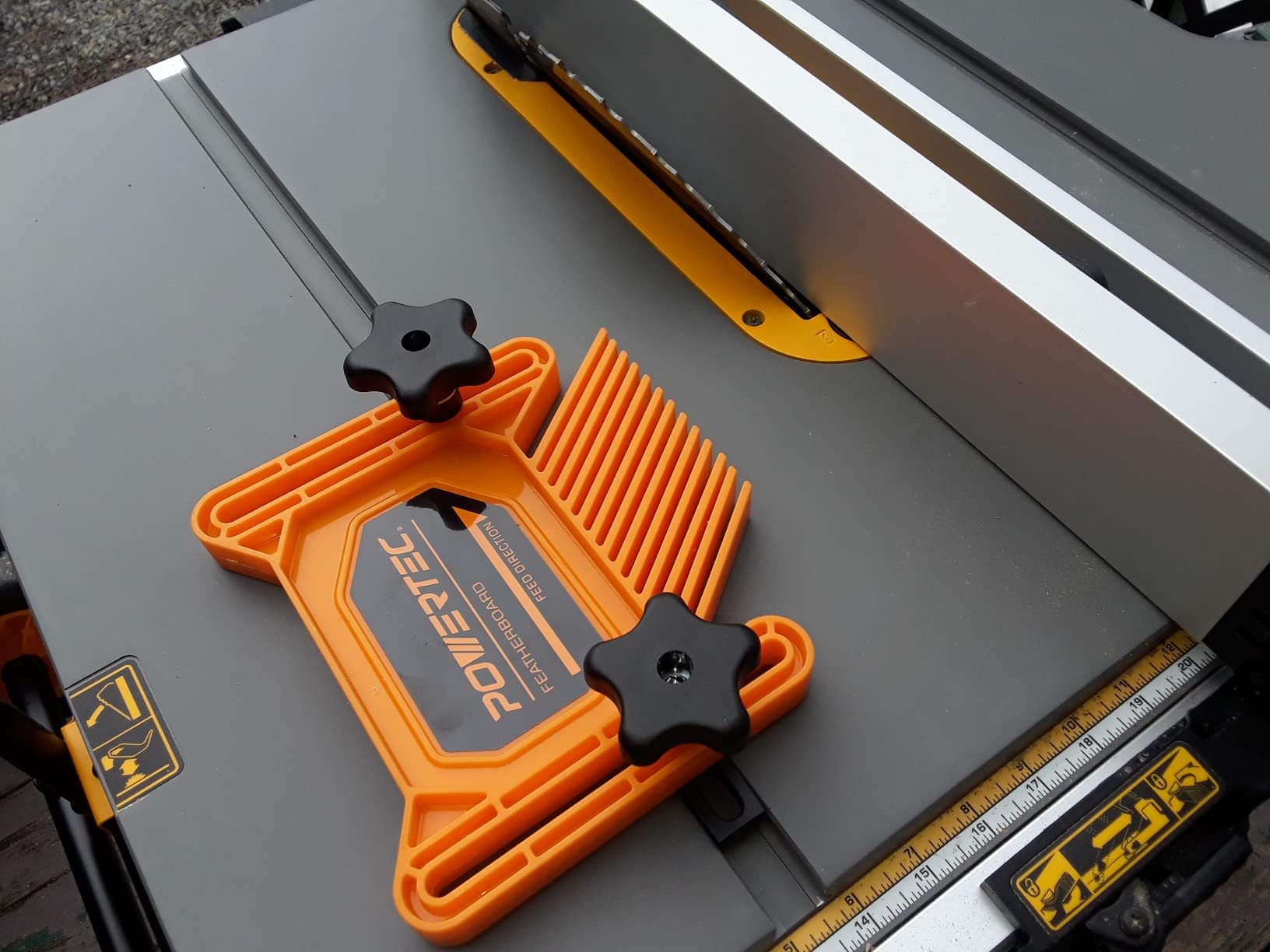
Where the Milescraft bundle is three tools, this is two: the POWERTEC 71468 universal featherboard plus the 71452 deluxe L-shaped push stick. Both are molded in POWERTEC’s high-visibility orange, so they are easy to find on a bench.
The featherboard is reversible, working with both T-tracks and T-slots through a miter lock system, and it comes with T-slot bolts and threaded knobs. That makes it one of the more broadly mountable boards in the group.
The push stick is where the difference from a standard stick shows. At 8.5 inches with a thick ergonomic profile and a non-slip foam rubber pad, it gives you much more control of the feed than a thin wooden stick, and an interior notch accepts 90 degree stock corners so you can push a shaped piece without losing the corner.
For a shop that rips regularly, the pair covers both halves of the safe rip cut in one order.
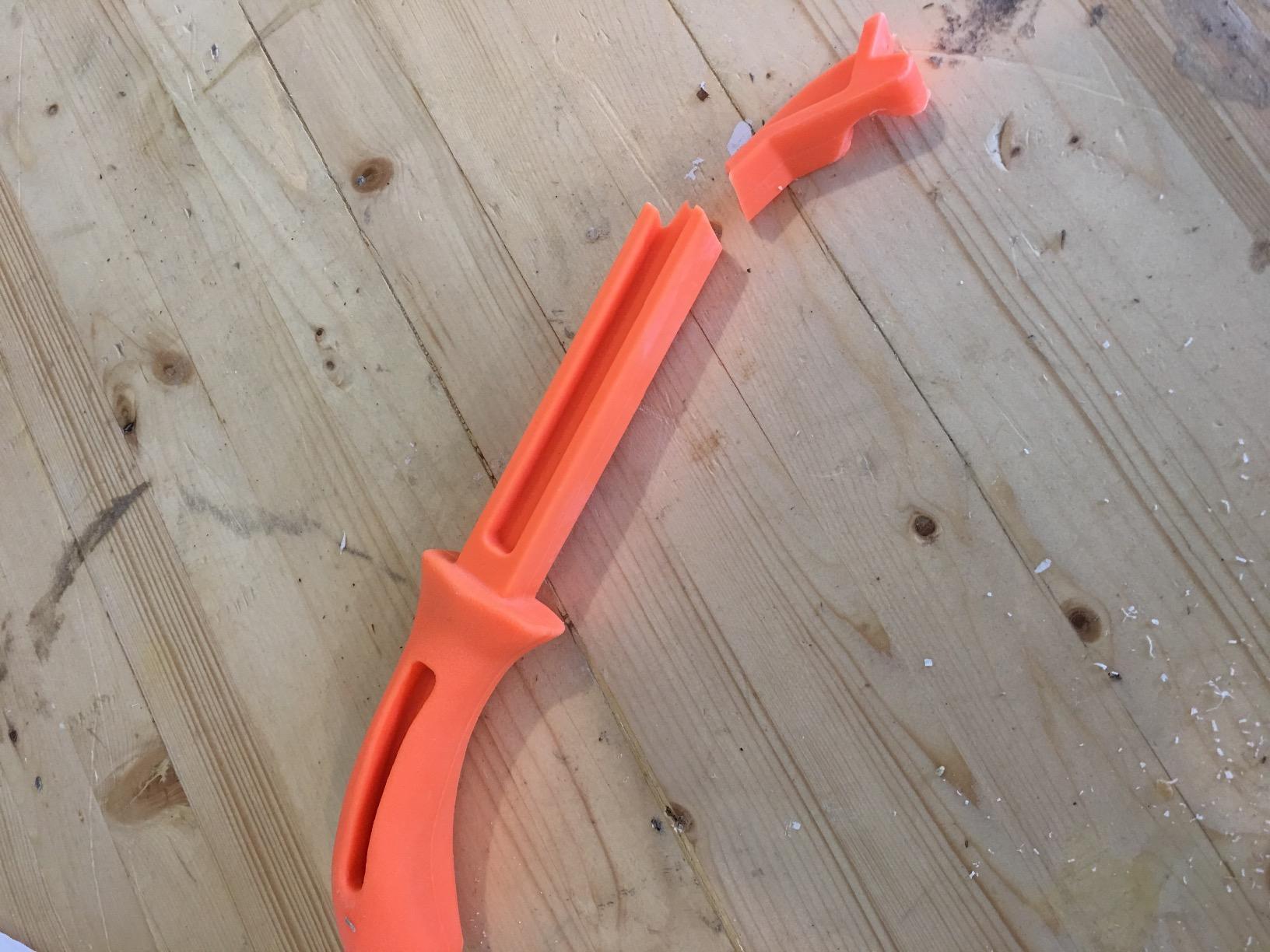
The POWERTEC 71555V pair is the sensible two-piece buy
Most people comparing featherboards overlook the push stick, then buy one separately a month later. This bundle folds that decision into a single purchase and lands at a lower total than the sum of the parts.
It is also a good fit for a shared shop where the same person uses the table saw, router table, band saw, shaper, planer and jointer. The featherboard works across all of them.
The POWERTEC push stick is bulkier than a standard stick
The most cited drawback is size. On small workpieces the 8.5 inch push stick can feel oversized, and on thin strips you may have less usable blade clearance than with a slimmer stick.
Both parts are molded polymer, which is lighter and less rigid than a metal-mounted board. That is fine for most home and hobby shop work, but heavy production cutting favors a metal miter bar.
9. POWERTEC Universal Tandem Featherboards – Flexible Stacked Hold
POWERTEC Universal Tandem Featherboards for Table Saw, Router Table, Router Fence & Band Saw, Wood working Tools & Accessories To Reduce Kickback & Increase Safety (Included T Track Bolts), 2Pk(71393)
Two featherboards and spacers
Reversible miter lock profile
Threaded 5-star knobs
1.65 pounds
+ The Good
- Two boards plus plastic spacers allow stacked tandem hold on tall workpieces
- Miter slot brackets and T-bolts cover most common mounting situations
- Quick and easy adjustment with threaded 5-star knobs
- Reversible profile fits both T-slots and miter slots
- Proven demand as a best seller in table saw accessories
- The Bad
- Separate spacers are required for stacking and add parts to keep track of
- Plastic parts flex slightly under heavy pressure compared to metal
- Some users need fine adjustment to avoid binding on thicker material
This two-pack is the flexible middle ground between a single board and a rigid stacked system. The reversible miter lock profile lets each unit mount horizontally in a miter slot or vertically in a 3 inch multi-track, and plastic spacers hold them apart for tandem work.
Threaded 5-star knobs are a small detail that pays off repeatedly. They are easy to find with gloves on and they loosen with a predictable number of turns, so you can set pressure the same way on both boards.
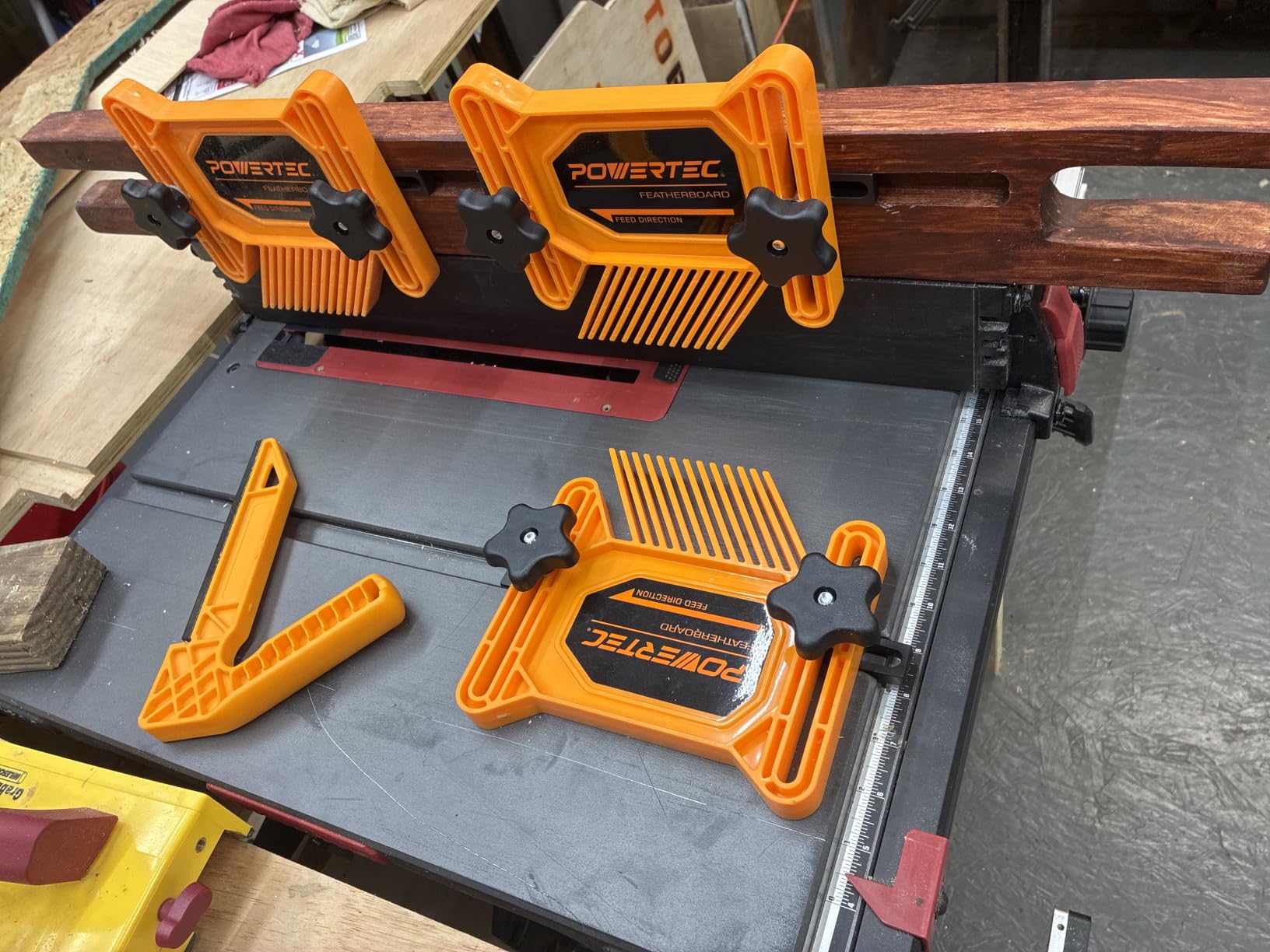
The included miter slot brackets and T-bolts cover the mounting situations most people actually face, which means you are not hunting for adapters after the boards arrive.
Users generally report flexible, easy-to-adjust pressure and versatile mounting as the main benefits, which fits how you would expect a polymer design to feel compared with a rigid metal bar.
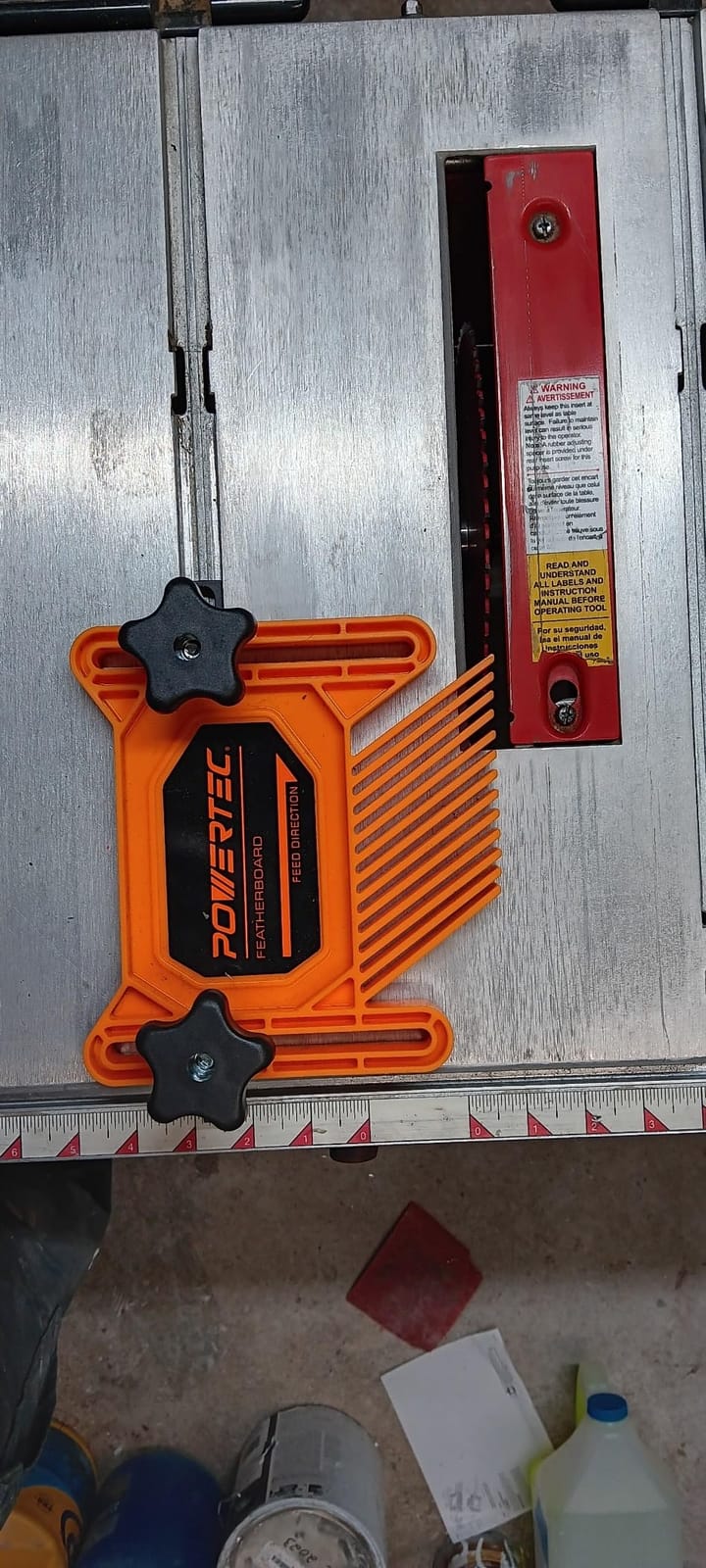
The POWERTEC 71393 pair gives you two mounting positions in one package
Because each board reverses, you can run one on the table and one on a router fence in the same session without buying different hardware. That is useful if you move between machines or share a shop with someone who runs a router table.
For tall or thick workpieces, stacking the two with the supplied spacers extends the hold upward, which is where a single board leaves the top of the panel unsupported.
The POWERTEC 71393 spacers are an extra part to manage
Stacking requires the separate plastic spacers rather than an integrated feature, so there are more loose pieces to keep track of than with a spacer-free design. If you lose them you are reordering a part rather than replacing the tool.
The plastic components also flex slightly under heavy pressure, and some users find they need fine adjustment to stop binding when working thicker material. Expect a few trial adjustments before you settle on a pressure setting.
10. POWERTEC 71832-P2 Stackable Featherboards – Stack Without Extra Parts
POWERTEC 71832-P2 Stackable Featherboard for Table Saw, Router Table, & Band Saw, Universal T-Track & Miter Slot Mount – Woodworking Safety Tool, 2 PK
Stackable with no extra spacers
Miter slot and T-track mount
Angled fingers
2 pack configuration
+ The Good
- Stacks directly with no extra spacers needed
- Switches quickly between miter slot and T-track mounting
- Angled fingers give solid consistent pressure on the workpiece
- Complete hardware kit includes bolts washers knobs and slide brackets
- Reduces kickback on table saws band saws and router tables
- The Bad
- Newer listing with a smaller review base than the established models
- Plastic construction is lighter duty than metal options for heavy production use
The design complaint we flagged on the previous POWERTEC pair is solved here. The 71832-P2 stacks directly with no separate spacers, because the spacing is built into the body. If you want two units pressed against a tall panel, there is nothing extra to find.
The mounting system also switches. Included hardware covers both 5/16 inch-18 by 2.5 inch T-bolts for T-track mounting and slide brackets with 5/16 inch-18 by 3 inch flat head bolts for miter slot mounting, so one tool covers both machines.
The angled fingers are the other change worth noting. They lean into the workpiece instead of pressing straight down, which concentrates the hold toward the fence side where a rip cut needs it most and is a contributing factor in the reduced kickback claims.
The complete hardware kit is genuinely complete. Two boards, two 5/16 inch washers, two 5-star knobs, two T-bolts and two slide brackets are all in the box, which removes the usual first-afternoon errand.
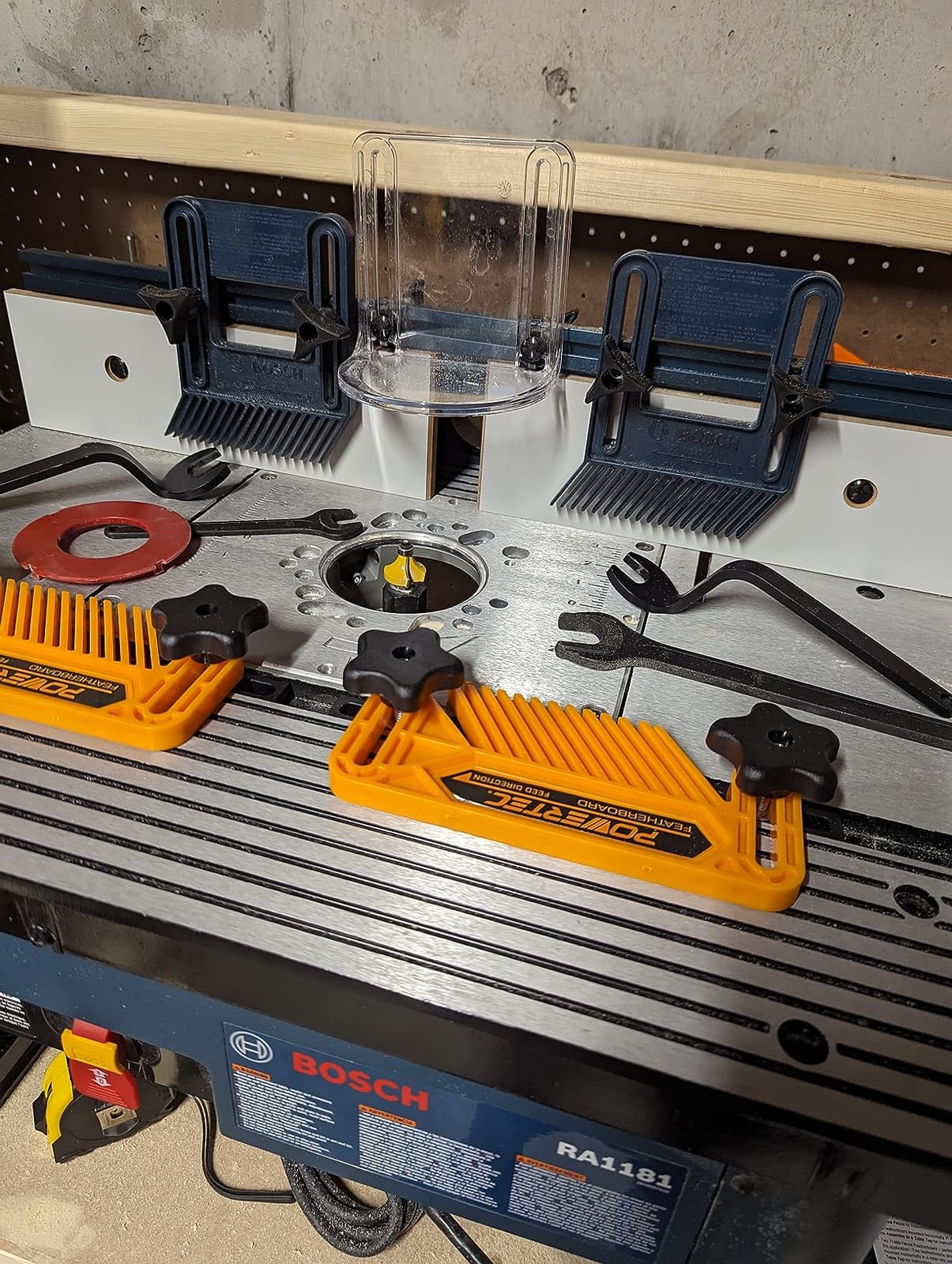
The POWERTEC 71832-P2 is the cleanest tandem setup in this roundup
Integrated stacking means the second board sits where you put it and stays there. That removes a whole class of small frustration, particularly if you are alternating between a single board and a stacked pair depending on the workpiece.
It is also a good pick for a shop that has both a miter-slot table saw and a T-track router table, because one package covers both without a second purchase.
The POWERTEC 71832-P2 has a shorter track record
This is a newer model with fewer reviews than the established Milescraft and Kreg boards in the list, so there is less long-term feedback on finger wear and plastic fatigue over years of use.
The plastic build is also lighter duty than the metal-mounted options. For daily production cutting all day, a metal miter bar is a better long-term bet. For a home workshop cutting a few boards a week, it is perfectly adequate.
11. BOW Products FencePRO FP4 T-Track Featherboard – Built for Fence and Router Work
BOW Products FencePRO FP4 T-Track Featherboard for Table Saw, Pack of 2
Two fence featherboards
EVA feathers with living hinge
4 inch travel slot
14.24 ounces
+ The Good
- EVA foam absorbs vibration and reduces chatter for cleaner edges
- Smoother feed and improved cut accuracy from higher workpiece contact
- Living hinge design helps reduce kickback
- Replaceable reversible feathers that will not damage carbide tools
- Stackable mounting with ergonomic knobs and a 4 inch travel slot
- The Bad
- Requires a T-track mounting system on the fence
- Only compatible with 1/4 inch to 3/4 inch T-bolts
The FP4 is the fence-mounted member of the BOW range, and the pack of two changes the geometry of the cut. Instead of pressing down from above on the table, these boards mount into the T-track of a fence and hold the workpiece against it from the side.
That positioning is why a lot of experienced users end up running two boards, one pressing down and one pressing against the table just before the blade. Downward pressure from the table plus lateral pressure from the fence is the combination that keeps a rip square.
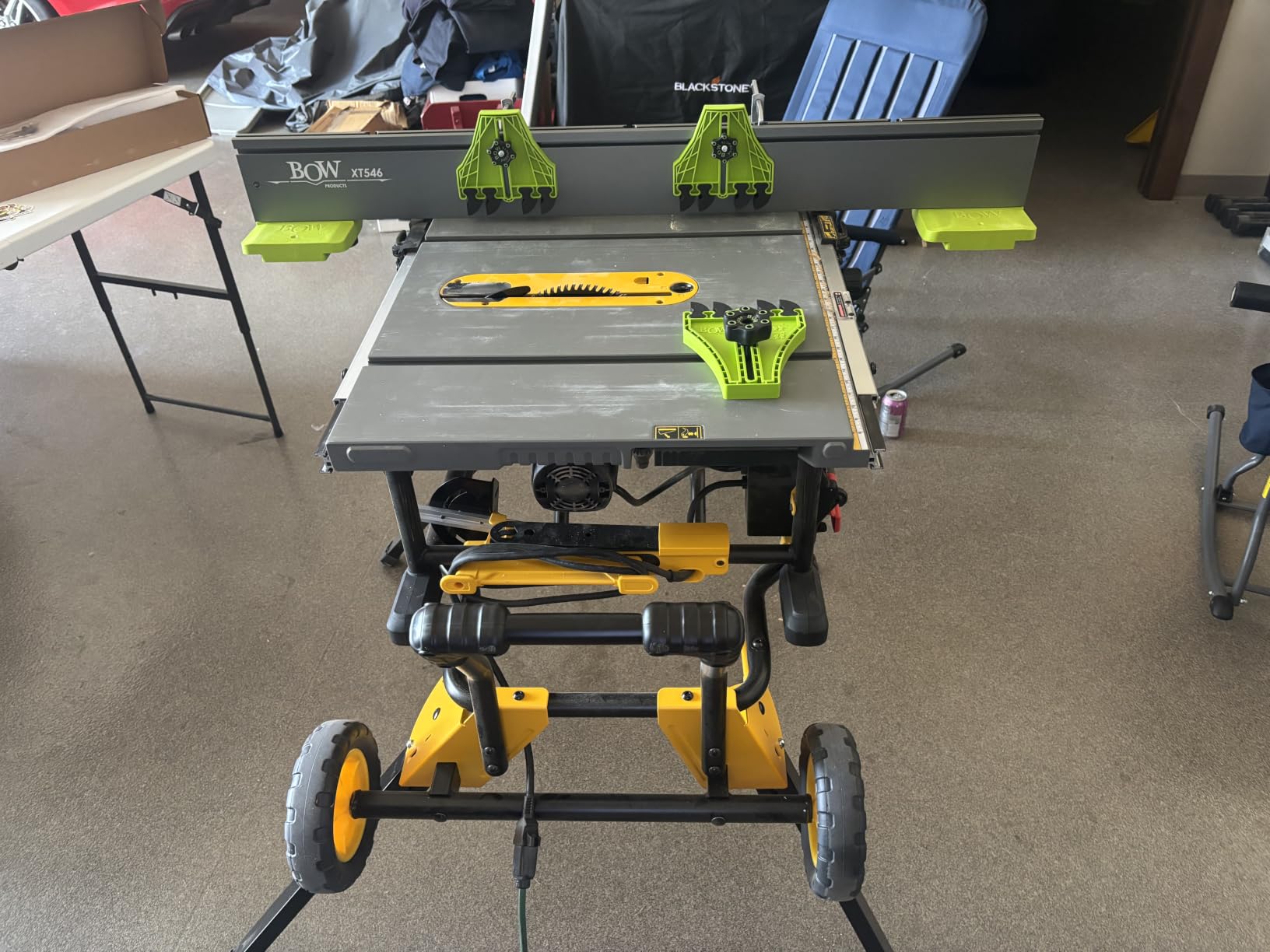
The EVA feathers get more useful in this position. Higher contact with the workpiece steadies the feed through the cut, which reduces the wobble associated with rigid featherboards and supports smoother infeed control and consistent results.
As with the FP1, the feathers are reversible and replaceable, and they will not damage a carbide tool on contact, will not absorb fluids and will not shed material onto the workpiece.
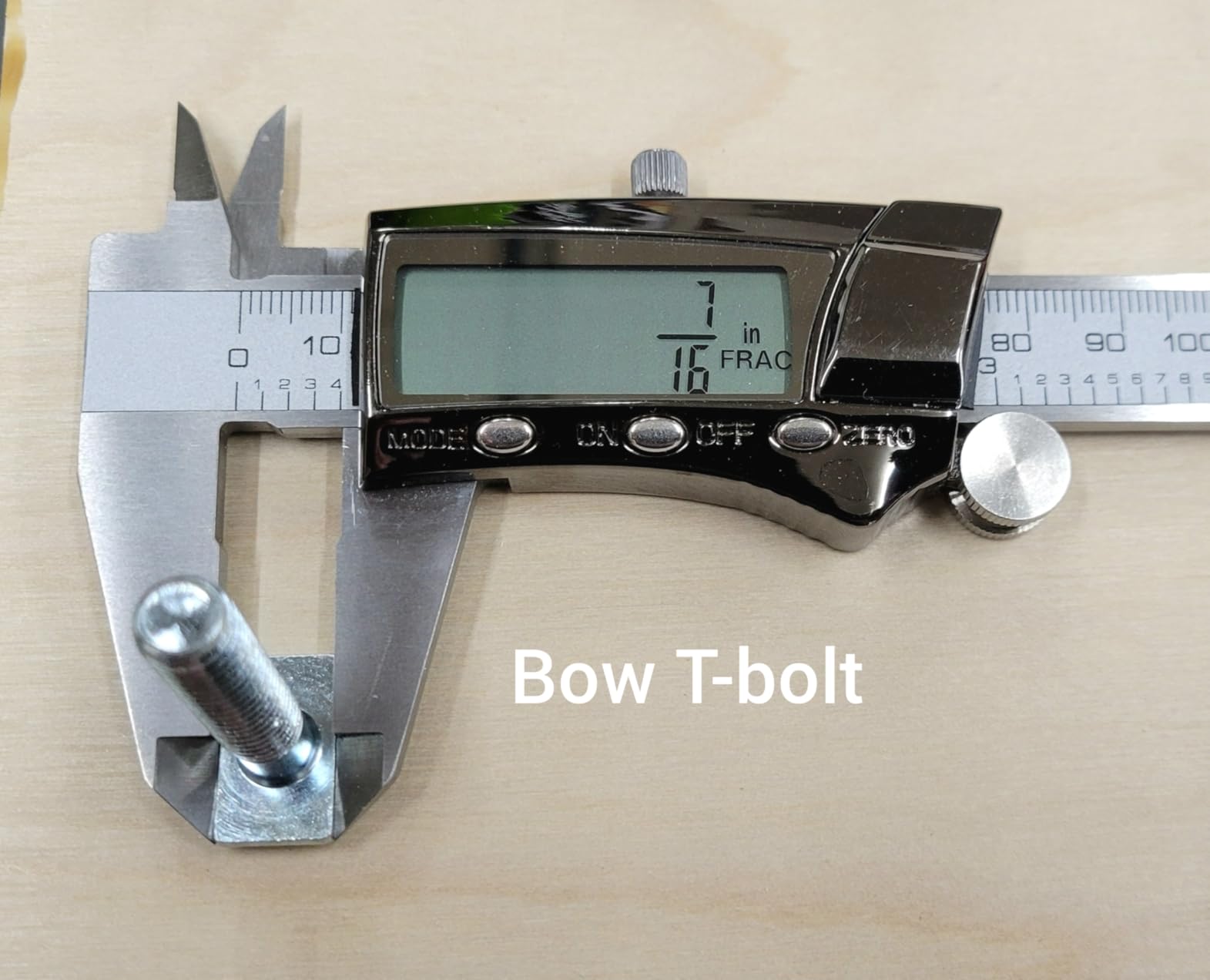
The BOW FencePRO FP4 is the board to add once you own a T-track fence
If your rip fence has a T-track running along its face, these mount directly into it with a 2 1/4 inch T bolt and stay there between cuts. That solves the reposition problem better than anything that lives in a miter slot, because the board never has to move at all.
The 4 inch travel slot gives enough adjustment to cover common fence positions, and the stackable configuration lets you run two units when the workpiece is tall or the cut demands more pressure.
The BOW FencePRO FP4 needs the right fence hardware
This is the one pick in the roundup with a hard prerequisite. It requires a T-track mounting system on the fence, and it only accepts 1/4 inch to 3/4 inch T-bolts. On a plain wooden fence with no track, you would need to add a track first, which is a separate project.
With fewer than five hundred reviews, it also has a thinner feedback history than the table-mounted boards, though the 4.7 rating is strong.
12. Bench Dog Feather-Loc Single Featherboard – The Simplest Beginner Setup
Bench Dog Single Feather-Loc Featherboards for Table Saw – Feather Board Includes a Miter Slot Adapter for Tables Standard 3/8″ x 3/4″ Slots – Durable Polymer Table Saw Accessories
Miter slot adapter for 3/8 inch by 3/4 inch slots
Built-in setup feather
Durable polymer construction
0.31 kg
+ The Good
- Includes a miter slot adapter for standard 3/8 inch by 3/4 inch slots
- Built-in setup feather makes setting tension fast and repeatable
- Helps prevent kickback binding and bent blades
- Durable polymer handles steady heavy-duty pressure
- Heel end can double as a stop
- The Bad
- Single featherboard only rather than a pair
- Lower sales rank than the better known models in the category
The Bench Dog Feather-Loc is a single board with a built-in setup feather, and that setup feather is the part worth explaining. A reference feather on the body gives you a fixed contact point, so you set tension by matching the working feather to it rather than by eye.
That repeatable setup is why this board shows up in beginner recommendations. The miter slot adapter is included, and it is sized for standard 3/8 inch by 3/4 inch slots, which is the most common table saw slot width in the category.
The body is a durable polymer that accepts steady heavy-duty pressure without cracking, and the ergonomic T-knobs let you install and set the board quickly. The heel end can also be used as a stop, which is a small extra function you will end up using more than expected.
Forum users with long histories on this category name Bench Dog by name as a preferred featherboard, and cite the interchangeability between table saw and router table as a practical advantage of the design. Board Buddy style alternatives are also well regarded in the same discussions for being less obtrusive than larger clamp-style boards.
The Bench Dog Feather-Loc removes the guesswork from setting pressure
Most featherboard complaints come down to pressure set too high or too low. The built-in setup feather gives you a repeatable reference, so the same setting works on the next board and the one after that.
It is also the right first purchase if you want one board rather than a pair. For most beginners ripping to a single width, a single well-adjusted board is genuinely enough.
The Bench Dog Feather-Loc ships alone and has a modest footprint in the category
You get one featherboard, not a pair, so a two-board setup means a second purchase later. The included adapter covers standard 3/8 inch by 3/4 inch slots specifically.
It also carries a lower sales rank than the better known models here, which mostly reflects how long it has been available rather than any quality problem. If you want a longer track record, the Milescraft 1406 or the BOW FP1 offer far more reviews at a similar level of performance.
How to Choose a Featherboard: Mount Type Comes First
Before comparing finger materials or reading a single review, answer one question: how does this board attach to your machine? Everything else is a preference once the mount is settled.
Miter slot, magnetic or T-track
A miter-slot board drops into the slot next to the blade and wedges or expands for grip. This is the most common type and the most broadly compatible, because almost every table saw has at least one usable slot. Milescraft, Kreg, BOW, POWERTEC and Bench Dog all make miter-slot boards.
A magnetic board clamps to steel or cast iron. It needs no slot at all, which makes it the only option for a saw without miter slot hardware, and it is also the fastest to reposition. Magswitch is the standout in this group.
A T-track board uses T-bolts and is usually mounted to a fence rather than the table. It is the most stable in position because it never moves between cuts, but it requires a fence with a track already in the face.
Cast iron tops versus aluminum contractor saws
Cast iron tables are typically heavier, stay flat over time, and almost always have full width miter slots. They accept the widest range of featherboards, and they are the only surface a magnetic board will hold to.
Aluminum contractor saw tops are lighter, cheaper and easier to move, but their slots are often narrower and shallower. That is why boards supplied with both 3/4 inch and 5/8 inch miter bars, such as the Milescraft 1406, are safer buys for portable saws. On an aluminum table, a magnetic board will not attach at all, so a slot or track board is the only route.
Rigid plastic, foam or spiral fingers
Rigid polymer fingers are inexpensive, durable and give you a firm mechanical reference. They are the right choice for painted or finished surfaces where you prefer a clean edge and a positive stop.
Closed-cell EVA foam feathers flex at a living hinge, absorb reverse force, dampen vibration and will not mar softwood or trigger blade detection systems. They are the gentlest option and the easiest on the workpiece. They are also consumables that wear over time, and they give less rigid feedback than plastic.
Spiral geometry, as on the Hedgehog board, is a middle path. The fingers spiral down toward the workpiece to spread contact and reduce drag, and they are driven by a single knob for fast one-handed adjustment.
Height coverage for tall workpieces
Any workpiece taller than the featherboard will tip away from the fence under feed pressure, which is both a kickback risk and a source of uneven cuts. The fix is coverage, not more pressure.
Options in ascending order of effort are a double-height board, a stacked pair with a spacer, or a table-mounted board combined with a fence-mounted board. The Milescraft 1407 and the POWERTEC pairs all address this, and the integrated stacking of the 71832-P2 does it with no extra parts.
One board or two
One infeed board is enough for a beginner and for most single-width rip work. Two boards, one pressing down and one pressing laterally, is what experienced users describe as the ideal setup, and it costs more in both money and setup time.
A good middle path is one table-mounted board plus one fence-mounted board on a T-track fence. That gives you both directions of pressure without buying a matched pair.
Does your saw need a specific featherboard?
Brand matters far less than table material and slot width. A cast iron table with a 3/4 inch by 3/8 inch slot accepts the widest range of boards, while a thin aluminum contractor saw is the most restrictive. If you are shopping for a saw first, our guides to the best hybrid table saws and best table saws for home workshops cover the hardware those tables ship with.
Measure your slot before you order, and check whether the board ships with the bar sizes you need. Two of the boards in our roundup, the Milescraft 1406 and 1407, include both 3/4 inch and 5/8 inch bars precisely because slot width varies so much between saws.
Where to Place a Featherboard on a Table Saw
Position is as important as the board itself, and the most common question on woodworking forums is simply how many to use and where. Here is the setup we would build.
1. Start on the infeed side, in front of the blade. The board belongs upstream of the blade, pressing down on the workpiece as it feeds toward the cut.
2. Set the finger spacing wider than the workpiece. Start with the fingers clear of the material, feed the workpiece in until it passes under them, then tighten. Tightening on top of the material is how fingers get bent or mar a face.
3. Tighten until firm, then stop. The workpiece should not slide when you push it against the fence by hand. More pressure than that adds drag and can burn a soft face.
4. Add a second board on the fence if the workpiece is tall. A fence-mounted board handles the lateral pressure that a table board cannot reach.
5. Consider a second table board just before the blade. Several users run two, one pressing material down well ahead of the cut and one pressing it against the table immediately before the blade, which covers the point where workpiece lift is most likely.
6. Work with the riving knife, not against it. A featherboard does not replace a riving knife or a zero-clearance setup, and a board positioned where it obstructs the knife or a blade guard will not be used. Check clearance before you tighten down.
Featherboard Maintenance and Troubleshooting
Most featherboard problems are either creeping under pressure or fingers that have compressed. Both are manageable.
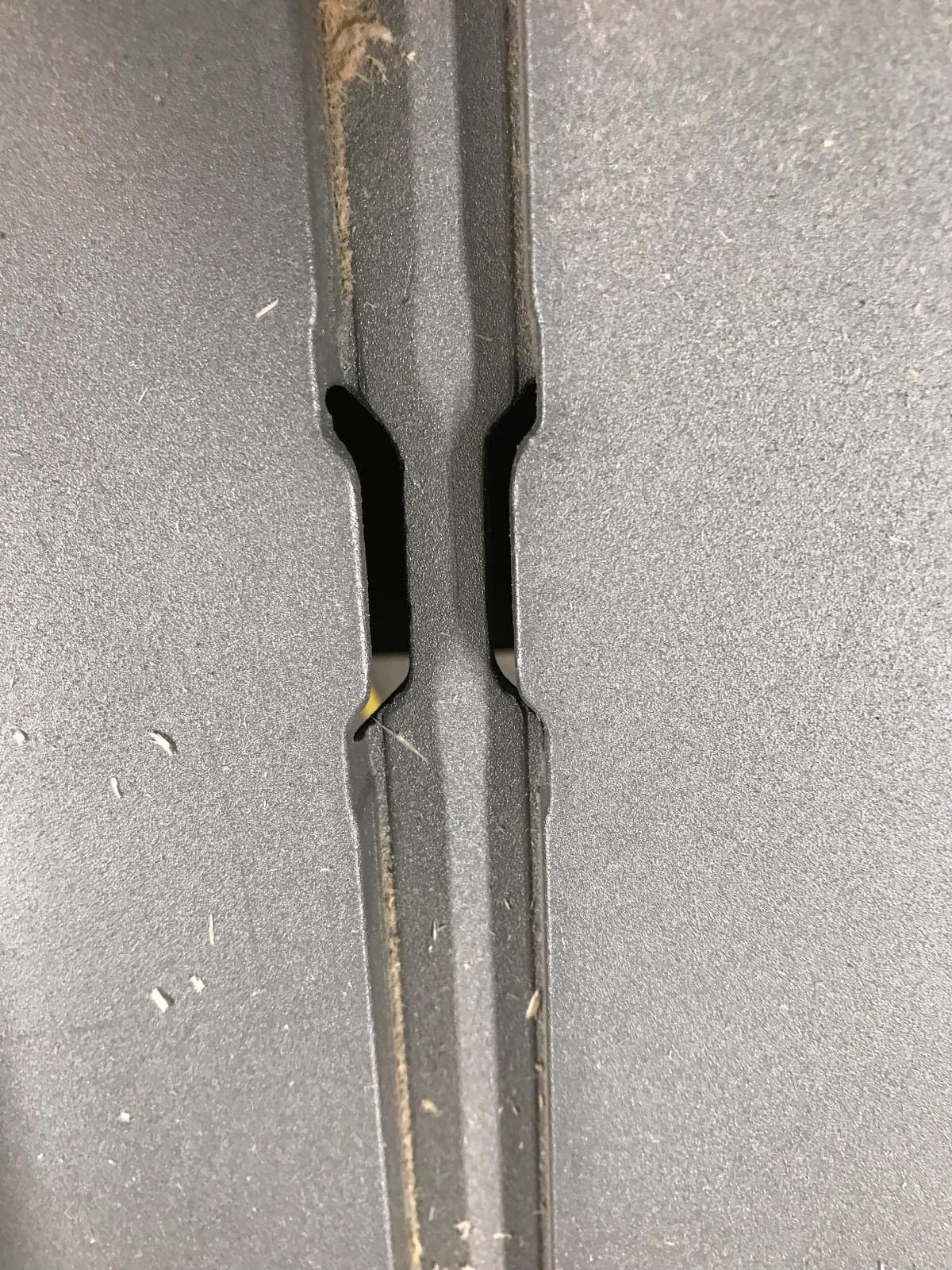
Why does my featherboard slip in the miter slot? Usually one of three causes. The slot is not clean, and packed sawdust reduces the wedge grip, so vacuum the slot and the bar before setting up. The bar is the wrong width for the slot, which is common on narrow aluminum contractor saws. Or the tapered bolt head is spinning rather than clamping, which is a documented issue with some cast insert and bolt combinations. Cleaning the slot and confirming bar width solves the majority of cases.
Check your finger wear monthly. Foam feathers compress and harden with use, and a compressed feather feels loose even though nothing has broken. Board builders like BOW make the feathers reversible and replaceable, so flipping them restores most of the original grip for free.
Re-torque your mounting bolts. Cast aluminum insert brackets can loosen under repeated pressure cycles. A quick check with a small wrench every few weeks is enough, and it prevents the slow creep that makes people blame the featherboard design.
Keep magnetic bases clean. A magnetic featherboard loses grip when sawdust packs under the base. Wipe it with a cloth before each setup. This is the single maintenance task specific to that mount type and the reason its hold is consistent or not.
Store polymer parts out of direct sun. Feathers and bodies in black or orange polymer will fade and stiffen faster in a sunlit shop, and a stiffened feather is a finger that will chip rather than flex.
Know when to make your own. A shop-made board cut from rigid foam with a spring hinge, or a kerf-cut polymer plate, is a real alternative. It costs almost nothing and solves a single saw perfectly, but it will not match a manufactured board for hold consistency or replaceable fingers. Buy one if you rip regularly, make one if you are experimenting.
Frequently Asked Questions
Are featherboards worth it?
For anyone ripping on a table saw, yes. A featherboard is the cheapest kickback mitigation available, and it holds the workpiece flat and tight to the fence so the cut stays straight. The real cost is time, because you have to reposition it between widths, which is the most common complaint in woodworking forums. If your cutting is mostly repetitive widths, that tax is small. If you are trimming one-off pieces, a featherboard may be more nuisance than help.
When should I use a featherboard on a table saw?
Any time you rip, meaning cutting with the grain to narrow a board to width. Also use one for resawing, for thin or narrow material, and whenever the workpiece is wider than your comfortable reach. You do not need one for crosscuts on a sled or on a track, since those use a different push and hold system. Place the board on the infeed side, in front of the blade, and adjust it before you start the cut.
Can you use a featherboard on an aluminum contractor table saw?
Yes, through a miter slot or a T-track, but not through a magnet. Aluminum will not hold a magnetic featherboard, so a steel-top-only design is out. Aluminum contractor saws also tend to have narrower and shallower slots, so check the bar width against your slot and choose a board supplied with 3/4 inch and 5/8 inch bars. Many portable saws also accept T-track mounting with standard T-bolts.
Why does my featherboard slip in the miter slot?
Three causes account for most slipping. First, sawdust packed in the slot reduces the wedge grip, so clean the slot and the bar. Second, the bar is the wrong width for your slot, which is common on aluminum contractor saws with narrow slots. Third, a tapered bolt head is spinning in the insert instead of clamping, a known issue with some cast insert and bolt combinations. Cleaning the slot and confirming bar width fixes most cases.
Do featherboards prevent kickback?
They reduce the conditions that cause kickback, which is different from guaranteeing it cannot happen. By holding the workpiece down and tight to the fence, a featherboard prevents the conditions that let a board lift, rotate or pinch the blade. A properly adjusted board is one of the most effective anti-kickback tools available. It does not replace a riving knife, a push stick, a blade guard or sound technique.
What type of blade is best for ripping wood on a table saw?
A 30 to 40 tooth rip blade with minimal clearance and a flat or thin-kerf grind gives the cleanest tear-free rip. Keep in mind that a featherboard improves how the workpiece is held, not the quality of the cut itself. The blade determines edge quality, the grain direction determines the finish, and the hold-down keeps the cut straight. Match the blade to the material rather than expecting a hold-down to fix a wrong blade.
Final Verdict: The Best Featherboards for Table Saws
After weighing hold strength, reposition speed, mount compatibility and finger material across twelve boards, the Milescraft 1406 is our pick for the best featherboards for table saws overall. It ships with both 3/4 inch and 5/8 inch miter bars, so it fits the widest range of saws, and the dual slide motion plus pre-load tension design make it the board we were least likely to leave sitting on the bench.
Buy the Hedgehog Spiral Featherboard if repositioning friction is what stops you using a featherboard, since the single knob and spiral fingers address that directly. Buy the BOW Products FP1 if you cut softwood, finished faces or run a blade detection saw, because the EVA foam feathers will not mar the workpiece or trigger the system. If your saw has no miter slot or an aluminum top, skip straight to the T-track options, or the Magswitch if your table is cast iron.
Whichever board you pick, set it up before the cut rather than during it, tighten only until the workpiece stops sliding, and treat finger replacement as routine maintenance rather than a repair.