
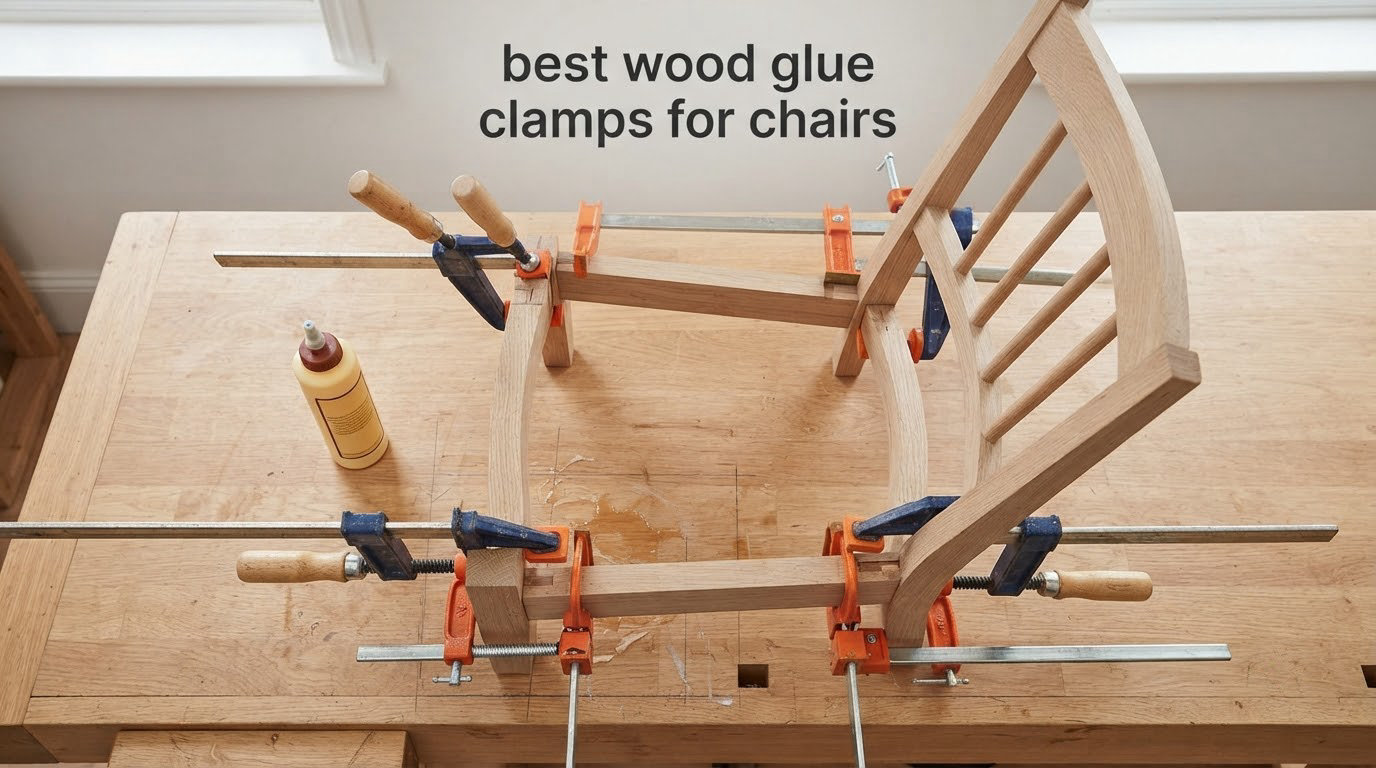
A chair glue-up punishes a clamp that is wrong for the job. A bar clamp that is too short cannot close a seat frame, a quick-grip with a hard pad leaves dents in a show face, and anything that shifts while you tighten will take the chair out of square before the glue cures. That is why the best wood glue clamps for chairs are not simply the strongest clamps in the shop.
The short answer: parallel-jaw or heavy bar clamps for the legs, rails, stretchers and seat frame; one-handed quick-grip clamps for back spindles, slats and rungs; and a band or strap clamp to pull a square frame closed evenly. Everything else is a detail of reach, throat depth and pad material. If you want the broader picture first, our wood clamp roundup and bar clamp roundup cover the general shop set.
We compared twelve clamps on the only criteria that matter during chair work: how close a joint actually gets, whether the jaw stays parallel under load, whether the pads will mark a finished surface, and whether one person can reposition everything before the glue grabs. Updated for 2026, the list below covers everything from a first side-table chair to a full dining set in solid oak.
Top 3 Clamp Picks for Chair Building in October 2026

WORKPRO 6PC Mini Bar Clamp Set
- › Clamp and spreader in one
- › One-handed quick release
- › 150 lb and 50 lb clamps
Our best overall is the WORKPRO six-piece set because it converts from clamp to spreader in one press, which is the single feature that saves the most time on a chair back. The Jorgensen Cabinet Master 48-inch pair is the heavy-duty option for long seat frames and wide rails. The four-pack of Jorgensen bar clamps is the most practical way to put four clamps on a single joint.
All 12 Picks at a Glance in October 2026
| PRODUCT MODEL | KEY SPECS | BEST PRICE |
|---|---|---|
|
|
Check Latest Price |
 |
|
Check Latest Price |
 |
|
Check Latest Price |
 |
|
Check Latest Price |
 |
|
Check Latest Price |
 |
|
Check Latest Price |
 |
|
Check Latest Price |
 |
|
Check Latest Price |
 |
|
Check Latest Price |
 |
|
Check Latest Price |
 |
|
Check Latest Price |
 |
|
Check Latest Price |
1. WORKPRO 6PC Mini Bar Clamp Set Is the Best All-Rounder for Chair Glue-Ups
WORKPRO Mini Bar Clamps for Woodworking, 6PC One-Handed Spreader/Bar Clamp, 6-Inch (4) Light-Duty Quick-Change Wood Clamps Set and 6-Inch (2) Mini F Clamp, 150 lbs&50 lbs
4x 150 lb and 2x 50 lb 6 inch clamps
Quick-change clamp to spreader
One-handed quick release
+ The Good
- One button flips each clamp into a spreader
- One-handed trigger frees your second hand for the glue bottle
- Two clamping strengths cover rails and fine spindles
- Hardened steel bars inside a nylon body resist impact
- The Bad
- 50 lb mini clamps are light for thick hardwood legs
- Nylon body flexes under sustained heavy pressure
- Light-duty rating rules out heavy structural work
Out of 8605 reviews at a 4.7 average, the same two things come up: the clamp-to-spreader button, and the mix of light-duty and mini clamps in one set. For chair work that pairing is unusually well matched. Chair glue-ups happen in small groups, you reposition constantly, and the back slats or spindle mortises often need the clamp to push outward rather than squeeze inward.
I used these on spindle and slat work where a bigger clamp simply will not fit between the uprights. The one-handed trigger is the part that changes your workflow: the clamp stays put, you reposition the next one without setting anything down, and a short open time stops being a problem.
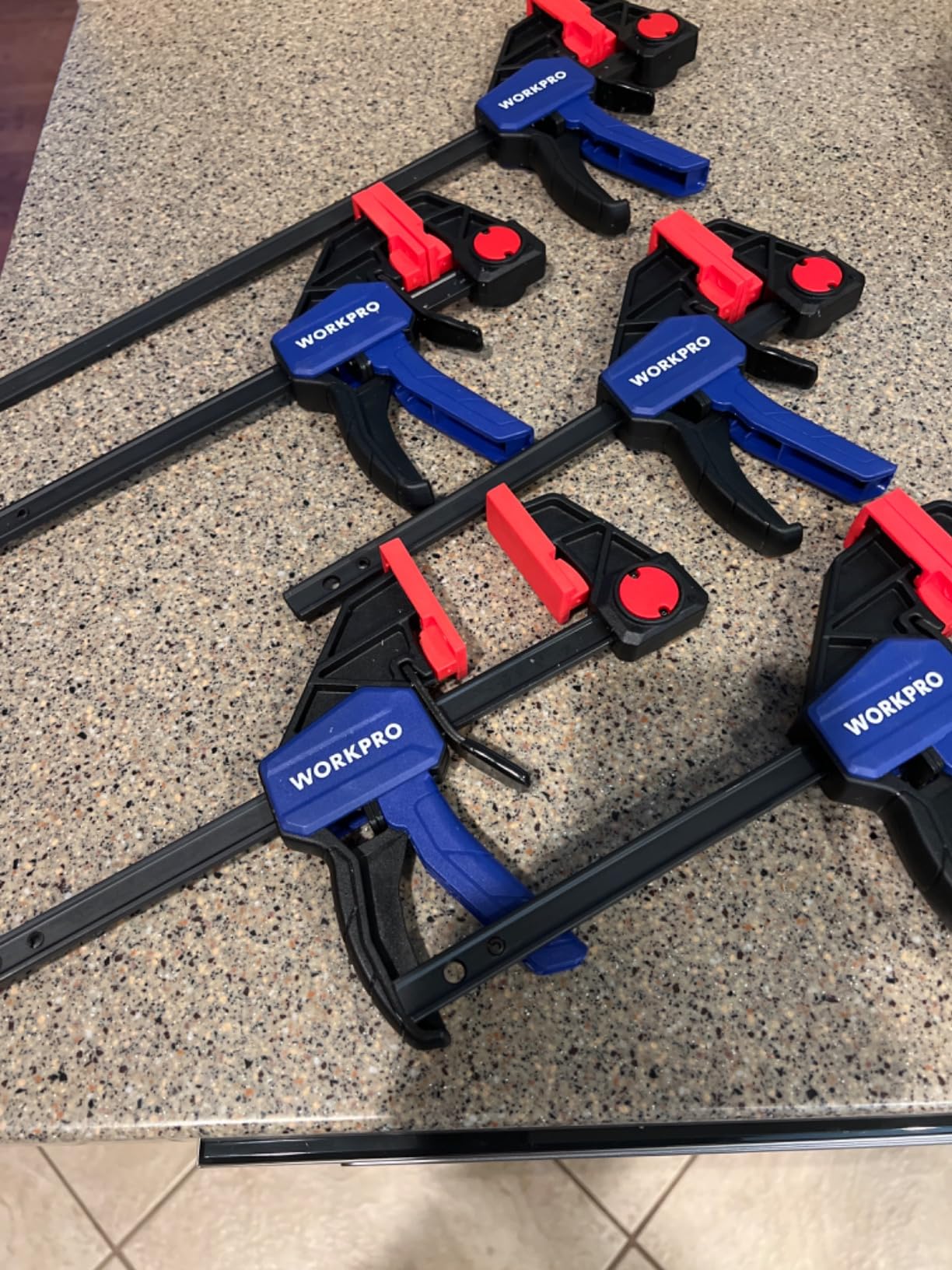
The 150 lb clamps are the ones doing the real structural work on a chair. They will close a mortise and tenon rail joint and hold it, but they are not trying to squeeze thick oak into submission. The 50 lb mini clamps are for the delicate jobs: holding a tenon while you align the second rail, or pinning a thin slat in place before it goes into a dowelled joint.
Set to spreader, the light-duty clamp reaches 11-1/4 inches and the mini reaches 9-1/2 inches. That is enough to open an assembled back frame just enough to bring the rails back into line, which is a job that quietly ruins a lot of chair builds.
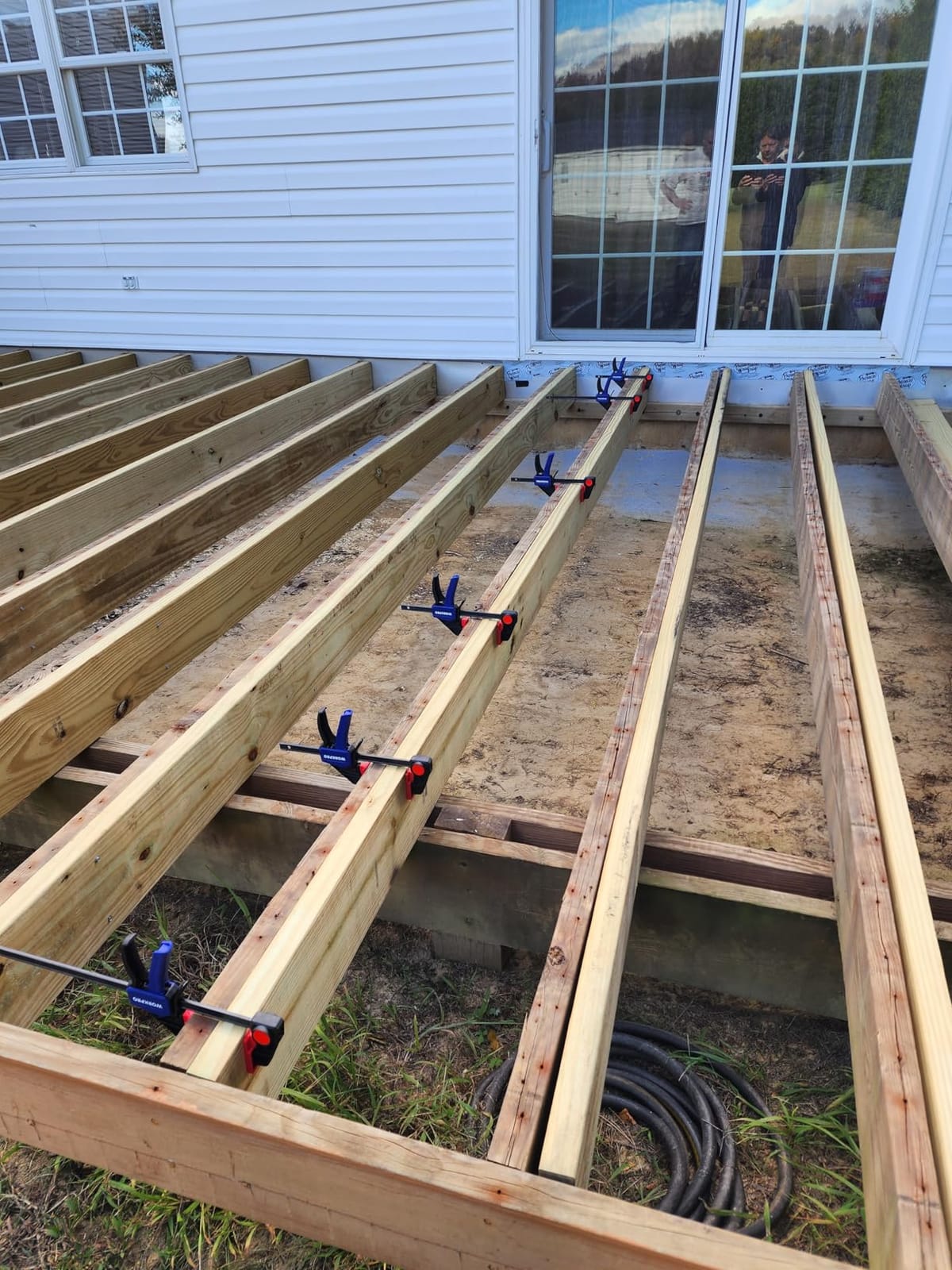
Best used for back slats, spindle rungs and dry-fit checks
Reach for this set on the parts of a chair that are fiddly rather than heavy. Back slats, horizontal back rails, rung tenons and the dry-fit stage all benefit from a clamp you can move with one hand and flip into a spreader mid-assembly. The quick-release trigger means you can pull a clamp off a just-fitted joint without waiting for the screw to unwind.
Not the answer for thick oak seat frames
This is not a heavy-duty set and it is worth being blunt about that. A wide seat frame or a solid slab seat wants a clamp with a long reach and a rigid body, and the nylon construction here will flex under that kind of sustained load. If your chair is built entirely from thick hardwood and you are buying only one set, look at a parallel-jaw clamp instead.
2. Housolution 90 Degree Right Angle Clamps Are Best for Holding Chair Frames Square
Housolution Right Angle Clamp, [4PACK] 90° Aluminum Alloy, Silver Gray
70 mm maximum clamping range
Jaw width 95 mm and depth 35 mm
Two-way adjustable swing jaw
+ The Good
- Cast aluminum body feels solidly weighted
- Two-way swing jaw handles two material thicknesses
- Mounting ears allow bolting to a bench
- Accepts thicker material than plastic corner clamps
- The Bad
- Angles are approximate and need square checks
- Single-screw body is less rigid than two-screw clamps
- Bulky footprint in a small toolbox
Nearly 5000 reviews at 4.5 stars, and the consistent comment is that these hold an angle rather than cut one. For a chair glue-up that is a genuine advantage. When you are assembling two leg-and-rail sides and need them to sit at a true right angle while the glue sets, you are asking the clamp to preserve an angle rather than create one.
With a 70 mm maximum clamping range and a 95 mm jaw, the clamp handles chair rails and seat frame members comfortably. Reviewers frequently use them for cabinet and frame assembly as well as general shop work, and the aluminum is described as solidly weighted for its class.
![Housolution Right Angle Clamp, [4PACK] 90° Aluminum Alloy, Silver Gray customer photo 1](https://beboivn.com/wp-content/uploads/2026/09/B0B9X798BD_customer_1.jpg)
The two-way adjustable swing jaw is the detail that matters most in practice. You can rotate the jaw to suit two different member thicknesses, so a thicker leg rail and a thinner back rail can both be drawn into the same corner without forcing the setup. That saves time on the side assemblies, where the two members you are joining are often deliberately different sizes.
Aluminum is also a quiet win for oak. These jaws will not react with tannin-rich wood the way bare iron can, so if you are building a white oak chair you can clamp to the face without the black staining risk that comes with ferrous hardware left in contact with wet glue.
![Housolution Right Angle Clamp, [4PACK] 90° Aluminum Alloy, Silver Gray customer photo 2](https://beboivn.com/wp-content/uploads/2026/09/B0B9X798BD_customer_2.jpg)
Best used for side assemblies and frame squareness
Set up the two rear legs and two front legs as separate side assemblies first, and use these to hold each side square at 90 degrees while the rails are glued in. They also work well as a squaring reference for the seat frame once the sides are joined. The mounting ears let you bolt a pair to a bench if you want a repeatable fixture rather than a handheld clamp.
Not the answer for fine joinery that must be dead on
Verify the corner with a real square after clamping rather than trusting the clamp alone. Reviewers are clear that the cast body is less rigid than machined steel and that the single-screw design gives a little more play under load. For a show-quality chair where the angle will be scrutinized, treat these as a positioning aid and finish-check with a square.
3. WETOLS 90 Degree Corner Clamps Are the Most Versatile for Dry Assembly
WETOLS 90 Degree Corner Clamp Set, 4 Pcs Adjustable Clamps for Woodworking
Fits material 3/16 to 3/4 inch thick
Handles corners and T-joints
Spring-assisted one-hand operation
+ The Good
- Low cost four-pack covers a whole chair dry run
- Lightweight polyamide body is easy on one hand
- Material range matches most chair rail thickness
- Spring holds the joint while you fasten or glue
- The Bad
- Polyamide jaws feel less rigid than aluminum
- Maximum 3/4 inch thickness excludes heavier leg material
- Spring tension can relax with repeated use
About 3860 reviews at 4.3 stars, the lowest-rated pick in this group, and that number is honest. These are plastic corner clamps. They are not going to hold a solid hardwood chair together on their own, and anyone who claims otherwise is describing a light project.
Where they earn their place is the dry assembly. A chair has four legs, several rails, a seat frame and a set of back parts, and the hardest part of the build is getting all of those pieces to agree with each other before any glue is opened. Four corner clamps held around a base of legs and rails let you stand the assembly up and find the errors for free.
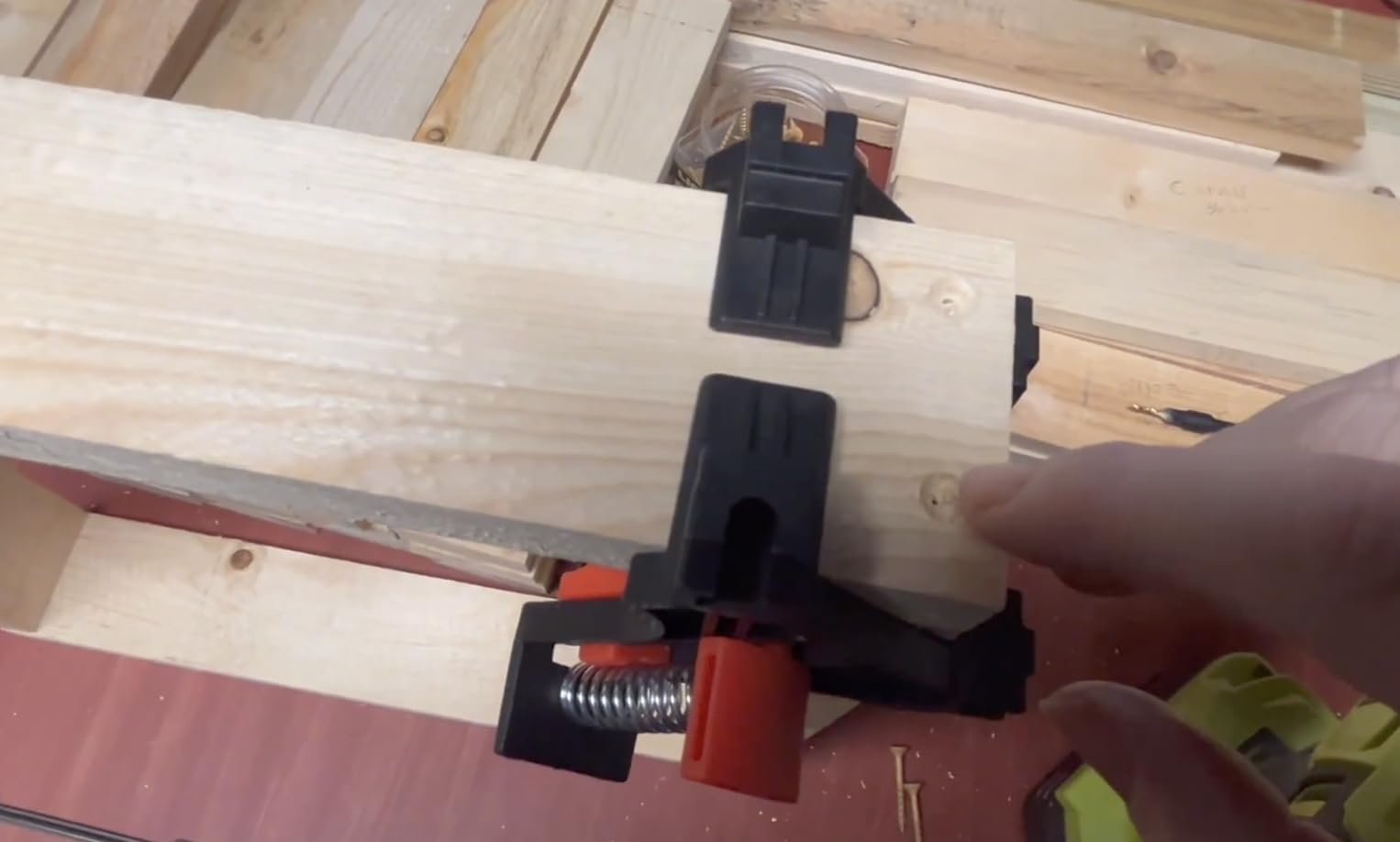
The 3/16 to 3/4 inch material range lines up well with the back rails, slats and thinner stretchers on a side chair. The spring tension holds boards in place while you fasten or glue, and the lightweight body means you can reposition with one hand while the other steadies the frame.
They also handle T-joints, which is useful when a stretcher meets a leg rather than a rail. That versatility is why they work for chairs despite the modest price, and reviewers regularly stretch them to picture frames, boxes and small cabinets too.
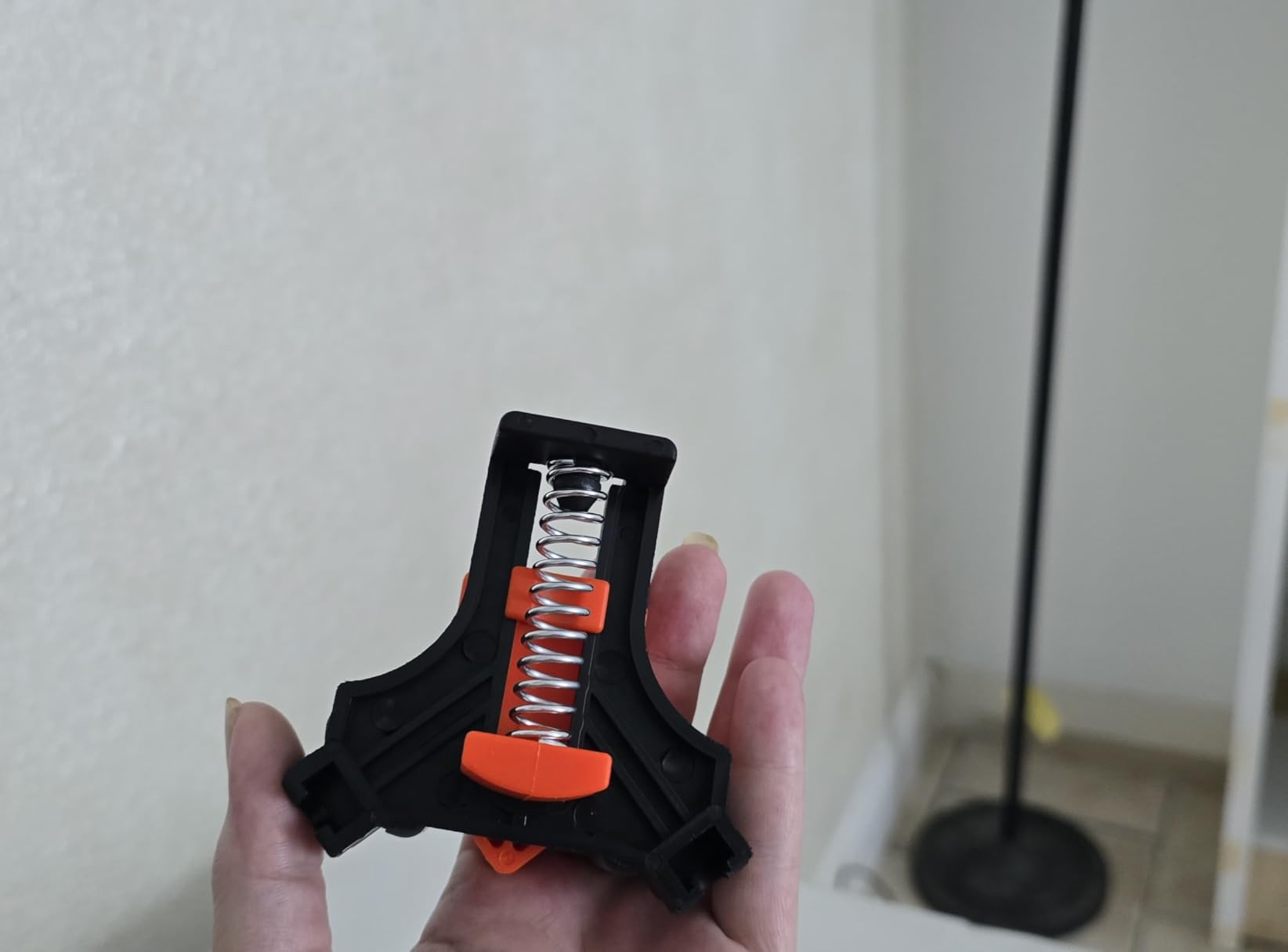
Best used for dry fitting and layout
Clamp all four legs to a pair of rails with no glue at all, then stand it on a flat surface and check that all four feet touch. Repeat for the second side, join the sides, and dry-fit the seat frame. This is the stage where clamps earn their money, and it is where these four do their best work for the least outlay.
Not the answer for structural glue-up on thick legs
Anything above 3/4 inch will not fit, which rules out many solid hardwood chair legs. Spring tension also relaxes with repeated heavy use, so check the corners after an hour rather than assuming the first clamp-up held. For the actual glue-up, pair these with a real bar clamp and use them only for alignment.
4. Jorgensen 48 Inch Cabinet Master Pair Is the Heavy-Duty Choice for Wide Chair Frames
JORGENSEN 48-inch Bar Clamps, 90°Cabinet Master Parallel Jaw Bar Clamp Set, 2-pack
48 inch maximum opening
Up to 1500 lbs clamping force
Reversible head converts to spreader
+ The Good
- Very solid and accurately squared
- Even pressure across the full jaw length
- Plastic jaw faces resist denting and tannin staining
- Flat fixed end can reach tight spots or stand on edge
- The Bad
- Moving jaw can drift out of parallel on a fully closed joint
- Some pieces run out of screw travel before closing
- Handle tilt lock is awkward until you get used to it
At 4.8 stars from 1382 reviews, this is among the highest-rated picks in the roundup, and the praise is specific rather than generic. Owners point to build quality, even pressure along the whole jaw, and plastic faces that do not dent or stain the workpiece. That combination is exactly what a wide seat frame or a long rail needs.
Parallel-jaw geometry is the point of the design. The fixed end and the moving end stay square to the rail as the screw draws them together, so pressure lands evenly instead of being concentrated at one corner and twisting the frame. Our parallel clamp guide covers the geometry in more detail.
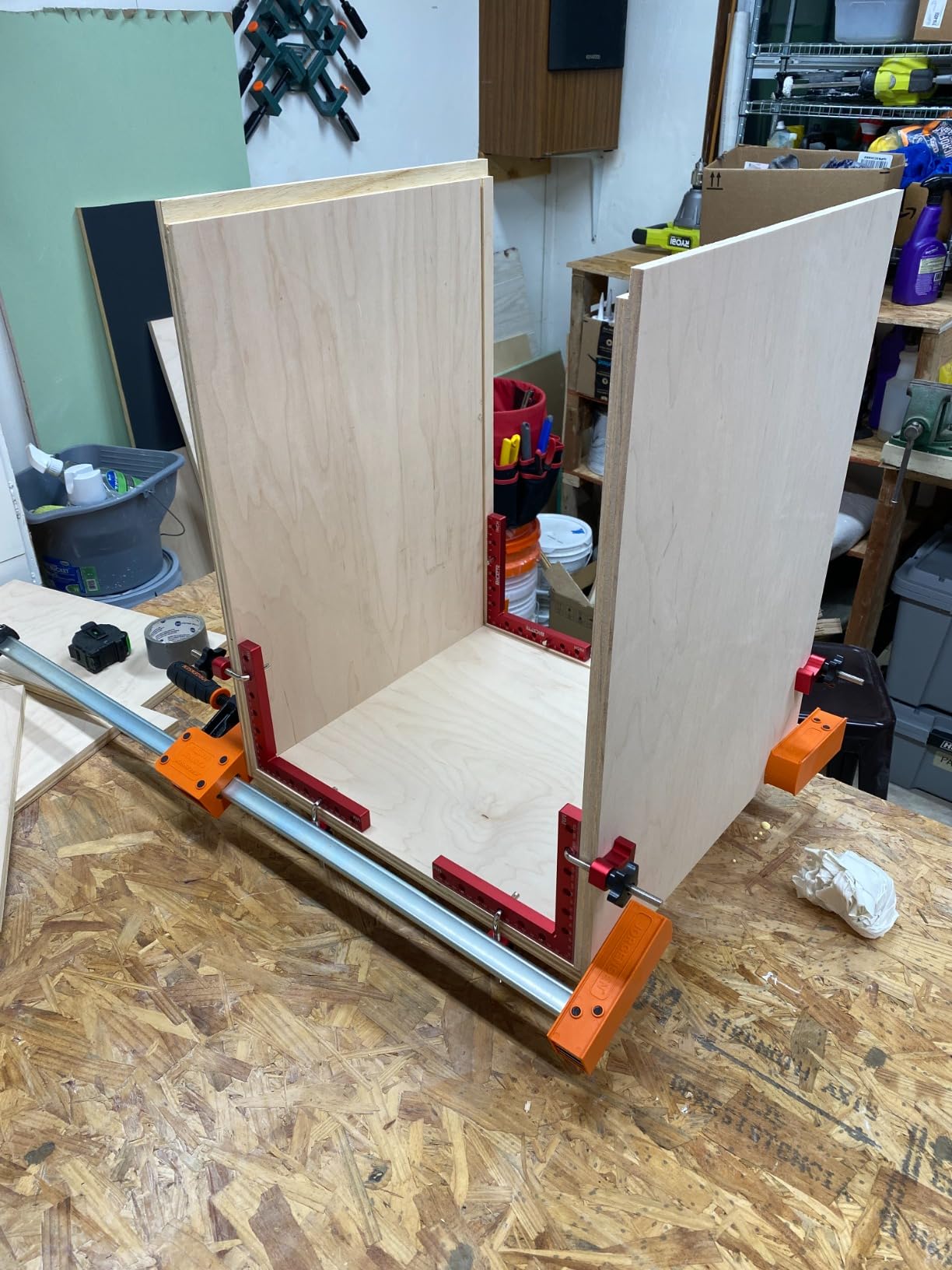
Forum woodworkers frequently single out Jorgensen for a specific reason: the work does not shift while you tighten. That matters more on a chair than it sounds. If the assembly creeps a few millimeters every time you take up the screw, the finished chair inherits that error, and no amount of sanding fixes a raked leg.
The plastic-protected steel castings are the quiet feature here. They will not dent a show face, and they are reported to hold up against the black tannin staining that oak causes with bare iron. On a white oak chair that is a meaningful difference.
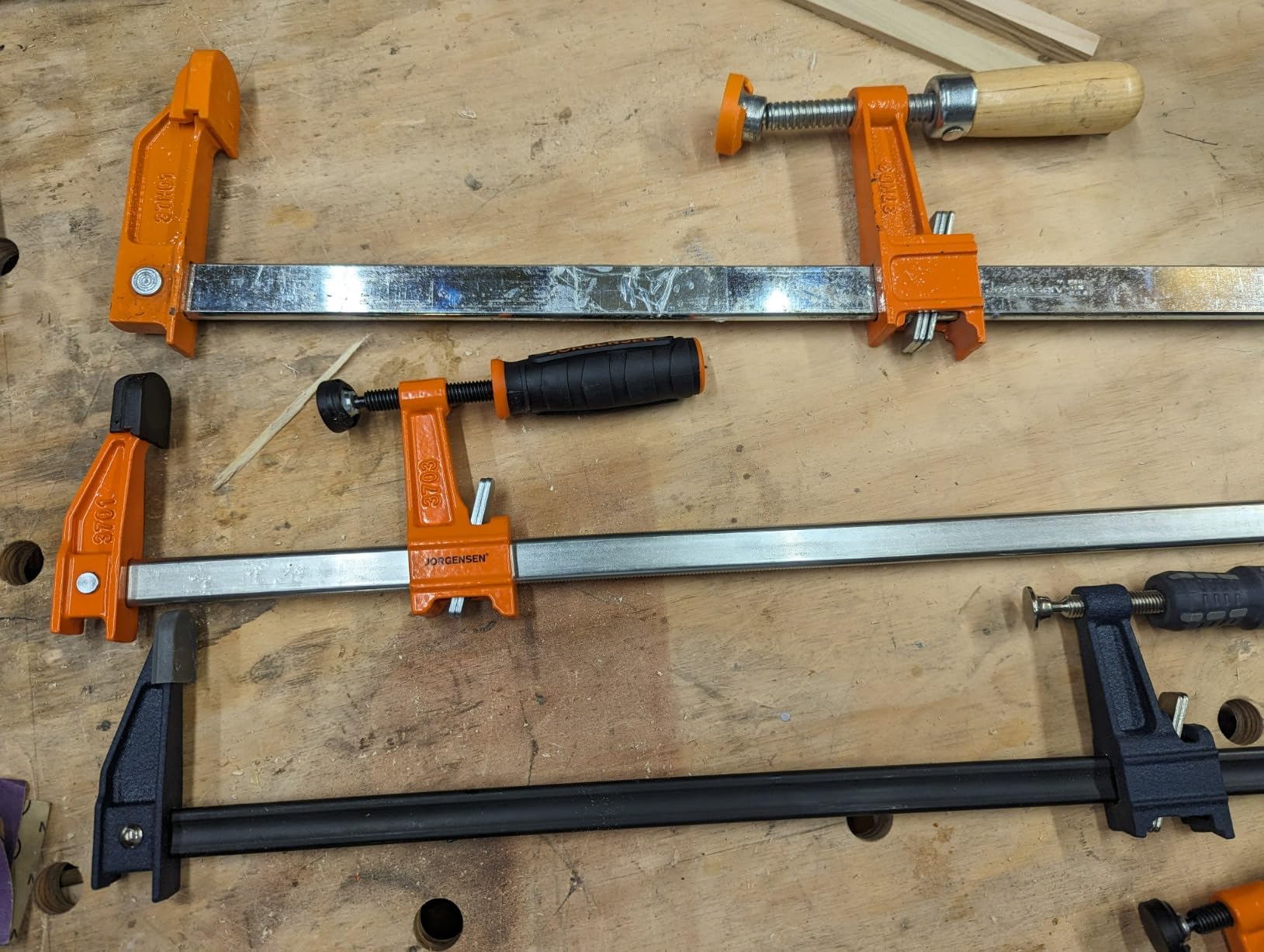
Best used for seat frames, long rails and case work
The 48 inch opening covers a full seat frame, a wide back rail set, or a pair of legs and rails assembled in one pass. Reviewers also use these for panel glue-ups, boxes, cabinets and raised panel doors, which tells you how much headroom the 1500 lb rating leaves. A clamp stand is included, so you can get the jaws to the joint height without a second pair of hands.
Not the answer for very tight drawer-style geometry
The most detailed critical review in this product group comes from a buyer who tested many Cabinet Master clamps, and it is worth reading. It notes that the moving jaw can lose parallelism or reach the end of its screw travel when a glue joint is fully closed, and that older steel I-bar or pipe clamps are still better for those very tight fits. Buy these for a chair, not as your only clamp.
5. Jorgensen 4-Pack of 6 Inch and 12 Inch Bar Clamps Is the Best Value Set
JORGENSEN 4-Pack Steel 600LBS Bar Clamps Set, 6″ (2) & 12″ (2) F-Clamps
Two 6 inch and two 12 inch clamps
600 lbs normal load limit
2-1/2 inch throat depth
+ The Good
- Fast-acting sliding head speeds up positioning
- Multi-disc clutch holds the jaw along the bar
- Mixed 6 inch and 12 inch sizes cover chair frames
- Soft plastic pads protect finished surfaces
- The Bad
- 600 lb rating is medium duty
- 2-1/2 inch throat is shallow for wide panels
- Steel bars are heavy to carry in quantity
4.8 stars across 1115 reviews, from owners who describe it as a practical four-clamp starter set for medium-duty work. Four clamps is the number that changes a chair glue-up, because it lets you put two clamps on each side of a joint instead of one, and even pressure is the difference between a flat seat frame and a twisted one.
The multi-disc clutch is the mechanism worth knowing about. The sliding head is held in place by a hardened plated steel disc and a spring, so once you position the head where you want it, it stays there while the screw takes up. On a fast PVA open time that saves a lot of fiddling.
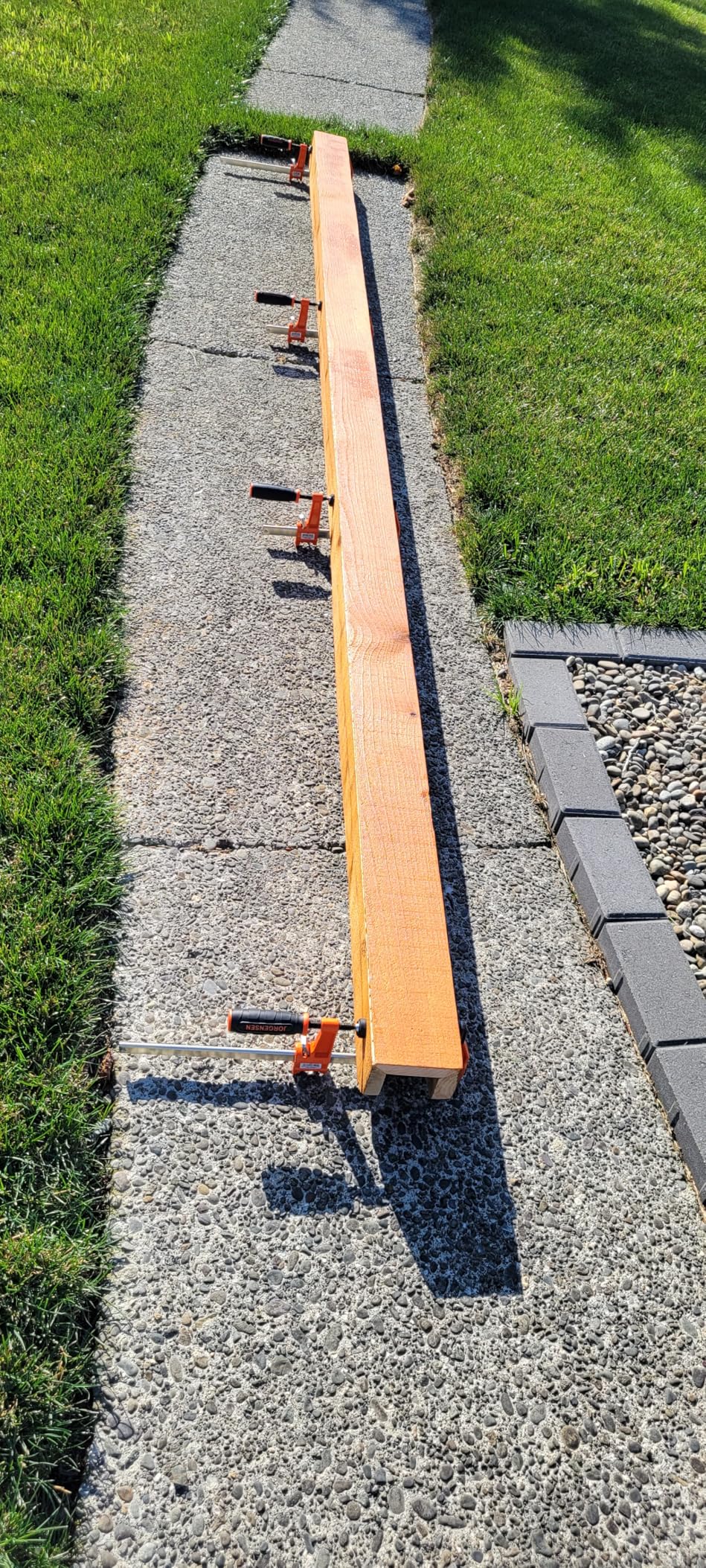
The mix of two 6 inch and two 12 inch clamps is more useful than four of the same size. Short clamps handle slats, spindles, rungs and tenons, while the 12 inch pair closes a leg-to-rail joint and a stretcher joint without any improvised blocking. Soft plastic pads mean you can clamp directly onto a face you have already finished.
Because the heads are threaded to the screw rather than fixed at one end, the moving jaw travels along the whole bar. That reach is what lets a short clamp do the work of a longer one on a narrow part.
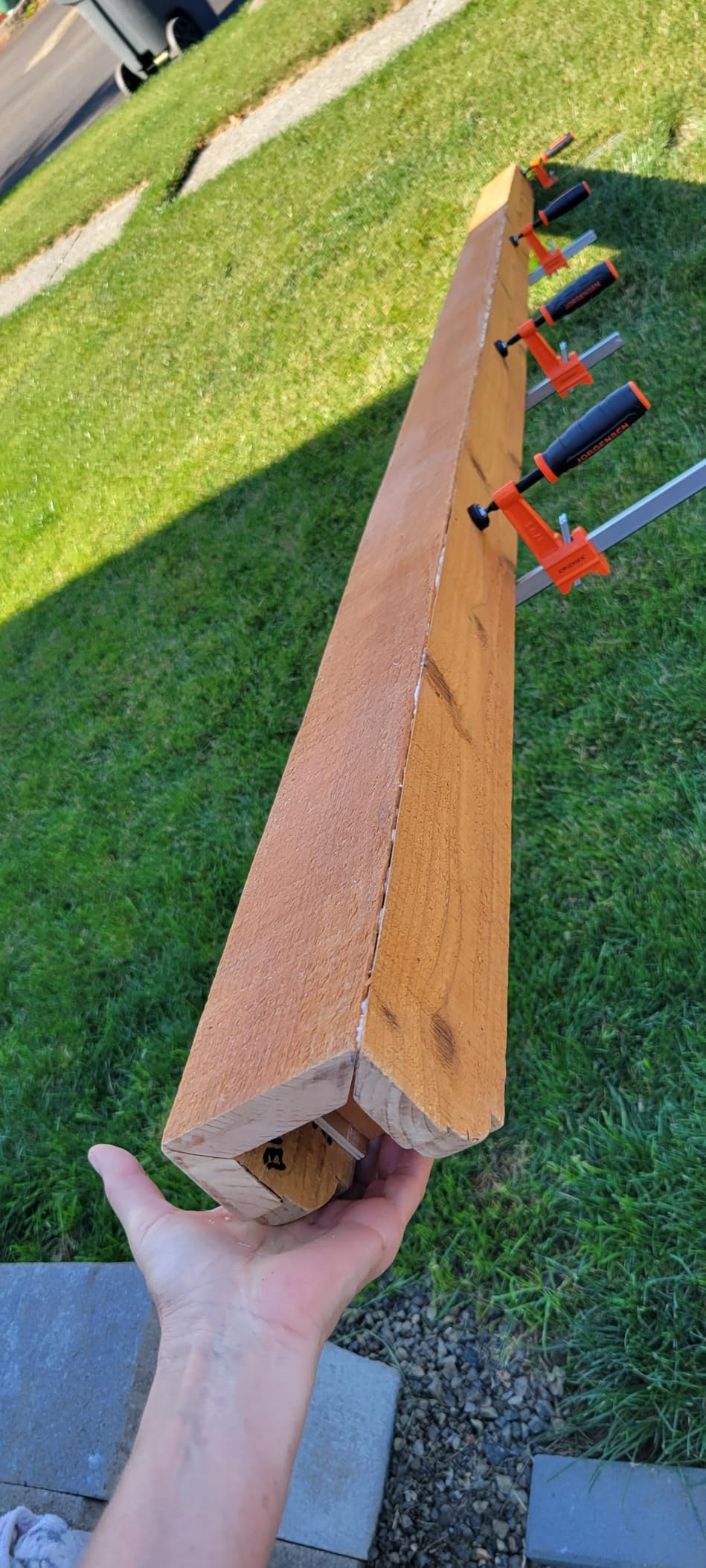
Best used for leg and rail joints on a side chair
Glue a front rail between two legs, then use the 6 inch pair to keep the tenon seats fully home while the rail closes. The 12 inch pair handles the same joint on a wider chair, or a stretcher low down between the legs. Put two clamps per joint where geometry allows, snug them in alternating turns, and check squareness before you leave the assembly.
Not the answer for wide panels or thick hardwood bending
The 600 lb load limit and 2-1/2 inch throat depth define the ceiling. There is not enough reach behind the fixed jaw to get across a wide seat frame or a seat panel, and the rating is not intended to force thick material flat. If the chair has a wide top rail or a solid seat, add a parallel-jaw clamp of some kind rather than stretching these.
6. VEVOR 8-Pack of 36 Inch Bar Clamps Is Best for Multiple Joints at Once
VEVOR Bar Clamps for Woodworking, 8-Pack, 36″ Opening F Clamps, 600 lbs Load Limit, with Plastic Pad and Self-Locking Design, Premium Cast Iron and Carbon Steel, for Wood Working and Metal Working
Eight clamps with 36 inch opening
600 lbs per clamp
Cast iron body with steel sliding bar
+ The Good
- Count and reach suit wide panels and seat frames
- Self-locking latch keeps the jaw in place
- Raised end stop prevents the jaw sliding off
- Cast iron body survives repeated clamping cycles
- The Bad
- 600 lb rating is medium rather than heavy duty
- Eight full-length bars are heavy and bulky
- Plastic pads can be firmer than fiber pads
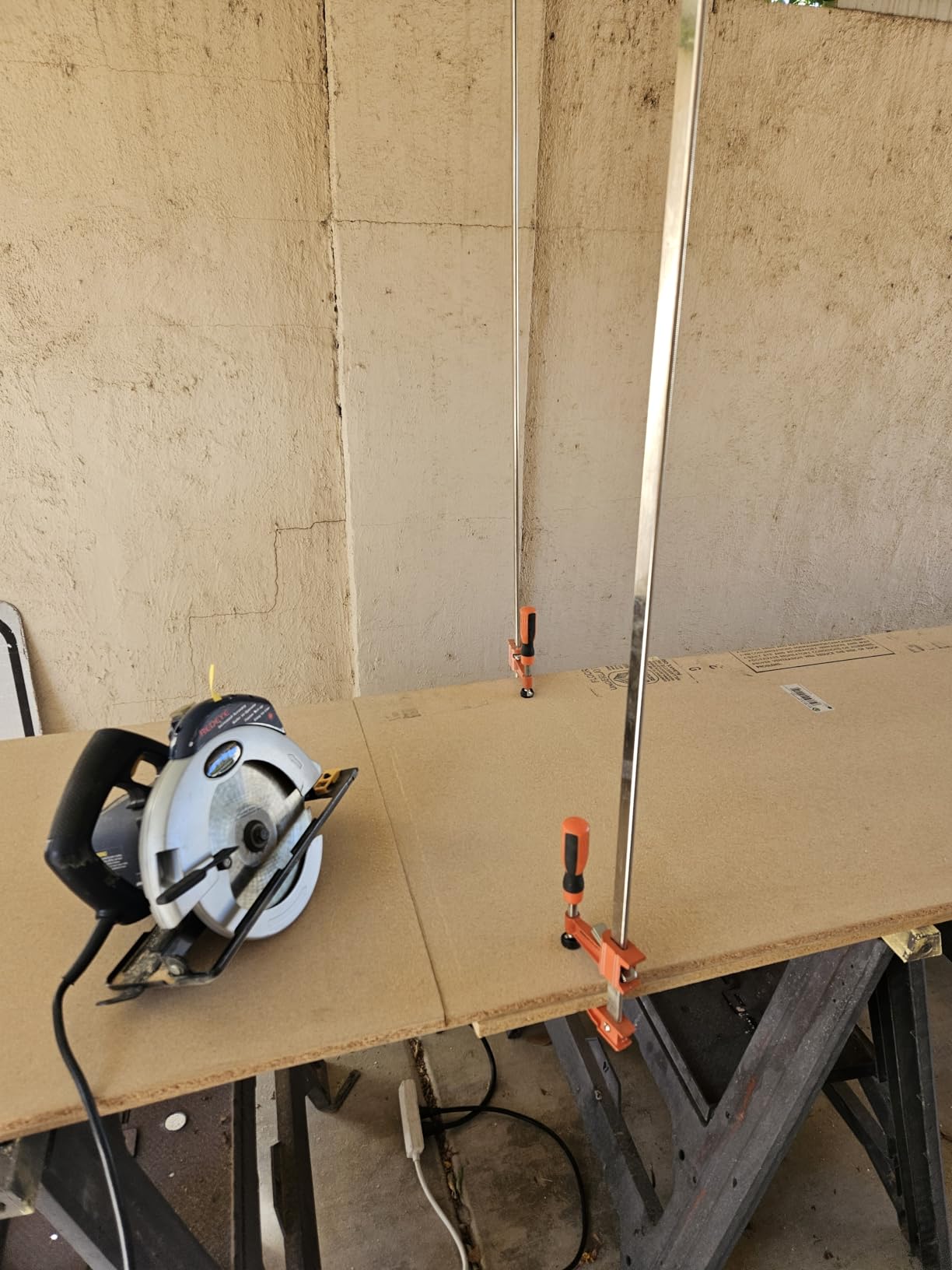
1127 reviews at 4.6 stars, and the dominant reaction is about quantity. When you are gluing a seat frame or an entire back assembly, being able to place a clamp every 6 inches along the joint changes the outcome. A single clamp at the center leaves the ends open; three or four clamps distributed along the line close it evenly.
The self-locking latch and raised end stop are small features with real value in a chair shop. They stop the sliding jaw creeping along the bar during handling, which is the exact failure that leaves a rail sitting slightly loose while you go looking for a screwdriver.
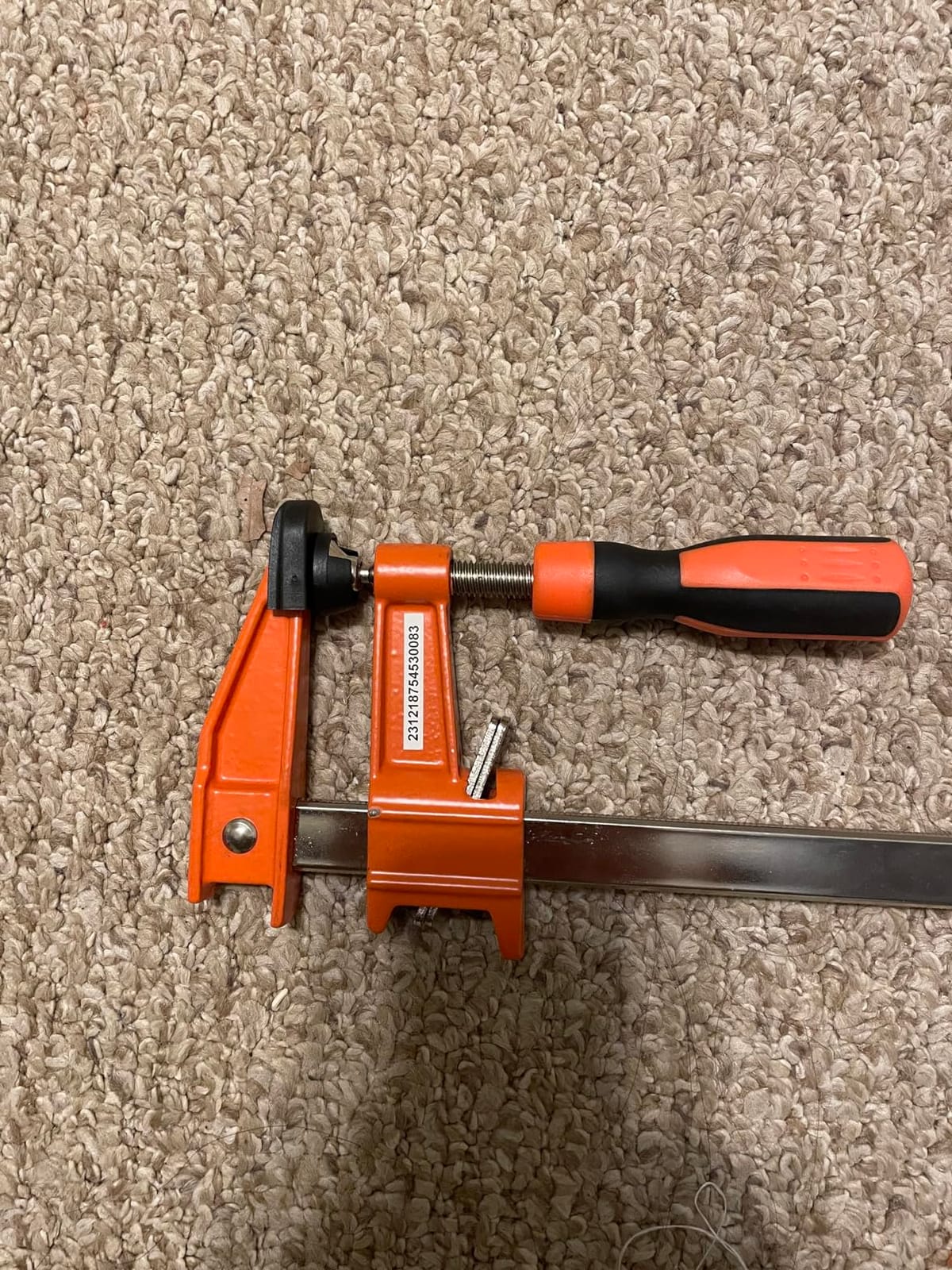
Construction is cast iron with a 45 grade steel bar, which is the traditional F-clamp recipe and the eight clamps together weigh 21.6 pounds. Reviewers note that the material holds up under repeated clamping cycles without flex, which is what you want when a clamp stays on a joint overnight while the glue cures.
At 36 inch of opening, each clamp clears most of a chair at once. A single clamp can span a seat frame, a pair of legs and rails, or a full back assembly, so eight of them means you can lay out an entire stage of the glue-up in one pass rather than working in rounds.
Best used for seat frames and long back assemblies
This is the set to buy if you build more than one chair or if you like to do a stage of assembly all at once rather than a joint at a time. Lay out the clamps along a seat frame at even intervals, tighten in alternating order, and let it cure overnight. It also handles cabinet and general frame work if your shop stretches beyond chairs.
Not the answer when bench space is the constraint
Eight 36 inch bars take up real room on a bench or a wall, and reviewers call the set heavy to carry and store. The 600 lb rating is also medium duty, so this is not the set for straightening thick hardwood. If you have one chair and a small bench, four shorter clamps will serve you better.
7. Feiyang Miter Spring Clamp Kit Is Best for Mitred Trim on Chair Backs
Feiyang Miter Spring Clamps Standard Kit for Woodworking
Eight clamps plus holder and tip pliers
CNC-ground tungsten steel tips
Handles compound miters to 135 degrees
+ The Good
- Sharpened tips bite into awkward miters
- Light spring tension grips without marking
- Holder and pliers cover a full trim job
- Each clamp is hand-inspected
- The Bad
- Spring pressure is far below a bar clamp
- Opening the tips needs the supplied pliers
- Pressure is fixed and momentary
1110 reviews at 4.6 stars, and owners are unapologetic about the narrow brief: these are for mitred trim, frames and molding, not for structural glue-ups. The CNC-ground tungsten steel tips give a fine taper, which is why they hold compound miters that a flat-pad clamp would simply push apart.
That matters on a chair with a shaped or mitered back frame, and on a bent or compound curve where a conventional jaw cannot hold the angle at all. The light spring tension grips without marking the wood, which is a real advantage on a show face.
The kit is complete: eight clamps, a holder that keeps them organized on the bench, and a dedicated pair of pliers for opening the tips. The holder alone changes how the set behaves, because a spring clamp that has to be hunted for between steps is a spring clamp that gets left in a drawer.
Reviewers describe the tips holding even 135 degree octagon cuts, which is well beyond anything a chair needs. Treat that as headroom rather than a reason to buy them for leg work.
Best used for mitred back rails and shaped trim
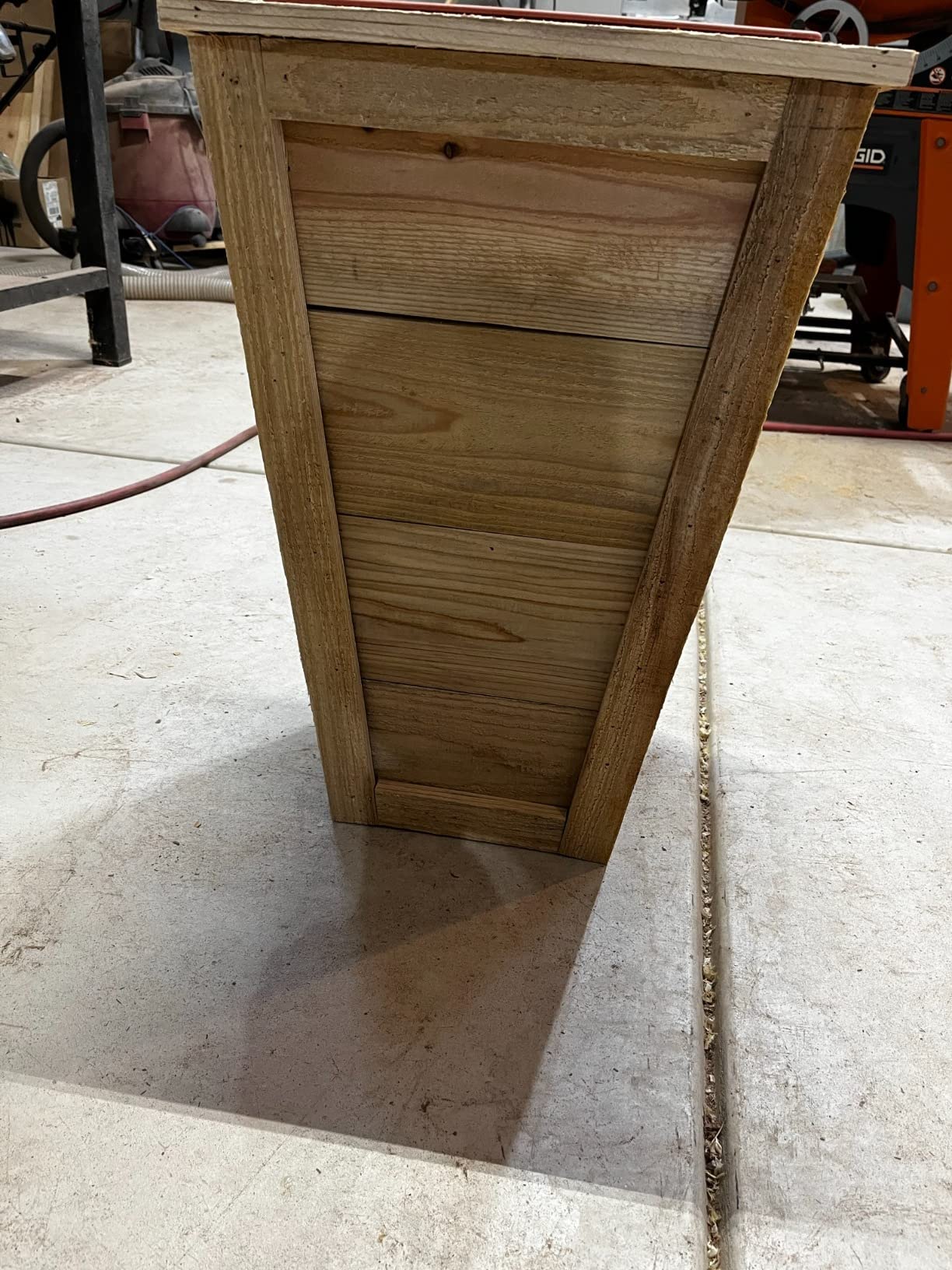
Use them to assemble a mitered back frame while the joints are still being aligned, and to hold moulding or a shaped top rail to a curved form. The 135 degree capability covers the compound joints you find on a shaped crest rail, where a square pad simply cannot follow the profile.
Not the answer for closing a tenon
Understand what a spring clamp is doing. It holds a joint in position, and its pressure is fixed and momentary rather than something you can wind down onto a tenon. It will never replace a bar clamp on a leg and rail joint, and for structural work you should use these only to keep parts aligned while a real clamp does the work.
8. SWANLAKE 8-Pack of 6 Inch Spring Clamps Is Best for Quick Holding Jobs
SWANLAKE 8 PCS 6″ inch Spring Clamp, Heavy Duty Spring Metal Spring Clamps, 2.5″-inch Jaw opening(6inch 8-Piece)
Eight 6 inch spring clamps
2.4 to 2.5 inch jaw opening
Nickel-plated alloy steel
+ The Good
- Low cost eight-pack for quick holding
- Nickel plating resists rust
- Rubber arc handles stay comfortable
- Consistent spring tension for glue-ups
- The Bad
- 2.5 inch jaw opening limits material thickness
- Can mar softer wood without a caul
- Fixed pressure cannot be adjusted or locked off
Just over 1000 reviews at 4.7 stars, with a 2.5 inch jaw opening and a 6 inch frame. Reviewers use them for glue-up helpers, assemblies, and plenty of work that has nothing to do with chairs, which tells you this is the clamp that lives on the bench holding things while you work on something else.
On a chair build they earn their place at the awkward moments. Holding a slat square while you mark it, keeping two rails from wandering during a dry fit, pinning a rung in place while you check a measurement. Spring tension is enough for positioning and nowhere near enough for a joint.
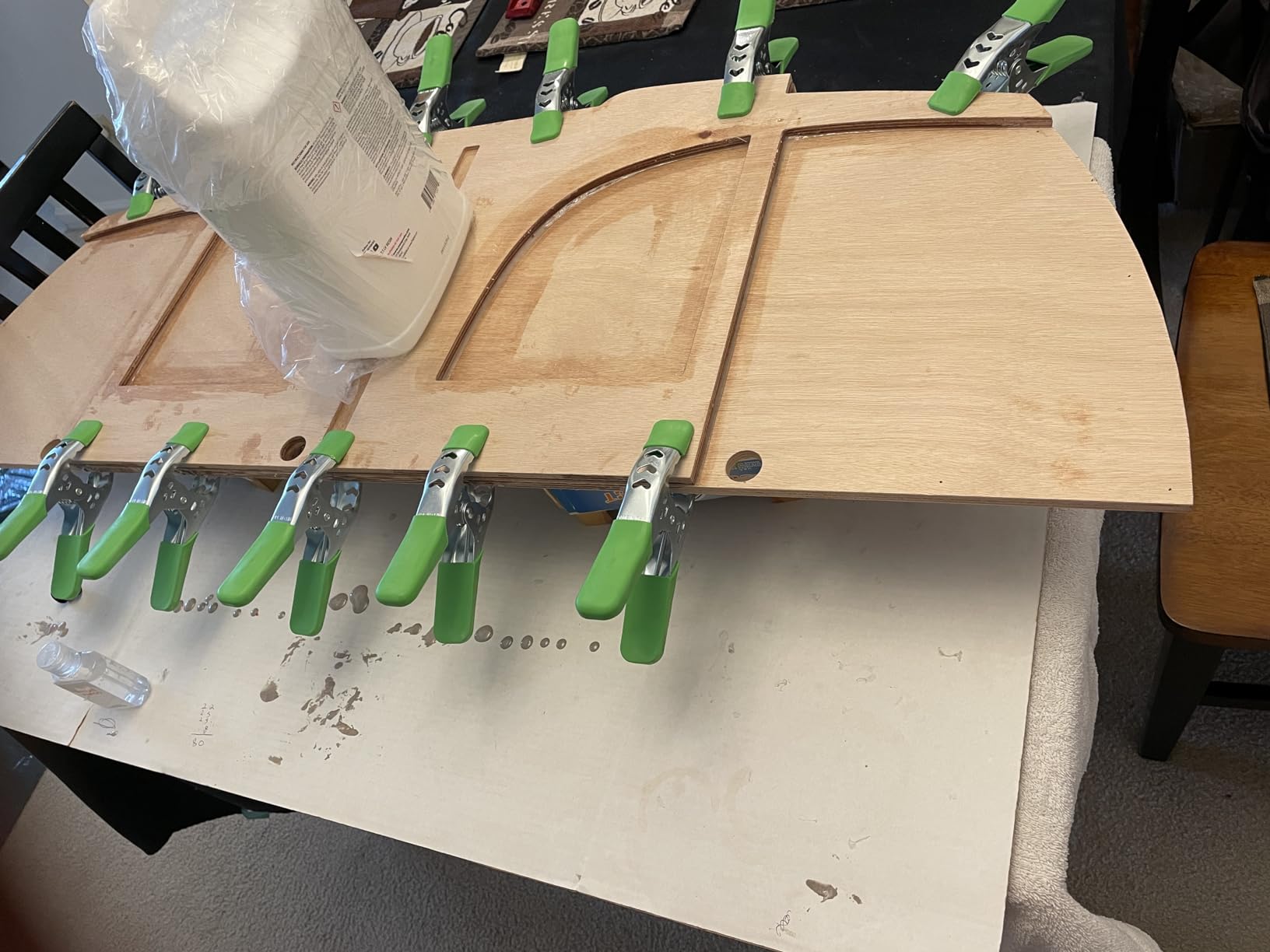
The nickel-plated steel resists rust, which matters in a shop where clamps get wet hands and sawdust. The arc handle with rubber covers stays comfortable over a long session, and a set of eight means you can hold several points at once on a back assembly while you step back and look at it.
The 2.4 to 2.5 inch jaw opening is the hard limit and it is tighter than it sounds. It suits back slats, thin rails and small parts, and it will not straddle a chunky seat frame member or a leg joint. Know the limit before you rely on it.
Best used for alignment and glue-up helpers
Clamp a slat in position while you mark the mortise layout, or hold a back frame together while you check the diagonals. Two or three of them on a back assembly let you find out whether the frame is going to be square before the glue goes on. Because they cost so little, buying several is a reasonable answer to the common complaint of running out of clamps mid-project.
Not the answer for thick material or structural joints
Fixed pressure means you cannot dial the load up or lock it off, and the jaws can mark or dent softer wood if you skip a caul. Anything thicker than a couple of inches will not fit in the jaw at all. Use them as the third pair of hands on your bench, not as the clamps that hold a chair together.
9. BORA 4-Pack of Parallel Clamps Is Best for Wide-Jaw Pressure on Finished Faces
Bora Parallel Clamps 4 Pack – 2X 24″ & 2X 31″ Bar Clamps for Woodworking
Two 24 inch and two 31 inch clamps
1100 lbs per clamp
3.5 inch wide reversible padded jaw
+ The Good
- Wide padded jaws spread pressure without marring
- 1100 lbs handles serious furniture glue-ups
- Passive lock jaw stops the lower jaw shifting
- Large handle allows fast one-handed adjustment
- The Bad
- Four clamps weigh well over 40 pounds
- Long bars need real bench length
- Cost is higher than entry-level sets
488 reviews at 4.7 stars, and the reviews come from furniture builders rather than casual buyers. The 3.5 inch wide reversible padded jaw is what they single out: it spreads clamping force over a broad area, so a finished or already-planed face does not get a concentrated dent or crush mark.
That makes this a strong match for a chair built from hardwood and finished before assembly, or one where you want to clamp across a wide seat frame member without bowing it. The jaw is reversible, so the same clamp spreads as well as it squeezes.
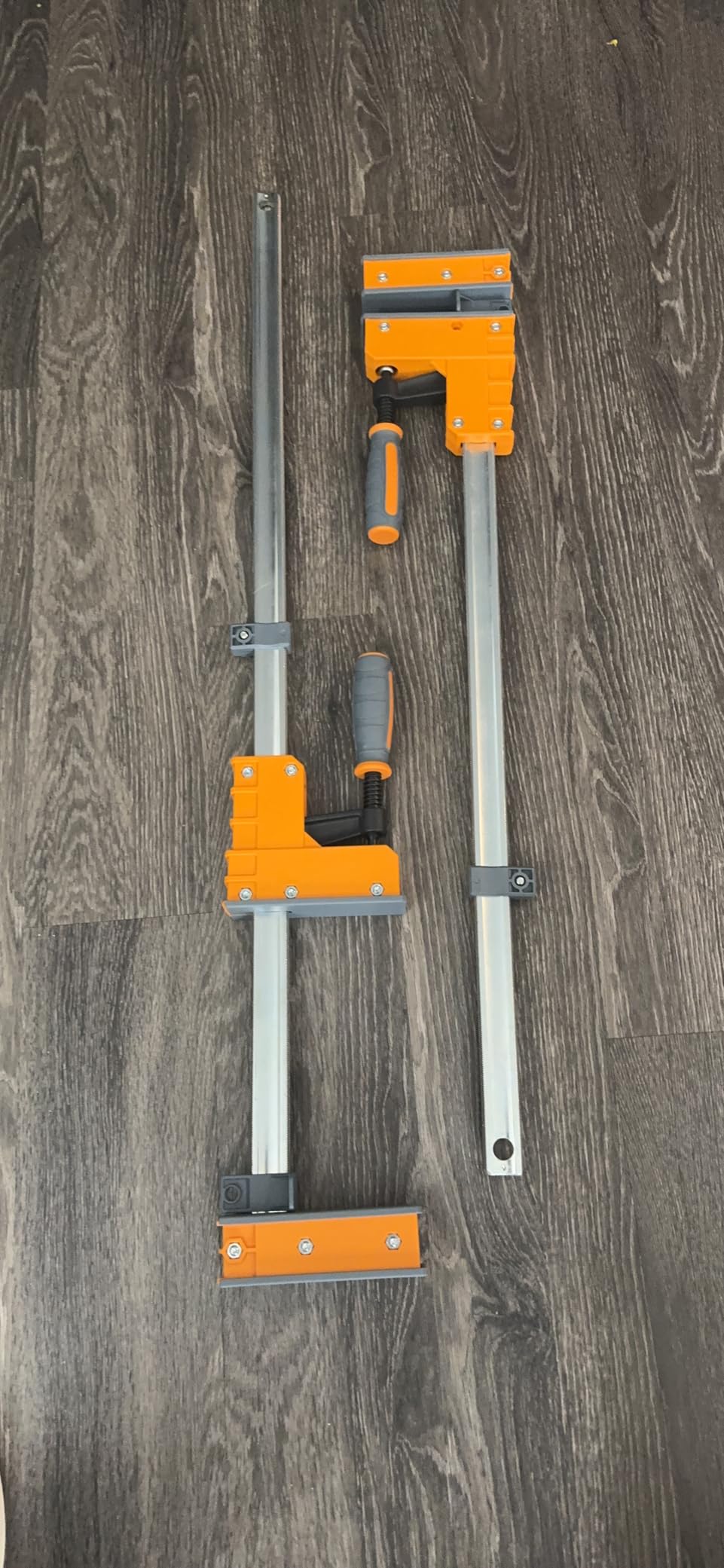
The passive lock jaw is the feature that matters most in a real glue-up. A lever holds the lower jaw in position while you tighten, which prevents the exact problem woodworkers complain about most: the assembly shifting under load as pressure comes on. A chair that moves while you tighten stays crooked after the glue cures.
The mix of two 24 inch and two 31 inch clamps covers small frames through larger case assemblies, and at 1100 lbs per clamp there is plenty of headroom for hardwood. The ergonomic handle allows one-handed repositioning, which is a meaningful advantage when you are building a chair alone.
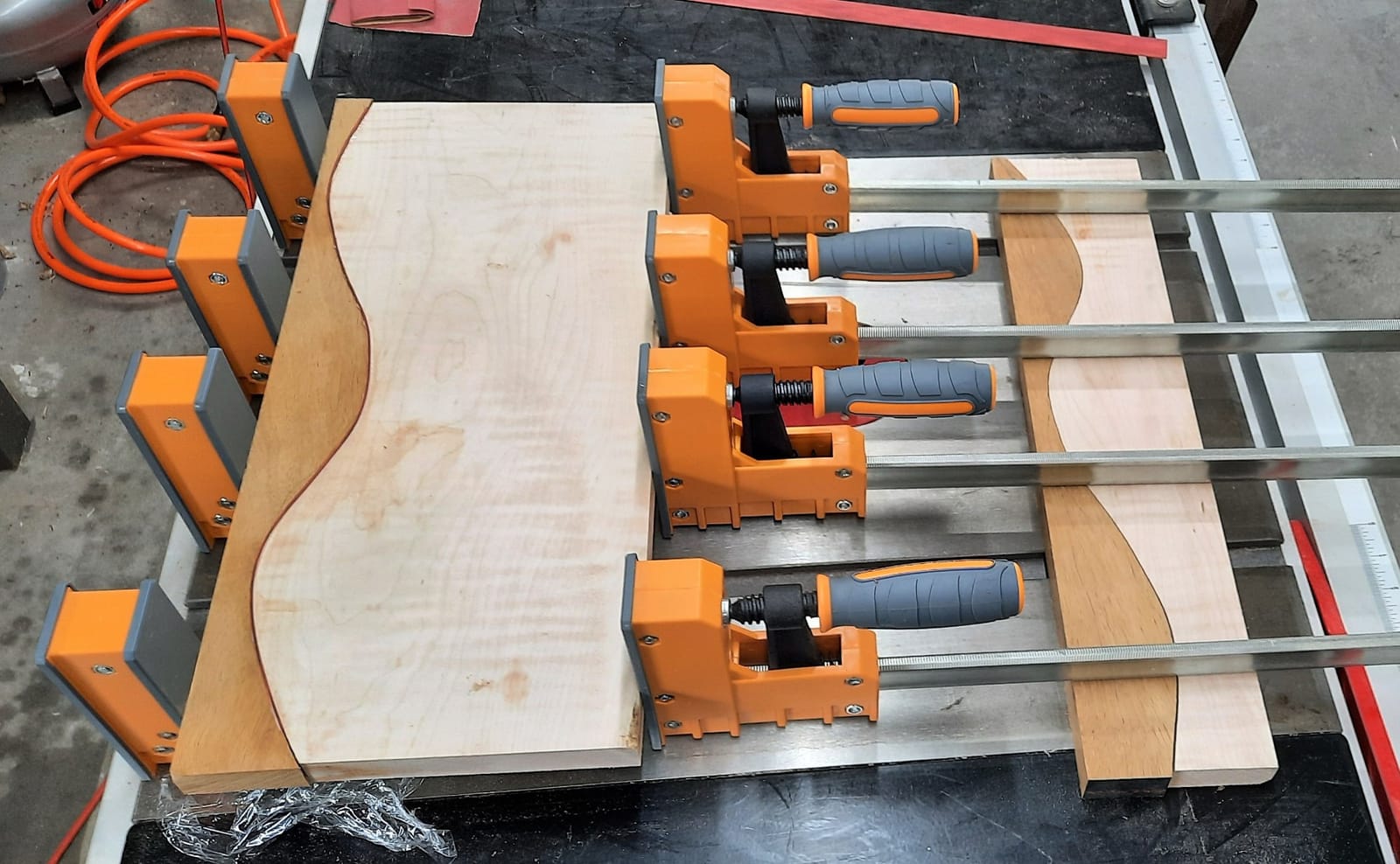
Best used for seat frames, panels and wide joints
Spread a seat frame across all four clamps and let the wide jaws do the work evenly. The 24 inch pair handles a side chair seat and the 31 inch pair handles a dining chair or a wider rail assembly. Furniture builders also use them for carcass and case glue-ups, and the padded jaw means you do not need cauls on a finished face.
Not the answer for a small bench or tight shop
Bulk and weight are the complaint in nearly every critical review. Over 40 pounds across four clamps means one trip, not four, and 31 inch bars need substantial bench length or a clamp stand to sit at working height. The reversible jaw also does not suit very thin material. If your shop is compact, a shorter set of parallel clamps will be easier to live with.
10. Bessey KRE3531 31 Inch Parallel Clamp Is Best for Perfectly Square Jaws
BESSEY KRE3531, 31 In., Parallel Clamp, K Body REVO Series – 1700 lbs Nominal Clamping Force , Spreader, and Woodworking Accessories – Clamps and Tools for Woodworking, Cabinetry, Case Work
31 inch K Body REVO parallel clamp
1700 lbs nominal clamping force
Three replaceable pressure caps
+ The Good
- Clamp faces show no deflection and stay aligned
- 1700 lbs with a hex boost to 17 Nm
- Replaceable pressure caps protect the workpiece
- Cold drawn steel rail with lifetime warranty
- The Bad
- Heavy at 6.9 pounds per clamp
- Sliding handle takes practice to move smoothly
- Costs more than generic parallel clamps
405 reviews at 4.5 stars, and the praise is unambiguous about geometry: faces that show zero deflection and stay aligned. Parallel-jaw clamping at 1700 lbs nominal force, with a steel socket in the handle for a hex key up to 17 Nm of extra torque, is the strongest option here for a chair where a raked leg would be visible.
Three replaceable pressure caps protect both the clamp and the workpiece, and the cold drawn steel rail is backed by a lifetime warranty against manufacturing defects. The operating jaw stays where you put it, which is the behaviour that makes a clamp trustworthy on a long cure.
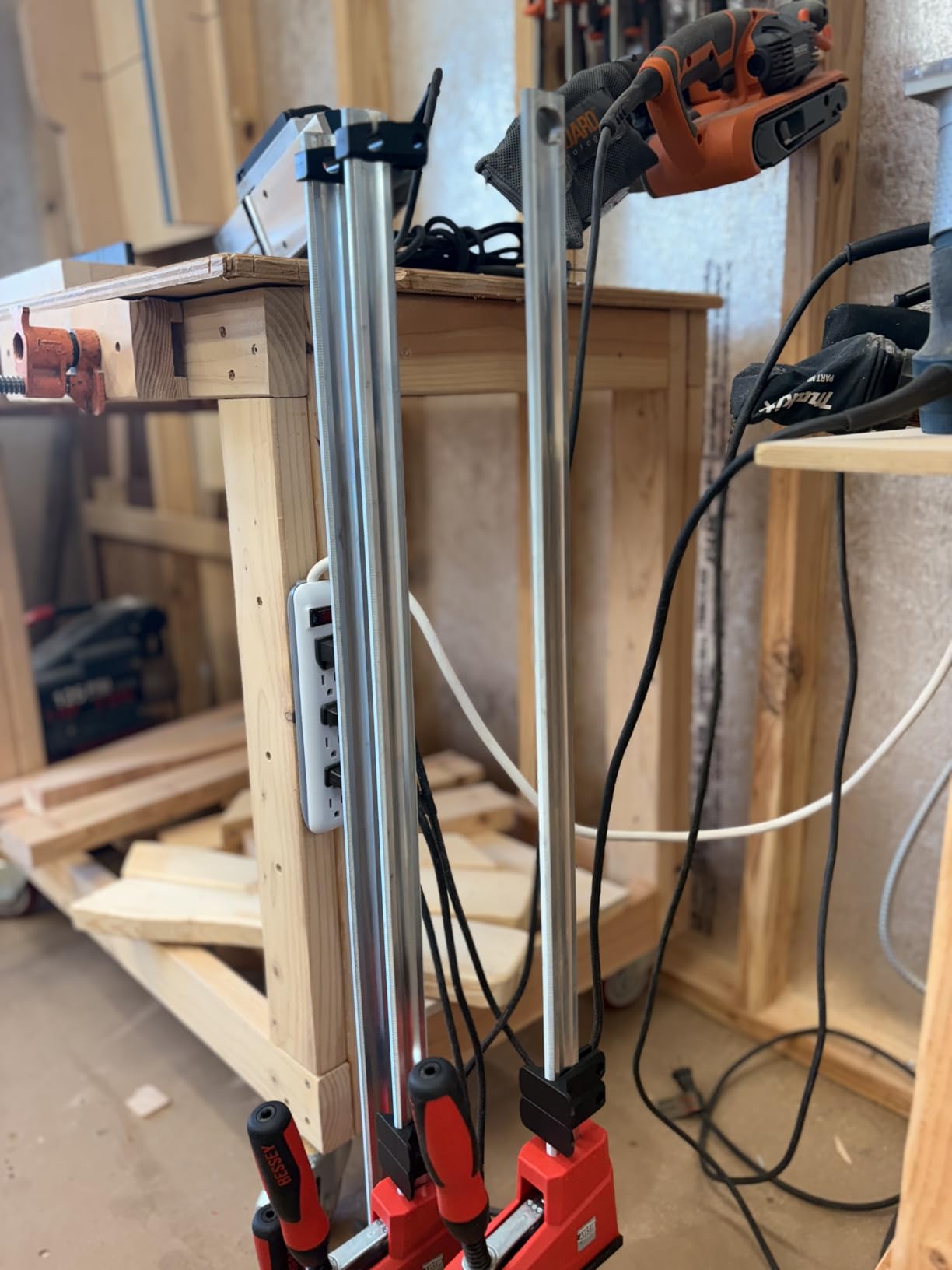
This is a single clamp, not a set, so plan accordingly. For a chair you would buy a matched length or two, and the 31 inch size sits in the sweet spot for most side chair work: enough reach for a seat frame or a pair of legs and rails, short enough to handle alone.
Forum discussion about Bessey clamps is worth reading with care, because it is not uniformly positive. Experienced builders prefer them for geometry and note the sliding handle needs practice, while others report more flex than a pipe clamp on very tight fits. Our view is that the alignment advantage outweighs the flex for chair work.
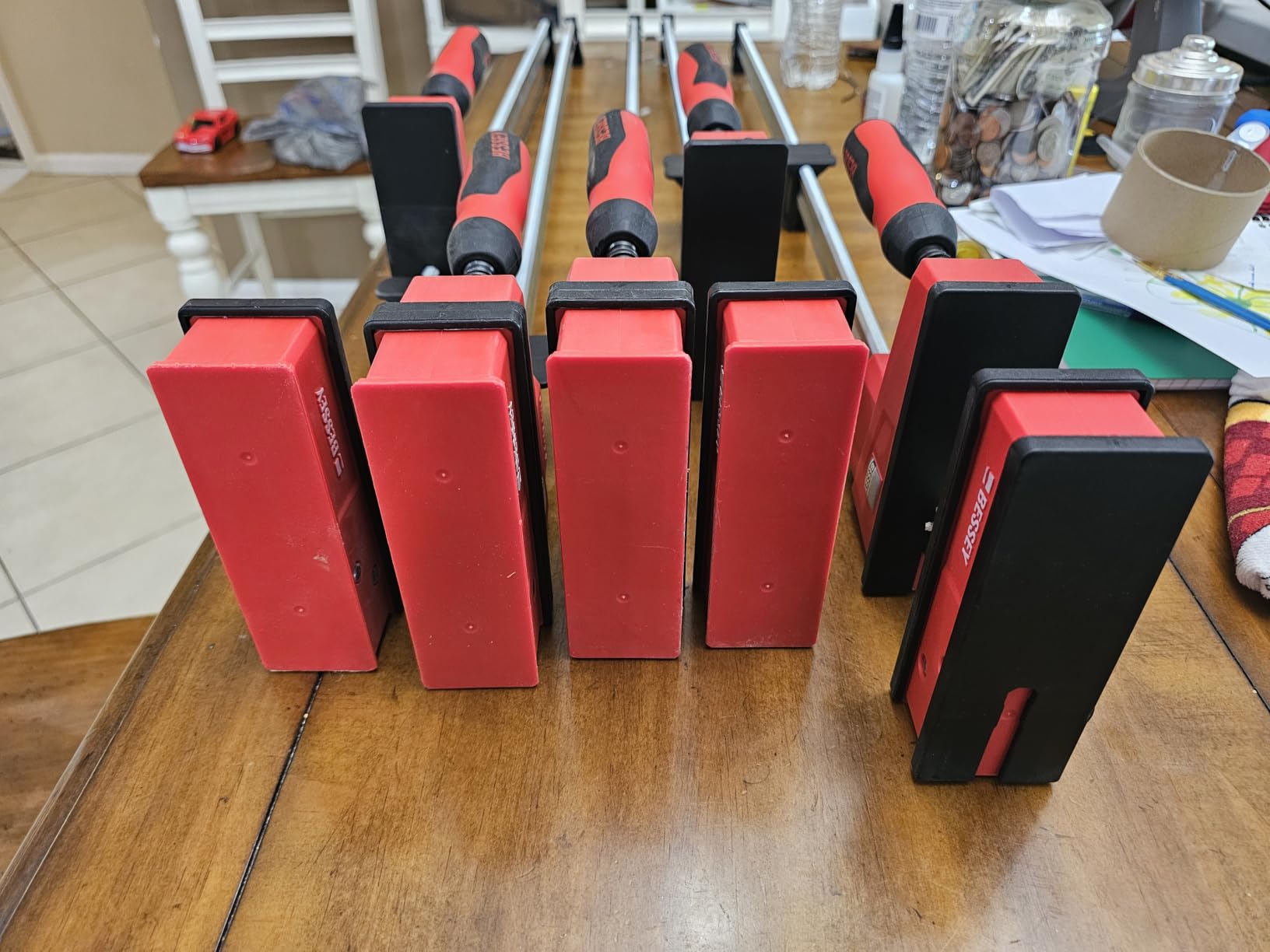
Best used for mortise and tenon joints that must stay true
A chair leg and rail joint is a long, visible glue line with a lot of leverage on it. This is where the highest clamping force and the squarest jaws pay off, because the tenon seats fully and evenly instead of seating at one end. It also works for a seat frame where any bow would show immediately in the finished chair.
Not the answer for a single-clamp shop on a budget
At 6.9 pounds each, these are heavy to carry, and the price is well above a generic parallel clamp. The sliding handle is also fiddly until you get the feel of it, which is a real cost on a first build. If you are building one chair and your budget is fixed, a mid-range parallel clamp set will serve nearly as well.
11. POWERTEC 13 Foot Strap Clamp Is Best for Squaring a Whole Chair Frame
POWERTEC Strap Clamps for Woodworking – Quick Release Band Clamps with Ergonomic Handle, Adjustable Picture Frame Clamp, 13 ft Strap Belt Clamps for Cabinets and Drawers (71101)
1 inch wide by 13 foot nylon band
Quick-release lever corner brackets
Screw handle for final tightening
+ The Good
- Wraps a square frame evenly from every side
- Non-marring plastic jaws wipe glue off easily
- 13 foot band covers large chair frames
- Low cost allows buying several
- The Bad
- Webbing stretches on first use and needs retightening
- Slick plastic corners can creep off center
- Keeps a corner square but does not create a true 90 degrees
1552 reviews at 4.4 stars, and owners use it for exactly the job the name suggests: picture frames, boxes, drawers and chair frames. A strap clamp applies pressure evenly around all four sides at once, which no bar clamp can do. When a back frame is slightly out of square, this pulls the whole perimeter together rather than correcting one corner.
The band is 1 inch wide and 13 feet long, with quick-release lever corner brackets and a screw handle for final snugging. The non-marring plastic jaws wipe glue off easily, which matters more than it sounds when glue is squeezing out at four corners at once.
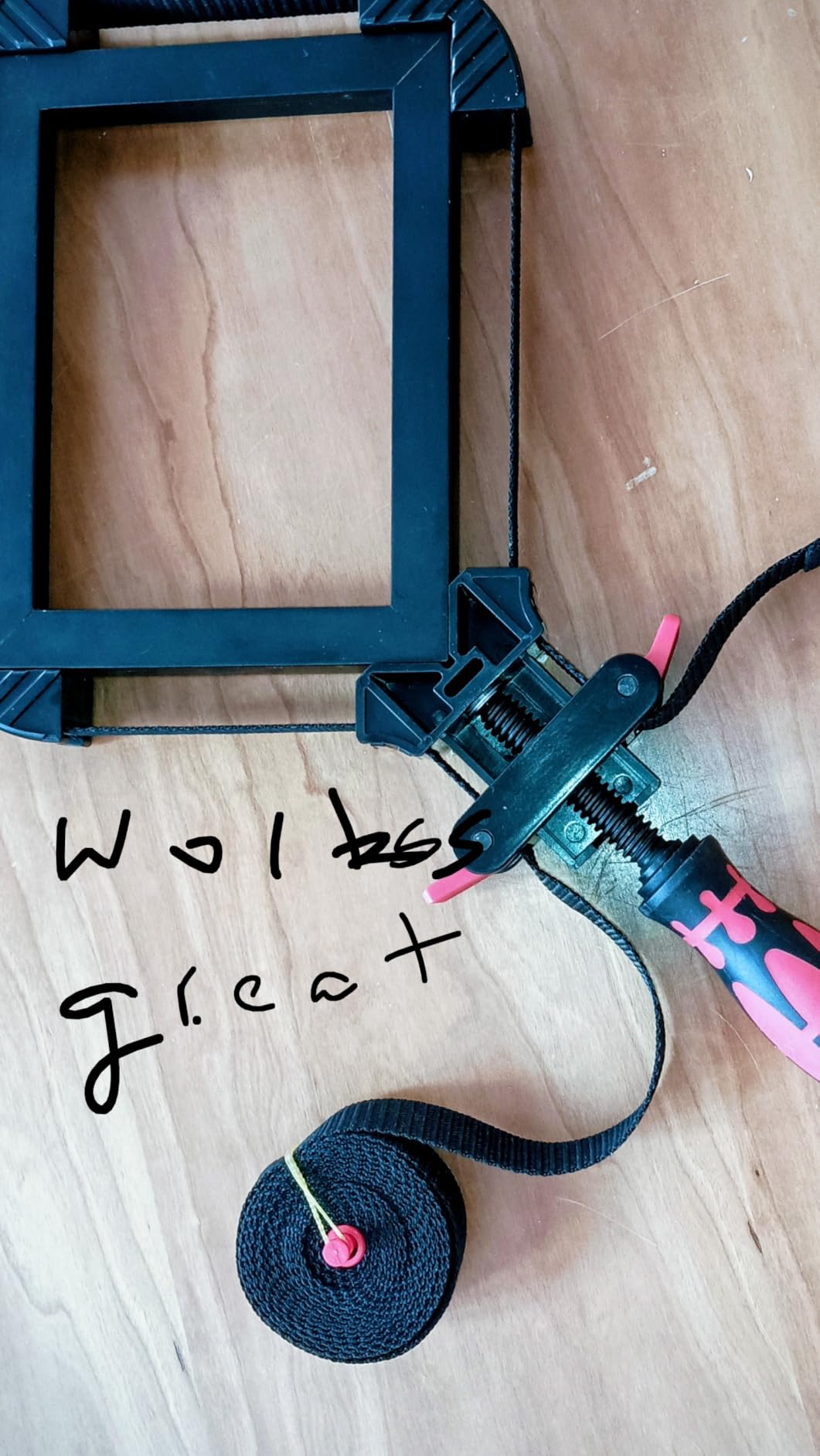
Two practical tips from owners who use it heavily. First, run the screw handle all the way home before you start, so there is travel left for a second tightening once the webbing settles. Second, keep checking that the slick corners stay centred, because they can creep off square while the band is under tension.
A spindle and rubber band roll up the excess strap, which is a small quality of life detail that stops the webbing tangling itself into a knot every time you put the clamp down. On a long build that is a difference you notice.
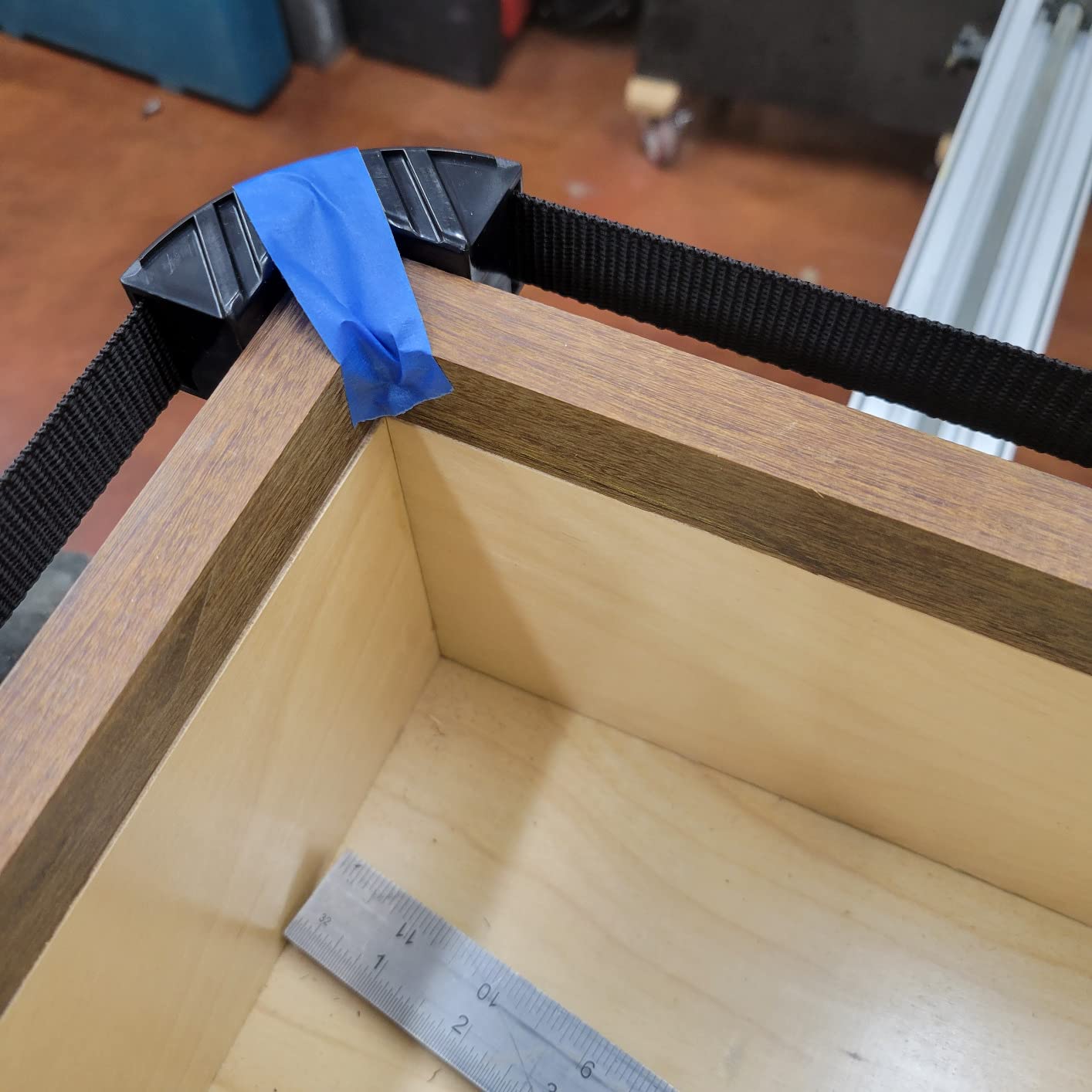
Best used for back frames, seat rings and box assemblies
Wrap the assembled back frame before the top rail goes on, then bring all four corners square as one unit. It also handles a seat frame ring, a drawer or box assembly, and any rectangular glue-up where even pressure all round is more valuable than concentrated pressure on one joint. The low cost means you can have two on the bench rather than negotiating for one.
Not the answer for creating a precise right angle
The clamp holds a square, it does not cut one. Owners are clear that you still need to verify with a real square, and that the plastic corners are slick enough to shift under uneven pressure. It also cannot substitute for a bar clamp on a heavy leg and rail joint, because webbing tension is nowhere near the force of a screw-driven clamp.
12. Bessey GSCC 4-Pack of F-Style Clamps Is Best for Clamping to a Bench
BESSEY GSCC4PK-C Clamp Set for Woodworking, F-style with Wood Handle, Replaceable Pads, 2 x 6 In and 2 x 12 In, 600 lb, Red/Black/Silver
Two 6 inch and two 12 inch F-style clamps
600 lb clamping force
Replaceable pads
+ The Good
- Cast iron build resists flex
- Replaceable rubber pads protect the work
- Useful for clamping to a bench or holding cauls
- Serrated rail steadies the sliding jaw
- The Bad
- Wooden handles are narrow and slick
- 600 lb rating is medium duty
- No quick release for repositioning
238 reviews at 4.5 stars, from owners who describe them as heavy, well-built and fair-priced, and who use them for exactly two chair jobs: clamping to the bench, and holding cauls through a glue-up. The serrated rail holds the sliding jaw steady, and the replaceable rubber pads mean you can protect a finished surface without improvising scrap.
Clamping to the bench sounds obvious and then you try to glue a chair without it. A rail that hangs free while the glue grabs will sag on its own weight alone. Four clamps of this size let you pin a workpiece to a flat surface and work on it hands-free, which changes the accuracy of everything downstream.
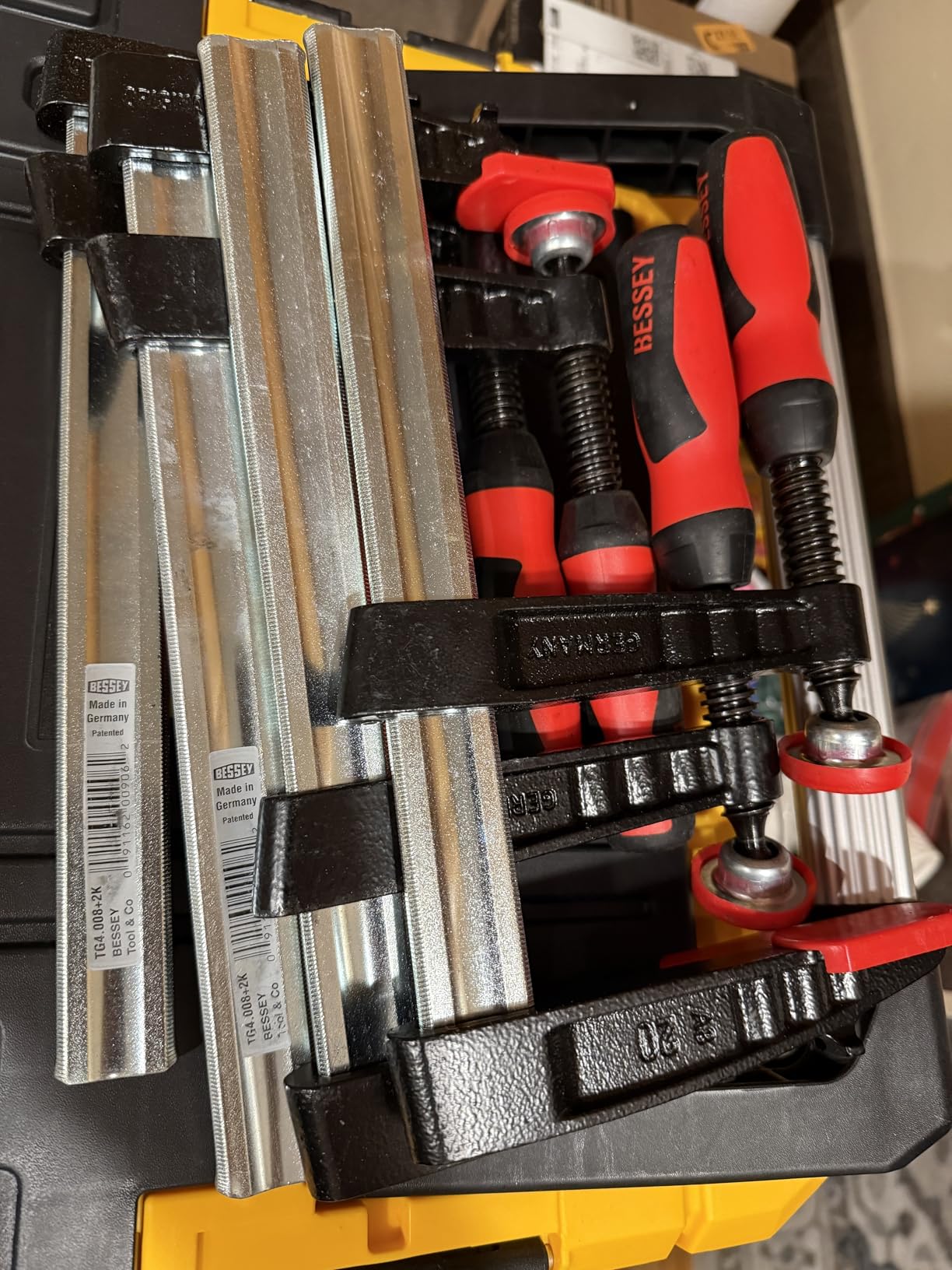
The cast iron fixed and sliding jaws have the weight to stay where they are put, and the powder-coated finish resists the wear a shop delivers. A pair of 6 inch and a pair of 12 inch covers bench dog holes, cauls and small frames without any adaptation.
There is no quick release, so every reposition means loosening the screw. For bench and caul work that is an acceptable trade because you set the clamp once and leave it, but it is why these are a bench accessory rather than a fast glue-up clamp.
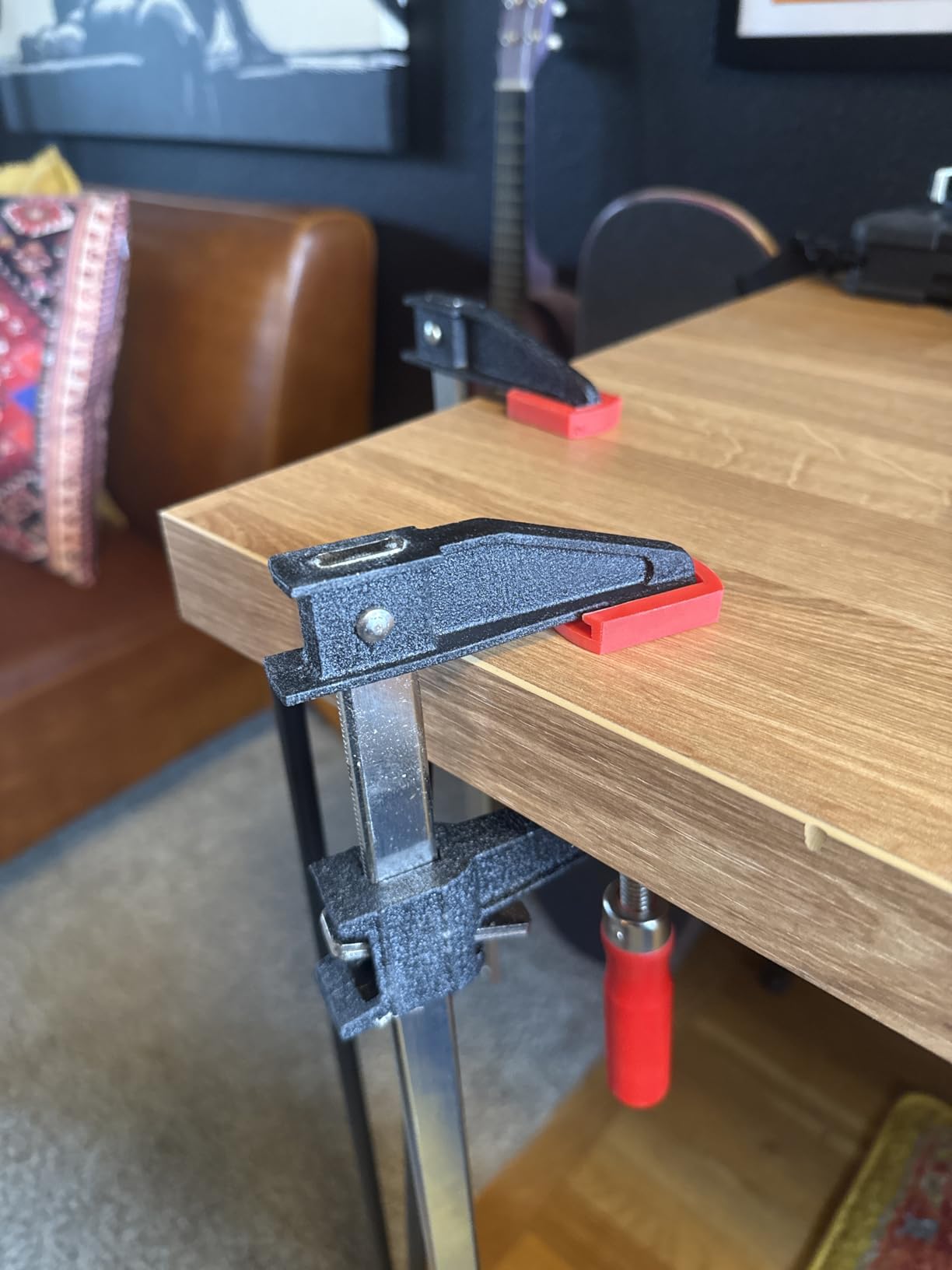
Best used for holding cauls and pinning work to a bench
Make a pair of plywood cauls slightly wider and thinner than the parts you are gluing, then clamp those across the joint so pressure is even along the whole length. The replaceable pads let the same clamps hold a finished face against a bench top, and the 600 lb rating is more than enough for that job. Our glue gun guide covers getting the right amount of adhesive onto the joint first.
Not the answer for fast repositioning
The narrow wooden handles are the one repeated criticism, and they get slick once your hands are coated in glue. If you will be moving clamps constantly during a glue-up, a clamp with a quick release will save you more time than this one will. Buy these for the bench and the cauls, and let a quick-grip handle the movement.
How to Choose Clamps for Chair Work
Three clamp families cover almost every chair glue-up
Bar and F-clamps use a straight rail with a sliding head and a screw. They are the workhorse for a leg and rail joint, and you pick them by opening capacity, throat depth and load limit. Parallel-jaw clamps are a bar clamp with a fixed end and a moving jaw that stay square to the rail, so pressure lands evenly across a wide face instead of being concentrated at one corner.
Pipe clamp fixtures are heads and feet that screw onto threaded pipe, so the reach is whatever length of pipe you own. Band or strap clamps wrap a frame and tighten around all four sides at once, which is how you bring a slightly out-of-square back frame into agreement without fighting one corner. Corner and right-angle clamps hold two members at 90 degrees for assembly and dry fitting, and they do not generate serious clamping force.
For most builders the working set is a parallel-jaw or bar clamp for the structure, a quick-grip or spring clamp for spindles and slats, and one strap clamp for frames. A clamping caul is a flat board wider than the joint that spreads force from a bar clamp over an uneven or fragile surface, and it is the cheapest fix for a joint that will not close flat.
Which clamp for which chair part
Map the clamp to the part and the problem disappears. Legs and rails are thick, long and joint-heavy, so they need reach and force: a bar clamp or parallel-jaw clamp with an opening at least as wide as the assembly. Back spindles and slats are small and numerous, so they need a quick-grip or spring clamp that can be repositioned one-handed and fits into narrow gaps. A seat frame is wide and flat, so it needs either a long parallel-jaw clamp or a strap clamp to pull the whole perimeter together. Stretchers and rungs are short, so short bar clamps or quick-grips cover them. A seat panel is a glue-up, not a clamp job, and needs edge clamps or cauls.
The recurring theme is parallelism. Anything long and visible will show a twist, and a twist happens when pressure is uneven. That is the single reason to prefer a parallel-jaw clamp over a conventional bar clamp for a seat frame or a back rail.
How much clamping force is enough, and how much starves a joint
Wood glue needs pressure to force excess adhesive out of the joint so the faces seat fully, but pressure has a ceiling. For a dense hardwood such as maple or walnut you can work up to roughly 600 to 1000 lbs of clamping force on a strong joint. For oak, which is an open-grained hardwood, a few hundred pounds is plenty and going heavier starts to squeeze glue out of the cell structure itself. Once that happens you have a starved joint, and the failure looks like a joint that looks glued but separates under a light knock.
The practical test is squeeze-out. Draw the clamps up until you see a consistent thin bead along the joint, then stop. A continuous bead means the joint is closing. A burst of glue squirting out under a hard wind-up means you are over-tightening. Also spread your clamps out rather than crowding them, because two clamps at the center of a long rail do far less than four spaced along it.
How many clamps one chair actually consumes
Count them stage by stage rather than buying blind. Assembling one side of a chair with two legs and two rails takes two bar clamps, and the second side takes two more, so four clamps covers both sides. Joining the sides and fitting the front and back seat rails takes another four. A strap clamp or two, plus two quick-grips, handles the back frame. A seat panel or back slat set takes two more quick-grips.
That totals roughly eight bar clamps, two to four quick-grips and one strap clamp for a single side chair. The rule that circulates most often among experienced builders is to buy one more than you think you need, because discovering you are short halfway through an open glue-up is the most common beginner mistake. Our bar clamp roundup covers the length options in more detail.
Match the clamp to the glue open time
A short open time changes your clamp choice more than any spec sheet. PVA wood glue gives you a workable window, and a longer open-time formula gives you room to set a band or strap clamp around a frame before it grabs. Hide glue gives you a long working time but demands strong, even clamping to drive out water, and epoxy is unforgiving about repositioning once it starts to set.
So if your glue-up involves a strap clamp or several spring clamps that need positioning, pick a longer open time than you think you need. If you are using quick-grips and bar clamps, standard PVA is more than fast enough. The failure mode to avoid is discovering your clamps are all still on the bench when the glue turns.
Protect oak from iron, and finished faces from every clamp
Bare iron or black iron pipe reacts with tannin in oak and leaves a deep black stain wherever moisture and glue are present, and the stain does not sand out because it is a chemical reaction rather than a surface mark. Forum woodworkers raise this repeatedly. If you are building in oak, put waxed paper or thin plywood between the clamp and the work, or choose non-ferrous clamps, and the plastic-faced ones in this list are the safe choice.
For finished faces, the same principle applies in miniature. Soft replaceable pads, a scrap block or a caul between clamp and wood will prevent a dent that takes far more sanding to remove than it costs to prevent. Judge a clamp by what it leaves behind, not just by how firmly it holds.
Frequently Asked Questions
What is the best clamp for wood glue?
A parallel-jaw clamp is the best general answer for wood glue because its fixed and moving jaws stay square to the rail, so pressure lands evenly across a wide face and the joint closes without twisting. For chair legs, rails and seat frames, a long bar clamp is the more affordable option. For back spindles and slats, a one-handed quick-grip or spring clamp lets you reposition fast enough for a short glue open time.
How long should I leave clamps on glued wood?
Leave clamps on until the glue has set enough to no longer squeeze out, which is typically at least an hour for standard PVA, and longer for slow-setting formulas. Many builders leave them overnight and release them the next morning. The practical test is whether a thin, continuous bead of squeeze-out appears along the joint. Once the glue has gripped, clamping longer adds nothing.
What is the recommended clamping force for wood glue?
Enough pressure to force excess glue out so the joint seats fully, and no more. For dense hardwoods such as maple and walnut, roughly 600 to 1000 lbs of clamping force on a strong joint is reasonable. Oak is open-grained and needs far less, only a few hundred pounds. Over-tightening squeezes adhesive out of the wood itself and produces a starved joint that looks glued but fails under a light knock.
What is the difference between bar clamps and parallel clamps?
A bar clamp is a straight rail with a sliding head and a screw, and it is chosen by opening capacity, throat depth and load limit. A parallel-jaw clamp is a bar clamp whose fixed and moving jaws stay square to the rail as it closes, so pressure is spread evenly across a wide jaw instead of concentrating at one corner. That geometry makes parallel clamps the better choice for wide, visible surfaces like chair seat frames.
What is the best band clamp for woodworking?
A band or strap clamp is the best tool for pulling a slightly out-of-square rectangular frame together, because it applies pressure around all four sides at once rather than at one joint. It is the natural choice for chair back frames, seat frame rings, picture frames and box assemblies. Check squareness with a real square afterwards, since the clamp holds a square but does not create one, and expect to re-tighten the webbing after first use.
Bottom Line for Chair Glue-Ups in 2026
Start with the WORKPRO six-piece set if you want one purchase that covers slats, spindles and dry assembly, then add a long bar or parallel-jaw clamp for the seat frame and rails. Budget builders get the most from a four-pack of mixed-length bar clamps plus a strap clamp, and oak builders should avoid ferrous hardware touching the work.
Whatever you choose, dry fit the whole chair first, keep all four feet coplanar, and use enough clamps that pressure is spread along each joint instead of concentrated at one point. Those habits matter more than any model on this list. Use the buttons above to see the current listings and pick up the set that matches the chair in front of you.