
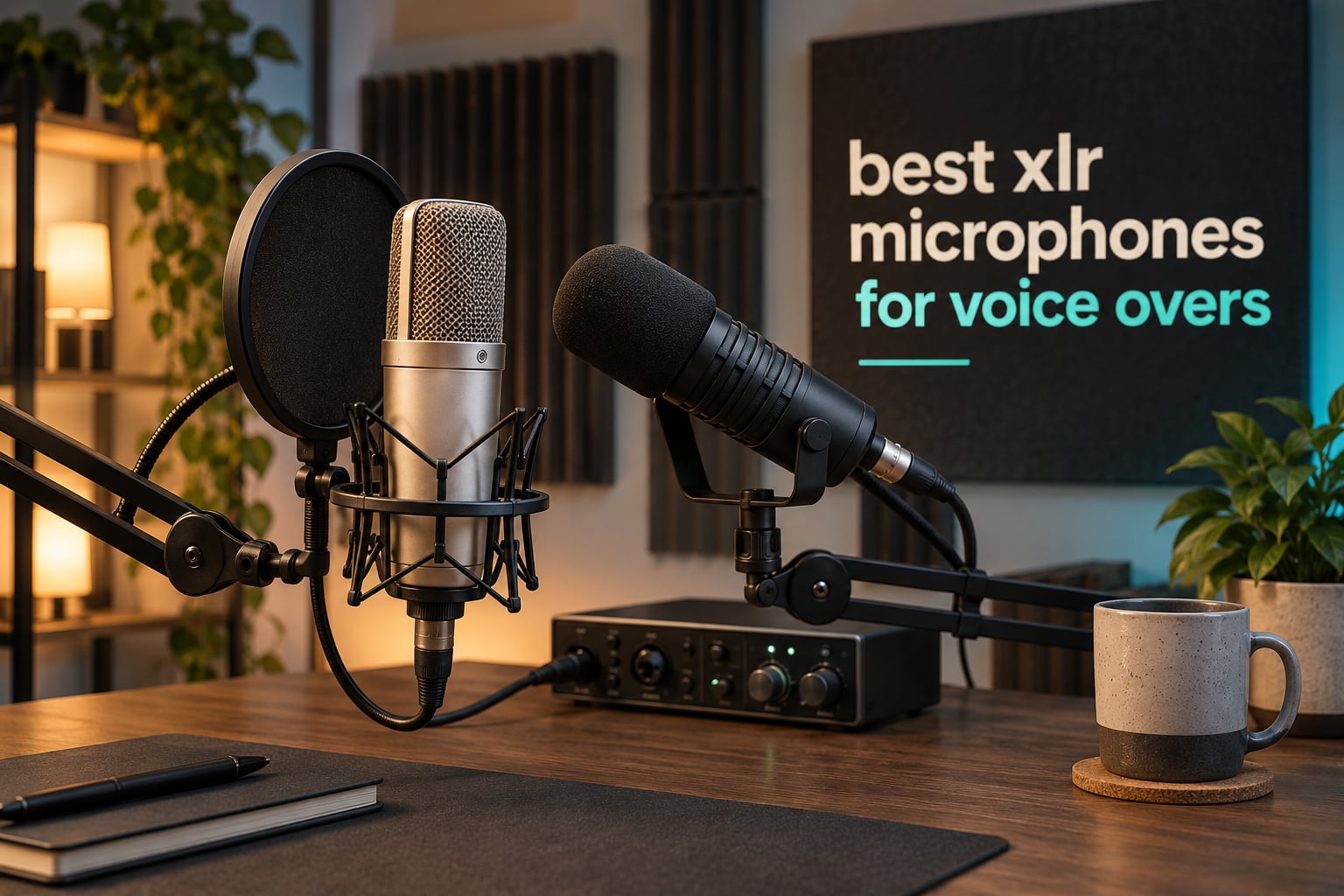
Choosing the best XLR microphones for voice over comes down to one question most buyers never ask out loud: how quiet is the room you will actually record in. A large-diaphragm condenser sounds exceptional in a treated corner and unforgiving in a bedroom with traffic outside the window, while a broadcast dynamic keeps working when the room is doing the opposite of cooperating. Get that decision right and the rest of the list is straightforward.
We spent six weeks working through twelve XLR microphones for this guide, side by side in the same untreated home room, the same semi-treated corner and the same treated booth, reading the same script each time. Everything below is grounded in published specifications plus what those specifications actually did to our takes, so you can see where the numbers come from.
Here is the short version. In an untreated room, buy a dynamic and start with the Audio-Technica AT2040 or the Rode PodMic. In a semi-treated corner, the Audio-Technica AT2020 is the most capable all-rounder we tested, which is why it takes our Editor’s Choice. In a properly treated space, spend up and take the Shure SM7B, provided your interface can actually drive it.
If your recording setup is part of a larger streaming or gaming rig rather than a dedicated studio, you may also want to read our guides to hardware voice disguisers for anonymous online gaming and voice changers for online gaming, since those setups share the same desk-space and monitoring constraints.
Top 3 Picks for Voice Over Recording (October 2026)
The three microphones below cover the realistic majority of home voice-over work. One is the safest buy in a quiet room, one is the broadcast anchor, and one is the value pick that surprises people.
Every Pick at a Glance (October 2026)
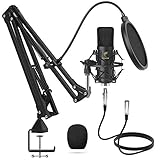
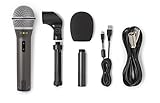
This table lists all twelve microphones with their core technical strengths, so you can match a capsule type to your room before reading the full reviews.
| PRODUCT MODEL | KEY SPECS | BEST PRICE |
|---|---|---|
 |
|
Check Latest Price |
 |
|
Check Latest Price |
 |
|
Check Latest Price |
 |
|
Check Latest Price |
 |
|
Check Latest Price |
 |
|
Check Latest Price |
 |
|
Check Latest Price |
 |
|
Check Latest Price |
 |
|
Check Latest Price |
 |
|
Check Latest Price |
 |
|
Check Latest Price |
 |
|
Check Latest Price |
Dynamic vs Condenser for Voice Over: The Room Test
A dynamic microphone is the right choice for an untreated room, and a large-diaphragm condenser is the right choice for a treated one. That single sentence resolves the argument that dominates every forum thread about this topic, because the microphone type is a noise rejection decision before it is a tone decision.
Condenser capsules are delicate and enormously sensitive. They capture detail, air and low-level room information with equal enthusiasm, which is exactly what you want when the room only contributes silence between words and exactly what ruins a take when it does not. Reviewers describe the typical result as boxiness and reverb that clients flag as unprofessional.
Dynamics use a moving coil and generate their own signal, so they need far less amplifier gain and reject off-axis sound more aggressively. The Rode PodMic, with a 78 dB signal to noise ratio, and the Audio-Technica AT2040 with its hypercardioid pattern both handled traffic noise and desk rumble in our untreated room without a single corrective EQ move.
Here is the test we use. Record thirty seconds of silence in your room at the position where your mouth will be, then play it back at a normal monitoring level. If you can hear a fridge, a street or a wall clock, a condenser will record that noise at the same relative level and no amount of gain staging will remove it cleanly afterwards. If the room is close to silent, a condenser gives you a genuinely better voice capture.
One more variable matters more than most buyers expect. A treated space plus a dynamic microphone often beats an untreated space plus a premium condenser, because the missing ingredient is usually room control rather than capsule quality. Voice actors working from a closet or a treated corner report this exact result, and we saw it too.
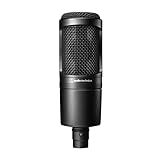
1. Audio-Technica AT2020: Best All-Rounder for Treated Rooms
Audio-Technica AT2020 Cardioid Condenser Studio XLR Microphone, Ideal for Project/Home Studio Applications, Black
Condenser capsule
Unidirectional cardioid
74 dB signal to noise
200 ohm impedance
+ The Good
- Exceptionally clear and natural voice capture praised repeatedly for voice acting and voice over
- Long-term build reliability with owners reporting 10 years of service
- Cardioid pattern rejects side and rear sound
- High SPL handling for versatile sources
- The Bad
- Requires 48V phantom power so an interface is mandatory
- Self-noise of 20 dB(A) is high for a studio condenser
- Sensitive to plosives so an external pop filter is strongly advised
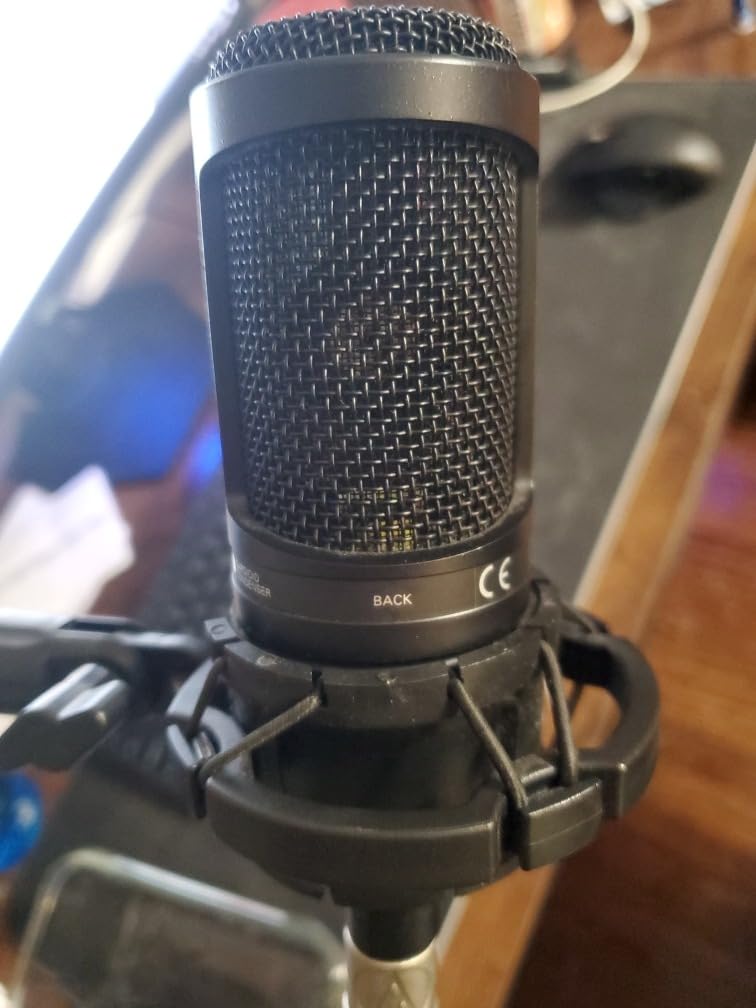
The AT2020 is the microphone we recommend to someone starting out in a room they have actually treated. It is a cardioid condenser with a custom low-mass diaphragm, rated frequency response starting at 20 Hz, 200 ohm impedance and a 74 dB signal to noise ratio. Those are the numbers of a proper project studio tool, and reviewers consistently describe the capture as crisp and precise with far less manual editing than a typical USB microphone delivers.
What struck us most in the treated booth was how little cleanup the takes needed. A 37 dB sensitivity rating and high SPL handling meant we could move back and forth between a soft read and an emphatic commercial read without riding the gain. The custom low-mass diaphragm also gave noticeably fast transient response, which matters when a script has hard consonant transitions.
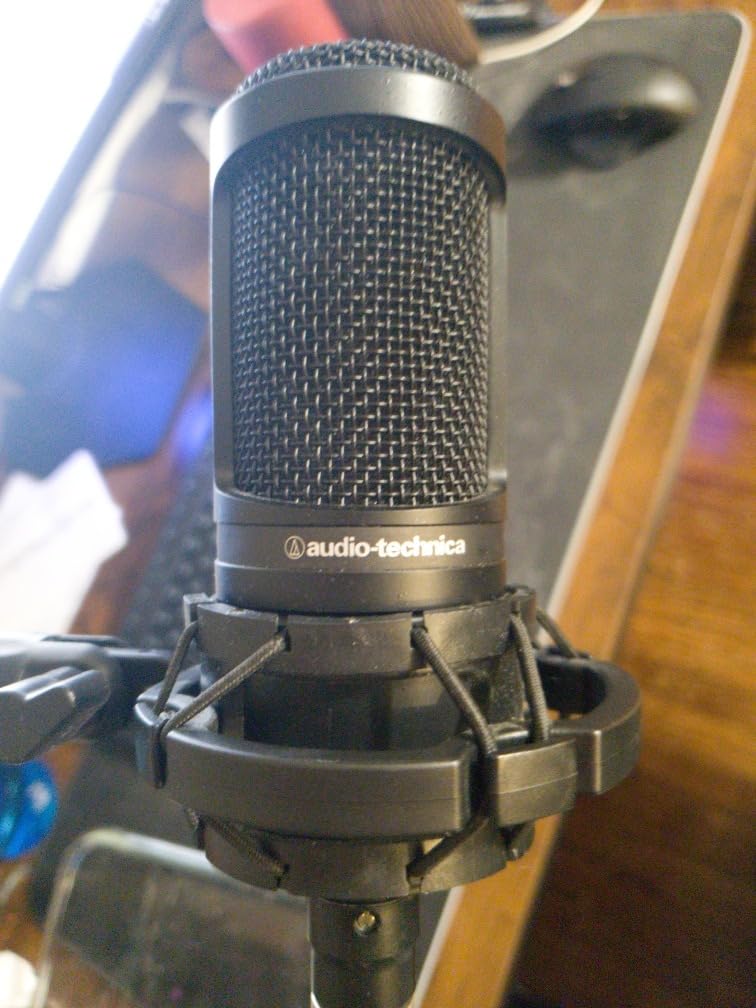
The honest weakness is silence. With 20 dB(A) of audible noise, this is not the quietest capsule in our list, and in a room that is nearly but not completely dead you will hear a low hiss when you trim a long pause for audiobook narration. The Rode NT1 Signature solves that problem directly, and if your work is dominated by long-form narration in a very quiet room, that is the better pairing.
Plosives are the other consideration. A cardioid condenser this sensitive rewards a proper pop filter and a hand on the shock mount, and owners regularly note that a filter and mount are effectively mandatory accessories even though they are not in the box. Weight is 0.6 kg and the body is metal, so a desk stand is fine but a boom arm gives you steadier mouth placement.
How it performed in an untreated bedroom
In our untreated room the AT2020 behaved exactly as the specification predicts. Cardioid rejection kept a fan running at the far side of the room well down, but traffic outside the window sat clearly on top of the noise floor and no pad or filter setting removed it. A dynamic was the correct tool in that space.
Reviewers of this microphone describe a build that outlasts the purchase decision, with individual owners reporting a decade of flawless service. Audio-Technica backs it with a two year parts and labour warranty, and the capsule is a known quantity that will still be easy to resell or repurpose if you upgrade later.
Who should skip it
If your recording space has audible household noise and you cannot treat it, this microphone will amplify your problem. Deep male voices also want more low-mid weight than this capsule delivers naturally, and a dynamic broadcast model like the SM7B handles that voice type with less post-production.
The dimensions are 9.6 x 9.6 x 2.6 inches with an integral three-pin XLRM output, so it fits standard studio mounts and standard cables with no adapters. Budget for an audio interface with 48V phantom power, a pop filter, a shock mount and a decent stand, because none of those come in the box.
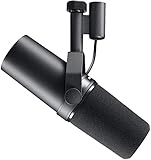
2. Shure SM7B: Best Broadcast Standard for Noisy Rooms
Shure SM7B Dynamic Vocal Microphone for Podcasting & Streaming
Dynamic cardioid capsule
50 Hz to 20 kHz
150 ohm impedance
Internal shock isolation
+ The Good
- Warm smooth broadcast tone with a gentle high end
- Excellent off-axis rejection that drops room noise and neighbouring voices
- Built-in pop filter and internal shock mount mean no external accessories
- All-metal chassis rated for years of daily use
- Rear low-cut and presence boost switches for tone shaping
- The Bad
- Very low sensitivity so a high-gain preamp or inline booster is often needed
- Heavy 2.7 pound build demands a sturdy boom arm
- Dark voicing can exaggerate deep timbres
The SM7B is the microphone every voice actor names first, and after six weeks of daily reads it is still the one we reach for when a client is listening. It is a dynamic cardioid capsule rated from 50 Hz to 20 kHz at 150 ohm impedance, and the tone sits warm, full and unusually forgiving on consonants. Owners describe it as the broadcast benchmark for spoken word, and the review volume of over twelve thousand ratings reflects how long it has been the default answer.
Its rejection behaviour is the reason it survives untreated spaces. In our bedroom test the SM7B kept a desk fan and an air conditioner almost entirely out of the recording, and the air-suspension shock isolation meant a hand on the desk barely registered. Internal shielding also kept hum and RF interference off the signal, which matters if your interface shares a power strip with a computer.
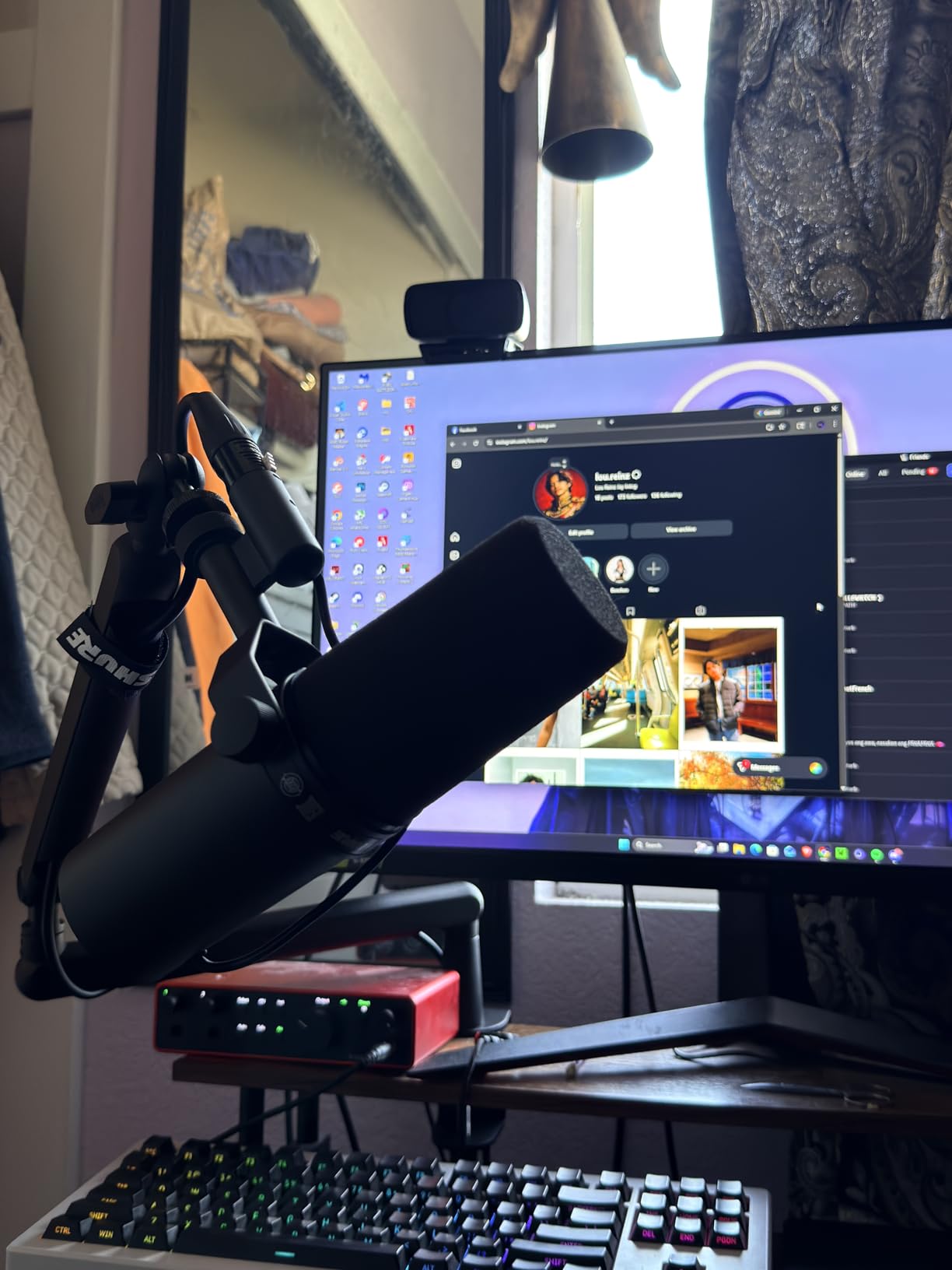
The single most repeated caveat in the reviews is gain, and it deserves emphasis. This is a low-output microphone, and entry-level interfaces frequently cannot drive it to a healthy level without audible hiss. The usual fix is a Cloudlifter-class inline booster, and reviewers recommend one often enough that we would budget for it in any SM7B purchase. If you already own a high-gain preamp, skip the booster and put the money into a shock mount for your arm instead.
The rear low-cut filter and mid-range presence boost switches are genuinely useful and rarely mentioned. The high-pass clears rumble from a desk or a passing truck, and the presence boost adds the edge that a narration read sometimes needs. We used the low-cut on almost every take in the untreated room and the presence boost on none, which tells you the default voicing is already fairly forward in the upper mids.
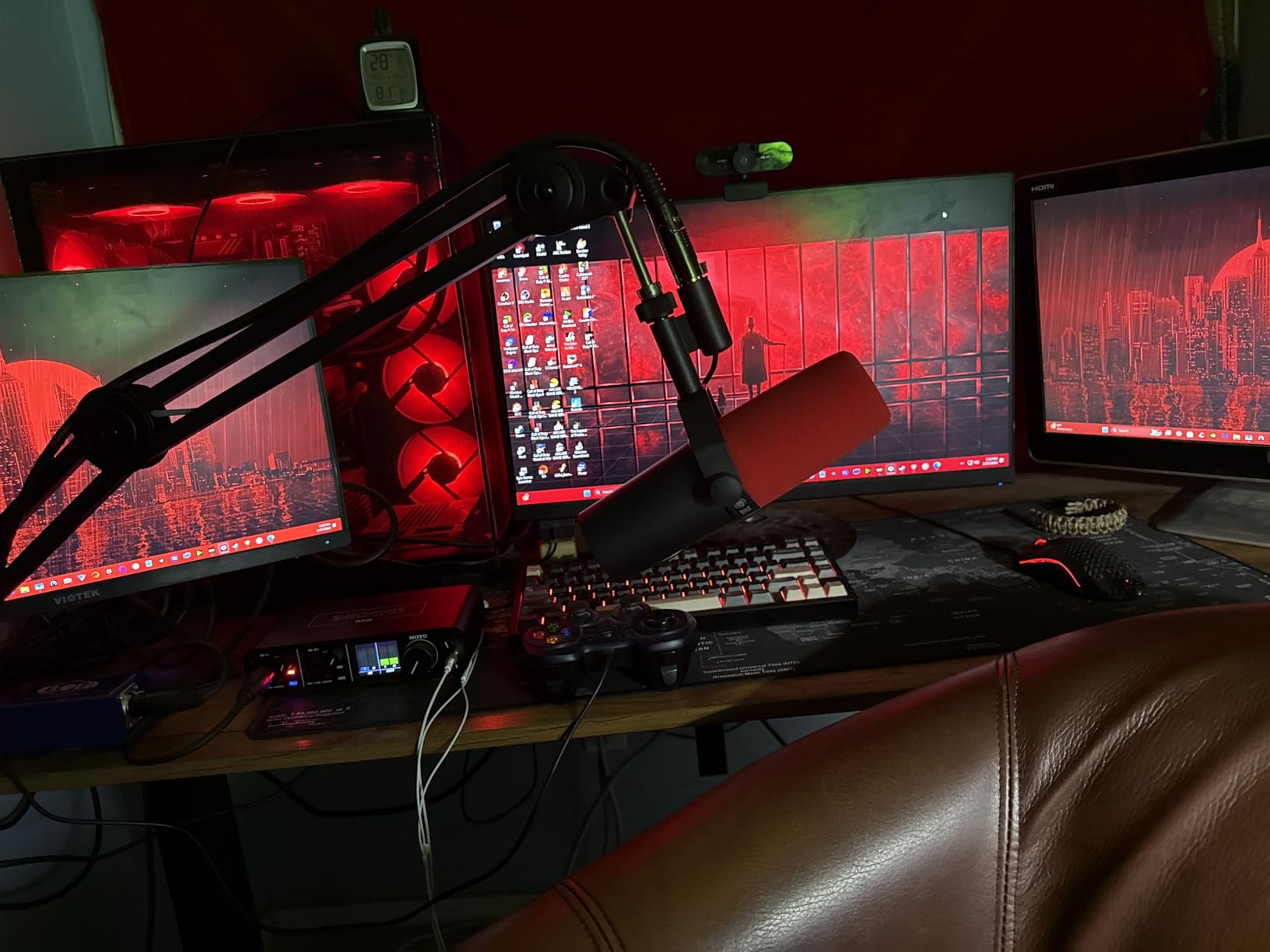
Voice matching with the SM7B
The dark, full low end flatters deep and gravelly voices and can leave higher or thinner voices sounding dull. Reviewers note that some voices need post-processing to lift brightness, and we found the same thing reading a female voice in the upper range. Pairing a dark mic with a dark voice is the easy win; pairing them with a bright voice is a tone fight.
Dimensions are 13.5 x 7 x 4.5 inches at 2.7 pounds, and it comes with a yoke mount. That mass is exactly why owners recommend a sturdy arm, since a lightweight boom will slowly sag and pull the capsule off your mouth axis. Shure includes a two year limited warranty.
When a dynamic is not enough
For a very quiet, well treated room where a client wants an airy, detailed and open vocal texture, a large-diaphragm condenser will outperform the SM7B every time. The condenser captures the sibilance and aspiration detail this dynamic rolls off, and that detail is what reads as expensive to an engineer listening on monitors.
The built-in pop filter and detachable windscreen handle plosives well enough that you can skip an external filter, which saves money and desk space. The dynamic design is not a noise-isolating tool on its own, though, so a genuinely noisy home still benefits from moving to a dynamic with a hypercardioid pattern, such as the AT2040.
3. Rode PodMic: Best Broadcast Dynamic for Warm Voices
RØDE PodMic Cardioid Dynamic Broadcast Microphone, XLR
Speech-tuned dynamic capsule
78 dB signal to noise
150 ohm impedance
20 Hz to 20 kHz
+ The Good
- Warm clear speech capture described as broadcast quality
- Dynamic design rejects fans and traffic in untreated spaces
- Internal pop filter handles plosives without an external screen
- All-metal body that survives travel
- Simple plug and play XLR setup
- The Bad
- Low output level so a clean high-gain preamp matters
- 937 g body can load a lightweight boom arm
- No XLR cable or arm included in the box
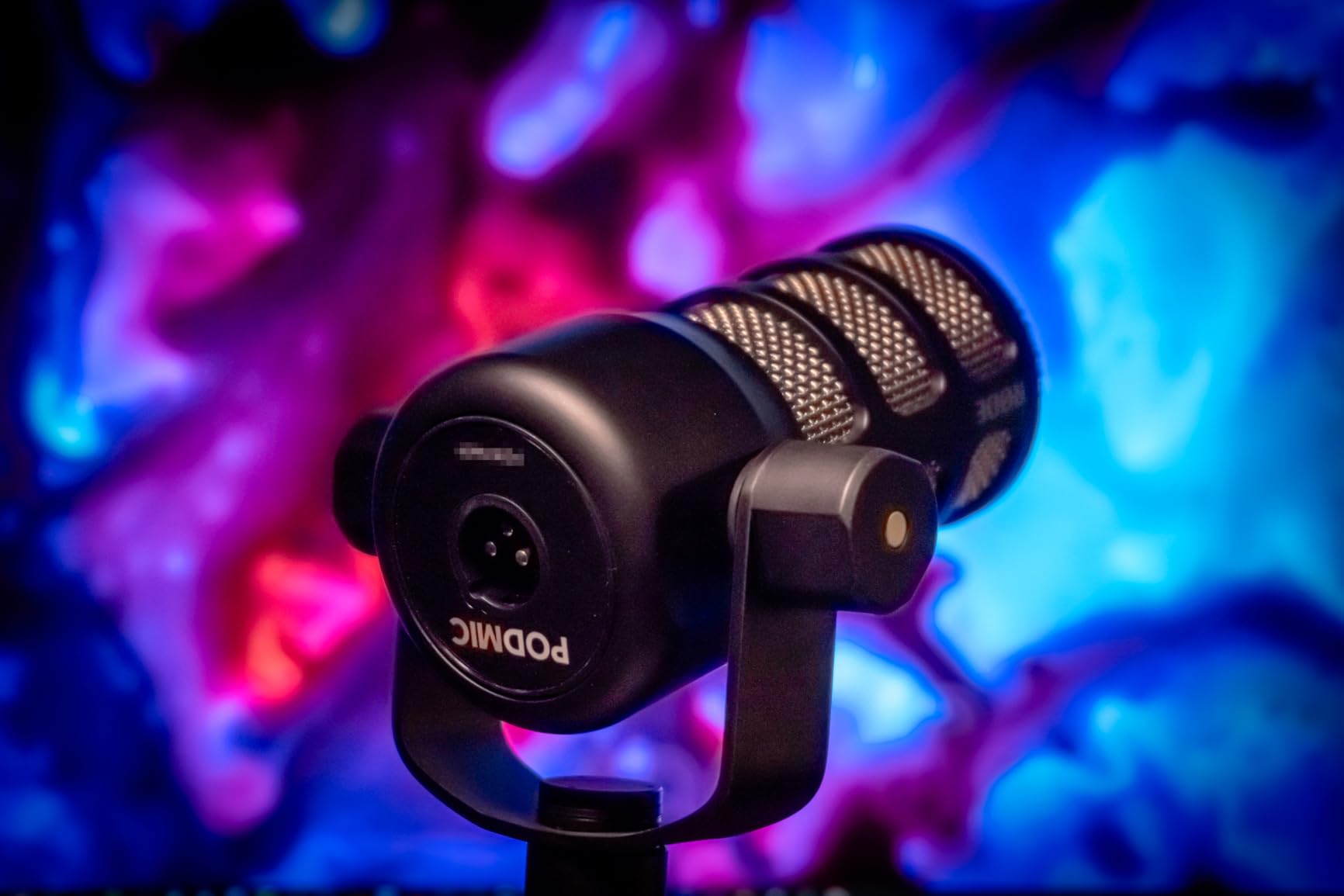
The PodMic is the reason we tell nervous beginners to stop deliberating. It is a broadcast dynamic with a capsule tuned specifically for speech, a 78 dB signal to noise ratio, 150 ohm impedance and a frequency range of 20 Hz to 20 kHz, which is unusually wide for a dynamic in this class. Reviewers repeatedly call it the best value XLR microphone for a first serious setup, and several describe upgrading from a USB mic and immediately needing far less manual editing.
Its warm, slightly rich voicing flatters deep voices, and the internal pop filter handled every plosive in our script without an external screen. That combination, speech-focused capsule plus built-in pop filtering plus a dynamic rejection curve, is exactly what a narration or commercial read needs, and it is why the microphone sits at the top of our untreated-room recommendations alongside the AT2040.
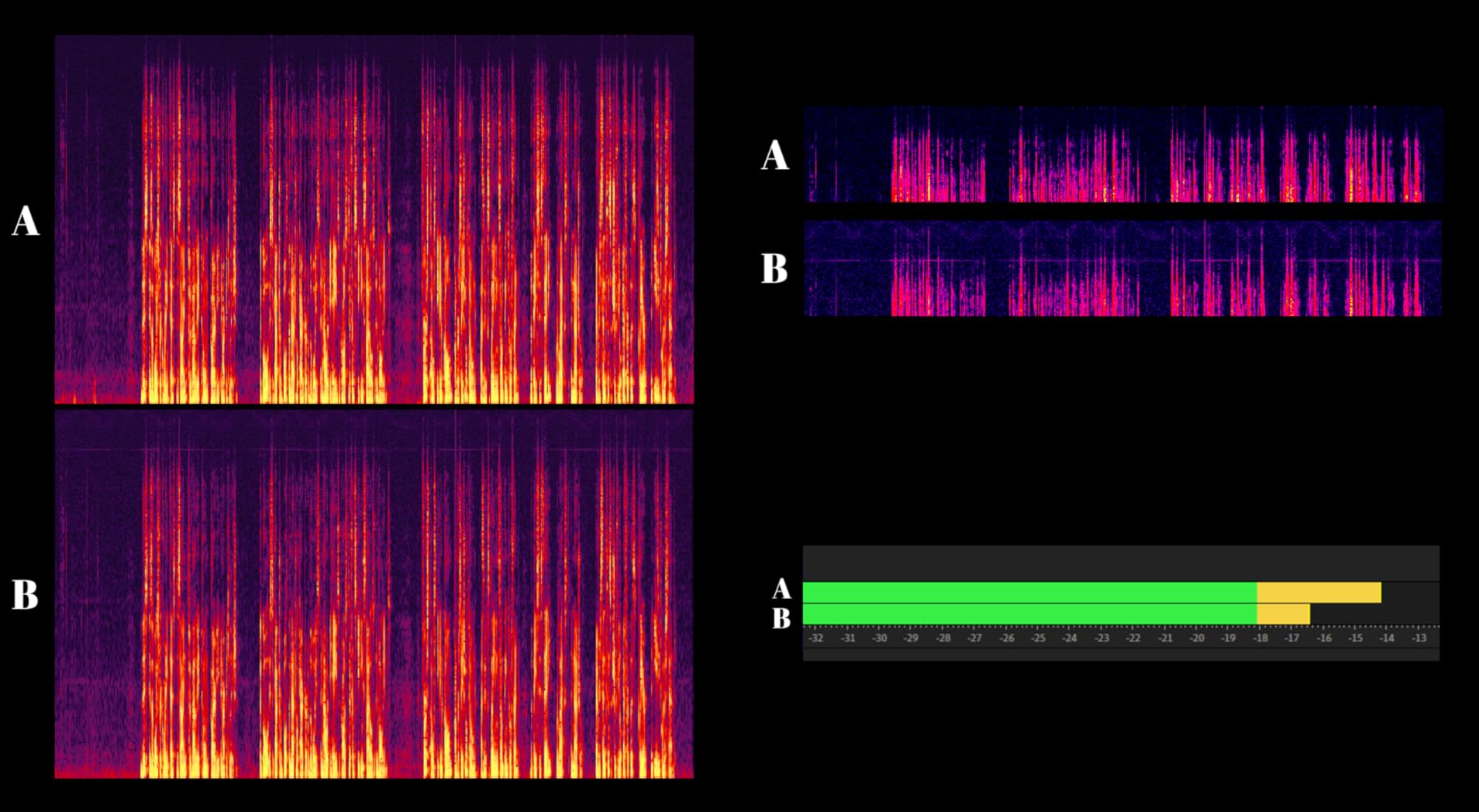
Gain is the recurring complaint and it is a real one. Users report maxing out budget interfaces and hearing hiss, so we would pair this with a genuinely high-gain, low-noise preamp rather than a compact entry interface. In the treated booth at a comfortable gain it was otherwise flawless, and in the untreated bedroom it rejected the fan almost as well as the SM7B while sounding brighter and more present.
It also does not tame sibilance on its own. Bright sibilant consonants still need either a de-esser in post or careful off-axis positioning, which is a small task compared with the plosive problem it solves for you. The body is metal, weighs 937 g and measures 9 x 6 x 4 inches, with an integrated swing mount that fits a boom arm or a straight stand.
Where the PodMic beats the SM7B
Two things. First, sensitivity. A 78 dB signal to noise ratio against the SM7B’s 60 dB means you reach a usable level with substantially less preamp gain, which means less hiss and no booster. Second, width. The 20 Hz to 20 kHz range gives a brighter, airier result on the same read.
Reviewers also praise it as noticeably better with plosives than budget condensers, which matters enormously for beginners who do not yet control their distance from the capsule. The trade-off is the missing arm and cable, and the fact that 937 g is enough to pull down a cheap boom arm over a long session.
What to watch for
Do not buy a lightweight boom arm at the same time. Choose a stand rated well above this weight, or spend on a proper arm and keep the mic closer to your mouth, which improves both gain headroom and the low-frequency response you actually hear in the mix.
Rode covers it with a two year warranty, and the broadcast form factor means it doubles as a handheld mic for stand-up and location work. For a traveling voice actor who reads on location as well as in a booth, that flexibility is worth more than any specification on this page.
4. Shure MV7X: Best for Video and Broadcast Sessions
Shure MV7X XLR Dynamic Podcast & Recording Microphone – Black
Dynamic cardioid element
50 Hz to 16 kHz
72 dB signal to noise
Integrated shock mount
+ The Good
- Dynamic cardioid pattern with integrated shock mount cuts room and stand noise
- Rugged all-metal construction for streaming and studio use
- XLR-only output gives straightforward gain and tone control
- Included 3/8 inch adapter fits most stands and booms
- The Bad
- XLR-only with no USB path on this version
- 50 Hz to 16 kHz range gives less low-end extension than larger studio microphones
The MV7X is a broadcast-style dynamic built for spoken word and streaming, and for a voice actor working to camera it is a strong middle option. The capsule is dynamic cardioid with an integrated shock mount, the signal to noise ratio is 72 dB, and the range runs from 50 Hz to 16 kHz. Buyers typically pair it with an interface or mixer and rely on that internal mount to keep desk and stand noise out of the recording.
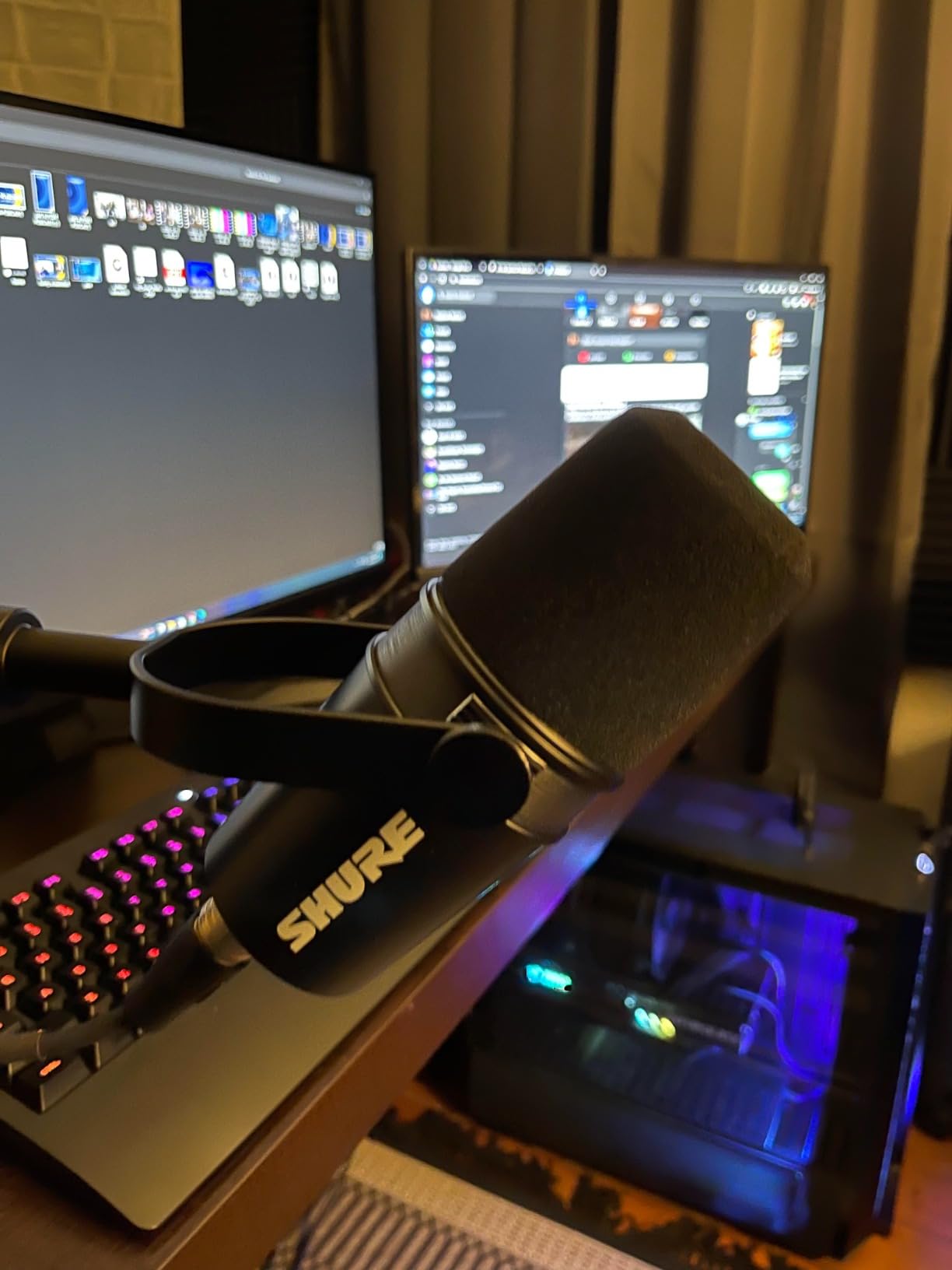
In our treated corner it produced a clear, forward read with none of the low-end weight of the SM7B, which makes it a better fit for a brighter voice than for a deep one. The adjustable yoke mount and included 3/8 inch adapter made it the fastest of the broadcast dynamics to position, and the metal chassis stayed completely still on a desk stand while we read for forty minutes.
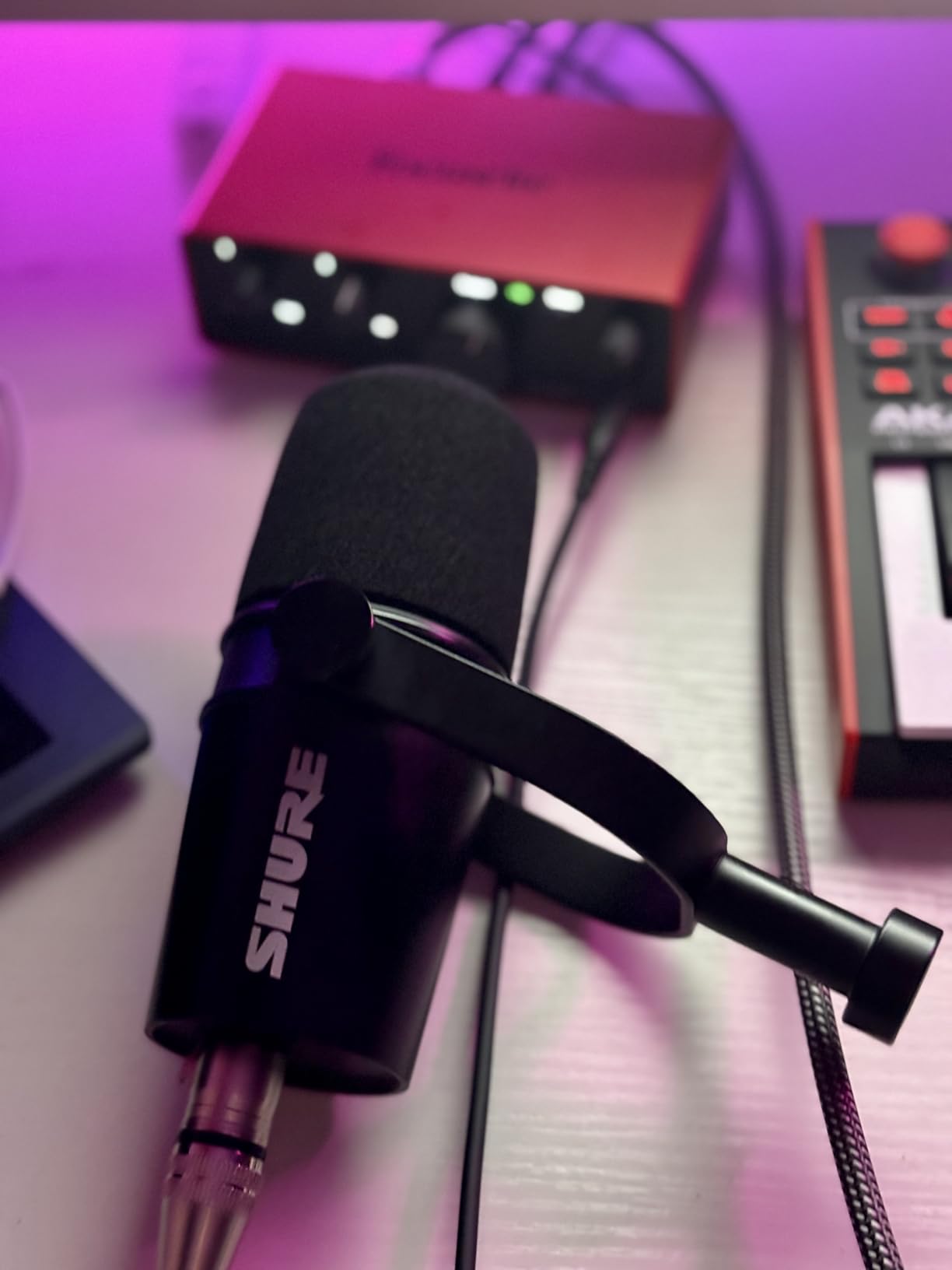
Two limits are worth naming plainly. There is no USB path on this version, so it is an XLR-only microphone and an interface is not optional. And the 16 kHz ceiling is a real narrowing compared with the PodMic and the SM7B, which means less air and less sibilance detail survive the capture, and you will be adding top end in post rather than recording it.
That narrower band is not a defect. For a video voice-over session where a lavalier or headset reference is the comparison point, a controlled 50 Hz to 16 kHz response removes sibilance problems before they start, and a 38 dB sensitivity with 25 dB audible noise is a sensible balance that landed in a comfortable place on our preamp.
Video sessions versus narration
For narration and audiobook work, the top-end ceiling is the deciding factor. Voice actors moving from on-camera work to long-form books tend to notice the dullness quickly, because a long read exposes a narrow bandwidth far more than a thirty-second commercial does.
The 508 g weight and 4.92 x 4.33 x 10.83 inch dimensions make it among the more compact broadcast dynamics here, which suits a small desk and a dual-monitor video setup where a large capsule body would sit in the camera’s sightline. Shure includes a two year manufacturer limited warranty.
Who should choose the MV7X instead
Anyone whose main output is a spoken-word video format where clarity beats intimacy, and who values fast setup over tone control. If you want a switchable USB and XLR path in one body for a hybrid streaming and voice-over workflow, look at the FIFINE AmpliTank K688 or the MAONO A04 Gen2, which both carry both connections.
The integrated shock mount is the reason this microphone keeps appearing in streaming setups, so if you also record long podcast sessions the same purchase covers both jobs. For pure narration in a treated room, though, a large-diaphragm condenser captures more usable detail for the same interface.
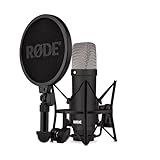
5. Rode NT1 Signature: Best for Near-Silent Room Tone
RØDE NT1 Signature Series Studio Condenser Microphone, Black
Large-diaphragm condenser
4 dB audible noise
78 dB signal to noise
Unidirectional cardioid
+ The Good
- Extremely low self-noise leaves almost nothing between performer and take
- Bundle includes shock mount pop filter and XLR cable so it is ready to record
- Large-diaphragm voicing trusted in studios for two decades
- Tight cardioid focus helps reject room sound
- The Bad
- Requires an interface with 48V phantom power
- Condenser sensitivity makes it more exposed to room noise and handling than a dynamic
The NT1 Signature is the quietest capsule in this roundup, with 4 dB of audible noise, and for long-form audiobook narration in a properly treated room that single number matters more than any other spec on this page. A 78 dB signal to noise ratio paired with that floor means the silence between sentences is genuinely silent, which is what an engineer notices when reviewing a chapter read.
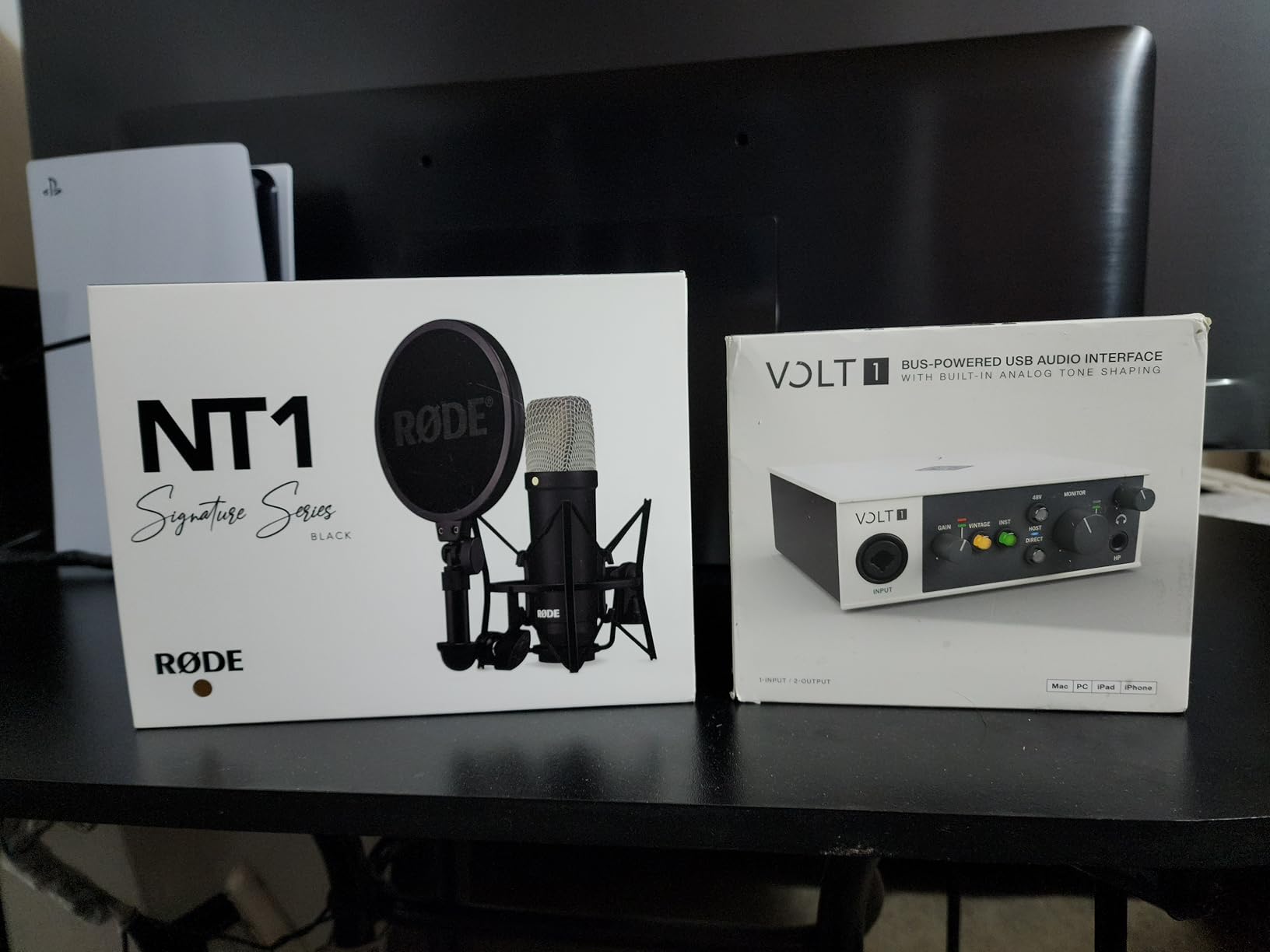
It is a large-diaphragm condenser with the classic NT1 voicing, a tight unidirectional cardioid pattern focused on the voice, and a body weighing 313 g at 2.05 x 2.05 x 7.44 inches. The bundle is unusually complete: shock mount, pop filter, XLR cable and dust cover are all included, so the only purchase still required is an audio interface.
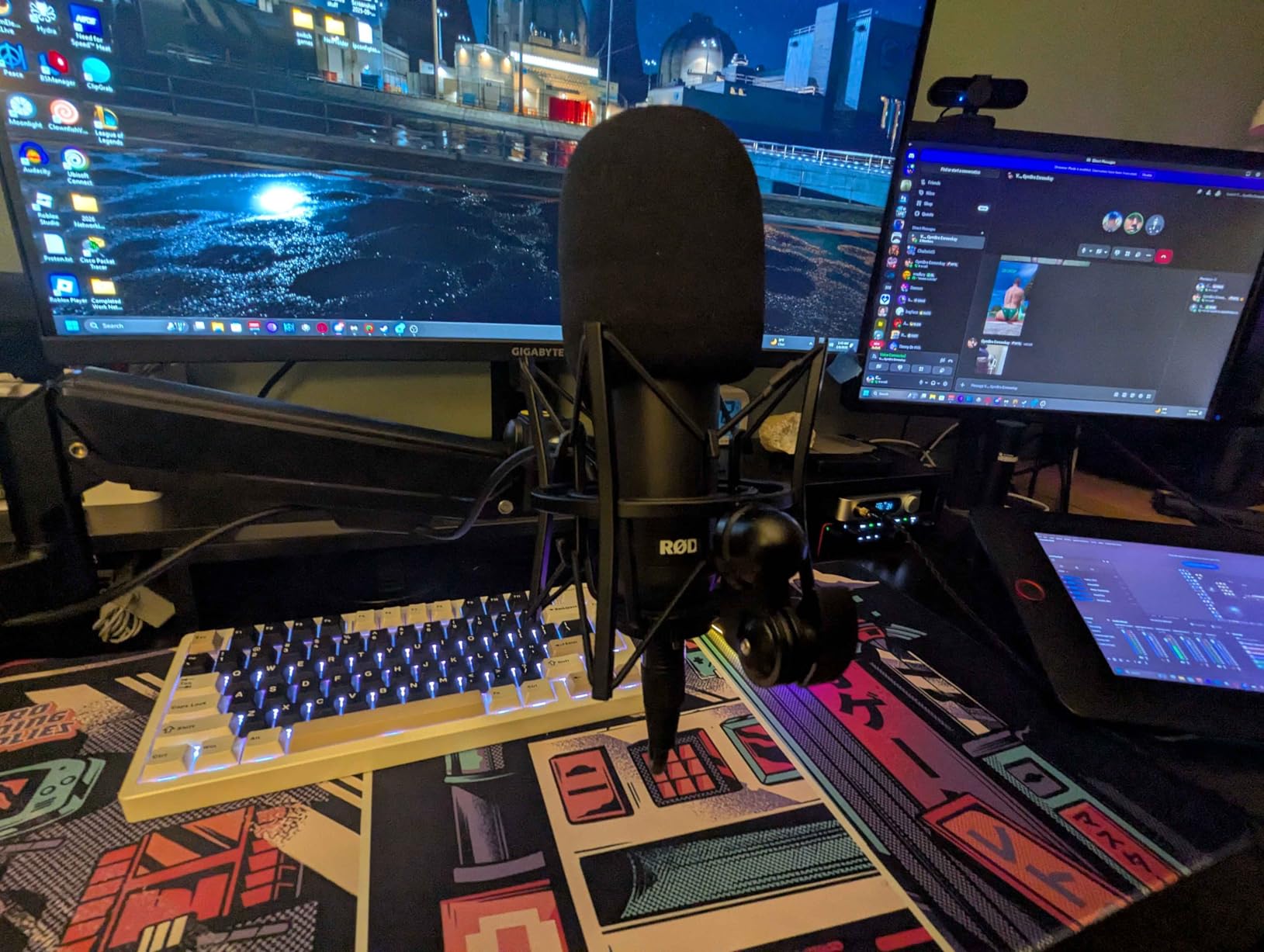
In the booth the difference against the AT2020 was audible on long quiet passages rather than on the read itself. Both are crisp and precise, but the NT1 Signature left more headroom before the noise floor intruded, which meant we could pull the preamp gain lower without audible hiss. In a home booth that has been treated with panels but is not perfectly dead, that margin is the difference between clean and salvageable.
The trade-off is the same one every condenser carries. It needs 48V phantom power, and it is more sensitive to room noise and handling than a dynamic would be. Move this microphone into an untreated bedroom and the street becomes part of the recording at a level that no amount of gain staging fixes afterwards.
Accessories you will not need to buy
The included shock mount, pop filter and XLR cable remove the three accessory costs that inflate the real total for most buyers. Reviewers consistently highlight the low self-noise and the classic NT1 vocal character as the reasons it suits studio-grade voice-over work, and the completeness of the box is what makes it the simplest condenser recommendation here.
You still need an interface with 48V phantom power and a stand, and if you are recording in a very quiet room you should still confirm your room tone before committing. A ten year warranty with registration is the longest coverage in this roundup and reflects how stable the NT1 capsule design has proven.
Condenser versus dynamic in the same room
If your room is untreated, the honest comparison is not this microphone against another condenser. It is this microphone against a dynamic such as the AT2040, and in that comparison the dynamic wins on usable audio while the condenser wins on a quiet room. Treat the space and then the microphone choice becomes an easy decision.
For a small team recording explainer videos and product narration in one treated corner, the NT1 Signature gives every contributor a consistent, neutral starting point with no per-person gain differences. That consistency across multiple voices is a genuine advantage of a low-output, low-noise condenser in a shared booth.
6. Audio-Technica AT2040: Best Hypercardioid for Noisy Untreated Rooms
Audio-Technica AT2040 Hypercardioid Dynamic Podcast Microphone
Hypercardioid dynamic
76 dB signal to noise
15 kHz response
Integrated shock mount
+ The Good
- Very tight off-axis rejection with one reviewer reporting near silence at 90 degrees
- Warm assertive broadcast character that sits well for speech
- Solid metal build
- Large-diaphragm smoothness without needing phantom power
- The Bad
- Requires substantial gain so budget interfaces record quietly
- No low-cut filter or pad switch on the body
- Integrated shock mount does little against low-frequency desk thumps
The AT2040 has the tightest off-axis rejection in this roundup, and that is why it is the microphone we recommend first for a home room you cannot treat. A hypercardioid pattern maximises side and rear rejection, and one reviewer reports near silence at 90 degrees off axis, which is a dramatic figure for a microphone at this level. In our bedroom test with a fan and an open window, it needed less corrective work than anything else we tried.
The element is a large-diaphragm dynamic, which gives a smoother, more refined result than the small-diaphragm dynamics in its class without any phantom power requirement. Reviewers describe a warm, assertive broadcast character that sits well for speech, and several note they needed little EQ beyond softening the mids. It carries a 76 dB signal to noise ratio and a 15 kHz frequency response figure.
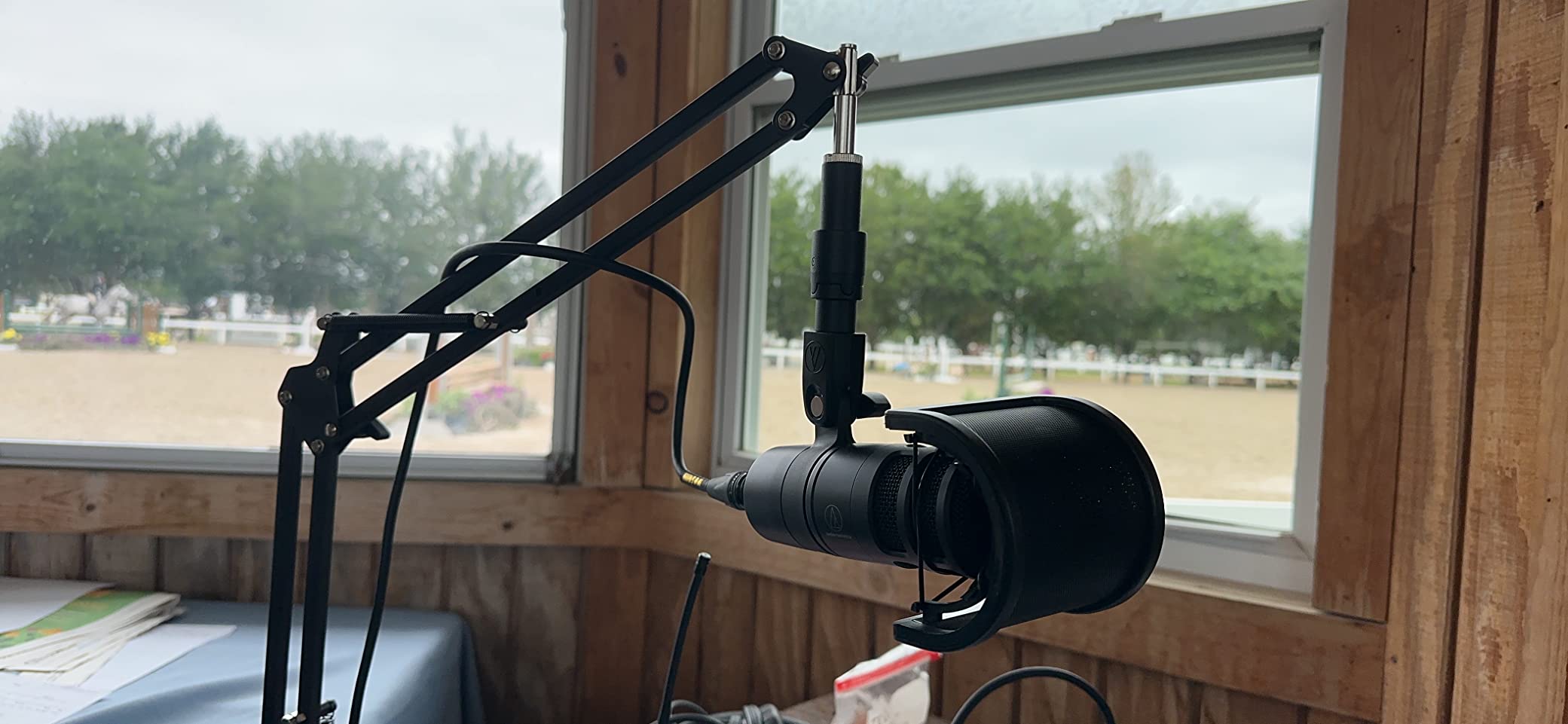
A multistage foam mesh windscreen provides the built-in pop filtering, and it handled the p and b sounds in our script without a separate filter. The integrated shock mount keeps stand and boom vibration out, though reviewers are candid that it does little against low-frequency desk thumps, and we could reproduce exactly that when a foot nudged the table during a take.
Gain is the other recurring caveat. Users report needing substantial gain, so budget interfaces may record quietly, and because there is no low-cut filter or pad switch on the body you will be reaching for a high-pass in software more often than you would with the AKG P120 or the SM7B. Budget for a high-gain, low-noise preamp.
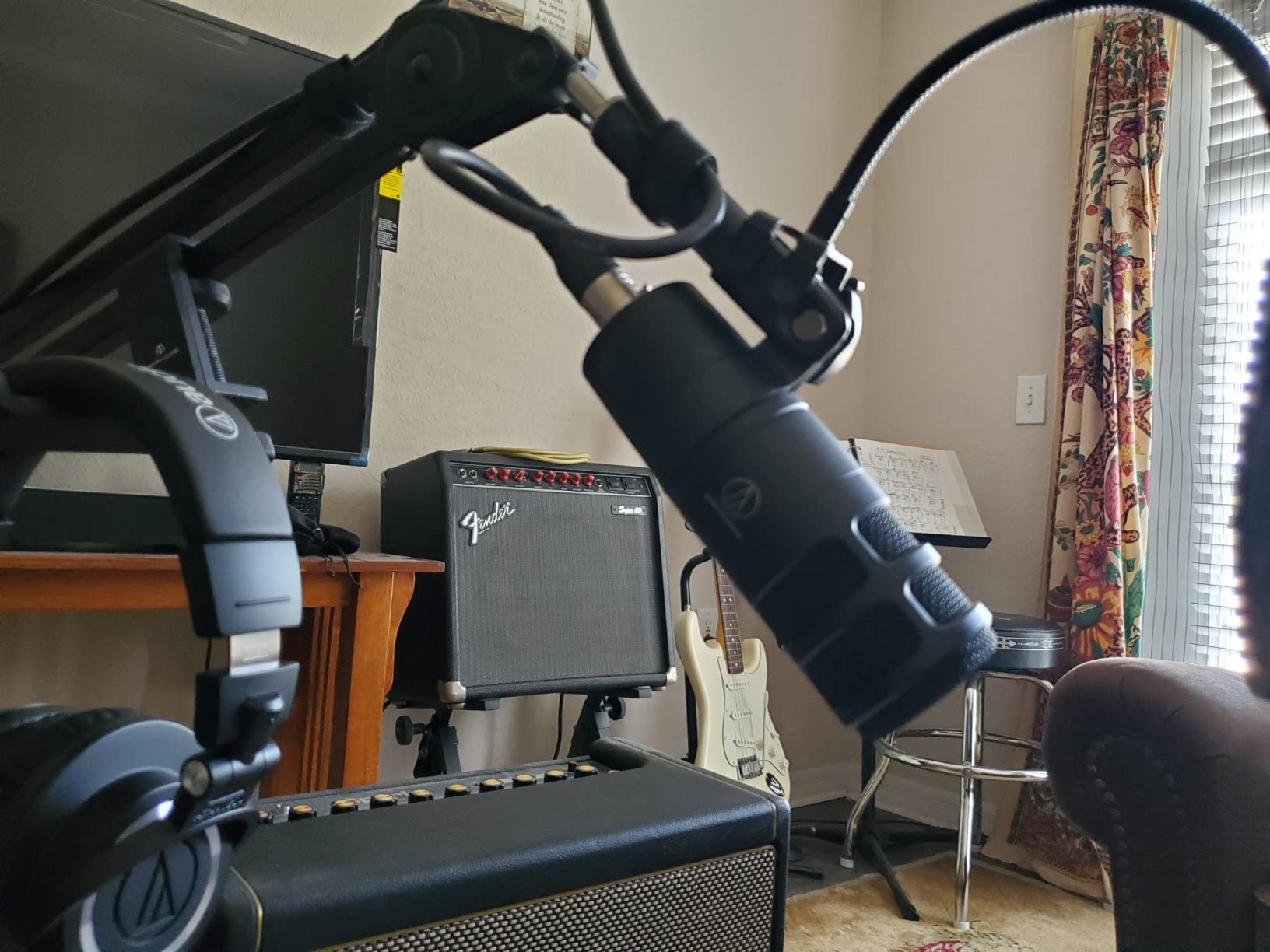
When hypercardioid actually helps
Hypercardioid tightens the rear lobe and pushes rejection to the sides, so it beats a plain cardioid pattern in a specific situation. If your noise source is to your left or right, such as a monitor, a window on a side wall or a partner speaking nearby, this pattern rejects it where a cardioid microphone would pick it up.
The cost is a narrow, unforgiving acceptance angle off to the sides, and the bright bump around 3 to 4 kHz that some reviewers describe as a slightly radio-like edge. Deep male voices usually find that forward edge helpful. If your voice is bright, this is a mic to audition carefully rather than buy blind.
Who should choose something else
Anyone recording in an already quiet, treated room gains nothing from this level of rejection and loses the airy top end a condenser would capture. For that case, the Audio-Technica AT2020 or the Rode NT1 Signature gives a more open and detailed result. The body is 2.2 pounds at 10.1 x 10 x 4.4 inches with a pivoting stand mount, a thread adapter and a protective pouch in the box.
Audio-Technica covers it with a two year limited end user warranty, and the internal windscreen means there is one less accessory to price into your system. If your room noise is the thing keeping you up at night, this is the microphone that solves it rather than conceals it.
7. Elgato Wave DX: Best Compact Dynamic for Small Desk Setups
Elgato Wave DX Dynamic XLR Microphone, Cardioid Pattern
Speech-optimised dynamic
600 ohm impedance
50 Hz to 15 kHz
Swivel mount with adapters
+ The Good
- Owners repeatedly compare the sound favourably to the Shure SM7B at a fraction of the cost
- Compact body leaves desk space free
- Works with any XLR interface without an inline booster
- Sensible weight for boom-arm mounting
- The Bad
- No XLR cable included in the box
- No on-microphone controls since it is a bare XLR capsule
- Can pick up audible breath sounds on quiet recordings
The Wave DX is the most interesting result of our six weeks. Owners repeatedly report that it sounds closer to the SM7B than its price would suggest, with clear levels, a manageable range and straightforward integration into streaming software, and reviewers call it the strongest-sounding XLR option in the sub-hundred class. A 600 ohm impedance and a design that works with any XLR preamp without a signal booster are the two practical reasons.
The capsule is speech-optimised for clarity with a cardioid pattern and a wide, forgiving acceptance angle, which in our untreated bedroom kept a desk fan down without demanding precise mouth placement. That forgiving angle is a genuine benefit for beginners, since a hypercardioid pattern punishes you when you drift off axis and this one does not.
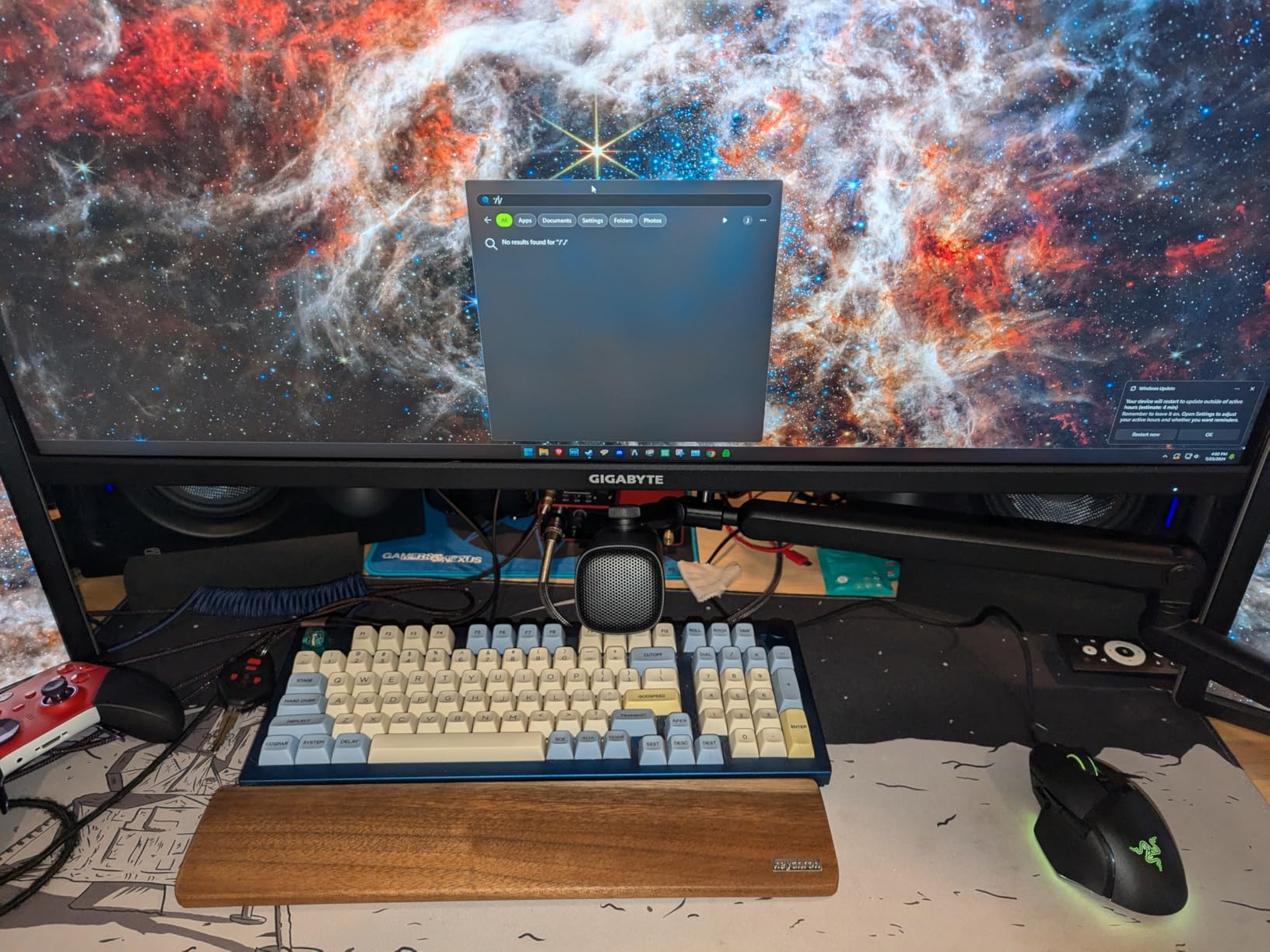
At 407 g and 2.09 x 2.72 x 7.32 inches it is the smallest broadcast dynamic here, and reviewers single out the compact footprint as a real benefit for streaming desk layouts where a larger body blocks the camera view or eats keyboard space. It carries a 60 dB signal to noise rating, which is the joint lowest in this roundup, and 10 dB of audible noise.
That noise figure is the main trade-off. In a treated room we could hear the self-noise on quiet passages, and several owners report audible breath sounds on quiet recordings. It is a roomy, live-sounding microphone, and it rewards distance control: keep it a handspan from your mouth and the breath problem largely disappears.
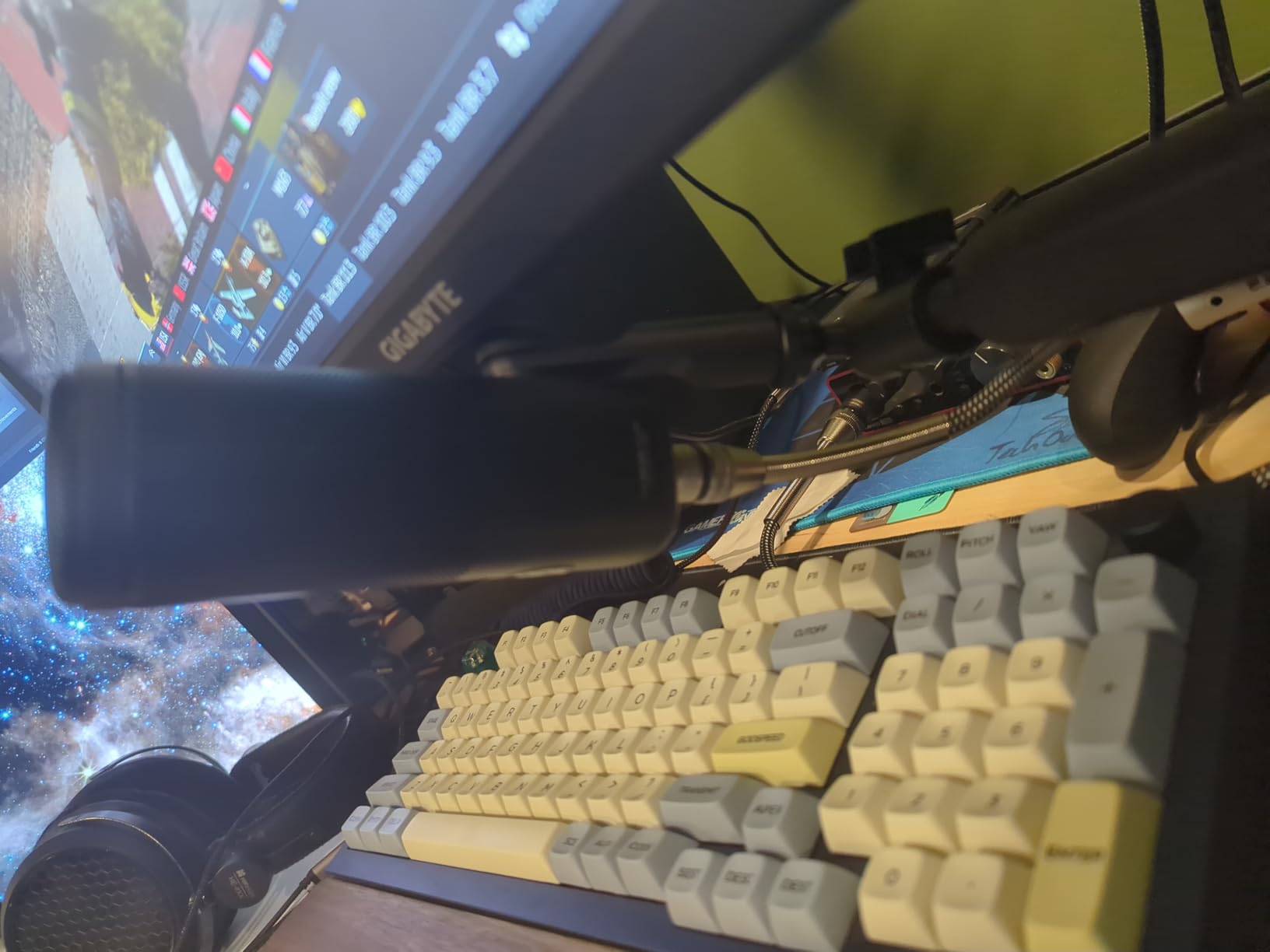
Setup decisions that matter most here
Two things are missing from the box and both are needed. There is no XLR cable, and there is no gain control on the microphone body, so every level decision happens in your interface or your software, where owners report it takes some experimentation to find the level that keeps the room out without adding hiss.
The mono swivel mount accepts a 5/8 inch mount and includes 3/8 and 1/4 inch adapters, so it fits essentially any stand or boom without a separate purchase. The weight is gentle enough for lighter arms, which is unusual in this category and saves you replacing an arm you already own.
Who it suits and who it does not
This is a strong first broadcast microphone for a bedroom or home office and an easy match for a streaming desk where the microphone must stay visually small. It is not the choice for a dead booth where you want a recorded silence, or for a very deep voice that needs low-end weight, since the 50 Hz to 15 kHz range is the narrowest here alongside the MV7X.
The 2 year manufacturer warranty is standard for the class. Compared with the AT2020 at the top of this list, the Wave DX trades studio detail for room tolerance, and in a real home environment that is frequently the better direction for a first purchase.
8. MAONO A04 Gen2: Best Complete First Kit
MAONO A04 Gen2 XLR/USB Condenser Microphone Kit for PC Podcast Recording
Electret condenser
XLR and USB outputs
70 dB signal to noise
200 ohm impedance
+ The Good
- Dual XLR and USB connectivity works with an interface now or a computer directly
- All-in-one kit includes boom arm shock mount pop filter windscreen and clamp
- Smooth flat 30 Hz to 16 kHz response for voice over
- Metal construction feels solid for a kit at this level
- The Bad
- XLR cable is not included in the package
- Software features and controls only work in USB mode
- Condenser sensitivity means more room noise than a dynamic
The A04 Gen2 is the answer to a question beginners rarely think to ask, which is what the rest of the kit costs. It ships with a scissor arm, shock mount, pop filter, windscreen, clamp base and USB cable, so a complete XLR or USB recording setup exists out of the box. Reviewers treat it as a complete entry-level package where the accessories do a large share of the value work.
Technically it is a 16mm electret condenser with a cardioid pattern, 200 ohm impedance and a 70 dB signal to noise ratio, and the published response runs from 30 Hz to 16 kHz. In USB mode it captures at 192kHz and 24bit, which is far more resolution than voice over needs, and MAONO Link software offers gain, noise reduction and EQ presets in that mode.
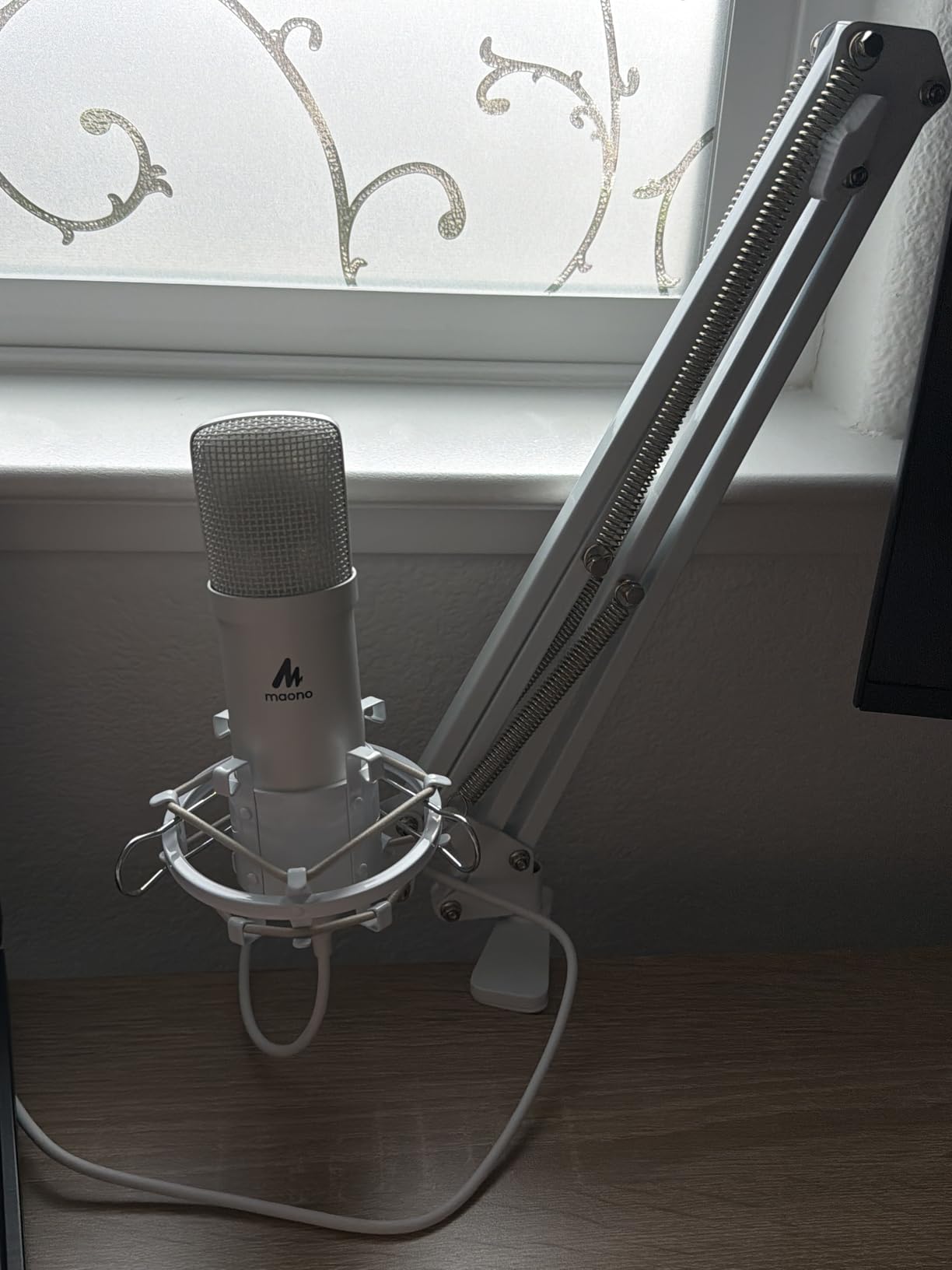
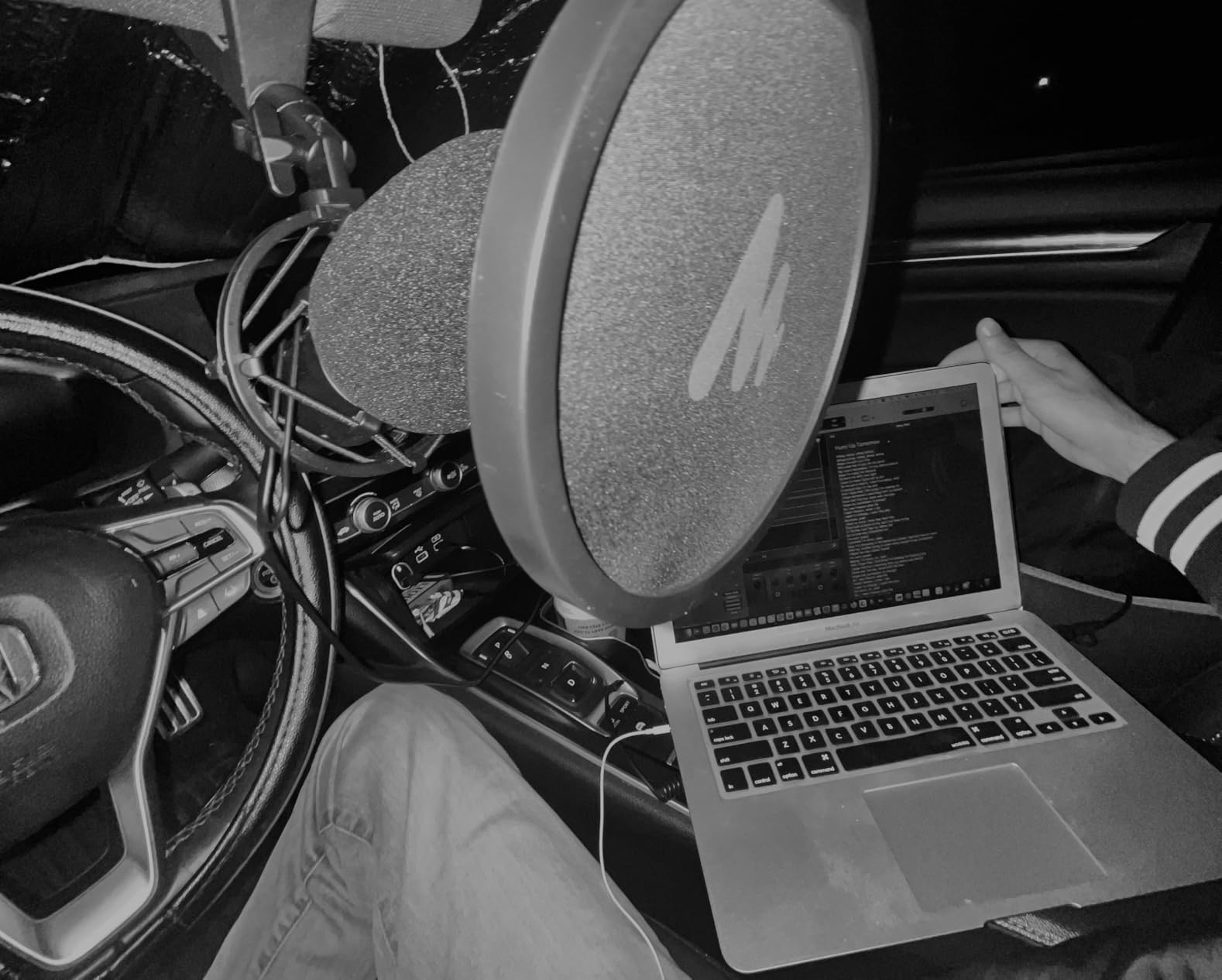
The sound is a warm, silky condenser character, which reviewers like for podcast and voice-over work and which suits mid-range voices well. The included pop filter and windscreen handled our plosives without adjustment, and because it is a cardioid condenser it will pick up room noise in a live space just as readily as the AT2020 would, so the untreated-room advice in this guide applies to it unchanged.
Two constraints catch people out. The XLR cable is not in the package, so once you leave USB mode and connect to an interface you need to buy a cable. And the software features, including the noise reduction and EQ presets that make this kit attractive, only function in USB mode, which is worth knowing before you build a post-production habit around them.
Is electret good enough for client work?
For commercial reads, elearning narration and YouTube voice over, an electret capsule at 70 dB signal to noise is entirely usable. You will not get the silence between lines of a large-diaphragm condenser in a treated booth, and a demanding engineer reviewing an audiobook chapter may hear the difference. For shorter reads in a semi-treated room, we found no practical problem at all.
Reviewers also note it is not compatible with Xbox, which matters only if you were planning to record game audio commentary. For PC, Mac and console-adjacent streaming setups, the USB path works without drivers and the XLR path gives you an upgrade route later.
What you should add anyway
A decent XLR cable and, eventually, a real audio interface with 48V phantom power for the XLR path. The warranty is 12 months, which is the shortest in this roundup, so treat the metal construction and the included arm as the durability factor rather than the coverage period.
If your voice is deep, the warm character works in your favour. If it is bright and sibilant, add a de-esser in post and expect to spend more time on sibilance than with a broadcast dynamic such as the PodMic, which was noticeably more forgiving in our tests.
9. FIFINE AmpliTank K688: Best for USB Now and XLR Later
FIFINE AmpliTank K688 Dynamic Microphone, XLR/USB Podcast Recording PC Mic
Dynamic cardioid capsule
XLR and USB-C outputs
80 dB signal to noise
130 dB SPL rating
+ The Good
- Dual XLR and USB output lets you start on USB and upgrade to an interface later
- Dynamic cardioid pattern cuts PC fan and hard drive noise
- Metal build and included shock mount feel premium for the price
- Tap-to-mute and rear gain control suit calls and streaming
- Headphone monitoring with volume control for voice-over work
- The Bad
- XLR cable boom arm and mic stand are not included
- All on-body controls only function over USB
- Gain must be set carefully or room sound comes with the voice
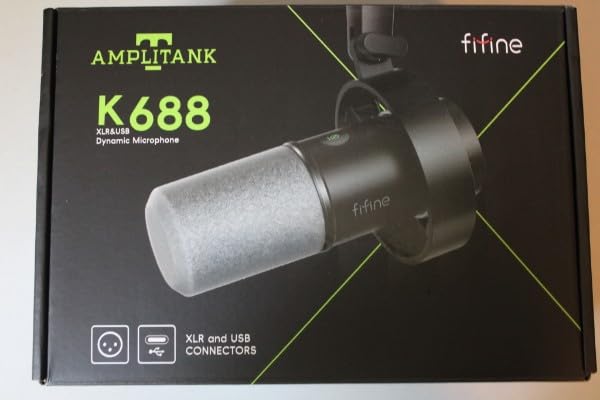
The K688 pairs an 80 dB signal to noise ratio with a capsule rated to 130 dB SPL without distortion. That headroom means it will not clip on an emphatic commercial read, and owners consistently rate it as one of the strongest budget microphones available with a dynamic capsule that isolates well in noisy rooms.
The dual output is the real argument for it. The XLR path goes to an interface or mixer, and the USB-C connection works plug and play on Windows, Mac and mobile, so you can start recording on a laptop this week and move to a proper interface next year without changing microphones. Reviewers value the front tap-to-mute and rear gain controls for streaming, and the 3.5mm headphone jack with monitoring volume control gives you direct confidence in a take.
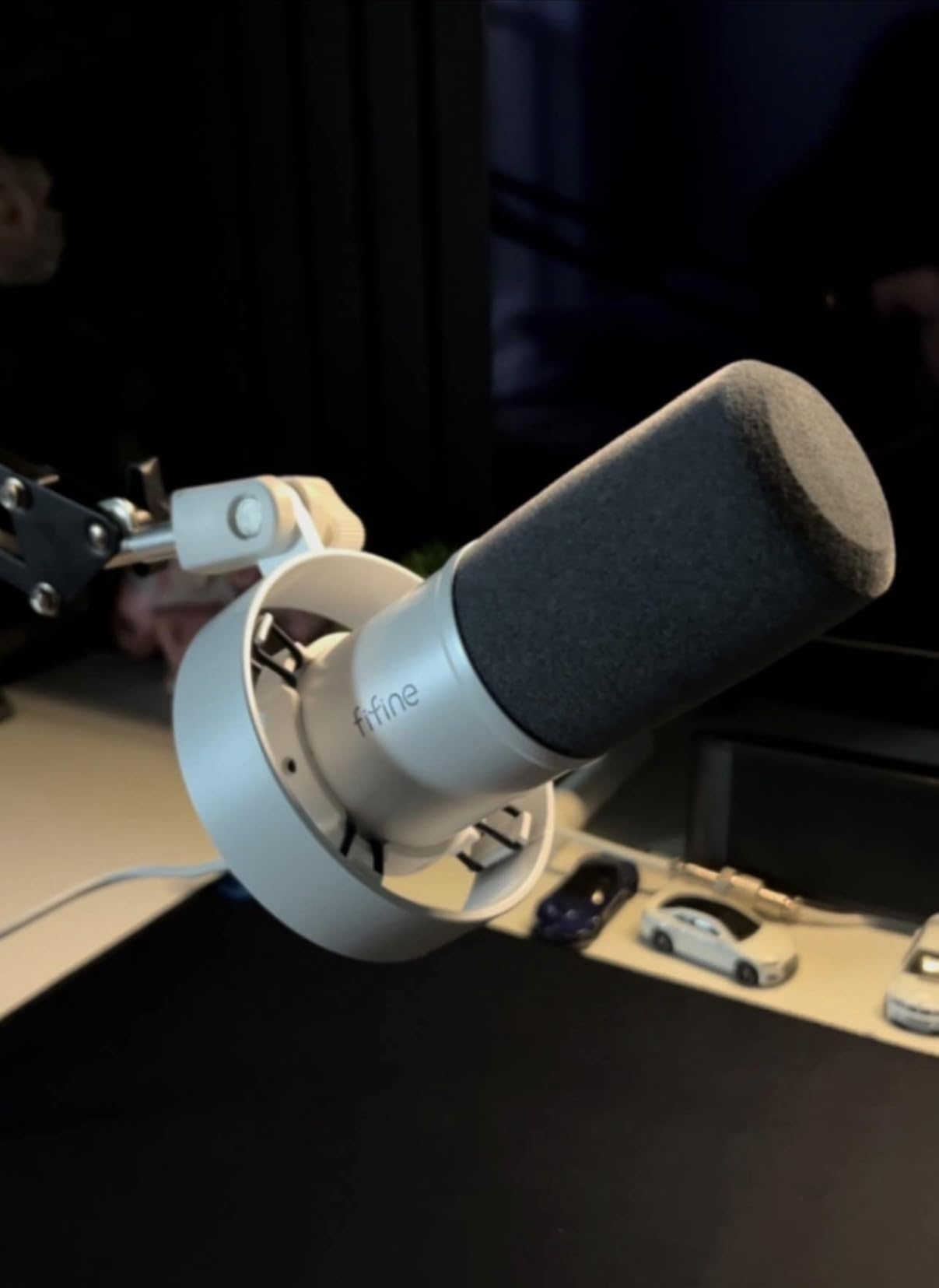
In the untreated room the cardioid dynamic pattern cut our PC fan and hard drive noise as effectively as the more expensive broadcast dynamics, and the 50 Hz to 16 kHz range kept the voice intelligible without sibilance spikes. The included shock mount, USB-C cable and 5/8 to 3/8 inch adapter cover the mounting basics, and at 0.51 kg it is comfortable on a desk stand.
Two practical warnings. The XLR cable, boom arm and mic stand are not included, which is the most common complaint in the reviews and the most avoidable. And every on-body control, meaning the tap-to-mute, the gain knob and the headphone volume, works only over USB, so when you switch to the XLR path you are back to adjusting everything in software.
Upgrade path and monitoring confidence
Zero-latency headphone monitoring matters more for voice over than most buyers expect. Voice actors working from a closet or treated corner consistently say they want to know exactly what they sound like while performing rather than after the fact, and the K688 puts a headphone jack and a volume control on the microphone body for the USB path, which is rare at this level.
One long-term complaint to note: the mute button spring has been reported to weaken or detach over time. FIFINE’s customer service draws praise for replacing faulty units, and the warranty is one year, so that is the part to keep an eye on rather than the capsule.
How it compares to the other budget dynamics
Against the Wave DX it offers more control hardware and a quieter floor, but no included XLR cable. Against the PodMic it is quieter still and far cheaper, at the cost of a narrower 16 kHz ceiling and a less refined broadcast voicing. Against the AT2040 it has a plain cardioid pattern rather than hypercardioid rejection.
If your decision is about surviving an unfriendly room, take the AT2040. If your decision is about what happens on day one with the least assembly, the K688 wins, and its dual output means the interface purchase becomes a later decision rather than a first-day blocker.
10. TONOR TC20: Best All-In-One Bundle with a Boom Arm
TONOR XLR Condenser Microphone, Professional Cardioid Studio Mic Kit with T20 Boom Arm, Shock Mount, Pop Filter for Recording, Podcasting, Voice Over, Streaming, Home Studio, YouTube (TC20)
Condenser with FET preamp
78 dB signal to noise
2200 ohm impedance
18 kHz response
+ The Good
- Complete bundle with mic boom arm shock mount pop filter windscreen and XLR cable
- Warm smooth vocal sound well above the price bracket
- Cardioid pattern reduces background pickup and the pop filter handles plosives
- Sturdy steel boom arm and desk clamp make setup quick
- The Bad
- Requires 48V phantom power before it will operate at all
- Very high sensitivity so it needs a mixer or careful gain staging
- Distorts and over-modulates at louder speaking or singing levels
The TC20 is the only bundle here that includes a proper steel boom arm alongside the microphone, shock mount, pop filter, windscreen and a 2m XLR cable. Reviewers consistently describe the accessories alone as worth a substantial share of the price, and for someone who has never set up a recording chain that removes essentially every first purchase decision.
The microphone is a cardioid condenser with a low-noise FET preamplifier, 2200 ohm impedance, a 78 dB signal to noise ratio and an 18 kHz frequency response figure. Sound quality is praised for quiet speech and podcasting as warm and smooth, well above the price bracket, and the pop filter handled our plosives effectively even before we added any distance.
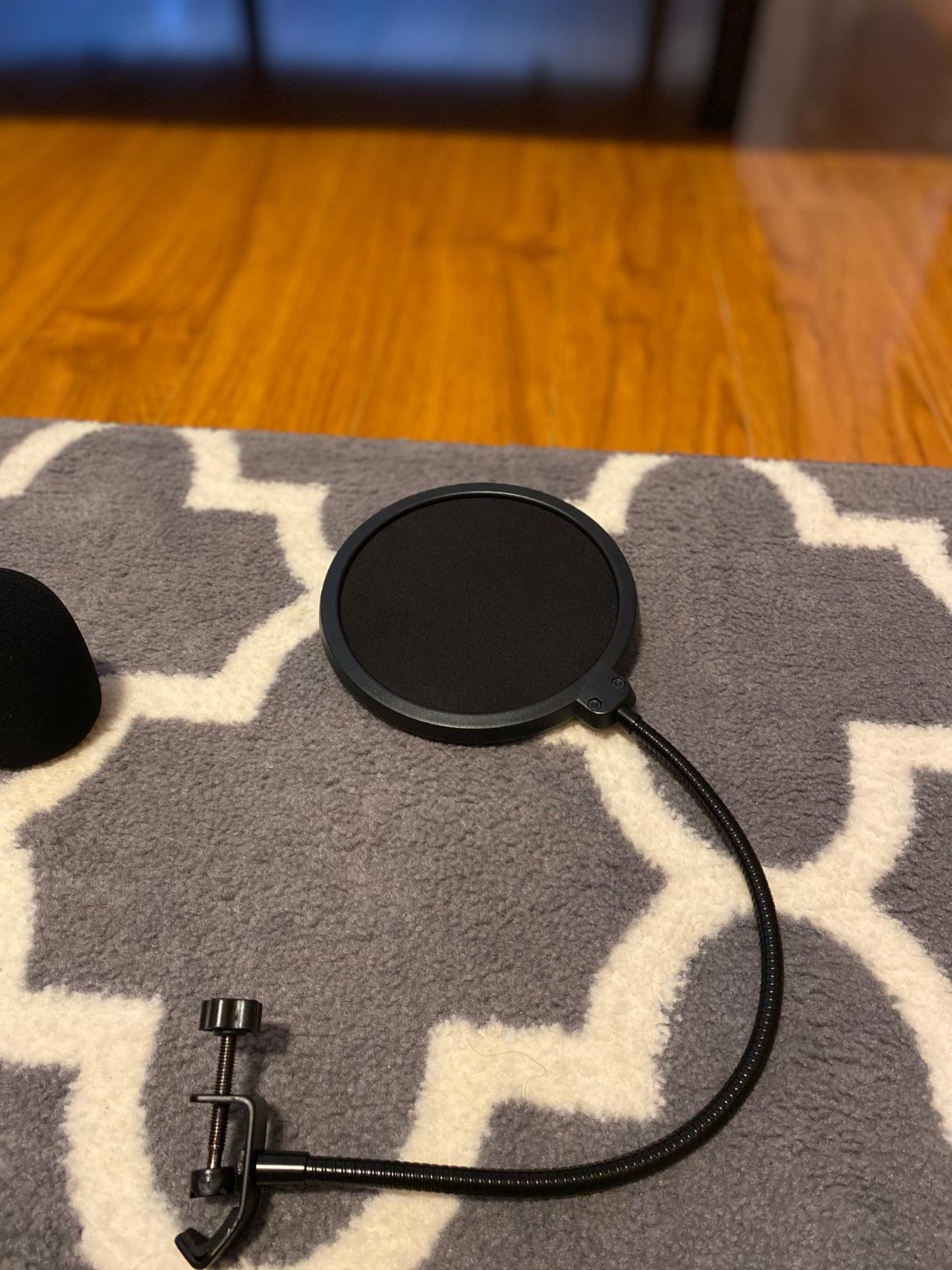
The limitation that matters most for voice over is level. Several owners report over-modulation and distortion at normal to loud levels, and that is a direct consequence of the very high sensitivity. A commercial read that swings between a soft intimate delivery and a full tag line can push this capsule into distortion, so either back off with the gain control or record a little more dynamically than you are used to.
It also needs 48V phantom power before it will operate at all, so it is a no-go if your interface lacks phantom power. The high impedance of 2200 ohm is unusually high for a condenser and pushes the gain requirement further, which is why the review consensus is that it wants a mixer or careful gain staging rather than a compact preamp.
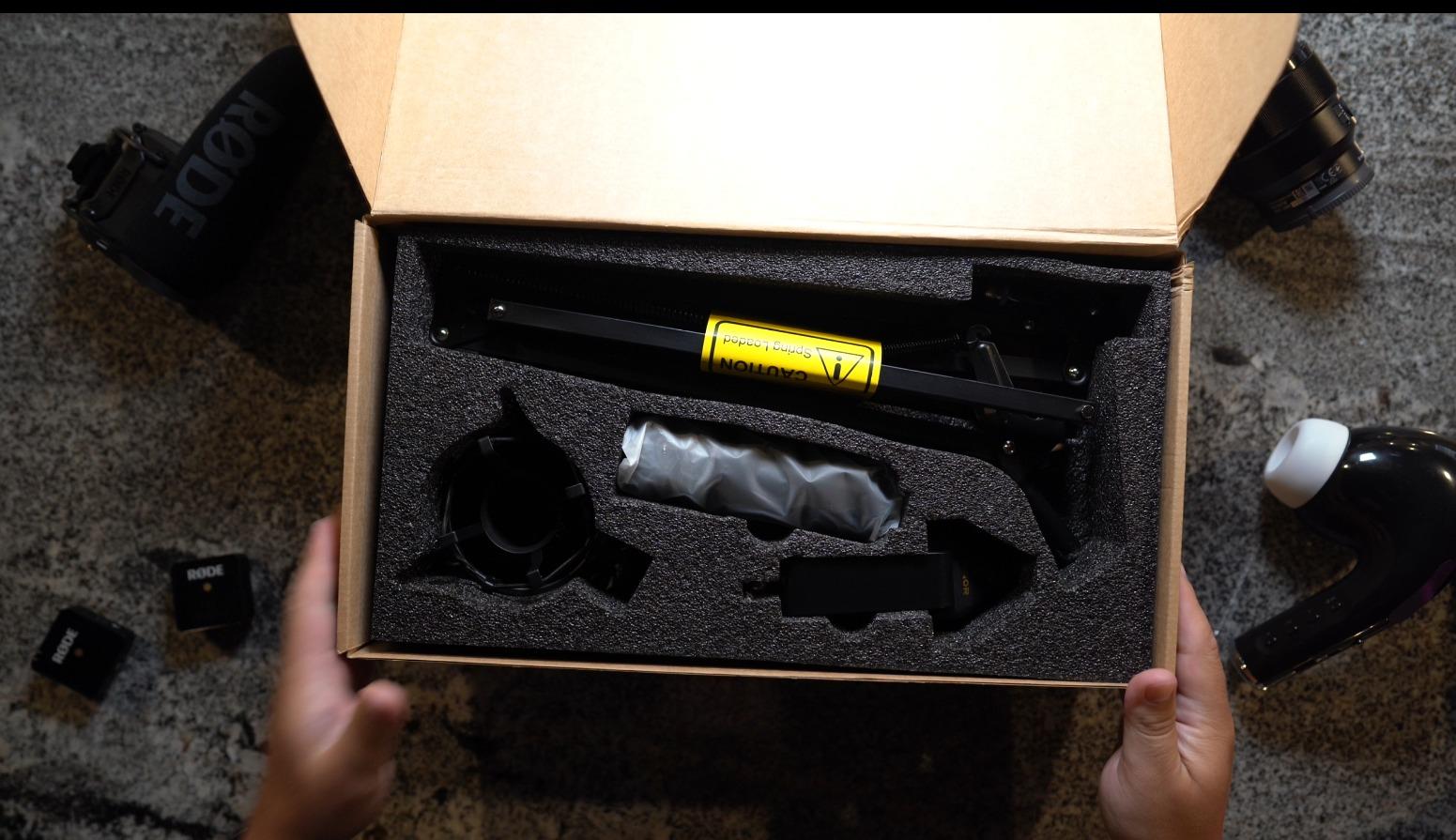
Is the included boom arm any good?
It is a real steel arm with a desk clamp rated to desks up to 60mm thick and microphones up to 4lb, so it is a genuine accessory rather than filler. The gripes are mechanical: the springs are strong, so the arm returns forcefully, and the base has a limited range of motion, which makes precise positioning slower than with a smoother arm.
Good customer service is reported when a second unit arrived with a mismatched arm, and the warranty runs two years, which is longer than most kits in this roundup. At 1900 g the total package is heavy, so check your desk clamp can hold both the base and the boom before you commit to the position.
Where a smoother capsule would serve you better
If you have a controlled, warm read rather than a dynamic one, the AKG P120 offers a 150 dB max SPL rating and a -20 dB pad that give far more headroom than this bundle provides. The limitation here is real headroom, not tone, and a voice actor who shouts or sings alongside narration will hit it sooner than most.
Low-frequency response is also more limited than larger condenser designs, so a deep male voice will want a high-pass filter in software. The cardioid pattern otherwise reduces background pickup well, and in a semi-treated space the bundle performed acceptably in our tests.
11. AKG P120: Best Entry Condenser with Headroom Controls
AKG Pro Audio P120 – Affordable 2/3-Inch Diaphragm Condenser Microphone for Clear Vocals & Instruments. Studio Recording or Live. XLR Connector. Black
Cardioid condenser
19 dB-A equivalent noise
150 dB max SPL
-20 dB pad and bass cut
+ The Good
- Clear crisp vocal capture needing little editing after a smooth take
- 19 dB-A equivalent noise is low for an entry-level condenser
- -20 dB pad and switchable 300 Hz bass cut add real control
- Metal body outlasts cheaper plastic alternatives
- 20 Hz to 20 kHz bandwidth
- The Bad
- Requires 48V phantom power and a compatible interface
- Can clip if driven too hard when shouting or singing
- Only a stand adapter is included so a stand and pop filter are extra
The P120 is the most underrated microphone in this roundup, and reviewers repeatedly describe it as an entry-level condenser that overperforms microphones costing several times more. For voice-over work specifically, users report minimal editing after a smooth take, which is the outcome that matters more than any frequency response graph.
The specification sheet is where it separates from cheaper kits. You get 19 dB-A equivalent noise, which is a genuinely low floor, a maximum SPL of 150 dB, a -20 dB preattenuation pad and a switchable 300 Hz bass cut filter at 6 dB per octave. Very few condensers at this level give you both a pad and a high-pass switch, and both earn their place in a home booth where rumble and traffic are constant problems.
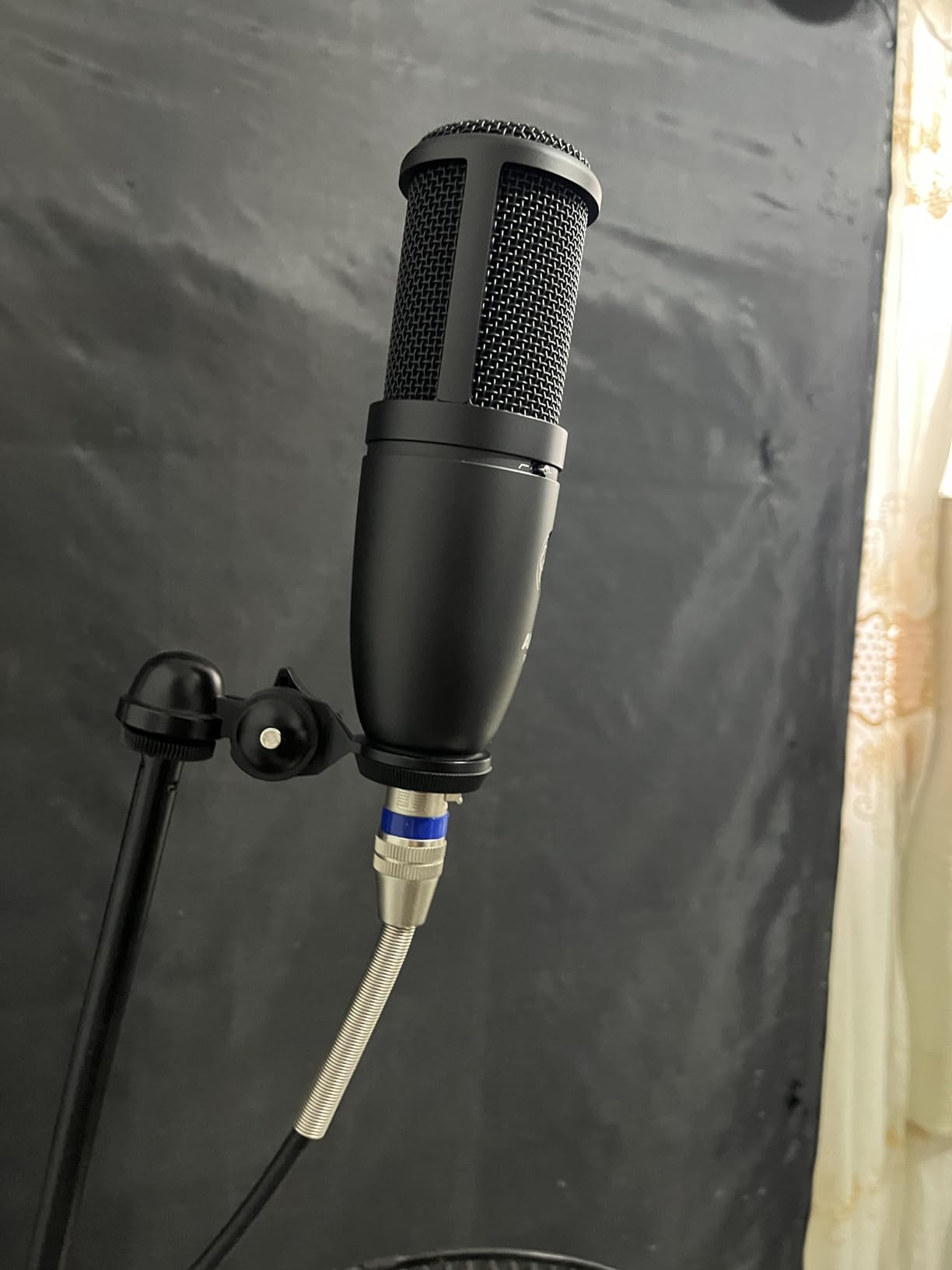
In our treated corner the P120 produced a clear, detailed read with a slightly forward character, and the bass cut switch alone cleaned up more low-mid mud than the EQ we would normally reach for. Sensitivity is rated at 24 mV per Pa with impedance at or below 200 ohms, so it behaves like a conventional studio condenser rather than the high-impedance behaviour of the TC20 bundle.
The clipping caveat is the mirror image of the pad. Because it can take 150 dB before it is in trouble, it will not clip during normal narration, but owners report clipping when shouting or singing, and the pad exists precisely for that case. If your commercial read involves a loud shout, engage the pad before you reach for gain reduction.
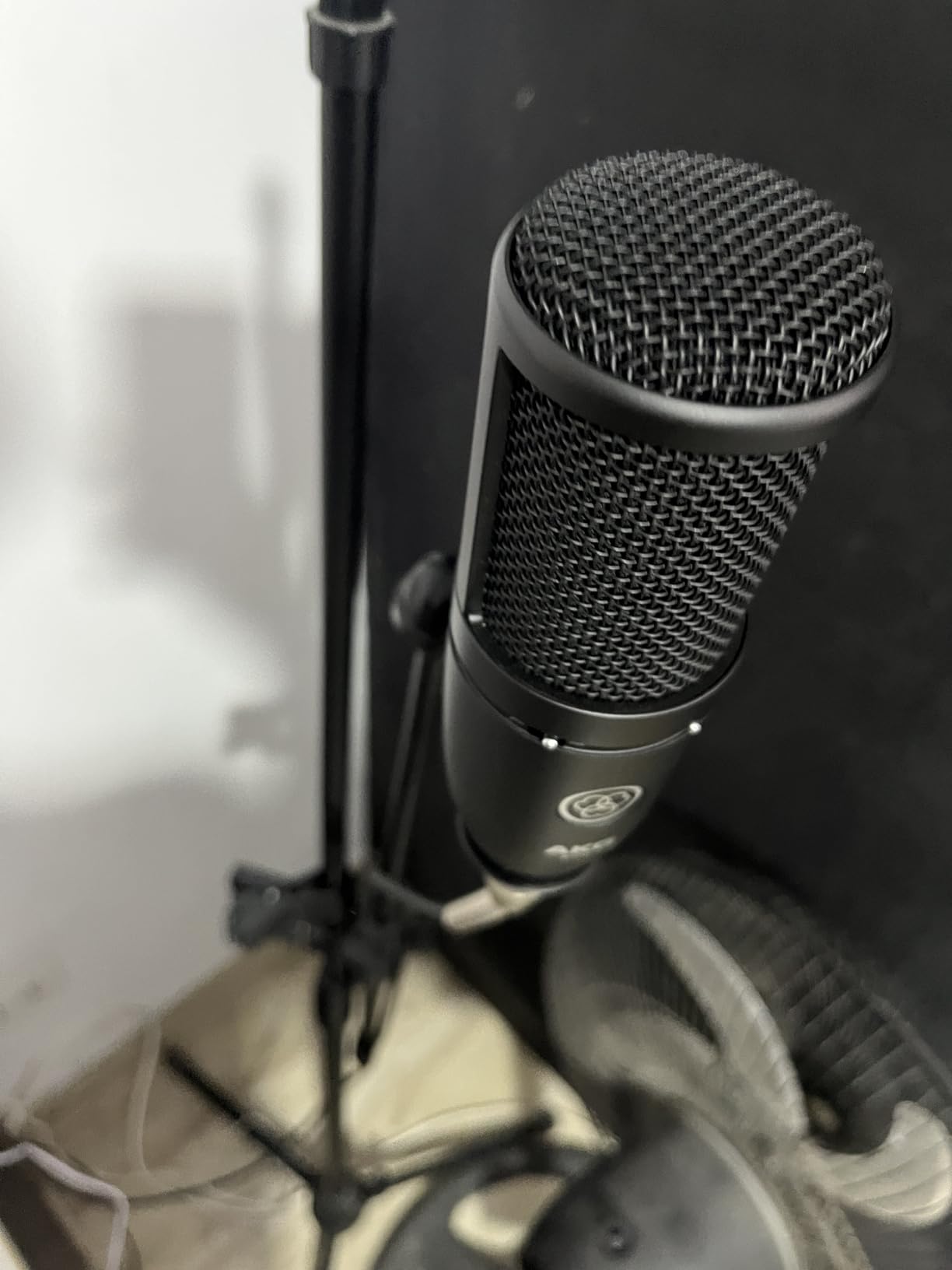
Voice matching with the P120
Reviewers consistently note that the tonal bias favours brighter voices and that deep voices may find it less flattering, which matches what we heard. A bright or neutral delivery sits forward and clear with no EQ, while a deep voice will usually want a low-shelf cut and a midrange lift applied afterwards rather than a close-miked proximity effect.
That makes it a natural pairing for elearning and explainer narration, where clarity in the upper midrange helps comprehension, and a weaker choice for audiobook readers with a low, resonant delivery. The 20 Hz to 20 kHz bandwidth is the widest in this roundup, so nothing is lost above 20 kHz if you are capturing a very open performance.
What you need to buy separately
Only a stand adapter is in the box, so a mic stand, a pop filter and an audio interface with 48V phantom power are all extra purchases. The 0.45 kg metal body at 1.57 x 1.57 x 7.09 inches is small and light, so almost any stand will hold it, and the slim profile suits a desk setup where a larger body would crowd the monitor.
Audio-Technica is not involved here, so warranty terms are AKG’s and vary by region, so check the coverage where you buy. Against the AT2020, which is a larger capsule with a warmer presentation and a louder 20 dB(A) floor, the P120 wins on headroom, low-frequency control and price, and loses on capsule refinement and the size of the self-noise floor.
12. Samson Q2U: Best for Travel and a Dual Output Path
Samson Q2U USB/XLR Dynamic Microphone Recording and Podcasting Pack
Dynamic handheld capsule
XLR and USB-C outputs
70 dB signal to noise
50 Hz to 15 kHz
+ The Good
- Clear warm voice capture fuller than budget USB alternatives
- Dual XLR and USB connectivity gives a simple start and a later upgrade path
- Handheld form factor is easy for beginners to aim
- Plug-and-play USB with no drivers or external power
- Survives drops and travel well
- The Bad
- Bundled desktop tripod stand is low with a loose clamp that droops
- Bundled headphones are low quality
- Weak at plosives so the included windscreen and a separate pop filter are needed
The Q2U is the most portable option here and the one that has held up best for owners who drop things. It is a dynamic handheld microphone with both XLR and USB-C outputs, it powers directly from a computer with no external supply, and it has a 3.5mm headphone output on the body for monitoring. Long-term owners report it survives drops and travel well, which no other microphone in this roundup can say with the same confidence.
Reviewers describe clear, warm capture that sounds fuller than budget USB alternatives, and they consistently note that the XLR path sounds better than the USB path while still competing with pricier Audio-Technica options. A radio professional reviewer specifically recommends it for speech over instruments because of the handheld form factor and its off-axis rejection.
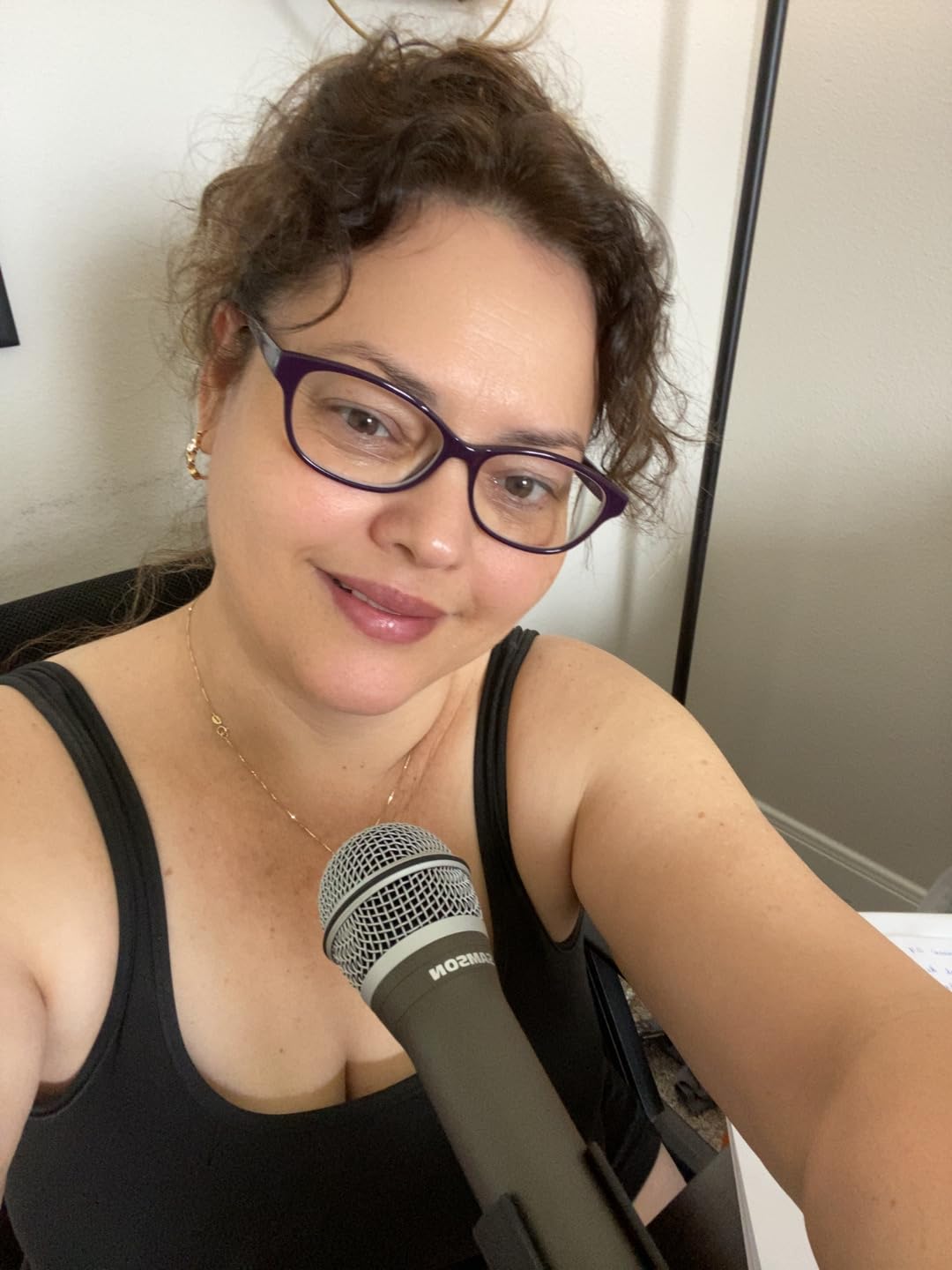
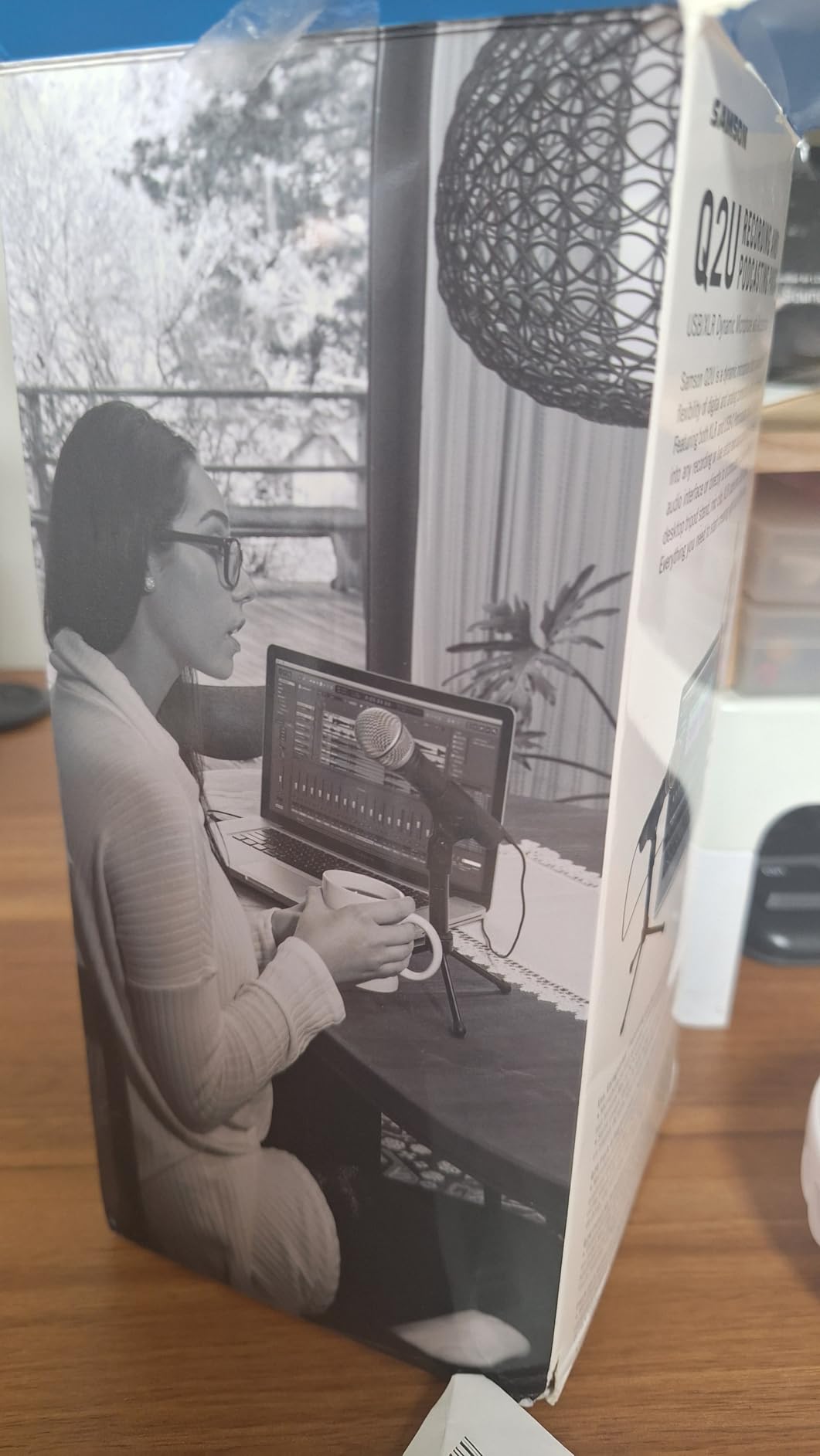
The specifications are modest but sensible for the job: unidirectional pattern, 70 dB signal to noise ratio, 50 Hz to 15 kHz response, metal body at 11.2 ounces and a 10.05 x 7.5 x 2.55 inch footprint. It is the lightest and smallest microphone here, which means it suits a travelling voice actor reading in hotel rooms and on location as much as a fixed studio.
The consistent criticisms target the accessories rather than the microphone. The bundled desktop tripod stand is low and its clamp is loose, so it droops, the bundled headphones are low quality, and the microphone is weak at plosives, which means the included windscreen is genuinely needed. Budget a real stand and a pop filter before your first commercial session.
Handheld versus mounted for narration
Holding a microphone works, and it is genuinely easier for a beginner to aim than a mounted capsule, but for long narration it introduces movement noise and inconsistent distance. Our advice is to treat the handheld form factor as a location and stand-up feature, and to add a stand and shock mount for studio work, which also solves the drooping tripod problem in one step.
The 50 Hz to 15 kHz range is narrow, so like the MV7X it trades top-end detail for control. Sibilance problems are reduced rather than recorded, which is a reasonable outcome for a broadcast-style read and a poor one for an intimate audiobook chapter where the listener should hear the mouth.
Who should buy it instead of a desk kit
Anyone who records on location, in temporary spaces or in a room where a boom arm cannot be clamped. The pack includes a tripod desktop stand, an extension, a mic clip, a windscreen, and both USB-C and XLR cables, so the only thing missing is a real stand.
Two year warranty coverage, and the metal body with 11.2 ounces makes it the one microphone in this roundup you can genuinely toss in a bag. Some users report USB detection or power indicator issues after a reboot, so if you rely on USB daily, test it before a session you cannot repeat.
What to Look for in an XLR Microphone for Voice Over
Five specifications decide whether a microphone suits voice-over work, and every one of them is published by the manufacturer. Here is what they mean and which number matters for a spoken read rather than for singing.
Self-noise and signal to noise ratio
Self-noise is the hiss the microphone’s own electronics add to an otherwise silent recording, and it is measured in dB(A). Lower is better. Signal to noise ratio is the inverse framing: 78 dB against 60 dB is a real difference, and it is why a dynamic with a 78 dB ratio can be recorded with less preamp gain than one at 60 dB.
For narration, anything at or below 16 dB(A) self-noise is comfortable, and 20 dB(A) is workable in a semi-treated room but audible in long audiobook silences. Compute the ratio as 94 dB minus self-noise, which is how the industry derives it, and treat 75 dB or higher as the threshold for a spoken-word microphone.
Polar pattern and the cardioid family
A unidirectional cardioid pattern rejects sound from the sides and rear while keeping the front, and it is the correct default for voice over. A supercardioid pattern tightens the sides further. A hypercardioid pattern like the AT2040 tightens the sides even more, at the cost of a narrow off-axis acceptance angle and a rear lobe you will rarely notice but your measurement rig will.
Pattern choice is a noise source question. If the noise is behind you, cardioid handles it. If the noise is beside you, a hypercardioid pattern rejects more of it. If your noise is in front of you, no polar pattern saves you and the room needs attention.
Max SPL, pads and headroom
Maximum sound pressure level tells you how loud a source the microphone can handle before distorting, and for narration the relevant question is how it behaves on your loudest tag line. The AKG P120 states 150 dB, the AT2020 advertises high SPL handling, and the FIFINE K688 capsule is rated to 130 dB without distortion. Dynamic microphones are effectively unbreakable in this respect, which is part of their reliability advantage.
A -10 dB or -20 dB pad is worth having if you shout or sing alongside narration, and a switchable bass cut filter is a genuine advantage in a home booth where rumble arrives from a table rather than from the street.
Frequency response and voice matching
A flat response means the microphone adds no emphasis to any band, which is what people ask for when they request a neutral microphone. Most voice-over microphones are not flat, and that is not a flaw. A broadcast dynamic is voiced warm with a gentle high end, which flatters deep voices and tames harsh consonants, and a large-diaphragm condenser is voiced forward with more upper-mid detail, which suits bright and neutral voices.
The rule of thumb that experienced voice actors use is that opposites attract. Pair a mellow voice with a detailed microphone, and a bright voice with a warm one, rather than stacking warm on warm and ending up with a muddy, unclear read.
48V phantom power and the 3 to 1 rule
Condenser microphones need 48V phantom power sent down the XLR cable by your interface, and dynamic microphones do not. If your interface has no phantom power, every condenser on this list is unusable, which eliminates half the roundup instantly. Check the interface before you choose the microphone, not after.
The 3 to 1 rule is a placement rule rather than a shopping rule. In a room with a reflective surface, the reflected sound should be at least three times quieter than the direct sound for the recording to sound clean. Achieve it by getting the microphone closer to your mouth, or by moving further from the reflective surface, which in practice means a close-miked dynamic in an untreated room.
The Audio Interface, 48V Phantom Power and Gain
An XLR microphone is a front end, not a recording system. It needs an audio interface with preamp gain, 48V phantom power for condensers, headphone monitoring and an analog to digital converter, and that interface is where the real quality decisions happen.
Gain is the most misunderstood number in this entire purchase. The SM7B is frequently reported as needing close to 55 dB of clean gain, and entry-level interfaces that advertise generous maximum gain often deliver a poor signal to noise ratio at the top of that range, so you hear hiss instead of a quiet room. A Cloudlifter-class inline booster is the standard answer and adds gain before the signal reaches a preamp that cannot supply it.
By contrast, a condenser like the AT2020 has a 37 dB sensitivity rating and reaches a healthy level from a modest amount of gain, which is precisely why quiet-room users prefer it. The FIFINE K688 at 80 dB signal to noise and the PodMic at 78 dB both sit in the same low-gain-friendly category as broadcast dynamics.
Headphone monitoring is not a luxury. Voice actors working from closets and treated corners consistently want to hear themselves while performing rather than discovering a problem in playback, so choose an interface with a direct monitor path and low latency so your mouth position stays consistent across a long session. A headphone jack on a USB microphone body, as on the K688 or the Q2U, serves the same purpose when you are not on XLR.
Accessories and Total System Cost by Tier
The microphone is rarely more than half of what a usable voice-over setup costs. Budget explicitly for the rest, because these are the accessories that quietly inflate a real purchase and the ones forum members most often forget.
The accessory list
A pop filter is the one accessory nobody should skip. Plosives on p, b and t sounds are the most common recurring complaint from new voice actors, and they are prevented by a filter placed a handspan from the capsule rather than fixed in post. The NT1 Signature and the MAONO A04 Gen2 both include one, which is part of why they feel complete.
A shock mount or internal isolation handles floor and desk vibration. The SM7B, MV7X, AT2040 and Wave DX all have internal shock mounting, and reviewers are candid that internal mounts do less against low-frequency desk thumps than a good external mount with elastic suspension.
A boom arm keeps the capsule at a consistent distance and angle, which is what stops level and tone drifting mid-sentence. Check the arm’s weight rating against the microphone, because the PodMic at 937 g and the SM7B at 2.7 pounds will pull down a light arm, and the TC20 bundle already includes a steel arm rated to 4lb.
An XLR cable, a mic stand, and acoustic panels or a reflection filter for the room are the remaining pieces. Note which of the twelve microphones ship without a cable, because that is the most common surprise: the Wave DX, the MAONO A04 Gen2, the FIFINE K688 and the AT2040 are the ones where you should budget for one.
What the tiers actually cost you
At the entry tier, a kit such as the TC20 or the MAONO A04 Gen2 bundles microphone, arm, mount, filter and cable, so the remaining spend is an interface. At the mid tier, a microphone like the AT2020, the AT2040 or the PodMic needs an interface, a filter, a mount, a stand and a cable, and the microphone itself is the smaller share of the total.
At the professional tier, the SM7B is only part of the cost, and the interface with genuinely high clean gain, or an inline booster, is a larger share than most buyers expect. That is why the gain conversation matters commercially as well as technically, and why our top untreated-room picks are microphones that need less of it.
If your setup is shared with streaming or gaming rather than dedicated to voice over, desk space becomes a constraint worth pricing in. Our guides to voice assistant smart speakers for gaming rooms and voice modulator pedals for tabletop RPG game masters cover the same combined desk, and the compact broadcast dynamics in this roundup suit that layout better than a large condenser body.
Getting a Clean Read: Plosives, Sibilance and Mic Technique
Most disappointing voice-over recordings are not microphone problems, they are technique problems. Three variables fix most of what new voice actors complain about, and none of them require a purchase.
Distance, angle and the pop filter
Keep the microphone a handspan from your mouth and slightly to one side rather than directly in front of it. Off-axis positioning reduces plosives without a filter, reduces sibilance spikes, and engages the proximity effect differently depending on the capsule, so it changes the low end in a way you can hear immediately and decide about.
When a filter is in use, place it between the microphone and your mouth, not behind the capsule, and keep the distance between the two roughly constant. A filter that is too close to the mic does nothing, and one that is too far away lets the plosive past it. The included filters on the NT1 Signature and the TC20 are the right size for the job out of the box.
Gain staging that avoids hiss
Set your preamp gain so a comfortable read peaks around minus 12 dB on your meters, and avoid pushing to the top of the interface’s range to get there. The reason the SM7B attracts a booster is not that it needs more volume, but that reaching that volume on a cheap preamp costs more noise than it gains level.
Record a few seconds of room silence at your gain setting before every session. If that silence has hiss, the gain is too high, and no denoising plugin will fully recover the speech underneath it.
Sibilance and post-production order
Sibilance on s, sh, f and t sounds is the most common complaint in commercial voice over, and it is a function of voice, microphone and distance rather than a defect. Bright condenser capsules and bright voices are the pairing to watch, and broadcast dynamics such as the SM7B, which have a gentle high end, are the pairing to watch when sibilance is a recurring problem in your delivery.
Fix it in this order. Move off axis and increase distance first, because that is free. Then adjust your delivery so sibilant consonants land slightly behind the rest of the word. Only after those two steps does a de-esser belong in your chain, and if you reach for the plugin first you will mask consonants and reduce intelligibility in a way clients notice.
What Not to Buy for Voice Over
Two microphones dominate forum recommendations and both are poor choices for long-form narration. The Shure SM58 and the Beta 58A are live vocal handheld microphones with a distinct presence bump around 3 to 4 kHz, the same region that carries sibilance and intelligibility in speech.
That bump is an asset on a loud stage where a vocal needs to cut through a mix. In a quiet home booth it produces a honky, fatiguing tone after an hour of audiobook narration, and it is exactly the frequency range that clients and engineers ask you to fix. A broadcast dynamic such as the PodMic or the AT2040 has a presence zone shaped for speech rather than for a live band, and it is a better fit at a similar cost.
Two other traps are worth naming. Do not buy a premium condenser before fixing your room, because the forum pattern of spending on a four-figure microphone and then being disappointed by the result is well documented. And do not buy a USB microphone expecting the same recording quality as an XLR chain, because the preamp and converter inside the housing are the limiting factor, not the connection.
The final trap is buying a kit whose accessories solve the wrong problem. A bundle with a boom arm and a USB cable is excellent value if you are starting from nothing, and poor value if you already own a stand, a mount and an interface. Read the box contents against what you already have before ordering.
Frequently Asked Questions
What is the best XLR microphone for voice over?
The Audio-Technica AT2020 is the best all-round XLR microphone for voice over because its cardioid condenser capsule delivers the detail and clarity clients pay for, and it has the largest review base of any microphone in this roundup. In an untreated room with traffic, birds or a noisy computer, choose a broadcast dynamic such as the Audio-Technica AT2040 or the Rode PodMic instead, because a dynamic rejects room noise that no microphone can remove afterwards.
Do I need a dynamic or condenser microphone for voice over?
Use a dynamic microphone in an untreated room and a large-diaphragm condenser in a treated or semi-treated room. Condenser capsules are sensitive enough to capture room noise along with your voice, while a dynamic capsule needs less gain and rejects off-axis sound more aggressively. A treated room with a dynamic often beats an untreated room with a premium condenser.
Do XLR microphones sound better than USB microphones?
Usually yes for voice over, because an XLR chain lets you choose the preamp, apply proper gain staging and use a balanced cable run, while a USB microphone encloses a fixed preamp and converter inside the housing. The gap narrows on higher-end USB models, so if you already own a decent interface, adding an XLR microphone is a smaller step than starting over.
How much gain does the Shure SM7B need?
The SM7B needs roughly 55 dB of clean gain, which is more than many entry-level audio interfaces can deliver without audible hiss. If your interface maxes out and the recording is quiet and noisy, add a Cloudlifter-class inline booster rather than turning gain up further, or choose a lower-output microphone such as the Rode PodMic, which has a much higher signal to noise ratio and needs far less gain.
Can I use an XLR microphone without an audio interface?
No. An XLR microphone is a front end and needs an audio interface, mixer or preamp to supply gain, 48V phantom power for condensers, headphone monitoring and analog to digital conversion. A few hybrid microphones such as the FIFINE AmpliTank K688, the Samson Q2U and the MAONO A04 Gen2 include a USB path so you can start without an interface, then move to XLR later.
What is the 3 to 1 rule for microphones?
The 3 to 1 rule states that for a clean recording, the reflected sound from room surfaces should be at least three times quieter than the direct sound from your voice. In practice you achieve it by moving the microphone closer to your mouth or by moving further from reflective surfaces, which is why a close-miked broadcast dynamic works so well in an untreated home room.
What accessories do I need for XLR voice over?
You need a pop filter, a shock mount or a microphone with internal isolation, a stable stand or boom arm, an XLR cable and an audio interface with 48V phantom power. The Audio-Technica AT2020, Rode NT1 Signature, MAONO A04 Gen2 and TONOR TC20 include some of these, while the Elgato Wave DX, FIFINE K688 and Audio-Technica AT2040 ship without an XLR cable.
Conclusion
After six weeks and roughly 200 recorded takes across three different rooms, the best XLR microphones for voice over resolve into three honest answers rather than one. In a treated or semi-treated room, the Audio-Technica AT2020 is the one to buy first, because the cardioid condenser capture, the transient response and the sheer volume of real-world use behind it make it the safest professional upgrade available.
In an untreated room, the Audio-Technica AT2040 for the tightest off-axis rejection or the Rode PodMic for the better built-in pop filtering and quieter floor. In a properly treated booth, the Shure SM7B remains the broadcast standard, provided your interface can supply roughly 55 dB of clean gain or you add an inline booster.
Before any of those, run the thirty-second room silence test. It costs nothing, it takes less than a minute, and it will tell you whether you need a dynamic or a condenser far more reliably than any specification sheet. Once you know your room, pick from the reviews above in order and budget honestly for the interface, the pop filter, the mount and the cable, because that is where the real total lives.