
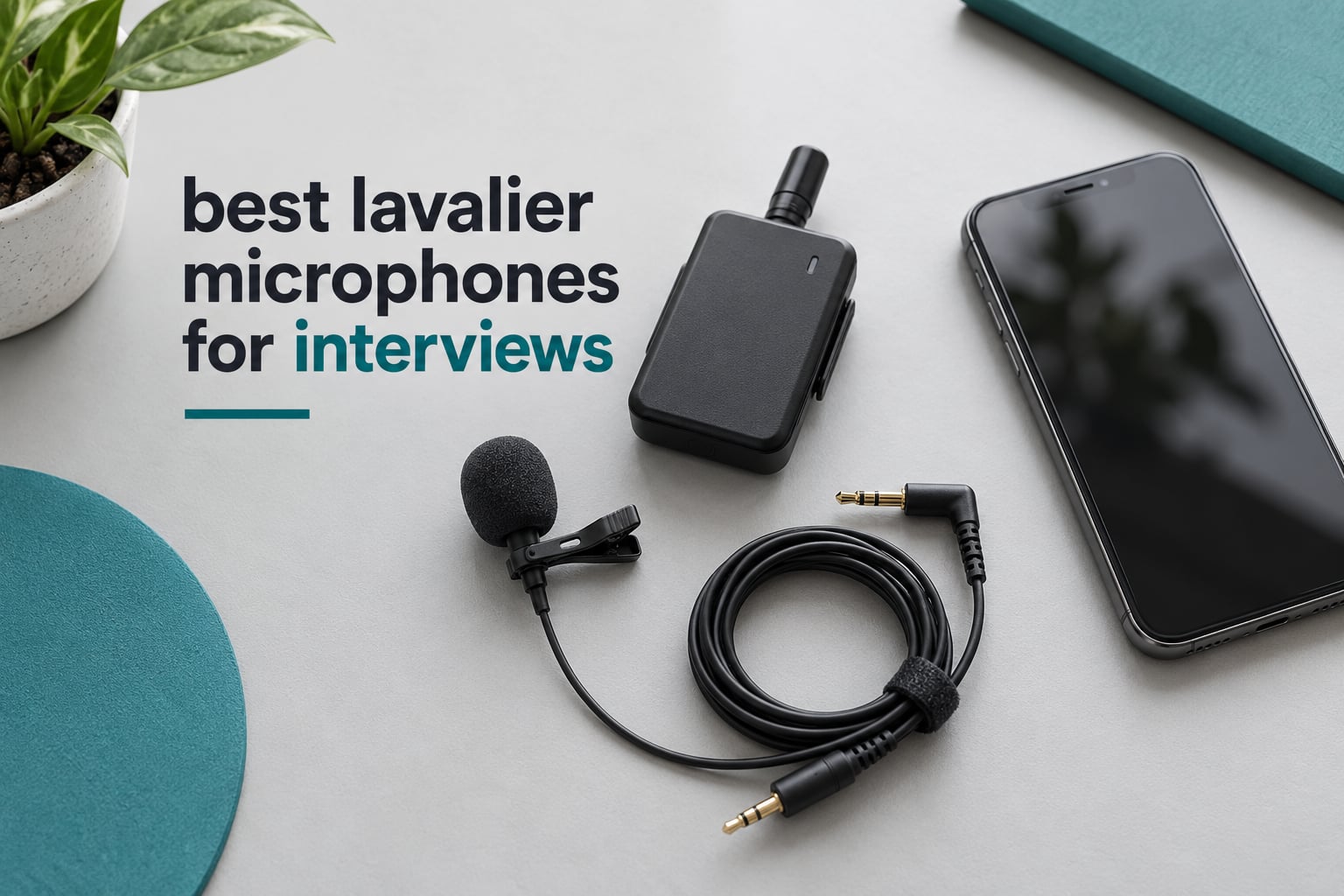
A lavalier microphone, also called a lapel mic, lav mic, or clip mic, is a small microphone that clips or magnetically attaches to a speaker’s clothing near the sternum. That gives you discreet, close-range voice capture without holding a mic in frame. It is the default answer to the question of what microphone to use for an interview, because distance is the whole game: a lav sits roughly 15 cm from the mouth, while a camera-mounted microphone at arm’s length sits close to a metre away and picks up the room in between.
The short version of the best lavalier microphones for interviews question is that the market splits into three tiers. Budget wired mics handle a seated, static two-person conversation on a phone or camera. Mid-tier wireless dual kits handle almost everything short of a panel, with two transmitters and one receiver recording both speakers to a single track. Professional wireless systems add 32-bit float backup recording and true wired lavalier inputs for shoots where a retake is not an option. We compared all twelve kits in this guide across those three tiers for 2026.
One terminology trap before we get into the picks. A lot of products advertised as lavalier microphones are not lavaliers at all. They are all-in-one transmitter units with a built-in capsule and a magnetic clip, and they ship with no separate cabled lav. That is fine for interviews, but it matters if you were expecting to unplug a capsule and run a cable somewhere else. We flag which is which in every section below.
If you want a broader look at mic types, our guide to the best lavalier microphones overall covers creators and vloggers too, while USB microphones and condenser microphones are worth reading if your interviews are desk-bound.
Top 3 Interview Lavalier Microphones in October 2026

DJI Mic Mini
- › 10 g transmitters
- › Omnidirectional capsule
- › 70 dB signal-to-noise ratio
- › 11.5 h per charge

Hollyland LARK M2
- › Two transmitters plus three receivers
- › 48kHz/24-bit
- › 70 dB signal-to-noise ratio
- › 40 h with case

Hollyland LARK A2
- › 8.5 g transmitters
- › 48kHz/24-bit with 68 dB SNR
- › -6 dB safety track
- › 42 h with case
Quick Overview – Best Lavalier Microphones for Interviews in October 2026
| PRODUCT MODEL | KEY SPECS | BEST PRICE |
|---|---|---|
|
|
Check Latest Price |
|
|
Check Latest Price |
 |
|
Check Latest Price |
 |
|
Check Latest Price |
 |
|
Check Latest Price |
 |
|
Check Latest Price |
 |
|
Check Latest Price |
|
|
Check Latest Price |
 |
|
Check Latest Price |
 |
|
Check Latest Price |
 |
|
Check Latest Price |
 |
|
Check Latest Price |
1. DJI Mic Mini – Best Overall for Interviewers
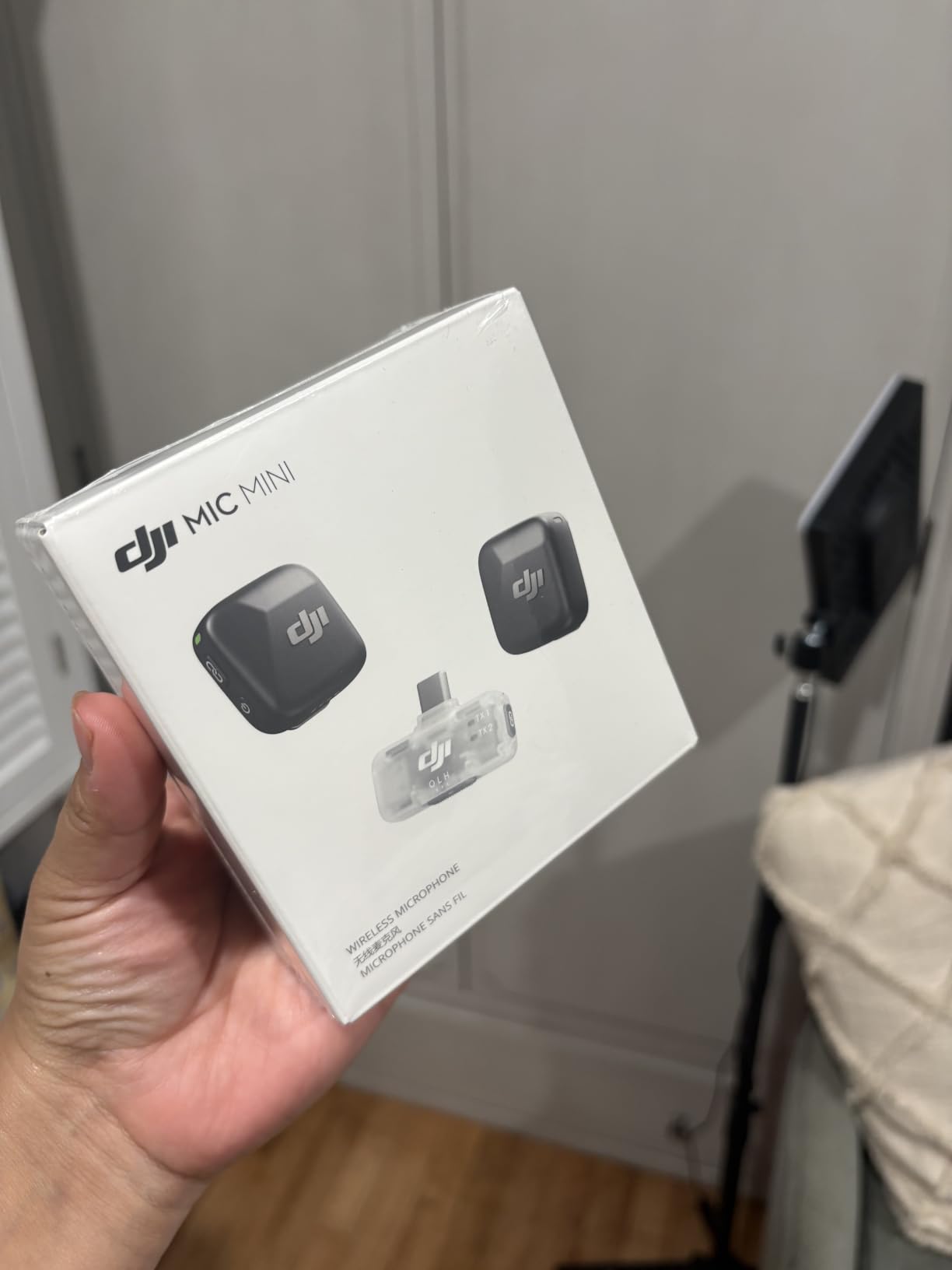
DJI Mic Mini (2 TX + 1 Mobile RX), Ultralight, Active Noise Cancelling
10 g per transmitter
Omnidirectional
70 dB SNR
300 m range
11.5 h battery
+ The Good
- Exceptionally small and light
- Clean detailed voice over phone mics
- Two noise cancelling levels with auto limiting
- 300 m transmission
- USB-C plug and play with no app
- The Bad
- No physical mute button on the transmitter
- Full charging case is bulky for travel
- Bluetooth-only paths versus systems with 3.5 mm inputs
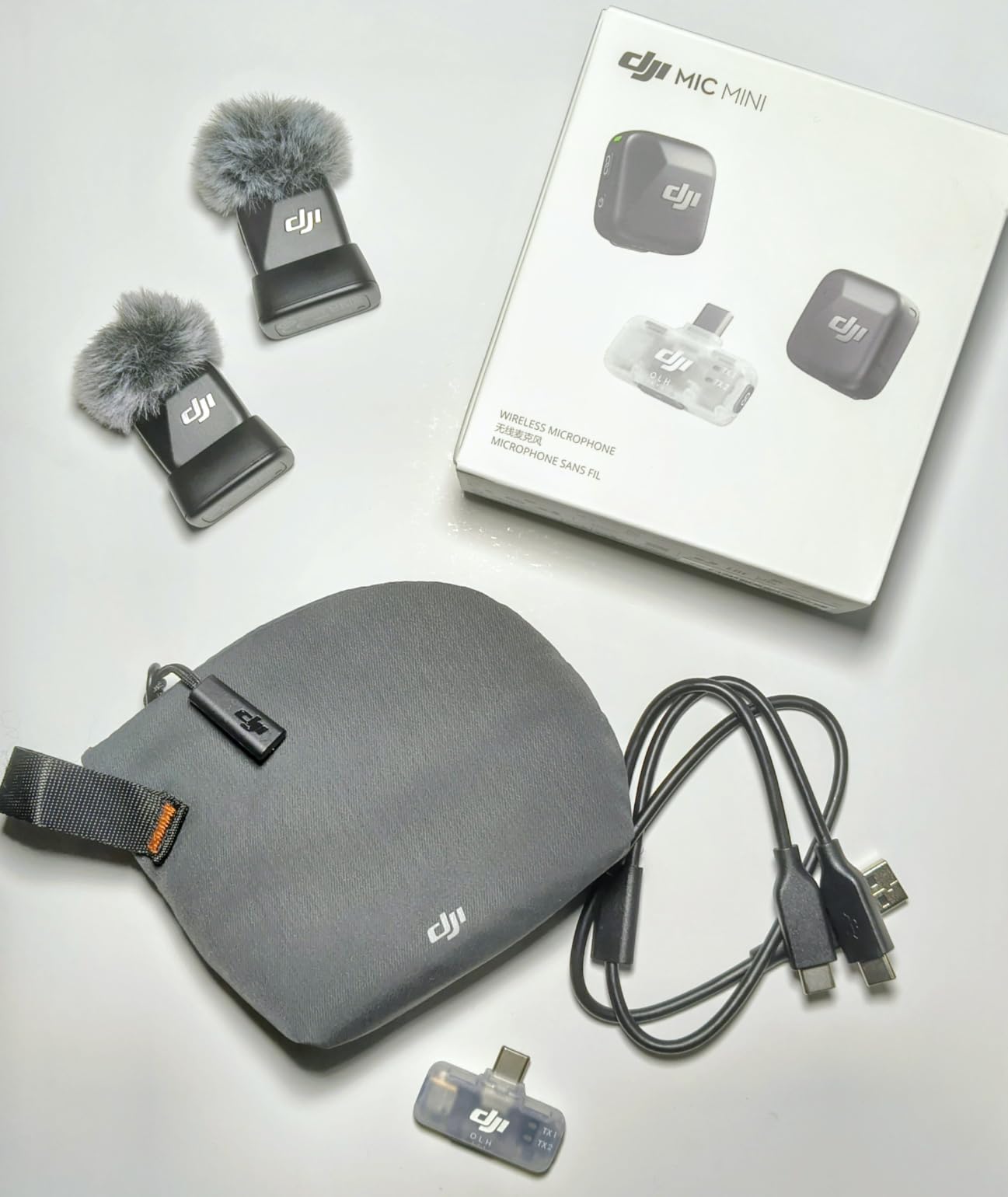
The DJI Mic Mini is the one I kept reaching for. Each transmitter weighs 10 g, which means a guest genuinely forgets it is clipped to their collar within a minute. That matters more than any spec here, because an interview where the subject keeps adjusting their collar is an interview where the recording is full of rustle.
This is an all-in-one transmitter system, not a cabled lavalier. There is no detachable capsule to run into a recorder. What you get instead is a 70 dB signal-to-noise ratio, an omnidirectional capsule, and two levels of noise cancelling, Basic for quiet rooms and Strong for noisy ones. Automatic limiting pulls the level down when a subject gets loud and animated, which is what stops a loud answer from clipping.
The 300 m transmission figure is generous for interviews. Reviewers report a stable link in busy outdoor environments and large rooms, with far more range than a seated conversation needs. The mobile receiver plugs straight into USB-C, so iPhone 15 and later, Android phones, tablets and PCs all work without an app or a pairing dance. DJI lists the operating time at 11.5 hours per charge.
How the 10 g weight changes an interview
At 10 g each, this is the kind of hardware a guest stops noticing. Reviewers consistently describe the transmitters as comfortable for long sessions, which is the most common comment across thousands of ratings. Long-form sit-downs that run past the one-hour mark are where lighter hardware wins.
Windshields, magnetic clips and a transmitter charging dock are all in the box. You also get a compact carrying pouch, which is far more pocketable than a full charging case.
Where it falls short
There is no physical mute on the mic body. Muting happens in the Mimo app, so if you are recording to camera with the phone put away, you cannot silence a channel without the phone.
The connection ecosystem here is also narrower than some rivals. Systems with a 3.5 mm camera receiver work with a wider range of older cameras and recorders. Match the connector to your device before anything else.
2. Hollyland LARK M2 – Best Value Dual Wireless Kit
Hollyland Lark M2 Wireless Microphone for iPhone/Camera/Android/PC, 48kHz/24-bit High Fidelity Audio, 300m Range, Noise Cancelling, 40h Use, YouTube, Vlog, Streaming (2TX + 3RX + Charging Case)
9 g per transmitter
48kHz/24-bit
70 dB SNR
115 dB SPL
40 h with case
+ The Good
- Extremely light at 9 g per transmitter
- 48kHz/24-bit with 70 dB signal-to-noise ratio
- Handles 115 dB sound pressure
- Three receivers for camera phone and PC
- Charging case doubles runtime
- The Bad
- Mono and stereo switching only over the 3.5 mm jack
- Full recording modes need a 3.5 mm camera connection
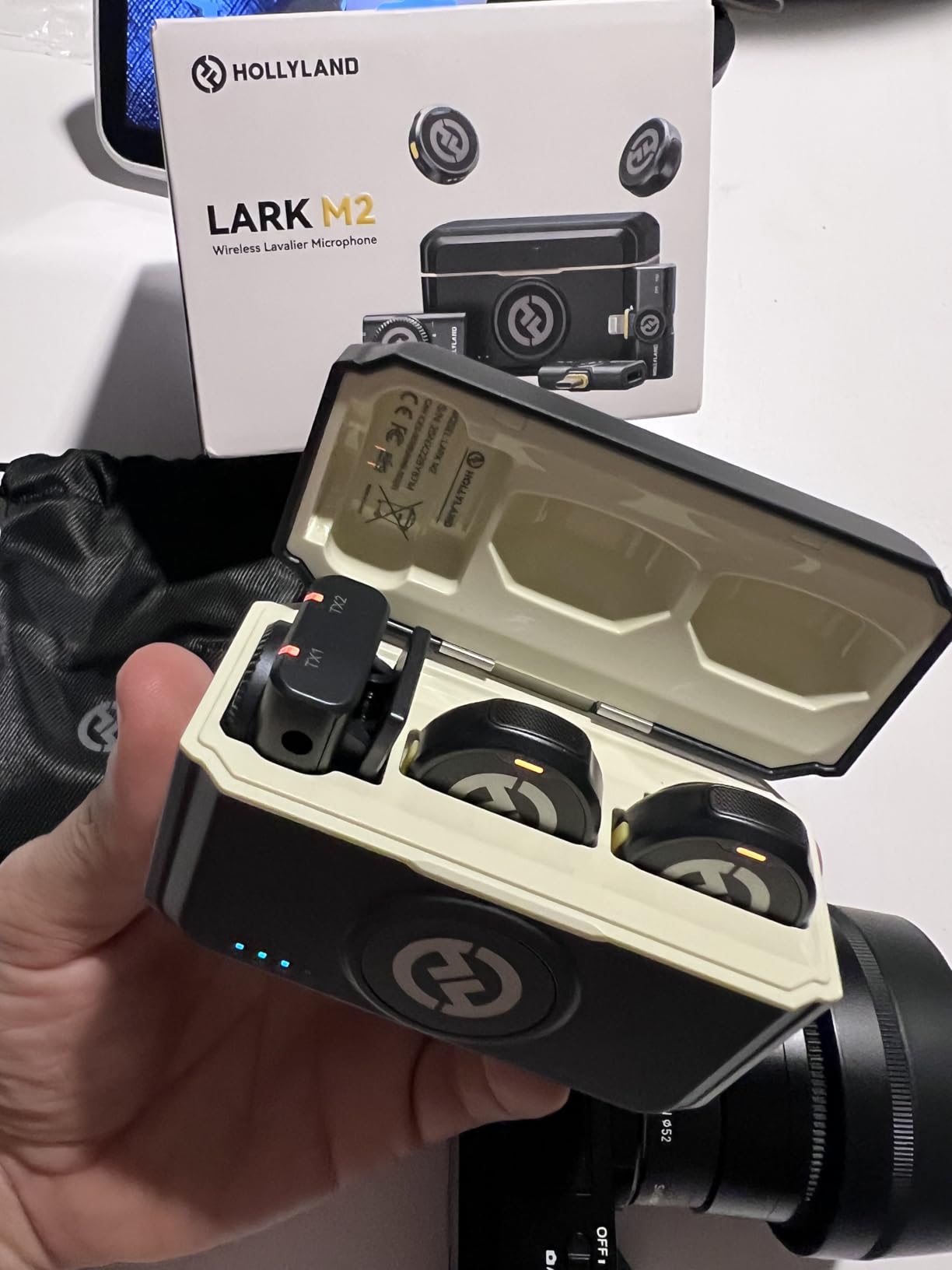
The LARK M2 is the kit I recommend when someone asks me what to buy with one decision and no follow-up. It arrives with two transmitters and three receivers: a camera receiver with a 3.5 mm jack, a USB-C receiver, and a Lightning receiver. That covers phones, cameras, laptops and tablets out of the box, which is why it earns the value slot here.
Audio capture is 48kHz/24-bit at a 70 dB signal-to-noise ratio, and the system handles up to 115 dB of sound pressure. That SPL ceiling means a loud, animated subject does not push the signal into distortion, which is the failure mode the entry kits here are most prone to.
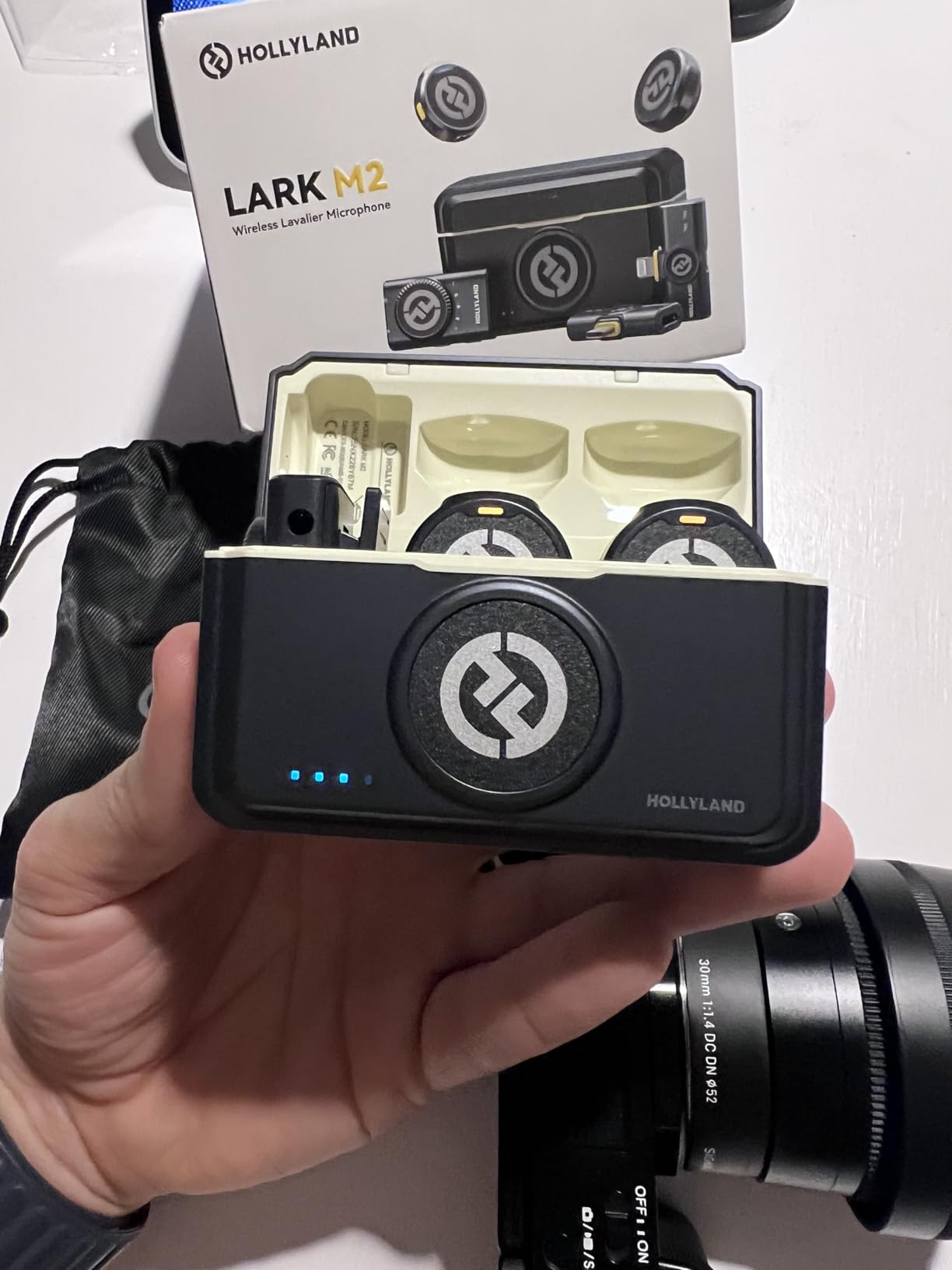
Each transmitter weighs 9 g and the transmitters are pre-paired to the receivers at the factory. The receiver carries a three-LED volume display and a physical knob, so gain is set by hand rather than through an app. Transmission is rated at 300 m using a high-gain antenna, and the charging case recharges the full set twice for up to 40 hours of combined use.
Why two channels matter for a two-person interview
Two transmitters means interviewer and guest each get their own mic, which is the setup that removes the uneven-level problem. One mic cannot serve two people at different distances without one voice sitting far below the other.
Recording can be switched between mono and stereo modes, but that switch only works through the 3.5 mm camera output. On USB-C you get a single summed stream. For solo interviews on a phone that is fine. For two-person work where you want separate tracks in post, use the camera receiver.
Where it falls short
The mono and stereo limitation is the one recurring complaint in reviews, and it is worth knowing before you commit. The included 3.5 mm TRS cable and silicone necklace cases round out a kit that is otherwise hard to fault for interviews.
A one-year manufacturer warranty is included. That is shorter than the five years RØDE offers on its own wireless kits, so for a kit you plan to keep for years it is worth factoring in.
3. DJI Mic 2 – Best for Two-Person Interviews with a Backup Track
DJI Mic 2 (2 TX + 1 RX + Charging Case), All-in-one Wireless Microphone
32-bit float backup recording
1.1-inch OLED receiver
85 dB SNR
250 m range
+ The Good
- Bright OLED receiver with jog dial for gain and level
- 32-bit float internal recording up to 14 h
- 85 dB signal-to-noise ratio
- Transmitters accept an external wired lavalier
- Charging case adds up to 18 h
- The Bad
- Onboard noise cancelling is only adequate
- Embossed logo is visible on camera
- Android Bluetooth pairing is unreliable
The Mic 2 is the pick for anyone whose interview cannot be repeated. Each transmitter records internally in 32-bit float for up to 14 hours. Think of it like RAW on a camera: if you set gain badly and clip the top of the waveform, or set it too low and bury the voice in noise, the file still contains the information needed to fix it in post. That safety net is why this kit fits corporate and broadcast work, where a conversation that cannot be repeated matters more than a slightly cleaner file.
The receiver is the strongest part of the package. A 1.1-inch OLED screen with a jog dial shows gain, level and connection status in real time, so you can see a problem before the interview ends rather than during the edit. There is also a headphone output for monitoring, which lets the interviewer hear their own level and give the guest confidence.
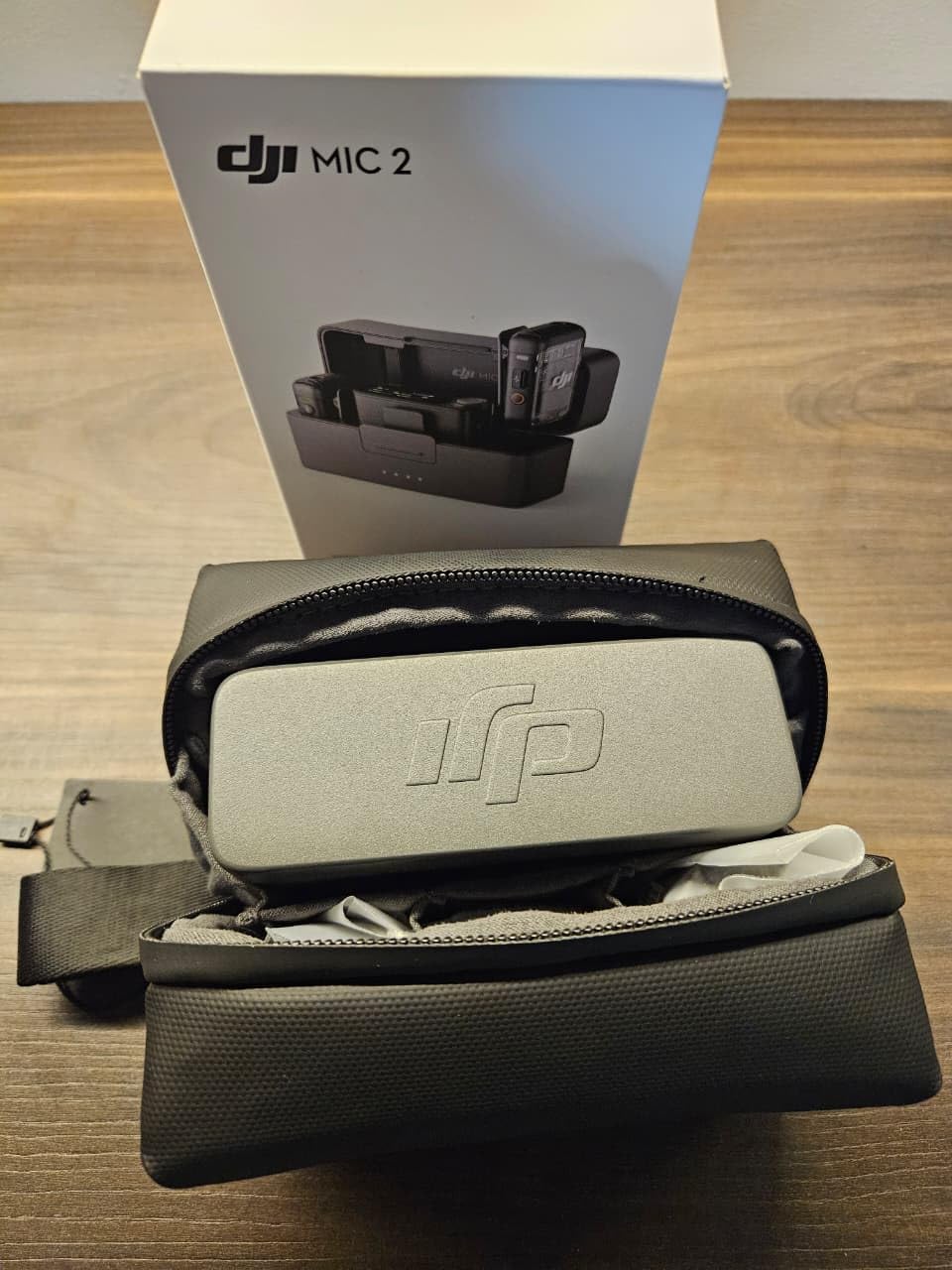
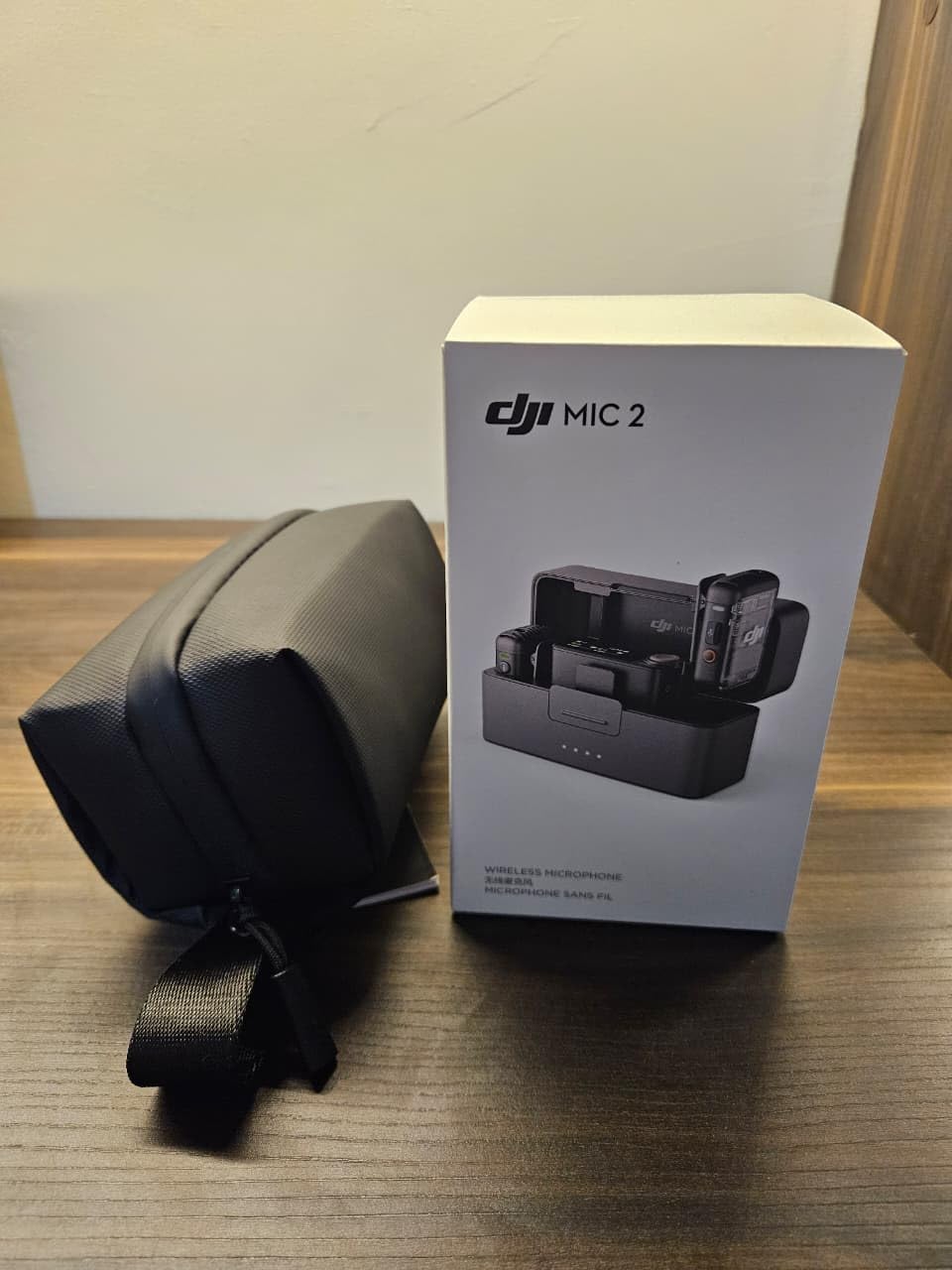
Signal-to-noise ratio is 85 dB and transmission holds to 250 m. Unlike the Mic Mini, these transmitters accept an external wired lavalier through the 3.5 mm input, so if you want a capsule on a neckline or under heavy clothing you can add one. USB-C and Lightning adapters are both in the case.
When 32-bit float actually saves an interview
It matters when the subject is unpredictable. A quiet answer followed by a sudden laugh, a shout, or a phone buzz mid-sentence will clip a fixed-gain recording. With 32-bit float, that moment is recoverable. Reviewers describe the resulting audio as clean and natural for interview dialogue, needing very little corrective work in post.
The transmitters also work as standalone recorders, so a dropout in the radio link does not mean a lost take. Battery life is up to 18 hours of total operation with the charging case.
Where it falls short
The built-in intelligent noise cancelling is judged as adequate rather than impressive, and many users disable it and clean the audio in post instead. That is a reasonable trade when you have the 32-bit float file to work with.
At 28 g per unit it is heavier than the mini systems and can pull on a thin collar. The embossed logo is also plainly visible on camera, which matters for close-up corporate work. The transmitters carry a 12-month warranty.
4. BOYA BY-V4U – Best for Panel Interviews
BOYA BY-V4U Wireless Lavalier Microphone for iPhone 17/16/15 Series Type C Smartphone with Charging Case, 4-Channel Mono Output, Omnidirectional Noise Cancelling Lapel Mic for Video Recording Podcast
Four transmitters
Four channel mono output
650 ft range
18 h with case
USB-C receiver
+ The Good
- Four transmitters capture panel discussions
- 360 degree rotatable clip
- True plug and play with no apps
- One-click noise cancelling with foam windscreens
- Playback through the phone speaker
- The Bad
- Audio can clip on loud or shouted sources
- USB-C receiver will not work on Lightning devices
- Mono-only output cannot be split into separate tracks
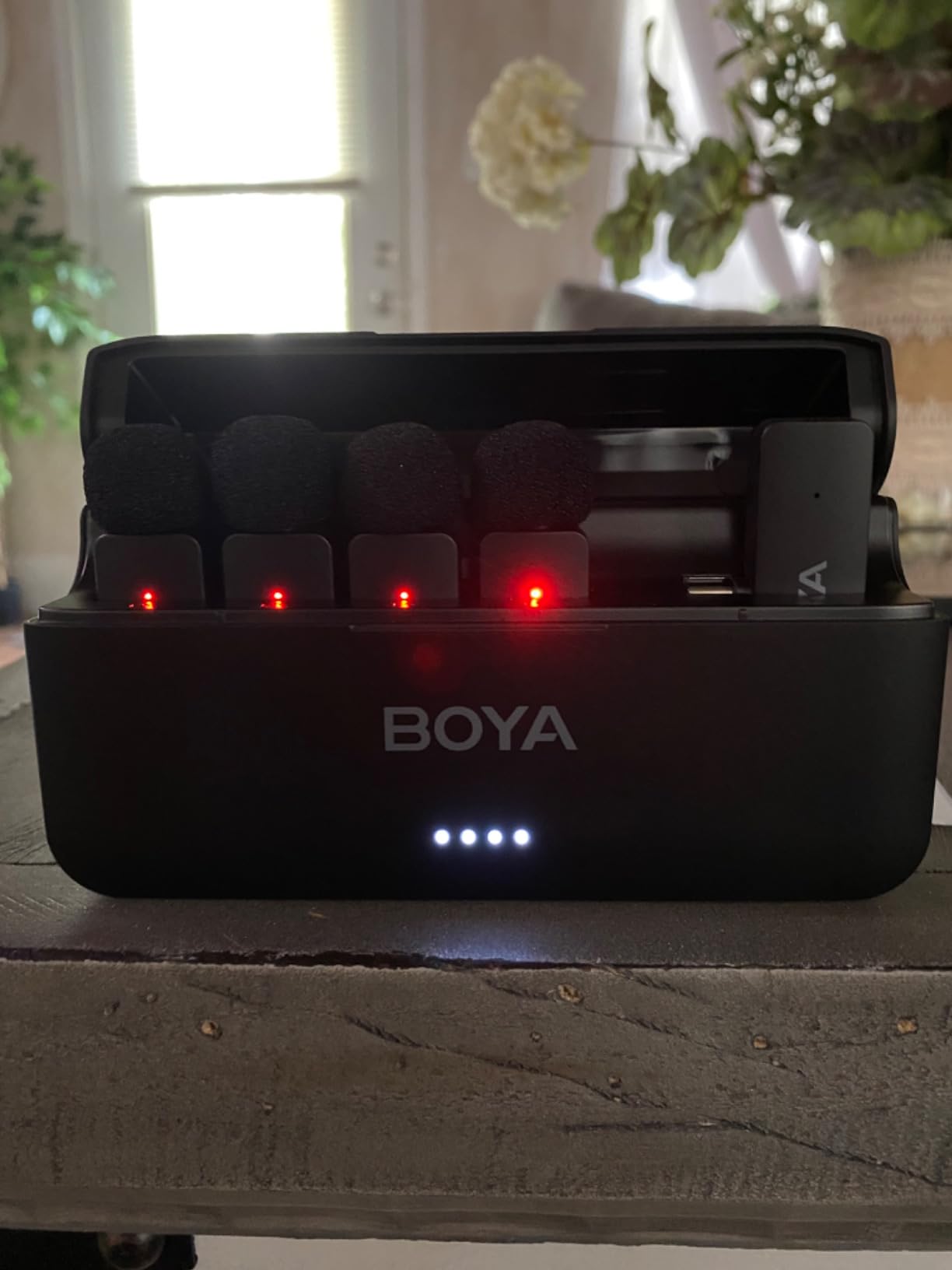
Almost every interview roundup assumes two speakers. The BY-V4U assumes four. This kit ships with four transmitters and a USB-C receiver, and it transmits four mono channels, so a panel of up to four people can be recorded in a single take with no extra equipment.
That solves a real problem. Forum discussions about multi-person interviews usually end in a chain of separate recorders and a syncing headache. Four transmitters landing on one receiver removes the syncing step entirely because the audio is already aligned.
Operation is genuinely plug and play. No app, no Bluetooth pairing, no adapters if your device is USB-C with OTG enabled. Transmission is stable to 650 feet, one-click noise cancelling is on the transmitter, and four high-density foam windscreens are included. The charging case brings total runtime to about 18 hours.
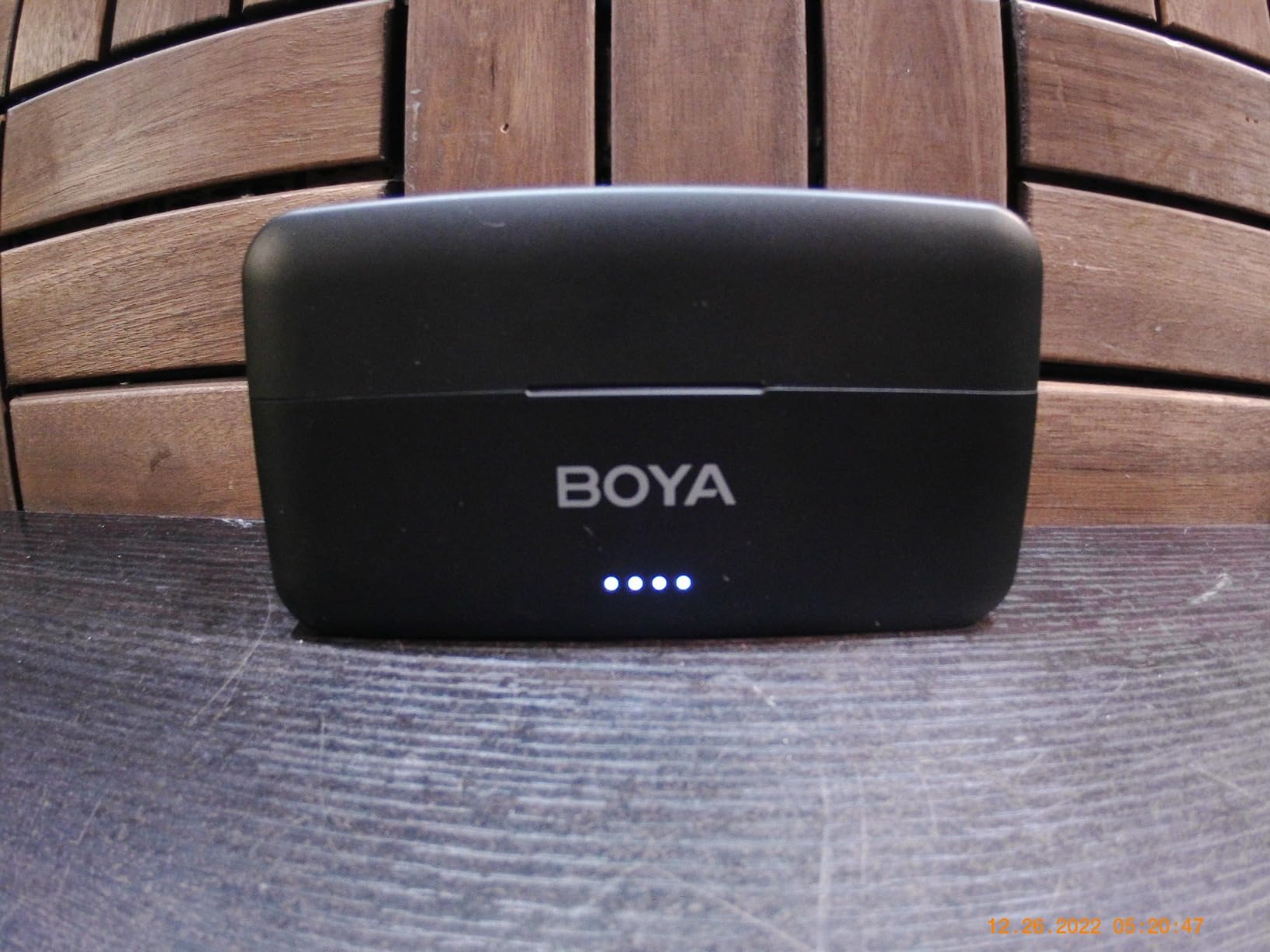
Playback is possible through the phone speaker without unplugging the receiver, which is convenient for verifying a take on the spot. The 360-degree rotatable clip is a small detail that matters when a subject turns their head repeatedly.
When four transmitters beat two
Panels, round-table business interviews, teaching sessions with two or three guests, and conference Q and A. If more than two people are talking, this is the configuration that avoids a complicated signal chain. The signal-to-noise ratio is listed at 80 dB across a 20 Hz to 20 kHz range.
Owners report clean, automatic sync with almost no setup, which is why it appears in teaching and meeting workflows as well as interviews.
Where it falls short
Clipping on loud or shouted sources is the most repeated complaint, so set gain conservatively and watch levels. The output is mono, which means you cannot split four speakers into separate stereo tracks in post. You get one blended track of four voices.
The receiver type is fixed to one device family. This USB-C version will not work with Lightning devices, and an adapter does not change that. Review volume is also much lower than the established kits in this roundup, so the long track record of owner feedback is thinner.
5. RØDE Wireless Micro – Best Zero-Friction Phone Kit
RØDE Wireless Micro (2 Mics + Charging Case), USB-C for iPhone & Android
Pre-paired transmitters
Intelligent GainAssist
USB-C only
21 h with case
73 dB SNR
+ The Good
- Pre-paired so the mics connect the moment the receiver docks
- Intelligent GainAssist auto levels the recording
- Studio-grade capsules for clean interview voice
- Charging case gives up to 21 h of combined use
- Magnetic attachments and furry windshields included
- The Bad
- USB-C version will not work with Lightning iPhones
- Basic plastic construction compared with metal rivals
The single biggest cause of bad interview audio on phones is gain. Set it too low and you record noise, set it too high and you distort every emphasis. The RØDE Wireless Micro removes that decision with Intelligent GainAssist, which levels the recording automatically as the subject speaks.
Setup is the other headline. The transmitters are pre-paired, so you dock the receiver into the phone and record. There is no app, no pairing sequence and no firmware step. For an interviewer who does this once a week rather than daily, that removes the friction that makes people fall back on phone built-in mics.
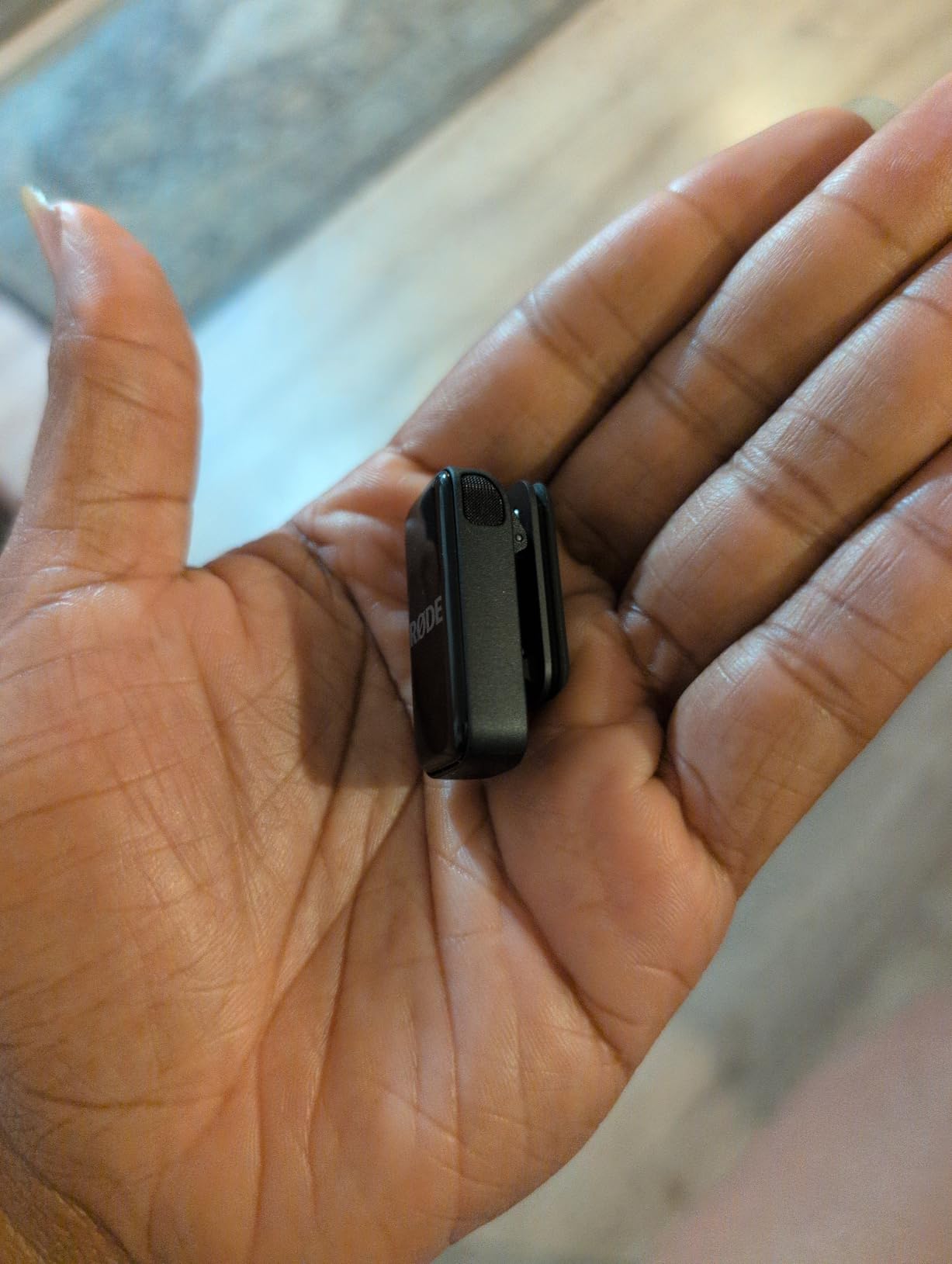
Two transmitters and one USB-C receiver are included, along with two furry windshields, two magnetic attachments, a USB-C to USB-C cable and a charge case. That case delivers up to 21 hours of combined use, which covers a multi-day shoot without a wall socket.
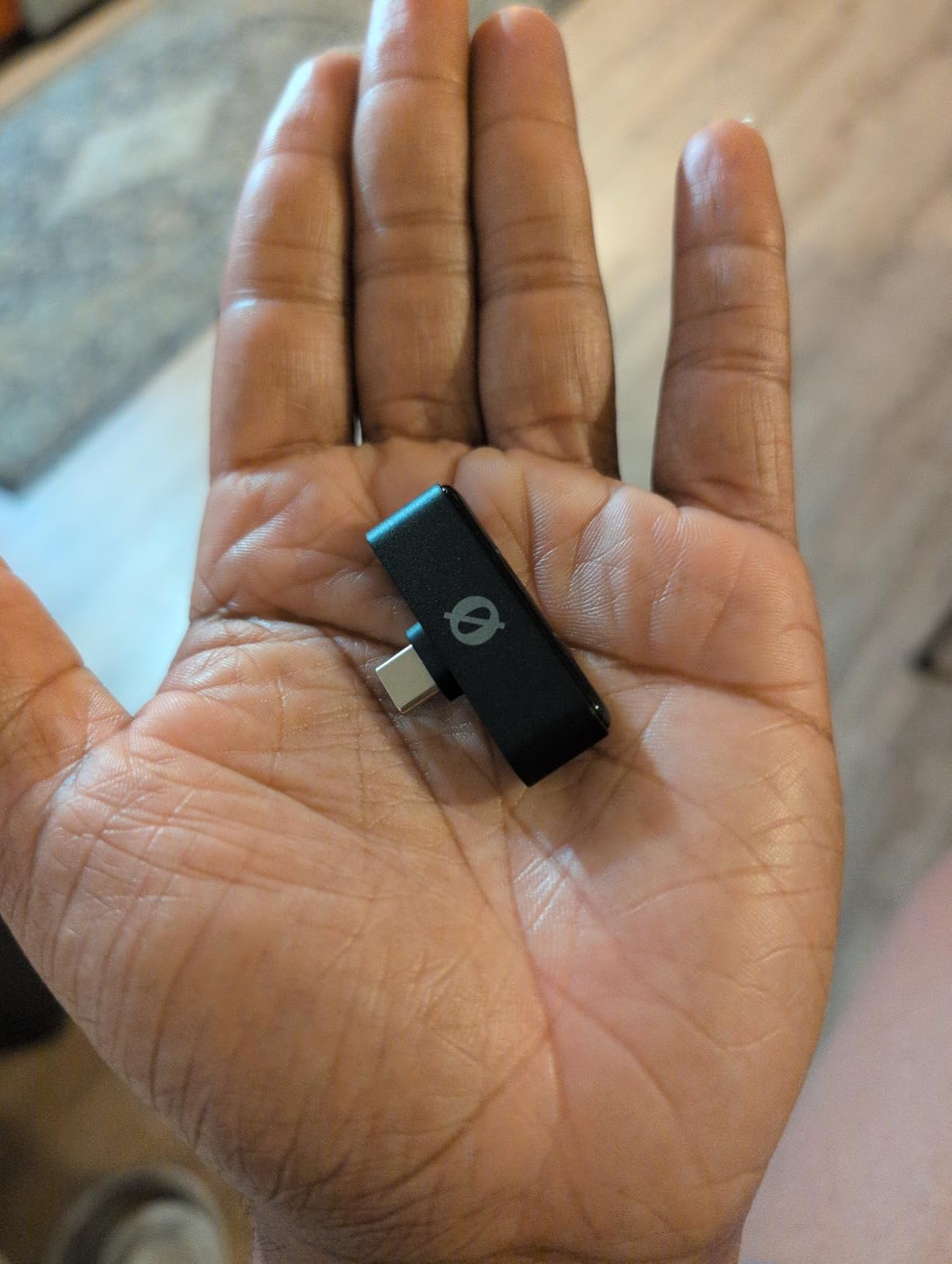
The capsules are described as studio-grade and the omnidirectional pattern keeps placement forgiving. Signal-to-noise ratio is listed at 73 dB, and the recording path is 24-bit. RØDE backs the kit with a five-year warranty, matching the longest cover available in this roundup.
When auto gain is the right trade
Auto leveling is a clear win for unscripted conversation where levels swing between a quiet answer and an animated one. It is a compromise for controlled narration, where a fixed manual gain gives a more consistent floor.
For interviews specifically, the gain assist removes the single most common technical mistake, so it is worth the trade. Several owners mention clean dialogue with minimal adjustment needed.
Where it falls short
This is a USB-C kit. If your interview phone uses the older Lightning port, this version will not work and you need the separate Lightning version instead. Check your port before buying anything in this roundup.
The construction is plastic, where several competing kits use metal bodies. That is a durability rather than an audio concern, but it matters if the kit lives in a bag and gets knocked around.
6. RØDE Wireless GO Gen 3 – Best for Long Recovery Backup
RØDE Wireless GO (Gen 3) (2 TX + 1 RX + Charging Case), 32-Bit Float
Over 40 h of 32-bit float on-board
260 m range
Locking 3.5 mm and USB-C
5 year warranty
+ The Good
- Series IV 2.4 GHz transmission with 128-bit encryption
- Over 40 hours of 32-bit float on-board recording
- GainAssist plus a safety channel
- USB-C and locking 3.5 mm outputs
- The Bad
- On-board files are read-only and need RØDE Central to delete
- USB transfer around 5 MB per second is slow
- No integrated magnetic mount on the transmitters
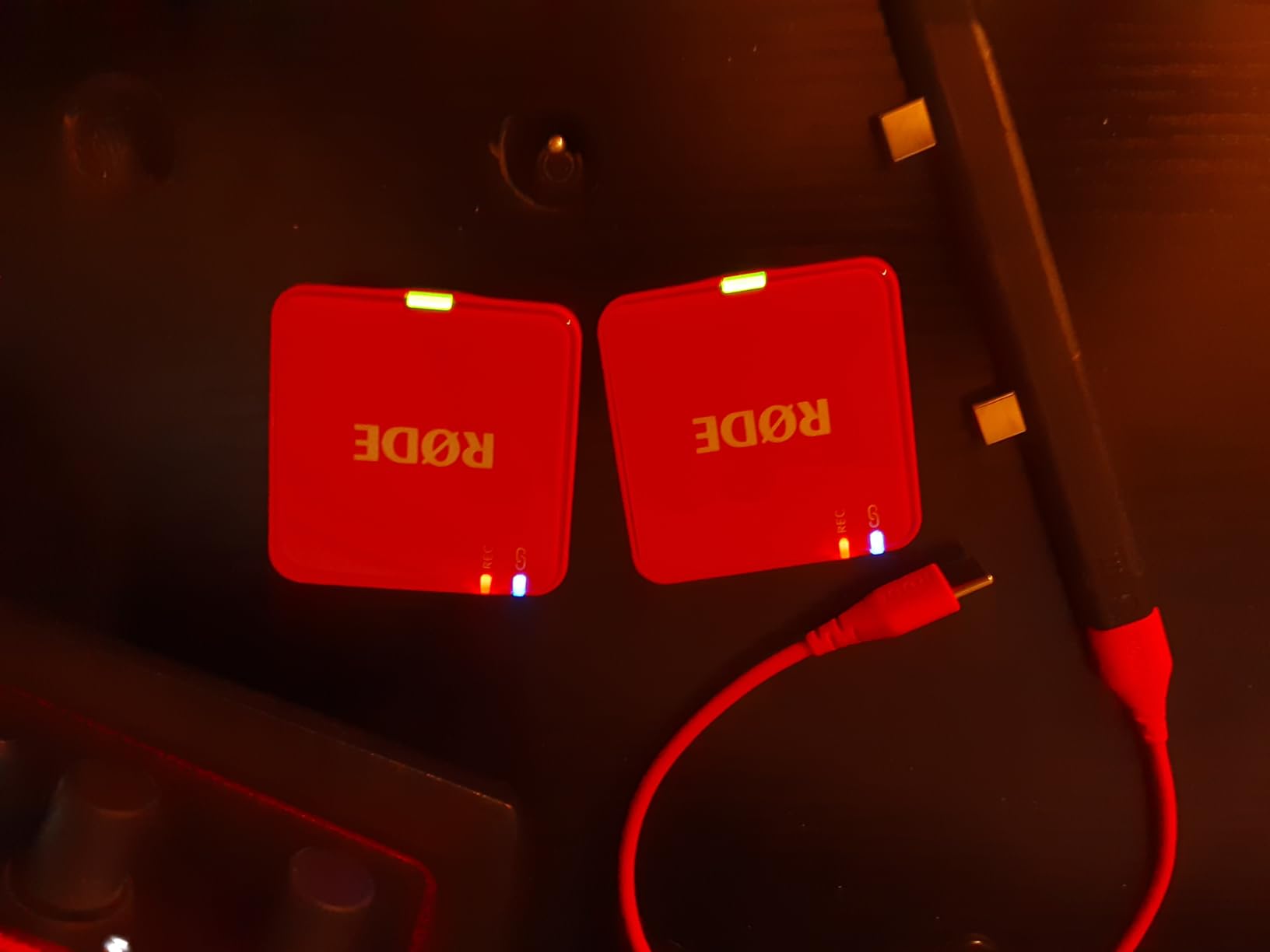
The headline feature here is duration. Over 40 hours of 32-bit float on-board recording across the transmitters means a full multi-day documentary shoot without anyone thinking about battery or storage. The safety channel means the camera feed can be recorded at a fixed level while a second, automatically levelled channel sits alongside it.
Transmission is Series IV 2.4 GHz digital with 128-bit encryption, rated to 260 m. Outputs cover locking 3.5 mm and USB-C, so the kit feeds cameras, phones and computers. Accessories are cross-compatible with the previous Wireless GO generation, including the interview handle and charging case, which softens the cost of stepping up.
Rated signal-to-noise ratio is 72 dB. The transmitters list as unidirectional, which helps when a subject turns away from the capsule and you want less room pickup.
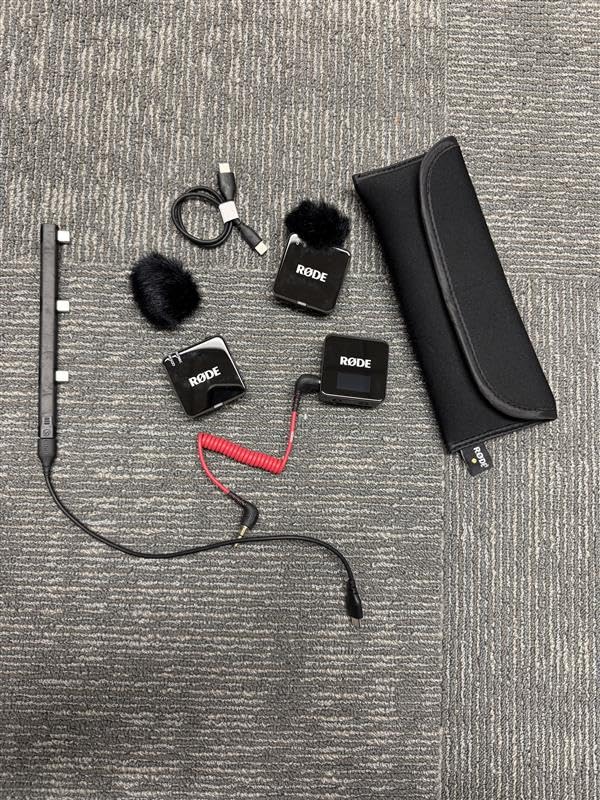
In practice owners report clean, professional audio needing very little post-production, multi-day battery on a single charge, and straightforward integration with Canon DSLRs. Some mention using the kit as a standalone recorder or as a USB audio interface for meetings and streaming.
What read-only onboard storage means for a shoot
The on-board files cannot be deleted from the unit itself. You need RØDE Central software on a computer, which is a mild inconvenience at the end of a long day. Combined with transfer speeds of roughly 5 MB per second, offloading a day of 32-bit float WAV files is a planning task rather than a quick copy.
Budget offloading time into your shoot day before you commit to this kit for a long-form project.
Where it falls short
There is no magnetic or Bluetooth connection, so every hookup needs a cable, and the transmitters have no integrated magnetic mount. Magnetic clips are sold separately.
Owners upgrading from the previous generation describe the audio change as subtle. The real gains are the cleaner design, faster charging dock and accessory compatibility, which is worth knowing if you already own the older kit.
7. RØDE Lavalier GO – Best Cabled Lavalier for Camera Work
Rode Lavalier GO Professional Wearable Microphone,Black
True 4.0 mm cabled capsule
Omnidirectional
1.2 m Kevlar cable
Standard 3.5 mm TRS
67 dB SNR
+ The Good
- Broadcast-grade 4.0 mm capsule in a discreet body
- Top-mounted capsule avoids muffling against fabric
- Omnidirectional pattern forgives placement
- 1.2 m Kevlar-reinforced cable
- Standard 3.5 mm TRS works with cameras and transmitters
- The Bad
- Only one foam pop shield and no furry windscreen
- Clip does not rotate so orientation cannot be adjusted
- 67 dB signal-to-noise ratio picks up room noise
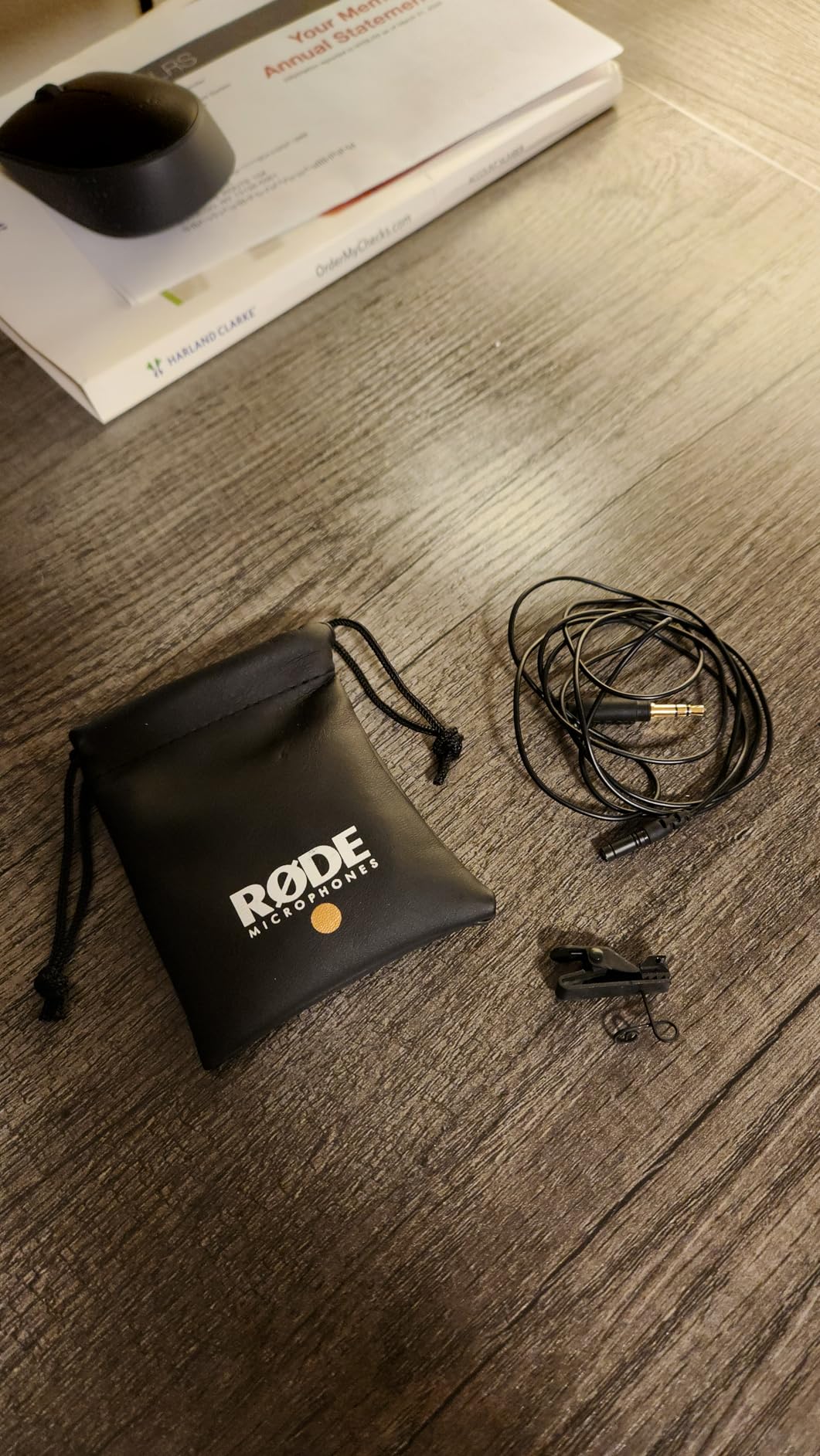
This is a true cabled lavalier rather than an all-in-one transmitter, and it works exactly the way the term implies. A sub-miniature 4.0 mm capsule sits on a 1.2 m Kevlar-reinforced cable and terminates in a standard 3.5 mm TRS plug. That plug goes into a camera, an audio interface, or a wireless transmitter with a 3.5 mm input.
Long-term owners treat it as a dependable broadcast workhorse. It runs straight into a DSLR with no preamp and adds almost no cable noise over long extensions, which is the failure that condemns cheaper wired mics. It is available in black and white, and the white version is a favourite when the subject wears light clothing.
Two design choices matter here. The capsule sits on top of the body rather than the face, so pressing it against fabric does not muffle the response. And the 360-degree clip includes in-built cable management, so the cable loops back along the placket instead of swinging into the capsule.
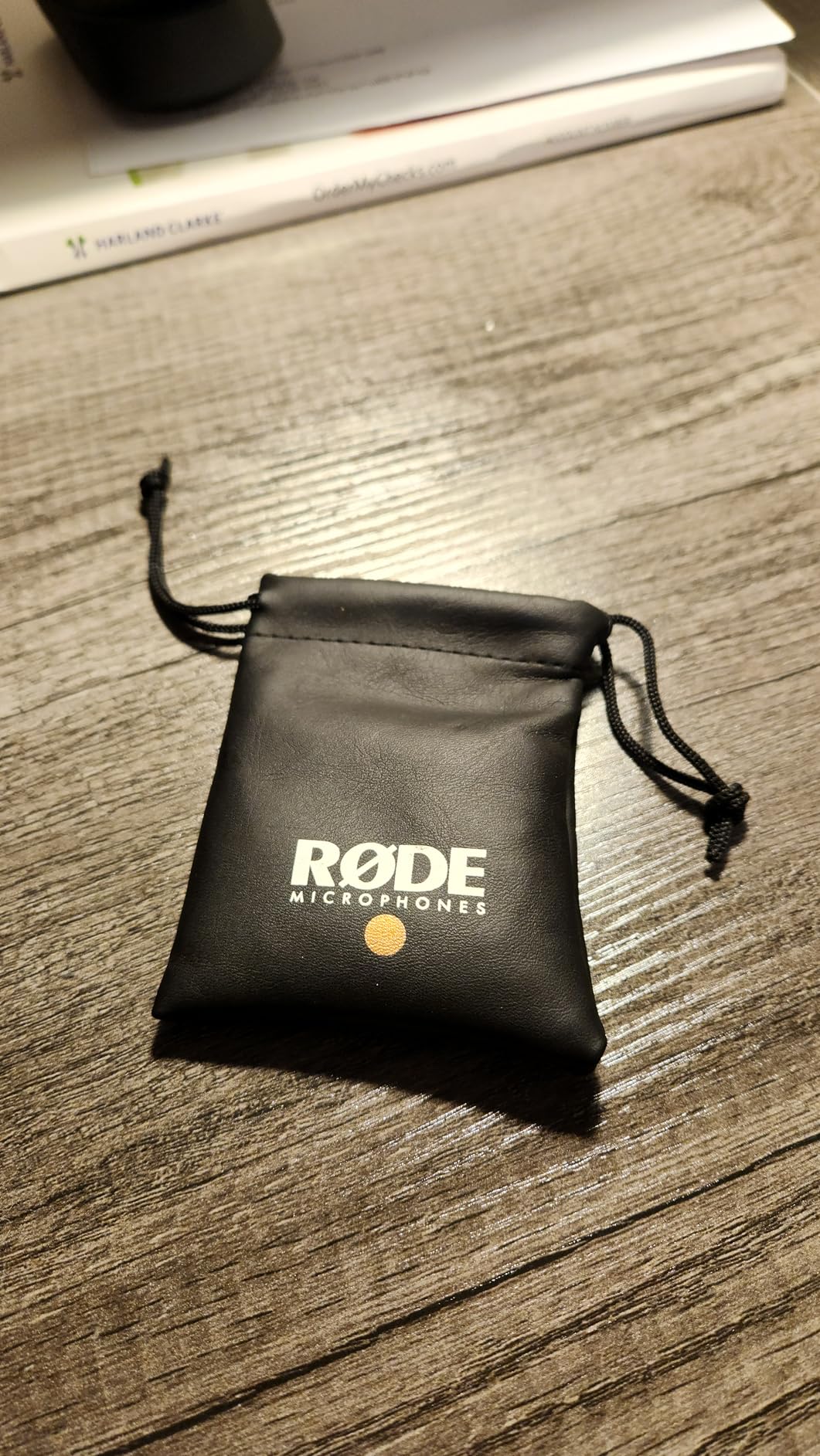
The omnidirectional pattern is forgiving about placement, which suits fast-moving interview setups where you are clipping the mic one-handed. A foam pop shield is included in the box with a pouch and the clip.
Where a cabled lav still beats wireless
A cable cannot drop out. There is no radio link to lose, no pairing to get wrong, and no battery to forget. For a sit-down interview with both subjects in a fixed frame, the wired route remains the most reliable option and the cheapest to keep running.
The Kevlar reinforcement is the part that matters over time. Cheap cables introduce hum and handling noise that no amount of editing removes.
Where it falls short
The 67 dB signal-to-noise ratio is the lowest among the wired options here, and owners report noticeable room pickup in untreated spaces. That complaint has a cause worth understanding: an omnidirectional capsule placed roughly 15 cm from the mouth will always hear whatever the room is doing.
Only one foam pop shield is included and there is no furry windscreen, so outdoor or windy work needs an accessory. The clip also does not rotate, so you cannot change the capsule orientation once it is mounted. Warranty is two years.
8. Hollyland LARK A2 – Best Mid-Tier All-Rounder
Hollyland LARK A2(2TX+1RX+Charging Case) Wireless Microphone, AI Auto-Limit
8.5 g per transmitter
48kHz/24-bit
68 dB SNR
200 m range
42 h total
+ The Good
- 48kHz/24-bit capture with 68 dB signal-to-noise ratio
- AI noise cancelling with three levels plus auto limiting
- Only 8.5 g per transmitter
- Up to 7 h per transmitter and 42 h with the case
- Can charge your phone while recording
- The Bad
- Occasional dropouts at longer distances or heavy interference
- Higher noise cancelling settings can sound unnatural
- USB-C receiver only so Lightning users need an adapter
The LARK A2 sits at the entry point of the kits here that still record 48kHz/24-bit, and it weighs 8.5 g per transmitter, the lightest of the hardware tested here. Signal-to-noise ratio is 68 dB and maximum sound pressure handling is 120 dB. Those are honest mid-tier numbers rather than flagship figures, and the audio reflects that cleanly.
Its most interesting feature is the safety track. AI auto limiting prevents clipping, and a parallel recording at minus 6 dB sits alongside it. If a subject shouts and the limiter engages, you still have the uncropped version to work from. Three levels of AI noise cancelling are selectable on the transmitter.
Battery life is up to 7 hours per transmitter, or 9 hours with AI power saving, and 42 hours with the charging case. A five-minute quick charge yields about an hour of recording. Transmission is rated to 200 m over 2.4 GHz.
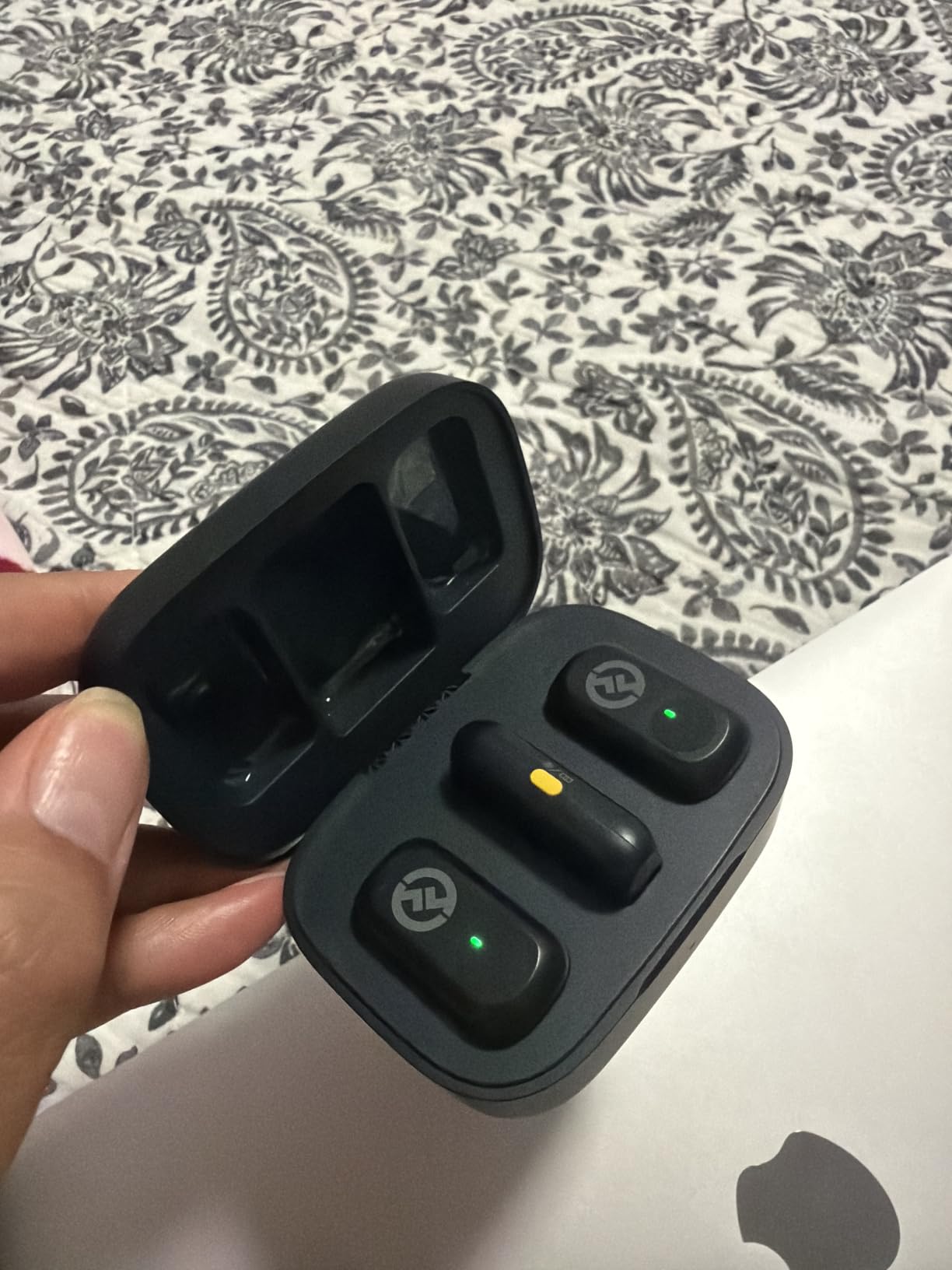
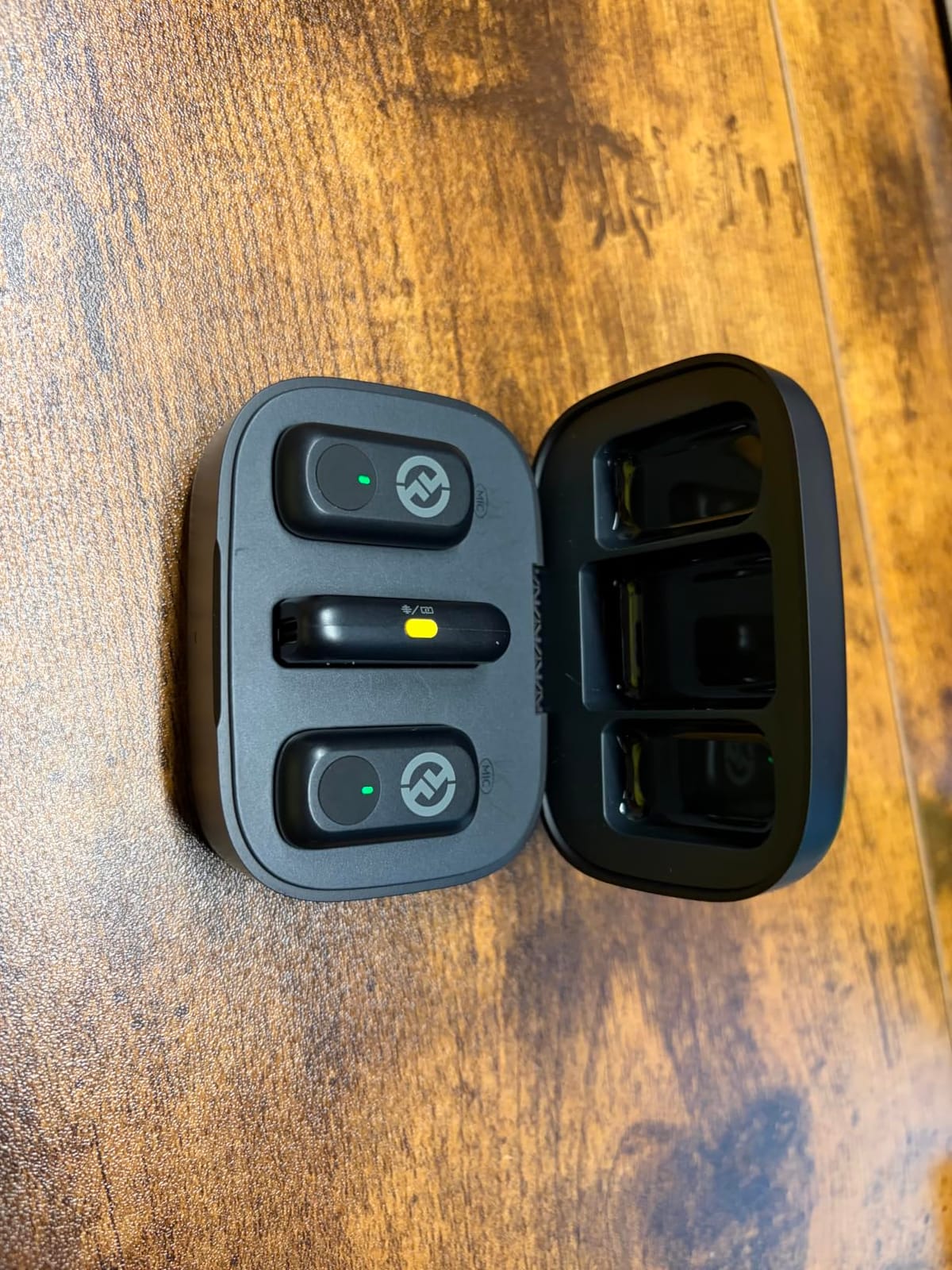
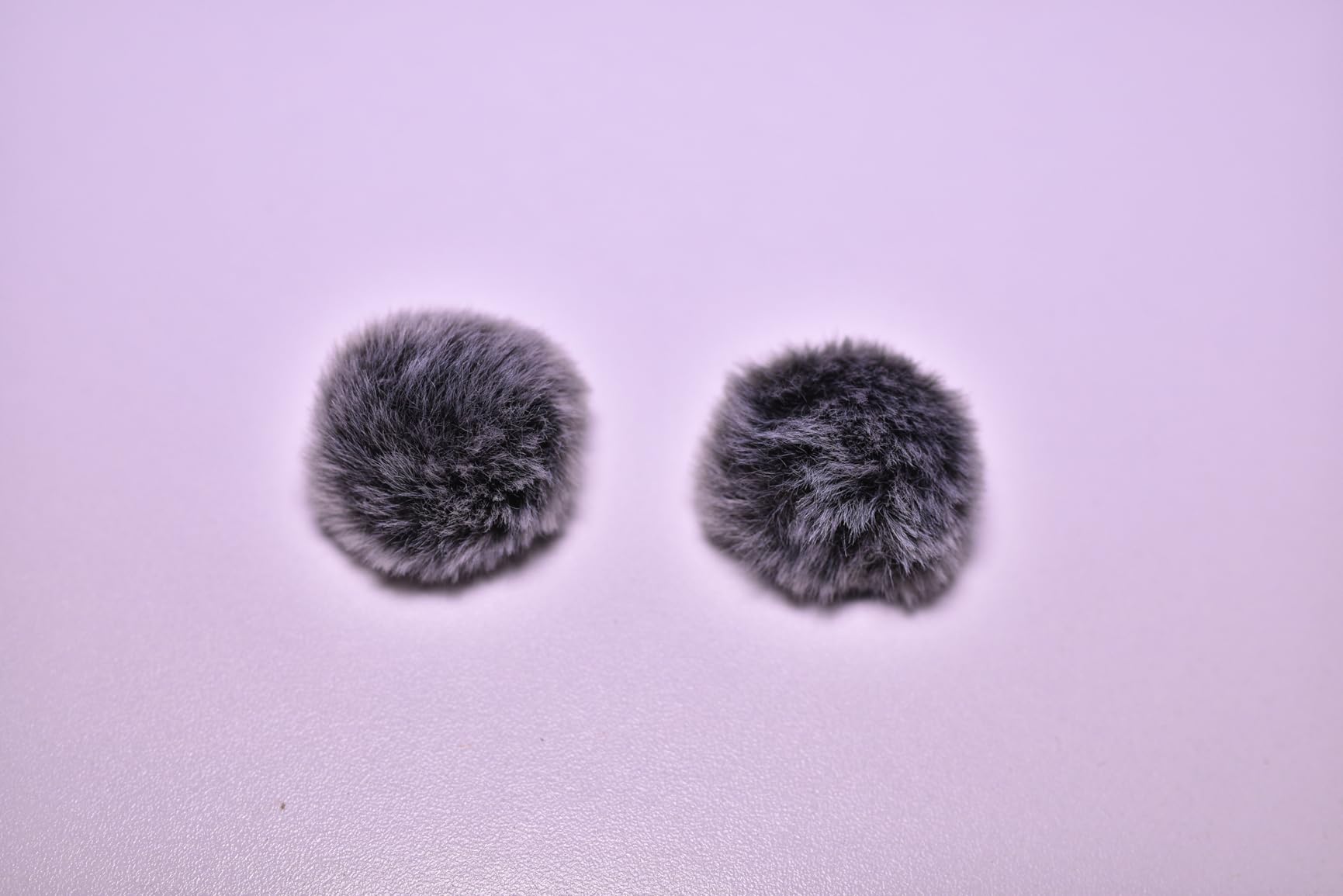
The USB-C receiver can charge your phone while recording, which solves a genuine problem on longer interviews. Transmitters are pre-paired, and tap controls cover noise cancelling with one tap, mute with two and record with three. Magnetic attachments hold firmly to clothing, and two furry windshields are in the box.
Where the budget tier shows
68 dB SNR is fine in a treated room and thin in a hard, reflective office. If your interviews happen in untreated spaces with glass and bare walls, spend up for a higher ratio or plan to record somewhere better.
More critical users report occasional dropouts outdoors or at distance, which is the standard line-of-sight limitation of any 2.4 GHz system. Higher noise cancelling settings can also push voices toward an unnatural tone, so start on low.
Why it still earns the mid-tier slot
For indoor interviews on a USB-C device, the combination of 24-bit capture, a safety track, a 42-hour case and 8.5 g transmitters is hard to argue with. The one-year warranty is the shortest here alongside the BY-V4U.
The HollyAudio app adds AI voice tuning for EQ, compression and de-essing, which is a genuine timesaver for someone who does not want to mix by hand.
9. NEEWER CM28 – Best for Flexible Export Modes
NEEWER CM28 Wireless Lavalier Microphone, Smart Noise Cancelling Lav Mic, 48KHz/16Bit 9hrs Uncompressed Recording, 200m Range, 4GB Storage for iPhone, Android, Camera, 1 RX + 2 TX + Charging Case
Two transmitters record on board
9 h of 48 kHz WAV
Three export modes
200 m range
LCD display
+ The Good
- Transmitters double as standalone recorders with 4 GB each
- Three export modes of Mono Stereo and Ms.
- One-tap dB gain with an LCD status display
- One-click noise cancelling
- Works with phones tablets laptops and DSLRs
- The Bad
- 16-bit capture is below the 24-bit standard of most rivals
- Transmitter storage is fixed at 4 GB each
- Transmission range drops off with obstacles
The CM28 solves a problem most kits in this roundup ignore: what happens when the wireless link fails mid-interview. Each transmitter doubles as an independent recorder with 4 GB of internal storage, capturing up to 9 hours of uncompressed 48 kHz WAV audio. You walk away from the take with both the receiver file and two standalone files.
It also gives you three export modes. Mono, Stereo and Ms. give you flexibility in post that most dual kits do not, and the LCD on each unit shows mode, volume, battery, connection status and noise reduction status at a glance, with one-tap dB gain adjustment.
The kit includes two transmitters, one receiver, a charging case, two windshields and magnetic mounts. The receiver package covers USB-C OTG, a data cable and a camera audio cable, so phones, tablets, MacBooks, PCs and DSLRs are all handled. Transmission is rated to 200 m in unobstructed areas, with one-click noise cancelling.
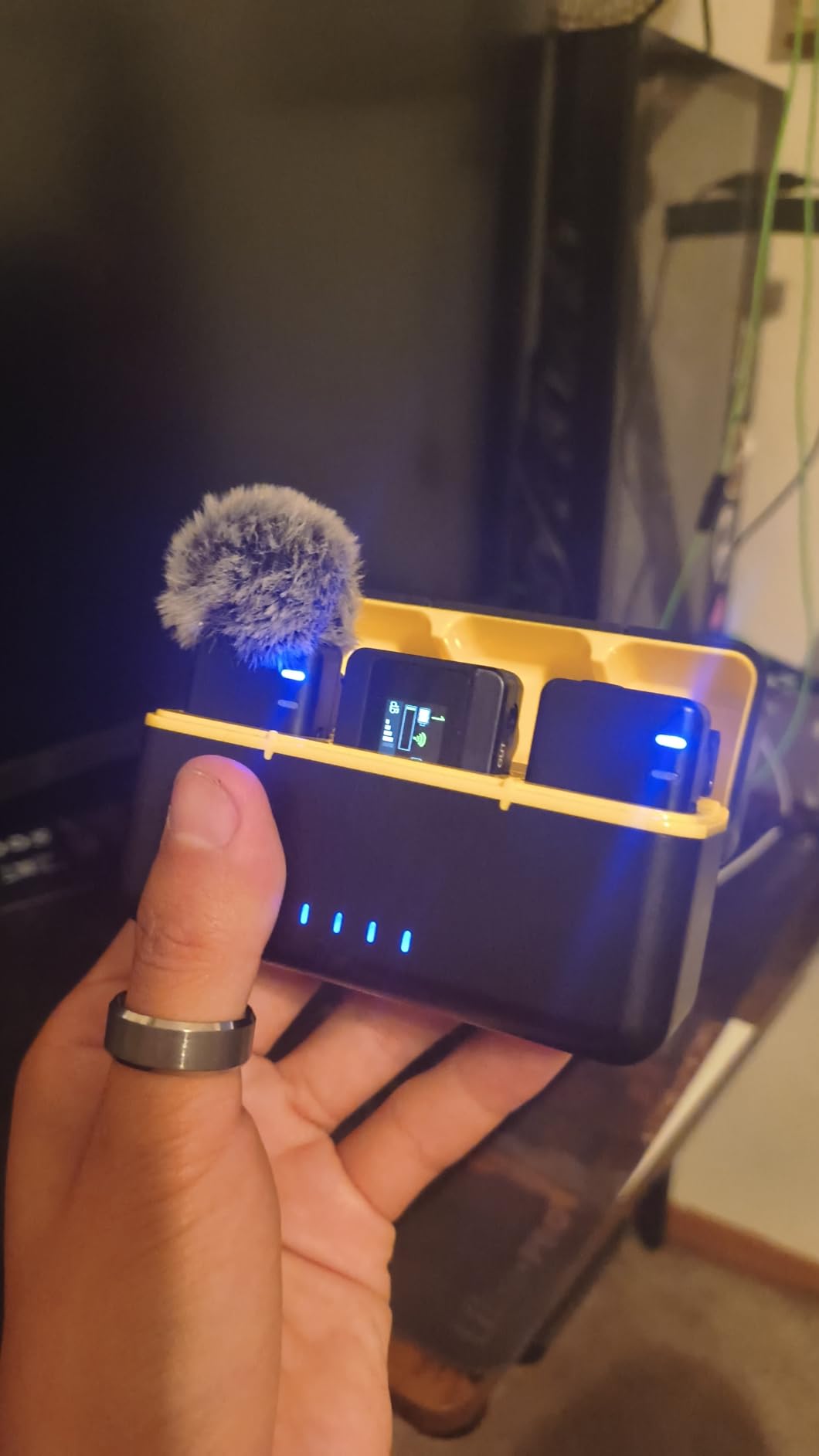
Rated signal-to-noise ratio is 80 dB, which puts it level with the four-transmitter BY-V4U and comfortably above the entry wired sets. The listed polar pattern is unidirectional, which reduces room pickup when a subject turns away.
When a second recorder matters
On-location interviews, corporate sessions, and any shoot where the subject cannot be rebooked. Two independent recordings mean a radio dropout is an edit problem rather than a lost conversation. Forum discussions about multi-recorder syncing point at the same anxiety, and this kit sidesteps it.
The LCD is the feature owners mention most often as unexpectedly useful, because it confirms at a glance that the mode is right before you start rather than after.
Where it falls short
The 16-bit capture is below the 24-bit standard of most current competing kits. For interview dialogue the practical difference is small, but it is a real gap in headroom for post-production.
Storage is fixed at 4 GB per transmitter and cannot be expanded. Expect that to fill well before the stated 9 hours in high-quality settings on some configurations, so check the recording time before a long session.
10. Mini Mic Pro – Best for First-Time Interviewers
Mini Mic Pro (Latest Model – #1 Microphone for iPhone & Android, Wireless Mini Microphone, Clear Voice, Noise Cancelling, Lavalier Mic for TikTok, YouTube & Interviews
Two transmitters included
USB-C and Lightning adapters
No app required
Under one ounce per piece
6 h battery
+ The Good
- Fast app-free setup connected in under a minute
- Clear voice that measures better than a built-in phone mic
- Two transmitters so you always have a second
- Foam and deadcat wind protection included
- Under an ounce per piece
- Device charges while the mic is in use
- The Bad
- Compressed wireless signal sounds thin with little low end
- Receiver housing is fragile
- Battery indicator is easy to miss mid-take
- Can over-modulate when a speaker gets loud
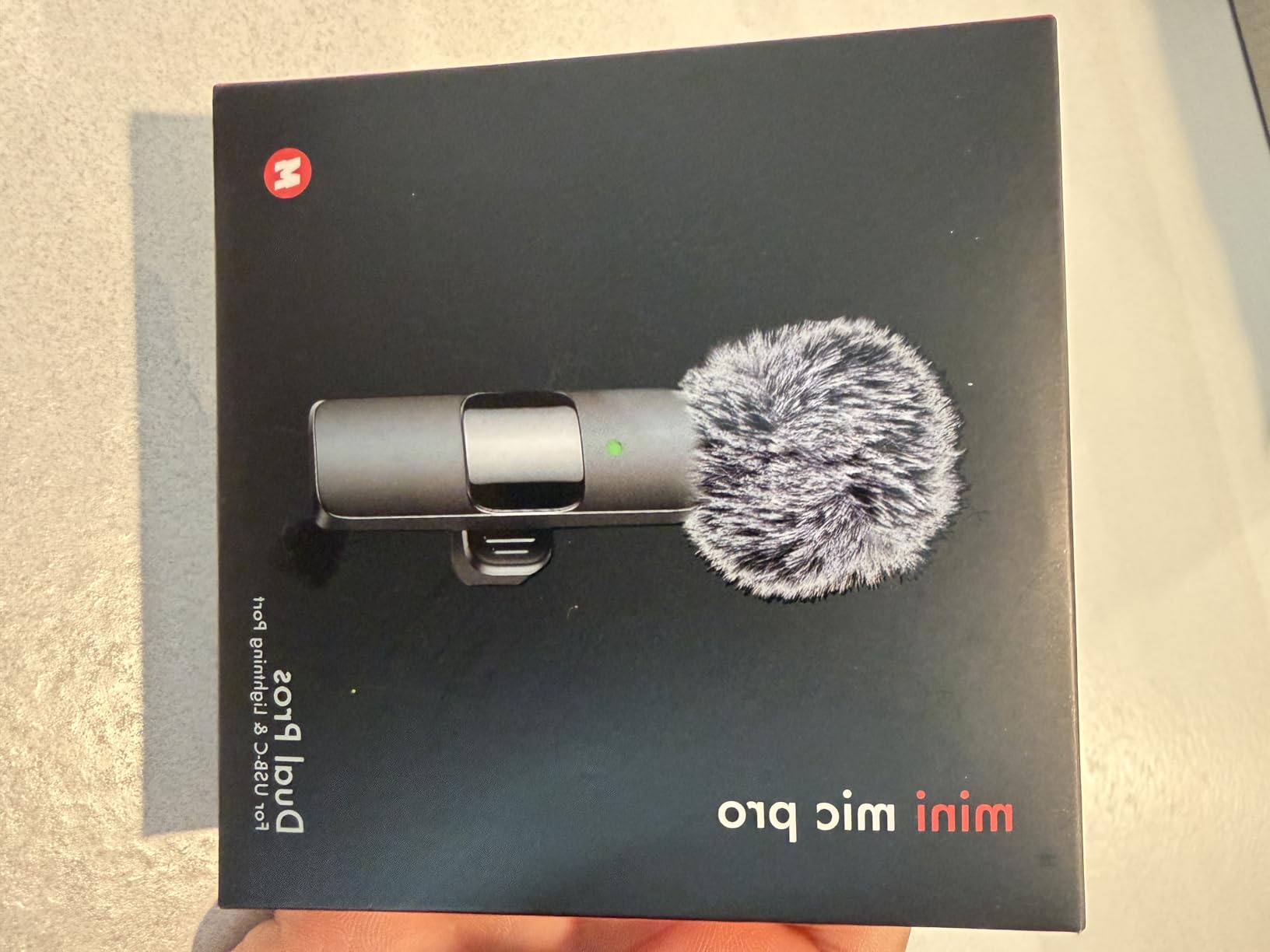
For someone running their first interview on a phone, this kit removes every decision. Two transmitters, one receiver, USB-C and Lightning adapters, and no app or Bluetooth pairing. Owners report being connected in under a minute, which is the whole selling point at this level.
Voice capture measures clearly better than a built-in phone microphone, and the kit includes both high-density foam and deadcat wind tips, which is unusual at this tier. Each piece weighs under an ounce and the device can charge while the mic is in use. Battery life is up to 6 hours per charge.
The two transmitters mean you always have a second person covered, so a one-on-one interview does not require a second purchase later.
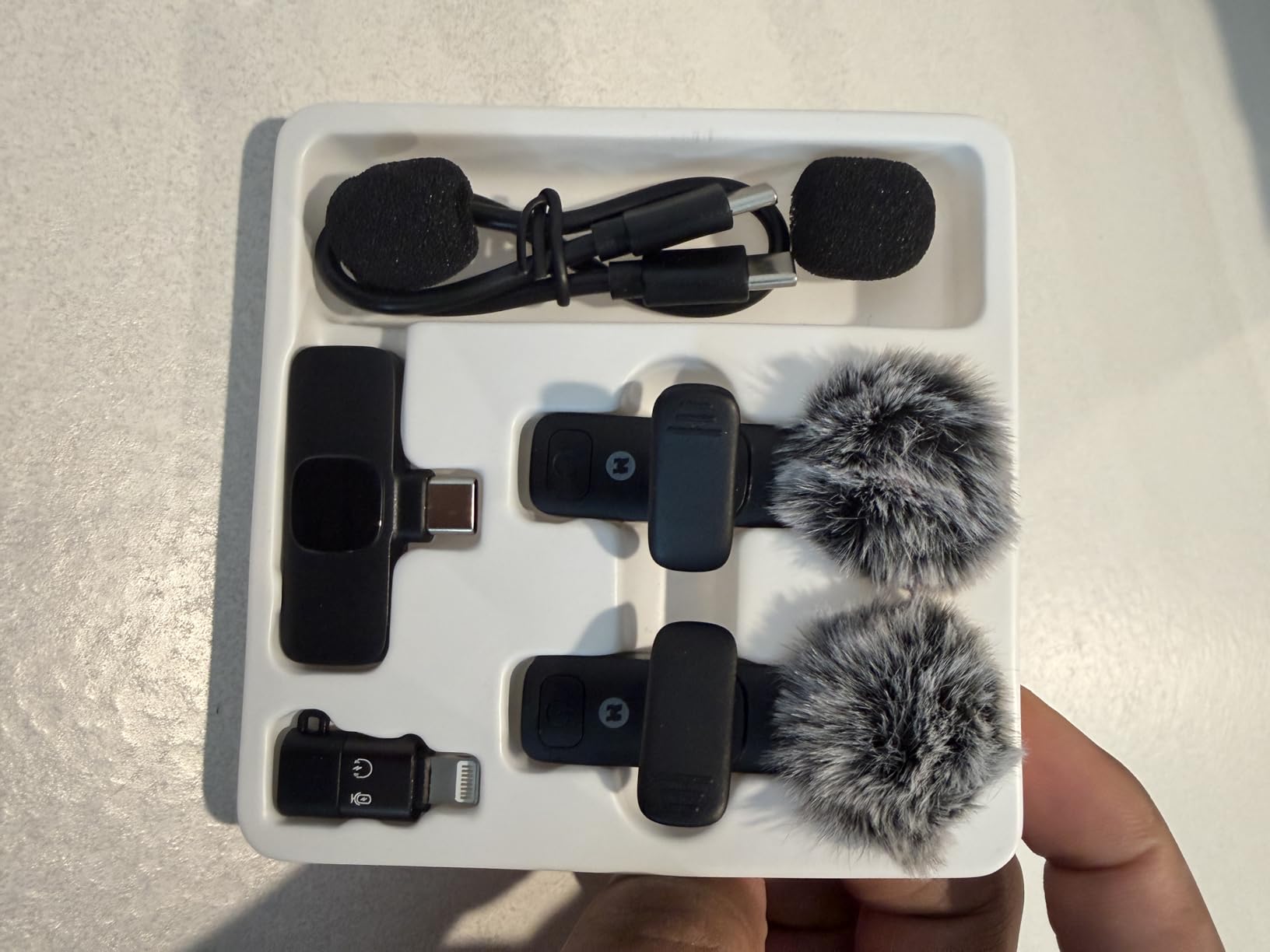
Reported signal-to-noise ratios on cheap wireless kits are frequently inflated, and audio professionals comparing this to wired earbuds describe the compressed wireless signal as thin with little low-frequency response. That is the honest trade for the convenience.
Where the low price shows up in the audio
The compression is the main limitation. Voice stays intelligible and clear, but a voice with real depth or a quiet room will not sound like the higher-tier kits in this roundup. The 4.3 average across 9407 reviews reflects that split, with beginners rating ease of use highly and experienced recordists rating the audio quality lower.
It can still over-modulate when a speaker becomes loud, so keep gain conservative.
Who should buy it
Someone doing short interviews, social clips, and online teaching where the microphone has to be attached in under a minute and the budget is genuinely small. The fragile receiver housing is the main durability complaint, and the battery indicator is easy to miss mid-take.
If you already record regularly, spend up. The audio ceiling is real and there is no way to edit around it.
11. PowerDeWise Dual Lavalier Set – Best Budget Dual Wired Setup
PowerDeWise Dual Lavalier Microphone Set for iPhone, Android & Camera – Professional Clip-On Lapel Microphones for Interviews, Podcasting, YouTube, Video Recording, Vlogging & Online Teaching
Two cabled microphones
3.5 mm jack
No batteries
75 dB signal-to-noise ratio
Cables and adapter included
+ The Good
- Records two speakers at once with balanced clear sound
- No batteries no charging and no apps
- Kit includes extension cables a TRS adapter foam windscreens and a pouch
- 75 dB signal-to-noise ratio
- Alligator clips hold firmly to clothing
- The Bad
- Picks up hum when cables run near monitors or lights
- Some users report hollow audio with hiss when boosting
- Included adapter does not reliably feed every mixer or recorder
- Y-cable is mono on both legs
This is the most direct route to two-person interview audio with nothing wireless about it. Two cabled lavalier microphones with a 3.5 mm jack, no batteries, no charging and no apps. You plug in and record. Signal-to-noise ratio is listed at 75 dB across a 20 Hz to 20 kHz range, which sits alongside the wired sets here and above the compressed wireless kits.
Forum consensus repeatedly treats a wired lav as sufficient for indoor dialogue and treats wireless as a convenience upgrade rather than a quality upgrade. This kit is the most direct way to act on that. Nothing to pair, nothing to charge, and nothing to drop out mid-answer.
The box includes two extension cables, a TRS adapter, two foam windscreens and a carrying pouch. Owners describe the tone as clear and slightly muted with good low end and little sibilance, and the alligator clips hold firmly to clothing. A one-year warranty is included.
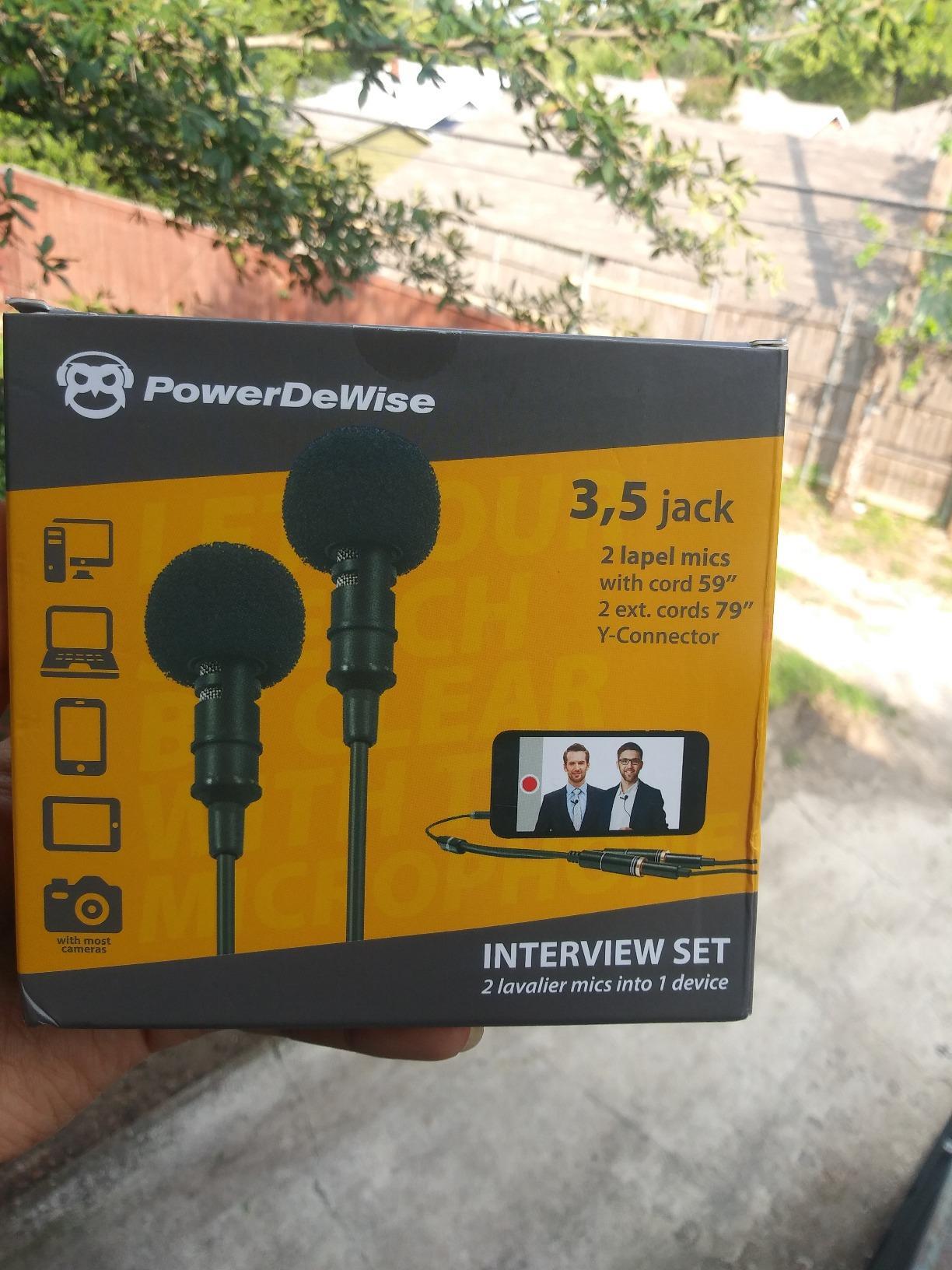
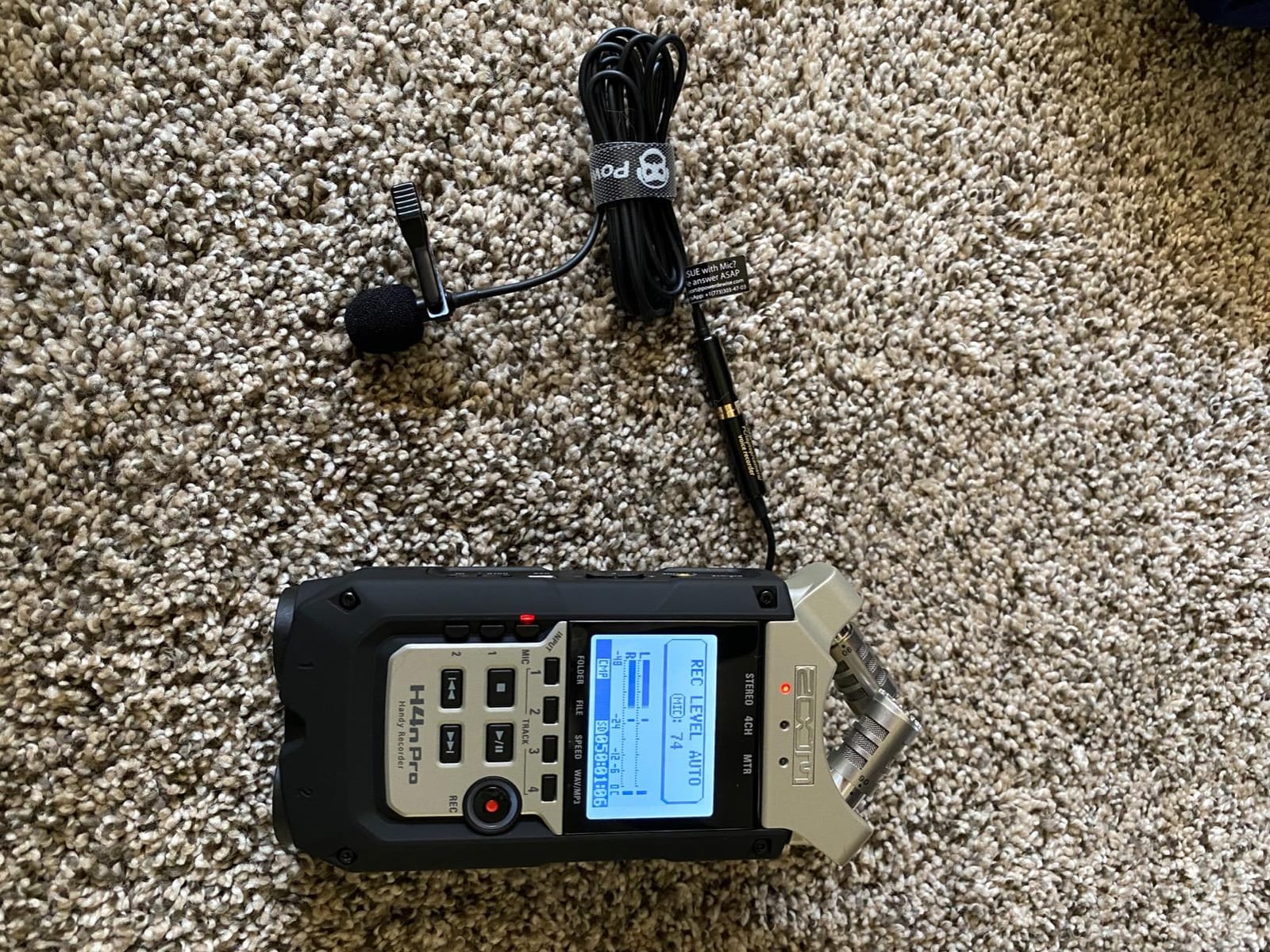
Placement is straightforward: clip one mic to the interviewer, one to the guest, run each cable to a dual-input recorder or mixer, and set separate gains. The two channels land separately, which is exactly what you want for an edit.
Why gain matching matters with two mics
Two channels are only useful if you can level them to match. A 6 dB difference between interviewer and guest means constant gain riding in post, and a large difference makes automatic levelling pump. When two speakers use two different models, the same problem appears with a timbre mismatch on top.
The simplest fix is to buy two of the same model. Where that is not possible, set both gains to the same target and judge by headphone monitoring rather than by the meters alone.
Where it falls short
The recurring technical issue is hum and interference when cables run near monitors, lights or powered equipment. Route cables away from mains and computers and the problem disappears. Some users also report hollow audio with hiss when boosting a quiet signal.
The included adapter does not reliably feed every mixer or recorder, and the supplied Y-cable is mono on both legs, so each mic needs its own input. That is a real limitation if you expected one cable into one input.
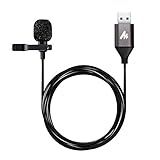
12. MAONO UL10 – Best for Computer-Based Interviews
MAONO UL10 USB Lavalier Microphone, 192kHz/24bit for Interview and Vlogging
USB plug for computers
192kHz/24-bit
Metal clip and housing
78 inch cable
78 dB SNR
+ The Good
- High 192kHz/24-bit sampling with a sensitive pickup head
- Metal clip and housing feel durable
- Plugs into Windows Mac and Linux computers with no driver setup
- Light and small enough to clip unnoticed
- 78 inch cable gives plenty of reach for seated interviews
- The Bad
- USB only so it cannot plug into a phone camera or interface
- Fixed 78 inch cable cannot be shortened or removed
- Omnidirectional so it also picks up room noise and keyboards
The UL10 is for interviews that happen on a computer, and nothing else. A USB plug goes straight into a Windows PC, a Mac, a laptop or any USB 2.0 device, and there is no driver setup. It appears in meeting recording, dictation, webinar capture and classroom use for exactly that reason.
Sample rate is listed at 192kHz/24-bit with a sensitive pickup head, and signal-to-noise ratio is 78 dB. Those are strong figures for a wired USB mic, and the metal clip and housing feel noticeably more durable than the plastic alternatives.
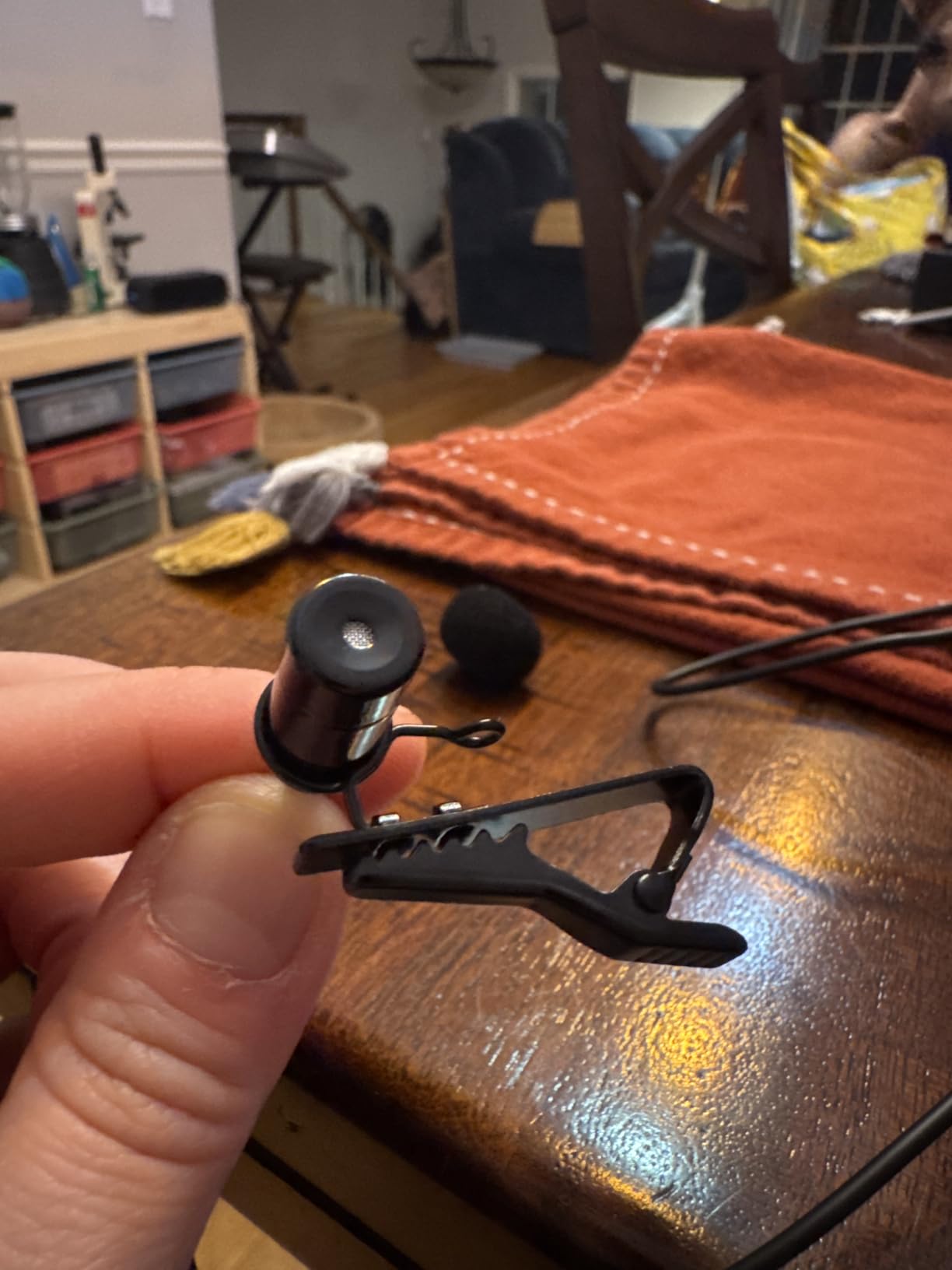
The 78 inch cable gives plenty of reach for seated interviews, and the clip is small enough to sit on a collar, tie or pocket without drawing attention. A foam windscreen and aluminium clip are in the box.
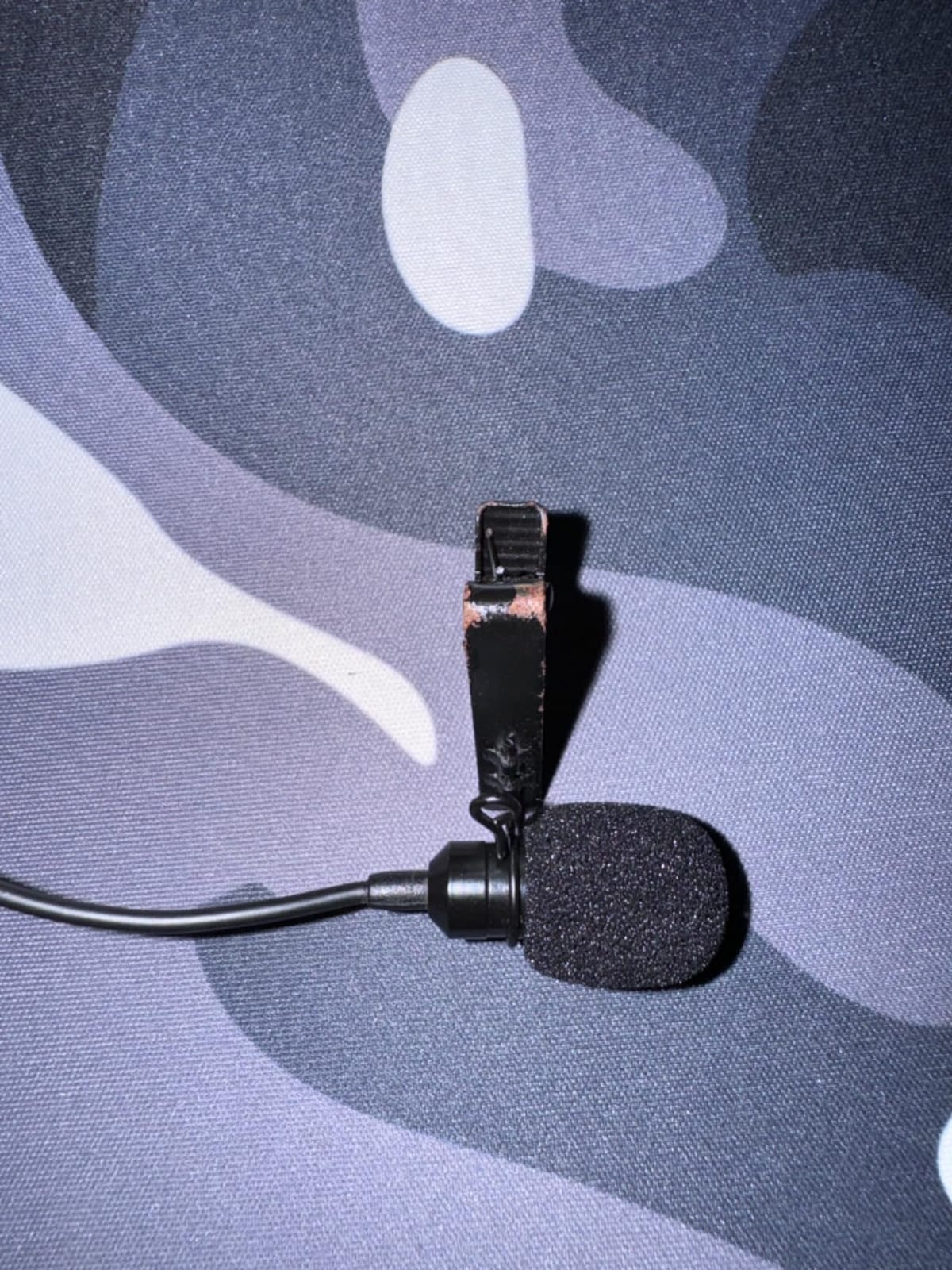
Buyers report clear, sensitive voice and a solid build for the money. It is one of the few picks here that has no battery, no radio and no app, which also makes it the least likely to fail on a busy day.
When a computer-only mic is the right answer
Remote interviews, screen-recorded walkthroughs, webinar Q and A, lecture capture and dictation. Anywhere the audio needs to land in a computer application rather than on a camera or a phone, the USB plug is simpler than any adapter chain.
If your interviews also need to be shot on video, our guide to dynamic microphones covers voice-first setups where room tone matters more than sample rate.
Where it falls short
USB connection only. It cannot plug into a phone, a camera or an audio interface, so it is the wrong pick the moment your recording moves off the computer. The fixed cable cannot be shortened or removed, which some buyers find cumbersome.
The omnidirectional pattern also picks up room noise, keyboard sounds and desk movement, so a treated or quiet room matters more with this mic than with a cardioid one.
How to Choose a Lavalier Mic for Interviews
Start with the connector, not the brand. A lavalier microphone that cannot plug into your recording device is worthless regardless of how it sounds. Count the rings on the plug: a 3.5 mm TRS plug has two black insulating rings, and a TRRS plug has three. TRS is the standard for cameras and recorders. TRRS is the phone and headset standard. USB-C and Lightning adapters are their own ecosystem entirely.
Next, count your speakers. Two people need two microphones, and one mic cannot serve two people at different distances without the quieter voice sitting far below the louder one. Three or four people need a kit with matching transmitter count, which is the situation the BOYA BY-V4U exists for.
Polar pattern is the next filter. Omnidirectional capsules hear the room as well as the voice, which makes placement forgiving and is the right default for an interview. Cardioid and unidirectional capsules reject more of the room and suit harder spaces or subjects who turn away from the mic, at the cost of being far less forgiving if the capsule points the wrong way.
Then look at the signal-to-noise ratio, which is the number that predicts how much room noise sits under the voice. Anything around 70 dB or above handles a normal room. In a hard, reflective office with glass and bare walls, look higher and treat the room as well as buy a better mic.
Finally, ask whether a retake is possible. If it is not, on-board or backup recording stops being a nice feature and becomes the deciding one, which is why 32-bit float systems rank where they do in this roundup. Our ribbon microphone guide covers the opposite end of the sensitivity scale if your room noise is a bigger problem than your mic.
Wired vs Wireless for Interviewing
Wireless is a convenience upgrade, not a quality upgrade. Forum consensus treats it that way consistently, and the spec data supports the claim: the wired RØDE Lavalier GO and the PowerDeWise dual set both sit within range of the wireless kits on signal-to-noise ratio.
Choose wired when both speakers sit still, the camera is locked off, and the shot is short. You get zero risk of dropout, zero pairing steps and zero batteries. Choose wireless when subjects move, walk with the camera, or step out of frame, because a cable becomes a trip hazard and a visual problem long before it becomes an audio one.
The honest tradeoff is file management. Wireless kits with two transmitters feeding one receiver give you a single aligned file with no syncing step. Two separate wired mics on two separate recorders give you two files that must be aligned in post, which is where the forum syncing headaches come from.
Line of sight is the number one failure mode for wireless. It is not about distance; it is about people standing between the transmitter and the receiver, or the subject turning their back. Keep the receiver visible to the transmitters or accept occasional dropouts.
Three Interview Setup Workflows That Actually Work
Workflow one: dual wireless into a camera or phone. Two transmitters on interviewer and guest, one receiver into the camera’s 3.5 mm jack or the phone’s USB-C port. This is the most common setup on video and the one with the least post-production burden, because both voices land on one aligned file. This is where the DJI Mic Mini, the LARK M2 and the LARK A2 all fit.
Workflow two: two wired lavaliers into a dual-input recorder. One cabled lav per speaker, each into a separate input on a handheld recorder or mixer, with a separate headphone mix for the interviewer. This is the most reliable workflow and the easiest to monitor, because the interviewer hears both voices in real time. It is the reason dedicated recorders still appear in serious interview work.
Workflow three: one lav into a phone through an adapter. One lav into a smartphone through the correct USB-C or Lightning adapter. Fine for a single-voiced interview, a tutorial or a walkthrough. For two speakers on one phone you need either a dual transmitter kit or a splitter cable, and it is worth spending the extra effort to avoid fighting with it on the day.
Whichever workflow you choose, buy two of the same model. Mixing mic models across interviewer and guest gives you mismatched timbre and level, and matching the hardware is cheaper than fixing it in post.
Mic Placement and Interview Setup Tips
Clip at the sternum, not the collar edge. Sternum-level placement sits roughly 15 cm from the mouth and stays consistent as the subject turns their head. A mic clipped at the edge of a collar points away from the mouth half the time.
Leave a slack loop in the cable and tuck it so movement does not tug the capsule. For wired setups, run the loop down the placket and secure it low. Tugging is what creates the handling noise that reviewers most often complain about on wired kits.
Run a five-step check before every take. Confirm the clip is not muffled against fabric. Ask the subject to turn their head from side to side and listen for level changes. Rub the clothing gently near the mic and listen for rustle. Check the cable path for strain. Then monitor on headphones at the level the interviewer will hear.
Use foam indoors for plosives and a furry windscreen outdoors for wind. Many noise-cancelling kits sound better with no windscreen at all, because a foam layer sitting over a processed signal dulls the top end. Match the protection to the environment.
Troubleshooting Common Interview Mic Problems
Clothing rustle on every take. The capsule is pressed against fabric or the cable is under tension. Reposition at the sternum, add a slack loop and test with a clothing rub before rolling.
Room echo or reverb in the recording. An omnidirectional capsule in a reflective room. Move the interview to a treated space, get closer to the subject, or choose a cardioid or unidirectional capsule.
Humming or electrical interference. Wired cables running near monitors, lights or computers. Re-route cables away from mains and powered equipment, and keep both mic cables away from each other.
Wireless dropout mid-answer. Something blocked line of sight, or the subject turned their back on the receiver. Reposition the receiver or shorten the distance, and never record an unrepeatable take without on-board backup.
Audio is too quiet or too loud. Gain is wrong. Set it with the subject speaking normally and leave headroom of roughly 6 dB for peaks, or switch on auto levelling if the mic offers it.
Muffled or thin audio. The capsule is covered by fabric, a scarf, or a windscreen that does not fit it. Check placement before you change equipment.
When Not to Use a Lavalier Mic for Interviews
For a wide shot with three or more people in a noisy space, a lavalier on each person is expensive and a shotgun on a stand is more practical. The 3 to 1 rule is a room-mixing guideline about letting room character sit well below the direct source, and it does not apply to interviews at all, because you are mic’ing each speaker individually at close range.
A lav is also the wrong choice for musical performance, for a subject who moves constantly across a large area without transmitters, and for heavy wind where no windscreen will save the recording. In those cases move to a shotgun or boom, or change the location.
The shotgun versus lav question comes up constantly in audio forums, and the answer depends on the shot. A shotgun on a stand covers a fixed, seated, single-camera interview from a distance for less hardware. Wireless lavs win whenever two people are speaking, whenever the camera moves, and whenever anyone walks out of frame. A lav also keeps the microphone out of the guest’s hand, which most guests find less intimidating and which produces more natural answers.
For purely indoor, seated, single-camera dialogue, a pencil-style condenser can sound better and cost less than a wireless kit. Forum discussion leans that way for indie filmmakers, and it is a fair point: if nothing moves and the room is quiet, the placement discipline matters more than the microphone model.
Frequently Asked Questions
What is the best microphone for an interview?
A lavalier microphone clipped to each speaker is the standard choice for interviews, because it sits roughly 15 cm from the mouth and captures voice without dominating the frame. A boom or shotgun microphone is the main alternative for wide shots and groups. The best lavalier microphones for interviews fall into three tiers: budget wired mics for a phone or camera, mid-tier wireless dual kits for two people on video, and professional systems with 32-bit float backup recording when a retake is not possible.
What is the best microphone for interviewing people?
The best microphone for interviewing people is one that guests barely notice, since a lav clipped at the sternum is less intimidating than a handheld and produces noticeably more natural answers. For two speakers, use two microphones so each voice sits at a matched level. Wired sets are sufficient for seated indoor dialogue, while wireless kits earn their place when subjects move or step out of frame.
What mics do interviewers use?
Interviewers use one of three real configurations. The most common is dual-transmitter wireless clip-ons, with a transmitter on each speaker and one receiver feeding the camera or phone. The second is two wired lavaliers running into a dual-input handheld recorder or mixer, which gives the interviewer headphone monitoring and cannot drop out. The third is a shotgun on a stand for a single fixed-camera interview with seated subjects.
What is the 3 to 1 rule for microphones?
The 3 to 1 rule is a general room-mixing guideline stating that the direct sound of a source should be about three times louder than the ambient room sound behind it, so the room sits roughly 3 dB below the source. It does not apply to interviews, because you mic each speaker individually at close range rather than picking up a whole room with one microphone.
Do I need two lavalier mics for an interview?
Yes, for any interview with two speakers. One microphone cannot serve two people sitting at different distances, so the quieter voice ends up far below the louder one and automatic levelling ends up pumping. Matching two of the same model also keeps the timbre consistent, which makes the edit far easier than mixing two different microphones.
What is the difference between TRS and TRRS lavalier mics?
A 3.5 mm TRS plug has two insulating rings and is the standard for cameras, recorders and wireless transmitters. A TRRS plug has three rings and carries a microphone signal plus headphone output, which is what phones use. Count the rings on your existing cable to identify it. A TRS lavalier will not feed a phone without an adapter, and the adapter itself does not solve a connector mismatch.
Conclusion
The best lavalier microphones for interviews depend less on fidelity than on fit. If you are recording two people on video and want the least friction, the DJI Mic Mini is the pick, because 10 g transmitters and USB-C plug-and-play remove the two problems that spoil most first attempts: uncomfortable hardware and connector confusion. If you need one kit to cover phones, cameras and computers, the Hollyland LARK M2 includes every receiver you are likely to need.
When a retake is impossible, move up to backup recording. The DJI Mic 2 and the RØDE Wireless GO Gen 3 both record independently on their transmitters, and the NEEWER CM28 adds a second standalone recorder per transmitter. For a fixed seated shoot, a wired set such as the PowerDeWise dual or the RØDE Lavalier GO remains the most reliable and needs no charging at all.
Whatever you choose, check the connector first, buy two of the same model, clip at the sternum, and listen on headphones before you roll. Our guides to condenser microphones and USB microphones cover the desk-based setups if your interviews stay in one room.