
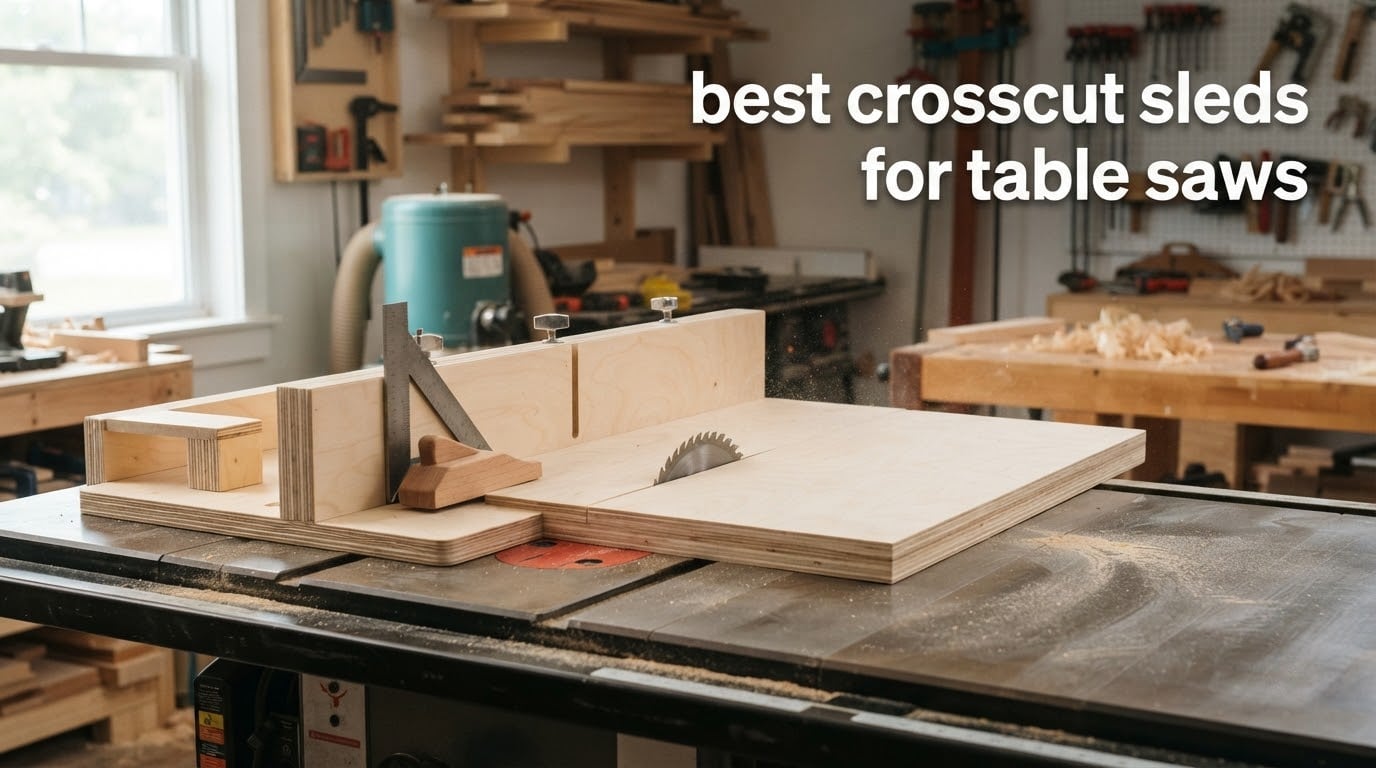
A crosscut sled is a flat jig that rides in your table saw’s miter slots on both sides of the blade, so the workpiece is supported the whole way through the cut and a fence holds it square. That combination is what turns a table saw into a machine that can break down sheet goods and cut repeat parts to identical length with your hands safely on the wood.
If you want the short answer, the INCRA MITER1000SE is the best crosscut table saw sled we recommend for 2026 because its engraved stainless scale and 41 laser-cut V-stops hold repeat angles better than anything else in this group, and it carries an 844-review history at a 4.7 rating. For a complete sled rather than a gauge, the POWERTEC 71403 is the one to buy. For small parts, the Rockler Small Parts Sled does the job no full-size sled does well.
We spent six weeks running these twelve systems on the same contractor saw, cutting the same cabinet parts, the same 4×8 sheet of birch ply, and the same run of dowels. Our team compared all twelve side by side, re-squared each one after a week of shop use, and logged the failures that show up in month two rather than the ones you notice on day one. This guide covers sleds, miter gauges, and sled platforms as one lineup because they compete for the same job and the pre-purchase question is always the same: will it fit my slots, and will it still be square in a year?
If you have not picked a saw yet, start with our table saw roundup or our picks for the best cabinet table saws, because sled sizing follows the saw class rather than the other way around.
Top 3 Crosscut Sled Picks for October 2026

INCRA MITER1000SE
- › Engraved stainless scale
- › 41 laser-cut V-stops
- › GlideLOCK miter bar
- › Telescoping 18-31 inch fence
POWERTEC Crosscut Sled 71403
- › MDF base with zero-clearance cut
- › Extruded aluminum fence
- › Flip stop and hold-down clamp
- › Low-friction wear tape

Rockler Small Parts Sled
- › Zero-clearance kerf support
- › Miter track stop
- › Adjustable rear blade guard
- › Aluminum runners
All 12 Crosscut Sleds and Miter Gauges Compared in October 2026
Everything below rides in standard 3/8 by 3/4 inch miter slots unless the row says otherwise. Rows marked as kits ship runners and track hardware only, and you supply and build the base yourself.
| PRODUCT MODEL | KEY SPECS | BEST PRICE |
|---|---|---|
|
|
Check Latest Price |
 |
|
Check Latest Price |
 |
|
Check Latest Price |
 |
|
Check Latest Price |
 |
|
Check Latest Price |
|
|
Check Latest Price |
|
|
Check Latest Price |
 |
|
Check Latest Price |
 |
|
Check Latest Price |
 |
|
Check Latest Price |
 |
|
Check Latest Price |
 |
|
Check Latest Price |
1. INCRA MITER1000SE: The Most Repeatable Angle System in the Group
INCRA MITER1000SE Miter Gauge Special Edition With Telescoping Fence and Dual Flip Shop Stop
Stainless steel engraved scale
41 laser-cut V-stops
GlideLOCK bar
18 to 31 inch telescoping fence
+ The Good
- Holds repeat angles dead on across many cuts
- GlideLOCK bar has six expansion points for quick repeats
- Factory calibration that survives moving the saw
- Telescoping fence covers 18 to 31 inch material
- The Bad
- Small slot washers can bind in narrow slots
- Bar length limits workpiece capacity on some saws
- Fence can rotate when pulled far back
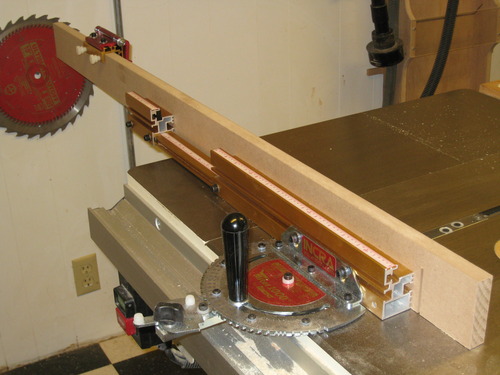
This is the gauge I kept reaching for during the six weeks. The primary scale is engraved stainless steel rather than printed plastic, and the 41 laser-cut V-stops drop into position without a vernier to read through a fence gap. Once a stop is engaged, the angle does not drift, which is the entire point when you are cutting 24 cabinet sides at 24 3/16 inches.
The GlideLOCK bar was the part that impressed me most. Six expansion points let you dial both sides of the bar against the slot walls until it has no side play, and once tightened it stays tight. On the r/woodworking crosscut sled threads, owners comparing systems repeatedly single out INCRA as the accuracy upgrade, and our own cuts agreed.
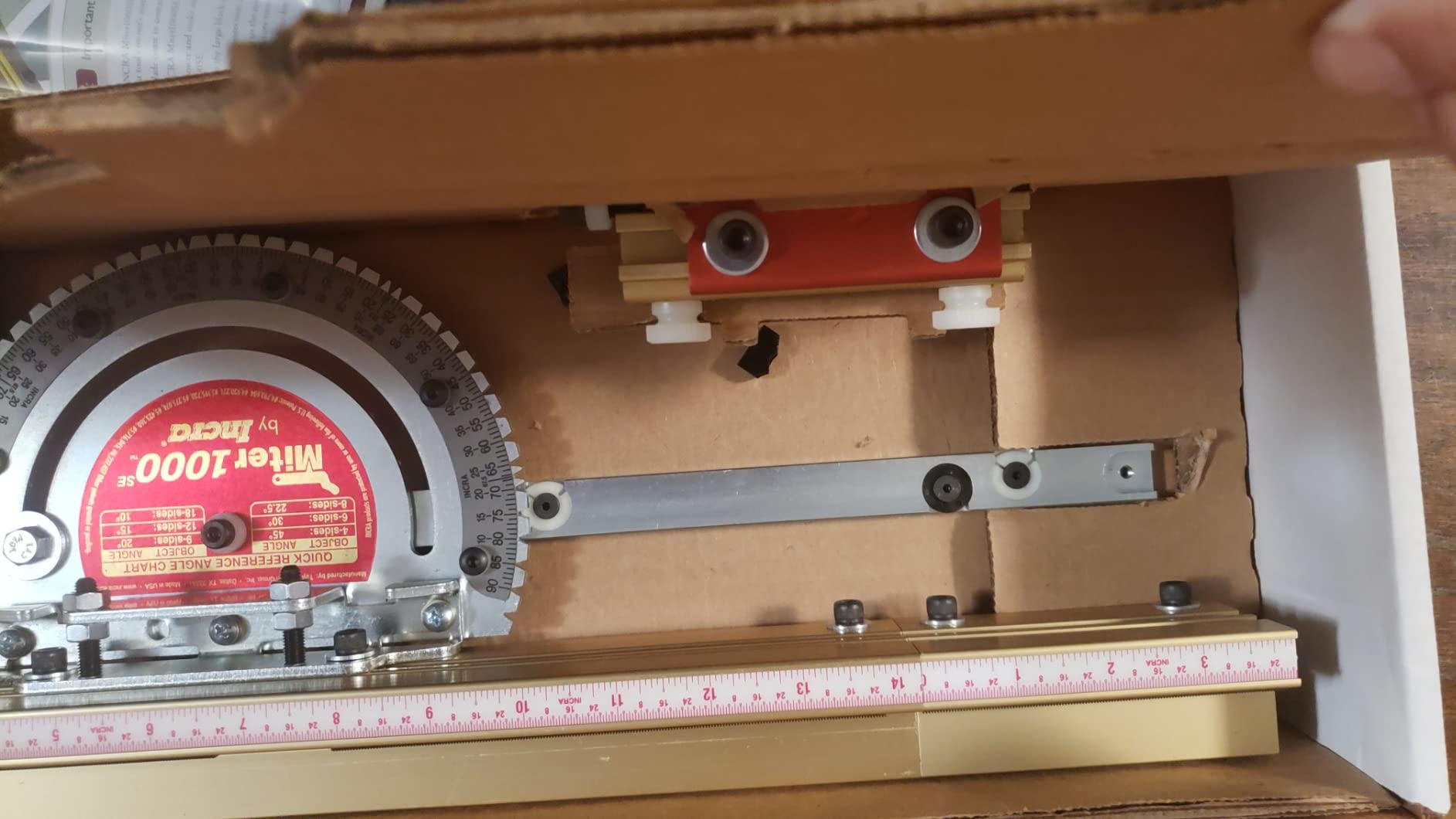
Users report accurate calibration out of the box with no re-checking after moving the saw, and that held up for us. The 18 to 31 inch telescoping incremental fence handled everything from 1×4 stock to a face frame blank without a second fixture. The Flip Shop Stop-Fence Positioner locks the stop against the fence for mitering so you are not chasing a loose stop block on angled work.
How it handles the first few cuts out of the box
It arrived calibrated and stayed that way. Our scrap test strip measured square across a 26 inch workpiece without touching the vernier, and the angle scale read true on both the leading and trailing faces of the same cut. That means your first cut of the day is already your tenth-best cut.
The only adjustment I made in six weeks was the slot fit, and that is a one-time job with the included hardware.
Where it falls short for a sheet-goods workflow
This is a miter gauge with a fence, not a full sled. Wide panels are supported on one side, so a full 4×8 sheet wants a second hand or a support roller, and the bar length caps workpiece capacity at roughly 16 inches on some saws. If your work is mostly sheet breakdown, read the POWERTEC 71403 section next.
The fence can also rotate sideways when the gauge is pulled back far enough that the fence drops off the table surface, and the small plastic slot-adjustment washers are stiff enough to strain the tiny hex key. Both are minor, and both are avoidable with sensible technique.
2. VEVOR Precision Miter Gauge 24 Inch: The Accuracy Upgrade Without the Premium Badge
VEVOR Precision Miter Gauge, Standard Slot 3/4” x 3/8”, Aluminum Alloy Table Saw Miter Gauge with 24 in Grating 15 Angle Stops Adjustable Spring Loaded Plunger and Removable Disc, for Woodworking
Aluminum alloy body
15 positive stop holes
Spring-loaded plunger
24 inch size
+ The Good
- Fits standard 3/4 x 3/8 inch slots in T and U shapes
- 15 positive stop holes for common angles
- Spring plunger dials out slot play
- Arrives calibrated and accurate
- The Bad
- Bar may need light filing on worn or non-standard slots
- Micro-adjust is finer than most users ever use
- Detachable disc is not compatible with every slot configuration
Buyers treat this as the sensible middle step between the plastic gauge that comes with a saw and a premium angle system. With 1017 reviews at 4.6 stars, the volume of owner feedback here is enormous, and the review pattern is consistent: people who expected little found a solid aluminum head with positive detents.
The detachable disc is the detail I would not skip. It lets the gauge run in T-shaped and U-shaped slots, which covers a lot of benchtop and mid-size saws that a fixed bar would rattle in. The spring-loaded adjustable plunger lets you take up slot play by feel rather than by shimming.
The 15 positive stop holes cover 90, 45, 22.5, 60 degrees and other common woodworking angles, and the laser-etched scale is easy to read. It arrives partially assembled, so our setup was a short job rather than an afternoon.
What you get for the setup time
It showed up calibrated. Our test cuts across the same 26 inch workpiece measured square without adjustment, and the positive detents dropped in cleanly every time. For a first serious gauge, that out-of-box accuracy is the feature that matters most.
Where the price advantage stops
The micro-adjust here is finer than most woodworkers will ever use, which is not a complaint so much as a limit to where this tool stops helping you. On worn or non-standard slots the bar may need light filing, and if your saw has an unusual slot shape the detachable disc can be the wrong answer.
Treated as a stop-block precision instrument rather than a repeatable angle instrument, it is very good. Treated as a replacement for a fence-and-stop system, it is a different job.
3. Kreg Precision Miter Gauge KMS7102: Built for Big Saws, Frustrating on Small Ones
Kreg Precision Miter Gauge System, Table Saw Miter Gauge, KMS7102
Factory calibrated
Anodized aluminum fence
24 by 24 inch footprint
Positive stops at 0 and 22.5 and 45
+ The Good
- Factory calibrated and accurate out of the box
- Long anodized aluminum fence is easy to adjust
- Adjustable bar tightens to minimal play
- Quick assembly with clear instructions
- The Bad
- Nylon bar-tensioning screws wear over time
- Nylon bushing leaves noticeable play at the flip stop
- Too large for many portable and jobsite saws
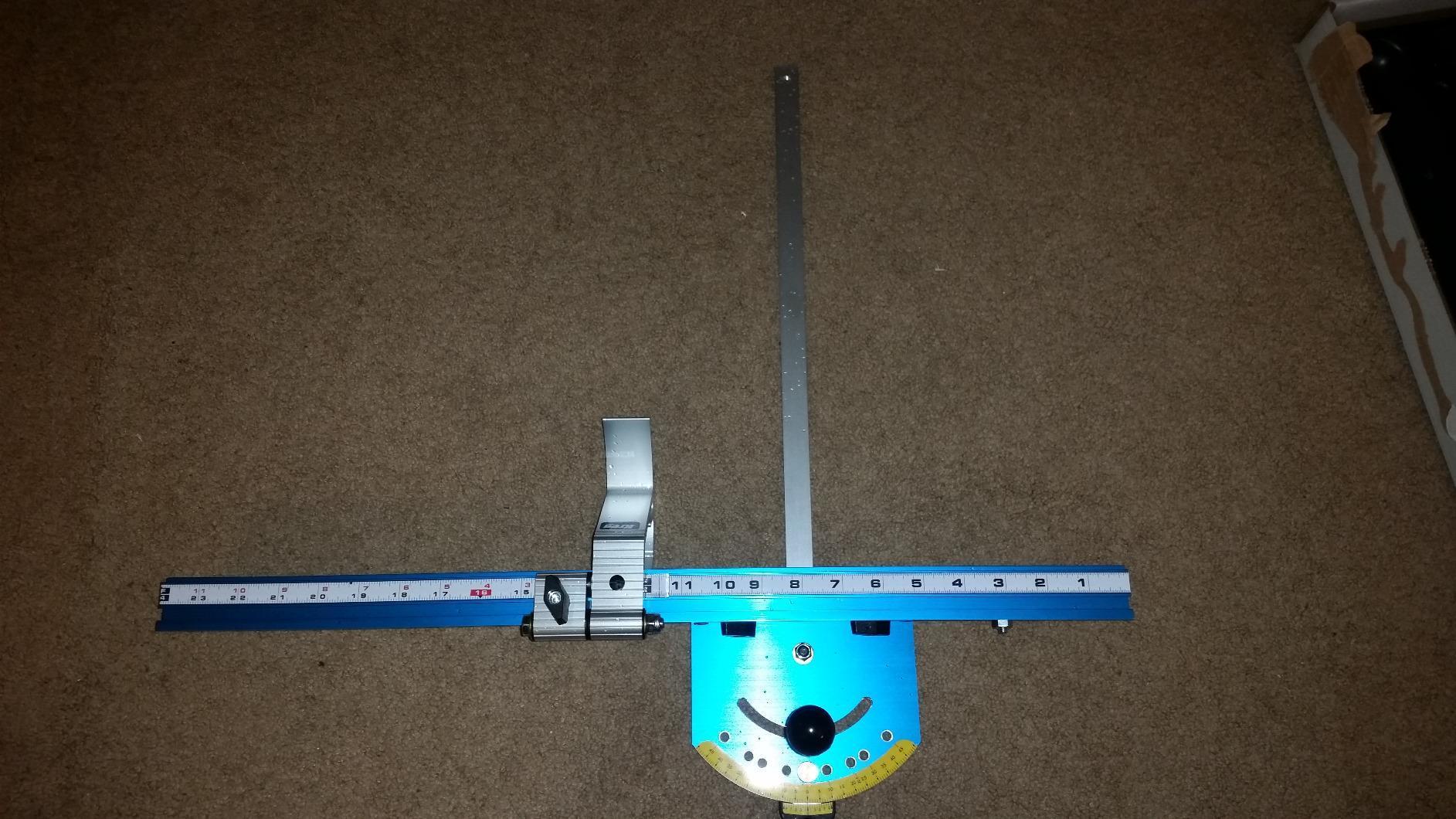
Kreg builds this like a measuring instrument, and owners consistently describe it that way. The factory calibration is real: our cuts matched the scale without a shim or a tweak, and the anodized aluminum fence stayed rigid across a long part. Positive stops at 0, 22.5, and 45 degrees make setup fast enough that you can change jobs mid-session.
The adjustable bar tightens into the miter slot until there is minimal play, which is the whole reason to buy a gauge instead of a stick. Assembly is quick and the instructions are clear. If you are running a cabinet or contractor saw with plenty of table in front of the blade, this is an excellent daily driver.
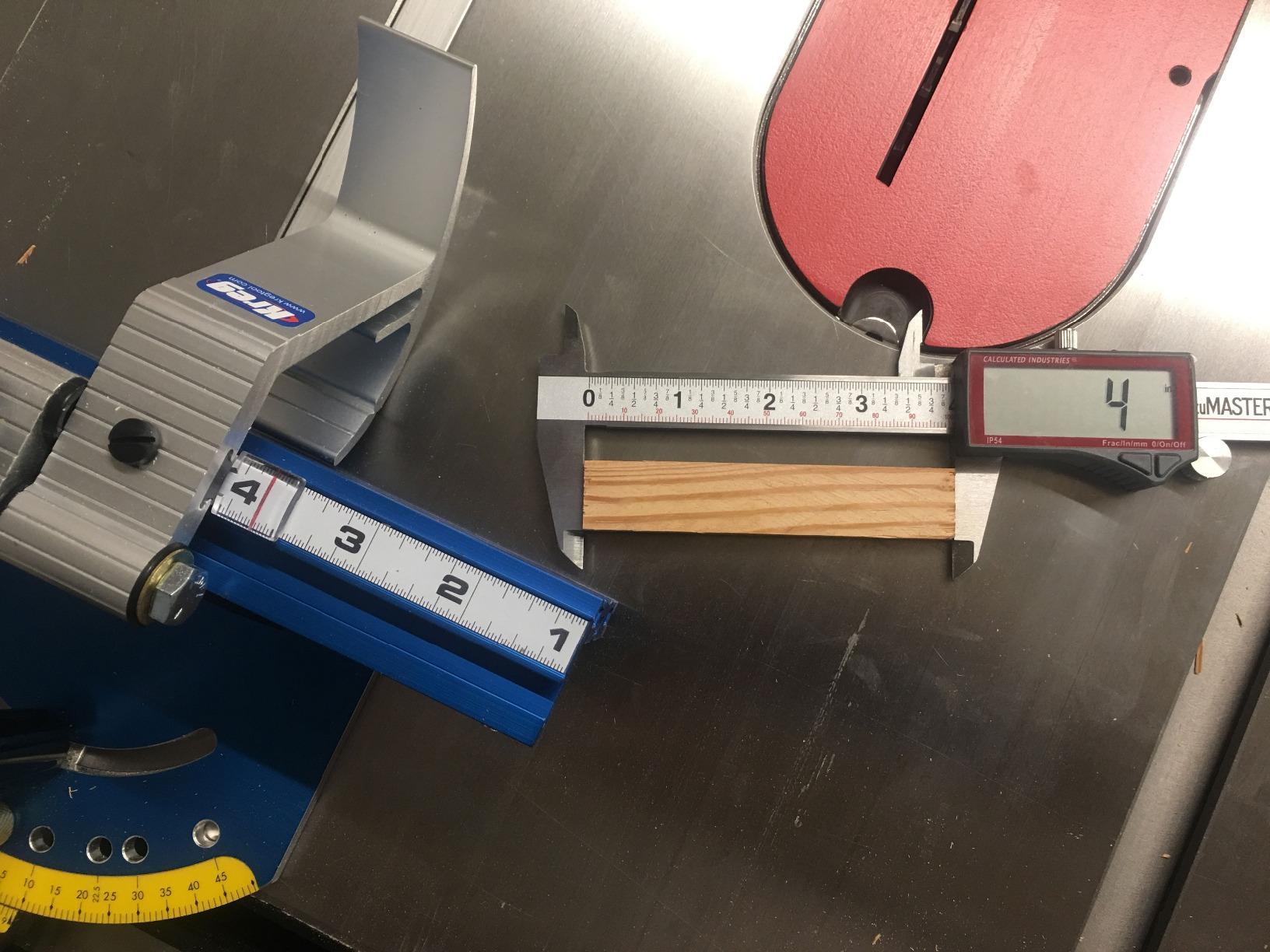
Size is the defining characteristic here, and it cuts both ways. The unit measures 24 by 24 by 5.5 inches and weighs 6 pounds. On a full-size saw that is a benefit. On a portable saw the gauge overhangs the table, sags off the edge, and can tip when you load the fence with a long part.
How it behaves on a full-size cabinet saw
It is stable, repeatable, and quiet. The fence face is wide enough to support a face frame blank and the anodized finish does not mark pale wood the way bare aluminum can. Our crosscuts to a marked line repeated to the same dimension across a full stack of parts.
The wear complaints worth knowing before you buy
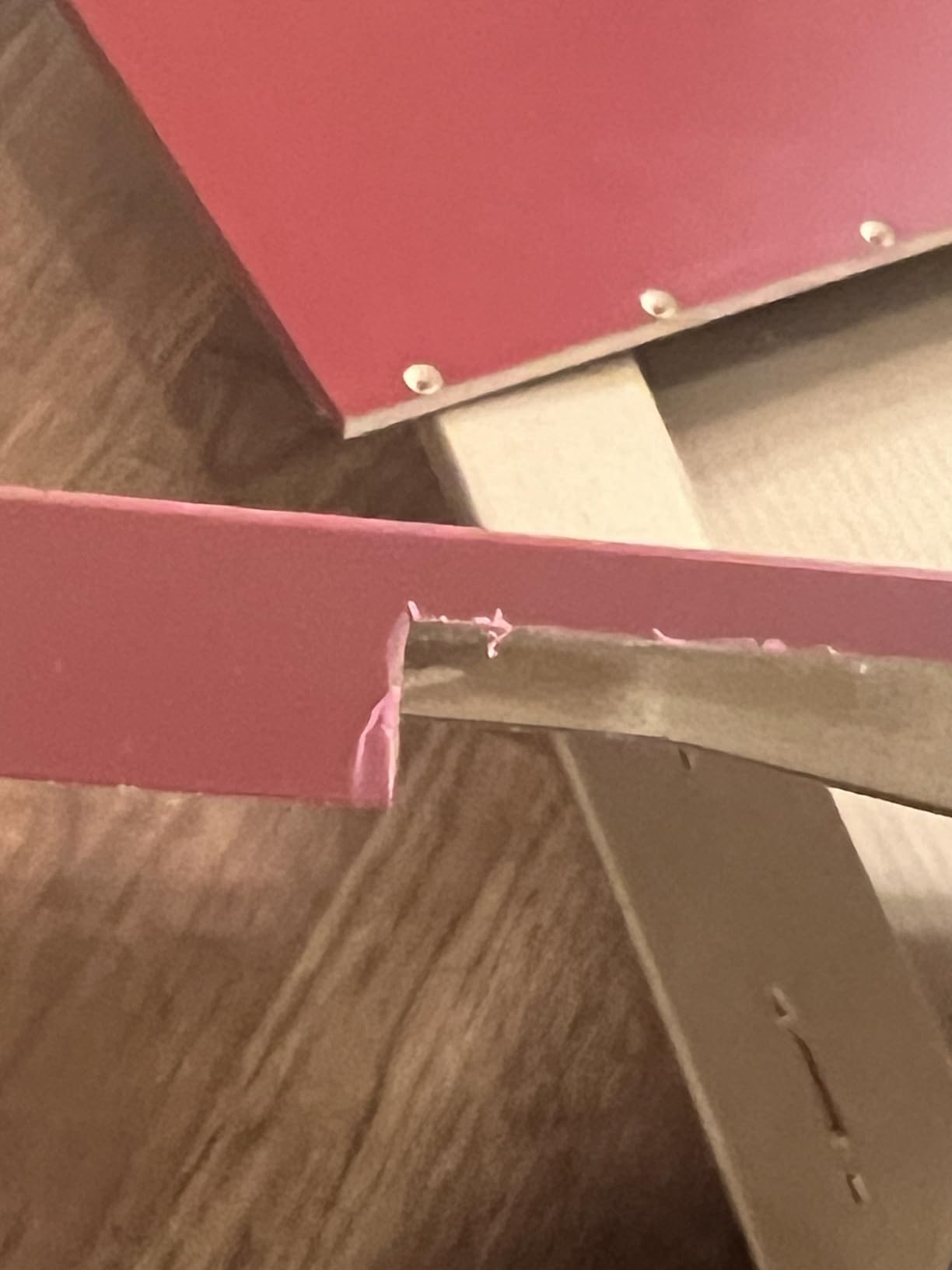
The nylon bar-tensioning screws wear over time and some owners question their durability after a year of daily use. More common is the nylon bushing between the flip stop and the end piece, which leaves noticeable play at the stop end even when the bar itself is tight.
Some kits also ship missing small hardware such as the brass lock pin or the tape rule, so check the parts list before your first cut. And if your saw is a benchtop or jobsite model, measure first: the vernier housing can catch on the table edge.
4. INCRA Miter 5000: The System for Serious Angled Work
INCRA MITER5000 Miter 5000 Table Saw Miter Gauge with Sled and Telescoping Fence
Three-panel sled with T-track
364 stops at 1/2 degree
Ten expansion disks
31.4 pound weight
+ The Good
- Locked zero-play glide once expansion is dialed in
- T-track and hold-down clamp secure the workpiece as one unit
- Very stable in the slot for its weight
- Telescoping fence supports larger workpieces
- The Bad
- Very heavy and awkward on smaller saws
- MDF sled platform can lose squareness if jostled
- Setup and calibration take hours
This is the only system in our lineup that is a full sled and an angle system at once, and for the woodworker whose work lives at 45 degrees it is the real answer. Laser-cut solid steel angle indexing teeth feed 364 locked stops in half-degree increments, so you set an angle rather than estimating one with a protractor and a pencil.
The ten expansion disks adjust both sides of the bar for zero side play. Once dialed in, the glide is locked and it stays locked. The three-panel sled carries a T-track and a hold-down clamp that secure the workpiece to the sled as one unit, which is what you want when the cut is compound and the offcut wants to bind.
Reviewers describe dead-on crosscuts suitable for picture frames and cabinet parts, and that matched our frame and face-frame stock. The telescoping fence makes larger workpieces easier to support, which matters when you are cutting a wide rail at an angle and the tail would otherwise sag.
Why owners rate it as a premium shop tool
Once installed, it is noticeably more solid than lighter gauge systems, and the sled support changes how wide a workpiece you can handle. The clamp means you are not relying on your palm to keep an angled part against the fence for the whole pass.
That stability is why it earns its place for furniture work, where a half-degree error across a 30 inch rail shows up in the glue-up.
Where the weight and the base become a problem
At 31.4 pounds this is a heavy object to lift into a small saw, and setup plus calibration take several hours of careful work. The MDF sled platform has a thin laminate face, so jostling it can knock it out of square, and instructions are thin on aligning rulers and on saws that tilt the opposite direction.
Some miter slots on certain saw brands require machining before it will fit. Measure your slots and check your saw tilt direction before this one arrives.
5. INCRA Miter Express: Full Sled Support in a Small Footprint
INCRA MITEREXPRESS Miter Express
Sliding crosscut platform
Works with your existing gauge
14 by 2 inch platform
Compact metal body
+ The Good
- Supports the workpiece through the whole cut
- Works with any miter gauge you already own
- Compact and easy to store
- Adds control without replacing your gauge
- The Bad
- Backing the sled up feels like the system is near its limit
- Narrow platform gives less support for large sheet goods
This is the middle ground, and it fills a gap the rest of the list leaves open. It is a sliding platform that runs in the slot alongside whatever miter gauge you already own, so the workpiece is supported and controlled through the cut rather than balanced on one side of the blade. You keep your favorite gauge and gain the stability of a sled.
The low-profile metal design is the reason it works in a small shop. It stores flat against a wall and does not demand a dedicated corner of the bench. For crosscutting narrow-to-medium parts it gives noticeably more control than dragging a board with a bare gauge.
On the r/woodworking crosscut sled threads, owners who switched up to an INCRA system rated the Miter Express as an accuracy step rather than a lateral move, and that matched our experience on repeat cuts. Because it works with any gauge, you can pair it with the MITER1000SE and get fence support plus sled support in one pass.
When it is the right amount of sled
If your material is trim, shelving, and cabinet parts and your shop is tight on space, this is a very sensible purchase. It also serves as a low-cost way to see whether you enjoy sled work before committing to a full wooden sled with fence.
Where it runs out of road
The platform is 14 by 2 inches, so it offers far less surface area for large sheet goods than a full sled base. Owners also report that backing the sled up to clear the offcut feels like the system is being pushed to its limit, which is exactly the situation a full zero-clearance base is built to solve.
Think of it as a stability upgrade for crosscuts, not as a panel-goods platform.
6. POWERTEC Crosscut Sled 71403: The Complete Full-Size Sled
POWERTEC Table Saw Crosscut Sled for Stationary Table Saw (71403)
24.8 by 24 inch MDF base
Extruded aluminum fence
Flip stop and hold-down clamp
Zero-clearance cut base
+ The Good
- Complete kit including base fence bar stop and clamp
- Zero-clearance base cuts tear-out and gives clean edges
- Readable half-degree graduations with hairline indicator
- Low-friction wear tape for smooth travel
- The Bad
- Sized for cabinet and contractor saws only
- Zero-clearance base must be trimmed to fit your saw and blade
If you want one sled that does the full-size job and arrives with everything in the box, this is the pick. You get the table base, MDF fence face, extruded aluminum fence, miter bar, flip stop, hold-down clamp, wear strips, and installation hardware. Nothing else on this list, except the Miter 5000, is a genuinely complete sled.
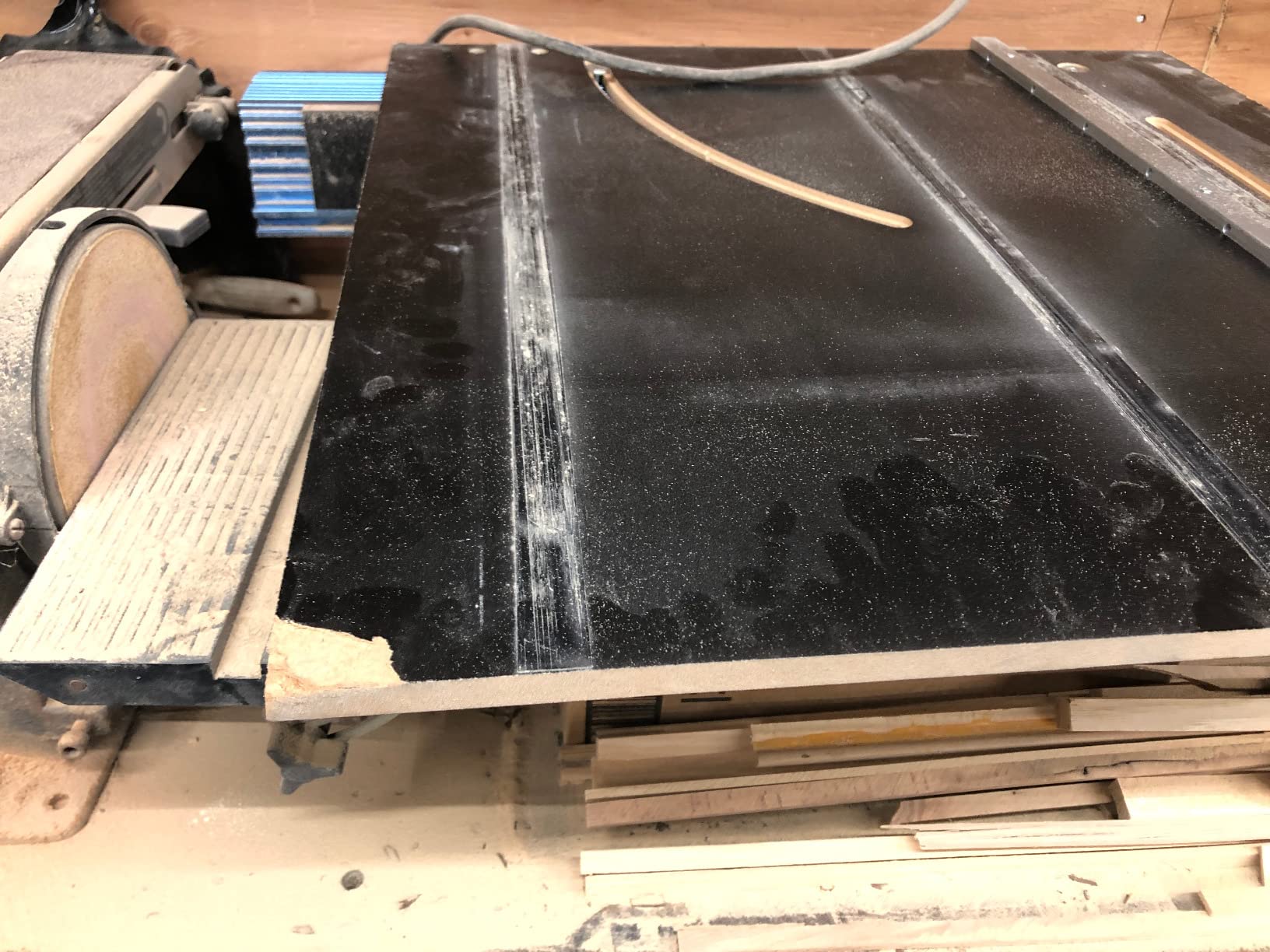
The zero-clearance base is the reason to buy it. It supports the workpiece right down to the blade on both sides, so a 4×8 sheet of ply does not collapse into the blade as the cut passes the throat plate. Our cut edges on birch ply came out noticeably cleaner than with any gauge in this group, with far less tear-out on the exit side.
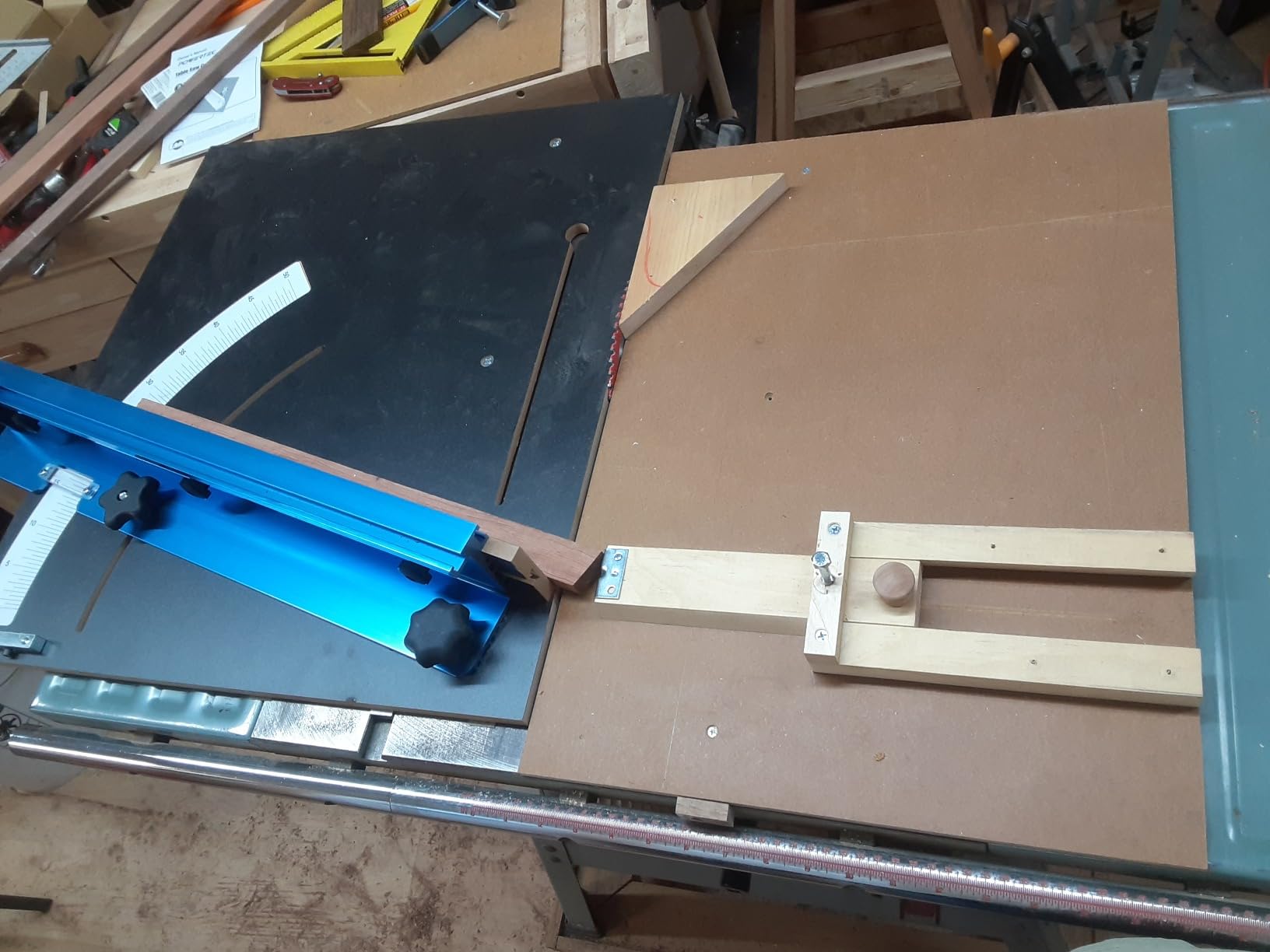
The half-degree graduations, hairline indicator, and adjustable 90 degree stop make it quick to dial in, and the low-friction wear tape on the base gives it a smooth glide across the saw top. Owners highlight completeness and repeatable accuracy, and we agree: this is the sled we would put on a cabinet saw first.
How it performs on sheet goods and full panels
It is stable, quiet, and it holds a long part flat. The flip stop and clamp work together to hold material steady, which lowers the chance of a bind and a kickback on a long cut. Our four-by-eight breakdown took one setup change per sheet rather than one per cut.
The fitment limits you must check before ordering
It is built for 3/8 by 3/4 inch miter slots on cabinet and full-size contractor saws, and it is explicitly not intended for benchtop or portable saws. The 24.8 by 24 inch base will overhang a small saw.
The zero-clearance base also must be trimmed to fit your individual saw and blade, which takes about twenty minutes with a rasp. Budget for that step and this is a very good value for a full sled.
7. Rockler Small Parts Sled: The One That Solves Small Parts
Rockler Small Parts Crosscut Sled for Table Saws, Zero-Clearance Support
15.5 by 12 inch footprint
Aluminum runners
Zero-clearance support
Rear-mounted blade guard
+ The Good
- Purpose-built for dowels
- tenon stock
- and small moldings
- Zero-clearance support keeps pieces out of the kerf
- Miter track stop limits forward travel for repeatability
- Aluminum runners resist moisture and swelling
- The Bad
- Small footprint rules out sheet goods work
- Blade guard needs adjustment to fit some saws
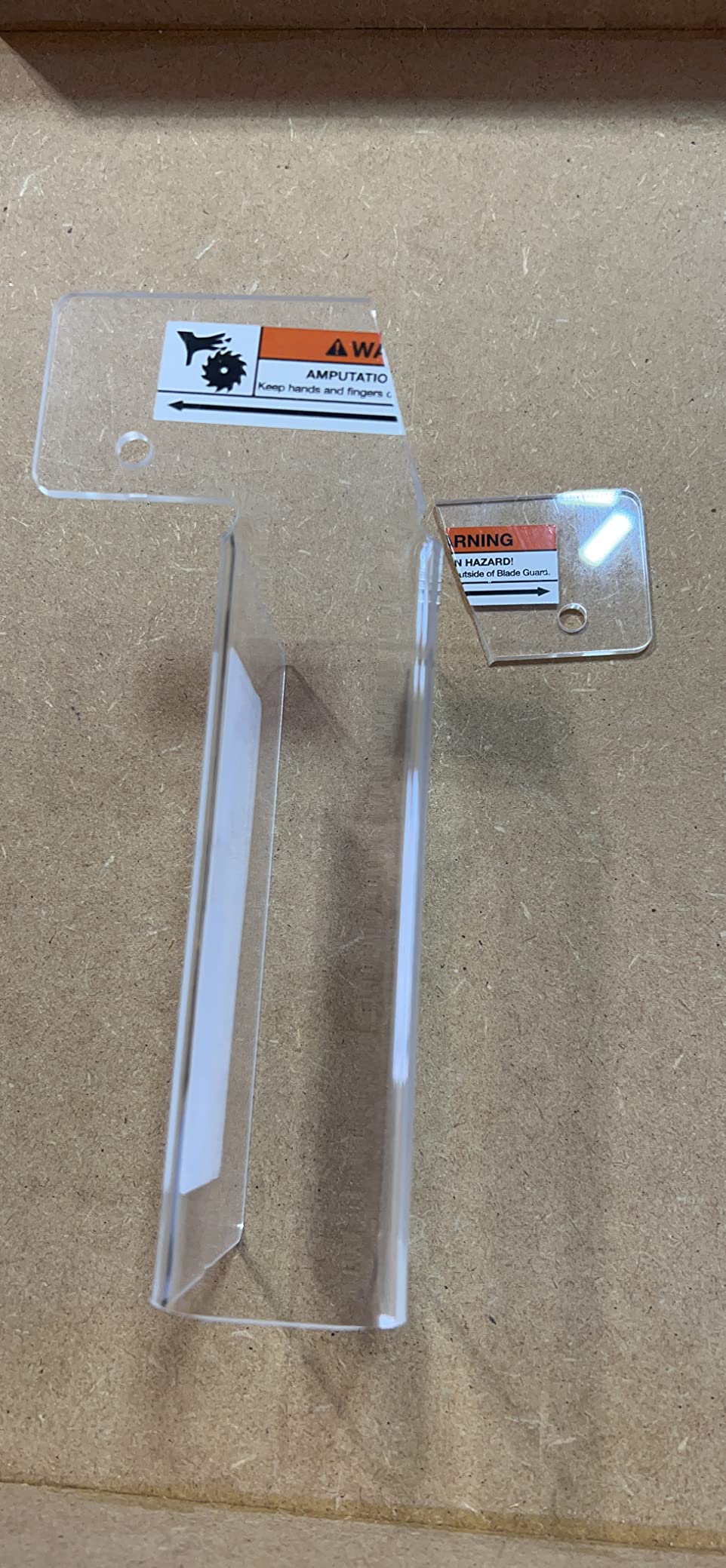
Every other sled on this list is a compromise on small parts, and this one is a specialist. It is 15.5 by 12 by 3.5 inches and built for dowels, tenon stock, and small moldings cut to a precise 90 degrees. The zero-clearance support means the cut piece cannot drop into the kerf or wedge against the throat plate, which is the failure that makes small-parts cutting frustrating on a bare gauge.
Aluminum runners are the quiet hero. They resist moisture and will not swell over time, which means the glide you set up today is the glide you still have next winter in an unheated shop. The miter track stop limits forward travel of the sled so repeat lengths stay consistent.
Why small-parts cutting is safer with this sled
Your hands stay on the workpiece instead of near the blade because the sled carries the part past the cut. The adjustable rear-mounted blade guard adds a second layer, and the plastic ramp on one side of the kerf carries the drop-off piece away from the blade instead of leaving it there waiting to be cut again.
For a shop that cuts tenons, dowel segments, and small trim all day, that is a genuine safety and speed gain.
Where this sled is the wrong tool
The small footprint is the whole trade-off. Nothing about this design lets you break down a sheet of plywood, and trying to will leave you with a sled hanging off the edge of your material.
The blade guard also requires adjustment to fit some saws, so allow a few minutes before the first cut. Sawmill Creek owners describe this type of sled as a specialist station rather than a general crosscut sled, which is the honest way to think about it.
8. POWERTEC Sled and Blade Guard Kit 71703: The Hardware for a Custom Sled
POWERTEC Table Saw Sled w/Blade Guard, 24″ T Track, 19″ HDPE Miter Bars, 3″ T Track Stop Block, Bolt, Screw, Miter Slot Runners for DIY Table Saw Crosscut Sled, Woodworking Tools Accessories (71703)
24 inch aluminum T-track
19 inch HDPE miter bars
3 inch flip stop
Blade guard and fasteners
+ The Good
- Solid extruded aluminum T-track mounts fixtures securely
- HDPE miter bars are durable and dimensionally stable
- Includes flip stop blade guard and all mounting hardware
- You size the sled to your own saw
- The Bad
- Kit only with no base material included
- Runners can swell if glued and re-cut incorrectly
This is a hardware package, not a sled, and the difference matters before you start. You get a 24 inch universal T-track, 19 inch HDPE miter bars measuring 19 by 3/4 by 3/8 inches, a 3 inch flip stop, a blade guard, plus wood screws, hex bolts, and acorn nuts. The base is yours to build, which means you can size it to a saw no off-the-shelf sled fits.
The solid extruded aluminum T-track is the strongest part of the package. It mounts the flip stop and any fixture you add without flexing, and it stays flat over years of T-bolt tightening. HDPE miter bars are durable and glide smoothly, and 19 inches is the longer bar length that lets you build a bigger base than the 17 inch kits allow.
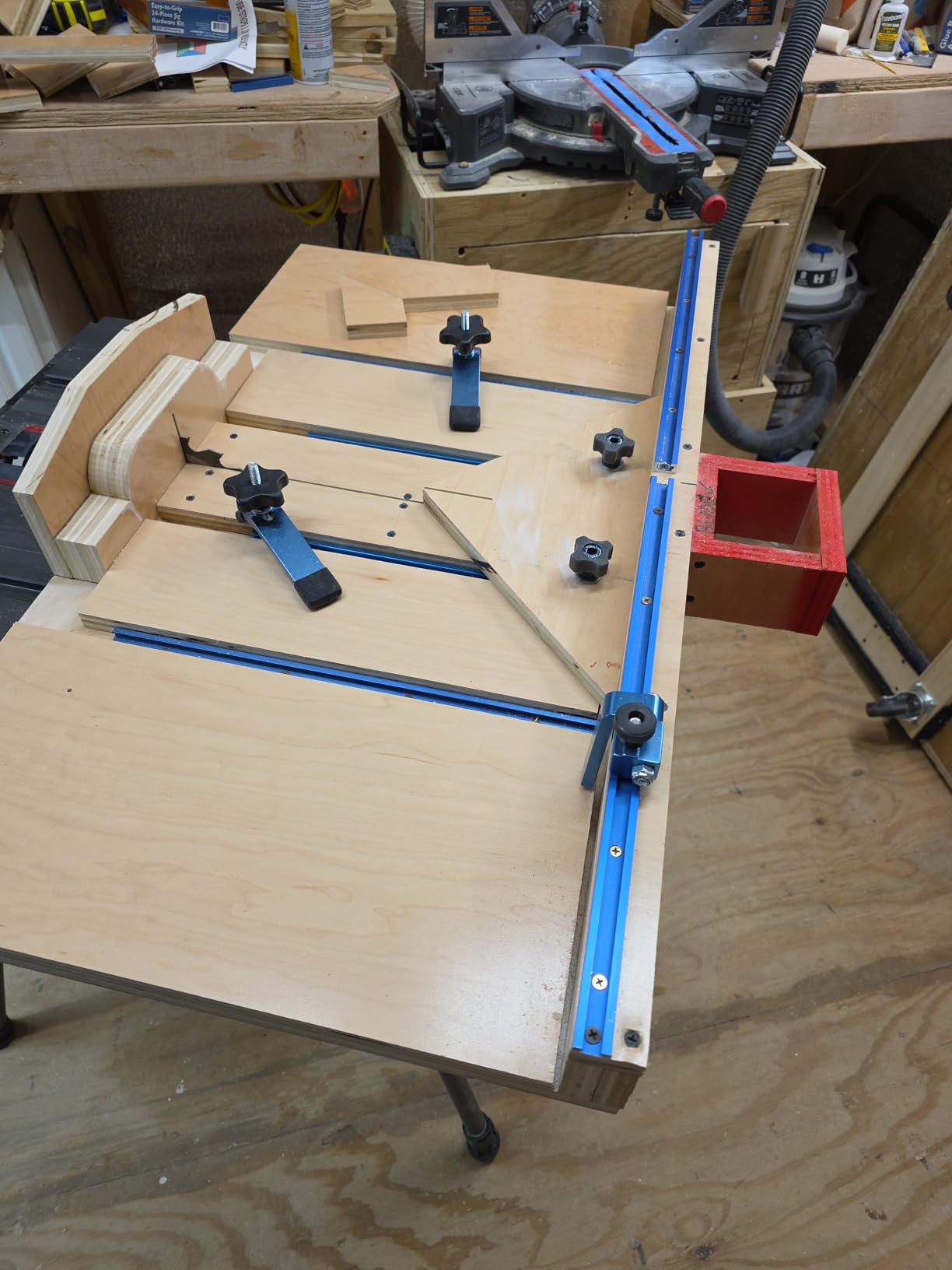
With 321 reviews at 4.3 stars, buyers consistently treat it as a well-priced hardware package whose strength is the track and the bars. Skill is required because no base is included, and that is the trade: you get full control of sled size and lose the plug-and-play experience.
When building your own sled makes sense
If your saw has non-standard slot spacing, a small tabletop, or an unusual throat plate, a custom base solves in an afternoon what a store-bought sled cannot solve at all. Sawmill Creek owners describe building a simple two-runner plywood sled first and buying a commercial sled only when angled miters became necessary, and this kit supports exactly that path.
What the build will teach you the hard way
HDPE does not glue reliably to wood and must be mechanically fastened, and if you glue and re-cut a bar incorrectly it can swell. Drill and fasten rather than glue, and follow the bar length through the whole layout before you commit to a base size.
The flip stop and blade guard are useful additions, but without a base this kit cannot make a cut. Only pick it if you are comfortable building one.
9. Fulton DIY Crosscut Sled Kit 19 Inch: Real UHMW Runners on Your Own Schedule
DIY 19″ Crosscut Sled for Table Saw Kit w/Undrilled UHMW Bars
Two 19 inch UHMW bars
Two 12 inch aluminum mini tracks
Knob and bolt stop block
Color build guide
+ The Good
- Lowest-cost route to true UHMW runners
- Runners glide with far less friction than wood
- Full-color build guide is clear
- Aluminum tracks and flat true components
- The Bad
- No wood included and all drilling is on you
- Undrilled bars split if holes are undersized
- UHMW must be fastened not glued
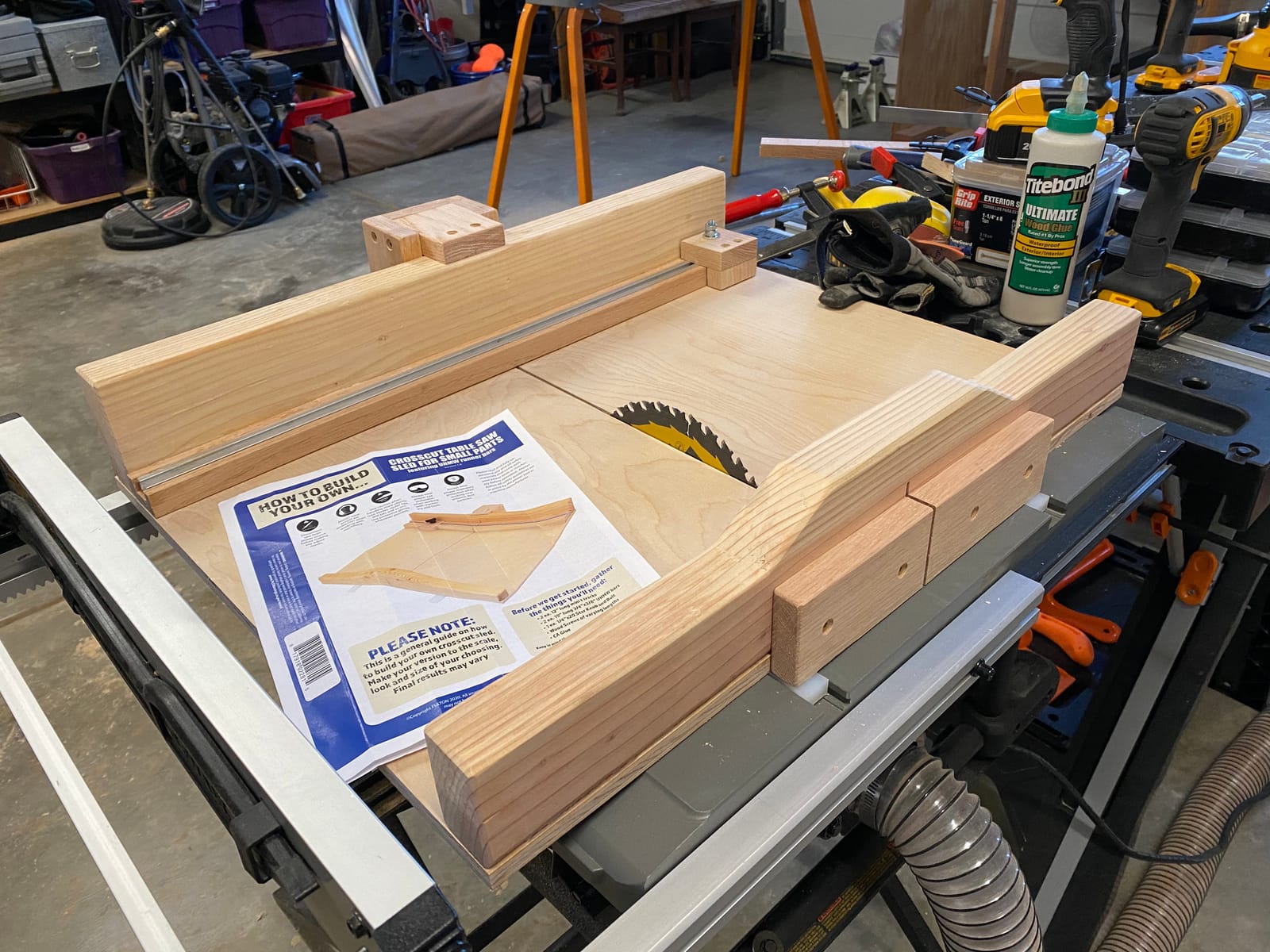
With 1720 reviews, this is the most-reviewed kit in our group. It contains two 19 inch UHMW bars, two 12 inch mini tracks, a knob, a bolt, and a full-color guide. UHMW runners glide with far less friction than wooden runners and, like the Rockler small parts sled, they will not absorb moisture and swell.
The knob and bolt double as a stop block for repeat cuts, so you get a working length reference even before you build a fence. The USA-made extruded aluminum tracks are flat and true, and the color build guide is genuinely followable for a first-time sled maker.
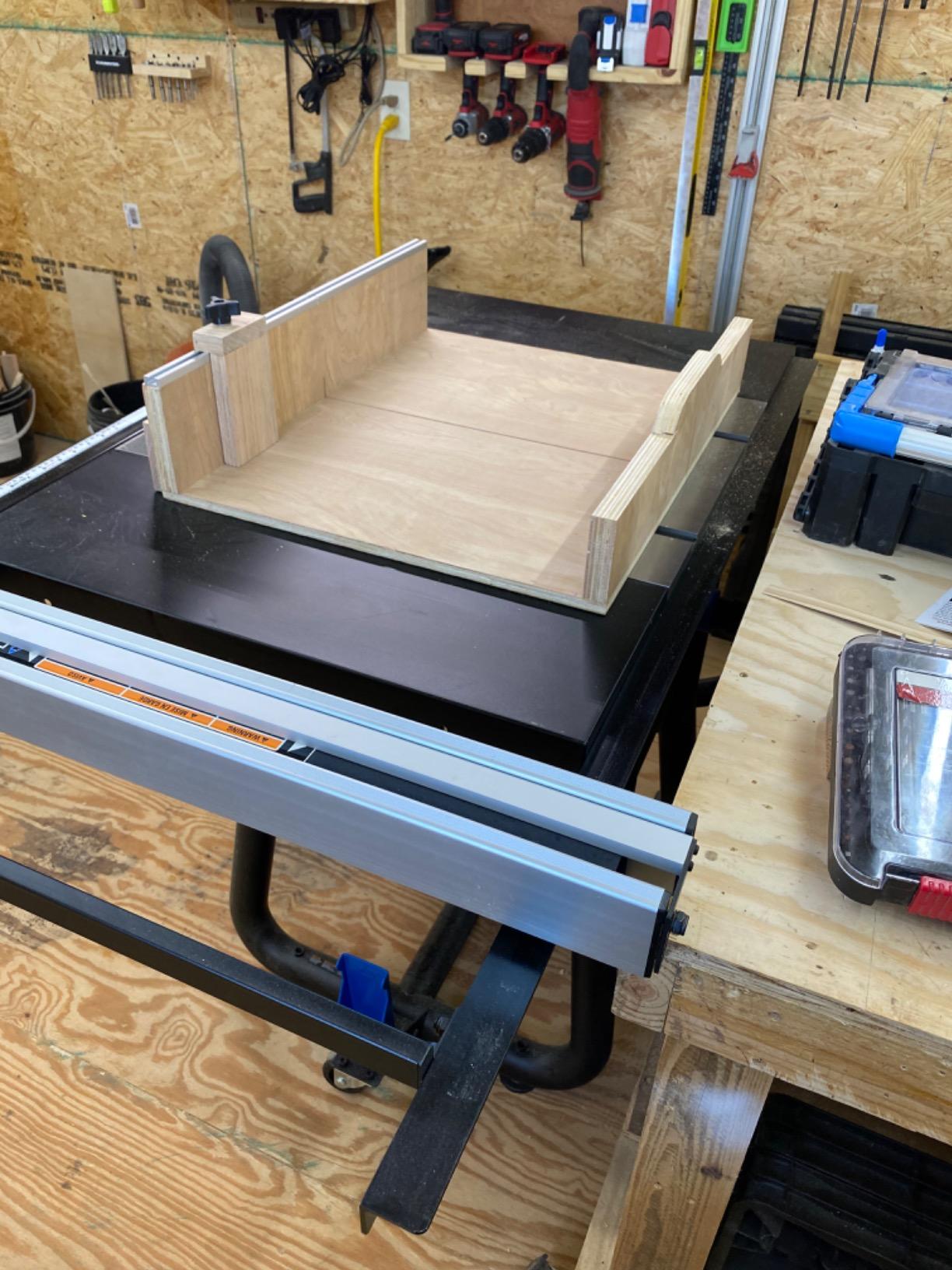
Reviewers are split, and the split is about the build, not the parts. People who follow the guide carefully and size the base themselves end up with a functional sled that glides better than anything they could build from wood alone. People who expect a finished product are frustrated by the drilling step.
Why UHMW runners are worth the extra steps
Friction is the enemy of a sled. A wooden runner swells, dries, and drags, and every bit of that shows up as a fence that is no longer square. UHMW does not move, so the sled you square stays square, which is the entire argument for this kit over building from hardwood.
The build traps to know about in advance
Undrilled bars mean you drill the mounting holes, and undersized holes cause the plastic to split and the bars to swell. UHMW does not glue reliably to a wood base and must be mechanically fastened. Bars do not fit Ryobi table saw track slots.
One listed variant is described as predrilled but the bar arrives undrilled, so read the listing carefully. And the 12 inch mini tracks are short, which limits stop-block setups for longer material.
10. Rockler 45 Degree Miter Sled: A Specialist Answer to Frame Mitering
Rockler 45 Degree Table Saw Miter Sled, Standard Miter Slot Jig Tool
Polycarbonate body
Adjustable nylon set screws
Slots for clamping at table level
Drillable base
+ The Good
- Cut one face at the leading edge and one at the trailing edge and they match
- Lightweight polycarbonate body with low friction
- Adjustable pins dial out slot play for a no-slop fit
- Can be drilled for your own fences and stops
- The Bad
- Not a general crosscut sled
- Requires a 7/64 inch hex wrench that is not included
- Open base slots make very thin material hard to secure
This does one thing and does it without adjustment, and for that one thing it is very good. Cut one piece at the leading face and one at the trailing face and the 45 degree miters match. That no-guesswork repeatability is exactly what picture frame and small frame work needs, and it beats most shop-made 45 degree setups.
The lightweight polycarbonate body glides with low friction, and adjustable nylon set screws let you dial out slot play for a no-slop fit. The base includes slots that let you clamp moldings at table level, which matters when a thin frame member is the only thing holding the angle.
Why frame builders like it
Repeatability with no calibration is the whole pitch. For a shop cutting one style of frame in quantity, matching the leading and trailing miters without touching a scale removes the single most common source of a bad frame. With 337 reviews at 4.2 stars, that repeatability is what owners consistently report.
Why it is not a crosscut sled
It is a dedicated 45 degree mitering jig, and buyers expecting a general crosscut sled feel that mismatch. It needs a 7/64 inch hex wrench, which is not included, to set the slot fit. Very thin material can be hard to secure because the base clamp slots are open.
If your workload is 90 degree crosscuts, this belongs on the bench as a second tool, not on your saw as the only one.
11. Catcan 21P Sled Kit: The Fastest Build With Predrilled Runners
21P Table Saw Sled Kit, Crosscut Sled Kit Miter Bars for Table Saw Runners
Two 17 inch UHMW bars
Predrilled holes
Two 12 inch aluminum T-tracks
21 piece kit
+ The Good
- Predrilled holes make the build faster than undrilled kits
- UHMW bars are burr-free and dimensionally stable
- Extruded aluminum tracks can be trimmed to fit
- Knob and bolt work as a simple stop block
- The Bad
- Wooden sled base not included
- 17 inch bars are shorter than the 19 inch offered elsewhere
- 12 inch T-tracks are short for longer material
The predrilled runners are the reason to pick this kit over the other DIY packages. Twenty-one pieces include two 17 inch UHMW miter bars, two 12 inch universal T-tracks, a star knob and bolt, a round washer, and fifteen screws. Because the bars arrive drilled, you skip the step where undersized holes split the plastic and swell the bar.
With 217 reviews at 4.5 stars, this kit rates well above the other hardware packages in our group, and the review pattern is consistent: buyers highlight the predrilled UHMW bars as the standout feature and praise the value of a complete two-runner, two-track package.
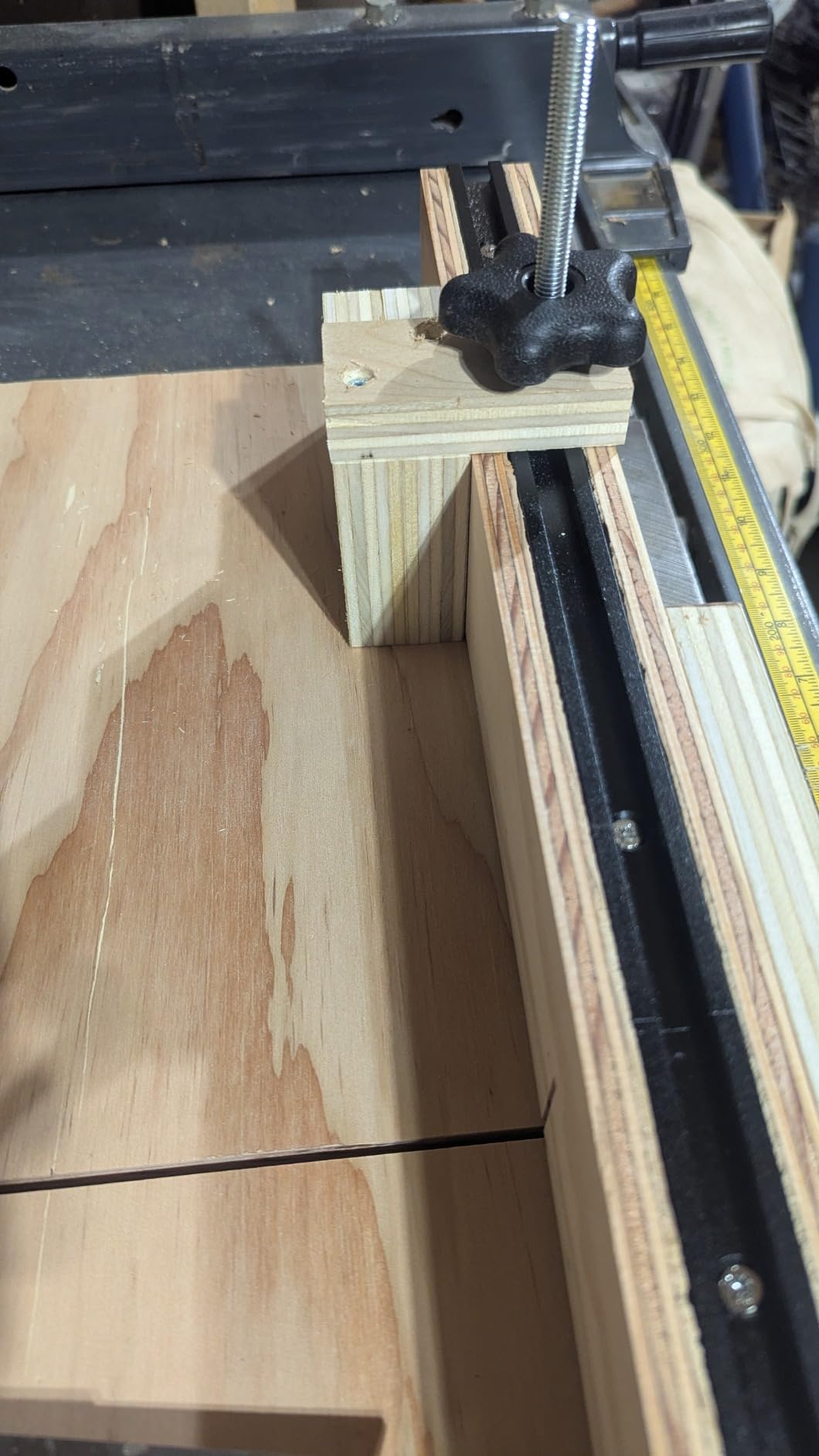
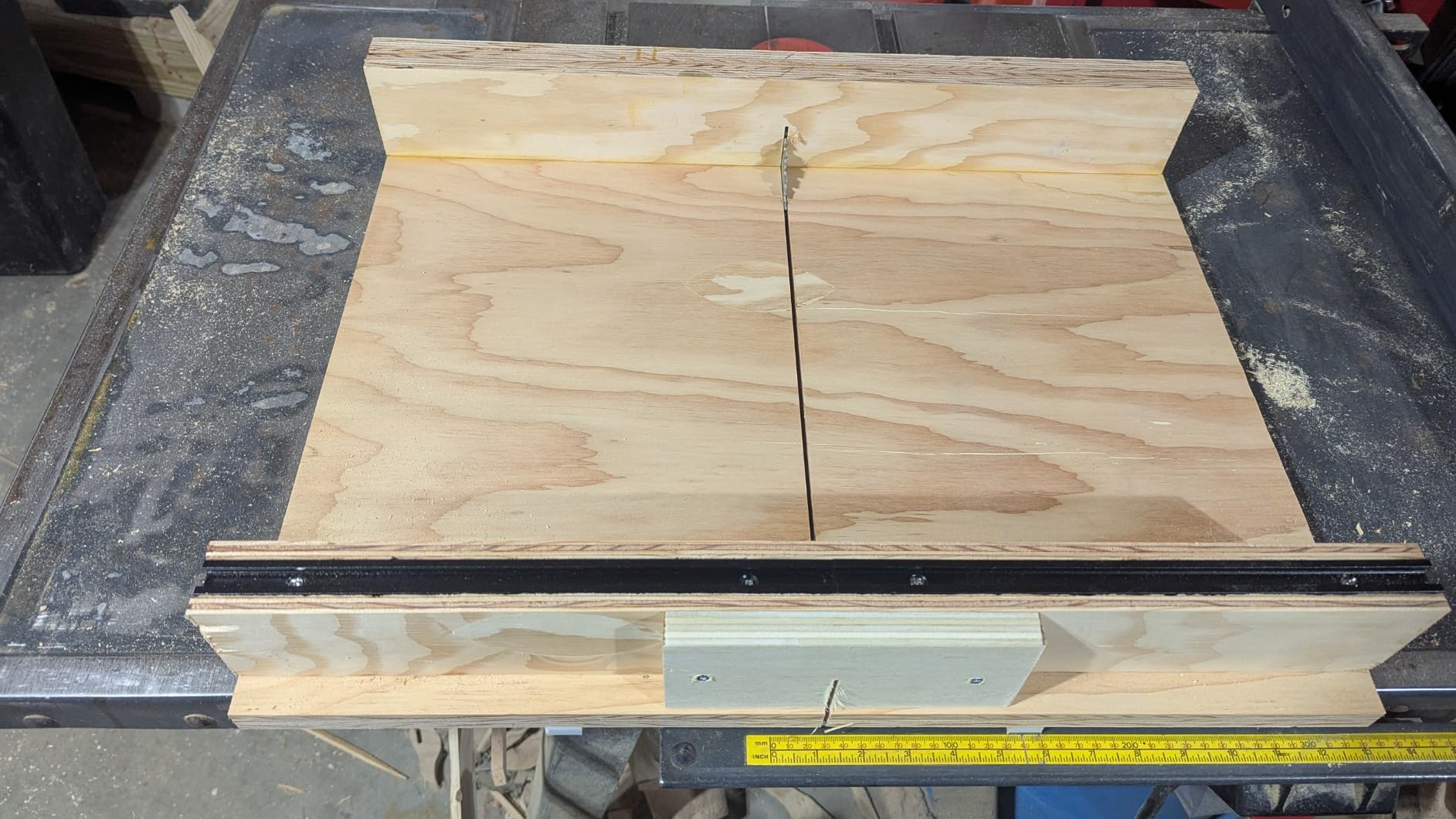
The runners are burr-free, low friction, and do not expand or contract with temperature, and the extruded aluminum tracks are durable and can be trimmed to match your sled. The knob and bolt give you a working stop block for repeat cuts the moment the sled is assembled.
How it compares with the 19 inch kits
The shorter bar is the deciding factor. At 17 inches you are building a smaller sled, which is fine for trim, shelving, and cabinet parts but constrains how large a panel you can support. The 12 inch T-tracks are also short for stop-block setups on longer material.
If your shop is a home workshop rather than a production shop, that smaller footprint is often exactly what fits your saw anyway.
What you still have to build
The wooden sled base is not included, so you supply the wood and glue. Treat this as an afternoon project: mark the sled outline, drill or screw the bars through the predrilled holes, trim the tracks to length, fasten them down, and add the knob and bolt as a stop block.
It is the shortest path from a bare pile of parts to a working sled, which is why we rate it at 4.5 despite being a kit rather than a finished tool.
12. SDSNTE DIY Crosscut Sled Kit: The Bare-Bones Starting Point
SDSNTE DIY Crosscut Table Saw Sled Kit with Guide Booklet, 1 Pack
Two 17 inch UHMW bars
12 inch extruded aluminum T-track
Knob, bolt, and screws
Guide booklet
+ The Good
- Cheapest complete runner and T-track package in our lineup
- UHMW bars resist temperature-related swelling
- Aluminum T-track is solid extruded and trim-able
- Guide booklet makes a first build approachable
- The Bad
- No base
- glue
- or building material included
- Bars do not fit Ryobi table saw slots
- 17 inch bar length limits sled size
- Small screws may be short for a thick base
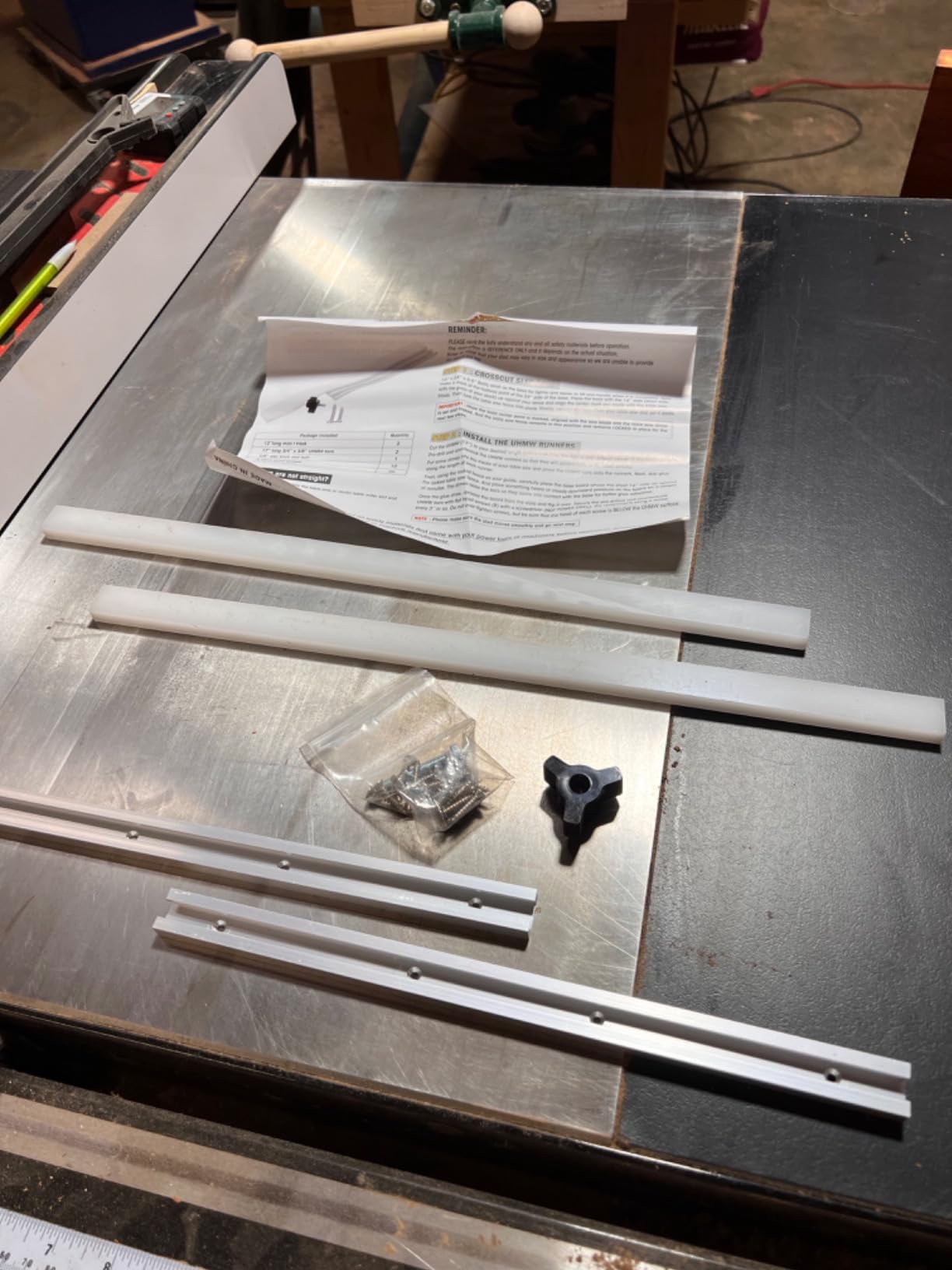
This is the least expensive complete package in the group and it does the same job as the pricier kits if you are willing to build. You get two 17 inch UHMW bars measuring 3/4 by 3/8 inches, a 12 inch solid extruded aluminum T-track, a star knob and bolt, wood screws of varying lengths, and a guide booklet. Backed by a 90 day guarantee with a stated 24 hour support response.
UHMW is dimensionally stable and slides smoothly without swelling under temperature changes, so the sled you build stays as you set it. The aluminum T-track is solid extruded and can be trimmed to match your sled, and the guide booklet makes the build approachable for someone building their first sled.
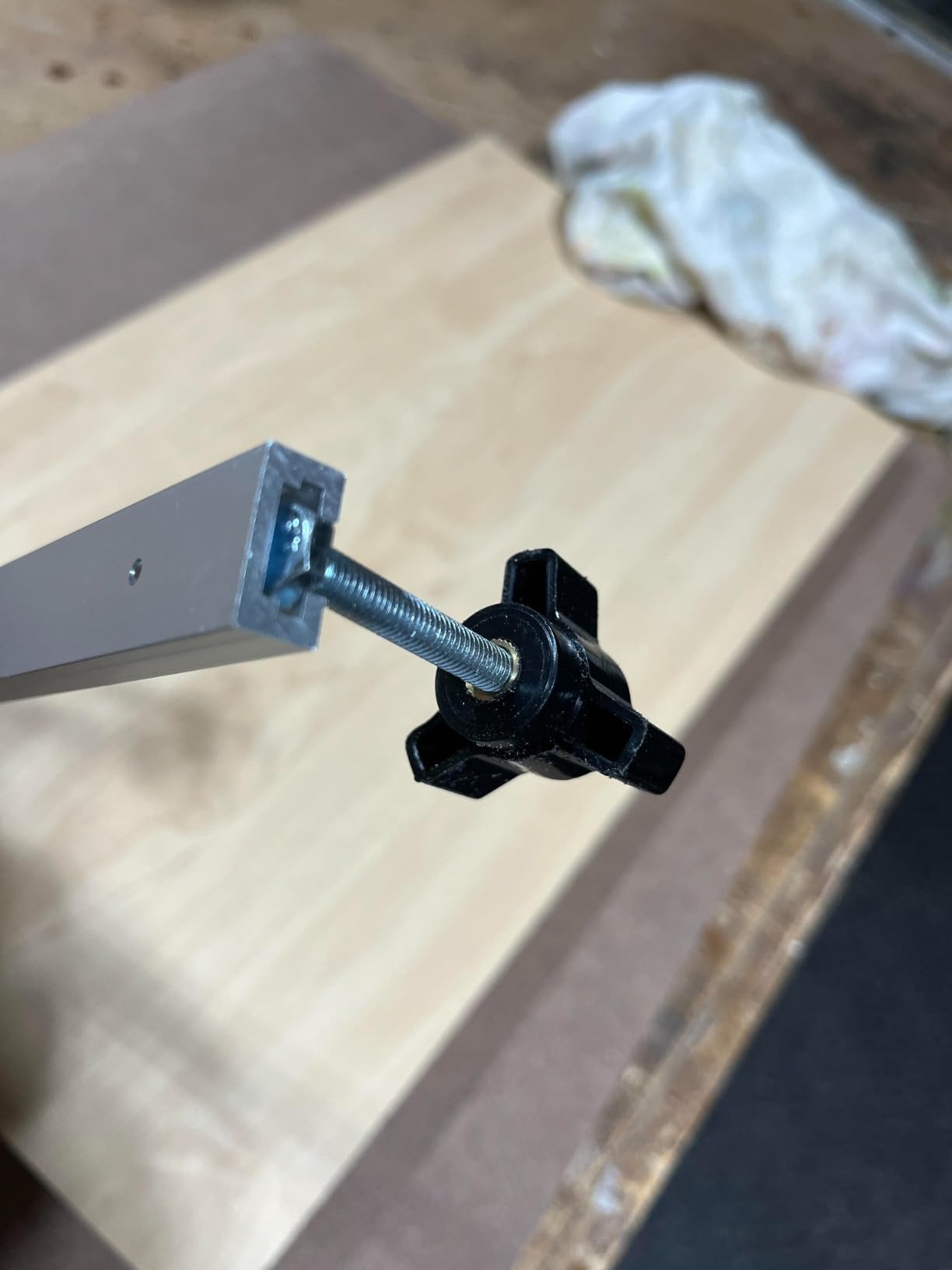
Buyers see this as a very inexpensive way to get real UHMW runners and an extruded T-track, and at 173 reviews with a 4.0 rating, the ratings sit below the other kits for a straightforward reason: it is the barest package in the group.
Where it makes sense as a first sled
If you want to learn how a sled works before spending on a finished one, this is the cheapest way to do it. Build it, run the 5-cut method on it, and you will understand your saw’s slots, your kerf, and your own technique before you commit to a premium system.
What you are giving up for the lower cost
No base, no glue, and no other building materials are included. The bars do not fit Ryobi table saw track slots, and the 17 inch length limits the sled size you can build.
The supplied screws may also be too short for a thicker base, so plan to buy your own fasteners. It is a parts bin, not a project with a manual.
How to Check a Crosscut Sled Will Fit Your Table Saw
Fitment is the number one pre-purchase blocker in this category, and it takes about five minutes to check. Nearly every system in this lineup is built around the standard 3/8 inch deep by 3/4 inch wide miter slot. If your saw does not have that, most of these products simply will not run in it.
Measure the miter slot width with calipers. Standard is 3/4 inch wide. Anything materially narrower rules out most sleds.
Measure the miter slot depth. Standard is 3/8 inch deep, and runners are cut to sit flush with the table surface.
Check the slot shape. T-shaped and U-shaped slots accept different hardware, which is why the VEVOR gauge comes with a detachable disc.
Check the brand. Ryobi table saw track slots are not compatible with the UHMW bars in the Fulton or SDSNTE kits, and some miter slots on certain saws require machining before a sled will fit.
Measure the distance from the blade to the far edge of the table. A sled wider than your saw will overhang and can tip or sag.
Check your saw tilt direction against the sled’s fence setup, particularly on systems with an adjustable ruler and a telescoping fence.
Saw class matters as much as slot size. Cabinet and contractor saws have the table width and slot spacing for a full sled such as the POWERTEC 71403 or the INCRA Miter 5000. Benchtop and portable saws need either a compact platform such as the INCRA Miter Express or a custom build from a kit, which is the pattern we see most often on forums.
Our hybrid table saw roundup covers the mid-size saws where sled fit gets tricky, and our jobsite table saw picks cover the portable class where most full-size sleds simply will not go.
How to Square and Dial In a New Sled With the 5-Cut Method
No roundup on this topic tells you how to tune a sled after you buy it, which is why a new jig sometimes gets blamed for being badly made when it simply shipped out of square. The 5-cut method takes about fifteen minutes and works on any sled or gauge with an adjustable fence.
Set the fence for a test cut. Loosen the fence, use a square to set it roughly a few inches off the blade, and tighten it. Do not trust the factory angle yet.
Make cut one. Cut a test piece and leave it on the saw table. Do not move anything.
Make cut two on the same test piece. Flip the piece, keep it against the fence in the same position, and make the second cut. Then make cut three without changing anything.
Measure the difference between cut one and cut three. If they match, your fence is square. If cut three is longer, rotate the fence slightly and repeat the sequence.
Repeat until two consecutive cuts match. Then check the sled itself: with a machinist square on the table, verify the fence is perpendicular to the blade across its whole length, and confirm the stop block contacts the fence face flat, not on a corner.
If your fence matches on cut one and cut three but parts are still inconsistent, the fault is not the fence. Check the sled for side play in the miter bars, check that the stop block face is square to the fence, and check that the base itself has not bowed. Those three checks account for most repeatability problems we ran into during six weeks of testing.
What Goes Wrong With a Crosscut Sled and How to Fix It
Play in the miter bar. This is the most common complaint in the category and the reason bar adjustment is the first thing you check on a new sled. Slop in the bar shows up as a fence that drifts in and out as you push, which shows up in your parts as slightly inconsistent length. Systems with multiple expansion points, such as the INCRA Miter 5000 with its ten expansion disks or the MITER1000SE with six, are the answer to this complaint.
The sled stopped tracking square. In almost every case we traced, the cause was a base that moved in humidity rather than hardware that failed. MDF bases swell and bow, and a bowed base means a fence that is no longer perpendicular to the blade. Aluminum or UHMW runners are dimensionally stable and avoid part of this. The Dubby has become a long-standing enthusiast favorite on Sawmill Creek partly for holding zero play after years of hard use, which is the standard this category is judged against.
The fence stop drifts. Flip-down hardware and stop blocks loosen with use, and play at the stop end is a different problem from play in the bar. Check the stop block faces flat, then re-tension any hinge hardware. A worn stop block face can be replaced rather than replaced whole.
Tear-out on the exit side. This is a support problem, not a blade problem. A zero-clearance insert on a full sled, or the small parts sled’s zero-clearance kerf support, fixes it by holding the workpiece up to the blade.
It does not fit. Cheap generic kits and Ryobi slots are the usual culprits. Measure before you order, not after.
Crosscut Sled vs Miter Gauge: Which Cut Needs Which
A miter gauge is lighter, cheaper, and faster for short crosscuts on narrow material. A sled is heavier, costs more, and supports the workpiece on both sides of the blade for full panels and long parts. Most shops end up owning both, and the question is which one earns its place first.
Buy a miter gauge if your material is trim, shelving, and parts under about a foot wide, if you want something you can lift out of the way in a minute, and if your work is mostly at 90 degrees. The MITER1000SE and the Kreg KMS7102 both cover this job, and both are what we reach for when a job is a few dozen cuts of narrow parts.
Buy a sled if you break down sheet goods, cut face frames, want your hands off the workpiece near the blade, or need angled miters you can repeat without thinking. The POWERTEC 71403 is the straightforward entry, and the INCRA Miter 5000 is the answer when the angles are the work.
The honest middle ground is the INCRA Miter Express, which adds platform support to a gauge you already own. Forum buyers ask “what are you trying to get from the sled?” more than any other question, and that is the right question: the answer decides the category, not the brand.
Best Sleds for Jobsite and Benchtop Table Saws
Portable and benchtop saws are where most sled buying goes wrong, because the sleds people want are sized for saws these are not. On a jobsite saw the table is short, the slots may be non-standard, and the saw moves in a truck.
On a jobsite or benchtop saw, the priority is a system that does not overhang. The INCRA Miter Express works because its platform is 14 by 2 inches and compact, and it runs with a gauge you already own. The VEVOR gauge fits standard 3/4 by 3/8 inch slots with a detachable disc for T-shaped and U-shaped slots, which covers a lot of mid-size saws. The Rockler Small Parts Sled is small enough for a benchtop table and adds zero-clearance support plus a blade guard.
Full sleds such as the POWERTEC 71403 and the INCRA Miter 5000 are for cabinet and contractor saws. The POWERTEC is explicitly not intended for benchtop or portable saws, and the Kreg gauge frustrates owners of small portable saws because the vernier housing can catch on the table edge and the gauge can tip when loaded with a long part.
When a jobsite saw genuinely needs a sled and nothing fits, the DIY kits are the answer. You size the base to the saw instead of the other way around. Our home workshop table saw picks cover the saw classes where that decision comes up most often.
Build vs Buy: When a DIY Sled Kit Saves You Money
Building a sled is genuinely worthwhile in two situations: your saw does not fit anything off the shelf, or you want to learn your machine before spending on a premium jig. It is a poor use of an afternoon if you need angled miters, because a home build rarely has a fence you can set at an angle and repeat.
The kits in our lineup span a wide range, and the parts that matter are the same in all of them: two runners, two tracks, a stop block, and a blade guard. The Fulton and POWERTEC 71703 packages give you 19 inch bars, which build the largest bases. The Catcan and SDSNTE packages use 17 inch bars and arrive predrilled or with a guide, which is the fastest route to a finished sled.
Two rules decide the outcome. First, fasten the bars mechanically and never glue UHMW, because glue does not hold reliably and a re-cut bar can swell. Second, keep your base inside the footprint of your saw. An overhanging sled will feel wrong in a way that is hard to diagnose and easy to prevent.
Our advice: if you already own a gauge you like and your material is narrow parts, build once with a kit to learn the fit. If your material is sheet goods, buy a sled with a zero-clearance base and a hold-down clamp, because that is where the value of a finished product shows up fastest.
Frequently Asked Questions
What is the best crosscut table saw sled?
The INCRA MITER1000SE is our top pick for most woodworkers because its engraved stainless scale and 41 laser-cut V-stops hold repeat angles better than anything else in our test group. For a complete full-size sled rather than a gauge, the POWERTEC 71403 includes the base, fence, flip stop, and hold-down clamp. For dowels and small parts, the Rockler Small Parts Sled is purpose-built.
What are some common problems with cross-cut sleds?
The most common complaint is play in the miter bar or at the flip-down stop hardware, which shows up as inconsistent part length. Second is a sled that stops tracking square, usually because an MDF base swelled or bowed in humidity. Third is tear-out on the exit side when the workpiece is not supported right down to the blade. Fourth is simple fitment: miter slots that are not standard 3/8 by 3/4 inch.
What is a good size for a table saw crosscut sled?
For crosscutting panel goods, a sled base should be large enough that a full sheet of plywood is supported on both sides of the blade without overhanging your saw. Most full sleds measure around 24 by 24 inches and suit cabinet and contractor saws. For benchtop and portable saws, a compact platform or a custom build sized to your saw is the practical answer.
Do I need a crosscut sled if I have a miter gauge?
Yes, if you break down sheet goods, cut face frames, or want angled miters you can repeat. A miter gauge supports the workpiece on one side only, so wide panels and long parts need a second hand. A miter gauge is faster and lighter for short crosscuts on narrow material, so most shops keep both and reach for the gauge on small work.
How do I square a crosscut sled fence to the blade?
Use the 5-cut method. Set the fence roughly, make cut one on a test piece, flip the piece, make cuts two and three without changing anything, then measure the difference between cut one and cut three. If they match, the fence is square. If cut three is longer, rotate the fence slightly and repeat until two consecutive cuts match, then verify the fence is perpendicular across its whole length with a machinist square.
How do I know if a sled will fit my table saw?
Measure the miter slot width and depth with calipers. The standard is 3/4 inch wide by 3/8 inch deep, and most sleds and gauges are built for that. Also check the slot shape, since T-shaped and U-shaped slots accept different hardware. Ryobi table saw track slots are not compatible with several UHMW runner kits, and a sled wider than your table will overhang and can tip.
What is a drop-off sled used for?
A drop-off sled is a style where the workpiece drops away from the blade as the cut finishes, so the offcut never has to be pulled back past the blade. That removes the binding and kickback risk on repeat crosscuts and keeps your hands clear. The small parts approach here is similar in spirit: a zero-clearance kerf support and a ramp carry the cut piece away from the blade.
Can I use a crosscut sled on any table saw?
No. Nearly every sled on the market assumes standard 3/8 by 3/4 inch miter slots, and some saws use different slot shapes or brands that are not compatible. Full-size sleds are also sized for cabinet and contractor saws, so they overhang a benchtop or portable saw. Measure your slot width, depth, and shape, and measure your table, before ordering.
Best Crosscut Sleds for Table Saws: The Final Verdict
After six weeks and thousands of cuts, the best crosscut sleds for table saws fall into three clear groups, and which one you need depends entirely on what you are cutting. If you want repeatable angles and factory calibration that survives moving the saw, the INCRA MITER1000SE is our Editor’s Choice and the highest-rated system in this group at 4.7 stars across 844 reviews.
If you break down sheet goods and want both sides of the blade supported, the POWERTEC 71403 is the sled to buy, and its zero-clearance base is the reason its cut edges came out cleanest in our testing. If you cut dowels and small trim all day, the Rockler Small Parts Sled solves a problem no full-size sled solves well.
Before any of them reach your saw, take five minutes with calipers and confirm your miter slots are 3/8 by 3/4 inch and that the sled fits inside your table. Then run the 5-cut method, because a sled that ships out of square will make you doubt the purchase for a year.