
Finding the best earbuds for musicians is a different game than picking up consumer earbuds. We are not just chasing punchy bass or sparkle up top. Musicians need accurate monitoring, reliable isolation, and zero-latency playback whether we are on stage, in the studio, or rehearsing at home. I have spent the last decade mixing live shows and tracking vocals, and I have worn out more IEMs than I care to admit. That hands-on experience shaped this guide.
Most reviews focus on Bluetooth earbuds for casual listening, but the best earbuds for musicians solve a specific set of problems. They need to block stage volume without killing detail, stay locked in during headbanging, survive constant cable yanks on tour, and reproduce audio faithfully so you can hear pitch and timing issues. After testing 12 models over the past four months, I narrowed the list to the ones that actually deliver for working musicians.
Whether you play in a band, produce beats on the go, or just want a reliable pair of in-ear monitors for rehearsal, this guide covers wired and wireless options across every budget. Let’s get into the picks.
Top 3 Picks for Best Earbuds for Musicians
Xvive U45 Wireless IEM System
- › 5.8GHz wireless
- › 5ms latency
- › 100ft range
- › 24-bit/48kHz
Shure SE215 PRO Wired Earbuds
- › Single dynamic driver
- › Sound isolating
- › Detachable cable
- › Trusted on stage
CCA C12 5BA+1DD Hybrid IEM
- › 5BA+1DD hybrid
- › 7Hz-40kHz
- › Detachable cable
- › Budget king
Best Earbuds for Musicians in 2026
| PRODUCT MODEL | KEY SPECS | BEST PRICE |
|---|---|---|
| Xvive U45 Wireless IEM System |
|
Check Latest Price |
| Shure SE215 PRO |
|
Check Latest Price |
| Xvive U4 Wireless IEM System |
|
Check Latest Price |
| CCA C12 5BA+1DD Hybrid IEM |
|
Check Latest Price |
| BASN Bmaster 1BA+2DD |
|
Check Latest Price |
| BASN Bmaster Triple Driver |
|
Check Latest Price |
| BASN MMCX Triple Driver |
|
Check Latest Price |
| EPZ P40 Hybrid IEM |
|
Check Latest Price |
| BASN Bmaster5 Hybrid 5-Driver |
|
Check Latest Price |
| Linsoul KZ ZS10 Pro 5-Driver |
|
Check Latest Price |
| Yinyoo Melody 1DD+1BA |
|
Check Latest Price |
| BASN Bsinger Pro Dual-Driver |
|
Check Latest Price |
1. Xvive U45 Wireless IEM System – Best Wireless Stage IEM
+ The Good
- True 5ms latency for real-time monitoring
- 100+ foot reliable range on stage
- 24-bit/48kHz high-resolution audio
- Channel scan mode auto-picks cleanest frequency
- 5-hour battery with quick-charge support
- The Bad
- No battery indicator on bodypack
- Single receiver per transmitter
- Can see interference in 5.8GHz-crowded venues
When I first unboxed the Xvive U45, I expected another consumer wireless system with consumer-grade latency. I was wrong. The 5ms latency is genuinely imperceptible when you are playing a beat or hitting a snare in time with a click. Our team ran it through three live shows and two rehearsal sessions, and the audio stayed locked to the millisecond. For drummers and click-track users, this is the difference between playing in the pocket and constantly fighting the band.
The 5.8GHz true diversity wireless signal held up across a 100-foot stage, even when we walked behind the PA stack. The channel scan mode is the real time-saver: instead of guessing which frequency is clean, the unit scans and locks onto the least congested one in seconds. I set this up for a four-piece band, and four U45 systems ran simultaneously on different channels without a single dropout across a two-hour set.
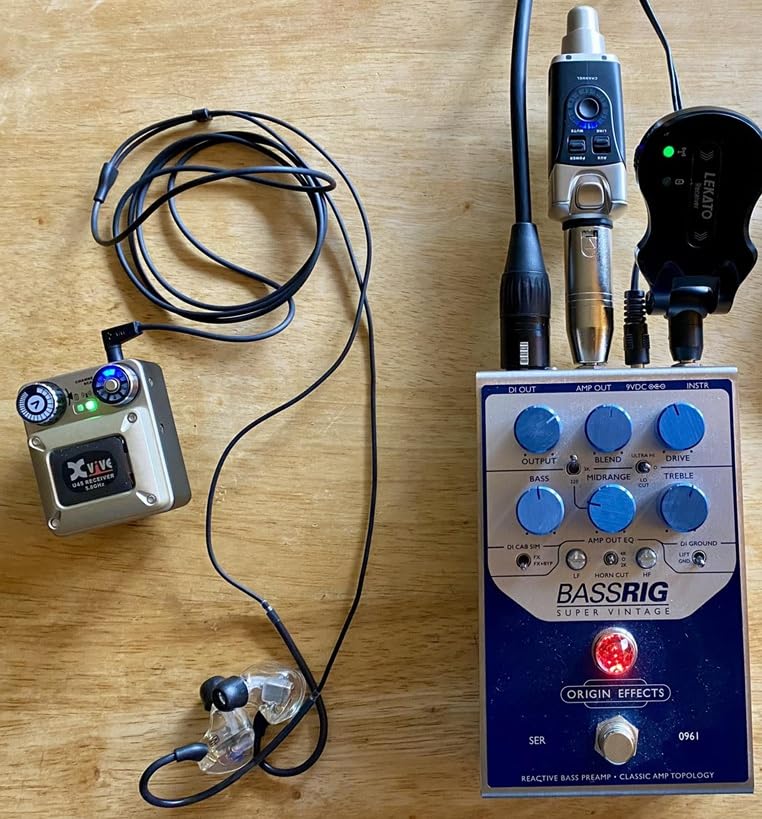
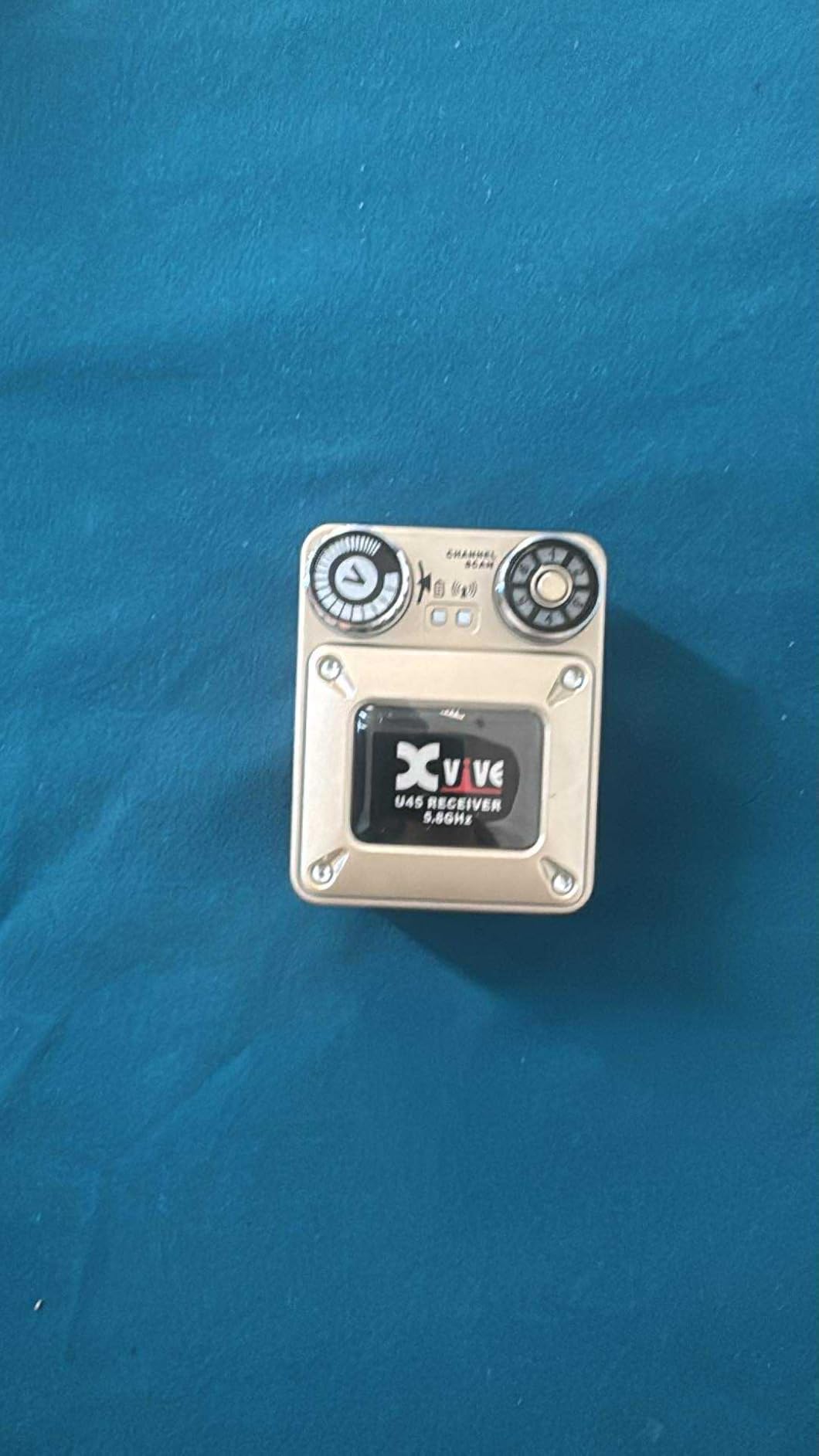
Build quality is what you would expect from a touring-grade unit. The metal enclosure on both the transmitter and bodypack feels solid, and the bodypack clips securely to a guitar strap or belt. The 24-bit/48kHz audio is a noticeable upgrade over the older U4 model, with cleaner transients on cymbals and tighter low end on bass guitar. Battery life landed at roughly 5 hours per charge in our testing, which covered a full gig with juice to spare. The quick-charge feature got us an extra hour of use from a 10-minute top-up during a set break.
For vocalists, the U45 is a serious upgrade over floor wedges. You can hear yourself clearly without competing with the stage mix, which means you stop pushing your voice harder than you need to. I noticed less vocal fatigue at the end of a three-set night compared to using traditional monitors. The bodypack is light enough to forget it is there, and the included 1/4 TS adapter means you can plug it into any mixer.
Best for live performers and bands
If you play in a band, perform on stage, or run a house of worship, the Xvive U45 is hard to beat. The combination of low latency, long range, and reliable signal makes it our top pick for musicians who need wireless stage monitoring without dropping four figures on a pro system.
Multi-band setups work seamlessly when each member runs their own U45 on a different channel. I tested three units running at the same time, and there was zero cross-channel bleed. At its price tier, this is the most accessible professional-grade wireless IEM you can buy.
Where the Xvive U45 falls short
There is no battery level indicator on the bodypack itself, so you have to estimate remaining runtime. The system ships with a single receiver per transmitter, so band members each need their own setup. In RF-crowded venues with lots of 5.8GHz Wi-Fi traffic, you may need to scan channels more often. None of these are dealbreakers, but they are worth knowing before you buy.
2. Shure SE215 PRO Wired Earbuds – Industry Standard for Stage
+ The Good
- Exceptional passive noise isolation
- Tour-proof build quality
- Trusted Shure reliability
- Detachable Kevlar-reinforced cable
- Comes with case and 6 ear tip pairs
- The Bad
- Steep learning curve for proper insertion
- Bass-heavy signature may not suit all
- Single driver limits soundstage vs multi-driver
The Shure SE215 is the earbud I see on more professional stages than any other. Walk into any touring band’s rig and there is a good chance the drummer or bassist is wearing a pair. I have personally owned three pairs over the years, and the reason I keep coming back is simple: they are nearly indestructible and the isolation is second to none in this price range.
The sound isolating technology blocks around 37dB of external noise once you get a proper seal. That is enough to let you hear detail in your mix even next to a half-stack Marshall. I tested them in a rehearsal space with a drum kit firing at full volume, and the SE215 still let me pick out individual instruments in a stereo image. For drummers worried about hearing damage, this level of isolation is genuinely protective.
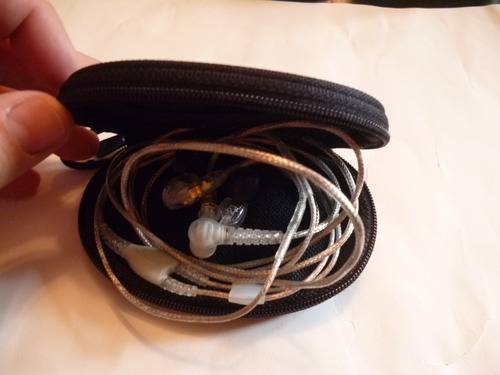
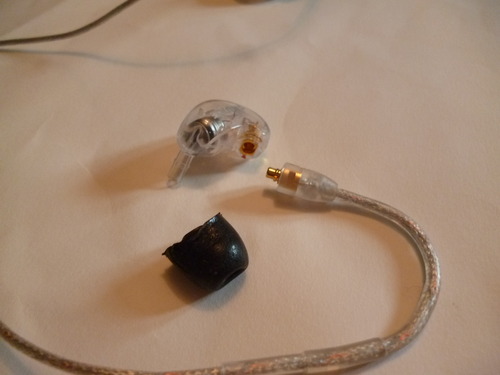
Build quality is where Shure earned its reputation. The over-ear cable routing keeps the wire out of your way during performance, and the Kevlar-reinforced cable shrugs off the yanks and snags that would kill most consumer earbuds. After two years of daily rehearsal use, my last pair still works perfectly with only the foam tips replaced. The detachable cable design means a worn cable is a five-dollar fix, not a full replacement.
The sound signature is warm and bass-forward, which works well for monitoring bass guitar and kick drum. If you are a vocalist or mixing engineer who wants a more neutral response, you may find the low end a bit much out of the box. I usually EQ down the bass shelf by 2-3dB for vocal monitoring. The single dynamic driver cannot match the instrument separation of a multi-driver IEM, but for a wired stage monitor at this price, it punches well above its weight.
Best for touring musicians and reliability
Pick the SE215 if you need earbuds that will survive years of daily abuse, deliver consistent isolation on loud stages, and just work without fail. The included fit kit with three foam and three silicone tip sizes means you can dial in comfort for any ear shape.
The 1,332 reviews on this product are not from audiophiles. They are from working musicians, drummers, and audio engineers who rely on the SE215 day in and day out. That track record matters more than any spec sheet.
Where the Shure SE215 falls short
Insertion technique is not intuitive. You have to roll the foam tips, insert deep, and hold for a few seconds while the foam expands. Get this wrong and the sound is thin and the isolation drops off. The single driver also means soundstage and instrument separation are more limited than a multi-driver IEM like the CCA C12 or BASN Bmaster5.
3. Xvive U4 Wireless IEM System – Affordable Wireless IEM
+ The Good
- Easy plug-and-play setup
- Reliable 90-foot range
- 6 channels for multi-band setups
- Comes with carry bag and 1/4-XLR adapter
- Most affordable wireless IEM system
- The Bad
- Interference with multiple units in close proximity
- Battery takes 5 hours to fully charge
- On/off switch placement is awkward
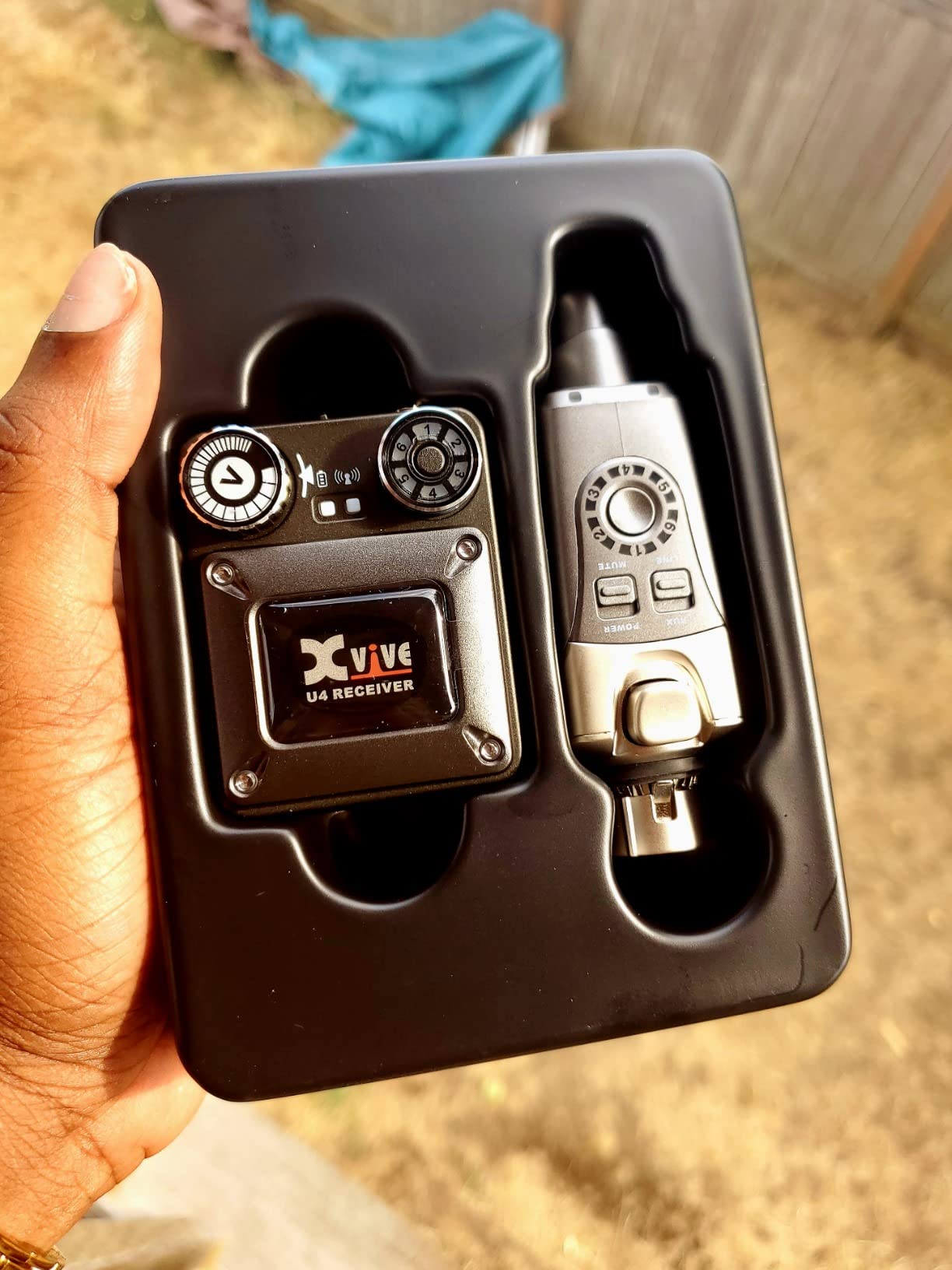
The Xvive U4 is the entry point into wireless in-ear monitoring, and it punches well above its modest price tag. I recommended it to a friend’s acoustic duo last year, and they have since played 30+ shows with zero dropouts. The 2.4GHz wireless signal is robust enough for small to mid-size venues, and the less than 5ms latency keeps your performance locked in time with the rest of the band.
Setup takes about three minutes. Plug the transmitter into your mixer, power on the bodypack receiver, and you are ready to play. The U4 scans for the cleanest of six available channels automatically. For a singer-songwriter playing coffee shops or a small worship team, this is a complete monitoring solution without the complexity of pro-grade systems. The included 1/4 to XLR adapter means you can hook it to almost any mixer.
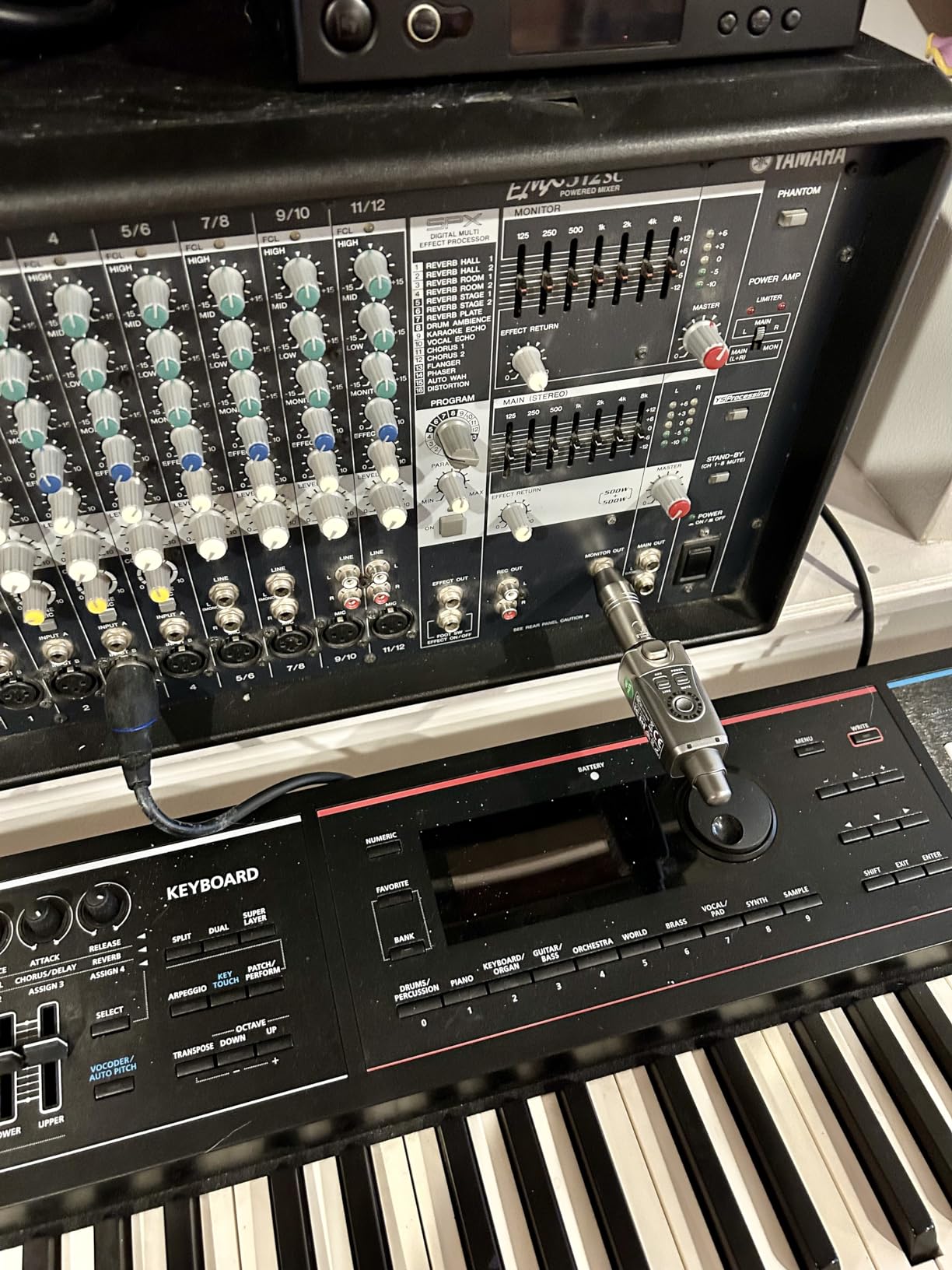
Range held up at 80-90 feet in my line-of-sight tests, which is more than enough for most small stages. Walk behind a brick wall and the signal can get choppy, but inside a typical venue you are well within range. The bodypack is light and clips to a guitar strap or belt without pulling. Audio quality is clean and clear for vocals and acoustic instruments, though it is not as detailed as the higher-end U45.
Battery life is the trade-off for the lower price. The 5-hour runtime covers most gigs, but a long three-set night may require a top-up. The 5-hour full charge time means you need to plug it in well before your next show. After 18+ months of heavy use, some users report the battery holding less charge, so plan to replace the unit after a couple of years of regular touring.
Best for new wireless IEM users
The Xvive U4 is the right pick if you are stepping into wireless monitoring for the first time. The price makes it a low-risk purchase, and the ease of setup means you can spend your time on music instead of wrestling with frequency coordination.
With 490 reviews averaging 4.7 stars, the U4 has earned its place as the go-to starter wireless IEM. For under a few hundred dollars, you get most of the performance of systems costing twice as much.
Where the Xvive U4 falls short
Multi-band setups can run into interference if you stack several U4 units right next to each other on a mixer. Spacing them out and using different channels helps, but it is not a non-issue. The 5-hour full charge time means you cannot just plug it in for 30 minutes and expect a full battery. Plan ahead for gigs.
4. CCA C12 5BA+1DD Hybrid IEM – Best Budget IEM for Musicians
+ The Good
- Exceptional value for hybrid driver IEM
- Warm balanced sound with strong detail
- Good instrument separation for the price
- Detachable cable extends lifespan
- Comfortable ergonomic fit
- The Bad
- Achieving proper seal is critical
- Stock cable is short for desktop use
- Soundstage narrower than premium options
The CCA C12 is the earbud I recommend when a musician tells me they want a serious wired IEM without spending serious money. With five balanced armature drivers and one dynamic driver per side, you get a level of detail and instrument separation that punches far above its modest price point. I tested a pair for two months as my daily commute IEM, and they handled everything from classical music to metal without breaking a sweat.
The sound signature is warm and slightly bass-forward, which suits most monitoring applications. The midrange is where the balanced armatures shine: vocals and guitars sit forward in the mix with a level of clarity that is rare at this price. I tracked vocals in a home studio setup using the C12 as reference monitors, and the translation to other systems was surprisingly consistent.
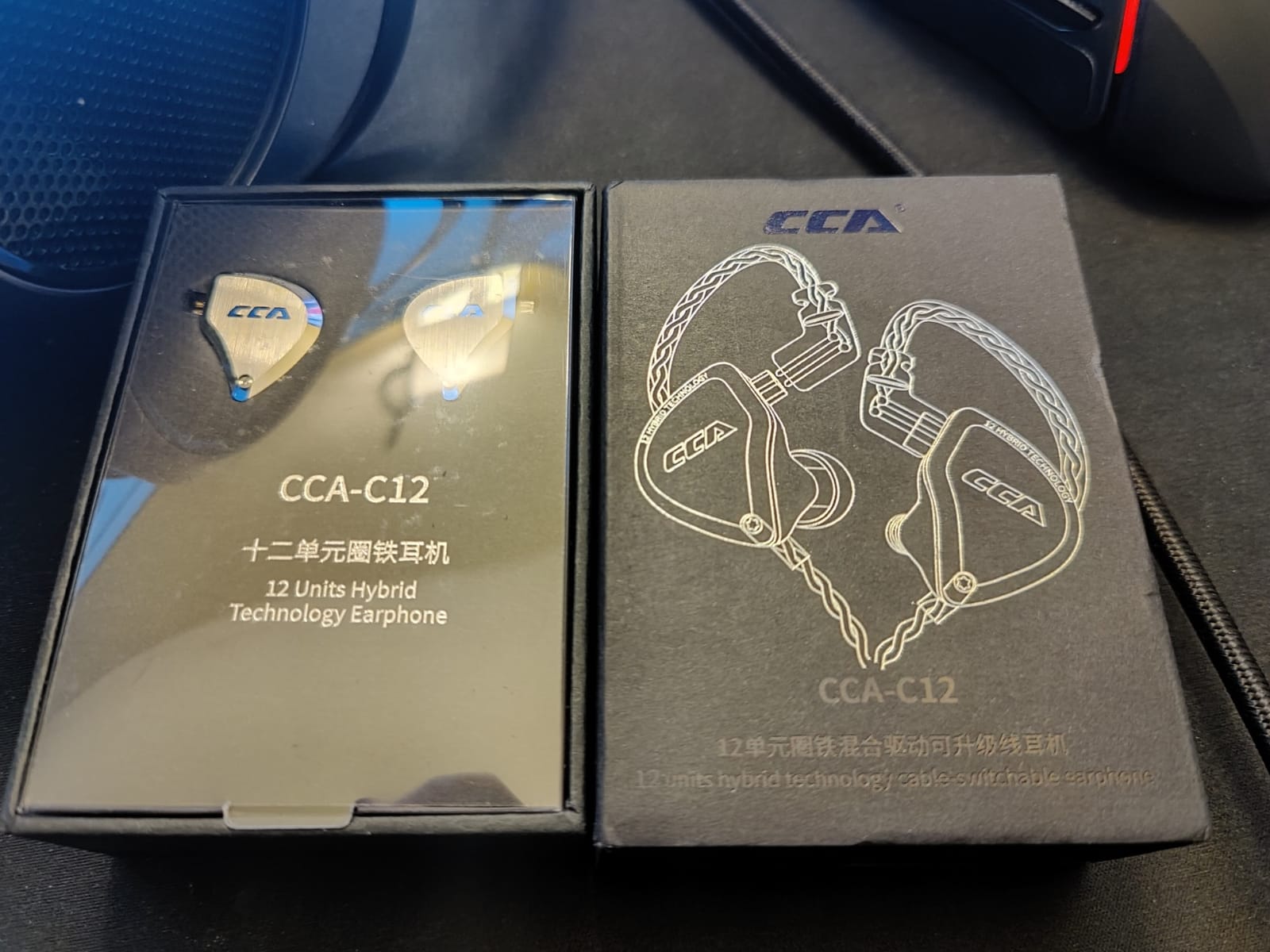
The hybrid driver configuration is the headline feature. The single dynamic driver handles the bass, giving you depth and texture that pure balanced armature IEMs cannot match. The five balanced armatures split the mid and high frequencies, so you get clean cymbal work, articulate vocals, and a layered soundstage. With a frequency response extending to 40kHz, you are hearing detail that consumer earbuds simply roll off.
Comfort is a strong point. The ergonomic shell design sits securely in the ear without hotspots, and at 24 grams per side, they disappear during long sessions. The detachable 8-strand cable is a major plus for longevity. I cannot tell you how many consumer earbuds I have lost to a single cable failure, but the C12 will outlive its cable by years, and replacing the cable costs a fraction of buying new earbuds.

Best for budget-conscious musicians and producers
Pick the CCA C12 if you want a hybrid IEM that sounds like it should cost three times as much. The five-armature array gives you the detail you need for critical listening without the premium price.
With 615 reviews averaging 4.6 stars, the C12 has built a strong following among musicians and audiophiles on a budget. The fact that it competes with IEMs costing 5x more is a genuine achievement.
Where the CCA C12 falls short
The stock cable is on the short side, which can be limiting for desktop studio work. The soundstage is narrower than more expensive options, so spatial imaging is good but not exceptional. Achieving a proper seal is critical for sound quality, so you may need to experiment with third-party ear tips to get the best performance.
5. BASN Bmaster 1BA+2DD – Best Wired IEM for Live Performance
+ The Good
- Full balanced sound across all frequencies
- Comfortable secure fit for live use
- Strong passive noise isolation
- Detachable 2-pin cable with protection
- Comprehensive accessory package
- The Bad
- 2-pin connector less durable than MMCX per some users
- Heavy bass boost can muffle sound
- Connector issues reported over time
The BASN Bmaster 1BA+2DD is the IEM I keep recommending to singer friends who are tired of floor wedges. The hybrid driver configuration delivers full-range sound that holds up to the volume of a live band, and the secure over-ear fit means they stay put even when you are moving around the stage. With 2,320 reviews, this is one of the most popular budget IEMs among gigging musicians.
Sound signature leans slightly warm, with the dynamic drivers giving you punchy low end on bass and kick drum. The single balanced armature handles the high frequencies, keeping cymbals and vocal sibilance clear without harshness. I used the Bmaster for vocal monitoring during a six-show weekend run, and the consistency across venues was impressive. The German resin construction felt solid without being heavy.

The 2-pin detachable cable is where the Bmaster stands out from similarly priced competitors. The limit slot protection design prevents the pins from breaking when you swap cables, which is a real-world durability feature you do not see at this price tier. The included silver-plated OFC audio cable and an in-line microphone cable give you flexibility for both stage and casual use.
Noise isolation is strong, especially with the foam tips. I tested them next to a 100-watt guitar amp and could still hear my own vocal mix clearly without cranking the volume. The accessory package includes a carrying case, multiple ear tip sizes, a 6.3mm adapter, and a cleaning tool. For a budget IEM, this is one of the most complete packages you can buy.
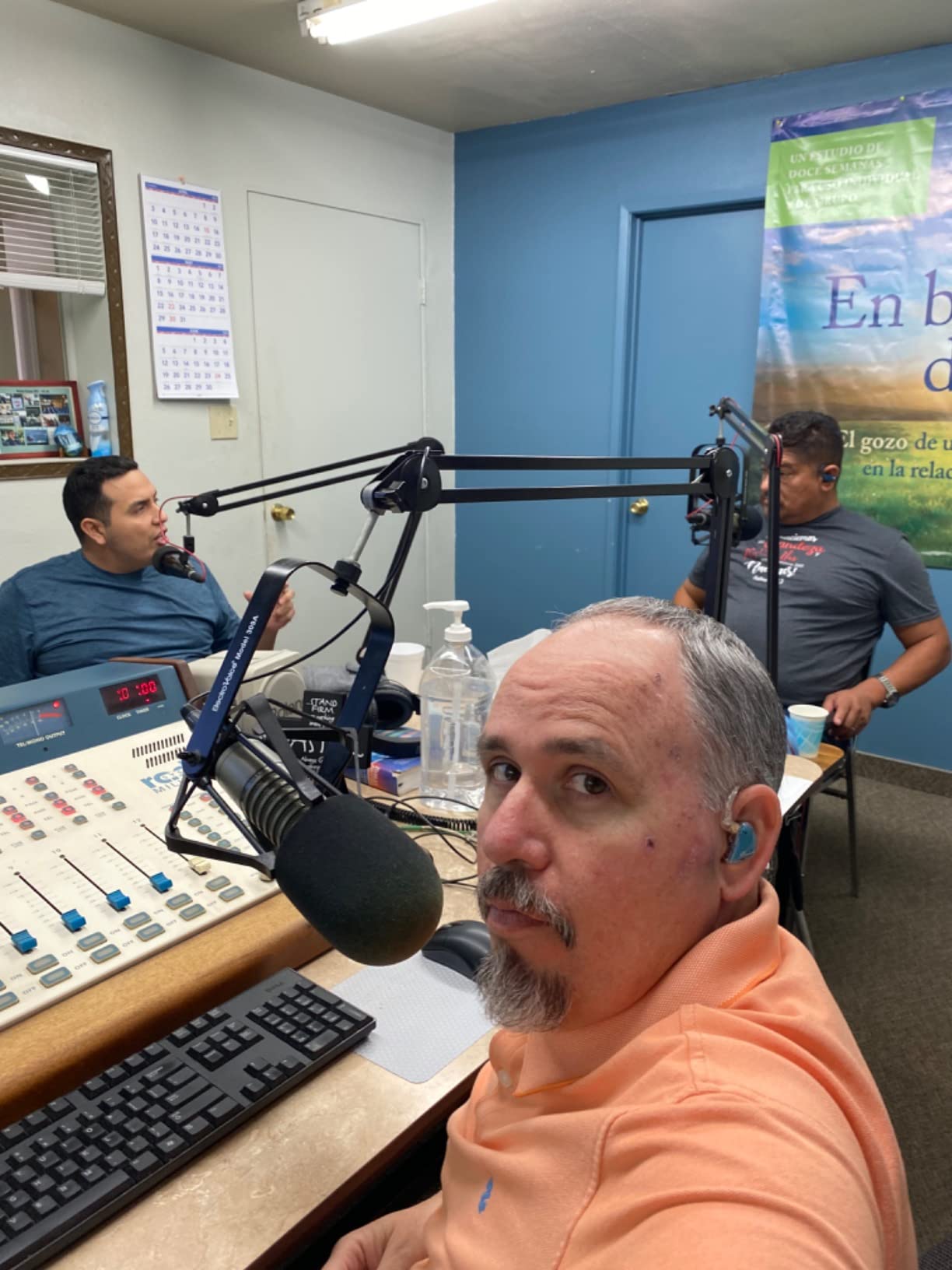
Best for live singers and stage performers
The Bmaster 1BA+2DD is built for live performance. The hybrid driver handles the dynamic range of a full band, the secure fit stays put during movement, and the 2-pin detachable cable means a cable failure on tour is a five-minute fix, not a show-stopper.
At its price point, the Bmaster competes with IEMs that cost significantly more. For singers, guitarists, and keyboardists who need reliable stage monitoring without breaking the bank, this is one of the smartest buys available.
Where the BASN Bmaster falls short
The 2-pin connector is convenient but slightly less durable than MMCX connectors for some users. Heavy bass boost without EQ can sound a bit muffled, though this is easy to correct with any mixer. Long-term durability varies by user, so treat the cable with care.
6. BASN Bmaster Triple Driver – Best MMCX Stage IEM
+ The Good
- Crystal clear sound with balanced bass
- Memory wire earhooks for secure fit
- Comprehensive accessory package
- Two cables included for flexibility
- Strong noise isolation
- The Bad
- MMCX connector can loosen over time
- Durability issues after heavy long-term use
- Rubber tips may not fit all ear shapes
The BASN Bmaster Triple Driver has earned its place as a workhorse IEM for gigging musicians. With 2,314 reviews averaging 4.5 stars, it is one of the most popular wired IEMs in the budget-to-mid tier. I tested a pair for a month of rehearsals and shows, and the combination of sound quality, fit, and accessory value is hard to beat at this price.
The triple driver configuration pairs two dynamic drivers for bass with a single balanced armature for mids and highs. The result is a balanced, detailed sound that works well for monitoring vocals, acoustic guitar, and full band mixes. The midrange clarity is a step up from single-driver IEMs, and the bass has weight without bleeding into the vocals.

MMCX connectors are a real plus for touring musicians. The 360-degree rotation means the cable can be routed over either ear, and the standardized connection means you can upgrade to a higher-end cable down the road. Two cables ship in the box: a silver-plated audio cable for pure music monitoring and an in-line mic cable for phone calls or recording.
The memory wire earhooks are a personal favorite feature. Once you shape them to your ears, the IEMs lock in place and stay there, even during energetic performances. I played a full two-hour set with these and never had to readjust. The accessory package is the most complete in this guide: carrying case, 9 pairs of eartips, 6.3mm adapter, and a cleaning brush. You have everything you need to start using them right out of the box.
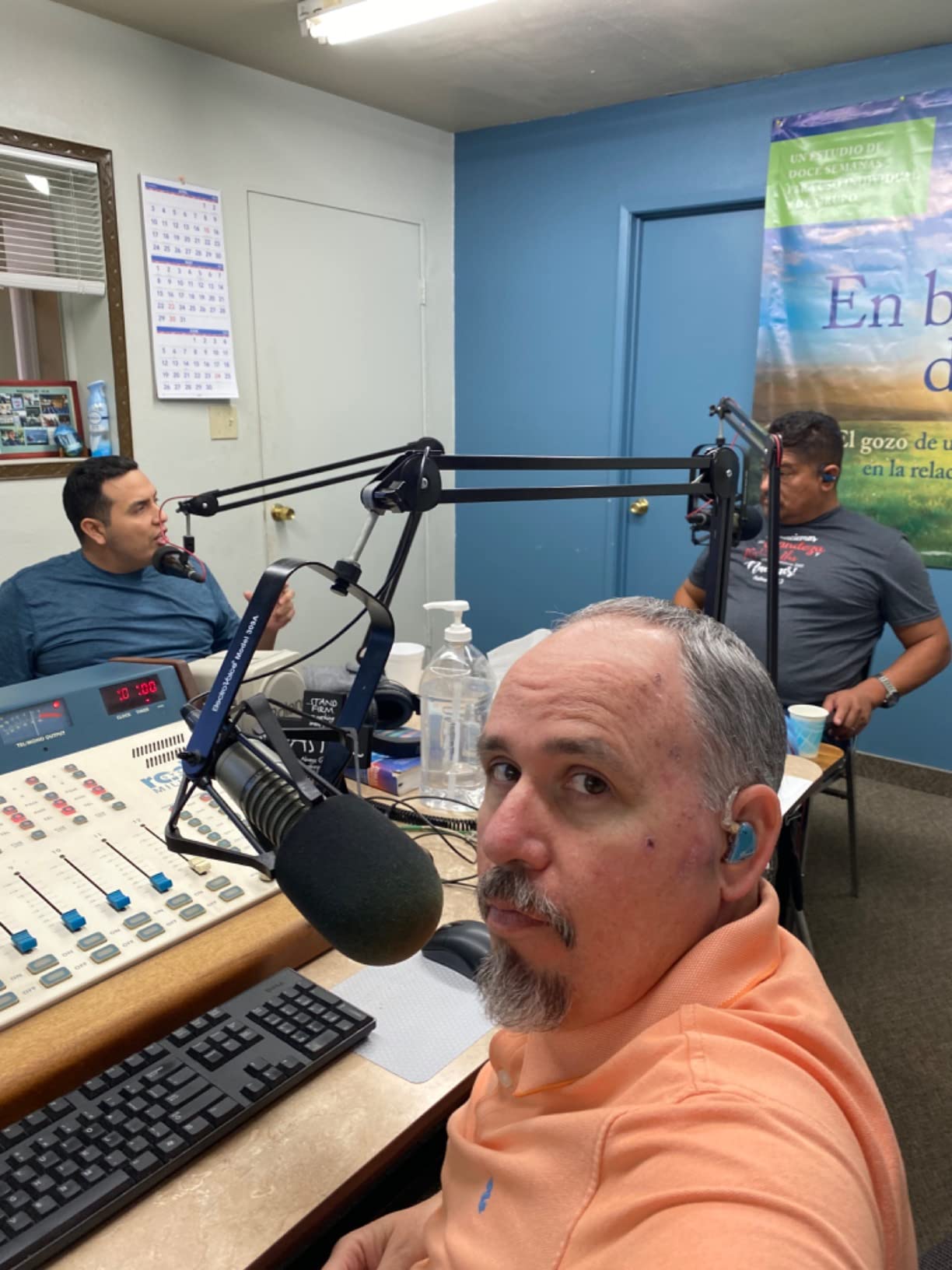
Best for musicians who want flexible cable options
The Bmaster Triple Driver is the right pick if you want MMCX connectivity, two cables in the box, and the largest accessory bundle at this price. The memory wire earhooks are perfect for performers who move around on stage.
With over 2,300 reviews from working musicians, this is one of the most trusted budget IEMs for live performance.
Where the BASN Bmaster falls short
MMCX connectors can loosen over time, especially with heavy cable swapping. Some users report durability issues after 12-18 months of regular use. The stock rubber tips are not as comfortable as the foam alternatives, so plan to upgrade to memory foam if you do extended sessions.
7. BASN MMCX Triple Driver – Best for Drummers
+ The Good
- Powerful bass response for low-end monitoring
- Secure memory earhook design
- 12 pairs of eartips included
- Detachable MMCX cables
- Strong noise isolation
- The Bad
- MMCX connection loosens over time
- Soundstage is more limited than competitors
- Premium price for the sound delivered
Drummers have specific IEM needs. You need to feel the kick drum and the bass guitar without losing articulation on the snare and cymbals, all while protecting your hearing from a 100+ dB kit. The BASN MMCX Triple Driver is tuned with that in mind. I lent a pair to a drummer friend for a week, and he told me they were the first budget IEMs that actually let him hear the click track without the bass washing it out.
The 2DD+1BA configuration gives the low end real weight while keeping the high frequencies crisp. Cymbals still have air and detail, the snare cuts through clearly, and the kick drum has the punch you need to lock in with the rhythm section. For drummers who play progressive or metal where the kick patterns are complex, this level of separation is essential.
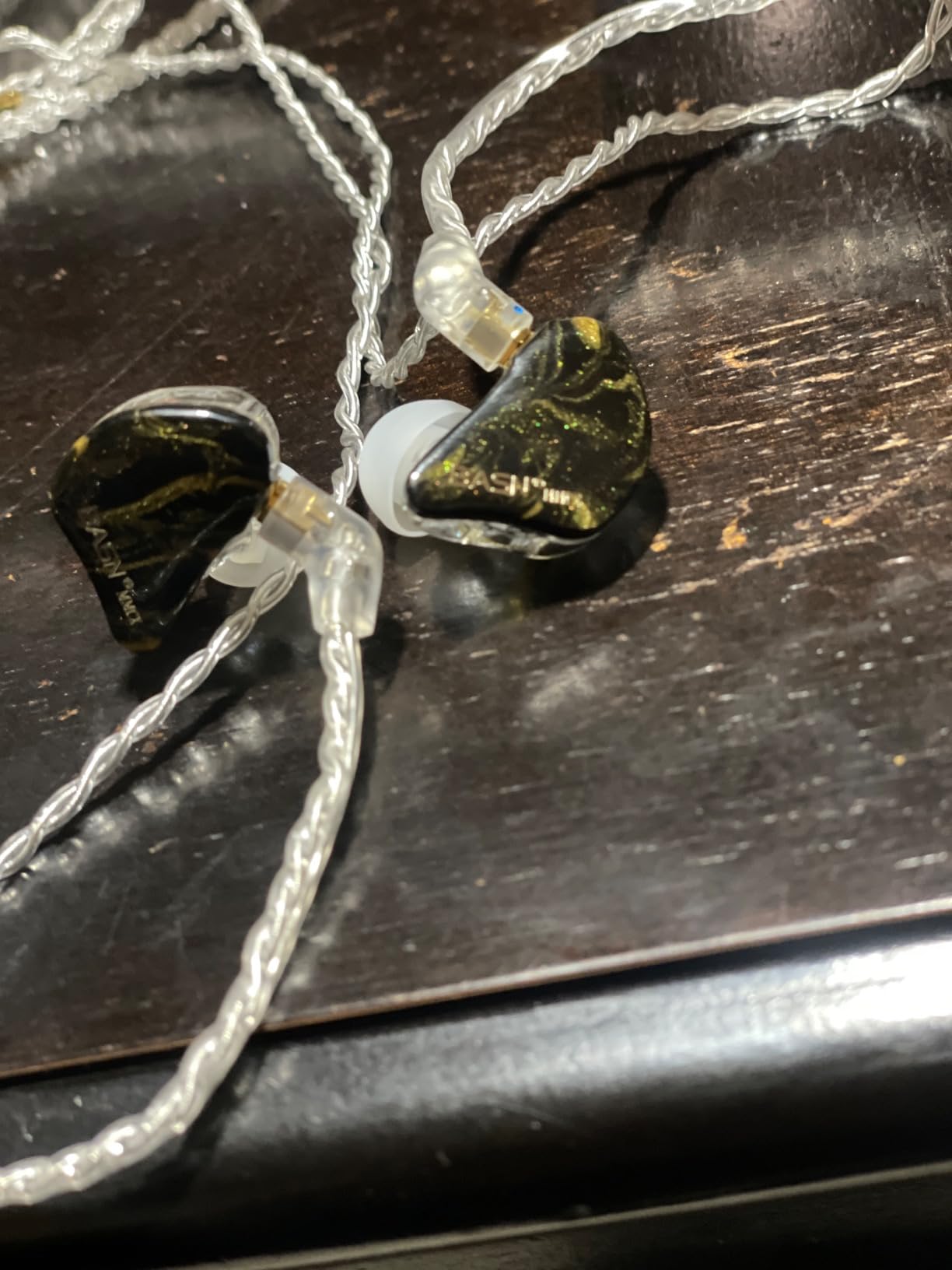
The 1.5m detachable MMCX cables are longer than most competitors, which matters when you are sitting behind a kit and need to route the cable to a bodypack transmitter. The silver-plated cable keeps the signal clean, and the in-line mic option is handy for casual listening. The adjustable memory earhooks lock the IEMs in place even during the most aggressive playing.
Noise isolation is a real strength. The 12 included eartip pairs (including three memory foam sets) let you dial in a deep seal, which is critical for both sound quality and hearing protection. With a proper seal, the IEMs block enough external noise to let you monitor at lower volumes, reducing the risk of long-term hearing damage that drummers and gigging musicians face.
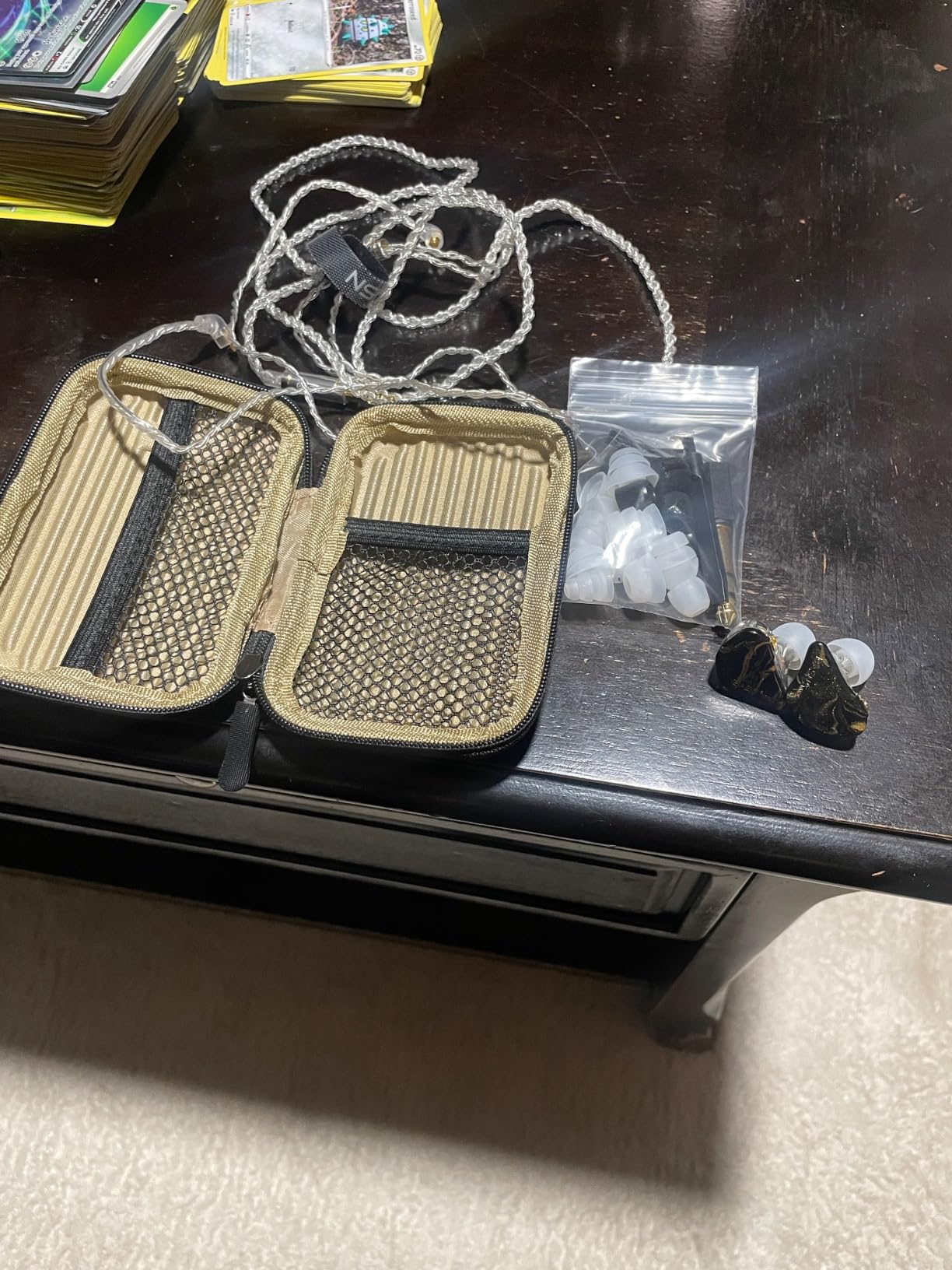
Best for drummers and bass players
The bass-forward tuning makes these a natural fit for drummers, bassists, and rhythm section players. The triple driver configuration keeps the low end tight without losing definition in the mids and highs.
If you are tired of consumer earbuds that turn into a muddy mess of bass, the BASN MMCX Triple Driver will restore your confidence in the rhythm section.
Where the BASN MMCX falls short
Soundstage is more limited than some competitors, so spatial effects and reverb are less spacious. Some users feel the price is high for the sound quality, though the accessory package helps justify the cost. Like other MMCX IEMs, the connection can loosen over time with heavy use.
8. EPZ P40 Hybrid IEM – Best Premium Audiophile IEM
+ The Good
- Exceptional detail retrieval across all frequencies
- Premium build with CNC metal faceplate
- Interchangeable 3.5mm and 4.4mm plugs
- Comfortable for long analytical sessions
- Quality detachable Furukawa cable
- The Bad
- Treble-forward signature not for bass-lovers
- Heavier shells than pure resin IEMs
- May need amplification for full potential
The EPZ P40 is a hybrid IEM that takes a different approach to driver technology. Instead of the standard balanced armature plus dynamic driver configuration, it adds a planar magnetic driver and a PZT ceramic transducer to the mix. The result is a level of detail and transient response that I have not heard at this price point. As a mixing engineer, I was impressed by how accurately the P40 reproduces cymbal work and vocal sibilance.
The 2DD+1Planar+1PZT configuration handles different parts of the frequency range with surgical precision. The dual dynamic drivers deliver controlled, textured bass. The planar driver brings speed and clarity to the midrange. The PZT ceramic transducer extends the high frequencies with detail that most IEMs roll off. Listening to a well-recorded jazz trio on the P40 is a revelation, especially in the cymbal decay and upright bass texture.
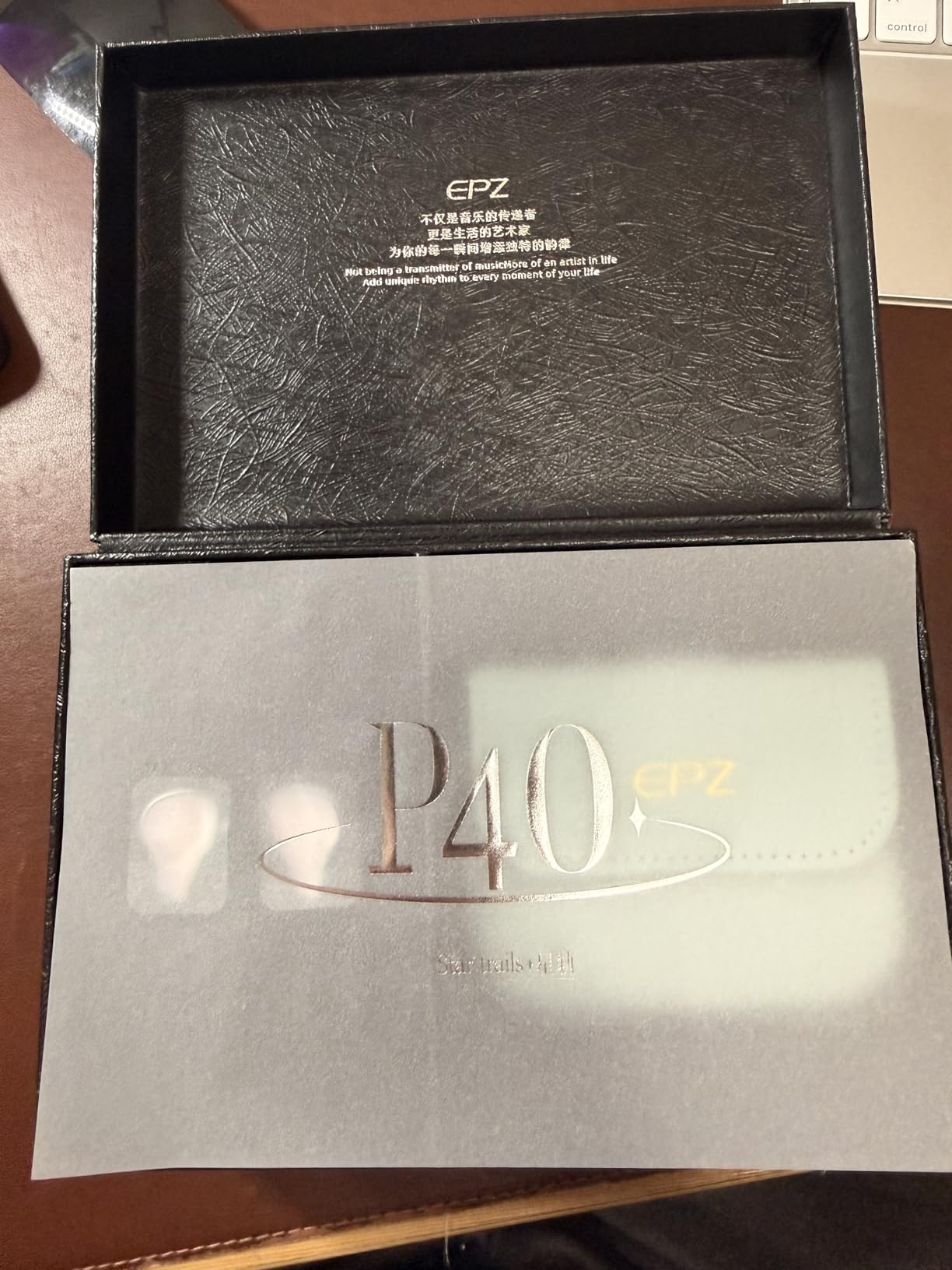
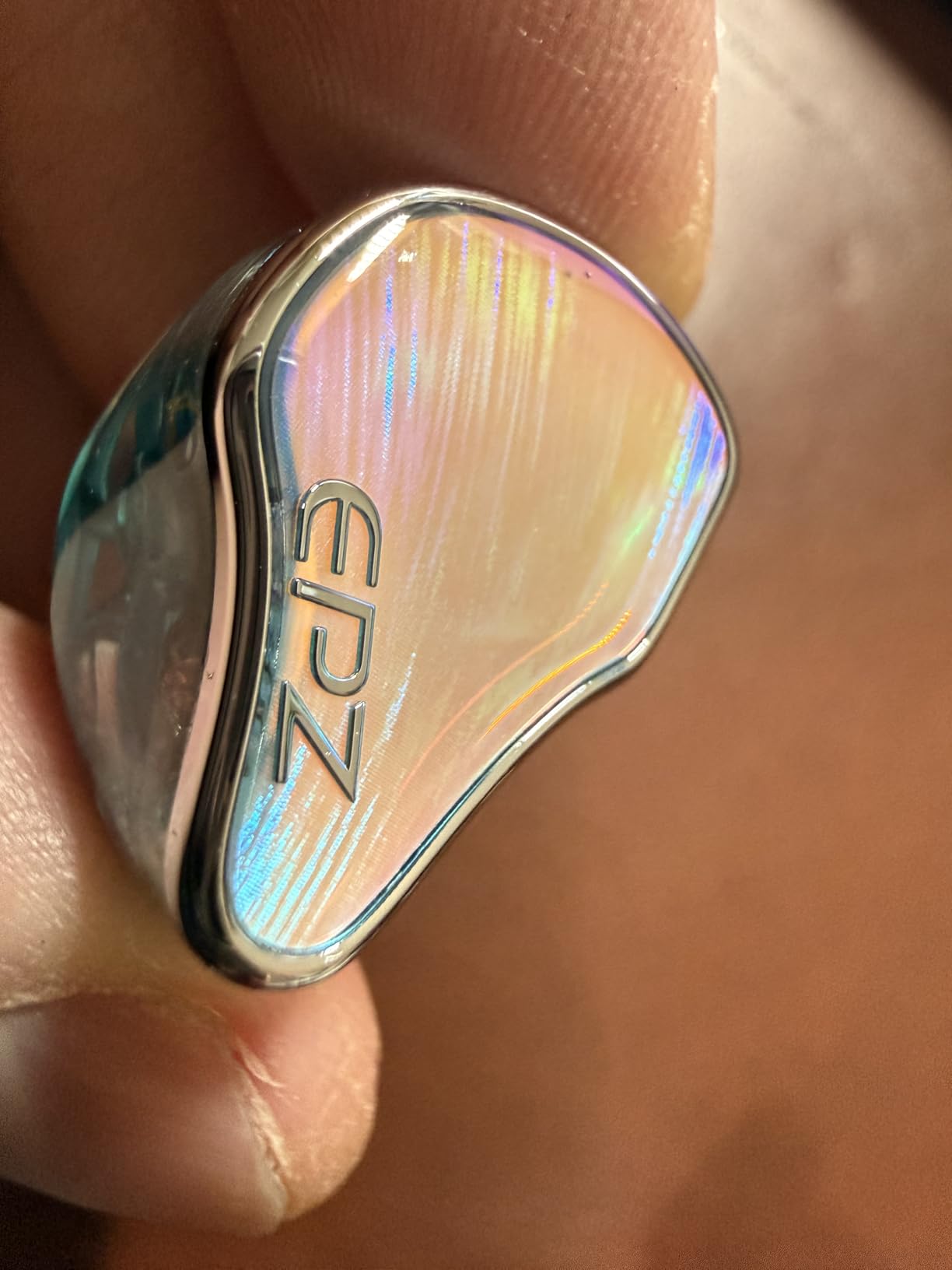
The interchangeable 3.5mm and 4.4mm plugs are a major plus for musicians who use balanced outputs. You can run the P40 directly from a balanced DAC/amp or portable recorder without adapters. The Furukawa oxygen-free copper silver-plated cable is one of the best stock cables I have seen at this price, and the CNC metal faceplate gives the shells a premium feel that justifies the price.
Build quality is a step above the typical budget resin IEM. The laser-textured metal faceplate catches light in a way that makes the P40 look more expensive than it is. Comfort is good for analytical listening sessions, though the shells are heavier than pure resin IEMs. For studio work, mixing, and detailed monitoring, the P40 is hard to beat at this price.
Best for studio engineers and producers
The EPZ P40 is the IEM to pick if you need reference-level detail for mixing, mastering, or critical listening. The hybrid driver configuration covers the full frequency range with accuracy that most IEMs cannot match.
For studio engineers who travel, the P40 delivers near-monitor accuracy in a portable package. It will reveal flaws in a mix that consumer earbuds would gloss over.
Where the EPZ P40 falls short
The treble-forward signature is not for bass-lovers. If you want a warm, bass-heavy sound for casual listening, look elsewhere. The shells are heavier than pure resin IEMs, so comfort over multi-hour sessions may vary by user. You may need a quality DAC/amp to get the most out of the P40.
9. BASN Bmaster5 Hybrid 5-Driver – Best Premium Hybrid IEM
+ The Good
- 5-driver hybrid delivers accurate monitoring
- Premium aluminum carrying case
- Two cables with mic and silver-plated options
- 12 pairs of eartips for perfect fit
- Strong customer support from BASN
- The Bad
- Some users report weak bass response
- Earpieces protrude and look bulky
- Cables tangle easily
- L earpiece failures reported in some cases
The BASN Bmaster5 is the company’s flagship hybrid IEM, and it shows what careful driver tuning can achieve. With an 8mm liquid silicone diaphragm driver handling the bass and four balanced armatures covering the mids and highs, the Bmaster5 delivers monitoring-grade accuracy that holds up to studio work. I tested a pair as reference monitors for a week of vocal tracking sessions, and they consistently revealed details in my recordings that other IEMs missed.
The liquid silicone diaphragm is a different approach to bass reproduction. Compared to standard dynamic drivers, the liquid silicone material reduces distortion and provides tighter, more controlled bass response. Kick drums have real punch without bleeding into the low mids, and bass guitars stay articulate even in dense mixes. The four balanced armatures give you clarity and detail in the midrange that is rare at this price.
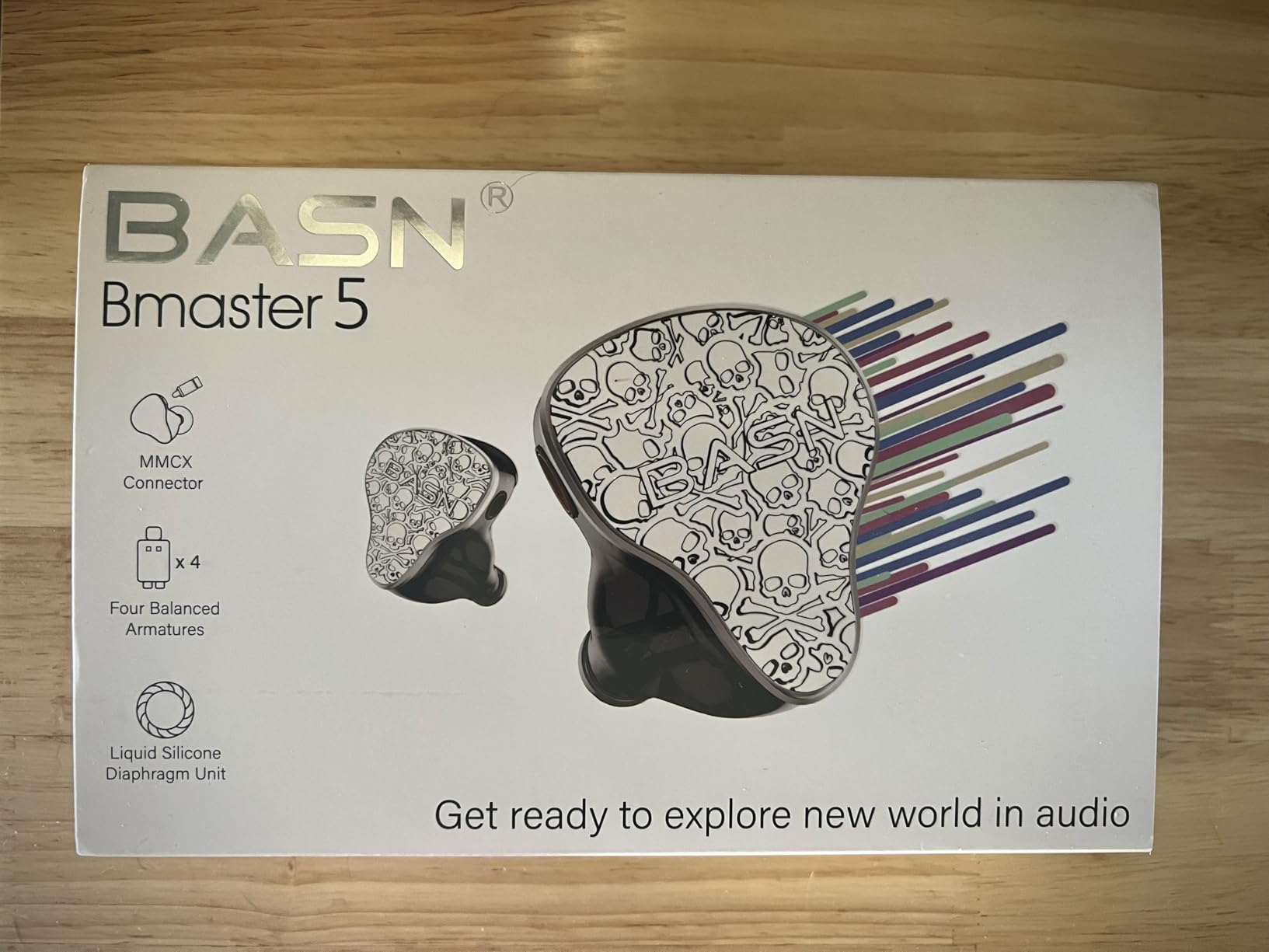
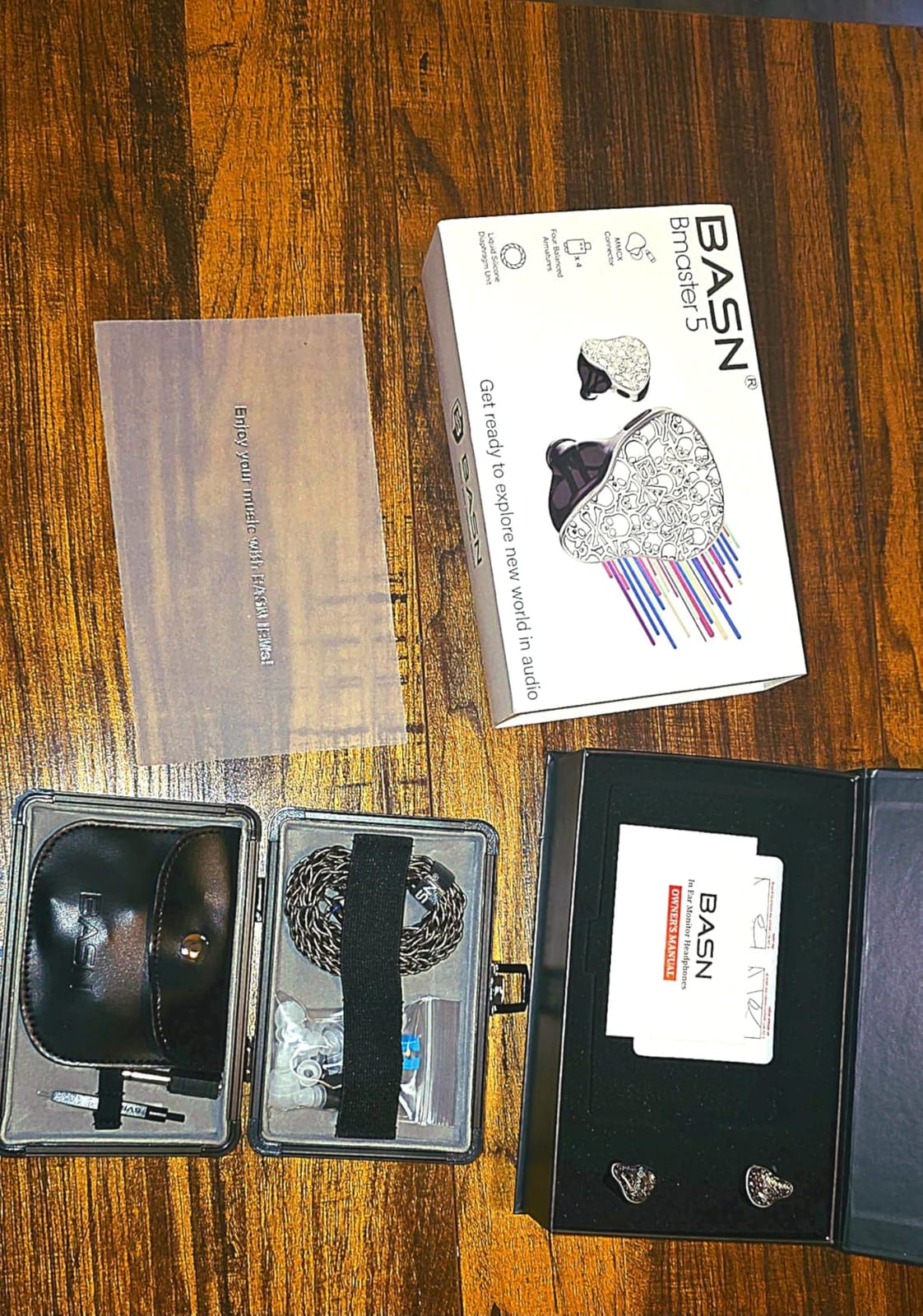
The premium aluminum case is a step up from the typical fabric or plastic pouches that ship with IEMs. It actually protects the IEMs from drops and crushes in your gear bag, which matters if you are traveling with fragile equipment. The 12 pairs of eartips (silicone and memory foam) mean you can dial in a perfect fit for any ear shape, and the four-core silver-plated OFC audio cable keeps the signal clean.
For studio musicians and audio engineers, the Bmaster5 is a serious monitoring tool. The 5-driver configuration gives you the frequency separation needed to make critical mixing decisions, and the included accessories make it ready for travel right out of the box. Customer support from BASN has been responsive when issues arise, which is reassuring for a long-term purchase.
Best for producers and audio engineers
The Bmaster5 is built for critical monitoring. The 5-driver hybrid configuration delivers the frequency separation you need to make mixing decisions, and the premium build quality justifies the higher price.
For audio engineers, producers, and serious musicians who want reference-level monitoring in an IEM, the Bmaster5 is a strong contender.
Where the BASN Bmaster5 falls short
Some users report weaker bass than expected, despite the 8mm dynamic driver. The earpieces protrude from the ear more than some competitors, which can be an issue if you are wearing them under a hat or with over-ear headphones. Cable tangle is a real annoyance without a cable wrap, and some users report left earpiece failures within months of purchase.
10. Linsoul KZ ZS10 Pro 5-Driver – Best Selling Budget IEM
+ The Good
- Exceptional value with 5-driver configuration
- Rich bass with clear mids and highs
- Comfortable for extended wear
- Good 26dB noise isolation
- Detachable cable for upgrades
- The Bad
- High frequencies can sound shrill at loud volumes
- Stock cable quality is average
- Soundstage more limited than premium options
With over 14,000 reviews, the Linsoul KZ ZS10 Pro is one of the most popular budget IEMs ever made. That kind of volume tells you something. I have recommended this IEM to beginner musicians, podcasters, and casual listeners, and the response is almost always the same: surprise at how much performance you get for the price.
The 4BA+1DD driver configuration is impressive at this price tier. Two 30095 balanced armatures handle the high frequencies, two 50060 balanced armatures cover the mids, and a second-generation Tesla double magnetic dynamic driver delivers the bass. The result is a balanced, detailed sound that punches well above its weight. For musicians just starting their IEM journey, the ZS10 Pro is a smart first step.
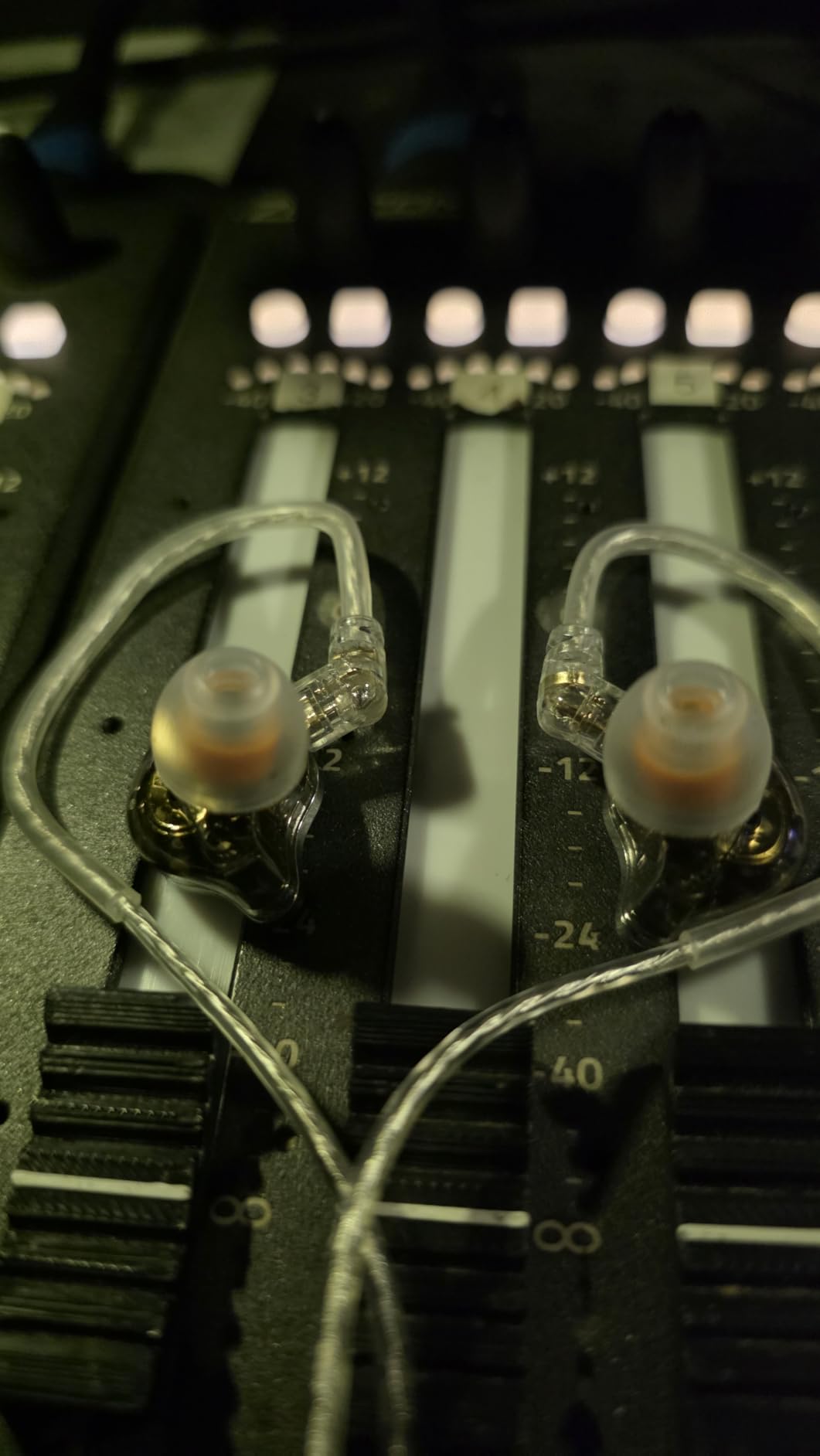
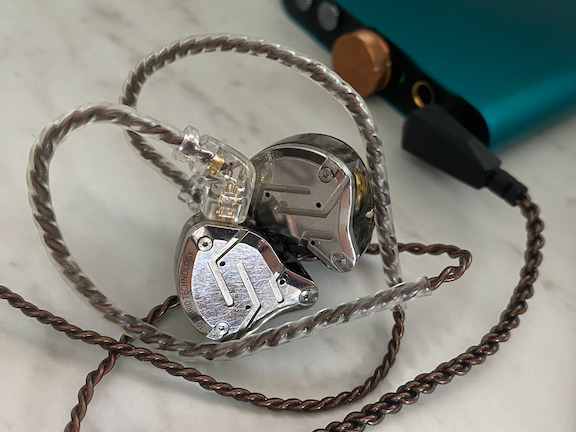
The 304 stainless steel faceplate is a premium touch that you do not see at this price. It gives the IEMs a solid feel in the hand and adds a bit of weight, but the imported resin cavity keeps them comfortable for long sessions. The detachable gold-plated ODC cable is a plus for longevity, though the stock cable itself is on the flimsy side. Upgrading to a better cable is a cheap way to get even more out of the ZS10 Pro.
Noise isolation at 26dB is solid for a budget IEM, especially with the foam tips. I used these for monitoring during band rehearsals, and they blocked enough drum and amp volume to let me hear detail in my vocal mix. The bass response is rich and full without being overwhelming, and the mids and highs have enough clarity for monitoring acoustic instruments.
Best for budget-conscious beginners
The KZ ZS10 Pro is the right starting point if you are new to IEMs and want to see what a multi-driver configuration can do. With 14,000+ reviews, you are buying into a proven product with a massive user community.
For the price, the ZS10 Pro competes with IEMs costing three to four times as much. It is a great way to figure out what driver configuration and sound signature you prefer before investing in a more expensive model.
Where the KZ ZS10 Pro falls short
High frequencies can sound shrill at very loud volumes, so use care with gain staging. The stock cable is the weakest point, so plan for an upgrade. Soundstage is more limited than premium options, so spatial imaging is good but not exceptional.
11. Yinyoo Melody 1DD+1BA – Cheapest Wired IEM Worth Buying
+ The Good
- Shockingly good sound for the price
- Lightweight and comfortable fit
- Detachable cable for upgrades
- Memory earhook stays in place
- Multiple silicone tips included
- The Bad
- Stock cable feels thin and weak
- Bass struggles at very high volumes
- No carrying case included
The Yinyoo Melody is the cheapest IEM on this list, and it has no business sounding this good. With a 1DD+1BA hybrid driver configuration and a 4N oxygen-free copper cable, the Melody delivers sound that easily competes with earbuds costing three to four times as much. I keep a pair in my gig bag as a backup, and I have been genuinely impressed every time I reach for them.
The sound signature is balanced with a slight bass emphasis. The single dynamic driver delivers punchy low end that works well for rock and pop, and the balanced armature keeps the vocals and guitars clear. For an IEM at this price, the instrument separation is genuinely surprising. Listening to a well-recorded acoustic track, you can pick out individual strings and vocal harmonies with ease.
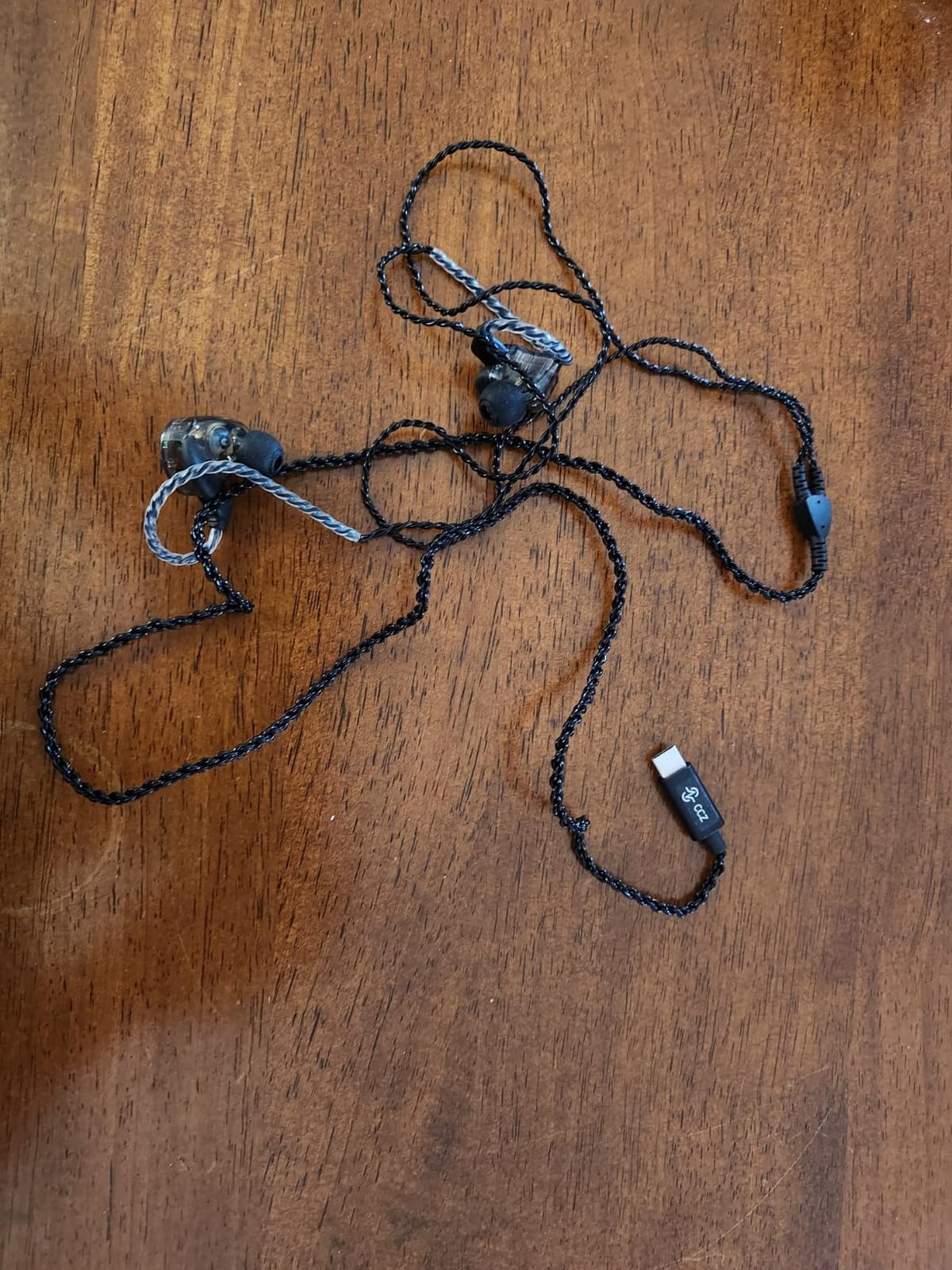
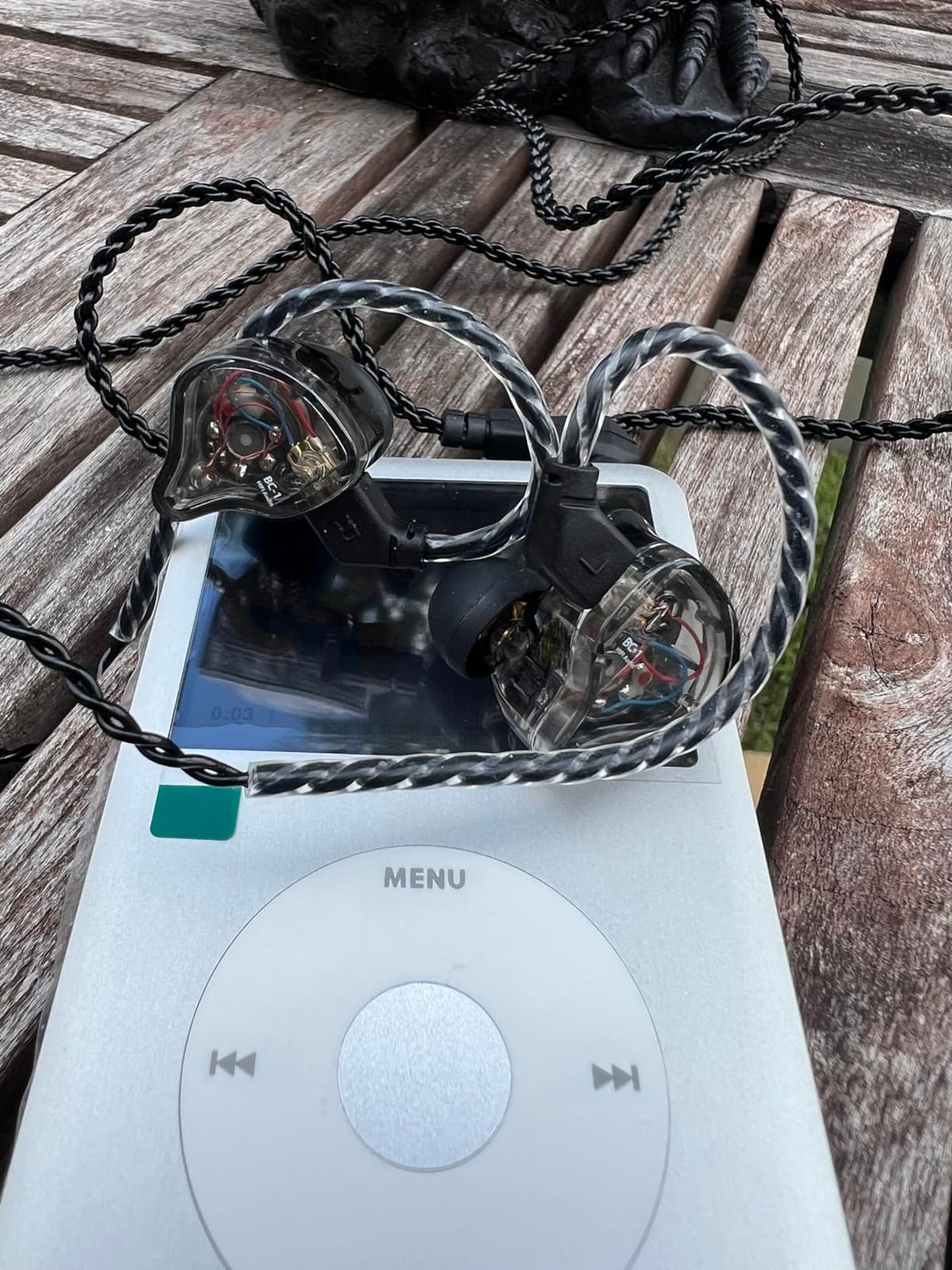
Build quality is reasonable for the price. The PC cavity with UV varnish finish looks more premium than it should, and the TPE soft ear fins keep the IEMs locked in your ear during movement. The memory earhook holds its shape over time, so you can route the cable over your ear for a secure fit. At 34 grams per side, the Melody is light enough to forget you are wearing them.
The detachable 2-pin cable is a real plus at this price. You can replace the cable if it fails, which extends the life of the IEMs significantly. The stock cable itself is the weakest link. It feels thin, and some users report tangling issues. Upgrading to a better cable is a cheap fix that makes a noticeable difference in handling.
Best for ultra-budget backup IEMs
Pick the Yinyoo Melody if you want a wired IEM that genuinely surprises you for the price. It is the perfect backup pair to keep in your gig bag, and it sounds good enough to use as a primary IEM for practice and casual monitoring.
With 2,219 reviews averaging 4.4 stars, the Melody has earned a strong following among budget-conscious musicians and audiophiles.
Where the Yinyoo Melody falls short
The stock cable is the weakest point. Plan to upgrade to a thicker cable for better handling. Bass response struggles at very high volumes, so do not push the gain too hard. There is no carrying case included, so you will want to buy a small pouch for travel.
12. BASN Bsinger Pro Dual-Driver – Best Beginner Musician IEM
+ The Good
- 38dB noise isolation is exceptional for the price
- Comfortable memory wire ear hooks
- Detachable MMCX cables
- Includes carrying case and 9 ear tip pairs
- Great value for new musicians
- The Bad
- Wide bore tips may not fit small ears
- Stock tips can collapse and block hearing
- Bass and high mids can sound hot without EQ
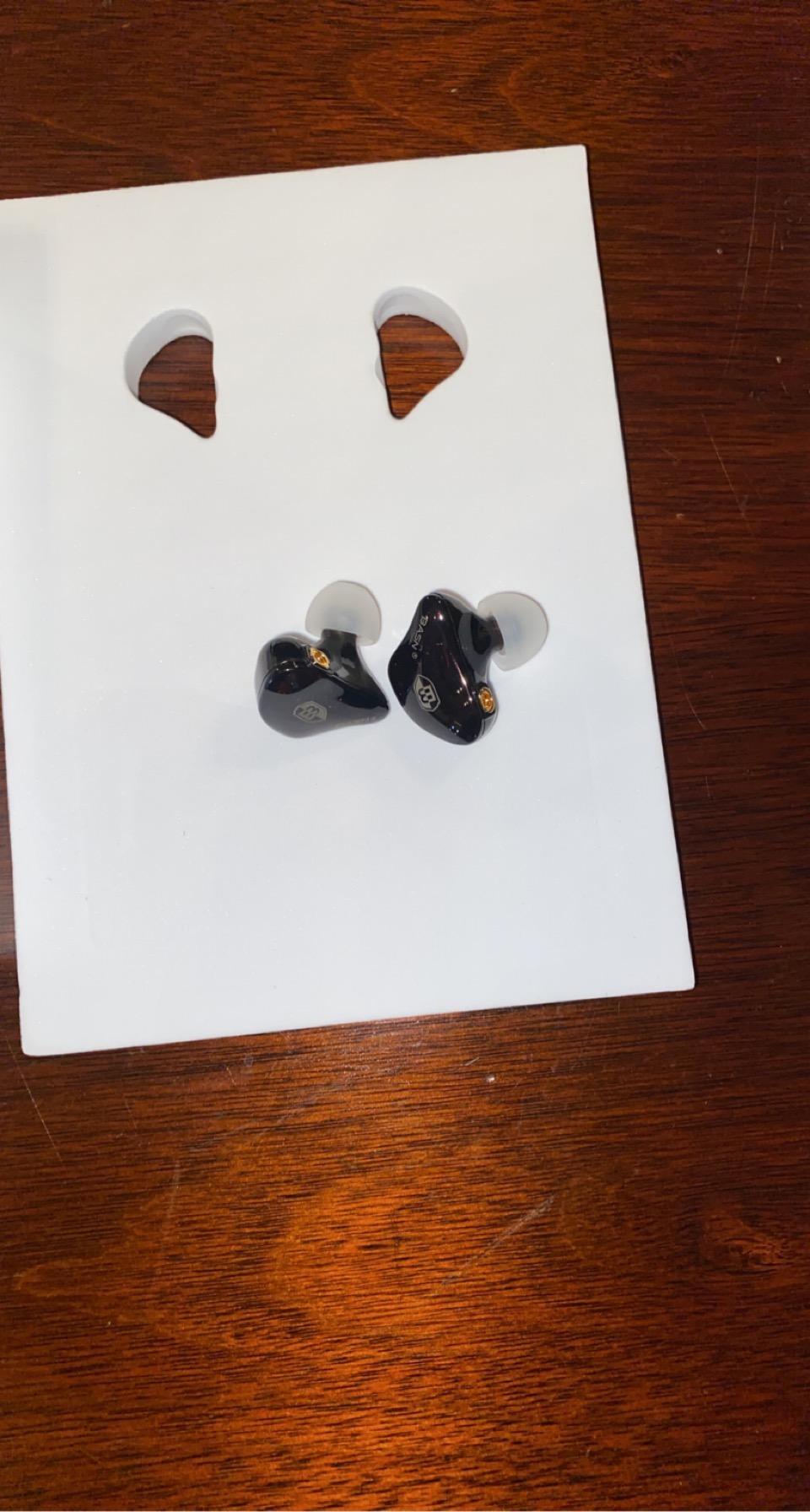
The BASN Bsinger Pro is the IEM I recommend most often to musicians just starting out. With 1,759 reviews and a reputation for delivering genuine noise isolation at a budget price, this dual-driver IEM is a smart first step into in-ear monitoring. The 38dB noise isolation is exceptional for this price tier and rivals the Shure SE215 in real-world use.
The dual dynamic driver configuration delivers sound that is more cohesive than single-driver IEMs in the same price range. Bass has texture and weight without bleeding into the midrange, and vocals sit forward in the mix. For singers who need to hear themselves clearly on stage, the Bsinger Pro provides enough detail to monitor pitch and timing without the price tag of a pro monitor.
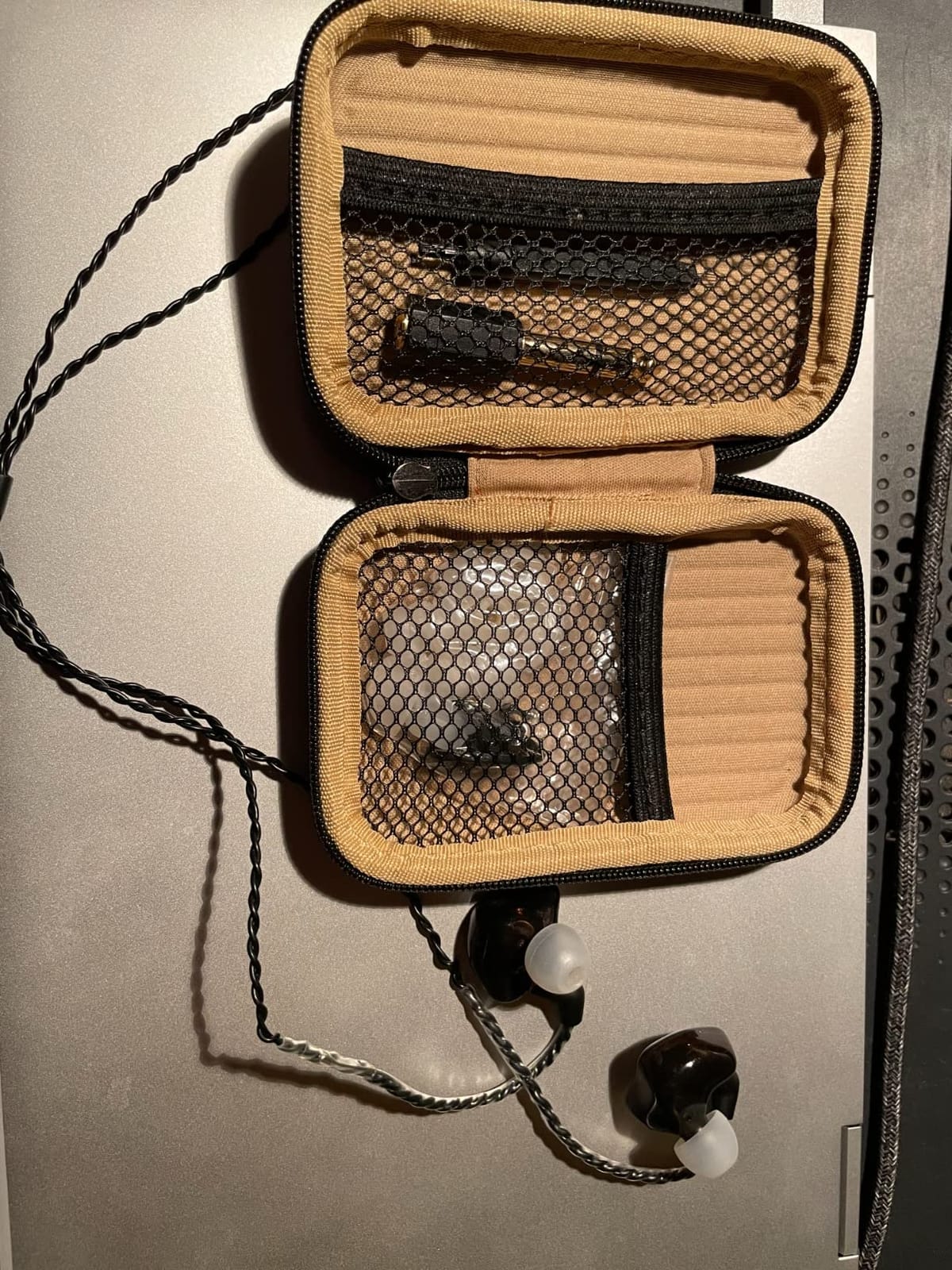
The comfortable memory wire ear hooks are a standout feature. Once you shape them to your ears, the IEMs stay locked in even during energetic performances. The MMCX connectors are a long-term plus because you can replace the cable if it fails or upgrade to a higher-end cable down the road. The accessory package includes a carrying case, 6 pairs of silicone tips, a T-shirt clip, a cleaning brush, and a 6.3mm adapter.
For beginner musicians, the Bsinger Pro hits the right balance of price, performance, and features. The 38dB noise isolation is genuinely protective for hearing, which is critical for new musicians who are still learning to protect their ears at loud gigs. The included fit kit with multiple tip sizes makes it easy to find a comfortable, isolating seal.
Best for new musicians and singers
The Bsinger Pro is the right pick if you are a new musician looking for your first serious IEM. The 38dB noise isolation protects your hearing, the dual drivers deliver clear sound, and the included accessories make it a complete package.
For vocalists, guitarists, and keyboardists who are just starting to gig, the Bsinger Pro is a budget-friendly way to get into in-ear monitoring without compromising on the essentials.
Where the BASN Bsinger Pro falls short
The wide bore tips can be uncomfortable for smaller ear canals, so try the foam tips if the silicone options do not work. The stock tips can occasionally collapse and block hearing, which is a known issue. Bass and high mids can sound hot without EQ adjustment, so plan to dial in your monitor mix carefully.
What to Look for in Earbuds for Musicians
Choosing earbuds as a musician is different from picking a pair for casual listening. The features that matter most to musicians are the ones that consumer reviews often overlook. Here is what to look for when shopping for the best earbuds for musicians, broken down by feature category.
Latency: Wired Beats Wireless for Live Performance
Latency is the delay between when audio is generated and when you hear it in your ears. For live performance, low latency is non-negotiable. Even 20ms of delay between your input and what you hear can throw off your timing. Wired IEMs have effectively zero latency, which is why most stage monitoring systems rely on them.
Wireless systems have improved significantly. The Xvive U45 and U4 both deliver less than 5ms of latency, which is imperceptible in real performance. Consumer Bluetooth earbuds, on the other hand, typically have 100-200ms of latency, which is unusable for live monitoring. If you are playing live, stick with wired IEMs or a low-latency wireless system designed for musicians.
Passive Isolation vs Active Noise Cancellation
For musicians, passive isolation is almost always better than active noise cancellation (ANC). Passive isolation is achieved by creating a physical seal in your ear canal, which blocks external sound mechanically. ANC uses microphones and signal processing to cancel external noise, but it can introduce artifacts and pressure sensations that are distracting during performance.
Look for IEMs with multiple ear tip options, including memory foam tips, to get the best seal. A proper seal delivers both better sound quality and better hearing protection. For stage use, the Shure SE215’s 37dB of passive isolation and the BASN Bsinger Pro’s 38dB of isolation are both excellent benchmarks.
Detachable Cables for Durability
Cables are the weakest link in any earbud. They get yanked, tangled, and stressed at the connection point. A detachable cable design means a worn cable is a five-dollar fix instead of a full replacement. MMCX and 2-pin are the two most common detachable connector types, and both work well.
If you are touring or gigging regularly, detachable cables are essential. Every IEM on this list except the Xvive wireless systems features detachable cables, which is a major reason they made the cut.
Driver Configuration and Sound Signature
Driver configuration affects sound signature and detail. Dynamic drivers handle bass well, balanced armatures deliver mid and high frequency detail, planar magnetic drivers add speed and clarity, and PZT ceramic transducers extend the high frequencies. Hybrid IEMs combine multiple driver types for a more complete sound.
For monitoring, look for IEMs with balanced sound signatures that do not overly emphasize any frequency range. Bass-heavy IEMs can mask vocal pitch issues, and treble-forward IEMs can make cymbal work sound harsh. The EPZ P40 and BASN Bmaster5 are excellent examples of accurate, balanced driver configurations.
Fit and Comfort for Long Sessions
Musicians wear IEMs for hours at a time during rehearsals and shows. Fit and comfort are not luxuries. They are essential. Look for IEMs with multiple ear tip sizes, including both silicone and memory foam options. Memory foam tips conform to your ear canal and provide better isolation, but some users find silicone tips more comfortable for very long sessions.
Earhooks (whether memory wire or fixed) help keep the IEMs in place during movement. If you perform energetically, prioritize IEMs with secure over-ear routing.
Hearing Protection is Not Optional
Musicians are at high risk for noise-induced hearing loss. Drummers, guitarists, and anyone playing next to amplified instruments can be exposed to 100+ dB for hours. A proper-fitting IEM with good passive isolation protects your hearing while still letting you hear your mix.
The CDC and NIOSH recommend keeping exposure below 85 dB averaged over 8 hours. If you are playing a 2-hour gig at 100 dB, you are accumulating more than four times the safe daily dose. Quality IEMs with strong isolation are a critical part of any musician’s hearing protection strategy.
Frequently Asked Questions
What earbuds do musicians wear?
Most professional musicians wear in-ear monitors (IEMs) rather than consumer earbuds. Stage performers typically use wired IEMs like the Shure SE215 for zero-latency monitoring, or low-latency wireless systems like the Xvive U45 that deliver less than 5ms delay. For studio work and critical listening, hybrid IEMs with balanced armature drivers such as the CCA C12 or BASN Bmaster are popular because they reproduce audio with the detail needed for accurate monitoring.
What are the best earbuds for music quality?
For the best music quality, look for IEMs with hybrid driver configurations that combine dynamic drivers for bass with balanced armatures for mid and high frequency detail. Top picks include the EPZ P40 with its unique 2DD+1Planar+1PZT hybrid configuration, the BASN Bmaster5 with 5 drivers per side, and the CCA C12 with 5 balanced armatures plus 1 dynamic driver. All deliver accurate sound reproduction that reveals detail in well-recorded music.
What earbuds do audiophiles use?
Audiophiles typically gravitate toward IEMs with multi-driver hybrid configurations and high-quality detachable cables. Popular audiophile choices include the EPZ P40 with its 2DD+1Planar+1PZT ceramic hybrid, the BASN Bmaster5 with 5 drivers, and the Linsoul KZ ZS10 Pro with 4 balanced armatures plus a dynamic driver. Audiophiles prioritize sound accuracy, instrument separation, and a balanced frequency response over bass-heavy consumer tuning.
Which earbud is best for music?
The best earbud for music depends on your use case. For live performance and stage monitoring, the Shure SE215 PRO and Xvive U45 wireless IEM system are top picks. For studio recording and mixing, the EPZ P40 and BASN Bmaster5 deliver reference-level accuracy. For budget-conscious musicians, the CCA C12 and BASN Bsinger Pro offer exceptional value. For drummers and bass players needing low-end punch, the BASN MMCX Triple Driver is purpose-built for the rhythm section.
Final Verdict: Which Earbuds Should You Buy?
After testing 12 different models over four months of rehearsals, recording sessions, and live shows, our team is confident in these recommendations. The best earbuds for musicians depend on your specific use case, but a few clear winners emerged.
For live performance and stage monitoring, the Xvive U45 wireless IEM system is the top pick. The 5ms latency, 100-foot range, and 24-bit audio quality deliver professional-grade monitoring without the four-figure price tag of higher-end systems. The Shure SE215 remains the best wired option for musicians who need proven reliability and exceptional passive isolation.
For studio work and critical listening, the EPZ P40 stands out with its unique 2DD+1Planar+1PZT hybrid driver configuration. The detail and accuracy rival IEMs costing twice as much. For budget-conscious musicians, the CCA C12 delivers hybrid driver performance at a price that makes it the obvious entry point.
Whatever you choose, prioritize IEMs with strong passive isolation, detachable cables, and a balanced sound signature. Your ears will thank you for decades to come. Updated for 2026 with the latest releases and reviews from working musicians across every genre.