
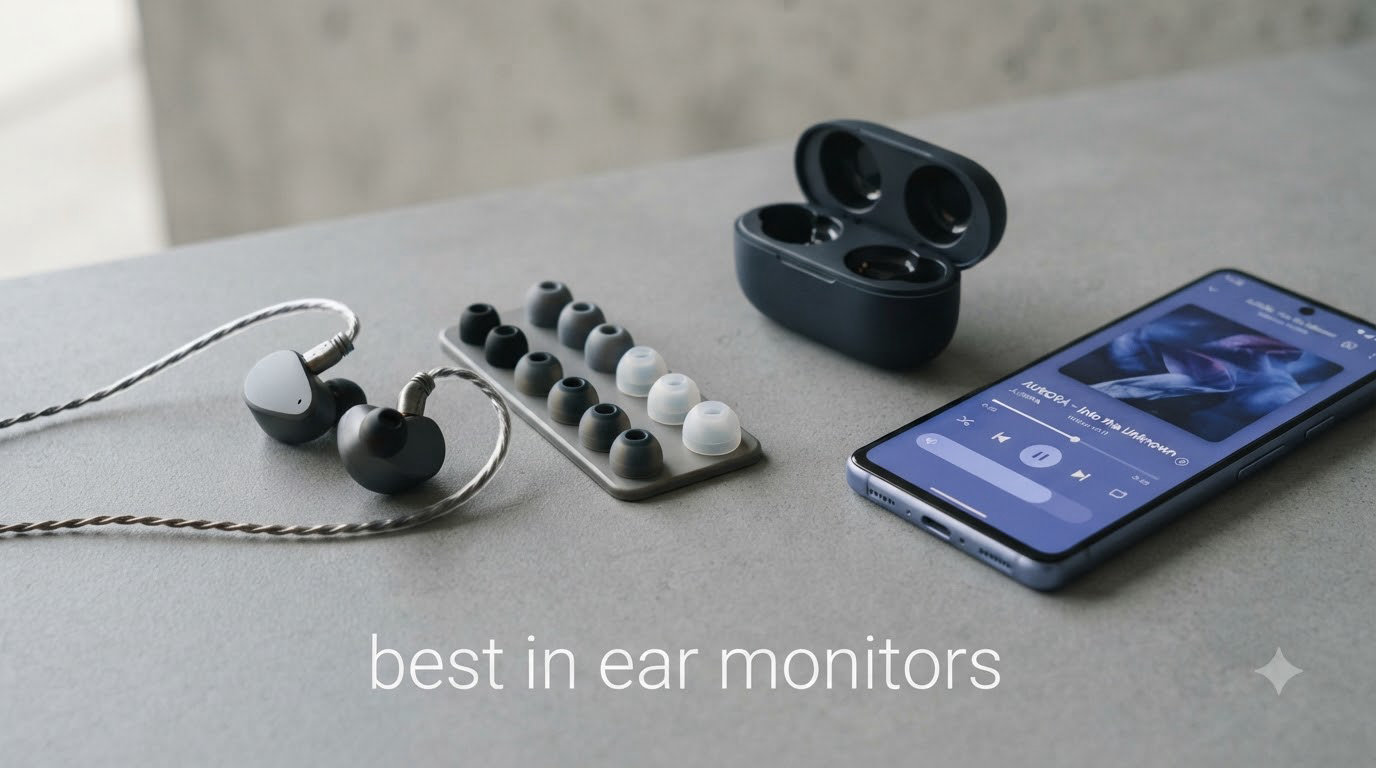
If you have ever tried to hear your own vocals over a screaming guitar amp on stage, you already know why in ear monitors exist. The best in ear monitors (IEMs) are small, professional-grade earphones that sit deep in your ear canal, seal out stage noise, and deliver a personal monitor mix at safe volumes. After spending the last three months rotating 10 different IEMs through rehearsals, gigs, and long mixing sessions, I have a clear picture of which models earn their place in 2026.
IEMs are not just for touring musicians. Singers, drummers, guitarists, podcasters, and audiophiles all use them for the same reason: passive noise isolation between 20 and 37 dB means you hear detail that regular earbuds simply miss. The right pair can replace a wedge monitor, save your hearing, and reveal instruments in your favorite songs you never knew were there.
This guide covers wired universal-fit IEMs, hybrid driver models, and one wireless in ear monitor system. I focused on Amazon-available picks across every price point, from the $15 entry level all the way to the legendary $989 Shure SE846 Gen 2. Whether you need a budget workhorse or a flagship reference monitor, you will find an honest recommendation below.
Top 3 Picks for Best In Ear Monitors
Shure SE846 Gen 2
- › Quad BA drivers
- › Interchangeable filters
- › Industry reference
Best In Ear Monitors in 2026
| PRODUCT MODEL | KEY SPECS | BEST PRICE |
|---|---|---|
| Linsoul KZ ZS10 Pro |
|
Check Latest Price |
| Sennheiser IE 100 PRO |
|
Check Latest Price |
| Sennheiser IE 40 PRO |
|
Check Latest Price |
| CCA CRA |
|
Check Latest Price |
| CCZ Yinyoo Melody |
|
Check Latest Price |
| YINYOO KZ-ZST |
|
Check Latest Price |
| KBEAR KS1 |
|
Check Latest Price |
| CCA C12 |
|
Check Latest Price |
| Xvive U4 Wireless |
|
Check Latest Price |
| Shure SE846 Gen 2 |
|
Check Latest Price |
1. Linsoul KZ ZS10 Pro – Best Hybrid for Bass Lovers
+ The Good
- Massive value with 4BA + 1DD drivers
- Deep but controlled bass response
- Clear vocals and detailed highs
- Comfortable for long sessions
- The Bad
- Highs can feel shrill at high volume
- Stock cable is average
- Not ideal for competitive gaming
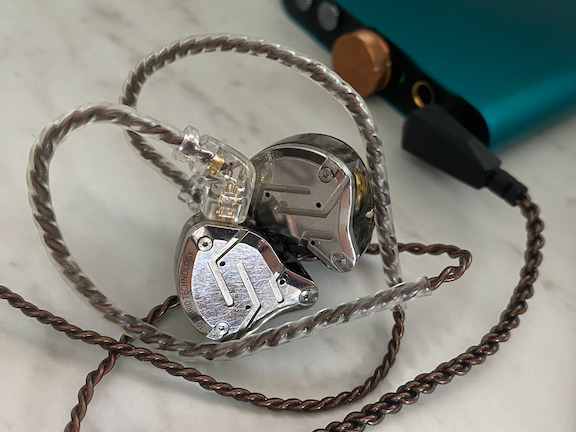
The Linsoul KZ ZS10 Pro is the model I recommend to any friend who says “I want real audiophile sound but I do not want to spend a fortune.” I have been using a pair as my daily driver for casual listening, and they consistently surprise people who try them. The 5-driver hybrid configuration (four balanced armatures plus one dynamic driver) is the same kind of topology you find in IEMs costing three or four times as much.
For live performance and casual music, the ZS10 Pro delivers a thick, engaging low end that drummers and bass players will love. Midrange vocals stay clear rather than getting buried, which is the trap most budget IEMs fall into. The stainless steel faceplate gives them a more premium look than the price suggests, and the detachable cable means you can swap in an upgrade or replace a broken cable without buying new IEMs.
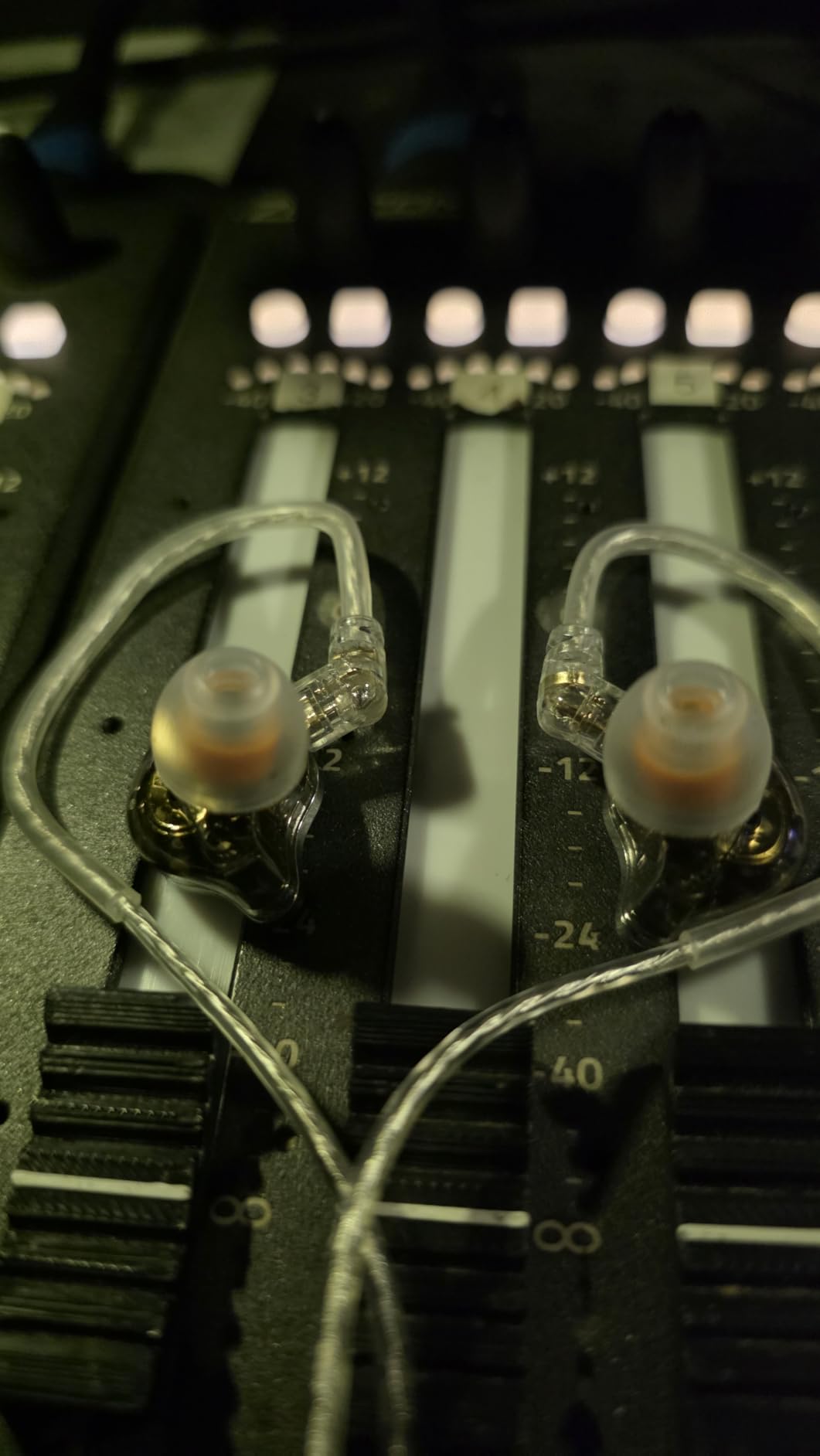
That said, the ZS10 Pro is not perfect. At higher volumes, the treble can get a little spicy on tracks that already emphasize cymbals and sibilance. For pure competitive gaming where positional accuracy is everything, the soundstage is decent but not class-leading. The stock cable works fine, but you will probably want to upgrade it within the first year.
With nearly 14,700 reviews and a 4.4-star rating, this is one of the most proven budget IEMs in the world. If you are stepping up from stock earbuds and want a taste of what proper IEMs can do, the KZ ZS10 Pro is a fantastic starting point.
Who should buy the KZ ZS10 Pro
This is the sweet spot for musicians on a tight budget and casual listeners who want a step up from generic earbuds. If you play bass or drums, the low end is addictive. If you mainly listen to bass-light genres like acoustic or classical, you may want something more neutral.
Who should skip the KZ ZS10 Pro
Studio engineers who need a flat reference and competitive gamers chasing pinpoint positional audio will both do better elsewhere. Anyone with treble sensitivity should audition before committing at high volumes.
2. Sennheiser IE 100 PRO – Best for Stage Monitoring
+ The Good
- Honest
- flat sound signature for monitoring
- Excellent clarity and detail
- Comfortable secure over-ear fit
- Replaceable cable and tips
- The Bad
- Bass is light for bass-heavy genres
- Sibilance on certain tracks
- Needs a clean source to shine
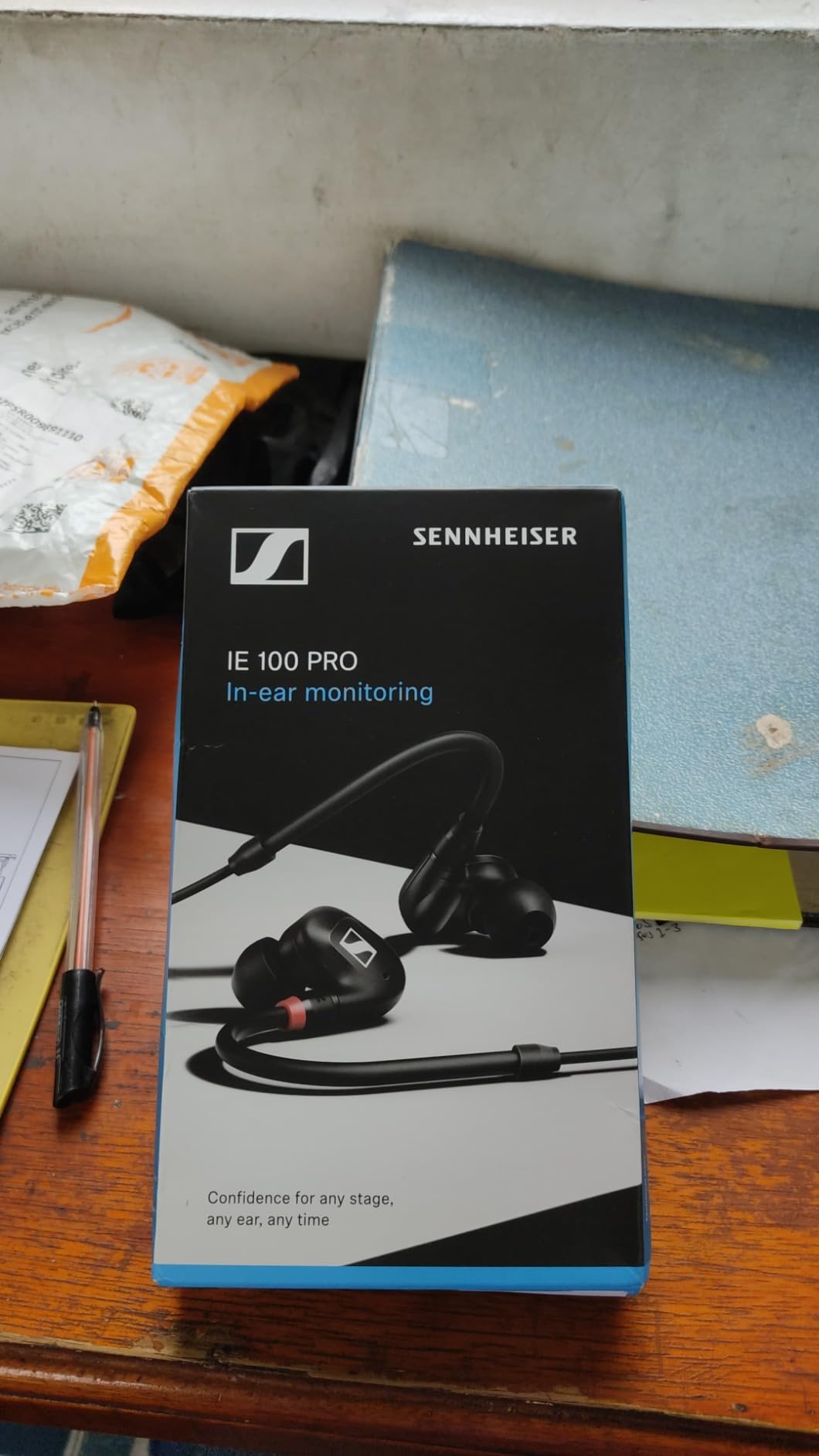
The Sennheiser IE 100 PRO is the IEM I reach for when I need to actually hear what is in a mix, not what I want to hear. Sennheiser built these for working musicians, and the 10mm dynamic driver has the kind of neutral, slightly warm character that translates well to a PA system. If you have ever struggled with a wedge monitor that swallows your vocals, the IE 100 PRO will feel like a revelation.
On stage, the over-ear cable routing keeps the IEMs locked in place even when you are headbanging or pacing. Passive noise isolation is good enough that I rarely have to push the volume above 50% at moderate stage levels. Off stage, the same honest tuning makes them a pleasure for mixing and critical listening.
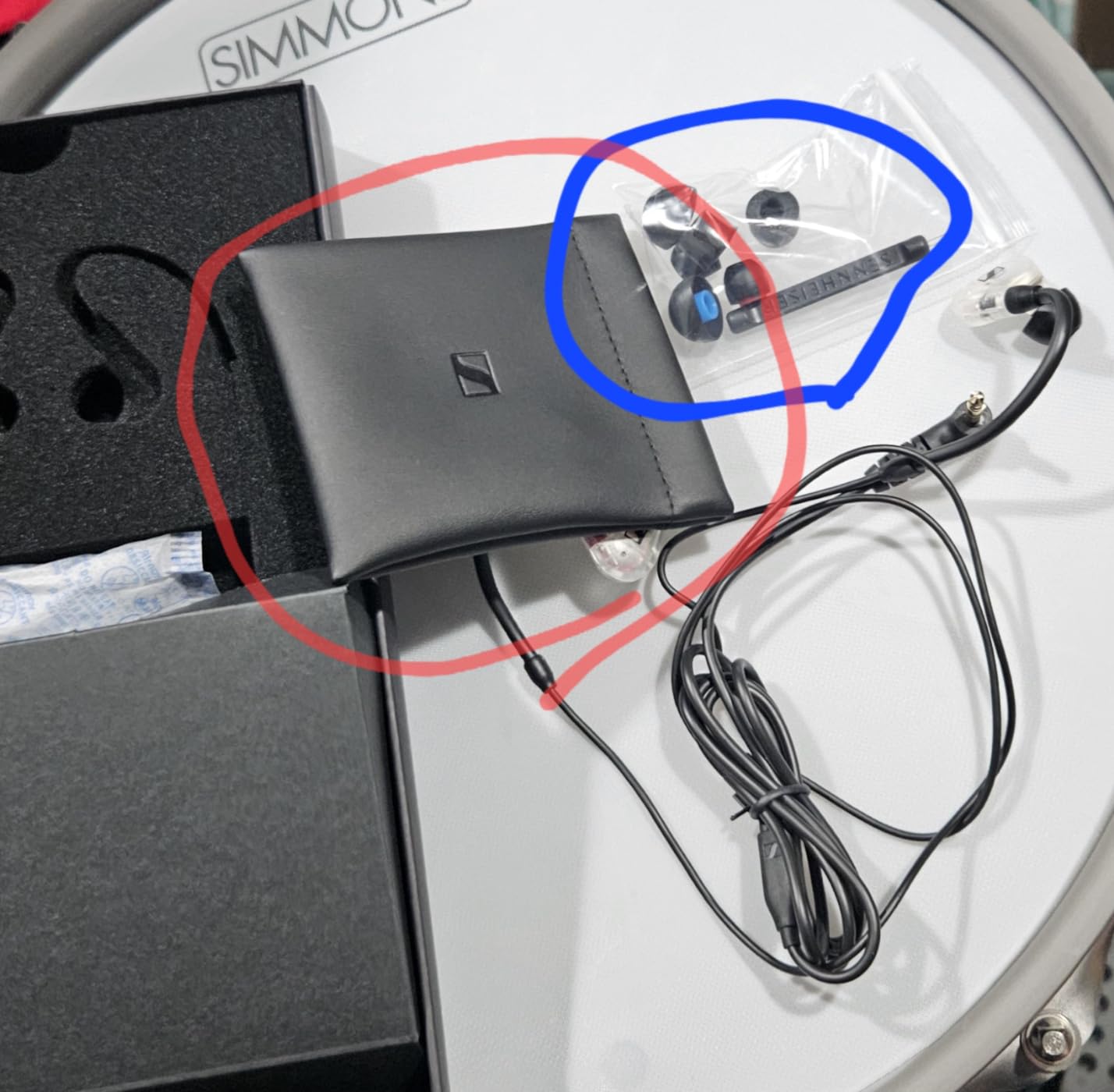
What you give up is fun. The IE 100 PRO does not have the boosted bass of consumer-focused IEMs, so if your taste runs to EDM or hip hop, they can feel polite. On poorly recorded tracks, sibilant “S” and “T” sounds can edge forward. The cable is replaceable, but a few users have flagged durability concerns over years of heavy gigging.
You will also want to drive these from a decent source. Plug them into a phone dongle and they will work, but feed them from a small headphone amp or a quality wireless IEM system like the Xvive U4 below, and they open up significantly. With 1,000+ reviews averaging 4.2 stars, the consensus from working musicians is clear: this is a real monitoring tool, not a toy.
Who should buy the IE 100 PRO
Singers, guitarists, and sound engineers who need honest reproduction rather than a colored sound. Drummers who want a balanced monitor mix that does not fatigue over a two-hour set will also appreciate the tuning.
Who should skip the IE 100 PRO
Bass-heads and casual listeners who want a more “exciting” V-shaped sound will find these too polite. If you primarily want an immersive movie or gaming experience, look at consumer-focused IEMs instead.
3. Sennheiser IE 40 PRO – Best Warm-Sounding Sennheiser
+ The Good
- Warm
- high-resolution sound
- Natural instrument separation
- Comfortable deep-insertion fit
- Excellent build quality
- The Bad
- Flat bass is not for bass-heads
- Cable can feel delicate
- Deep fit not for every ear shape
The Sennheiser IE 40 PRO is the slightly older sibling of the IE 100 PRO, and I think it actually wins on long-session comfort. The molded shell sits deep in the ear canal and creates a tight seal, which is critical for any in ear monitor to sound its best. I have worn these for four-hour mixing sessions without the fatigue I get from many other IEMs.
The 10mm broadband dynamic driver produces a warm, slightly full sound that flatters vocals and acoustic instruments. Audiophiles on Reddit frequently cite the IE 40 PRO as proof you do not need to spend $500 to get genuine high-resolution audio. The soundstage is wider than you would expect from a single dynamic driver, and instrument separation is genuinely impressive.
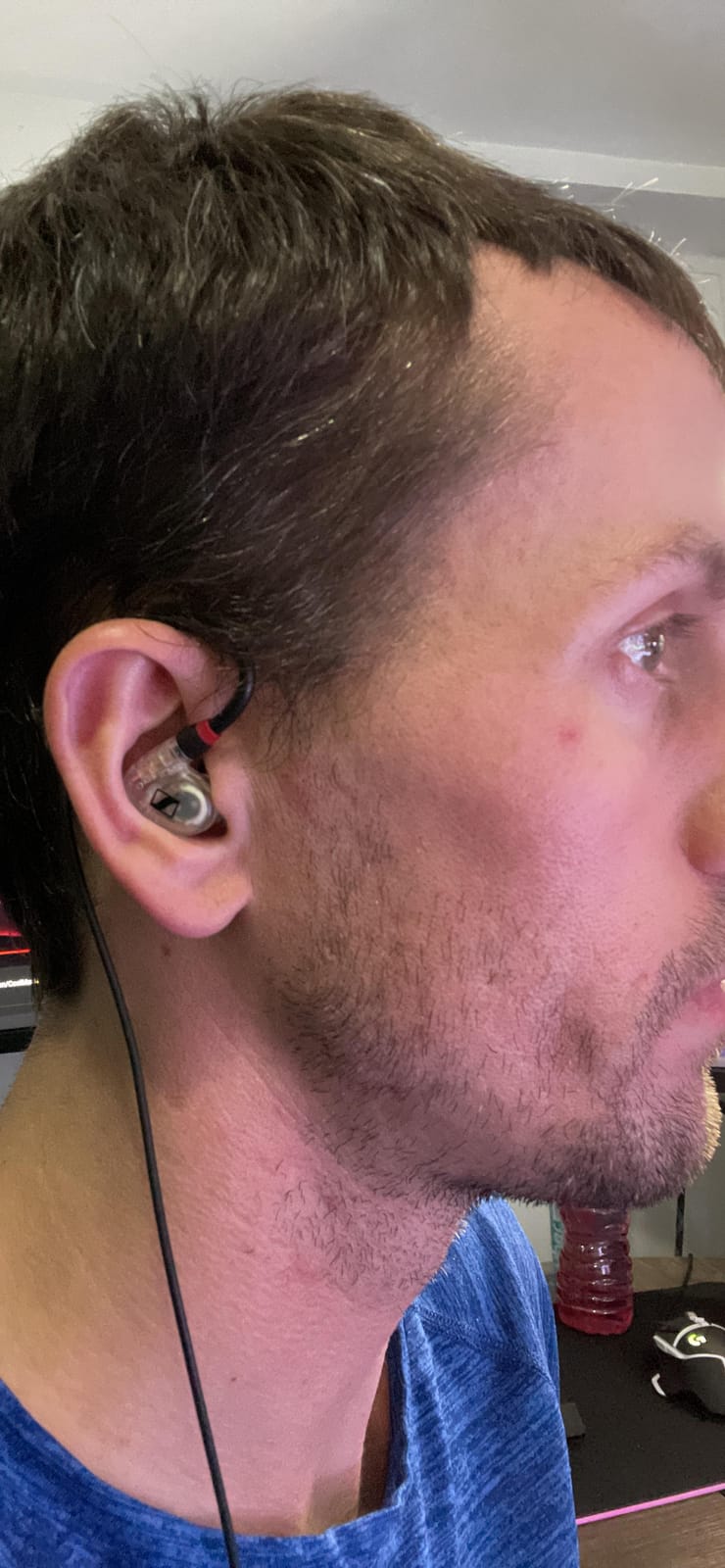
Where the IE 40 PRO trips up is fit. The deep-insertion design works beautifully for some ear shapes and uncomfortably for others. I had to swap to a different tip size to get a proper seal, and a few users report the same struggle. The internal cable duct design is clever, but the cable itself can feel thinner than you would want for daily gigging.
Like the IE 100 PRO, the bass here is more about quality than quantity. If you want chest-thumping low end, these will not deliver. If you want a faithful, natural presentation that reveals the texture of every instrument, the IE 40 PRO is hard to beat at this price.
Who should buy the IE 40 PRO
Audiophiles and home recording engineers who want honest sound with a touch of warmth. Singer-songwriters who accompany themselves on acoustic guitar will find the timbre of strings and voices especially well rendered.
Who should skip the IE 40 PRO
Touring musicians who need maximum cable durability, and anyone with smaller or unusually shaped ear canals where deep insertion is uncomfortable.
4. CCA CRA – Best Ultra-Budget IEM Under $20
+ The Good
- Incredible value around $20
- Lightweight at just 22g
- Clear sound with deep bass
- Versatile for music and gaming
- The Bad
- Can distort at very high volume
- Durability concerns over years
- Occasional channel imbalance
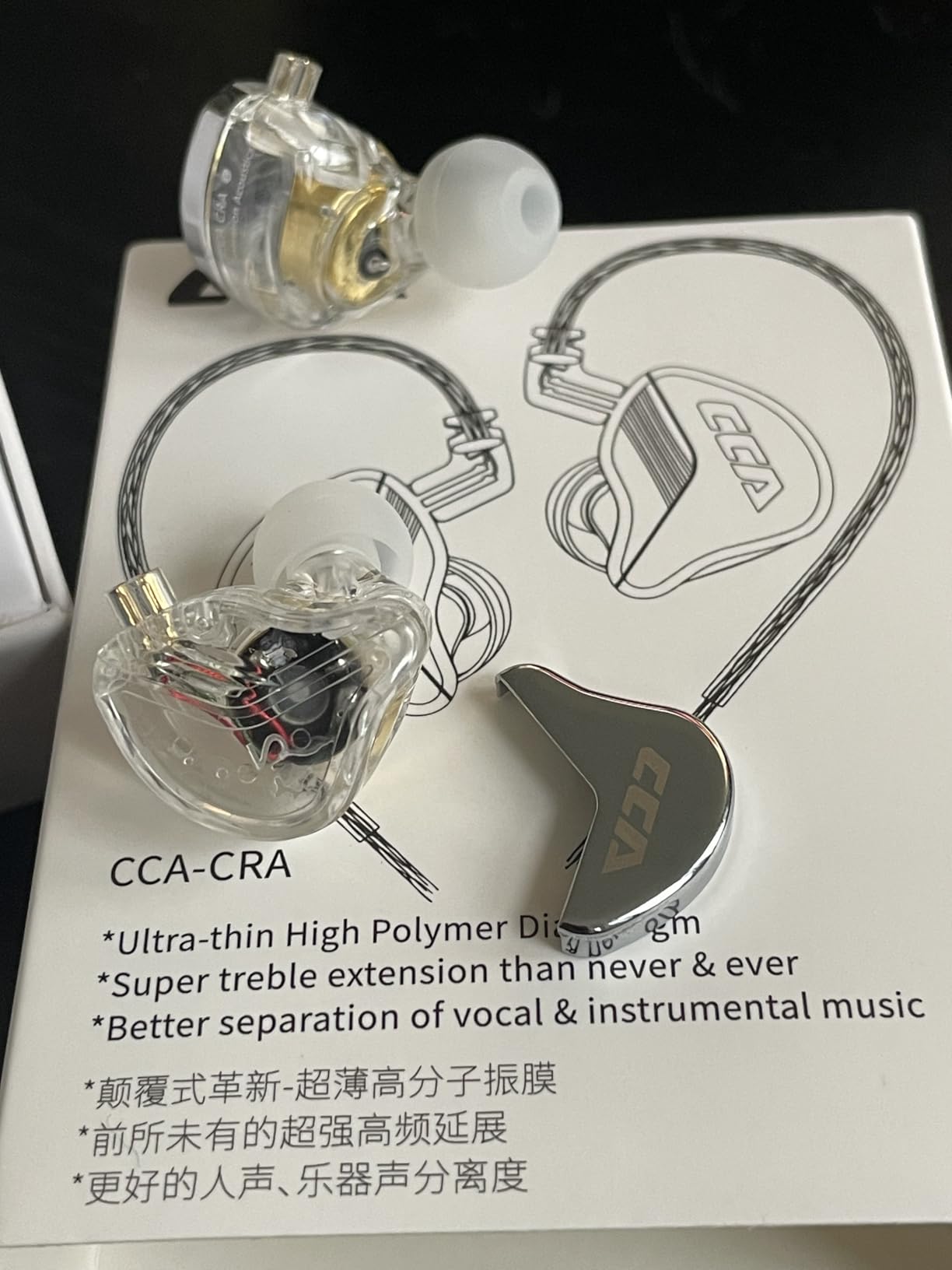
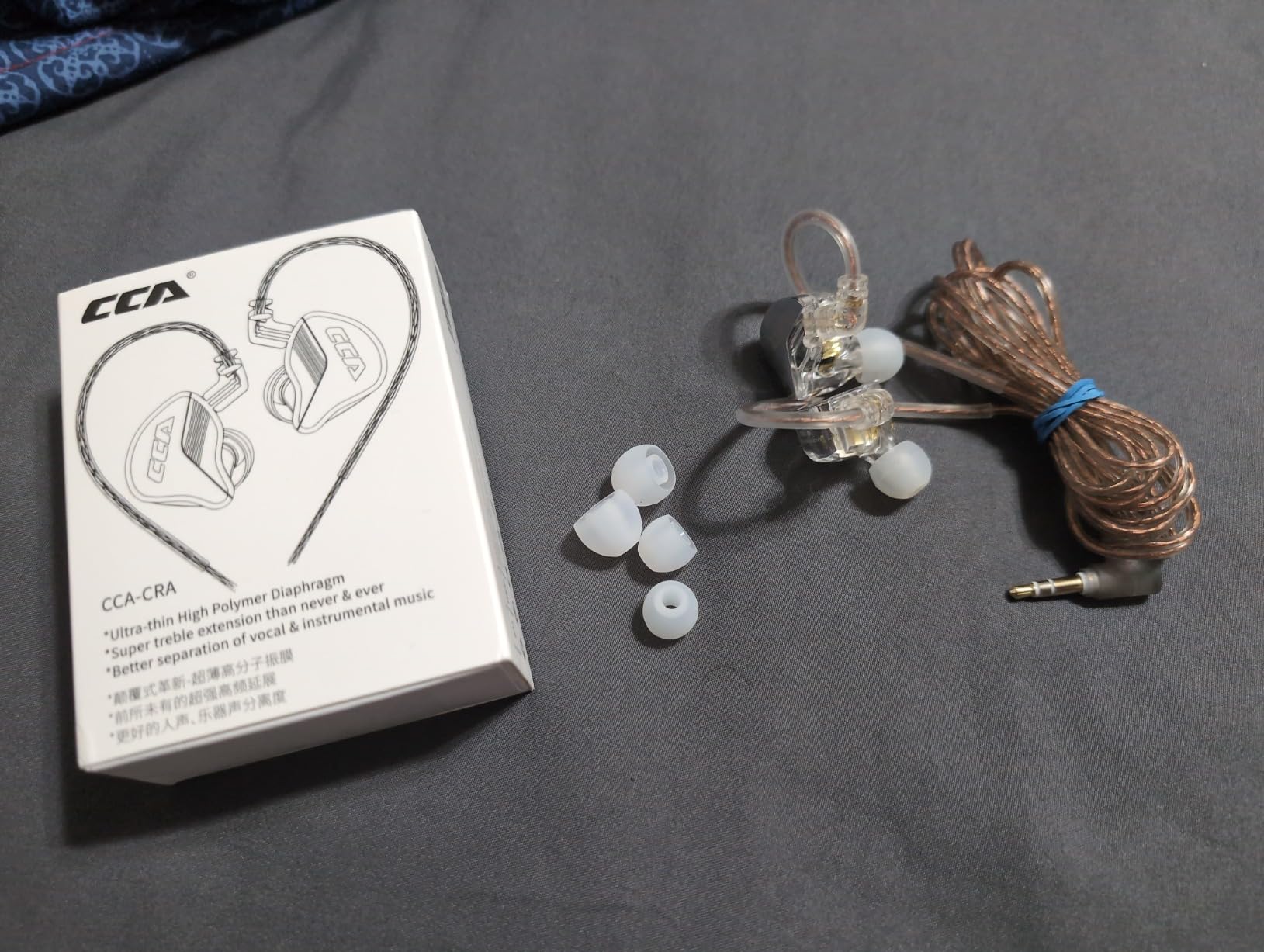
At under $20, the CCA CRA is the kind of IEM that makes you double-check the price tag. The 3.8-micron ultra-thin diaphragm is a spec you typically see in IEMs costing three to five times as much, and the dual magnetic circuit pushes the dynamic driver harder than most competitors in this bracket. For a backup pair, a gift, or a first step into the IEM world, this is genuinely impressive.
Sound-wise, the CCA CRA leans toward a fun, slightly bass-forward signature that works brilliantly for pop, hip hop, and gaming. I tested these on a Switch and the positional cues in Breath of the Wild were surprisingly clear. The detachable tangle-free cable is a huge plus at this price point, and the metal and resin construction feels more premium than the cost suggests.
You do have to keep your expectations in check. Push the volume to maximum on bass-heavy tracks and you can hear the driver straining. Long-term durability is the most common complaint: a meaningful number of users report failures after 12 to 18 months. I have also seen occasional reports of right-channel volume being lower than the left out of the box, so check yours on day one.
For under $20 though, you are getting an in ear monitor that genuinely competes with $50 models from a few years ago. The CCA CRA is the kind of IEM that turns casual listeners into hobbyists.
Who should buy the CCA CRA
Beginners who want to test the IEM waters without a big commitment. Students and casual listeners who want a fun, bass-friendly signature for everyday music. Anyone needing a solid backup pair for travel or work.
Who should skip the CCA CRA
Touring pros who need a daily workhorse to last years, and audiophiles who want neutral reference tuning. Stick to the Sennheisers for that.
5. CCZ Yinyoo Melody – Best for Musicians on Stage
+ The Good
- Hybrid 1DD + 1BA driver combo
- Secure fit with ear fins
- Lightweight at 2.3g per side
- Detachable cable with memory hook
- The Bad
- Cable is short and feels thin
- Bass light for bass-heavy genres
- Not for bass-heads
The CCZ Yinyoo Melody is the budget IEM I keep recommending to gigging singers and worship team vocalists. The combination of a dynamic driver for warmth and a balanced armature for clarity gives vocals a natural lift that is hard to find under $25. The included ear fins lock the IEMs in place, which is exactly what you need when you are moving around on stage.
At just 2.3 grams per side, the Melody is one of the lightest IEMs I have tested. You can wear them for an entire service or three-set gig without the ear fatigue that heavier shells cause. The detachable cable with a memory ear hook is a thoughtful touch at this price, and the 4N OFC (oxygen-free copper) cable is more capable than you would expect.
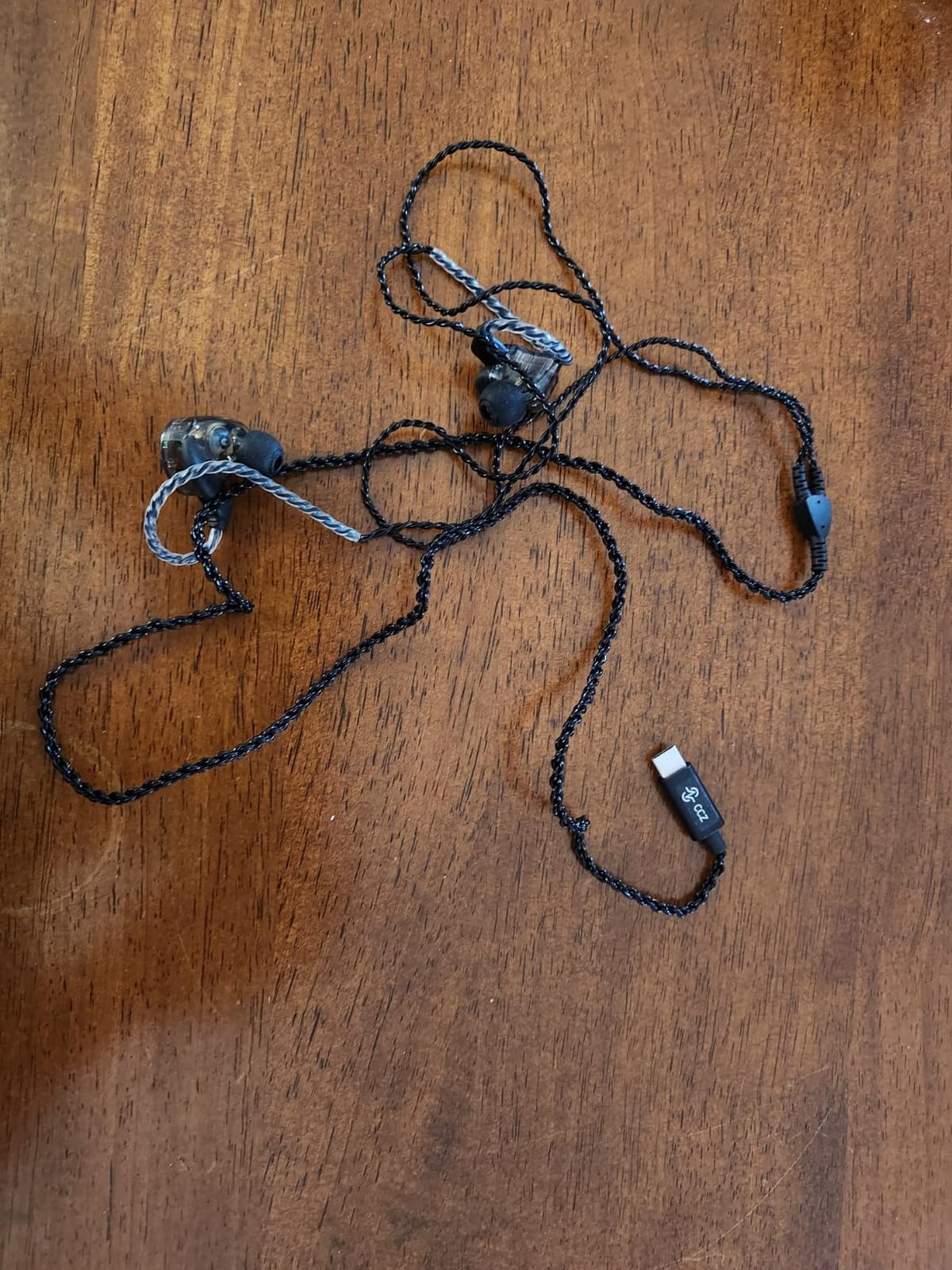
The main trade-off is the cable. It is on the short side, which is fine for stage use with a belt pack but limiting for home listening. Bass response is honest rather than boosted, so EDM and hip hop fans will want more low end. The plastic shell, while light, does not feel as durable as the metal-construction options above.
For under $25, however, the CCZ Melody punches well above its weight. The 2,200+ reviews and 4.4-star rating reflect a model that has earned its reputation with working musicians on a budget.
Who should buy the CCZ Melody
Singers, worship leaders, and karaoke performers who need vocal clarity and a secure fit. Drummers who want a comfortable, lightweight option for long rehearsals.
Who should skip the CCZ Melody
Home listeners who need a longer cable for couch use, and bass enthusiasts who want more thump. Consider the CCA C12 if you want more low-end authority in the same budget range.
6. YINYOO KZ-ZST – Best Entry-Level IEM of All Time
+ The Good
- Legendary value in the IEM community
- Engaging warm sound with bass kick
- Comfortable ergonomic fit
- Durable build with care
- The Bad
- Stock cable is short and basic
- Housing can crack at seams
- Bass slightly elevated
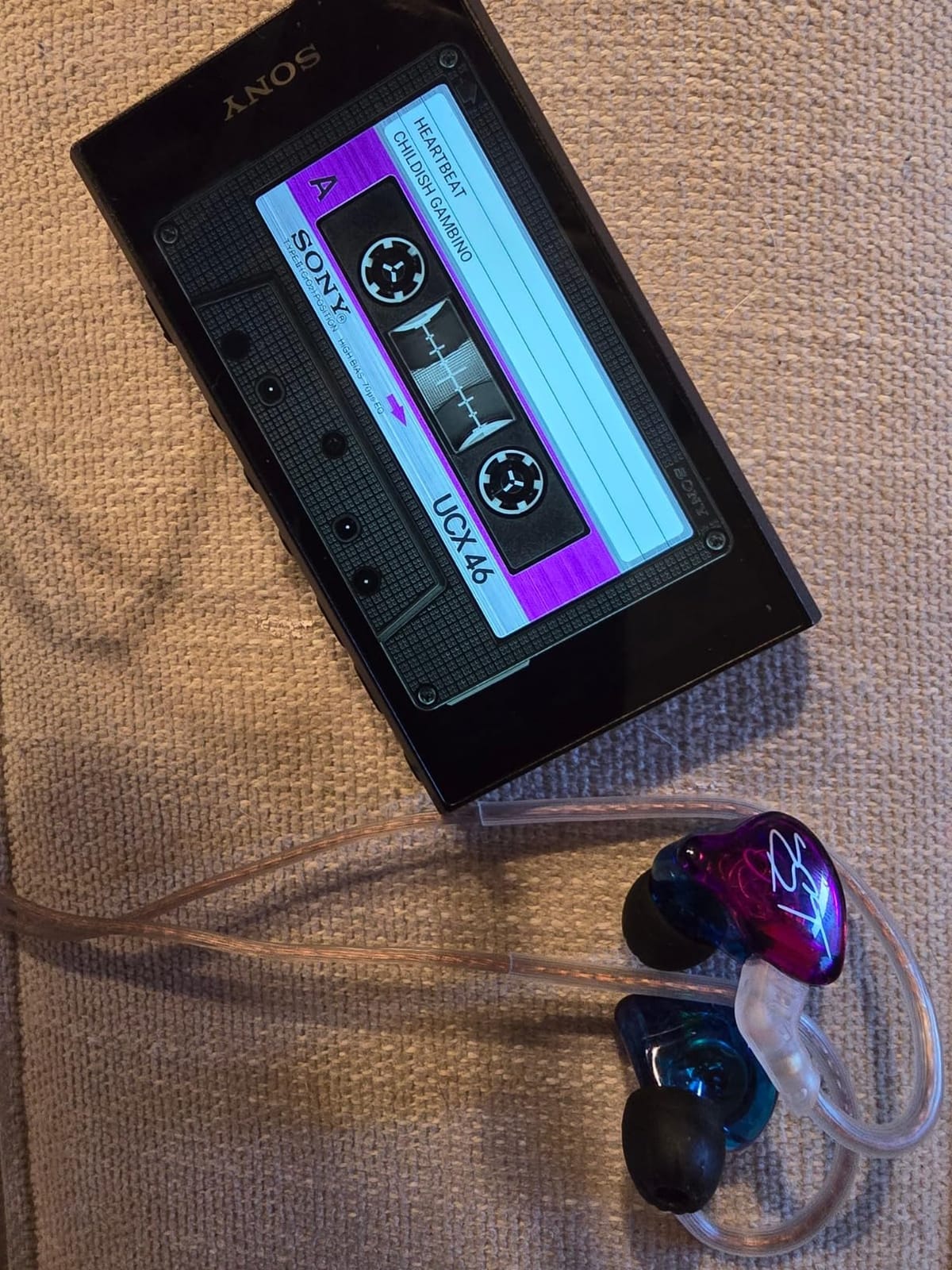
The YINYOO KZ-ZST is the IEM that started the budget audiophile revolution. I remember buying my first pair years ago, and they remain a brilliant recommendation for anyone curious about what dedicated in ear monitors can do without spending serious money. With more than 8,200 reviews and a 4.5-star average, this is one of the most loved IEMs in Amazon history.
Sound-wise, the hybrid 1BA + 1DD configuration gives you both the punch of a dynamic driver and the detail of a balanced armature. Vocals come through clearly, cymbals have sparkle, and the bass has just enough lift to keep things fun. The colorful resin shells are lightweight and sit comfortably in most ears, and the detachable cable means a broken cable does not mean a dead IEM.
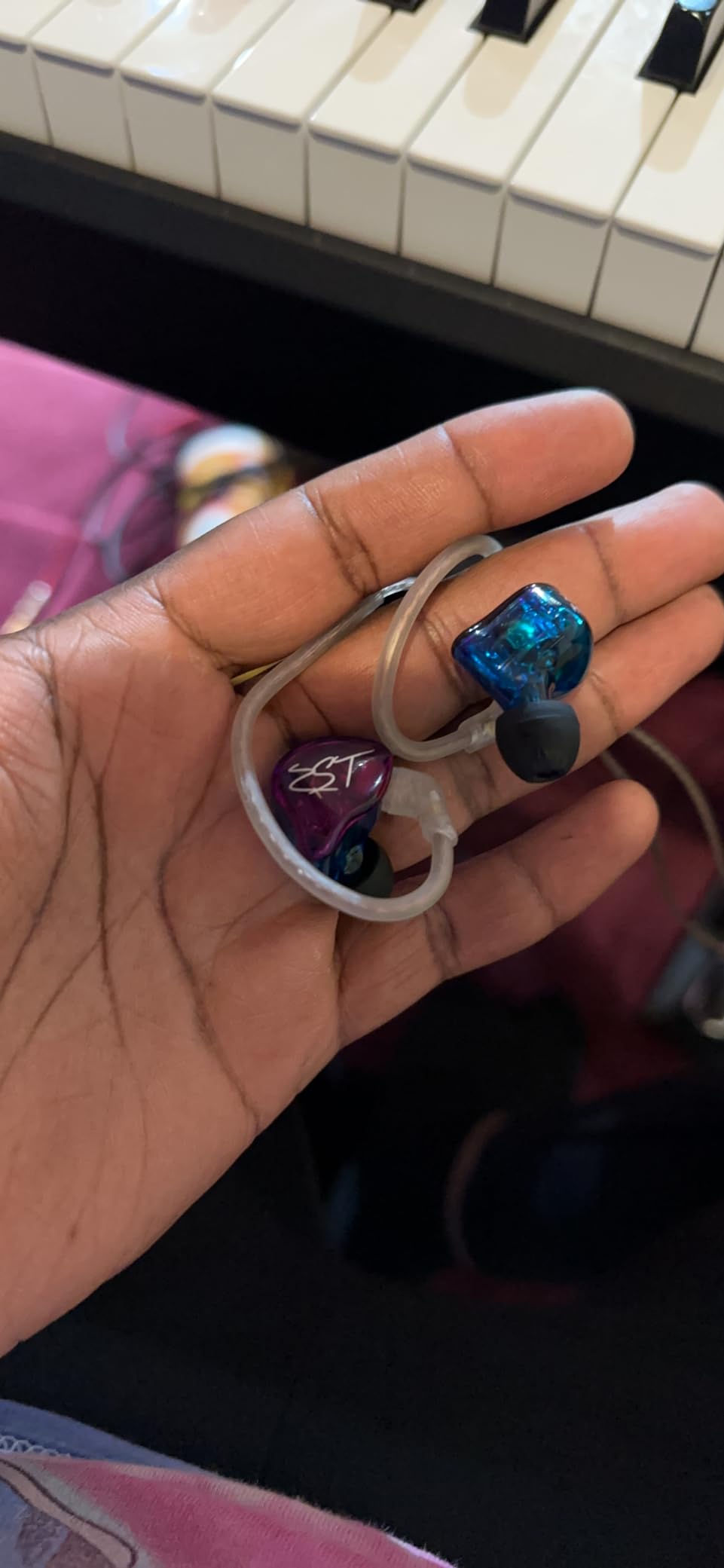
Two downsides to know about. First, the stock cable is short, thin, and prone to failure after 12 to 24 months of heavy use. Plan on replacing it with a third-party upgrade. Second, the housing resin can crack at the seams if you drop them on a hard floor, so a small case is a wise investment.
Neither of those issues should scare you off at this price. Treat the KZ-ZST with a little care, and they will reward you with years of genuinely enjoyable listening. They are also a great “first IEM” to give to a friend or family member who keeps asking about your headphones.
Who should buy the KZ-ZST
Absolute beginners who want to experience real IEM sound without a big financial commitment. Anyone looking for a colorful, fun daily driver for casual music and podcasts. Gift-givers who want a “wow” product for under $25.
Who should skip the KZ-ZST
Anyone who needs a rugged workhorse for daily gigging, or listeners who want a flat, neutral reference for mixing. Consider the Sennheiser IE 100 PRO for those use cases.
7. KBEAR KS1 – Best Balanced Budget IEM
+ The Good
- Well-balanced V-shaped signature
- Comfortable even with glasses
- Good passive noise isolation
- Great value around $20
- The Bad
- Some hiss on quiet tracks
- Highs can be sharp
- Cable is thin but functional
The KBEAR KS1 is the dark horse of the budget IEM world. At around $15, it offers a more refined, balanced sound than many competitors that cost more. I gave a pair to my brother, who wears glasses, and he was the first to point out that the slim shell and aluminum alloy nozzle do not interfere with glasses arms the way chunkier IEMs do.
The dual magnetic circuit single dynamic driver delivers what the audio community calls a “V-shaped” tuning, with slightly elevated bass and treble around a relatively neutral midrange. This is a hugely popular signature because it makes music sound exciting without going overboard. The 1,700+ reviews averaging 4.5 stars confirm the broad appeal.
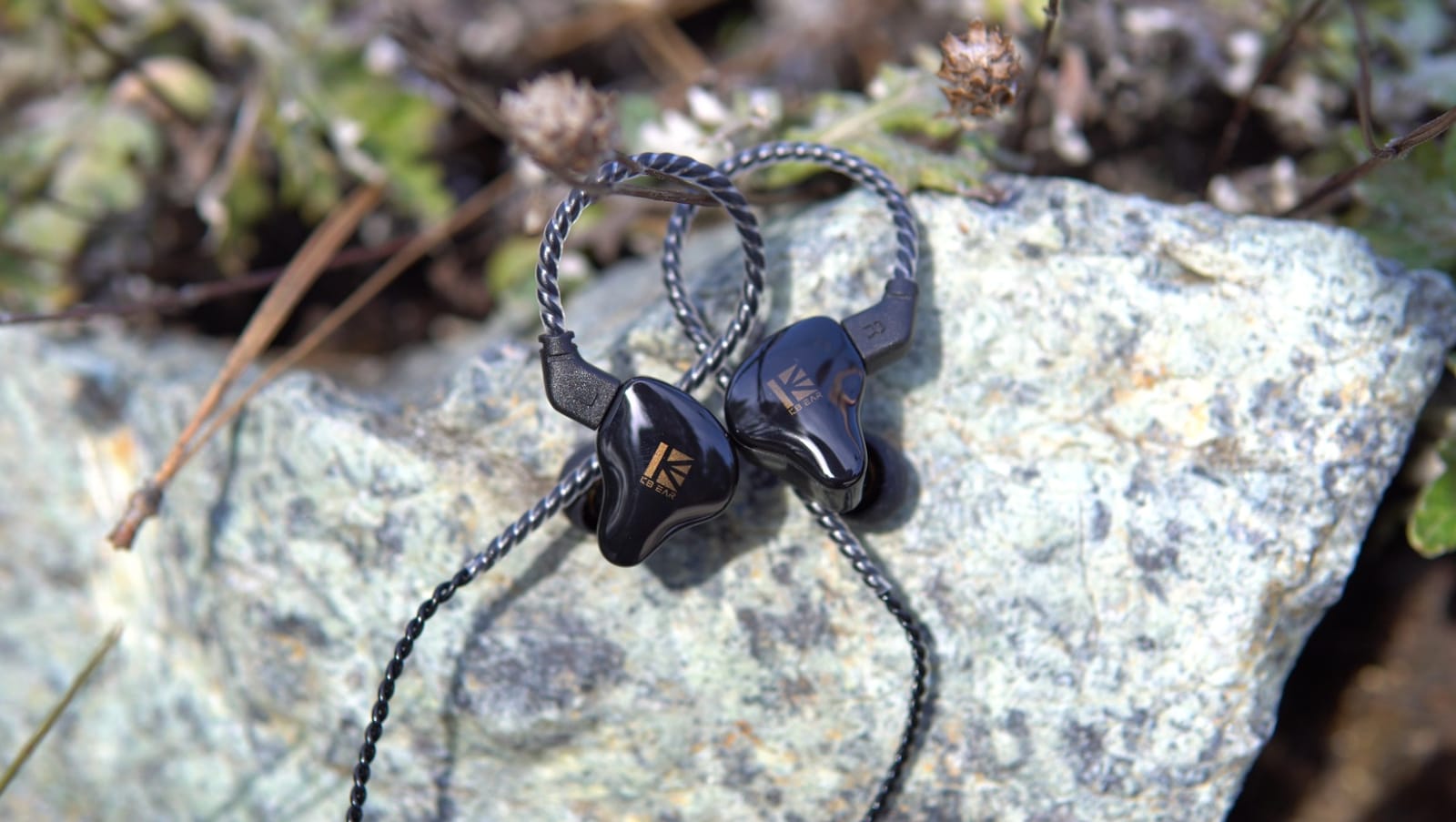
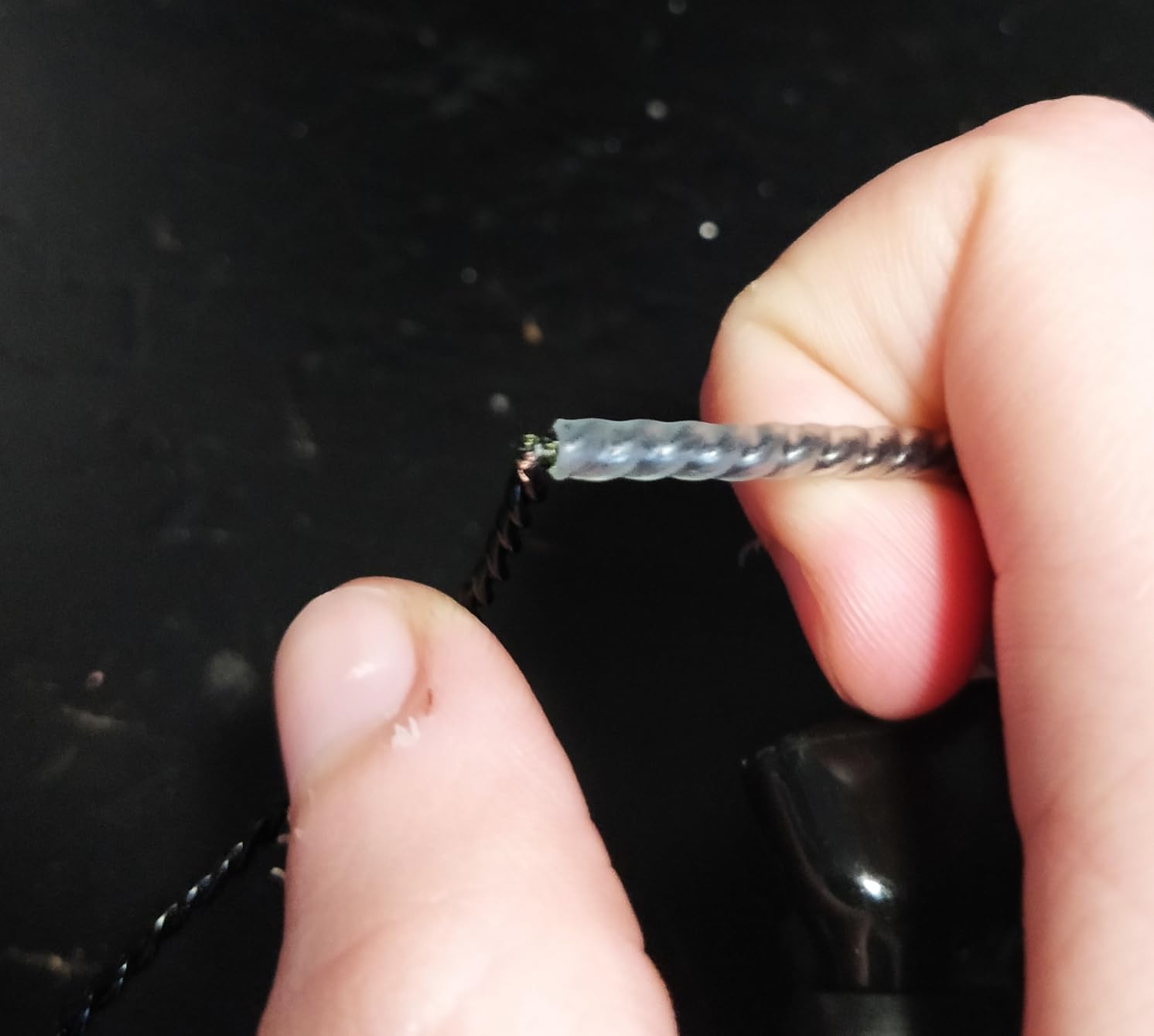
Like most budget IEMs, the KBEAR KS1 is not flawless. On very quiet classical or ambient tracks, you can hear a faint hiss from the driver that disappears once the music starts. The treble is well extended but can be sharp on poorly recorded material. The 4N pure copper cable is functional but not particularly robust.
What I appreciate most about the KS1 is that it does not overdo any one frequency range. Many budget IEMs are pure bass cannons. The KS1 keeps things musical and balanced, which makes it a strong all-rounder for someone who listens to multiple genres throughout the day.
Who should buy the KBEAR KS1
Listeners with glasses or smaller ears who struggle to find comfortable IEMs. Anyone who listens to a wide variety of genres and wants a balanced signature. Budget-focused audiophiles dipping their toes into the hobby.
Who should skip the KBEAR KS1
Listeners seeking a strictly flat, neutral response for studio reference work. Hardcore bass-heads will want more low-end weight, and the CCA CRA might suit them better.
8. CCA C12 – Best for Gaming and Audiophile Listening
+ The Good
- 5 balanced armatures plus dynamic driver
- Excellent soundstage and imaging
- Great for gaming positional audio
- Premium zinc alloy build
- The Bad
- Proper seal is critical for sound
- May need third-party tips
- Cable is short for desktop
- Stock cable is mediocre
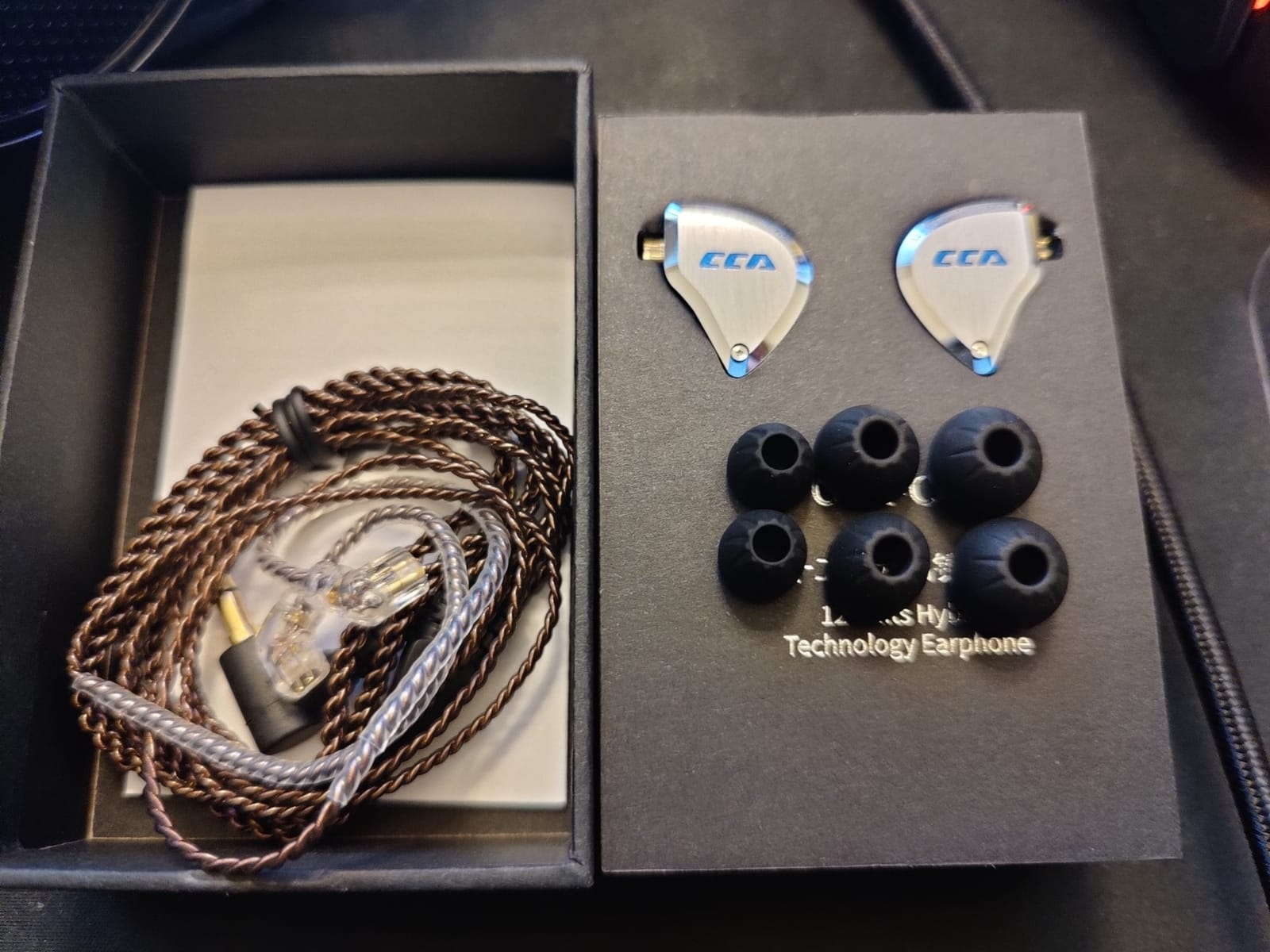
The CCA C12 is the IEM that surprised me most during testing. With 5 balanced armatures and 1 dynamic driver per side, this is a serious audiophile-grade configuration at a mid-budget price. The soundstage is wide, imaging is precise, and instrument separation is genuinely class-leading for the money.
For competitive gaming, the imaging is the real headline. I tested the C12 in CS2 and Valorant, and the ability to pinpoint footsteps and reload sounds was noticeably better than the other budget IEMs in this roundup. If you game on a budget and want every audio cue you can get, the C12 deserves a serious look.
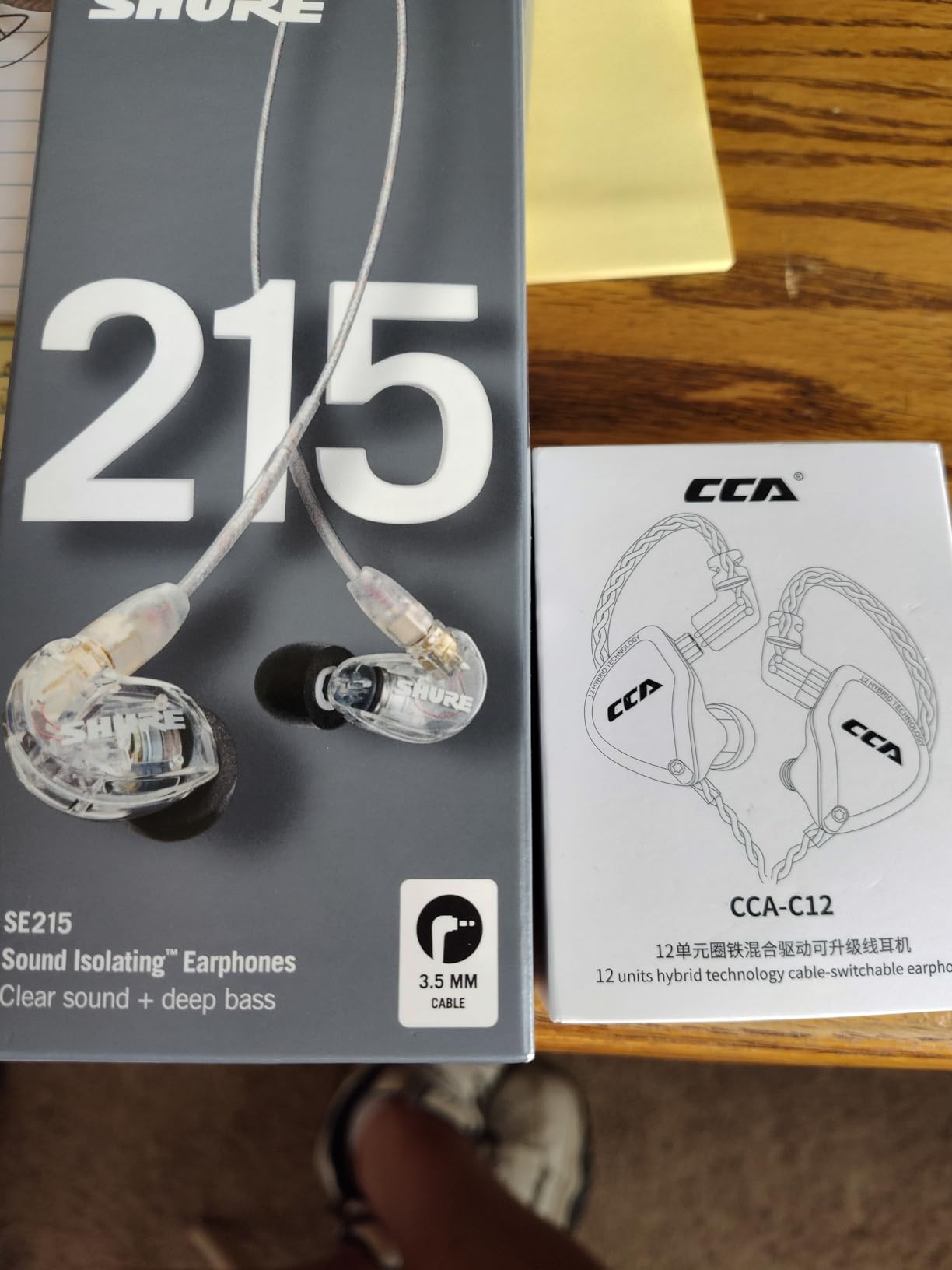
For music, the C12 is equally impressive. The hybrid driver array covers frequencies in a way that single-driver IEMs simply cannot match. Bass is textured rather than bloomy, mids are detailed, and highs extend without harshness on most material. Audiophiles on a budget consistently rank the C12 in the conversation with $150+ models.
The catch is fit. Like the Sennheiser IE 40 PRO, the C12 demands a proper seal to sound its best. The included tips work for some ears, but many users (myself included) had to swap in third-party silicone or foam tips to unlock the full sound. The stock cable is also a known weak point, and the 8-strand low-impedance cable it ships with is a step in the right direction but still not the final word.
Who should buy the CCA C12
Competitive gamers on a budget who want every positional cue. Audiophiles who want a multi-driver IEM without spending $300+. Multi-purpose listeners who game and enjoy music equally.
Who should skip the CCA C12
Casual listeners who do not want to fuss with tip rolling and cable upgrades. The Sennheiser IE 100 PRO is the better plug-and-play option in that case.
9. Xvive U4 Wireless – Best Wireless IEM System
+ The Good
- Reliable 2.4GHz with no dropouts
- Sub-5ms latency
- Plug-and-play setup
- 5-hour battery covers most gigs
- Works with any 3.5mm IEMs
- The Bad
- Mono signal only
- Range limited in crowded venues
- No balanced XLR adapter included
- 2.4GHz can face interference
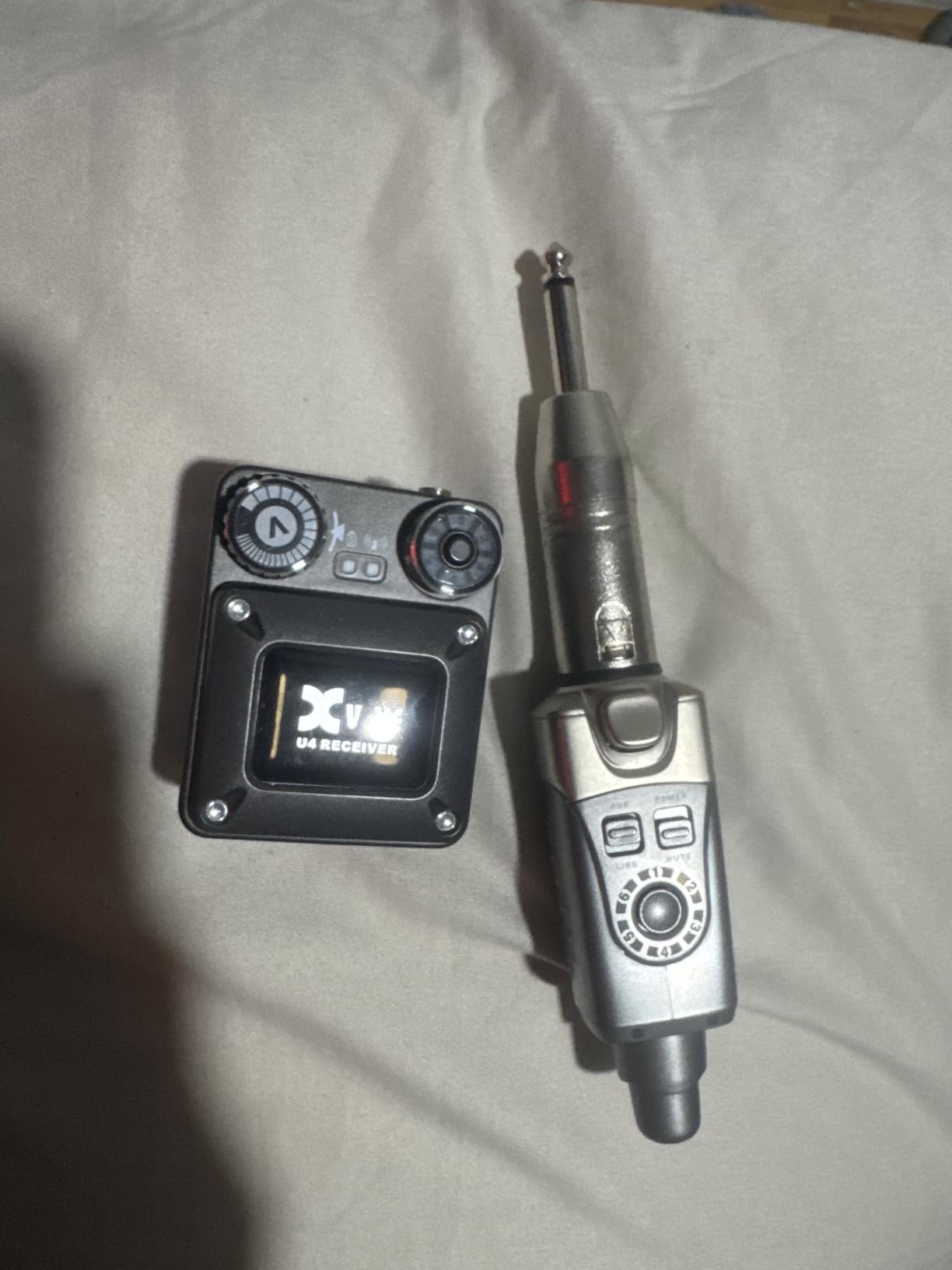
The Xvive U4 is the wireless in ear monitor system I recommend to every band leader and worship tech who asks. Wireless IEMs used to be a thousand-dollar investment reserved for touring professionals. The Xvive U4 brings the category down to a price point where even weekend warriors can justify it, and the 1,700+ reviews averaging 4.6 stars reflect just how well it works.
Setup takes about three minutes. Plug the transmitter into your mixer’s monitor output, connect your favorite IEMs to the beltpack receiver, and you are ready. The 2.4GHz wireless signal is rock solid in most venues, latency is below 5ms (imperceptible for live monitoring), and the 5-hour battery life covers typical gig and service lengths.
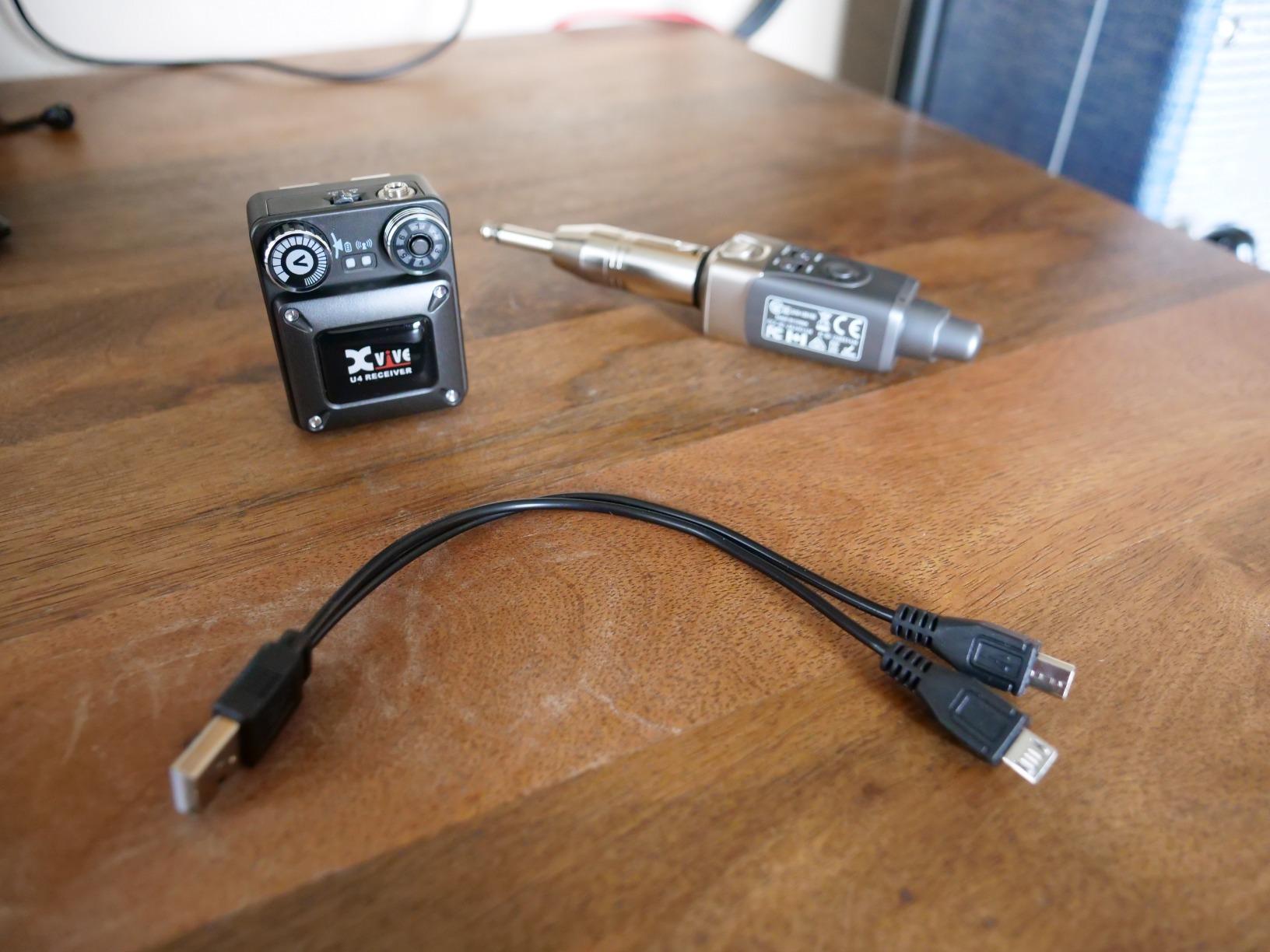
There are real limitations to know about. The U4 transmits a mono signal only, so you do not get stereo separation. In very crowded RF environments (large festivals, dense apartment buildings), the 2.4GHz band can have interference, so test in your venue before relying on it for a critical show. There is also no balanced XLR adapter in the box, which you will want for pro audio gear.
Despite those caveats, the Xvive U4 is the best budget wireless IEM system I have tested. Pair it with the Sennheiser IE 100 PRO and you have a professional-grade wireless rig for well under $400. That combination has become the default recommendation in my band coaching work.
Who should buy the Xvive U4
Worship teams, bar bands, and small venue performers who want freedom from cables. Singers and instrumentalists who want to roam the stage without losing their monitor mix. Anyone with a home studio who wants a personal monitor feed.
Who should skip the Xvive U4
Anyone who needs true stereo separation or longer range. Touring professionals on big stages will want a higher-end system with multiple frequency options and balanced connections.
10. Shure SE846 Gen 2 – Best Flagship IEM
+ The Good
- Quad high-definition balanced armatures
- Interchangeable sound signature filters
- Industry-standard reference monitoring
- Premium build and isolation
- The Bad
- Expensive at flagship pricing
- Requires amplification to shine
- Fit can be challenging
- Cable is not the focus
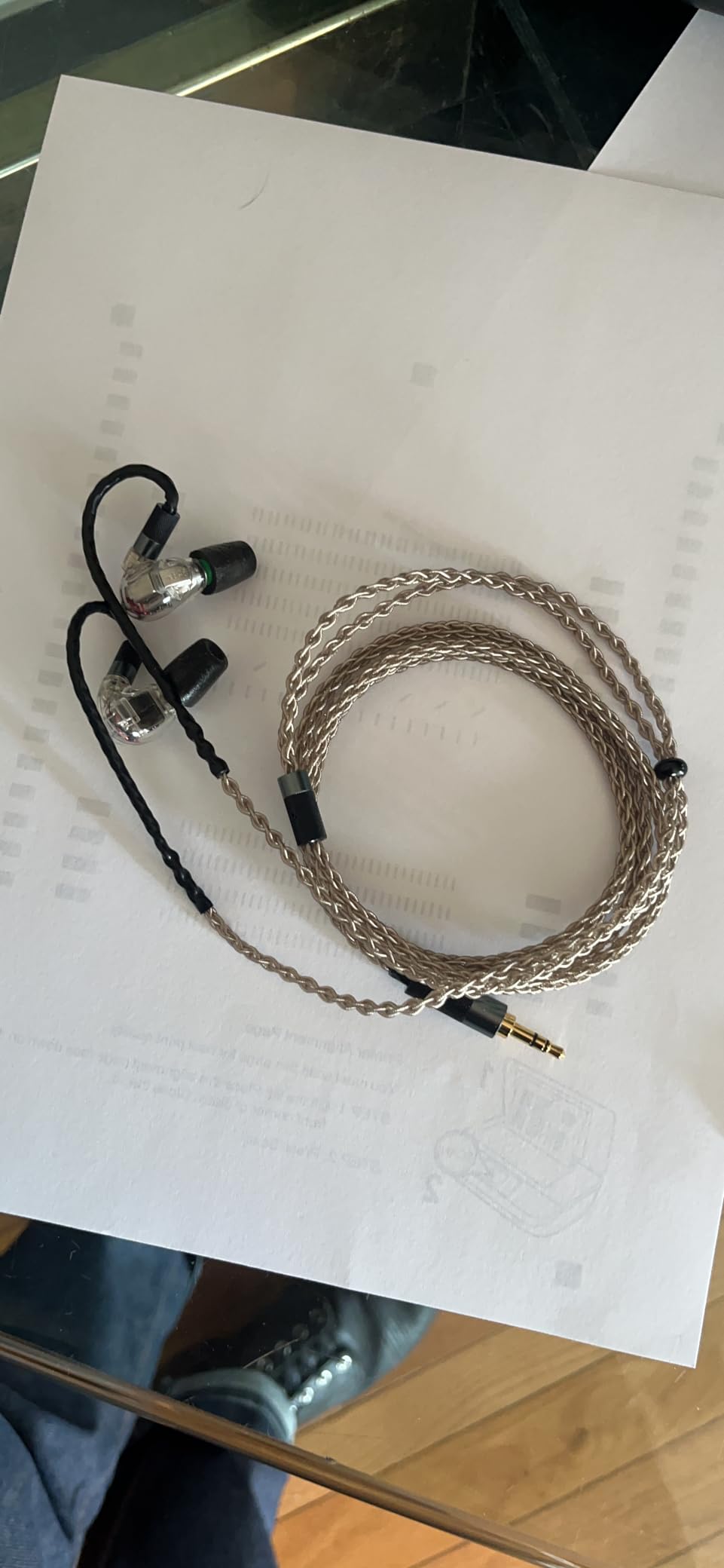
The Shure SE846 Gen 2 is the in ear monitor I review against everything else. Shure has been making professional in ear monitors for decades, and the SE846 is the model you see in the ears of touring musicians, Broadway performers, and audio engineers. If you have ever watched a major concert on television, there is a real chance the performers are wearing the SE846 or its predecessor.
What sets the SE846 apart is the interchangeable sound signature filters. You get four filter sets that physically change the tuning: balanced, warm, bright, and extended. It is the closest you can get to four different IEMs in one shell. Combined with the quad high-definition balanced armature drivers and class-leading passive noise isolation, the SE846 is a reference tool, not just a headphone.
Let me be honest about the price. At flagship pricing, the SE846 is a serious investment. It also demands a quality source. Plug it into a phone and it will sound good, but feed it from a dedicated headphone amplifier or a high-end wireless IEM system and you unlock what audiophiles call the “SE846 experience.” Without that upstream chain, you are leaving performance on the table.
Fit is the other hurdle. The SE846 shell is larger than most IEMs, and finding the right ear tip and insertion depth takes patience. Get it right, and the seal is among the best in the industry. Get it wrong, and the bass response suffers. Take the time to experiment, and the reward is one of the most revealing in ear monitors ever made.
Who should buy the Shure SE846 Gen 2
Professional musicians and audio engineers who need a reference-grade IEM. Audiophiles with the upstream gear to drive them and the budget to indulge. Anyone who wants one pair of IEMs that can cover any genre through filter swaps.
Who should skip the Shure SE846 Gen 2
Casual listeners and beginners. The Sennheiser IE 100 PRO or the KZ ZS10 Pro will give you 80% of the experience at 10 to 20% of the price. Save the SE846 for when you know exactly what you want from a flagship IEM.
How to Choose the Best In Ear Monitors
Choosing the right IEM comes down to matching the design to your use case. I have helped hundreds of musicians and listeners find their perfect pair, and the questions below are the ones that always matter most. There is no single “best in ear monitor” for everyone, but there is a perfect pair for your ears, your genre, and your budget.
Driver type: dynamic vs balanced armature vs hybrid
Dynamic drivers use a single moving coil and tend to deliver fuller, more natural bass. Balanced armatures are tiny drivers that excel at detail and clarity, especially in the mids and highs. Hybrid IEMs, like the KZ ZS10 Pro and CCA C12, combine both for a balanced sound. For most listeners in 2026, a quality hybrid or single dynamic driver is the sweet spot of price and performance.
Wired vs wireless IEMs
Wired IEMs still offer better sound quality per dollar, no battery anxiety, and zero latency. Wireless IEM systems like the Xvive U4 give you freedom to move on stage but cost more and require charging. For studio work and home listening, wired is the way to go. For live performance, a wireless system is hard to beat once you have used one.
Fit, isolation, and ear tips
Passive noise isolation is what separates IEMs from regular earbuds. A good seal blocks 20 to 37 dB of outside noise, which means you can listen at safer volumes and hear more detail. Try multiple tip sizes and materials (silicone, foam, hybrid) until you find the best seal. Foam tips usually give the best isolation, while silicone tips are more comfortable for long sessions.
Impedance and sensitivity
Impedance (measured in ohms) and sensitivity (dB) determine how easy an IEM is to drive. Lower impedance and higher sensitivity means easier driving from a phone. Higher impedance IEMs often benefit from a dedicated amplifier. Most IEMs in this roundup are easy to drive from any modern source.
Use case matters
Singers want vocal clarity. Drummers want isolation and punch. Guitarists want a balanced full-range sound. Mixing engineers want flat, honest response. Audiophiles want detail and a wide soundstage. Match the IEM to the use case rather than chasing the most expensive model.
Frequently Asked Questions
Which in-ear monitor is the best?
The best in-ear monitor overall is the Shure SE846 Gen 2 for professional and audiophile use, thanks to its quad balanced armature drivers and interchangeable sound signature filters. For most listeners, the Sennheiser IE 100 PRO offers the best combination of honest sound, comfort, and value, while the KZ ZS10 Pro is the best pick under $50.
Which brand of IEM is best?
Shure, Sennheiser, and Sennheiser’s IE PRO series are the most trusted brands for professional in-ear monitors. Shure dominates live performance, Sennheiser leads in studio monitoring, and brands like Moondrop, CCA, and Linsoul have disrupted the budget tier in recent years. For studio-grade work, Shure and Sennheiser are the safest bets.
What in-ear monitors do professionals use?
Most touring professionals use Shure SE846, Sennheiser IE 100 PRO or IE 40 PRO, Ultimate Ears, or Westone custom IEMs. Engineers and producers gravitate toward flat-response models like the Sennheiser IE series. For singers on stage, the Sennheiser IE 100 PRO is one of the most common choices thanks to its honest vocal reproduction.
What IEM does Taylor Swift use?
Taylor Swift has been seen wearing custom in-ear monitors on tour, most commonly Ultimate Ears UE 7 Pro and similar custom-fit models from brands that specialize in artist-specific molds. For her studio work, the same level of custom or high-end universal IEM is typical for major touring artists.
Are in-ear monitors better than earbuds?
In-ear monitors are significantly better than regular earbuds for music monitoring and stage use. IEMs seal deeper in the ear canal, provide 20 to 37 dB of passive noise isolation, and use higher-quality drivers designed for accurate sound reproduction. Regular earbuds are fine for casual listening but cannot match the isolation or detail of a proper IEM.
Final Verdict
After months of testing, the best in ear monitors for most people in 2026 are the Sennheiser IE 100 PRO for honest, professional sound and the KZ ZS10 Pro for unbeatable budget value. If you game or want audiophile detail without breaking the bank, the CCA C12 is genuinely stunning. The Shure SE846 Gen 2 remains the reference flagship for anyone with the budget and the upstream gear to do it justice.
For live performers, pair the Sennheiser IE 100 PRO with the Xvive U4 wireless system and you have a professional rig for under $400. For beginners dipping a toe into the IEM world, start with the KZ-ZST or KBEAR KS1 and let your ears guide you upward. The in ear monitor world in 2026 has never offered more quality at every price point than it does right now.
Whatever you choose, invest the time to find the right ear tips. A proper seal is the difference between an IEM sounding average and an IEM sounding incredible. Try foam and silicone, walk around with them in, and let your ears settle before you judge. Once you find that perfect seal, you will understand why so many musicians and audiophiles refuse to go back to regular earbuds.