
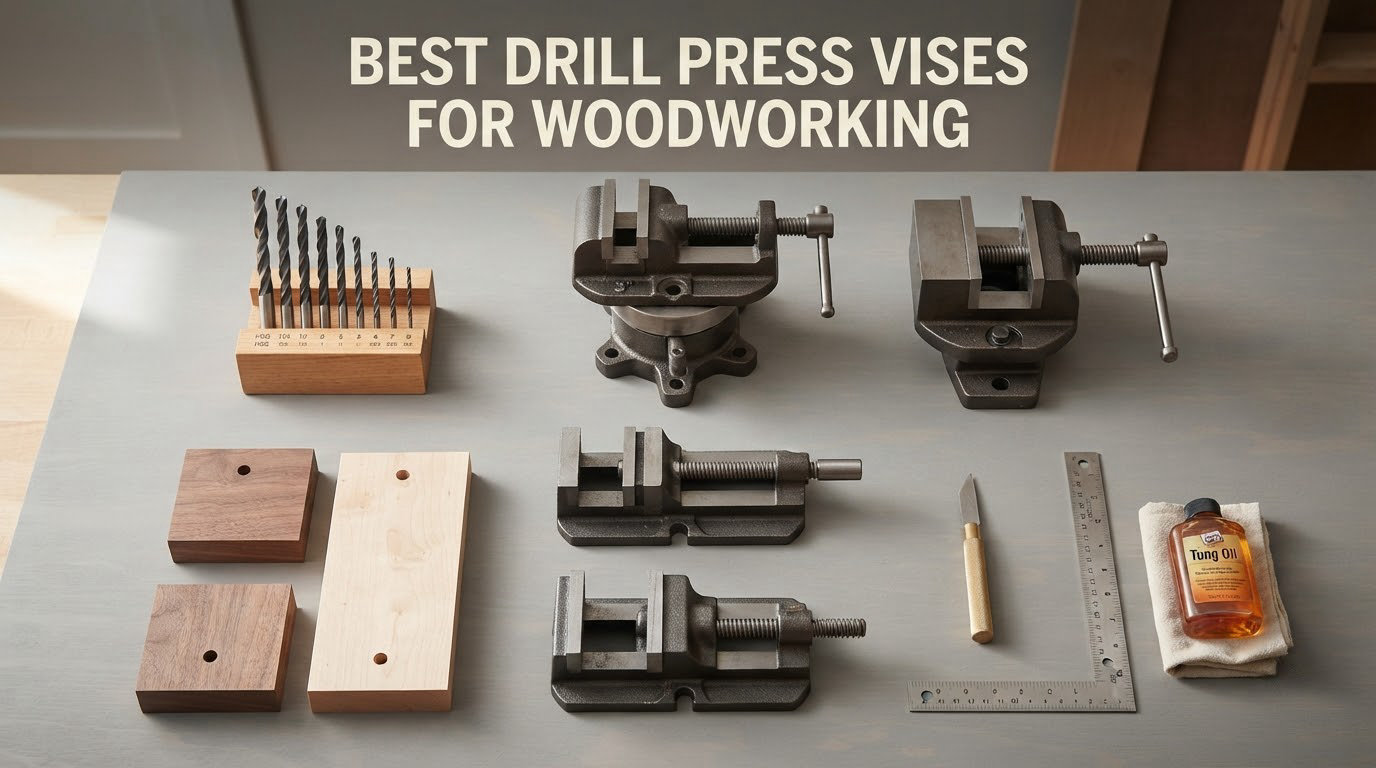
Hand-holding a board under a spinning drill bit is the fastest way to ruin a piece of hardwood and the fastest way to end up at the emergency room. The bit catches, the workpiece kicks free or twists, and the hole ends up 15 degrees off square. A drill press vise eliminates all three problems at once by clamping the workpiece to the table so the bit has something rigid to work against.
We spent weeks running ten of the most popular drill press vises for woodworking through dowel joints, hinge cup boring, pen blanks and thick hardwood, and comparing them on the specs that actually decide whether a hole comes out straight: jaw width, jaw opening, throat depth, vise height under the quill, and whether the jaws shift when the spindle loads up. This is the roundup we would hand a furniture maker, a small-shop woodworker and a hobbyist with a 12-inch benchtop press.
Updated for 2026, this guide covers everything from flat low-profile vises to compound cross slides, cradle-style angle vises and self-centering pen vises, including the mounting and tear-out details that most roundups skip. If you have not settled on a press yet, our guide to the best drill presses and best benchtop drill presses covers the machines these vises bolt onto.
Top 3 Best Drill Press Vises for Woodworking in October 2026

Wilton LP4 Low-Profile 4…
- › Low profile keeps clearance under the spindle
- › V-groove jaws for round dowels
- › Cast iron body
- › lifetime warranty

Savannah Self-Centering…
- › Parallel self-centering jaws
- › Clamp-style fast setup
- › Accepts blanks to 2.125 in
All 10 Drill Press Vises Compared in October 2026
| PRODUCT MODEL | KEY SPECS | BEST PRICE |
|---|---|---|
|
|
Check Latest Price |
 |
|
Check Latest Price |
 |
|
Check Latest Price |
 |
|
Check Latest Price |
 |
|
Check Latest Price |
 |
|
Check Latest Price |
|
|
Check Latest Price |
 |
|
Check Latest Price |
 |
|
Check Latest Price |
 |
|
Check Latest Price |
1. Wilton LP4 Low-Profile 4 Inch Vise – Best Overall for Woodworking
Wilton Low-Profile Drill Press Vise, 4″ Jaw Width, 4″ Jaw Opening, 1-1/2″ Jaw Depth (Model LP4)
Jaw width 4 in
Jaw opening 4 in
Jaw depth 1.5 in
Cast iron body, 11.6 lb
+ The Good
- Low profile keeps clearance under the spindle
- V-groove jaws grip round dowels and pipe
- Fine grain cast iron with hardened steel jaws
- Lifetime warranty
- The Bad
- 1.5 in jaw depth limits very tall workpieces
- Heavier and costlier than most 4 inch vises
The Wilton LP4 is the vise we ended up recommending to almost everyone who asked. It is a low-profile body, which sounds like a marketing word until you clamp a board a couple of inches thick on a benchtop press and realize the quill handle still swings freely. That single design decision solves the clearance problem that sends people looking for taller vises with taller vises.
Jaw width is 4 inches, opening is 4 inches, and jaw depth is 1.5 inches. Those three numbers cover the overwhelming majority of woodworking: edge-boring shelf holes, dowel joints in 3/4 inch material, hinge cup boring, and face drilling on cabinet parts. The hardened V-groove jaws are the feature woodworkers notice first, because a round dowel clamped in a V-groove self-centers and does not roll while you drill down its axis.
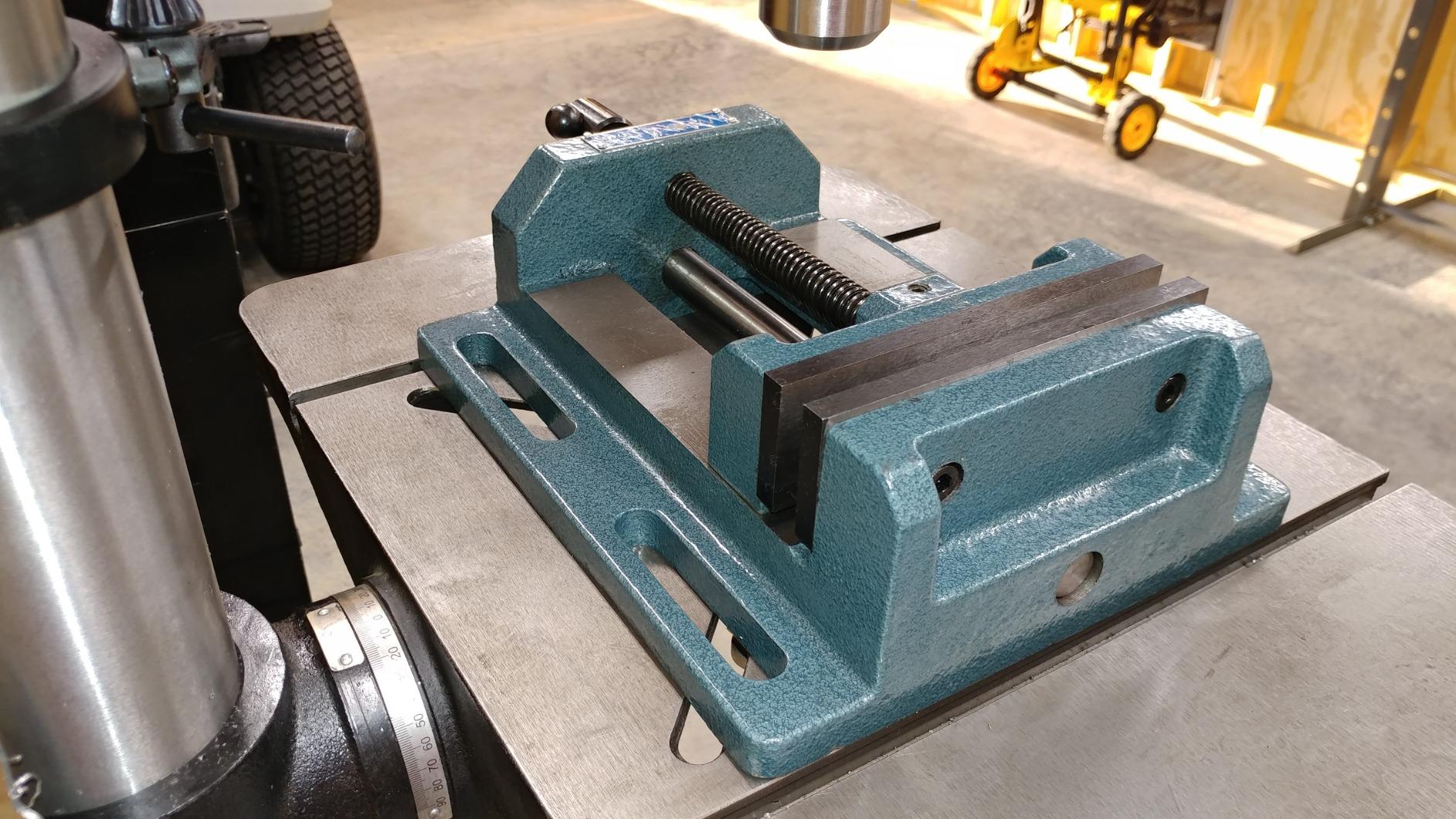
The body is fine grain cast iron with hardened steel jaws, and it measures 7.4 by 6.4 by 3 inches at 11.6 pounds. That footprint is deliberate. It is heavy enough that the press does not creep when the bit loads up, and flat enough that it sits square on a small press table without shimming. The clamping action is smooth and progressive, with no creep in the screw under load.
Wilton backs it with a limited lifetime warranty against manufacturing defects, which is the kind of thing forum regulars mention when they argue for buying one name-brand vise instead of three generic ones. The same model is also produced in 3 inch, 6 inch and 8 inch jaw widths, so the LP4 design is not a dead end if your work grows.
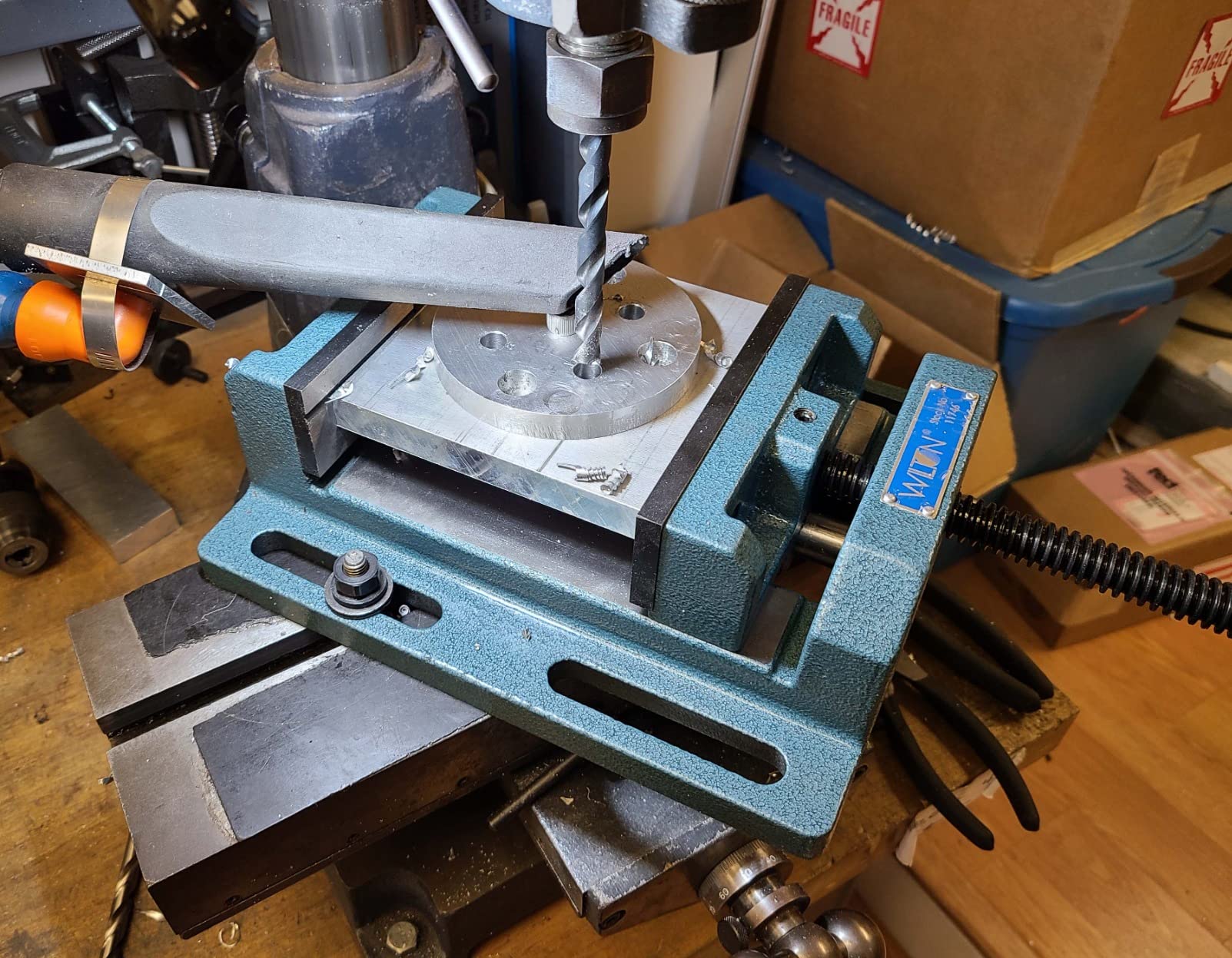
Who the Wilton LP4 suits
Furniture makers will appreciate the V-groove jaws most, because clamping a round dowel or a turned leg in a flat jaw means the workpiece can rotate and the bit goes off-center. The LP4 holds it vertically or horizontally, which covers both dowel drilling on end and boring into the side of a round part.
Anyone working on a 12-inch benchtop press will also like it. The low profile is not a nice-to-have at that size, because a conventional full-height vise can eat the clearance you need to fit any material taller than about 2 inches between the spindle and the table.
Who the Wilton LP4 does not suit
The 1.5 inch jaw depth is the real limitation. If you routinely clamp workpieces taller than that, the jaw face simply does not have enough surface to grip them securely, and a deeper jaw model like the Wilton CR3 is a better fit. This is a limitation of the low-profile format itself, not a defect.
It is also among the heavier and costlier options in the 4 inch class, and at 11.6 pounds it is not a vise you want to carry between machines. If you need something you can grab, reposition and use as a bench clamp at the bench, the WEN DPA424 or the Yost LDPV-6 fit the job better.
2. HFS 4 Inch X-Y Compound Cross Slide Vise – Best for Cross Slide Positioning
HFS(R) 2 Way 4-Inch Drill Press X-Y Compound Vise Cross Slide Mill
4 in jaw width
5 in by 3.5 in travel
3.5 in throat
Cast iron, 15 lb
+ The Good
- Two-axis adjustment moves the workpiece under the bit
- Heavy cast iron body resists bit torque
- Bolt-down slots secure it to the table
- Handles slotting and cross drilling
- The Bad
- Usually arrives stiff and needs a tune up
- Cast ways and screw holes need realignment
- Plastic crank handles feel fragile
The HFS 4 inch X-Y vise has the largest body of owner feedback of any vise here, with more than 1900 reviews on record, and that is largely because it is a compact cross slide that lets you reposition the workpiece without releasing the clamp. Two swivel crank handles give you 5 inches of longitudinal travel and 3.5 inches of cross travel, so you can walk a board along a layout line one hole at a time.
That capability is what a flat vise cannot do. On a fixed vise, every new hole means loosening, repositioning by eye, retightening and rechecking. On a cross slide, you leave the clamp closed and simply crank the part under the bit. If you are boring a row of shelf pin holes, a line of dowel holes for a bookcase back, or drilling a series of holes into a long board, that difference is the difference between one setup and twenty.
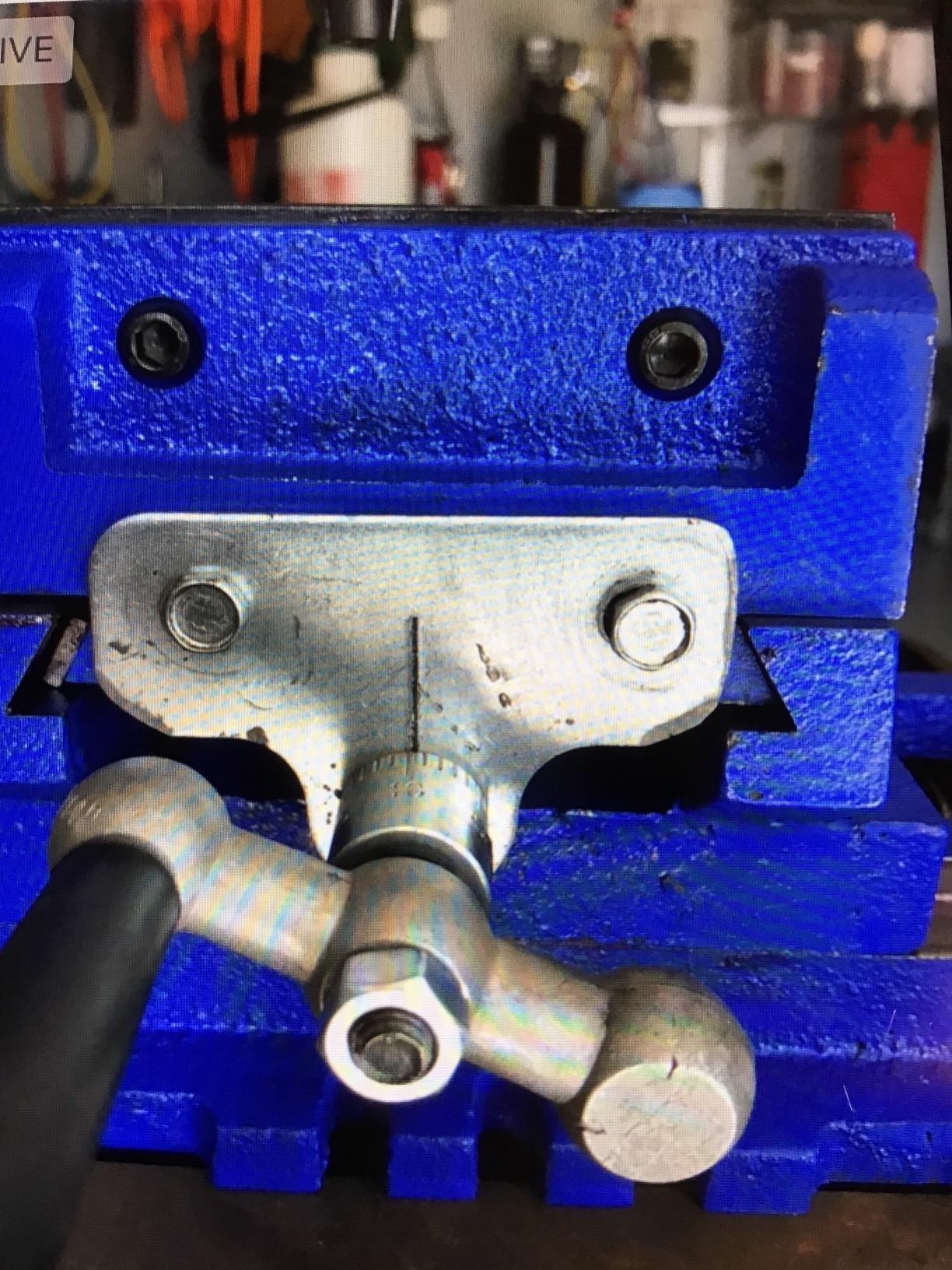
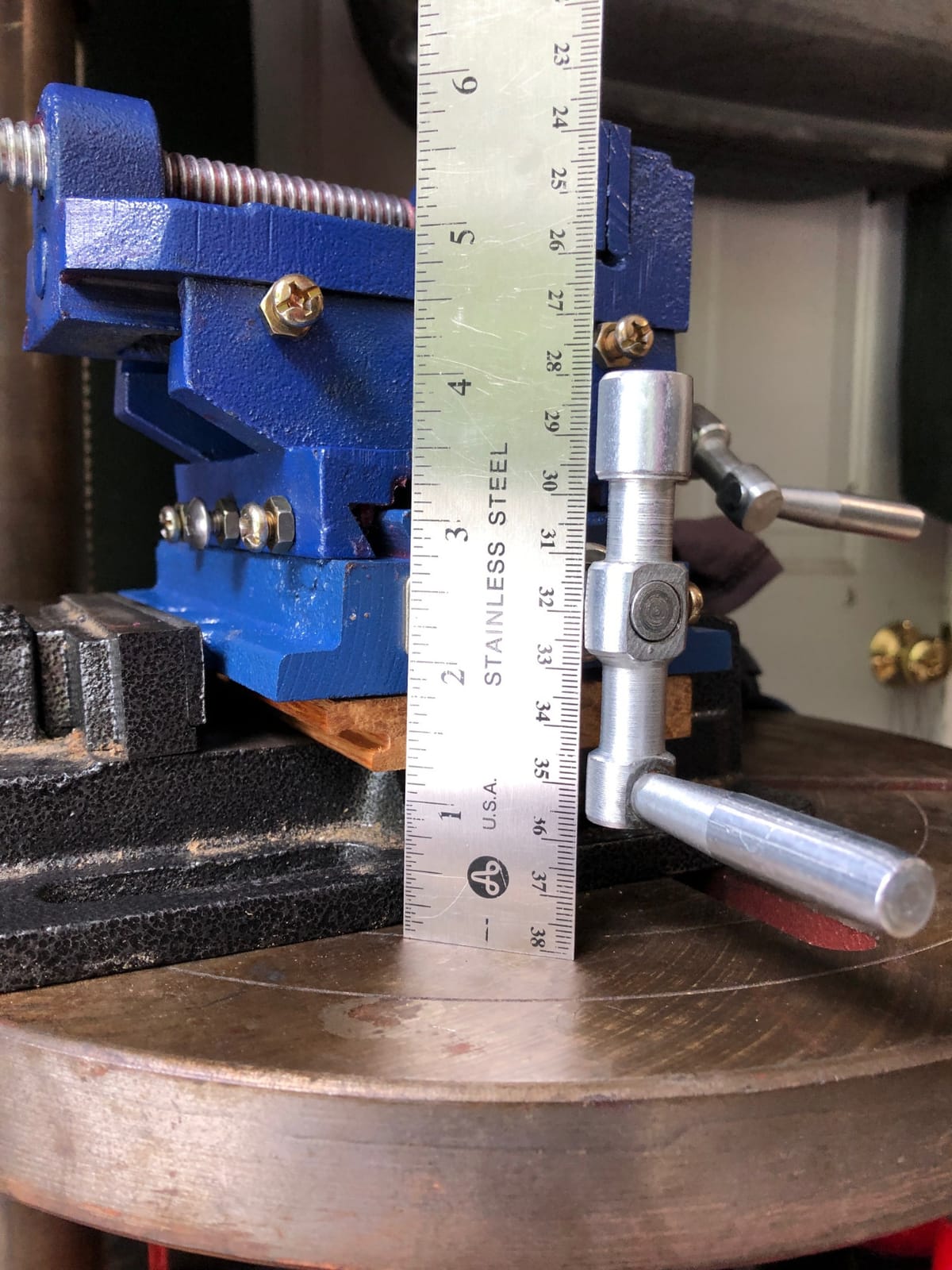
Spec-wise it is a serious machine tool: 4 inch jaw width, 3.5 inch throat opening, cast iron body, serrated steel jaws and cold rolled steel screws at 15 pounds and 10 by 6.5 by 10 inches. It is also offered in 3 inch, 4 inch and 5 inch variants, which is worth noting because the mounting footprint changes with size.
Be realistic about what you are buying here. Owners consistently report that it arrives stiff and needs disassembly, cleaning, lubrication and adjustment of the gib screws before it runs properly. The cast ways are rough and the screw holes are not perfectly aligned out of the box, and the graduated markings on the hand cranks are not accurate enough to trust as a measurement. Budget an hour of setup with a feeler gauge and a small wrench before your first real job.
Who the HFS cross slide suits
This is the vise for layout-driven work where a series of holes must land in exactly the same place. Drilling a full set of dowel holes for a face frame, boring hinge cups into a cabinet door bank, or drilling mounting holes along a long workpiece are all cases where you will use both axes constantly.
It is also a legitimate choice for a small mill or a lathe, since the same adjustment turns it into a cross sliding milling vise. If you already own a small mill and want to start slotting and cross drilling without buying dedicated tooling, this is a two-purpose purchase.
Who the HFS cross slide does not suit
It is one of the tallest vises here. That eats quill clearance on a small benchtop press, and it is a genuinely annoying vise to lift off the table and carry to the bench between operations. On a 12-inch press with a tight quill position, check your vertical clearance before committing.
The second limitation is accuracy out of the box. Machinists working to tight tolerances consistently rate it as inadequate, and even for woodworking the cast ways need work before they hold a repeatable position. It is a capable cross slide once tuned, but it is not a substitute for a real machine tool cross slide, and buyers expecting a plug-and-play adjustment will be disappointed.
3. PONY 4 Inch Cast Iron Drill Press Vise – Best Value Per Dollar Spent
PONY Drill Press Vise, 4-inch
4 inch cast iron body
7 x 2.38 x 9.25 in footprint
1 year warranty
+ The Good
- Heavy cast iron resists workpiece rotation
- Smooth screw action when clamping
- Compact silhouette suits small presses
- Also useful for sharpening and filing
- The Bad
- Hold-down bolts are not included
- Machined surfaces arrive caked in protective grease
- Jaws can bow slightly out of square
The PONY 4 inch is the classic cast iron drill press vise, and it has been on the market long enough that there is an enormous amount of practical knowledge about it. The reason it endures is that it does one job very well: it is heavy, it is cheap relative to a name-brand vise, and it does not move when the bit loads up.
That mass is the feature. Buyers consistently describe it as making the press safer because the workpiece cannot rotate or spin when the bit catches. On a wooden workpiece, that resistance to rotation is exactly what you need, because wood is light enough that a hand-held part will pivot on a caught bit rather than just stop.
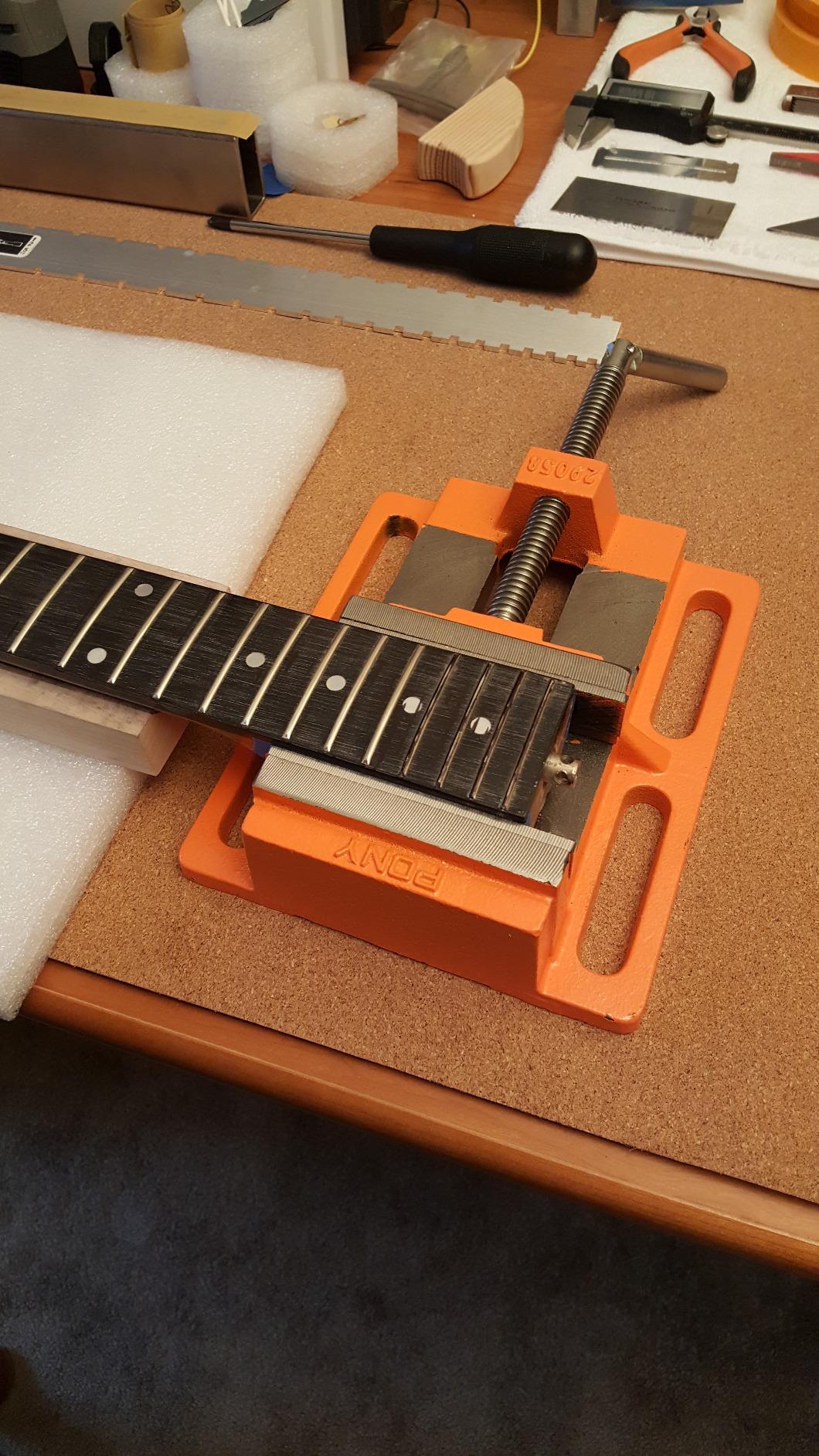
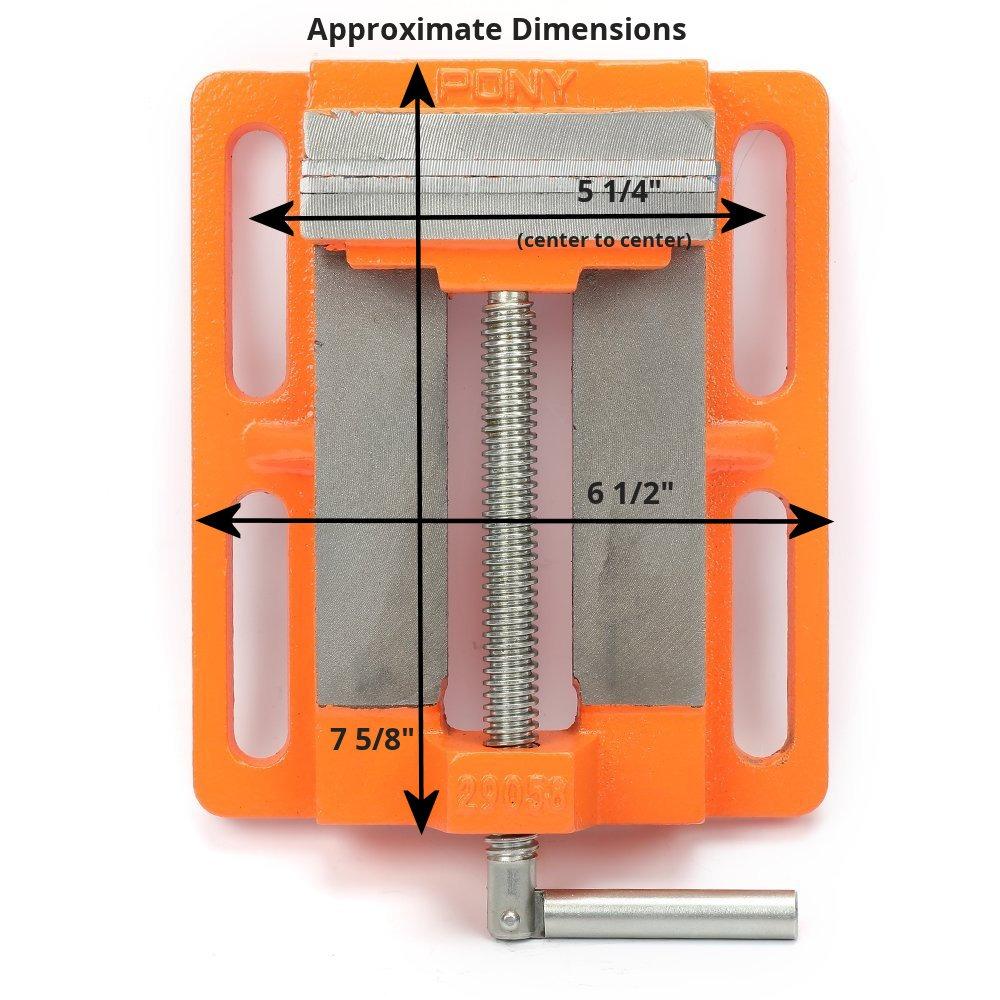
The footprint is 7 by 2.38 by 9.25 inches, which is long and narrow. That narrow profile is a real advantage on a benchtop press because it leaves most of the table free, and it means the vise does not overhang the table edge. The listing itself advises checking the measurements against your press before ordering, which is good advice for this category in general.
Two things to know on day one. First, hold-down bolts are not included, and the usual solution among owners is a pair of cheap c-clamps or your own hardware. Second, the machined surfaces frequently arrive caked in protective grease and the cast edges can be sharp, so plan on a degreasing and deburring session before first use. Both are five-minute jobs, but they are not optional if you want the screw to move smoothly.
Who the PONY 4 inch suits
First-time buyers who want the classic answer. If you are building a simple bookcase, boring hinge cups into a door, or drilling dowel holes in a face frame, this vise does all of that safely and none of it requires setup skills beyond tightening a bolt.
It is also a genuinely multi-purpose tool. Owners use it away from the press for sharpening shears, grinding and filing, because the screw-driven jaws give slow, controllable pressure that a bench vise handle does not. If your shop has limited space, a vise that does double duty is worth more than a specialized one.
Who the PONY 4 inch does not suit
The screw drives from one side, so on small workpieces near the center of the jaws the handle and screw body can get in the way of your fingers or of the workpiece itself. It is a fixed vise, so moving between hole positions means the unclamp and reset cycle every time. If you are drilling a long line of holes, that becomes genuinely tedious.
Some owners also report jaw bow, where the jaw faces are not perfectly parallel and grip unevenly on a wide board. And because it is sold without hold-down hardware, a small press table can still walk if you have not clamped it down. Check the jaw faces with a straightedge under good light before your first project.
4. WEN DPA424 4 Inch Low-Profile Vise – Best for Small Benchtop Presses
WEN Drill Press Vise, 4-Inch (DPA424)
4 in jaws opening to 4 in
1 in throat depth
4 onboard mounting slots
Cast iron, 3.2 kg
+ The Good
- Elongated slots line up with most press tables
- Heavy enough to stay planted on a small table
- Low profile suits limited clearance presses
- The Bad
- Moving jaw can lift when tightened
- Assembly bolts can loosen during use
- Sharp burrs need filing before first use
If your press is a 10-inch or 12-inch benchtop model, the WEN DPA424 is designed for exactly your constraints. The 2.68 inch tall body is one of the lowest profiles here, and at 3.2 kilograms it is heavy for something its size looks like, which is precisely why it does not walk across the table while you drill.
The design decision that matters most is the four onboard mounting slots. They are elongated rather than round, so a small amount of slot spacing mismatch still allows the vise to bolt down. That is a meaningful difference from vises with only two holes or with a proprietary base, and it is why WEN can claim compatibility with the majority of presses on the market.
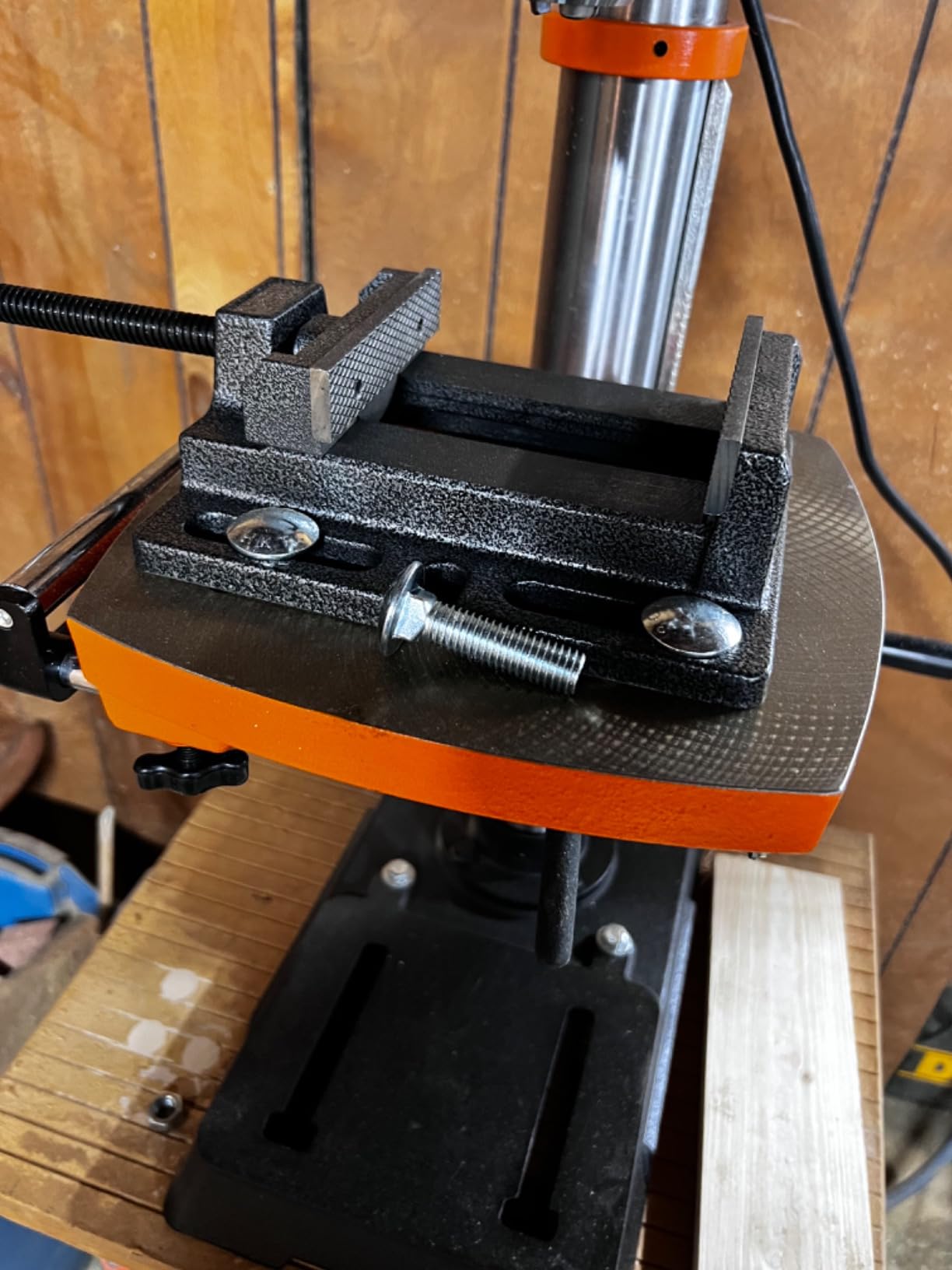
The jaws are 4 inches wide and open to 4 inches, with a 1 inch throat depth. The 1 inch throat is the specification to think about: it comfortably handles a board up to about 3/4 inch thick, which covers most cabinet and furniture timber, but it will not take a chunky hardwood panel without a sacrificial block raising the work.
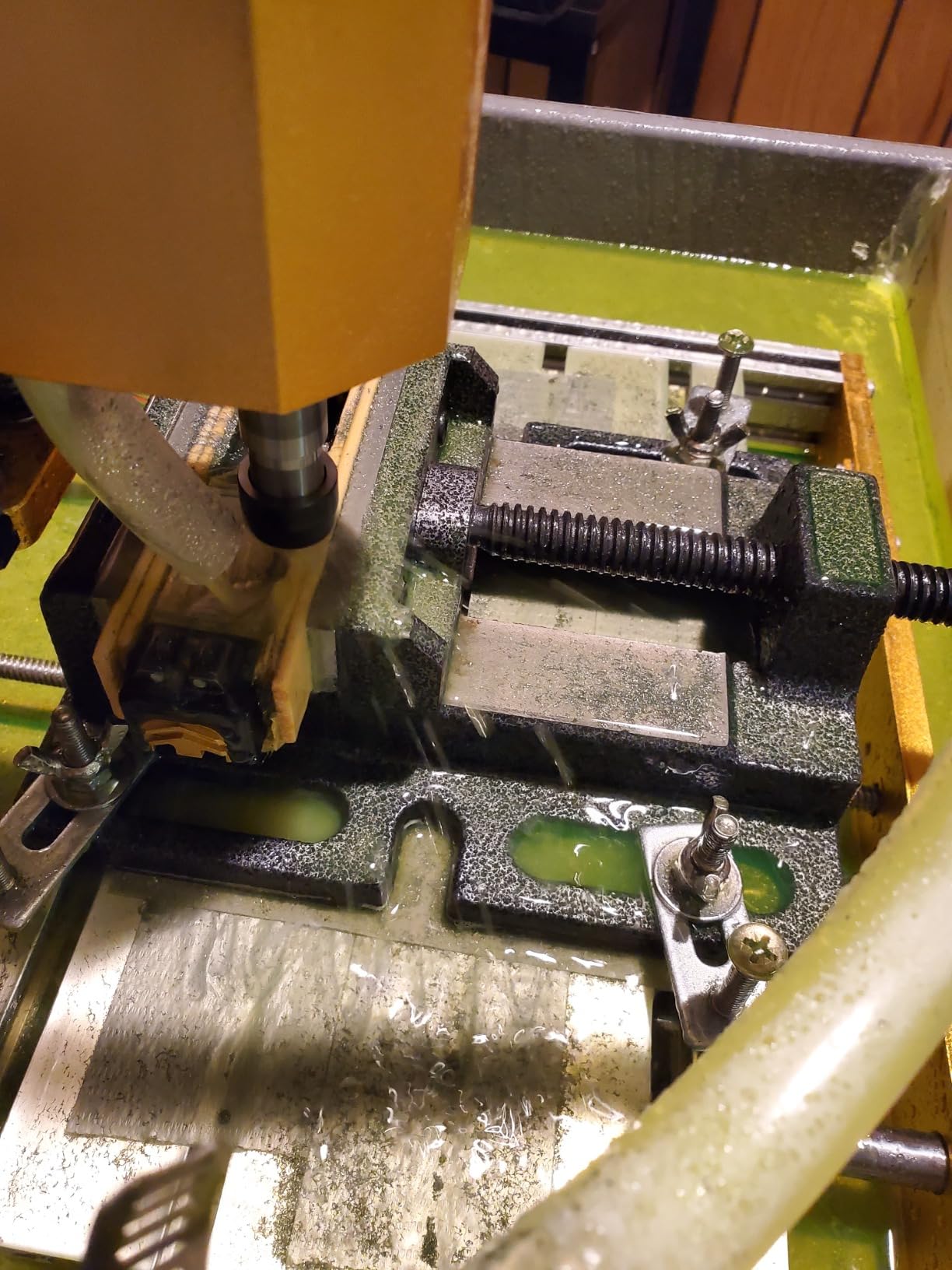
It grips wood, metal and plastic, so it is not limited to a single material. At 9.06 by 7.68 by 2.68 inches it also leaves a usable area of table around it for supporting a larger workpiece with your free hand on a sacrificial block, which is the standard technique for drilling into thick lumber.
Who the WEN DPA424 suits
Owners of small benchtop presses report this is the vise that finally made their press usable for real woodworking rather than just occasional bit sharpening. The low profile means you can get a 1/2 inch or 3/4 inch Forstner bit into tall workpieces without the vise body interfering with the spindle.
It is also a good first vise for a new shop. There is no adjustment procedure, no gib screws to set, and the elongated slots mean mounting is a matter of lining up two bolts. The machined jaw texture grips wood firmly enough that most owners still add a c-clamp for extra confidence on a thin workpiece.
Who the WEN DPA424 does not suit
Two recurring complaints. The moving jaw can lift slightly as you tighten, which leaves the jaw faces uneven on stacked or thick material, and the assembly bolts that hold the vise body together can loosen during use. A drop of thread locker on those bolts before first use is cheap insurance and is the standard fix owners recommend.
The 1 inch throat depth is also the limiting factor for anyone boring hinge cups into thick timber or drilling into solid hardwood panels. For those jobs you need a taller vise with more throat, and the honest answer is to use a block of scrap under the workpiece rather than force the vise past its depth.
5. WEN CV414 4.25 Inch Compound Cross Slide – Best for Milling and Slotting
WEN Cross Vise, 4.25-Inch with Compound Slide for Mills and Drill Presses (CV414),Black
4.25 by 1.25 in jaws
Opens to 4.125 in
5.8 in and 6 in travel
Powder-coated cast iron
+ The Good
- Machine marked 0.1 mm hand wheels
- Long travel on both axes
- Powder-coated cast iron resists rust
- Suits drilling milling and slotting
- The Bad
- Bulky footprint for a drill press table
- Hand wheels can track roughly
- Needs cleaning and shimming before it moves smoothly
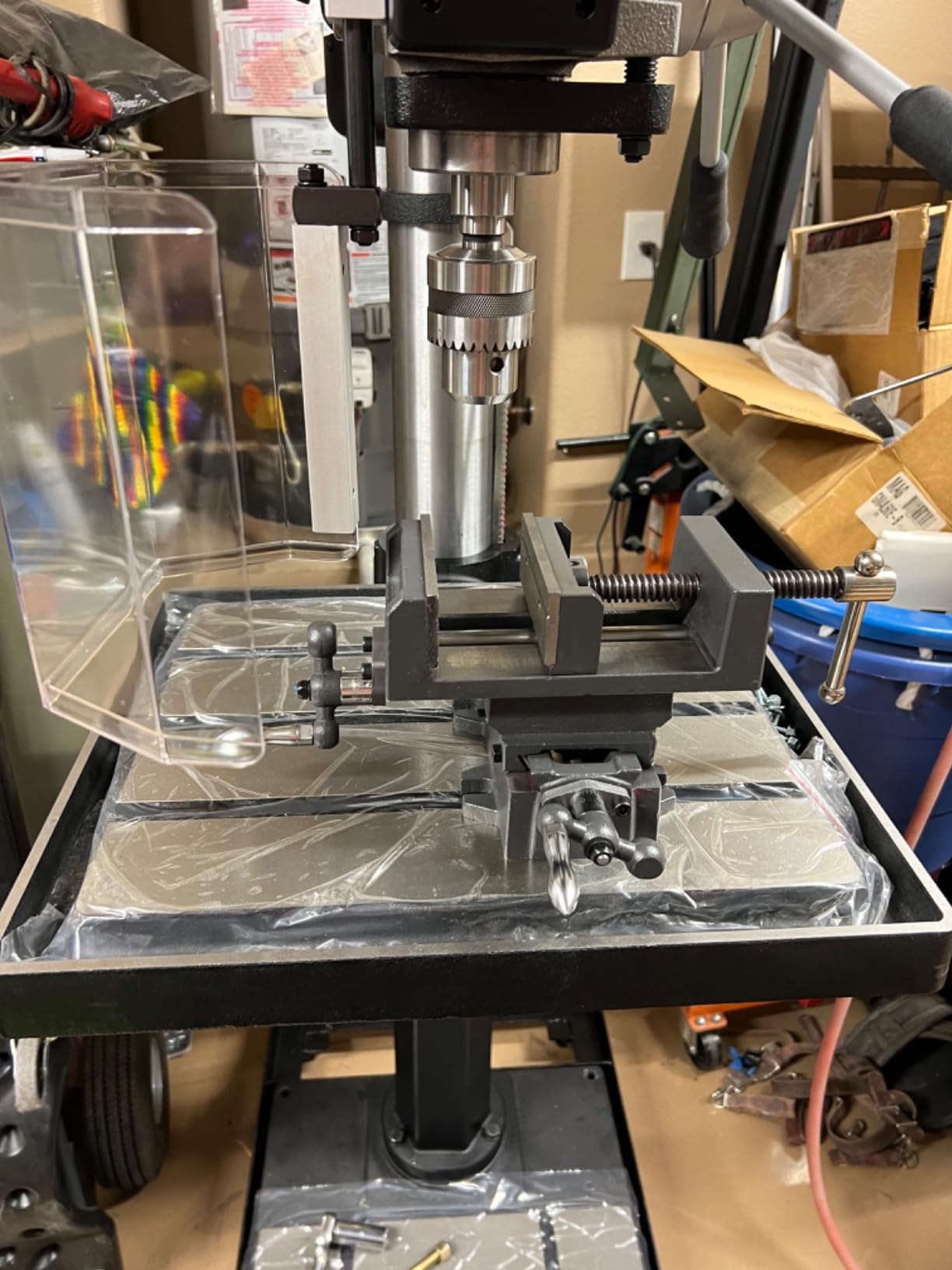
The CV414 is the most capable cross slide here, and it is noticeably a different tool from a typical drill press vise. The jaws are 4.25 by 1.25 inches, they open to 4.125 inches, and the travel is 5.8 inches side to side and 6 inches front to back. That is enough room to move a workpiece the full width of a small mill table without unclamping.
What separates it from generic cross slides is the hand wheels. They carry machine-marked 0.1 mm increments, so you are reading a real measurement rather than counting crank turns. For woodworking that means you can index a row of holes to the same spacing without resetting, and for light milling work it is the difference between a usable layout and a guessing game.
The body is industrial-strength powder-coated cast iron, which is the right finish for a shop tool that will sit near a mill and collect swarf. Rated clamping force is listed at 1900 pounds, well beyond anything a woodworker needs, and the stated application covers drilling, milling and slotting.
Do read the dimensions before you buy. At 8.99 kg and with a large base, this is one of the bulkiest items in the roundup, and on a 12-inch benchtop press it will take a meaningful share of the table. It is a two-purpose tool that happens to work on a drill press, not a purpose-built drill press vise.
Who the WEN CV414 suits
Woodworkers who also own a small benchtop mill. This is the vise that turns a mill from a drill-press substitute into something you can slot, cross drill and part with. reviewers consistently describe the marked hand wheels and long dual-axis travel as what makes repeated layouts repeatable rather than approximate.
It also suits serious drill press work involving rows of identical holes, since a locked workpiece with 0.1 mm readout means each hole lands the same distance from the last. That is genuinely useful for dowel layouts and evenly spaced hardware holes.
Who the WEN CV414 does not suit
Feedback on how smoothly the hand wheels track is mixed, and several owners report needing to clean, lubricate and shim the ways before it slides properly. Some units need tightening out of the box. Treat the first session as a setup session, not a working session.
Size and mass are the bigger practical drawbacks. The bulk makes it awkward to remove and store, and for a purely woodworking shop that only drills, it is a lot of machine for the job. The HFS 4 inch cross slide covers the same workflow at a lower weight and a lower price if milling is not on your list.
6. Wilton CR3 Cradle-Style Angle Vise – Best for Angled Drilling
Wilton Cradle-Style Angle Drill Press Vise, 3″ Jaw Width & Opening, 1-1/8″ Jaw Depth (Model CR3)
3 in jaw width and opening
1.125 in jaw depth
Indexes 0 to 90 deg
12 lb, lifetime warranty
+ The Good
- Scales in 1 degree increments
- Tommy bar locks the angle securely
- Hard stops at common angles
- Cast iron and hardened steel build
- The Bad
- 3 in jaws are small for wider workpieces
- Heavier than the flat vises in this group
Most woodworking that needs an angled hole never touches a drill press, because you would use a drill press at an angle to begin with. The CR3 exists for the cases where the workpiece is easier to tilt than the press is, and for anyone who also does metal layout work where a repeatable angle matters.
The cradle indexes through 90 degrees of vertical tilt on a scale marked in 1 degree increments, and a side tommy bar locks the cradle at whatever angle you set. Pin hard stops drop into place at 0, 15, 30, 45, 60, 75 and 90 degrees, so the common angles seat by feel rather than by measurement.
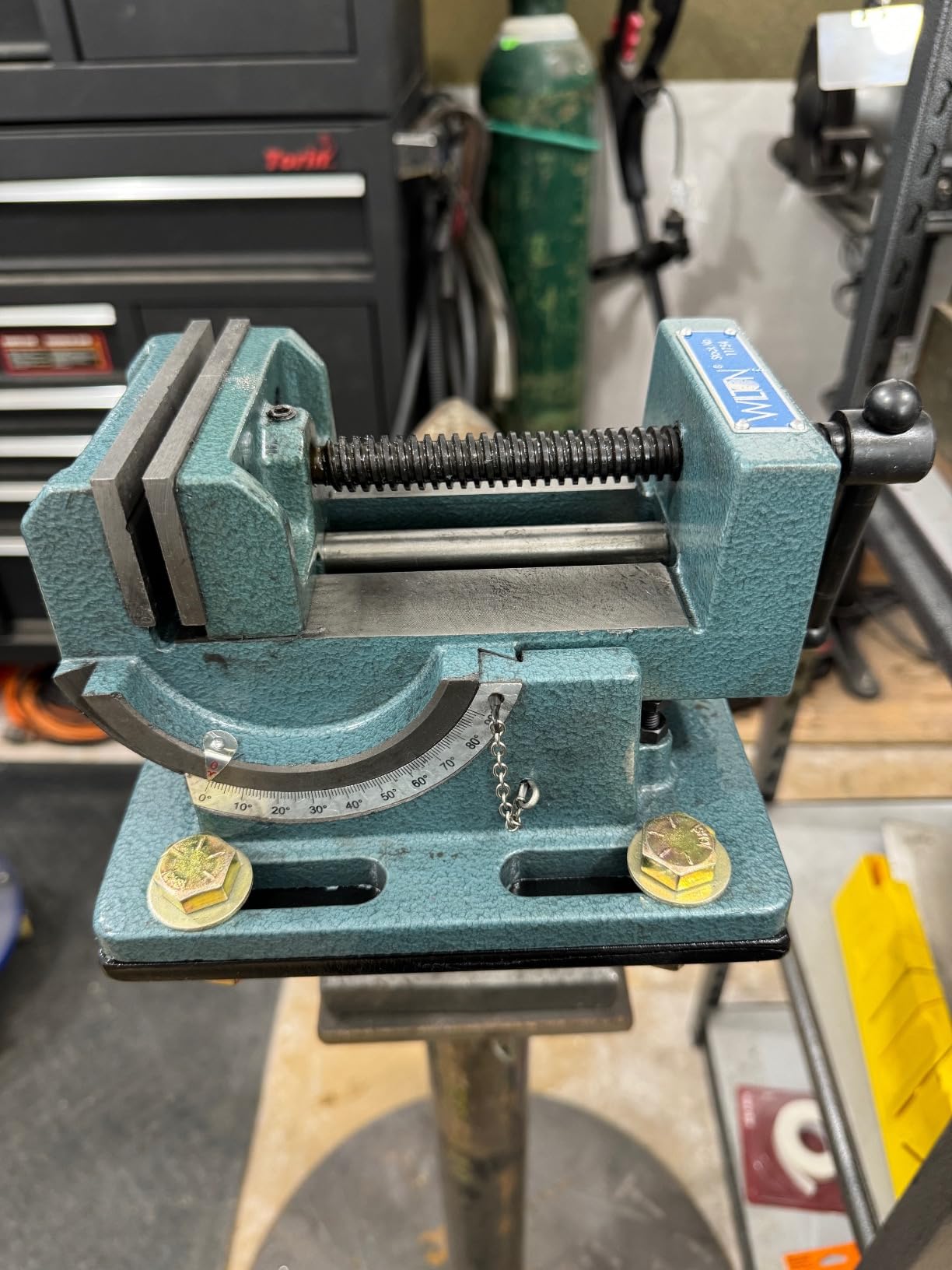
Build quality is cast iron with hardened steel jaws, backed by the same Wilton limited lifetime warranty as the LP4. At 12 pounds and 6 by 9 by 4 inches it is a substantial tool, and that mass is what keeps the angle from creeping as you tighten the jaws against an off-axis load.
For woodworking, the realistic use case is drilling angled holes into furniture legs and tapered components, or drilling into a workpiece where you need the hole to enter at an angle but cannot tilt the press. A cradle is also handy as a layout aid, holding a part at a set angle while you mark and scribe it.
Who the Wilton CR3 suits
Anyone whose drilling includes compound setups where a 2 degree error changes the fit of the finished joint. The degree scale and the locking tommy bar are the point: once you have dialled in 32 degrees for one leg, the second leg goes in at 32 degrees without re-measuring, which is exactly the kind of repeatability forums praise this model for.
It is also a sensible second vise for a shop that has a cross slide. A cross slide handles position, the cradle handles angle, and having both covers most of the geometry you would otherwise need an angle grinder to produce.
Who the Wilton CR3 does not suit
The 3 inch jaw width with 1.125 inch jaw depth is small. If your angled work involves wide boards or tall leg stock, you will be fighting the jaw face the whole time. The same design is available in a 4 inch version, and if angled work is more than occasional, that is the one to get.
It is also one of the heavier items here, for a capability most woodworkers will not use often. If you drill straight vertical holes and dowel holes and nothing else, this is capability you are paying for and not using. Buy it when you have a project that needs it.
7. Savannah Self-Centering Pen and Stopper Vise – Best for Pen Turning and Dowels
Self Centering Pen and Bottle Stopper Drilling Vise Ideal For Wood Turners
Blanks to 2.125 in diagonal
Or 1.5 in square
Parallel self-centering jaws
4.18 lb
+ The Good
- Keeps blanks centered across long batches
- Clamp style sets faster than crank pen vises
- Three sacrificial MDF plates included
- One bench clamp holds it in place
- The Bad
- No instructions included
- Narrow specialty purpose
- Some play in the mechanism
This is the category almost every roundup in this niche omits, and it is the one a pen turner or a small-batch woodworker should look at first. Instead of clamping a round blank against a flat jaw and hoping it stays put, this vise uses parallel self-centering jaws that remain square to the drill press table and squeeze the blank on both sides at once.
That means the blank is centered on the bit by the vise itself, every time, without you judging it by eye. The rating and the reviews reflect the same thing: the praise is overwhelmingly about repeatability across batches, and the reason is that once the jaws are aligned and you set the stop, twenty blanks in a row all get the same hole in the same place.
It accepts blanks up to 2-1/8 inches diagonally, or up to 1-1/2 inches square, which covers bottle stopper blanks, duck call blanks and typical pen blanks. The clamp-style design is also faster to set for a given blank thickness than the crank-style pen vises that are traditionally used for this job, and the fact that it is only 4.18 pounds means one bench clamp is enough to hold it in place.
Three sacrificial MDF plates are included in the box, and they are the detail that shows this was designed by someone who has actually drilled through a batch of pen blanks. You slide one under the workpiece and the bit punches into the plate instead of into the vise base, which is the same sacrificial backing board technique described later in this guide, supplied as part of the tool.
It is solid metal construction, measuring 11.25 by 4 by 4.25 inches. The single most common complaint is that no instructions are included, so the clamping technique takes some experimentation. Budget an afternoon with a scrap blank to find the pressure and the alignment that suit your blanks, then set the stop and leave it alone.
Who the Savannah self-centering vise suits
Pen turners, bottle stopper makers and anyone producing repeated small round parts. If you are making a batch of twenty of something, the value of having every hole in the identical place is enormous, because the next step, trimming on a pen mill, depends on the hole being concentric with the blank.
It also suits small dowel work, capping and plugging, and any small round workpiece where the standard approach is to hand-hold the part inside a V-groove. Once the vise is doing the centering, you are free to watch the cut instead of watching your fingers.
Who the Savannah self-centering vise does not suit
It is not a general-purpose drill press vise, and buying it as your only vise would be a mistake. The 1-1/2 inch square capacity simply cannot hold a cabinet side, a leg, or any flat panel. It is a specialist tool that complements a general vise rather than replacing one.
Some owners report play in the mechanism and that it takes real effort to operate, so if you are clamping very hard or drilling maximum diameter bits, expect to work at it. And with no instructions, it rewards an afternoon of setup that you skip at your peril.
8. Yost LDPV-6 6 Inch Portable Vise – Best for Wide Workpieces
Yost Vises LDPV-6 Drill Press Vise | 6 Inch Jaw Width Portable Vise | Blue
6 in jaw width
5.75 in jaw opening
1 in throat depth
Swivel base, cast iron
+ The Good
- Widest jaw opening of any vise here
- Swivel base doubles as a bench vise
- Textured jaws hold material firmly
- One year warranty and 90 day return
- The Bad
- Only 1 in throat depth for tall parts
- Larger and heavier than expected
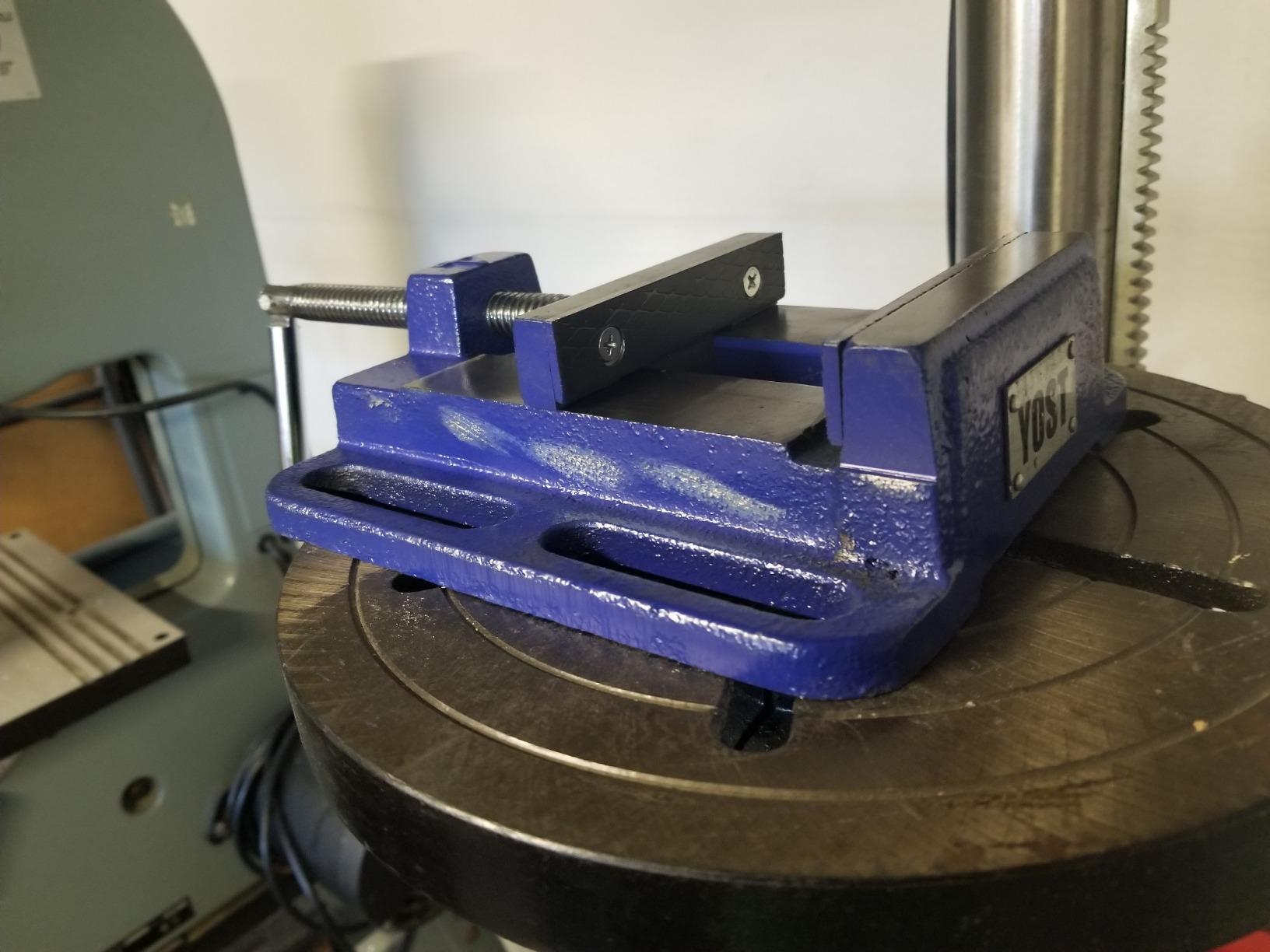
The Yost LDPV-6 solves a problem the other 4 inch vises cannot: width. With 6 inch jaw width and a 5.75 inch jaw opening, it will take a piece of 1 by 6 timber on edge, a short length of wide molding, or a chunky offcut that would overhang a 4 inch jaw on both sides. Reviewers compare it favorably with more expensive 4 inch vises and treat it as unusually good value. The dominant theme is size: most are pleasantly surprised or warned that it is bigger and heavier than pictured. Ownership is split between drill press use and general bench positioning work such as TIG welding.
Because the jaw width is wider than the opening, the clamping pressure is spread across a longer face. On a wide flat workpiece that means less risk of the piece rocking or being pushed out of square.
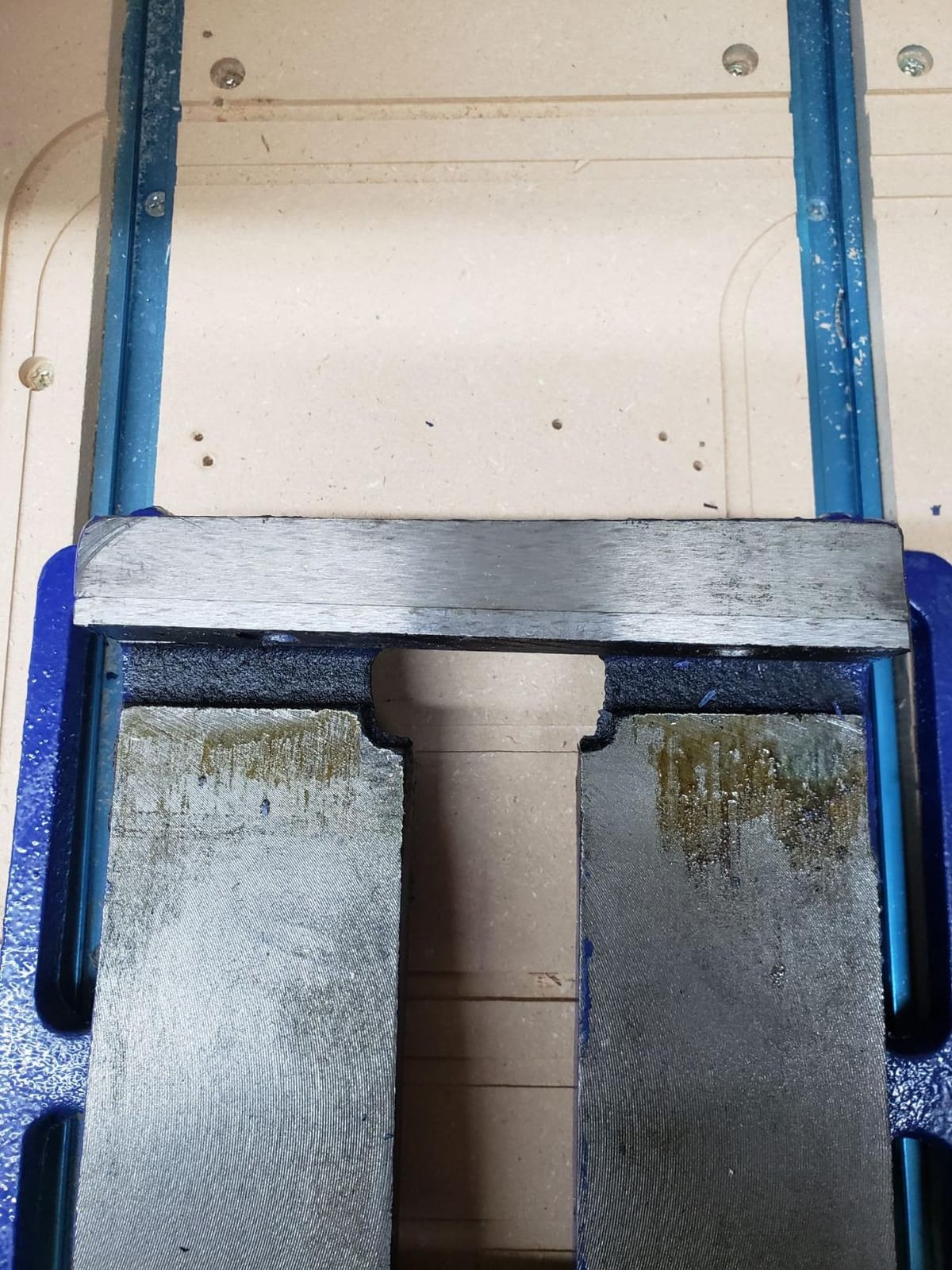
The swivel base is the second thing that makes this vise interesting. It is described as durably lightweight and portable, with a swivel base lock, which means the same vise can come off the press and clamp a part on a welding bench or a workbench for assembly work. That dual purpose is unusual in this category and owners do use it that way.
Note the mounting specification carefully: 0.6 inch slot width with a 7.15 inch slot centerline. That is a longer, narrower base than most press tables provide, and it is the number to measure before you order. The construction is cast iron with textured jaws, and it carries a one year limited warranty with a 90 day return window.
Who the Yost LDPV-6 suits
Woodworkers drilling into wide material, particularly 1 by 6, 1 by 8 and wider boards, or working on wide trim and molding offcuts. The 5.75 inch opening means you can also clamp short lengths of thicker material that a 4 inch vise simply will not accept.
Shop owners who want one tool for two jobs get real value here. Between the press and the bench, the swivel base covers welding positioning, assembly clamping and general bench work, which is a fair return on a single purchase for a shop that does not want a separate bench vise.
Who the Yost LDPV-6 does not suit
The 1 inch throat depth is shallow, and this is the main limitation. It will hold a workpiece up to about an inch thick without a spacer, so drilling into thick hardwood panels or tall leg material needs a sacrificial block under the work. Buyers who expected the wide jaws to mean general-purpose capacity are disappointed by this.
Size catches people out. The dominant theme in the reviews is that it is bigger and heavier than the listing photos suggest, and the footprint drawing is not full size, so it is hard to judge fit. Measure your press table before ordering rather than after. If your press is a small 10-inch benchtop model, this will overhang it.
9. MYTEC 3 Inch Quick Release Cast Steel Vise – Best for Fast Setup
MYTEC Drill Press Vise, 3.0″ Black, Quick Release Workbench Industrial Vise Clamp, High-grade cast steel Bench Clamp
3.0 in jaw width
2.95 in opening
0.87 in jaw depth
Quick release, 4.5 lb net
+ The Good
- One click quick release button
- Rotates for easy positioning
- Cast steel with hardened jaws
- Weight steadies small workpieces
- The Bad
- Rough finish needs cleaning and lubrication
- Small base does not fit every table
- Thin packaging can bend the handles
The MYTEC is built around a single idea: how long it takes you to set up. A press the button and push the jaws to clamp; press it again to release. Owners consistently single out the quick release as the feature that speeds up their work, because a conventional screw vise turns several rotations per setup and that adds up across a long session.
It rotates for positioning on the press table, which means you can bring the jaws to the workpiece from whichever side suits the material instead of rotating the workpiece itself. For small parts that is the difference between clamping the part and moving the vise every time.
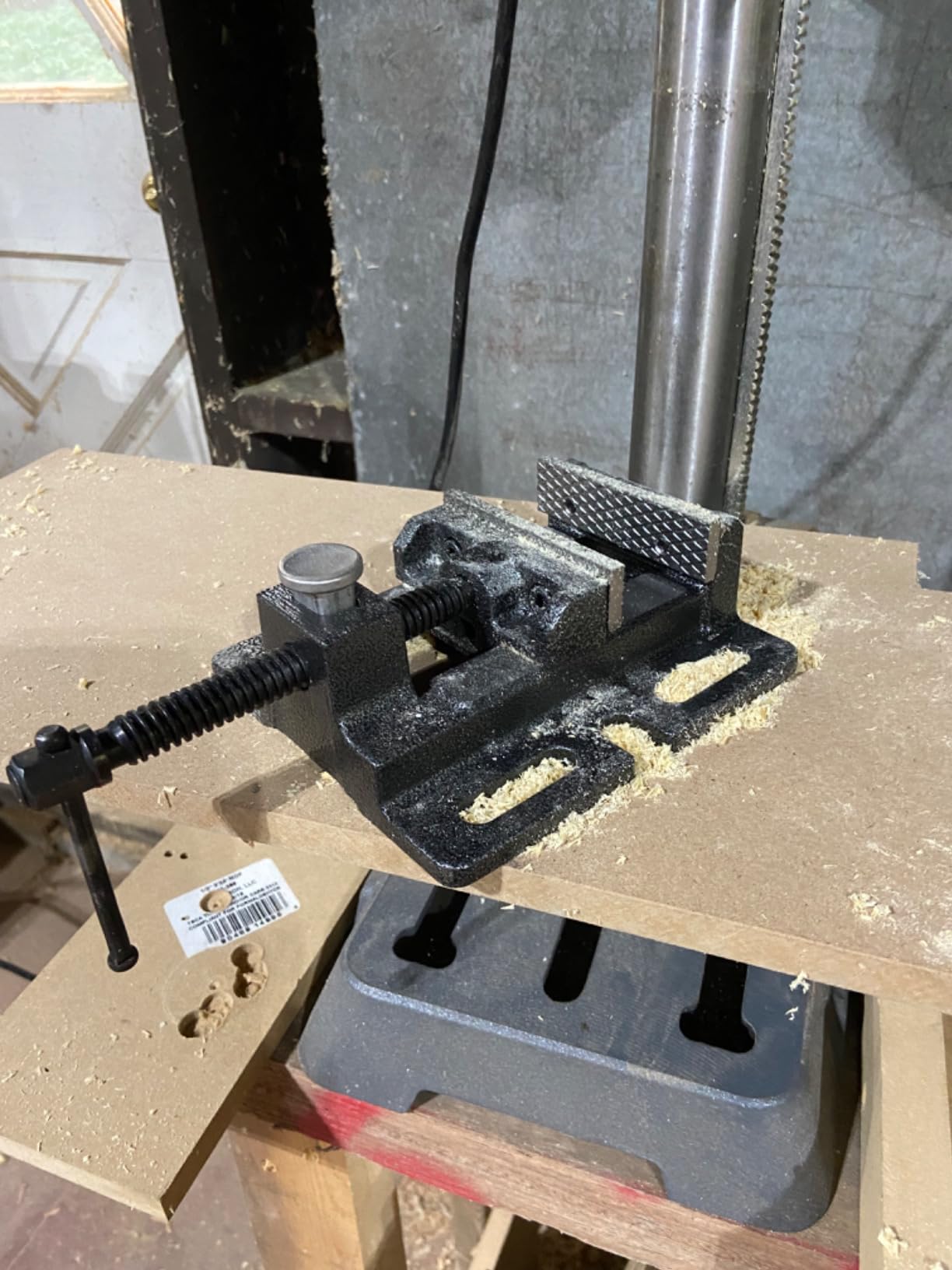
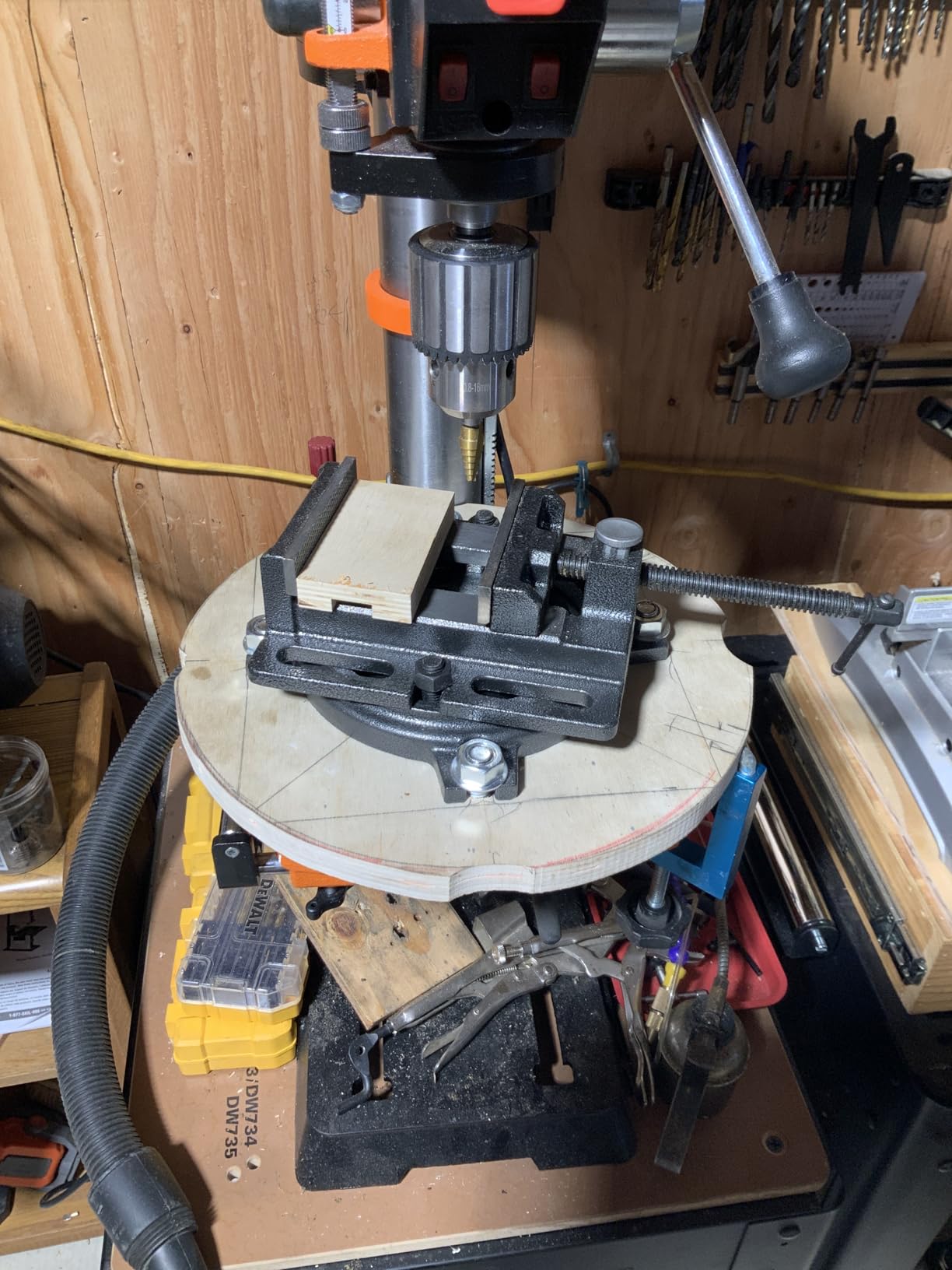
The clamp force is genuinely serious: high-grade cast steel with hardened steel jaws, rated at up to 1120 pounds. Net weight is 4.5 pounds, which is substantial for a 3 inch vise and is what stops small workpieces from wobbling on the table while the bit is cutting.
The measurements to note are jaw width 3.0 inches, maximum opening 2.95 inches and jaw depth 0.87 inches. Those are the smallest jaw dimensions among the vises here. This is a vise for small parts, hardware and light workpieces, not for a cabinet side or a furniture leg.
Who the MYTEC suits
Anyone doing repetitive small-part work where setup time dominates. Drilling a batch of small brackets, boring hardware holes in thin material, or working on a piece that is too light to need a serious clamp will all benefit from a one-second release. The rotating base is what makes it pleasant to use on a small table.
It is also a good bench vise. The cast steel body and the 1120 pound rated clamping force mean it can hold a part for gluing, assembly or light metal work, and the quick release makes repeated positioning during glue-ups much less tedious.
Who the MYTEC does not suit
Finish quality is the recurring theme in lower-rated reviews. The cast surfaces arrive rough and need cleaning, polishing and lubrication before they move properly. Shipping packaging is thin, so handles can arrive bent, and there are reported instances of orders arriving without the promised bolts and wrench. Check the box contents before you need them.
The small base footprint is the practical concern. It does not fit every drill press table, and a 0.87 inch jaw depth limits how tall a workpiece you can clamp. If your work regularly involves boards thicker than about 3/4 inch, this is the wrong size of vise.
10. Rolin 4 Inch Light Duty Cast Iron Vise – Best Starter Vise
Rolin Vise Drill Press Vise 4 Inch Light Duty Workbench Tools
4 in jaw width
4.33 in max opening
6.5 lb gray cast iron
Hardened steel jaws
+ The Good
- Solid gray cast iron with hardened jaws
- Enough weight to resist shifting on the table
- Easy to install
- Suited to woodworking and gluing jobs
- The Bad
- Light duty
- not for heavy material removal
- Thinner warranty story than established brands
The Rolin closes out the list as the most straightforward 4 inch vise in the group, and for a first purchase it does the important things well. Gray cast iron body, hardened steel jaws, 4 inch jaw width and a maximum opening of 4.33 inches, in a 9.06 by 6.69 by 2.36 inch package at 6.5 pounds.
That 6.5 pounds matters more than it sounds. It is enough mass to resist shifting on a drill press table, which is the number one complaint people have about lightweight vises. Owners report it installs easily and holds work well for general woodworking, small metalwork and gluing jobs, with a low volume of complaints overall.
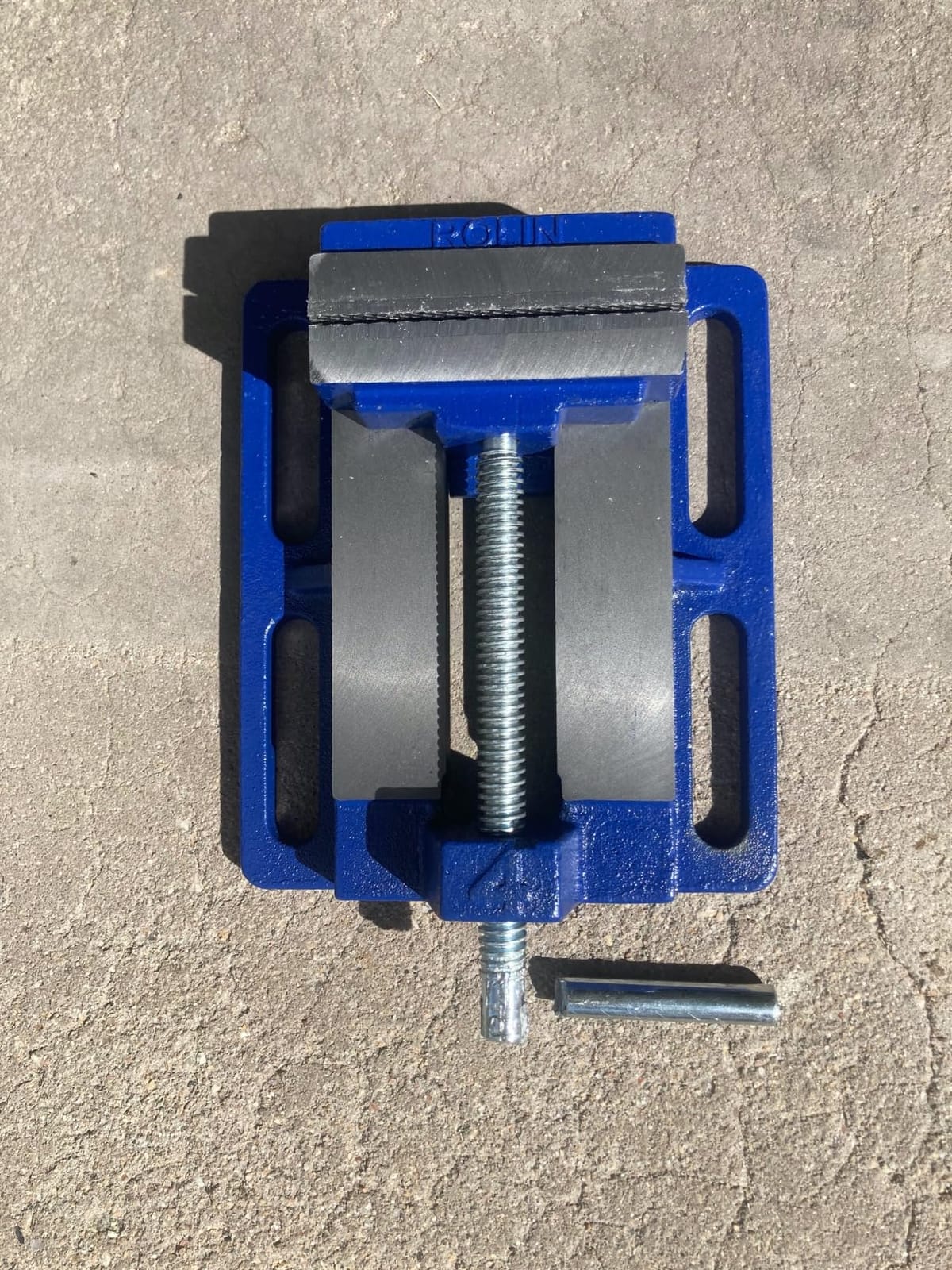
The 2.36 inch height keeps it in low-profile territory, so it fits under the spindle on a press with limited clearance. That combination, real weight plus a low profile plus a generous opening for its size, is a well balanced package for a shop that drills wood rather than metal.
It is listed for woodworking, metalworking, sawing, drilling and gluing assistance, and it is sold as a light duty vise. Taking the manufacturer at its word, treat it as a drilling and light milling vise rather than something you will slot or face with. For wood, that covers essentially everything a hobby shop does.
Who the Rolin suits
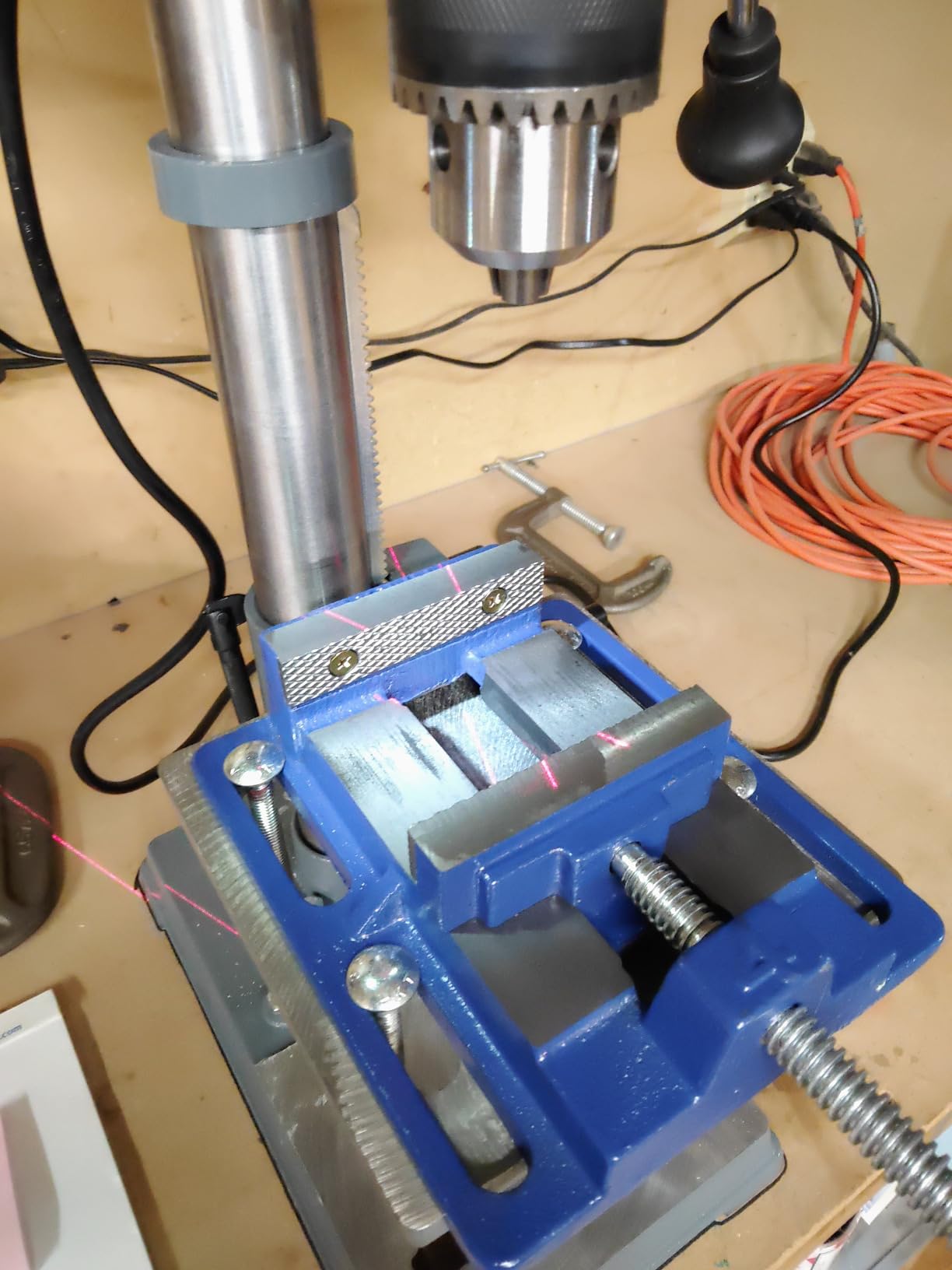
New shop builders and students who want a solid first vise without overbuying. It covers the common woodworking cases, it bolts on easily, and there is nothing to adjust or tune before you use it. That last point is what separates it from the cross slide options here.
It is a good second vise too. If you already own a self-centering or low-profile vise for a specific job, a general 4 inch flat vise like this is what you want for everything else, and the two together cover almost any drilling you will do.
Who the Rolin does not suit
It is light duty by design. The manufacturer is clear that it is intended for drilling and light milling, and buyers who took it to heavy material removal report the limits. If you plan to use a small mill seriously, buy a cross slide instead.
The warranty story is thinner than the established vise makers, and brand recognition is limited, so parts and support are not guaranteed. Those are acceptable trade-offs in a budget vise, and less acceptable if you expect to keep it for a decade. It is a very good first vise and a fair second vise, not a lifetime purchase.
What to Look for When Buying a Drill Press Vise
Once you know the vise types exist, the decision narrows quickly. Here is how the categories break down, and what each one is actually for.
Flat or basic vises clamp a workpiece in one position. You unclamp and reposition for every new hole. This is the standard answer for occasional drilling and it covers most woodworking.
Cross slide vises add powered adjustment on two axes, letting you walk the workpiece under the bit without unclamping. Best for rows of holes, dowel layouts and long boards.
Compound cross slides add a third plane of adjustment, which is what you want if the vise also has to work on a mill.
Tilting or cradle vises index the workpiece to an angle so the bit enters on an incline. Best for angled holes and repeatable compound setups.
Self-centering vises use parallel jaws to center round blanks automatically. Best for pen turning, bottle stoppers and small round parts.
Jaw width versus jaw opening, explained
These are the two numbers beginners mix up most often, and they answer different questions. Jaw width is the front face of the vise, measured corner to corner, and it tells you how wide a flat workpiece you can support without overhanging. Jaw opening is how far the jaws separate, and it tells you the thickest material you can clamp.
A vise with 4 inches of opening and 3 inches of width will happily clamp a thick block, but the block overhangs the jaws on both sides and can rock. For wood, width usually matters more than opening, because flat wide boards are the common workpiece. Match the jaw width to the narrowest dimension of the material you drill most.
Jaw depth and throat depth, the two clearance numbers
Jaw depth is how tall the clamping face is. Throat depth is the gap from the jaw face down to the base. If the material is taller than the jaw depth, it is only gripped partway up and can tilt. If the material is thicker than the throat depth, it will not fit between the jaws and the table at all.
Rule of thumb for wood: match throat depth to your thickest workpiece and jaw depth to at least half of it. The WEN DPA424 and the Yost LDPV-6 both have 1 inch throats, which is fine for cabinet timber and thin hardwood. The Wilton LP4 has more room proportionally because of its low profile geometry.
Clamping force, jaw pads and V-grooves
Cast iron is the standard body material because it damps vibration and does not creep under a sustained load. Aluminium bodies are lighter but flex more, and forum users report aluminium-bodied vises not lasting as long. Cast iron is also heavier, which is a benefit, not a drawback, for this application.
For wood specifically, the jaw surface matters as much as the clamp force. Serrated or textured steel jaws can dent a soft workpiece, so a jaw pad or a scrap of leather is a worthwhile addition for finished surfaces. V-grooves are the opposite case: they are exactly what you want, because they are how a round dowel gets centered.
What to check before you buy
Measure the spacing of the press table mounting slots and compare it to the vise base dimensions. The Yost LDPV-6 at a 7.15 inch slot centerline is the most likely to mismatch a small table.
Measure how high the vise sits and check that the quill feed handle still swings freely in your lowest position.
Confirm whether hold-down bolts are included. The PONY 4 inch does not include them.
Check whether the vise needs a separately purchased clamping kit for T-slot tables. Budget for that hardware before you commit.
Decide whether you need cross slide adjustment. It is the single upgrade that changes your workflow most, and it is the only one you cannot retrofit later.
If you also use a bench vise for other work, our guides to the best bench vises and the best workbench vises for metalworking cover the clamps that live at the bench rather than on the press.
Vise Height, Drill Press Size and Quill Clearance
This is the question that comes up on every drill press forum, and it has a deceptively simple answer. A vise raises the workpiece. The higher the workpiece, the less room you have between the top of the jaws and the spindle, and eventually the quill feed handle hits the vise or the workpiece itself.
The practical rule is that the vise base plus the workpiece height must fit inside your press capacity with room to spare. A 12-inch benchtop press has roughly 9 to 10 inches of vertical travel under the quill with the table at its lowest. A full-height cross slide with 5 to 6 inches of vise height plus a 3 inch workpiece leaves you very little room. A low-profile vise at 2 to 3 inches leaves plenty.
10 to 12 inch benchtop press: choose a low-profile vise at or under 3 inches of body height, ideally with a 3/4 inch or smaller workpiece. This is the WEN DPA424, the PONY 4 inch or the Rolin 4 inch.
15 to 17 inch floor press: most of the vises here fit comfortably, including the cross slides. Check the handle sweep at the lowest quill position before you commit.
Working tall: if you need to drill into 2 inch hardwood panels, you want maximum throat depth and jaw depth, which usually means accepting a taller vise and confirming clearance first.
Two techniques that solve the torque problem
Forum users have converged on two workarounds for the torque of drilling, and both are worth knowing. The first is to brace the quill feed handle against the drill press column. When the bit binds and tries to twist the workpiece, the reaction goes into the column instead of into your wrist, and the handle stops being a back-and-forth motion.
The second is to let the vise float. If the vise is light enough, you can slide the whole assembly across the table by hand with the workpiece clamped in it, which means you set the position once and never unclamp between holes. A flat piece of wood or a piece of hardboard underneath makes it slide freely. This works well with a light vise and does not work at all with a 15 pound cross slide, which is the trade-off you make when you buy mass for stability.
When a vise is not the answer
Some jobs are better done without one. Very small parts, such as a pencil-sized dowel or a thin strip, should be drilled in a jig or held in a V-block, because a vise cannot grip them without crushing or dropping them. Very heavy workpieces, such as a solid hardwood slab, are better handled with a support block and a fence than with a vise whose jaw depth is a fraction of the material thickness.
A magnetic fence is the other alternative worth naming. Practitioners using magnetic fences on a plywood press table report excellent results for repetitive drilling where the workpiece needs to move in one plane but does not need the positive grip of a vise. It is a different tool solving a different problem, and for a lot of straight-line drilling it is the faster one.
How to Mount a Drill Press Vise and Stop Tear-Out
There are three ways to secure a vise to a press table, and they differ mostly in how permanent you want the setup to be.
Bolt-down through the slots. Most presses have slotted mounting holes, and most vises have matching elongated slots. Line them up, drop a bolt through each, and tighten. The WEN DPA424 with four onboard slots and the PONY 4 inch with slots in its base are both designed for this.
A T-slot clamping kit. If your press table has T-slots, a dedicated clamping kit is the correct method. Note that some vises are sold without one, so factor the extra hardware into your budget before buying.
C-clamps or a hold-down bolt workaround. A couple of c-clamps gripping the vise base to the table is the cheapest fix and it genuinely works. This is the standard approach for the PONY 4 inch, which is sold without hold-down bolts, and plenty of owners pair their vises this way.
Preventing tear-out on hardwood
Tear-out is the splintering of wood fibres on the exit side of a hole, and it is the most common woodworking complaint about drilling that no roundup addresses. It happens because the bit is cutting fibres that are no longer supported, usually on the underside of the workpiece or on the face the bit exits from.
The fix is a sacrificial backing board. Place a scrap of the same thickness, or a piece of plywood, underneath the workpiece so the bit has material to exit into instead of the air, and clamp both together in the vise. The fibres are held in place until the bit passes through, and the exit is clean. Replace the scrap when it becomes shredded, which happens quickly and costs almost nothing.
Three supporting habits. Support the workpiece at the point where the bit exits, because a workpiece that is only supported at the clamped end will droop and pull the bit sideways. Use a brad point bit for flat-bottomed, drill-through holes in hardwood, because the brad point scribes the surface before the cutting flutes engage and dramatically reduces both tear-out and walking. And when boring a large Forstner bit, drop the spindle speed and feed slowly, because heat and speed are what lift the fibres.
Matching spindle speed to the operation
Spindle speed is a function of bit diameter, and it matters more for wood than most people expect. The general rule for wood is a peripheral cutting speed of roughly 6000 to 10000 feet per minute, which translates to a speed setting that rises as the bit gets smaller.
1/4 inch bit: run it near the top of the range, roughly 3000 to 5000 RPM, for clean, fast cutting in hardwood.
1/2 inch bit: around 1500 to 3000 RPM. Slower speeds here cut much cleaner and reduce the chance of burning.
1 inch bit and larger: drop to under 1000 RPM, and for a Forstner bit go lower still. Large bits need torque more than they need speed.
The practical reason to clamp rather than hand-hold is that these speeds generate enough torque to twist a hand-held workpiece. At the correct speed with a brad point bit, the bit cuts instead of grabbing, and the clamped workpiece stays exactly where you put it.
Frequently Asked Questions
What is the best drill press vise for woodworking?
The Wilton LP4 is the best all-round drill press vise for woodworking. It has a 4 inch jaw width, 4 inch jaw opening and 1.5 inch jaw depth, a low-profile body that preserves clearance under the spindle on small presses, and hardened V-groove jaws that hold round dowels and pipe. It is cast iron at 11.6 pounds with a lifetime warranty.
What is the best vise for a drill press?
It depends on the work. The Wilton LP4 is the best general choice for wood. The HFS 4 inch X-Y compound vise is best for rows of holes because two-axis travel moves the workpiece under the bit without unclamping. The Savannah self-centering vise is best for pen turning and bottle stoppers. The WEN DPA424 is best on a 12-inch benchtop press where clearance is tight.
What is throat depth on a vise?
Throat depth on a vise is the vertical distance from the top of the jaws down to the base of the vise. It determines how thick a workpiece you can clamp, because the material has to fit in the gap between the jaw face and the table. A 1 inch throat will not hold a 2 inch thick board no matter how much jaw opening the vise has.
What are the different types of cross slide vises?
A two-axis cross slide adjusts the workpiece in two directions, usually side to side and front to back, using two hand cranks. A compound cross slide adds a third axis so the vise can also serve as a milling vise. The practical difference is repeatability: you can index a row of holes to the same spacing without unclamping and re-measuring.
Do I need a drill press vise?
Yes, for any recurring or angled drilling in wood. Hand-holding is the main cause of wandering, snapped and off-square holes, and it puts your fingers near a spinning bit. A vise takes your hands out of the work zone, keeps the bit on your layout mark, and lets you repeat the same hole position without resetting the workpiece between holes.
How do you attach a vise to a drill press?
Most presses have slotted mounting holes and most vises have matching elongated slots, so you line them up and bolt through with two bolts. If your press table has T-slots, use a T-slot clamping kit, which may be sold separately. On a small benchtop press, a couple of c-clamps gripping the vise base to the table is a cheap and effective alternative. Measure the slot spacing before you buy.
Which Drill Press Vise Should You Buy?
The best drill press vise for woodworking depends almost entirely on two things: how big your press is and what shape of material you drill most. Get those two answers right and the choice is easy.
Most woodworkers, any press size: the Wilton LP4. Low profile for clearance, V-grooves for round dowels, cast iron for damping, lifetime warranty.
Small 10 or 12 inch benchtop press: the WEN DPA424, with the PONY 4 inch or the Rolin 4 inch as close alternatives. All three keep the workpiece low under the quill.
Rows of identical holes or long dowel layouts: the HFS 4 inch X-Y cross slide, after you spend an hour tuning it. If you also own a small mill, step up to the WEN CV414.
Angled holes in legs and tapered parts: the Wilton CR3, because the 1 degree scale and the locking tommy bar make an angle repeatable.
Pen turning, bottle stoppers, small round parts: the Savannah self-centering vise, paired with a general vise for everything else.
Wide boards and 1 by 6 or wider material: the Yost LDPV-6, if your press table has the slot spacing it needs.
Repetitive small-part work where setup time matters: the MYTEC 3 inch, for the one-second quick release.
Whichever you pick, add a sacrificial backing board and a set of vise parallels before your first project. Those two accessories solve more real drilling problems than any upgrade to the vise itself, and they cost a fraction of what a second vise would. Use the buttons above to check the current model, then measure your press table before you order.