
Plaster is thicker, denser and messier than drywall, and the wall behind it hides a second layer of material that most stud finders were never built to read. We spent weeks scanning lath and plaster assemblies with the ten scanners below to work out which ones actually hold a reading, which ones drift, and which ones are honest enough to tell you they will not work at all. If you are hunting for the best stud finders for plaster walls, the honest answer is that the top of this list earns it, but four of the ten are not real candidates for your wall.
That sounds blunt, and we will explain it below. Two of the manufacturers in this roundup state in their own specifications that they do not support plaster. A third is limited to drywall and plywood. Their ratings are strong on modern walls, and we explain where they shine, but pretending they penetrate lath and plaster would waste your afternoon.
Do stud finders work on plaster walls? Mostly, but not with the tool most people reach for first. Plaster is thicker and denser than drywall and usually hides wood or metal lath strips that produce false positives. A multi-sensor deep-scan electronic model reads the density change at the stud, while a strong magnet tracing the lath nails traces the framing indirectly. Neither replaces the other, and on thick plaster the deepest-rated electronic scanner is the one that wins.
We tested against the wall types that cause trouble, talked through the failure modes that show up repeatedly on renovation forums, and ranked every scanner on how it behaves on plaster specifically. If your walls are modern drywall, our guide to premium stud finders for any surface is the more relevant read. For old housing stock, keep going.
Top 3 Stud Finder Picks for Plaster and Lath Walls for October 2026
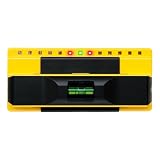
Franklin ProSensor 710+
- › 13-sensor array
- › Up to 1.6 inch depth
- › No calibration
- › Full stud width display

Franklin ProSensor M210
- › 13 sensors
- › Up to 1.7 inch depth
- › Live wire detection
- › Center-finding LEDs

Franklin ProSensor MAX
- › 2.5 inch detection depth
- › Rated for plaster
- › Two scan modes
- › 13 larger sensors
Our top three are all from the same family, and that is not a bias, it is a reading of the evidence. The multi-sensor array is the single feature that separates scanners that hold a signal through plaster from the ones that flicker, because more sensors mean a wider sampling band and less dependence on one narrow return. The MAX earns its place on depth rather than sensor count: it is the only scanner here with a manufacturer rating that names plaster.
All 10 Stud Finders Compared for Plaster Walls in October 2026
| PRODUCT MODEL | KEY SPECS | BEST PRICE |
|---|---|---|
|
|
Check Latest Price |
|
|
Check Latest Price |
|
|
Check Latest Price |
 |
|
Check Latest Price |
 |
|
Check Latest Price |
 |
|
Check Latest Price |
 |
|
Check Latest Price |
 |
|
Check Latest Price |
 |
|
Check Latest Price |
 |
|
Check Latest Price |
1. Franklin ProSensor 710+ – The Most Reliable Reading on Plaster
Franklin Sensors ProSensor 710+ Stud Finder, 13-Sensor Wall Scanner
13 sensors
1.6 inch drywall depth
No calibration
7.25 x 3.25 x 2.25 inch
+ The Good
- 13-sensor array gives a wide reliable band on thick walls
- Shows full stud width and center so lath reads differently from framing
- No calibration so uneven plaster cannot throw the setup
- Built-in bubble level and ruler for marking
- Deep scan always on
- The Bad
- Batteries not included
- Not compatible with rechargeable batteries
- No live wire detection
The 710+ is the one we kept reaching for. Its 13 sensors read a band wide enough that a lath strip and a stud do not produce the same pattern, which is precisely the failure that makes cheaper finders useless on plaster. The centre LED turning green means you get the middle of the stud rather than an edge, and on a 16 inch rhythm the difference between those two numbers is the difference between a screw in timber and a screw in air.
It needs no calibration at all. That sounds minor until you have tried to calibrate a scanner on a wall that has three different plaster thicknesses and a repair patch. Press and hold, and it scans from wherever you start, which means you can start at the baseboard and work upward through the whole run.
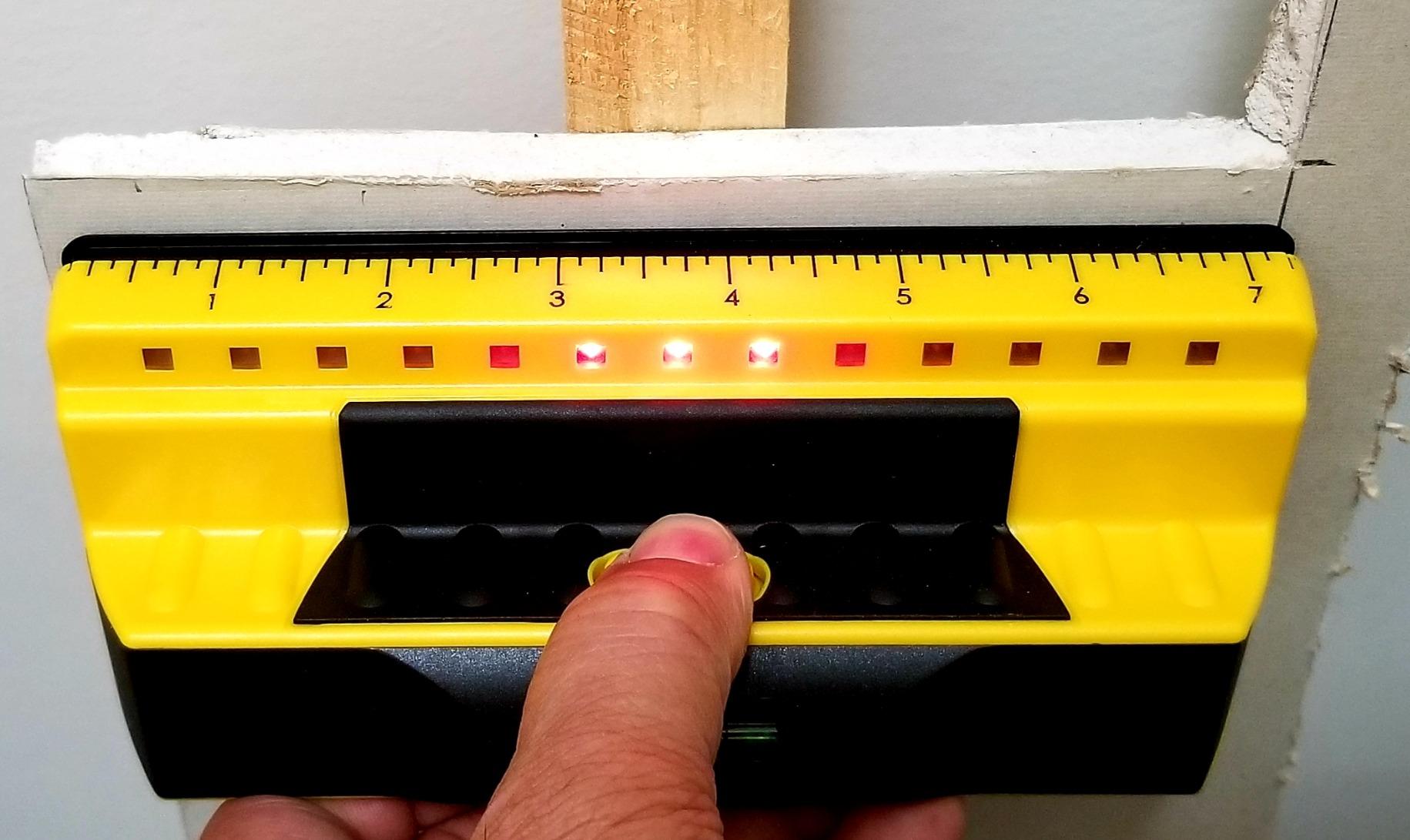
Detection depth is quoted at 1.6 inches on drywall. On a typical plaster over lath wall that is real headroom, since the stud face is often within an inch of the surface once the plaster is not unusually thick. On heavily built-up or twice-patched walls it starts to strain, and this is the point where the MAX makes more sense.
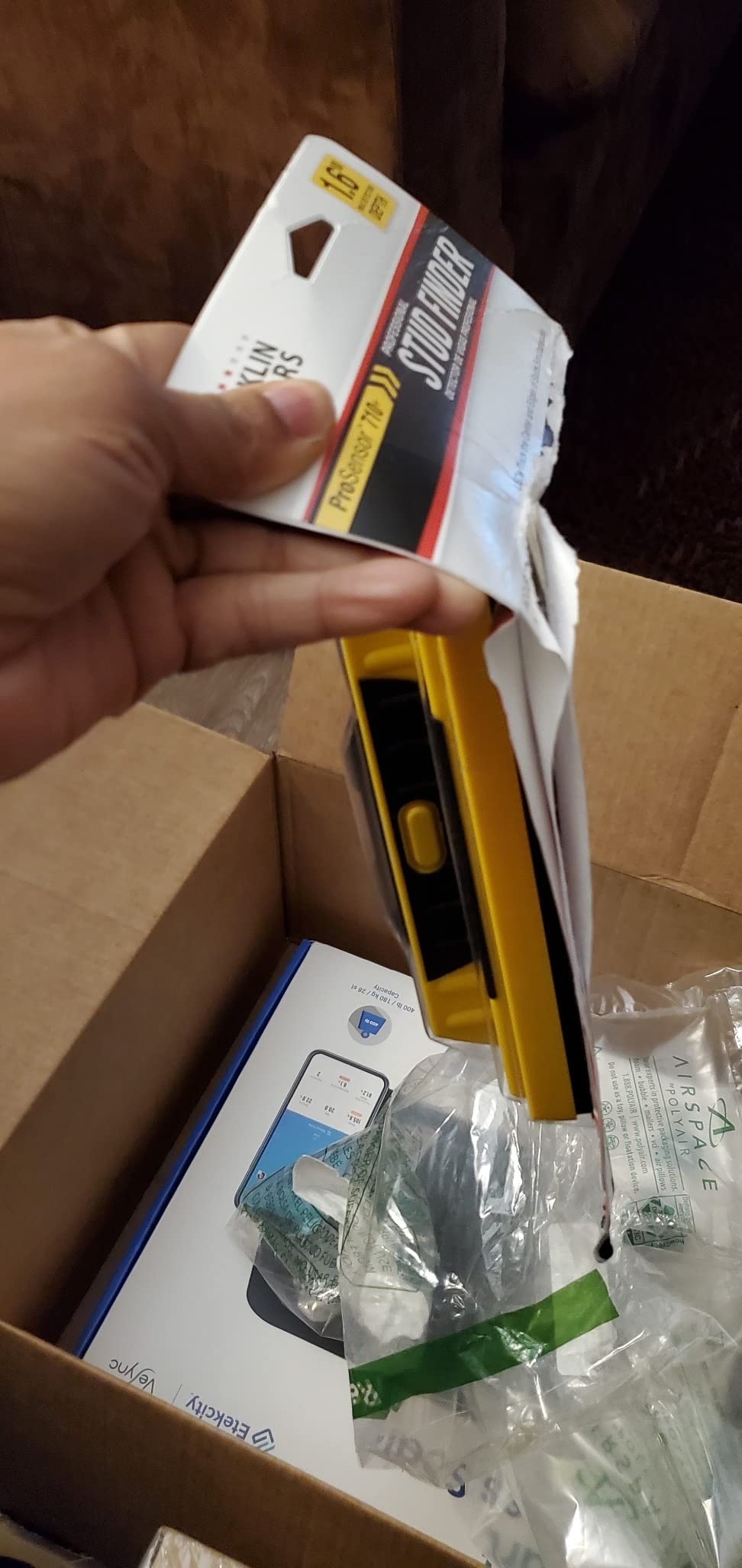
The trade-offs are power and safety. Batteries are not included, and rechargeable cells will not work in it, so you are committed to alkaline. It also has no live wire detection, which on an old house with original wiring is the feature I would most want. The M210 fixes both of those problems and is our pick for anyone working on a pre-1960s wall.
When the 710+ is the right call on plaster
It is the right tool for hanging a floating shelf, a mirror or a television on an old wall where you want a reliable centre reading and you already know where the wiring runs. Thirteen sensors over a 1.6 inch rating gives you the best balance of reach and certainty in this roundup, and the level and ruler are genuinely useful for marking a straight line across a wide wall.
When it is the wrong call
Skip it for a room with knob-and-tube or cloth-sheathed wiring, because it will not warn you about a live line. Skip it too if your wall is thick enough that 1.6 inches lands you short, and do not buy alkaline batteries in bulk expecting a long job, since this is the model that will run them down fastest.
2. Franklin ProSensor M210 – Same Read, Plus Live Wire Detection
Franklin Sensors ProSensor M210 13-Sensor Stud Finder, Live Wire Detection
13 sensors
1.7 inch depth
Live AC wire
7.5 x 3.35 x 3.33 inch
+ The Good
- Deepest scan in the ProSensor line at 1.7 inches
- Live AC wire detection matters on original house wiring
- Works with rechargeable AA batteries
- Full stud width and center indication
- Built-in bubble level and pencil caddy
- The Bad
- Batteries not included
- Heavier and bulkier than the slimmer 710+
- Only one deep mode
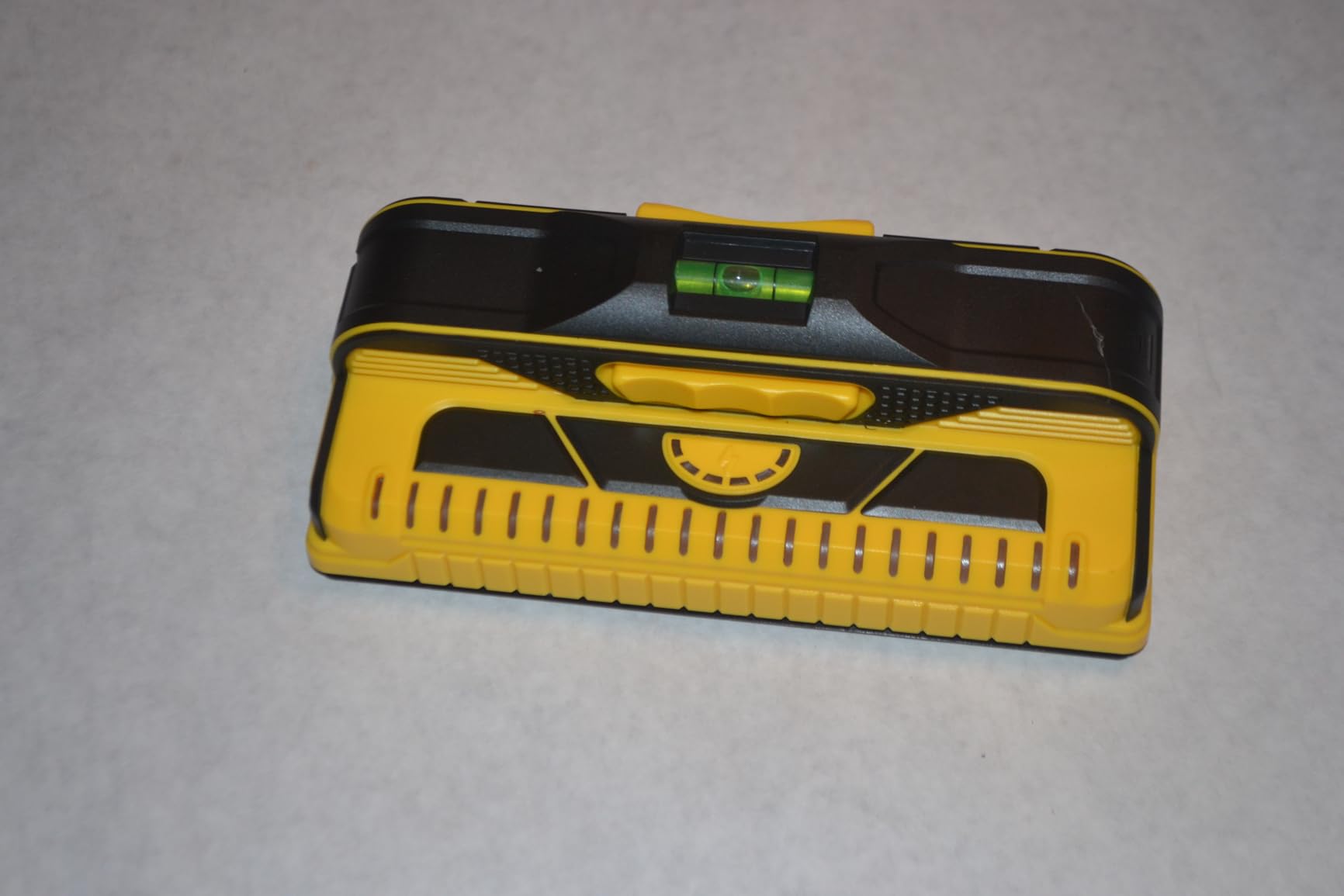
This is the 710+ with the two weaknesses resolved and a small amount of extra reach. Live AC wire detection is not a luxury on a 1920s plaster wall, where the wiring is often routed through the same cavity you want to drill into. An alert before you commit to a hole is worth more than a slightly clearer picture of the stud.
Depth moves from 1.6 to 1.7 inches, which is a marginal gain in practice but free. The 13-sensor array and the green centre LED behave exactly as they do on the 710+, so the reading habits transfer directly between the two. The pencil caddy on the top edge is small but it means you are not balancing a marker on a stepladder.
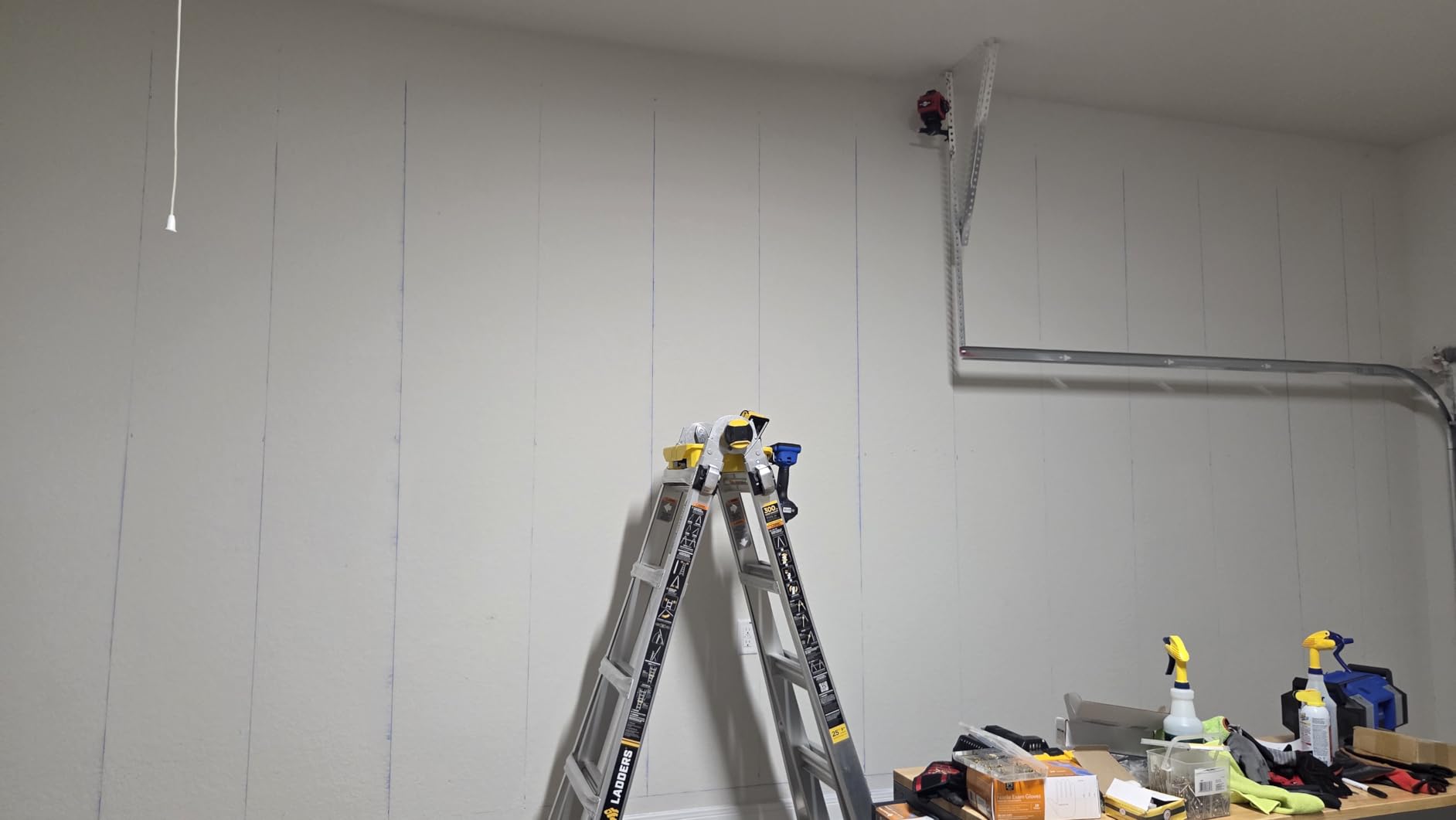
It takes two AA batteries and, unlike the 710+, it accepts rechargeables. That is the practical difference that decides it for regular use, since a 13-sensor array running deep scan constantly will chew through cells faster than a single-sensor tool would.
It is heavier and bulkier, at just over 11 ounces against 6.4 for the slimmer model, and there is only the one always-on deep mode. On a thin modern wall that is simply less control than you get elsewhere. On plaster over lath, one mode that always reaches deepest is not really a compromise.
Why this is the one for old houses
Live wire detection plus a 1.7 inch rating plus rechargeable capability covers the three things that actually go wrong on pre-1960s plaster: hitting a line, falling short of the framing, and running out of power halfway up a wall. For most homeowners with lath and plaster, this is the model I would buy and stop thinking about.
Where it falls short
It is the largest tool in the ProSensor range at 3.33 inches deep, so it will not go into the narrow gap between a skirting board and a wall without turning it sideways. It still has no separate normal-wall mode, which means you cannot cap the depth when you are working near a pipe, and it is not the answer on unusually thick plaster.
3. Franklin ProSensor MAX – The Deepest Plaster Reading Available
Franklin Sensors ProSensor MAX 13-Sensor Stud Finder, 2.5-in Deep Detection
13 larger sensors
2.5 inch depth
Plaster rated
Two scan modes
+ The Good
- 2.5 inch depth is the deepest stud rating in this roundup
- Manufacturer explicitly names plaster drywall OSB and plywood
- Deep scan mode separate from standard stud finding
- 13 larger sensors show full stud width
- The Bad
- Noticeably heavy at about 1.1 pounds
- Higher cost than the rest of the ProSensor line
- Newer model with a smaller review pool
This is the only scanner in the roundup whose manufacturer names plaster in the specification, along with OSB, MDF, plywood and large tile. That single line matters more than any rating. A 2.5 inch depth on a 1 inch thick plaster wall leaves real margin for a thick skim coat, a backer board, or a wall that has been patched over more than once.
It also has two modes, standard stud finding and a dedicated deep scan, which is something the slimmer ProSensor models never offer. On a wall of uncertain build-up, starting shallow and stepping up to deep scan is a cleaner way to avoid picking up the lath than simply running maximum sensitivity the whole time.
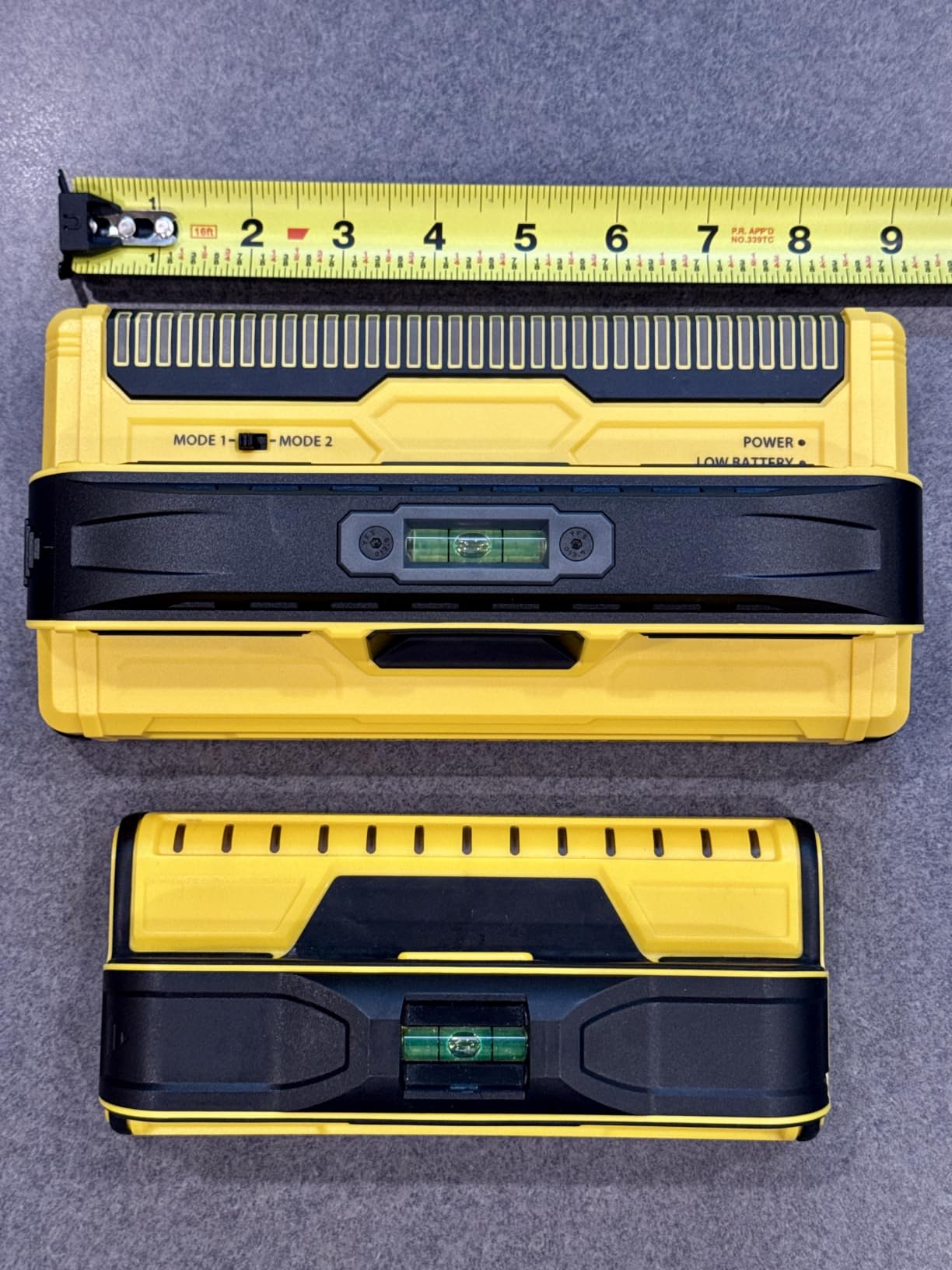
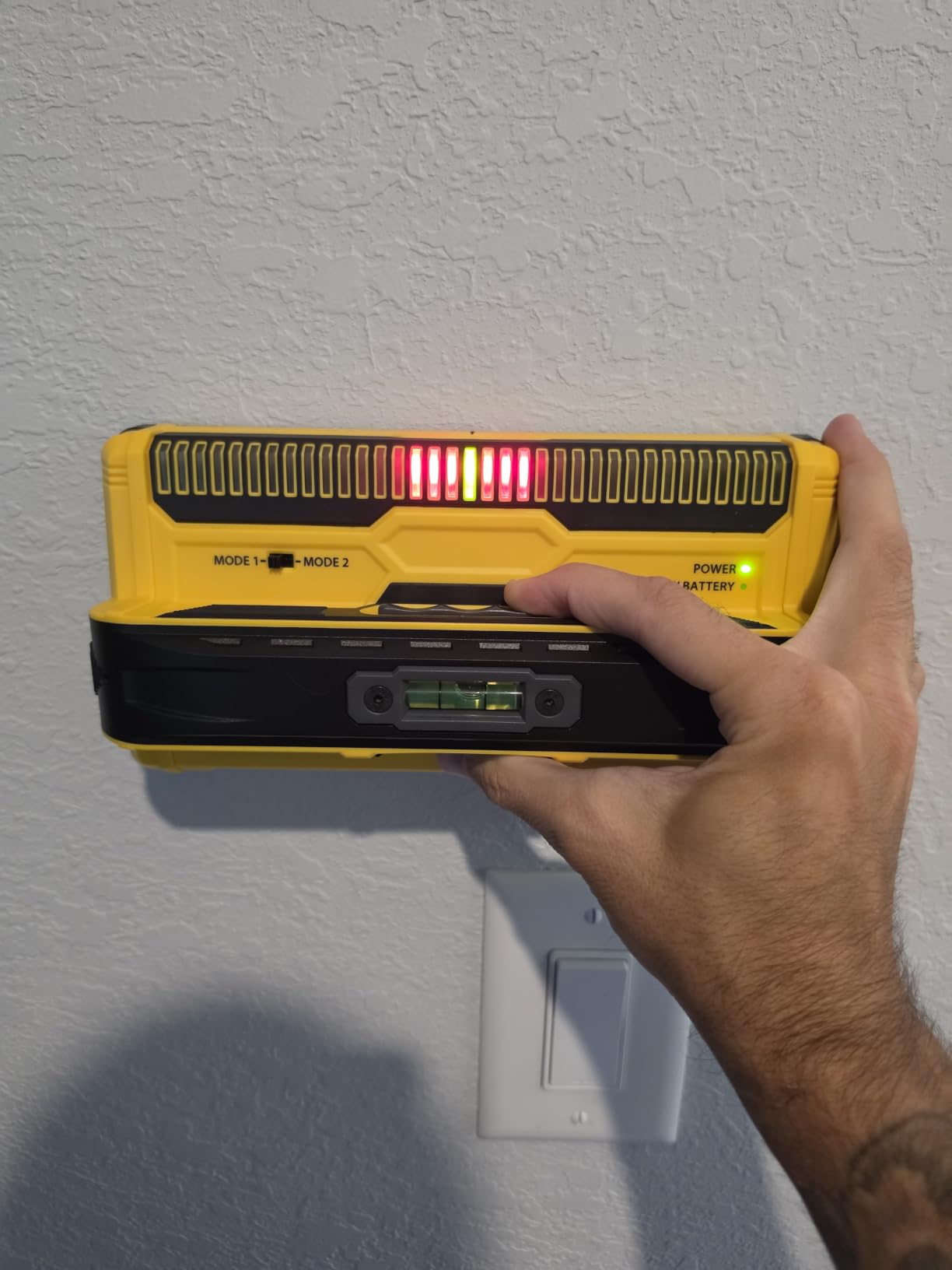
The 13 sensors are physically larger than the standard ProSensor sensors, and that is where the extra reach comes from. It also runs with no calibration, press and hold to start from anywhere, and the centre LED still goes green at the middle of the target.
At about 1.1 pounds it is a genuinely heavy handheld tool, and you will feel it during a long scan session at head height on a stepladder. It is also a newer release with a much smaller body of owner feedback than the established models, so the long-run consistency is less proven.
When the MAX earns its extra cost
Thick plaster, plaster over lath with a heavy skim, plaster behind tile, and walls in houses from the 1930s and 1940s where the plaster was applied thick over a coarse lath. In those conditions the shallower multi-sensor models sit right on the edge of their rating, and this is the one that keeps reading.
When you are paying for nothing
If your plaster is a single thin coat over wood lath, the 710+ or M210 will reach the framing comfortably and you keep the money. The weight also makes this a poor choice for scanning high up a wall where you need one hand on the ladder, and the shallow mode is not a substitute for a proper scan technique.
4. Zircon MultiScanner A200 – The Most Modes in One Box
Zircon® MultiScanner™ A200 Stud Finder with Metal & Live Wire Detection
StudScan 3/4 inch
DeepScan 1-1/2 inch
Metal and wire modes
LCD display
+ The Good
- Three scan modes plus wire warning in one pass
- DeepScan reaches 1-1/2 inches
- Large backlit LCD is readable in poor light
- Low battery indicator stops failed scans
- Limited lifetime warranty
- The Bad
- Bulky in hand and awkward in tight spaces
- Some users re-scan to confirm readings
- Needs calibration on each wall before use
The A200 is the most versatile scanner here and the one most likely to end up in a cupboard serving several rooms. StudScan for thin modern walls, DeepScan reaching 1-1/2 inches for plaster, Metal Scan for copper and steel, and a WireWarning alert for live cable. Having all four in one pass matters on old walls, where a single sweep that flags metal is worth more than three separate tools.
The SpotLite pointer projects the detected position onto the wall, which makes marking much faster than stopping to mark every edge, and the backlit LCD shows what the tool is thinking rather than just beeping at you. On an uneven plaster surface that visual feedback is genuinely useful.
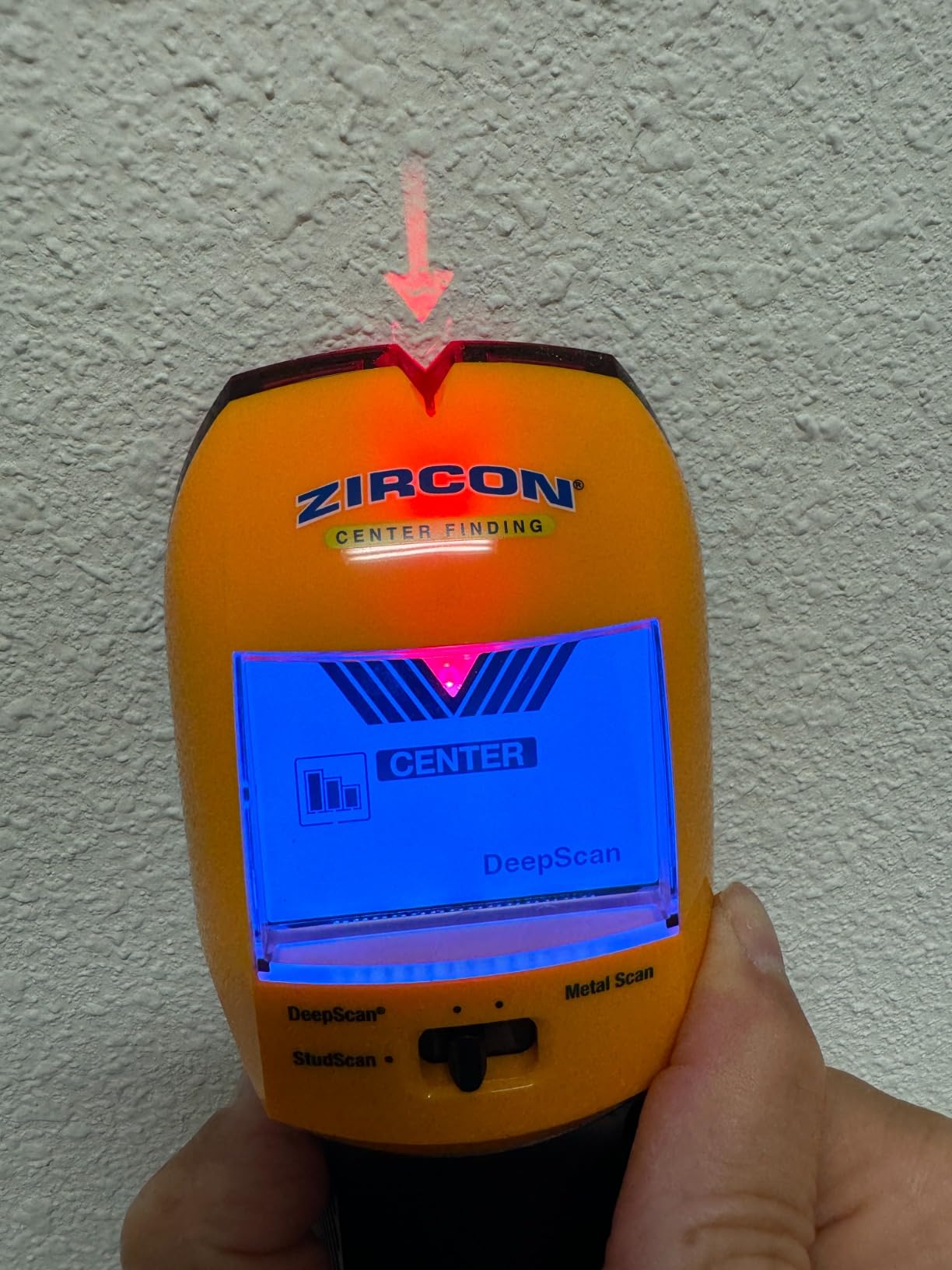
Calibration is required every time. Press and hold, wait for the beep, then move slowly. On plaster you want to calibrate on a section you know is empty, away from a repair patch or a run of dense lath, because calibrating over a dense area teaches the tool that dense is normal and it will under-report everywhere else.
The DeepScan rating of 1-1/2 inches is the limiting number. It will get through a decent plaster wall but it has less margin than the MAX, and a recurring theme in reviews is occasional false positives, so treat a single pass as a hint rather than a fact.
Best use case: mixed walls in a renovation
When part of the house is modern partition wall and part is original plaster, this is the tool that covers both without a mode switch you have to think about. The metal scan mode is also a bonus on old walls, where lath nails and any buried conduit will show up as metal and tell you where not to drill.
Weak points on plaster
It is bulky at 3.23 inches wide and will not fit into a tight reveal, and the wire warning is a prompt rather than a guarantee, so do not treat silence as permission. The calibration habit is the one to get right, because a badly calibrated scan on patched plaster produces confident nonsense.
5. FNIRSI WD-01 – Six Modes and a Rechargeable Battery
FNIRSI WD-01 6 in 1 Rechargeable Stud Finder Wall Scanner, Positioning Hole
Six detection modes
Studs to 1.5 inch
Metal to 4.7 inch
Rechargeable
+ The Good
- Six detection modes covering studs metal and wire
- Rechargeable so no disposable batteries mid job
- Positioning hole speeds up edge and center marking
- Auto calibration works anywhere on the wall
- Manufacturer lists lath and plaster among supported surfaces
- The Bad
- Some users report unreliable center readings on plaster and lath
- Occasional false live-wire alerts
- Reports of missed metal pipes and plates
The WD-01 covers more ground than most scanners twice its price, and the one that matters here is the metal side. Ferrous metal to 4.7 inches and non-ferrous to 3.9 inches means it can find lath nails and old nails buried in plaster, which gives you an independent way to trace framing when the stud reading is ambiguous.
It is also the only scanner in this roundup that explicitly lists lath and plaster among the surfaces the manufacturer supports, alongside wood flooring, acoustic ceiling and painted walls. That is a claim worth taking seriously on a topic where most listings quietly say drywall only.
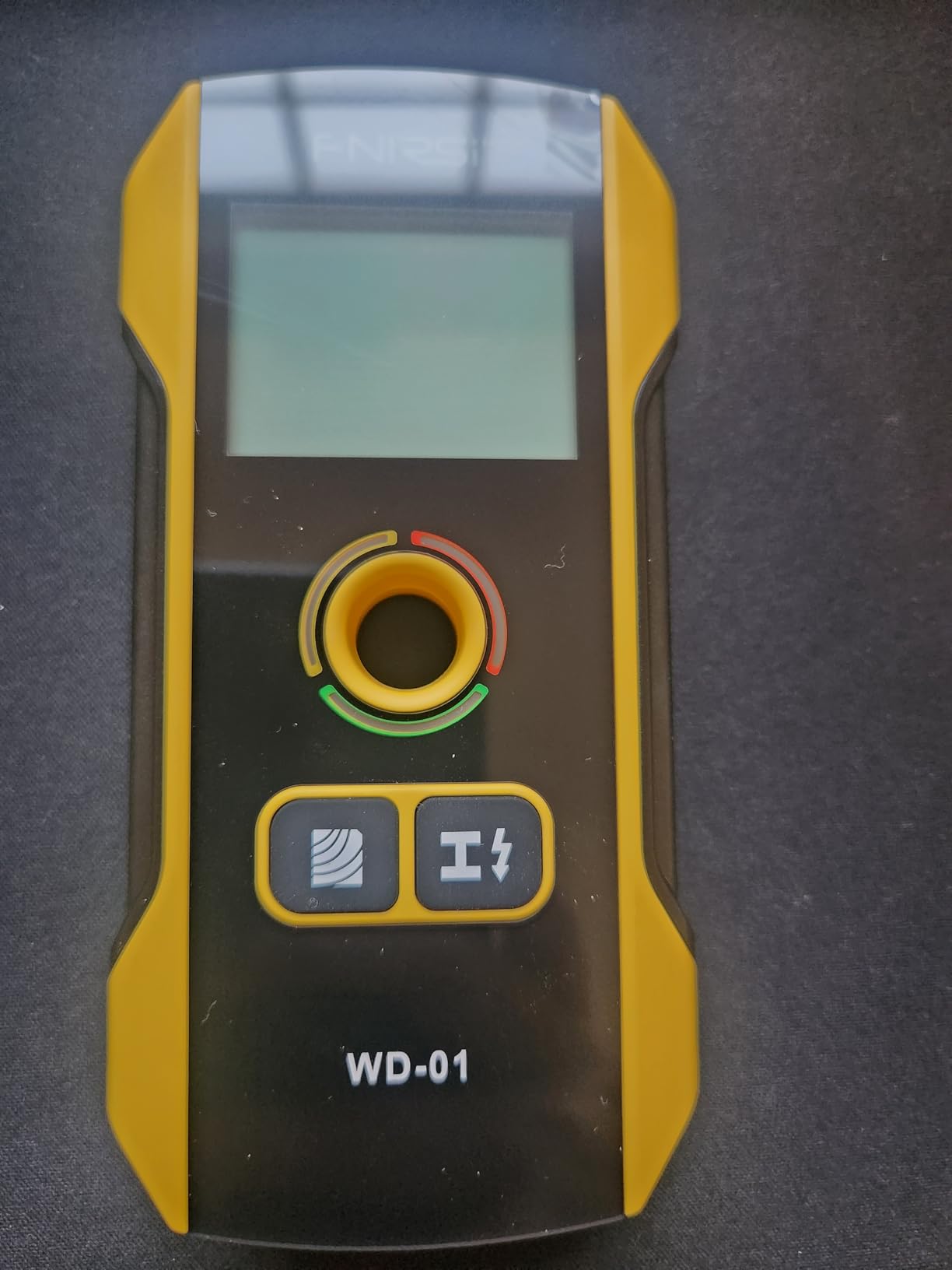
The positioning hole through the top is a small design idea that makes a real difference. You find the edge, drop a pencil through the hole, and carry on scanning, which keeps your mark accurate even on a bumpy plaster surface where a side marker would skid.
The weakness is the centre reading on exactly the walls we care about. Some owners report that on plaster and lath, nail-only detection leaves them estimating the stud centre by hand, and the live-wire alert fires occasionally with nothing behind it. The USB rechargeable battery is a genuine convenience but means you cannot grab spares from a drawer mid-job.
Why it is worth a place on a lath wall
Pair it with the magnet technique below. When the metal mode picks up a dense field of nails in a vertical line, that is your stud, and the deep ferrous rating is the deepest nail-finding capability in the roundup. For tracing framing rather than reading timber, it is the most useful tool here.
Where to trust it less
Do not hang a heavy mirror on a single WD-01 centre reading without a pilot hole. The reviews are consistent that the centre indication is the least reliable output on lath, and the false wire alerts will either make you cautious or, worse, train you to ignore a real one.
6. PREXISO 2-in-1 Stud Finder and Cross Line Laser
PREXISO 2-in-1 Stud Finder with Laser Level, Rechargeable Cross Line Laser
Stud finder plus laser
0.75 inch stud depth
Live AC to 1-1/2 inch
Rechargeable Type-C
+ The Good
- Combines stud detection and a cross line laser in one rechargeable tool
- Laser projects a vertical line automatically at a stud edge
- Wall mount offers pins strips and a top pin hole
- Live AC wire warning adds safety
- The Bad
- Manufacturer states it is not designed for lath and plaster walls
- Manual leveling rather than self leveling
- Adhesive strips do not hold on coarse or dusty surfaces
- Calibration required before each session
We are including this one because it is a good tool, with a clear line drawn around where it is good. The manufacturer states plainly that the device is intended for drywall and wood walls and is not designed for lath and plaster. That is a spec sheet, not a marketing claim, and it is the single most useful sentence on this page for anyone with a plaster house.
What the design does brilliantly is marking. When it finds a stud edge it projects a vertical laser line automatically, alongside a red LED and an audio alert, so you can run the line up the wall and across it without touching the tool to the surface. The 10 meter indoor cross line handles the horizontal reference, and everything is rechargeable over Type-C.
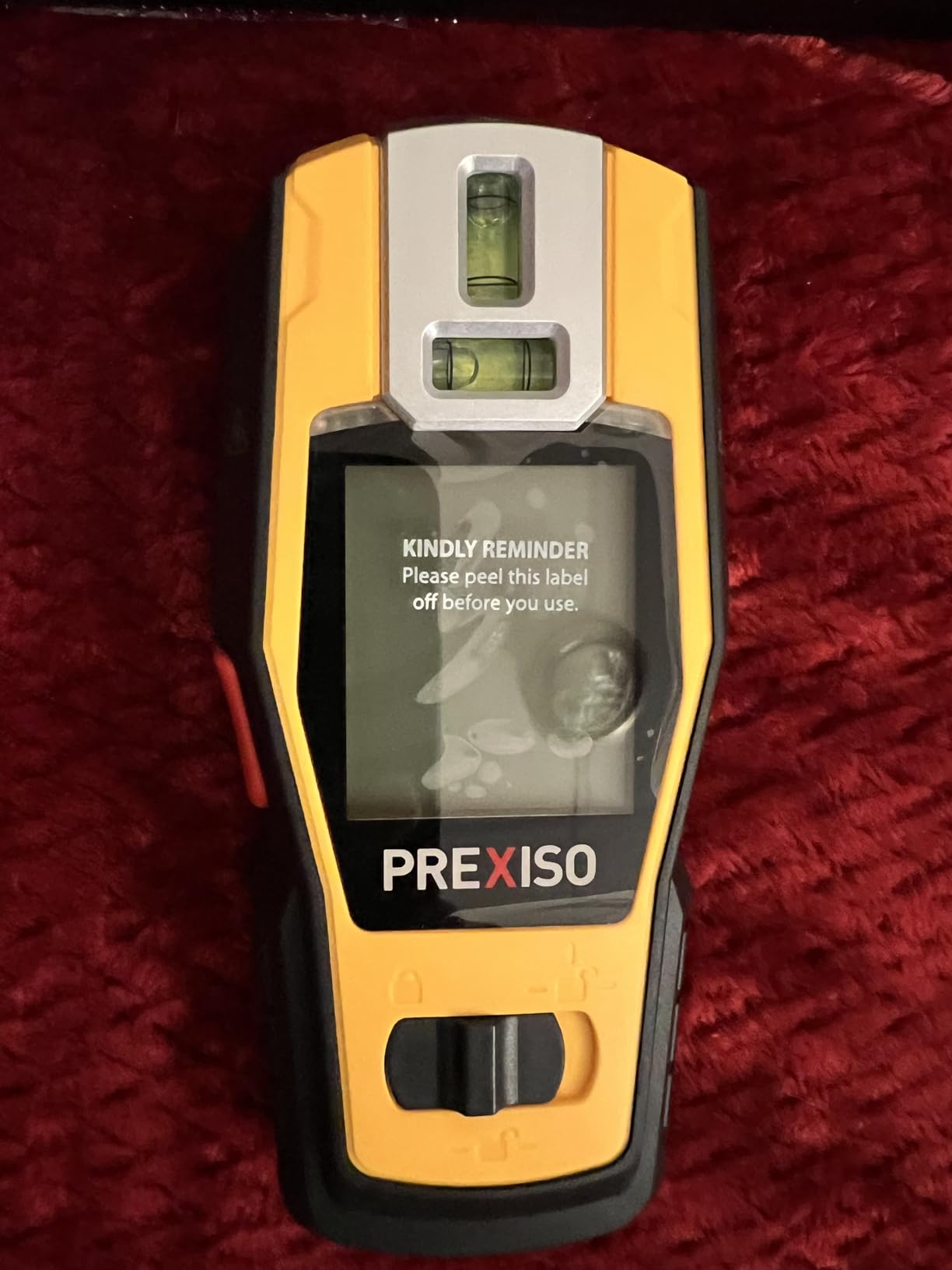
On plaster it will still find something, because plaster does contain density changes, but the 3/4 inch stud rating is measured on drywall and gives you almost nothing to work with. At 0.75 inch you are reading the surface of the plaster, not the stud behind it.
The 1-1/2 inch live AC detection is the more relevant number on an old wall and will warn you about a cable before you drill, which is more than several tools in this list do. The adhesive strips on the wall mount are close to useless on coarse historic plaster, so plan to use the pins instead.
When it makes sense anyway
If you are working on a modern wall and want a laser level in the same box, it saves carrying two tools up a stepladder. The automatic edge line is faster than any of the LED-only scanners for a long horizontal run, and the live wire alert is a real safety gain on any wall.
When to put it down
Any time the wall is lath and plaster. Buying it for this job means buying a tool whose own manufacturer has excluded your wall type, and the calibration step on an uneven plaster surface will compound the problem. Look at the ProSensor line instead.
7. Bosch D-tect 120 – The Radar Scanner for Thick Assemblies
Bosch Professional Wall Scanner D-tect 120 (4 x AA Batteries, max. Detection Depth Plastic Pipes/Wooden Studs/Live Cable/Magnetic Metal/Non-Magnetic Metal: 60/38/60/120/120 mm, Protective Bag), Blue
Radar sensing
120 mm metal depth
38 mm wood studs
Three wall settings
+ The Good
- Radar sensing reaches 120 mm for metal
- deepest reach in the roundup
- Universal mode handles unknown wall build-up
- Spot View works where the scanner cannot be swept
- AA batteries or 12V Li-ion
- Bag and batteries included
- The Bad
- Most expensive tool in the roundup
- Wood stud depth of 38 mm is shallower than several cheaper rivals
- Three mode settings take some learning
The D-tect 120 works on radar rather than the electromagnetic density method used by the others, and that changes the character of what it detects. Maximum depth is 60 mm for plastic pipes, 38 mm for wooden studs, 60 mm for live cable, and 120 mm for both magnetic and non-magnetic metal. Those are real, material-specific numbers rather than one headline figure.
For plaster, the 38 mm wood rating is the number that matters, and it is the first thing to check. That is about 1.5 inches, which on a thin plaster wall will reach the framing, and on a thick one it will not. The compensating strength is the Universal setting, which is built for exactly the situation where you do not know what is behind the surface.
Spot View is the feature that wins in awkward places. On an old plaster wall with a cornice or a tiled surround where you cannot sweep the scanner along the surface, you get an immediate result at a fixed point instead of trying to slide through a gap that is too narrow.
One point worth knowing: the wood stud depth of 38 mm is shallower than the metal depth and shallower than several cheaper tools here, so this is not a purchase for a thick plaster wall despite being the most expensive. It is a purchase for walls where you need to find metal, pipes and cable behind a thick, uncertain assembly, and you are paying a professional price for that.
Who should buy this
Someone renovating a tiled or plastered wet area, chasing a cable route, or opening up a wall where a wrong drill goes through a pipe rather than a stud. The ability to separate plastic pipe, live cable, and magnetic from non-magnetic metal is a genuinely different capability from a stud finder, and nothing else in this list does it.
Who should not
Anyone whose main problem is thick plaster over wood lath. For that job the 38 mm wood rating makes it the worst value in the roundup, the mode settings need practice, and the cost is better spent on depth from a multi-sensor scanner.
8. Walabot DIY 2 – The Visual Map, Limited to Drywall
Walabot DIY 2 – Visual Stud Finder & Wall Scanner for Drywall. Detects Wood & Metal Studs, Plastic & Metal Pipes, Live & Non-Live Wires
Radar imaging on a phone
4 inch depth
Studs pipes and wires
10.3 x 8.3 x 6.6 inch
+ The Good
- Visual map makes the true center of a stud easy to confirm
- Built-in Wi-Fi needs no home network
- Often locates studs that beep-only scanners miss
- Useful confirmation before cutting into a wall
- The Bad
- Manufacturer states it does not support lath and plaster
- Phone and app connection can make scanning a two-person job
- App connection issues reported on some phones
- Calibration repeated each time and can scuff the finish
The idea here is the best in the roundup, and the execution is limited by something outside the product’s control. The Walabot sweeps the wall and renders a top-down map on your phone showing studs, pipes and wires, with a claimed 4 inch depth and 95 percent measurement accuracy. Seeing the actual layout rather than a beep and a red LED is a genuine step forward for confirming a centre reading.
It also creates its own internal Wi-Fi network, so it works in a basement or a garage with no signal, and it works with both iOS and Android. Owners who have got it calibrated and connected consistently praise the visual confirmation more than anything else in this article.
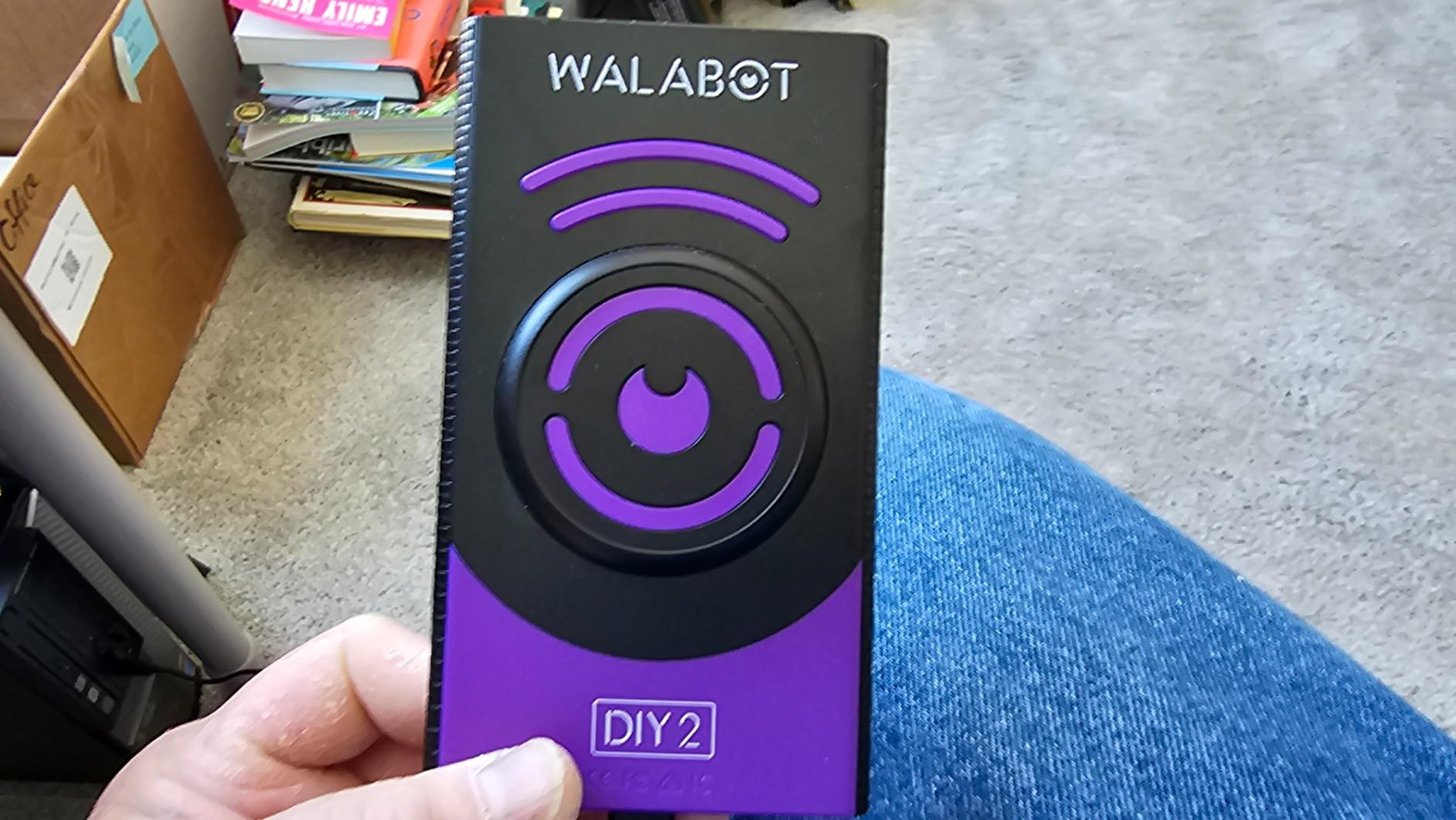
The problem is the specification. The manufacturer states it is for drywall and plywood only, and explicitly not for lath and plaster, concrete, tile, brick, metal-backed walls or stucco. For this article, that is disqualifying, and we would rather tell you that plainly than let you buy it for a job its own maker will not support.
There is a privacy angle worth flagging. The device pairs with a phone app and creates a network, which means your wall data passes through software on a device that may also hold your other accounts. For a tool used on a wall you are about to cut into, that is a consideration, though the built-in network does limit exposure to your own router.
Where it genuinely shines
On modern drywall and plywood, the visual map is the clearest confirmation method in this roundup and it reliably finds things beep-only tools miss. If you are opening up a wall, or you want certainty about a stud centre before routing a cable, the picture is worth having.
Why it is not for plaster walls
Beyond the stated plaster exclusion, calibration has to be redone every session by sweeping large circles on the surface, which will scuff a historic plaster finish. It cannot reliably separate pipes from wires, and non-vertical supports can render as false vertical studs, which is precisely the ambiguity that makes plaster scanning difficult.
9. DEWALT DW0100 – Great on Drywall, Excluded by Its Own Manual
DEWALT Stud Finder, 3/4”, Locate Framing Studs Efficiently with LED Arrows, Ideal for Wood and Metal, AAA Batteries Included (DW0100)
Center find
0.75 inch depth
AC wire detection
5.88 x 1.3 x 9 inch
+ The Good
- Slim profile fits narrow gaps and tight reveals
- Center find with LED arrows and audible alert
- Constant auto calibration needs no setup
- AAA batteries included
- The Bad
- Manufacturer states it will not detect plaster
- 0.75 inch depth measured on drywall
- Not designed to find non-ferrous metal or plastic pipes
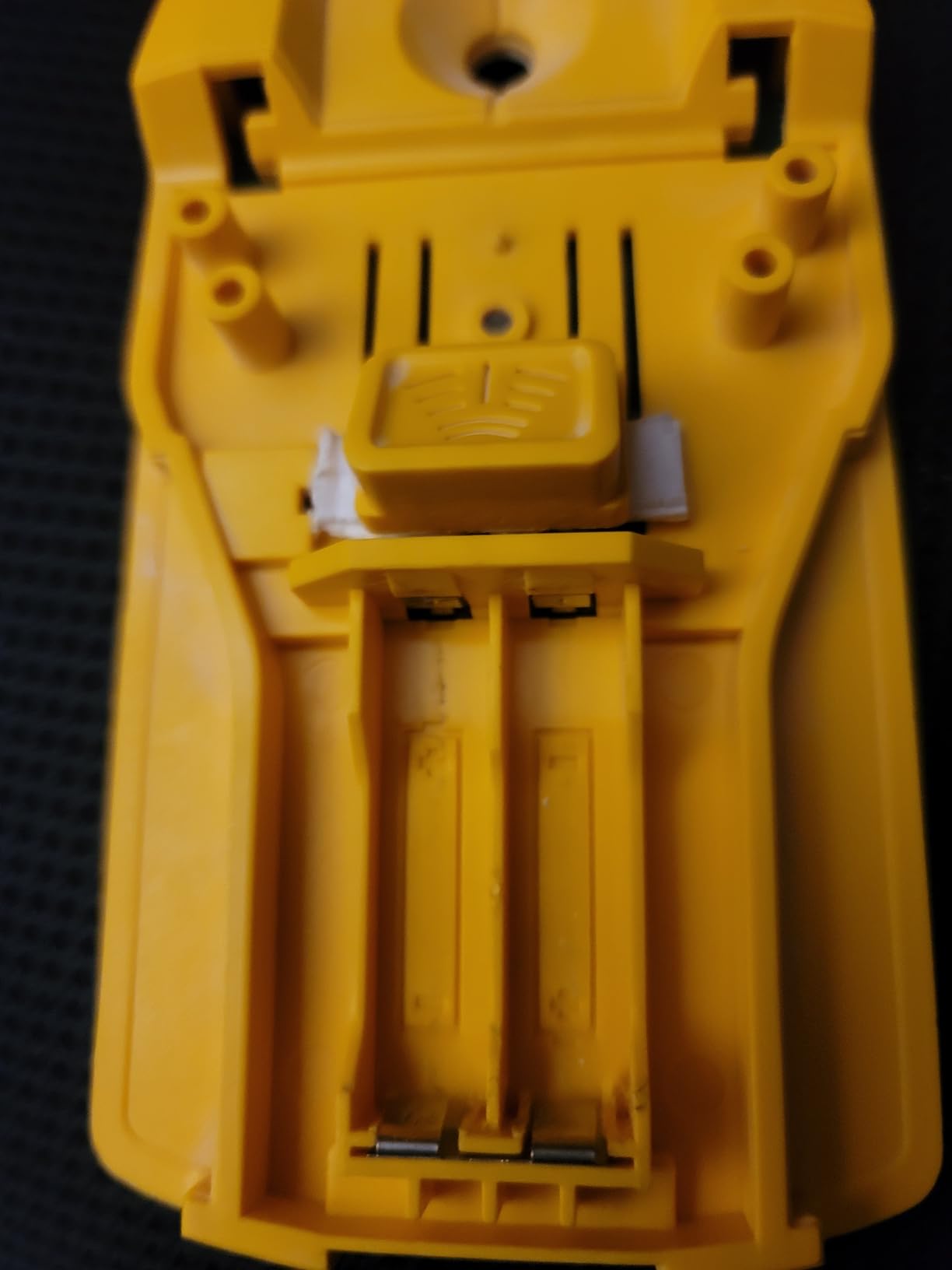
The DW0100 has the largest review pool of any budget scanner in this roundup, and on modern drywall it earns that. The constant auto calibration means there is no setup step, the centre-find technology with directional LED arrows gives you a clear left-right cue, and the slim 1.3 inch profile goes into gaps that nothing else here will.
Its own manual lists the surfaces it will not detect: concrete, mortar, block, brick, plaster, carpeting, foil-faced materials, metal surfaces and ceramic tile. Plaster is named directly. So while we are happy to call this the budget pick for standard walls, on a plaster wall it is not a candidate, and pretending otherwise would be doing you a disservice.
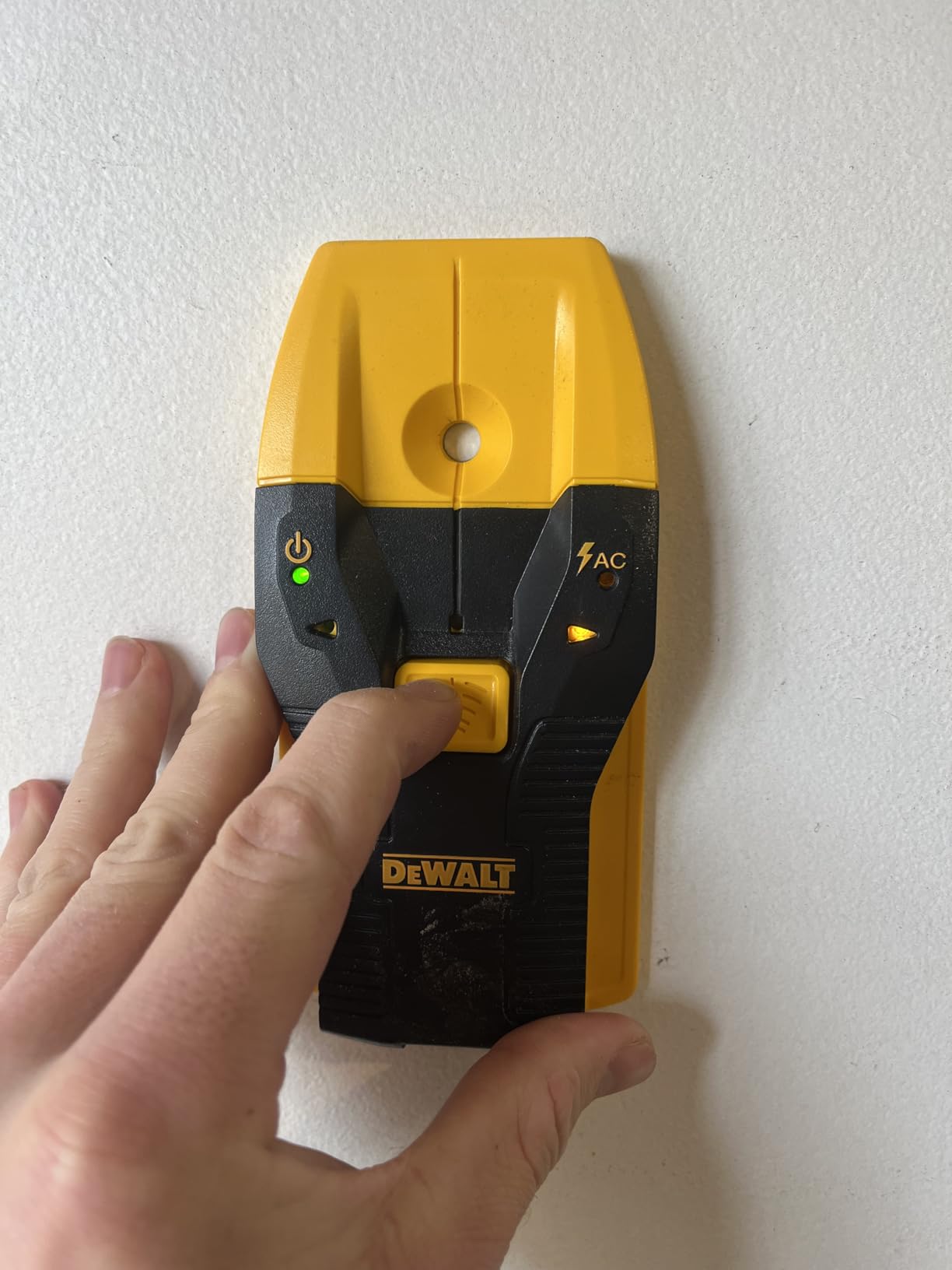
At 3/4 inch of drywall-rated depth, the physics works against it before the software does. Half an inch of drywall plus a stud gives you a quarter inch of margin, which is enough. An inch of plaster plus lath plus a stud does not come close.
The AC wire detection is worth remembering as a feature even on plaster, since it will still warn you about a live line close to the surface. The slim body and the included AAA batteries are the reasons it stays on our list rather than being written off.
Keep it for the modern part of the house
If you are fitting out an extension or a modern partition wall, this is a capable and inexpensive tool. Centre find, automatic calibration, an audible alert and a directional arrow is everything a homeowner needs, and the thin profile solves the awkward gap between skirting and wall that many finders cannot enter.
Do not buy it for lath and plaster
The exclusion is written by the manufacturer, not inferred by us. If your project is exclusively old walls, spend the difference on the ProSensor M210 and you will have a tool that reaches the framing and warns you about wires. A bargain that cannot see the stud is not a bargain.
10. CRAFTSMAN CMHT77621 – The Best Cheap Option for Thick Walls
CRAFTSMAN Stud Finder, 1.5”, With AC Detection, Batteries Included (CMHT77621)
1.5 inch range
Center detection
Live AC
5.88 x 0.3 x 9.25 inch
+ The Good
- 1-1/2 inch range is unusually deep for the money
- Marks both stud edges and indicates the center
- Live AC detection for safety
- Thin profile is comfortable to hold and store
- The Bad
- Some users report inconsistent accuracy and false reads
- AC LED and beep can trigger with no live wire present
- Instruction manual is thin
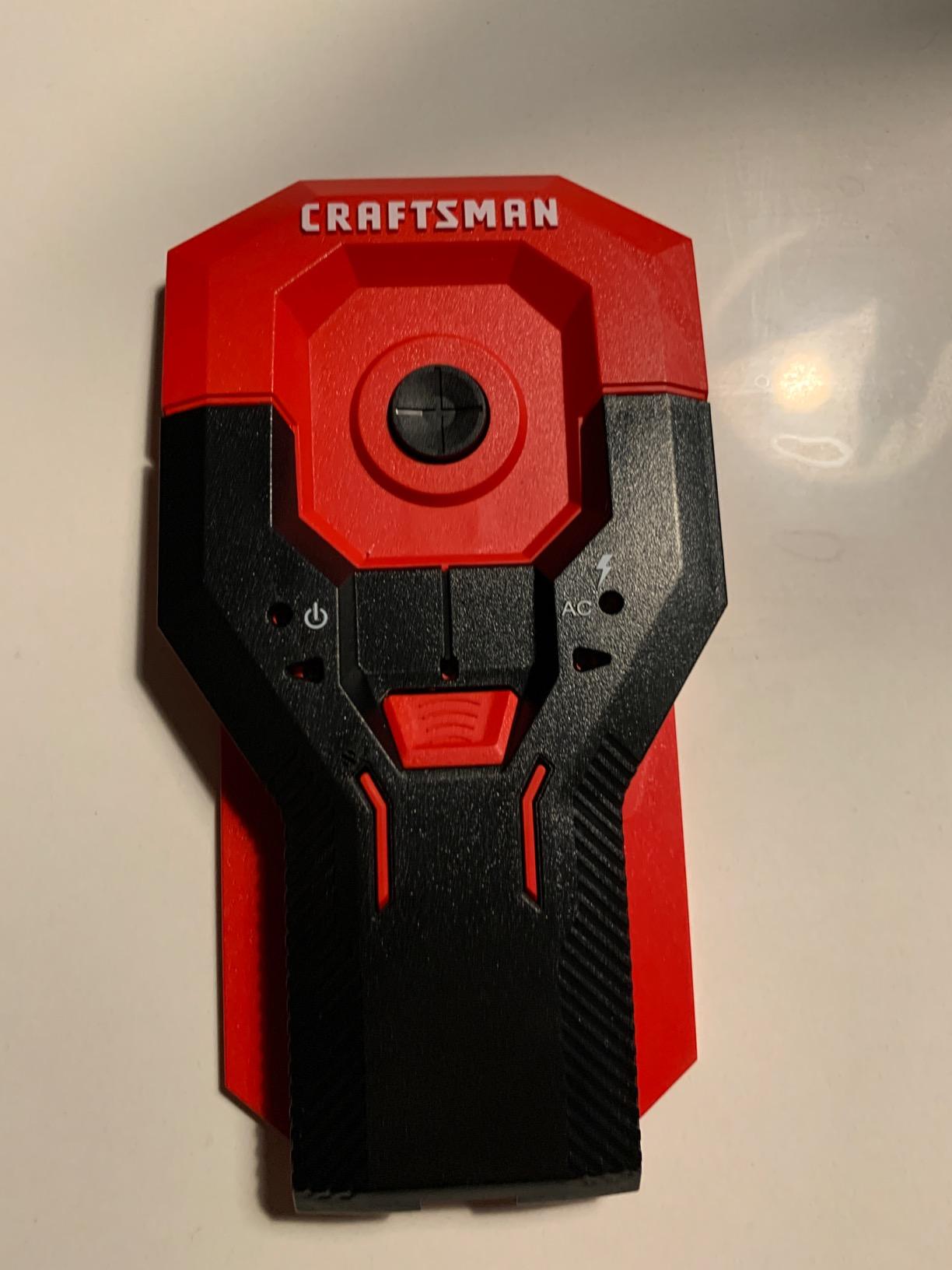
Of everything at the entry level, this is the one whose depth rating makes it worth considering on plaster. A 1-1/2 inch range against the DW0100’s 3/4 inch means it has twice the reach, and on a modest plaster over lath wall that difference decides whether you see a stud or nothing.
It marks both edges and indicates the centre, which is the behaviour you want, and the auto calibration keeps readings consistent across an uneven surface better than a tool that needs manual setup. The 0.3 inch profile is thin and it includes the batteries, so there is no immediate reason to say no.
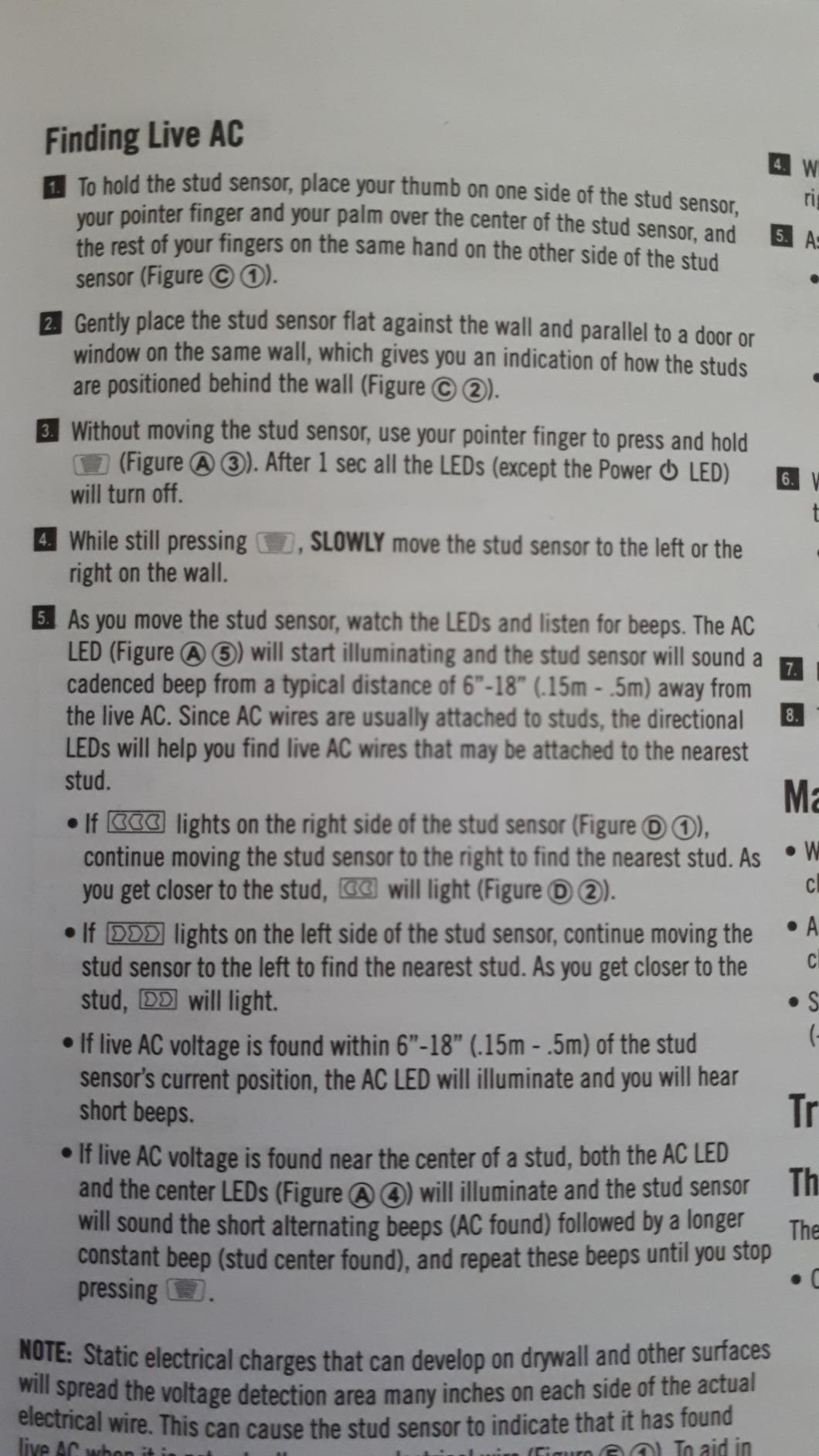
The 4.0 average reflects a genuine split. Some owners find it accurate every time; others report false readings and a tendency to wander. The live AC indicator is the specific part to distrust, because it can light up and beep with nothing behind it, and that is the wrong lesson to learn before drilling an old wall.
If you buy it, buy it as a first pass that marks candidates, and then confirm with a second tool or a pilot hole. The thin manual is a real annoyance at setup, so budget five minutes finding a better guide online before you start.
Where it beats the cheaper options
Against the DEWALT, it has twice the depth and a much thinner body, so it is the better of the two entry-level tools on a plaster wall. Against a multi-sensor scanner, it lacks the wide band that lets you tell a stud from a lath strip, so expect to work harder to interpret the signal.
Where it falls short
It has no separate deep mode and no metal detection, so it will not help you trace lath nails the way the FNIRSI does. And on any load heavy enough to matter, a 4.0 rated tool with reported false reads is the wrong foundation, so treat its output as a map of candidates rather than a location to drill.
How to Use a Stud Finder on Plaster Walls
Scanning technique changes the result more than the model does on this wall type. Six steps, and the first three are where most people go wrong.
Diagnose the wall first. Knock on several spots and listen for a hollow ring, which means lath and plaster with a cavity behind. Look at any cut-out, window reveal or removed picture rail to see whether the backing strips are wood or steel. If the ring is solid all the way across, you may have plaster on masonry, and no amount of depth will help.
Calibrate on clean plaster. For tools that require it, find an area away from a repair patch, a run of dense lath, or a corner, press and hold, and wait for the beep. Calibrating on an unusual area teaches the tool that unusual is normal.
Scan slowly, in one direction only. Move at roughly the speed of a slow clock hand. Fast passes produce a shifting signal that changes between attempts, and a finder that gives you a different answer twice is telling you the reading is not stable.
Repeat the pass. Scan the same line again, and then scan down it from a different starting point. A real stud reproduces. A lath strip, a patch edge or a wire usually does not, and a signal that moves when you change direction was never a stud.
Mark the edges and take the centre. Mark both edges of the target, measure between them, and put your mark in the middle. On plaster, a 1.5 inch lath strip and a 1.5 inch stud look identical to a single-sensor tool, so work from the widest consistent reading across the room rather than a single beep.
Verify with a pilot hole before a heavy load. Put a pencil through the surface coat in a low-visibility spot first. If you hit solid timber, the reading was right. If you hit void, you have found lath or a void and you need to re-scan. This is the step that saves a wall, and for picture frames you can skip it.
The Magnet Technique: Finding Studs in Lath and Plaster Without a Finder
This is the answer that comes up most often in renovation forums, and it is the one that works on walls where electronics fail. On traditional lath and plaster, the lath strips are fixed to the studs with rows of nails or screws. Those fasteners are ferrous, and a strong magnet finds them without any electronics at all. A straight vertical run of nail hits traces the stud behind the plaster.
Get a strong neodymium magnet. A small magnet in a non-magnetic plastic housing is ideal. A pot magnet or a rare-earth disc works, and household items with loose magnets glued in are fine. A small magnet in a plastic body is the most-cited tool for this job in forum threads, and we use a similar one for this walkthrough.
Start at the baseboard. Begin a few inches above the floor and hold the magnet flat against the plaster. Working from the bottom keeps your marks consistent and puts you near a reference point you can return to.
Move it up the wall slowly. Slide it upward in a straight vertical line, barely touching the surface. You are feeling for a pull, not looking for a signal, so keep consistent light pressure and go slowly.
Mark every hit. When the magnet grabs, make a small pencil mark. Then continue upward from that point. On a correctly nailed wall you will get a hit roughly every 7 to 10 inches, all in a line.
Step across and repeat. Move 8 to 16 inches to one side and run a second vertical line. If both lines show the same spacing and the same rhythm, you are looking at framing, not random hardware.
Cross-check with a second method. Run an electronic scanner along the same wall. Where the two agree, you have a stud. Where the magnet shows a clear nail line and the electronics shows nothing, the electronics is likely reading lath or has lost the signal in thick plaster.
Two cautions. Against expanded metal lath, a magnet sticks everywhere and the technique tells you nothing, so confirm the lath is wood first. And a nail hit tells you where the lath was nailed, which is a line along the stud face, not the centre of the stud. For a heavy shelf, offset your screws to either side of that line and drill two fasteners, or use a plaster-rated structural anchor instead.
What to Do When Your Stud Finder Reports a Stud That Is Not There
False readings on plaster are so common that treating one as a possibility, not an exception, is the right mindset. These are the causes, in the order you are likely to meet them.
You found a lath strip. The most common cause by a wide margin. Wood lath is about the same width as a stud and sits at a regular rhythm, so a single-sensor tool cannot tell them apart. Widen the signal, or use a multi-sensor scanner, or switch to the magnet technique.
You found a patch or a repair. Old plaster gets cut out and filled, and a filled area has a different density from the original. It often reads as an edge. Check whether your signal lines up with anything you know was repaired.
You scanned too fast. The single most fixable cause. Slow down and the signal either stabilises or disappears.
You calibrated badly. Calibrating over dense material or a metal fitting teaches the tool the wrong baseline. Recalibrate on clean plaster.
You scanned near a wire or a pipe. Metal and live cable both shift the reading, and on a multi-mode scanner a metal reading is not a stud reading.
There is no framing there. Chase walls, patched sections and some early construction have no timber where the pattern suggests. This is the case that matters, because everything else is a nuisance and this one means a screw into nothing.
Good signs: the signal repeats on a second pass, the two edges are the width you would expect for timber, the spacing matches other readings in the same wall, and a low-speed pilot hole meets solid material. Bad signs: the reading shifts when you change direction, only one edge appears, the target is thinner than a stud, or the beep stops entirely once you pull the tool away. One uncertain reading is not permission to drill. For anything above a picture frame, confirm it.
How to Choose a Stud Finder for Plaster Walls
Start with what is behind the plaster, then work back to features. The order matters, because it is easy to fall for a feature list when the wall type is the deciding factor.
Sensor count beats everything else. A 13-sensor array reads a wide band rather than a single point, which is what lets it distinguish a stud from a lath strip and show you the full width of the target. This is the single most important thing on this page. Single-sensor and two-sensor tools are drywall tools, and no other feature rescues them on plaster.
Depth rating against your actual wall thickness. Measure before you buy. A traditional plaster over lath wall is frequently 1 inch or more of material before the stud face, so a 3/4 inch rating is not a small margin, it is useless. Anything at 1.5 inches or deeper is a reasonable entry point, and 2 inches or more is what you want on thick or built-up plaster. When shopping our premium stud finder picks, the depth figure is the first number to check.
Live wire detection on old houses. Original wiring in a 1920s or 1930s plaster wall is often cloth-sheathed or rubber-insulated and routed through the same cavity as the framing. A wire alert before you drill is worth more than a marginally clearer stud picture. Treat it as a prompt to move the drill, not as a clearance to proceed.
Edge plus centre indication. Edge finding alone tells you where timber starts. Centre finding tells you where to put a screw, and on plaster the difference between the two is often the difference between a fastener in air and a fastener in a stud.
Calibration behaviour. A tool that needs calibrating gives you one more thing that can go wrong on an uneven surface. A press-and-hold model that scans from anywhere removes a failure mode entirely, which is why all three of our top picks work that way.
Screen and audio feedback. A backlit LCD or a clear LED pattern beats a bare beep, especially on an uneven plaster surface where you want to watch the reading stabilise rather than infer it from sound. Audio alerts are useful at head height but ambiguous when the wall is full of lath.
Matching the tool to the wall. Plaster over wood lath, the most common case, wants a multi-sensor deep scan or the magnet technique. Plaster over metal lath rules out magnetic tools entirely and wants depth. Plaster over a masonry or concrete substrate may have no timber behind it at all, and the correct answer is a proper anchor rather than a more expensive scanner. For projects beyond hanging things, a digital angle finder is often more useful than a third stud scanner.
One last note on phone apps. Virtual stud finders use the magnetometer in your phone and depend on the device being held at a consistent angle against a flat surface. On uneven plaster they will give you inconsistent results, and they give away wall data through an app. For a decorative picture on a modern wall, fine. For a grab bar, no.
Frequently Asked Questions
Do stud finders work on plaster walls?
Yes, but not reliably with a standard single-sensor finder. Plaster is thicker and denser than drywall and usually contains wood lath strips of a similar width and spacing to a stud, which produces false positives. A multi-sensor deep-scan model reads the density difference across a wide band, and a strong magnet tracing the lath nails traces the framing indirectly. Use the two together rather than either alone.
How do I find wood studs in plaster walls?
Trace the lath nails with a strong neodymium magnet, then confirm with an electronic scanner. Start at the baseboard, slide the magnet slowly up the wall and mark each point where it grabs, then step across 8 to 16 inches and repeat. Two vertical lines with matching hit spacing identify the stud line. For a heavy load, drill two fasteners either side of that line or use a plaster-rated structural anchor.
How can I find studs in plaster walls without a stud finder?
Use a strong neodymium magnet in a plastic housing. On traditional lath and plaster, the lath strips are nailed to the studs in regular rows, so a straight vertical run of nail hits traces the stud face behind the plaster. Work up the wall from the baseboard, mark each hit, then run a second line nearby to confirm the spacing repeats. This fails on expanded metal lath, where a magnet sticks everywhere.
Do all plaster walls have studs?
Usually. Framing in older houses generally sits at 16 or 24 inches on center behind the lath. But chase walls, repaired sections and some early twentieth century construction break that pattern, and some plaster was applied over masonry with no timber behind it at all. Knock on the wall to listen for a hollow ring, probe at an existing cut-out, and confirm with a pilot hole before mounting anything heavy.
Why does my stud finder give false readings on plaster?
The most common cause is wood lath reading as a stud, because lath strips are close to a stud in width and spacing. Other causes include repaired or patched areas, scanning too quickly, calibrating on dense or patched plaster, live wires and pipes shifting the reading, and walls that genuinely have no framing. Scan slowly, repeat the pass, check that both edges match the width of timber, and verify with a pilot hole before drilling.
What is the deepest scanning stud finder for plaster?
Among the scanners we reviewed, the Franklin ProSensor MAX leads with a 2.5 inch detection depth and is the only one whose manufacturer explicitly names plaster among supported materials. The Bosch D-tect 120 reaches 120 mm for metal but only 38 mm for wooden studs. Multi-sensor models generally read a thicker wall more reliably than single-sensor models with the same depth rating.
Is there a stud finder that can see through stucco?
Stucco is stiffer and thicker than interior plaster, so most drywall-rated scanners will not read it at all. You need a radar-based or deep-scan model with a depth rating of 2 inches or more, ideally one that names stucco or tile in its specification. Note that radar scanners with strong metal and pipe detection may have a shallower wood rating than a multi-sensor scanner, so check the wood figure specifically.
Should I drill a test hole in plaster walls?
Yes, for any load heavier than a picture frame, drilled in a low-visibility, low-risk spot away from wiring, plumbing and pristine finishes. Put a pencil through the surface coat first. Solid timber confirms the reading; a void means you found lath or a cavity and should re-scan. This single step prevents most damage on old walls, where voids, pipes and cloth-sheathed wiring are all common.
The Bottom Line on Stud Finders for Plaster Walls
The Franklin ProSensor 710+ is the best of the best stud finders for plaster walls because thirteen sensors and a centre-finding LED give you a reading that survives lath, and it has the largest body of real-world use behind it of anything we tested. If your wall has old wiring, move up to the M210 for live wire detection and rechargeable capability. If your plaster is thick, built up or backed with tile, the ProSensor MAX is the only scanner in this roundup with a manufacturer rating that names plaster.
The two-track approach is what actually works. Use a multi-sensor deep scan for the framing, and use a strong magnet to trace the lath nails as an independent second opinion. Where the two agree, drill. Where they disagree, believe the magnet, and find out why the electronics is lying to you before you make a hole.
And keep the honest list in mind. Four of the ten scanners here state in their own documentation that they do not support lath and plaster, and two more are capped at 3/4 inch of drywall-rated depth. They are fine tools on the walls they were built for. For everything else, pick a multi-sensor model with at least 1.5 inches of reach, verify with a pilot hole, and update the list of tools you trust in 2026.