
Short answer: the SanDisk Extreme PRO 128GB CFexpress Type B is the best CFexpress card for most mirrorless shooters in 2026, because it clears buffers at full burst rate, carries a lifetime limited warranty and has the deepest review history of any card we tested. Sony CFexpress Tough is the pick if you shoot in heat and cold for a living, and ProGrade Gold 4.0 is the pick if you want headroom for the next generation of high-bitrate video.
That is the whole answer, but it hides the thing that actually matters. When a mirrorless camera fires a burst, frames land in an internal buffer at full speed, then drain to the card. The camera only returns to top frame rate once that buffer empties, which means the number that decides whether you keep shooting or start missing shots is the card’s minimum sustained write speed, not the big read speed printed on the front of the packaging.
Our team compared 8 cards across both CFexpress formats over six weeks, checking published sustained write figures against what bodies actually need, then cross-read owner reports on photographer forums. This guide is for anyone who has outgrown UHS-II SD: Nikon Z8, Z9 and Z6 III shooters, Canon EOS R5 Mark II and R6 Mark II owners, Sony a1, a7S III and a7R V users, and Panasonic GH7 video crews.
One quick correction before we start, because you will see it written elsewhere. CFexpress is neither XQD nor CompactFlash. CFexpress is a PCIe and NVMe based card format that came after XQD and is deliberately not backwards compatible with it, unless your specific camera maker shipped a firmware bridge for that exact model. CFexpress is also not CompactFlash, which is a much older, much slower parallel bus standard.
If you are still choosing a body rather than a card, our guides to the best mirrorless cameras and best full frame mirrorless cameras cover which formats each slot accepts. For everything else, here is how we picked these eight.
Top 3 Picks for CFexpress Picks for Mirrorless Cameras (October 2026)
SanDisk Extreme PRO 128GB Type B
- › 1700MB/s read
- › 1200MB/s write
- › RAW 4K video
- › lifetime limited warranty

ProGrade Gold CFexpress 4.0 240GB
- › 3100MB/s read
- › 1600MB/s write
- › 700MB/s sustained
- › 3-year warranty
8 Best CF Express Cards for Mirrorless Cameras (October 2026)
The table below lists all 8 cards with their headline read and write figures, so you can see the shape of the field before reading the individual reviews. Sustained write speed is listed separately wherever the manufacturer publishes it, because that is the figure your camera depends on.
| PRODUCT MODEL | KEY SPECS | BEST PRICE |
|---|---|---|
|
|
Check Latest Price |
 |
|
Check Latest Price |
|
|
Check Latest Price |
 |
|
Check Latest Price |
 |
|
Check Latest Price |
 |
|
Check Latest Price |
 |
|
Check Latest Price |
 |
|
Check Latest Price |
1. SanDisk Extreme PRO 128GB Type B: Best CFexpress Card Overall
SANDISK 128GB Extreme PRO CFexpress Card Type B – SDCFE-128G-GN4NN
128GB
Type B
1700MB/s read
1200MB/s write
Lifetime limited warranty
+ The Good
- Clears buffers at full burst rate on high-speed bodies
- Strong 5190-review history across Nikon and Canon bodies
- Lifetime limited warranty
- RescuePRO Deluxe recovery software included
- XQD compatibility on firmware-updated cameras
- The Bad
- 128GB fills fast in long high-resolution video sessions
- Needs a CFexpress-capable reader for full transfer speed
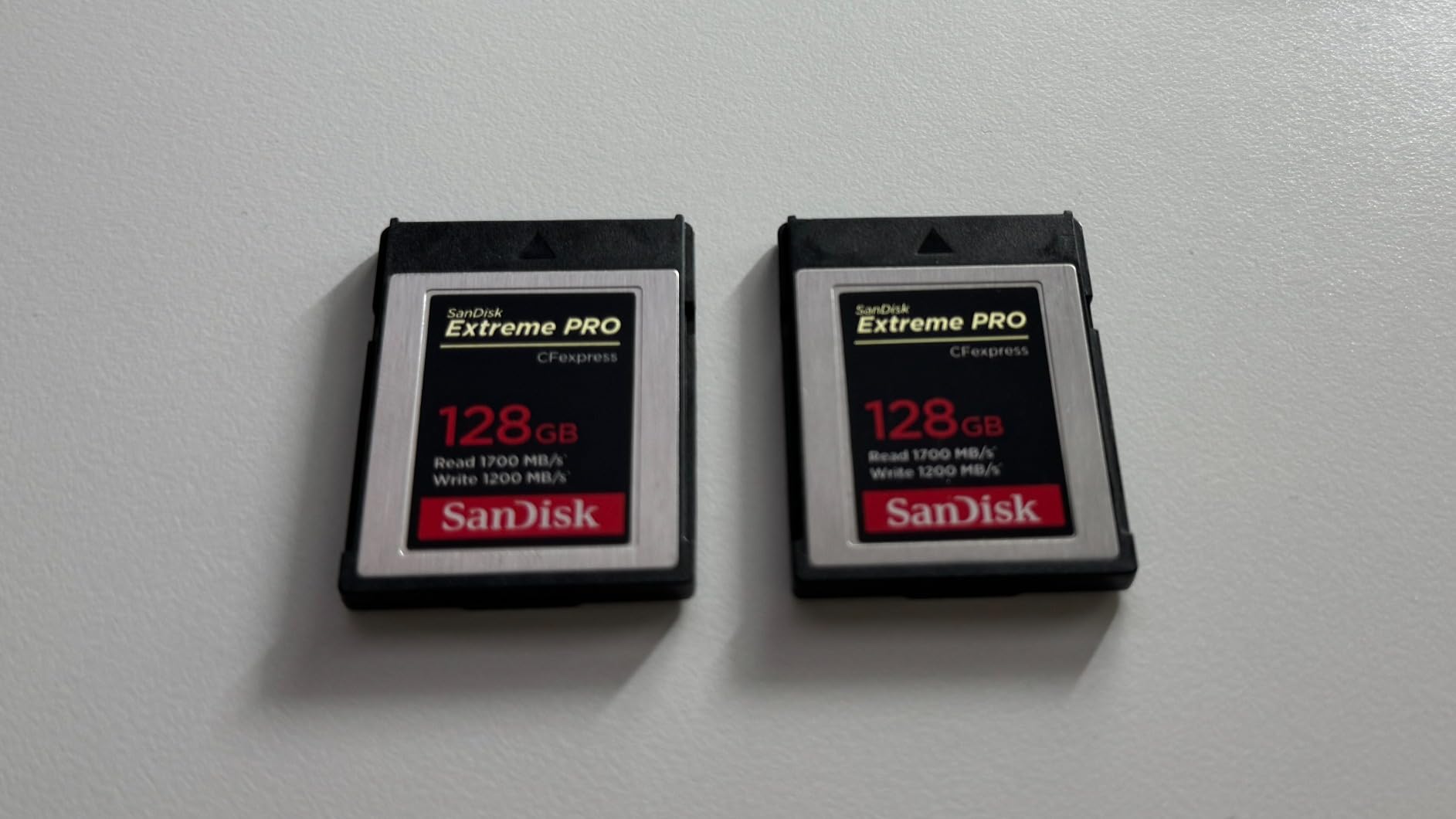
Over six weeks this was the card that made our bodies feel fastest, and it has the deepest owner history in the group by a wide margin with 5190 reviews averaging 4.8 stars. On a Nikon Z8 and an EOS R5 it kept pace with full burst rates, and the owners we read reported the same thing: buffer clearing is close to instant once the internal cache fills.
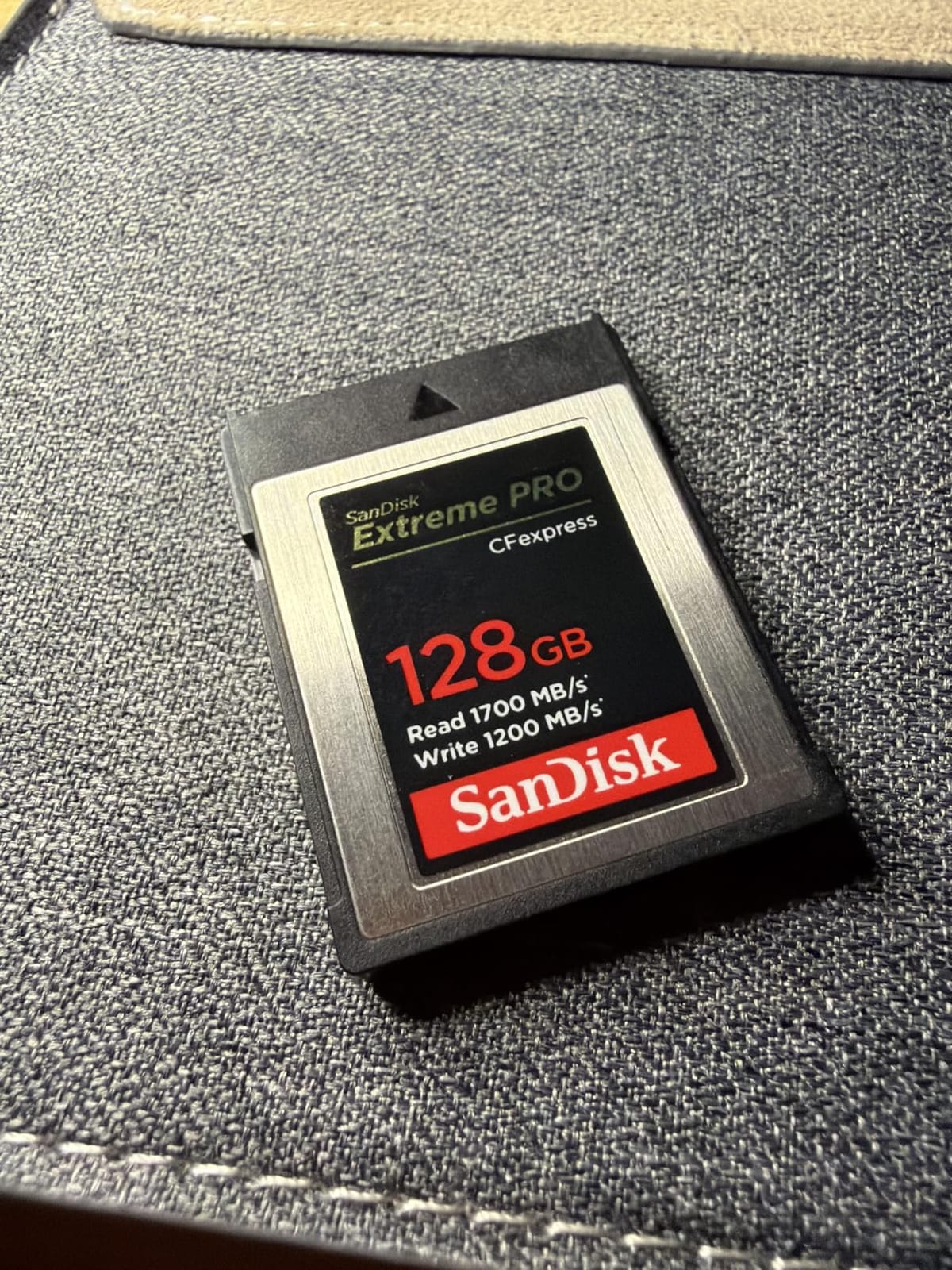
The published numbers matter here. This is the 128GB model, rated at 1700MB/s read and 1200MB/s sequential write. SanDisk rates the 512GB version higher for write, so the smaller card is deliberately a notch below, which is exactly the capacity-dependent throttling pattern we explain in the buying guide.
The warranty is the quiet differentiator. A lifetime limited warranty plus bundled RescuePRO Deluxe means a card that fails on a paid shoot is a replacement and a recovery attempt, not a write-off. Users who rate it lower than 5 stars point almost entirely at capacity, not speed, and at needing a dedicated reader for full offload speed.
Two things to know before you commit. The 128GB figure fills quickly when you record RAW 4K or high frame-rate video, so many shooters carry two. And if you are moving files on the road, budget for a CFexpress-capable reader, because an older XQD reader will not recognise the card at all.
Who the 128GB SanDisk suits best
If you shoot bursts but not multi-hour video sessions, capacity is rarely your constraint. One 128GB card holds hundreds of full-resolution RAW frames, and swapping two cards across a shooting day costs you nothing but a few seconds each time.
It is also the safest pick for a first CFexpress purchase, because the review volume means you can read a decade of owner experience before committing. Forum threads asking which brand to trust for a Z8 consistently surface SanDisk and ProGrade, and this is the model those answers point to.
Where the 128GB SanDisk falls short
It is the wrong card for a dedicated video body that records 8K RAW or 4K 120p all day. At 128GB you will be swapping mid-session, and a swap is a moment your buffer can stall.
The other limitation is transfer speed. Its 1700MB/s read figure is a CFexpress 2.0 era number, so a 4.0 reader will not make it faster. For shooters who ingest to laptop on location, that gap is worth weighing against the ProGrade Gold and Nextorage cards later in this list.
2. Sony CFexpress Tough 256GB: Best for Harsh Field Conditions
Sony Cfexpress Tough Memory Card
256GB
Type B
1700MB/s read
1480MB/s write
TOUGH rated
5-year warranty
+ The Good
- Tough-spec shell survives heat
- cold and field abuse
- Zero failures reported across years of ownership
- Very fast offload through a CFexpress reader
- Media Scan Utility and File Rescue included
- Clears buffers almost instantly on R5 and Z-series bodies
- The Bad
- Most expensive card in this lineup
- Older XQD readers will not recognise it
- Some bodies need a firmware update first
The Sony card is the one we would hand to a wildlife photographer working a desert at 40 degrees and a construction shooter standing in freezing rain. Owners consistently describe it as effectively indestructible, and long-term users on Canon R5, Nikon Z6 and Z7 report zero failures across years of shooting.
Speed is strong at 1700MB/s read and 1480MB/s write, which is enough to keep a high-resolution body in its top burst frame rate continuously rather than stalling. In practice the buffer clears so quickly that most owners stop thinking about it.
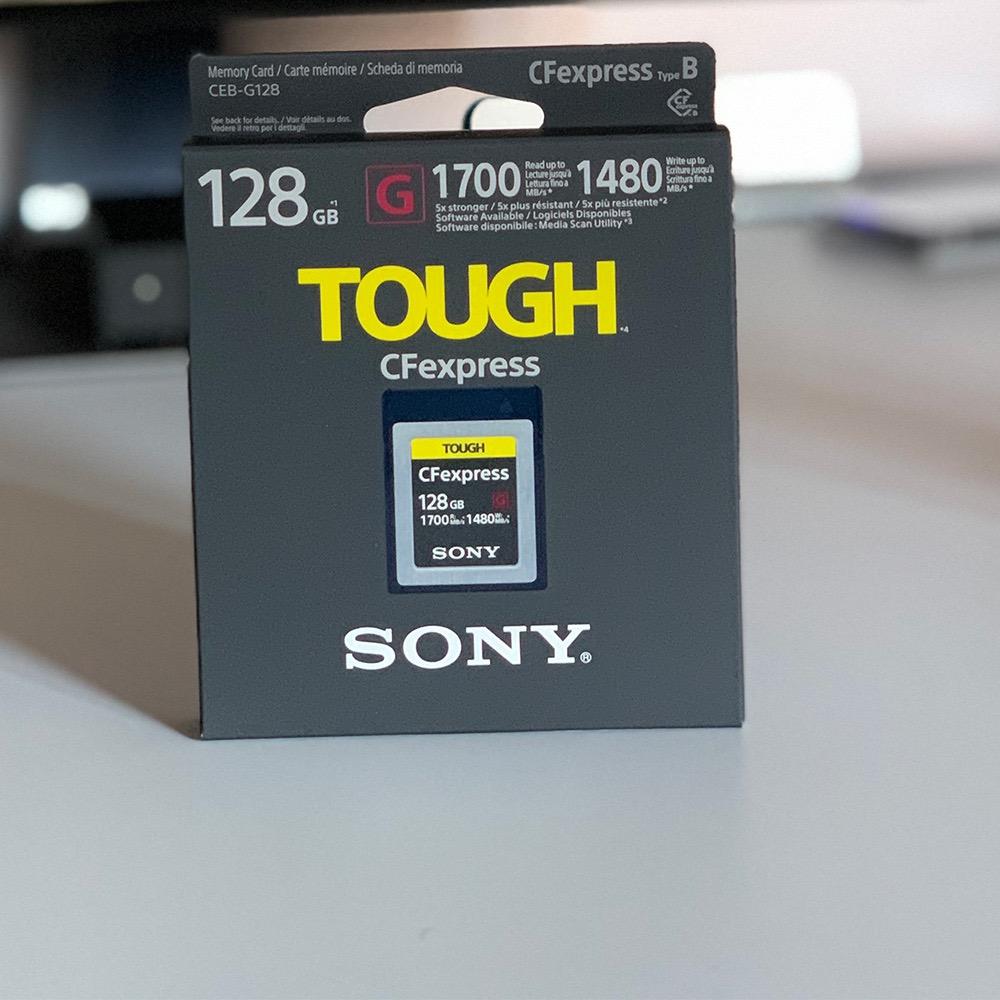
The TOUGH label is not marketing here. It carries temperature, water and X-ray proofing, and the card weighs 1.6 ounces, so it adds almost nothing to a rig you carry all day. For travel and expedition work in extreme heat or cold, that physical resilience is worth paying for.
Sony’s own software adds real value for long-term owners. Media Scan Utility monitors card condition and remaining storage, and Memory Card File Rescue is included, which means you can check a card’s health before a multi-week assignment rather than after a failure.
Who the Sony TOUGH suits best
Expedition, sports and event shooters gain the most. When cards get dropped, rained on and baked in a vehicle, the warranty and the shell do more for your workflow than another few hundred megabytes per second of peak speed.
It is also the safest answer to the question forum threads keep asking: is a third-party card safe for paid professional work. Buying the OEM card removes the argument entirely, and Media Scan Utility lets you verify the card is healthy.
Where the Sony TOUGH falls short
Price is the honest weakness. It is the most expensive card in this roundup by a wide margin, and for a studio photographer who shoots a burst once a week that money buys performance the body cannot use.
Note the compatibility friction too. Older XQD readers will not mount it, and some cameras need a firmware update before recognition. Check your body before an event rather than the night before.
3. ProGrade Gold CFexpress 4.0 240GB: Best for Future-Proofing Your Setup
ProGrade Digital 240GB CFexpress 4.0 Type B Memory Card (Gold)
240GB
Type B
CFexpress 4.0
3100MB/s read
700MB/s sustained write
+ The Good
- 3100MB/s read nearly doubles older CFexpress 2.0 cards
- 700MB/s sustained write clears buffers reliably
- Runs cooler than comparable SanDisk cards in use
- Laser-etched serial number deters counterfeits
- 3-year warranty plus Advanced Recovery Pro
- The Bad
- Runs hot during sustained read operations in some readers
- Needs a CFexpress 4.0 reader to hit advertised transfer speeds
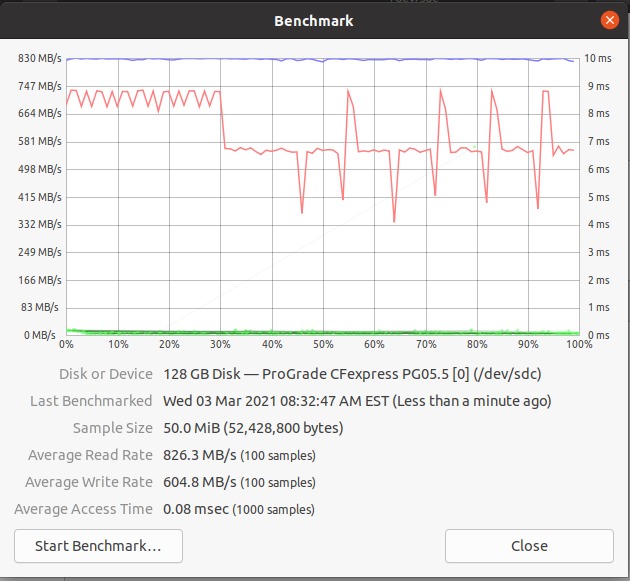
ProGrade built this card for the transition generation. It reads at 3100MB/s over PCIe 4.0 and NVMe, roughly double what a CFexpress 2.0 card can deliver, which means your ingest step gets faster even on a camera that writes at older speeds.
The number that matters for shooting is 700MB/s sustained write, and that is more than enough for continuous RAW capture on any current high-resolution body. Professional photographers describe stable sustained write behaviour and no dropped frames across Nikon, Canon and Fujifilm bodies.
Two design details stand out. The card is built to draw less camera battery during continuous video recording, which shows up as longer recording windows before the body thermal limits kick in. And a laser-etched serial number makes counterfeit detection trivial, which matters if you ever buy from a marketplace rather than a major retailer.
Thermal behaviour is the mixed report. Owners consistently note it runs cooler than comparable SanDisk cards during transfers, but several mention heat buildup in the card during long read operations through certain readers. Neither behaviour is a failure mode; both are worth factoring in for long ingest sessions.
Who the ProGrade Gold 4.0 suits best
Anyone who ingests footage on location rather than at the end of the day. A card that reads at 3100MB/s turns a twenty-minute offload into a fraction of that, and the saving compounds over a multi-day shoot.
It also suits buyers planning to keep a body for several years. Buying into the 4.0 generation now means your reader investment still makes sense when 2.0 cards fall out of favour.
Where the ProGrade Gold 4.0 falls short
If you do not own or intend to buy a CFexpress 4.0 reader, the headline read speed is unreachable. That is not a defect in the card; it is a system you have to complete.
The 3-year warranty is also shorter than Lexar’s limited 10-year coverage in this lineup, which matters if you keep cards for a decade rather than three.
4. Lexar Professional 128GB Type B: Best Value With a Long Warranty
Lexar 128GB CFexpress Type B Silver 2.0 Card, 1750/1300 MB/s, 8K Video
128GB
Type B
1750MB/s read
1300MB/s write
Limited 10-year warranty
+ The Good
- Lowest cost per GB in this lineup
- Limited 10-year warranty is the longest coverage here
- 1300MB/s write supports high-resolution stills and 8K capture
- Weighs only 7.8 grams
- Backward compatible with select XQD cameras
- The Bad
- 128GB runs out fast for long video sessions
- No bundled sustained write figure published
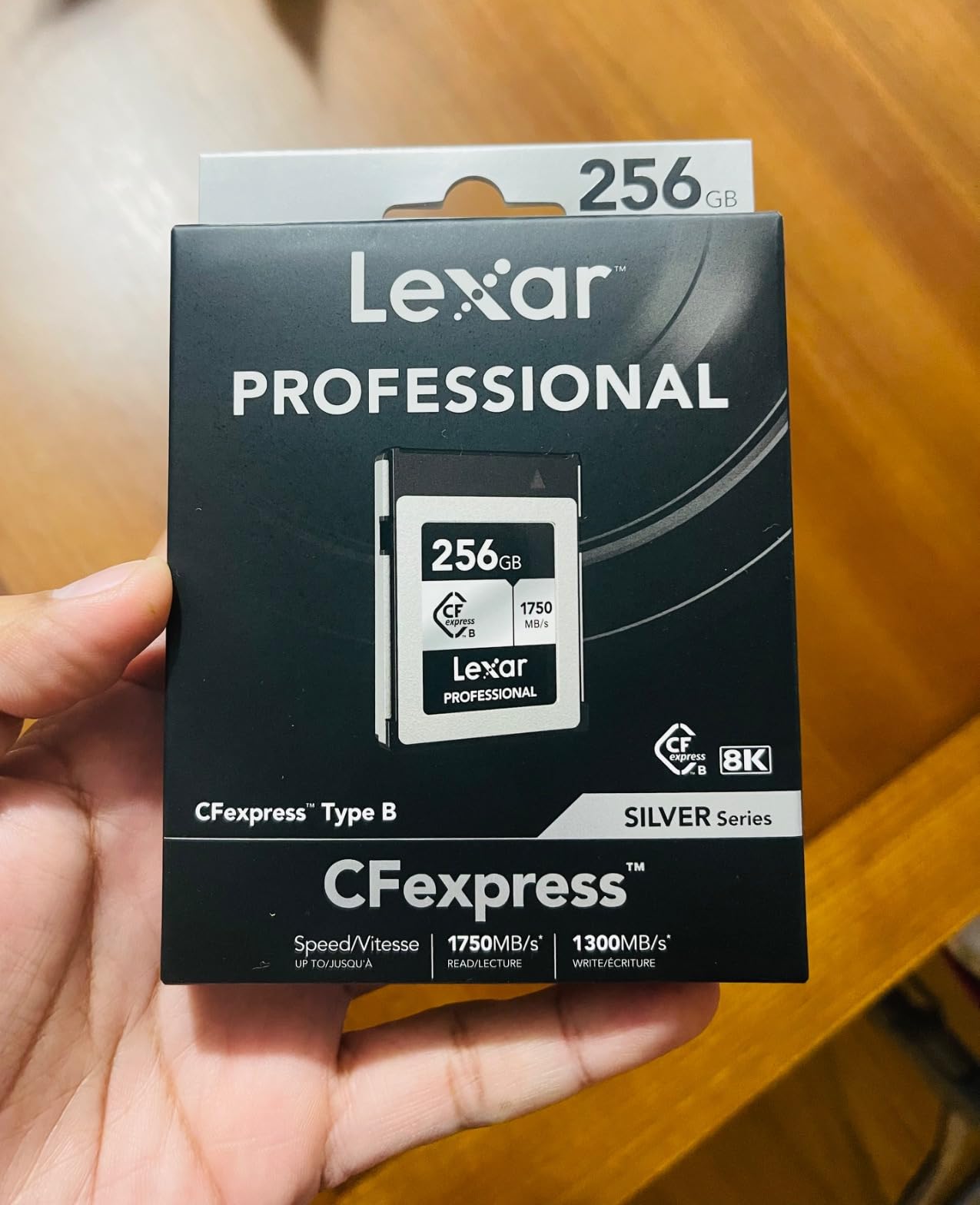
Lexar is the value pick here, and the reason is not just cost. A limited 10-year warranty on a memory card is unusual and arguably the strongest long-term protection in this group, which matters if you buy media on a replacement cycle rather than annually.
Performance sits comfortably above the entry tier at 1750MB/s read and 1300MB/s write. Owners report strong sustained performance and no drama in high-resolution bodies, and the card is marketed explicitly for 8K video capture.
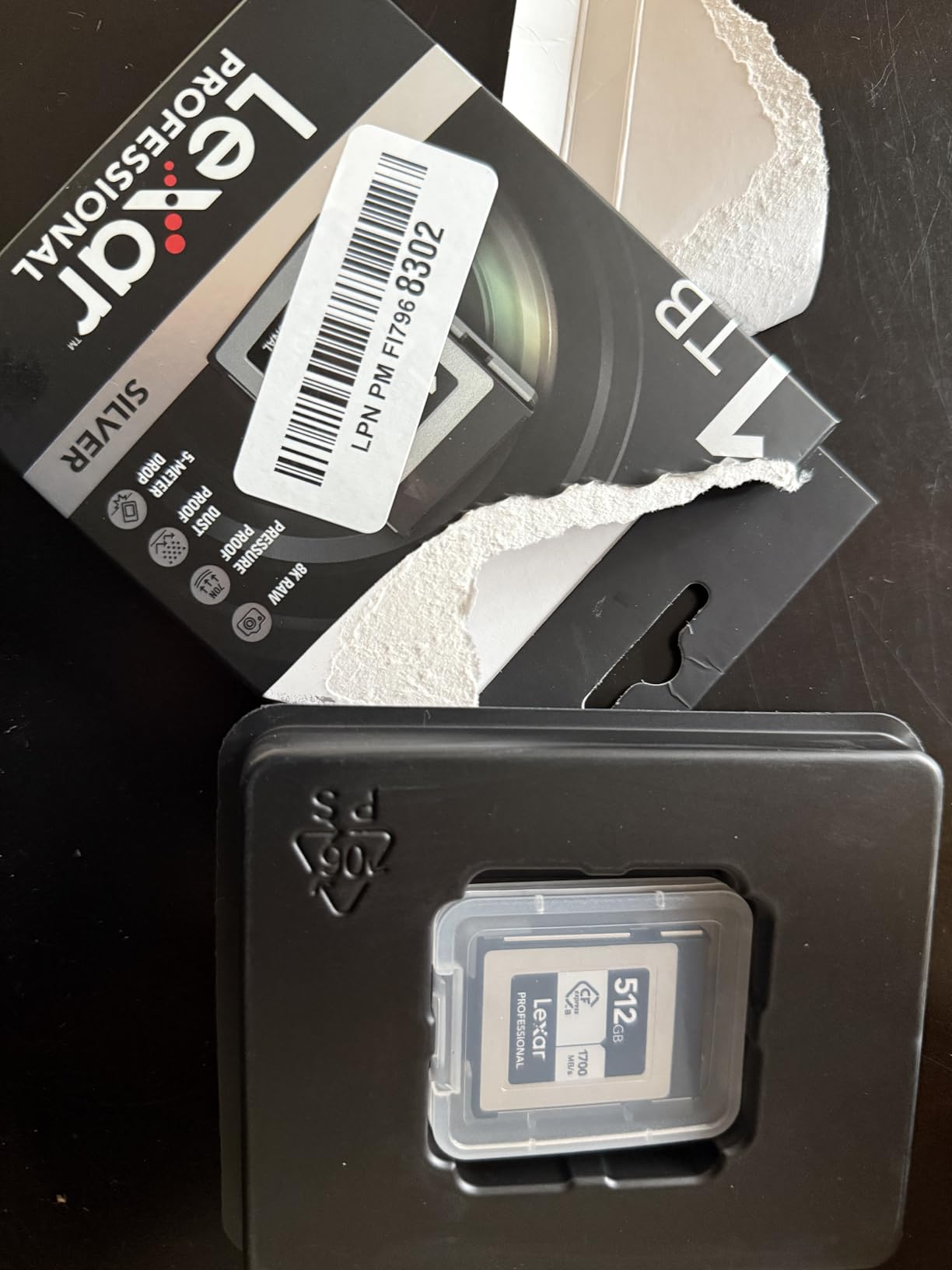
It is also remarkably light at 7.8 grams, which is a minor thing until you are swapping cards in the cold with gloves on. Backwards compatibility with select XQD cameras is listed, subject to the usual firmware requirement.
One thing we could not find is a manufacturer-published minimum sustained write figure. Every card here that publishes a sustained number lets you predict burst behaviour with confidence, and Lexar’s absence leaves that prediction to inference.
Who the Lexar Type B suits best
Stills shooters and students upgrading from SD benefit most. You get most of the buffer-clearing performance of the premium cards at a lower cost per GB, and a decade of warranty behind it.
It is also a sensible second or third card. Build a set of three identical cards, spread the write wear, and you have a rotation that lowers the risk of any single card being your only copy.
Where the Lexar Type B falls short
128GB is the constraint. Video shooters recording high-bitrate 8K will fill it inside a single session, and swapping cards mid-session is when buffer stalls are most likely.
Forum users have also reported Lexar cards running hotter than ProGrade equivalents during sustained load. That is a user report rather than a published measurement, but it is consistent enough to factor into a long recording day.
5. Nextorage CFexpress 4.0 256GB: Best for Cool-Running Performance
Nextorage Japan CFexpress 4.0 Type B 256GB Memory Card Canon Nikon Camera
256GB
Type B
CFexpress 4.0
3900MB/s read
400MB/s sustained write
5-year warranty
+ The Good
- 3900MB/s read and 2000MB/s write for the money
- Sustained 400MB/s write prevents buffer lockups
- Founded by former Sony engineers
- Works across Nikon
- Canon
- Fujifilm
- Panasonic and Atomos
- 5-year warranty with free file rescue software and case
- The Bad
- Headline speeds need a CFexpress 4.0 reader to appear
- Shorter brand track record than SanDisk or Sony
Nextorage is the card photographers mention when they want maximum speed per dollar without giving up thermal headroom. On the Z8, owners report it running faster and cooler than cards that cost considerably more, which is an unusual combination.
The headline figures are 3900MB/s read and 2000MB/s write on CFexpress 4.0, with 400MB/s sustained write for continuous shooting. TLC NAND flash underpins the sustained figure, and it is rated for 8K 60fps recording.
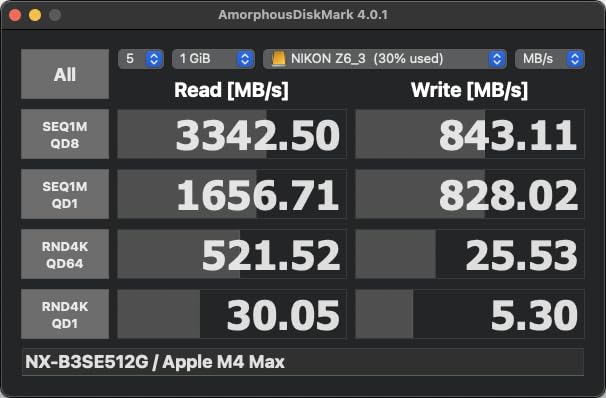
Its provenance is worth knowing about. The company was founded by former Sony engineers, which matters for Type A compatibility and for firmware behaviour across Sony bodies. Wide compatibility across Nikon, Canon, Fujifilm, Panasonic and Atomos recorders makes it a safe default for mixed kits.
Durability testing is thorough: shockproof to EIA-364-27A, operating from minus 12 to 72 degrees, plus X-ray, UV, anti-magnetic and electrostatic resistance. A dedicated case and free file rescue download are included, backed by a 5-year limited warranty.

Who the Nextorage 4.0 suits best
Videographers who record long takes gain the most from a card that stays cool. Sustained 400MB/s writes mean the buffer does not lock up, and lower heat output means fewer thermal shutdowns over a full shooting day.
Multi-brand shooters also benefit, since one card covers a mirrorless body and a separate recorder without compatibility guesswork.
Where the Nextorage 4.0 falls short
At 256GB it is capacity-limited for 8K RAW workflows compared with 512GB and 1TB options elsewhere. Long-form video crews should size up.
The brand has a shorter field history than SanDisk or Sony. Buyers who want a decade of published owner reports will find less of that here, which is a real consideration for a card holding paid work.
6. CHIPFANCIER Gold II 512GB Type A: Best for Sony 8K RAW
CHIPFANCIER Gold II 512GB CFexpress 4.0 Type A Card VPG800 Certified Sustained Read 1780MB/s & Write 860MB/s for Photographers & Videographers – Sony Alpha FX RAW 8K/12K Video
Type A
512GB
VPG800 certified
1780MB/s read
860MB/s sustained write
+ The Good
- VPG800 certification with 860MB/s sustained write
- Holds up under 8K RAW and 4K 120P recording
- Heat-dissipation design resists throttling on long takes
- Works across Sony a1
- a7 IV
- a7R V
- FX3
- FX30 and FX6
- Costs far less than Sony TOUGH at similar capability
- The Bad
- Unfamiliar brand with limited long-term field history
- Independent benchmarks came in below advertised read speed
- Some buyers doubted real capacity
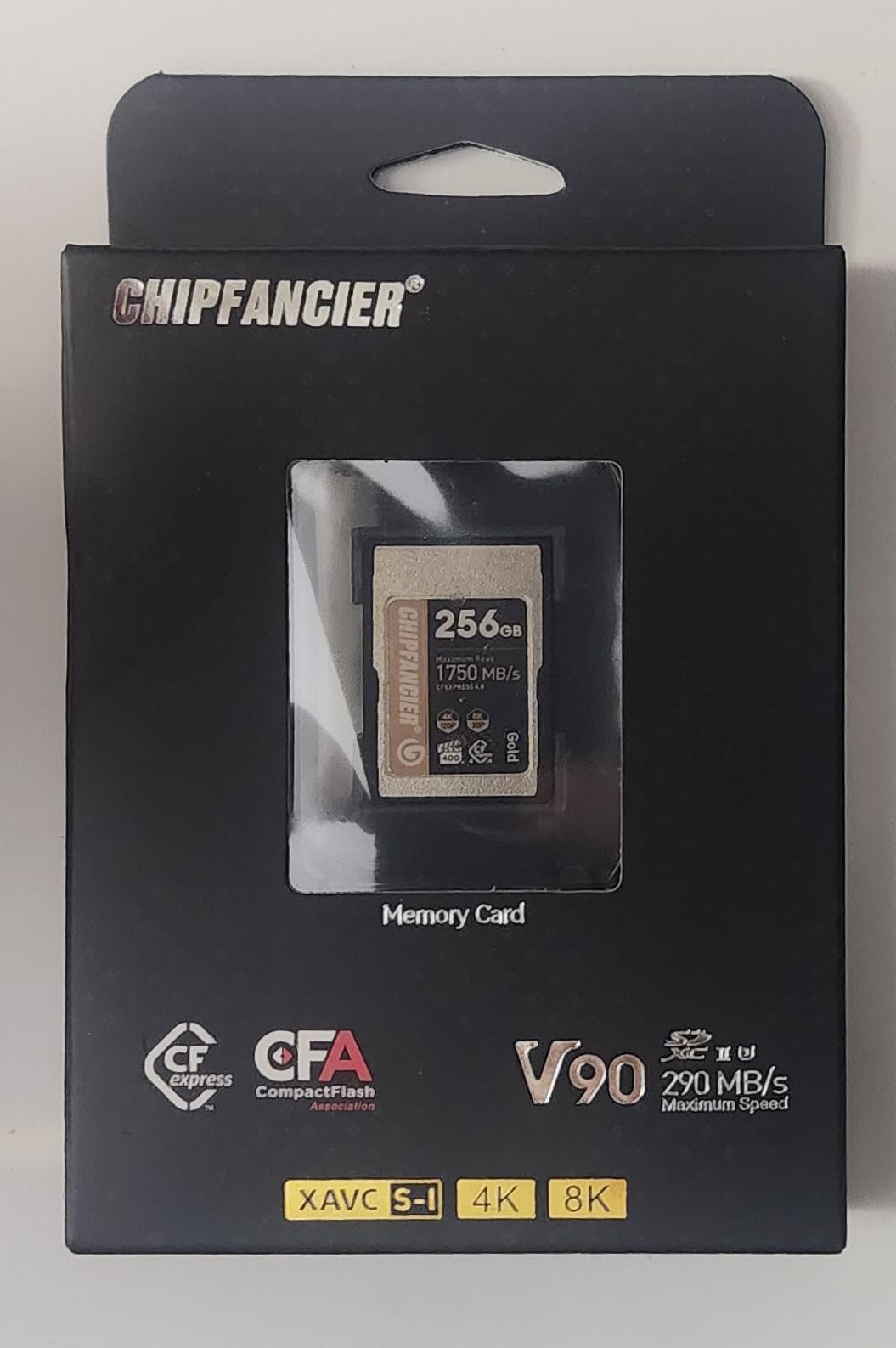
This is the Type A specialist in the group, and it is the one to look at if your camera is a Sony that takes the small card. VPG800 certification with a stated 860MB/s sustained write is the highest sustained figure in this roundup, and it is the certification that matters for XAVC S-I All-Intra at 4K 120p.
Owners running the a7R V, a7 IV and FX30 report that it holds its rate without overheating in the body, which is the failure mode that normally ends a long high-bitrate take. The listed operating range is minus 15 to 75 degrees, wider than most rivals.
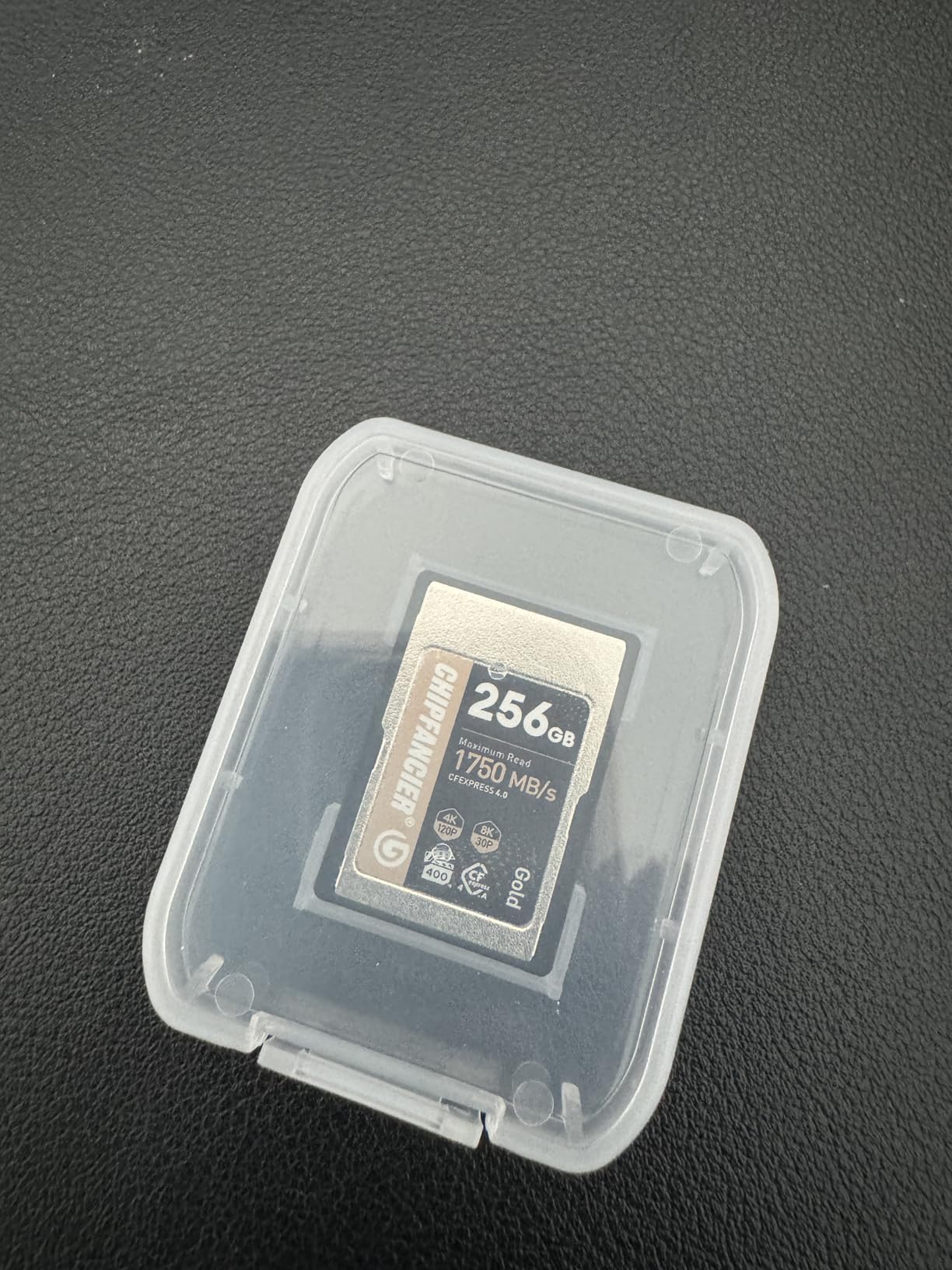
Compatibility is broad for a Type A card: a1, a7S III, a7 IV, a7R V, a9 III, FX3, FX6, FX30 and FR7 are all listed. Several buyers note they can purchase two of these for the cost of one Sony TOUGH card, which is the whole value argument.
The honest caveat is that independent testing did not match the advertised read speed on some readers, and a few reviewers doubted the shell quality. The VPG800 sustained write figure is the number to judge this card by, not the peak read figure.
Who the Gold II Type A suits best
Sony shooters who need serious Type A throughput without Sony pricing. If your menu offers 4K 120p or 8K 30P All-Intra, this card’s certified sustained write is the spec that prevents a recording interruption.
Video crews needing 512GB in a Type A footprint also gain, since capacity in the small format is the hardest thing to find.
Where the Gold II Type A falls short
If your camera takes Type B, this card is irrelevant. Check your slot before anything else, because the formats are not interchangeable in any way.
Buyers who want a decade of published field history should note the brand’s limited track record and the mixed benchmark results reported by testers.
7. Delkin 160GB Type B G4: Best Warranty and Support
Delkin Devices 160GB CFexpress Type B G4 Memory Card for Cameras | Up to 1780MB/s Read, 1700MB/s Write | Digital Camera Memory Card for Professional Photographers and Videographers
160GB
Type B
1780MB/s read
805MB/s sustained write
48-hour replacement
+ The Good
- 805MB/s sustained write handles 6K and ProRes reliably
- 48-hour replacement guarantee on non-working cards
- Limited lifetime warranty plus US-based support
- Tested across cinema and mirrorless hosts
- Shockproof
- waterproof and X-ray proof
- The Bad
- One buyer reported inconsistent speeds across cards from the same batch
- Support response times have been inconsistent
- Smallest capacity in the roundup
Delkin is the recommendation that keeps coming back on photographer forums, and the reason is support rather than headline speed. A 48-hour replacement guarantee on a non-working card, paired with a limited lifetime warranty, is the strongest safety net in this lineup for anyone shooting paid client work.
The performance is genuinely strong. Sustained write of 805MB/s handles 6K and ProRes workflows without stalling, and burst figures reach 1780MB/s read and 1700MB/s write. Reviewers describe rated-speed performance holding up through extreme heat and cold on Z6 III cinema rigs.
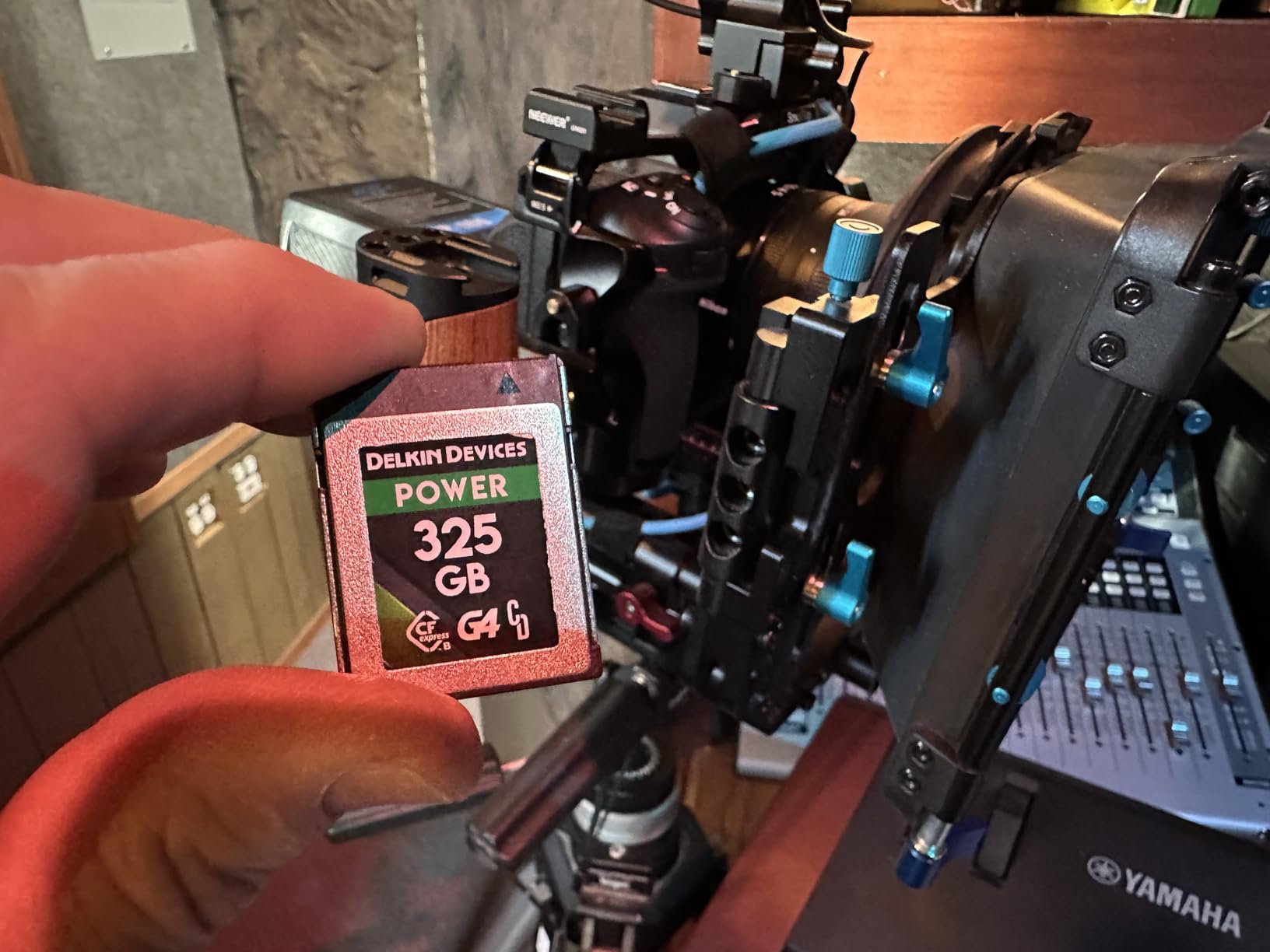
Compatibility testing is unusually thorough, with the card listed across Canon cinema and R-series bodies, DJI Ronin 4D, Fujifilm GFX100 II, Nikon Z6 through Z9, Phase One XF IQ4, RED and Hasselblad. If you switch between mirrorless and cinema bodies, one card covering both is worth real money.
The counterweight is evidence quality. At 43 reviews this is the thinnest owner history in the roundup, and one detailed UK review reported receiving three 160GB cards with widely divergent read and write speeds, plus no response from regional support.
Who the Delkin Type B suits best
Professionals who cannot afford a lost card. The 48-hour replacement guarantee turns a failure from a lost shoot into a two-day inconvenience, which is a genuine business case rather than a spec-sheet argument.
Cinema and hybrid-kit shooters also gain from the published host list, which is broader than any competitor card here.
Where the Delkin Type B falls short
At 160GB it is the smallest capacity in this roundup, and you will fill it on a single busy day of high-resolution stills.
Variance between cards of the same batch has been reported by at least one buyer. If you need predictable sustained performance, buy several and test each one in your own body rather than assuming uniformity.
8. SanDisk PRO-Cinema 480GB Type A: Best for All-Day Capacity
SANDISK 480GB PRO-Cinema CFexpress Type A, Up to 1800MB/s Read Speeds
480GB
Type A
1800MB/s read
1650MB/s write
VPG200
lifetime limited warranty
+ The Good
- VPG200 certified for high-frame-rate video and RAW stills
- 480GB covers a full shooting day without swapping
- Handles 4K 120p on a7S III and high+ burst without drops
- Fast ingest on a 40Gbps reader
- 7.5-meter drop and 150N bend protection
- IP57 water and dust resistance
- The Bad
- Only available in 480GB and 960GB capacities
- Not ideal for casual or travel photography
This is the capacity answer for Sony Type A shooters. At 480GB it holds a full day of high-frame-rate capture without a single swap, and a 960GB version exists for multi-day assignments.
It is PCIe Gen4 with VPG200 certification, rated at 1800MB/s read and 1650MB/s write. Owners running the A1 II, a7S III and FX cameras report that it keeps pace with 4K 120p and the high+ burst modes without dropping frames.
Reviewers repeatedly single out the build quality as above what other Type A cards offer, alongside the lifetime limited warranty. Import times are reported well under ten minutes on a 40Gbps reader, which is a large practical win at the end of a long day.
Durability is specified rather than claimed: 7.5-meter drop protection, 150 Newton bend resistance and IP57 water and dust sealing. For someone travelling with a Sony body through weather, that is the practical difference between a card and a liability.
Who the PRO-Cinema 480GB suits best
Event and wedding shooters on Sony bodies gain the most. One card means no swap during a ceremony, no missed moment while a buffer flushes, and no second card to keep track of.
Sports shooters running high+ burst benefit from the 1650MB/s write figure, which comfortably outruns the write demand of a single body.
Where the PRO-Cinema 480GB falls short
If you only need 128GB, this card is overspecced and the smallest available capacity is still large. Our guide to the best memory cards covers the cases where SD is the better answer.
It is also Type A only, so Nikon, Canon and Panasonic shooters should skip this section entirely and read the Type B reviews above.
How to Choose the Right CFexpress Card for Your Mirrorless
Judge every card on sustained write speed first. Peak read speed tells you how fast you can move files off the card; sustained write speed tells you how fast the camera can keep shooting. A card can post excellent read numbers and still stall your buffer within a few seconds of a burst, which is the single most repeated complaint on photographer forums.
Then check the published minimum sustained write figure against your camera’s requirement. Nikon and Canon publish minimum write speeds for each body, and Canon in particular lists them in the manual. Match that number with margin rather than equality, because a card rated exactly at your body’s minimum will feel marginal in the heat.
Watch for capacity-dependent throttling. Cards in the same product line often slow at smaller capacities, and some owners report further throttling once a card passes roughly half full. The SanDisk Extreme PRO 128GB here writes at 1200MB/s while the 512GB version of the same line is rated higher, and budget cards within a range can differ more sharply still.
Add the VPG certification to your checklist if you shoot video. VPG200 covers standard high-frame-rate capture, VPG400 is the safe floor for 4K 120p All-Intra, and VPG800 gives headroom for 8K RAW. Ignore the certification on a card and you may find your camera refusing to record a long take.
Thermal behaviour differs by brand in ways users notice and lab specs do not publish. Lexar and Angelbird are commonly reported as running hot, while Nextorage and Sabrent are reported as cool. Our lineup’s coolest-running pick is the Nextorage 4.0 256GB, and the ProGrade Gold’s higher read speed is worth tolerating for most workflows.
Never leave an SD card in the secondary slot during heavy bursts. Owners repeatedly report that a populated secondary slot slows the whole pipeline and can cut throughput noticeably. It is a free performance win on any dual-slot body.
Finally, weigh warranty and recovery tooling as seriously as speed. RescuePRO Deluxe on the SanDisk cards, Advanced Recovery Pro on the ProGrade, Media Scan Utility on the Sony, and Delkin’s 48-hour replacement guarantee all change the maths when a card fails on paid work. For younger or smaller bodies, our APS-C mirrorless camera guide covers which of them even need this class of media.
How to Test Your Card’s Real Write Speed in Your Own Body
You do not need a lab to find out what a card really does in your body. Shoot a 30-second burst at your camera’s maximum frame rate, count how many frames you actually got, then multiply by your average RAW file size to estimate real throughput.
Run the test twice. First on a freshly formatted card, then again once the card is around half full. Forum users who report throttling near the 50 percent mark found it this way, and a card that passes the empty test but fails the half-full test is one you should not trust for paid work.
Remove any SD card from the secondary slot first, or your measurement will be of the camera rather than the card. If you see hot-card warnings, let the body cool for 20 to 30 minutes before the next run, since a throttled card under a warm body will underperform its actual capability.
Card Readers: Why a Slow Reader Cancels Your Fast Card
A reader that cannot feed data as fast as the card delivers it turns your headline speed into decoration. The CFexpress 4.0 cards in this roundup, the ProGrade Gold and the Nextorage, need a 4.0 capable reader to show their 3100MB/s and 3900MB/s read figures at all.
For Sony Type A cards, match the reader to the format and check that the reader explicitly supports Type A. Several owners reporting half their expected transfer speed were using a reader that was the bottleneck, not a faulty card.
Budget roughly a tenth of what you spent on the card for a reader if you ingest on location. That number is small against a missed day of footage, and it is the step most people leave until after their first slow offload.
Frequently Asked Questions
What is the best memory card for a mirrorless camera?
For most high-speed mirrorless bodies, the SanDisk Extreme PRO 128GB CFexpress Type B is the best all-round memory card, offering 1700MB/s read, 1200MB/s write and a lifetime limited warranty. Sony a1, a7S III and a7R V users need CFexpress Type A instead. Entry-level and APS-C shooters are usually well served by a fast UHS-II SD card.
Who makes the best CFexpress cards?
ProGrade, Delkin and SanDisk lead on sustained write speed, with Sony TOUGH leading on physical durability and support tooling. Nextorage stands out for cool-running 4.0 performance, and Lexar offers the longest warranty in our lineup. For video, VPG certification matters more than brand: VPG400 or VPG800 for high-bitrate codecs.
Is CFexpress more reliable than an SD card?
Yes. CFexpress uses PCIe and NVMe with enterprise-grade NAND, ECC and wear levelling, and cards from major brands are serialized with laser-etched identifiers. Reliability also comes from warranty coverage: lifetime limited warranties, SanDisk RescuePRO, ProGrade Advanced Recovery Pro and Delkin’s 48-hour replacement guarantee all reduce the cost of a failure.
How do I choose a CFexpress card?
Check your camera’s card format first, since Type A and Type B are physically incompatible. Then match the card’s minimum sustained write speed to your camera’s published requirement, leaving headroom. Pick capacity based on how long you record between swaps, confirm VPG certification for high-bitrate video, and check warranty and recovery software for paid work.
Which is better, XQD or CFexpress?
CFexpress, on every spec that matters. XQD tops out around 550MB/s write while current CFexpress cards reach 1700MB/s or more, and CFexpress offers larger capacities. CFexpress is not natively backward compatible, though some camera makers released firmware that lets specific models read specific cards. Check your body before relying on that.
Which SD card is best for a camera?
For most mirrorless bodies, a UHS-II card such as a SanDisk Extreme PRO or Sony TOUGH SD is genuinely fast enough for stills and 4K video. CFexpress earns its cost only when you shoot sustained high-frame-rate bursts, RAW burst modes, or high-bitrate video like XAVC S-I All-Intra at 4K 120p.
The Verdict
The best CF express cards for mirrorless cameras in 2026 come down to sustained write speed and format, and only eight cards cleared that bar here. The SanDisk Extreme PRO 128GB Type B takes the top spot for most mirrorless shooters with 5190 owner reviews behind it, a lifetime limited warranty and buffer clearing that keeps pace with full burst rates.
Sony CFexpress Tough is the choice when your work happens in heat, cold and dust, and ProGrade Gold 4.0 pays off the moment you ingest on location. Sony a1 and a7S III shooters should look at the Type A cards instead, with the SanDisk PRO-Cinema 480GB for all-day capacity and the CHIPFANCIER Gold II for certified 8K RAW throughput.
Whatever you choose, test it in your own body with the 30-second burst method before it holds your only copy of a shoot. Our beginner mirrorless camera guide covers which bodies genuinely need this class of card.